
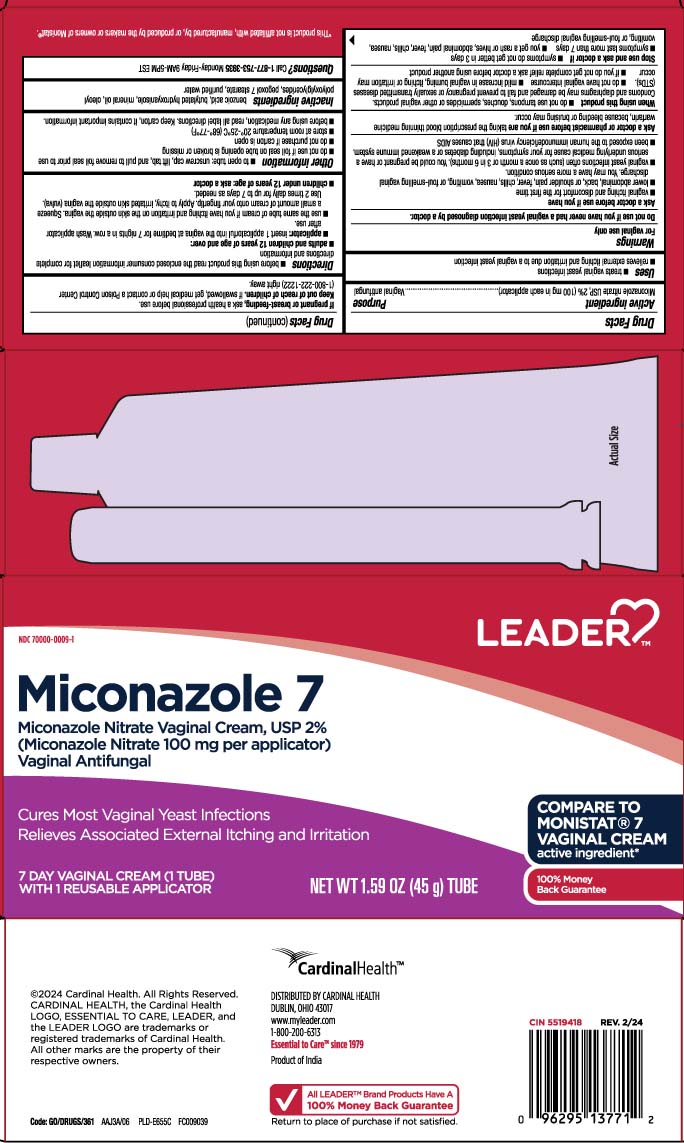
Miconazole 7 Miconazole Nitrate 20 mg/g Cream
Other active recalls for Miconazole Nitrate (different manufacturers) — 1 · tap to view
🆔 Identity & classification
Where does this data come from?
🏷️ RxNorm drug class
This medicine belongs to the Azole Antifungal class.
Where does this data come from?
🏭 Manufacturer & labeler
Where does this data come from?
🩺 Clinical
Vaginal miconazole is used to treat vaginal yeast infections in adults and children 12 years of age and older. Miconazole is in a class of antifungal medications called imidazoles. It works by stopping the growth of fungi that cause infection.
Read the full MedlinePlus article ↗- For a 7-night vaginal cream, you insert one full applicator into your vagina at bedtime for 7 nights in a row. If you have itching or irritation on the outside, squeeze a small amo...
- I bought a miconazole cream for a vaginal yeast infection — how do I use it correctly?
- Yes — topical miconazole creams and powders are specifically made for those conditions. For athlete's foot and ringworm, you'd apply it to clean, dry skin twice a day for 4 weeks....
- Can I use miconazole cream on my skin for athlete's foot or jock itch?
Patient education
Supplement & herbal interactions
Where does this data come from?
Ask a licensed pharmacist directly — free, answered by our team.
💊 What it looks like
Where does this data come from?
🧪 Inactive Ingredients / Excipients
Inactive ingredients, also called excipients, are components of the drug product other than the active ingredient. They may include fillers, dyes, coatings, preservatives, flavors, or other formulation ingredients.
💡 Tap an ingredient (hover on desktop) to see what it is and why it’s used.
-
UNII DRG3KJZ1TJ
A plant-derived oil combined with polyethylene glycol to create a solubilizer. It helps dissolve or evenly distribute medicines in liquid formulations and improves how the body absorbs certain active ingredients.
-
UNII 8SKN0B0MIM
Benzoic acid is a naturally occurring organic acid used as a preservative in medicines and foods. It helps prevent bacterial and fungal growth to extend shelf life and maintain product stability.
-
UNII REK4960K2U
Butylated hydroxyanisole is a synthetic preservative that prevents oils and fats in medicines from spoiling or becoming rancid. It keeps the medicine stable and extends its shelf life.
-
UNII T5L8T28FGP
Mineral oil is a clear, odorless liquid derived from crude oil. It acts as a lubricant and emollient in medications, helping pills slide smoothly during manufacturing and aiding moisture retention in topical products.
-
UNII 3EW5AXE5X5
A synthetic surfactant derived from polyethylene glycol and stearic acid. It helps mix oil and water-based ingredients together and improves how the medicine dissolves and is absorbed in the body.
-
UNII 059QF0KO0R
Water is a liquid solvent that dissolves and mixes ingredients together in liquid medicines, syrups, and injections. It helps distribute the active drug evenly throughout the product.
6 inactive ingredients listed in the exact product block matched to this NDC.
Label-section wording can be broader than the structured product block and may mention additional formulation ingredients.
Where does this data come from?
ingredient classCode="IACT" elements from the exact product block matched by this NDC. Label-section narrative from DailyMed / the openFDA label index is shown separately when available.Inactive ingredient FAQ
Are inactive ingredients the same for every manufacturer?
Why might an inactive ingredient be missing?
Can inactive ingredients matter?
💲 Pricing
A drug doesn't have one price. Each row is a different public payment system, and none is what you'd pay at the counter — that depends on your insurance. The ⓘ on each row explains what it measures.
| Price system | Per g | Per package |
|---|---|---|
| Retail pharmacies payNADAC · weekly | $0.119 | $5.35 / 45 g |
| Medicaid paysCMS SDUD · 12 mo | $0.3203 | $14.41 / 45 g |
| Medicare drug plans payPart D · quarterly | No Part D plan price is available for this NDC in our data. | |
Where does this data come from?
🔁 Therapeutic equivalents
| Product | Labeler | Pack | NADAC/unit | TE | Status | Price vs. this |
|---|---|---|---|---|---|---|
| Good Sense Miconazole 7 2 g/100g 00113-0214-29 | L | 1 tube | $0.119 | — | Availability likely | — |
| good sense miconazole 7 2 g/100g 00113-0825-29 | L. | 1 tube | $0.119 | — | Availability likely | — |
| Miconazole 7 20 mg/g 00904-7734-45 | Major | 1 tube | $0.119 | — | Availability likely | — |
| Good Neighbor Pharmacy Miconazole 7 2 g/100g 24385-0590-29 | Amerisource | 1 tube | $0.119 | — | Availability likely | — |
| Miconazole Nitrate 20 mg/g 51672-2035-06 | Sun | 1 tube | $0.119 | — | Availability likely | — |
| Miconazole 7 20 mg/g 61269-0730-41 | H2-Pharma, | 1 tube | $0.119 | — | Availability likely | — |
| Miconazole 7 20 mg/gthis 70000-0009-01 | Cardinal | 1 tube | $0.119 | — | Availability likely | — |
| foster and thrive miconazole 2 g/100g 70677-1222-01 | Strategic | 1 tube | $0.119 | — | Availability likely | — |
| foster and thrive miconazole 7 2 g/100g 70677-1225-01 | Strategic | 1 tube | $0.119 | — | Availability likely | — |
| Miconazole 7 20 mg/g 83324-0160-15 | QUALITY | 1 tube | $0.119 | — | Availability likely | — |
| Miconazole 7 20 mg/g 63868-0198-45 | QUALITY | 1 tube | $0.130 | — | FDA listed | +10% |
| Miconazole 7 20 mg/g 00363-0730-41 | Walgreens | 1 tube | — | — | FDA listed | — |
| vagisil brand vagistat 2 g/100g 11509-0825-01 | Combe | 1 tube | — | — | FDA listed | — |
| Miconazole 7 20 mg/g 11673-0049-06 | TARGET | 1 tube | — | — | FDA listed | — |
| up and up miconazole 7 2 g/100g 11673-0825-29 | Target | 1 tube | — | — | FDA listed | — |
| Miconazole 7 2 g/100g 21130-0696-29 | Safeway | 1 tube | — | — | FDA listed | — |
| signature care miconazole 7 2 g/100g 21130-0825-29 | Safeway | 1 tube | — | — | FDA listed | — |
| Miconazole 7 2 g/100g 30142-0825-29 | Kroger | 1 tube | — | — | FDA listed | — |
| Topcare Miconazole 7 2 g/100g 36800-0825-29 | Topco | 1 tube | — | — | FDA listed | — |
| miconazole 7 2 g/100g 37808-0825-29 | H | 1 tube | — | — | FDA listed | — |
| Equaline Miconazole 7 2 g/100g 41163-0825-29 | United | 1 tube | — | — | FDA listed | — |
| Miconazole 7 2 g/100g 41250-0825-29 | Meijer | 1 tube | — | — | FDA listed | — |
| Careone miconazole 7 2 g/100g 41520-0825-29 | American | 1 tube | — | — | FDA listed | — |
| miconazole 7 2 g/100g 42507-0769-29 | HyVee | 1 tube | — | — | FDA listed | — |
| Miconazole 7 100 mg/g 49035-0347-07 | EQUATE | 7 tubes | — | — | FDA listed | — |
| Miconazole Nitrate 20 mg/g 50090-4356-00 | A-S | 1 tube | — | — | FDA listed | — |
| Miconazole 7 20 mg/g 55319-0573-15 | Family | 1 tube | — | — | FDA listed | — |
| DG Health Miconazole 2 g/100g 55910-0698-29 | Dolgencorp | 1 tube | — | — | FDA listed | — |
| Miconazole 7 20 mg/g 59726-0988-01 | P | 1 tube | — | — | FDA listed | — |
| Monistat 7 with Reusable Applicator 20 mg/g 63736-0025-15 | Insight | 1 tube | — | — | FDA listed | — |
| Monistat 7 7-Day Disposable Applicators 20 mg/g 63736-0026-15 | Insight | 7 tubes | — | — | FDA listed | — |
| Miconazole 7 20 mg/g 68071-3544-07 | NuCare | 1 tube | — | — | FDA listed | — |
| good sense miconazole 7 2 g/100g 68788-4117-04 | Preferred | 1 tube | — | — | FDA listed | — |
| Miconazole 7 20 mg/g 68788-7917-04 | Preferred | 1 tube | — | — | FDA listed | — |
| Miconazole 7 20 mg/g 68788-8661-04 | Preferred | 1 tube | — | — | FDA listed | — |
| Vagisten-V 7 Day 2 g/100g 69729-0612-05 | OPMX | 1 tube | — | — | FDA listed | — |
| Basic Care Miconazole 7 2 g/100g 72288-0825-29 | Amazon.com | 1 tube | — | — | FDA listed | — |
| Dr. Rainer s Vaginal Cream 2 g/100mL 73736-0115-05 | Plexoris | 1 tube | — | — | FDA listed | — |
Where does this data come from?
⏳ Availability & generic status
This product is an FDA-approved generic. Other versions of the same drug are listed under Therapeutic equivalents, least expensive first.
Where does this data come from?
🗺️ Medicaid utilization & spend
📊 Medicare Part D spend CMS · PART D · 2026 (Q1)
🔬 Reported adverse events (FAERS)
Top reported reactions
Age at onset
Reporter sex
Serious outcomes
Where does this data come from?
📦 Packaging — all sizes for this product
| Package NDC | Description | Marketing start | Status |
|---|---|---|---|
| 70000-0009-01 You're viewing this | 1 TUBE, WITH APPLICATOR in 1 CARTON (70000-0009-1) / 45 g in 1 TUBE, WITH APPLICATOR | 2019-07-01 | Active |
📄 FDA label — Drug Facts FDA SPL
🎯 Indications and Usage ▾
Uses treats vaginal yeast infections relieves external itching and irritation due to a vaginal yeast infection
⏱️ Dosage and Administration ▾
Directions before using this product read the enclosed consumer information leaflet for complete directions and information adults and children 12 years of age and over: applicator: insert 1 applicatorful into the vagina at bedtime for 7 nights in a row. Wash applicator after use. use the same tube of cream if you have itching and irritation on the skin outside the vagina. Squeeze a small amount of cream onto your fingertip.
Apply to itchy, irritated skin outside the vagina (vulva). Use 2 times daily for up to 7 days as needed. children under 12 years of age: ask a doctor
⚠️ Warnings ▾
Warnings For vaginal use only
🧪 Active Ingredient ▾
Active ingredient Miconazole nitrate, USP 2% (100 mg in each applicator)
🧪 Inactive Ingredients ▾
Inactive ingredients benzoic acid, butylated hydroxyanisole, mineral oil, oleoyl polyoxylglycerides, pegoxol 7 stearate, purified water
🎯 Purpose ▾
Purpose Vaginal antifungal