
leuprolide acetate Kit — NDC 70121-2537-6 (Billing 70121-2537-06)
This is a package of leuprolide acetate Kit from Amneal Pharmaceuticals LLC, marketed since Nov 2022 and currently FDA-listed; retail pharmacies pay about $197.61 per unit (NADAC). It is this product's only package size.
Identity & classification
Regulatory identifiers FDA, NLM and CMS codes for this package
Drug-database identifiers Medi-Span GPI and First Databank GCN / HICL / AHFS classification
- GSN (GCN sequence number): 044967
- GCN: 84597
- GPI-14 (Medi-Span): 21405010106407
- HICL (First Databank): 021102
- AHFS class code: 10:00.00.00
- RxCUI (RxNorm): 545835
Where does this data come from?
- FDA openFDA NDC Directory · synced Oct 1, 2026
- FDA label on DailyMed · label index refreshed Oct 1, 2026
- RxNorm (NLM RxNav) · catalog refreshed Oct 1, 2026
- Medi-Span GPI (licensed)
- First Databank (licensed) · refreshed Oct 1, 2026
RxNorm drug class
This medicine belongs to the Gonadotropin Releasing Hormone Receptor Agonist class.
Where does this data come from?
- RxClass (NLM) · catalog refreshed Oct 1, 2026
Clinical
Leuprolide injection is used to treat certain types of prostate cancer central precocious puberty (CPP; a condition causing children to enter puberty too soon, resulting in faster than normal bone growth and development of sexual characteristics) endometriosis (a condition in which the type of tissue that lines the uterus [womb] grows in other areas of the body and causes infertility, pain before and during menstrual periods, pain during and after sexual activity, and heavy, irregular bleeding) anemia (a lower-than-normal number of red blood cells) caused by uterine fibroids (growths i...
Read the full MedlinePlus article ↗- That's a really common concern, and it's smart to ask. When you first start leuprolide, your testosterone levels actually spike for a week or two before the drug kicks in and bring...
- Why does my doctor say my symptoms might get worse right after starting leuprolide?
- Hot flashes are actually one of the most common side effects in men taking leuprolide — over half of men in clinical studies experienced them. Because leuprolide drops testosterone...
- Will I get hot flashes? I thought that was just a women's issue.
Patient education
Supplement & herbal interactions
Where does this data come from?
- MedlinePlus (NLM) · refreshed Oct 1, 2026
- FDA label on DailyMed · label index refreshed Oct 1, 2026
Ask a licensed pharmacist directly — free, answered by our team.
Pricing
A drug doesn't have one price. Each row is a different public payment system, and none is what you'd pay at the counter — that depends on your insurance. The ⓘ on each row explains what it measures.
| Price system | Per ea | Per package |
|---|---|---|
| Retail pharmacies payNADAC · weekly | $197.606 | — |
| Medicaid paysCMS SDUD · 12 mo | No recent Medicaid claims on file for this NDC — rare and low-volume NDCs are suppressed in the public data. | |
| Medicare drug plans payPart D · Q2 2026 | $407.34 | — |
Where does this data come from?
- CMS NADAC weekly file · file of Sep 30, 2026
- CMS ASP pricing files · refreshed Sep 20, 2026
- CMS Medicaid State Drug Utilization Data · refreshed Oct 2, 2026
- CMS Part D plan pricing files · refreshed Sep 24, 2026
- VA National Acquisition Center price file
Packaging — all sizes for this product
| Package NDC | Description | Marketing start | Marketing end | Status |
|---|---|---|---|---|
| 70121-2537-06 You're viewing this Main listing | 1 KIT in 1 CARTON * 1 mL in 1 PACKET * 1 VIAL, MULTI-DOSE in 1 CARTON / 2.8 mL in 1 VIAL, MULTI-DOSE | 2022-11-07 | — | Active |
Therapeutic equivalents
| Product | Labeler | Pack | NADAC/unit | TE | Status | Price vs. this |
|---|---|---|---|---|---|---|
| leuprolide acetate 00121-2106-02 | PAI | 1 kit | $197.606 | AP | Availability likely | — |
| Leuprolide Acetate 00781-4003-32 | Sandoz | 1 kit | $197.606 | AP | Availability likely | — |
| leuprolide acetate 47335-0936-40 | Sun | 1 kit | $197.606 | AP | Availability likely | — |
| Leuprolide Acetate 55150-0478-01 | Eugia | 1 kit | $197.606 | AP | Availability likely | — |
| leuprolide acetatethis 70121-2537-06 | Amneal | 1 kit | $197.606 | AP | Availability likely | — |
| Leuprolide Acetate 70710-1769-03 | Zydus | 1 kit | $197.606 | AP | Availability likely | — |
| Leuprolide Acetate 71288-0569-90 | Meitheal | 1 kit | $197.606 | AP | Availability likely | — |
| Leuprolide Acetate 83634-0454-61 | Avenacy, | 1 kit | $197.606 | AP | Discontinued | — |
| Leuprolide Acetate 72603-0344-01 | NorthStar | 1 kit | $205.708 | AP | Availability likely | +4% |
| Leuprolide Acetate 72664-0611-28 | VGYAAN | 1 kit | $261.318 | AP | FDA listed | +32% |
| Leuprolide Acetate 70771-1687-03 | Zydus | 1 kit | — | AP | FDA listed | — |
| leuprolide acetate 72843-0591-99 | UBI | 1 kit | — | AP | FDA listed | — |
| Eligard 62935-0753-75 | TOLMAR | 1 kit | — | — | FDA listed | — |
| Eligard 22.5 mg/.375mL 62935-0227-10 | TOLMAR | 1 syringe | — | — | FDA listed | — |
| Vabrinty 7.5 mg/.25mL 85043-0075-05 | URONOVA | 1 syringe | — | — | FDA listed | — |
| Eligard 62935-0223-05 | TOLMAR | 1 kit | — | — | FDA listed | — |
| Eligard 62935-0303-30 | TOLMAR | 1 kit | — | — | FDA listed | — |
| Vabrinty 22.5 mg/.375mL 85043-0025-02 | URONOVA | 1 syringe | — | — | FDA listed | — |
| Vabrinty 30 mg/.5mL 85043-0030-03 | URONOVA | 1 syringe | — | — | FDA listed | — |
| Fensolvi 45 mg/.375mL 62935-0163-60 | TOLMAR | 1 syringe | — | — | FDA listed | — |
| Vabrinty 45 mg/.375mL 85043-0045-04 | URONOVA | 1 syringe | — | — | FDA listed | — |
| Eligard 30 mg/.5mL 62935-0306-40 | TOLMAR | 1 syringe | — | — | FDA listed | — |
| Eligard 7.5 mg/.25mL 62935-0756-80 | TOLMAR | 1 syringe | — | — | FDA listed | — |
| Eligard 62935-0453-45 | TOLMAR | 1 kit | — | — | FDA listed | — |
| Eligard 45 mg/.375mL 62935-0461-50 | TOLMAR | 1 syringe | — | — | FDA listed | — |
| Leuprolide Acetate 1 mg/.2mL 42023-0259-00 | Endo | 1 kit | — | — | FDA listed | — |
Where does this data come from?
- FDA openFDA NDC Directory · synced Oct 1, 2026
- FDA Orange Book · refreshed Sep 3, 2026
- CMS NADAC weekly file · file of Sep 30, 2026
Availability & generic status
This product is an FDA-approved generic. Other versions of the same drug are listed under Therapeutic equivalents, least expensive first.
Where does this data come from?
- FDA Orange Book · refreshed Sep 3, 2026
Inactive Ingredients / Excipients
Inactive ingredients, also called excipients, are components of the drug product other than the active ingredient. They may include fillers, dyes, coatings, preservatives, flavors, or other formulation ingredients.
Where does this data come from?
IACT rows and label-wide narrative are kept separate; availability and product-level specificity depend on the submitted label.- FDA label on DailyMed · label index refreshed Oct 1, 2026
- FDA openFDA NDC Directory · synced Oct 1, 2026
Inactive ingredient FAQ
Are inactive ingredients the same for every manufacturer?
Why might an inactive ingredient be missing?
Can inactive ingredients matter?
Manufacturer & labeler
Where does this data come from?
- FDA openFDA NDC Directory · synced Oct 1, 2026
- Drugs@FDA
Full prescribing information FDA SPL
🎯 Indications and Usage ▾
INDICATIONS AND USAGE Leuprolide acetate injection is indicated in the palliative treatment of advanced prostatic cancer.
⏱️ Dosage and Administration ▾
DOSAGE AND ADMINISTRATION The recommended dose is 1 mg (0.2 mL or 20 unit mark) administered as a single daily subcutaneous injection. As with other drugs administered chronically by subcutaneous injection, the injection site should be varied periodically. Each 0.2 mL contains 1 mg of leuprolide acetate, sodium chloride for tonicity adjustment, 1.8 mg of benzyl alcohol as preservative and water for injection.
The pH may have been adjusted with sodium hydroxide and/or acetic acid. Follow the pictorial directions on this package insert for administration. NOTE: As with all parenteral products, inspect the solution for discoloration and particulate matter before each use.
⛔ Contraindications ▾
CONTRAINDICATIONS Leuprolide acetate injection is contraindicated in patients known to be hypersensitive to GnRH, GnRH agonist analogs or any of the excipients in leuprolide acetate injection. Reports of anaphylactic reactions to GnRH agonist analogs have been reported in the medical literature.
⚠️ Warnings ▾
WARNINGS Initially, leuprolide acetate injection, like other LH-RH agonists, causes increases in serum levels of testosterone. Transient worsening of symptoms, or the occurrence of additional signs and symptoms of prostate cancer, may develop during the first few weeks of leuprolide acetate injection treatment. Patients may experience a temporary increase in bone pain, which can be managed symptomatically.
As with other LH-RH agonists, ureteral obstruction and spinal cord compression have been observed, which may contribute to paralysis with or without fatal complications. Safe use of leuprolide acetate in pregnancy has not been established clinically. Leuprolide acetate injection may cause fetal harm.
Periodic monitoring of serum testosterone and prostate-specific antigen (PSA) levels is recommended, especially if the anticipated clinical or biochemical response to treatment has not been achieved. It should be noted that results of testosterone determinations are dependent on assay methodology. It is advisable to be aware of the type and precision of the assay methodology to make appropriate clinical and therapeutic decisions.
Severe Cutaneous Adverse Reactions Leuprolide acetate can cause severe cutaneous adverse reactions (SCARs), including Stevens-Johnson syndrome/toxic epidermal necrolysis (SJS/TEN), drug reaction with eosinophilia and systemic symptoms (DRESS) and acute generalized exanthematous pustulosis (AGEP). SCARs, including SJS/TEN, DRESS, and AGEP, occurred in patients receiving leuprolide acetate; including cases with visceral involvement and/or requiring skin grafts (see ADVERSE REACTIONS ). Monitor patients for the development of SCARs.
If a SCAR is suspected, interrupt leuprolide acetate until the etiology of the reaction has been determined. Consultation with a dermatologist is recommended. If a SCAR is confirmed, or for other grade 4 skin reactions, permanently discontinue leuprolide acetate.
🤒 Adverse Reactions ▾
ADVERSE REACTIONS Clinical Trials In the majority of patients testosterone levels increased above baseline during the first week, declining thereafter to baseline levels or below by the end of the second week of treatment. This transient increase was occasionally associated with a temporary worsening of signs and symptoms, usually manifested by an increase in bone pain (see WARNINGS section). Cases of temporary worsening of existing hematuria and urinary tract obstruction have occurred during the first week.
Temporary weakness and paresthesia of the lower limbs have been reported. Potential exacerbations of signs and symptoms during the first few weeks of treatment is a concern in patients with vertebral metastases and/or urinary obstruction which, if aggravated, may lead to neurological problems or increase the obstruction. In a comparative trial of leuprolide acetate injection versus DES, in 5% or more of the patients receiving either drug, the following adverse reactions were reported to have a possible or probable relationship to drug as ascribed by the treating physician.
Often, causality is difficult to assess in patients with metastatic prostate cancer. Reactions considered not drug related are excluded. Leuprolide Acetate Injection (N = 98) DES (N = 101) Number of Reports Cardiovascular System Congestive heart failure 1 5 ECG changes/ischemia 19 22 High blood pressure 8 5 Murmur 3 8 Peripheral edema 12 30 Phlebitis/thrombosis 2 10 Gastrointestinal System Anorexia 6 5 Constipation 7 9 Nausea/vomiting 5 17 Endocrine System *Decreased testicular size 7 11 *Gynecomastia/breast tenderness or pain 7 63 *Hot flashes 55 12 *Impotence 4 12 Hemic and Lymphatic System Anemia 5 5 Musculoskeletal System Bone pain 5 2 Myalgia 3 9 Central/Peripheral Nervous System Dizziness/lightheadedness 5 7 General pain 13 13 Headache 7 4 Insomnia/sleep disorders 7 5 Respiratory System Dyspnea 2 8 Sinus congestion 5 6 Integumentary System Dermatitis 5 8 Urogenital System Frequency/urgency 6 8 Hematuria 6 4 Urinary tract infection 3 7 Miscellaneous Asthenia 10 10 * Physiologic effect of decreased testosterone.
In this same study, the following adverse reactions were reported in less than 5% of the patients on leuprolide acetate injection. Cardiovascular System – Angina, Cardiac arrhythmias, Myocardial infarction, Pulmonary emboli. Gastrointestinal System – Diarrhea, Dysphagia, Gastrointestinal bleeding, Gastrointestinal disturbance, Peptic ulcer, Rectal polyps.
Endocrine System – Libido decrease, Thyroid enlargement. Musculoskeletal System – Joint pain. Central/Peripheral Nervous System – Anxiety, Blurred vision, Lethargy, Memory disorder, Mood swings, Nervousness, Numbness, Paresthesia, Peripheral neuropathy, Syncope/blackouts, Taste disorders.
Respiratory System – Cough, Pleural rub, Pneumonia, Pulmonary fibrosis. Integumentary System – Carcinoma of skin/ear, Dry skin, Ecchymosis, Hair loss, Itching, Local skin reactions, Pigmentation, Skin lesions. Urogenital System – Bladder spasms, Dysuria, Incontinence, Testicular pain, Urinary obstruction.
Miscellaneous – Depression, Diabetes, Fatigue, Fever/chills, Hypoglycemia, Increased BUN, Increased calcium, Increased creatinine, Infection/inflammation, Ophthalmologic disorders, Swelling (temporal bone). In an additional clinical trial and from long-term observation of both studies, the following additional adverse reactions were reported for patients receiving leuprolide acetate injection. Cardiovascular System – Bradycardia, Carotid bruit, Extrasystole, Palpitations, Perivascular cuffing (eyes), Ruptured aortic aneurysm, Stroke, Tachycardia, Transient ischemic attack.
Gastrointestinal System – Flatus, Dryness of mouth and throat, Hepatitis, Hepatomegaly, Occult blood (rectal exam), Rectal fistula/erythema. Endocrine System – Libido increase, Thyroid nodule. Musculoskeletal System – Ankylosing spondylosis, Arthritis, Blurred disc margins, Bone fracture, Muscle stiffness, Muscle tenderness, Pelvic fibro… [Excerpted — this section continues on DailyMed.]
🔄 Drug / Laboratory Test Interactions ▾
Drug/Laboratory Test Interactions Administration of leuprolide acetate in therapeutic doses results in suppression of the pituitary-gonadal system. Normal function is usually restored within 4 to 12 weeks after treatment is discontinued.
🤰 Pregnancy ▾
Drug Interactions See CLINICAL PHARMACOLOGY, Pharmacokinetics section.
Pregnancy Risk Summary Based on findings in animal studies and mechanism of action, leuprolide acetate injection may cause fetal harm when administered to a pregnant woman. There are no available data in pregnant women to inform the drug-associated risk. In animal developmental and reproductive toxicology studies, administration of a monthly formulation of leuprolide acetate on day 6 of pregnancy (sustained exposure was expected throughout the period of organogenesis) caused adverse embryo-fetal toxicity in animals at doses less than the human dose based on body surface area using an estimated daily dose (see data) .
Advise pregnant patients and females of reproductive potential of the potential risk to the fetus. Data Animal Data Major fetal malformations were observed in developmental and reproductive toxicology studies in rabbits after a single administration of the monthly formulation of leuprolide acetate administered on day 6 of pregnancy at test dosages of 0.00024 mg/kg, 0.0024 mg/kg, and 0.024 mg/kg (approximately 1/600 to 1/6 the human dose based on body surface area using an estimated daily dose in animals and humans).
Since a depot formulation was utilized in the study, a sustained exposure to leuprolide was expected throughout the period of organogenesis and to the end of gestation. Similar studies in rats did not demonstrate an increase in fetal malformations, however, there was increased fetal mortality and decreased fetal weights with the two higher doses of the monthly formulation of leuprolide acetate in rabbits and with the highest dose in rats.
🧓 Geriatric Use ▾
Geriatric Use In the clinical trials for leuprolide acetate injection, the majority (69%) of subjects studied were at least 65 years of age. Therefore, the labeling reflects the pharmacokinetics, efficacy and safety of leuprolide acetate injection in this population.
🆘 Overdosage ▾
OVERDOSAGE In rats subcutaneous administration of 250 to 500 times the recommended human dose, expressed on a per body weight basis, resulted in dyspnea, decreased activity and local irritation at the injection site. There is no evidence at present that there is a clinical counterpart of this phenomenon. In early clinical trials with leuprolide acetate doses as high as 20 mg/day for up to two years caused no adverse effects differing from those observed with the 1 mg/day dose.
🧬 Clinical Pharmacology ▾
CLINICAL PHARMACOLOGY Leuprolide acetate, a GnRH agonist, acts as an inhibitor of gonadotropin secretion. Animal studies indicate that following an initial stimulation, continuous administration of leuprolide acetate results in suppression of ovarian and testicular steroidogenesis. This effect was reversible upon discontinuation of drug therapy.
Administration of leuprolide acetate has resulted in inhibition of the growth of certain hormone dependent tumors (prostatic tumors in Noble and Dunning male rats and DMBA-induced mammary tumors in female rats) as well as atrophy of the reproductive organs. In humans, subcutaneous administration of single daily doses of leuprolide acetate results in an initial increase in circulating levels of luteinizing hormone (LH) and follicle stimulating hormone (FSH), leading to a transient increase in levels of the gonadal steroids (testosterone and dihydrotestosterone in males, and estrone and estradiol in pre-menopausal females).
However, continuous daily administration of leuprolide acetate results in decreased levels of LH and FSH. In males, testosterone is reduced to castrate levels. In pre-menopausal females, estrogens are reduced to post-menopausal levels.
These decreases occur within two to four weeks after initiation of treatment, and castrate levels of testosterone in prostatic cancer patients have been demonstrated for periods of up to five years. Leuprolide acetate is not active when given orally. Pharmacokinetics Absorption Bioavailability by subcutaneous administration is comparable to that by intravenous administration.
Distribution The mean steady-state volume of distribution of leuprolide following intravenous bolus administration to healthy male volunteers was 27 L. In vitro binding to human plasma proteins ranged from 43% to 49%. Metabolism In healthy male volunteers, a 1 mg bolus of leuprolide administered intravenously revealed that the mean systemic clearance was
7.6L/h, with a terminal elimination half-life of approximately 3 hours based on a two compartment model. In rats and dogs, administration of 14 C-labeled leuprolide was shown to be metabolized to smaller inactive peptides, a pentapeptide (Metabolite I), tripeptides (Metabolites II and III) and a dipeptide (Metabolite IV). These fragments may be further catabolized.
The major metabolite (M-I) plasma concentrations measured in 5 prostate cancer patients reached maximum concentration 2 to 6 hours after dosing and were approximately 6% of the peak parent drug concentration. One week after dosing, mean plasma M-I concentrations were approximately 20% of mean leuprolide concentrations. Excretion Following administration of leuprolide acetate for depot suspension 3.75 mg to 3 patients, less than 5% of the dose was recovered as parent and M-I metabolite in the urine.
Special Populations The pharmacokinetics of the drug in hepatically and renally impaired patients has not been determined. Drug Interactions No pharmacokinetic-based drug-drug interaction studies have been conducted with leuprolide acetate. However, because leuprolide acetate is a peptide that is primarily degraded by peptidase and not by cytochrome P-450 enzymes as noted in specific studies, and the drug is only about 46% bound to plasma proteins, drug interactions would not be expected to occur.
📦 How Supplied / Storage and Handling ▾
HOW SUPPLIED Leuprolide Acetate Injection is a sterile, clear, colorless solution supplied in a 2.8 mL multiple-dose vial. The vial is packaged as follows: 14 Day Patient Administration Kit with 14 disposable syringes with fixed needles and 28 alcohol swabs. The packaging is available as below: One Leuprolide Acetate Injection 2.8 mL Multiple-Dose Vial is packaged in a 14 Days Kit: NDC 70121-2537-6 Store below 77°F (25°C).
Do not freeze. Protect from light; store vial in carton until use.
📋 Description ▾
DESCRIPTION Leuprolide acetate is a synthetic nonapeptide analog of naturally occurring gonadotropin releasing hormone (GnRH or LH-RH). The analog possesses greater potency than the natural hormone. The chemical name is 5-oxo-L-prolyl-L-histidyl-L-tryptophyl-L-seryl-L-tyrosyl-D-leucyl-L-leucyl-L-arginyl- N -ethyl-L-prolinamide acetate (salt).
It has a molecular formula C 59 H 84 N 16 O 12 and the molecular weight 1209.4. The chemical structure is: Leuprolide Acetate Injection is a sterile, aqueous, clear, colorless solution intended for subcutaneous injection. It is available in a 2.8 mL multiple-dose vial containing leuprolide acetate USP, 5 mg/mL (equivalent to 4.75 mg leuprolide free base), sodium chloride (6.3 mg/mL) for tonicity adjustment, benzyl alcohol as a preservative (9 mg/mL), and water for injection.
The pH may have been adjusted with sodium hydroxide and/or acetic acid. 1
💬 Information for Patients ▾
INFORMATION FOR PATIENTS Be sure to consult your physician with any questions you may have or for information about leuprolide acetate injection and its use. WHAT IS LEUPROLIDE ACETATE INJECTION? Leuprolide acetate injection is chemically similar to gonadotropin releasing hormone (GnRH or LH-RH) a hormone which occurs naturally in your body.
Normally, your body releases small amounts of LH-RH and this leads to events which stimulate the production of sex hormones. However, when you inject leuprolide acetate injection, the normal events that lead to sex hormone production are interrupted and testosterone is no longer produced by the testes. Leuprolide acetate injection must be injected because, like insulin which is injected by diabetics, leuprolide acetate is inactive when taken by mouth.
If you were to discontinue the drug for any reason, your body would begin making testosterone again. DIRECTIONS FOR USING LEUPROLIDE ACETATE INJECTION 1. Wash hands thoroughly with soap and water.
2. When using a new vial of leuprolide acetate injection flip off the plastic cover to expose the grey rubber stopper. Wipe metal ring and rubber stopper with an alcohol wipe each time you use leuprolide acetate injection.
Check the liquid in the vial for particulate matter and discoloration prior to use. DO NOT USE if the liquid is not clear or has particles and replace with a new vial. 3.
Remove needle cap and inject the needle in the center of the rubber stopper on the leuprolide acetate injection vial. 4. Take cover off needle.
Push the needle through the center of the rubber stopper on the leuprolide acetate injection vial. 5. Push the plunger all the way in to inject air into the vial.
6. Keep the needle in the vial and turn the vial upside down. Check to make sure the tip of the needle is in the liquid.
Slowly pull back on the plunger, until the syringe fills to the 0.2 mL or 20 unit mark. 7. Toward the end of a two-week period, the amount of leuprolide acetate injection left in the vial will be small.
Take special care to hold the vial straight and to keep the needle tip in liquid while pulling back on the plunger. 8. Keeping the needle in the vial and the vial upside down, check for air bubbles in the syringe.
If you see any, push the plunger slowly in to push the air bubble back into the vial. Keep the tip of the needle in the liquid and pull the plunger back again to fill to the 0.2 mL or 20 unit mark. 9.
Do this again if necessary to eliminate air bubbles. 10. To protect your skin, inject each daily dose at a different injection site.
11. Choose an injection site. Cleanse the injection site with another alcohol wipe.
12. Hold the syringe in one hand. Hold the skin taut, or pull up a little flesh with the other hand, as you were instructed.
13. Holding the syringe as you would a pencil, inject the needle all the way into the skin at a 90° angle. Push the plunger to administer the injection.
14. Hold an alcohol wipe down on your skin where the needle is inserted and withdraw the needle at the same angle it was inserted. 15.
Use the disposable syringe only once and dispose of it properly as you were instructed. Needles thrown into a garbage bag could accidentally stick someone. NEVER LEAVE SYRINGES, NEEDLES OR DRUGS WHERE CHILDREN CAN REACH THEM.
SOME SPECIAL ADVICE You may experience hot flashes when using leuprolide acetate injection. During the first few weeks of treatment you may experience increased bone pain, increased difficulty in urinating, and less commonly but most importantly, you may experience the onset or aggravation of nerve symptoms. In any of these events, discuss the symptoms with your doctor.
Like other treatment options, leuprolide acetate injection may cause impotence. Notify your doctor if you develop new or worsened symptoms after beginning leuprolide acetate injection treatment. You may experience some irritation at the injection site, such as burning, itching or swelling.
These reactions are usually mild and go awa… [Excerpted — this section continues on DailyMed.]
⚠️ Precautions ▾
PRECAUTIONS Patients with metastatic vertebral lesions and/or with urinary tract obstruction should be closely observed during the first few weeks of therapy (see WARNINGS and ADVERSE REACTIONS sections). Patients with known allergies to benzyl alcohol, an ingredient of the drug's vehicle, may present symptoms of hypersensitivity, usually local, in the form of erythema and induration at the injection site. Hyperglycemia and an increased risk of developing diabetes have been reported in men receiving GnRH agonists.
Hyperglycemia may represent development of diabetes mellitus or worsening of glycemic control in patients with diabetes. Monitor blood glucose and/or glycosylated hemoglobin (HbA1c) periodically in patients receiving a GnRH agonist and manage with current practice for treatment of hyperglycemia or diabetes. Increased risk of developing myocardial infarction, sudden cardiac death and stroke has been reported in association with use of GnRH agonists in men.
The risk appears low based on the reported odds ratios, and should be evaluated carefully along with cardiovascular risk factors when determining a treatment for patients with prostate cancer. Patients receiving a GnRH agonist should be monitored for symptoms and signs suggestive of development of cardiovascular disease and be managed according to current clinical practice. Based on findings in animal studies, leuprolide acetate injection may cause fetal harm when administered to a pregnant woman.
In animal developmental and reproductive toxicology studies, administration of the monthly formulation of leuprolide acetate on day 6 of pregnancy (sustained exposure was expected throughout the period of organogenesis) caused adverse embryo-fetal toxicity in animals at doses less than the human dose, based on body surface area, using an estimated daily dose. Advise pregnant patients and females of reproductive potential of the potential risk to the fetus. Effect on QT/QTc Interval Androgen deprivation therapy may prolong the QT/QTc interval.
Providers should consider whether the benefits of androgen deprivation therapy outweigh the potential risks in patients with congenital long QT syndrome, congestive heart failure, frequent electrolyte abnormalities, and in patients taking drugs known to prolong the QT interval. Electrolyte abnormalities should be corrected. Consider periodic monitoring of electrocardiograms and electrolytes.
Information for Patients See INFORMATION FOR PATIENTS which appears after the REFERENCE section. Laboratory Tests Response to leuprolide acetate should be monitored by measuring serum levels of testosterone and prostate-specific antigen (PSA). In the majority of patients, testosterone levels increased above baseline during the first week, declining thereafter to baseline levels or below by the end of the second week of treatment.
Castrate levels were reached within two to four weeks and once attained were maintained for as long as drug administration continued. Drug Interactions See CLINICAL PHARMACOLOGY, Pharmacokinetics section. Drug/Laboratory Test Interactions Administration of leuprolide acetate in therapeutic doses results in suppression of the pituitary-gonadal system.
Normal function is usually restored within 4 to 12 weeks after treatment is discontinued. Carcinogenesis, Mutagenesis, Impairment of Fertility Two-year carcinogenicity studies were conducted with leuprolide acetate in rats and mice. In rats, a dose-related increase of benign pituitary hyperplasia and benign pituitary adenomas was noted at 24 months when the drug was administered subcutaneously at high daily doses (0.6 mg/kg to 4 mg/kg).
There was a significant but not dose-related increase of pancreatic islet-cell adenomas in females and of testicular interstitial cell adenomas in males (highest incidence in the low dose group). In mice, no pituitary abnormalities were observed at a dose as high as 60 mg/kg for two years. Patients have been treated with leuprolide acetate for… [Excerpted — this section continues on DailyMed.]
🧬 Pharmacokinetics ▾
Pharmacokinetics Absorption Bioavailability by subcutaneous administration is comparable to that by intravenous administration. Distribution The mean steady-state volume of distribution of leuprolide following intravenous bolus administration to healthy male volunteers was 27 L. In vitro binding to human plasma proteins ranged from 43% to 49%.
Metabolism In healthy male volunteers, a 1 mg bolus of leuprolide administered intravenously revealed that the mean systemic clearance was
7.6L/h, with a terminal elimination half-life of approximately 3 hours based on a two compartment model. In rats and dogs, administration of 14 C-labeled leuprolide was shown to be metabolized to smaller inactive peptides, a pentapeptide (Metabolite I), tripeptides (Metabolites II and III) and a dipeptide (Metabolite IV). These fragments may be further catabolized.
The major metabolite (M-I) plasma concentrations measured in 5 prostate cancer patients reached maximum concentration 2 to 6 hours after dosing and were approximately 6% of the peak parent drug concentration. One week after dosing, mean plasma M-I concentrations were approximately 20% of mean leuprolide concentrations. Excretion Following administration of leuprolide acetate for depot suspension 3.75 mg to 3 patients, less than 5% of the dose was recovered as parent and M-I metabolite in the urine.
Special Populations The pharmacokinetics of the drug in hepatically and renally impaired patients has not been determined. Drug Interactions No pharmacokinetic-based drug-drug interaction studies have been conducted with leuprolide acetate. However, because leuprolide acetate is a peptide that is primarily degraded by peptidase and not by cytochrome P-450 enzymes as noted in specific studies, and the drug is only about 46% bound to plasma proteins, drug interactions would not be expected to occur.
🔬 Clinical Studies ▾
CLINICAL STUDIES In a controlled study comparing leuprolide acetate injection 1 mg/day given subcutaneously to DES (diethylstilbestrol), 3 mg/day, the survival rate for the two groups was comparable after two years of treatment. The objective response to treatment was also similar for the two groups.
📄 Carcinogenesis, Mutagenesis, Impairment of Fertility ▾
Carcinogenesis, Mutagenesis, Impairment of Fertility Two-year carcinogenicity studies were conducted with leuprolide acetate in rats and mice. In rats, a dose-related increase of benign pituitary hyperplasia and benign pituitary adenomas was noted at 24 months when the drug was administered subcutaneously at high daily doses (0.6 mg/kg to 4 mg/kg). There was a significant but not dose-related increase of pancreatic islet-cell adenomas in females and of testicular interstitial cell adenomas in males (highest incidence in the low dose group).
In mice, no pituitary abnormalities were observed at a dose as high as 60 mg/kg for two years. Patients have been treated with leuprolide acetate for up to three years with doses as high as 10 mg/day and for two years with doses as high as 20 mg/day without demonstrable pituitary abnormalities. Mutagenicity studies have been performed with leuprolide acetate using bacterial and mammalian systems.
These studies provided no evidence of a mutagenic potential. Leuprolide acetate injection may reduce male and female fertility. Administration of leuprolide acetate to male and female rats at dose of 0.024 mg/kg, 0.24 mg/kg, and 2.4 mg/kg as monthly depot formulation for up to 3 months (approximately as low as 1/30 of the human dose based on body surface area using an estimated daily dose in animals and humans) caused atrophy of the reproductive organs, and suppression of reproductive function.
These changes were reversible upon cessation of treatment.
📚 References ▾
REFERENCES 1. “OSHA Hazardous Drugs.” OSHA. http://www.osha.gov/SLTC/hazardousdrugs/index.html
📖 Instructions for Use ▾
INSTRUCTIONS FOR USE Leuprolide Acetate (loo’ proe lide as’ e tate) Injection Read the Instructions for Use before you start using leuprolide acetate injection and each time you get a refill. There may be new information. This information does not take the place of talking to your doctor about your medical condition or your treatment.
Your doctor should show you how to draw up leuprolide acetate injection and give the injection the right way before you inject the first time. Do not share your syringes with other people, even if the needle has been changed. You may give other people a serious infection or get a serious infection from them.
Supplies you will need for the Leuprolide Acetate Injection: 1 vial of leuprolide acetate injection a sterile 0.5 mL syringe with permanently attached needle (28 gauge, ½ inch) (see Figure A). 1 cotton gauze 2 alcohol swabs 1 puncture resistant sharps container (see “Disposal of used syringes, needles, and vials”) Figure A Preparing the Leuprolide Acetate Injection Step 1. Wash hands thoroughly (see Figure B) and dry them with a clean towel.
Figure B Step 2. Check the liquid in the vial. It should look clear.
Do not use if it is not clear or if it has particles in it. If using a new vial, flip off the plastic cover to expose the grey rubber stopper. Use an alcohol swab to clean the metal ring and the grey rubber stopper on the medicine vial every day, just before you use it (see Figure C).
Figure C Step 3. Remove outer wrapping from one syringe (See Figure D). Figure D Step 4.
Pull the syringe plunger back until the tip is at the proper mark for the prescribed dose (see Figure E). Figure E Step 5. Uncover needle by pulling the cap straight off (see Figure F).
Do not touch the needle. Figure F Step 6. Place the vial on a clean flat surface.
Inject the needle through the center of the rubber stopper on the vial (see Figure G). Push the plunger all the way in to inject air into the vial. Figure G Step 7.
Keep the needle in the vial. Lift the vial and turn it straight upside down. Check to see that the needle tip is in the liquid (see Figure H).
Figure H Step 8. With the needle tip still in the liquid, slowly pull back the plunger until syringe fills to the proper mark (see Figure I). If any bubbles appear in the syringe, remove them by pushing the plunger up slowly.
Figure I Giving Leuprolide Acetate Injection Step 9. Choose a different injection site each day. Clean the injection site with a new alcohol swab.
Hold the skin fold between your thumb and your index finger or as you were instructed by your doctor. Inject the needle straight into the skin quickly, as shown by your doctor in a 90° angle (see Figure J). Push the plunger to inject the medicine.
Figure J Step 10. Remove the needle at the same angle it was inserted (90°) (see Figure K). Wipe the skin with a cotton gauze.
Figure K Disposal of used needles, syringes, and vials Step 11. Put the used needles, syringes, and vials in a FDA-cleared sharps disposal container right away after use (see Figure L). Do not throw away (dispose of) loose needles, syringes, or vials in your household trash.
If you do not have a FDA-cleared sharps disposal container, you may use a household container that is: made of a heavy-duty plastic, can be closed with a tight-fitting, puncture-resistant lid, without sharps being able to come out, upright and stable during use, leak-resistant, and properly labeled to warn of hazardous waste inside the container. When your sharps disposal container is almost full, you will need to follow your community guidelines for the right way to dispose of your sharps disposal container. There may be state or local laws about how you should throw away used needles, syringes and vials.
For more information about safe sharps disposal, and for specific information about sharps disposal in the state that you live in, go to the FDA’s website at: http://www.fda.gov/safesharpsdisposal. Do not dispose of your used sharps disposal… [Excerpted — this section continues on DailyMed.]
📄 Package Label / Principal Display Panel ▾
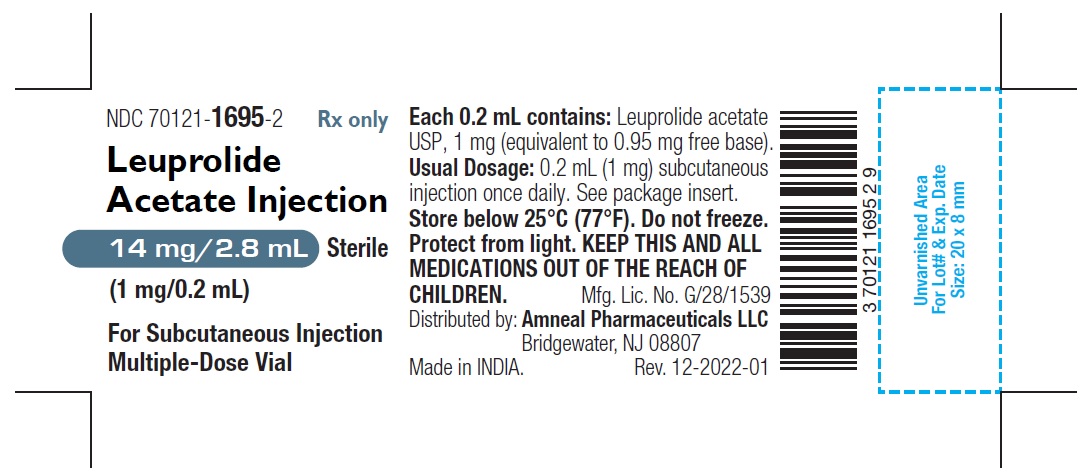
PRINCIPAL DISPLAY PANEL NDC 70121-1695-2 (Matoda) Leuprolide Acetate Injection, 14 mg/2.8 mL (1 mg/0.2 mL) Rx only Amneal Pharmaceuticals LLC (1 vial in 1 carton) NDC 70121-2537-6 (Matoda) Leuprolide Acetate Injection, 14 mg/2.8 mL (1 mg/0.2 mL) Rx only Amneal Pharmaceuticals LLC (Kit Carton) NDC 70121-1695-2 (Pipan) Leuprolide Acetate Injection, 14 mg/2.8 mL (1 mg/0.2 mL) Rx only Amneal Pharmaceuticals LLC (1 vial in 1 carton) NDC 70121-2537-6 (Pipan) Leuprolide Acetate Injection, 14 mg/2.8 mL (1 mg/0.2 mL) Rx only Amneal Pharmaceuticals LLC (Kit Carton) 1 2 3 4 5 6
Medicare Part D spend CMS · PART D · 2025 (Q1-Q4)
About this NDC listing & data coverage
Kit / multi-component package
This NDC identifies a kit — a package containing more than one component. Structured data (pricing, ingredients, equivalents) is often reported per component rather than for the kit NDC itself, which can make this page look thinner than the components' own pages.
What data is (and isn’t) available for this NDC — tap to expand
| NDC identity (package / product / labeler codes) | ✓ Available |
| Labeler | ✓ Available |
| Product & package description | ✓ Available |
| Marketing category & status | ✓ Available |
| Active ingredient / dosage form / route | ✓ Available |
| FDA label (SPL via DailyMed) | ✓ Available |
| Package photos | ✓ Available |
| Inactive ingredients (structured) | — Not published for this NDC The labeler did not submit a structured excipient list, or no SPL is available. |
| NADAC pharmacy acquisition price (CMS) | ✓ Available |
| Orange Book / therapeutic-equivalence data | ✓ Available |
| HCPCS J-code billing crosswalk | — Not published for this NDC Most self-administered / retail products have no J-code — that is normal. |
| Medicaid utilization (CMS SDUD) | — Not published for this NDC CMS reports utilization only for NDCs with Medicaid claims above its privacy threshold. |