
Foster and Thrive Lice Killing Piperonyl Butoxide, Pyrethrum Extract .33 g/100mL; 4 g/100mL Shampoo
🆔 Identity & classification
Where does this data come from?
🏭 Manufacturer & labeler
Where does this data come from?
🩺 Clinical
Pyrethrin and piperonyl butoxide shampoo is used to treat lice (small insects that attach themselves to the skin on the head, body, or pubic area ['crabs']) in adults and children 2 years of age and older. Pyrethrin and piperonyl butoxide is in a class of medications called pediculicides. It works by killing lice.
Read the full MedlinePlus article ↗- It treats lice — specifically head lice, pubic (sometimes called crab) lice, and body lice. You apply it directly to the affected area of skin or hair, not take it by mouth. It's n...
- You leave it on for exactly 10 minutes — no longer — then wash it off with warm water and soap or shampoo. And yes, the second treatment 7 to 10 days later is really important. It...
- How long do I leave it on, and do I really need a second treatment?
- Combing is a key part of the treatment. After rinsing, towel-dry your hair and use a fine-tooth lice comb while the hair is still slightly damp. Work through sections starting at t...
Patient education
Supplement & herbal interactions
Where does this data come from?
Ask a licensed pharmacist directly — free, answered by our team.
💊 What it looks like
Where does this data come from?
🧪 Inactive Ingredients / Excipients
Inactive ingredients, also called excipients, are components of the drug product other than the active ingredient. They may include fillers, dyes, coatings, preservatives, flavors, or other formulation ingredients.
💡 Tap an ingredient (hover on desktop) to see what it is and why it’s used.
-
UNII 3K9958V90M
A liquid solvent derived from fermentation or chemical synthesis. In medicines, alcohol dissolves active ingredients, helps preserve the product, and improves how the body absorbs certain drugs.
-
UNII 698O4Z48G6
A synthetic cleaning agent derived from coconut oil. Used as a surfactant and emulsifier to help blend water and oil-based ingredients together in liquid or semi-solid formulations.
-
UNII 0ZNO9PJJ9J
A synthetic ingredient derived from castor oil that has been chemically modified with polyethylene glycol. It acts as a solubilizer and emulsifier to help mix oil-based and water-based components in the medicine.
-
UNII HB1401PQFS
A synthetic polymer used as a thickening agent and film-former. In medicines, it increases viscosity to improve texture and help the product coat surfaces evenly, commonly used in topical liquids and suspensions.
-
UNII 059QF0KO0R
Water is a liquid solvent that dissolves and mixes ingredients together in liquid medicines, syrups, and injections. It helps distribute the active drug evenly throughout the product.
5 inactive ingredients listed in the exact product block matched to this NDC.
Label-section wording can be broader than the structured product block and may mention additional formulation ingredients.
Where does this data come from?
ingredient classCode="IACT" elements from the exact product block matched by this NDC. Label-section narrative from DailyMed / the openFDA label index is shown separately when available.Inactive ingredient FAQ
Are inactive ingredients the same for every manufacturer?
Why might an inactive ingredient be missing?
Can inactive ingredients matter?
💲 Pricing
A drug doesn't have one price. Each row is a different public payment system, and none is what you'd pay at the counter — that depends on your insurance. The ⓘ on each row explains what it measures.
| Price system | Per mL | Per package |
|---|---|---|
| Retail pharmacies payNADAC · weekly | $0.048 | $5.62 / 118 ml |
| Medicaid paysCMS SDUD · 12 mo | $3.16 | $373.06 / 118 ml |
| Medicare drug plans payPart D · quarterly | No Part D plan price is available for this NDC in our data. | |
Where does this data come from?
🔁 Therapeutic equivalents
| Product | Labeler | Pack | NADAC/unit | TE | Status | Price vs. this |
|---|---|---|---|---|---|---|
| Major Lice Killing .33 g/100mL; 4 g/100mL 00904-7349-20 | Major | 1 bottle | $0.048 | — | Availability likely | — |
| GNP Lice Killing .33 g/100mL; 4 g/100mL 46122-0759-29 | AmerisourceBergen | 1 bottle | $0.048 | — | Availability likely | — |
| Foster and Thrive Lice Killing .33 g/100mL; 4 g/100mLthis 70677-1184-01 | Strategic | 1 bottle | $0.048 | — | Availability likely | — |
| Walgreens Lice Killing 4 g/100mL; .33 g/100mL 00363-1253-02 | Walgreens | 1 bottle | — | — | FDA listed | — |
| Walgreens Lice Elimination 00363-3255-01 | Walgreens | 1 kit | — | — | FDA listed | — |
| Lice No More Lice Killing 4 g/100mL; .33 g/100mL 11383-0001-04 | Weeks | 1 bottle | — | — | FDA listed | — |
| Lice Killing 4 g/100mL; .33 g/100mL 11383-0253-02 | Weeks | 1 bottle | — | — | FDA listed | — |
| Lice Killing 4 g/100mL; .33 g/100mL 11383-0310-02 | Weeks | 1 bottle | — | — | FDA listed | — |
| ABC Lice Killing .33 g/100mL; 4 g/100mL 11383-0312-02 | Weeks | 1 bottle | — | — | FDA listed | — |
| Rite Aid Lice Killing .33 g/100mL; 4 g/100mL 11822-6616-01 | Rite | 1 bottle | — | — | FDA listed | — |
| ZAP Lice Killing 4 g/100mL; .33 g/100mL 24286-0253-04 | DLC | 1 bottle | — | — | FDA listed | — |
| Quita Piojos Lice Killing 4 g/100mL; .33 g/100mL 24286-1253-02 | DLC | 1 bottle | — | — | FDA listed | — |
| Kroger Complete Lice Treatment Kit 30142-0252-01 | The | 1 kit | — | — | FDA listed | — |
| Kroger Lice Killing .33 g/100mL; 4 g/100mL 30142-0253-08 | The | 1 bottle | — | — | FDA listed | — |
| Mata Piojos Lice 4 g/100mL; .33 g/100mL 48201-0006-08 | GRANDALL | 1 bottle | — | — | FDA listed | — |
| GoodSense Lice Killing .33 g/100mL; 4 g/100mL 50804-0253-04 | Perrigo | 1 bottle | — | — | FDA listed | — |
| Discount Drug Mart Lice Killing 4 g/100mL; .33 g/100mL 53943-0253-02 | Discount | 1 bottle | — | — | FDA listed | — |
| Family Wellness Lice Killing .33 g/100mL; 4 g/100mL 55319-0253-08 | Family | 1 bottle | — | — | FDA listed | — |
| El Piojito Lice Killing 4 g/100mL; .33 g/100mL 55758-0253-02 | Pharmadel | 1 bottle | — | — | FDA listed | — |
| Best Choice Lice Killing 4 g/100mL; .33 g/100mL 63941-0253-04 | Valu | 1 bottle | — | — | FDA listed | — |
| Lice Killing 4 g/100mL; .33 g/100mL 68016-0253-04 | PHARMACY | 1 bottle | — | — | FDA listed | — |
| CVS Health Lice Killing 4 g/100mL; .33 g/100mL 69842-0250-04 | CVS | 1 bottle | — | — | FDA listed | — |
| Leader Lice Killing .33 g/100mL; 4 g/100mL 70000-0633-01 | LEADER/ | 1 bottle | — | — | FDA listed | — |
| Herklin Lice Treatment 4 g/100mL; .33 g/100mL 75940-0192-09 | MarcasUSA | 59 ml | — | — | FDA listed | — |
| Topcare Lice Killing .33 g/100mL; 4 g/100mL 76162-0253-08 | Topco | 1 bottle | — | — | FDA listed | — |
| Meijer Lice Killing .33 g/100mL; 4 g/100mL 79481-2530-08 | Meijer, | 1 bottle | — | — | FDA listed | — |
| RID Lice Killing 40 mg/mL; .033 mg/mL 82392-0100-02 | Oystershell | 1 bottle | — | — | FDA listed | — |
| Quality Choice Lice Killing 4 g/100mL; .33 g/100mL 83324-0269-04 | Quality | 1 bottle | — | — | FDA listed | — |
Where does this data come from?
⏳ Availability & generic status
We did not find an FDA-approved generic match for this exact strength, form and route.
Where does this data come from?
🗺️ Medicaid utilization & spend
🔬 Reported adverse events (FAERS)
Top reported reactions
Reporter sex
Serious outcomes
Where does this data come from?
📦 Packaging — all sizes for this product
| Package NDC | Description | Marketing start | Status |
|---|---|---|---|
| 70677-1184-01 You're viewing this | 1 BOTTLE in 1 CARTON (70677-1184-1) / 118 mL in 1 BOTTLE | 2023-11-01 | Active |
📄 FDA label — Drug Facts FDA SPL
🎯 Indications and Usage ▾
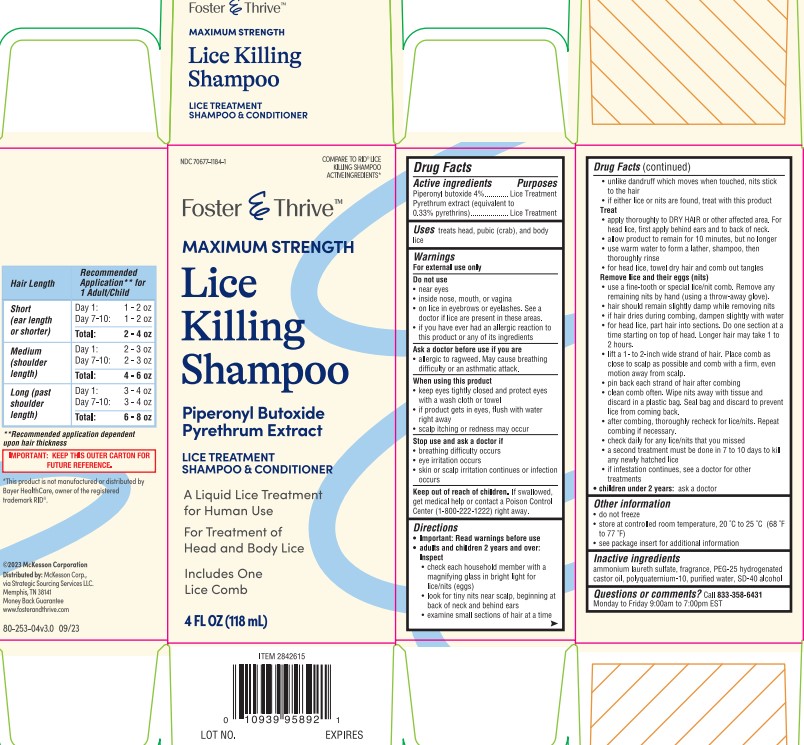
Uses treats head, pubic (crab), and body lice
⏱️ Dosage and Administration ▾
Directions Important: Read warnings before use Adults and children 2 years and over Inspect check each household member with a magnifying glass in bright light for lice/nits (eggs) look for tiny nits near scalp, beginning at back of neck and behind ears examine small sections of hair at a time unlike dandruff which moves when touched, nits stick to the hair if either lice or nits are found, treat with this product Treat apply thoroughly to DRY HAIR or other affected area. For head lice, first apply behind ears and to back of neck. allow product to remain for 10 minutes, but no longer use warm water to form a lather, shampoo, then thoroughly rinse for head lice, towel dry hair and comb out tangles Remove lice and their eggs (nits) se a fine-tooth or special lice/nit comb.
Remove any remaining nits by hand (using a throw-away glove). hair should remain slightly damp while removing nits if hair dries during combing, dampen slightly with water for head lice, part hair into sections. Do one section at a time starting on top of the head. Longer hair may take 1 to 2 hours. lift a 1-to 2-inch wide strand of hair.
Place comb as close to scalp as possible and comb with a firm, even motion away from scalp. pin back each strand of hair after combing clean comb often. Wipe nits away with tissue and discard in a plastic bag. Seal bag and discard to prevent lice from coming back. after combing, thoroughly recheck for lice/nits.
Repeat combing if necessary. check daily for any lice/nits that you missed a second treatment must be done in 7 to 10 days to kill any newly hatched lice if infestation continues, see a doctor for other treatments Children under 2 years: ask a doctor
Inspect check each household member with a magnifying glass in bright light for lice/nits (eggs) look for tiny nits near scalp, beginning at back of neck and behind ears examine small sections of hair at a time unlike dandruff which moves when touched, nits stick to the hair if either lice or nits are found, treat with this product
Treat apply thoroughly to DRY HAIR or other affected area. For head lice, first apply behind ears and to back of neck. allow product to remain for 10 minutes, but no longer use warm water to form a lather, shampoo, then thoroughly rinse for head lice, towel dry hair and comb out tangles
Remove lice and their eggs (nits) se a fine-tooth or special lice/nit comb. Remove any remaining nits by hand (using a throw-away glove). hair should remain slightly damp while removing nits if hair dries during combing, dampen slightly with water for head lice, part hair into sections. Do one section at a time starting on top of the head.
Longer hair may take 1 to 2 hours. lift a 1-to 2-inch wide strand of hair. Place comb as close to scalp as possible and comb with a firm, even motion away from scalp. pin back each strand of hair after combing clean comb often. Wipe nits away with tissue and discard in a plastic bag.
Seal bag and discard to prevent lice from coming back. after combing, thoroughly recheck for lice/nits. Repeat combing if necessary. check daily for any lice/nits that you missed a second treatment must be done in 7 to 10 days to kill any newly hatched lice if infestation continues, see a doctor for other treatments Children under 2 years: ask a doctor
⚠️ Warnings ▾
Warnings For external use only Do not use near eyes inside nose, mouth, or vagina on lice in eyebrows or eyelashes. See a doctor if lice are present in these areas. if you have ever had an allergic reaction to this product or any of its ingredients Ask doctor before use if you are allergic to ragweed. May cause breathing difficulty or an asthmatic attack When using this product keep eyes tightly closed and protect eyes with a washcloth or towel if product gets into eyes, flush with water right away scalp itching or redness may occur Stop and ask a doctor if breathing difficulty occurs eye irritation occurs skin or scalp irritation continues or infection occurs Keep out of reach of children If swallowed, get medical help or contact a Poison Control Center (1-800-222-1222) right away.
🧪 Active Ingredient ▾
Active Ingredient Piperonyl butoxide 4% Pyrethrum extract (equivalent to 0.33% pyrethrins)
🧪 Inactive Ingredients ▾
Inactive Ingredients ammonium laureth sulfate, fragrance, PEG-25 hydrogenated castor oil, polyquaternium-10, purified water, SD-40 alcohol
🎯 Purpose ▾
Purposes Lice Treatment