
Estradiol valerate 40 mg/mL Injection, 5 mL — NDC 70700-275-22 (Billing 70700-0275-22)
This is a package of 5 mL of Estradiol valerate 40 mg/mL Injection from Xiromed, LLC, marketed since May 2023 and currently FDA-listed; retail pharmacies pay about $36.83 per mL (NADAC). It is this product's only package size.
NDC database record
One package, one record: these facts belong to NDC 70700-275-22 alone.
- Record
- FDA NDC Directory package listing · Human prescription drug
- Code segments
- 70700 labeler · 275 product · 22 package
- Package marketed since
- May 1, 2023
- Sample package
- No — commercial package
- Listing certified through
- Dec 31, 2027
- Billing quantity
- 5 mL per package
- Barcode (UPC-A, from the NDC)
- 3 7070027522 1
- Medicaid fills, this package
- 10,602 prescriptions in the last four reported quarters
- FDA record last changed
- Jul 24, 2026
Identity & classification
Regulatory identifiers FDA, NLM and CMS codes for this package
Drug-database identifiers Medi-Span GPI and First Databank GCN / HICL / AHFS classification
- GSN (GCN sequence number): 003200
- GCN: 10694
- GPI-14 (Medi-Span): 24000035201715
- HICL (First Databank): 001420
- AHFS class code: 68:16.04.00
- RxCUI (RxNorm): 310189
Where does this data come from?
- FDA openFDA NDC Directory · synced Oct 1, 2026
- FDA label on DailyMed · label index refreshed Oct 5, 2026
- RxNorm (NLM RxNav) · catalog refreshed Oct 1, 2026
- Medi-Span GPI (licensed)
- First Databank (licensed) · refreshed Oct 1, 2026
RxNorm drug class
This medicine belongs to the Radioactive Diagnostic Agent class.
Where does this data come from?
- RxClass (NLM) · catalog refreshed Oct 1, 2026
Clinical
- It's an estrogen used mainly for menopause symptoms like hot flashes and vaginal dryness. Some patches are also used for low estrogen from ovarian problems or to prevent osteoporos...
- That depends on the form. Patches go on the skin once or twice a week depending on the brand, and the injection goes into a muscle. Use the lowest dose that works for the shortest...
- Headache, breast tenderness, spotting or irregular bleeding, cold-like symptoms and skin irritation where a patch sits are the most common. Tell your doctor if they bother you or d...
- Get urgent help for chest pain, sudden weakness or trouble speaking, a swollen painful leg, sudden shortness of breath or sudden vision changes. These could be a stroke or blood cl...
Patient education
Supplement & herbal interactions
Estradiol may be associated with lower levels of 5 nutrients — worth a chat with your pharmacist, not a cause for alarm.
Where does this data come from?
- MedlinePlus (NLM) · refreshed Oct 1, 2026
- FDA label on DailyMed · label index refreshed Oct 5, 2026
Ask a licensed pharmacist directly — free, answered by our team.
Pricing
A drug doesn't have one price. Each row is a different public payment system, and none is what you'd pay at the counter — that depends on your insurance. The ⓘ on each row explains what it measures.
| Price system | Per mL | Per package |
|---|---|---|
| Retail pharmacies payNADAC · weekly | $36.828 | $184.14 / 5 ml |
| Medicaid paysCMS SDUD · 12 mo | $45.21 | $226.07 / 5 ml |
| Medicare drug plans payPart D · Q2 2026 | $22.81 | $114.06 / 5 ml |
| Medicare Part B allowsASP · J1380 | $7.702 / J1380 unit | — |
Where does this data come from?
- CMS NADAC weekly file · file of Sep 30, 2026
- CMS ASP pricing files · refreshed Sep 20, 2026
- CMS Medicaid State Drug Utilization Data · through Q1 2026
- CMS Part D plan pricing files · refreshed Sep 24, 2026
- VA National Acquisition Center price file
Billing & reimbursement
Where does this data come from?
- CMS ASP NDC-HCPCS crosswalk · refreshed Sep 22, 2026
- DMEPDAC NDC-HCPCS crosswalk
- openFDA NSDE billing units · refreshed Sep 7, 2026
Packaging — all sizes for this product
| Package NDC | Description | Marketing start | Marketing end | Status |
|---|---|---|---|---|
| 70700-0275-22 You're viewing this Main listing | 5 mL in 1 VIAL, MULTI-DOSE | 2023-05-01 | — | Active |
Therapeutic equivalents
| Product | Labeler | Pack | NADAC/unit | TE | Status | Price vs. this |
|---|---|---|---|---|---|---|
| Estradiol Valerate 40 mg/mL 00143-9291-01 | Hikma | 1 vial | $36.828 | AO | Availability likely | — |
| Estradiol Valerate 40 mg/mL 00517-0440-01 | American | 1 vial | $36.828 | AO | Availability likely | — |
| Estradiol valerate 40 mg/mLthis 70700-0275-22 | Xiromed, | 5 ml | $36.828 | AO | Availability likely | — |
Where does this data come from?
- FDA openFDA NDC Directory · synced Oct 1, 2026
- FDA Orange Book · refreshed Oct 3, 2026
- CMS NADAC weekly file · file of Sep 30, 2026
Availability & generic status
This product is an FDA-approved generic. Other versions of the same drug are listed under Therapeutic equivalents, least expensive first.
Where does this data come from?
- FDA Orange Book · refreshed Oct 3, 2026
Inactive Ingredients / Excipients
Inactive ingredients, also called excipients, are components of the drug product other than the active ingredient. They may include fillers, dyes, coatings, preservatives, flavors, or other formulation ingredients.
💡 Tap an ingredient (hover on desktop) to see what it is and why it’s used.
-
UNII LKG8494WBH
Benzyl alcohol is a clear liquid used as a preservative and solvent in medicines. It helps prevent bacterial and fungal growth and dissolves other ingredients to create uniform liquid formulations.
-
UNII N863NB338G
Benzyl benzoate is a liquid organic compound used as a solvent and preservative in medicines. It helps dissolve active ingredients and can extend shelf life by preventing microbial growth in liquid formulations.
-
UNII D5340Y2I9G
Castor oil is a natural plant-based oil used in medicines as a lubricant, laxative agent, and solvent. It helps medicine ingredients dissolve or flow smoothly and can aid bowel movement in formulations designed for that purpose.
3 inactive ingredients listed in the exact product block matched to this NDC.
Where does this data come from?
ingredient classCode="IACT" elements from the exact product block matched by this NDC. Label-section narrative from DailyMed / the openFDA label index is shown separately when available.- FDA label on DailyMed · label index refreshed Oct 5, 2026
- FDA openFDA NDC Directory · synced Oct 1, 2026
Inactive ingredient FAQ
Are inactive ingredients the same for every manufacturer?
Why might an inactive ingredient be missing?
Can inactive ingredients matter?
Manufacturer & labeler
More NDCs from Xiromed, LLC labeler code 70700
- Deferasirox 90 mg Tablet NDC 70700-269-30
- Deferasirox 180 mg Tablet NDC 70700-270-30
- Deferasirox 360 mg Tablet NDC 70700-271-30
- Ramelteon 8 mg Tablet, Film Coated NDC 70700-272-05
- Estradiol valerate 10 mg/mL Injection NDC 70700-273-22
- Estradiol valerate 20 mg/mL Injection NDC 70700-274-22
- FULVESTRANT 50 mg/mL Injection, Solution NDC 70700-284-98
- PROGESTERONE 50 mg/mL Injection, Solution NDC 70700-286-22
- testosterone cypionate 100 mg/mL Injection, Solution NDC 70700-288-22
- testosterone cypionate 200 mg/mL Injection, Solution NDC 70700-289-22
- testosterone cypionate 200 mg/mL Injection, Solution NDC 70700-290-22
- Guanfacine Hydrochloride 1 mg Tablet NDC 70700-301-01
Where does this data come from?
- FDA openFDA NDC Directory · synced Oct 1, 2026
- Drugs@FDA
Full prescribing information FDA SPL
🚨 Boxed Warning ▾
ESTROGENS INCREASE THE RISK OF ENDOMETRIAL CANCER Close clinical surveillance of all women taking estrogens is important. Adequate diagnostic measures, including endometrial sampling when indicated, should be undertaken to rule out malignancy in all cases of undiagnosed persistent or recurring abnormal vaginal bleeding. There is no evidence that the use of “natural” estrogens results in a different endometrial risk profile than synthetic estrogens at equivalent estrogen doses.
(See WARNINGS, Malignant neoplasms, Endometrial cancer ). CARDIOVASCULAR AND OTHER RISKS Estrogens and progestins should not be used for the prevention of cardiovascular disease. (See WARNINGS, Cardiovascular disorders ).
The Women’s Health Initiative (WHI) study reported increased risks of myocardial infarction, stroke, invasive breast cancer, pulmonary emboli, and deep vein thrombosis in postmenopausal women (50 to 79 years of age) during 5 years of treatment with oral conjugated estrogens (CE 0.625 mg) combined with medroxyprogesterone acetate (MPA 2.5 mg) relative to placebo. (See CLINICAL PHARMACOLOGY, Clinical Studies ). The Women’s Health Initiative Memory Study (WHIMS), a substudy of WHI, reported increased risk of developing probable dementia in postmenopausal women 65 years of age or older during 4 years of treatment with oral conjugated estrogens plus medroxyprogesterone acetate relative to placebo.
It is unknown whether this finding applies to younger postmenopausal women or to women taking estrogen alone therapy. (See CLINICAL PHARMACOLOGY, Clinical Studies ). Other doses of oral conjugated estrogens with medroxyprogesterone acetate, and other combinations and dosage forms of estrogens and progestins were not studied in the WHI clinical trials and, in the absence of comparable data, these risks should be assumed to be similar.
Because of these risks, estrogens with or without progestins should be prescribed at the lowest effective doses and for the shortest duration consistent with treatment goals and risks for the individual woman.
WHAT IS THE MOST IMPORTANT INFORMATION I SHOULD KNOW ABOUT ESTRADIOL VALERATE INJECTION, USP (AN ESTROGEN HORMONE)? Estrogens increase the chances of getting cancer of the uterus. Report any unusual vaginal bleeding right away while you are taking estrogens.
Vaginal bleeding after menopause may be a warning sign of cancer of the uterus (womb). Your healthcare provider should check any unusual vaginal bleeding to find out the cause. Do not use estrogens with or without progestins to prevent heart disease, heart attacks, or strokes.
Using estrogens with or without progestins may increase your chances of getting heart attacks, strokes, breast cancer, and blood clots. Using estrogens with progestins may increase your risk of dementia. You and your healthcare provider should talk regularly about whether you still need treatment with Estradiol valerate injection, USP .
🎯 Indications and Usage ▾
INDICATIONS AND USAGE Estradiol valerate injection, USP is indicated in the: Treatment of moderate to severe vasomotor symptoms associated with the menopause. Treatment of moderate to severe symptoms of vulvar and vaginal atrophy associated with the menopause. When prescribing solely for the treatment of symptoms of vulvar and vaginal atrophy, topical vaginal products should be considered.
Treatment of hypoestrogenism due to hypogonadism, castration or primary ovarian failure. Treatment of advanced androgen-dependent carcinoma of the prostate (for palliation only).
⏱️ Dosage and Administration ▾
DOSAGE AND ADMINISTRATION When estrogen is prescribed for a postmenopausal woman with a uterus, progestin should also be initiated to reduce the risk of endometrial cancer. A woman without a uterus does not need progestin. Use of estrogen, alone or in combination with a progestin, should be with the lowest effective dose and for the shortest duration consistent with treatment goals and risks for the individual woman.
Patients should be reevaluated periodically as clinically appropriate (e.g., 3-month to 6-month intervals) to determine if treatment is still necessary (See BOXED WARNINGS and WARNINGS ). For women who have a uterus, adequate diagnostic measures, such as endometrial sampling, when indicated, should be undertaken to rule out malignancy in cases of undiagnosed persistent or recurring abnormal vaginal bleeding. Care should be taken to inject deeply into the upper, outer quadrant of the gluteal muscle following the usual precautions for intramuscular administration.
By virtue of the low viscosity of the vehicles, the various preparations of Estradiol valerate injection, USP may be administered with a small gauge needle (i.e., 20 Gauge × 1 ½ inches long). Since the 40 mg potency provides a high concentration in a small volume, particular care should be observed to administer the full dose. Estradiol valerate injection, USP should be visually inspected for particulate matter and color prior to administration; the solution is clear, colorless to pale yellow.
Storage at low temperatures may result in the separation of some crystalline material which redissolves readily on warming. Note: A dry needle and syringe should be used. Use of a wet needle or syringe may cause the solution to become cloudy; however, this does not affect the potency of the material.
Patients should be started at the lowest dose for the indication. The lowest effective dose of Estradiol valerate injection, USP has not been determined for any indication. Treated patients with an intact uterus should be monitored closely for signs of endometrial cancer, and appropriate diagnostic measures should be taken to rule out malignancy in the event of persistent or recurring abnormal vaginal bleeding.
See PRECAUTIONS concerning addition of a progestin. For treatment of moderate to severe vasomotor symptoms, vulvar and vaginal atrophy associated with the menopause, the lowest dose and regimen that will control symptoms should be chosen and medication should be discontinued as promptly as possible. The usual dosage is 10 to 20 mg Estradiol valerate injection, USP every four weeks.
Attempts to discontinue or taper medication should be made at 3-month to 6-month intervals. For treatment of female hypoestrogenism due to hypogonadism, castration, or primary ovarian failure. The usual dosage is 10 to 20 mg Estradiol valerate injection, USP every four weeks.
For treatment of advanced androgen-dependent carcinoma of the prostate, for palliation only. The usual dosage is 30 mg or more administered every one or two weeks.
⛔ Contraindications ▾
CONTRAINDICATIONS Estradiol valerate injection, USP should not be used in women with any of the following conditions: Undiagnosed abnormal genital bleeding. Known, suspected, or history of cancer of the breast. Known or suspected estrogen-dependent neoplasia.
Active deep vein thrombosis, pulmonary embolism or a history of these conditions. Active or recent (e.g., within the past year) arterial thromboembolic disease (e.g., stroke, myocardial infarction). Liver dysfunction or disease.
Estradiol valerate injection, USP should not be used in patients with known hypersensitivity to its ingredients. Known or suspected pregnancy. There is no indication for Estradiol valerate injection, USP in pregnancy.
There appears to be little or no increased risk of birth defects in children born to women who have used estrogens and progestins from oral contraceptives inadvertently during early pregnancy. (See PRECAUTIONS ).
⚠️ Warnings ▾
WARNINGS See BOXED WARNINGS. The use of unopposed estrogens in women who have a uterus is associated with an increased risk of endometrial cancer. 1.
Cardiovascular disorders Estrogen and estrogen/progestin therapy has been associated with an increased risk of cardiovascular events such as myocardial infarction and stroke, as well as venous thrombosis and pulmonary embolism (venous thromboembolism or VTE). Should any of these occur or be suspected, estrogens should be discontinued immediately. Risk factors for arterial vascular disease (e.g., hypertension, diabetes mellitus, tobacco use, hypercholesterolemia, and obesity) and/or venous thromboembolism (e.g., personal history or family history of VTE, obesity, and systemic lupus erythematosus) should be managed appropriately. a.
Coronary heart disease and stroke In the Women's Health Initiative (WHI) study, an increase in the number of myocardial infarctions and strokes has been observed in women receiving CE compared to placebo. These observations are preliminary. (See CLINICAL PHARMACOLOGY, Clinical Studies ).
In the CE/MPA substudy of WHI, an increased risk of coronary heart disease (CHD) events (defined as non-fatal myocardial infarction and CHD death) was observed in women receiving CE/MPA compared to women receiving placebo (37 vs. 30 per 10,000 women-years). The increase in risk was observed in year one and persisted.
In the same substudy of WHI, an increased risk of stroke was observed in women receiving CE/MPA compared to women receiving placebo (29 vs. 21 per 10,000 women-years). The increase in risk was observed after the first year and persisted.
In postmenopausal women with documented heart disease (n=2,763, average age 66.7 years) a controlled clinical trial of secondary prevention of cardiovascular disease (Heart and Estrogen/Progestin Replacement Study; HERS) treatment with CE/MPA (0.625mg/2.5mg per day) demonstrated no cardiovascular benefit. During an average follow-up of 4.1 years, treatment with CE/MPA did not reduce the overall rate of CHD events in postmenopausal women with established coronary heart disease. There were more CHD events in the CE/MPA-treated group than in the placebo group in year 1, but not during the subsequent years.
Two thousand three hundred and twenty one women from the original HERS trial agreed to participate in an open label extension of HERS, HERS II. Average follow-up in HERS II was an additional 2.7 years, for a total of 6.8 years overall. Rates of CHD events were comparable among women in the CE/MPA group and the placebo group in HERS, HERS II, and overall.
Large doses of estrogen (5 mg conjugated estrogens per day), comparable to those used to treat cancer of the prostate and breast, have been shown in a large prospective clinical trial in men to increase the risks of nonfatal myocardial infarction, pulmonary embolism, and thrombophlebitis. b. Venous thromboembolism (VTE) In the Women's Health Initiative (WHI) study, an increase in VTE has been observed in women receiving CE compared to placebo. These observations are preliminary.
(See CLINICAL PHARMACOLOGY, Clinical Studies .) In the CE/MPA substudy of WHI, a 2-fold greater rate of VTE, including deep venous thrombosis and pulmonary embolism, was observed in women receiving CE/MPA compared to women receiving placebo. The rate of VTE was 34 per 10,000 women-years in the CE/MPA group compared to 16 per 10,000 women-years in the placebo group. The increase in VTE risk was observed during the first year and persisted.
If feasible, estrogens should be discontinued at least 4 to 6 weeks before surgery of the type associated with an increased risk of thromboembolism, or during periods of prolonged immobilization. 2. Malignant neoplasms a.
Endometrial cancer The use of unopposed estrogens in women with intact uteri has been associated with an increased risk of endometrial cancer. The reported endometrial cancer risk among unopposed estrogen users is about 2- to 12-fold greater than i… [Excerpted — this section continues on DailyMed.]
🤒 Adverse Reactions ▾
ADVERSE REACTIONS See BOXED WARNINGS, WARNINGS , and PRECAUTIONS . Because clinical trials are conducted under widely varying conditions, adverse reaction rates observed in the clinical trials of a drug cannot be directly compared to rates in the clinical trials of another drug and may not reflect the rates observed in practice. The adverse reaction information from clinical trials does, however, provide a basis for identifying the adverse events that appear to be related to drug use and for approximating rates.
The following additional adverse reactions have been reported with estrogen and/or progestin therapy. Genitourinary system Changes in vaginal bleeding pattern and abnormal withdrawal bleeding or flow; breakthrough bleeding; spotting; dysmenorrhea, increase in size of uterine leiomyomata; vaginitis, including vaginal candidiasis; change in amount of cervical secretion; changes in cervical ectropion; ovarian cancer; endometrial hyperplasia; endometrial cancer. Breasts Tenderness, enlargement, pain, nipple discharge, galactorrhea; fibrocystic breast changes; breast cancer.
Cardiovascular Deep and superficial venous thrombosis; pulmonary embolism; thrombophlebitis; myocardial infarction; stroke; increase in blood pressure. Gastrointestinal Nausea, vomiting; abdominal cramps, bloating; cholestatic jaundice; increased incidence of gallbladder disease; pancreatitis, enlargement of hepatic hemangiomas. Skin Chloasma or melasma, which may persist when drug is discontinued; erythema multiforme; erythema nodosum; hemorrhagic eruption; loss of scalp hair; hirsutism; pruritus, rash.
Eyes Retinal vascular thrombosis; intolerance to contact lenses. Central Nervous System Headache; migraine; dizziness; mental depression; chorea; nervousness; mood disturbances; irritability; exacerbation of epilepsy, dementia. Miscellaneous Increase or decrease in weight; reduced carbohydrate tolerance; aggravation of porphyria; edema; arthalgias; leg cramps; changes in libido; urticaria, angioedema, anaphylactoid/anaphylactic reactions; hypocalcemia; exacerbation of asthma; increased triglycerides.
For medical advice about adverse reactions contact your medical professional. To report SUSPECTED ADVERSE REACTIONS, contact Xiromed, LLC at 844-XIROMED (844-947-6633) or visit www. Xiromed.com or www.fda.gov/medwatch.
🔄 Drug Interactions ▾
Drug Interactions In vitro and in vivo studies have shown that estrogens are metabolized partially by cytochrome P450 3A4 (CYP3A4). Therefore, inducers or inhibitors of CYP3A4 may affect estrogen drug metabolism. Inducers of CYP3A4 such as St.
John's Wort preparations (Hypericum perforatum), phenobarbital, carbamazepine, and rifampin may reduce plasma concentrations of estrogens, possibly resulting in a decrease in therapeutic effects and/or changes in the uterine bleeding profile. Inhibitors of CYP3A4 such as erythromycin, clarithromycin, ketoconazole, itraconazole, ritonavir and grapefruit juice may increase plasma concentrations of estrogens and may result in side effects.
🔄 Drug / Laboratory Test Interactions ▾
D. Drug/Laboratory Test Interactions Accelerated prothrombin time, partial thromboplastin time, and platelet aggregation time; increased platelet count; increased factors II, VII antigen, VIII antigen, VIII coagulant activity, IX, X, XII, VII-X complex, II-VII-X complex, and beta-thromboglobulin; decreased levels of antifactor Xa and antithrombin III, decreased antithrombin III activity; increased levels of fibrinogen and fibrinogen activity; increased plasminogen antigen and activity. Increased thyroid-binding globulin (TBG) levels leading to increased circulating total thyroid hormone levels as measured by protein-bound iodine (PBI), T 4 levels (by column or by radioimmunoassay) or T 3 levels by radioimmunoassay.
T 3 resin uptake is decreased, reflecting the elevated TBG. Free T 4 and free T 3 concentrations are unaltered. Patients on thyroid replacement therapy may require higher doses of thyroid hormone.
Other binding proteins may be elevated in serum (i.e., corticosteroid binding globulin (CBG), sex hormone binding globulin (SHBG)) leading to increased total circulating corticosteroids and sex steroids, respectively. Free hormone concentrations may be decreased. Other plasma proteins may be increased (angiotensinogen/renin substrate, alpha-1-antitrypsin, ceruloplasmin).
Increased plasma HDL and HDL 2 cholesterol subfraction concentrations, reduced LDL cholesterol concentrations, increased triglycerides levels. Impaired glucose tolerance. Reduced response to metyrapone test.
🤰 Pregnancy ▾
F. Pregnancy Estradiol valerate injection, USP should not be used during pregnancy. (See CONTRAINDICATIONS ).
🧒 Pediatric Use ▾
H. Pediatric Use Safety and effectiveness in pediatric patients have not been established. Large and repeated doses of estrogen over an extended period of time may accelerate epiphyseal closure. Therefore, periodic monitoring of bone maturation and effects on epiphyseal centers is recommended in patients in whom bone growth is not complete.
🧓 Geriatric Use ▾
I. Geriatric Use Clinical studies of estradiol valerate did not include sufficient numbers of subjects aged 65 and over to determine whether they respond differently from younger subjects. In the Women's Health Initiative Memory Study, including 4,532 women 65 years of age and older, followed for an average of 4 years, 82% (n = 3,729) were 65 to 74 while 18% (n = 803) were 75 and over.
Most women (80%) had no prior hormone therapy use. Women treated with conjugated estrogens plus medroxyprogesterone acetate were reported to have a two-fold increase in the risk of developing probable dementia. Alzheimer's disease was the most common classification of probable dementia in both the conjugated estrogens plus medroxyprogesterone acetate group and the placebo group.
Ninety percent of the cases of probable dementia occurred in the 54% of the women that were older than 70. (See WARNINGS, Dementia ). It is unknown whether these findings apply to estrogen alone therapy.
🆘 Overdosage ▾
OVERDOSAGE Serious ill effects have not been reported following acute ingestion of large doses of estrogen-containing drug products by young children. Overdosage of estrogen may cause nausea and vomiting, and withdrawal bleeding may occur in females.
🧬 Clinical Pharmacology ▾
CLINICAL PHARMACOLOGY Endogenous estrogens are largely responsible for the development and maintenance of the female reproductive system and secondary sexual characteristics. Although circulating estrogens exist in a dynamic equilibrium of metabolic interconversions, estradiol is the principal intracellular human estrogen and is substantially more potent than its metabolites, estrone and estriol, at the receptor level. The primary source of estrogen in normally cycling adult women is the ovarian follicle, which secretes 70 to 500 mcg of estradiol daily, depending on the phase of the menstrual cycle.
After menopause, most endogenous estrogen is produced by conversion of androstenedione, secreted by the adrenal cortex, to estrone by peripheral tissues. Thus, estrone and the sulfate conjugated form, estrone sulfate, are the most abundant circulating estrogens in postmenopausal women. Estrogens act through binding to nuclear receptors in estrogen-responsive tissues.
To date, two estrogen receptors have been identified. These vary in proportion from tissue to tissue. Circulating estrogens modulate the pituitary secretion of the gonadotropins, luteinizing hormone (LH) and follicle stimulating hormone (FSH), through a negative feedback mechanism.
Estrogens act to reduce the elevated levels of these hormones seen in postmenopausal women. Pharmacokinetics Absorption Estrogens used in therapy are well absorbed through the skin, mucous membranes, and gastrointestinal tract. When applied for a local action, absorption is usually sufficient to cause systemic effects.
When conjugated with aryl and alkyl groups for parenteral administration, the rate of absorption of oily preparations is slowed with a prolonged duration of action, such that a single intramuscular injection of estradiol valerate or estradiol cypionate is absorbed over several weeks. Distribution The distribution of exogenous estrogens is similar to that of endogenous estrogens. Estrogens are widely distributed in the body and are generally found in higher concentrations in the sex hormone target organs.
Estrogens circulate in the blood largely bound to sex hormone binding globulin (SHBG) and albumin. Metabolism Exogenous estrogens are metabolized in the same manner as endogenous estrogens. Circulating estrogens exist in a dynamic equilibrium of metabolic interconversions.
These transformations take place mainly in the liver. Estradiol is converted reversibly to estrone, and both can be converted to estriol, which is the major urinary metabolite. Estrogens also undergo enterohepatic recirculation via sulfate and glucuronide conjugation in the liver, biliary secretion of conjugates into the intestine, and hydrolysis in the gut followed by reabsorption.
In postmenopausal women, a significant proportion of the circulating estrogens exist as sulfate conjugates, especially estrone sulfate, which serves as a circulating reservoir for the formation of more active estrogens. When given orally, naturally-occurring estrogens and their esters are extensively metabolized (first pass effect) and circulate primarily as estrone sulfate, with smaller amounts of other conjugated and unconjugated estrogenic species. This results in limited oral potency.
By contrast, synthetic estrogens, such as ethinyl estradiol and the nonsteroidal estrogens, are degraded very slowly in the liver and other tissues, which results in their high intrinsic potency. Estrogen drug products administered by non-oral routes are not subject to first-pass metabolism, but also undergo significant hepatic uptake, metabolism, and enterohepatic recycling. Excretion Estradiol, estrone, and estriol are excreted in the urine along with glucuronide and sulfate conjugates.
Drug Interactions In vitro and in vivo studies have shown that estrogens are metabolized partially by cytochrome P450 3A4 (CYP3A4). Therefore, inducers or inhibitors of CYP3A4 may affect estrogen drug metabolism. Inducers of CYP3A4 such as St.
John's Wort prepa… [Excerpted — this section continues on DailyMed.]
📦 How Supplied / Storage and Handling ▾
HOW SUPPLIED Estradiol valerate injection, USP Multiple Dose Vials 10 mg/mL (5 mL): NDC 70700-273-22 20 mg/mL (5 mL): NDC 70700-274-22 40 mg/mL (5 mL): NDC 70700-275-22 STORAGE Store between 20° to 25°C (68° to 77°F). (See USP Controlled Room Temperature.) Keep out of reach of children. Revised: 01/2026
📦 Storage and Handling ▾
STORAGE Store between 20° to 25°C (68° to 77°F). (See USP Controlled Room Temperature.) Keep out of reach of children. Revised: 01/2026
📋 Description ▾
DESCRIPTION Estradiol valerate injection, USP contains estradiol valerate, a long-acting estrogen in sterile oil solutions for intramuscular use. These solutions are clear, colorless to pale yellow. Formulations (per mL): 10 mg estradiol valerate in a vehicle containing 5 mg chlorobutanol (chloral derivative/preservative) and 905 mg sesame oil; 20 mg estradiol valerate in a vehicle containing 224 mg benzyl benzoate, 20 mg benzyl alcohol (preservative), and 733 mg castor oil; 40 mg estradiol valerate in a vehicle containing 447 mg benzyl benzoate, 20 mg benzyl alcohol, and 525 mg castor oil.
Estradiol valerate is designated chemically as estra-1,3,5(10)-triene-3, 17-diol(17β)-, 17-pentanoate. Graphic formula: C 23 H 32 O 3 MW 356.50 Chemical Structure
💬 Information for Patients ▾
B. Patient Information Physicians are advised to discuss the PATIENT INFORMATION leaflet with patients for whom they prescribe Estradiol valerate injection, USP .
⚠️ Precautions ▾
PRECAUTIONS A. GENERAL 1. Addition of a progestin when a woman has not had a hysterectomy Studies of the addition of a progestin for 10 or more days of a cycle of estrogen administration, or daily with estrogen in a continuous regimen, have reported a lowered incidence of endometrial hyperplasia than would be induced by estrogen treatment alone.
Endometrial hyperplasia may be a precursor to endometrial cancer. There are, however, possible risks that may be associated with the use of progestins with estrogens compared to estrogen-alone regimens. These include a possible increased risk of breast cancer.
2. Elevated blood pressure In a small number of case reports, substantial increases in blood pressure have been attributed to idiosyncratic reactions to estrogens. In a large, randomized, placebo-controlled clinical trial, a generalized effect of estrogen therapy on blood pressure was not seen.
Blood pressure should be monitored at regular intervals with estrogen use. 3. Hypertriglyceridemia In patients with pre-existing hypertriglyceridemia, estrogen therapy may be associated with elevations of plasma triglycerides leading to pancreatitis and other complications.
4. Impaired liver function and past history of cholestatic jaundice Estrogens may be poorly metabolized in patients with impaired liver function. For patients with a history of cholestatic jaundice associated with past estrogen use or with pregnancy, caution should be exercised and in the case of recurrence, medication should be discontinued.
5. Hypothyroidism Estrogen administration leads to increased thyroid-binding globulin (TBG) levels. Patients with normal thyroid function can compensate for the increased TBG by making more thyroid hormone, thus maintaining free T 4 and T 3 serum concentrations in the normal range.
Patients dependent on thyroid hormone replacement therapy who are also receiving estrogens may require increased doses of their thyroid replacement therapy. These patients should have their thyroid function monitored in order to maintain their free thyroid hormone levels in an acceptable range. 6.
Fluid retention Because estrogens may cause some degree of fluid retention, patients with conditions that might be influenced by this factor, such as a cardiac or renal dysfunction, warrant careful observation when estrogens are prescribed. 7. Hypocalcemia Estrogens should be used with caution in individuals with severe hypocalcemia.
8. Exacerbation of endometriosis Endometriosis may be exacerbated with administration of estrogens. A few cases of malignant transformation of residual endometrial implants have been reported in women treated post-hysterectomy with estrogen alone therapy.
For patients known to have residual endometriosis post-hysterectomy, the addition of progestin should be considered. 9. Exacerbation of other conditions Estrogens may cause an exacerbation of asthma, diabetes mellitus, epilepsy, migraine or porphyria, systemic lupus erythematosus, and hepatic hemangiomas and should be used with caution in women with these conditions.
10. Hypercoagulability Some studies have shown that women taking estrogen replacement therapy have hypercoagulability, primarily related to decreased antithrombin activity. This effect appears dose- and duration-dependent and is less pronounced than that associated with oral contraceptive use.
Also, postmenopausal women tend to have increased coagulation parameters at baseline compared to premenopausal women. There is some suggestion that low dose postmenopausal mestranol may increase the risk of thromboembolism, although the majority of studies (of primarily conjugated estrogens users) report no such increase. 11.
Uterine bleeding and mastodynia Certain patients may develop undesirable manifestations of estrogenic stimulation, such as abnormal uterine bleeding and mastodynia. B. Patient Information Physicians are advised to discuss the PATIENT INFORMATION leaflet with patients for whom they prescribe Estradiol valera… [Excerpted — this section continues on DailyMed.]
🍼 Nursing Mothers ▾
G. Nursing Mothers Estrogen administration to nursing mothers has been shown to decrease the quantity and quality of the milk. Detectable amounts of estrogens have been identified in the milk of mothers receiving this drug. Caution should be exercised when Estradiol valerate injection, USP is administered to a nursing woman.
🧬 Pharmacokinetics ▾
Pharmacokinetics Absorption Estrogens used in therapy are well absorbed through the skin, mucous membranes, and gastrointestinal tract. When applied for a local action, absorption is usually sufficient to cause systemic effects. When conjugated with aryl and alkyl groups for parenteral administration, the rate of absorption of oily preparations is slowed with a prolonged duration of action, such that a single intramuscular injection of estradiol valerate or estradiol cypionate is absorbed over several weeks.
Distribution The distribution of exogenous estrogens is similar to that of endogenous estrogens. Estrogens are widely distributed in the body and are generally found in higher concentrations in the sex hormone target organs. Estrogens circulate in the blood largely bound to sex hormone binding globulin (SHBG) and albumin.
Metabolism Exogenous estrogens are metabolized in the same manner as endogenous estrogens. Circulating estrogens exist in a dynamic equilibrium of metabolic interconversions. These transformations take place mainly in the liver.
Estradiol is converted reversibly to estrone, and both can be converted to estriol, which is the major urinary metabolite. Estrogens also undergo enterohepatic recirculation via sulfate and glucuronide conjugation in the liver, biliary secretion of conjugates into the intestine, and hydrolysis in the gut followed by reabsorption. In postmenopausal women, a significant proportion of the circulating estrogens exist as sulfate conjugates, especially estrone sulfate, which serves as a circulating reservoir for the formation of more active estrogens.
When given orally, naturally-occurring estrogens and their esters are extensively metabolized (first pass effect) and circulate primarily as estrone sulfate, with smaller amounts of other conjugated and unconjugated estrogenic species. This results in limited oral potency. By contrast, synthetic estrogens, such as ethinyl estradiol and the nonsteroidal estrogens, are degraded very slowly in the liver and other tissues, which results in their high intrinsic potency.
Estrogen drug products administered by non-oral routes are not subject to first-pass metabolism, but also undergo significant hepatic uptake, metabolism, and enterohepatic recycling. Excretion Estradiol, estrone, and estriol are excreted in the urine along with glucuronide and sulfate conjugates. Drug Interactions In vitro and in vivo studies have shown that estrogens are metabolized partially by cytochrome P450 3A4 (CYP3A4).
Therefore, inducers or inhibitors of CYP3A4 may affect estrogen drug metabolism. Inducers of CYP3A4 such as St. John's Wort preparations (Hypericum perforatum), phenobarbital, carbamazepine, and rifampin may reduce plasma concentrations of estrogens, possibly resulting in a decrease in therapeutic effects and/or changes in the uterine bleeding profile.
Inhibitors of CYP3A4 such as erythromycin, clarithromycin, ketoconazole, itraconazole, ritonavir and grapefruit juice may increase plasma concentrations of estrogens and may result in side effects.
🔬 Clinical Studies ▾
Clinical Studies Women's Health Initiative Studies The Women's Health Initiative (WHI) enrolled a total of 27,000 predominantly healthy postmenopausal women to assess the risks and benefits of either the use of oral 0.625 mg conjugated estrogens (CE) per day alone or the use of oral 0.625 mg conjugated estrogens plus 2.5 mg medroxyprogesterone acetate (MPA) per day compared to placebo in the prevention of certain chronic diseases. The primary endpoint was the incidence of coronary heart disease (CHD) (nonfatal myocardial infarction and CHD death), with invasive breast cancer as the primary adverse outcome studied.
A "global index" included the earliest occurrence of CHD, invasive breast cancer, stroke, pulmonary embolism (PE), endometrial cancer, colorectal cancer, hip fracture, or death due to other cause. The study did not evaluate the effects of CE or CE/MPA on menopausal symptoms. The CE/MPA substudy was stopped early because, according to the predefined stopping rule, the increased risk of breast cancer and cardiovascular events exceeded the specified benefits included in the "global index." Results of the CE/MPA substudy, which included 16,608 women (average age of 63 years, range 50 to 79; 83.9% White, 6.5% Black, 5.5% Hispanic), after an average follow-up of 5.2 years are presented in Table 1 below: Table 1.
RELATIVE AND ABSOLUTE RISK SEEN IN THE CE/MPA SUBSTUDY OF WHI adapted from JAMA, 2002; 288:321-333 Event a subset of the events was combined in a "global index", defined as the earliest occurrence of CHD events, invasive breast cancer, stroke, pulmonary embolism, endometrial cancer, colorectal cancer, hip fracture, or death due to other causes Relative Risk CE/MPA vs placebo at
5.2Years (95% CI nominal confidence intervals unadjusted for multiple looks and multiple comparisons ) Placebo n = 8102 CE/MPA n = 8506 Absolute Risk per 10,000 Person-years CHD events 1.29 (1.02-1.63) 30 37 Non-fatal MI 1.32 (1.02-1.72) 23 30 CHD death 1.18 (0.70-1.97) 6 7 Invasive breast cancer includes metastatic and non-metastatic breast cancer with the exception of in situ breast cancer 1.26 (1.00-1.59) 30 38 Stroke 1.41 (1.07-1.85) 21 29 Pulmonary embolism 2.13 (1.39-3.25) 8 16 Colorectal cancer 0.63 (0.43-0.92) 16 10 Endometrial cancer 0.83 (0.47-1.47) 6 5 Hip fracture 0.66 (0.45-0.98) 15 10 Death due to cause other than the events above 0.92 (0.74-1.14) 40 37 Global Index 1.15 (1.03-1.28) 151 170 Deep vein thrombosis not included in Global Index 2.07 (1.49-2.87) 13 26 Vertebral fractures 0.66 (0.44-0.98) 15 9 Other osteoporotic fractures 0.77 (0.69-0.86) 170 131 For those outcomes included in the "global index," the absolute excess risks per 10,000 women-years in the group treated with CE/MPA were 7 more CHD events, 8 more strokes, 8 more PEs, and 8 more invasive breast cancers, while absolute risk reductions per 10,000 women-years were 6 fewer colorectal cancers and 5 fewer hip fractures.
The absolute excess risk of events included in the "global index" was 19 per 10,000 women-years. There was no difference between the groups in terms of all-cause mortality. (See BOXED WARNING , WARNINGS , and PRECAUTIONS ).
Women's Health Initiative Memory Study The Women's Health Initiative Memory Study (WHIMS), a substudy of WHI, enrolled 4,532 predominantly healthy postmenopausal women 65 years of age and older (47% were age 65 to 69 years, 35% were 70 to 74 years, and 18% were 75 years of age and older) to evaluate the effects of CE/MPA (0.625 mg conjugated estrogens plus 2.5 mg medroxyprogesterone acetate) on the incidence of probable dementia (primary outcome) compared with placebo. After an average follow-up of 4 years, 40 women in the estrogen/progestin group (45 per 10,000 women-years) and 21 in the placebo group (22 per 10,000 women-years) were diagnosed with probable dementia.
The relative risk of probable dementia in the hormone therapy group was 2.05 (95% CI, 1.21 to 3.48) compared to placebo. Differences between groups became apparen… [Excerpted — this section continues on DailyMed.]
📄 Carcinogenesis, Mutagenesis, Impairment of Fertility ▾
E. Carcinogenesis, Mutagenesis, and Impairment of Fertility Long-term continuous administration of estrogen, with and without progestin, in women with and without a uterus, has shown an increased risk of endometrial cancer, breast cancer, and ovarian cancer. (See BOXED WARNINGS, WARNINGS and PRECAUTIONS ).
Long-term continuous administration of natural and synthetic estrogens in certain animal species increases the frequency of carcinomas of the breast, uterus, cervix, vagina, testis, and liver.
📄 Patient Package Insert ▾
PATIENT INFORMATION Estradiol valerate injection, USP Read this PATIENT INFORMATION before you start taking Estradiol valerate injection, USP and read what you get each time you refill Estradiol valerate injection, USP . There may be new information. This information does not take the place of talking to your healthcare provider about your medical condition or your treatment.
WHAT IS THE MOST IMPORTANT INFORMATION I SHOULD KNOW ABOUT ESTRADIOL VALERATE INJECTION, USP (AN ESTROGEN HORMONE)? Estrogens increase the chances of getting cancer of the uterus. Report any unusual vaginal bleeding right away while you are taking estrogens.
Vaginal bleeding after menopause may be a warning sign of cancer of the uterus (womb). Your healthcare provider should check any unusual vaginal bleeding to find out the cause. Do not use estrogens with or without progestins to prevent heart disease, heart attacks, or strokes.
Using estrogens with or without progestins may increase your chances of getting heart attacks, strokes, breast cancer, and blood clots. Using estrogens with progestins may increase your risk of dementia. You and your healthcare provider should talk regularly about whether you still need treatment with Estradiol valerate injection, USP .
What is Estradiol valerate injection, USP ? Estradiol valerate injection, USP is a medicine that contains estrogen hormones. What is Estradiol valerate injection, USP used for?
Estradiol valerate injection, USP is used after menopause to: reduce moderate to severe hot flashes. Estrogens are hormones made by a woman's ovaries. The ovaries normally stop making estrogens when a woman is between 45 to 55 years old.
This drop in body estrogen levels causes the "change of life" or menopause (the end of monthly menstrual periods). Sometimes, both ovaries are removed during an operation before natural menopause takes place. The sudden drop in estrogen levels causes "surgical menopause." When the estrogen levels begin dropping, some women develop very uncomfortable symptoms, such as feeling of warmth in the face, neck, and chest, or sudden strong feelings of heat and sweating ("hot flashes" or "hot flushes").
In some women, the symptoms are mild, and they will not need estrogens. In other women, symptoms can be more severe. You and your healthcare provider should talk regularly about whether you still need treatment with Estradiol valerate injection, USP . treat moderate to severe dryness, itching, and burning in and around the vagina.
You and your healthcare provider should talk regularly about whether you still need treatment with Estradiol valerate injection, USP to control these problems. If you use Estradiol valerate injection, USP only to treat your dryness, itching, and burning in and around your vagina, talk with your healthcare provider about whether a topical vaginal product would be better for you. Who should not take Estradiol valerate injection, USP ?
Do not start taking Estradiol valerate injection, USP if you: have unusual vaginal bleeding. currently have or have had certain cancers. Estrogens may increase the chances of getting certain types of cancers, including cancer of the breast or uterus. If you have or had cancer, talk with your healthcare provider about whether you should take Estradiol valerate injection, USP . had a stroke or heart attack in the past year. currently have or have had blood clots. currently have or have had liver problems. are allergic to Estradiol valerate injection, USP or any of its ingredients.
See the end of this leaflet for a list of ingredients in Estradiol valerate injection, USP. think you may be pregnant. Tell your healthcare provider: if you are breastfeeding. The hormone in Estradiol valerate injection, USP can pass into your milk. about all of your medical problems.
Your healthcare provider may need to check you more carefully if you have certain conditions, such as asthma (wheezing), epilepsy (seizures), migraine, endometriosis, lupus, problems with y… [Excerpted — this section continues on DailyMed.]
📄 Package Label / Principal Display Panel ▾
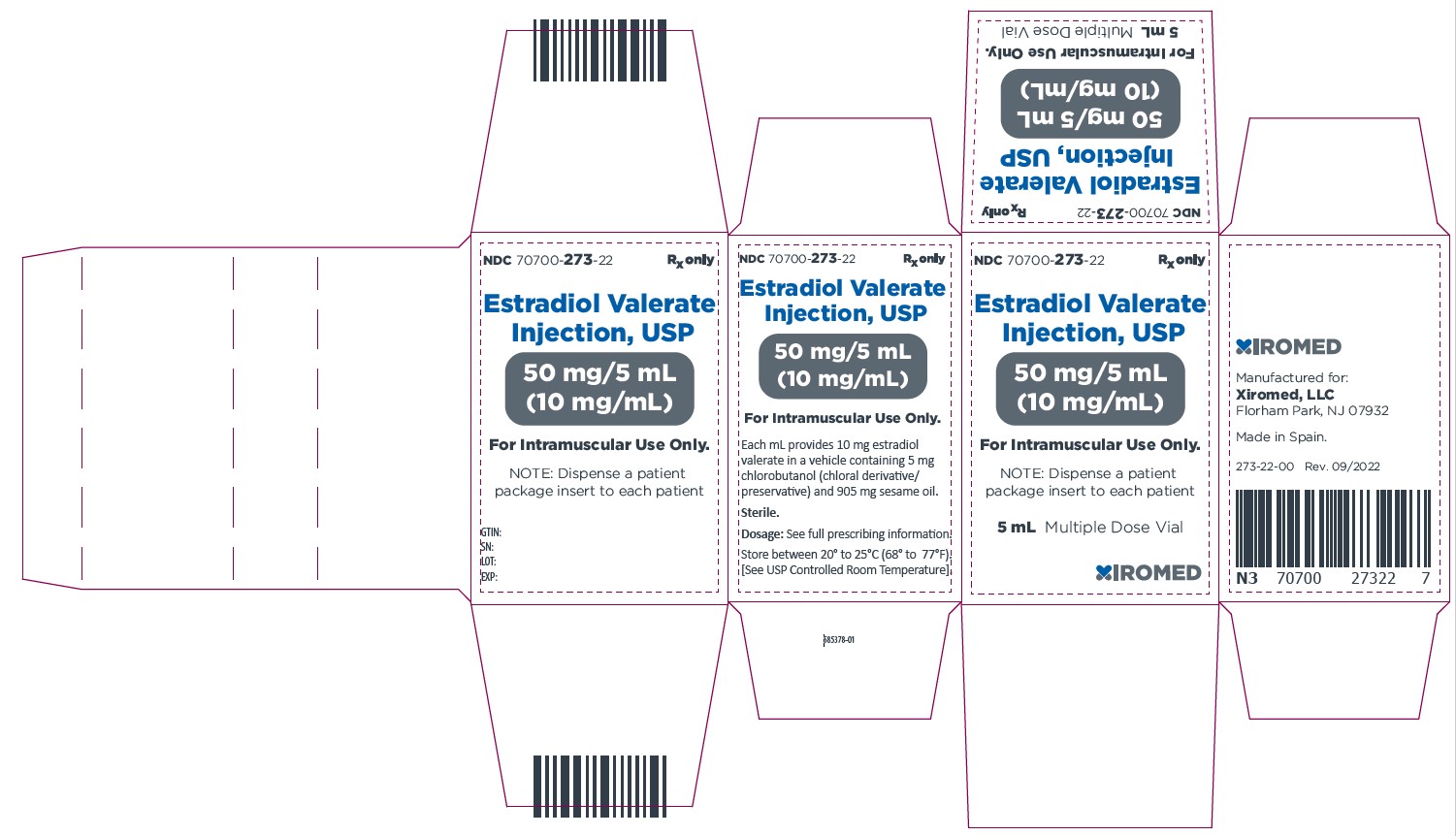
PACKAGE LABEL-PRINCIPAL DISPLAY PANEL Estradiol valerate injection, USP 10 mg/mL - NDC 70700-273-22 - Carton Label Estradiol valerate injection, USP 10 mg/mL - NDC 70700-273-22 - Vial Label Estradiol valerate injection, USP 20 mg/mL - NDC 70700-274-22- Carton Label Estradiol valerate injection, USP 20 mg/mL - NDC 70700-274-22 - Vial Label Estradiol valerate injection, USP 40 mg/mL - NDC 70700-275-22 - Carton Label Estradiol valerate injection, USP 40 mg/mL - NDC 70700-275-22 - Vial Label Estradiol valerate injection, USP 10 mg/mL - NDC 70700-273-22 - Carton Label Estradiol valerate injection, USP 10 mg/mL - NDC 70700-273-22 - Vial Label Estradiol valerate injection, USP 20 mg/mL - NDC 70700-274-22- Carton Label Estradiol valerate injection, USP 20 mg/mL - NDC 70700-274-22- Vial Label Estradiol valerate injection, USP 40 mg/mL - NDC 70700-275-22 - Carton Label Estradiol valerate injection, USP 40 mg/mL - NDC 70700-275-22 - Vial Label