
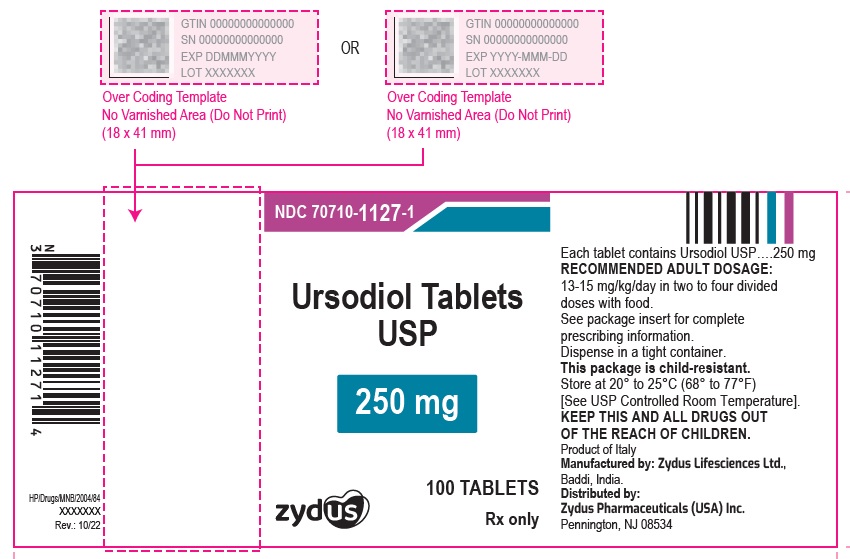
Ursodiol 500 mg Tablet, 100-count
🆔 Identity & classification
Where does this data come from?
🏷️ RxNorm drug class
This medicine belongs to the Bile Acid class.
Where does this data come from?
🏭 Manufacturer & labeler
Where does this data come from?
🩺 Clinical
Ursodiol is used to dissolve gallstones in people who do not want surgery or cannot have surgery to remove gallstones. Ursodiol is also used to prevent the formation of gallstones in overweight people who are losing weight very quickly. Ursodiol is used to treat people with primary biliary cholangitis (PBC; formerly known as a primary biliary cirrhosis; an autoimmune liver disease). Ursodiol is in a class of medications called gallstone dissolution agents. It works by decreasing the production of cholesterol and by dissolving the cholesterol in bile to prevent stone formation and by decreasing...
Read the full MedlinePlus article ↗- Great question. Ursodiol capsules are an option when surgery is too risky — maybe because of age, other health conditions, or a sensitivity to general anesthesia — or if you'd simp...
- Why did my doctor prescribe ursodiol capsules instead of just removing my gallbladder?
- That depends on why you're taking it. For gallstone dissolution, most doctors aim for up to 2 years — but if there's no sign of progress after 12 months, the chance of it working b...
- How long will I need to take this medication?
Patient education
Supplement & herbal interactions
Some supplements/herbs that may interact with Ursodiol — tap one for details:
Where does this data come from?
Ask a licensed pharmacist directly — free, answered by our team.
💊 What it looks like
Where does this data come from?
🧪 Inactive Ingredients / Excipients
Inactive ingredients, also called excipients, are components of the drug product other than the active ingredient. They may include fillers, dyes, coatings, preservatives, flavors, or other formulation ingredients.
💡 Tap an ingredient (hover on desktop) to see what it is and why it’s used.
-
UNII 0WZ8WG20P6
Hypromellose 2910 is a plant-based cellulose derivative that acts as a thickener, binder, and film-coating agent. It helps control how quickly the medicine dissolves and protects the tablet or capsule from moisture and light.
-
UNII 70097M6I30
Magnesium stearate is a salt made from magnesium and stearic acid, a fatty substance. It's used in tablets and capsules as a lubricant and glidant to help ingredients flow smoothly during manufacturing and prevent sticking.
-
UNII OP1R32D61U
Microcrystalline cellulose is a purified form of cellulose, a natural fiber from plant sources. It acts as a binder and filler in tablets and capsules, helping hold ingredients together and give the medicine its shape and size.
-
UNII B697894SGQ
Polyethylene glycol 400 is a clear, thick liquid made from petroleum-derived polymers. It acts as a solvent and humectant in medicines, helping dissolve active ingredients and retain moisture in the formulation.
-
UNII Q662QK8M3B
Polyethylene glycol 8000 is a synthetic polymer made from ethylene oxide. It acts as a binder and filler in tablets and capsules, helping hold ingredients together and add bulk to the medicine.
-
UNII U725QWY32X
Povidone K30 is a synthetic polymer made from petroleum. It acts as a binder to hold tablet ingredients together and as a disintegrant to help the tablet break apart in the stomach so the medicine can be absorbed.
-
UNII ETJ7Z6XBU4
Silicon dioxide is a naturally occurring mineral used as a glidant and anti-caking agent. It helps powder ingredients flow smoothly and prevents clumping during manufacturing and storage.
-
UNII 368GB5141J
A detergent and foaming agent derived from coconut or palm oil. In medications, it helps break down and mix oil and water-based ingredients, aids in tablet disintegration, and improves how the drug dissolves and spreads in the mouth or digestive system.
-
UNII 5856J3G2A2
A starch-based powder made from potatoes and processed with sodium. It acts as a disintegrant, helping the tablet or capsule break apart quickly in the stomach so the medicine can be absorbed.
-
UNII 15FIX9V2JP
Titanium dioxide is a bright white mineral powder commonly used as a colorant and opacifying agent. It makes pills and tablets white or lighter in color and helps make coatings non-transparent.
10 inactive ingredients listed in the exact product block matched to this NDC.
Where does this data come from?
ingredient classCode="IACT" elements from the exact product block matched by this NDC. Label-section narrative from DailyMed / the openFDA label index is shown separately when available.Inactive ingredient FAQ
Are inactive ingredients the same for every manufacturer?
Why might an inactive ingredient be missing?
Can inactive ingredients matter?
💲 Pricing
A drug doesn't have one price. Each row is a different public payment system, and none is what you'd pay at the counter — that depends on your insurance. The ⓘ on each row explains what it measures.
| Price system | Per ea | Per package |
|---|---|---|
| Retail pharmacies payNADAC · weekly | $0.647 | $64.71 / 100 tablets |
| Medicaid paysCMS SDUD · 12 mo | $0.9719 | $97.19 / 100 tablets |
| Medicare drug plans payPart D · Q2 2026 | $0.6386 | $63.86 / 100 tablets |
Where does this data come from?
🔁 Therapeutic equivalents
| Product | Labeler | Pack | NADAC/unit | TE | Status | Price vs. this |
|---|---|---|---|---|---|---|
| Ursodiol 500 mg 49884-0413-01 | Par | 100 tablets | $0.647 | AB | Availability likely | — |
| Ursodiol 500 mg 64380-0919-06 | Strides | 100 tablets | $0.647 | AB | Availability likely | — |
| Ursodiol 500 mg 68001-0378-00 | BluePoint | 100 tablets | $0.647 | AB | Availability likely | — |
| Ursodiol 500 mg 68462-0474-01 | Glenmark | 100 tablets | $0.647 | AB | Availability likely | — |
| Ursodiol 500 mgthis 70710-1128-01 | Zydus | 100 tablets | $0.647 | AB | Availability likely | — |
| Ursodiol 500 mg 42291-0931-01 | AvKARE | 100 tablets | — | AB | FDA listed | — |
| Urso Forte 500 mg 58914-0790-01 | Allergan, | 4 tablets | — | — | FDA listed | — |
| Ursodiol 500 mg 63629-2287-01 | Bryant | 100 tablets | — | AB | FDA listed | — |
| Ursodiol 500 mg 70771-1408-01 | Zydus | 100 tablets | — | AB | FDA listed | — |
| Ursodiol 500 mg 72162-1501-01 | Bryant | 100 tablets | — | AB | FDA listed | — |
Where does this data come from?
⏳ Availability & generic status
This product is an FDA-approved generic. Other versions of the same drug are listed under Therapeutic equivalents, least expensive first.
Where does this data come from?
🗺️ Medicaid utilization & spend
💊 Medicaid utilization by pack size
📊 Medicare Part D spend CMS · PART D · 2026 (Q1)
🔬 Reported adverse events (FAERS)
Top reported reactions
Age at onset
Reporter sex
Serious outcomes
Where does this data come from?
📦 Packaging — all sizes for this product
| Package NDC | Description | Per unit | Per pack | Marketing start | Status |
|---|---|---|---|---|---|
| 70710-1128-01 You're viewing this | 100 TABLET in 1 BOTTLE (70710-1128-1) | $0.6471 / ea | $64.71 | 2018-11-07 | Active |
| 70710-1128-05 | 500 TABLET in 1 BOTTLE (70710-1128-5) | — | — | 2018-11-07 | Active |
You're viewing the smallest of 2 pack sizes for this product.
In Medicaid, this is the most-dispensed pack of this product — about 100% of fills over the last four reported quarters. See all packs ↓
Pack size FAQ
What quantity is in NDC 70710-1128-01?
What is the difference between NDC 70710-1128-01 and NDC 70710-1128-05?
What NDC number is used to bill for this package of Ursodiol 500 mg Tablet?
Prices are the latest CMS NADAC pharmacy acquisition cost per NDC; per-pack figures are per-unit × pack quantity, shown only when the pack is denominated in the same measure NADAC prices.
📄 Full prescribing information FDA SPL
🎯 Indications and Usage ▾
1 INDICATIONS AND USAGE Ursodiol tablets, 250 mg and 500 mg are indicated for the treatment of patients with primary biliary cholangitis (PBC). Ursodiol tablets, 250 mg and 500 mg are bile acids indicated for the treatment of patients with primary biliary cholangitis. ( 1 )
⏱️ Dosage and Administration ▾
2 DOSAGE AND ADMINISTRATION Recommended adult dosage : 13-15 mg/kg/day administered in two to four divided doses with food. ( 2.1 ) Scored ursodiol tablets, 500 mg tablet : scored tablet can be broken in halves to provide recommended dosage. ( 2.3 , 16 )
2.1General Dosing Information The recommended adult dosage for ursodiol tablets, 250 mg and 500 mg in the treatment of PBC is 13-15 mg/kg/day administered in two to four divided doses with food. Dosing regimen should be adjusted according to each patient's need at the discretion of the physician.
2.2Liver Function Tests Liver function tests (γ-GT, alkaline phosphatase, AST, ALT) and bilirubin levels should be monitored every month for three months after start of therapy, and every six months thereafter [see Warnings and Precautions (5.1) ].
2.3Scoring the Ursodiol Tablets, 500 mg The Ursodiol 500 mg scored tablet can be broken in halves to provide recommended dosage. To break ursodiol 500 mg scored tablet easily, place the tablet on a flat surface with the scored section on top. Hold the tablet with your thumbs placed close to the scored part of the tablet (groove).
Then apply gentle pressure and snap the tablet segments apart (segments breaking incorrectly should not be used). The segments should be washed down unchewed, with water, keeping the segments in the mouth can reveal a bitter taste. Due to the bitter taste, segments should be stored separately from whole tablets. [see How Supplied/Storage and Handling (16) ].
💊 Dosage Forms and Strengths ▾
3 DOSAGE FORMS AND STRENGTHS Ursodiol Tablets, USP 250 mg: 250 mg tablet Ursodiol Tablets, USP 500 mg: 500 mg scored tablet Ursodiol Tablets, USP 250 mg: 250 mg tablet ( 3 ) Ursodiol Tablets, USP 500 mg: 500 mg scored tablet ( 3 )
⛔ Contraindications ▾
4 CONTRAINDICATIONS Patients with complete biliary obstruction and known hypersensitivity or intolerance to ursodiol or any of the components of the formulation. Patients with complete biliary obstruction and known hypersensitivity or intolerance to ursodiol or any of the components of the formulation. ( 4 )
⚠️ Warnings and Cautions ▾
5 WARNINGS AND PRECAUTIONS Abnormal Liver Function Tests : Liver function tests (γ-GT, alkaline phosphatase, AST, ALT) and bilirubin level should be monitored. Treatment discontinuation should be considered if parameters increase to a level considered clinically significant in patients with stable historical liver function test levels. Caution should be exercised to maintain patients' bile flow.
( 5.1 ) Enteroliths in Patients with Risk for Intestinal Stenosis or Stasis : Monitor for obstructive gastrointestinal symptoms; if symptoms occur, hold ursodiol until a clinical evaluation has been conducted. ( 5.2 )
5.1Abnormal Liver Function Tests Liver function tests (γ-GT, alkaline phosphatase, AST, ALT) and bilirubin levels should be monitored every month for three months after start of therapy, and every six months thereafter. This monitoring will allow the early detection of a possible deterioration of the hepatic function. Treatment discontinuation should be considered if the above parameters increase to a level considered clinically significant in patients with stable historical liver function test levels.
Caution has to be exercised to maintain the bile flow of the patients taking ursodiol.
5.2Enteroliths in Patients with Risk for Intestinal Stenosis or Stasis There have been rare postmarketing reports of ursodiol-treated patients who developed enteroliths (bezoars) resulting in obstructive symptoms that required surgical intervention. These patients had medical conditions that predisposed them to intestinal stenosis or stasis (e.g., surgical enteroanastomoses, Crohn's disease). If a patient presents with obstructive gastrointestinal symptoms, hold ursodiol until a clinical evaluation has been conducted.
🤒 Adverse Reactions ▾
6 ADVERSE REACTIONS Most common adverse reactions reported with the use of ursodiol during worldwide postmarketing and clinical experience (≥1%) are, in alphabetical order: abdominal discomfort, abdominal pain, alopecia, diarrhea, nausea, pruritus, and rash. ( 6 ) To report SUSPECTED ADVERSE REACTIONS, contact Zydus Pharmaceuticals (USA) Inc. at 1-877-993-8779 or FDA at 1-800-FDA-1088 or www.fda.gov/medwatch.
6.1Clinical Studies Experience Because clinical trials are conducted under widely varying conditions, adverse reaction rates observed in the clinical trials of a drug cannot be directly compared to rates in the clinical trials of another drug and may not reflect the rates observed in clinical practice. The following table summarizes the adverse reactions observed in two placebo-controlled clinical trials. ADVERSE REACTIONS VISIT AT 12 MONTHS VISIT AT 24 MONTHS UDCA n (%) Placebo n (%) UDCA n (%) Placebo n (%) Diarrhea -- -- 1 (1.32) -- Elevated creatinine -- -- 1 (1.32) -- Elevated blood glucose 1 (1.18) -- 1 (1.32) -- Leukopenia -- -- 2 (2.63) -- Peptic ulcer -- -- 1 (1.32) -- Skin rash -- -- 2 (2.63) -- Thrombocytopenia -- -- 1 (1.32) -- Note: Those adverse reactions occurring at the same or higher incidence in the placebo as in the UDCA group have been deleted from this table (this includes diarrhea and thrombocytopenia at 12 months, nausea/vomiting, fever and other toxicity).
UDCA = Ursodeoxycholic acid = Ursodiol In a randomized, cross-over study in sixty PBC patients, seven patients (11.6%) reported nine adverse reactions: abdominal pain and asthenia (1 patient), nausea (3 patients), dyspepsia (2 patients) and anorexia and esophagitis (1 patient each). One patient on the twice a day regimen (total dose 1,000 mg) withdrew due to nausea. All of these nine adverse reactions except esophagitis were observed with the twice a day regimen at a total daily dose of 1,000 mg or greater.
However, an adverse reaction may occur at any dose.
6.2Postmarketing Experience The following adverse reactions, presented by system organ class in alphabetical order, have been identified during post approval use of ursodiol. Because these reactions are reported voluntarily from a population of uncertain size, it is not always possible to reliably estimate their frequency or establish a causal relationship to drug exposure. Gastrointestinal disorders : abdominal discomfort, abdominal pain, enteroliths (bezoars), constipation, diarrhea, dyspepsia, nausea, vomiting.
General disorders and administration site conditions : malaise, peripheral edema, pyrexia. Hepatobiliary disorders : jaundice (or aggravation of preexisting jaundice). Immune System Disorders : Drug hypersensitivity to include facial edema, urticaria, angioedema and laryngeal edema.
Abnormal Laboratory Tests : ALT increased, AST increased, blood alkaline phosphatase increased, blood bilirubin increased, γ-GT increased, hepatic enzyme increased, liver function test abnormal, transaminases increased. Musculoskeletal and connective tissue disorders : myalgia Nervous system disorders : dizziness, headache. Respiratory, thoracic and mediastinal disorders : cough.
Skin and subcutaneous tissue disorder : alopecia, pruritus, rash.
🔄 Drug Interactions ▾
7 DRUG INTERACTIONS Bile Acid Sequestering Agents: May interfere with the action of ursodiol by reducing its absorption. ( 7.1 ) Aluminum-based Antacids: May interfere with the action of ursodiol by reducing its absorption. ( 7.2 ) Drugs that alter the metabolism of lipids or induce cholestasis may interfere with the action of ursodiol. ( 7.3 )
7.1Bile Acid Sequestering Agents Bile acid sequestering agents such as cholestyramine and colestipol may interfere with the action of ursodiol by reducing its absorption.
7.2Aluminum-based Antacids Aluminum-based antacids have been shown to adsorb bile acids in vitro and may be expected to interfere with ursodiol in the same manner as the bile acid sequestering agents.
7.3Drugs Affecting Lipid Metabolism Estrogens, oral contraceptives, and clofibrate (and perhaps other lipid-lowering drugs) increase hepatic cholesterol secretion and encourage cholesterol gallstone formation and hence may counteract the effectiveness of ursodiol.
👥 Use in Specific Populations ▾
8 USE IN SPECIFIC POPULATIONS
8.1Pregnancy Risk Summary Available published data on the use of ursodiol in pregnant women derived from randomized controlled trials, observational studies, and case series collected over several decades have not identified a drug-associated risk of major birth defects, miscarriage, or other adverse maternal or fetal outcomes. Most of the reported exposures to ursodiol occurred in the second and third trimester of pregnancy. In animal reproduction studies, ursodiol had no adverse effects on embryo-fetal development when administered at doses greater than human therapeutic doses (see Data).
The estimated background risk of major birth defects and miscarriage for the indicated population is unknown. All pregnancies have a background risk of birth defect, loss, or other adverse outcomes. In the U.S. general population, the estimated background risk of major birth defects and miscarriage in the clinically recognized pregnancies is 2 to 4% and 15 to 20%, respectively.
Data Animal Data No adverse effects on embryo-fetal development were observed with oral administration of ursodiol to pregnant rats and rabbits during organogenesis at doses up to 22 and 7 times, respectively, the maximum recommended human dose (based on body surface area).
8.2Lactation Risk Summary Ursodiol is naturally present in human milk. There are no reports of adverse effects of ursodiol on the breastfed child, but the reports are extremely limited. There are no data on the effects of ursodiol on milk production.
The developmental and health benefits of breastfeeding should be considered along with the mother's clinical need for ursodiol and any potential adverse effects on the breastfed child from ursodiol or from the underlying maternal condition.
8.4Pediatric Use The safety and effectiveness of ursodiol in pediatric patients have not been established.
🤰 Pregnancy ▾
8.1Pregnancy Risk Summary Available published data on the use of ursodiol in pregnant women derived from randomized controlled trials, observational studies, and case series collected over several decades have not identified a drug-associated risk of major birth defects, miscarriage, or other adverse maternal or fetal outcomes. Most of the reported exposures to ursodiol occurred in the second and third trimester of pregnancy. In animal reproduction studies, ursodiol had no adverse effects on embryo-fetal development when administered at doses greater than human therapeutic doses (see Data).
The estimated background risk of major birth defects and miscarriage for the indicated population is unknown. All pregnancies have a background risk of birth defect, loss, or other adverse outcomes. In the U.S. general population, the estimated background risk of major birth defects and miscarriage in the clinically recognized pregnancies is 2 to 4% and 15 to 20%, respectively.
Data Animal Data No adverse effects on embryo-fetal development were observed with oral administration of ursodiol to pregnant rats and rabbits during organogenesis at doses up to 22 and 7 times, respectively, the maximum recommended human dose (based on body surface area).
🧒 Pediatric Use ▾
8.4Pediatric Use The safety and effectiveness of ursodiol in pediatric patients have not been established.
🆘 Overdosage ▾
10 OVERDOSAGE There have been no reports of accidental or intentional overdosage with ursodiol. Single oral doses of ursodiol at 10 g/kg in mice and dogs, and 5 g/kg in rats were not lethal. A single oral dose of ursodiol at 1.5 g/kg was lethal in hamsters. Symptoms of acute toxicity were salivation and vomiting in dogs, and ataxia, dyspnea, ptosis, agonal convulsions and coma in hamsters.
🧬 Clinical Pharmacology ▾
12 CLINICAL PHARMACOLOGY
12.1Mechanism of Action Ursodiol, a naturally occurring hydrophilic bile acid, derived from cholesterol, is present as a minor fraction of the total human bile acid pool. Oral administration of ursodiol increases this fraction in a dose related manner, to become the major biliary acid, replacing/displacing toxic concentrations of endogenous hydrophobic bile acids that tend to accumulate in cholestatic liver disease. In addition to the replacement and displacement of toxic bile acids, other mechanisms of action include cytoprotection of the injured bile duct epithelial cells (cholangiocytes) against toxic effects of bile acids, inhibition of apoptosis of hepatocytes, immunomodulatory effects, and stimulation of bile secretion by hepatocytes and cholangiocytes.
12.2Pharmacodynamics Lithocholic acid, when administered chronically to animals, causes cholestatic liver injury that may lead to death from liver failure in certain species unable to form sulfate conjugates. Ursodiol is 7-dehydroxylated more slowly than chenodiol. For equimolar doses of ursodiol and chenodiol, steady state levels of lithocholic acid in biliary bile acids are lower during ursodiol administration than with chenodiol administration.
Humans and chimpanzees can sulfate lithocholic acid. Although liver injury has not been associated with ursodiol therapy, a reduced capacity to sulfate may exist in some individuals.
12.3Pharmacokinetics Ursodiol (UDCA) is normally present as a minor fraction of the total bile acids in humans (about 5%). Following oral administration, the majority of ursodiol is absorbed by passive diffusion and its absorption is incomplete. Once absorbed, ursodiol undergoes hepatic extraction to the extent of about 50% in the absence of liver disease.
As the severity of liver disease increases, the extent of extraction decreases. In the liver, ursodiol is conjugated with glycine or taurine, then secreted into bile. These conjugates of ursodiol are absorbed in the small intestine by passive and active mechanisms.
The conjugates can also be deconjugated in the ileum by intestinal enzymes, leading to the formation of free ursodiol that can be reabsorbed and reconjugated in the liver. Nonabsorbed ursodiol passes into the colon where it is mostly 7-dehydroxylated to lithocholic acid. Some ursodiol is epimerized to chenodiol (CDCA) via a 7-oxo intermediate.
Chenodiol also undergoes 7-dehydroxylation to form lithocholic acid. These metabolites are poorly soluble and excreted in the feces. A small portion of lithocholic acid is reabsorbed, conjugated in the liver with glycine, or taurine and sulfated at the 3 position.
The resulting sulfated lithocholic acid conjugates are excreted in bile and then lost in feces. In healthy subjects, at least 70% of ursodiol (unconjugated) is bound to plasma protein. No information is available on the binding of conjugated ursodiol to plasma protein in healthy subjects or PBC patients.
Its volume of distribution has not been determined, but is expected to be small since the drug is mostly distributed in the bile and small intestine. Ursodiol is excreted primarily in the feces. With treatment, urinary excretion increases, but remains less than 1% except in severe cholestatic liver disease.
During chronic administration of ursodiol, it becomes a major biliary and plasma bile acid. At a chronic dose of 13 to 15 mg/kg/day, ursodiol constitutes 30% to 50% of biliary and plasma bile acids.
📦 How Supplied / Storage and Handling ▾
16 HOW SUPPLIED/STORAGE AND HANDLING
16.1Ursodiol Tablets, USP 250 mg Ursodiol Tablets USP, 250 mg are White to off-white, oval, biconvex, film coated tablets debossed with "1127" on one side and plain on other side and are supplied as follows: NDC 70710-1127-1 in bottles of 100 tablets with child-resistant closure NDC 70710-1127-5 in bottles of 500 tablets
16.2Ursodiol Tablets, USP 500 mg Ursodiol Tablets USP, 500 mg are White to off-white, oval, biconvex, film coated tablets debossed with "1128" on one side and breakline on other side. and are supplied as follows: NDC 70710-1128-1 in bottles of 100 tablets with child-resistant closure NDC 70710-1128-5 in bottles of 500 tablets Store at 20° to 25°C (68° to 77°F) [See USP Controlled Room Temperature]. Dispense in a tight container. Half-tablets (scored ursodiol 500 mg tablets broken in half) maintain acceptable quality for up to 28 days when stored in the current packaging (bottles) at 20ºC to 25ºC (68ºF to 77ºF).
Due to the bitter taste, the halved segments should be stored separately from the whole tablets [see Dosage and Administration (2.2) ].
📋 Description ▾
11 DESCRIPTION Ursodiol Tablets, USP 250 mg is available as a film-coated tablet for oral administration. Ursodiol Tablets, USP 500 mg is available as a scored film-coated tablet for oral administration. Ursodiol (ursodeoxycholic acid, UDCA) is a naturally occurring bile acid found in small quantities in normal human bile and in larger quantities in the biles of certain species of bears.
It is a bitter-tasting white powder consisting of crystalline particles freely soluble in ethanol and glacial acetic acid, slightly soluble in chloroform, sparingly soluble in ether, and practically insoluble in water. The chemical name of ursodiol is 3α,7ß-dihydroxy-5ß-cholan-24-oic (C 24 H 40 O 4 ). Ursodiol has a molecular weight of 392.56.
Its structure is shown below. Inactive ingredients: colloidal silicon dioxide, magnesium stearate, microcrystalline cellulose, povidone, polyethylene glycol, sodium lauryl sulfate, sodium starch glycolate. The inert ingredients in film coating material are: hypromellose, polyethylene glycol, titanium dioxide.
Image
💬 Information for Patients ▾
17 PATIENT COUNSELING INFORMATION Enteroliths in Patients with Risk for Intestinal Stenosis or Stasis Advise patients or their caretaker(s) to notify their healthcare provider if they experience obstructive gastrointestinal symptoms due to the risk of enteroliths [see Warnings and Precautions (5.2) ]. Drug Interactions Patients should be informed that absorption of ursodiol may be reduced if they are taking bile acid sequestering agents, such as cholestyramine and colestipol, aluminum-based antacids, or drugs known to alter the metabolism of cholesterol [see Drug Interactions (7) ].