
Furosemide 10 mg/mL Injection, Solution — NDC 70756-620-10 (Billing 70756-0620-10)
This is a package of Furosemide 10 mg/mL Injection, Solution from Lifestar Pharma LLC, marketed since Dec 2022 and currently FDA-listed. It is the main listing for this product, which comes in 2 package sizes.
Other active recalls for Furosemide (different manufacturers) — 2 · tap to view
Identity & classification
Regulatory identifiers FDA, NLM and CMS codes for this package
Drug-database identifiers Medi-Span GPI and First Databank GCN / HICL / AHFS classification
- GSN (GCN sequence number): 008205
- GCN: 34940
- HICL (First Databank): 003660
- AHFS class code: 24:36.08.00
- RxCUI (RxNorm): 1719286
Where does this data come from?
- FDA openFDA NDC Directory · synced Oct 1, 2026
- FDA label on DailyMed · label index refreshed Oct 1, 2026
- RxNorm (NLM RxNav) · catalog refreshed Oct 1, 2026
- Medi-Span GPI (licensed)
- First Databank (licensed) · refreshed Oct 1, 2026
RxNorm drug class
This medicine belongs to the Loop Diuretic class.
Where does this data come from?
- RxClass (NLM) · catalog refreshed Oct 1, 2026
Clinical
Furosemide injection is used to treat edema (excess fluid held in body tissues) caused by various medical problems in persons who cannot take medications by mouth or in emergency situations. Furosemide is in a class of medications called diuretics ('water pills'). It works by causing the kidneys to get rid of unneeded water and salt from the body.
Read the full MedlinePlus article ↗- It helps your body get rid of extra fluid. It is used for swelling from heart failure, liver cirrhosis and kidney disease. In adults, oral forms can also treat high blood pressure.
- Tablets and oral solution are swallowed, usually once or twice a day, or on certain days of the week if your doctor says so. Injected forms are for short-term use and are switched...
- Dizziness, stomach upset, headache and more frequent urination can happen. Call your doctor right away for ringing in the ears, hearing loss, fainting, severe weakness, little urin...
- What side effects are normal, and what should I call about?
Patient education
Supplement & herbal interactions
Some supplements/herbs that may interact with Furosemide — tap one for details:
Furosemide may be associated with lower levels of 9 nutrients — worth a chat with your pharmacist, not a cause for alarm.
Where does this data come from?
- MedlinePlus (NLM) · refreshed Oct 1, 2026
- FDA label on DailyMed · label index refreshed Oct 1, 2026
Ask a licensed pharmacist directly — free, answered by our team.
Pricing
A drug doesn't have one price. Each row is a different public payment system, and none is what you'd pay at the counter — that depends on your insurance. The ⓘ on each row explains what it measures.
| Price system | Per mL | Per package |
|---|---|---|
| Retail pharmacies payNADAC · weekly | Not in the retail survey — common for institutional, discontinued, or low-volume packs. | |
| Medicaid paysCMS SDUD · 12 mo | No recent Medicaid claims on file for this NDC — rare and low-volume NDCs are suppressed in the public data. | |
| Medicare drug plans payPart D · Q2 2026 | $0.3524 | $35.24 / 100 ml |
Where does this data come from?
- CMS NADAC weekly file
- CMS ASP pricing files · refreshed Sep 20, 2026
- CMS Medicaid State Drug Utilization Data · refreshed Oct 3, 2026
- CMS Part D plan pricing files · refreshed Sep 24, 2026
- VA National Acquisition Center price file
Packaging — all sizes for this product
| Package NDC | Description | Marketing start | Marketing end | Status |
|---|---|---|---|---|
| 70756-0620-10 You're viewing this Main listing | 10 VIAL in 1 CARTON / 10 mL in 1 VIAL | 2022-12-17 | — | Active |
| 70756-0620-25 70756-620-25 | 25 VIAL in 1 CARTON / 10 mL in 1 VIAL | 2022-12-17 | — | Active |
Pack size FAQ
What quantity is in this package?
What NDC number is used to bill for this package of Furosemide 10 mg/mL Injection, Solution?
Therapeutic equivalents
| Product | Labeler | Pack | NADAC/unit | TE | Status | Price vs. this |
|---|---|---|---|---|---|---|
| Furosemide 10 mg/mL 00143-9157-10 | Hikma | 10 vials | $0.253 | AP | Availability likely | — |
| Furosemide 10 mg/mL 72572-0190-25 | Civica, | 25 vials | $0.253 | AP | Availability likely | — |
| Furosemide 10 mg/mL 31722-0310-32 | Camber | 25 vials | $0.253 | AP | Availability likely | — |
| Furosemide 10 mg/mL 72603-0251-25 | NorthStar | 25 vials | $0.253 | AP | Availability likely | — |
| Furosemide 10 mg/mL 36000-0283-25 | Baxter | 25 vials | $0.253 | AP | Availability likely | — |
| Furosemide 10 mg/mL 73043-0023-01 | Devatis | 25 vials | $0.253 | AP | Availability likely | — |
| Furosemide 10 mg/mL 16729-0502-43 | Accord | 10 vials | $0.342 | AP | Availability likely | — |
| Furosemide 10 mg/mL 00409-6102-02 | Hospira, | 25 vials | $0.490 | AP | Availability likely | — |
| Furosemide 10 mg/mL 23155-0473-41 | Heritage | 25 vials | $0.490 | AP | Availability likely | — |
| Furosemide 10 mg/mL 25021-0311-02 | Sagent | 25 vials | $0.490 | AP | Availability likely | — |
| Furosemide 10 mg/mL 25021-0320-02 | Sagent | 25 vials | $0.490 | AP | Availability likely | — |
| Furosemide 10 mg/mL 63323-0280-02 | Fresenius | 25 vials | $0.490 | AP | Availability likely | — |
| Furosemide 10 mg/mL 71288-0203-03 | Meitheal | 25 vials | $0.490 | AP | Availability likely | — |
| Furosemide 10 mg/mL 83634-0302-02 | Avenacy | 25 vials | $0.490 | AP | Availability likely | — |
| Furosemide 10 mg/mL 72603-0133-25 | NorthStar | 25 vials | $0.490 | AP | Availability likely | — |
| Furosemide 10 mg/mL 36000-0282-25 | Baxter | 25 vials | $0.490 | AP | Availability likely | — |
| Furosemide 10 mg/mL 31722-0309-32 | Camber | 25 vials | $0.490 | AP | Availability likely | — |
| Furosemide 10 mg/mL 73043-0022-01 | Devatis | 25 vials | $0.490 | AP | Availability likely | — |
| Furosemide 10 mg/mL 00404-9862-10 | Henry | 1 vial | — | AP | FDA listed | — |
| Furosemide 10 mg/mL 31722-0311-31 | Camber | 25 vials | — | AP | FDA listed | — |
| Furosemide 10 mg/mL 36000-0065-05 | Baxter | 5 vials | — | AP | FDA listed | — |
| Furosemide 10 mg/mL 36000-0284-25 | Baxter | 25 vials | — | AP | FDA listed | — |
| Furosemide 100 mg/10mL 42571-0438-85 | Micro | 25 vials | — | AP | FDA listed | — |
| Furosemide 10 mg/mL 51662-1226-01 | HF | 10 ml | — | AP | FDA listed | — |
| Furosemide 10 mg/mL 51662-1575-01 | HF | 10 ml | — | AP | FDA listed | — |
| Furosemide 100 mg/10mL 55150-0324-25 | Eugia | 25 vials | — | AP | FDA listed | — |
| Furosemide 10 mg/mL 68083-0434-05 | Gland | 5 vials | — | AP | FDA listed | — |
| Furosemide 100 mg/10mL 70121-1076-05 | Amneal | 25 vials | — | — | Discontinued | — |
| Furosemide 10 mg/mLthis 70756-0620-10 | Lifestar | 10 vials | — | AP | FDA listed | — |
| Furosemide 10 mg/mL 71872-7308-01 | Medical | 1 vial | — | AP | FDA listed | — |
| Furosemide 10 mg/mL 71872-7350-01 | Medical | 1 vial | — | AP | FDA listed | — |
| Furosemide 10 mg/mL 72603-0474-25 | NorthStar | 25 vials | — | AP | FDA listed | — |
| Furosemide 10 mg/mL 73043-0024-01 | Devatis | 25 vials | — | AP | FDA listed | — |
| Furosemide 10 mg/mL 73542-0103-25 | Maiva | 25 vials | — | AP | FDA listed | — |
| Furosemide 10 mg/mL 84549-0474-25 | ProPharma | 10 ml | — | AP | FDA listed | — |
| Furosemide 10 mg/mL 70756-0618-05 | Lifestar | 5 vials | — | AP | FDA listed | — |
| Furosemide 10 mg/mL 70756-0619-05 | Lifestar | 5 vials | — | AP | FDA listed | — |
| Furosemide 10 mg/mL 71872-7059-01 | Medical | 1 vial | — | AP | FDA listed | — |
| Furosemide 10 mg/mL 71872-7127-01 | Medical | 1 vial | — | AP | FDA listed | — |
| Furosemide 10 mg/mL 71872-7295-01 | Medical | 1 vial | — | AP | FDA listed | — |
| Furosemide 10 mg/mL 71872-7314-01 | Medical | 1 vial | — | AP | FDA listed | — |
| Furosemide 10 mg/mL 84549-0251-25 | ProPharma | 4 ml | — | AP | FDA listed | — |
| Furosemide 10 mg/mL 36000-0064-05 | Baxter | 5 vials | — | AP | FDA listed | — |
| Furosemide 10 mg/mL 36000-0063-05 | Baxter | 5 vials | — | AP | FDA listed | — |
| Furosemide 10 mg/mL 70518-4444-00 | REMEDYREPACK | 25 vials | — | AP | FDA listed | — |
| Furosemide 10 mg/mL 00404-9863-04 | Henry | 1 vial | — | AP | FDA listed | — |
| Furosemide 10 mg/mL 73542-0102-25 | Maiva | 25 vials | — | AP | FDA listed | — |
| Furosemide 10 mg/mL 55154-4452-05 | Cardinal | 5 vials | — | AP | FDA listed | — |
| Furosemide 10 mg/mL 73542-0101-25 | Maiva | 25 vials | — | AP | FDA listed | — |
Where does this data come from?
- FDA openFDA NDC Directory · synced Oct 1, 2026
- FDA Orange Book · refreshed Sep 3, 2026
- CMS NADAC weekly file
Availability & generic status
This product is an FDA-approved generic. Other versions of the same drug are listed under Therapeutic equivalents, least expensive first.
Where does this data come from?
- FDA Orange Book · refreshed Sep 3, 2026
Inactive Ingredients / Excipients
Inactive ingredients, also called excipients, are components of the drug product other than the active ingredient. They may include fillers, dyes, coatings, preservatives, flavors, or other formulation ingredients.
💡 Tap an ingredient (hover on desktop) to see what it is and why it’s used.
-
UNII QTT17582CB
A strong acid used to adjust and maintain the proper pH level in liquid medicines, ensuring stability and preventing breakdown of active ingredients.
-
UNII 451W47IQ8X
Sodium chloride is common table salt. It's used in medicines as a buffer to maintain proper pH, as a filler to add bulk, or to adjust the osmotic balance in liquid formulations.
-
UNII 55X04QC32I
A strong alkaline chemical used to adjust and maintain the pH balance of liquid medicines. It helps keep the medicine stable and ensures it stays effective during storage.
-
UNII 059QF0KO0R
Water is a liquid solvent that dissolves and mixes ingredients together in liquid medicines, syrups, and injections. It helps distribute the active drug evenly throughout the product.
4 inactive ingredients listed in the exact product block matched to this NDC.
Where does this data come from?
ingredient classCode="IACT" elements from the exact product block matched by this NDC. Label-section narrative from DailyMed / the openFDA label index is shown separately when available.- FDA label on DailyMed · label index refreshed Oct 1, 2026
- FDA openFDA NDC Directory · synced Oct 1, 2026
Inactive ingredient FAQ
Are inactive ingredients the same for every manufacturer?
Why might an inactive ingredient be missing?
Can inactive ingredients matter?
Manufacturer & labeler
Where does this data come from?
- FDA openFDA NDC Directory · synced Oct 1, 2026
- Drugs@FDA
Full prescribing information FDA SPL
🎯 Indications and Usage ▾
INDICATIONS AND USAGE Parenteral therapy should be reserved for patients unable to take oral medication or for patients in emergency clinical situations. Edema: Furosemide is indicated in adults and pediatric patients for the treatment of edema associated with congestive heart failure, cirrhosis of the liver, and renal disease, including the nephrotic syndrome. Furosemide is particularly useful when an agent with greater diuretic potential is desired.
Furosemide is indicated as adjunctive therapy in acute pulmonary edema. The intravenous administration of furosemide is indicated when a rapid onset of diuresis is desired, e.g., in acute pulmonary edema. If gastrointestinal absorption is impaired or oral medication is not practical for any reason, furosemide is indicated by the intravenous or intramuscular route.
Parenteral use should be replaced with oral furosemide as soon as practical.
⏱️ Dosage and Administration ▾
DOSAGE AND ADMINISTRATION Adults: Parenteral therapy with Furosemide Injection should be used only in patients unable to take oral medication or in emergency situations and should be replaced with oral therapy as soon as practical. Edema The usual initial dose of furosemide is 20 to 40 mg given as a single dose, injected intramuscularly or intravenously. The intravenous dose should be given slowly (1 to 2 minutes).
Ordinarily a prompt diuresis ensues. If needed, another dose may be administered in the same manner 2 hours later or the dose may be increased. The dose may be raised by 20 mg and given not sooner than 2 hours after the previous dose until the desired diuretic effect has been obtained.
This individually determined single dose should then be given once or twice daily. Therapy should be individualized according to patient response to gain maximal therapeutic response and to determine the minimal dose needed to maintain that response. Close medical supervision is necessary.
When furosemide is given for prolonged periods, careful clinical observation and laboratory monitoring are particularly advisable. (See PRECAUTIONS : Laboratory Tests .) If the physician elects to use high dose parenteral therapy, add the furosemide to either Sodium Chloride Injection USP, Lactated Ringer's Injection USP, or Dextrose (5%) Injection USP after pH has been adjusted to above 5.5, and administer as a controlled intravenous infusion at a rate not greater than 4 mg/min. Furosemide Injection is a buffered alkaline solution with a pH of about 9 and drug may precipitate at pH values below 7.
Care must be taken to ensure that the pH of the prepared infusion solution is in the weakly alkaline to neutral range. Acid solutions, including other parenteral medications (e.g., labetalol, ciprofloxacin, amrinone, milrinone) must not be administered concurrently in the same infusion because they may cause precipitation of the furosemide. In addition, furosemide injection should not be added to a running intravenous line containing any of these acidic products.
Acute Pulmonary Edema The usual initial dose of furosemide is 40 mg injected slowly intravenously (over 1 to 2 minutes). If a satisfactory response does not occur within 1 hour, the dose may be increased to 80 mg injected slowly intravenously (over 1 to 2 minutes). If necessary, additional therapy (e.g., digitalis, oxygen) may be administered concomitantly.
Geriatric Patients In general, dose selection for the elderly patient should be cautious, usually starting at the low end of the dosing range. (See PRECAUTIONS: Geriatric Use .) Pediatric Patients: Parenteral therapy should be used only in patients unable to take oral medication or in emergency situations and should be replaced with oral therapy as soon as practical. The usual initial dose of Furosemide Injection (intravenously or intramuscularly) in pediatric patients is 1 mg/kg body weight and should be given slowly under close medical supervision.
If the diuretic response to the initial dose is not satisfactory, dosage may be increased by 1 mg/kg not sooner than 2 hours after the previous dose, until the desired diuretic effect has been obtained. Doses greater than 6 mg/kg body weight are not recommended. Literature reports suggest that the maximum dose for premature infants should not exceed 1 mg/kg/day (see WARNINGS, Pediatric Use ).
Furosemide Injection should be inspected visually for particulate matter and discoloration before administration. Discard unused portion.
⛔ Contraindications ▾
CONTRAINDICATIONS Furosemide is contraindicated in patients with anuria and in patients with a history of hypersensitivity to furosemide.
⚠️ Warnings ▾
WARNINGS In patients with hepatic cirrhosis and ascites, furosemide therapy is best initiated in the hospital. In hepatic coma and in states of electrolyte depletion, therapy should not be instituted until the basic condition is improved. Sudden alterations of fluid and electrolyte balance in patients with cirrhosis may precipitate hepatic coma; therefore, strict observation is necessary during the period of diuresis.
Supplemental potassium chloride and, if required, an aldosterone antagonist are helpful in preventing hypokalemia and metabolic alkalosis. If increasing azotemia and oliguria occur during treatment of severe progressive renal disease, furosemide should be discontinued. Cases of tinnitus and reversible or irreversible hearing impairment and deafness have been reported.
Reports usually indicate that furosemide ototoxicity is associated with rapid injection, severe renal impairment, the use of higher than recommended doses, hypoproteinemia, or concomitant therapy with aminoglycoside antibiotics, ethacrynic acid, or other ototoxic drugs. If the physician elects to use high dose parenteral therapy, controlled intravenous infusion is advisable (for adults, an infusion rate not exceeding 4 mg furosemide per minute has been used) (See PRECAUTIONS, Drug Interactions . ) Pediatric Use: In premature neonates with respiratory distress syndrome, diuretic treatment with furosemide in the first few weeks of life may increase the risk of persistent patent ductus arteriosus (PDA), possibly through a prostaglandin-E-mediated process.
Literature reports indicate that premature infants with post conceptual age (gestational plus postnatal) less than 31 weeks receiving doses exceeding 1 mg/kg/24 hours may develop plasma levels which could be associated with potential toxic effects including ototoxicity. Hearing loss in neonates has been associated with the use of furosemide injection (see WARNINGS , above).
🤒 Adverse Reactions ▾
ADVERSE REACTIONS Adverse reactions are categorized below by organ system and listed by decreasing severity. Gastrointestinal System Reactions Hepatic encephalopathy in patients with hepatocellular insufficiency Pancreatitis Jaundice (intrahepatic cholestatic jaundice) Increased liver enzymes Anorexia Oral and gastric irritation Cramping Diarrhea Constipation Nausea Vomiting Systemic Hypersensitivity Reactions Severe anaphylactic or anaphylactoid reactions (e.g. with shock) Systemic vasculitis Interstitial nephritis Necrotizing angiitis Central Nervous System Reactions Tinnitus and hearing loss Paresthesias Vertigo Dizziness Headache Blurred vision Xanthopsia Hematologic Reactions Aplastic anemia Thrombocytopenia Agranulocytosis Hemolytic anemia Leukopenia Anemia Eosinophilia Dermatologic-Hypersensitivity Reactions Exfoliative dermatitis Bullous pemphigoid Erythema multiforme Purpura Photosensitivity Urticaria Rash Pruritus Stevens-Johnson Syndrome Toxic epidermal necrolysis Cardiovascular Reaction Orthostatic hypotension may occur and be aggravated by alcohol, barbiturates or narcotics.
Increase in cholesterol and triglyceride serum levels. Other Reactions Hyperglycemia Glycosuria Hyperuricemia Muscle spasm Weakness Restlessness Urinary bladder spasm Thrombophlebitis Transient injection site pain following intramuscular injection Fever Whenever adverse reactions are moderate or severe, furosemide dosage should be reduced or therapy withdrawn. To report SUSPECTED ADVERSE REACTIONS, contact Lifestar Pharma LLC at 1-888-995- 4337 or FDA at 1-800-FDA-1088 or www.fda.gov/medwatch.
🆘 Overdosage ▾
OVERDOSAGE The principal signs and symptoms of overdose with furosemide are dehydration, blood volume reduction, hypotension, electrolyte imbalance, hypokalemia and hypochloremic alkalosis, and are extensions of its diuretic action. The acute toxicity of furosemide has been determined in mice, rats and dogs. In all three, the oral LD50 exceeded 1000 mg/kg body weight, while the intravenous LD50 ranged from 300 to 680 mg/kg.
The acute intragastric toxicity in neonatal rats is 7 to 10 times that of adult rats. The concentration of furosemide in biological fluids associated with toxicity or death is not known. Treatment of overdosage is supportive and consists of replacement of excessive fluid and electrolyte losses.
Serum electrolytes, carbon dioxide level and blood pressure should be determined frequently. Adequate drainage must be assured in patients with urinary bladder outlet obstruction (such as prostatic hypertrophy). Hemodialysis does not accelerate furosemide elimination.
🧬 Clinical Pharmacology ▾
CLINICAL PHARMACOLOGY Investigations into the mode of action of furosemide have utilized micropuncture studies is rats, stop flow experiments in dogs and various clearance studies in both humans and experimental animals. It has been demonstrated that furosemide inhibits primarily the reabsorption of sodium and chloride not only in the proximal and distal tubules but also in the loop of Henle. The high degree of efficacy is largely due to this unique site of action.
The action on the distal tubule is independent of any inhibitory effect on carbonic anhydrase and aldosterone. Recent evidence suggests that furosemide glucuronide is the only or at least the major biotransformation product of furosemide in man. Furosemide is extensively bound to plasma proteins, mainly to albumin.
Plasma concentrations ranging from 1 to 400 mcg/mL are 91 to 99% bound in healthy individuals. The unbound fraction averages 2.3 to 4.1% at therapeutic concentrations. The onset of diuresis following intravenous administration is within 5 minutes and somewhat later after intramuscular administration.
The peak effect occurs within the first half hour. The duration of diuretic effect is approximately 2 hours. In fasted normal men, the mean bioavailability of furosemide from furosemide tablets and furosemide oral solution is 64 % and 60%, respectively, of that from an intravenous injection of the drug.
Although furosemide is more rapidly absorbed from the oral solution (50 minutes) than from the tablet (87 minutes), peak plasma levels and area under the plasma concentration-time curves do not differ significantly. Peak plasma concentrations increase with increasing dose but times-to-peak do not differ among doses. The terminal half-life of furosemide is approximately 2 hours.
Significantly more furosemide is excreted in urine following the intravenous injection than after the tablet or oral solution. There are no significant differences between the two oral formulations in the amount of unchanged drug excreted in urine. Geriatric Population Furosemide binding to albumin may be reduced in elderly patients.
Furosemide is predominantly excreted unchanged in the urine. The renal clearance of furosemide after intravenous administration in older healthy male subjects (60-70 years of age) is statistically significantly smaller than in younger healthy male subjects (20-35 years of age). The initial diuretic effect of furosemide in older subjects is decreased relative to younger subjects.
(See PRECAUTIONS: Geriatric Use .)
📦 How Supplied / Storage and Handling ▾
HOW SUPPLIED Furosemide Injection, USP (10 mg/mL) is a clear colorless solution filled in amber colored vials and is supplied as: NDC 70756-618-05 2 mL single-dose vials Carton of 5 NDC 70756-618-25 2 mL single-dose vials Carton of 25 NDC 70756-619-05 4 mL single-dose vials Carton of 5 NDC 70756-619-10 4 mL single-dose vials Carton of 10 NDC 70756-619-25 4 mL single-dose vials Carton of 25 NDC 70756-620-10 10 mL single-dose vials Carton of 10 NDC 70756-620-25 10 mL single-dose vials Carton of 25 Do not use if solution is discolored.
Store at 20°C to 25°C (68°F to 77°F) [See USP Controlled Room Temperature]. Protect from light. Manufactured for: Lifestar Pharma LLC 1200 MacArthur Blvd.
Mahwah, NJ 07430 USA Made in India Revised: September 2022, V-05
📋 Description ▾
DESCRIPTION Furosemide, USP is a diuretic which is an anthranilic acid derivative. Chemically, it is 4-chloro -N -furfuryl-5-sulfamoylanthranilic acid. Furosemide Injection, USP 10 mg/mL is a sterile, non-pyrogenic solution in vials for intravenous and intramuscular injection.
Furosemide, USP is a white to slightly yellowish, odorless crystalline powder. It is freely soluble in acetone, in dimethylformamide, and in solutions of alkali hydroxides, soluble in methanol, sparingly soluble in alcohol, slightly soluble in ether, very slightly soluble in chloroform, practically insoluble in water. The structural formula is as follows: Molecular Formula: C 12 H 11 ClN 2 O 5 S Molecular Weight: 330.74 Each mL contains: Furosemide, USP 10 mg, Water for Injection q.s., Sodium Chloride for isotonicity, Sodium Hydroxide and, if necessary, Hydrochloric Acid to adjust pH between 8.0 and 9.3. structure
⚠️ Precautions ▾
PRECAUTIONS General: Excessive diuresis may cause dehydration and blood volume reduction with circulatory collapse and possibly vascular thrombosis and embolism, particularly in elderly patients. As with any effective diuretic, electrolyte depletion may occur during furosemide therapy, especially in patients receiving higher doses and a restricted salt intake. Hypokalemia may develop with furosemide, especially with brisk diuresis, inadequate oral electrolyte intake, when cirrhosis is present, or during concomitant use of corticosteroids, ACTH, licorice in large amounts, or prolonged use of laxatives.
Digitalis therapy may exaggerate metabolic effects of hypokalemia, especially myocardial effects. All patients receiving furosemide therapy should be observed for these signs or symptoms of fluid or electrolyte imbalance (hyponatremia, hypochloremic alkalosis, hypokalemia, hypomagnesemia or hypocalcemia): dryness of mouth, thirst, weakness, lethargy, drowsiness, restlessness, muscle pains or cramps, muscular fatigue, hypotension, oliguria, tachycardia, arrhythmia or gastrointestinal disturbances such as nausea and vomiting.
Increases in blood glucose and alterations in glucose tolerance tests (with abnormalities of the fasting and 2-hour postprandial sugar) have been observed, and rarely, precipitation of diabetes mellitus has been reported. In patients with severe symptoms of urinary retention (because of bladder emptying disorders, prostatic hyperplasia, urethral narrowing), the administration of furosemide can cause acute urinary retention related to increased production and retention of urine. Thus, these patients require careful monitoring, especially during the initial stages of treatment.
In patients at high risk for radiocontrast nephropathy, furosemide can lead to a higher incidence of deterioration in renal function after receiving radiocontrast compared to high-risk patients who received only intravenous hydration prior to receiving radiocontrast. In patients with hypoproteinemia (e.g., associated with nephrotic syndrome) the effect of furosemide may be weakened and its ototoxicity potentiated. Asymptomatic hyperuricemia can occur and gout may rarely be precipitated.
Patients allergic to sulfonamides may also be allergic to furosemide. The possibility exists of exacerbation or activation of systemic lupus erythematosus. As with many other drugs, patients should be observed regularly for the possible occurrence of blood dyscrasias, liver or kidney damage, or other idiosyncratic reactions.
Information for Patients: Patients receiving furosemide should be advised that they may experience symptoms from excessive fluid and/or electrolyte losses. The postural hypotension that sometimes occurs can usually be managed by getting up slowly. Potassium supplements and/or dietary measures may be needed to control or avoid hypokalemia.
Patients with diabetes mellitus should be told that furosemide may increase blood glucose levels and thereby affect urine glucose tests. The skin of some patients may be more sensitive to the effects of sunlight while taking furosemide. Hypertensive patients should avoid medications that may increase blood pressure, including over-the- counter products for appetite suppression and cold symptoms.
Laboratory Tests: Serum electrolytes, (particularly potassium), CO 2 , creatinine and BUN should be determined frequently during the first few months of furosemide therapy and periodically thereafter. Serum and urine electrolyte determinations are particularly important when the patient is vomiting profusely or receiving parenteral fluids. Abnormalities should be corrected or the drug temporarily withdrawn.
Other medications may also influence serum electrolytes. Reversible elevations of BUN may occur and are associated with dehydration, which should be avoided, particularly in patients with renal insufficiency. Urine and blood glucose should be checked periodically in diabetics receiving furosemide, even in t… [Excerpted — this section continues on DailyMed.]
📄 Package Label / Principal Display Panel ▾
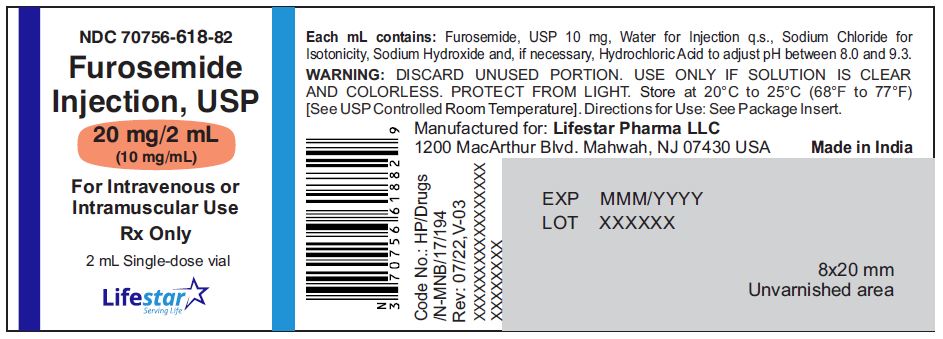
PACKAGE LABEL.PRINCIPAL DISPLAY PANEL NDC 70756-618-82 Furosemide Injection, USP 20 mg/2 mL (10 mg/mL) For Intravenous or Intramuscular Use Rx Only 2 mL Single-dose vial NDC 70756-619-85 Furosemide Injection, USP 40 mg/4 mL (10 mg/mL) For Intravenous or Intramuscular Use Rx Only 4 mL Single-dose vial NDC 70756-620-86 Furosemide Injection, USP 100 mg/10 mL (10 mg/mL) For Intravenous or Intramuscular Use Rx Only 10 mL Single-dose vial NDC 70756-618-05 Furosemide Injection, USP 20 mg/2 mL (10 mg/mL) For Intravenous or Intramuscular Use Rx Only 5 x 2 mL Single-dose vials NDC 70756-619-05 Furosemide Injection, USP 40 mg/4 mL (10 mg/mL) For Intravenous or Intramuscular Use Rx Only 5 x 4 mL Single-dose vials NDC 70756-619-10 Furosemide Injection, USP 40 mg/4 mL (10 mg/mL) For Intravenous or Intramuscular Use Rx Only 10 x 4 mL Single-dose vials NDC 70756-619-25 Furosemide Injection, USP 40 mg/4 mL (10 mg/mL) For Intravenous or Intramuscular Use Rx Only 25 x 4 mL Single-dose vials NDC 70756-620-10 Furosemide Injection, USP 100 mg/10 mL (10 mg/mL) For Intravenous or Intramuscular Use Rx Only 10 x 10 mL Single-dose vials NDC 70756-618-25 Furosemide Injection, USP 20 mg/2 mL (10 mg/mL) For Intravenous or Intramuscular Use Rx Only 25 x 2 mL Single-dose vials NDC 70756-620-25 Furosemide Injection, USP 100 mg/10 mL (10 mg/mL) For Intravenous or Intramuscular Use Rx Only 25 x 10 mL Single-dose vials 2 ml vial 4 ml vial 10 ml vial 5x2ml carton 5x 4ml 10X4ML 25x4ml 10x10ml 25x2ml 25x10ml
Medicare Part D spend CMS · PART D · 2026 (Q1)
About this NDC listing & data coverage
What data is (and isn’t) available for this NDC — tap to expand
| NDC identity (package / product / labeler codes) | ✓ Available |
| Labeler | ✓ Available |
| Product & package description | ✓ Available |
| Marketing category & status | ✓ Available |
| Active ingredient / dosage form / route | ✓ Available |
| FDA label (SPL via DailyMed) | ✓ Available |
| Package photos | ✓ Available |
| Inactive ingredients (structured) | ✓ Available |
| NADAC pharmacy acquisition price (CMS) | — Not published for this NDC CMS publishes NADAC only for NDCs reported in its retail-pharmacy survey. |
| Orange Book / therapeutic-equivalence data | ✓ Available |
| HCPCS J-code billing crosswalk | — Not published for this NDC Most self-administered / retail products have no J-code — that is normal. |
| Medicaid utilization (CMS SDUD) | — Not published for this NDC CMS reports utilization only for NDCs with Medicaid claims above its privacy threshold. |