
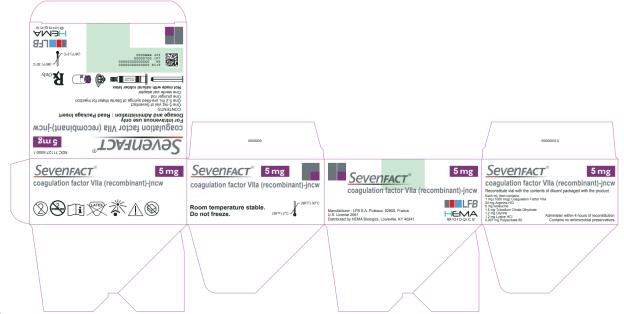
Sevenfact Coagulation Factor VIIa Recombinant Human Kit — NDC 71127-2000-1 (Billing 71127-2000-01)
This is a package of Sevenfact Coagulation Factor VIIa Recombinant Human Kit from Laboratoire Franais du Fractionnement et des Biotechnologies Socit Anonyme (LFB S.A.), marketed since Mar 2025 and currently FDA-listed. It is this product's only package size.
NDC database record
One package, one record: these facts belong to NDC 71127-2000-1 alone.
- Record
- FDA NDC Directory package listing · Human prescription drug
- Code segments
- 71127 labeler · 2000 product · 1 package
- Package marketed since
- Mar 24, 2025
- Sample package
- No — commercial package
- Listing certified through
- Dec 31, 2027
- Barcode (UPC)
- 0371127510018, 0371127110010
- FDA record last changed
- Jul 24, 2026
Identity & classification
Regulatory identifiers FDA, NLM and CMS codes for this package
Drug-database identifiers Medi-Span GPI and First Databank GCN / HICL / AHFS classification
- GSN (GCN sequence number): 086861
- GCN: 56654
- GPI-14 (Medi-Span): 85100026402120
- HICL (First Databank): 046439
- AHFS class code: 20:28.16.00
- RxCUI (RxNorm): 2386865
Where does this data come from?
- FDA openFDA NDC Directory · synced Oct 8, 2026
- FDA label on DailyMed · label index refreshed Oct 8, 2026
- RxNorm (NLM RxNav) · catalog refreshed Oct 1, 2026
- Medi-Span GPI (licensed)
- First Databank (licensed) · refreshed Oct 8, 2026
RxNorm drug class
This medicine belongs to the Human Blood Coagulation Factor class.
Where does this data come from?
- RxClass (NLM) · catalog refreshed Oct 1, 2026
Clinical
Patient education
Supplement & herbal interactions
Where does this data come from?
- MedlinePlus (NLM) · refreshed Oct 8, 2026
- FDA label on DailyMed · label index refreshed Oct 8, 2026
Ask a licensed pharmacist directly — free, answered by our team.
Pricing
A drug doesn't have one price. Each row is a different public payment system, and none is what you'd pay at the counter — that depends on your insurance. The ⓘ on each row explains what it measures.
| Price system | Per each | Per package |
|---|---|---|
| Retail pharmacies payNADAC · weekly | Not in the retail survey — common for institutional, discontinued, or low-volume packs. | |
| Medicaid paysCMS SDUD · 12 mo | No recent Medicaid claims on file for this NDC — rare and low-volume NDCs are suppressed in the public data. | |
| Medicare drug plans payPart D · quarterly | No Part D plan price is available for this NDC in our data. | |
| Medicare Part B allowsASP · J7212 | $2.194 / J7212 unit | — |
Where does this data come from?
- CMS NADAC weekly file
- CMS ASP pricing files · refreshed Sep 20, 2026
- CMS Medicaid State Drug Utilization Data · refreshed Oct 8, 2026
- CMS Part D plan pricing files · refreshed Sep 24, 2026
- VA National Acquisition Center price file
Billing & reimbursement
Where does this data come from?
- CMS ASP NDC-HCPCS crosswalk · refreshed Sep 22, 2026
- DMEPDAC NDC-HCPCS crosswalk
- openFDA NSDE billing units · refreshed Oct 7, 2026
Packaging — all sizes for this product
| Package NDC | Description | Marketing start | Marketing end | Status |
|---|---|---|---|---|
| 71127-2000-01 You're viewing this Main listing | 1 KIT in 1 PACKAGE * 2 mL in 1 VIAL, SINGLE-DOSE * 2.2 mL in 1 SYRINGE | 2025-03-24 | — | Active |
Therapeutic equivalents
| Product | Labeler | Pack | NADAC/unit | TE | Status | Price vs. this |
|---|---|---|---|---|---|---|
| Sevenfactthis 71127-2000-01 | Laboratoire | 1 kit | — | — | FDA listed | — |
| Sevenfact 71127-5000-01 | Laboratoire | 1 kit | — | — | FDA listed | — |
| Sevenfact 71127-1000-01 | Laboratoire | 1 kit | — | — | FDA listed | — |
Where does this data come from?
- FDA openFDA NDC Directory · synced Oct 8, 2026
- FDA Purple Book · refreshed Oct 5, 2026
- CMS NADAC weekly file
Availability & biosimilar status
Biologics have no small-molecule generics; biosimilar competition is tracked in the FDA Purple Book.
Why the date isn’t exact: Biosimilar timing can change because patents may be challenged, settled, licensed, added or removed, and litigation can move the real date earlier or later.
🛈 What do these terms mean?
- Biologic patent
- A patent the reference product’s maker has publicly listed. A biosimilar generally can’t launch until these expire — unless they’re invalidated or resolved in a settlement.
- Reference-product exclusivity
- A flat 12 years of FDA market protection from the biologic’s first licensure (the BPCIA). No biosimilar can be licensed before it ends, regardless of patents.
- Interchangeable exclusivity
- The first interchangeable biosimilar can earn a period as the only interchangeable version (pharmacists can substitute it without the prescriber).
- Earliest biosimilar (LOE)
- The latest of all the dates above — the soonest a biosimilar can realistically reach the market. Litigation and settlements can move it earlier.
Biologics have no small-molecule “generics” — competition comes from FDA-licensed biosimilars, tracked in the FDA Purple Book.
| Code | What it grants | Expires |
|---|---|---|
| RefProduct | Reference-product exclusivity (12-year, BPCIA) — no biosimilar can be licensed before this date | Apr 1, 2032 |
Is there a biosimilar for SEVENFACT 2 MG VIAL?
Why do different websites show different biosimilar dates?
Can a biosimilar launch before the last patent expires?
What does “current Purple Book estimate” mean?
What does “FDA listed” mean?
What does a patent or protection date mean here?
Where does this data come from?
- FDA Purple Book · refreshed Oct 5, 2026
Inactive Ingredients / Excipients
Inactive ingredients, also called excipients, are components of the drug product other than the active ingredient. They may include fillers, dyes, coatings, preservatives, flavors, or other formulation ingredients.
Where does this data come from?
IACT rows and label-wide narrative are kept separate; availability and product-level specificity depend on the submitted label.- FDA label on DailyMed · label index refreshed Oct 8, 2026
- FDA openFDA NDC Directory · synced Oct 8, 2026
Inactive ingredient FAQ
Are inactive ingredients the same for every manufacturer?
Why might an inactive ingredient be missing?
Can inactive ingredients matter?
Manufacturer & labeler
More NDCs from Laboratoire Franais du Fractionnement et des Bio... labeler code 71127
Where does this data come from?
- FDA openFDA NDC Directory · synced Oct 8, 2026
- Drugs@FDA
Full prescribing information FDA SPL
🚨 Boxed Warning ▾
WARNING: THROMBOSIS ● Serious arterial and venous thrombotic events may occur following administration of SEVENFACT ® . [See Warnings and Precautions ( 5.1 )] ● Discuss the risks and explain the signs and symptoms of thrombotic and thromboembolic events to patients who will receive SEVENFACT ® . ● Monitor patients for signs or symptoms of activation of the coagulation system and for thrombosis. WARNING: THROMBOSIS See full prescribing information for complete boxed warning. ● Serious arterial and venous thrombotic events may occur following administration of SEVENFACT ® ( 5.1 ). ● Discuss the risks and explain the signs and symptoms of thrombotic and thromboembolic events to patients who will receive SEVENFACT ® . ● Monitor patients for signs or symptoms of activation of the coagulation system and for thrombosis.
🎯 Indications and Usage ▾
1 INDICATIONS AND USAGE SEVENFACT is indicated for the treatment and control of bleeding episodes occurring in adults and adolescents 12 years of age and older with hemophilia A or B with inhibitors. Limitation s of Use: SEVENFACT is not indicated for the treatment of patients with congenital Factor VII deficiency. SEVENFACT is a coagulation factor VIIa concentrate indicated for the treatment and control of bleeding episodes occurring in adults and adolescents 12 years of age and older with hemophilia A or B with inhibitors ( 1 ).
Limitation s of Use: SEVENFACT is not indicated for treatment of congenital factor VII deficiency.
⏱️ Dosage and Administration ▾
2 DOSAGE AND ADMINISTRATION For i ntravenous u se after reconstitution only . Type of Bleeding Dosing Regimen Recommendation For Mild or Moderate bleeds 75 mcg/kg repeated every 3 hours until hemostasis is achieved or Initial dose of 225 mcg/kg. If hemostasis is not achieved within 9 hours, additional 75 mcg/kg doses may be administered every 3 hours as needed to achieve hemostasis For Severe bleeds 225 mcg/kg, followed if necessary 6 hours later with 75 mcg/kg every 2 hours Consider alternative treatments if successful control of bleeding does not occur within 24 hours of the first administration of SEVENFACT.
The vial includes a rubber stopper under the plastic cap. The syringe plunger rod has a wide top end and threaded end. The pre-filled syringe with Water for Injection diluent has a plastic backstop, rubber stopper, syringe tip (luer lock top under syringe cap), and syringe cap.
The SEVENFACT 1 mg and 2 mg vial adapter and SEVENFACT 5 mg vial adapter each contain a plastic cover, paper protective cover, and spike (under protective paper).
2.1Dose For intravenous use after reconstitution only. Dose and duration of SEVENFACT depend on the location and severity of the bleeding, need for urgent hemostasis, frequency of administration, and known patient responsiveness to FVIIa-containing bypassing agents during prior bleeding events. Treatment with SEVENFACT should be initiated as soon as a bleeding event occurs.
The dose, frequency, and duration of SEVENFACT therapy should be based on the patient’s clinical response and hemostasis evaluation. The use of laboratory assessment(s) of coagulation (PT/INR, aPTT, FVII:C) does not necessarily correlate with or predict the hemostatic effectiveness of SEVENFACT. Dose adjustment may be required if the patient has received other procoagulant therapies prior to treatment with SEVENFACT.
Based on the clinical trial program for SEVENFACT, the recommended initial dose should be adjusted based on the criteria provided in Table 1. Table 1 Dosing for Treatment and Control of Bleeding Type of Bleeding Dosing Regimen Recommendation Duration of Therapy Mild and Moderate Joint, superficial muscle, soft tissue and mucous membranes. 75 mcg/kg repeated every 3 hours until hemostasis is achieved or Initial dose of 225 mcg/kg.
If hemostasis is not achieved within 9 hours, additional 75 mcg/kg doses may be administered every 3 hours as needed to achieve hemostasis. Consider alternative treatments if successful control of bleeding does not occur within 24 hours of the first administration of SEVENFACT. Continue therapy to support healing and prevent recurrent hemorrhage after hemostasis to maintain the hemostatic plug.
The site and severity of bleeding should determine therapy duration. Severe Life or limb threatening hemorrhage, iliopsoas and deep muscle with neurovascular injury, retroperitoneum, intracranial, or gastrointestinal. Patients should seek immediate medical care if signs or symptoms of severe bleeding occur in the home setting.
225 mcg/kg initially, followed if necessary 6 hours later with 75 mcg/kg every 2 hours until hemostasis is achieved. Subsequent Dosing: After achieving hemostasis, base the decision for dosing on clinical assessment and the type of bleeding. Consider the risk of thrombosis with subsequent dosing after achieving hemostatic efficacy.
Continue therapy to support healing and prevent recurrent hemorrhage. The site and severity of bleeding and the use of other procoagulant therapies should determine therapy duration.
2.2Reconstitution Follow the procedures below for reconstitution of SEVENFACT. Calculate the amount of SEVENFACT required and select the appropriate SEVENFACT packages containing the matching pre-filled syringe of sterile Water for Injection, and the vial adapters. Reconstitute each vial with the pre-filled syringe provided with each vial of SEVENFACT.
Overview of SEVENFACT P ackage : Figure 1 Vial with SEVENFACT L yophilized P owder Lyophilized Powder Drug… [Excerpted — this section continues on DailyMed.]
💊 Dosage Forms and Strengths ▾
3 DOSAGE FORMS AND STRENGTHS SEVENFACT is a white to off-white lyophilized powder for reconstitution in a colorless solution for injection. It is supplied in single-dose vial sizes containing 1 mg, 2 mg or 5 mg of coagulation factor VIIa (recombinant)-jncw. The diluent for reconstitution of SEVENFACT is supplied in single-dose prefilled glass syringes containing 1.1 mL, 2.2 mL or 5.2 mL sterile Water for Injection.
It is a clear colorless solution. After reconstitution with the appropriate volume of Water for Injection diluent, each mL of SEVENFACT contains 1 mg per mL of coagulation factor VIIa (recombinant)-jncw (1,000 micrograms per mL). SEVENFACT is available as a lyophilized powder in single-dose vials containing 1 mg, 2 mg or 5 mg of coagulation factor VIIa (recombinant)-jncw.
After reconstitution with a specified volume of Sterile Water for Injection, each mL contains 1 mg (1000 mcg) of coagulation factor VIIa (recombinant)-jncw ( 3 ).
⛔ Contraindications ▾
4 CONTRAINDICATIONS SEVENFACT is contraindicated in patients with: known allergy to rabbits or rabbit proteins. Exposure to SEVENFACT in these patients can result in severe hypersensitivity reaction. severe hypersensitivity reaction to SEVENFACT or any of its components. Exposure to SEVENFACT in these patients can result in severe hypersensitivity reaction.
Known allergy to rabbits or rabbit proteins. Severe hypersensitivity reaction to SEVENFACT or any of its components ( 4 ).
⚠️ Warnings and Cautions ▾
5 WARNINGS AND PRECAUTIONS Patients with hemophilia A or B with inhibitors who have other risk factors for thrombosis may be at increased risk of serious arterial and venous thrombotic events ( 5.1 ). Hypersensitivity reactions, including anaphylaxis, are possible with SEVENFACT. Should symptoms occur, patients should discontinue SEVENFACT and seek appropriate medical intervention ( 5.2 ).
5.1Thrombosis Serious arterial and venous thrombosis can occur with coagulation factor VIIa containing products including SEVENFACT. The following patients may have increased risk of thrombosis with use of SEVENFACT: History of congenital or acquired hemophilia receiving concomitant treatment with aPCC/PCC (activated or non-activated prothrombin complex) or other hemostatic agents History of atherosclerotic disease, coronary artery disease, cerebrovascular disease, crush injury, septicemia, or thromboembolism. Monitor patients who receive SEVENFACT for the development of signs and symptoms of activation of the coagulation system or thrombosis.
When there is laboratory confirmation of intravascular coagulation or presence of clinical thrombosis, reduce the dose of SEVENFACT or stop treatment, depending on the patient’s condition.
5.2Hypersensitivity and Infusion-Related Reactions Hypersensitivity and infusion-related reactions including anaphylaxis can occur with coagulation factor VIIa containing products including SEVENFACT. Sign and symptoms may include hives, itching, rash, difficulty breathing, swelling around the mouth and throat, tightness of the chest, wheezing, dizziness or fainting, and low blood pressure. Patients with known IgE-based hypersensitivity to casein may be at higher risk of hypersensitivity reactions.
In the event of hypersensitivity or infusion-related reactions, discontinue SEVENFACT and manage according to clinical practice guideline.
5.3Neutralizing Antibodies Neutralizing antibodies may occur with the use of SEVENFACT. If treatment with SEVENFACT does not result in adequate hemostasis, then suspect development of neutralizing antibody as the possible cause and perform testing as clinically indicated. Neutralizing antibodies to other Factor VIIa-containing products have been observed in congenital Factor VII-deficient patients.
SEVENFACT has not been studied in this patient population. [ See limitation of use statement under Indications and Usage ( 1 )] .
5.4Laboratory Tests Laboratory coagulation parameters (PT/INR, aPTT, FVII:C) do not correlate with clinical response to SEVENFACT treatment.
🤒 Adverse Reactions ▾
6 ADVERSE REACTIONS The most common adverse reactions (incidence ≥1%) were headache, dizziness, infusion-site discomfort, infusion-site hematoma, infusion-related reaction, and fever ( 6 ). To report SUSPECTED ADVERSE REACTIONS, contact HEMA Biologics at 855-718-HEMA (4362) or FDA at 1-800-FDA-1088 or https://www.fda.gov/medwatch.
6.1Clinical Trials Experience Because clinical trials are conducted under widely varying conditions, adverse reaction rates observed in the clinical trials of a drug cannot be directly compared to rates in the clinical trials of another drug and may not reflect the rates observed in practice. The safety database described in this section reflect exposure to SEVENFACT in two clinical studies, Study 1 and Study 2. A total of 42 patients with Hemophilia A or B with or without inhibitors received SEVENFACT: 27 patients in Study 1 at doses 75 mcg/kg and 225 mcg/kg and 15 patients in Study 2 at three escalating dose levels 25 mcg/kg, 75 mcg/kg and 225 mcg/kg [see Clinical Studies ( 14 )] .
The most common adverse reactions (incidence ≥1%) reported in clinical trials for SEVENFACT were headache, dizziness, infusion-site discomfort, infusion-site hematoma, infusion-related reaction, and fever. Adverse reactions reported in the two clinical studies are shown in Table 2. Table 2 Adverse Reactions Occurring in Clinical Studies Preferred Terms Number of Patient Adverse Reactions (% Incidence Rate) Study 2 (N=15) Number of A dverse R eactions * Study 2 Number of Patient Adverse Reactions (% Incidence Rate) Study 1 (N=27) Number of A dverse R eactions * Study 1 Infusion site discomfort - - 1 (4) 4 Infusion site hematoma - - 1 (4) 2 Dizziness 1 (7) 2 - - Headache 1 (7) 1 - - Body temperature increase - - 1 (4) 1 Infusion related reaction** 1 (7) 1 - - * Three patients experienced adverse reactions in Study 2 and two patients experienced adverse reactions in Study 1. ** Symptoms resolved without any intervention and did not recur with subsequent administration.
🔄 Drug Interactions ▾
7 DRUG INTERACTIONS Clinical experience with pharmacologic use of FVIIa-containing products indicates an elevated risk of serious thrombotic events when used simultaneously with activated prothrombin complex concentrates. Clinical experience with pharmacologic use of FVIIa-containing products indicates an elevated risk of serious thrombotic events when used simultaneously with activated prothrombin complex concentrates ( 7 ).
👥 Use in Specific Populations ▾
8 USE IN SPECIFIC POPULATIONS
8.1Pregnancy Risk Summary There are no adequate and well-controlled studies using SEVENFACT in pregnant women to determine whether there is a drug-associated risk. Animal studies evaluating the embryo-fetal teratogenic potential of SEVENFACT have not been conducted. It is unknown whether SEVENFACT can cause fetal harm when administered to a pregnant woman or can affect fertility.
In the U.S. general population, the estimated background risks of major birth defect and miscarriage in clinically recognized pregnancies are 2-4% and 15-20%, respectively.
8.2Lactation Risk Summary There is no information regarding the presence of SEVENFACT in human milk, the effect on the breastfed infant, and the effects on milk production. The developmental and health benefits of breastfeeding should be considered along with the mother’s clinical need for SEVENFACT and any potential adverse effects on the breastfed infant from SEVENFACT or from the underlying maternal condition.
8.3Females and Males of Reproductive Potential Risk Summary In Study 1, male patients cautioned to avoid sexual activity without condoms received SEVENFACT for the treatment of bleeding episodes. No pregnancies from sexual partners were reported. The relative benefits of SEVENFACT should be weighed against any potential risk arising from exposure in sexually active patients.
All clinical studies of SEVENFACT were performed on males, as males are predominantly affected with the congenital form of hemophilia. No adverse effects on the mating index, fertility, or conception rate were observed following administration of SEVENFACT at dose levels up to 13-fold higher than the highest recommended human dose in healthy male rats prior to and during cohabitation with healthy untreated female rats [ See Carcinogenesis, Mutagenesis, Impairment of Fertility ( 13.1 ) ].
8.4Pediatric Use The safety and effectiveness of SEVENFACT have been established for pediatric patients ≥ 12 years of age for the treatment and control of bleeding episodes. Limited clinical data for SEVENFACT in adolescents (≥12 to <18 years) were collected in an adult and adolescent study (Study 1). A total of five patients were dosed with SEVENFACT.
These five patients were treated for a total of 79 bleeding episodes (all mild or moderate) that occurred while patients were still under 18 years of age. Hemostatic efficacy in this subgroup (n=5) was comparable to efficacy observed in the overall population [ See Clinical Studies ( 14 ) ]. The safety and effectiveness of SEVENFACT for the treatment and control of bleeding episodes have not been established in children < 12 years of age.
Effectiveness was not demonstrated in a trial of 25 pediatric patients 6 months to < 12 years of age. The safety and effectiveness of SEVENFACT in infants less than 6 months of age have not been evaluated.
8.5Geriatric Use Safety and effectiveness of SEVENFACT in patients >65 years of age have not been evaluated in clinical trials (Study 1 and Study 2). The presence of age-related comorbidities and the attendant risks associated with thrombotic and thromboembolic events should be considered when administering SEVENFACT to patients older than 50 years of age.
🤰 Pregnancy ▾
8.1Pregnancy Risk Summary There are no adequate and well-controlled studies using SEVENFACT in pregnant women to determine whether there is a drug-associated risk. Animal studies evaluating the embryo-fetal teratogenic potential of SEVENFACT have not been conducted. It is unknown whether SEVENFACT can cause fetal harm when administered to a pregnant woman or can affect fertility.
In the U.S. general population, the estimated background risks of major birth defect and miscarriage in clinically recognized pregnancies are 2-4% and 15-20%, respectively.
🧒 Pediatric Use ▾
8.4Pediatric Use The safety and effectiveness of SEVENFACT have been established for pediatric patients ≥ 12 years of age for the treatment and control of bleeding episodes. Limited clinical data for SEVENFACT in adolescents (≥12 to <18 years) were collected in an adult and adolescent study (Study 1). A total of five patients were dosed with SEVENFACT.
These five patients were treated for a total of 79 bleeding episodes (all mild or moderate) that occurred while patients were still under 18 years of age. Hemostatic efficacy in this subgroup (n=5) was comparable to efficacy observed in the overall population [ See Clinical Studies ( 14 ) ]. The safety and effectiveness of SEVENFACT for the treatment and control of bleeding episodes have not been established in children < 12 years of age.
Effectiveness was not demonstrated in a trial of 25 pediatric patients 6 months to < 12 years of age. The safety and effectiveness of SEVENFACT in infants less than 6 months of age have not been evaluated.
🧓 Geriatric Use ▾
8.5Geriatric Use Safety and effectiveness of SEVENFACT in patients >65 years of age have not been evaluated in clinical trials (Study 1 and Study 2). The presence of age-related comorbidities and the attendant risks associated with thrombotic and thromboembolic events should be considered when administering SEVENFACT to patients older than 50 years of age.
🧬 Clinical Pharmacology ▾
12 CLINICAL PHARMACOLOGY
12.1Mechanism of Action The active ingredient in SEVENFACT is a recombinant analog of human Factor VIIa, a vitamin K-dependent coagulation factor. In the presence of both calcium and phospholipids, Factor VIIa in a complex with tissue factor (TF) activates Factor X to Factor Xa, directly bypassing the reactions that require Factor VIII or Factor IX. Activation of Factor X to Factor Xa initiates the common pathway of the coagulation cascade in which prothrombin is activated to thrombin, which then converts fibrinogen to fibrin to form a hemostatic plug, thereby achieving clot formation at the site of hemorrhage (hemostasis).
This process may also occur in the absence of TF on the surface of activated platelets.
12.2Pharmacodynamics Laboratory assessment of coagulation does not necessarily correlate with or predict the hemostatic effectiveness of SEVENFACT. SEVENFACT demonstrated a dose and concentration-dependent pharmacodynamics effect on the coagulation system, including shortening of the activated partial thromboplastin time (aPTT) and the prothrombin time (PT), and increasing the thrombin generation with platelets (TGT) and the maximum clot firmness (ROTEM-FIBTEM test).
12.3Pharmacokinetics Pharmacokinetic (PK) evaluation was conducted in an open-label, randomized, dose-comparison study to evaluate safety and pharmacokinetic of SEVENFACT in 28 adult patients (ages 18-75 yrs) with hemophilia A with or without inhibitors who were not actively bleeding. Patients received a single intravenous administration of either 75 mcg/kg or 225 mcg/kg dose of SEVENFACT. The PK parameters evaluated were maximum plasma concentration (C max ) of FVIIa (ng/mL), clearance (L/h), volume of distribution (Vss (L)), area under the plasma concentration-time curve from Time 0 (dosing) to infinity (AUC 0-inf ) (ng*h/mL), and half-life time (t 1/2 (h)), calculated from non-compartmental analysis (NCA) PK analyses using a validated activity assay.
Table 3 Pharmacokinetic Parameters of SEVENFACT (Arithmetic Mean [CV%]) PK Parameter ( Arithmetic Mean [ CV% ] ) C max ( ng/mL ) Clearance (L/h) Vss (L) AUC 0-inf (ng*h/mL) t 1/2 (h) 75 mcg/kg (n=14) 938 (37) 5.1 (37) 8.2 (37) 1108 (447) 2.3 (16) 225 mcg/kg (n=14) 3211 (23) 4.5 (20) 7.0 (22) 3571 (26) 2.0 (8) Five minutes after infusion, plasma SEVENFACT levels were 938 ng/mL and 3211 ng/mL for 75 mcg/kg and 225 mcg/kg dose groups respectively. Observed plasma concentration-time profiles show a biexponential decay from the maximal concentration to return to baseline approximately 8 hours post-administration.
Exposure PK parameters C max and AUC 0-inf suggested dose dependence over the ranges studied. The clearance of SEVENFACT was approximately
5.1 L/h and
4.5L/h for 75 mcg/kg and 225 mcg/kg dose levels respectively. Half-life time was approximately 2 hours at both levels. Results were based on Non-Compartmental Analysis. (Table 3)
12.6Immunogenicity The observed incidence of anti-drug antibodies is highly dependent on the sensitivity and specificity of the assay. Differences in assay methods preclude meaningful comparisons of the incidence of anti-drug antibodies in the studies described below with the incidence of anti-drug antibodies in other studies, including those of SEVENFACT or of other Factor VIIa containing products. In Study 1, two out of 27 patients had a positive screening assay for anti-SEVENFACT antibody at baseline, prior to exposure to SEVENFACT, and at follow-up visits.
One of these two patients had a transient SEVENFACT antibody with an additional confirmatory test for anti-SEVENFACT antibody, which was confirmed as non-neutralizing. In Study 2, five of 15 patients tested positive for anti-SEVENFACT antibody using a screening assay. The confirmatory assay was negative for all patients at all time points.
No patient developed anti-rabbit milk protein antibodies during treatment with SEVENFACT. There was no identified clinically significant effect of anti-drug an… [Excerpted — this section continues on DailyMed.]
🧬 Mechanism of Action ▾
12.1Mechanism of Action The active ingredient in SEVENFACT is a recombinant analog of human Factor VIIa, a vitamin K-dependent coagulation factor. In the presence of both calcium and phospholipids, Factor VIIa in a complex with tissue factor (TF) activates Factor X to Factor Xa, directly bypassing the reactions that require Factor VIII or Factor IX. Activation of Factor X to Factor Xa initiates the common pathway of the coagulation cascade in which prothrombin is activated to thrombin, which then converts fibrinogen to fibrin to form a hemostatic plug, thereby achieving clot formation at the site of hemorrhage (hemostasis).
This process may also occur in the absence of TF on the surface of activated platelets.
📦 How Supplied / Storage and Handling ▾
1 6 HOW SUPPLIED/STORAGE AND HANDLING How Supplied SEVENFACT [coagulation factor VIIa (recombinant)-jncw], is supplied as a room temperature stable, white to off-white, lyophilized powder in single-dose vials, one vial per carton. The diluent for reconstitution of SEVENFACT is Water for Injection supplied as a clear colorless solution in a pre-filled syringe. Single 1 mg, 2 mg or 5 mg vials of SEVENFACT are available in packages as indicated in Table 6.
Table 6 SEVENFACT Presentations Presentation Cap Color Indication NDC Number Contents 1 mg per vial Yellow NDC 71127-1000-1 One 1 mg SEVENFACT single-dose vial [NDC 71127-1100-1] One pre-filled syringe containing 1.1 mL of Sterile Water for Injection [NDC 71127-1200-1] One 13 mm vial adapter with 5 micron filter 2 mg per vial Green NDC 71127-2000-1 One 2 mg SEVENFACT single-dose vial [NDC 71127-2100-1] One pre-filled syringe containing 2.2 mL of Sterile Water for Injection [NDC 71127-2200-1] One 13 mm vial adapter with 5 micron filter 5 mg per vial Purple NDC 71127-5000-1 One 5 mg SEVENFACT single-dose vial [NDC 71127-5100-1] One pre-filled syringe containing 5.2 mL of Sterile Water for Injection [NDC 71127-5200-1] One 20 mm vial adapter with 5 micron filter The SEVENFACT vials are made of glass, closed with a bromobutyl rubber stopper (not made with natural rubber latex), and sealed with an aluminum cap.
The pre-filled diluent syringes are made of glass, with a siliconized bromobutyl rubber plunger (not made with natural rubber latex). Storage and Handling Prior to reconstitution, the SEVENFACT kit should be stored at room temperature but can be stored between 36°F to 86°F (2°C to 30°C), protected from light in the product package. Do not freeze.
After reconstitution, SEVENFACT should be stored at room temperature but can be stored between 36°F to 86°F (2°C to 30°C), for up to 4 hours. Do not freeze or store in syringes.
📋 Description ▾
11 DESCRIPTION SEVENFACT [coagulation factor VIIa (recombinant)-jncw] is a sterile, white to off-white lyophilized powder in a single-dose vial containing either 1 mg, 2 mg or 5 mg of coagulation factor VIIa (recombinant)-jncw as the active ingredient. SEVENFACT is to be reconstituted with Sterile Water for Injection in a pre-filled syringe supplied with the product. The reconstituted product is a clear to slightly opaque solution of coagulation factor VIIa (recombinant)-jncw at a concentration of 1 mg of protein per mL with a pH of approximately 6.0.
SEVENFACT is formulated with arginine, isoleucine, citrate, glycine, lysine and polysorbate 80. It does not contain any antimicrobial preservatives nor human or bovine plasma-derived proteins. The active ingredient in SEVENFACT, activated coagulation Factor VII, is a glycoprotein of 406 amino acids with a molecular weight of approximately 50 kilodaltons.
The amino acid sequence of activated coagulation Factor VII is identical to that of human plasma-derived Factor VIIa. It is >99% pure with a nominal specific activity of 45,000 IU/mg of protein when tested against the World Health Organization international standard for human Factor VIIa activity. SEVENFACT is produced by recombinant DNA technology using genetically engineered rabbits into which the DNA coding sequence for human Factor VII has been introduced.
Human Factor VII is expressed in the rabbit mammary gland and secreted into the milk. During purification and processing, Factor VII is enzymatically converted to activated Factor VII. The manufacturing process of SEVENFACT includes specific steps to reduce impurities.
SEVENFACT may contain trace amounts of rabbit proteins. The purification process also includes steps that are validated to inactivate or remove viruses, such as Xenotropic murine leukemia virus (X-MuLV), bovine viral diarrhea virus (BVDV), Pseudorabies virus (PRV), Feline Calicivirus (FCV), and Porcine Parvovirus (PPV).
💬 Information for Patients ▾
1 7 PATIENT COUNSELING INFORMATION Advise patients: to read the FDA-approved patient labeling (Patient Product Information and Instructions for Use). about the early signs of hypersensitivity reactions and to seek medical help if the following occur: - Hives, itching, rash, difficulty breathing, swelling around the mouth and throat, tightness of the chest, wheezing, dizziness or fainting, low blood pressure, or other symptoms of anaphylaxis. about the signs of thrombosis and to seek medical help if the following occur: - New-onset swelling and pain in the limbs or abdomen, new-onset chest pain, shortness of breath, loss of sensation or motor power, or altered consciousness or speech.
Revised: November 13, 2025 U.S. License Number: 2061 “SEVENFACT” is a registered trademark of LFB S.A. PATENT Information: https://hemabiodup.wpengine.com/patents/ For I nformation C ontact : Call: 855.718.HEMA (4362) Email: [email protected] Manufacture d by : Laboratoire Français du Fractionnement et des Biotechnologies S.A.
(LFB S.A.) Puteaux, 92800 France U.S. License Number: 2061 Distributed by: HEMA Biologics Louisville, KY 40241 U.S. License Number: 2061
🧬 Pharmacokinetics ▾
12.3Pharmacokinetics Pharmacokinetic (PK) evaluation was conducted in an open-label, randomized, dose-comparison study to evaluate safety and pharmacokinetic of SEVENFACT in 28 adult patients (ages 18-75 yrs) with hemophilia A with or without inhibitors who were not actively bleeding. Patients received a single intravenous administration of either 75 mcg/kg or 225 mcg/kg dose of SEVENFACT. The PK parameters evaluated were maximum plasma concentration (C max ) of FVIIa (ng/mL), clearance (L/h), volume of distribution (Vss (L)), area under the plasma concentration-time curve from Time 0 (dosing) to infinity (AUC 0-inf ) (ng*h/mL), and half-life time (t 1/2 (h)), calculated from non-compartmental analysis (NCA) PK analyses using a validated activity assay.
Table 3 Pharmacokinetic Parameters of SEVENFACT (Arithmetic Mean [CV%]) PK Parameter ( Arithmetic Mean [ CV% ] ) C max ( ng/mL ) Clearance (L/h) Vss (L) AUC 0-inf (ng*h/mL) t 1/2 (h) 75 mcg/kg (n=14) 938 (37) 5.1 (37) 8.2 (37) 1108 (447) 2.3 (16) 225 mcg/kg (n=14) 3211 (23) 4.5 (20) 7.0 (22) 3571 (26) 2.0 (8) Five minutes after infusion, plasma SEVENFACT levels were 938 ng/mL and 3211 ng/mL for 75 mcg/kg and 225 mcg/kg dose groups respectively. Observed plasma concentration-time profiles show a biexponential decay from the maximal concentration to return to baseline approximately 8 hours post-administration.
Exposure PK parameters C max and AUC 0-inf suggested dose dependence over the ranges studied. The clearance of SEVENFACT was approximately
5.1 L/h and
4.5L/h for 75 mcg/kg and 225 mcg/kg dose levels respectively. Half-life time was approximately 2 hours at both levels. Results were based on Non-Compartmental Analysis. (Table 3)
🧬 Pharmacodynamics ▾
12.2Pharmacodynamics Laboratory assessment of coagulation does not necessarily correlate with or predict the hemostatic effectiveness of SEVENFACT. SEVENFACT demonstrated a dose and concentration-dependent pharmacodynamics effect on the coagulation system, including shortening of the activated partial thromboplastin time (aPTT) and the prothrombin time (PT), and increasing the thrombin generation with platelets (TGT) and the maximum clot firmness (ROTEM-FIBTEM test).
🔬 Clinical Studies ▾
6.1Clinical Trials Experience Because clinical trials are conducted under widely varying conditions, adverse reaction rates observed in the clinical trials of a drug cannot be directly compared to rates in the clinical trials of another drug and may not reflect the rates observed in practice. The safety database described in this section reflect exposure to SEVENFACT in two clinical studies, Study 1 and Study 2. A total of 42 patients with Hemophilia A or B with or without inhibitors received SEVENFACT: 27 patients in Study 1 at doses 75 mcg/kg and 225 mcg/kg and 15 patients in Study 2 at three escalating dose levels 25 mcg/kg, 75 mcg/kg and 225 mcg/kg [see Clinical Studies ( 14 )] .
The most common adverse reactions (incidence ≥1%) reported in clinical trials for SEVENFACT were headache, dizziness, infusion-site discomfort, infusion-site hematoma, infusion-related reaction, and fever. Adverse reactions reported in the two clinical studies are shown in Table 2. Table 2 Adverse Reactions Occurring in Clinical Studies Preferred Terms Number of Patient Adverse Reactions (% Incidence Rate) Study 2 (N=15) Number of A dverse R eactions * Study 2 Number of Patient Adverse Reactions (% Incidence Rate) Study 1 (N=27) Number of A dverse R eactions * Study 1 Infusion site discomfort - - 1 (4) 4 Infusion site hematoma - - 1 (4) 2 Dizziness 1 (7) 2 - - Headache 1 (7) 1 - - Body temperature increase - - 1 (4) 1 Infusion related reaction** 1 (7) 1 - - * Three patients experienced adverse reactions in Study 2 and two patients experienced adverse reactions in Study 1. ** Symptoms resolved without any intervention and did not recur with subsequent administration.
14 CLINICAL STUDIES The efficacy and safety of SEVENFACT for treatment of bleeding episodes was evaluated in Study 1, a global, multicenter, randomized, open-label, cross-over study (NCT02020369). The study enrolled 27 patients with hemophilia A or B with inhibitors who were treated for 468 bleeding events, of which 465 were mild or moderate and three were severe bleeding events. The population characteristics were as follows: Mean age was 31 years (range 12 to 54 years) including five patients 12 to < 18 years of age who experienced 79 bleeding events.
Patients were male, predominantly Caucasian (93%), median of 10 (range 3-50) bleeding episodes in six months prior to study enrollment. Overall, target joint(s)/bleeding site(s) were reported in 63% of patients at study entry. Of the 468 bleeding events in diverse anatomic locations that were treated, 82% were spontaneous and the remaining (18%) were traumatic bleeding episodes; 465 were mild or moderate bleeding events and three were severe (refer to Table 5).
The majority (98%) of bleeding events were treated at home, with 88% treated within one hour of recognition of bleeding. Treatment Regimens for Mild or Moderate Bleeding Episodes For mild to moderate bleeding episodes, patients were randomized to one of two initial dose regimens of SEVENFACT: 75 mcg/kg followed by subsequent doses of 75 mcg/kg every 3 hours as necessary to achieve hemostatic efficacy. A total of eight administrations were allowed in this dose regimen.
225 mcg/kg dose followed nine hours later with 75 mcg/kg doses every 3 hours as necessary to achieve hemostatic efficacy. A total of six administrations were allowed in this dose regimen. Treatment with SEVENFACT was discontinued when bleeding persisted 24 hours after the first administration of SEVENFACT.
In Study 1, patients were randomized to one of two initial dosing regimens and continued on the dose regimen for three months, after which the patients were crossed over to the other dose regimen for three months. Treatment Regimens for Severe Bleeding Episodes Patients in the randomized study who experienced a severe bleed were administered the initial dose of 225 mcg/kg SEVENFACT at home, and were required to receive subsequent treatments at 75 mcg/kg every two hours in a hospital or hemophilia treatment cente… [Excerpted — this section continues on DailyMed.]
🧪 Nonclinical Toxicology ▾
13 NONCLINICAL TOXICOLOGY
13.1Carcinogenesis, Mutagenesis, Impairment of Fertility Studies in animals to evaluate the potential effect of SEVENFACT on carcinogenesis or mutagenesis were not conducted. Male rats intravenously infused with SEVENFACT at 0.1, 0.3, 1 and 3 mg/kg/day (up to 13-fold higher than the highest recommended human dose of 225 mcg/kg), beginning 28 days before cohabitation and during cohabitation did not display adverse effects for the mating index, fertility, or conception rate. Comparing animals administered vehicle to animals administered SEVENFACT, there were no differences in sperm motility, morphology, or concentration.
13.2Animal Toxicology and/or Pharmacology The no observed adverse effect level (NOAEL) in 28-day repeat-dose toxicity studies in male Sprague-Dawley rats and Cynomolgus monkeys was 1 mg/kg/day, which is 4-fold higher than the highest recommended human dose. Anti-drug antibody formation was observed by Day 29 in both animal species. The NOAEL in a 13-week repeat-dose toxicity study in male and female Cynomolgus monkeys was 1 mg/kg/day.
Anti-drug antibody formation was observed in all animals by Day 28. Antibody presence was not associated with any adverse effects in either animal species.
📄 Carcinogenesis, Mutagenesis, Impairment of Fertility ▾
13.1Carcinogenesis, Mutagenesis, Impairment of Fertility Studies in animals to evaluate the potential effect of SEVENFACT on carcinogenesis or mutagenesis were not conducted. Male rats intravenously infused with SEVENFACT at 0.1, 0.3, 1 and 3 mg/kg/day (up to 13-fold higher than the highest recommended human dose of 225 mcg/kg), beginning 28 days before cohabitation and during cohabitation did not display adverse effects for the mating index, fertility, or conception rate. Comparing animals administered vehicle to animals administered SEVENFACT, there were no differences in sperm motility, morphology, or concentration.
📄 Patient Package Insert ▾
Patient Product Information SEVENFACT ® (SEV-en-fact) coagulation factor VIIa (recombinant)-jncw For Intravenous Injection After Reconstitution Only PLEASE READ PATIENT PRODUCT INFORMATION AND THE INSTRUCTIONS FOR USE THAT COME WITH SEVENFACT BEFORE YOU START TAKING THIS MEDICINE AND EACH TIME YOU GET A REFILL. THERE MAY BE NEW INFORMATION. This Patient Product Information does not take the place of talking with your healthcare provider about your medical condition and treatment.
If you have questions about SEVENFACT after reading this information, ask your healthcare provider. What is the most important information I should know about SEVENFACT? The most serious possible side effect of SEVENFACT is abnormal blood clotting involving blockage of blood vessels, which include stroke, blockage of the main blood vessel to the lung, and deep vein blood clots.
You should know the signs of abnormal clotting (thrombosis) described below and seek medical help immediately if they occur. New onset of swelling and pain in the limbs or abdomen, new onset of chest pain, shortness of breath, loss of sensation or motor power, and altered consciousness or speech can all be signs of clot formation in places other than your site of bleeding. Seek immediate medical attention if you experience one or more of these symptoms.
SEVENFACT should be used as prescribed and directed by your healthcare provider. What is SEVENFACT? SEVENFACT is a recombinant human Factor VIIa protein for injection.
SEVENFACT can allow adolescents and adults with Hemophilia A or B with inhibitors to create clotting at the site of bleeding without needing Coagulation Factor VIII or IX replacement. SEVENFACT, coagulation factor VIIa (recombinant)-jncw, is indicated for the treatment and control of bleeding episodes occurring in adults and adolescents 12 years of age and older with Hemophilia A or B with inhibitors. Injecting medications requires special training.
Do not attempt to self-infuse unless you have been taught how by your health care provider or hemophilia treatment center. Once trained, you will need additional infusion materials along with your SEVENFACT so that you can successfully treat your bleeding episodes at home. Be sure to collect all necessary infusion materials before starting the reconstitution process.
SEVENFACT comes in a sterile dry powdered dosage form that must be reconstituted with sterile Water for Injection. It is not known if SEVENFACT is safe and effective in children under 12 years of age. Who should not USE SEVENFACT?
You should not use SEVENFACT if you: Are allergic to rabbits. Have known allergies to SEVENFACT or any of its components. Tell your doctor prior to infusing SEVENFACT if you have begun treatment of a bleeding episode with another bypassing agent such as activated prothrombin complex concentrate (FEIBA ® ).
What should I tell my healthcare provider before I use SEVENFACT? Tell your healthcare provider if you: Are pregnant, planning to become pregnant or nursing, as SEVENFACT has not been studied in patients with Hemophilia A or B with inhibitors who are pregnant or nursing. Had prior blood clots, heart disease, heart failure, abnormal heart rhythms, prior pulmonary clots or heart surgery.
Have or have had any other medical conditions. You and your doctor can then decide whether SEVENFACT is the right treatment for you, as well as the proper timing and doses you will need for SEVENFACT to control your bleeding episodes at home. How should I use SEVENFACT?
Treatment with SEVENFACT should be started by a healthcare provider who is experienced in the care of patients with Hemophilia A or B with inhibitors. SEVENFACT is given as an injection into your vein. You may infuse SEVENFACT at a hemophilia treatment center, at your healthcare provider’s office, or in your home.
You should be trained on how to infuse by your healthcare provider or hemophilia treatment center. Many people with inhibitors learn to infuse by themselves or with the… [Excerpted — this section continues on DailyMed.]
📖 Instructions for Use ▾
INSTRUCTIONS FOR USE: READ BEFORE YOU START USING SEVENFACT ® Your healthcare provider should show you and/or your caregiver how to reconstitute and administer SEVENFACT ® the first time it is used. Use aseptic techniques. Your SEVENFACT ® kit contains: Vial Adapters* and Packaging 1 mg and 2 mg V ial A dapter 5 mg V ial A dapter *N ote : Each SEVENFACT kit will contain only one vial adapter.
You will also need: 1 Collect Supplies and Prepare Vial Take out the number of SEVENFACT ® kits you need to fulfill your prescribed dose, an infusion set (not supplied) and an alcohol swab (not supplied). Do not use the kit if the tamper seal has been broken or you suspect the kit is contaminated. Use a new kit instead.
Check the expiration date on the side of the kit (Fig ure A) . Do not use if expired. Clean a flat surface before starting the steps for reconstituting SEVENFACT ® .
Wash your hands with soap and water and dry using a clean towel or air dry (Fig ure B) . Take out the contents of one kit and one alcohol swab. Place items on the clean surface (Fig ure C) .
Inspect all contents of the kit. Make sure each vial has a matching colored syringe. Do not use the contents if they have been dropped or if they are damaged.
Use a new kit instead. If not already at room temperature, bring the vial and the pre-filled syringe to room temperature. You can do this by holding them in your hands until they feel as warm as your hands.
Remove the plastic cap from the vial (Fig ure D). If the plastic cap is loose or missing, do not use the vial. Wipe the rubber stopper with an alcohol swab (Fig ure E) and allow it to air dry for a few seconds to ensure that it is as germ free as possible.
After cleaning with the swab, do not touch the rubber stopper with your fingers and do not allow it to touch any other object until you attach the vial adapter, as this can transfer germs. 2 Attach Vial Adapter Peel off the paper protective cover from the vial adapter package (Fig ure F) . Hold the vial on the clean flat surface with one hand, using your other hand to hold the plastic cover (with the vial adapter inside) directly over the drug vial.
The spike of the adapter should line up with the middle of the gray rubber stopper. Firmly press down so the vial adapter spike breaks through the rubber stopper (you may hear/see it "snap" into place) (Fig ure G). Lightly squeeze the plastic cover and lift up to remove it from the vial adapter (Fig ure H) .
Do not touch the top of the vial adapter once the plastic cover is removed to avoid transferring germs from your fingers. NOTE: The 5 mg vial adapter may not sit flat against the vial, but it is fully functional. 3 Attach Pre-filled Syringe and Install the Plunger Rod Remove the syringe cap from the pre-filled syringe by holding the syringe body with one hand and using the other hand to unscrew the syringe cap (turn to the left) (Fig ure I) .
Do not touch the syringe tip under the syringe cap to avoid transferring germs from your fingers. Do not use the pre-filled syringe if the syringe cap is loose or missing. While holding the edges of the vial adapter, screw on the pre-filled syringe (turn to the right) a few turns until it starts to tighten (Fig ure J) .
Be careful not to overtighten as you will need to remove the syringe later. Hold the plunger rod by the wide top end in one hand and the syringe body using your other hand. Insert the plunger rod into the syringe, then screw a few turns (turn to the right) so that the plunger rod is attached to the gray rubber stopper in the syringe (Fig ure K) .
4 Mix Drug in Vial Very slowly push down on the plunger rod to the bottom of the syringe, to transfer all of the liquid from the syringe into the drug vial (Fig ure L) . Do not push too quickly as it can result in excess foam and air in the vial. Swirl the vial gently or roll between hands until all powder is dissolved (Fig ure M) .
Do not shake the vial as this creates foam and air. Check the mixed solution (Fig ure… [Excerpted — this section continues on DailyMed.]
📄 Package Label / Principal Display Panel ▾
PRINCIPAL DISPLAY PANEL NDC 71127-1000-1 SEVENFACT ® 1 mg coagulation factor VIIa (recombinant)-jncw For intravenous use only Dosage and Administration: Read Package Insert CONTENTS: One 1 mg vial of Sevenfact One 1.1 mL pre-filled syringe of Sterile Water for Injection One plunger rod One sterile vial adapter Not made with natural rubber latex Rx only LFB HEMA Biologics NDC 71127-1000-1 SEVENFACT® 1 mg coagulation factor VIIa (recombinant)-jncw For intravenous use only Dosage and Administration: Read Package Insert CONTENTS: One 1 mg vial of Sevenfact One 1.1 mL pre-filled syringe of Sterile Water for Injection One plunger rod One sterile vial adapter Not made with natural rubber latex Rx only LFB HEMA Biologics
PRINCIPAL DISPLAY PANEL NDC 71127-2000-1 SEVENFACT ® 2 mg coagulation factor VIIa (recombinant)-jncw For intravenous use only Dosage and Administration: Read Package Insert CONTENTS: One 2 mg vial of Sevenfact One 2.2 mL pre-filled syringe of Sterile Water for Injection One plunger rod One sterile vial adapter Not made with natural rubber latex Rx only LFB HEMA Biologics NDC 71127-2000-1 SEVENFACT® 2 mg coagulation factor VIIa (recombinant)-jncw For intravenous use only Dosage and Administration: Read Package Insert CONTENTS: One 2 mg vial of Sevenfact One 2.2 mL pre-filled syringe of Sterile Water for Injection One plunger rod One sterile vial adapter Not made with natural rubber latex Rx only LFB HEMA Biologics
PRINCIPAL DISPLAY PANEL NDC 71127-5000-1 SEVENFACT ® 5 mg coagulation factor VIIa (recombinant)-jncw For intravenous use only Dosage and Administration: Read Package Insert CONTENTS: One 5 mg vial of Sevenfact One 5.2 mL pre-filled syringe of Sterile Water for Injection One plunger rod One sterile vial adapter Not made with natural rubber latex Rx only LFB HEMA Biologics NDC 71127-5000-1 SEVENFACT® 5 mg coagulation factor VIIa (recombinant)-jncw For intravenous use only Dosage and Administration: Read Package Insert CONTENTS: One 5 mg vial of Sevenfact One 5.2 mL pre-filled syringe of Sterile Water for Injection One plunger rod One sterile vial adapter Not made with natural rubber latex Rx only LFB HEMA Biologics
PRINCIPAL DISPLAY PANEL NDC 71127-1100-1 SEVENFACT ® 1 mg coagulation factor VIIa (recombinant)-jncw Reconstitute with 1.1 mL Sterile Water for Injection For intravenous administration only Store between 2-30°C (36-86°F). Rx only Manufactured by LFB S.A. U.S.
License No. 2061 NDC 71127-1100-1 SEVENFACT® 1 mg coagulation factor VIIa (recombinant)-jncw Reconstitute with 1.1 mL Sterile Water for Injection For intravenous administration only Store between 2-30°C (36-86°F). Rx only Manufactured by LFB S.A.
U.S. License No. 2061
PRINCIPAL DISPLAY PANEL NDC 71127-2100-1 SEVENFACT ® 2 mg coagulation factor VIIa (recombinant)-jncw Reconstitute with 2.2 mL Sterile Water for Injection For intravenous administration only Store between 2-30°C (36-86°F). Rx only Manufactured by LFB S.A. U.S.
License No. 2061 NDC 71127-2100-1 SEVENFACT® 2 mg coagulation factor VIIa (recombinant)-jncw Reconstitute with 2.2 mL Sterile Water for Injection For intravenous administration only Store between 2-30°C (36-86°F). Rx only Manufactured by LFB S.A.
U.S. License No. 2061
PRINCIPAL DISPLAY PANEL NDC 71127-5100-1 SEVENFACT ® 5 mg coagulation factor VIIa (recombinant)-jncw Reconstitute with 5.2 mL Sterile Water for Injection For intravenous administration only Store between 2-30°C (36-86°F). Rx only Manufactured by LFB S.A. U.S.
License No. 2061 NDC 71127-5100-1 SEVENFACT® 5 mg coagulation factor VIIa (recombinant)-jncw Reconstitute with 5.2 mL Sterile Water for Injection For intravenous administration only Store between 2-30°C (36-86°F). Rx only Manufactured by LFB S.A.
U.S. License No. 2061
PRINCIPAL DISPLAY PANEL NDC 71127-1200-1 Sterile Water for Injection 1.1 mL For reconstitution of Sevenfact ® 1 mg/vial LOT 000000000A EXP MMM0000 Manufactured by LFB S.A. Puteaux, 92800, France U.S. License No. 2061 Store between 2-30°C… [Excerpted — this section continues on DailyMed.]
Reported adverse events (FAERS)
Top reported reactions
Age at onset
Reporter sex
Serious outcomes
Where does this data come from?
About this NDC listing & data coverage
Kit / multi-component package
This NDC identifies a kit — a package containing more than one component. Structured data (pricing, ingredients, equivalents) is often reported per component rather than for the kit NDC itself, which can make this page look thinner than the components' own pages.
What data is (and isn’t) available for this NDC — tap to expand
| NDC identity (package / product / labeler codes) | ✓ Available |
| Labeler | ✓ Available |
| Product & package description | ✓ Available |
| Marketing category & status | ✓ Available |
| Active ingredient / dosage form / route | ✓ Available |
| FDA label (SPL via DailyMed) | ✓ Available |
| Package photos | ✓ Available |
| Inactive ingredients (structured) | — Not published for this NDC The labeler did not submit a structured excipient list, or no SPL is available. |
| NADAC pharmacy acquisition price (CMS) | — Not published for this NDC CMS publishes NADAC only for NDCs reported in its retail-pharmacy survey. |
| Orange Book / therapeutic-equivalence data | ✓ Available |
| HCPCS J-code billing crosswalk | ✓ Available |
| Medicaid utilization (CMS SDUD) | — Not published for this NDC CMS reports utilization only for NDCs with Medicaid claims above its privacy threshold. |