
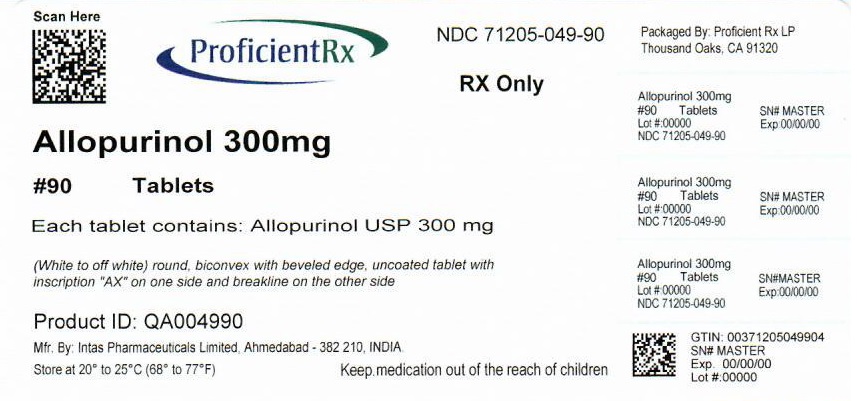
Allopurinol 300 mg Tablet, 90-count — NDC 71205-049-90 (Billing 71205-0049-90)
This is a package of 90 tablets of Allopurinol 300 mg Tablet from Proficient Rx LP, marketed since Apr 2015 and currently FDA-listed.
NDC database record
One package, one record: these facts belong to NDC 71205-049-90 alone.
- Record
- FDA NDC Directory package listing · Human prescription drug
- Code segments
- 71205 labeler · 049 product · 90 package
- Package marketed since
- Jun 1, 2018
- Sample package
- No — commercial package
- Listing certified through
- Dec 31, 2026
- Barcode (UPC-A, from the NDC)
- 3 7120504990 4
- FDA record last changed
- Oct 8, 2026
Identity & classification
Regulatory identifiers FDA, NLM and CMS codes for this package
Drug-database identifiers Medi-Span GPI and First Databank GCN / HICL / AHFS classification
- GPI-14 (Medi-Span): 68000010000310
- RxCUI (RxNorm): 197320
Where does this data come from?
- FDA openFDA NDC Directory · synced Oct 8, 2026
- FDA label on DailyMed · label index refreshed Oct 6, 2026
- RxNorm (NLM RxNav) · catalog refreshed Oct 1, 2026
- Medi-Span GPI (licensed)
- First Databank (licensed) · refreshed Oct 8, 2026
RxNorm drug class
This medicine belongs to the Xanthine Oxidase Inhibitor class.
Where does this data come from?
- RxClass (NLM) · catalog refreshed Oct 1, 2026
Clinical
- Allopurinol lowers uric acid. The tablets are used for gout, for high uric acid caused by cancer treatment, and for recurrent calcium oxalate kidney stones in certain adults. The I...
- No. Flares can happen early as uric acid shifts, and it can take months to settle. Your doctor will likely suggest colchicine or an anti-inflammatory to help prevent them. Keep tak...
- I got a gout flare after starting it. Should I stop?
- Nausea, diarrhea and mild changes in liver tests are the most common. A skin rash is the one to take seriously. Stop the medicine and get medical help right away if a rash or aller...
Patient education
Supplement & herbal interactions
Some supplements/herbs that may interact with Allopurinol — tap one for details:
Where does this data come from?
- MedlinePlus (NLM) · refreshed Oct 1, 2026
- FDA label on DailyMed · label index refreshed Oct 6, 2026
Ask a licensed pharmacist directly — free, answered by our team.
Pricing
A drug doesn't have one price. Each row is a different public payment system, and none is what you'd pay at the counter — that depends on your insurance. The ⓘ on each row explains what it measures.
| Price system | Per each | Per package |
|---|---|---|
| Retail pharmacies payNADAC · weekly | Not in the retail survey — common for institutional, discontinued, or low-volume packs. | |
| Medicaid paysCMS SDUD · 12 mo | No recent Medicaid claims on file for this NDC — rare and low-volume NDCs are suppressed in the public data. | |
| Medicare drug plans payPart D · Q2 2026 | $0.1123 | $10.11 / 90 tablets |
Where does this data come from?
- CMS NADAC weekly file
- CMS ASP pricing files · refreshed Sep 20, 2026
- CMS Medicaid State Drug Utilization Data · refreshed Oct 8, 2026
- CMS Part D plan pricing files · refreshed Sep 24, 2026
- VA National Acquisition Center price file
Packaging — all sizes for this product
| Package NDC | Description | Marketing start | Marketing end | Status |
|---|---|---|---|---|
| 71205-0049-30 71205-049-30 Main listing | 30 TABLET in 1 BOTTLE | 2018-06-01 | — | Active |
| 71205-0049-60 71205-049-60 | 60 TABLET in 1 BOTTLE | 2018-06-01 | — | Active |
| 71205-0049-90 You're viewing this | 90 TABLET in 1 BOTTLE | 2018-06-01 | — | Active |
You're viewing the largest of 3 pack sizes for this product.
Pack size FAQ
What quantity is in this package?
How does this package differ from NDC 71205-0049-30?
What NDC number is used to bill for this package of Allopurinol 300 mg Tablet?
Therapeutic equivalents
| Product | Labeler | Pack | NADAC/unit | TE | Status | Price vs. this |
|---|---|---|---|---|---|---|
| Allopurinol 300 mg 00378-0181-01 | Mylan | 100 tablets | $0.052 | AB | Availability likely | — |
| Allopurinol 300 mg 00591-5544-01 | Actavis | 100 tablets | $0.052 | — | Availability likely | — |
| Allopurinol 300 mg 00603-2116-21 | Par | 100 tablets | $0.052 | AB | Availability likely | — |
| Allopurinol 300 mg 00904-6572-61 | Major | 100 tablets | $0.052 | AB | Availability likely | — |
| Allopurinol 300 mg 16571-0885-09 | Rising | 90 tablets | $0.052 | AB | Availability likely | — |
| Allopurinol 300 mg 16714-0577-01 | NorthStar | 100 tablets | $0.052 | AB | Availability likely | — |
| Allopurinol 300 mg 23155-0694-01 | Heritage | 100 tablets | $0.052 | AB | Discontinued | — |
| Allopurinol 300 mg 29300-0350-01 | Unichem | 100 tablets | $0.052 | AB | Availability likely | — |
| Allopurinol 300 mg 31722-0253-01 | Camber | 100 tablets | $0.052 | AB | Availability likely | — |
| Allopurinol 300 mg 51079-0206-20 | Mylan | 100 tablets | $0.052 | AB | Availability likely | — |
| Allopurinol 300 mg 53489-0157-01 | Sun | 100 tablets | $0.052 | AB | Availability likely | — |
| Allopurinol 300 mg 55111-0730-01 | Dr. | 100 tablets | $0.052 | AB | Availability likely | — |
| Allopurinol 300 mg 59651-0286-01 | Aurobindo | 100 tablets | $0.052 | AB | Availability likely | — |
| Allopurinol 300 mg 60687-0688-01 | American | 100 tablets | $0.052 | AB | Availability likely | — |
| Allopurinol 300 mg 62135-0517-31 | Chartwell | 300 tablets | $0.052 | AB | Availability likely | — |
| Allopurinol 300 mg 69315-0292-01 | Leading | 100 tablets | $0.052 | AB | Availability likely | — |
| Allopurinol 300 mg 71921-0242-01 | Florida | 100 tablets | $0.052 | AB | Availability likely | — |
| Allopurinol 300 mg 16729-0135-01 | Accord | 100 tablets | $0.075 | AB | FDA listed | — |
| Allopurinol 300 mg 00615-8517-05 | NCS | 15 tablets | — | AB | FDA listed | — |
| Allopurinol 300 mg 14445-0171-00 | Indoco | 1000 tablets | — | AB | FDA listed | — |
| Allopurinol 300 mg 43063-0934-01 | PD-Rx | 100 tablets | — | AB | FDA listed | — |
| Allopurinol 300 mg 43063-0976-30 | PD-Rx | 30 tablets | — | AB | FDA listed | — |
| Allopurinol 300 mg 43353-0186-60 | Aphena | 90 tablets | — | AB | FDA listed | — |
| Allopurinol 300 mg 48433-0003-20 | Safecor | 100 tablets | — | AB | FDA listed | — |
| Allopurinol 300 mg 50090-4663-00 | A-S | 100 tablets | — | AB | FDA listed | — |
| Allopurinol 300 mg 50090-6882-00 | A-S | 100 tablets | — | AB | FDA listed | — |
| Allopurinol 300 mg 50090-6968-00 | A-S | 90 tablets | — | AB | FDA listed | — |
| Allopurinol 300 mg 50090-7351-00 | A-S | 100 tablets | — | AB | FDA listed | — |
| Allopurinol 300 mg 50090-7353-00 | A-S | 90 tablets | — | AB | FDA listed | — |
| Allopurinol 300 mg 50090-7792-00 | A-S | 100 tablets | — | AB | FDA listed | — |
| Allopurinol 300 mg 51655-0782-26 | Northwind | 90 tablets | — | AB | FDA listed | — |
| Allopurinol 300 mg 51655-0968-26 | Northwind | 90 tablets | — | AB | FDA listed | — |
| Allopurinol 300 mg 55154-5454-00 | Cardinal | 10 tablets | — | AB | FDA listed | — |
| Allopurinol 300 mg 55154-7981-00 | Cardinal | 10 tablets | — | AB | FDA listed | — |
| Allopurinol 300 mg 60760-0722-90 | ST. | 90 tablets | — | AB | FDA listed | — |
| Allopurinol 300 mg 60760-0989-90 | St. | 90 tablets | — | AB | FDA listed | — |
| Allopurinol 300 mg 63187-0240-30 | Proficient | 30 tablets | — | AB | FDA listed | — |
| Allopurinol 300 mg 63629-1781-01 | Bryant | 30 tablets | — | AB | FDA listed | — |
| Allopurinol 300 mg 63629-2112-01 | Bryant | 500 tablets | — | AB | FDA listed | — |
| Allopurinol 300 mg 63629-2113-01 | Bryant | 1000 tablets | — | AB | FDA listed | — |
| Allopurinol 300 mg 67046-0681-03 | Coupler | 30 tablets | — | AB | FDA listed | — |
| Allopurinol 300 mg 67046-1514-03 | Coupler | 30 tablets | — | AB | FDA listed | — |
| Allopurinol 300 mg 67046-1639-03 | Coupler | 30 tablets | — | AB | FDA listed | — |
| Allopurinol 300 mg 67046-1658-03 | Coupler | 30 tablets | — | AB | FDA listed | — |
| Allopurinol 300 mg 67544-0313-45 | Aphena | 45 tablets | — | AB | FDA listed | — |
| Allopurinol 300 mg 68071-3605-09 | NuCare | 90 tablets | — | AB | FDA listed | — |
| Allopurinol 300 mg 68071-3672-09 | NuCare | 90 tablets | — | AB | FDA listed | — |
| Allopurinol 300 mg 68788-6323-01 | Preferred | 100 tablets | — | AB | FDA listed | — |
| Allopurinol 300 mg 68788-8364-01 | Preferred | 100 tablets | — | AB | FDA listed | — |
| Allopurinol 300 mg 68788-8424-01 | Preferred | 100 tablets | — | AB | FDA listed | — |
| Allopurinol 300 mg 68788-8713-01 | Preferred | 100 tablets | — | AB | FDA listed | — |
| Allopurinol 300 mg 68788-8865-01 | Preferred | 100 tablets | — | AB | FDA listed | — |
| Allopurinol 300 mg 70518-3704-00 | REMEDYREPACK | 30 tablets | — | AB | FDA listed | — |
| Allopurinol 300 mg 70518-4286-00 | REMEDYREPACK | 30 tablets | — | AB | FDA listed | — |
| Allopurinol 300 mg 70518-4404-00 | REMEDYREPACK | 30 tablets | — | AB | FDA listed | — |
| Allopurinol 300 mg 70518-4556-00 | REMEDYREPACK | 100 tablets | — | AB | FDA listed | — |
| Allopurinol 300 mg 70710-1210-00 | Zydus | 1000 tablets | — | AB | FDA listed | — |
| Allopurinol 300 mg 70771-1127-00 | Zydus | 1000 tablets | — | AB | FDA listed | — |
| Allopurinol 300 mgthis 71205-0049-90 | Proficient | 90 tablets | — | AB | FDA listed | — |
| Allopurinol 300 mg 71205-0377-30 | Proficient | 30 tablets | — | AB | FDA listed | — |
| Allopurinol 300 mg 71335-0112-01 | Bryant | 30 tablets | — | AB | FDA listed | — |
| Allopurinol 300 mg 71335-2332-01 | Bryant | 30 tablets | — | AB | FDA listed | — |
| Allopurinol 300 mg 71335-3082-01 | Bryant | 30 tablets | — | AB | FDA listed | — |
| Allopurinol 300 mg 71335-9634-01 | Bryant | 30 tablets | — | AB | FDA listed | — |
| Allopurinol 300 mg 71335-9676-01 | Bryant | 30 tablets | — | AB | FDA listed | — |
| Allopurinol 300 mg 71610-0064-45 | Aphena | 45 tablets | — | AB | FDA listed | — |
| Allopurinol 300 mg 71610-0253-60 | Aphena | 90 tablets | — | AB | FDA listed | — |
| Allopurinol 300 mg 71610-0681-45 | Aphena | 45 tablets | — | AB | FDA listed | — |
| Allopurinol 300 mg 72162-1150-00 | Bryant | 1000 tablets | — | AB | FDA listed | — |
| Allopurinol 300 mg 72189-0417-90 | Direct_Rx | 90 tablets | — | AB | FDA listed | — |
| Allopurinol 300 mg 72189-0647-90 | Direct_Rx | 90 tablets | — | AB | FDA listed | — |
| Allopurinol 300 mg 72865-0304-01 | XLCare | 100 tablets | — | AB | FDA listed | — |
| Allopurinol 300 mg 80425-0206-01 | Advanced | 30 tablets | — | AB | FDA listed | — |
| Allopurinol 300 mg 80425-0383-01 | Advanced | 30 tablets | — | AB | FDA listed | — |
| Allopurinol 300 mg 80425-0518-01 | Advanced | 30 tablets | — | AB | FDA listed | — |
| Allopurinol 300 mg 82638-0113-02 | Harman | 100 tablets | — | AB | FDA listed | — |
| Allopurinol 300 mg 82868-0099-30 | Northwind | 30 tablets | — | AB | FDA listed | — |
| Allopurinol 300 mg 70518-4693-00 | REMEDYREPACK | 100 tablets | — | AB | FDA listed | — |
| Allopurinol 300 mg 71335-3154-01 | Bryant | 30 tablets | — | AB | FDA listed | — |
| Allopurinol 300 mg 55154-0282-00 | Cardinal | 10 tablets | — | AB | FDA listed | — |
| Allopurinol 300 mg 53401-0025-60 | Aphena | 90 tablets | — | AB | FDA listed | — |
| Allopurinol 300 mg 72789-0593-90 | PD-Rx | 90 tablets | — | AB | FDA listed | — |
| Allopurinol 300 mg 85766-0288-01 | Sportpharm | 100 tablets | — | AB | FDA listed | — |
Where does this data come from?
- FDA openFDA NDC Directory · synced Oct 8, 2026
- FDA Orange Book · refreshed Oct 3, 2026
- CMS NADAC weekly file
Availability & generic status
This product is an FDA-approved generic. Other versions of the same drug are listed under Therapeutic equivalents, least expensive first.
Where does this data come from?
- FDA Orange Book · refreshed Oct 3, 2026
Inactive Ingredients / Excipients
Inactive ingredients, also called excipients, are components of the drug product other than the active ingredient. They may include fillers, dyes, coatings, preservatives, flavors, or other formulation ingredients.
🧪 Avoiding an ingredient? See Allopurinol inactive ingredients by manufacturer: every current product's list side by side, so you can ask your pharmacy for the version that does not list it.
💡 Tap an ingredient (hover on desktop) to see what it is and why it’s used.
-
UNII 68401960MK
Crospovidone is a synthetic polymer made from polyvinylpyrrolidone. It acts as a disintegrant, helping tablets break apart quickly in the stomach so the medicine dissolves and absorbs into the body.
-
UNII EWQ57Q8I5X
Lactose monohydrate is a natural sugar derived from milk. It serves as a filler and binder in tablets and capsules, helping create the proper size, texture, and consistency of the medicine.
-
UNII 70097M6I30
Magnesium stearate is a salt made from magnesium and stearic acid, a fatty substance. It's used in tablets and capsules as a lubricant and glidant to help ingredients flow smoothly during manufacturing and prevent sticking.
-
UNII U725QWY32X
Povidone K30 is a synthetic polymer made from petroleum. It acts as a binder to hold tablet ingredients together and as a disintegrant to help the tablet break apart in the stomach so the medicine can be absorbed.
-
UNII O8232NY3SJ
A plant-based carbohydrate derived from corn kernels. It acts as a filler to add bulk, a binder to hold ingredients together, and a disintegrant to help the tablet break apart in your stomach for absorption.
5 inactive ingredients listed in the exact product block matched to this NDC.
Where does this data come from?
ingredient classCode="IACT" elements from the exact product block matched by this NDC. Label-section narrative from DailyMed / the openFDA label index is shown separately when available.- FDA label on DailyMed · label index refreshed Oct 6, 2026
- FDA openFDA NDC Directory · synced Oct 8, 2026
Inactive ingredient FAQ
Are inactive ingredients the same for every manufacturer?
Why might an inactive ingredient be missing?
Can inactive ingredients matter?
Manufacturer & labeler
More NDCs from Proficient Rx LP labeler code 71205
- Glipizide 5 mg Tablet NDC 71205-041-30
- Valsartan and Hydrochlorothiazide 320 mg; 12.5 mg Tablet, Film Coated NDC 71205-042-30
- Rosuvastatin 20 mg Tablet, Film Coated NDC 71205-044-30
- Sotalol Hydrochloride 80 mg Tablet NDC 71205-046-30
- Sertraline Hydrochloride 100 mg Tablet, Film Coated NDC 71205-047-30
- Alendronate Sodium 70 mg Tablet NDC 71205-048-04
- Ipratropium Bromide and Albuterol Sulfate .5 mg/3mL; 3 mg/3mL Solution NDC 71205-051-05
- Rosuvastatin calcium 10 mg Tablet, Film Coated NDC 71205-052-30
- Acyclovir 800 mg Tablet NDC 71205-053-30
- Celecoxib 200 mg Capsule NDC 71205-055-30
- Acyclovir 400 mg Tablet NDC 71205-056-30
- Bacitracin 500 [USP'U]/g Ointment NDC 71205-057-01
Where does this data come from?
- FDA openFDA NDC Directory · synced Oct 8, 2026
- Drugs@FDA
Full prescribing information FDA SPL
🎯 Indications and Usage ▾
INDICATIONS AND USAGE THIS IS NOT AN INNOCUOUS DRUG. IT IS NOT RECOMMENDED FOR THE TREATMENT OF ASYMPTOMATIC HYPERURICEMIA. Allopurinol tablets USP reduces serum and urinary uric acid concentrations.
Its use should be individualized for each patient and requires an understanding of its mode of action and pharmacokinetics (see CLINICAL PHARMACOLOGY , CONTRAINDICATIONS , WARNINGS , and PRECAUTIONS ). Allopurinol tablet USP is indicated in: 1. the management of patients with signs and symptoms of primary or secondary gout (acute attacks, tophi, joint destruction, uric acid lithiasis, and/or nephropathy). 2. the management of patients with leukemia, lymphoma and malignancies who are receiving cancer therapy which causes elevations of serum and urinary uric acid levels.
Treatment with allopurinol tablets USP should be discontinued when the potential for overproduction of uric acid is no longer present. 3. the management of patients with recurrent calcium oxalate calculi whose daily uric acid excretion exceeds 800 mg/day in male patients and 750 mg/day in female patients. Therapy in such patients should be carefully assessed initially and reassessed periodically to determine in each case that treatment is beneficial and that the benefits outweigh the risks.
⏱️ Dosage and Administration ▾
DOSAGE AND ADMINISTRATION The dosage of allopurinol tablets USP to accomplish full control of gout and to lower serum uric acid to normal or near-normal levels varies with the severity of the disease. The average is 200 to 300 mg/day for patients with mild gout and 400 to 600 mg/day for those with moderately severe tophaceous gout. The appropriate dosage may be administered in divided doses or as a single equivalent dose with the 300-mg tablet.
Dosage requirements in excess of 300 mg should be administered in divided doses. The minimal effective dosage is 100 to 200 mg daily and the maximal recommended dosage is 800 mg daily. To reduce the possibility of flare-up of acute gouty attacks, it is recommended that the patient start with a low dose of allopurinol tablets USP (100 mg daily) and increase at weekly intervals by 100 mg until a serum uric acid level of 6 mg/dL or less is attained but without exceeding the maximal recommended dosage.
Normal serum urate levels are usually achieved in 1 to 3 weeks. The upper limit of normal is about 7 mg/dL for men and postmenopausal women and 6 mg/dL for premenopausal women. Too much reliance should not be placed on a single serum uric acid determination since, for technical reasons, estimation of uric acid may be difficult.
By selecting the appropriate dosage and, in certain patients, using uricosuric agents concurrently, it is possible to reduce serum uric acid to normal or, if desired, to as low as 2 to 3 mg/dL and keep it there indefinitely. While adjusting the dosage of allopurinol tablets USP in patients who are being treated with colchicine and/or anti-inflammatory agents, it is wise to continue the latter therapy until serum uric acid has been normalized and there has been freedom from acute gouty attacks for several months. In transferring a patient from a uricosuric agent to allopurinol tablets USP, the dose of the uricosuric agent should be gradually reduced over a period of several weeks and the dose of allopurinol tablets USP gradually increased to the required dose needed to maintain a normal serum uric acid level.
It should also be noted that allopurinol tablet USP is generally better tolerated if taken following meals. A fluid intake sufficient to yield a daily urinary output of at least 2 liters and the maintenance of a neutral or, preferably, slightly alkaline urine are desirable. Since allopurinol and its metabolites are primarily eliminated only by the kidney, accumulation of the drug can occur in renal failure, and the dose of allopurinol tablets USP should consequently be reduced.
With a creatinine clearance of 10 to 20 mL/min, a daily dosage of 200 mg of allopurinol tablet USP is suitable. When the creatinine clearance is less than 10 mL/min, the daily dosage should not exceed 100 mg. With extreme renal impairment (creatinine clearance less than 3 mL/min) the interval between doses may also need to be lengthened.
The correct size and frequency of dosage for maintaining the serum uric acid just within the normal range is best determined by using the serum uric acid level as an index. For the prevention of uric acid nephropathy during the vigorous therapy of neoplastic disease, treatment with 600 to 800 mg daily for 2 or 3 days is advisable together with a high fluid intake. Otherwise similar considerations to the above recommendations for treating patients with gout govern the regulation of dosage for maintenance purposes in secondary hyperuricemia.
The dose of allopurinol tablets USP recommended for management of recurrent calcium oxalate stones in hyperuricosuric patients is 200 to 300 mg/day in divided doses or as the single equivalent. This dose may be adjusted up or down depending upon the resultant control of the hyperuricosuria based upon subsequent 24 hour urinary urate determinations. Clinical experience suggests that patients with recurrent calcium oxalate stones may also benefit from dietary changes such as the reduction of animal protein, sodium, refined s… [Excerpted — this section continues on DailyMed.]
⛔ Contraindications ▾
CONTRAINDICATIONS Patients who have developed a severe reaction to allopurinol tablet USP should not be restarted on the drug.
⚠️ Warnings ▾
WARNINGS ALLOPURINOL TABLETS USP SHOULD BE DISCONTINUED AT THE FIRST APPEARANCE OF SKIN RASH OR OTHER SIGNS WHICH MAY INDICATE AN ALLERGIC REACTION. In some instances a skin rash may be followed by more severe hypersensitivity reactions such as exfoliative, urticarial, and purpuric lesions, as well as Stevens-Johnson syndrome (erythema multiforme exudativum), and/or generalized vasculitis, irreversible hepatotoxicity, and, on rare occasions, death. In patients receiving PURINETHOL ® (mercaptopurine) or IMURAN ® (azathioprine), the concomitant administration of 300 to 600 mg of allopurinol per day will require a reduction in dose to approximately one-third to one-fourth of the usual dose of mercaptopurine or azathioprine.
Subsequent adjustment of doses of mercaptopurine or azathioprine should be made on the basis of therapeutic response and the appearance of toxic effects (see CLINICAL PHARMACOLOGY ). A few cases of reversible clinical hepatotoxicity have been noted in patients taking allopurinol, and in some patients, asymptomatic rises in serum alkaline phosphatase or serum transaminase have been observed. If anorexia, weight loss, or pruritus develop in patients on allopurinol, evaluation of liver function should be part of their diagnostic workup.
In patients with pre-existing liver disease, periodic liver function tests are recommended during the early stages of therapy. Due to the occasional occurrence of drowsiness, patients should be alerted to the need for due precaution when engaging in activities where alertness is mandatory. The occurrence of hypersensitivity reactions to allopurinol may be increased in patients with decreased renal function receiving thiazides and allopurinol concurrently.
For this reason, in this clinical setting, such combinations should be administered with caution and patients should be observed closely.
🤒 Adverse Reactions ▾
ADVERSE REACTIONS Data upon which the following estimates of incidence of adverse reactions are made are derived from experiences reported in the literature, unpublished clinical trials and voluntary reports since marketing of allopurinol began. Past experience suggested that the most frequent event following the initiation of allopurinol treatment was an increase in acute attacks of gout (average 6% in early studies). An analysis of current usage suggests that the incidence of acute gouty attacks has diminished to less than 1%.
The explanation for this decrease has not been determined but may be due in part to initiating therapy more gradually (see PRECAUTIONS and DOSAGE AND ADMINISTRATION ). The most frequent adverse reaction to allopurinol is skin rash. Skin reactions can be severe and sometimes fatal.
Therefore, treatment with allopurinol should be discontinued immediately if a rash develops (see WARNINGS ). Some patients with the most severe reaction also had fever, chills, arthralgias, cholestatic jaundice, eosinophilia and mild leukocytosis or leukopenia. Among 55 patients with gout treated with allopurinol for 3 to 34 months (average greater than 1 year) and followed prospectively, Rundles observed that 3% of patients developed a type of drug reaction which was predominantly a pruritic maculopapular skin eruption, sometimes scaly or exfoliative.
However, with current usage, skin reactions have been observed less frequently than 1%. The explanation for this decrease is not obvious. The incidence of skin rash may be increased in the presence of renal insufficiency.
The frequency of skin rash among patients receiving ampicillin or amoxicillin concurrently with allopurinol has been reported to be increased (see PRECAUTIONS ). Most Common Reactions* Probably Causally Related: Gastrointestinal: Diarrhea, nausea, alkaline phosphatase increase, SGOT/SGPT increase. Metabolic and Nutritional: Acute attacks of gout.
Skin and Appendages: Rash, maculopapular rash. *Early clinical studies and incidence rates from early clinical experience with allopurinol suggested that these adverse reactions were found to occur at a rate of greater than 1%. The most frequent event observed was acute attacks of gout following the initiation of therapy. Analyses of current usage suggest that the incidence of these adverse reactions is now less than 1%.
The explanation for this decrease has not been determined, but it may be due to following recommended usage (see ADVERSE REACTIONS introduction, INDICATIONS AND USAGE , PRECAUTIONS , and DOSAGE AND ADMINISTRATION ). Incidence Less Than 1% Probably Causally Related: Body As a Whole: Ecchymosis, fever, headache. Cardiovascular: Necrotizing angiitis, vasculitis.
Gastrointestinal: Hepatic necrosis, granulomatous hepatitis, hepatomegaly, hyperbilirubinemia, cholestatic jaundice, vomiting, intermittent abdominal pain, gastritis, dyspepsia. Hemic and Lymphatic: Thrombocytopenia, eosinophilia, leukocytosis, leukopenia. Musculoskeletal: Myopathy, arthralgias.
Nervous: Peripheral neuropathy, neuritis, paresthesia, somnolence. Respiratory: Epistaxis. Skin and Appendages: Erythema multiforme exudativum (Stevens-Johnson syndrome), toxic epidermal necrolysis (Lyell's syndrome), hypersensitivity vasculitis, purpura, vesicular bullous dermatitis, exfoliative dermatitis, eczematoid dermatitis, pruritus, urticaria, alopecia, onycholysis, lichen planus.
Special Senses: Taste loss/perversion. Urogenital: Renal failure, uremia (see PRECAUTIONS ). Incidence Less Than 1% Causal Relationship Unknown: Body As a Whole: Malaise.
Cardiovascular: Pericarditis, peripheral vascular disease, thrombophlebitis, bradycardia, vasodilation. Endocrine: Infertility (male), hypercalcemia, gynecomastia (male). Gastrointestinal: Hemorrhagic pancreatitis, gastrointestinal bleeding, stomatitis, salivary gland swelling, hyperlipidemia, tongue edema, anorexia.
Hemic and Lymphatic: Aplastic anemia, agranulocytosis, eosinophilic fibrohistiocytic le… [Excerpted — this section continues on DailyMed.]
🔄 Drug Interactions ▾
Drug Interactions: In patients receiving PURINETHOL (mercaptopurine) or IMURAN (azathioprine), the concomitant administration of 300 to 600 mg of allopurinol per day will require a reduction in dose to approximately one third to one fourth of the usual dose of mercaptopurine or azathioprine. Subsequent adjustment of doses of mercaptopurine or azathioprine should be made on the basis of therapeutic response and the appearance of toxic effects (see CLINICAL PHARMACOLOGY ). It has been reported that allopurinol prolongs the half-life of the anticoagulant, dicumarol.
The clinical basis of this drug interaction has not been established but should be noted when allopurinol is given to patients already on dicumarol therapy. Since the excretion of oxipurinol is similar to that of urate, uricosuric agents, which increase the excretion of urate, are also likely to increase the excretion of oxipurinol and thus lower the degree of inhibition of xanthine oxidase. The concomitant administration of uricosuric agents and allopurinol has been associated with a decrease in the excretion of oxypurines (hypoxanthine and xanthine) and an increase in urinary uric acid excretion compared with that observed with allopurinol alone.
Although clinical evidence to date has not demonstrated renal precipitation of oxypurines in patients either on allopurinol alone or in combination with uricosuric agents, the possibility should be kept in mind. The reports that the concomitant use of allopurinol and thiazide diuretics may contribute to the enhancement of allopurinol toxicity in some patients have been reviewed in an attempt to establish a cause-and-effect relationship and a mechanism of causation. Review of these case reports indicates that the patients were mainly receiving thiazide diuretics for hypertension and that tests to rule out decreased renal function secondary to hypertensive nephropathy were not often performed.
In those patients in whom renal insufficiency was documented, however, the recommendation to lower the dose of allopurinol was not followed. Although a causal mechanism and a cause-and-effect relationship have not been established, current evidence suggests that renal function should be monitored in patients on thiazide diuretics and allopurinol even in the absence of renal failure, and dosage levels should be even more conservatively adjusted in those patients on such combined therapy if diminished renal function is detected.
An increase in the frequency of skin rash has been reported among patients receiving ampicillin or amoxicillin concurrently with allopurinol compared to patients who are not receiving both drugs. The cause of the reported association has not been established. Enhanced bone marrow suppression by cyclophosphamide and other cytotoxic agents has been reported among patients with neoplastic disease, except leukemia, in the presence of allopurinol.
However, in a well-controlled study of patients with lymphoma on combination therapy, allopurinol did not increase the marrow toxicity of patients treated with cyclophosphamide, doxorubicin, bleomycin, procarbazine, and/or mechlorethamine. Tolbutamide's conversion to inactive metabolites has been shown to be catalyzed by xanthine oxidase from rat liver. The clinical significance, if any, of these observations is unknown.
Chlorpropamide's plasma half-life may be prolonged by allopurinol, since allopurinol and chlorpropamide may compete for excretion in the renal tubule. The risk of hypoglycemia secondary to this mechanism may be increased if allopurinol and chlorpropamide are given concomitantly in the presence of renal insufficiency. Rare reports indicate that cyclosporine levels may be increased during concomitant treatment with allopurinol.
Monitoring of cyclosporine levels and possible adjustment of cyclosporine dosage should be considered when these drugs are co-administered.
🔄 Drug / Laboratory Test Interactions ▾
Drug/Laboratory Test Interactions: Allopurinol is not known to alter the accuracy of laboratory tests.
🤰 Pregnancy ▾
Pregnancy Teratogenic Effects: Pregnancy Category C. Reproductive studies have been performed in rats and rabbits at doses up to twenty times the usual human dose (5 mg/kg per day), and it was concluded that there was no impaired fertility or harm to the fetus due to allopurinol. There is a published report of a study in pregnant mice given 50 or 100 mg/kg allopurinol intraperitoneally on gestation days 10 or 13.
There were increased numbers of dead fetuses in dams given 100 mg/kg allopurinol but not in those given 50 mg/kg. There were increased numbers of external malformations in fetuses at both doses of allopurinol on gestation day 10 and increased numbers of skeletal malformations in fetuses at both doses on gestation day 13. It cannot be determined whether this represented a fetal effect or an effect secondary to maternal toxicity.
There are, however, no adequate or well-controlled studies in pregnant women. Because animal reproduction studies are not always predictive of human response, this drug should be used during pregnancy only if clearly needed. Experience with allopurinol during human pregnancy has been limited partly because women of reproductive age rarely require treatment with allopurinol.
There are two unpublished reports and one published paper of women giving birth to normal offspring after receiving allopurinol during pregnancy.
🧒 Pediatric Use ▾
Pediatric Use: Allopurinol is rarely indicated for use in children with the exception of those with hyperuricemia secondary to malignancy or to certain rare inborn errors of purine metabolism (see INDICATIONS AND USAGE and DOSAGE AND ADMINISTRATION ).
🆘 Overdosage ▾
OVERDOSAGE Massive overdosing or acute poisoning by allopurinol tablets USP has not been reported. In mice, the 50% lethal dose (LD 50 ) is 160 mg/kg given intraperitoneally (IP) with deaths delayed up to 5 days and 700 mg/kg orally (PO) (approximately 140 times the usual human dose) with deaths delayed up to 3 days. In rats, the acute LD 50 is 750 mg/kg IP and 6000 mg/kg PO (approximately 1200 times the human dose).
In the management of overdosage there is no specific antidote for allopurinol. There has been no clinical experience in the management of a patient who has taken massive amounts of allopurinol. Both allopurinol and oxipurinol are dialyzable; however, the usefulness of hemodialysis or peritoneal dialysis in the management of an overdose of allopurinol is unknown.
🧬 Clinical Pharmacology ▾
CLINICAL PHARMACOLOGY Allopurinol acts on purine catabolism, without disrupting the biosynthesis of purines. It reduces the production of uric acid by inhibiting the biochemical reactions immediately preceding its formation. Allopurinol is a structural analogue of the natural purine base, hypoxanthine.
It is an inhibitor of xanthine oxidase, the enzyme responsible for the conversion of hypoxanthine to xanthine and of xanthine to uric acid, the end product of purine metabolism in man. Allopurinol is metabolized to the corresponding xanthine analogue, oxipurinol (alloxanthine), which also is an inhibitor of xanthine oxidase. It has been shown that reutilization of both hypoxanthine and xanthine for nucleotide and nucleic acid synthesis is markedly enhanced when their oxidations are inhibited by allopurinol and oxipurinol.
This reutilization does not disrupt normal nucleic acid anabolism, however, because feedback inhibition is an integral part of purine biosynthesis. As a result of xanthine oxidase inhibition, the serum concentration of hypoxanthine plus xanthine in patients receiving allopurinol for treatment of hyperuricemia is usually in the range of 0.3 to 0.4 mg/dL compared to a normal level of approximately 0.15 mg/dL. A maximum of 0.9 mg/dL of these oxypurines has been reported when the serum urate was lowered to less than 2 mg/dL by high doses of allopurinol.
These values are far below the saturation levels at which point their precipitation would be expected to occur (above 7 mg/dL). The renal clearance of hypoxanthine and xanthine is at least 10 times greater than that of uric acid. The increased xanthine and hypoxanthine in the urine have not been accompanied by problems of nephrolithiasis.
Xanthine crystalluria has been reported in only three patients. Two of the patients had Lesch-Nyhan syndrome, which is characterized by excessive uric acid production combined with a deficiency of the enzyme, hypoxanthineguanine phosphoribosyltransferase (HGPRTase). This enzyme is required for the conversion of hypoxanthine, xanthine, and guanine to their respective nucleotides.
The third patient had lymphosarcoma and produced an extremely large amount of uric acid because of rapid cell lysis during chemotherapy. Allopurinol is approximately 90% absorbed from the gastrointestinal tract. Peak plasma levels generally occur at 1.5 hours and 4.5 hours for allopurinol and oxipurinol respectively, and after a single oral dose of 300 mg allopurinol, maximum plasma levels of about 3 mcg/mL of allopurinol and 6.5 mcg/mL of oxipurinol are produced.
Approximately 20% of the ingested allopurinol is excreted in the feces. Because of its rapid oxidation to oxipurinol and a renal clearance rate approximately that of glomerular filtration rate, allopurinol has a plasma half-life of about 1 to 2 hours. Oxipurinol, however, has a longer plasma half-life (approximately 15 hours) and therefore effective xanthine oxidase inhibition is maintained over a 24-hour period with single daily doses of allopurinol.
Whereas allopurinol is cleared essentially by glomerular filtration, oxipurinol is reabsorbed in the kidney tubules in a manner similar to the reabsorption of uric acid. The clearance of oxipurinol is increased by uricosuric drugs, and as a consequence, the addition of a uricosuric agent reduces to some degree the inhibition of xanthine oxidase by oxipurinol and increases to some degree the urinary excretion of uric acid. In practice, the net effect of such combined therapy may be useful in some patients in achieving minimum serum uric acid levels provided the total urinary uric acid load does not exceed the competence of the patient's renal function.
Hyperuricemia may be primary, as in gout, or secondary to diseases such as acute and chronic leukemia, polycythemia vera, multiple myeloma, and psoriasis. It may occur with the use of diuretic agents, during renal dialysis, in the presence of renal damage, during starvation or reducing diets, and in the… [Excerpted — this section continues on DailyMed.]
📦 How Supplied / Storage and Handling ▾
HOW SUPPLIED 300-mg (white to off white) round, biconvex with beveled edge, uncoated tablet with inscription "AX" on one side and breakline on the other side, bottles of 30 (NDC 71205-049-30), 60 (NDC 71205-049-60) and 90 (NDC 71205-049-90). Store at 20° to 25°C (68° to 77°F) [see USP Controlled Room Temperature]. Manufactured For: Accord Healthcare, Inc., 1009 Slater Road, Suite 210-B, Durham, NC 27703, USA.
Manufactured By: Intas Pharmaceuticals Limited, Plot No : 457, 458, Village - Matoda, Bavla Road, Ta. - Sanand, Dist. - Ahmedabad - 382210, India. 10 0258 0 665786 Issued January 2016 Repackaged By; Proficient Rx LP Thousand Oaks CA 91320
📋 Description ▾
DESCRIPTION Allopurinol has the following structural formula: Allopurinol is known chemically as 1,5-dihydro-4 H -pyrazolo [3,4- d ]pyrimidin-4-one. It is a xanthine oxidase inhibitor which is administered orally. Each white to off white tablet contains 100 mg or 300 mg of allopurinol and the inactive ingredients lactose, crospovidone, magnesium stearate, maize starch, and povidone.
Its solubility in water at 37°C is 80.0 mg/dL and is greater in an alkaline solution. Structural Formula
💬 Information for Patients ▾
Information for Patients: Patients should be informed of the following: (1) They should be cautioned to discontinue allopurinol tablets USP and to consult their physician immediately at the first sign of a skin rash, painful urination, blood in the urine, irritation of the eyes, or swelling of the lips or mouth. (2) They should be reminded to continue drug therapy prescribed for gouty attacks since optimal benefit of allopurinol tablets USP may be delayed for 2 to 6 weeks. (3) They should be encouraged to increase fluid intake during therapy to prevent renal stones.
(4) If a single dose of allopurinol tablet USP is occasionally forgotten, there is no need to double the dose at the next scheduled time. (5) There may be certain risks associated with the concomitant use of allopurinol tablets USP and dicumarol, sulfinpyrazone, mercaptopurine, azathioprine, ampicillin, amoxicillin, and thiazide diuretics, and they should follow the instructions of their physician. (6) Due to the occasional occurrence of drowsiness, patients should take precautions when engaging in activities where alertness is mandatory.
(7) Patients may wish to take allopurinol tablets USP after meals to minimize gastric irritation.
⚠️ Precautions ▾
PRECAUTIONS General: An increase in acute attacks of gout has been reported during the early stages of administration of allopurinol , even when normal or subnormal serum uric acid levels have been attained. Accordingly, maintenance doses of colchicine generally should be given prophylactically when allopurinol is begun. In addition, it is recommended that the patient start with a low dose of allopurinol (100 mg daily) and increase at weekly intervals by 100 mg until a serum uric acid level of 6 mg/dL or less is attained but without exceeding the maximum recommended dose (800 mg per day).
The use of colchicine or anti-inflammatory agents may be required to suppress gouty attacks in some cases. The attacks usually become shorter and less severe after several months of therapy. The mobilization of urates from tissue deposits which cause fluctuations in the serum uric acid levels may be a possible explanation for these episodes.
Even with adequate therapy with allopurinol, it may require several months to deplete the uric acid pool sufficiently to achieve control of the acute attacks. A fluid intake sufficient to yield a daily urinary output of at least 2 liters and the maintenance of a neutral or, preferably, slightly alkaline urine are desirable to (1) avoid the theoretical possibility of formation of xanthine calculi under the influence of therapy with allopurinol and (2) help prevent renal precipitation of urates in patients receiving concomitant uricosuric agents.
Some patients with pre-existing renal disease or poor urate clearance have shown a rise in BUN during administration of allopurinol. Although the mechanism responsible for this has not been established, patients with impaired renal function should be carefully observed during the early stages of administration of allopurinol and the dosage decreased or the drug withdrawn if increased abnormalities in renal function appear and persist. Renal failure in association with administration of allopurinol has been observed among patients with hyperuricemia secondary to neoplastic diseases.
Concurrent conditions such as multiple myeloma and congestive myocardial disease were present among those patients whose renal dysfunction increased after allopurinol was begun. Renal failure is also frequently associated with gouty nephropathy and rarely with hypersensitivity reactions associated with allopurinol. Albuminuria has been observed among patients who developed clinical gout following chronic glomerulonephritis and chronic pyelonephritis.
Patients with decreased renal function require lower doses of allopurinol than those with normal renal function. Lower than recommended doses should be used to initiate therapy in any patients with decreased renal function and they should be observed closely during the early stages of administration of allopurinol . In patients with severely impaired renal function or decreased urate clearance, the half-life of oxipurinol in the plasma is greatly prolonged.
Therefore, a dose of 100 mg per day or 300 mg twice a week, or perhaps less, may be sufficient to maintain adequate xanthine oxidase inhibition to reduce serum urate levels. Bone marrow depression has been reported in patients receiving allopurinol, most of whom received concomitant drugs with the potential for causing this reaction. This has occurred as early as 6 weeks to as long as 6 years after the initiation of therapy of allopurinol .
Rarely, a patient may develop varying degrees of bone marrow depression, affecting one or more cell lines, while receiving allopurinol alone. Information for Patients: Patients should be informed of the following: (1) They should be cautioned to discontinue allopurinol tablets USP and to consult their physician immediately at the first sign of a skin rash, painful urination, blood in the urine, irritation of the eyes, or swelling of the lips or mouth. (2) They should be reminded to continue drug therapy prescribed for gouty attacks since optimal benefi… [Excerpted — this section continues on DailyMed.]
🍼 Nursing Mothers ▾
Nursing Mothers: Allopurinol and oxipurinol have been found in the milk of a mother who was receiving allopurinol. Since the effect of allopurinol on the nursing infant is unknown, caution should be exercised when allopurinol is administered to a nursing woman.
📄 Package Label / Principal Display Panel ▾
300 mg 90 Tablets Bottle 71205-049-90
Medicare Part D spend CMS · PART D · 2026 (Q1)
About this NDC listing & data coverage
What data is (and isn’t) available for this NDC — tap to expand
| NDC identity (package / product / labeler codes) | ✓ Available |
| Labeler | ✓ Available |
| Product & package description | ✓ Available |
| Marketing category & status | ✓ Available |
| Active ingredient / dosage form / route | ✓ Available |
| FDA label (SPL via DailyMed) | ✓ Available |
| Package photos | ✓ Available |
| Inactive ingredients (structured) | ✓ Available |
| NADAC pharmacy acquisition price (CMS) | — Not published for this NDC CMS publishes NADAC only for NDCs reported in its retail-pharmacy survey. |
| Orange Book / therapeutic-equivalence data | ✓ Available |
| HCPCS J-code billing crosswalk | — Not published for this NDC Most self-administered / retail products have no J-code — that is normal. |
| Medicaid utilization (CMS SDUD) | — Not published for this NDC CMS reports utilization only for NDCs with Medicaid claims above its privacy threshold. |