
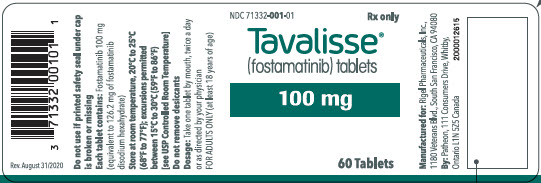
TAVALISSE FOSTAMATINIB 100 mg Tablet, 60-count
🆔 Identity & classification
Where does this data come from?
🏷️ RxNorm drug class
This medicine belongs to the Other systemic hemostatics class.
Where does this data come from?
🏭 Manufacturer & labeler
Where does this data come from?
🩺 Clinical
Fostamatinib is used to treat thrombocytopenia (less than normal number of platelets) in adults with chronic immune thrombocytopenia (ITP; an ongoing condition that may cause unusual bruising or bleeding due to an abnormally low number of platelets in the blood) who were not helped with another treatment. Fostamatinib is in a class of medications called kinase inhibitors. It works by reducing platelet destruction.
Read the full MedlinePlus article ↗- Tavalisse is used to treat a condition called chronic immune thrombocytopenia, or ITP — where your immune system mistakenly destroys your platelets, the blood cells that help you c...
- What exactly is this medication for, and why was I prescribed it?
- Good news — you can take Tavalisse with or without food, so there's no strict meal requirement. If you miss a dose, just skip it and take your next one at the normal time. Don't ta...
- Can I take this with food, and what should I do if I miss a dose?
Patient education
Supplement & herbal interactions
Some supplements/herbs that may interact with Fostamatinib — tap one for details:
Where does this data come from?
Ask a licensed pharmacist directly — free, answered by our team.
💊 What it looks like
Where does this data come from?
🧪 Inactive Ingredients / Excipients
Inactive ingredients, also called excipients, are components of the drug product other than the active ingredient. They may include fillers, dyes, coatings, preservatives, flavors, or other formulation ingredients.
💡 Tap an ingredient (hover on desktop) to see what it is and why it’s used.
-
UNII 1K09F3G675
Ferric oxide red is an inorganic iron compound used as a colorant in medicines. It gives tablets, capsules, or other dosage forms a red or reddish tint for identification and appearance.
-
UNII EX438O2MRT
Ferric oxide yellow is a naturally occurring iron compound used as a colorant in medications. It gives tablets, capsules, and other forms a yellow or golden hue for identification and appearance.
-
UNII 70097M6I30
Magnesium stearate is a salt made from magnesium and stearic acid, a fatty substance. It's used in tablets and capsules as a lubricant and glidant to help ingredients flow smoothly during manufacturing and prevent sticking.
-
UNII 3OWL53L36A
A natural sugar alcohol derived from seaweed or synthesized in the lab. It's used as a filler to add bulk, a sweetener in sugar-free formulas, and a disintegrant to help tablets break apart in the stomach.
-
UNII G2M7P15E5P
Polyethylene glycol 3350 is a synthetic polymer used as a solvent, humectant, and thickening agent in medicines. It helps dissolve other ingredients, retain moisture in the product, and achieve the desired consistency.
-
UNII 532B59J990
Polyvinyl alcohol is a synthetic polymer made from plant-derived materials. It's used as a binder to hold ingredients together, a film-former in coatings, and a thickener in liquid formulations.
-
UNII FZ989GH94E
Povidone is a synthetic polymer made from a plastic-like material. It acts as a binder to hold tablet ingredients together and as a disintegrant to help the tablet break apart in your stomach so the medicine can be absorbed.
-
UNII 8MDF5V39QO
A white powder form of baking soda that acts as a buffer and pH regulator in medicines. It helps maintain the right acid-base balance and may aid tablet disintegration.
-
UNII 5856J3G2A2
A starch-based powder made from potatoes and processed with sodium. It acts as a disintegrant, helping the tablet or capsule break apart quickly in the stomach so the medicine can be absorbed.
-
UNII 7SEV7J4R1U
A powder made from a naturally occurring mineral. In medicines, talc works as a glidant and anti-caking agent, helping tablets and capsules flow smoothly during manufacturing and preventing clumping.
-
UNII 15FIX9V2JP
Titanium dioxide is a bright white mineral powder commonly used as a colorant and opacifying agent. It makes pills and tablets white or lighter in color and helps make coatings non-transparent.
11 inactive ingredients listed in the exact product block matched to this NDC.
Where does this data come from?
ingredient classCode="IACT" elements from the exact product block matched by this NDC. Label-section narrative from DailyMed / the openFDA label index is shown separately when available.Inactive ingredient FAQ
Are inactive ingredients the same for every manufacturer?
Why might an inactive ingredient be missing?
Can inactive ingredients matter?
💲 Pricing
A drug doesn't have one price. Each row is a different public payment system, and none is what you'd pay at the counter — that depends on your insurance. The ⓘ on each row explains what it measures.
| Price system | Per each | Per package |
|---|---|---|
| Retail pharmacies payNADAC · weekly | Not in the retail survey — common for institutional, discontinued, or low-volume packs. | |
| Medicaid paysCMS SDUD · 12 mo | $255.51 | $15,330.59 / 60 tablets |
| Medicare drug plans payPart D · Q2 2026 | $265.46 | $15,927.44 / 60 tablets |
Where does this data come from?
🔁 Therapeutic equivalents
| Product | Labeler | Pack | NADAC/unit | TE | Status | Price vs. this |
|---|---|---|---|---|---|---|
| Tavalisse 100 mgthis 71332-0001-01 | Rigel | 60 tablets | — | AB | FDA listed | — |
Where does this data come from?
⏳ Availability & generic status
The FDA lists approved generic versions of this medicine, but that does not always mean a pharmacy can get one today. Patent rules, launch agreements, supply and pricing can affect when generics actually arrive.
Why the date isn’t exact: Generic timing can change because patents may be challenged, settled, licensed, added, removed, or worked around with a narrower label — and FDA approval does not always mean a pharmacy can get the generic today.
🛈 What do these terms mean?
- Patent
- Legal protection listed in the Orange Book that may delay generic approval or launch. Issued by the U.S. Patent & Trademark Office.
- Substance patent
- Covers the active drug molecule itself — the hardest to design around. A generic generally can’t launch until it expires.
- Formulation (product) patent
- Covers a specific formulation or dosage form. A generic can sometimes work around it with a different formulation.
- Method-of-use patent
- A patent covering one specific approved use of the drug — not necessarily the whole molecule. A generic can sometimes launch with a “skinny label” that carves out the protected use and keeps the others.
- Skinny label
- A generic label that omits a still-patented use when the FDA allows it — letting a generic reach the market for the unprotected uses.
- Exclusivity
- FDA-granted marketing protection, separate from patents — e.g. 5-yr new chemical entity, 7-yr orphan drug, or a +6-month pediatric extension.
- Paragraph IV
- A generic applicant’s formal challenge to a listed patent. It can potentially lead to earlier generic entry, but often involves litigation or a settlement.
- RLD / RS
- Reference Listed Drug — the brand product the FDA uses as the reference for generic applications. Reference Standard — the product the FDA expects generics to compare against in bioequivalence testing.
- TE / AB rating
- FDA therapeutic-equivalence rating. An AB rating generally means the FDA considers a generic therapeutically equivalent to — and substitutable for — the brand.
- LOE (loss of exclusivity)
- The latest patent or exclusivity currently listed — the loss-of-exclusivity / latest-listed-protection date shown on this page. Paragraph-IV challenges and settlements can move the real date earlier; FDA approval and a manufacturer’s decision to market can move it later.
Built from the FDA Orange Book. The bars above are scaled to each protection’s expiry; the red LOE marker is the last one to lapse.
| Patent | Type | Use code | Expires |
|---|---|---|---|
| US 9283238 ↗ | Method of use | U-2294 | Jun 17, 2026 |
| US 7989448 ↗ | Drug substance | U-2294 | Jun 12, 2026 |
| US 9266912 ↗ | Method of use | U-2294 | Jan 19, 2026 |
| US 9283238 ↗ | Method of use | U-2294 | Jun 17, 2026 |
| US 8951504 ↗ | Method of use | U-2294 | Jul 27, 2032 |
| US 8912170 ↗ | Method of use | U-2294 | Jun 17, 2026 |
| US 7538108 ↗ | Drug substance | U-2294 | Mar 28, 2026 |
| US 7538108 ↗ | Drug substance | U-2294 | Mar 28, 2026 |
| US 8951504 ↗ | Method of use | U-2294 | Jul 27, 2032 |
| US 8163902 ↗ | Drug substance | U-2294 | Jun 17, 2026 |
| US 8163902 ↗ | Drug substance | U-2294 | Jun 17, 2026 |
| US 9266912 ↗ | Method of use | U-2294 | Jan 19, 2026 |
| US 7989448 ↗ | Drug substance | U-2294 | Jun 12, 2026 |
| US 8912170 ↗ | Method of use | U-2294 | Jun 17, 2026 |
| US 8445485 ↗ | Drug product | — | Jun 17, 2026 |
| US 8211889 ↗ | Drug substance | — | Jan 19, 2026 |
| US 8652492 ↗ | Drug product | — | Nov 6, 2028 |
| US 8263122 ↗ | Drug product | — | Nov 24, 2030 |
| US 8263122 ↗ | Drug product | — | Nov 24, 2030 |
| US 8211889 ↗ | Drug substance | — | Jan 19, 2026 |
| US 8445485 ↗ | Drug product | — | Jun 17, 2026 |
| US 8652492 ↗ | Drug product | — | Nov 6, 2028 |
| US RE48898 ↗ | Drug product | — | Jan 19, 2026 |
| US 7449458 ↗ | Drug substance | — | Sep 4, 2031 |
| US 7449458 ↗ | Drug substance | — | Sep 4, 2031 |
| US RE48898 ↗ | Drug product | — | Jan 19, 2026 |
| US 8771648 ↗ | Drug product | — | Jul 27, 2032 |
| US 8771648 ↗ | Drug product | — | Jul 27, 2032 |
Is there a generic version of TAVALISSE 100 MG TABLET?
The FDA approved a generic — why can’t I get it at my pharmacy yet?
Why do different websites show different generic release dates?
What does “FDA listed” mean?
What does a patent or protection date mean here?
What does “current Orange Book estimate” mean?
Can a generic come out before the last patent expires?
Can a generic come out after the listed dates?
What is the difference between patents and exclusivity?
Why are there multiple patent dates?
Where does this data come from?
🗺️ Medicaid utilization & spend
📊 Medicare Part D spend CMS · PART D · 2026 (Q1)
📦 Packaging — all sizes for this product
| Package NDC | Description | Marketing start | Status |
|---|---|---|---|
| 71332-0001-01 You're viewing this | 60 TABLET in 1 BOTTLE (71332-001-01) | 2018-05-09 | Active |
🧭 About this NDC listing & data coverage
What data is (and isn’t) available for this NDC — tap to expand
| NDC identity (package / product / labeler codes) | ✓ Available |
| Labeler | ✓ Available |
| Product & package description | ✓ Available |
| Marketing category & status | ✓ Available |
| Active ingredient / dosage form / route | ✓ Available |
| FDA label (SPL via DailyMed) | ✓ Available |
| Package photos | ✓ Available |
| Inactive ingredients (structured) | ✓ Available |
| NADAC pharmacy acquisition price (CMS) | — Not published for this NDC CMS publishes NADAC only for NDCs reported in its retail-pharmacy survey. |
| Orange Book / therapeutic-equivalence data | ✓ Available |
| HCPCS J-code billing crosswalk | — Not published for this NDC Most self-administered / retail products have no J-code — that is normal. |
| Medicaid utilization (CMS SDUD) | ✓ Available |
Questions about this listing
Why is there no price listed?
Is the NDC printed on the package the same as the 11-digit billing NDC?
What do the three segments of this NDC mean?
Is this package still being marketed?
Who lists this product with the FDA?
Do I need a prescription for this product?
Where does this data come from?
📄 Full prescribing information FDA SPL
🎯 Indications and Usage ▾
1 INDICATIONS AND USAGE TAVALISSE is indicated for the treatment of thrombocytopenia in adult patients with chronic immune thrombocytopenia (ITP) who have had an insufficient response to a previous treatment. TAVALISSE is a kinase inhibitor indicated for the treatment of thrombocytopenia in adult patients with chronic immune thrombocytopenia (ITP) who have had an insufficient response to a previous treatment.
⏱️ Dosage and Administration ▾
2 DOSAGE AND ADMINISTRATION Initiate TAVALISSE at 100 mg orally twice daily with or without food. After 4 weeks, increase to 150 mg twice daily, if needed, to achieve platelet counts of at least 50 × 10 9 /L as necessary to reduce the risk of bleeding. ( 2.1 ) Manage adverse reactions using dose reduction, interruption of treatment, or discontinuation.
( 2.3 ) Discontinue TAVALISSE after 12 weeks of treatment if the platelet count does not increase to a level sufficient to avoid clinically important bleeding. ( 2.5 )
2.1Recommended Dosage Initiate TAVALISSE at a dose of 100 mg taken orally twice daily. After a month, if platelet count has not increased to at least 50 × 10 9 /L, increase TAVALISSE dose to 150 mg twice daily. Use the lowest dose of TAVALISSE to achieve and maintain a platelet count at least 50 × 10 9 /L as necessary to reduce the risk of bleeding.
TAVALISSE may be taken with or without food. In the case of a missed dose of TAVALISSE, instruct patients to take their next dose at its regularly scheduled time.
2.2Monitoring After obtaining baseline assessments: Monitor CBCs, including platelet counts, monthly until a stable platelet count (at least 50 × 10 9 /L) is achieved. Thereafter, continue to monitor CBCs, including neutrophils, regularly. Monitor liver function tests (LFTs) (e.g., ALT, AST, and bilirubin) monthly. Monitor blood pressure every 2 weeks until establishment of a stable dose, then monthly thereafter.
2.3Dose Modification for Adverse Reactions TAVALISSE dose modification is recommended based on individual safety and tolerability. Management of some adverse reactions may require dose-interruption, reduction, or discontinuation. A dose reduction schedule is provided in Table 1, based on daily dose.
For example, if a patient is on the maximum dose at the time of an adverse reaction, the first dose reduction would be from 300 mg/day to 200 mg/day. Table 1: Dose Reduction Schedule Daily Dose Administered as: AM PM 300 mg/day 150 mg 150 mg 200 mg/day 100 mg 100 mg 150 mg/day 150 mg Once daily TAVALISSE should be taken in the morning. --- 100 mg/day If further dose reduction below 100 mg/day is required, discontinue TAVALISSE. 100 mg --- The recommended dose modifications for adverse reactions are provided in Table 2.
Table 2: Recommended Dose Modifications and Management for Specific Adverse Reactions Adverse Reaction Recommended Action ALT = alanine aminotransferase; AST = aspartate aminotransferase; BP = blood pressure; BL = bilirubin; ULN = upper limit of normal; LFT = liver function tests (AST, ALT, total BL with fractionation if elevated, alkaline phosphatase); AST/ALT = AST or ALT Hypertension Stage 1: systolic between 130-139 or diastolic between 80-89 mmHg Initiate or increase dosage of antihypertensive medication for patients with increased cardiovascular risk, and adjust as needed until BP is controlled.
If the BP target is not met after 8 weeks, reduce TAVALISSE to next lower daily dose (refer to Table 1). Stage 2: systolic at least 140 or diastolic at least 90 mmHg Initiate or increase dosage of antihypertensive medication, and adjust as needed until BP is controlled. If BP remains 140/90 mmHg or higher for more than 8 weeks, reduce TAVALISSE to next lower daily dose (refer to Table 1).
If BP remains 160/100 mmHg or higher for more than 4 weeks despite aggressive antihypertensive therapy, interrupt or discontinue TAVALISSE. Hypertensive crisis: systolic over 180 and/or diastolic over 120 mmHg Interrupt or discontinue TAVALISSE. Initiate or increase dosage of antihypertensive medication, and adjust as needed until BP is controlled.
If BP returns to less than the target BP, resume TAVALISSE at same daily dose. If repeat BP is 160/100 mmHg or higher for more than 4 weeks despite aggressive antihypertensive treatment, discontinue TAVALISSE. Hepatotoxicity AST/ALT is 3 × ULN or higher and less than 5 × ULN If patient is symptomatic (e.g., nausea, vomiting, abdominal pain): Interrupt TAVALISSE.…
💊 Dosage Forms and Strengths ▾
3 DOSAGE FORMS AND STRENGTHS TAVALISSE is available as: 100 mg tablet: orange, film-coated, round, biconvex tablets debossed with "100" on one side and "R" on the reverse side. 150 mg tablet: orange, film-coated, oval, biconvex tablets debossed with "150" on one side and "R" on the reverse side. Tablets: 100 mg, 150 mg ( 3 )
⛔ Contraindications ▾
4 CONTRAINDICATIONS None. None. ( 4 )
⚠️ Warnings and Cautions ▾
5 WARNINGS AND PRECAUTIONS Hypertension: Monitor blood pressure every 2 weeks until stable, then monthly. Manage hypertension using standard antihypertensive treatment and, if needed, interrupt, reduce or discontinue TAVALISSE. ( 5.1 ) Hepatotoxicity: Monitor LFTs monthly.
If LFT levels are elevated, interrupt, reduce or discontinue TAVALISSE. ( 5.2 ) Diarrhea: Manage diarrhea with supportive measures. If diarrhea becomes severe, interrupt, reduce or discontinue TAVALISSE.
( 5.3 ) Neutropenia: Monitor ANC monthly, and for infection. If neutrophil count decreases below 1.0 × 10 9 /L, interrupt, reduce or discontinue TAVALISSE. ( 5.4 ) Embryo-Fetal Toxicity: TAVALISSE can cause fetal harm.
Advise patients of potential risk to a fetus and to use effective contraception. ( 5.5 )
5.1Hypertension Hypertension can occur with TAVALISSE treatment; hypertensive crisis occurred in 1% of patients. Patients with pre-existing hypertension may be more susceptible to the hypertensive effects of TAVALISSE. Monitor blood pressure every 2 weeks until stable, then monthly and adjust or initiate antihypertensive therapy to ensure maintenance of blood pressure control during TAVALISSE therapy.
If increased blood pressure persists despite appropriate therapy, TAVALISSE interruption, reduction or discontinuation may be necessary [see Dosage and Administration (2.3) ] .
5.2Hepatotoxicity Elevated liver function tests (LFTs), mainly ALT and AST, can occur with TAVALISSE. In the placebo-controlled studies, laboratory testing showed maximum ALT/AST levels more than 3 × the upper limit of normal (ULN) in 9% of patients receiving TAVALISSE [see Adverse Reactions (6.1) ] . For most patients, transaminases recovered to baseline levels within 2 to 6 weeks of dose-modification.
Monitor liver function tests monthly during treatment. If ALT or AST increase more than 3 × ULN, manage hepatotoxicity using TAVALISSE interruption, reduction, or discontinuation [see Dosage and Administration (2.3) ] .
5.3Diarrhea Diarrhea occurred in 31% of patients treated with TAVALISSE. Severe diarrhea occurred in 1% of patients treated with TAVALISSE. Monitor patients for the development of diarrhea.
Manage diarrhea using supportive care measures, including dietary changes, hydration and/or antidiarrheal medication, early after the onset of symptoms. Interrupt, dose reduce, or discontinue TAVALISSE if diarrhea becomes severe (Grade 3 or above) [see Dosage and Administration (2.3) ] .
5.4Neutropenia Neutropenia occurred in 6% of patients treated with TAVALISSE; febrile neutropenia occurred in 1% of patients. Monitor the ANC monthly, and for infection during treatment. Manage toxicity with TAVALISSE interruption, reduction or discontinuation [see Dosage and Administration (2.3) ] .
5.5Embryo-Fetal Toxicity Based on findings from animal studies and its mechanism of action, TAVALISSE can cause fetal harm when administered to a pregnant woman. In animal reproduction studies, administration of fostamatinib to pregnant rats and rabbits during organogenesis caused adverse developmental outcomes including embryo-fetal mortality (post-implantation loss), alterations to growth (lower fetal weights), and structural abnormalities (variations and malformations) at maternal exposures (AUCs) approximately 0.3 and 10 times the human exposure at the maximum recommended human dose (MRHD), respectively.
Advise pregnant women of the potential risk to a fetus. Advise females of reproductive potential to use effective contraception during treatment and for at least 1 month after the last dose. [see Use in Specific Populations (8.1) and Clinical Pharmacology (12.1) ].
🤒 Adverse Reactions ▾
6 ADVERSE REACTIONS The following clinically important adverse reactions, that can become serious are described elsewhere in the labeling: Hypertension [ see Warnings and Precautions (5.1) ] Hepatotoxicity [ see Warnings and Precautions (5.2) ] Diarrhea [ see Warnings and Precautions (5.3) ] Neutropenia [ see Warnings and Precautions (5.4) ] The most common adverse reactions (≥5% and more than placebo) are diarrhea, hypertension, nausea, respiratory infection, dizziness, ALT/AST increased, rash, abdominal pain, fatigue, chest pain and neutropenia.
( 6.1 ) To report SUSPECTED ADVERSE REACTIONS, contact Rigel Pharmaceuticals, Inc. at 1-800-983-1329 or FDA at 1-800-FDA-1088 or www.fda.gov/medwatch.
6.1Clinical Trials Experience Because clinical trials are conducted under widely varying conditions, adverse reaction rates observed in the clinical trials of a drug cannot be directly compared to rates in the clinical trials of another drug and may not reflect the rates observed in practice. TAVALISSE was studied in two randomized, double-blind, placebo-controlled trials that were identical in design. The data described below reflect exposure to TAVALISSE in 102 patients with chronic ITP who had received one or more prior ITP treatment(s).
Groups were stratified with respect to splenectomy and severity of thrombocytopenia. Patients randomized to the TAVALISSE arm received 100 mg orally twice daily. Based upon platelet count and tolerability, if a patient's platelet count did not increase to at least 50 × 10 9 /L, the TAVALISSE dose could be increased to 150 mg twice daily after one month.
In the placebo controlled studies, the median duration of TAVALISSE exposure in these studies was 86 days (range 8 to 183) [see Clinical Studies (14) for additional details for patients on TAVALISSE ] . In the ITP double-blind studies, serious adverse drug reactions were febrile neutropenia, diarrhea, pneumonia, and hypertensive crisis, which each occurred in 1% of patients receiving TAVALISSE. In addition, severe adverse reactions observed in patients receiving TAVALISSE included dyspnea and hypertension (both 2%); and neutropenia, arthralgia, chest pain, diarrhea, dizziness, nephrolithiasis, pain in extremity, toothache, syncope and hypoxia (all 1%) [see Warnings and Precautions (5.1) ] .
Table 3 presents the common adverse reactions from these studies. Table 3: Incidence of Common (≥ 5%) Adverse Reactions from Double-Blind Clinical Studies (FIT 1 and FIT 2) Adverse Reaction TAVALISSE (N=102) Placebo (N=48) Mild % Moderate % Severe % TOTAL % Mild % Moderate % Severe % TOTAL % ALT = Alanine aminotransferase AST = Aspartate aminotransferase Note: Common adverse reactions defined as all adverse reactions occurring at a rate of ≥ 5% of patients in the TAVALISSE group and greater than placebo rate. Diarrhea Includes diarrhea and frequent bowel movement.
21 10 1 31 13 2 0 15 Hypertension Includes hypertension, blood pressure (BP) increased, BP diastolic abnormal, and BP diastolic increased. 17 9 2 28 10 0 2 13 Nausea 16 3 0 19 8 0 0 8 Dizziness 8 2 1 11 6 2 0 8 ALT increased 5 6 0 11 0 0 0 0 AST increased 5 4 0 9 0 0 0 0 Respiratory infection Includes upper respiratory tract infection, respiratory tract infection, lower respiratory tract infection, and viral upper respiratory tract infection. 7 4 0 11 6 0 0 6 Rash Includes rash, rash erythematous and rash macular.
8 1 0 9 2 0 0 2 Abdominal pain Includes abdominal pain, and abdominal pain upper. 5 1 0 6 2 0 0 2 Fatigue 4 2 0 6 0 2 0 2 Chest pain 2 3 1 6 2 0 0 2 Neutropenia Includes neutropenia and neutrophil count decreased. 3 2 1 6 0 0 0 0 Table 4: Elevations in Hepatic Transaminases During Placebo-Controlled Clinical Studies Enzyme Maximum Level of Elevation Number of Patients (%) TAVALISSE (N=102) Placebo (N=48) Alanine aminotransferase (ALT) and/or Aspartate aminotransferase (AST) >3 and ≤5 × ULN 3 (3) 0 >5 and ≤10 × ULN 5 (5) 0 ≥10 × ULN 1 (1) 0
🔄 Drug Interactions ▾
7 DRUG INTERACTIONS Strong CYP3A4 Inhibitors: Concomitant use with a strong CYP3A4 inhibitor increases exposure to R406 (the major active metabolite).( 7 ) Strong CYP3A4 Inducers: Concomitant use is not recommended. ( 7 )
7.1Effect of Other Drugs on TAVALISSE Strong CYP3A4 Inhibitors Concomitant use with strong CYP3A4 inhibitors increases exposure to R406 (the major active metabolite), which may increase the risk of adverse reactions. Monitor for toxicities of TAVALISSE that may require dose reduction (see Table 1 ) when given concurrently with a strong CYP3A4 inhibitor [see Dosage and Administration (2.4) and Clinical Pharmacology (12.3) ] . Strong CYP3A4 Inducers Concomitant use with a strong CYP3A4 inducer reduces exposure to R406.
Concomitant use of TAVALISSE with strong CYP3A4 inducers is not recommended [see Clinical Pharmacology (12.3) ] .
7.2Effect of TAVALISSE on Other Drugs CYP3A4 Substrates Concomitant use of TAVALISSE may increase concentrations of some CYP3A4 substrate drugs. Monitor for toxicities of CYP3A4 substrate drug that may require dosage reduction when given concurrently with TAVALISSE [see Clinical Pharmacology (12.3) ] . BCRP Substrates Concomitant use of TAVALISSE may increase concentrations of BCRP substrate drugs (e.g., rosuvastatin).
Monitor for toxicities of BCRP substrate drug that may require dosage reduction when given concurrently with TAVALISSE [see Clinical Pharmacology (12.3) ] . P-Glycoprotein (P-gp) Substrates Concomitant use of TAVALISSE may increase concentrations of P-gp substrates (e.g., digoxin). Monitor for toxicities of the P-gp substrate drug that may require dosage reduction when given concurrently with TAVALISSE [see Clinical Pharmacology (12.3) ] .
👥 Use in Specific Populations ▾
8 USE IN SPECIFIC POPULATIONS Pregnancy: Advise women of the risk to a fetus. ( 8.1 ) Lactation: Advise women not to breastfeed. ( 8.2 )
8.1Pregnancy Risk Summary Based on findings from animal studies and the mechanism of action, TAVALISSE can cause fetal harm when administered to a pregnant woman [see Clinical Pharmacology (12.1) ]. There are no available data in pregnant women to inform the drug-associated risk. In animal reproduction studies, administration of fostamatinib to pregnant rats and rabbits during organogenesis caused adverse developmental outcomes that were directly attributed to exposure in utero to the major fostamatinib metabolite (R406) at maternal exposures (AUC) as low as 0.3 and 10 times the exposure in patients at the maximum recommended human dose (MRHD), respectively (see Data ).
Advise pregnant women of the potential risk to a fetus. All pregnancies have a background risk of birth defect, loss, or other adverse outcomes. In the U.S. general population, the estimated background risk of major birth defects and miscarriage in clinically recognized pregnancies is 2-4% and 15-20%, respectively.
An estimated background risk of major birth defects and miscarriage for the chronic ITP population is 8% and 4-11%, respectively. Data Animal Data In a fertility and early embryonic development study in female rats, fostamatinib was administered orally for 15 days before mating to Day 7 of pregnancy, which caused a slight decrease in pregnancy rates and an increase in post-implantation loss were seen at maternal doses approximately 4.2 times the dose in patients at the MRHD. In embryo-fetal development studies, pregnant animals were orally administered fostamatinib during the period of organogenesis at doses up to 25 and 50 mg/kg/day in rats and rabbits, respectively.
The adverse developmental outcomes included an increase in embryo-fetal mortality (post-implantation loss), alterations to growth (lower fetal weights), and structural abnormalities (variations and malformations). These effects occurred at maternal exposures (AUCs) of 3,763 ng.h/mL in rats and 111,105 ng.h/mL in rabbits that were approximately 0.3 and 10 times the human exposure at the MRHD in rats and rabbits, respectively. In a peri and postnatal development study in rats, fostamatinib was orally administered at doses of 2.5, 12.5, and 25 mg/kg/day from gestation day 7 until lactation day 20.
The dose of 25 mg/kg/day was associated with maternal toxicity, including decreased body weights, body weight gains, and food consumption. At doses as low as 12.5 mg/kg/day fostamatinib caused increases in newborn mortality (neonatal mortality), alterations in growth and/or development (lower neonatal weights into post-weaning and structural abnormalities [malformations]). Functional impairment (delayed sexual maturation) was observed at 25 mg/kg/day.
There was no evidence of neurobehavioral defects (maze learning and shuttle box avoidance) or immunological compromise (influenza host resistance challenge) in the F1 generation or latent untoward effects in the F2 generation. The maternal doses were approximately 2.1 and 4.2 times the MHRD in patients.
8.2Lactation Risk Summary There are no data on the presence of fostamatinib and/or its metabolites in human milk, the effects on the breastfed child, or on milk production. In rodents, R406 (the major active metabolite) was detected in maternal milk in concentrations 5- to 10-fold higher than in maternal plasma. Because of the potential for serious adverse reactions in a breastfed child from TAVALISSE, advise a lactating woman not to breastfeed during treatment with TAVALISSE and for at least 1 month after the last dose.
8.3Females and Males of Reproductive Potential Pregnancy Testing Based on animal studies, TAVALISSE can cause fetal harm when administered to a pregnant woman [see Use in Specific Populations (8.1) ] . For females of reproductive potential, verify pregnancy status prior to initiating TAVALISSE. C…
🤰 Pregnancy ▾
8.1Pregnancy Risk Summary Based on findings from animal studies and the mechanism of action, TAVALISSE can cause fetal harm when administered to a pregnant woman [see Clinical Pharmacology (12.1) ]. There are no available data in pregnant women to inform the drug-associated risk. In animal reproduction studies, administration of fostamatinib to pregnant rats and rabbits during organogenesis caused adverse developmental outcomes that were directly attributed to exposure in utero to the major fostamatinib metabolite (R406) at maternal exposures (AUC) as low as 0.3 and 10 times the exposure in patients at the maximum recommended human dose (MRHD), respectively (see Data ).
Advise pregnant women of the potential risk to a fetus. All pregnancies have a background risk of birth defect, loss, or other adverse outcomes. In the U.S. general population, the estimated background risk of major birth defects and miscarriage in clinically recognized pregnancies is 2-4% and 15-20%, respectively.
An estimated background risk of major birth defects and miscarriage for the chronic ITP population is 8% and 4-11%, respectively. Data Animal Data In a fertility and early embryonic development study in female rats, fostamatinib was administered orally for 15 days before mating to Day 7 of pregnancy, which caused a slight decrease in pregnancy rates and an increase in post-implantation loss were seen at maternal doses approximately 4.2 times the dose in patients at the MRHD. In embryo-fetal development studies, pregnant animals were orally administered fostamatinib during the period of organogenesis at doses up to 25 and 50 mg/kg/day in rats and rabbits, respectively.
The adverse developmental outcomes included an increase in embryo-fetal mortality (post-implantation loss), alterations to growth (lower fetal weights), and structural abnormalities (variations and malformations). These effects occurred at maternal exposures (AUCs) of 3,763 ng.h/mL in rats and 111,105 ng.h/mL in rabbits that were approximately 0.3 and 10 times the human exposure at the MRHD in rats and rabbits, respectively. In a peri and postnatal development study in rats, fostamatinib was orally administered at doses of 2.5, 12.5, and 25 mg/kg/day from gestation day 7 until lactation day 20.
The dose of 25 mg/kg/day was associated with maternal toxicity, including decreased body weights, body weight gains, and food consumption. At doses as low as 12.5 mg/kg/day fostamatinib caused increases in newborn mortality (neonatal mortality), alterations in growth and/or development (lower neonatal weights into post-weaning and structural abnormalities [malformations]). Functional impairment (delayed sexual maturation) was observed at 25 mg/kg/day.
There was no evidence of neurobehavioral defects (maze learning and shuttle box avoidance) or immunological compromise (influenza host resistance challenge) in the F1 generation or latent untoward effects in the F2 generation. The maternal doses were approximately 2.1 and 4.2 times the MHRD in patients.
🧒 Pediatric Use ▾
8.4Pediatric Use Safety and effectiveness in pediatric patients have not been established. TAVALISSE is not recommended for use in patients less than 18 years of age because adverse effects on actively growing bones were observed in nonclinical studies. In subchronic, chronic, and carcinogenicity studies of TAVALISSE, chondrodystrophy of the femoral head was seen in rodents.
In a study in juvenile rabbits, growth plate dysplasia was observed in the proximal femur and femoro-tibial joint, and bone marrow cellularity was reduced in the femur and sternum.
🧓 Geriatric Use ▾
8.5Geriatric Use Of the 102 patients with ITP who received TAVALISSE, 28 (27%) were 65 years of age and older, while 11 (11%) were 75 years of age and older. In patients 65 years of age and older, 6 (21%) patients experienced serious adverse events and 5 (18%) experienced adverse events leading to treatment withdrawal while in patients under 65 years of age, 7 (9%) and 5 (7%) experienced serious adverse events and adverse events leading to treatment withdrawal, respectively. In patients 65 years of age and older who received TAVALISSE, 11 (39%) patients experienced hypertension versus 2 (18%) placebo compared to 17 (23%) in patients under 65 of age versus 4 (11%) placebo.
No overall differences in effectiveness were observed in these patients compared to younger patients.
🆘 Overdosage ▾
10 OVERDOSAGE There is no specific antidote for overdose with TAVALISSE, and the amount of R406 (the pharmacologically active metabolite of fostamatinib) cleared by dialysis is negligible. In the event of an overdose, monitor patient closely for signs and symptoms of adverse reactions, and treat the reactions with supportive care [see Warnings and Precautions (5) ] .
🧬 Clinical Pharmacology ▾
12 CLINICAL PHARMACOLOGY
12.1Mechanism of Action Fostamatinib is a tyrosine kinase inhibitor with demonstrated activity against spleen tyrosine kinase (SYK). The major metabolite of fostamatinib, R406, inhibits signal transduction of Fc-activating receptors and B-cell receptor. The fostamatinib metabolite R406 reduces antibody-mediated destruction of platelets.
12.2Pharmacodynamics Mean treatment-related increases of 2.93 mmHg in systolic blood pressure and 3.53 mmHg in diastolic blood pressure over placebo were observed following TAVALISSE doses of 100 mg twice daily for 28 days. About 31% of patients in the TAVALISSE group experienced blood pressures ≥140/90 mmHg compared to 15% of patients in the placebo group. Blood pressure returned to baseline within 1 week following TAVALISSE discontinuation in 58% (11 of 19) of patients in the TAVALISSE group who had blood pressures ≥140/90 mmHg.
Cardiac Electrophysiology At 2 times the maximum recommended dose, TAVALISSE did not prolong the QT interval to a clinically relevant extent.
12.3Pharmacokinetics TAVALISSE is a prodrug that is converted in the gut to the major active metabolite, R406. Mean (± standard deviation [SD]) exposure estimates of R406 are 550 (± 270) ng/mL for C max and 7080 (± 2670) ng∙h/mL for AUC. R406 exposure is approximately dose proportional up to 200 mg twice daily (1.3 times the 150 mg dosage).
R406 accumulates approximately 2- to 3-fold upon twice daily dosing at 100–160 mg (0.67 to 1.06 times the 150 mg dosage). Absorption After oral administration of TAVALISSE, the absolute bioavailability of R406 was 55%. The median t max of R406 is approximately 1.5 hours (range: 1 to 4 hours).
Negligible levels of fostamatinib were found in plasma. Effect of Food Administration of TAVALISSE with a high-calorie, high-fat meal (deriving approximately 150, 250, and 500–600 calories from protein, carbohydrate, and fat, respectively) increased R406 AUC by 23% and C max by 15% [see Dosage and Administration (2.1) ] . Distribution In in vitro studies, the R406 is 98.3% protein bound in human plasma.
The red blood cell to plasma concentration ratio is approximately 2.6. The mean (± SD) volume of distribution at steady-state of R406 is 256 (± 92) L. Elimination The mean (± SD) terminal half-life of R406 is approximately 15 (± 4.3) hours.
Metabolism TAVALISSE is metabolized in the gut by alkaline phosphatase to the major active metabolite, R406. R406 is extensively metabolized, primarily through pathways of CYP450-mediated oxidation (by CYP3A4) and glucuronidation (by UDP glucuronosyltransferase [UGT]1A9). R406 is the predominant moiety in the systemic circulation, and there was minimal exposure to any R406 metabolites.
Excretion Following an oral dose of TAVALISSE, approximately 80% of the R406 metabolite is excreted in feces with approximately 20% excreted in the urine. The major component excreted in urine was R406 N-glucuronide. The major components excreted in feces were R406, O -desmethyl R406 and a metabolite produced by gut bacteria from the O -desmethyl metabolite of R406.
Specific Populations Population pharmacokinetics analyses indicate TAVALISSE is not altered based on age, sex, race/ethnicity. In addition, the pharmacokinetics of TAVALISSE is not altered in patients with renal impairment (creatinine clearance [CLcr] ≥ 30 to < 50 mL/min, estimated by Cockcroft Gault equation and end stage renal disease requiring dialysis), or hepatic impairment (Child-Pugh Class A, B and C). Drug Interaction Studies Clinical Pharmacology Studies No significant interactions were seen with concomitant use of TAVALISSE with the following drugs: methotrexate (OAT1/3 transporters), midazolam (CYP3A4 substrate), microgynon (ethinyl estradiol and levonorgestrel), warfarin, pioglitazone (CYP2C8 substrate) and ranitidine (H2-antagonist that increases gastric pH).
Effect of Other Drugs on TAVALISSE Strong CYP3A4 inhibitor : Concomitant use of ketoconazole (200 mg twice daily for 3.5 days) w…
🧬 Mechanism of Action ▾
12.1Mechanism of Action Fostamatinib is a tyrosine kinase inhibitor with demonstrated activity against spleen tyrosine kinase (SYK). The major metabolite of fostamatinib, R406, inhibits signal transduction of Fc-activating receptors and B-cell receptor. The fostamatinib metabolite R406 reduces antibody-mediated destruction of platelets.
📦 How Supplied / Storage and Handling ▾
16 HOW SUPPLIED/STORAGE AND HANDLING TAVALISSE 100 mg tablets are round, biconvex, orange, film-coated tablets debossed with "100" on one side and "R" on the reverse side. TAVALISSE 150 mg tablets are oval, biconvex, orange, film-coated tablets debossed with "150" on one side and "R" on the reverse side. 100 mg tablets: Available in bottle of 60 with 2 desiccant canisters NDC 71332-001-01 150 mg tablets: Available in bottle of 60 with 2 desiccant canisters NDC 71332-002-01 Store at room temperature, 20°C to 25°C (68°F to 77°F); excursions permitted between 15°C to 30°C (59°F to 86°F) [see USP Controlled Room Temperature].
Do not remove desiccants.
📦 Storage and Handling ▾
Store at room temperature, 20°C to 25°C (68°F to 77°F); excursions permitted between 15°C to 30°C (59°F to 86°F) [see USP Controlled Room Temperature]. Do not remove desiccants.
📋 Description ▾
11 DESCRIPTION Fostamatinib is a tyrosine kinase inhibitor. TAVALISSE is formulated with the disodium hexahydrate salt of fostamatinib, a phosphate prodrug that converts to its pharmacologically active metabolite, R406, in vivo . The chemical name for fostamatinib disodium hexahydrate is disodium (6-[[5-fluoro-2-(3,4,5-trimethoxyanilino) pyrimidin-4-yl]amino]-2,2-dimethyl-3-oxo-pyrido[3,2-b][1,4]oxazin-4-yl)methyl phosphate hexahydrate.
The molecular formula is C 23 H 24 FN 6 Na 2 O 9 P∙6H 2 O, and the molecular weight is 732.52. The structural formula is: Fostamatinib disodium is a white to off-white powder that is practically insoluble in pH 1.2 aqueous buffer, slightly soluble in water, and soluble in methanol. Each TAVALISSE oral tablet contains 100 mg or 150 mg fostamatinib, equivalent to 126.2 mg or 189.3 mg fostamatinib disodium hexahydrate, respectively.
The inactive ingredients in the tablet core are mannitol, sodium bicarbonate, sodium starch glycolate, povidone, and magnesium stearate. The inactive ingredients in the film coating are polyvinyl alcohol, titanium dioxide, polyethylene glycol 3350, talc, iron oxide yellow, and iron oxide red. Chemical Structure
💬 Information for Patients ▾
17 PATIENT COUNSELING INFORMATION Advise the patient to read the FDA-approved patient labeling (Patient Information). Hypertension: Inform patients that periodic monitoring of their blood pressure is required, as high blood pressure has occurred in patients taking TAVALISSE. Inform patients of the signs and symptoms of hypertension.
Advise patients to undergo routine blood pressure monitoring and to contact their health care provider if blood pressure is elevated or if they experience signs or symptoms of hypertension [see Warnings and Precautions (5.1) ] . Hepatotoxicity: Inform patients that periodic monitoring of their liver enzymes is required, and any elevations (which may indicate liver injury) will be managed appropriately, including interruption, reduction, or discontinuation of TAVALISSE [see Warnings and Precautions (5.2) ] . Diarrhea: Advise patients to use supportive care measures, and if diarrhea becomes severe, it may necessitate interruption, reduction, or discontinuation of TAVALISSE [see Warnings and Precautions (5.3) ] .
Neutropenia: Inform patients that monitoring of their complete blood counts is required, and a decrease in neutrophils may necessitate interruption, reduction, or discontinuation of TAVALISSE [see Warnings and Precautions (5.4) ] . Advise patients to inform their healthcare providers of all their medications, including prescription medicines, over-the-counter drugs, vitamins, and herbal products [see Drug Interactions (7) ] . Embryo-Fetal Toxicity Advise females to inform their healthcare provider if they are pregnant or become pregnant.
Inform female patients of the potential risk to a fetus [see Use in Specific Populations (8.1) ] . Advise females of reproductive potential to use effective contraception during treatment and for at least 1 month after receiving the last dose of TAVALISSE [see Warnings and Precautions (5.5) and Use in Specific Populations (8.1 , 8.3) ] . Lactation Advise lactating women not to breastfeed during treatment with TAVALISSE and for at least 1 month after the last dose [see Use in Specific Populations (8.2) ] .
Inform patients that TAVALISSE may be taken with or without food. In the case of a missed dose of TAVALISSE, instruct patients to take their next dose at its regularly scheduled time.