
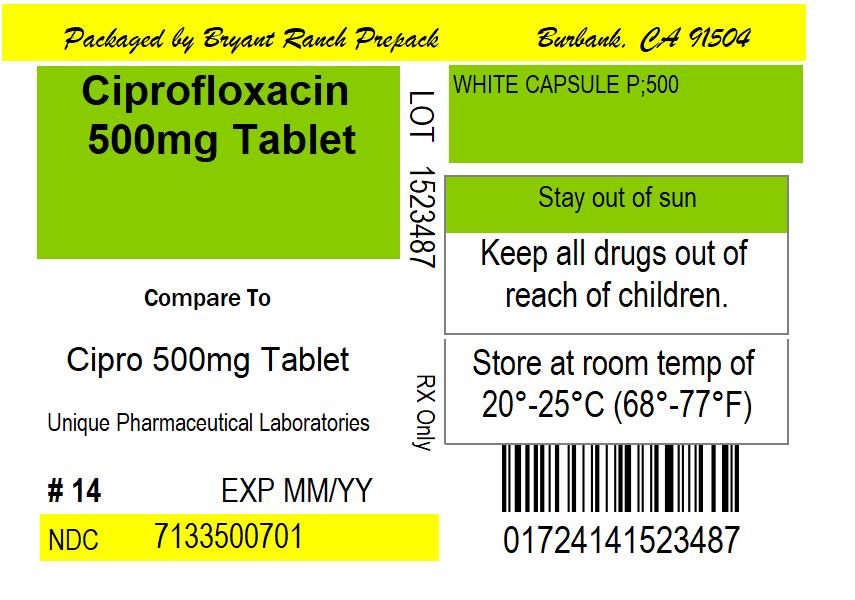
ciprofloxacin 500 mg Tablet, 30-count — NDC 71335-0070-2 (Billing 71335-0070-02)
This is a package of 30 tablets of ciprofloxacin 500 mg Tablet from Bryant Ranch Prepack, marketed since Sep 2004 and currently FDA-listed.
NDC database record
One package, one record: these facts belong to NDC 71335-0070-2 alone.
- Record
- FDA NDC Directory package listing · Human prescription drug
- Code segments
- 71335 labeler · 0070 product · 2 package
- Package marketed since
- Mar 20, 2018
- Sample package
- No — commercial package
- Listing certified through
- Dec 31, 2026
- Billing quantity
- 30 EA per package
- Barcode (UPC-A, from the NDC)
- 3 7133500702 7
- FDA record last changed
- Jul 24, 2026
Other active recalls for Ciprofloxacin (different manufacturers) — 3 · tap to view
Identity & classification
Regulatory identifiers FDA, NLM and CMS codes for this package
Drug-database identifiers Medi-Span GPI and First Databank GCN / HICL / AHFS classification
- GPI-14 (Medi-Span): 05000020100315
- RxCUI (RxNorm): 309309
Where does this data come from?
- FDA openFDA NDC Directory · synced Oct 8, 2026
- FDA label on DailyMed · label index refreshed Oct 6, 2026
- RxNorm (NLM RxNav) · catalog refreshed Oct 1, 2026
- Medi-Span GPI (licensed)
- First Databank (licensed) · refreshed Oct 8, 2026
RxNorm drug class
This medicine belongs to the Fluoroquinolone Antibacterial class.
Where does this data come from?
- RxClass (NLM) · catalog refreshed Oct 1, 2026
Clinical
- It treats bacterial infections such as urinary tract, respiratory, skin, bone and abdominal infections, depending on the form. Eye and ear versions treat eye and ear infections. It...
- Swallow them as prescribed, usually every 12 hours, and finish the full course unless your doctor says otherwise. Keep them 2 hours before or 6 hours after antacids, multivitamins,...
- How should I take my ciprofloxacin tablets?
- The most common ones are nausea, diarrhea, vomiting, rash and abnormal liver tests. Most are mild, but tell your doctor if they bother you.
Patient education
Supplement & herbal interactions
Some supplements/herbs that may interact with Ciprofloxacin — tap one for details:
Ciprofloxacin may be associated with lower levels of 11 nutrients — worth a chat with your pharmacist, not a cause for alarm.
Where does this data come from?
- MedlinePlus (NLM) · refreshed Oct 1, 2026
- FDA label on DailyMed · label index refreshed Oct 6, 2026
Ask a licensed pharmacist directly — free, answered by our team.
Pricing
A drug doesn't have one price. Each row is a different public payment system, and none is what you'd pay at the counter — that depends on your insurance. The ⓘ on each row explains what it measures.
| Price system | Per each | Per package |
|---|---|---|
| Retail pharmacies payNADAC · weekly | Not in the retail survey — common for institutional, discontinued, or low-volume packs. | |
| Medicaid paysCMS SDUD · 12 mo | No recent Medicaid claims on file for this NDC — rare and low-volume NDCs are suppressed in the public data. | |
| Medicare drug plans payPart D · Q2 2026 | $0.2764 | $8.29 / 30 tablets |
Where does this data come from?
- CMS NADAC weekly file
- CMS ASP pricing files · refreshed Sep 20, 2026
- CMS Medicaid State Drug Utilization Data · refreshed Oct 8, 2026
- CMS Part D plan pricing files · refreshed Sep 24, 2026
- VA National Acquisition Center price file
Packaging — all sizes for this product
| Package NDC | Description | Marketing start | Marketing end | Status |
|---|---|---|---|---|
| 71335-0070-00 71335-0070-0 Main listing | 7 TABLET in 1 BOTTLE | 2022-06-28 | — | Active |
| 71335-0070-01 71335-0070-1 | 14 TABLET in 1 BOTTLE | 2018-03-15 | — | Active |
| 71335-0070-02 You're viewing this | 30 TABLET in 1 BOTTLE | 2018-03-20 | — | Active |
| 71335-0070-03 71335-0070-3 | 20 TABLET in 1 BOTTLE | 2018-03-30 | — | Active |
| 71335-0070-04 71335-0070-4 | 60 TABLET in 1 BOTTLE | 2019-08-08 | — | Active |
| 71335-0070-05 71335-0070-5 | 6 TABLET in 1 BOTTLE | 2018-03-28 | — | Active |
| 71335-0070-06 71335-0070-6 | 10 TABLET in 1 BOTTLE | 2018-02-28 | — | Active |
| 71335-0070-07 71335-0070-7 | 28 TABLET in 1 BOTTLE | 2018-06-04 | — | Active |
| 71335-0070-08 71335-0070-8 | 100 TABLET in 1 BOTTLE | 2018-05-04 | — | Active |
| 71335-0070-09 71335-0070-9 | 40 TABLET in 1 BOTTLE | 2022-06-28 | — | Active |
You're viewing one of 10 pack sizes for this product.
Pack size FAQ
What quantity is in this package?
How does this package differ from NDC 71335-0070-05?
What NDC number is used to bill for this package of ciprofloxacin 500 mg Tablet?
Therapeutic equivalents
| Product | Labeler | Pack | NADAC/unit | TE | Status | Price vs. this |
|---|---|---|---|---|---|---|
| Ciprofloxacin 500 mg 00143-9928-01 | Hikma | 100 tablets | $0.123 | — | Availability likely | — |
| ciprofloxacin 500 mg 00904-7243-61 | Major | 100 tablets | $0.123 | AB | Availability likely | — |
| Ciprofloxacin 500 mg 16252-0515-01 | Teva | 100 tablets | $0.123 | AB | Availability likely | — |
| Ciprofloxacin 500 mg 43547-0689-10 | Solco | 100 tablets | $0.123 | AB | Availability likely | — |
| Ciprofloxacin 500 mg 59651-0867-01 | Aurobindo | 100 tablets | $0.123 | AB | Availability likely | — |
| Ciprofloxacin 500 mg 60687-0860-01 | American | 1 tablet | $0.123 | AB | Availability likely | — |
| Ciprofloxacin 500 mg 60687-0947-01 | American | 1 tablet | $0.123 | AB | Availability likely | — |
| Ciprofloxacin 500 mg 61442-0223-01 | Carlsbad | 100 tablets | $0.123 | AB | Availability likely | — |
| Ciprofloxacin 500 mg 62135-0309-01 | Chartwell | 100 tablets | $0.123 | AB | Availability likely | — |
| Ciprofloxacin 500 mg 65862-0077-01 | Aurobindo | 100 tablets | $0.123 | AB | Availability likely | — |
| Ciprofloxacin Hydrochloride 500 mg 69367-0386-01 | Westminster | 100 tablets | $0.123 | AB | Availability likely | — |
| Ciprofloxacin 500 mg 58657-0676-01 | Method | 100 tablets | $0.159 | AB | FDA listed | — |
| Ciprofloxacin 500 mg 00615-8546-10 | NCS | 10 tablets | — | AB | Discontinued | — |
| Ciprofloxacin 500 mg 00615-8630-10 | NCS | 10 tablets | — | AB | FDA listed | — |
| ciprofloxacin 500 mg 16571-0412-05 | Rising | 50 tablets | — | AB | FDA listed | — |
| Ciprofloxacin 500 mg 42708-0088-14 | QPharma | 14 tablets | — | AB | FDA listed | — |
| ciprofloxacin 500 mg 42708-0192-14 | QPharma, | 14 tablets | — | AB | FDA listed | — |
| Ciprofloxacin 500 mg 43063-0547-01 | PD-Rx | 100 tablets | — | AB | FDA listed | — |
| ciprofloxacin 500 mg 43063-0869-06 | PD-Rx | 6 tablets | — | AB | FDA listed | — |
| Ciprofloxacin 500 mg 43063-0923-02 | PD-Rx | 2 tablets | — | AB | FDA listed | — |
| ciprofloxacin 500 mg 50090-1648-00 | A-S | 20 tablets | — | AB | FDA listed | — |
| ciprofloxacin 500 mg 50090-1649-00 | A-S | 20 tablets | — | AB | FDA listed | — |
| Ciprofloxacin Hydrochloride 500 mg 50090-7843-00 | A-S | 20 tablets | — | AB | FDA listed | — |
| Ciprofloxacin Hydrochloride 500 mg 50090-7848-01 | A-S | 14 tablets | — | AB | FDA listed | — |
| Cipro 500 mg 50419-0754-01 | Bayer | 100 tablets | — | AB | FDA listed | — |
| Ciprofloxacin 500 mg 51407-0165-01 | Golden | 100 tablets | — | AB | FDA listed | — |
| Ciprofloxacin 500 mg 51655-0216-20 | Northwind | 20 tablets | — | AB | FDA listed | — |
| Ciprofloxacin 500 mg 51655-0490-20 | Northwind | 20 tablets | — | AB | FDA listed | — |
| ciprofloxacin 500 mg 54348-0663-01 | PharmPak, | 1 tablet | — | AB | FDA listed | — |
| ciprofloxacin 500 mg 55154-0193-00 | Cardinal | 1 tablet | — | AB | FDA listed | — |
| Ciprofloxacin 500 mg 59651-0977-15 | Aurobindo | 1500 tablets | — | AB | FDA listed | — |
| Ciprofloxacin 500 mg 60429-0042-20 | Golden | 20 tablets | — | — | FDA listed | — |
| Ciprofloxacin 500 mg 60760-0676-10 | St. | 10 tablets | — | AB | FDA listed | — |
| Ciprofloxacin 500 mg 60760-0689-10 | ST. | 10 tablets | — | AB | FDA listed | — |
| ciprofloxacin 500 mg 63187-0017-06 | Proficient | 6 tablets | — | AB | FDA listed | — |
| Ciprofloxacin 500 mg 63629-1010-01 | Bryant | 100 tablets | — | AB | FDA listed | — |
| ciprofloxacin 500 mg 66267-0716-02 | NuCare | 2 tablets | — | AB | FDA listed | — |
| ciprofloxacin 500 mg 66267-0919-06 | NuCare | 6 tablets | — | AB | FDA listed | — |
| Ciprofloxacin 500 mg 67046-1537-03 | Coupler | 30 tablets | — | AB | FDA listed | — |
| Ciprofloxacin 500 mg 67296-1848-02 | Redpharm | 20 tablets | — | AB | Discontinued | — |
| Ciprofloxacin 500 mg 67296-2135-01 | Redpharm | 14 tablets | — | AB | FDA listed | — |
| Ciprofloxacin Hydrochloride 500 mg 67296-2208-01 | Redpharm | 10 tablets | — | AB | FDA listed | — |
| Ciprofloxacin 500 mg 68071-2267-01 | NuCare | 10 tablets | — | AB | FDA listed | — |
| Ciprofloxacin 500 mg 68071-2269-04 | NuCare | 4 tablets | — | AB | FDA listed | — |
| Ciprofloxacin 500 mg 68071-2384-01 | NuCare | 10 tablets | — | AB | FDA listed | — |
| Ciprofloxacin 500 mg 68071-2404-02 | NuCare | 2 tablets | — | AB | FDA listed | — |
| Ciprofloxacin 500 mg 68071-3610-01 | NuCare | 10 tablets | — | AB | FDA listed | — |
| Ciprofloxacin 500 mg 68071-3737-02 | NuCare | 2 tablets | — | AB | FDA listed | — |
| ciprofloxacin 500 mg 68071-4122-01 | NuCare | 10 tablets | — | AB | FDA listed | — |
| Ciprofloxacin 500 mg 68788-8136-00 | Preferred | 6 tablets | — | AB | FDA listed | — |
| Ciprofloxacin 500 mg 68788-8692-00 | Preferred | 6 tablets | — | AB | FDA listed | — |
| Ciprofloxacin 500 mg 69117-0009-01 | Yiling | 500 tablets | — | AB | FDA listed | — |
| Ciprofloxacin 500 mg 69238-2433-01 | Amneal | 100 tablets | — | — | FDA listed | — |
| Ciprofloxacin 500 mg 70518-3063-00 | REMEDYREPACK | 30 tablets | — | — | Discontinued | — |
| Ciprofloxacin 500 mg 70518-4214-00 | REMEDYREPACK | 30 tablets | — | AB | FDA listed | — |
| Ciprofloxacin 500 mg 70518-4229-00 | REMEDYREPACK | 14 tablets | — | AB | FDA listed | — |
| Ciprofloxacin 500 mg 70934-0965-06 | Denton | 6 tablets | — | AB | Discontinued | — |
| Ciprofloxacin 500 mg 71205-0649-06 | Proficient | 6 tablets | — | AB | FDA listed | — |
| Ciprofloxacin 500 mg 71205-0997-00 | Proficient | 100 tablets | — | AB | FDA listed | — |
| ciprofloxacin 500 mgthis 71335-0070-02 | Bryant | 30 tablets | — | AB | FDA listed | — |
| Ciprofloxacin 500 mg 71335-1229-00 | Bryant | 7 tablets | — | AB | Discontinued | — |
| Ciprofloxacin 500 mg 71335-1347-00 | Bryant | 7 tablets | — | AB | FDA listed | — |
| Ciprofloxacin 500 mg 71335-2046-00 | Bryant | 7 tablets | — | AB | FDA listed | — |
| Ciprofloxacin 500 mg 71335-2054-00 | Bryant | 7 tablets | — | AB | FDA listed | — |
| Ciprofloxacin 500 mg 71335-2450-00 | Bryant | 7 tablets | — | AB | FDA listed | — |
| Ciprofloxacin 500 mg 71610-0081-83 | Aphena | 3600 tablets | — | AB | FDA listed | — |
| Ciprofloxacin 500 mg 71610-0109-30 | Aphena | 30 tablets | — | AB | FDA listed | — |
| Ciprofloxacin 500 mg 71610-0159-83 | Aphena | 3600 tablets | — | AB | FDA listed | — |
| Ciprofloxacin 500 mg 72162-1741-02 | Bryant | 14 tablets | — | AB | FDA listed | — |
| Ciprofloxacin 500 mg 72162-2425-01 | Bryant | 100 tablets | — | AB | FDA listed | — |
| Ciprofloxacin 500 mg 72189-0111-14 | DIRECT | 14 tablets | — | AB | FDA listed | — |
| Ciprofloxacin 500 mg 72189-0300-06 | DirectRx | 6 tablets | — | — | FDA listed | — |
| Ciprofloxacin 500 mg 72189-0623-10 | Direct_Rx | 10 tablets | — | AB | FDA listed | — |
| Ciprofloxacin 500 mg 72189-0627-10 | Direct_Rx | 10 tablets | — | AB | FDA listed | — |
| Ciprofloxacin 500 mg 72789-0065-20 | PD-Rx | 20 tablets | — | AB | FDA listed | — |
| Ciprofloxacin 500 mg 72789-0108-02 | PD-Rx | 2 tablets | — | — | FDA listed | — |
| Ciprofloxacin 500 mg 72789-0118-01 | PD-Rx | 100 tablets | — | — | FDA listed | — |
| Ciprofloxacin 500 mg 72789-0330-06 | PD-Rx | 6 tablets | — | AB | FDA listed | — |
| Ciprofloxacin 500 mg 72789-0511-10 | PD-Rx | 10 tablets | — | AB | FDA listed | — |
| Ciprofloxacin 500 mg 72789-0520-06 | PD-Rx | 6 tablets | — | AB | FDA listed | — |
| Ciprofloxacin 500 mg 76420-0045-06 | Asclemed | 6 tablets | — | AB | FDA listed | — |
| Ciprofloxacin 500 mg 76420-0929-01 | Asclemed | 100 tablets | — | AB | FDA listed | — |
| Ciprofloxacin HCL 500 mg 80425-0192-01 | Advanced | 20 tablets | — | AB | FDA listed | — |
| Ciprofloxacin 500 mg 80425-0492-01 | Advanced | 20 tablets | — | AB | FDA listed | — |
| Ciprofloxacin Hydrochloride 500 mg 80425-0493-01 | Advanced | 20 tablets | — | AB | FDA listed | — |
| Ciprofloxacin 500 mg 82804-0130-06 | Proficient | 6 tablets | — | AB | FDA listed | — |
| Ciprofloxacin Hydrochloride 500 mg 82804-0260-06 | Proficient | 6 tablets | — | AB | FDA listed | — |
| Ciprofloxacin 500 mg 82982-0050-14 | Pharmasource | 14 tablets | — | AB | Discontinued | — |
| Ciprofloxacin 500 mg 83008-0078-20 | Quality | 20 tablets | — | AB | Discontinued | — |
| Ciprofloxacin Hydrochloride 500 mg 83939-0002-01 | VERITYRX, | 1 tablet | — | AB | FDA listed | — |
| ciprofloxacin 500 mg 85293-0003-01 | Umasuto, | 100 tablets | — | AB | FDA listed | — |
| Ciprofloxacin 500 mg 85766-0100-01 | Sportpharm | 100 tablets | — | AB | FDA listed | — |
Where does this data come from?
- FDA openFDA NDC Directory · synced Oct 8, 2026
- FDA Orange Book · refreshed Oct 3, 2026
- CMS NADAC weekly file
Availability & generic status
This product is an FDA-approved generic. Other versions of the same drug are listed under Therapeutic equivalents, least expensive first.
Where does this data come from?
- FDA Orange Book · refreshed Oct 3, 2026
Inactive Ingredients / Excipients
Inactive ingredients, also called excipients, are components of the drug product other than the active ingredient. They may include fillers, dyes, coatings, preservatives, flavors, or other formulation ingredients.
🧪 Avoiding an ingredient? See Ciprofloxacin inactive ingredients by manufacturer: every current product's list side by side, so you can ask your pharmacy for the version that does not list it.
💡 Tap an ingredient (hover on desktop) to see what it is and why it’s used.
-
UNII 2S7830E561
Crospovidone is a synthetic polymer derived from povidone. It acts as a disintegrant, helping the tablet or capsule break apart quickly in the stomach so the active ingredient can be absorbed.
-
UNII 3NXW29V3WO
Hypromellose is a plant-based thickener made from cellulose. It's used in medicines as a binder to hold ingredients together, a coating for tablets, and a thickener for liquids.
-
UNII 70097M6I30
Magnesium stearate is a salt made from magnesium and stearic acid, a fatty substance. It's used in tablets and capsules as a lubricant and glidant to help ingredients flow smoothly during manufacturing and prevent sticking.
-
UNII OP1R32D61U
Microcrystalline cellulose is a purified form of cellulose, a natural fiber from plant sources. It acts as a binder and filler in tablets and capsules, helping hold ingredients together and give the medicine its shape and size.
-
UNII 3WJQ0SDW1A
Polyethylene glycol is a synthetic liquid or solid polymer used in medicines as a solvent, lubricant, and humectant. It helps dissolve active ingredients, reduces friction during manufacturing, and retains moisture in the final product.
-
UNII ETJ7Z6XBU4
Silicon dioxide is a naturally occurring mineral used as a glidant and anti-caking agent. It helps powder ingredients flow smoothly and prevents clumping during manufacturing and storage.
-
UNII O8232NY3SJ
A plant-based carbohydrate derived from corn kernels. It acts as a filler to add bulk, a binder to hold ingredients together, and a disintegrant to help the tablet break apart in your stomach for absorption.
-
UNII 15FIX9V2JP
Titanium dioxide is a bright white mineral powder commonly used as a colorant and opacifying agent. It makes pills and tablets white or lighter in color and helps make coatings non-transparent.
-
UNII 059QF0KO0R
Water is a liquid solvent that dissolves and mixes ingredients together in liquid medicines, syrups, and injections. It helps distribute the active drug evenly throughout the product.
9 inactive ingredients listed in the exact product block matched to this NDC.
Where does this data come from?
ingredient classCode="IACT" elements from the exact product block matched by this NDC. Label-section narrative from DailyMed / the openFDA label index is shown separately when available.- FDA label on DailyMed · label index refreshed Oct 6, 2026
- FDA openFDA NDC Directory · synced Oct 8, 2026
Inactive ingredient FAQ
Are inactive ingredients the same for every manufacturer?
Why might an inactive ingredient be missing?
Can inactive ingredients matter?
Manufacturer & labeler
More NDCs from Bryant Ranch Prepack labeler code 71335
- Spironolactone 25 mg Tablet, Film Coated NDC 71335-0053-1
- Lansoprazole 15 mg Capsule, Delayed Release NDC 71335-0058-1
- Ergocalciferol 1.25 mg Capsule, Liquid Filled NDC 71335-0062-0
- Nortriptyline Hydrochloride 75 mg Capsule NDC 71335-0065-1
- hydrochlorothiazide 12.5 mg Capsule NDC 71335-0067-1
- Glyburide 2.5 mg Tablet NDC 71335-0069-1
- Irbesartan 300 mg Tablet NDC 71335-0071-1
- Doxepin Hydrochloride 10 mg Capsule NDC 71335-0072-1
- Gabapentin 100 mg Capsule NDC 71335-0073-0
- Phendimetrazine Tartrate 35 mg Tablet NDC 71335-0074-0
- Lisinopril 40 mg Tablet NDC 71335-0075-1
- Benazepril Hydrochloride 20 mg Tablet, Coated NDC 71335-0078-1
Where does this data come from?
- FDA openFDA NDC Directory · synced Oct 8, 2026
- Drugs@FDA
Full prescribing information FDA SPL
🚨 Boxed Warning ▾
WARNING: SERIOUS ADVERSE REACTIONS INCLUDING TENDINITIS, TENDON RUPTURE, PERIPHERAL NEUROPATHY, CENTRAL NERVOUS SYSTEM EFFECTS AND EXACERBATION OF MYASTHENIA GRAVIS Fluoroquinolones, including ciprofloxacin, have been associated with disabling and potentially irreversible serious adverse reactions that have occurred together [see Warnings and Precautions (5.1) ] including: Tendinitis and tendon rupture [see Warnings and Precautions (5.2) ] Peripheral neuropathy [see Warnings and Precautions (5.3) ] Central nervous system effects [see Warnings and Precautions (5.4) ] Discontinue ciprofloxacin immediately and avoid the use of fluoroquinolones, including ciprofloxacin tablets, in patients who experience any of these serious adverse reactions [see Warnings and Precautions (5.1) ].
Fluoroquinolones, including ciprofloxacin, may exacerbate muscle weakness in patients with myasthenia gravis. Avoid ciprofloxacin in patients with known history of myasthenia gravis [see Warnings and Precautions (5.5) ] . Because fluoroquinolones, including ciprofloxacin, have been associated with serious adverse reactions [see Warnings and Precautions (5.1-5.16) ] , reserve ciprofloxacin tablets for use in patients who have no alternative treatment options for the following indications: Acute exacerbation of chronic bronchitis [see Indications and Usage (1.10) ] Acute uncomplicated cystitis [see Indications and Usage (1.11) ] Acute sinusitis [see Indications and Usage (1.12) ] WARNING: SERIOUS ADVERSE REACTIONS INCLUDING TENDINITIS, TENDON RUPTURE, PERIPHERAL NEUROPATHY, CENTRAL NERVOUS SYSTEM EFFECTS AND EXACERBATION OF MYASTHENIA GRAVIS See full prescribing information for complete boxed warning.
Fluoroquinolones, including ciprofloxacin, have been associated with disabling and potentially irreversible serious adverse reactions that have occurred together ( 5.1 ), including: o Tendinitis and tendon rupture ( 5.2 ) o Peripheral neuropathy ( 5.3 ) o Central nervous system effects ( 5.4 ) Discontinue ciprofloxacin immediately and avoid the use of fluoroquinolones, including ciprofloxacin tablets, in patients who experience any of these serious adverse reactions ( 5.1 ) Fluoroquinolones, including ciprofloxacin, may exacerbate muscle weakness in patients with myasthenia gravis.
Avoid ciprofloxacin in patients with known history of myasthenia gravis. ( 5.5 ) Because fluoroquinolones, including ciprofloxacin, have been associated with serious adverse reactions ( 5.1-5.16 ), reserve ciprofloxacin tablets for use in patients who have no alternative treatment options for the following indications: o Acute exacerbation of chronic bronchitis ( 1.10 ) o Acute uncomplicated cystitis ( 1.11 ) o Acute sinusitis ( 1.12 )
🎯 Indications and Usage ▾
1 INDICATIONS AND USAGE Ciprofloxacin is a fluoroquinolone antibacterial indicated in adults (18 years of age and older) with the following infections caused by designated, susceptible bacteria and in pediatric patients where indicated: Skin and Skin Structure Infections ( 1.1 ) Bone and Joint Infections ( 1.2 ) Complicated Intra-Abdominal Infections ( 1.3 ) Infectious Diarrhea ( 1.4 ) Typhoid Fever (Enteric Fever) ( 1.5 ) Uncomplicated Cervical and Urethral Gonorrhea ( 1.6 ) Inhalational Anthrax post-exposure in adult and pediatric patients ( 1.7 ) Plague in adult and pediatric patients ( 1.8 ) Chronic Bacterial Prostatitis ( 1.9 ) Lower Respiratory Tract Infections ( 1.10 ) o Acute Exacerbation of Chronic Bronchitis Urinary Tract Infections ( 1.11 ) o Urinary Tract Infections (UTI) o Acute Uncomplicated Cystitis o Complicated UTI and Pyelonephritis in Pediatric Patients Acute Sinusitis ( 1.12 ) Usage To reduce the development of drug-resistant bacteria and maintain the effectiveness of ciprofloxacin and other antibacterial drugs, ciprofloxacin should be used only to treat or prevent infections that are proven or strongly suspected to be caused by bacteria.
( 1.13 )
1.1Skin and Skin Structure Infections Ciprofloxacin is indicated in adult patients for treatment of skin and skin structure infections caused by Escherichia coli , Klebsiella pneumoniae , Enterobacter cloacae , Proteus mirabilis , Proteus vulgaris , Providencia stuartii , Morganella morganii , Citrobacter freundii , Pseudomonas aeruginosa , methicillin-susceptible Staphylococcus aureus , methicillin-susceptible Staphylococcus epidermidis , or Streptococcus pyogenes .
1.2Bone and Joint Infections Ciprofloxacin is indicated in adult patients for treatment of bone and joint infections caused by Enterobacter cloacae, Serratia marcescens, or Pseudomonas aeruginosa.
1.3Complicated Intra-Abdominal Infections Ciprofloxacin is indicated in adult patients for treatment of complicated intra-abdominal infections (used in combination with metronidazole) caused by Escherichia coli, Pseudomonas aeruginosa, Proteus mirabilis, Klebsiella pneumoniae, or Bacteroides fragilis.
1.4Infectious Diarrhea Ciprofloxacin is indicated in adult patients for treatment of infectious diarrhea caused by Escherichia coli (enterotoxigenic isolates), Campylobacter jejuni , Shigella boydii † , Shigella dysenteriae , Shigella flexneri or Shigella sonnei † when antibacterial therapy is indicated. † Although treatment of infections due to this organism in this organ system demonstrated a clinically significant outcome, efficacy was studied in fewer than 10 patients.
1.5Typhoid Fever (Enteric Fever) Ciprofloxacin is indicated in adult patients for treatment of typhoid fever (enteric fever) caused by Salmonella typhi . The efficacy of ciprofloxacin in the eradication of the chronic typhoid carrier state has not been demonstrated.
1.6Uncomplicated Cervical and Urethral Gonorrhea Ciprofloxacin is indicated in adult patients for treatment of uncomplicated cervical and urethral gonorrhea due to Neisseria gonorrhoeae [see Warnings and Precautions (5.17) ].
1.7Inhalational Anthrax (Post-Exposure) Ciprofloxacin is indicated in adults and pediatric patients from birth to 17 years of age for inhalational anthrax (post-exposure) to reduce the incidence or progression of disease following exposure to aerosolized Bacillus anthracis. Ciprofloxacin serum concentrations achieved in humans served as a surrogate endpoint reasonably likely to predict clinical benefit and provided the initial basis for approval of this indication. 1 Supportive clinical information for ciprofloxacin for anthrax post-exposure prophylaxis was obtained during the anthrax bioterror attacks of October 2001 [see Clinical Studies (14.2) ].
1.8Plague Ciprofloxacin is indicated for treatment of plague, including pneumonic and septicemic plague, due to Yersinia pestis (Y. pestis) and prophylaxis for plague in adults and pediatric patients from… [Excerpted — this section continues on DailyMed.]
⏱️ Dosage and Administration ▾
2 DOSAGE AND ADMINISTRATION Ciprofloxacin tablets should be administered orally as described in the appropriate Dosage Guidelines tables. Adult Dosage Guidelines Infection Dose Frequency Duration Skin and Skin Structure 500-750 mg every 12 hours 7 to 14 days Bone and Joint 500-750 mg every 12 hours 4 to 8 weeks Complicated Intra-Abdominal 500 mg every 12 hours 7 to 14 days Infectious Diarrhea 500 mg every 12 hours 5 to 7 days Typhoid Fever 500 mg every 12 hours 10 days Uncomplicated Gonorrhea 250 mg single dose single dose Inhalational anthrax (post-exposure) 500 mg every 12 hours 60 days Plague 500-750 mg every 12 hours 14 days Chronic Bacterial Prostatitis 500 mg every 12 hours 28 days Lower Respiratory Tract 500-750 mg every 12 hours 7 to 14 days Urinary Tract 250-500 mg every 12 hours 7 to 14 days Acute Uncomplicated Cystitis 250 mg every 12 hours 3 days Acute Sinusitis 500 mg every 12 hours 10 days Adults with creatinine clearance 30–50 mL/min 250–500 mg q 12 h ( 2.3 ) Adults with creatinine clearance 5–29 mL/min 250–500 mg q 18 h ( 2.3 ) Patients on hemodialysis or peritoneal dialysis 250–500 mg q 24 h (after dialysis) ( 2.3 ) Pediatric Oral Dosage Guidelines Infection Dose Frequency Duration Complicated UTI and Pyelonephritis (1 to 17 years of age) 10–20 mg/kg (maximum 750 mg per dose) Every 12 hours 10 - 21 days Inhalational Anthrax (Post-Exposure) 15 mg/kg (maximum 500 mg per dose) Every 12 hours 60 days Plague 15 mg/kg (maximum 500 mg per dose) Every 8 to 12 hours 14 days
2.1Dosage in Adults The determination of dosage and duration for any particular patient must take into consideration the severity and nature of the infection, the susceptibility of the causative microorganism, the integrity of the patient's host-defense mechanisms, and the status of renal and hepatic function. Ciprofloxacin tablets may be administered to adult patients when clinically indicated at the discretion of the physician. Table 1: Adult Dosage Guidelines Infection Dose Frequency Usual Durations 1 Skin and Skin Structure 500-750 mg every 12 hours 7 to 14 days Bone and Joint 500-750 mg every 12 hours 4 to 8 weeks Complicated Intra-Abdominal 2 500 mg every 12 hours 7 to 14 days Infectious Diarrhea 500 mg every 12 hours 5 to 7 days Typhoid Fever 500 mg every 12 hours 10 days Uncomplicated Urethral and Cervical Gonococcal Infections 250 mg single dose single dose Inhalational anthrax (post-exposure) 3 500 mg every 12 hours 60 days Plague 3 500-750 mg every 12 hours 14 days Chronic Bacterial Prostatitis 500 mg every 12 hours 28 days Lower Respiratory Tract Infections 500-750 mg every 12 hours 7 to 14 days Urinary Tract Infections 250-500 mg every 12 hours 7 to 14 days Acute Uncomplicated Cystitis 250 mg every 12 hours 3 days Acute Sinusitis 500 mg every 12 hours 10 days 1.
Generally ciprofloxacin should be continued for at least 2 days after the signs and symptoms of infection have disappeared, except for inhalational anthrax (post-exposure). 2. Used in conjunction with metronidazole.
3. Begin drug administration as soon as possible after suspected or confirmed exposure. Conversion of IV to Oral Dosing in Adults Patients whose therapy is started with ciprofloxacin IV may be switched to ciprofloxacin tablets or oral suspension when clinically indicated at the discretion of the physician (Table 2) [see Clinical Pharmacology (12.3) ] .
Table 2: Equivalent AUC Dosing Regimens Ciprofloxacin Oral Dosage Equivalent Ciprofloxacin IV Dosage 250 mg Tablet every 12 hours 200 mg intravenous every 12 hours 500 mg Tablet every 12 hours 400 mg intravenous every 12 hours 750 mg Tablet every 12 hours 400 mg intravenous every 8 hours
2.2Dosage in Pediatric Patients Dosing and initial route of therapy (that is, IV or oral) for cUTI or pyelonephritis should be determined by the severity of the infection. Ciprofloxacin should be administered as described in Table 3. Table 3: Pediatric Dosage Guidelines Infection Dose Frequency Total Duration Complicated Urinary Trac… [Excerpted — this section continues on DailyMed.]
💊 Dosage Forms and Strengths ▾
3 DOSAGE FORMS AND STRENGTHS Tablets: 250 mg, 500 mg, 750 mg ( 3 )
3.1Tablets For 250 mg: White colored, biconvex, circular, film coated tablets, debossed 'P' on one side and '250' on the other side. For 500 mg: White colored, biconvex, capsule shaped, film coated tablets, debossed 'P' on one side and '500' on the other side. For 750 mg: White colored, biconvex, capsule shaped, film coated tablets, debossed 'P' on one side and '750' on the other side.
⛔ Contraindications ▾
4 CONTRAINDICATIONS Known hypersensitivity to ciprofloxacin or other quinolones ( 4.1 , 5.6 , 5.7 ) Concomitant administration with tizanidine ( 4.2 )
4.1Hypersensitivity Ciprofloxacin tablet is contraindicated in persons with a history of hypersensitivity to ciprofloxacin, any member of the quinolone class of antibacterials, or any of the product components [see Warnings and Precautions (5.7) ].
4.2Tizanidine Concomitant administration with tizanidine is contraindicated [see Drug Interactions (7) ].
⚠️ Warnings and Cautions ▾
5 WARNINGS AND PRECAUTIONS Hypersensitivity and other serious reactions: Serious and sometimes fatal reactions (for example, anaphylactic reactions) may occur after the first or subsequent doses of ciprofloxacin tablets. Discontinue ciprofloxacin tablets at the first sign of skin rash, jaundice or any sign of hypersensitivity. ( 4.1 , 5.6, 5.7 ) Hepatotoxicity: Discontinue immediately if signs and symptoms of hepatitis occur.
( 5.8 ) Clostridioides difficile -associated diarrhea: Evaluate if colitis occurs. ( 5.11 ) QT Prolongation: Prolongation of the QT interval and isolated cases of torsade de pointes have been reported. Avoid use in patients with known prolongation, those with hypokalemia, and with other drugs that prolong the QT interval.
( 5.12 , 7 , 8.5 )
5.1Disabling and Potentially Irreversible Serious Adverse Reactions Including Tendinitis and Tendon Rupture, Peripheral Neuropathy, and Central Nervous System Effects Fluoroquinolones, including ciprofloxacin, have been associated with disabling and potentially irreversible serious adverse reactions from different body systems that can occur together in the same patient. Commonly seen adverse reactions include tendinitis, tendon rupture, arthralgia, myalgia, peripheral neuropathy, and central nervous system effects (hallucinations, anxiety, depression, insomnia, severe headaches, and confusion).
These reactions can occur within hours to weeks after starting ciprofloxacin tablets. Patients of any age or without pre-existing risk factors have experienced these adverse reactions [see Warnings and Precautions ( 5.2 , 5.3 , 5.4 )]. Discontinue ciprofloxacin tablets immediately at the first signs or symptoms of any serious adverse reaction.
In addition, avoid the use of fluoroquinolones, including ciprofloxacin, in patients who have experienced any of these serious adverse reactions associated with fluoroquinolones.
5.2Tendinitis and Tendon Rupture Fluoroquinolones, including ciprofloxacin, have been associated with an increased risk of tendinitis and tendon rupture in all ages [see Warnings and Precautions (5.1) and Adverse Reactions (6.2) ] . This adverse reaction most frequently involves the Achilles tendon, and has also been reported with the rotator cuff (the shoulder), the hand, the biceps, the thumb, and other tendons. Tendinitis or tendon rupture can occur, within hours or days of starting ciprofloxacin tablets, or as long as several months after completion of fluoroquinolone therapy.
Tendinitis and tendon rupture can occur bilaterally. The risk of developing fluoroquinolone-associated tendinitis and tendon rupture is increased in patients over 60 years of age, in patients taking corticosteroid drugs, and in patients with kidney, heart or lung transplants. Other factors that may independently increase the risk of tendon rupture include strenuous physical activity, renal failure, and previous tendon disorders such as rheumatoid arthritis.
Tendinitis and tendon rupture have also occurred in patients taking fluoroquinolones who do not have the above risk factors. Discontinue ciprofloxacin tablets immediately if the patient experiences pain, swelling, inflammation or rupture of a tendon. Avoid fluoroquinolones, including ciprofloxacin, in patients who have a history of tendon disorders or have experienced tendinitis or tendon rupture [see Adverse Reactions (6.2) ].
5.3Peripheral Neuropathy Fluoroquinolones, including ciprofloxacin, have been associated with an increased risk of peripheral neuropathy. Cases of sensory or sensorimotor axonal polyneuropathy affecting small and/or large axons resulting in paresthesias, hypoesthesias, dysesthesias and weakness have been reported in patients receiving fluoroquinolones, including ciprofloxacin. Symptoms may occur soon after initiation of ciprofloxacin tablets and may be irreversible in some patients [see Warnings and Precautions ( 5.1 ) and Adverse Reactions ( 6.1 , 6.2 )] .
Discontinue ciprofloxacin tablets immediately if t… [Excerpted — this section continues on DailyMed.]
🤒 Adverse Reactions ▾
6 ADVERSE REACTIONS The following serious and otherwise important adverse drug reactions are discussed in greater detail in other sections of labeling: Disabling and Potentially Irreversible Serious Adverse Reactions [see Warnings and Precautions (5.1)] Tendinitis and Tendon Rupture [see Warnings and Precautions (5.2) ] Peripheral Neuropathy [see Warnings and Precautions (5.3) ] Central Nervous System Effects [see Warnings and Precautions (5.4) ] Exacerbation of Myasthenia Gravis [see Warnings and Precautions (5.5) ] Other Serious and Sometimes Fatal Adverse Reactions [see Warnings and Precautions (5.6) ] Hypersensitivity Reactions [see Warnings and Precautions (5.7) ] Hepatotoxicity [see Warnings and Precautions (5.8) ] Risk of Aortic Aneurysm and Dissection [see Warnings and Precautions (5.9 )] Serious Adverse Reactions with Concomitant Theophylline [see Warnings and Precautions (5.10) ] Clostridioides difficile -Associated Diarrhea [see Warnings and Precautions (5.11) ] Prolongation of the QT Interval [see Warnings and Precautions (5.12) ] Musculoskeletal Disorders in Pediatric Patients [see Warnings and Precautions (5.13) ] Photosensitivity/Phototoxicity [see Warnings and Precautions (5.14) ] Development of Drug Resistant Bacteria [see Warnings and Precautions (5.15) ] The most common adverse reactions ≥ 1% were nausea, diarrhea, liver function tests abnormal, vomiting, and rash.
( 6 ) To report SUSPECTED ADVERSE REACTIONS, contact Rising Pharma Holdings, Inc. at 1-844-874-7464 or FDA at 1-800-FDA-1088 or www.fda.gov/medwatch.
6.1Clinical Trials Experience Because clinical trials are conducted under widely varying conditions, adverse reaction rates observed in the clinical trials of a drug cannot be directly compared to rates in the clinical trials of another drug and may not reflect the rates observed in practice. Adult Patients During clinical investigations with oral and parenteral ciprofloxacin, 49,038 patients received courses of the drug. The most frequently reported adverse reactions, from clinical trials of all formulations, all dosages, all drug-therapy durations, and for all indications of ciprofloxacin therapy were nausea (2.5%), diarrhea (1.6%), liver function tests abnormal (1.3%), vomiting (1%), and rash (1%).
Table 8: Medically Important Adverse Reactions That Occurred In less than 1% of Ciprofloxacin Patients System Organ Class Adverse Reactions Body as a Whole Headache Abdominal Pain/Discomfort Pain Cardiovascular Syncope Angina Pectoris Myocardial Infarction Cardiopulmonary Arrest Tachycardia Hypotension Central Nervous System Restlessness Dizziness Insomnia Nightmares Hallucinations Paranoia Psychosis (toxic) Manic Reaction Irritability Tremor Ataxia Seizures (including Status Epilepticus) Malaise Anorexia Phobia Depersonalization Depression (potentially culminating in self-injurious behavior (such as suicidal ideations/ thoughts and attempted or completed suicide) Paresthesia Abnormal Gait Migraine Gastrointestinal Intestinal Perforation Gastrointestinal Bleeding Cholestatic Jaundice Hepatitis Pancreatitis Hemic/Lymphatic Petechia Metabolic/Nutritional Hyperglycemia Hypoglycemia Musculoskeletal Arthralgia Joint Stiffness Muscle Weakness Renal/Urogenital Interstitial Nephritis Renal Failure Respiratory Dyspnea Laryngeal Edema Hemoptysis Bronchospasm Skin/Hypersensitivity Anaphylactic Reactions including life-threatening anaphylactic shock Erythema Multiforme/Stevens-Johnson Syndrome Exfoliative Dermatitis Toxic Epidermal Necrolysis Pruritus Urticaria Photosensitivity/Phototoxicity reaction Flushing Fever Angioedema Erythema Nodosum Sweating Special Senses Blurred Vision Disturbed Vision (chromatopsia and photopsia) Decreased Visual Acuity Diplopia Tinnitus Hearing Loss Bad Taste In randomized, double-blind controlled clinical trials comparing ciprofloxacin tablets [500 mg two times daily (BID)] to cefuroxime axetil (250 mg–500 mg BID) and to clarithromycin (500 mg BID) in patients with respiratory tract… [Excerpted — this section continues on DailyMed.]
🔄 Drug Interactions ▾
7 DRUG INTERACTIONS Ciprofloxacin is an inhibitor of human cytochrome P450 1A2 (CYP1A2) mediated metabolism. Co-administration of ciprofloxacin with other drugs primarily metabolized by CYP1A2 results in increased plasma concentrations of these drugs and could lead to clinically significant adverse events of the co-administered drug. Table 11: Drugs That are Affected by and Affecting Ciprofloxacin Drugs That are Affected by Ciprofloxacin Drug(s) Recommendation Comments Tizanidine Contraindicated Concomitant administration of tizanidine and ciprofloxacin is contraindicated due to the potentiation of hypotensive and sedative effects of tizanidine [see Contraindications (4.2) ] .
Theophylline Avoid Use (Plasma Exposure Likely to be Increased and Prolonged) Concurrent administration of ciprofloxacin with theophylline may result in increased risk of a patient developing central nervous system (CNS) or other adverse reactions. If concomitant use cannot be avoided, monitor serum levels of theophylline and adjust dosage as appropriate [see Warnings and Precautions (5.10) ] . Drugs Known to Prolong QT Interval Avoid Use Ciprofloxacin may further prolong the QT interval in patients receiving drugs known to prolong the QT interval (for example, class IA or III antiarrhythmics, tricyclic antidepressants, macrolides, antipsychotics) [see Warnings and Precautions (5.12) and Use in Specific Populations (8.5) ].
Oral antidiabetic drugs Use with caution Glucose-lowering effect potentiated Hypoglycemia sometimes severe has been reported when ciprofloxacin and oral antidiabetic agents, mainly sulfonylureas (for example, glyburide, glimepiride), were co-administered, presumably by intensifying the action of the oral antidiabetic agent. Fatalities have been reported . Monitor blood glucose when ciprofloxacin is co-administered with oral antidiabetic drugs [see Adverse Reactions (6.1) ] .
Phenytoin Use with caution Altered serum levels of phenytoin (increased and decreased) To avoid the loss of seizure control associated with decreased phenytoin levels and to prevent phenytoin overdose-related adverse reactions upon ciprofloxacin discontinuation in patients receiving both agents, monitor phenytoin therapy, including phenytoin serum concentration during and shortly after co-administration of ciprofloxacin with phenytoin. Cyclosporine Use with caution (transient elevations in serum creatinine) Monitor renal function (in particular serum creatinine) when ciprofloxacin is co-administered with cyclosporine.
Anti-coagulant drugs Use with caution (Increase in anticoagulant effect) The risk may vary with the underlying infection, age and general status of the patient so that the contribution of ciprofloxacin to the increase in INR (international normalized ratio) is difficult to assess. Monitor prothrombin time and INR frequently during and shortly after co-administration of ciprofloxacin with an oral anti-coagulant (for example, warfarin). Methotrexate Use with caution Inhibition of methotrexate renal tubular transport potentially leading to increased methotrexate plasma levels Potential increase in the risk of methotrexate associated toxic reactions.
Therefore, carefully monitor patients under methotrexate therapy when concomitant ciprofloxacin therapy is indicated. Ropinirole Use with caution Monitoring for ropinirole-related adverse reactions and appropriate dose adjustment of ropinirole is recommended during and shortly after co-administration with ciprofloxacin [see Warnings and Precautions (5.16) ]. Clozapine Use with caution Careful monitoring of clozapine associated adverse reactions and appropriate adjustment of clozapine dosage during and shortly after co-administration with ciprofloxacin are advised.
NSAIDs Use with caution Non-steroidal anti-inflammatory drugs (but not acetyl salicylic acid) in combination of very high doses of quinolones have been shown to provoke convulsions in pre-clinical studies and in postmarketing. Sildenafil Use with c… [Excerpted — this section continues on DailyMed.]
👥 Use in Specific Populations ▾
8 USE IN SPECIFIC POPULATIONS Lactation: Breastfeeding is not recommended during treatment, but a lactating woman may pump and discard breastmilk during treatment and an additional 2 days after the last dose. In patients treated for inhalational anthrax (post exposure), consider the risks and benefits of continuing breastfeeding. ( 8.2 ) See full prescribing information for use in pediatric and geriatric patients ( 8.4 , 8.5 )
8.1Pregnancy Risk Summary Prolonged experience with ciprofloxacin in pregnant women over several decades, based on available published information from case reports, case control studies and observational studies on ciprofloxacin administered during pregnancy, have not identified any drug-associated risk of major birth defects, miscarriage or adverse maternal or fetal outcomes (see Data) . Oral administration of ciprofloxacin during organogenesis at doses up to 100 mg/kg to pregnant mice and rats, and up to 30 mg/kg to pregnant rabbits did not cause fetal malformations (see Data).
These doses were up to 0.3, 0.6, and 0.4 times the maximum recommended clinical oral dose in mice, rats, and rabbits, respectively, based on body surface area. The estimated background risk of major birth defects and miscarriage for the indicated population is unknown. All pregnancies have a background risk of birth defect, loss, or other adverse outcomes.
In the U.S. general population, the estimated background risks of major birth defects and miscarriage in clinically recognized pregnancies is 2 to 4% and 15 to 20%, respectively. Data Human Data While available studies cannot definitively establish the absence of risk, published data from prospective observational studies over several decades have not established an association with ciprofloxacin use during pregnancy and major birth defects, miscarriage, or adverse maternal or fetal outcomes. Available studies have methodological limitations including small sample size and some of them are not specific for ciprofloxacin.
A controlled prospective observational study followed 200 women exposed to fluoroquinolones (52.5% exposed to ciprofloxacin and 68% first trimester exposures) during gestation. In utero exposure to fluoroquinolones during embryogenesis was not associated with increased risk of major malformations. The reported rates of major congenital malformations were 2.2% for the fluoroquinolone group and 2.6% for the control group (background incidence of major malformations is 1–5%).
Rates of spontaneous abortions, prematurity and low birth weight did not differ between the groups and there were no clinically significant musculoskeletal dysfunctions up to one year of age in the ciprofloxacin exposed children. Another prospective follow-up study reported on 549 pregnancies with fluoroquinolone exposure (93% first trimester exposures). There were 70 ciprofloxacin exposures, all within the first trimester.
The malformation rates among live-born babies exposed to ciprofloxacin and to fluoroquinolones overall were both within background incidence ranges. No specific patterns of congenital abnormalities were found. The study did not reveal any clear adverse reactions due to in utero exposure to ciprofloxacin.
No differences in the rates of prematurity, spontaneous abortions, or birth weight were seen in women exposed to ciprofloxacin during pregnancy. However, these small postmarketing epidemiology studies, of which most experience is from short term, first trimester exposure, are insufficient to evaluate the risk for less common defects or to permit reliable and definitive conclusions regarding the safety of ciprofloxacin in pregnant women and their developing fetuses. Animal Data Developmental toxicology studies have been performed with ciprofloxacin in rats, mice, and rabbits.
In rats and mice, oral doses up to 100 mg/kg administered during organogenesis (Gestation Days, GD, 6-17) were not associated with adverse developmental outcomes, including embryofetal toxicity or m… [Excerpted — this section continues on DailyMed.]
🤰 Pregnancy ▾
8.1Pregnancy Risk Summary Prolonged experience with ciprofloxacin in pregnant women over several decades, based on available published information from case reports, case control studies and observational studies on ciprofloxacin administered during pregnancy, have not identified any drug-associated risk of major birth defects, miscarriage or adverse maternal or fetal outcomes (see Data) . Oral administration of ciprofloxacin during organogenesis at doses up to 100 mg/kg to pregnant mice and rats, and up to 30 mg/kg to pregnant rabbits did not cause fetal malformations (see Data).
These doses were up to 0.3, 0.6, and 0.4 times the maximum recommended clinical oral dose in mice, rats, and rabbits, respectively, based on body surface area. The estimated background risk of major birth defects and miscarriage for the indicated population is unknown. All pregnancies have a background risk of birth defect, loss, or other adverse outcomes.
In the U.S. general population, the estimated background risks of major birth defects and miscarriage in clinically recognized pregnancies is 2 to 4% and 15 to 20%, respectively. Data Human Data While available studies cannot definitively establish the absence of risk, published data from prospective observational studies over several decades have not established an association with ciprofloxacin use during pregnancy and major birth defects, miscarriage, or adverse maternal or fetal outcomes. Available studies have methodological limitations including small sample size and some of them are not specific for ciprofloxacin.
A controlled prospective observational study followed 200 women exposed to fluoroquinolones (52.5% exposed to ciprofloxacin and 68% first trimester exposures) during gestation. In utero exposure to fluoroquinolones during embryogenesis was not associated with increased risk of major malformations. The reported rates of major congenital malformations were 2.2% for the fluoroquinolone group and 2.6% for the control group (background incidence of major malformations is 1–5%).
Rates of spontaneous abortions, prematurity and low birth weight did not differ between the groups and there were no clinically significant musculoskeletal dysfunctions up to one year of age in the ciprofloxacin exposed children. Another prospective follow-up study reported on 549 pregnancies with fluoroquinolone exposure (93% first trimester exposures). There were 70 ciprofloxacin exposures, all within the first trimester.
The malformation rates among live-born babies exposed to ciprofloxacin and to fluoroquinolones overall were both within background incidence ranges. No specific patterns of congenital abnormalities were found. The study did not reveal any clear adverse reactions due to in utero exposure to ciprofloxacin.
No differences in the rates of prematurity, spontaneous abortions, or birth weight were seen in women exposed to ciprofloxacin during pregnancy. However, these small postmarketing epidemiology studies, of which most experience is from short term, first trimester exposure, are insufficient to evaluate the risk for less common defects or to permit reliable and definitive conclusions regarding the safety of ciprofloxacin in pregnant women and their developing fetuses. Animal Data Developmental toxicology studies have been performed with ciprofloxacin in rats, mice, and rabbits.
In rats and mice, oral doses up to 100 mg/kg administered during organogenesis (Gestation Days, GD, 6-17) were not associated with adverse developmental outcomes, including embryofetal toxicity or malformations. In rats and mice, a 100 mg/kg dose is approximately 0.6 and 0.3 times the maximum daily human oral dose (1500 mg/day) based upon body surface area, respectively. In a series of rabbit developmental toxicology studies, does received oral or intravenous ciprofloxacin for one of the following 5 day periods: GD 6 to 10, GD 10 to 14, or GD 14 to 18, intended to cover the period of organogenesis.
This was an attempt to… [Excerpted — this section continues on DailyMed.]
🧒 Pediatric Use ▾
8.4Pediatric Use Although effective in clinical trials, ciprofloxacin is not a drug of first choice in the pediatric population due to an increased incidence of adverse reactions compared to controls. Quinolones, including ciprofloxacin, cause arthropathy (arthralgia, arthritis), in juvenile animals [see Warnings and Precautions (5.13) and Nonclinical Toxicology (13.2) ] . Complicated Urinary Tract Infection and Pyelonephritis Ciprofloxacin is indicated for the treatment of cUTI and pyelonephritis due to Escherichia coli in pediatric patients 1 to 17 years of age .
Although effective in clinical trials, ciprofloxacin is not a drug of first choice in the pediatric population due to an increased incidence of adverse reactions compared to the controls, including events related to joints and/or surrounding tissues [see Adverse Reactions (6.1) and Clinical Studies (14.1) ]. Inhalational Anthrax (Post-Exposure) Ciprofloxacin is indicated in pediatric patients from birth to 17 years of age, for inhalational anthrax (post-exposure). The risk-benefit assessment indicates that administration of ciprofloxacin to pediatric patients is appropriate [see Dosage and Administration (2.2) and Clinical Studies (14.2) ].
Plague Ciprofloxacin is indicated in pediatric patients from birth to 17 years of age, for treatment of plague, including pneumonic and septicemic plague due to Yersinia pestis (Y. pestis) and prophylaxis for plague. Efficacy studies of ciprofloxacin could not be conducted in humans with pneumonic plague for feasibility reasons. Therefore, approval of this indication was based on an efficacy study conducted in animals.
The risk-benefit assessment indicates that administration of ciprofloxacin to pediatric patients is appropriate [see Indications and Usage (1.8) , Dosage and Administration (2.2) and Clinical Studies (14.3) ].
🧓 Geriatric Use ▾
8.5Geriatric Use Geriatric patients are at increased risk for developing severe tendon disorders including tendon rupture when being treated with a fluoroquinolone such as ciprofloxacin. This risk is further increased in patients receiving concomitant corticosteroid therapy. Tendinitis or tendon rupture can involve the Achilles, hand, shoulder, or other tendon sites and can occur during or after completion of therapy; cases occurring up to several months after fluoroquinolone treatment have been reported.
Caution should be used when prescribing ciprofloxacin to elderly patients especially those on corticosteroids. Patients should be informed of this potential adverse reaction and advised to discontinue ciprofloxacin and contact their healthcare provider if any symptoms of tendinitis or tendon rupture occur [see Boxed Warning , Warnings and Precautions (5.2) , and Adverse Reactions (6.2) ]. Epidemiologic studies report an increased rate of aortic aneurysm and dissection within two months following use of fluoroquinolones, particularly in elderly patients [see Warnings and Precautions (5.9) ].
In a retrospective analysis of 23 multiple-dose controlled clinical trials of ciprofloxacin encompassing over 3500 ciprofloxacin-treated patients, 25% of patients were greater than or equal to 65 years of age and 10% were greater than or equal to 75 years of age. No overall differences in safety or effectiveness were observed between these subjects and younger subjects, and other reported clinical experience has not identified differences in responses between the elderly and younger patients, but greater sensitivity of some older individuals on any drug therapy cannot be ruled out.
Ciprofloxacin is known to be substantially excreted by the kidney, and the risk of adverse reactions may be greater in patients with impaired renal function. No alteration of dosage is necessary for patients greater than 65 years of age with normal renal function. However, since some older individuals experience reduced renal function by virtue of their advanced age, care should be taken in dose selection for elderly patients, and renal function monitoring may be useful in these patients [see Dosage and Administration (2.3) and Clinical Pharmacology (12.3) ].
In general, elderly patients may be more susceptible to drug-associated effects on the QT interval. Therefore, precaution should be taken when using ciprofloxacin with concomitant drugs that can result in prolongation of the QT interval (for example, class IA or class III antiarrhythmics) or in patients with risk factors for torsade de pointes (for example, known QT prolongation, uncorrected hypokalemia) [see Warnings and Precautions (5.12) ].
🆘 Overdosage ▾
10 OVERDOSAGE In the event of acute overdosage, reversible renal toxicity has been reported in some cases. Empty the stomach by inducing vomiting or by gastric lavage. Observe the patient carefully and give supportive treatment, including monitoring of renal function, urinary pH and acidify, if required, to prevent crystalluria and administration of magnesium, aluminum, or calcium containing antacids which can reduce the absorption of ciprofloxacin.
Adequate hydration must be maintained. Only a small amount of ciprofloxacin (less than 10%) is removed from the body after hemodialysis or peritoneal dialysis.
🧬 Clinical Pharmacology ▾
12 CLINICAL PHARMACOLOGY
12.1Mechanism of Action Ciprofloxacin is a member of the fluoroquinolone class of antibacterial agents [see Microbiology (12.4) ] .
12.3Pharmacokinetics Absorption The absolute bioavailability of ciprofloxacin when given as an oral tablet is approximately 70% with no substantial loss by first pass metabolism. Ciprofloxacin maximum serum concentrations (C max ) and area under the curve (AUC) are shown in the chart for the 250 mg to 1000 mg dose range (Table 12). Table 12: Ciprofloxacin C max and AUC Following Administration of Single Doses of Ciprofloxacin Tablets to Healthy Subjects Dose (mg) C max (mcg/mL) AUC (mcg•hr/mL) 250 1.2 4.8 500 2.4 11.6 750 4.3 20.2 1000 5.4
30.8Maximum serum concentrations are attained 1 to 2 hours after oral dosing. Mean concentrations 12 hours after dosing with 250, 500, or 750 mg are 0.1, 0.2, and 0.4 mcg/mL, respectively. The serum elimination half-life in subjects with normal renal function is approximately 4 hours.
Serum concentrations increase proportionately with doses up to 1000 mg. A 500 mg oral dose given every 12 hours has been shown to produce an AUC equivalent to that produced by an intravenous infusion of 400 mg ciprofloxacin given over 60 minutes every 12 hours. A 750 mg oral dose given every 12 hours has been shown to produce an AUC at steady-state equivalent to that produced by an intravenous infusion of 400 mg given over 60 minutes every 8 hours.
A 750 mg oral dose results in a C max similar to that observed with a 400 mg intravenous dose (Table 13). A 250 mg oral dose given every 12 hours produces an AUC equivalent to that produced by an infusion of 200 mg ciprofloxacin given every 12 hours. Table 13: Steady-state Pharmacokinetic Parameters Following Multiple Oral and Intravenous Doses (Adults) Parameters 500 mg 400 mg 750 mg 400 mg every 12 hours, orally every 12 hours, intravenously every 12 hours, orally every 8 hours, intravenously AUC 0-24h,ss (μg•h/mL) 27.4* 25.4* 31.6* 32.9** C max,ss (μg/mL) 2.97 4.56 3.59 4.07 *AUC 0–12h x 2 **AUC 0-8h x 3 Food When ciprofloxacin tablet is given concomitantly with food, there is a delay in the absorption of the drug, resulting in peak concentrations that occur closer to 2 hours after dosing rather than 1 hour.
The overall absorption of ciprofloxacin tablet, however, is not substantially affected. Avoid concomitant administration of ciprofloxacin with dairy products (like milk or yogurt) or calcium-fortified juices alone since decreased absorption is possible; however, ciprofloxacin may be taken with a meal that contains these products. With oral administration, a 500 mg dose, given as 10 mL of the 5% ciprofloxacin suspension (containing 250 mg ciprofloxacin/5mL) is bioequivalent to the 500 mg tablet.
Distribution The binding of ciprofloxacin to serum proteins is 20% to 40% which is not likely to be high enough to cause significant protein binding interactions with other drugs. After oral administration, ciprofloxacin is widely distributed throughout the body. Tissue concentrations often exceed serum concentrations in both men and women, particularly in genital tissue including the prostate.
Ciprofloxacin is present in active form in the saliva, nasal and bronchial secretions, mucosa of the sinuses, sputum, skin blister fluid, lymph, peritoneal fluid, bile, and prostatic secretions. Ciprofloxacin has also been detected in lung, skin, fat, muscle, cartilage, and bone. The drug diffuses into the cerebrospinal fluid (CSF); however, CSF concentrations are generally less than 10% of peak serum concentrations.
Low levels of the drug have been detected in the aqueous and vitreous humors of the eye. Metabolism Four metabolites have been identified in human urine which together account for approximately 15% of an oral dose. The metabolites have antimicrobial activity, but are less active than unchanged ciprofloxacin.
Ciprofloxacin is an inhibitor of human cytochrome P450 1A2 (CYP1A2) mediated metabolism. Co-administrat… [Excerpted — this section continues on DailyMed.]
🧬 Mechanism of Action ▾
12.1Mechanism of Action Ciprofloxacin is a member of the fluoroquinolone class of antibacterial agents [see Microbiology (12.4) ] .
Mechanism of Action The bactericidal action of ciprofloxacin results from inhibition of the enzymes topoisomerase II (DNA gyrase) and topoisomerase IV (both Type II topoisomerases), which are required for bacterial DNA replication, transcription, repair, and recombination.
📦 How Supplied / Storage and Handling ▾
16 HOW SUPPLIED/STORAGE AND HANDLING Ciprofloxacin tablets USP 500 mg are available as white colored, biconvex, capsule shaped, film coated tablets, debossed 'P' on one side and '500' on the other side. NDC: 71335-0070-1: 14 Tablets in a BOTTLE NDC: 71335-0070-2: 30 Tablets in a BOTTLE NDC: 71335-0070-3: 20 Tablets in a BOTTLE NDC: 71335-0070-4: 60 Tablets in a BOTTLE NDC: 71335-0070-5: 6 Tablets in a BOTTLE NDC: 71335-0070-6: 10 Tablets in a BOTTLE NDC: 71335-0070-7: 28 Tablets in a BOTTLE NDC: 71335-0070-8: 100 Tablets in a BOTTLE NDC: 71335-0070-9: 40 Tablets in a BOTTLE NDC: 71335-0070-0: 7 Tablets in a BOTTLE Repackaged/Relabeled by: Bryant Ranch Prepack, Inc.
Burbank, CA 91504
📋 Description ▾
11 DESCRIPTION Ciprofloxacin (ciprofloxacin hydrochloride) tablets USP are synthetic antimicrobial agents for oral administration. Ciprofloxacin hydrochloride, USP, a fluoroquinolone, is the monohydrochloride monohydrate salt of 1-cyclopropyl-6-fluoro-1, 4-dihydro-4-oxo-7-(1-piperazinyl)-3-quinolinecarboxylic acid. It is a faintly yellowish to light yellow crystalline substance with a molecular weight of 385.8.
Its empirical formula is C 17 H 18 FN 3 O 3 •HCl •H 2 O and its chemical structure is as follows: Ciprofloxacin film-coated tablets USP are available in 250 mg, 500 mg and 750 mg (ciprofloxacin equivalent) strengths. Each ciprofloxacin film-coated tablet contains 250 mg (equivalent to 291 mg ciprofloxacin hydrochloride monohydrate), 500 mg of ciprofloxacin (equivalent to 582 mg ciprofloxacin hydrochloride monohydrate) or 750 mg of ciprofloxacin (equivalent to 873 mg ciprofloxacin hydrochloride monohydrate). Ciprofloxacin tablets USP are white film coated tablets.
The inactive ingredients are colloidal silicon dioxide, crospovidone, hypromellose, magnesium stearate, microcrystalline cellulose, polyethylene glycol, pregelatinized starch and titanium dioxide.
💬 Information for Patients ▾
17 PATIENT COUNSELING INFORMATION Advise the patient to read the FDA -approved patient labeling (Medication Guide) Serious Adverse Reactions Advise patients to stop taking ciprofloxacin tablets if they experience an adverse reaction and to call their healthcare provider for advice on completing the full course of treatment with another antibacterial drug. Inform patients of the following serious adverse reactions that have been associated with ciprofloxacin tablets or other fluoroquinolone use: Disabling and potentially irreversible serious adverse reactions that may occur together: Inform patients that disabling and potentially irreversible serious adverse reactions, including tendinitis and tendon rupture, peripheral neuropathies, and central nervous system effects, have been associated with use of ciprofloxacin tablets and may occur together in the same patient.
Inform patients to stop taking ciprofloxacin tablets immediately if they experience an adverse reaction and to call their healthcare provider. Tendinitis and tendon rupture: Instruct patients to contact their healthcare provider if they experience pain, swelling, or inflammation of a tendon, or weakness or inability to use one of their joints; rest and refrain from exercise; and discontinue ciprofloxacin tablets treatment. Symptoms may be irreversible.
The risk of severe tendon disorder with fluoroquinolones is higher in older patients usually over 60 years of age, in patients taking corticosteroid drugs, and in patients with kidney, heart or lung transplants. Peripheral Neuropathies: Inform patients that peripheral neuropathies have been associated with ciprofloxacin use, symptoms may occur soon after initiation of therapy and may be irreversible. If symptoms of peripheral neuropathy including pain, burning, tingling, numbness and/or weakness develop, immediately discontinue ciprofloxacin tablets and tell them to contact their physician.
Central nervous system effects (for example, convulsions, dizziness, lightheadedness, increased intracranial pressure): Inform patients that convulsions have been reported in patients receiving fluoroquinolones, including Ciprofloxacin. Instruct patients to notify their physician before taking this drug if they have a history of convulsions. Inform patients that they should know how they react to ciprofloxacin tablets before they operate an automobile or machinery or engage in other activities requiring mental alertness and coordination.
Instruct patients to notify their physician if persistent headache with or without blurred vision occurs. Exacerbation of Myasthenia Gravis: Instruct patients to inform their physician of any history of myasthenia gravis. Instruct patients to notify their physician if they experience any symptoms of muscle weakness, including respiratory difficulties.
Hypersensitivity Reactions: Inform patients that ciprofloxacin can cause hypersensitivity reactions, even following a single dose, and to discontinue the drug at the first sign of a skin rash, hives or other skin reactions, a rapid heartbeat, difficulty in swallowing or breathing, any swelling suggesting angioedema (for example, swelling of the lips, tongue, face, tightness of the throat, hoarseness), or other symptoms of an allergic reaction. Hepatotoxicity: Inform patients that severe hepatotoxicity (including acute hepatitis and fatal events) has been reported in patients taking ciprofloxacin tablets.
Instruct patients to inform their physician if they experience any signs or symptoms of liver injury including: loss of appetite, nausea, vomiting, fever, weakness, tiredness, right upper quadrant tenderness, itching, yellowing of the skin and eyes, light colored bowel movements or dark colored urine. Aortic aneurysm and dissection: Inform patients to seek emergency medical care if they experience sudden chest, stomach, or back pain. Diarrhea: Diarrhea is a common problem caused by antibiotics which usually ends when the antibiotic is discontinued.
So… [Excerpted — this section continues on DailyMed.]
💬 Medication Guide ▾
MEDICATION GUIDE Ciprofloxacin (sip"row flox"a sin) Tablets USP for oral use Read this Medication Guide before you start taking ciprofloxacin tablets and each time you get a refill. There may be new information. This information does not take the place of talking to your healthcare provider about your medical condition or your treatment.
What is the most important information I should know about ciprofloxacin tablets? Ciprofloxacin tablets, a fluoroquinolone antibacterial medicine, can cause serious side effects. Some of these serious side effects can happen at the same time and could result in death.
If you get any of the following serious side effects while you take ciprofloxacin tablets, you should stop taking ciprofloxacin tablets immediately and get medical help right away. 1. Tendon rupture or swelling of the tendon (tendinitis).
Tendon problems can happen in people of all ages who take ciprofloxacin tablets. Tendons are tough cords of tissue that connect muscles to bones. Symptoms of tendon problems may include: pain swelling tears and swelling of the tendons including the back of the ankle (Achilles), shoulder, hand, thumb, or other tendon sites.
The risk of getting tendon problems while you take ciprofloxacin tablets is higher if you: are over 60 years of age are taking steroids (corticosteroids) have had a kidney, heart or lung transplant. Tendon problems can happen in people who do not have the above risk factors when they take ciprofloxacin tablets. Other reasons that can increase your risk of tendon problems can include: physical activity or exercise kidney failure tendon problems in the past, such as in people with rheumatoid arthritis (RA).
Stop taking ciprofloxacin tablets immediately and get medical help right away at the first sign of tendon pain, swelling or inflammation. The most common area of pain and swelling is the Achilles tendon at the back of your ankle. This can also happen with other tendons.
Tendon rupture can happen while you are taking or after you have finished taking ciprofloxacin tablets. Tendon ruptures can happen within hours or days of taking ciprofloxacin tablets and have happened up to several months after people have finished taking their fluoroquinolone. Stop taking ciprofloxacin tablets immediately and get medical help right away if you get any of the following signs or symptoms of a tendon rupture: hear or feel a snap or pop in a tendon area bruising right after an injury in a tendon area unable to move the affected area or bear weight The tendon problems may be permanent.
2. Changes in sensation and possible nerve damage (Peripheral Neuropathy). Damage to the nerves in arms, hands, legs, or feet can happen in people who take fluoroquinolones, including ciprofloxacin tablets.
Stop taking ciprofloxacin tablets immediately and talk to your healthcare provider right away if you get any of the following symptoms of peripheral neuropathy in your arms, hands, legs, or feet: pain numbness burning weakness tingling Ciprofloxacin tablets may need to be stopped to prevent permanent nerve damage. 3. Central Nervous System (CNS) effects.
Mental health problems and seizures have been reported in people who take fluoroquinolone antibacterial medicines, including ciprofloxacin tablets. Tell your healthcare provider if you have a history of seizures before you start taking ciprofloxacin tablets. CNS side effects may happen as soon as after taking the first dose of ciprofloxacin.
Stop taking ciprofloxacin tablets immediately and talk to your healthcare provider right away if you get any of these side effects, or other changes in mood or behavior: seizures trouble sleeping hear voices, see things, or sense things that are not there (hallucinations) nightmares feel agitated feel lightheaded or dizzy tremors feel more suspicious (paranoia) feel anxious or nervous suicidal thoughts or acts confusion headaches that will not go away, with or without blurred vision depression memory problems reduced awarene… [Excerpted — this section continues on DailyMed.]
🧬 Pharmacokinetics ▾
12.3Pharmacokinetics Absorption The absolute bioavailability of ciprofloxacin when given as an oral tablet is approximately 70% with no substantial loss by first pass metabolism. Ciprofloxacin maximum serum concentrations (C max ) and area under the curve (AUC) are shown in the chart for the 250 mg to 1000 mg dose range (Table 12). Table 12: Ciprofloxacin C max and AUC Following Administration of Single Doses of Ciprofloxacin Tablets to Healthy Subjects Dose (mg) C max (mcg/mL) AUC (mcg•hr/mL) 250 1.2 4.8 500 2.4 11.6 750 4.3 20.2 1000 5.4
30.8Maximum serum concentrations are attained 1 to 2 hours after oral dosing. Mean concentrations 12 hours after dosing with 250, 500, or 750 mg are 0.1, 0.2, and 0.4 mcg/mL, respectively. The serum elimination half-life in subjects with normal renal function is approximately 4 hours.
Serum concentrations increase proportionately with doses up to 1000 mg. A 500 mg oral dose given every 12 hours has been shown to produce an AUC equivalent to that produced by an intravenous infusion of 400 mg ciprofloxacin given over 60 minutes every 12 hours. A 750 mg oral dose given every 12 hours has been shown to produce an AUC at steady-state equivalent to that produced by an intravenous infusion of 400 mg given over 60 minutes every 8 hours.
A 750 mg oral dose results in a C max similar to that observed with a 400 mg intravenous dose (Table 13). A 250 mg oral dose given every 12 hours produces an AUC equivalent to that produced by an infusion of 200 mg ciprofloxacin given every 12 hours. Table 13: Steady-state Pharmacokinetic Parameters Following Multiple Oral and Intravenous Doses (Adults) Parameters 500 mg 400 mg 750 mg 400 mg every 12 hours, orally every 12 hours, intravenously every 12 hours, orally every 8 hours, intravenously AUC 0-24h,ss (μg•h/mL) 27.4* 25.4* 31.6* 32.9** C max,ss (μg/mL) 2.97 4.56 3.59 4.07 *AUC 0–12h x 2 **AUC 0-8h x 3 Food When ciprofloxacin tablet is given concomitantly with food, there is a delay in the absorption of the drug, resulting in peak concentrations that occur closer to 2 hours after dosing rather than 1 hour.
The overall absorption of ciprofloxacin tablet, however, is not substantially affected. Avoid concomitant administration of ciprofloxacin with dairy products (like milk or yogurt) or calcium-fortified juices alone since decreased absorption is possible; however, ciprofloxacin may be taken with a meal that contains these products. With oral administration, a 500 mg dose, given as 10 mL of the 5% ciprofloxacin suspension (containing 250 mg ciprofloxacin/5mL) is bioequivalent to the 500 mg tablet.
Distribution The binding of ciprofloxacin to serum proteins is 20% to 40% which is not likely to be high enough to cause significant protein binding interactions with other drugs. After oral administration, ciprofloxacin is widely distributed throughout the body. Tissue concentrations often exceed serum concentrations in both men and women, particularly in genital tissue including the prostate.
Ciprofloxacin is present in active form in the saliva, nasal and bronchial secretions, mucosa of the sinuses, sputum, skin blister fluid, lymph, peritoneal fluid, bile, and prostatic secretions. Ciprofloxacin has also been detected in lung, skin, fat, muscle, cartilage, and bone. The drug diffuses into the cerebrospinal fluid (CSF); however, CSF concentrations are generally less than 10% of peak serum concentrations.
Low levels of the drug have been detected in the aqueous and vitreous humors of the eye. Metabolism Four metabolites have been identified in human urine which together account for approximately 15% of an oral dose. The metabolites have antimicrobial activity, but are less active than unchanged ciprofloxacin.
Ciprofloxacin is an inhibitor of human cytochrome P450 1A2 (CYP1A2) mediated metabolism. Co-administration of ciprofloxacin with other drugs primarily metabolized by CYP1A2 results in increased plasma concentrations of these drugs and could lead to clinically s… [Excerpted — this section continues on DailyMed.]
🔬 Clinical Studies ▾
14 CLINICAL STUDIES
14.1Complicated Urinary Tract Infection and Pyelonephritis-Efficacy in Pediatric Patients Ciprofloxacin administered intravenously and/or orally was compared to a cephalosporin for treatment of cUTI and pyelonephritis in pediatric patients 1 to 17 years of age (mean age of 6 ± 4 years). The trial was conducted in the US, Canada, Argentina, Peru, Costa Rica, Mexico, South Africa, and Germany. The duration of therapy was 10 to 21 days (mean duration of treatment was 11 days with a range of 1 to 88 days).
The primary objective of the study was to assess musculoskeletal and neurological safety. Patients were evaluated for clinical success and bacteriological eradication of the baseline organism(s) with no new infection or superinfection at 5 to 9 days post-therapy (Test of Cure or TOC). The Per Protocol population had a causative organism(s) with protocol specified colony count(s) at baseline, no protocol violation, and no premature discontinuation or loss to follow-up (among other criteria).
The clinical success and bacteriologic eradication rates in the Per Protocol population were similar between ciprofloxacin and the comparator group as shown below. Table 15: Clinical Success and Bacteriologic Eradication at Test of Cure (5 to 9 Days Post-Therapy) Ciprofloxacin Comparator Randomized Patients 337 352 Per Protocol Patients 211 231 Clinical Response at 5 to 9 Days Post-Treatment 95.7% (202/211) 92.6% (214/231) 95% CI [-1.3%, 7.3%] Bacteriologic Eradication by Patient at 5 to 9 Days Post-Treatment 1 84.4% (178/211) 78.3% (181/231) 95% CI [-1.3%, 13.1%] Bacteriologic Eradication of the Baseline Pathogen at 5 to 9 Days Post-Treatment Escherichia coli 156/178 (88%) 161/179 (90%) 1 Patients with baseline pathogen(s) eradicated and no new infections or superinfections/total number of patients.
There were 5.5% (6/211) ciprofloxacin and 9.5% (22/231) comparator patients with superinfections or new infections.
14.2Inhalational Anthrax in Adults and Pediatrics The mean serum concentrations of ciprofloxacin associated with a statistically significant improvement in survival in the rhesus monkey model of inhalational anthrax are reached or exceeded in adult and pediatric patients receiving oral and intravenous regimens. Ciprofloxacin pharmacokinetics have been evaluated in various human populations. The mean peak serum concentration achieved at steady-state in human adults receiving 500 mg orally every 12 hours is 2.97 mcg/mL, and 4.56 mcg/mL following 400 mg intravenously every 12 hours.
The mean trough serum concentration at steady-state for both of these regimens is 0.2 mcg/mL. In a study of 10 pediatric patients between 6 and 16 years of age, the mean peak plasma concentration achieved is 8.3 mcg/mL and trough concentrations range from 0.09 mcg/mL to 0.26 mcg/mL, following two 30-minute intravenous infusions of 10 mg/kg administered 12 hours apart. After the second intravenous infusion patients switched to 15 mg/kg orally every 12 hours achieve a mean peak concentration of 3.6 mcg/mL after the initial oral dose.
Long-term safety data, including effects on cartilage, following the administration of ciprofloxacin to pediatric patients are limited. Ciprofloxacin serum concentrations achieved in humans serve as a surrogate endpoint reasonably likely to predict clinical benefit and provide the basis for this indication. 1 A placebo-controlled animal study in rhesus monkeys exposed to an inhaled mean dose of 11 LD 50 (~5.5 x 10 5 spores (range 5 -30 LD 50 ) of B. anthracis was conducted.
The minimal inhibitory concentration (MIC) of ciprofloxacin for the anthrax strain used in this study was 0.08 mcg/mL. In the animals studied, mean serum concentrations of ciprofloxacin achieved at expected T max (1 hour post-dose) following oral dosing to steady-state ranged from 0.98 mcg/mL to 1.69 mcg/mL. Mean steady-state trough concentrations at 12 hours post-dose ranged from 0.12 mcg/mL to 0.19 mcg/mL.
6 Mortality due to anthrax for… [Excerpted — this section continues on DailyMed.]
🧪 Nonclinical Toxicology ▾
13 NONCLINICAL TOXICOLOGY
13.1Carcinogenesis, Mutagenesis, Impairment of Fertility Eight in vitro mutagenicity tests have been conducted with ciprofloxacin, and the test results are listed below: Salmonella /Microsome Test (Negative) E. coli DNA Repair Assay (Negative) Mouse Lymphoma Cell Forward Mutation Assay (Positive) Chinese Hamster V 79 Cell HGPRT Test (Negative) Syrian Hamster Embryo Cell Transformation Assay (Negative) Saccharomyces cerevisiae Point Mutation Assay (Negative) Saccharomyces cerevisiae Mitotic Crossover and Gene Conversion Assay (Negative) Rat Hepatocyte DNA Repair Assay (Positive) Thus, 2 of the 8 tests were positive, but results of the following 3 in vivo test systems gave negative results: • Rat Hepatocyte DNA Repair Assay • Micronucleus Test (Mice) • Dominant Lethal Test (Mice) Long-term carcinogenicity studies in rats and mice resulted in no carcinogenic or tumorigenic effects due to ciprofloxacin at daily oral dose levels up to 250 mg/kg and 750 mg/kg to rats and mice, respectively (approximately 1.7- and 2.5- times the highest recommended therapeutic dose based upon body surface area, respectively).
Results from photo co-carcinogenicity testing indicate that ciprofloxacin does not reduce the time to appearance of UV-induced skin tumors as compared to vehicle control. Hairless (Skh-1) mice were exposed to UVA light for 3.5 hours five times every two weeks for up to 78 weeks while concurrently being administered ciprofloxacin. The time to development of the first skin tumors was 50 weeks in mice treated concomitantly with UVA and ciprofloxacin (mouse dose approximately equal to maximum recommended human dose based upon body surface area), as opposed to 34 weeks when animals were treated with both UVA and vehicle.
The times to development of skin tumors ranged from 16 weeks to 32 weeks in mice treated concomitantly with UVA and other quinolones. 5 In this model, mice treated with ciprofloxacin alone did not develop skin or systemic tumors. There are no data from similar models using pigmented mice and/or fully haired mice.
The clinical significance of these findings to humans is unknown. Fertility studies performed in male and female rats at oral doses of ciprofloxacin up to 100 mg/kg (approximately 0.6-times the highest recommended therapeutic oral dose based upon body surface area) revealed no evidence of impairment. Male rats received oral ciprofloxacin for 10 weeks prior to mating and females were dosed for 3 weeks prior to mating through Gestation Day 7.
13.2Animal Toxicology and/or Pharmacology Ciprofloxacin and other quinolones have been shown to cause arthropathy in immature animals of most species tested [see Warnings and Precautions (5.13 )] . Damage of weight bearing joints was observed in juvenile dogs and rats. In young beagles, 100 mg/kg ciprofloxacin, given daily for 4 weeks, caused degenerative articular changes of the knee joint.
At 30 mg/kg, the effect on the joint was minimal. In a subsequent study in young beagle dogs, oral ciprofloxacin doses of 30 mg/kg and 90 mg/kg ciprofloxacin (approximately 1.3-times and 3.5-times the pediatric dose based upon comparative plasma AUCs) given daily for 2 weeks caused articular changes which were still observed by histopathology after a treatment-free period of 5 months. At 10 mg/kg (approximately 0.6-times the pediatric dose based upon comparative plasma AUCs), no effects on joints were observed.
This dose was also not associated with arthrotoxicity after an additional treatment-free period of 5 months. In another study, removal of weight bearing from the joint reduced the lesions but did not totally prevent them. Crystalluria, sometimes associated with secondary nephropathy, occurs in laboratory animals dosed with ciprofloxacin.
This is primarily related to the reduced solubility of ciprofloxacin under alkaline conditions, which predominate in the urine of test animals; in man, crystalluria is rare since human urine is typically acidic. In r… [Excerpted — this section continues on DailyMed.]
📄 Carcinogenesis, Mutagenesis, Impairment of Fertility ▾
13.1Carcinogenesis, Mutagenesis, Impairment of Fertility Eight in vitro mutagenicity tests have been conducted with ciprofloxacin, and the test results are listed below: Salmonella /Microsome Test (Negative) E. coli DNA Repair Assay (Negative) Mouse Lymphoma Cell Forward Mutation Assay (Positive) Chinese Hamster V 79 Cell HGPRT Test (Negative) Syrian Hamster Embryo Cell Transformation Assay (Negative) Saccharomyces cerevisiae Point Mutation Assay (Negative) Saccharomyces cerevisiae Mitotic Crossover and Gene Conversion Assay (Negative) Rat Hepatocyte DNA Repair Assay (Positive) Thus, 2 of the 8 tests were positive, but results of the following 3 in vivo test systems gave negative results: • Rat Hepatocyte DNA Repair Assay • Micronucleus Test (Mice) • Dominant Lethal Test (Mice) Long-term carcinogenicity studies in rats and mice resulted in no carcinogenic or tumorigenic effects due to ciprofloxacin at daily oral dose levels up to 250 mg/kg and 750 mg/kg to rats and mice, respectively (approximately 1.7- and 2.5- times the highest recommended therapeutic dose based upon body surface area, respectively).
Results from photo co-carcinogenicity testing indicate that ciprofloxacin does not reduce the time to appearance of UV-induced skin tumors as compared to vehicle control. Hairless (Skh-1) mice were exposed to UVA light for 3.5 hours five times every two weeks for up to 78 weeks while concurrently being administered ciprofloxacin. The time to development of the first skin tumors was 50 weeks in mice treated concomitantly with UVA and ciprofloxacin (mouse dose approximately equal to maximum recommended human dose based upon body surface area), as opposed to 34 weeks when animals were treated with both UVA and vehicle.
The times to development of skin tumors ranged from 16 weeks to 32 weeks in mice treated concomitantly with UVA and other quinolones. 5 In this model, mice treated with ciprofloxacin alone did not develop skin or systemic tumors. There are no data from similar models using pigmented mice and/or fully haired mice.
The clinical significance of these findings to humans is unknown. Fertility studies performed in male and female rats at oral doses of ciprofloxacin up to 100 mg/kg (approximately 0.6-times the highest recommended therapeutic oral dose based upon body surface area) revealed no evidence of impairment. Male rats received oral ciprofloxacin for 10 weeks prior to mating and females were dosed for 3 weeks prior to mating through Gestation Day 7.
📚 References ▾
15 REFERENCES 21 CFR 314.510 (Subpart H–Accelerated Approval of New Drugs for Life-Threatening Illnesses). Friedman J, Polifka J. Teratogenic effects of drugs: a resource for clinicians (TERIS).
Baltimore, Maryland: Johns Hopkins University Press, 2000:149-195. Loebstein R, Addis A, Ho E, et al. Pregnancy outcome following gestational exposure to fluoroquinolones: a multicenter prospective controlled study.
Antimicrob Agents Chemother. 1998; 42(6):1336-1339. Schaefer C, Amoura-Elefant E, Vial T, et al.
Pregnancy outcome after prenatal quinolone exposure. Evaluation of a case registry of the European network of teratology information services (ENTIS). Eur J Obstet Gynecol Reprod Biol.
1996; 69:83-89. Report presented at the FDA’s Anti-Infective Drug and Dermatological Drug Product’s Advisory Committee meeting, March 31, 1993, Silver Spring, MD. Report available from FDA, CDER, Advisors and Consultants Staff, HFD-21, 1901 Chapman Avenue, Room 200, Rockville, MD 20852, USA.
Kelly DJ, et al. Serum concentrations of penicillin, doxycycline, and ciprofloxacin during prolonged therapy in rhesus monkeys. J Infect Dis 1992; 166:1184-7.
Friedlander AM, et al. Postexposure prophylaxis against experimental inhalational anthrax. J Infect Dis 1993; 167:1239-42.
Anti-infective Drugs Advisory Committee Meeting, April 3, 2012 -The efficacy of Ciprofloxacin for treatment of Pneumonic Plague.
📄 Recent Major Changes ▾
Dosage and Administration, Important Administration Instructions ( 2.4 ) 11/2021
📄 Package Label / Principal Display Panel ▾
Ciprofloxacin 500mg Tablet Label
Medicare Part D spend CMS · PART D · 2026 (Q1)
About this NDC listing & data coverage
What data is (and isn’t) available for this NDC — tap to expand
| NDC identity (package / product / labeler codes) | ✓ Available |
| Labeler | ✓ Available |
| Product & package description | ✓ Available |
| Marketing category & status | ✓ Available |
| Active ingredient / dosage form / route | ✓ Available |
| FDA label (SPL via DailyMed) | ✓ Available |
| Package photos | ✓ Available |
| Inactive ingredients (structured) | ✓ Available |
| NADAC pharmacy acquisition price (CMS) | — Not published for this NDC CMS publishes NADAC only for NDCs reported in its retail-pharmacy survey. |
| Orange Book / therapeutic-equivalence data | ✓ Available |
| HCPCS J-code billing crosswalk | — Not published for this NDC Most self-administered / retail products have no J-code — that is normal. |
| Medicaid utilization (CMS SDUD) | — Not published for this NDC CMS reports utilization only for NDCs with Medicaid claims above its privacy threshold. |