
lithium carbonate 300 mg Capsule, 120-count — NDC 71335-0120-5 (Billing 71335-0120-05)
This is a package of 120 capsules of lithium carbonate 300 mg Capsule from Bryant Ranch Prepack, marketed since Dec 2009 and currently FDA-listed.
NDC database record
One package, one record: these facts belong to NDC 71335-0120-5 alone.
- Record
- FDA NDC Directory package listing · Human prescription drug
- Code segments
- 71335 labeler · 0120 product · 5 package
- Package marketed since
- Dec 16, 2021
- Sample package
- No — commercial package
- Listing certified through
- Dec 31, 2026
- Billing quantity
- 120 EA per package
- Barcode (UPC-A, from the NDC)
- 3 7133501205 2
- FDA record last changed
- Jul 24, 2026
Identity & classification
Regulatory identifiers FDA, NLM and CMS codes for this package
Drug-database identifiers Medi-Span GPI and First Databank GCN / HICL / AHFS classification
- GPI-14 (Medi-Span): 59500010100105
- RxCUI (RxNorm): 197889
Where does this data come from?
- FDA openFDA NDC Directory · synced Oct 8, 2026
- FDA label on DailyMed · label index refreshed Oct 8, 2026
- RxNorm (NLM RxNav) · catalog refreshed Oct 8, 2026
- Medi-Span GPI (licensed)
- First Databank (licensed) · refreshed Oct 8, 2026
Clinical
Lithium is used to treat and prevent episodes of mania (frenzied, abnormally excited mood) in people with bipolar disorder (manic-depressive disorder; a disease that causes episodes of depression, episodes of mania, and other abnormal moods). Lithium is in a class of medications called antimanic agents. It works by decreasing abnormal activity in the brain.
Read the full MedlinePlus article ↗- It treats manic episodes of bipolar disorder and helps prevent future episodes with long-term use. During a manic episode, symptoms may improve within 1 to 3 weeks.
- The level that works and the level that causes toxicity are close together. Blood tests keep you in the safe range. Some people have toxic signs even within the usual range.
- Dehydration can push your lithium level up. Keep drinking fluids and eat normally with salt. Call your doctor, since your dose may need a temporary change.
- What should I do if I'm sweating a lot or have diarrhea?
Patient education
Supplement & herbal interactions
Some supplements/herbs that may interact with Lithium Carbonate (prescription drug) — tap one for details:
Lithium Carbonate (prescription drug) may be associated with lower levels of 1 nutrient — worth a chat with your pharmacist, not a cause for alarm.
Where does this data come from?
- MedlinePlus (NLM) · refreshed Oct 8, 2026
- FDA label on DailyMed · label index refreshed Oct 8, 2026
Ask a licensed pharmacist directly — free, answered by our team.
Pricing
A drug doesn't have one price. Each row is a different public payment system, and none is what you'd pay at the counter — that depends on your insurance. The ⓘ on each row explains what it measures.
| Price system | Per each | Per package |
|---|---|---|
| Retail pharmacies payNADAC · weekly | Not in the retail survey — common for institutional, discontinued, or low-volume packs. | |
| Medicaid paysCMS SDUD · 12 mo | No recent Medicaid claims on file for this NDC — rare and low-volume NDCs are suppressed in the public data. | |
| Medicare drug plans payPart D · Q2 2026 | $0.1216 | $14.59 / 120 capsules |
Where does this data come from?
- CMS NADAC weekly file
- CMS ASP pricing files · refreshed Sep 20, 2026
- CMS Medicaid State Drug Utilization Data · refreshed Oct 9, 2026
- CMS Part D plan pricing files · refreshed Sep 24, 2026
- VA National Acquisition Center price file
Packaging — all sizes for this product
| Package NDC | Description | Marketing start | Marketing end | Status |
|---|---|---|---|---|
| 71335-0120-01 71335-0120-1 Main listing | 60 CAPSULE in 1 BOTTLE | 2021-12-16 | — | Active |
| 71335-0120-02 71335-0120-2 | 100 CAPSULE in 1 BOTTLE | 2021-12-16 | — | Active |
| 71335-0120-03 71335-0120-3 | 30 CAPSULE in 1 BOTTLE | 2021-12-16 | — | Active |
| 71335-0120-04 71335-0120-4 | 90 CAPSULE in 1 BOTTLE | 2021-12-16 | — | Active |
| 71335-0120-05 You're viewing this | 120 CAPSULE in 1 BOTTLE | 2021-12-16 | — | Active |
You're viewing the largest of 5 pack sizes for this product.
Pack size FAQ
What quantity is in this package?
How does this package differ from NDC 71335-0120-03?
What NDC number is used to bill for this package of lithium carbonate 300 mg Capsule?
Therapeutic equivalents
| Product | Labeler | Pack | NADAC/unit | TE | Status | Price vs. this |
|---|---|---|---|---|---|---|
| Lithium Carbonate 300 mg 00054-2527-25 | Hikma | 100 capsules | $0.104 | AB | Availability likely | — |
| Lithium Carbonate 300 mg 00054-8527-25 | Hikma | 10 capsules | $0.104 | AB | Availability likely | — |
| lithium carbonate 300 mg 31722-0545-01 | Camber | 100 capsules | $0.104 | AB | Availability likely | — |
| Lithium Carbonate 300 mg 60687-0806-01 | American | 100 capsules | $0.104 | AB | Availability likely | — |
| Lithium Carbonate 300 mg 68462-0221-01 | Glenmark | 100 capsules | $0.104 | AB | Availability likely | — |
| Lithium Carbonate 300 mg 00615-8480-39 | NCS | 30 capsules | — | AB | FDA listed | — |
| Lithium Carbonate 300 mg 46708-0304-30 | Alembic | 30 capsules | — | AB | FDA listed | — |
| Lithium Carbonate 300 mg 55154-4920-00 | Cardinal | 1 capsule | — | AB | FDA listed | — |
| Lithium Carbonate Lithium Carbonate 300 mg 62332-0014-30 | Alembic | 30 capsules | — | AB | FDA listed | — |
| Lithium Carbonate 300 mg 63187-0304-30 | Proficient | 30 capsules | — | AB | FDA listed | — |
| lithium carbonate 300 mg 63629-1917-01 | Bryant | 1000 capsules | — | AB | Discontinued | — |
| Lithium Carbonate 300 mg 70518-0668-00 | REMEDYREPACK | 30 capsules | — | AB | FDA listed | — |
| lithium carbonate 300 mgthis 71335-0120-05 | Bryant | 120 capsules | — | AB | FDA listed | — |
| Lithium Carbonate 300 mg 71335-1006-01 | Bryant | 60 capsules | — | AB | FDA listed | — |
| lithium carbonate 300 mg 71610-0557-70 | Aphena | 120 capsules | — | AB | FDA listed | — |
| Lithium Carbonate 300 mg 72789-0173-01 | PD-Rx | 100 capsules | — | AB | FDA listed | — |
| Lithium Carbonate 300 mg 00054-0890-25 | Hikma | 100 capsules | — | AB | FDA listed | — |
Where does this data come from?
- FDA openFDA NDC Directory · synced Oct 8, 2026
- FDA Orange Book · refreshed Oct 9, 2026
- CMS NADAC weekly file
Availability & generic status
This product is an FDA-approved generic. Other versions of the same drug are listed under Therapeutic equivalents, least expensive first.
Where does this data come from?
- FDA Orange Book · refreshed Oct 9, 2026
What it looks like
Where does this data come from?
- FDA label on DailyMed · label index refreshed Oct 8, 2026
Inactive Ingredients / Excipients
Inactive ingredients, also called excipients, are components of the drug product other than the active ingredient. They may include fillers, dyes, coatings, preservatives, flavors, or other formulation ingredients.
🧪 Avoiding an ingredient? See Lithium Carbonate inactive ingredients by manufacturer: every current product's list side by side, so you can ask your pharmacy for the version that does not list it.
💡 Tap an ingredient (hover on desktop) to see what it is and why it’s used.
-
UNII 3K9958V90M
A liquid solvent derived from fermentation or chemical synthesis. In medicines, alcohol dissolves active ingredients, helps preserve the product, and improves how the body absorbs certain drugs.
-
UNII 5138Q19F1X
Ammonia is a colorless gas made from nitrogen and hydrogen. It's used in medicines as a pH buffer to maintain the correct acidity level and help keep the product stable.
-
UNII 8PJ61P6TS3
Butyl alcohol is a clear liquid organic solvent derived from petroleum or natural sources. In medicines, it helps dissolve active ingredients and serves as a solvent in liquid formulations and some topical products.
-
UNII XM0M87F357
A dark iron oxide compound that gives medicines their black or dark color. It's used as a colorant in tablets and capsules to help identify the product and make it visually distinctive.
-
UNII 2G86QN327L
Gelatin is a protein derived from animal collagen, commonly used in medicines as a gelling agent and capsule material. It helps create soft or hard capsule shells that hold and release medication, and can also thicken liquid formulations.
-
UNII ND2M416302
Isopropyl alcohol is a clear liquid solvent derived from petroleum. In medicines, it dissolves active ingredients and other components, helps the product flow smoothly, and aids in sterilization during manufacturing.
-
UNII WZH3C48M4T
Potassium hydroxide is a strong alkaline chemical used in medicines to adjust and maintain the pH level of liquid formulations, helping keep the product stable and the active ingredients effective.
-
UNII 6DC9Q167V3
Propylene glycol is a clear liquid derived from petroleum or vegetable sources. It acts as a solvent, humectant, and preservative in medicines, helping dissolve active ingredients and maintain product stability.
-
UNII 46N107B71O
Shellac is a natural resin secreted by the lac beetle. It's used as a coating on tablets and capsules to control how quickly the medicine dissolves and to improve appearance and stability.
-
UNII 368GB5141J
A detergent and foaming agent derived from coconut or palm oil. In medications, it helps break down and mix oil and water-based ingredients, aids in tablet disintegration, and improves how the drug dissolves and spreads in the mouth or digestive system.
-
UNII 7SEV7J4R1U
A powder made from a naturally occurring mineral. In medicines, talc works as a glidant and anti-caking agent, helping tablets and capsules flow smoothly during manufacturing and preventing clumping.
-
UNII 15FIX9V2JP
Titanium dioxide is a bright white mineral powder commonly used as a colorant and opacifying agent. It makes pills and tablets white or lighter in color and helps make coatings non-transparent.
12 inactive ingredients listed in the exact product block matched to this NDC.
Where does this data come from?
ingredient classCode="IACT" elements from the exact product block matched by this NDC. Label-section narrative from DailyMed / the openFDA label index is shown separately when available.- FDA label on DailyMed · label index refreshed Oct 8, 2026
- FDA openFDA NDC Directory · synced Oct 8, 2026
Inactive ingredient FAQ
Are inactive ingredients the same for every manufacturer?
Why might an inactive ingredient be missing?
Can inactive ingredients matter?
Manufacturer & labeler
More NDCs from Bryant Ranch Prepack labeler code 71335
- Indomethacin 50 mg Capsule NDC 71335-0107-1
- Hydrocodone Bitartrate and Acetaminophen 7.5 mg; 325 mg Tablet NDC 71335-0108-0
- Tramadol Hydrochloride and Acetaminophen 37.5 mg; 325 mg Tablet NDC 71335-0111-1
- Allopurinol 300 mg Tablet NDC 71335-0112-1
- Clonazepam .5 mg Tablet NDC 71335-0113-1
- Eszopiclone 3 mg Tablet, Film Coated NDC 71335-0116-1
- Etodolac 400 mg Tablet, Film Coated NDC 71335-0126-1
- Risperidone .5 mg Tablet NDC 71335-0130-1
- Ondansetron 4 mg Tablet, Film Coated NDC 71335-0132-0
- Bupropion Hydrochloride SR 150 mg Tablet, Film Coated, Extended Release NDC 71335-0135-1
- Hydrochlorothiazide 50 mg Tablet NDC 71335-0145-0
- Oxycodone and Acetaminophen 10 mg; 325 mg Tablet NDC 71335-0146-0
Where does this data come from?
- FDA openFDA NDC Directory · synced Oct 8, 2026
- Drugs@FDA
Full prescribing information FDA SPL
🚨 Boxed Warning ▾
BOXED WARNING WARNING: LITHIUM TOXICITY Lithium toxicity is closely related to serum lithium concentrations, and can occur at doses close to therapeutic concentrations. Facilities for prompt and accurate serum lithium determinations should be available before initiating treatment [see Dosage and Administration ( 2.6 ), Warnings and Precautions ( 5.1 )]. WARNING: LITHIUM TOXICITY See full prescribing information for complete boxed warning.
Lithium toxicity is closely related to serum lithium concentrations, and can occur at doses close to therapeutic concentrations. Facilities for prompt and accurate serum lithium determinations should be available before initiating therapy ( 2.6 , 5.1 ).
🎯 Indications and Usage ▾
1 INDICATIONS & USAGE Lithium is a mood-stabilizing agent indicated for the treatment of manic episodes and as maintenance treatment for Bipolar I Disorder. Lithium is a mood stabilizing agent indicated for the treatment of manic episodes and as maintenance treatment for Bipolar I Disorder ( 1 )
⏱️ Dosage and Administration ▾
2 DOSAGE & ADMINISTRATION • Recommended starting dosage ( 2.2 ): o Capsules: 300 mg, three times daily • Obtain serum lithium concentration assay after 4 days, drawn 12 hours after the last oral dose and regularly until patient is stabilized. • Manic Episode: Titrate to serum lithium concentrations 0.8 to 1.2 mEq/L, which may be achieved with ( 2.3 ): o Capsules: 600 mg, two to three times daily • Maintenance Treatment for Bipolar I Disorder: Titrate to serum lithium concentrations 0.8 to 1 mEq/L, which may be achieved with ( 2.4 ): o Capsules: 300 mg to 600 mg, two to three times daily • Pre-treatment screening: Evaluate renal function, vital signs, electrolytes, thyroid function, concurrent medications, and pregnancy status ( 2.1 ) • Adjust daily dosage based on serum lithium concentration and clinical response ( 2.6 ) • Mild to moderate renal impairment (CLcr 30 to 89 mL/min): Start with low dose, titrate slowly with frequent monitoring ( 2.8 ) • Severe renal impairment (CLcr < 30 mL/min): Avoid use of lithium ( 2.8 )
2.1Pre-treatment Screening Before initiating treatment with lithium, renal function, vital signs, serum electrolytes, and thyroid function should be evaluated. Concurrent medications should be assessed, and if the patient is a woman of childbearing potential, pregnancy status and potential should be considered.
2.2Starting Dosage Consider medical conditions and drug interactions that would affect lithium dosage and administration [see Warnings and Precautions ( 5.1 ), Drug Interactions ( 7.1 )]. In the absence of medical conditions and concomitant medications that would suggest starting at a lower dose, the recommended starting dose in adults is: • Capsules: 300 mg three times daily Obtain serum lithium concentration assay after 4 days, drawn 12 hours after the last oral dose. Adjust daily dosage based on serum lithium concentration and clinical response.
Fine hand tremor, polyuria and mild thirst may occur during initial therapy for the acute manic phase, and may persist throughout treatment. Transient and mild nausea and general discomfort may also appear during the first few days of lithium administration. These adverse reactions may subside with continued treatment, concomitant administration with food, temporary reduction or cessation of dosage.
2.3Dosage for Acute Treatment of Manic Episodes in Bipolar I Disorder Titrate to serum lithium concentrations between 0.8 and 1.2 mEq/L, which may be achieved in adults with: • Capsules: 600 mg, two to three times daily Obtain serum lithium concentrations regularly until the serum concentration and clinical condition of the patient has stabilized [see Dosage and Administration ( 2.6 )] . Adjust daily dosage based on serum lithium concentration and clinical response.
2.4Dosage for Maintenance Treatment of Bipolar I Disorder Titrate to serum lithium concentrations between 0.8 and 1 mEq/L, which may be achieved in adults with: • Capsules: 300 mg to 600 mg, two to three times daily Monitor the patient's clinical state and serum lithium concentrations regularly [see Dosage and Administration ( 2.6 )] . Adjust daily dosage based on serum lithium concentration and clinical response.
2.5Dosage Recommendations in Pediatric Patients 12 to 17 Years of Age Dosage recommendations for lithium in patients 12 years and older are similar to that of adults [see Use in Specific Populations ( 8.4 )] .
2.6Serum Lithium Monitoring Blood samples for serum lithium determination should be drawn immediately prior to the next dose when lithium concentrations are relatively stable (i.e., 12 hours after the previous dose). Total reliance must not be placed on serum concentrations alone. Accurate patient evaluation requires both clinical and laboratory analysis.
In addition to regular monitoring of serum lithium concentrations for patients on maintenance treatment, serum lithium concentrations should be monitored after any change in dosage, concurrent medication (e.g., diuretics, non-ste… [Excerpted — this section continues on DailyMed.]
💊 Dosage Forms and Strengths ▾
3 DOSAGE FORMS & STRENGTHS Each 150 mg capsule for oral administration contains: lithium carbonate 150 mg and is a white/white size '4' hard gelatin capsules, imprinted with '97' on body and 'H' on cap, containing white to off-white powder. Each 300 mg capsule for oral administration contains: lithium carbonate 300 mg and is a pink/pink size '1' hard gelatin capsules, imprinted with '98' on body and 'H' on cap, containing white to off-white powder. Each 600 mg capsule for oral administration contains: lithium carbonate 600 mg and is a pink/white size '0EL' hard gelatin capsules, imprinted with ' 141' on body and 'H' on cap, containing white to off-white powder. • Capsules: 150 mg, 300 mg, 600 mg of lithium carbonate ( 3 )
⛔ Contraindications ▾
4 CONTRAINDICATIONS Lithium is contraindicated in patients with known hypersensitivity to any inactive ingredient in the lithium carbonate capsule or lithium citrate products [see Adverse Reactions ( 6 ), Description ( 11 )]. Known hypersensitivity to any inactive ingredient in the drug product ( 4 )
⚠️ Warnings and Cautions ▾
5 WARNINGS AND PRECAUTIONS • Lithium-Induced Polyuria: May develop during initiation of treatment. Increases risk of lithium toxicity. Educate patient to avoid dehydration.
Monitor for lithium toxicity and metabolic acidosis. Discontinue lithium or treat with amiloride as a therapeutic agent ( 5.2 ) • Hyponatremia: Symptoms are more severe with faster-onset hyponatremia. Dehydration from protracted sweating, diarrhea, or elevated temperatures from infection increases risk of hyponatremia and lithium toxicity.
Educate patients on maintaining a normal diet with salt and staying hydrated. Monitor for and treat hyponatremia and lithium toxicity, which may necessitate a temporary reduction or cessation of lithium and infusion of serum sodium ( 5.3 ) • Lithium-Induced Chronic Kidney Disease: Associated with structural changes in patients on chronic lithium therapy. Monitor kidney function during treatment with lithium ( 5.4 ) • Encephalopathic Syndrome: Increased risk in patients treated with lithium and an antipsychotic.
Monitor routinely for changes to cognitive function ( 5.5 ) • Hypothyroidism and Hyperthyroidism: Monitor thyroid function regularly ( 5.7 ) • Hypercalcemia and Hyperparathyroidism: Associated with long-term lithium use. Monitor serum calcium ( 5.8 )
5.1Acute Lithium Toxicity The toxic concentrations for lithium (≥1.5 mEq/L) are close to the therapeutic range (0.8 to 1.2mEq/L). Some patients abnormally sensitive to lithium may exhibit toxic signs at serum concentrations that are considered within the therapeutic range [see Boxed Warning, Dosage and Administration ( 2.6 )] . Lithium may take up to 24 hours to distribute into brain tissue, so occurrence of acute toxicity symptoms may be delayed.
Diarrhea, vomiting, drowsiness, muscular weakness and lack of coordination may be early signs of lithium toxicity, and can occur at lithium concentrations below 2.0 mEq/L. At higher concentrations, giddiness, ataxia, blurred vision, tinnitus and a large output of dilute urine may be seen. Serum lithium concentrations above 3.0 mEq/L may produce a complex clinical picture involving multiple organs and organ systems, coma, and eventually death.
Serum lithium concentrations should not be permitted to exceed 2.0 mEq/L. Neurological signs of lithium toxicity range from mild neurological adverse reactions such as fine tremor, lightheadedness, and weakness; to moderate manifestations like apathy, drowsiness, hyperreflexia, muscle twitching, and slurred speech; and severe manifestations such as clonus, confusion, seizure, coma and death. Cardiac manifestations involve electrocardiographic changes, such as prolonged QT interval, ST and T-wave changes and myocarditis.
Renal manifestations include urine concentrating defect, nephrogenic diabetes insipidus, and renal failure. Respiratory manifestations include dyspnea, aspiration pneumonia, and respiratory failure. Gastrointestinal manifestations include nausea, vomiting, and bloating.
No specific antidote for lithium poisoning is known. Early symptoms of lithium toxicity can usually be treated by reduction or cessation of lithium, before restarting treatment at a lower dose 24 to 48 hours later [See Overdosage ( 10 )] . The risk of acute toxicity is increased with a recent onset of concurrent illness or with the concomitant administration of drugs which increase lithium serum concentrations by pharmacokinetic interactions [see Drug Interactions ( 7 )] .
Additional risk factors for acute lithium toxicity include acute ingestion, age-related decline in renal function, volume depletion and/or changes in electrolyte concentrations, especially sodium and potassium. Dose requirements during the acute manic phase are higher to maintain therapeutic serum concentrations and decrease when manic symptoms subside. The risk of lithium toxicity is very high in patients with significant renal or cardiovascular disease, severe debilitation or dehydration, or sodium depletion, and for patients receivin… [Excerpted — this section continues on DailyMed.]
🤒 Adverse Reactions ▾
6 ADVERSE REACTIONS The following adverse reactions are described in greater detail in other sections: • Lithium Toxicity [see Warnings and Precautions ( 5.1 )] • Lithium-Induced Polyuria [see Warnings and Precautions ( 5.2 )] • Hyponatremia [see Warnings and Precautions ( 5.3 )] • Lithium-Induced Chronic Kidney Disease [see Warnings and Precautions ( 5.4 )] • Encephalopathic Syndrome [see Warnings and Precautions ( 5.5 )] • Serotonin Syndrome [see Warnings and Precautions ( 5.6 )] • Hypothyroidism or Hyperthyroidism [see Warnings and Precautions ( 5.7 )] • Hypercalcemia and Hyperparathyroidism [see Warnings and Precautions ( 5.8) ] • Unmasking of Brugada Syndrome [see Warnings and Precautions ( 5.9 )] • Pseudotumor Cerebri [see Warnings and Precautions ( 5.10 )] The following adverse reactions have been identified following use of lithium.
Because these reactions are reported voluntarily from a population of uncertain size, it is not always possible to reliably estimate their frequency or establish a causal relationship to drug exposure. Central Nervous System : tremor, muscle hyperirritability (fasciculations, twitching, clonic movements of whole limbs), hypertonicity, ataxia, choreoathetotic movements, hyperactive deep tendon reflexes, extrapyramidal symptoms including acute dystonia, cogwheel rigidity, blackout spells, epileptiform seizures, slurred speech, dizziness, vertigo, downbeat nystagmus, incontinence of urine or faeces, somnolence, psychomotor retardation, restlessness, confusion, stupor, coma, tongue movements, tics, tinnitus, hallucinations, poor memory, slowed intellectual functioning, startled response, worsening of organic brain syndromes, myasthenic syndromes (rarely).
EEG Changes : diffuse slowing, widening of frequency spectrum, potentiation and disorganization of background rhythm. Cardiovascular: conduction disturbance (mostly sinus node dysfunction with possibly severe sinus bradycardia and sinoatrial block), ventricular tachyarrhythmia, peripheral vasculopathy (resembling Raynaud’s Syndrome). ECG Changes : reversible flattening, isoelectricity or rarely inversion of T-waves, prolongation of the QTc interval.
Gastrointestinal: anorexia, nausea, vomiting, diarrhea, gastritis, salivary gland swelling, abdominal pain, excessive salivation, flatulence, indigestion. Genitourinary: glycosuria, decreased creatinine clearance, albuminuria, oliguria, and symptoms of nephrogenic diabetes insipidus including polyuria, thirst, and polydipsia. Dermatologic: drying and thinning of hair, alopecia, anaesthesia of skin, chronic folliculitis, xerosis cutis, psoriasis onset or exacerbation, generalized pruritus with or without rash, cutaneous ulcers, angioedema.
Autonomic Nervous System: blurred vision, dry mouth, impotence/sexual dysfunction. Miscellaneous: fatigue, lethargy, transient scotoma, exopthalmos, dehydration, weight loss, leukocytosis, headache, transient hyperglycemia, hypomagnesemia, excessive weight gain, edematous swelling of ankles or wrists, dysgeusia/taste distortion (e.g., metallic or salty taste), thirst, swollen lips, tightness in chest, swollen and/or painful joints, fever, polyarthralgia, and dental caries. Common Adverse Reactions: fine hand tremor, polyuria, mild thirst, nausea, general discomfort during initial treatment.
( 6 ) To report SUSPECTED ADVERSE REACTIONS, contact Hetero Labs Limited at 1-866-495-1995 or FDA at 1-800-FDA-1088 or www.fda.gov/medwatch .
🔄 Drug Interactions ▾
7 DRUG INTERACTIONS • Diuretics, NSAID, renin-angiotensin system antagonists, or metronidazole may increase lithium serum concentrations. Recommend frequent monitoring of serum lithium concentration and adjust dosage when necessary ( 2.6 , 7.1 ) • Serotonergic agents: Increased risk of serotonin syndrome when Co-administered with lithium ( 5.6 , 7.1 ) • Antipsychotics: There have been reports of neurologic adverse reactions in patients treated with lithium and an antipsychotic, ranging from extrapyramidal symptoms to neuroleptic malignant syndrome ( 5.5 , 7.1 )
7.1Drugs Having Clinically Important Interactions with Lithium Table 2: Clinically Important Drug Interactions with Lithium Diuretics Clinical Impact: Diuretic-induced sodium loss may reduce lithium clearance and increase serum lithium concentrations . Intervention: More frequent monitoring of serum electrolyte and lithium concentrations. Reduce lithium dosage based on serum lithium concentration and clinical response [see Dosage and Administration ( 2.6 ), Warning and Precautions ( 5.3 )] Examples: hydrochlorothiazide, chlorothiazide, furosemide Non-Steroidal Anti-inflammatory Drugs (NSAID) Clinical Impact: NSAID decrease renal blood flow, resulting in decreased renal clearance and increased serum lithium concentrations.
Intervention: More frequent serum lithium concentration monitoring. Reduce lithium dosage based on serum lithium concentration and clinical response [see Dosage and Administration ( 2.6 )]. Examples: indomethacin, ibuprofen, naproxen Renin-Angiotensin System Antagonists Clinical Impact: Concomitant use increase steady-state serum lithium concentrations.
Intervention: More frequent monitoring of serum lithium concentration. Reduce lithium dosage based on serum lithium concentration and clinical response [see Dosage and Administration ( 2.6 )]. Examples: lisinopril, enalapril, captopril, valsartan Serotonergic Drugs Clinical Impact: Concomitant use can precipitate serotonin syndrome.
Intervention: Monitor patients for signs and symptoms of serotonin syndrome, particularly during lithium initiation. If serotonin syndrome occurs, consider discontinuation of lithium and/or concomitant serotonergic drugs [see Warnings and Precautions ( 5.6 )]. Examples: selective serotonin reuptake inhibitors (SSRI), serotonin and norepinephrine reuptake inhibitors (SNRI), monoamine oxidase inhibitors (MAOI) Nitroimidazole Antibiotics Clinical Impact: Concomitant use may cause lithium toxicity due to reduced renal clearance.
Intervention: More frequent monitoring of serum lithium concentration. Reduce lithium dosage based on serum lithium concentration and clinical response [see Dosage and Administration ( 2.6 )]. Examples: metronidazole Acetazolamide, Urea, Xanthine Preparations, Alkalinizing Agents Clinical Impact: Concomitant use can lower serum lithium concentrations by increasing urinary lithium excretion.
Intervention: More frequent serum lithium concentration monitoring. Increase lithium dosage based on serum lithium concentration and clinical response [see Dosage and Administration ( 2.6 )]. Examples: acetazolamide, theophylline, sodium bicarbonate Methyldopa, Phenytoin and Carbamazepine Clinical Impact: Concomitant use may increase risk of toxic effects of these drugs Intervention: Monitor patients closely for symptoms of toxicity of methyldopa, phenytoin, and carbamazepine.
Iodide Preparations Clinical Impact: Concomitant use may produce hypothyroidism. Intervention: Monitor patients for signs or symptoms of hypothyroidism [see Warnings and Precautions ( 5.7 )]. Examples: potassium iodide Calcium Channel Blocking Agents (CCB) Clinical Impact: Concomitant use may increase the risk of neurologic adverse reactions in the form of ataxia, tremors, nausea, vomiting, diarrhea and/or tinnitus.
Intervention: Monitor for neurologic adverse reactions. Examples: diltiazem, nifedipine, verapamil Atypical and Typical Antipsychotic Drugs Clinical Impact: Reports of neurotoxic re… [Excerpted — this section continues on DailyMed.]
👥 Use in Specific Populations ▾
8 USE IN SPECIFIC POPULATIONS • Pregnancy: May cause fetal and/or neonatal harm ( 8.1 ) • Renal impairment: Use caution during dose selection, starting at the low end of the dosing range while carefully monitoring for side effects ( 2.8 , 6 )
8.1Pregnancy Risk Summary Lithium may cause harm when administered to a pregnant woman. Early voluntary reports to international birth registries suggested an increase in cardiovascular malformations, especially for Ebstein’s anomaly, with first trimester use of lithium. Subsequent case-control and cohort studies indicate that the increased risk for cardiac malformations is likely to be small; however, the data are insufficient to establish a drug-associated risk.
There are concerns for maternal and/or neonatal lithium toxicity during late pregnancy and the postpartum period [see Clinical Considerations]. Published animal developmental and toxicity studies in mice and rats report an increased incidence of fetal mortality, decreased fetal weight, increased fetal skeletal abnormalities, and cleft palate (mouse fetuses only) with oral doses of lithium that produced serum concentrations similar to the human therapeutic range. Other published animal studies report adverse effects on embryonic implantation in rats after lithium administration.
Advise pregnant women of the potential risk to a fetus. The background risk of major birth defects and miscarriage for the indicated population(s) is unknown. In the U.S. general population, the estimated background risk of major birth defects and miscarriage in clinically recognized pregnancies is 2 to 4% and 15 to 20%, respectively.
Clinical Considerations Dose adjustments during pregnancy and the postpartum period If the decision is made to continue lithium treatment during pregnancy, serum lithium concentrations should be monitored and the dosage adjusted during pregnancy. Two to three days prior to delivery, lithium dosage should be decreased or discontinued to reduce the risk of maternal and/or neonatal toxicity. Lithium may be restarted in the post-partum period at preconception doses in medically stable patients as long as serum lithium levels are closely monitored [see Dosage and Administration ( 2.7 ), Warnings and Precautions ( 5.1 )].
Fetal/Neonatal adverse reactions Lithium toxicity may occur in neonates who were exposed to lithium in late pregnancy. A floppy baby syndrome including neurological, cardiac, and hepatic abnormalities that are similar to those seen with lithium toxicity in adults have been observed. Symptoms include hypotonia, respiratory distress syndrome, cyanosis, lethargy, feeding difficulties, depressed neonatal reflexes, neonatal depression, apnea, and bradycardia.
Monitor neonates and provide supportive care until lithium is excreted and toxic signs disappear, which may take up to 14 days. Consider fetal echocardiography between 16 and 20 weeks gestation in a woman with first trimester lithium exposure because of the potential increased risk of cardiac malformations.
8.2Lactation Risk Summary Limited published data reports the presence of lithium carbonate in human milk with breast milk levels measured at 0.12 to 0.7 mEq or 40 to 45% of maternal plasma levels. Infants exposed to lithium during breastfeeding may have plasma levels that are 30 to 40% of maternal plasma levels. Signs and symptoms of lithium toxicity such as hypertonia, hypothermia, cyanosis, and ECG changes have been reported in some breastfed neonates and infants.
Increased prolactin levels have been measured in lactating women, but the effects on milk production are not known. Breastfeeding is not recommended with maternal lithium use; however, if a woman chooses to breastfeed, the infant should be closely monitored for signs of lithium toxicity. Discontinue breastfeeding if a breastfed infant develops lithium toxicity.
Clinical Considerations Consider regular monitoring of lithium levels and thyroid function in a breastfed infant.
8.4Pediatric Use Dosag… [Excerpted — this section continues on DailyMed.]
🤰 Pregnancy ▾
8.1Pregnancy Risk Summary Lithium may cause harm when administered to a pregnant woman. Early voluntary reports to international birth registries suggested an increase in cardiovascular malformations, especially for Ebstein’s anomaly, with first trimester use of lithium. Subsequent case-control and cohort studies indicate that the increased risk for cardiac malformations is likely to be small; however, the data are insufficient to establish a drug-associated risk.
There are concerns for maternal and/or neonatal lithium toxicity during late pregnancy and the postpartum period [see Clinical Considerations]. Published animal developmental and toxicity studies in mice and rats report an increased incidence of fetal mortality, decreased fetal weight, increased fetal skeletal abnormalities, and cleft palate (mouse fetuses only) with oral doses of lithium that produced serum concentrations similar to the human therapeutic range. Other published animal studies report adverse effects on embryonic implantation in rats after lithium administration.
Advise pregnant women of the potential risk to a fetus. The background risk of major birth defects and miscarriage for the indicated population(s) is unknown. In the U.S. general population, the estimated background risk of major birth defects and miscarriage in clinically recognized pregnancies is 2 to 4% and 15 to 20%, respectively.
Clinical Considerations Dose adjustments during pregnancy and the postpartum period If the decision is made to continue lithium treatment during pregnancy, serum lithium concentrations should be monitored and the dosage adjusted during pregnancy. Two to three days prior to delivery, lithium dosage should be decreased or discontinued to reduce the risk of maternal and/or neonatal toxicity. Lithium may be restarted in the post-partum period at preconception doses in medically stable patients as long as serum lithium levels are closely monitored [see Dosage and Administration ( 2.7 ), Warnings and Precautions ( 5.1 )].
Fetal/Neonatal adverse reactions Lithium toxicity may occur in neonates who were exposed to lithium in late pregnancy. A floppy baby syndrome including neurological, cardiac, and hepatic abnormalities that are similar to those seen with lithium toxicity in adults have been observed. Symptoms include hypotonia, respiratory distress syndrome, cyanosis, lethargy, feeding difficulties, depressed neonatal reflexes, neonatal depression, apnea, and bradycardia.
Monitor neonates and provide supportive care until lithium is excreted and toxic signs disappear, which may take up to 14 days. Consider fetal echocardiography between 16 and 20 weeks gestation in a woman with first trimester lithium exposure because of the potential increased risk of cardiac malformations.
🧒 Pediatric Use ▾
8.4Pediatric Use Dosage recommendations for lithium in patients 12 years and older are similar to that of adults [see Dosage and Administration ( 2.5 )]. Safety and effectiveness of lithium in pediatric patients below the age of 12 years have not been established.
🧓 Geriatric Use ▾
8.5Geriatric Use Clinical studies of lithium carbonate tablets did not include sufficient numbers of subjects aged 65 and over to determine whether they respond differently from younger subjects. Other reported clinical experience has not identified differences in response between the elderly and younger patients. In general, dose selection for an elderly patient should be cautious, usually starting at the low end of the dosing range, reflecting the greater frequency of decreased hepatic, renal, or cardiac function, and of concomitant disease or other treatment.
Lithium is known to be substantially excreted by the kidneys, and the risk of toxic reactions to this drug may be greater in patients with impaired renal function. Because elderly patients are more likely to have decreased renal function, care should be taken in dose selection, and it may be useful to monitor renal function.
🆘 Overdosage ▾
10 OVERDOSAGE The toxic concentrations for lithium (≥ 1.5 mEq/L) are close to the therapeutic concentrations [see Warnings and Precautions ( 5.1 )]. At lithium concentrations greater than 3 mEq/L, patients may progress to seizures, coma, and irreversible brain damage. Treatment For current information on the management of poisoning or overdosage, contact the National Poison Control Center at 1800-222-1222 or www.poison.org .
No specific antidote for lithium poisoning is known. Early symptoms of lithium toxicity can usually be treated by reduction or cessation of dosage of the drug and resumption of the treatment at a lower dose after 24 to 48 hours. In severe cases of lithium poisoning, the first and foremost goal of treatment consists of elimination of this ion from the patient.
Administration of gastric lavage should be performed, but use of activated charcoal is not recommended as it does not significantly absorb lithium ions. Hemodialysis is the treatment of choice as it is an effective and rapid means of removing lithium in patients with severe toxicity. As an alternative option, urea, mannitol and aminophylline can induce a significant increase in lithium excretion.
Appropriate supportive care for the patient should be undertaken. In particular, patients with impaired consciousness should have their oral airway protected and it is critical to correct any volume depletion or electrolyte imbalance. Specifically, patients should be monitored to prevent hypernatremia while receiving normal saline and careful regulation of kidney function is of utmost importance.
Serum lithium concentrations should be closely monitored as there may be a rebound in serum lithium concentrations as a result of delayed diffusion from the body tissues. Likewise, during the late recovery phase, lithium should be re-administered with caution taking into account the possible release of significant lithium stores in body tissues.
🧬 Clinical Pharmacology ▾
12 CLINICAL PHARMACOLOGY
12.1Mechanism of Action The mechanism of action of lithium as a mood stabilizing agent is unknown.
12.3Pharmacokinetics After oral administration, lithium is reported to be completely absorbed in the upper gastrointestinal tract. Peak serum concentrations (T max ) occur 0.25 to 3 hours after oral administration of immediate release preparations and 2 to 6 hours after sustained-release preparations. The distribution space of lithium approximates that of total body water, and the plasma protein binding is negligible.
After equilibrium, the apparent volume of distribution is 0.7 to 1 L/kg. Lithium is not metabolized. Lithium is primarily excreted in urine, proportionally to its serum concentration.
Lithium is filtered by the glomerulus, and 80% is reabsorbed by passive diffusion in the proximal tubule. The elimination half-life of lithium is approximately 18 to 36 hours. Lithium excretion in feces is insignificant.
🧬 Mechanism of Action ▾
12.1Mechanism of Action The mechanism of action of lithium as a mood stabilizing agent is unknown.
📦 How Supplied / Storage and Handling ▾
16 HOW SUPPLIED/STORAGE AND HANDLING NDC: 71335-0120-1: 60 Capsules in a BOTTLE NDC: 71335-0120-2: 100 Capsules in a BOTTLE NDC: 71335-0120-3: 30 Capsules in a BOTTLE NDC: 71335-0120-4: 90 Capsules in a BOTTLE NDC: 71335-0120-5: 120 Capsules in a BOTTLE
📋 Description ▾
11 DESCRIPTION Lithium is an element of the alkali-metal group with atomic weight of 6.94. Lithium Carbonate is a white, light, alkaline powder with molecular formula Li 2 CO 3 and molecular weight
73.89Each capsule contains 150 mg, 300 mg, or 600 mg lithium carbonate, USP and the following inactive ingredients: gelatin, sodium lauryl sulfate, talc, titanium dioxide and the imprinting ink contains black iron oxide E172 dye, butyl alcohol, dehydrated alcohol, isopropyl alcohol, potassium hydroxide, propylene glycol, shellac and strong ammonia solution.
💬 Information for Patients ▾
17 PATIENT COUNSELING INFORMATION Advise the patient to read FDA-approved patient labeling (Medication Guide). Dosage and Administration Advise patients that lithium is a mood stabilizer, and should only be taken as directed. Emphasize the importance of compliance with the prescribed treatment and to not adjust the dose of lithium without first consulting their healthcare provider.
Inform patients that they will need to have regular blood draws to determine if their dose of lithium is appropriate. Instruct patients not to double the dose if a dose is missed, due to the complexity of individualized dosing and potential for lithium toxicity [see Dosage and Administration (2), Warnings and Precautions (5.1)]. Lithium Toxicity Inform patients on adverse reactions related to lithium toxicity that require medical attention.
Advise patients to discontinue lithium treatment and contact their healthcare provider if clinical signs of lithium toxicity such as diarrhea, vomiting, tremor, lack of muscle coordination, drowsiness, abnormal heart rhythm or muscular weakness occur [see Warnings and Precautions (5.1)]. Lithium-Induced Polyuria Counsel patients on the adverse reactions related to lithium-induced polyuria, when to seek medical attention, and the importance of maintaining normal diet with salt and staying hydrated [see Warnings and Precautions (5.2)].
Hyponatremia Counsel patients on the adverse reactions of hyponatremia, when to seek medical attention, the importance of maintaining a normal diet including adequate salt intake and staying hydrated [see Warnings and Precautions (5.3)]. Salt supplements and additional fluids may be required if excessive losses occur. Serotonin Syndrome Caution patients about the risk of serotonin syndrome, particularly with the concomitant use of lithium with other serotonergic drugs including SSRIs, SNRIs, triptans, tricyclic antidepressants, fentanyl, tramadol, tryptophan, buspirone, St.
John's Wort, and with drugs that impair metabolism of serotonin (in particular, MAOIs, both those intended to treat psychiatric disorders and also others, such as linezolid) [see Warnings and Precautions (5.6) and Drug Interactions (7)]. Drug Interactions Advise patients that many drugs can interact with lithium and to inform their doctor and pharmacist if they are taking any over the counter medication, including herbal medication, or are started on a new prescription [see Drug Interactions (7)]. Somnolence Tell patients that lithium may cause somnolence particularly when initiating treatment and to be cautious about operating vehicles or hazardous machinery, until they are reasonably certain that lithium treatment does not affect them adversely [see Adverse Reactions (6)].
Pregnancy Advise pregnant women of the potential risk to a fetus and/or neonate [see Use in Specific Populations (8.1)]. Lactation Advise women that breastfeeding is not recommended during treatment with lithium [see Use in Specific Populations (8.2)]. Manufactured for: Camber Pharmaceuticals, Inc.
Piscataway, NJ 08854 By: Hetero Labs Limited Jeedimetla, Hyderabad - 500 055, India 2046707
💬 Medication Guide ▾
MEDICATION GUIDE Lithium Carbonate (LITH ee um KAR-bo-nate) Capsules What is the most important information I should know about lithium carbonate capsules? Lithium Carbonate can cause serious side effects, including too much lithium in your blood (lithium toxicity). Lithium toxicity can happen even if the lithium level in your blood is close to the right level for you.
Your healthcare provider will need to monitor your blood levels of lithium to find the best dose for you. Take your lithium carbonate exactly as your healthcare provider tells you to take it. Stop taking lithium carbonate and call your healthcare provider right away if you have any symptoms of lithium toxicity including: • abnormal heartbeat • vomiting • diarrhea • drowsiness • weak muscles • blurred vision • clumsiness • ear ringing What is lithium carbonate capsules?
Lithium Carbonate is prescription medicines called mood-stabilizing agents used to treat manic episodes and as a long term treatment of bipolar disorder. Lithium Carbonate is not for people with severe kidney problems. It is not known if lithium carbonate is safe and effective in children.
Who should not take lithium carbonate capsules? Do not take lithium carbonate capsules if you are allergic to lithium or any of the ingredients in lithium carbonate capsules. See the end of this Medication Guide for a complete list of ingredients in lithium carbonate capsules.
What should I tell my healthcare provider before taking lithium carbonate capsules? Before taking lithium carbonate capsules, tell your healthcare provider if you: • have kidney problems • have heart problems • have thyroid problems • are pregnant or plan to become pregnant. Lithium Carbonate may harm your unborn baby. • are breastfeeding or plan to breastfeed.
Lithium Carbonate can pass into your breastmilk and may harm your baby. Talk to your healthcare provider about the best way to feed your baby if you take lithium carbonate. Tell your healthcare provider about all the medicines you take, including prescription, over-the-counter medicines, vitamins, and herbal supplements.
Using lithium carbonate with certain other medicines may affect each other causing possible side effects. Lithium Carbonate may affect the way other medicines work, and other medicines may affect how lithium carbonate works. Your healthcare provider can tell you if it is safe to take lithium carbonate with your other medicines.
Do not start or stop any medicines while taking lithium carbonate without talking to your healthcare provider first. Know the medicines you take. Keep a list of your medicines to show your healthcare provider and pharmacist when you get a new medicine.
How should I take lithium carbonate capsules? • Take your lithium carbonate exactly as prescribed by your healthcare provider. Do not change your dose on your own. • Do not double your dose if a dose is missed. Talk with your healthcare provider if you miss a dose. • Do not stop taking lithium carbonate suddenly without talking to your healthcare provider. • Your healthcare provider may change your lithium carbonate dose to make sure you are taking the dose that is right for you. • Your healthcare provider will do certain blood tests before and while you take lithium carbonate.
What should I avoid while taking lithium carbonate capsules? • Do not drive, operate heavy machinery, or do other dangerous activities when you start taking lithium carbonate, when your dose is changed, or until you know how lithium carbonate affects you. lithium carbonate can make you sleepy. Talk to your healthcare provider about these activities. • Avoid becoming overheated or dehydrated during exercise and in hot weather. Follow your healthcare provider instructions about the type and amount of liquids you should drink.
In some cases, drinking too much liquid can be as unsafe as not drinking enough. • Do not change the amount of salt in your diet. Changing the amount of salt in your diet could change the amount of li… [Excerpted — this section continues on DailyMed.]
🧬 Pharmacokinetics ▾
12.3Pharmacokinetics After oral administration, lithium is reported to be completely absorbed in the upper gastrointestinal tract. Peak serum concentrations (T max ) occur 0.25 to 3 hours after oral administration of immediate release preparations and 2 to 6 hours after sustained-release preparations. The distribution space of lithium approximates that of total body water, and the plasma protein binding is negligible.
After equilibrium, the apparent volume of distribution is 0.7 to 1 L/kg. Lithium is not metabolized. Lithium is primarily excreted in urine, proportionally to its serum concentration.
Lithium is filtered by the glomerulus, and 80% is reabsorbed by passive diffusion in the proximal tubule. The elimination half-life of lithium is approximately 18 to 36 hours. Lithium excretion in feces is insignificant.
🧪 Nonclinical Toxicology ▾
13 NONCLINICAL TOXICOLOGY
13.1Carcinogenesis & Mutagenesis & Impairment Of Fertility Carcinogenesis There have been no long-term studies performed in animals to evaluate the carcinogenic potential of lithium. Mutagenesis There have been no adequate studies conducted to evaluate the mutagenic and genotoxic potential of lithium. Impairment of Fertility There have been no adequate studies performed in animals at current standards to evaluate the effect of lithium treatment on fertility.
However, published studies in male mice and rats administered repeated daily dosing of lithium carbonate report adverse effects on male reproductive organs, decreased spermatogenesis and decreased testosterone levels. The clinical significance of these findings is not clear.
📄 Carcinogenesis, Mutagenesis, Impairment of Fertility ▾
13.1Carcinogenesis & Mutagenesis & Impairment Of Fertility Carcinogenesis There have been no long-term studies performed in animals to evaluate the carcinogenic potential of lithium. Mutagenesis There have been no adequate studies conducted to evaluate the mutagenic and genotoxic potential of lithium. Impairment of Fertility There have been no adequate studies performed in animals at current standards to evaluate the effect of lithium treatment on fertility.
However, published studies in male mice and rats administered repeated daily dosing of lithium carbonate report adverse effects on male reproductive organs, decreased spermatogenesis and decreased testosterone levels. The clinical significance of these findings is not clear.
📄 Package Label / Principal Display Panel ▾
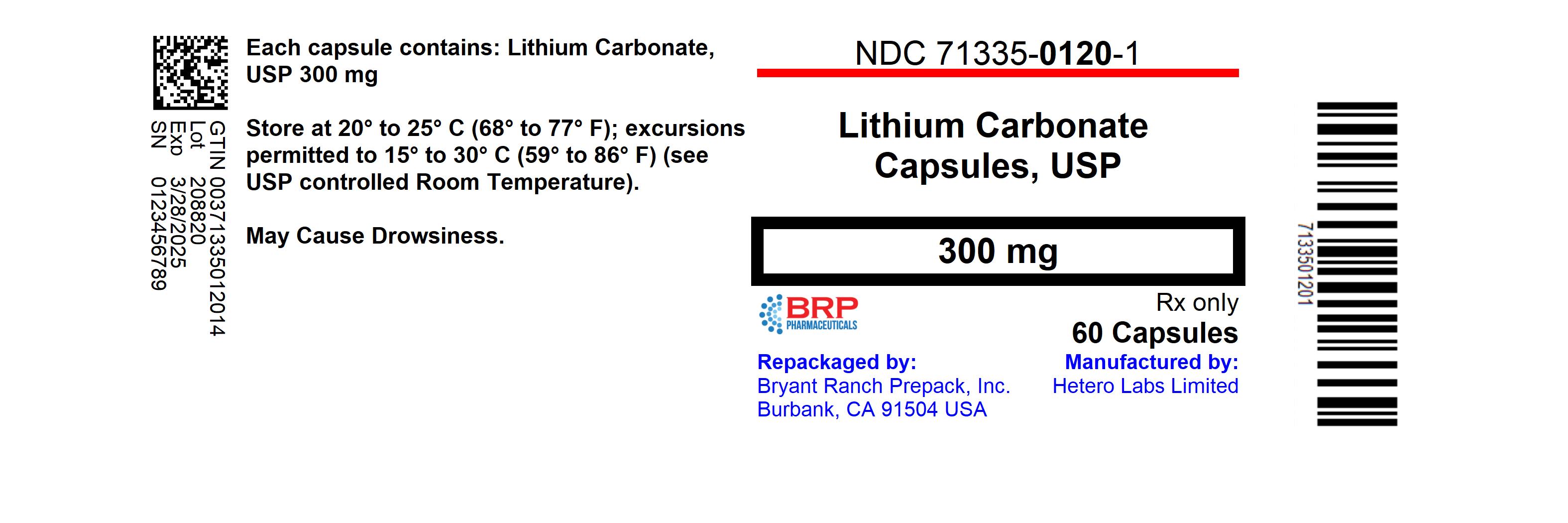
Lithium Carbonate 300mg Capsule Label
Medicare Part D spend CMS · PART D · 2026 (Q1)
About this NDC listing & data coverage
What data is (and isn’t) available for this NDC — tap to expand
| NDC identity (package / product / labeler codes) | ✓ Available |
| Labeler | ✓ Available |
| Product & package description | ✓ Available |
| Marketing category & status | ✓ Available |
| Active ingredient / dosage form / route | ✓ Available |
| FDA label (SPL via DailyMed) | ✓ Available |
| Package photos | ✓ Available |
| Inactive ingredients (structured) | ✓ Available |
| NADAC pharmacy acquisition price (CMS) | — Not published for this NDC CMS publishes NADAC only for NDCs reported in its retail-pharmacy survey. |
| Orange Book / therapeutic-equivalence data | ✓ Available |
| HCPCS J-code billing crosswalk | — Not published for this NDC Most self-administered / retail products have no J-code — that is normal. |
| Medicaid utilization (CMS SDUD) | — Not published for this NDC CMS reports utilization only for NDCs with Medicaid claims above its privacy threshold. |