
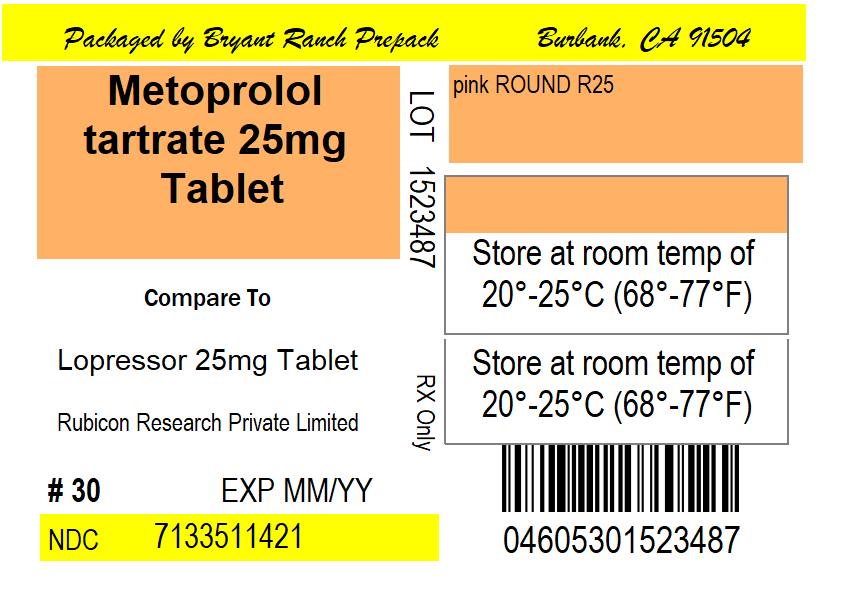
Metoprolol Tartrate 25 mg Tablet, Film Coated, 20-count — NDC 71335-1142-7 (Billing 71335-1142-07)
This is a package of 20 tablets of Metoprolol Tartrate 25 mg Tablet, Film Coated from Bryant Ranch Prepack, marketed since Dec 2018 and currently FDA-listed.
NDC database record
One package, one record: these facts belong to NDC 71335-1142-7 alone.
- Record
- FDA NDC Directory package listing · Human prescription drug
- Code segments
- 71335 labeler · 1142 product · 7 package
- Package marketed since
- Mar 19, 2019
- Sample package
- No — commercial package
- Listing certified through
- Dec 31, 2026
- Barcode (UPC-A, from the NDC)
- 3 7133511427 5
- FDA record last changed
- Jul 24, 2026
Other active recalls for Metoprolol Tartrate (different manufacturers) — 1 · tap to view
Identity & classification
Regulatory identifiers FDA, NLM and CMS codes for this package
- RxCUI (RxNorm): 866924
Where does this data come from?
- FDA openFDA NDC Directory · synced Oct 8, 2026
- FDA label on DailyMed · label index refreshed Oct 8, 2026
- RxNorm (NLM RxNav) · catalog refreshed Oct 8, 2026
- Medi-Span GPI (licensed)
- First Databank (licensed) · refreshed Oct 8, 2026
RxNorm drug class
This medicine belongs to the beta-Adrenergic Blocker class.
Where does this data come from?
- RxClass (NLM) · catalog refreshed Oct 8, 2026
Clinical
- It depends on which form you have. Metoprolol tartrate and Lopressor tablets treat high blood pressure and angina, and lower the risk of death after a heart attack. Metoprolol succ...
- Take it exactly as prescribed. Tartrate tablets go with or right after a meal. Extended-release succinate tablets are taken once daily and should not be crushed or chewed. Ask your...
- Please don't stop suddenly. Stopping abruptly can make angina worse and has led to heart attacks. Even if you only take it for blood pressure, your doctor will lower the dose gradu...
- Tiredness, dizziness, a slow heartbeat, low blood pressure, diarrhea, itching or rash are the more common ones. Most were mild and temporary. Call your doctor if you faint, your he...
Patient education
Supplement & herbal interactions
Metoprolol may be associated with lower levels of 1 nutrient — worth a chat with your pharmacist, not a cause for alarm.
Where does this data come from?
- MedlinePlus (NLM) · refreshed Oct 8, 2026
- FDA label on DailyMed · label index refreshed Oct 8, 2026
Ask a licensed pharmacist directly — free, answered by our team.
Pricing
A drug doesn't have one price. Each row is a different public payment system, and none is what you'd pay at the counter — that depends on your insurance. The ⓘ on each row explains what it measures.
| Price system | Per each | Per package |
|---|---|---|
| Retail pharmacies payNADAC · weekly | Not in the retail survey — common for institutional, discontinued, or low-volume packs. | |
| Medicaid paysCMS SDUD · 12 mo | No recent Medicaid claims on file for this NDC — rare and low-volume NDCs are suppressed in the public data. | |
| Medicare drug plans payPart D · Q2 2026 | $0.0707 | $1.41 / 20 tablets |
Where does this data come from?
- CMS NADAC weekly file
- CMS ASP pricing files · refreshed Sep 20, 2026
- CMS Medicaid State Drug Utilization Data · refreshed Oct 9, 2026
- CMS Part D plan pricing files · refreshed Sep 24, 2026
- VA National Acquisition Center price file
Packaging — all sizes for this product
| Package NDC | Description | Marketing start | Marketing end | Status |
|---|---|---|---|---|
| 71335-1142-01 71335-1142-1 Main listing | 30 TABLET, FILM COATED in 1 BOTTLE | 2019-09-05 | — | Active |
| 71335-1142-02 71335-1142-2 | 60 TABLET, FILM COATED in 1 BOTTLE | 2019-07-02 | — | Active |
| 71335-1142-03 71335-1142-3 | 90 TABLET, FILM COATED in 1 BOTTLE | 2019-03-11 | — | Active |
| 71335-1142-04 71335-1142-4 | 180 TABLET, FILM COATED in 1 BOTTLE | 2019-05-28 | — | Active |
| 71335-1142-05 71335-1142-5 | 100 TABLET, FILM COATED in 1 BOTTLE | 2019-08-06 | — | Active |
| 71335-1142-06 71335-1142-6 | 120 TABLET, FILM COATED in 1 BOTTLE | 2019-06-25 | — | Active |
| 71335-1142-07 You're viewing this | 20 TABLET, FILM COATED in 1 BOTTLE | 2019-03-19 | — | Active |
| 71335-1142-08 71335-1142-8 | 10 TABLET, FILM COATED in 1 BOTTLE | 2022-01-28 | — | Active |
You're viewing one of 8 pack sizes for this product.
Pack size FAQ
What quantity is in this package?
How does this package differ from NDC 71335-1142-08?
What NDC number is used to bill for this package of Metoprolol Tartrate 25 mg Tablet, Film Coated?
Therapeutic equivalents
| Product | Labeler | Pack | NADAC/unit | TE | Status | Price vs. this |
|---|---|---|---|---|---|---|
| Metoprolol Tartrate 25 mg 00378-0018-01 | Mylan | 100 tablets | $0.016 | AB | Availability likely | — |
| Metoprolol Tartrate 25 mg 51079-0255-20 | Mylan | 1 tablet | $0.016 | AB | Availability likely | — |
| Metoprolol Tartrate 25 mg 52817-0250-00 | TRUPHARMA | 1000 tablets | $0.016 | AB | Availability likely | — |
| Metoprolol Tartrate 25 mg 52817-0360-00 | TruPharma | 1000 tablets | $0.016 | AB | Availability likely | — |
| Metoprolol Tartrate 25 mg 57237-0100-01 | Rising | 100 tablets | $0.016 | AB | Availability likely | — |
| Metoprolol Tartrate 25 mg 62584-0265-01 | American | 1 tablet | $0.016 | AB | Availability likely | — |
| Metoprolol Tartrate 25 mg 65862-0062-01 | Aurobindo | 100 tablets | $0.016 | — | Availability likely | — |
| Metoprolol Tartrate 25 mg 72888-0004-00 | Advagen | 1000 tablets | $0.016 | AB | Availability likely | — |
| Metoprolol Tartrate 25 mg 72888-0208-00 | Advagen | 1000 tablets | $0.016 | AB | Availability likely | — |
| Metoprolol Tartrate 25 mg 76282-0794-01 | Exelan | 100 tablets | $0.016 | AB | Availability likely | — |
| Metoprolol Tartrate 25 mg 00615-8421-05 | NCS | 15 tablets | — | AB | FDA listed | — |
| Metoprolol Tartrate 25 mg 42708-0110-60 | QPharma | 60 tablets | — | AB | FDA listed | — |
| Metoprolol Tartrate 25 mg 43063-0927-01 | PD-Rx | 100 tablets | — | AB | FDA listed | — |
| Metoprolol Tartrate 25 mg 46708-0290-10 | Alembic | 100 tablets | — | AB | FDA listed | — |
| Metoprolol Tartrate 25 mg 48433-0073-20 | Safecor | 1 tablet | — | AB | FDA listed | — |
| Metoprolol Tartrate 25 mg 50090-2207-00 | A-S | 180 tablets | — | AB | FDA listed | — |
| Metoprolol Tartrate 25 mg 50090-5070-00 | A-S | 90 tablets | — | AB | FDA listed | — |
| Metoprolol Tartrate 25 mg 50090-7362-00 | A-S | 180 tablets | — | AB | FDA listed | — |
| Metoprolol Tartrate 25 mg 50090-7363-00 | A-S | 90 tablets | — | AB | FDA listed | — |
| Metoprolol Tartrate 25 mg 50090-7567-00 | A-S | 180 tablets | — | AB | FDA listed | — |
| Metoprolol Tartrate 25 mg 50090-7568-00 | A-S | 90 tablets | — | AB | FDA listed | — |
| Metoprolol Tartrate 25 mg 50090-7738-00 | A-S | 180 tablets | — | AB | FDA listed | — |
| Metoprolol Tartrate 25 mg 50090-7739-00 | A-S | 90 tablets | — | AB | FDA listed | — |
| Metoprolol Tartrate 25 mg 51407-0109-01 | Golden | 100 tablets | — | AB | FDA listed | — |
| Metoprolol Tartrate 25 mg 51655-0534-25 | Northwind | 60 tablets | — | AB | FDA listed | — |
| Metoprolol Tartrate 25 mg 53401-0011-53 | Aphena | 60 tablets | — | AB | FDA listed | — |
| Metoprolol Tartrate 25 mg 53401-0015-53 | Aphena | 60 tablets | — | AB | FDA listed | — |
| Metoprolol Tartrate 25 mg 55154-4752-00 | Cardinal | 1 tablet | — | AB | FDA listed | — |
| Metoprolol Tartrate 25 mg 55154-5356-00 | Cardinal | 1 tablet | — | AB | FDA listed | — |
| Metoprolol Tartrate 25 mg 55289-0382-14 | PD-Rx | 14 tablets | — | AB | FDA listed | — |
| Metoprolol Tartrate 25 mg 62332-0112-30 | Alembic | 30 tablets | — | AB | FDA listed | — |
| Metoprolol Tartrate 25 mg 63187-0600-30 | Proficient | 30 tablets | — | AB | FDA listed | — |
| Metoprolol Tartrate 25 mg 67046-1561-03 | Coupler | 30 tablets | — | AB | FDA listed | — |
| Metoprolol Tartrate 25 mg 67046-1592-03 | Coupler | 30 tablets | — | AB | FDA listed | — |
| Metoprolol Tartrate 25 mg 67296-1903-03 | RedPharm | 30 tablets | — | AB | FDA listed | — |
| Metoprolol Tartrate 25 mg 67296-2216-01 | Redpharm | 30 tablets | — | AB | FDA listed | — |
| Metoprolol Tartrate 25 mg 68071-3723-03 | NuCare | 30 tablets | — | AB | FDA listed | — |
| Metoprolol Tartrate 25 mg 68071-5236-01 | NuCare | 100 tablets | — | AB | FDA listed | — |
| Metoprolol Tartrate 25 mg 68788-8509-01 | Preferred | 100 tablets | — | AB | FDA listed | — |
| Metoprolol Tartrate 25 mg 68788-8840-01 | Preferred | 100 tablets | — | AB | FDA listed | — |
| Metoprolol Tartrate 25 mg 70518-2615-00 | REMEDYREPACK | 30 tablets | — | AB | FDA listed | — |
| Metoprolol Tartrate 25 mg 70518-3291-00 | REMEDYREPACK | 60 tablets | — | AB | FDA listed | — |
| Metoprolol Tartrate 25 mg 70518-3506-00 | REMEDYREPACK | 30 tablets | — | AB | FDA listed | — |
| Metoprolol Tartrate 25 mg 70518-3950-00 | REMEDYREPACK | 30 tablets | — | AB | FDA listed | — |
| Metoprolol Tartrate 25 mg 70518-4308-00 | REMEDYREPACK | 30 tablets | — | AB | FDA listed | — |
| Metoprolol Tartrate 25 mg 70882-0132-60 | Cambridge | 60 tablets | — | AB | Discontinued | — |
| Metoprolol Tartrate 25 mg 71205-0003-30 | Proficient | 30 tablets | — | AB | FDA listed | — |
| Metoprolol Tartrate 25 mg 71335-0192-01 | Bryant | 30 tablets | — | AB | FDA listed | — |
| Metoprolol Tartrate 25 mg 71335-0743-01 | Bryant | 30 tablets | — | AB | FDA listed | — |
| Metoprolol Tartrate 25 mgthis 71335-1142-07 | Bryant | 20 tablets | — | AB | FDA listed | — |
| Metoprolol Tartrate 25 mg 71335-2789-01 | Bryant | 30 tablets | — | AB | FDA listed | — |
| Metoprolol Tartrate 25 mg 71335-9745-01 | Bryant | 30 tablets | — | AB | FDA listed | — |
| Metoprolol Tartrate 25 mg 71610-0137-60 | Aphena | 90 tablets | — | AB | FDA listed | — |
| Metoprolol Tartrate 25 mg 71610-0184-53 | Aphena | 60 tablets | — | AB | FDA listed | — |
| Metoprolol Tartrate 25 mg 71610-0556-30 | Aphena | 30 tablets | — | AB | FDA listed | — |
| Metoprolol Tartrate 25 mg 72189-0640-30 | Direct_Rx | 30 tablets | — | AB | FDA listed | — |
| Metoprolol Tartrate 25 mg 76420-0054-20 | Asclemed | 20 tablets | — | AB | FDA listed | — |
| Metoprolol Tartrate 25 mg 82868-0037-20 | Northwind | 20 tablets | — | AB | FDA listed | — |
| Metoprolol Tartrate 25 mg 87063-0184-01 | ASCLEMED | 100 tablets | — | AB | FDA listed | — |
| Metoprolol Tartrate 25 mg 71335-1600-01 | Bryant | 30 tablets | — | AB | FDA listed | — |
| Metoprolol Tartrate 25 mg 55154-0279-00 | Cardinal | 1 tablet | — | AB | FDA listed | — |
| Metoprolol Tartrate 25 mg 70518-4714-00 | REMEDYREPACK | 30 tablets | — | AB | FDA listed | — |
Where does this data come from?
- FDA openFDA NDC Directory · synced Oct 8, 2026
- FDA Orange Book · refreshed Oct 9, 2026
- CMS NADAC weekly file
Availability & generic status
This product is an FDA-approved generic. Other versions of the same drug are listed under Therapeutic equivalents, least expensive first.
Where does this data come from?
- FDA Orange Book · refreshed Oct 9, 2026
What it looks like
Where does this data come from?
- FDA label on DailyMed · label index refreshed Oct 8, 2026
Inactive Ingredients / Excipients
Inactive ingredients, also called excipients, are components of the drug product other than the active ingredient. They may include fillers, dyes, coatings, preservatives, flavors, or other formulation ingredients.
🧪 Avoiding an ingredient? See Metoprolol inactive ingredients by manufacturer: every current product's list side by side, so you can ask your pharmacy for the version that does not list it.
💡 Tap an ingredient (hover on desktop) to see what it is and why it’s used.
-
UNII 2S42T2808B
A synthetic red dye used as a colorant to give the medicine its red color. It helps make pills or liquids visually distinct and easier to identify.
-
UNII 3NXW29V3WO
Hypromellose is a plant-based thickener made from cellulose. It's used in medicines as a binder to hold ingredients together, a coating for tablets, and a thickener for liquids.
-
UNII EWQ57Q8I5X
Lactose monohydrate is a natural sugar derived from milk. It serves as a filler and binder in tablets and capsules, helping create the proper size, texture, and consistency of the medicine.
-
UNII 70097M6I30
Magnesium stearate is a salt made from magnesium and stearic acid, a fatty substance. It's used in tablets and capsules as a lubricant and glidant to help ingredients flow smoothly during manufacturing and prevent sticking.
-
UNII OP1R32D61U
Microcrystalline cellulose is a purified form of cellulose, a natural fiber from plant sources. It acts as a binder and filler in tablets and capsules, helping hold ingredients together and give the medicine its shape and size.
-
UNII 3WJQ0SDW1A
Polyethylene glycol is a synthetic liquid or solid polymer used in medicines as a solvent, lubricant, and humectant. It helps dissolve active ingredients, reduces friction during manufacturing, and retains moisture in the final product.
-
UNII ETJ7Z6XBU4
Silicon dioxide is a naturally occurring mineral used as a glidant and anti-caking agent. It helps powder ingredients flow smoothly and prevents clumping during manufacturing and storage.
-
UNII 5856J3G2A2
A starch-based powder made from potatoes and processed with sodium. It acts as a disintegrant, helping the tablet or capsule break apart quickly in the stomach so the medicine can be absorbed.
-
UNII 15FIX9V2JP
Titanium dioxide is a bright white mineral powder commonly used as a colorant and opacifying agent. It makes pills and tablets white or lighter in color and helps make coatings non-transparent.
9 inactive ingredients listed in the exact product block matched to this NDC.
Where does this data come from?
ingredient classCode="IACT" elements from the exact product block matched by this NDC. Label-section narrative from DailyMed / the openFDA label index is shown separately when available.- FDA label on DailyMed · label index refreshed Oct 8, 2026
- FDA openFDA NDC Directory · synced Oct 8, 2026
Inactive ingredient FAQ
Are inactive ingredients the same for every manufacturer?
Why might an inactive ingredient be missing?
Can inactive ingredients matter?
Manufacturer & labeler
More NDCs from Bryant Ranch Prepack labeler code 71335
- Gabapentin 600 mg Tablet, Film Coated NDC 71335-1132-0
- Quinapril 10 mg Tablet NDC 71335-1134-1
- Nitrofurantoin 100 mg Capsule NDC 71335-1135-1
- Losartan Potassium 25 mg Tablet, Film Coated NDC 71335-1136-1
- Lorazepam 2 mg Tablet NDC 71335-1138-1
- Promethazine Hydrochloride 25 mg Tablet NDC 71335-1139-0
- topiramate 100 mg Tablet, Film Coated NDC 71335-1143-1
- Buspirone Hydrochloride 10 mg Tablet NDC 71335-1144-1
- Fluoxetine 40 mg Capsule NDC 71335-1145-1
- Metoprolol Tartrate 50 mg Tablet, Film Coated NDC 71335-1146-1
- topiramate 50 mg Tablet, Film Coated NDC 71335-1147-0
- Rizatriptan Benzoate 5 mg Tablet NDC 71335-1149-1
Where does this data come from?
- FDA openFDA NDC Directory · synced Oct 8, 2026
- Drugs@FDA
Full prescribing information FDA SPL
🎯 Indications and Usage ▾
INDICATIONS AND USAGE Hypertension Metoprolol tartrate tablets are indicated for the treatment of hypertension. They may be used alone or in combination with other antihypertensive agents. Angina Pectoris Metoprolol tartrate tablets are indicated in the long-term treatment of angina pectoris.
Myocardial Infarction Metoprolol tartrate tablets are indicated in the treatment of hemodynamically stable patients with definite or suspected acute myocardial infarction to reduce cardiovascular mortality when used alone or in conjunction with intravenous metoprolol. Oral Metoprolol tartrate tablets therapy can be initiated after intravenous metoprolol therapy or, alternatively, oral treatment can begin within 3 to 10 days of the acute event. (See DOSAGE AND ADMINISTRATION , CONTRAINDICATIONS , and WARNINGS ).
⏱️ Dosage and Administration ▾
DOSAGE AND ADMINISTRATION Hypertension Individualize the dosage of metoprolol tartrate tablets. Metoprolol tartrate tablets should be taken with or immediately following meals. The usual initial dosage of metoprolol tartrate tablets is 100 mg daily in single or divided doses, whether used alone or added to a diuretic.
Increase the dosage at weekly (or longer) intervals until optimum blood pressure reduction is achieved. In general, the maximum effect of any given dosage level will be apparent after one week of therapy. The effective dosage range of metoprolol tartrate tablets is 100 mg per day to 450 mg per day.
Dosages above 450 mg per day have not been studied. While once daily dosing is effective and can maintain a reduction in blood pressure throughout the day, lower doses (especially 100 mg) may not maintain a full effect at the end of the 24-hour period, and larger or more frequent daily doses may be required. This can be evaluated by measuring blood pressure near the end of the dosing interval to determine whether satisfactory control is being maintained throughout the day.
Beta 1 selectivity diminishes as the dose of Metoprolol is increased. Angina Pectoris The dosage of metoprolol tartrate tablets should be individualized. Metoprolol tartrate tablets should be taken with or immediately following meals.
The usual initial dosage of metoprolol tartrate tablets is 100 mg daily, given in two divided doses. Gradually increase the dosage at weekly intervals until optimum clinical response has been obtained or there is pronounced slowing of the heart rate. The effective dosage range of metoprolol tartrate tablets is 100 mg per day to 450 mg per day.
Dosages above 400 mg per day have not been studied. If treatment is to be discontinued, gradually decrease the dosage over a period of 1 to 2 weeks (see WARNINGS ). Myocardial Infarction Early Treatment During the early phase of definite or suspected acute myocardial infarction, initiate treatment with metoprolol tartrate tablets as soon as possible after the patient’s arrival in the hospital.
Such treatment should be initiated in a coronary care or similar unit immediately after the patient’s hemodynamic condition has stabilized. Begin treatment in this early phase with the intravenous administration of three bolus injections of 5 mg of metoprolol tartrate each; give the injections at approximately 2 minute intervals. During the intravenous administration of metoprolol, monitor blood pressure, heart rate, and electrocardiogram.
In patients who tolerate the full intravenous dose (15 mg), initiate metoprolol tartrate tablets, 50 mg every 6 hours, 15 minutes after the last intravenous dose and continue for 48 hours. Thereafter, the maintenance dosage is 100 mg twice daily (see Late Treatment below). Start patients who appear not to tolerate the full intravenous dose on metoprolol tartrate tablets either 25 mg or 50 mg every 6 hours (depending on the degree of intolerance) 15 minutes after the last intravenous dose or as soon as their clinical condition allows.
In patients with severe intolerance, discontinue metoprolol tartrate tablets (see WARNINGS ). Late Treatment Start patients with contraindications to treatment during the early phase of suspected or definite myocardial infarction, patients who appear not to tolerate the full early treatment, and patients in whom the physician wishes to delay therapy for any other reason on metoprolol tartrate tablets, 100 mg twice daily, as soon as their clinical condition allows. Continue therapy for at least 3 months.
Although the efficacy of metoprolol beyond 3 months has not been conclusively established, data from studies with other beta-blockers suggest that treatment should be continued for 1 to 3 years. Special Populations Pediatric Patients No pediatric studies have been performed. The safety and efficacy of metoprolol in pediatric patients have not been established.
Renal Impairment No dose adjustment of metoprolol tartrate tablets i… [Excerpted — this section continues on DailyMed.]
⛔ Contraindications ▾
CONTRAINDICATIONS Hypertension and Angina Metoprolol tartrate tablets are contraindicated in sinus bradycardia, heart block greater than first degree, cardiogenic shock, and overt cardiac failure (see WARNINGS ). Hypersensitivity to metoprolol and related derivatives, or to any of the excipients; hypersensitivity to other beta-blockers (cross-sensitivity between beta-blockers can occur). Sick-sinus syndrome.
Severe peripheral arterial circulatory disorders. Myocardial Infarction Metoprolol is contraindicated in patients with a heart rate < 45 beats/min; second- and third-degree heart block; significant first-degree heart block (P-R interval ≥ 0.24 sec); systolic blood pressure < 100 mmHg; or moderate to severe cardiac failure (see WARNINGS ).
⚠️ Warnings and Cautions ▾
WARNINGS Heart Failure Beta-blockers, like metoprolol, can cause depression of myocardial contractility and may precipitate heart failure and cardiogenic shock. If signs or symptoms of heart failure develop, treat the patient according to recommended guidelines. It may be necessary to lower the dose of metoprolol or to discontinue it.
Ischemic Heart Disease Do not abruptly discontinue metoprolol therapy in patients with coronary artery disease. Severe exacerbation of angina, myocardial infarction and ventricular arrhythmias have been reported in patients with coronary artery disease following the abrupt discontinuation of therapy with beta-blockers. When discontinuing chronically administered metoprolol, particularly in patients with coronary artery disease, the dosage should be gradually reduced over a period of 1 to 2 weeks and the patient should be carefully monitored.
If angina markedly worsens or acute coronary insufficiency develops, metoprolol administration should be reinstated promptly, at least temporarily, and other measures appropriate for the management of unstable angina should be taken. Patients should be warned against interruption or discontinuation of therapy without the physician’s advice. Because coronary artery disease is common and may be unrecognized, it may be prudent not to discontinue metoprolol therapy abruptly even in patients treated only for hypertension.
Use During Major Surgery Chronically administered beta-blocking therapy should not be routinely withdrawn prior to major surgery; however, the impaired ability of the heart to respond to reflex adrenergic stimuli may augment the risks of general anesthesia and surgical procedures. Bradycardia Bradycardia, including sinus pause, heart block, and cardiac arrest have occurred with the use of metoprolol. Patients with first-degree atrioventricular block, sinus node dysfunction or conduction disorders may be at increased risk.
Monitor heart rate and rhythm in patients receiving metoprolol. If severe bradycardia develops, reduce or stop metoprolol. Exacerbation of Bronchospastic Disease Patients with bronchospastic disease, should, in general, not receive beta-blockers, including metoprolol.
Because of its relative beta 1 selectivity, however, metoprolol may be used in patients with bronchospastic disease who do not respond to, or cannot tolerate, other antihypertensive treatment. Because beta 1 selectivity is not absolute use the lowest possible dose of metoprolol and consider administering metoprolol in smaller doses 3 times daily, instead of larger doses 2 times daily, to avoid the higher plasma levels associated with the longer dosing interval (see DOSAGE AND ADMINISTRATION ). Bronchodilators, including beta 2 agonists, should be readily available or administered concomitantly.
Diabetes and Hypoglycemia Beta-blockers may mask tachycardia occurring with hypoglycemia, but other manifestations such as dizziness and sweating may not be significantly affected. Pheochromocytoma If metoprolol is used in the setting of pheochromocytoma, it should be given in combination with an alpha-blocker, and only after the alpha-blocker has been initiated. Administration of beta-blockers alone in the setting of pheochromocytoma has been associated with a paradoxical increase in blood pressure due to the attenuation of beta-mediated vasodilatation in skeletal muscle.
Thyrotoxicosis Metoprolol may mask certain clinical signs (e.g., tachycardia) of hyperthyroidism. Avoid abrupt withdrawal of beta-blockade, which might precipitate a thyroid storm. PRECAUTIONS Risk of Anaphylactic Reactions While taking beta-blockers, patients with a history of severe anaphylactic reaction to a variety of allergens may be more reactive to repeated challenge, either accidental, diagnostic or therapeutic.
Such patients may be unresponsive to the usual doses of epinephrine used to treat allergic reaction. Information for Patients Advise patients to take metoprolol regularly and continuously,… [Excerpted — this section continues on DailyMed.]
🤒 Adverse Reactions ▾
ADVERSE REACTIONS Hypertension and Angina Most adverse effects have been mild and transient. Central Nervous System Tiredness and dizziness have occurred in about 10 of 100 patients. Depression has been reported in about 5 of 100 patients.
Mental confusion and short-term memory loss have been reported. Headache, nightmares, and insomnia have also been reported. Cardiovascular Shortness of breath and bradycardia have occurred in approximately 3 of 100 patients.
Cold extremities; arterial insufficiency, usually of the Raynaud type; palpitations; congestive heart failure; peripheral edema; and hypotension have been reported in about 1 of 100 patients. Gangrene in patients with preexisting severe peripheral circulatory disorders has also been reported very rarely (see CONTRAINDICATIONS , WARNINGS, and PRECAUTIONS ). Respiratory Wheezing (bronchospasm) and dyspnea have been reported in about 1 of 100 patients (see WARNINGS ).
Rhinitis has also been reported. Gastrointestinal Diarrhea has occurred in about 5 of 100 patients. Nausea, dry mouth, gastric pain, constipation, flatulence, and heartburn have been reported in about 1 of 100 patients.
Vomiting was a common occurrence. Post-marketing experience reveals very rare reports of hepatitis, jaundice and nonspecific hepatic dysfunction. Isolated cases of transaminase, alkaline phosphatase, and lactic dehydrogenase elevations have also been reported.
Hypersensitive Reactions Pruritus or rash have occurred in about 5 of 100 patients. Very rarely, photosensitivity and worsening of psoriasis has been reported. Miscellaneous Peyronie’s disease has been reported in fewer than 1 of 100,000 patients.
Musculoskeletal pain, blurred vision, and tinnitus have also been reported. There have been rare reports of reversible alopecia, agranulocytosis, and dry eyes. Discontinuation of the drug should be considered if any such reaction is not otherwise explicable.
There have been very rare reports of weight gain, arthritis, and retroperitoneal fibrosis (relationship to metoprolol has not been definitely established). The oculomucocutaneous syndrome associated with the beta-blocker practolol has not been reported with metoprolol. Myocardial Infarction Central Nervous System Tiredness has been reported in about 1 of 100 patients.
Vertigo, sleep disturbances, hallucinations, headache, dizziness, visual disturbances, confusion, and reduced libido have also been reported, but a drug relationship is not clear. Cardiovascular In the randomized comparison of metoprolol and placebo described in the CLINICAL PHARMACOLOGY section, the following adverse reactions were reported: Metoprolol Tartrate Tablets Placebo Hypotension (systolic BP < 90 mm Hg) 27.4% 23.2% Bradycardia (heart rate < 40 beats/min) 15.9% 6.7% Second- or third-degree heart block 4.7% 4.7% First-degree heart block (P-R ≥ 0.26 sec) 5.3% 1.9% Heart failure 27.5% 29.6% Respiratory Dyspnea of pulmonary origin has been reported in fewer than 1 of 100 patients.
Gastrointestinal Nausea and abdominal pain have been reported in fewer than 1 of 100 patients. Dermatologic Rash and worsened psoriasis have been reported, but a drug relationship is not clear. Miscellaneous Unstable diabetes and claudication have been reported, but a drug relationship is not clear.
Potential Adverse Reactions A variety of adverse reactions not listed above have been reported with other beta-adrenergic blocking agents and should be considered potential adverse reactions to metoprolol. Central Nervous System Reversible mental depression progressing to catatonia; an acute reversible syndrome characterized by disorientation for time and place, short-term memory loss, emotional lability, slightly clouded sensorium, and decreased performance on neuropsychometrics. Cardiovascular Intensification of AV block (see CONTRAINDICATIONS ).
Hematologic Agranulocytosis, nonthrombocytopenic purpura and thrombocytopenic purpura. Hypersensitive Reactions Fever combined with aching and sore throat… [Excerpted — this section continues on DailyMed.]
🔄 Drug Interactions ▾
Drug Interactions Catecholamine-Depleting Drugs Catecholamine-depleting drugs (e.g., reserpine) may have an additive effect when given with beta-blocking agents or monoamine oxidase (MAO) inhibitors. Observe patients treated with metoprolol plus a catecholamine depletor for evidence of hypotension or marked bradycardia, which may produce vertigo, syncope, or postural hypotension. In addition, possibly significant hypertension may theoretically occur up to 14 days following discontinuation of the concomitant administration with an irreversible MAO inhibitor.
Digitalis Glycosides and Beta-Blockers Both digitalis glycosides and beta-blockers slow atrioventricular conduction and decrease heart rate. Concomitant use can increase the risk of bradycardia. Monitor heart rate and PR interval.
Calcium Channel Blockers Concomitant administration of a beta-adrenergic antagonist with a calcium channel blocker may produce an additive reduction in myocardial contractility because of negative chronotropic and inotropic effects. CYP2D6 Inhibitors Potent inhibitors of the CYP2D6 enzyme may increase the plasma concentration of metoprolol which would mimic the pharmacokinetics of CYP2D6 poor metabolizer (see CLINICAL PHARMACOLOGY: Pharmacokinetics ). Increase in plasma concentrations of metoprolol would decrease the cardioselectivity of metoprolol.
Known clinically significant potent inhibitors of CYP2D6 are antidepressants such as fluvoxamine, fluoxetine, paroxetine, sertraline, bupropion, clomipramine and desipramine; antipsychotics such as chlorpromazine, fluphenazine, haloperidol and thioridazine; antiarrhythmics such as quinidine or propafenone; antiretrovirals such as ritonavir; antihistamines such as diphenhydramine; antimalarials such as hydroxychloroquine or quinidine; antifungals such as terbinafine. Hydralazine Concomitant administration of hydralazine may inhibit presystemic metabolism of metoprolol leading to increased concentrations of metoprolol.
Alpha-Adrenergic Agents Antihypertensive effect of alpha-adrenergic blockers such as guanethidine, betanidine, reserpine, alpha-methyldopa or clonidine may be potentiated by beta-blockers including metoprolol. Beta- adrenergic blockers may also potentiate the postural hypotensive effect of the first dose of prazosin, probably by preventing reflex tachycardia. On the contrary, beta-adrenergic blockers may also potentiate the hypertensive response to withdrawal of clonidine in patients receiving concomitant clonidine and beta-adrenergic blocker.
If a patient is treated with clonidine and metoprolol concurrently, and clonidine treatment is to be discontinued, stop metoprolol several days before clonidine is withdrawn. Rebound hypertension that can follow withdrawal of clonidine may be increased in patients receiving concurrent beta-blocker treatment. Ergot Alkaloid Concomitant administration with beta-blockers may enhance the vasoconstrictive action of ergot alkaloids.
Dipyridamole In general, administration of a beta-blocker should be withheld before dipyridamole testing, with careful monitoring of heart rate following the dipyridamole injection. Carcinogenesis, Mutagenesis, Impairment of Fertility Long-term studies in animals have been conducted to evaluate carcinogenic potential. In a 2-year study in rats at three oral dosage levels of up to 800 mg/kg per day, there was no increase in the development of spontaneously occurring benign or malignant neoplasms of any type.
The only histologic changes that appeared to be drug-related were an increased incidence of generally mild focal accumulation of foamy macrophages in pulmonary alveoli and a slight increase in biliary hyperplasia. In a 21-month study in Swiss albino mice at three oral dosage levels of up to 750 mg/kg per day, benign lung tumors (small adenomas) occurred more frequently in female mice receiving the highest dose than in untreated control animals. There was no increase in malignant or total (benign plus malignant) lung tumors,… [Excerpted — this section continues on DailyMed.]
👥 Use in Specific Populations ▾
Special Populations Geriatric Patients The geriatric population may show slightly higher plasma concentrations of metoprolol as a combined result of a decreased metabolism of the drug in elderly population and a decreased hepatic blood flow. However, this increase is not clinically significant or therapeutically relevant. Renal Impairment The systemic availability and half-life of metoprolol in patients with renal failure do not differ to a clinically significant degree from those in normal subjects.
Hepatic Impairment Since the drug is primarily eliminated by hepatic metabolism, hepatic impairment may impact the pharmacokinetics of metoprolol. The elimination half-life of metoprolol is considerably prolonged, depending on severity (up to 7.2 h).
🆘 Overdosage ▾
OVERDOSAGE Acute Toxicity Several cases of overdosage have been reported, some leading to death. Oral LD 50 's (mg/kg): mice, 1,158 to 2,460; rats, 3,090 to 4,670. Signs and Symptoms Potential signs and symptoms associated with overdosage with metoprolol are bradycardia, hypotension, bronchospasm, myocardial infarction, cardiac failure and death.
Management There is no specific antidote. In general, patients with acute or recent myocardial infarction may be more hemodynamically unstable than other patients and should be treated accordingly (see WARNINGS: Myocardial Infarction ). On the basis of the pharmacologic actions of metoprolol, the following general measures should be employed: Elimination of the Drug Gastric lavage should be performed.
Other clinical manifestations of overdose should be managed symptomatically based on modern methods of intensive care. Hypotension Administer a vasopressor, e.g., norepinephrine or dopamine. Bronchospasm Administer a beta 2 -stimulating agent and/or a theophylline derivative.
Cardiac Failure Administer digitalis glycoside and diuretic. In shock resulting from inadequate cardiac contractility, consider administration of dobutamine, isoproterenol or glucagon.
🧬 Clinical Pharmacology ▾
CLINICAL PHARMACOLOGY Mechanism of Action Metoprolol is a beta 1 -selective (cardioselective) adrenergic receptor blocker. This preferential effect is not absolute, however, and at higher plasma concentrations, metoprolol also inhibits beta 2 adrenoreceptors, chiefly located in the bronchial and vascular musculature. Clinical pharmacology studies have demonstrated the beta-blocking activity of metoprolol, as shown by (1) reduction in heart rate and cardiac output at rest and upon exercise, (2) reduction of systolic blood pressure upon exercise, (3) inhibition of isoproterenol-induced tachycardia, and (4) reduction of reflex orthostatic tachycardia.
Hypertension The mechanism of the antihypertensive effects of beta-blocking agents has not been fully elucidated. However, several possible mechanisms have been proposed: (1) competitive antagonism of catecholamines at peripheral (especially cardiac) adrenergic neuron sites, leading to decreased cardiac output; (2) a central effect leading to reduced sympathetic outflow to the periphery; and (3) suppression of renin activity. Angina Pectoris By blocking catecholamine-induced increases in heart rate, in velocity and extent of myocardial contraction, and in blood pressure, metoprolol reduces the oxygen requirements of the heart at any given level of effort, thus making it useful in the long-term management of angina pectoris.
Myocardial Infarction The precise mechanism of action of metoprolol in patients with suspected or definite myocardial infarction is not known. Pharmacodynamics Relative beta 1 selectivity is demonstrated by the following: (1) In healthy subjects, metoprolol is unable to reverse the beta 2 -mediated vasodilating effects of epinephrine. This contrasts with the effect of nonselective (beta 1 plus beta 2 ) beta-blockers, which completely reverse the vasodilating effects of epinephrine.
(2) In asthmatic patients, metoprolol reduces FEV 1 and FVC significantly less than a nonselective beta-blocker, propranolol, at equivalent beta 1 -receptor blocking doses. Metoprolol has no intrinsic sympathomimetic activity, and membrane-stabilizing activity is detectable only at doses much greater than required for beta-blockade. Animal and human experiments indicate that metoprolol slows the sinus rate and decreases AV nodal conduction.
Significant beta-blocking effect (as measured by reduction of exercise heart rate) occurs within one hour after oral administration, and its duration is dose related. For example, a 50% reduction of the maximum effect after single oral doses of 20 mg, 50 mg, and 100 mg occurred at 3.3 hours, 5 hours and 6.4 hours, respectively, in normal subjects. After repeated oral dosages of 100 mg twice daily, a significant reduction in exercise systolic blood pressure was evident at 12 hours.
When the drug was infused over a 10 minute period, in normal volunteers, maximum beta-blockade was achieved at approximately 20 minutes. Equivalent maximal beta-blocking effect is achieved with oral and intravenous doses in the ratio of approximately 2.5:1. There is a linear relationship between the log of plasma levels and reduction of exercise heart rate.
However, antihypertensive activity does not appear to be related to plasma levels. Because of variable plasma levels attained with a given dose and lack of a consistent relationship of antihypertensive activity to dose, selection of proper dosage requires individual titration. In several studies of patients with acute myocardial infarction, intravenous followed by oral administration of metoprolol caused a reduction in heart rate, systolic blood pressure and cardiac output.
Stroke volume, diastolic blood pressure and pulmonary artery end diastolic pressure remained unchanged. In patients with angina pectoris, plasma concentration measured at one hour is linearly related to the oral dose within the range of 50 mg to 400 mg. Exercise heart rate and systolic blood pressure are reduced in relation to the logarithm of the or… [Excerpted — this section continues on DailyMed.]
🧬 Mechanism of Action ▾
Mechanism of Action Metoprolol is a beta 1 -selective (cardioselective) adrenergic receptor blocker. This preferential effect is not absolute, however, and at higher plasma concentrations, metoprolol also inhibits beta 2 adrenoreceptors, chiefly located in the bronchial and vascular musculature. Clinical pharmacology studies have demonstrated the beta-blocking activity of metoprolol, as shown by (1) reduction in heart rate and cardiac output at rest and upon exercise, (2) reduction of systolic blood pressure upon exercise, (3) inhibition of isoproterenol-induced tachycardia, and (4) reduction of reflex orthostatic tachycardia.
Hypertension The mechanism of the antihypertensive effects of beta-blocking agents has not been fully elucidated. However, several possible mechanisms have been proposed: (1) competitive antagonism of catecholamines at peripheral (especially cardiac) adrenergic neuron sites, leading to decreased cardiac output; (2) a central effect leading to reduced sympathetic outflow to the periphery; and (3) suppression of renin activity. Angina Pectoris By blocking catecholamine-induced increases in heart rate, in velocity and extent of myocardial contraction, and in blood pressure, metoprolol reduces the oxygen requirements of the heart at any given level of effort, thus making it useful in the long-term management of angina pectoris.
Myocardial Infarction The precise mechanism of action of metoprolol in patients with suspected or definite myocardial infarction is not known.
📦 How Supplied / Storage and Handling ▾
HOW SUPPLIED The 25 mg tablets are film-coated, pink colored, round, biconvex tablets debossed with R 25 on one side and scored on the other side. NDC 71335-1142-1: 30 Tablets in a BOTTLE NDC 71335-1142-2: 60 Tablets in a BOTTLE NDC 71335-1142-3: 90 Tablets in a BOTTLE NDC71335-1142-4: 180 Tablets in a BOTTLE NDC 71335-1142-5: 100 Tablets in a BOTTLE NDC 71335-1142-6: 120 Tablets in a BOTTLE NDC 71335-1142-7: 20 Tablets in a BOTTLE NDC 71335-1142-8: 10 Tablets in a BOTTLE Store at 20° to 25°C (68° to 77°F). [See USP Controlled Room Temperature.] Protect from moisture.
Dispense in a tight, light-resistant container as defined in the USP using a child-resistant closure. Repackaged/Relabeled by: Bryant Ranch Prepack, Inc. Burbank, CA 91504
📋 Description ▾
DESCRIPTION Metoprolol tartrate is a selective beta 1 -adrenoreceptor blocking agent, available as 25 mg, 37.5 mg, 50 mg, 75 mg and 100 mg tablets for oral administration. Metoprolol tartrate is (±)-1-(isopropylamino)-3-[ p -2-methoxyethyl)phenoxy]-2-propanol (2:1) dextro -tartrate salt. Its structural formula is: Metoprolol tartrate, USP is a white, crystalline powder with a molecular weight of 684.82.
It is very soluble in water; freely soluble in methylene chloride, in chloroform, and in alcohol; slightly soluble in acetone; and insoluble in ether. Each tablet for oral administration contains 25 mg, 37.5 mg, 50 mg, 75 mg or 100 mg of metoprolol tartrate and the following inactive ingredients: lactose monohydrate, colloidal silicon dioxide, hypromellose, magnesium stearate, microcrystalline cellulose, polyethylene glycol, titanium dioxide, sodium starch glycolate, talc and D & C Red #30 Aluminium Lake.
🧬 Pharmacokinetics ▾
Pharmacokinetics Absorption The estimated oral bioavailability of immediate-release metoprolol is about 50% because of pre-systemic metabolism which is saturable leading to non-proportionate increase in the exposure with increased dose. Distribution Metoprolol is extensively distributed with a reported volume of distribution of
3.2 L/kg to
5.6L/kg. About 10% of metoprolol in plasma is bound to serum albumin. Metoprolol is known to cross the placenta and is found in breast milk.
Metoprolol is also known to cross the blood brain barrier following oral administration and CSF concentrations close to that observed in plasma have been reported. Metoprolol is not a significant P-glycoprotein substrate. Metabolism Metoprolol is primarily metabolized by CYP2D6.
Metoprolol is a racemic mixture of R- and S- enantiomers, and when administered orally, it exhibits stereoselective metabolism that is dependent on oxidation phenotype. CYP2D6 is absent (poor metabolizers) in about 8% of Caucasians and about 2% of most other populations. Poor CYP2D6 metabolizers exhibit several-fold higher plasma concentrations of metoprolol than extensive metabolizers with normal CYP2D6 activity thereby decreasing metoprolol’s cardioselectivity.
Elimination Elimination of metoprolol is mainly by biotransformation in the liver. The mean elimination half-life of metoprolol is 3 to 4 hours; in poor CYP2D6 metabolizers the half-life may be 7 to 9 hours. Approximately 95% of the dose can be recovered in urine.
In most subjects (extensive metabolizers), less than 5% of an oral dose and less than 10% of an intravenous dose are excreted as unchanged drug in the urine. In poor metabolizers, up to 30% or 40% of oral or intravenous doses, respectively, may be excreted unchanged; the rest is excreted by the kidneys as metabolites that appear to have no beta-blocking activity. The renal clearance of the stereoisomers does not exhibit stereo-selectivity in renal excretion.
🧬 Pharmacodynamics ▾
Pharmacodynamics Relative beta 1 selectivity is demonstrated by the following: (1) In healthy subjects, metoprolol is unable to reverse the beta 2 -mediated vasodilating effects of epinephrine. This contrasts with the effect of nonselective (beta 1 plus beta 2 ) beta-blockers, which completely reverse the vasodilating effects of epinephrine. (2) In asthmatic patients, metoprolol reduces FEV 1 and FVC significantly less than a nonselective beta-blocker, propranolol, at equivalent beta 1 -receptor blocking doses.
Metoprolol has no intrinsic sympathomimetic activity, and membrane-stabilizing activity is detectable only at doses much greater than required for beta-blockade. Animal and human experiments indicate that metoprolol slows the sinus rate and decreases AV nodal conduction. Significant beta-blocking effect (as measured by reduction of exercise heart rate) occurs within one hour after oral administration, and its duration is dose related.
For example, a 50% reduction of the maximum effect after single oral doses of 20 mg, 50 mg, and 100 mg occurred at 3.3 hours, 5 hours and 6.4 hours, respectively, in normal subjects. After repeated oral dosages of 100 mg twice daily, a significant reduction in exercise systolic blood pressure was evident at 12 hours. When the drug was infused over a 10 minute period, in normal volunteers, maximum beta-blockade was achieved at approximately 20 minutes.
Equivalent maximal beta-blocking effect is achieved with oral and intravenous doses in the ratio of approximately 2.5:1. There is a linear relationship between the log of plasma levels and reduction of exercise heart rate. However, antihypertensive activity does not appear to be related to plasma levels.
Because of variable plasma levels attained with a given dose and lack of a consistent relationship of antihypertensive activity to dose, selection of proper dosage requires individual titration. In several studies of patients with acute myocardial infarction, intravenous followed by oral administration of metoprolol caused a reduction in heart rate, systolic blood pressure and cardiac output. Stroke volume, diastolic blood pressure and pulmonary artery end diastolic pressure remained unchanged.
In patients with angina pectoris, plasma concentration measured at one hour is linearly related to the oral dose within the range of 50 mg to 400 mg. Exercise heart rate and systolic blood pressure are reduced in relation to the logarithm of the oral dose of metoprolol. The increase in exercise capacity and the reduction in left ventricular ischemia are also significantly related to the logarithm of the oral dose.
🔬 Clinical Studies ▾
Clinical Studies Hypertension In controlled clinical studies, metoprolol has been shown to be an effective antihypertensive agent when used alone or as concomitant therapy with thiazide-type diuretics, at dosages of 100 mg to 450 mg daily. In controlled, comparative, clinical studies, metoprolol has been shown to be as effective an antihypertensive agent as propranolol, methyldopa, and thiazide-type diuretics, to be equally effective in supine and standing positions. Angina Pectoris In controlled clinical trials, metoprolol, administered 2 or 4 times daily, has been shown to be an effective antianginal agent, reducing the number of angina attacks and increasing exercise tolerance.
The dosage used in these studies ranged from 100 mg to 400 mg daily. A controlled, comparative, clinical trial showed that metoprolol was indistinguishable from propranolol in the treatment of angina pectoris. Myocardial Infarction In a large (1,395 patients randomized), double-blind, placebo-controlled clinical study, metoprolol was shown to reduce 3 month mortality by 36% in patients with suspected or definite myocardial infarction.
Patients were randomized and treated as soon as possible after their arrival in the hospital, once their clinical condition had stabilized and their hemodynamic status had been carefully evaluated. Subjects were ineligible if they had hypotension, bradycardia, peripheral signs of shock and/or more than minimal basal rales as signs of congestive heart failure. Initial treatment consisted of intravenous followed by oral administration of metoprolol or placebo, given in a coronary care or comparable unit.
Oral maintenance therapy with metoprolol or placebo was then continued for 3 months. After this double-blind period, all patients were given metoprolol and followed up to one year. The median delay from the onset of symptoms to the initiation of therapy was 8 hours in both the metoprolol and placebo treatment groups.
Among patients treated with metoprolol, there were comparable reductions in 3 month mortality for those treated early (≤ 8 hours) and those in whom treatment was started later. Significant reductions in the incidence of ventricular fibrillation and in chest pain following initial intravenous therapy were also observed with metoprolol and were independent of the interval between onset of symptoms and initiation of therapy. In this study, patients treated with metoprolol received the drug both very early (intravenously) and during a subsequent 3 month period, while placebo patients received no beta-blocker treatment for this period.
The study thus was able to show a benefit from the overall metoprolol regimen but cannot separate the benefit of very early intravenous treatment from the benefit of later beta-blocker therapy. Nonetheless, because the overall regimen showed a clear beneficial effect on survival without evidence of an early adverse effect on survival, one acceptable dosage regimen is the precise regimen used in the trial. Because the specific benefit of very early treatment remains to be defined however, it is also reasonable to administer the drug orally to patients at a later time as is recommended for certain other beta-blockers.
📄 Package Label / Principal Display Panel ▾
Metoprolol Tartrate 25mg Tablet Label
Medicare Part D spend CMS · PART D · 2026 (Q1)
About this NDC listing & data coverage
What data is (and isn’t) available for this NDC — tap to expand
| NDC identity (package / product / labeler codes) | ✓ Available |
| Labeler | ✓ Available |
| Product & package description | ✓ Available |
| Marketing category & status | ✓ Available |
| Active ingredient / dosage form / route | ✓ Available |
| FDA label (SPL via DailyMed) | ✓ Available |
| Package photos | ✓ Available |
| Inactive ingredients (structured) | ✓ Available |
| NADAC pharmacy acquisition price (CMS) | — Not published for this NDC CMS publishes NADAC only for NDCs reported in its retail-pharmacy survey. |
| Orange Book / therapeutic-equivalence data | ✓ Available |
| HCPCS J-code billing crosswalk | — Not published for this NDC Most self-administered / retail products have no J-code — that is normal. |
| Medicaid utilization (CMS SDUD) | — Not published for this NDC CMS reports utilization only for NDCs with Medicaid claims above its privacy threshold. |