
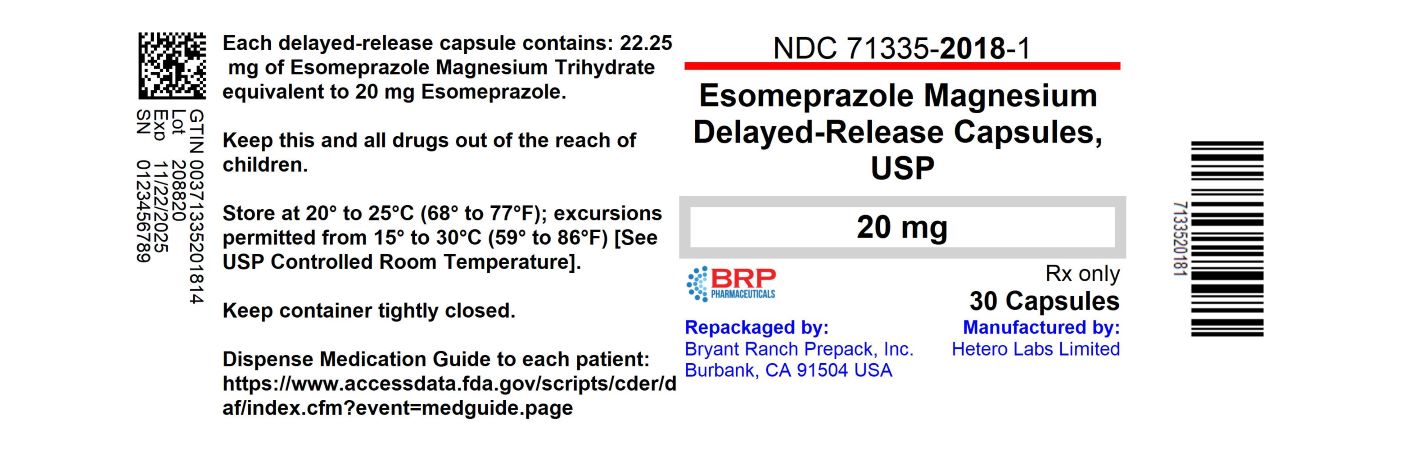
NDC 71335-2018-06: Esomeprazole Magnesium 20 mg Capsule, Delayed Release, Bottle of 120
This is a package of 120 capsules of Esomeprazole Magnesium 20 mg Capsule, Delayed Release from Bryant Ranch Prepack, first listed with the FDA Jun 2020 and currently FDA-listed.
NDC Database Record
One package, one record: these facts belong to NDC 71335-2018-6 alone.
- Record
- FDA NDC Directory package listing · Human prescription drug
- Code segments
- 71335 labeler · 2018 product · 6 package
- Package marketed since
- Feb 10, 2022
- Sample package
- No — commercial package
- Listing certified through
- Dec 31, 2026
- Barcode (UPC-A, from the NDC)
- 3 7133520186 9
- FDA record last changed
- Jul 24, 2026
Other active recalls for Esomeprazole Magnesium (different manufacturers) — 3 · tap to view
Identity & Classification
Regulatory identifiers FDA, NLM and CMS codes for this package
Drug-database identifiers Medi-Span GPI and First Databank GCN / HICL / AHFS classification
- GSN (GCN sequence number): 047525
- GCN: 12867
- HICL (First Databank): 021607
- AHFS class code: 56:28.36.00
- RxCUI (RxNorm): 606726
Where does this data come from?
- FDA openFDA NDC Directory · synced Nov 26, 2026
- FDA label on DailyMed · label index refreshed Nov 26, 2026
- RxNorm (NLM RxNav) · catalog refreshed Nov 26, 2026
- Medi-Span GPI (licensed)
- First Databank (licensed) · refreshed Nov 26, 2026
RxNorm Drug Class
This medicine belongs to the Proton Pump Inhibitor class.
Where does this data come from?
- RxClass (NLM) · catalog refreshed Nov 26, 2026
Clinical
- It lowers stomach acid. Prescription forms treat erosive esophagitis, GERD, and heartburn, help prevent NSAID-related stomach ulcers, treat H. pylori with antibiotics, and treat Zo...
- Over-the-counter esomeprazole isn't for immediate relief. It may take 1 to 4 days to work fully. Prescription courses for healing erosive esophagitis usually run 4 to 8 weeks.
- How long does esomeprazole take to work?
- Swallow the tablet whole with water before eating in the morning, once a day for 14 days. Don't crush or chew it. Don't use it longer than 14 days or repeat more often than every 4...
Patient education
Drug interactions
Supplement & herbal interactions
Some supplements/herbs that may interact with Esomeprazole Magnesium — tap one for details:
Esomeprazole Magnesium may be associated with lower levels of 9 nutrients — worth a chat with your pharmacist, not a cause for alarm.
Where does this data come from?
- MedlinePlus (NLM) · refreshed Nov 26, 2026
- FDA label on DailyMed · label index refreshed Nov 26, 2026
Ask a licensed pharmacist directly — free, answered by our team.
Pricing
A drug doesn't have one price. Each row is a different public payment system, and none is what you'd pay at the counter — that depends on your insurance. The ⓘ on each row explains what it measures.
| Price system | Per each | Per package |
|---|---|---|
| Retail pharmacies payNADAC · weekly | Not in the retail survey — common for institutional, discontinued, or low-volume packs. | |
| Medicaid paysCMS SDUD · 12 mo | No recent Medicaid claims on file for this NDC — rare and low-volume NDCs are suppressed in the public data. | |
| Medicare drug plans payPart D · Q2 2026 | $0.3386 | $40.63 / 120 capsules |
Where does this data come from?
- CMS NADAC weekly file
- CMS ASP pricing files · refreshed Nov 20, 2026
- CMS Medicaid State Drug Utilization Data · refreshed Nov 27, 2026
- CMS Part D plan pricing files · refreshed Nov 24, 2026
- VA National Acquisition Center price file
Packaging — All Sizes for This Product
| Package NDC | Description | Marketing start | Marketing end | Status |
|---|---|---|---|---|
| 71335-2018-01 71335-2018-1 Main listing | 30 CAPSULE, DELAYED RELEASE in 1 BOTTLE | 2022-02-10 | — | Active |
| 71335-2018-02 71335-2018-2 | 10 CAPSULE, DELAYED RELEASE in 1 BOTTLE | 2022-02-10 | — | Active |
| 71335-2018-03 71335-2018-3 | 60 CAPSULE, DELAYED RELEASE in 1 BOTTLE | 2022-02-10 | — | Active |
| 71335-2018-04 71335-2018-4 | 90 CAPSULE, DELAYED RELEASE in 1 BOTTLE | 2022-02-10 | — | Active |
| 71335-2018-05 71335-2018-5 | 42 CAPSULE, DELAYED RELEASE in 1 BOTTLE | 2022-02-10 | — | Active |
| 71335-2018-06 You're viewing this | 120 CAPSULE, DELAYED RELEASE in 1 BOTTLE | 2022-02-10 | — | Active |
| 71335-2018-07 71335-2018-7 | 180 CAPSULE, DELAYED RELEASE in 1 BOTTLE | 2022-02-10 | — | Active |
| 71335-2018-08 71335-2018-8 | 20 CAPSULE, DELAYED RELEASE in 1 BOTTLE | 2022-02-10 | — | Active |
You're viewing one of 8 pack sizes for this product.
Pack size FAQ
What quantity is in this package?
How does this package differ from NDC 71335-2018-02?
What NDC number is used to bill for this package of Esomeprazole Magnesium 20 mg Capsule, Delayed Release?
Therapeutic Equivalents
| Product | Labeler | Pack | NADAC/unit | TE | Status | Price vs. this |
|---|---|---|---|---|---|---|
| Esomeprazole Magnesium 20 mg 00378-2350-77 | Mylan | 90 capsules | $0.140 | AB | Availability likely | — |
| Esomeprazole Magnesium 20 mg 16714-0979-01 | NorthStar | 30 capsules | $0.140 | AB | Availability likely | — |
| Esomeprazole Magnesium 20 mg 31722-0664-10 | Camber | 1000 capsules | $0.140 | AB | Availability likely | — |
| Esomeprazole magnesium 20 mg 43547-0001-03 | Solco | 30 capsules | $0.140 | AB | Availability likely | — |
| Esomeprazole Magnesium 20 mg 43598-0509-10 | Dr. | 1000 capsules | $0.140 | AB | Availability likely | — |
| Esomeprazole Magnesium 20 mg 60687-0934-21 | American | 1 capsule | $0.140 | AB | Availability likely | — |
| Esomeprazole Magnesium 20 mg 62175-0820-32 | Lannett | 30 capsules | $0.140 | AB | Availability likely | — |
| Esomeprazole magnesium 20 mg 63304-0734-10 | Sun | 1000 capsules | $0.140 | AB | Availability likely | — |
| Esomeprazole magnesium 20 mg 64980-0632-03 | Rising | 30 capsules | $0.140 | AB | Availability likely | — |
| esomeprazole magnesium 20 mg 68382-0441-06 | Zydus | 30 capsules | $0.140 | AB | Availability likely | — |
| Esomeprazole Magnesium 20 mg 70069-0814-10 | Somerset | 1000 capsules | $0.140 | AB | Availability likely | — |
| esomeprazole magnesium 20 mg 70377-0055-11 | Biocon | 30 capsules | $0.140 | AB | Availability likely | — |
| Esomeprazole Magnesium 20 mg 82009-0033-10 | Quallent | 1000 capsules | $0.140 | AB | Availability likely | — |
| Esomeprazole Magnesium 20 mg 68462-0390-10 | Glenmark | 1000 capsules | $0.166 | — | Discontinued | — |
| Good Sense Esomeprazole Magnesium 20 mg 00113-0898-01 | L. | 14 capsules | $0.341 | — | Availability likely | — |
| Esomeprazole Magnesium 20 mg 16571-0880-41 | Rising | 14 capsules | $0.341 | — | Discontinued | — |
| Good Neighbor Pharmacy Esomeprazole Magnesium 20 mg 46122-0641-04 | Amerisource | 14 capsules | $0.341 | — | Availability likely | — |
| Esomeprazole Magnesium 20 mg 46122-0736-03 | Amerisource | 14 capsules | $0.341 | — | Availability likely | — |
| Esomeprazole Magnesium 20 mg 64980-0664-19 | Rising | 14 capsules | $0.341 | — | Availability likely | — |
| Esomeprazole Magnesium 20 mg 69230-0320-31 | Camber | 14 capsules | $0.341 | — | Availability likely | — |
| leader esomeprazole magnesium 20 mg 70000-0727-01 | Cardinal | 14 capsules | $0.341 | — | Availability likely | — |
| Esomeprazole Magnesium 20 mg 70000-0731-01 | LEADER/ | 14 capsules | $0.341 | — | Availability likely | — |
| Foster and Thrive Acid Reducer 20 mg 70677-1099-01 | Strategic | 14 capsules | $0.341 | — | Availability likely | — |
| Esomeprazole 20 mg 51660-0027-14 | Ohm | 14 capsules | $0.343 | — | FDA listed | — |
| Esomeprazole Magnesium 20 mg 43598-0407-27 | Dr. | 14 capsules | $0.349 | — | Availability likely | — |
| Esomeprazole Magnesium 20 mg 63868-0425-14 | CHAIN | 14 capsules | $0.361 | — | FDA listed | — |
| Nexium 20 mg 00186-5020-31 | AstraZeneca | 30 capsules | $8.766 | AB | Availability likely | — |
| good sense esomeprazole magnesium 20 mg 00113-0651-01 | L. | 14 capsules | — | — | Discontinued | — |
| good sense esomeprazole magnesium 20 mg 00113-2022-02 | L. | 14 capsules | — | — | FDA listed | — |
| Esomeprazole Magnesium 20 mg 00363-0508-05 | WALGREEN | 14 capsules | — | — | FDA listed | — |
| Esomeprazole Magnesium 20 mg 00363-0772-14 | WALGREENS | 14 capsules | — | — | FDA listed | — |
| Esomeprazole Magnesium 20 mg 00363-1699-01 | Walgreen | 14 capsules | — | — | FDA listed | — |
| Esomeprazole Magnesium 20 mg 00363-3298-01 | Walgreens | 14 capsules | — | — | FDA listed | — |
| esomeprazole magnesium 20 mg 00363-7223-01 | Walgreen | 14 capsules | — | — | FDA listed | — |
| Esomeprazole Magnesium Delayed Release 20 mg 00363-7810-41 | WALGREENS | 14 capsules | — | — | FDA listed | — |
| Nexium 24HR 20 mg 00573-2450-02 | Haleon | 2 capsules | — | — | FDA listed | — |
| Nexium 24HR ClearMinis 20 mg 00573-2452-02 | Haleon | 2 capsules | — | — | FDA listed | — |
| Up and Up Esomeprazole Magnesium 20 mg 11673-0753-01 | Target | 14 capsules | — | — | FDA listed | — |
| up and up esomeprazole magnesium 20 mg 11673-0898-01 | Target | 14 capsules | — | — | FDA listed | — |
| esomeprazole magnesium 20 mg 11822-0024-05 | Rite | 1 capsule | — | — | Discontinued | — |
| esomeprazole magnesium 20 mg 11822-0898-01 | Rite | 14 capsules | — | — | Discontinued | — |
| signature care esomeprazole magnesium 20 mg 21130-0088-01 | Safeway | 14 capsules | — | — | Discontinued | — |
| Esomeprazole Magnesium 20 mg 21130-0100-05 | Better | 14 capsules | — | — | FDA listed | — |
| Esomeprazole Magnesium 20 mg 21130-0257-41 | BETTER | 14 capsules | — | — | FDA listed | — |
| signature care esomeprazole magnesium 20 mg 21130-0714-01 | Safeway | 14 capsules | — | — | Discontinued | — |
| Esomeprazole magnesium 20 mg 21130-0718-41 | BETTER | 14 capsules | — | — | FDA listed | — |
| Esomeprazole 20 mg 21130-0926-14 | Safeway, | 14 capsules | — | — | FDA listed | — |
| Esomeprazole Magnesium Delayed-Release Capsules, 20 mg 25000-0075-76 | MARKSANS | 14 capsules | — | — | FDA listed | — |
| Esomeprazole Magnesium Delayed-Release 20 mg (OTC) 25000-0088-76 | MARKSANS | 14 capsules | — | — | FDA listed | — |
| Esomeprazole Magnesium Delayed Release 20 mg mini 25000-0096-76 | MARKSANS | 14 capsules | — | — | FDA listed | — |
| Esomeprazole Magnesium Delayed-Release 20 mg mini 25000-0112-76 | MARKSANS | 14 capsules | — | — | FDA listed | — |
| Esomeprazole Magnesium 20 mg 30142-0261-14 | The | 14 capsules | — | — | FDA listed | — |
| esomeprazole magnesium 20 mg 30142-0273-01 | Kroger | 14 capsules | — | — | FDA listed | — |
| Esomeprazole Magnesium 20 mg 30142-0528-14 | KROGER | 14 capsules | — | — | FDA listed | — |
| esomeprazole 20 mg 30142-0989-28 | THE | 14 capsules | — | — | FDA listed | — |
| esomeprazole 20 mg 33342-0306-07 | Macleods | 30 capsules | — | — | FDA listed | — |
| topcare esomeprazole magnesium 20 mg 36800-0627-01 | Topco | 14 capsules | — | — | FDA listed | — |
| Esomeprazole Magnesium 20 mg 37808-0115-14 | HEB | 14 capsules | — | — | FDA listed | — |
| Esomeprazole Magnesium 20 mg 37808-0364-14 | H | 14 capsules | — | — | FDA listed | — |
| Esomeprazole Magnesium 20 mg 37808-0719-01 | H | 14 capsules | — | — | FDA listed | — |
| esomeprazole magnesium 20 mg 41250-0727-01 | Meijer | 14 capsules | — | — | Discontinued | — |
| esomeprazole magnesium 20 mg 41250-0900-01 | Meijer | 14 capsules | — | — | FDA listed | — |
| careone esomeprazole magnesium 20 mg 41520-0727-01 | American | 14 capsules | — | — | FDA listed | — |
| esomeprazole magnesium 20 mg 42507-0774-42 | HyVee | 14 capsules | — | — | FDA listed | — |
| esomeprazole magnesium 20 mg 42507-0898-42 | HyVee | 14 capsules | — | — | FDA listed | — |
| Esomeprazole Magnesium 20 mg 43598-0067-42 | Dr. | 14 capsules | — | — | FDA listed | — |
| Esomeprazole Magnesium 20 mg 43598-0327-27 | Dr. | 14 capsules | — | — | FDA listed | — |
| Esomeprazole Magnesium 20 mg 43598-0812-14 | Dr. | 14 capsules | — | — | Discontinued | — |
| Esomeprazole Magnesium 20 mg 43598-0926-28 | Dr. | 14 capsules | — | — | FDA listed | — |
| Esomeprazole Magnesium 20 mg 45865-0163-30 | Medsource | 30 capsules | — | AB | FDA listed | — |
| Esomeprazole Magnesium 20 mg 46122-0821-59 | Amerisource | 14 capsules | — | — | FDA listed | — |
| equate esomeprazole magnesium 20 mg 49035-0921-14 | Wal-Mart | 14 capsules | — | — | FDA listed | — |
| Esomeprazole Magnesium 20 mg 49035-0980-05 | Wal-Mart | 14 capsules | — | — | FDA listed | — |
| Esomeprazole magnesium 20 mg 49483-0718-41 | TIME | 14 capsules | — | — | FDA listed | — |
| Nexium 24HR 20 mg 50090-1492-00 | A-S | 14 capsules | — | — | FDA listed | — |
| Esomeprazole Magnesium 20 mg 50090-6198-00 | A-S | 30 capsules | — | AB | FDA listed | — |
| Esomeprazole Magnesium 20 mg 50090-6213-00 | A-S | 30 capsules | — | — | FDA listed | — |
| Esomeprazole Magnesium 20 mg 51316-0220-01 | CVS | 14 capsules | — | — | FDA listed | — |
| Esomeprazole 20 mg 51316-0715-14 | CVS | 14 capsules | — | — | FDA listed | — |
| Esomeprazole magnesium 20 mg 51407-0742-10 | Golden | 1000 capsules | — | AB | FDA listed | — |
| Esomeprazole Magnesium 20 mg 53041-0666-07 | Guardian | 14 capsules | — | — | FDA listed | — |
| Esomeprazole Magnesium 20 mg 53943-0039-14 | DISCOUNT | 14 capsules | — | — | FDA listed | — |
| Esomeprazole Magnesium 20 mg 53943-0527-14 | Discount | 14 capsules | — | — | FDA listed | — |
| Exchange Select Esomeprazole Magnesium 20 mg 55301-0898-01 | Army | 14 capsules | — | — | FDA listed | — |
| Esomeprazole Magnesium 20 mg 55319-0051-03 | Family | 14 capsules | — | — | FDA listed | — |
| dg health esomeprazole magnesium 20 mg 55910-0250-01 | Dolgencorp, | 14 capsules | — | — | FDA listed | — |
| DG Health Esomeprazole Magnesium 20 mg 55910-0593-01 | Dolgencorp | 14 capsules | — | — | FDA listed | — |
| dg health esomeprazole magnesium 20 mg 55910-0640-01 | Dolgencorp | 14 capsules | — | — | FDA listed | — |
| Esomeprazole Magnesium 20 mg 56062-0020-06 | Publix | 14 capsules | — | — | FDA listed | — |
| Esomeprazole Magnesium 20 mg 56062-0898-01 | Publix | 14 capsules | — | — | FDA listed | — |
| Esomeprazole Magnesium 20 mg 57483-0225-42 | INNOVUS | 14 capsules | — | — | FDA listed | — |
| Esomeprazole 20 mg 57483-0900-42 | INNOVUS | 14 capsules | — | — | FDA listed | — |
| Esomeprazole Magnesium 20 mg 58602-0707-05 | Aurohealth | 14 capsules | — | — | FDA listed | — |
| Esomeprazole Magnesium 20 mg 58602-0809-05 | Aurohealth | 14 capsules | — | — | FDA listed | — |
| Esomeprazole Magnesium 20 mg 58602-0822-05 | Aurohealth | 14 capsules | — | — | FDA listed | — |
| Esomeprazole Magnesium 20 mg 58602-0846-05 | Aurohealth | 14 capsules | — | — | FDA listed | — |
| Esomeprazole Magnesium 20 mg 58602-0896-62 | Aurohealth | 14 capsules | — | — | FDA listed | — |
| Esomeprazole Magnesium 20 mg 59651-0561-50 | Aurobindo | 50000 capsules | — | AB | FDA listed | — |
| Esomeprazole Magnesium 20 mg 60000-0109-03 | Ahold | 14 capsules | — | — | FDA listed | — |
| Esomeprazole Magnesium 20 mg 63187-0964-30 | Proficient | 30 capsules | — | AB | FDA listed | — |
| Esomeprazole Magnesium 20 mg 63941-0971-03 | Best | 14 capsules | — | — | FDA listed | — |
| Esomeprazole 20 mg 63941-0999-14 | VALU | 14 capsules | — | — | FDA listed | — |
| kirkland signature esomeprazole magnesium 20 mg 63981-0898-03 | Costco | 14 capsules | — | — | FDA listed | — |
| Esomeprazole Magnesium 20 mg 65862-0783-01 | Aurobindo | 100 capsules | — | AB | FDA listed | — |
| Esomeprazole magnesium 20 mg 67877-0478-05 | Ascend | 500 capsules | — | AB | FDA listed | — |
| Esomeprazole magnesium 20 mg 67877-0571-05 | Ascend | 500 capsules | — | AB | FDA listed | — |
| esomeprazole magnesium 20 mg 68071-3419-06 | NuCare | 60 capsules | — | AB | FDA listed | — |
| Esomeprazole Magnesium 20 mg 68071-3735-03 | NuCare | 30 capsules | — | AB | FDA listed | — |
| members mark esomeprazole magnesium 20 mg 68196-0898-03 | Sam's | 14 capsules | — | — | FDA listed | — |
| berkley and jensen heartburn treatment 20 mg 68391-0898-03 | BJWC | 14 capsules | — | — | FDA listed | — |
| Esomeprazole magnesium 20 mg 68788-4014-09 | Preferred | 90 capsules | — | AB | FDA listed | — |
| Esomeprazole Magnesium 20 mg 68788-8511-01 | Preferred | 100 capsules | — | AB | FDA listed | — |
| Esomeprazole Magnesium 20 mg 69168-0472-14 | Allegiant | 14 capsules | — | — | FDA listed | — |
| Esomeprazole magnesium 20 mg 69434-0012-01 | Zhejiang | 30 capsules | — | AB | FDA listed | — |
| Esomeprazole Magnesium 20 mg 69618-0073-42 | Reliable | 14 capsules | — | — | FDA listed | — |
| Riopan 20 mg 69729-0791-14 | OPMX | 14 capsules | — | — | FDA listed | — |
| Esomeprazole Magnesium 20 mg 69842-0248-06 | CVS | 14 capsules | — | — | FDA listed | — |
| esomeprazole magnesium 20 mg 69842-0703-01 | CVS | 14 capsules | — | — | FDA listed | — |
| esomeprazole magnesium 20 mg 69842-0898-01 | CVS | 14 capsules | — | — | FDA listed | — |
| esomeprazole magnesium 20 mg 69844-0115-01 | Graviti | 14 capsules | — | — | FDA listed | — |
| Esomeprazole Magnesium 20 mg 70000-0738-01 | LEADER/ | 14 capsules | — | — | FDA listed | — |
| Esomeprazole magnesium 20 mg 70010-0133-03 | Granules | 30 capsules | — | AB | FDA listed | — |
| esomeprazole magnesium 20 mg 70771-1493-00 | Zydus | 1000 capsules | — | AB | FDA listed | — |
| Esomeprazole magnesium 20 mg 71205-0706-30 | Proficient | 30 capsules | — | AB | FDA listed | — |
| Esomeprazole Magnesium 20 mg 71335-0807-01 | Bryant | 30 capsules | — | AB | FDA listed | — |
| Esomeprazole Magnesium 20 mg 71335-1170-01 | Bryant | 30 capsules | — | AB | FDA listed | — |
| esomeprazole magnesium 20 mg 71335-1368-01 | Bryant | 30 capsules | — | AB | FDA listed | — |
| Esomeprazole Magnesium 20 mgthis 71335-2018-06 | Bryant | 120 capsules | — | AB | FDA listed | — |
| Esomeprazole Magnesium 20 mg 71335-2505-01 | Bryant | 30 capsules | — | AB | FDA listed | — |
| Esomeprazole magnesium 20 mg 71335-9678-01 | Bryant | 30 capsules | — | AB | FDA listed | — |
| esomeprazole magnesium 20 mg 71335-9713-01 | Bryant | 30 capsules | — | AB | FDA listed | — |
| Esomeprazole DR 20 mg 72189-0381-30 | Direct_Rx | 30 capsules | — | AB | FDA listed | — |
| Basic Care Esomeprazole Magnesium 20 mg 72288-0560-01 | Amazon.com | 14 capsules | — | — | FDA listed | — |
| basic care esomeprazole magnesium 20 mg 72288-0700-03 | Amazon.com | 14 capsules | — | — | FDA listed | — |
| basic care esomeprazole magnesium 20 mg 72288-0898-01 | Amazon.com | 14 capsules | — | — | FDA listed | — |
| Esomeprazole Magnesium 20 mg 72476-0500-03 | Retail | 14 capsules | — | — | FDA listed | — |
| Esomeprazole Magnesium 20 mg 72559-0011-06 | LITTLE | 14 capsules | — | — | FDA listed | — |
| esomeprazole magnesium 20 mg 72657-0124-42 | GLENMARK | 14 capsules | — | — | FDA listed | — |
| esomeprazole magnesium 20 mg 72657-0127-42 | GLENMARK | 14 capsules | — | — | FDA listed | — |
| Esomeprazole Magnesium 20 mg 72789-0352-30 | PD-Rx | 30 capsules | — | AB | FDA listed | — |
| Esomeprazole 20 mg 73581-0013-42 | YYBA | 14 capsules | — | — | FDA listed | — |
| Esomeprazole Magnesium 20 mg 73581-0014-42 | YYBA | 42 capsules | — | — | FDA listed | — |
| Esomeprazole magnesium 20 mg 76420-0226-30 | Asclemed | 30 capsules | — | AB | FDA listed | — |
| Esomeprazole Magnesium 20 mg 76420-0904-00 | Asclemed | 1000 capsules | — | AB | FDA listed | — |
| esomeprazole magnesium 20 mg 79481-0411-00 | Meijer, | 14 capsules | — | — | FDA listed | — |
| equate esomeprazole magnesium 20 mg 79903-0293-42 | WALMART | 14 capsules | — | — | FDA listed | — |
| Esomeprazole Magnesium 20 mg 79903-0382-42 | Walmart | 14 capsules | — | — | FDA listed | — |
| Equate Esomeprazole Magnesium 20 mg 79903-0419-42 | WALMART | 14 capsules | — | — | FDA listed | — |
| Esomeprazole Magnesium DR 20 mg 80425-0111-01 | Advanced | 30 capsules | — | AB | FDA listed | — |
| Esomeprazole Magnesium 20 mg 80425-0419-01 | Advanced | 30 capsules | — | AB | FDA listed | — |
| Esomeprazole Magnesium 20 mg 80425-0420-01 | Advanced | 30 capsules | — | AB | FDA listed | — |
| Esomeprazole Magnesium 20 mg 83324-0200-14 | CHAIN | 14 capsules | — | — | FDA listed | — |
| 24 HOUR Esomeprazole Magnesium 20 mg 85828-0718-45 | Grocery | 14 capsules | — | — | FDA listed | — |
| Esomeprazole Magnesium 20 mg 37808-0646-41 | H-E-B | 14 capsules | — | — | FDA listed | — |
| Esomeprazole Magnesium 20 mg 50090-7990-00 | A-S | 30 capsules | — | AB | FDA listed | — |
| Esomeprazole 20 mg 57896-0740-42 | GERI-CARE | 14 capsules | — | — | FDA listed | — |
| Esomeprazole Magnesium 20 mg 60760-0877-60 | St. | 60 capsules | — | AB | FDA listed | — |
| Esomeprazole Magnesium 20 mg 70518-4776-00 | REMEDYREPACK | 90 capsules | — | AB | FDA listed | — |
Where does this data come from?
- FDA openFDA NDC Directory · synced Nov 26, 2026
- FDA Orange Book · refreshed Nov 6, 2026
- CMS NADAC weekly file
Availability & Generic Status
This product is an FDA-approved generic. Other versions of the same drug are listed under Therapeutic equivalents, least expensive first.
Where does this data come from?
- FDA Orange Book · refreshed Nov 6, 2026
What It Looks Like
Where does this data come from?
- FDA label on DailyMed · label index refreshed Nov 26, 2026
Inactive Ingredients / Excipients
Inactive ingredients, also called excipients, are components of the drug product other than the active ingredient. They may include fillers, dyes, coatings, preservatives, flavors, or other formulation ingredients.
Avoiding an ingredient? See Esomeprazole inactive ingredients by manufacturer: every current product's list side by side, so you can ask your pharmacy for the version that does not list it.
Tap an ingredient (hover on desktop) to see what it is and why it’s used.
-
UNII 5138Q19F1X
Ammonia is a colorless gas made from nitrogen and hydrogen. It's used in medicines as a pH buffer to maintain the correct acidity level and help keep the product stable.
-
UNII 92RU3N3Y1O
Dimethicone is a silicone-based oil that acts as an anti-foaming agent and lubricant in medicines. It reduces gas bubbles in liquid formulations and helps coat and protect the stomach lining when ingested.
-
UNII XM0M87F357
A dark iron oxide compound that gives medicines their black or dark color. It's used as a colorant in tablets and capsules to help identify the product and make it visually distinctive.
-
UNII 2G86QN327L
Gelatin is a protein derived from animal collagen, commonly used in medicines as a gelling agent and capsule material. It helps create soft or hard capsule shells that hold and release medication, and can also thicken liquid formulations.
-
UNII 230OU9XXE4
A waxy substance made from glycerin and stearic acid that acts as an emulsifier to blend oily and watery ingredients together. It also helps thicken and stabilize the medicine's texture.
-
UNII RFW2ET671P
Hydroxypropyl cellulose is a plant-derived thickening agent made from cellulose. It acts as a binder to hold tablet ingredients together and as a film-former to coat tablets or control how fast the medicine releases.
-
UNII R75537T0T4
Hypromellose 2910 is a plant-derived thickening agent made from cellulose. It serves as a binder that holds tablet ingredients together, a film-coating for pills, and a viscosity controller in liquids.
-
UNII 70097M6I30
Magnesium stearate is a salt made from magnesium and stearic acid, a fatty substance. It's used in tablets and capsules as a lubricant and glidant to help ingredients flow smoothly during manufacturing and prevent sticking.
-
UNII NX76LV5T8J
A synthetic plastic polymer made from methacrylic acid and ethyl acrylate. It's used as a coating or binder to control how and where the medicine dissolves in your digestive system.
-
UNII 6OZP39ZG8H
Polysorbate 80 is a synthetic emulsifier derived from sorbitol and oleic acid. It helps mix oil and water-based ingredients together in medications and improves how the product disperses in the body.
-
UNII WZH3C48M4T
Potassium hydroxide is a strong alkaline chemical used in medicines to adjust and maintain the pH level of liquid formulations, helping keep the product stable and the active ingredients effective.
-
UNII 6DC9Q167V3
Propylene glycol is a clear liquid derived from petroleum or vegetable sources. It acts as a solvent, humectant, and preservative in medicines, helping dissolve active ingredients and maintain product stability.
-
UNII 46N107B71O
Shellac is a natural resin secreted by the lac beetle. It's used as a coating on tablets and capsules to control how quickly the medicine dissolves and to improve appearance and stability.
-
UNII 368GB5141J
A detergent and foaming agent derived from coconut or palm oil. In medications, it helps break down and mix oil and water-based ingredients, aids in tablet disintegration, and improves how the drug dissolves and spreads in the mouth or digestive system.
-
UNII O8232NY3SJ
A plant-based carbohydrate derived from corn kernels. It acts as a filler to add bulk, a binder to hold ingredients together, and a disintegrant to help the tablet break apart in your stomach for absorption.
-
UNII C151H8M554
A natural sugar derived from sugar cane or sugar beets. It's used as a sweetener, filler, and binder to improve taste, add bulk, and help hold tablet or capsule ingredients together.
-
UNII 7SEV7J4R1U
A powder made from a naturally occurring mineral. In medicines, talc works as a glidant and anti-caking agent, helping tablets and capsules flow smoothly during manufacturing and preventing clumping.
-
UNII 15FIX9V2JP
Titanium dioxide is a bright white mineral powder commonly used as a colorant and opacifying agent. It makes pills and tablets white or lighter in color and helps make coatings non-transparent.
-
UNII 8Z96QXD6UM
Triethyl citrate is a clear liquid derived from citric acid. It acts as a plasticizer and solvent in tablet coatings and film formulations, helping the coating remain flexible and adhere properly to the medicine.
19 inactive ingredients listed in the exact product block matched to this NDC.
Where does this data come from?
ingredient classCode="IACT" elements from the exact product block matched by this NDC. Label-section narrative from DailyMed / the openFDA label index is shown separately when available.- FDA label on DailyMed · label index refreshed Nov 26, 2026
- FDA openFDA NDC Directory · synced Nov 26, 2026
Inactive ingredient FAQ
Are inactive ingredients the same for every manufacturer?
Why might an inactive ingredient be missing?
Can inactive ingredients matter?
Manufacturer & Labeler
More NDCs from Bryant Ranch Prepack labeler code 71335
- Chlorzoxazone 500 mg Tablet NDC 71335-2009-1
- Bisacodyl 5 mg Tablet, Delayed Release NDC 71335-2010-0
- Memantine Hydrochloride 5 mg Tablet NDC 71335-2013-1
- Phenazopyridine Hydrochloride 100 mg Tablet NDC 71335-2014-1
- Fenofibrate 145 mg Tablet, Film Coated NDC 71335-2016-1
- Duloxetine 30 mg Capsule, Delayed Release NDC 71335-2017-1
- Celecoxib 100 mg Capsule NDC 71335-2019-1
- Fluoxetine 20 mg Capsule NDC 71335-2020-1
- Benzonatate 200 mg Capsule NDC 71335-2021-1
- Donepezil Hydrochloride 5 mg Tablet, Film Coated NDC 71335-2022-1
- Carvedilol 25 mg Tablet, Film Coated NDC 71335-2023-1
- OMEGA-3-ACID Ethyl Esters 1 g Capsule, Liquid Filled NDC 71335-2024-1
Where does this data come from?
- FDA openFDA NDC Directory · synced Nov 26, 2026
- Drugs@FDA
Full Prescribing Information FDA SPL
Indications and Usage
1 INDICATIONS AND USAGE Esomeprazole magnesium delayed-release capsule, is a proton pump inhibitor indicated for the following: • Treatment of gastroesophageal reflux disease (GERD) (1.1) • Risk reduction of NSAID-associated gastric ulcer (1.2) • H. pylori eradication to reduce the risk of duodenal ulcer recurrence. (1.3) • Pathological hypersecretory conditions, including Zollinger-Ellison syndrome (1.4)
1.1Treatment of Gastroesophageal Reflux Disease (GERD) Healing of Erosive Esophagitis Esomeprazole magnesium delayed-release capsules are indicated for the short-term treatment (4 to 8 weeks) in the healing and symptomatic resolution of diagnostically confirmed erosive esophagitis. For those patients who have not healed after 4 to 8 weeks of treatment, an additional 4 to 8 week course of esomeprazole magnesium delayed-release capsules may be considered. Maintenance of Healing of Erosive Esophagitis Esomeprazole magnesium delayed-release capsules are indicated to maintain symptom resolution and healing of erosive esophagitis.
Controlled studies do not extend beyond 6 months. Symptomatic Gastroesophageal Reflux Disease Esomeprazole magnesium delayed-release capsules are indicated for short-term treatment (4 to 8 weeks) of heartburn and other symptoms associated with GERD in adults and children 1 year or older.
1.2Risk Reduction of NSAID-Associated Gastric Ulcer Esomeprazole magnesium delayed-release capsules are indicated for the reduction in the occurrence of gastric ulcers associated with continuous NSAID therapy in patients at risk for developing gastric ulcers. Patients are considered to be at risk due to their age (≥ 60) and/or documented history of gastric ulcers. Controlled studies do not extend beyond 6 months.
1.3H. pylori Eradication to Reduce the Risk of Duodenal Ulcer Recurrence Triple Therapy (esomeprazole magnesium delayed-release capsules plus amoxicillin and clarithromycin): Esomeprazole magnesium delayed-release capsules, in combination with amoxicillin and clarithromycin, is indicated for the treatment of patients with H. pylori infection and duodenal ulcer disease (active or history of within the past 5 years) to eradicate H. pylori. Eradication of H. pylori has been shown to reduce the risk of duodenal ulcer recurrence [see Dosage and Administration (2) and Clinical Studies (14)].
In patients who fail therapy, susceptibility testing should be done. If resistance to clarithromycin is demonstrated or susceptibility testing is not possible, alternative antimicrobial therapy should be instituted [see Clinical Pharmacology (12.4) and the prescribing information for clarithromycin].
1.4Pathological Hypersecretory Conditions Including Zollinger-Ellison Syndrome Esomeprazole magnesium delayed-release capsules are indicated for the long-term treatment of pathological hypersecretory conditions, including Zollinger-Ellison Syndrome.
Dosage and Administration
2 DOSAGE AND ADMINISTRATION Esomeprazole magnesium is supplied as delayed-release capsules for oral administration. The recommended dosages are outlined in Table 1. Esomeprazole magnesium delayed-release capsules should be taken at least one hour before meals.
The duration of proton pump inhibitor administration should be based on available safety and efficacy data specific to the defined indication and dosing frequency, as described in the prescribing information, and individual patient medical needs. Proton pump inhibitor treatment should only be initiated and continued if the benefits outweigh the risks of treatment. Table 1: Recommended Dosage Schedule for Esomeprazole Magnesium Delayed-Release Capsules Indication Dose Frequency Gastroesophageal Reflux Disease (GERD) Healing of Erosive Esophagitis 20 mg or 40 mg Once Daily for 4 to 8 Weeks 1 Maintenance of Healing of Erosive Esophagitis 20 mg Once Daily 2 Symptomatic Gastroesophageal Reflux Disease 20 mg Once Daily for 4 Weeks 3 Pediatric GERD 12 to 17 Year Olds Healing of Erosive Esophagitis 20 mg or 40 mg Once Daily for 4 to 8 Weeks Symptomatic GERD 20 mg Once Daily for 4 Weeks 1 to 11 Year Olds 4 Short-term Treatment of Symptomatic GERD 10 mg Once Daily for up to 8 Weeks Healing of Erosive Esophagitis weight < 20 kg 10 mg Once Daily for 8 Weeks weight ≥ 20 kg 10 mg or 20 mg Once Daily for 8 Weeks Risk Reduction of NSAID-Associated Gastric Ulcer 20 mg or 40 mg Once Daily for up to 6 months 2 H. pylori Eradication to Reduce the Risk of Duodenal Ulcer Recurrence Triple Therapy: Esomeprazole 40 mg Once Daily for 10 Day Amoxicillin 1000 mg Twice Daily for 10 Days Clarithromycin 500 mg Twice Daily for 10 Days Pathological Hypersecretory Conditions Including Zollinger-Ellison Syndrome 40 mg 6 Twice Daily 7 1 [See Clinical Studies (14.1)] The majority of patients are healed within 4 to 8 weeks.
For patients who do not heal after 4 to 8 weeks, an additional 4 to 8 weeks of treatment may be considered. 2 Controlled studies did not extend beyond six months. 3 If symptoms do not resolve completely after 4 weeks, an additional 4 weeks of treatment may be considered.
4 Doses over 1 mg/kg/day have not been studied. 5 . Doses over 1.33 mg/kg/day have not been studied.
6 The dosage of esomeprazole magnesium delayed-release capsules in patients with pathological hypersecretory conditions varies with the individual patient. Dosage regimens should be adjusted to individual patient needs. 7 Doses up to 240 mg daily have been administered [see Drug Interactions (7)] .
Please refer to amoxicillin and clarithromycin prescribing information for Contraindications, Warnings, and dosing in elderly and renally-impaired patients. Specific Populations Hepatic Insufficiency In patients with mild to moderate liver impairment (Child-Pugh Classes A and B), no dosage adjustment is necessary. For patients with severe liver impairment (Child-Pugh Class C), a dose of 20 mg of esomeprazole magnesium delayed-release capsules should not be exceeded [see Clinical Pharmacology (12.3)] .
Directions for use specific to the route and available methods of administration for each of these dosage forms are presented in Table 2. Table 2: Administration Options Administration Options (See text following table for additional instructions.) Dosage Form Route Options Delayed-Release Capsules Oral Capsule can be swallowed whole. -or- Capsule can be opened and mixed with applesauce. Delayed-Release Capsules Nasogastric Tube Capsule can be opened and the intact granules emptied into a syringe and delivered through the nasogastric tube.
Esomeprazole Magnesium Delayed-Release Capsules Esomeprazole Magnesium Delayed-Release Capsules should be swallowed whole. Alternatively, for patients who have difficulty swallowing capsules, one tablespoon of applesauce can be added to an empty bowl and the esomeprazole magnesium delayed-release capsule can be opened, and the granules inside the capsule carefully emptied onto the applesauce. Th… [Excerpted — this section continues on DailyMed.]
Dosage Forms and Strengths
3 DOSAGE FORMS AND STRENGTHS Esomeprazole magnesium delayed-release capsules USP, 20 mg are white opaque size '4' hard gelatin capsule imprinted with "H" on cap and 'E2' on body filled with off white to pale yellow pellets. Esomeprazole magnesium delayed-release capsules USP, 40 mg are white opaque size '3' hard gelatin capsule imprinted with "H" on cap and 'E3' on body filled with off white to pale yellow pellets. • Esomeprazole Magnesium Delayed-Release Capsules, USP: 20 mg and 40 mg (3)
Contraindications
4 CONTRAINDICATIONS Esomeprazole magnesium delayed-release capsules are contraindicated in patients with known hypersensitivity to substituted benzimidazoles or to any component of the formulation. Hypersensitivity reactions may include anaphylaxis, anaphylactic shock, angioedema, bronchospasm, acute interstitial nephritis, and urticaria [see Adverse Reactions (6)] . For information about contraindications of antibacterial agents (clarithromycin and amoxicillin) indicated in combination with esomeprazole magnesium delayed-release capsules, refer to the CONTRAINDICATIONS section of their package inserts.
Patients with known hypersensitivity to proton pump inhibitors (PPIs) (angioedema and anaphylaxis have occurred). (4)
Warnings and Cautions
5 WARNINGS AND PRECAUTIONS • Gastric Malignancy : In adults, symptomatic response does not preclude the presence of gastric malignancy. Consider additional follow-up and diagnostic testing. (5.1) • Acute Interstitial Nephritis : Observed in patients taking PPIs.
(5.2) • Clostridium difficile -Associated Diarrhea : PPI therapy may be associated with increased risk. (5.3) • Bone Fracture : Long-term and multiple daily dose PPI therapy may be associated with an increased risk for osteoporosis-related fractures of the hip, wrist or spine. (5.4) • Cutaneous and Systemic Lupus Erythematosus : Mostly cutaneous; new onset or exacerbation of existing disease; discontinue esomeprazole magnesium delayed-release capsules and refer to specialist for evaluation.
(5.5) • Interaction with Clopidogrel : Avoid concomitant use of esomeprazole magnesium delayed-release capsules. (5.6) • Cyanocobalamin (Vitamin B-12) Deficiency : Daily long-term use (e.g., longer than 3 years) may lead to malabsorption or a deficiency of cyanocobalamin. (5.7) • Hypomagnesemia : Reported rarely with prolonged treatment with PPIs.
(5.8) • Interaction with St. John’s Wort or Rifampin : Avoid concomitant use of esomeprazole magnesium delayed-release capsules. (5.9 , 7.3) • Interactions with Diagnostic Investigations for Neuroendocrine Tumors : Increased chromogranin A (CgA) levels may interfere with diagnostic investigations for neuroendocrine tumors, temporarily stop esomeprazole magnesium delayed-release capsules at least 14 days before assessing CgA levels.
(5.10, 12.2) • Interaction with Methotrexate : Concomitant use with PPIs may elevate and/or prolong serum concentrations of methotrexate and/or its metabolite, possibly leading to toxicity. With high dose methotrexate administration, consider temporary withdrawal of esomeprazole magnesium delayed-release capsules. (5.11 , 7.7) • Fundic Gland Polyps: Risk increases with long-term use, especially beyond one year.
Use the shortest duration of therapy. ( 5.12 )
5.1Presence of Gastric Malignancy In adults, symptomatic response to therapy with esomeprazole magnesium delayed-release capsules does not preclude the presence of gastric malignancy. Consider additional follow-up and diagnostic testing in adult patients who have a suboptimal response or an early symptomatic relapse after completing treatment with a PPI. In older patients, also consider an endoscopy.
5.2Acute Interstitial Nephritis Acute interstitial nephritis has been observed in patients taking PPIs including esomeprazole magnesium delayed-release capsules. Acute interstitial nephritis may occur at any point during PPI therapy and is generally attributed to an idiopathic hypersensitivity reaction. Discontinue esomeprazole magnesium delayed-release capsules if acute interstitial nephritis develops [see Contraindications (4)].
5.3Clostridium difficile-Associated Diarrhea Published observational studies suggest that PPI therapy like esomeprazole magnesium delayed-release capsules may be associated with an increased risk of Clostridium difficile-associated diarrhea, especially in hospitalized patients. This diagnosis should be considered for diarrhea that does not improve [ see Adverse Reactions (6.2) ]. Patients should use the lowest dose and shortest duration of PPI therapy appropriate to the condition being treated.
Clostridium difficile- associated diarrhea (CDAD) has been reported with use of nearly all antibacterial agents. For more information specific to antibacterial agents (clarithromycin and amoxicillin) indicated for use in combination with esomeprazole magnesium delayed-release capsules, refer to Warnings and Precautions section of the corresponding prescribing information.
5.4Bone Fracture Several published observational studies suggest that proton pump inhibitor (PPI) therapy may be associated with an increased risk for osteoporosis-related fractures of the hip, wrist, or spine. The risk of fracture was increased in patients who received high… [Excerpted — this section continues on DailyMed.]
Adverse Reactions
6 ADVERSE REACTIONS The following serious adverse reactions are described below and elsewhere in labeling: • Acute Interstitial Nephritis [see Warnings and Precautions (5.2)] • Clostridium difficile -Associated Diarrhea [see Warnings and Precautions (5.3)] • Bone Fracture [see Warnings and Precautions (5.4)] • Cutaneous and Systemic Lupus Erythematosus [see Warnings and Precautions (5.5)] • Cyanocobalamin (Vitamin B-12) Deficiency [see Warnings and Precautions (5.7)] • Hypomagnesemia [see Warnings and Precautions (5.8)] • Fundic Gland Polyps [see Warnings and Precautions ( 5.12 )] Most common adverse reactions (6.1) : • Adults (≥ 18 years) (incidence > 1%) are headache, diarrhea, nausea, flatulence, abdominal pain, constipation, and dry mouth • Pediatric (1 to 17 years) (incidence > 2%) are headache, diarrhea, abdominal pain, nausea, and somnolence.
To report SUSPECTED ADVERSE REACTIONS, contact Hetero Labs Limited at 1-866-495-1995 or FDA at 1-800-FDA-1088 or www.fda.gov/medwatch .
6.1Clinical Trials Experience Because clinical trials are conducted under widely varying conditions, adverse reaction rates observed in the clinical trials of a drug cannot be directly compared to rates in the clinical trials of another drug and may not reflect the rates observed in practice. Adults The safety of esomeprazole magnesium delayed-release capsules were evaluated in over 15,000 patients (aged 18 to 84 years) in clinical trials worldwide including over 8,500 patients in the United States and over 6,500 patients in Europe and Canada.
Over 2,900 patients were treated in long-term studies for up to 6 to 12 months. In general, esomeprazole magnesium delayed-release capsules were well tolerated in both short and long-term clinical trials. The safety in the treatment of healing of erosive esophagitis was assessed in four randomized comparative clinical trials, which included 1,240 patients on esomeprazole magnesium delayed-release capsules 20 mg, 2,434 patients on esomeprazole magnesium delayed-release capsules 40 mg, and 3,008 patients on omeprazole 20 mg daily.
The most frequently occurring adverse reactions (≥1%) in all three groups were headache (5.5, 5, and 3.8, respectively) and diarrhea (no difference among the three groups). Nausea, flatulence, abdominal pain, constipation, and dry mouth occurred at similar rates among patients taking esomeprazole magnesium delayed-release capsules or omeprazole. Additional adverse reactions that were reported as possibly or probably related to esomeprazole magnesium delayed-release capsules with an incidence <1% are listed below by body system: Body as a Whole : abdomen enlarged, allergic reaction, asthenia, back pain, chest pain, substernal chest pain, facial edema, peripheral edema, hot flushes, fatigue, fever, flu-like disorder, generalized edema, leg edema, malaise, pain, rigors; Cardiovascular : flushing, hypertension, tachycardia; Endocrine : goiter; Gastrointestinal : bowel irregularity, constipation aggravated, dyspepsia, dysphagia, dysplasia GI, epigastric pain, eructation, esophageal disorder, frequent stools, gastroenteritis, GI hemorrhage, GI symptoms not otherwise specified, hiccup, melena, mouth disorder, pharynx disorder, rectal disorder, serum gastrin increased, tongue disorder, tongue edema, ulcerative stomatitis, vomiting; Hearing : earache, tinnitus; Hematologic : anemia, anemia hypochromic, cervical lymphadenopathy, epistaxis, leukocytosis, leukopenia, thrombocytopenia; Hepatic: bilirubinemia, hepatic function abnormal, SGOT increased, SGPT increased; Metabolic/Nutritional : glycosuria, hyperuricemia, hyponatremia, increased alkaline phosphatase, thirst, vitamin B12 deficiency, weight increase, weight decrease; Musculoskeletal: arthralgia, arthritis aggravated, arthropathy, cramps, fibromyalgia syndrome, hernia, polymyalgia rheumatica; Nervous System/Psychiatric : anorexia, apathy, appetite increased, confusion, depression aggravated, dizziness, hypertonia, nervousness, hypoesthes… [Excerpted — this section continues on DailyMed.]
Drug Interactions
7 DRUG INTERACTIONS • May affect plasma levels of antiretroviral drugs - use with atazanavir and nelfinavir is not recommended; if saquinavir is used with esomeprazole magnesium delayed-release capsules, monitor for toxicity and consider saquinavir dose reduction. (7.1) • May interfere with drugs for which gastric pH affects bioavailability (e.g., ketoconazole, iron salts, erlotinib, digoxin and mycophenolate mofetil). Patients treated with esomeprazole magnesium delayed-release capsules and digoxin may need to be monitored for digoxin toxicity.
(7.2) • Combined inhibitor of CYP2C19 and 3A4 may raise esomeprazole levels. (7.3) • Clopidogrel: Esomeprazole magnesium decreases exposure to the active metabolite of clopidogrel. (7.3) • May increase systemic exposure of cilostazol and an active metabolite.
Consider dose reduction. (7.3) • Tacrolimus: Esomeprazole magnesium may increase serum levels of tacrolimus. (7.5) • Methotrexate: Esomeprazole magnesium may increase serum levels of methotrexate.
(7.7)
7.1Interference with Antiretroviral Therapy Concomitant use of atazanavir and nelfinavir with proton pump inhibitors is not recommended. Co-administration of atazanavir with proton pump inhibitors is expected to substantially decrease atazanavir plasma concentrations and may result in a loss of therapeutic effect and the development of drug resistance. Co-administration of saquinavir with proton pump inhibitors is expected to increase saquinavir concentrations, which may increase toxicity and require dose reduction.
Omeprazole, of which esomeprazole is an enantiomer, has been reported to interact with some antiretroviral drugs. The clinical importance and the mechanisms behind these interactions are not always known. Increased gastric pH during omeprazole treatment may change the absorption of the antiretroviral drug.
Other possible interaction mechanisms are via CYP2C19. Reduced concentrations of atazanavir and nelfinavir For some antiretroviral drugs, such as atazanavir and nelfinavir, decreased serum levels have been reported when given together with omeprazole. Following multiple doses of nelfinavir (1,250 mg, twice daily) and omeprazole (40 mg daily), AUC was decreased by 36% and 92%, C max by 37% and 89% and C min by 39% and 75% respectively for nelfinavir and M8.
Following multiple doses of atazanavir (400 mg, daily) and omeprazole (40 mg, daily, 2 hours before atazanavir), AUC was decreased by 94%, C max by 96%, and C min by 95%. Concomitant administration with omeprazole and drugs such as atazanavir and nelfinavir is therefore not recommended. Increased concentrations of saquinavir For other antiretroviral drugs, such as saquinavir, elevated serum levels have been reported, with an increase in AUC by 82%, in C max by 75%, and in C min by 106%, following multiple dosing of saquinavir/ritonavir (1,000/100 mg) twice daily for 15 days with omeprazole 40 mg daily co-administered days 11 to 15.
Therefore, clinical and laboratory monitoring for saquinavir toxicity is recommended during concurrent use with esomeprazole magnesium delayed-release capsules. Dose reduction of saquinavir should be considered from the safety perspective for individual patients. There are also some antiretroviral drugs of which unchanged serum levels have been reported when given with omeprazole.
7.2Drugs for Which Gastric pH Can Affect Bioavailability Due to its effects on gastric acid secretion, esomeprazole can reduce the absorption of drugs where gastric pH is an important determinant of their bioavailability. Like with other drugs that decrease the intragastric acidity, the absorption of drugs such as ketoconazole, atazanavir, iron salts, erlotinib, and mycophenolate mofetil (MMF) can decrease, while the absorption of drugs such as digoxin can increase during treatment with esomeprazole. Esomeprazole is an enantiomer of omeprazole.
Concomitant treatment with omeprazole (20 mg daily) and digoxin in healthy subjects increased the bioavailability of… [Excerpted — this section continues on DailyMed.]
Use in Specific Populations
8 USE IN SPECIFIC POPULATIONS
8.1Pregnancy Risk Summary There are no adequate and well-controlled studies with esomeprazole magnesium delayed-release capsules in pregnant women. Esomeprazole is the S-isomer of omeprazole. Available epidemiologic data fail to demonstrate an increased risk of major congenital malformations or other adverse pregnancy outcomes with first trimester omeprazole use.
Reproduction studies in rats and rabbits resulted in dose-dependent embryo-lethality at omeprazole doses that were approximately 3.4 to 34 times an oral human dose of 40 mg (based on a body surface area for a 60 kg person). Teratogenicity was not observed in animal reproduction studies with administration of oral esomeprazole magnesium in rats and rabbits with doses about 68 times and 42 times, respectively, an oral human dose of 40 mg (based on a body surface area basis for a 60 kg person). Changes in bone morphology were observed in offspring of rats dosed through most of pregnancy and lactation at doses equal to or greater than approximately 34 times an oral human dose of 40 mg.
When maternal administration was confined to gestation only, there were no effects on bone physeal morphology in the offspring at any age [see Data ] . The estimated background risks of major birth defects and miscarriage for the indicated population are unknown. All pregnancies have a background risk of birth defect, loss or other adverse outcomes.
In the U.S. general population, the estimated background risk of major birth defects and miscarriage in clinically recognized pregnancies is 2% to 4% and 15% to 20%, respectively. Data Human Data Esomeprazole is the S-isomer of omeprazole. Four epidemiological studies compared the frequency of congenital abnormalities among infants born to women who used omeprazole during pregnancy with the frequency of abnormalities among infants of women exposed to H 2 -receptor antagonists or other controls.
A population - based retrospective cohort epidemiological study from the Swedish Medical Birth Registry, covering approximately 99% of pregnancies, from 1995 to 1999, reported on 955 infants (824 exposed during the first trimester with 39 of these exposed beyond first trimester, and 131 exposed after the first trimester) whose mothers used omeprazole during pregnancy. The number of infants exposed in utero to omeprazole that had any malformation, low birth weight, low Apgar score, or hospitalization was similar to the number observed in this population.
The number of infants born with ventricular septal defects and the number of stillborn infants was slightly higher in the omeprazole-exposed infants than the expected number in this population. A population-based retrospective cohort study covering all live births in Denmark from 1996 to 2009, reported on 1,800 live births whose mothers used omeprazole during the first trimester of pregnancy and 837,317 live births whose mothers did not use any proton pump inhibitor. The overall rate of birth defects in infants born to mothers with first trimester exposure to omeprazole was 2.9% and 2.6% in infants born to mothers not exposed to any proton pump inhibitor during the first trimester.
A retrospective cohort study reported on 689 pregnant women exposed to either H 2 - blockers or omeprazole in the first trimester (134 exposed to omeprazole) and 1,572 pregnant women unexposed to either during the first trimester. The overall malformation rate in offspring born to mothers with first trimester exposure to omeprazole, an H 2 -blocker, or were unexposed was 3.6%, 5.5%, and 4.1% respectively. A small prospective observational cohort study followed 113 women exposed to omeprazole during pregnancy (89% with first trimester exposures).
The reported rate of major congenital malformations was 4% in the omeprazole group, 2% in controls exposed to non-teratogens, and 2.8% in disease paired controls. Rates of spontaneous and elective abortions, preterm deliveries, gestational age at delivery,… [Excerpted — this section continues on DailyMed.]
Pregnancy
8.1Pregnancy Risk Summary There are no adequate and well-controlled studies with esomeprazole magnesium delayed-release capsules in pregnant women. Esomeprazole is the S-isomer of omeprazole. Available epidemiologic data fail to demonstrate an increased risk of major congenital malformations or other adverse pregnancy outcomes with first trimester omeprazole use.
Reproduction studies in rats and rabbits resulted in dose-dependent embryo-lethality at omeprazole doses that were approximately 3.4 to 34 times an oral human dose of 40 mg (based on a body surface area for a 60 kg person). Teratogenicity was not observed in animal reproduction studies with administration of oral esomeprazole magnesium in rats and rabbits with doses about 68 times and 42 times, respectively, an oral human dose of 40 mg (based on a body surface area basis for a 60 kg person). Changes in bone morphology were observed in offspring of rats dosed through most of pregnancy and lactation at doses equal to or greater than approximately 34 times an oral human dose of 40 mg.
When maternal administration was confined to gestation only, there were no effects on bone physeal morphology in the offspring at any age [see Data ] . The estimated background risks of major birth defects and miscarriage for the indicated population are unknown. All pregnancies have a background risk of birth defect, loss or other adverse outcomes.
In the U.S. general population, the estimated background risk of major birth defects and miscarriage in clinically recognized pregnancies is 2% to 4% and 15% to 20%, respectively. Data Human Data Esomeprazole is the S-isomer of omeprazole. Four epidemiological studies compared the frequency of congenital abnormalities among infants born to women who used omeprazole during pregnancy with the frequency of abnormalities among infants of women exposed to H 2 -receptor antagonists or other controls.
A population - based retrospective cohort epidemiological study from the Swedish Medical Birth Registry, covering approximately 99% of pregnancies, from 1995 to 1999, reported on 955 infants (824 exposed during the first trimester with 39 of these exposed beyond first trimester, and 131 exposed after the first trimester) whose mothers used omeprazole during pregnancy. The number of infants exposed in utero to omeprazole that had any malformation, low birth weight, low Apgar score, or hospitalization was similar to the number observed in this population.
The number of infants born with ventricular septal defects and the number of stillborn infants was slightly higher in the omeprazole-exposed infants than the expected number in this population. A population-based retrospective cohort study covering all live births in Denmark from 1996 to 2009, reported on 1,800 live births whose mothers used omeprazole during the first trimester of pregnancy and 837,317 live births whose mothers did not use any proton pump inhibitor. The overall rate of birth defects in infants born to mothers with first trimester exposure to omeprazole was 2.9% and 2.6% in infants born to mothers not exposed to any proton pump inhibitor during the first trimester.
A retrospective cohort study reported on 689 pregnant women exposed to either H 2 - blockers or omeprazole in the first trimester (134 exposed to omeprazole) and 1,572 pregnant women unexposed to either during the first trimester. The overall malformation rate in offspring born to mothers with first trimester exposure to omeprazole, an H 2 -blocker, or were unexposed was 3.6%, 5.5%, and 4.1% respectively. A small prospective observational cohort study followed 113 women exposed to omeprazole during pregnancy (89% with first trimester exposures).
The reported rate of major congenital malformations was 4% in the omeprazole group, 2% in controls exposed to non-teratogens, and 2.8% in disease paired controls. Rates of spontaneous and elective abortions, preterm deliveries, gestational age at delivery, and mean birth weight were sim… [Excerpted — this section continues on DailyMed.]
Pediatric Use
8.4Pediatric Use The safety and effectiveness of esomeprazole magnesium delayed-release capsules have been established in pediatric patients 1 to 17 years of age for short-term treatment (up to eight weeks) of GERD. 1 to 17 years of age Use of esomeprazole magnesium delayed-release capsules in pediatric and adolescent patients 1 to 17 years of age for short-term treatment (up to eight weeks) of GERD is supported by extrapolation of results from adequate and well-controlled studies for adults and safety and pharmacokinetic studies performed in pediatric and adolescent patients [see Dosage and Administration (2), Adverse Reactions (6.1), Clinical Pharmacology (12.3), and Clinical Studies, (14.3)].
The safety and effectiveness of esomeprazole magnesium delayed-release capsules for other pediatric uses have not been established. Juvenile Animal Data In a juvenile rat toxicity study, esomeprazole was administered with both magnesium and strontium salts at oral doses about 34 to 68 times a daily human dose of 40 mg based on body surface area. Increases in death were seen at the high dose, and at all doses of esomeprazole, there were decreases in body weight, body weight gain, femur weight and femur length, and decreases in overall growth [see Nonclinical Toxicology (13.2)].
Geriatric Use
8.5Geriatric Use Of the total number of patients who received esomeprazole magnesium delayed-release capsules in clinical trials, 1,459 were 65 to 74 years of age and 354 patients were ≥ 75 years of age. No overall differences in safety and efficacy were observed between the elderly and younger individuals, and other reported clinical experience has not identified differences in responses between the elderly and younger patients, but greater sensitivity of some older individuals cannot be ruled out.
Overdosage
10 OVERDOSAGE A single oral dose of esomeprazole at 510 mg/kg (about 124 times the human dose on a body surface area basis), was lethal to rats. The major signs of acute toxicity were reduced motor activity, changes in respiratory frequency, tremor, ataxia, and intermittent clonic convulsions. The symptoms described in connection with deliberate esomeprazole magnesium delayed-release capsules overdose (limited experience of doses in excess of 240 mg/day) are transient.
Single doses of 80 mg of esomeprazole were uneventful. Reports of overdosage with omeprazole in humans may also be relevant. Doses ranged up to 2,400 mg (120 times the usual recommended clinical dose).
Manifestations were variable, but included confusion, drowsiness, blurred vision, tachycardia, nausea, diaphoresis, flushing, headache, dry mouth, and other adverse reactions similar to those seen in normal clinical experience (see omeprazole package insert - Adverse Reactions ). No specific antidote for esomeprazole is known. Since esomeprazole is extensively protein bound, it is not expected to be removed by dialysis.
In the event of overdosage, treatment should be symptomatic and supportive. As with the management of any overdose, the possibility of multiple drug ingestion should be considered. For current information on treatment of any drug overdose contact a Poison Control Center at 1-800-222-1222.
Clinical Pharmacology
12 CLINICAL PHARMACOLOGY
12.1Mechanism of Action Esomeprazole is a proton pump inhibitor that suppresses gastric acid secretion by specific inhibition of the H+/K+-ATPase in the gastric parietal cell. The S- and R-isomers of omeprazole are protonated and converted in the acidic compartment of the parietal cell forming the active inhibitor, the achiral sulphenamide. By acting specifically on the proton pump, esomeprazole blocks the final step in acid production, thus reducing gastric acidity.
This effect is dose-related up to a daily dose of 20 to 40 mg and leads to inhibition of gastric acid secretion.
12.2Pharmacodynamics Antisecretory Activity The effect of esomeprazole magnesium delayed-release capsules on intragastric pH was determined in patients with symptomatic gastroesophageal reflux disease in two separate studies. In the first study of 36 patients, esomeprazole magnesium delayed-release capsules 40 mg and 20 mg capsules were administered over 5 days. The results are shown in the Table 3: Table 3: Effect on Intragastric pH on Day 5 (N=36) Parameter Esomeprazole magnesium delayed- release capsules 40 mg Esomeprazole magnesium delayed-r elease capsules 2 0 mg % Time Gastric pH >4 1 (Hours) 70% 2 (16.8 h) 53% (12.7 h) Coefficient of variation 26% 37% Median 24 Hour pH 4.9 2
4.1 Coefficient of variation 16% 27% 1 Gastric pH was measured over a 24-hour period 2 p<
0.01Esomeprazole magnesium delayed-release capsules 40 mg vs. Esomeprazole magnesium delayed-release capsules 20 mg In a second study, the effect on intragastric pH of esomeprazole magnesium delayed-release capsules 40 mg administered once daily over a five day period was similar to the first study, (% time with pH > 4 was 68% or 16.3 hours). Serum Gastrin Effects The effect of esomeprazole magnesium delayed-release capsules on serum gastrin concentrations was evaluated in approximately 2,700 patients in clinical trials up to 8 weeks and in over 1,300 patients for up to 6 to 12 months.
The mean fasting gastrin level increased in a dose-related manner. This increase reached a plateau within two to three months of therapy and returned to baseline levels within four weeks after discontinuation of therapy. Increased gastrin causes enterochromaffin-like cell hyperplasia and increased serum Chromogranin A (CgA) levels.
The increased CgA levels may cause false positive results in diagnostic investigations for neuroendocrine tumors. Healthcare providers should temporarily stop esomeprazole treatment at least 14 days before assessing CgA levels and consider repeating the test if initial CgA levels are high. Enterochromaffin-like (ECL) Cell Effects In 24-month carcinogenicity studies of omeprazole in rats, a dose-related significant occurrence of gastric ECL cell carcinoid tumors and ECL cell hyperplasia was observed in both male and female animals [see Nonclinical Toxicology (13.1)].
Carcinoid tumors have also been observed in rats subjected to fundectomy or long-term treatment with other proton pump inhibitors or high doses of H2-receptor antagonists. Human gastric biopsy specimens have been obtained from more than 3,000 patients (both children and adults) treated with omeprazole in long-term clinical trials. The incidence of ECL cell hyperplasia in these studies increased with time; however, no case of ECL cell carcinoids, dysplasia, or neoplasia has been found in these patients.
In over 1,000 patients treated with esomeprazole magnesium delayed-release capsules (10, 20 or 40 mg/day) up to 6 to 12 months, the prevalence of ECL cell hyperplasia increased with time and dose. No patient developed ECL cell carcinoids, dysplasia, or neoplasia in the gastric mucosa. Endocrine Effects Esomeprazole magnesium delayed-release capsules had no effect on thyroid function when given in oral doses of 20 or 40 mg for 4 weeks.
Other effects of esomeprazole magnesium delayed-release capsules on the endocrine system were assessed using omeprazole studies. Omeprazole given in oral doses… [Excerpted — this section continues on DailyMed.]
Mechanism of Action
12.1Mechanism of Action Esomeprazole is a proton pump inhibitor that suppresses gastric acid secretion by specific inhibition of the H+/K+-ATPase in the gastric parietal cell. The S- and R-isomers of omeprazole are protonated and converted in the acidic compartment of the parietal cell forming the active inhibitor, the achiral sulphenamide. By acting specifically on the proton pump, esomeprazole blocks the final step in acid production, thus reducing gastric acidity.
This effect is dose-related up to a daily dose of 20 to 40 mg and leads to inhibition of gastric acid secretion.
How Supplied / Storage and Handling
16 HOW SUPPLIED/STORAGE AND HANDLING Esomeprazole magnesium delayed-release capsules USP, 20 mg are White opaque size ‘4’ hard gelatin capsule imprinted with “H” on cap and ‘E2’ on body filled with off white to pale yellow pellets. NDC: 71335-2018-1: 30 Capsules in a BOTTLE NDC: 71335-2018-2: 10 Capsules in a BOTTLE NDC: 71335-2018-3: 60 Capsules in a BOTTLE NDC: 71335-2018-4: 90 Capsules in a BOTTLE NDC: 71335-2018-5: 42 Capsules in a BOTTLE NDC: 71335-2018-6: 120 Capsules in a BOTTLE NDC: 71335-2018-7: 180 Capsules in a BOTTLE NDC: 71335-2018-8: 20 Capsules in a BOTTLE Store at 20° to 25°C (68° to 77°F) [see USP Controlled Room Temperature].
Keep esomeprazole magnesium delayed-release capsules, USP container tightly closed. Dispense in a tight container if the esomeprazole magnesium delayed-release capsules, USP product package is subdivided. Repackaged/Relabeled by: Bryant Ranch Prepack, Inc.
Burbank, CA 91504
Description
11 DESCRIPTION The active ingredient in the proton pump inhibitor esomeprazole magnesium delayed-release capsules, USP for oral administration is 1H-Benzimidazole, 5-methoxy-2-[(S)-[(4-methoxy-3,5-dimethyl-2-pyridinyl]methyl] Sulfinyl], Magnesium Salt (2:1) Trihydrate. Esomeprazole is S-enantiomer of omeprazole. (Initial U.S. approval of esomeprazole magnesium: 2001).
Its molecular formula is C34H36MgN6O6S2.3H2O with molecular weight of 767.17 as a trihydrate. The structural formula is: Figure 1 The magnesium salt is a white to slightly colored powder. It contains 3 moles of water.
Slightly soluble in methanol, insoluble in water and in n-Heptane. The stability of esomeprazole magnesium is a function of pH; it rapidly degrades in acidic media, but it has acceptable stability under alkaline conditions. Esomeprazole magnesium is supplied in delayed-release capsules.
Each delayed-release capsule contains 20 mg, or 40 mg of esomeprazole (present as 22.25 mg, or 44.5 mg esomeprazole magnesium trihydrate, USP) in the form of enteric-coated granules with the following inactive ingredients: glyceryl monostearate, hydroxy propyl cellulose, hypromellose, magnesium stearate, methacrylic acid ethyl acrylate copolymer, polysorbate 80, simethicone, sugar spheres (contains sucrose and starch), talc and triethyl citrate. The capsule shells have the following inactive ingredients: gelatin, titanium dioxide and sodium lauryl sulfate.
The printing ink contains shellac, propylene glycol, strong ammonia solution, black iron oxide and potassium hydroxide.
Information for Patients
17 PATIENT COUNSELING INFORMATION Advise the patient to read the FDA-approved patient labeling (Medication Guide). Adverse Reactions Advise patients to report to their healthcare provider if they experience any signs or symptoms consistent with: • Hypersensitivity Reactions [see Contraindications (4)] • Acute Interstitial Nephritis [see Warnings and Precautions (5.2)] • Clostridium difficile -Associated Diarrhea [see Warnings and Precautions (5.3)] • Bone Fracture [see Warnings and Precaution (5.4)] • Cutaneous and Systemic Lupus Erythematosus [see Warnings and Precautions (5.5)] • Cyanocobalamin (Vitamin B-12) Deficiency [see Warnings and Precautions (5.7)] • Hypomagnesemia [see Warnings and Precautions (5.8)] Drug Interactions • Advise patients to let you know if they are taking, or begin taking, other medications, because esomeprazole magnesium delayed-release capsules can interfere with antiretroviral drugs and drugs that are affected by gastric pH changes [see Drug Interactions (7.1)].
Administration • Let patients know that antacids may be used while taking esomeprazole magnesium delayed-release capsules. • Advise patients to take esomeprazole magnesium delayed-release capsules at least one hour before a meal. • For patients who are prescribed esomeprazole magnesium delayed-release capsules, advise them not to chew or crush the capsules. • Advise patients that, if they open esomeprazole magnesium delayed-release capsules to mix the granules with food, the granules should only be mixed with applesauce.
Use with other foods has not been evaluated and is not recommended. • For patients who are advised to open the esomeprazole magnesium delayed- release capsules before taking them, instruct them in the proper technique for administration [see Dosage and Administration (2)] and tell them to follow the dosing instructions in the PATIENT INFORMATION insert included in the package. Instruct patients to rinse the syringe with water after each use. Manufactured for: Camber Pharmaceuticals, Inc.
Piscataway, NJ 08854 By: HETERO TM Hetero Labs Limited Jeedimetla, Hyderabad – 500 055, India. Revised: 08/2020
Pharmacokinetics
12.3Pharmacokinetics Absorption Esomeprazole magnesium delayed-release capsules contain a bioequivalent enteric-coated granule formulation of esomeprazole magnesium. Bioequivalency is based on a single dose (40 mg) study in 94 healthy male and female volunteers under fasting condition. After oral administration, peak plasma levels (C max ) occur at approximately 1.5 hours (T max ).
The C max increases proportionally when the dose is increased, and there is a three-fold increase in the area under the plasma concentration-time curve (AUC) from 20 to 40 mg. At repeated once daily dosing with 40 mg, the systemic bioavailability is approximately 90% compared to 64% after a single dose of 40 mg. The mean exposure (AUC) to esomeprazole increases from 4.32 μmol*hr/L on Day 1 to 11.2 μmol*hr/L on Day 5 after 40 mg once daily dosing.
The AUC after administration of a single 40 mg dose of esomeprazole magnesium delayed-release capsules is decreased by 43% to 53% after food intake compared to fasting conditions. Esomeprazole magnesium delayed-release capsules should be taken at least one hour before meals. The pharmacokinetic profile of esomeprazole magnesium delayed-release capsules were determined in 36 patients with symptomatic gastroesophageal reflux disease following repeated once daily administration of 20 mg and 40 mg capsules of esomeprazole magnesium over a period of five days.
The results are shown in the Table 4: Table 4: Pharmacokinetic Parameters of Esomeprazole Magnesium Delayed-Release Capsules on Day 5 Following Oral Dosing for 5 Days Parameter 1 (CV) Esomeprazole Magnesium Delayed-Release Capsules 40 mg Esomeprazole Magnesium Delayed-Release Capsules 20 mg AUC (μmol.h/L) 12.6 (42%) 4.2 (59%) C max (μmol/L) 4.7 (37%) 2.1 (45%) T max (h) 1.6 1.6 t 1/2 (h) 1.5 1.2 1. Values represent the geometric mean, except the T max , which is the arithmetic mean; CV = Coefficient of variation Distribution Esomeprazole is 97% bound to plasma proteins.
Plasma protein binding is constant over the concentration range of 2 to 20 μmol/L. The apparent volume of distribution at steady state in healthy volunteers is approximately 16 L. Elimination Metabolism Esomeprazole is extensively metabolized in the liver by the cytochrome P450 (CYP) enzyme system.
The metabolites of esomeprazole lack antisecretory activity. The major part of esomeprazole’s metabolism is dependent upon the CYP2C19 isoenzyme, which forms the hydroxy and desmethyl metabolites. The remaining amount is dependent on CYP3A4 which forms the sulphone metabolite.
CYP2C19 isoenzyme exhibits polymorphism in the metabolism of esomeprazole, since some 3% of Caucasians and 15 to 20% of Asians lack CYP2C19 and are termed Poor Metabolizers. At steady state, the ratio of AUC in Poor Metabolizers to AUC in the rest of the population (Extensive Metabolizers) is approximately 2. Following administration of equimolar doses, the S- and R-isomers are metabolized differently by the liver, resulting in higher plasma levels of the S- than of the R-isomer.
Excretion The plasma elimination half-life of esomeprazole is approximately 1 to 1.5 hours. Less than 1% of parent drug is excreted in the urine. Approximately 80% of an oral dose of esomeprazole is excreted as inactive metabolites in the urine, and the remainder is found as inactive metabolites in the feces.
Combination Therapy with Antimicrobials Esomeprazole magnesium 40 mg once daily was given in combination with clarithromycin 500 mg twice daily and amoxicillin 1,000 mg twice daily for 7 days to 17 healthy male and female subjects. The mean steady state AUC and C max of esomeprazole increased by 70% and 18%, respectively during triple combination therapy compared to treatment with esomeprazole alone. The observed increase in esomeprazole exposure during co-administration with clarithromycin and amoxicillin is not expected to produce significant safety concerns.
The pharmacokinetic parameters for clarithromycin and amoxicillin were similar dur… [Excerpted — this section continues on DailyMed.]
Pharmacodynamics
12.2Pharmacodynamics Antisecretory Activity The effect of esomeprazole magnesium delayed-release capsules on intragastric pH was determined in patients with symptomatic gastroesophageal reflux disease in two separate studies. In the first study of 36 patients, esomeprazole magnesium delayed-release capsules 40 mg and 20 mg capsules were administered over 5 days. The results are shown in the Table 3: Table 3: Effect on Intragastric pH on Day 5 (N=36) Parameter Esomeprazole magnesium delayed- release capsules 40 mg Esomeprazole magnesium delayed-r elease capsules 2 0 mg % Time Gastric pH >4 1 (Hours) 70% 2 (16.8 h) 53% (12.7 h) Coefficient of variation 26% 37% Median 24 Hour pH 4.9 2
4.1 Coefficient of variation 16% 27% 1 Gastric pH was measured over a 24-hour period 2 p<
0.01Esomeprazole magnesium delayed-release capsules 40 mg vs. Esomeprazole magnesium delayed-release capsules 20 mg In a second study, the effect on intragastric pH of esomeprazole magnesium delayed-release capsules 40 mg administered once daily over a five day period was similar to the first study, (% time with pH > 4 was 68% or 16.3 hours). Serum Gastrin Effects The effect of esomeprazole magnesium delayed-release capsules on serum gastrin concentrations was evaluated in approximately 2,700 patients in clinical trials up to 8 weeks and in over 1,300 patients for up to 6 to 12 months.
The mean fasting gastrin level increased in a dose-related manner. This increase reached a plateau within two to three months of therapy and returned to baseline levels within four weeks after discontinuation of therapy. Increased gastrin causes enterochromaffin-like cell hyperplasia and increased serum Chromogranin A (CgA) levels.
The increased CgA levels may cause false positive results in diagnostic investigations for neuroendocrine tumors. Healthcare providers should temporarily stop esomeprazole treatment at least 14 days before assessing CgA levels and consider repeating the test if initial CgA levels are high. Enterochromaffin-like (ECL) Cell Effects In 24-month carcinogenicity studies of omeprazole in rats, a dose-related significant occurrence of gastric ECL cell carcinoid tumors and ECL cell hyperplasia was observed in both male and female animals [see Nonclinical Toxicology (13.1)].
Carcinoid tumors have also been observed in rats subjected to fundectomy or long-term treatment with other proton pump inhibitors or high doses of H2-receptor antagonists. Human gastric biopsy specimens have been obtained from more than 3,000 patients (both children and adults) treated with omeprazole in long-term clinical trials. The incidence of ECL cell hyperplasia in these studies increased with time; however, no case of ECL cell carcinoids, dysplasia, or neoplasia has been found in these patients.
In over 1,000 patients treated with esomeprazole magnesium delayed-release capsules (10, 20 or 40 mg/day) up to 6 to 12 months, the prevalence of ECL cell hyperplasia increased with time and dose. No patient developed ECL cell carcinoids, dysplasia, or neoplasia in the gastric mucosa. Endocrine Effects Esomeprazole magnesium delayed-release capsules had no effect on thyroid function when given in oral doses of 20 or 40 mg for 4 weeks.
Other effects of esomeprazole magnesium delayed-release capsules on the endocrine system were assessed using omeprazole studies. Omeprazole given in oral doses of 30 or 40 mg for 2 to 4 weeks had no effect on carbohydrate metabolism, circulating levels of parathyroid hormone, cortisol, estradiol, testosterone, prolactin, cholecystokinin, or secretin.
Clinical Studies
14 CLINICAL STUDIES
14.1Healing of Erosive Esophagitis The healing rates of esomeprazole magnesium delayed-release capsules 40 mg, esomeprazole magnesium delayed-release capsules 20 mg, and omeprazole 20 mg (the approved dose for this indication) were evaluated in patients with endoscopically diagnosed erosive esophagitis in four multicenter, double-blind, randomized studies. The healing rates at Weeks 4 and 8 were evaluated and are shown in the Table 9: Table 9: Erosive Esophagitis Healing Rate (Life-Table Analysis) Study No. of Patients Treatment Groups Week 4 Week 8 Significance Level 1 1 588 Esomeprazole magnesium delayed-release capsules 20 mg 68.7% 90.6% N.S.
588 Omeprazole 20 mg 69.5% 88.3% 2 654 Esomeprazole magnesium delayed-release capsules 40 mg 75.9% 94.1% p < 0.001 656 Esomeprazole magnesium delayed-release capsules 20 mg 70.5% 89.9% p < 0.05 650 Omeprazole 20 mg 64.7% 86.9% 3 576 Esomeprazole magnesium delayed-release capsules 40 mg 71.5% 92.2% N.S. 572 Omeprazole 20 mg 68.6% 89.8% 4 1216 Esomeprazole magnesium delayed-release capsules 40 mg 81.7% 93.7% p < 0.001 1209 Omeprazole 20 mg 68.7% 84.2% 1. log-rank test vs. omeprazole 20 mg N.S. = not significant (p > 0.05) In these same studies of patients with erosive esophagitis, sustained heartburn resolution and time to sustained heartburn resolution were evaluated and are shown in the Table 10: Table 10: Sustained Resolution 1 of Heartburn (Erosive Esophagitis Patients) Cumulative Percent 2 with Sustained Resolution Study No. of Patients Treatment Groups Day 14 Day 28 Significance Level 3 1 573 Esomeprazole magnesium delayed-release capsules 20 mg 64.3% 72.7% N.S.
555 Omeprazole 20 mg 64.1% 70.9% 2 621 Esomeprazole magnesium delayed-release capsules 40 mg 64.8% 74.2% p <0.001 620 Esomeprazole magnesium delayed-release capsules 20 mg 62.9% 70.1% N.S. 626 Omeprazole 20 mg 56.5% 66.6% 3 568 Esomeprazole magnesium delayed-release capsules 40 mg 65.4% 73.9% N.S. 551 Omeprazole 20 mg 65.5% 73.1% 4 1187 Esomeprazole magnesium delayed-release capsules 40 mg 67.6% 75.1% p <0.001 1188 Omeprazole 20 mg 62.5% 70.8% 1.
Defined as 7 consecutive days with no heartburn reported in daily patient diary. 2. Defined as the cumulative proportion of patients who have reached the start of sustained resolution.
3. log-rank test vs. omeprazole 20 mg. N.S. = not significant (p > 0.05). In these four studies, the range of median days to the start of sustained resolution (defined as 7 consecutive days with no heartburn) was 5 days for esomeprazole magnesium delayed-release capsules 40 mg, 7 to 8 days for esomeprazole magnesium delayed-release capsules 20 mg and 7 to 9 days for omeprazole 20 mg.
There are no comparisons of 40 mg of esomeprazole magnesium delayed-release capsules with 40 mg of omeprazole in clinical trials assessing either healing or symptomatic relief of erosive esophagitis. Long-Term Maintenance of Healing of Erosive Esophagitis Two multicenter, randomized, double-blind placebo-controlled 4-arm trials were conducted in patients with endoscopically confirmed, healed erosive esophagitis to evaluate esomeprazole magnesium delayed-release capsules 40 mg (n=174), 20 mg (n=180), 10 mg (n=168) or placebo (n=171) once daily over six months of treatment.
No additional clinical benefit was seen with esomeprazole magnesium delayed-release capsules 40 mg over esomeprazole magnesium delayed-release capsules 20 mg. The percentages of patients that maintained healing of erosive esophagitis at the various time points are shown in the Figures 2 and 3: Figure 2: Maintenance of Healing Rates by Month (Study 177) s= scheduled visit Figure 3: Maintenance of Healing Rates by Month (Study 178) s= scheduled visit Patients remained in remission significantly longer and the number of recurrences of erosive esophagitis was significantly less in patients treated with esomeprazole magnesium delayed-release capsules compared to placebo.
In both studies, the proportion of patients on esomeprazole magnesi… [Excerpted — this section continues on DailyMed.]
Nonclinical Toxicology
13 NONCLINICAL TOXICOLOGY
13.1Carcinogenesis, Mutagenesis, Impairment of Fertility The carcinogenic potential of esomeprazole magnesium delayed-release capsules were assessed using studies of omeprazole, of which esomeprazole is an enantiomer. In two 24-month oral carcinogenicity studies in rats, omeprazole at daily doses of 1.7, 3.4, 13.8, 44, and 140.8 mg/kg/day (about 0.4 to 34 times the human dose of 40 mg/day expressed on a body surface area basis) produced gastric ECL cell carcinoids in a dose-related manner in both male and female rats; the incidence of this effect was markedly higher in female rats, which had higher blood levels of omeprazole.
Gastric carcinoids seldom occur in the untreated rat. In addition, ECL cell hyperplasia was present in all treated groups of both sexes. In one of these studies, female rats were treated with 13.8 mg omeprazole/kg/day (about 3.4 times the human dose of 40 mg/day on a body surface area basis) for 1 year, then followed for an additional year without the drug.
No carcinoids were seen in these rats. An increased incidence of treatment-related ECL cell hyperplasia was observed at the end of 1 year (94% treated vs. 10% controls).
By the second year the difference between treated and control rats was much smaller (46% vs. 26%) but still showed more hyperplasia in the treated group. Gastric adenocarcinoma was seen in one rat (2%).
No similar tumor was seen in male or female rats treated for 2 years. For this strain of rat no similar tumor has been noted historically, but a finding involving only one tumor is difficult to interpret. A 78-week mouse carcinogenicity study of omeprazole did not show increased tumor occurrence, but the study was not conclusive.
Esomeprazole was negative in the Ames mutation test, in the in vivo rat bone marrow cell chromosome aberration test, and the in vivo mouse micronucleus test. Esomeprazole, however, was positive in the in vitro human lymphocyte chromosome aberration test. Omeprazole was positive in the in vitro human lymphocyte chromosome aberration test, the in vivo mouse bone marrow cell chromosome aberration test, and the in vivo mouse micronucleus test.
The potential effects of esomeprazole on fertility and reproductive performance were assessed using omeprazole studies. Omeprazole at oral doses up to 138 mg/kg/day in rats (about 34 times the human dose of 40 mg/day on a body surface area basis) was found to have no effect on reproductive performance of parental animals.
13.2Animal Toxicology and/or Pharmacology Reproduction Studies Reproduction studies have been performed in rats at oral doses up to 280 mg/kg/day (about 68 times an oral human dose of 40 mg on a body surface area basis) and in rabbits at oral doses up to 86 mg/kg/day (about 42 times an oral human dose of 40 mg on a body surface area basis) and have revealed no evidence of impaired fertility or harm to the fetus due to esomeprazole [see Use in Specific Populations (8.1)]. Juvenile Animal Study A 28-day toxicity study with a 14-day recovery phase was conducted in juvenile rats with esomeprazole magnesium at doses of 70 to 280 mg /kg/day (about 17 to 68 times a daily oral human dose of 40 mg on a body surface area basis).
An increase in the number of deaths at the high dose of 280 mg/kg/day was observed when juvenile rats were administered esomeprazole magnesium from postnatal day 7 through postnatal day 35. In addition, doses equal to or greater than 140 mg/kg/day (about 34 times a daily oral human dose of 40 mg on a body surface area basis), produced treatment-related decreases in body weight (approximately 14%) and body weight gain, decreases in femur weight and femur length, and affected overall growth. Comparable findings described above have also been observed in this study with another esomeprazole salt, esomeprazole strontium, at equimolar doses of esomeprazole.
Carcinogenesis, Mutagenesis, Impairment of Fertility
13.1Carcinogenesis, Mutagenesis, Impairment of Fertility The carcinogenic potential of esomeprazole magnesium delayed-release capsules were assessed using studies of omeprazole, of which esomeprazole is an enantiomer. In two 24-month oral carcinogenicity studies in rats, omeprazole at daily doses of 1.7, 3.4, 13.8, 44, and 140.8 mg/kg/day (about 0.4 to 34 times the human dose of 40 mg/day expressed on a body surface area basis) produced gastric ECL cell carcinoids in a dose-related manner in both male and female rats; the incidence of this effect was markedly higher in female rats, which had higher blood levels of omeprazole.
Gastric carcinoids seldom occur in the untreated rat. In addition, ECL cell hyperplasia was present in all treated groups of both sexes. In one of these studies, female rats were treated with 13.8 mg omeprazole/kg/day (about 3.4 times the human dose of 40 mg/day on a body surface area basis) for 1 year, then followed for an additional year without the drug.
No carcinoids were seen in these rats. An increased incidence of treatment-related ECL cell hyperplasia was observed at the end of 1 year (94% treated vs. 10% controls).
By the second year the difference between treated and control rats was much smaller (46% vs. 26%) but still showed more hyperplasia in the treated group. Gastric adenocarcinoma was seen in one rat (2%).
No similar tumor was seen in male or female rats treated for 2 years. For this strain of rat no similar tumor has been noted historically, but a finding involving only one tumor is difficult to interpret. A 78-week mouse carcinogenicity study of omeprazole did not show increased tumor occurrence, but the study was not conclusive.
Esomeprazole was negative in the Ames mutation test, in the in vivo rat bone marrow cell chromosome aberration test, and the in vivo mouse micronucleus test. Esomeprazole, however, was positive in the in vitro human lymphocyte chromosome aberration test. Omeprazole was positive in the in vitro human lymphocyte chromosome aberration test, the in vivo mouse bone marrow cell chromosome aberration test, and the in vivo mouse micronucleus test.
The potential effects of esomeprazole on fertility and reproductive performance were assessed using omeprazole studies. Omeprazole at oral doses up to 138 mg/kg/day in rats (about 34 times the human dose of 40 mg/day on a body surface area basis) was found to have no effect on reproductive performance of parental animals.
Recent Major Changes
Warnings and Precautions, Fundic Gland Polyps (5.12) 06/2018
Package Label / Principal Display Panel
Esomeprazole Magnesium DR 20mg Cap. Label
Medicare Part D Spend CMS · Part D · 2026 (Q1)
Reported Adverse Events (FAERS)
Top reported reactions
Age at onset
Reporter sex
Serious outcomes
Where does this data come from?
About This NDC Listing & Data Coverage
What data is (and isn’t) available for this NDC — tap to expand
| NDC identity (package / product / labeler codes) | Available |
| Labeler | Available |
| Product & package description | Available |
| Marketing category & status | Available |
| Active ingredient / dosage form / route | Available |
| FDA label (SPL via DailyMed) | Available |
| Package photos | Available |
| Inactive ingredients (structured) | Available |
| NADAC pharmacy acquisition price (CMS) | — Not published for this NDC CMS publishes NADAC only for NDCs reported in its retail-pharmacy survey. |
| Orange Book / therapeutic-equivalence data | Available |
| HCPCS J-code billing crosswalk | — Not published for this NDC Most self-administered / retail products have no J-code — that is normal. |
| Medicaid utilization (CMS SDUD) | — Not published for this NDC CMS reports utilization only for NDCs with Medicaid claims above its privacy threshold. |