
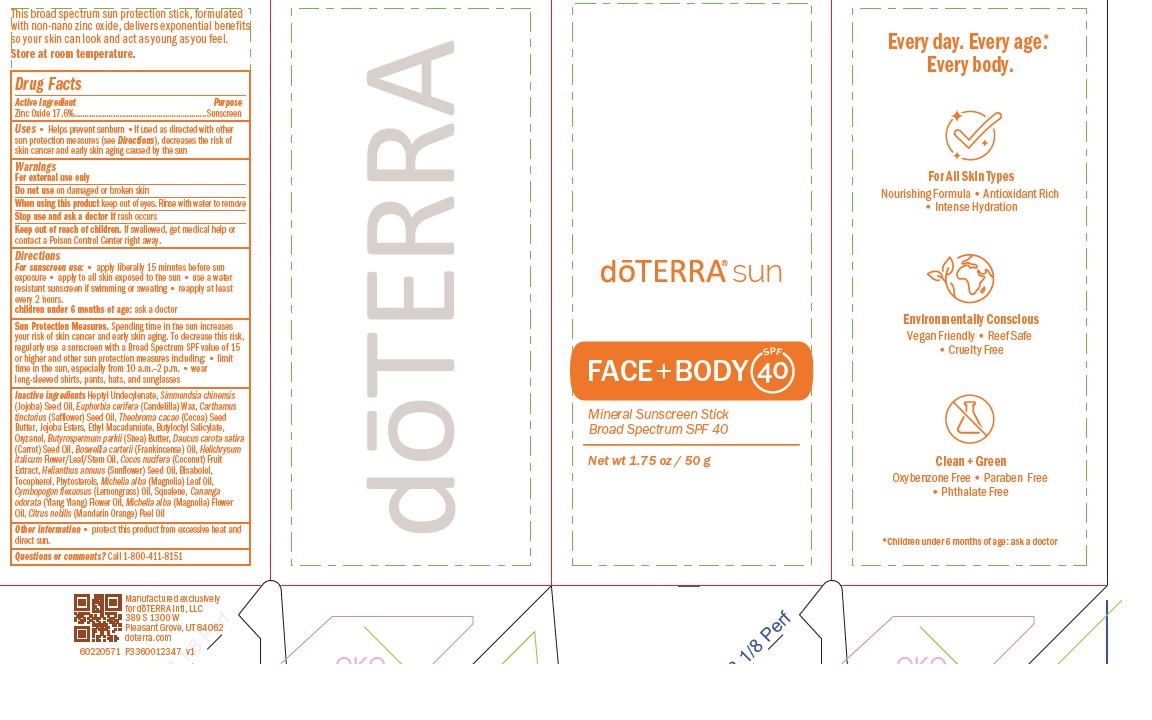
doTERRA Sun zinc oxide 17.6 g/100g Stick, 50 g — NDC 71630-175-50 (Billing 71630-0175-50)
This is a package of 50 g of doTERRA Sun zinc oxide 17.6 g/100g Stick from doTERRA International, LLC, marketed since Jun 2022 and currently FDA-listed. It is this product's only package size.
NDC database record
One package, one record: these facts belong to NDC 71630-175-50 alone.
- Record
- FDA NDC Directory package listing · Human OTC drug
- Code segments
- 71630 labeler · 175 product · 50 package
- Package marketed since
- Jun 1, 2022
- Sample package
- No — commercial package
- Listing certified through
- Dec 31, 2026
- Barcode (UPC-A, from the NDC)
- 3 7163017550 6
- FDA record last changed
- Jul 24, 2026
Other active recalls for Zinc Oxide (different manufacturers) — 6 · tap to view
Identity & classification
Regulatory identifiers FDA, NLM and CMS codes for this package
Where does this data come from?
- FDA openFDA NDC Directory · synced Oct 1, 2026
- FDA label on DailyMed · label index refreshed Oct 5, 2026
- RxNorm (NLM RxNav) · catalog refreshed Oct 1, 2026
- Medi-Span GPI (licensed)
- First Databank (licensed) · refreshed Oct 1, 2026
Clinical
This is a topical sunscreen stick containing zinc oxide as its active ingredient. Zinc oxide is a mineral UV filter commonly used in sun-protection products to help block ultraviolet radiation from the sun. The product is marketed as an over-the-counter drug under the FDA's monograph rules for sunscreen ingredients, meaning it follows the established safety and strength standards for this category rather than undergoing individual FDA review.
Patient education
Supplement & herbal interactions
Some supplements/herbs that may interact with Zinc oxide (OTC drug) — tap one for details:
Where does this data come from?
- MedlinePlus (NLM) · refreshed Oct 1, 2026
- FDA label on DailyMed · label index refreshed Oct 5, 2026
Ask a licensed pharmacist directly — free, answered by our team.
Pricing
A drug doesn't have one price. Each row is a different public payment system, and none is what you'd pay at the counter — that depends on your insurance. The ⓘ on each row explains what it measures.
| Price system | Per each | Per package |
|---|---|---|
| Retail pharmacies payNADAC · weekly | Not in the retail survey — common for institutional, discontinued, or low-volume packs. | |
| Medicaid paysCMS SDUD · 12 mo | No recent Medicaid claims on file for this NDC — rare and low-volume NDCs are suppressed in the public data. | |
| Medicare drug plans payPart D · quarterly | No Part D plan price is available for this NDC in our data. | |
Where does this data come from?
- CMS NADAC weekly file
- CMS ASP pricing files · refreshed Sep 20, 2026
- CMS Medicaid State Drug Utilization Data · refreshed Oct 5, 2026
- CMS Part D plan pricing files · refreshed Sep 24, 2026
- VA National Acquisition Center price file
Packaging — all sizes for this product
| Package NDC | Description | Marketing start | Marketing end | Status |
|---|---|---|---|---|
| 71630-0175-50 You're viewing this Main listing | 50 g in 1 TUBE | 2022-06-01 | — | Active |
Therapeutic equivalents
| Product | Labeler | Pack | NADAC/unit | TE | Status | Price vs. this |
|---|---|---|---|---|---|---|
| doTERRA Sun 17.6 g/100gthis 71630-0175-50 | doTERRA | 50 g | — | — | FDA listed | — |
Where does this data come from?
- FDA openFDA NDC Directory · synced Oct 1, 2026
- FDA Orange Book · refreshed Oct 3, 2026
- CMS NADAC weekly file
Availability & generic status
We did not find an FDA-approved generic match for this exact strength, form and route.
Where does this data come from?
- FDA Orange Book · refreshed Oct 3, 2026
Inactive Ingredients / Excipients
Inactive ingredients, also called excipients, are components of the drug product other than the active ingredient. They may include fillers, dyes, coatings, preservatives, flavors, or other formulation ingredients.
💡 Tap an ingredient (hover on desktop) to see what it is and why it’s used.
-
UNII N442D9VO79
A synthetic organic liquid used as a solvent and skin-conditioning agent in topical formulations. It helps dissolve active ingredients and improves how the medicine spreads and feels on the skin.
-
UNII 2EH13UN8D3
A synthetic compound used as a solvent and penetration enhancer in topical formulations. It helps dissolve active ingredients and allows them to penetrate the skin more effectively.
-
UNII WL0328HX19
A natural plant-based wax derived from candelilla shrub leaves. It acts as a coating agent, hardener, and texture modifier to control how quickly the medicine releases and to improve the tablet or capsule's appearance and stability.
-
UNII 595AO13F11
Carrot seed oil is a plant-based oil extracted from carrot seeds. It's used in medicines as a flavor and fragrance component, and may help distribute active ingredients evenly throughout the formulation.
-
UNII 8MFF77J91V
A natural extract from mandarin orange peel used as a flavoring agent and fragrance in medicines. It provides taste and aroma to make the product more palatable.
-
UNII 512OYT1CRR
Cocoa butter is a natural fat extracted from cocoa beans. It's used in medicines as a base for suppositories and as a lubricant to help pills dissolve smoothly.
-
UNII 3RT3536DHY
A natural plant material derived from coconut that serves as a filler and texturizing agent in medicines. It helps give the product structure and consistency.
-
UNII UP0M8M3VZW
A fragrant essential oil extracted from lemongrass plants, used primarily as a flavoring and fragrance agent to improve taste and aroma in oral medications.
-
UNII ANA2NCS6V1
A natural oil derived from macadamia nuts, used as an emollient and conditioning agent. It helps soften the product's texture and improve how it spreads or absorbs on skin or mucous membranes.
-
UNII 67ZYA5T02K
Frankincense oil is a natural aromatic extract from tree resin. In medicines, it's used as a fragrance and flavoring agent to improve taste and smell, and may also help preserve the product.
-
UNII O97ZV7726K
A fragrant plant oil extracted from helichrysum flowers, used primarily as a flavor and fragrance agent to make medicines more pleasant tasting or smelling.
-
UNII W77QUB6GXO
Heptyl undecylenate is a synthetic ester compound used as a preservative and antimicrobial agent in medications. It helps prevent bacterial and fungal growth to maintain product stability and safety during storage.
-
UNII UDR641JW8W
A plant-derived oil from jojoba seeds that has been broken down into smaller components. It acts as an emollient and skin-conditioning agent to help soften and smooth the product's texture.
-
UNII 724GKU717M
Jojoba oil is a natural liquid wax extracted from jojoba plant seeds. It's used in medicines as an emollient and lubricant to soften and smooth the product, and sometimes as a carrier or penetration enhancer.
-
UNII 817L1N4CKP
Malic acid is a naturally occurring organic acid found in fruits. It works as a buffer and flavor agent to maintain the medicine's pH balance and add tartness to the product.
-
UNII 002RK9L1FN
A fragrant essential oil extracted from Michelia alba (champaca) leaves. It's used as a flavoring agent and fragrance in medicines to improve taste and aroma.
-
UNII SST9XCL51M
Oryzanol is a plant compound extracted from rice bran oil. It's used in medicines as an antioxidant and emollient to help stabilize the formula and improve texture.
-
UNII 65UEH262IS
Safflower oil is a plant-based oil extracted from safflower seeds. It's used in medicines as a solvent and carrier to help dissolve or suspend active ingredients, and sometimes as an emollient to improve texture.
-
UNII K49155WL9Y
Shea butter is a fat extracted from shea tree nuts. It's used in medicines as an emollient and lubricant to soften the product, improve texture, and help ingredients blend smoothly together.
-
UNII 7QWM220FJH
Squalene is a natural oil-like substance found in shark liver and some plants. It's used in medicines as an emulsifier to help mix oil and water-based ingredients together.
-
UNII 3W1JG795YI
Sunflower oil is a natural vegetable oil derived from sunflower seeds. It serves as a solvent, lubricant, and carrier in medicines, helping dissolve active ingredients and improve how the medication flows and absorbs in the body.
-
UNII R0ZB2556P8
Tocopherol is a form of vitamin E derived from plant oils. It acts as an antioxidant in medicines to prevent oils and fats from breaking down and spoiling during storage.
-
UNII 059QF0KO0R
Water is a liquid solvent that dissolves and mixes ingredients together in liquid medicines, syrups, and injections. It helps distribute the active drug evenly throughout the product.
-
UNII 8YOY78GNNX
A fragrant essential oil derived from ylang-ylang tree flowers. It's used as a flavoring and fragrance agent to improve the taste or scent of medicines.
24 inactive ingredients listed in the exact product block matched to this NDC.
Label-section wording can be broader than the structured product block and may mention additional formulation ingredients.
Where does this data come from?
ingredient classCode="IACT" elements from the exact product block matched by this NDC. Label-section narrative from DailyMed / the openFDA label index is shown separately when available.- FDA label on DailyMed · label index refreshed Oct 5, 2026
- FDA openFDA NDC Directory · synced Oct 1, 2026
Inactive ingredient FAQ
Are inactive ingredients the same for every manufacturer?
Why might an inactive ingredient be missing?
Can inactive ingredients matter?
Manufacturer & labeler
More NDCs from doTERRA International, LLC labeler code 71630
- Deep Blue Mini Menthol 10 g/100g Stick NDC 71630-035-10
- On Guard Sanitizing Gel Alcohol 70 mL/100mL Gel NDC 71630-098-50
- doTERRA sun Lip Balm Mineral Sunscreen 8.7 g/100g Stick NDC 71630-116-34
- doTERRA sun Face Daily Moisturizer Zinc oxide 13 g/100g Lotion NDC 71630-147-15
- Deep Blue Copaiba Menthol 10 g/100g Stick NDC 71630-169-48
- doTERRA sun Zinc Oxide 17.5 g/100g Spray NDC 71630-173-17
- doTERRA Sun Body Mineral Sunscreen 16.8 g/100g Spray NDC 71630-176-18
- Baby Diaper Rash Cream Zinc oxide 25 g/100g Cream NDC 71630-549-60
- doTERRA sun Zinc Oxide 16.3 g/100g Lotion NDC 71630-966-50
Where does this data come from?
- FDA openFDA NDC Directory · synced Oct 1, 2026
- Drugs@FDA
FDA label — Drug Facts FDA SPL
🎯 Indications and Usage ▾
Uses: Helps prevent sunburn. If used as directed with other sun protection measures (see Directions), decreases the risk of skin cancer and early skin aging caused by the sun.
⏱️ Dosage and Administration ▾
Directions Directions For sunscreen use: • apply liberally 15 minutes before sun exposure • apply to all skin exposed to the sun • use a water resistant sunscreen if swimming or sweating • reapply at least every 2 hours.
⚠️ Warnings ▾
Warnings: For external use only. Do not use on damaged or broken skin. When using this product keep out of eyes. Rinse with water to remove. Stop use and ask a doctor if rash occurs. Keep out of reach of children. If swallowed, get medical help or contact a Poison Control Center right away.
📦 Storage and Handling ▾
Other information • protect this product from excessive heat and direct sun.
🧪 Active Ingredient ▾
Active Ingredient Purpose Zinc Oxide 17.6%........................................ Sunscreen
🧪 Inactive Ingredients ▾
Inactive ingredients Heptyl Undecylenate, Simmondsia chinensis (Jojoba) Seed Oil, Euphorbia cerifera (Candelilla) Wax, Carthamus tinctorius (Safflower) Seed Oil, Theobroma cacao (Cocoa) Seed Butter, Jojoba Esters, Ethyl Macadamiate, Butyloctyl Salicylate, Oryzanol, Butyrospermum parkii (Shea) Butter, Daucus carota sativa (Carrot) Seed Oil, Boswellia carterii (Frankincense) Oil, Helichrysum italicum Flower/Leaf/Stem Oil, Cocos nucifera (Coconut) Fruit Extract, Helianthus annuus (Sunflower) Seed Oil, Bisabolol, Tocopherol, Phytosterols, Michelia alba (Magnolia) Leaf Oil, Cymbopogon flexuosus (Lemongrass) Oil, Squalene, Cananga odorata (Ylang Ylang) Flower Oil, Michelia alba (Magnolia) Flower Oil, Citrus nobilis (Mandarin Orange) Peel Oil
🎯 Purpose ▾
Sunscreen
📄 When Using This Product ▾
For sunscreen use: • apply liberally 15 minutes before sun exposure • apply to all skin exposed to the sun • use a water resistant sunscreen if swimming or sweating • reapply at least every 2 hours.
📄 Stop Use and Ask a Doctor If ▾
Stop use and ask a doctor if rash occurs
📄 Keep Out of Reach of Children ▾
Keep out of reach of children. If swallowed, get medical help or contact a Poison Control Center right away.
📄 Package Label / Principal Display Panel ▾
doTERRA sun Face + Body Mineral Sunscreen Stick Mineral sunscreen stick Broad Spectrum SPF 40 Label Carton
About this NDC listing & data coverage
What data is (and isn’t) available for this NDC — tap to expand
| NDC identity (package / product / labeler codes) | ✓ Available |
| Labeler | ✓ Available |
| Product & package description | ✓ Available |
| Marketing category & status | ✓ Available |
| Active ingredient / dosage form / route | ✓ Available |
| FDA label (SPL via DailyMed) | ✓ Available |
| Package photos | ✓ Available |
| Inactive ingredients (structured) | ✓ Available |
| NADAC pharmacy acquisition price (CMS) | — Not published for this NDC CMS publishes NADAC only for NDCs reported in its retail-pharmacy survey. |
| Orange Book / therapeutic-equivalence data | — Not published for this NDC Applies only to products approved under an NDA/ANDA; many listings are out of scope. |
| HCPCS J-code billing crosswalk | — Not published for this NDC Most self-administered / retail products have no J-code — that is normal. |
| Medicaid utilization (CMS SDUD) | — Not published for this NDC CMS reports utilization only for NDCs with Medicaid claims above its privacy threshold. |