
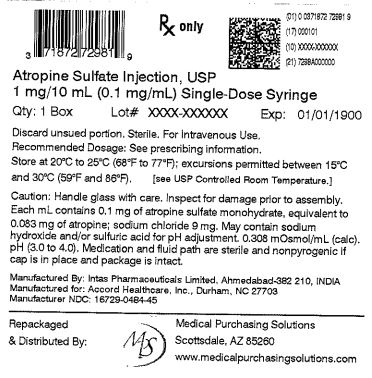
ATROPINE SULFATE .1 mg/mL Injection — NDC 71872-7298-1 (Billing 71872-7298-01)
This is a package of ATROPINE SULFATE .1 mg/mL Injection from Medical Purchasing Solutions, LLC, marketed since Jul 2021 and currently FDA-listed. It is this product's only package size.
NDC database record
One package, one record: these facts belong to NDC 71872-7298-1 alone.
- Record
- FDA NDC Directory package listing · Human prescription drug
- Code segments
- 71872 labeler · 7298 product · 1 package
- Package marketed since
- Aug 8, 2022
- Sample package
- No — commercial package
- Listing certified through
- Dec 31, 2026
- Barcode (UPC)
- 0316729484039
- FDA record last changed
- Jul 24, 2026
Other active recalls for Atropine Sulfate (different manufacturers) — 2 · tap to view
Identity & classification
Regulatory identifiers FDA, NLM and CMS codes for this package
- RxCUI (RxNorm): 1190546
Where does this data come from?
- FDA openFDA NDC Directory · synced Oct 8, 2026
- FDA label on DailyMed · label index refreshed Oct 6, 2026
- RxNorm (NLM RxNav) · catalog refreshed Oct 1, 2026
- Medi-Span GPI (licensed)
- First Databank (licensed) · refreshed Oct 8, 2026
RxNorm drug class
This medicine belongs to the Anticholinergic class.
Where does this data come from?
- RxClass (NLM) · catalog refreshed Oct 1, 2026
Clinical
- It depends on the form. The injection is used in emergencies like poisonings and slow heart rhythms, and around surgery to reduce secretions. The eye drops and ointment dilate the...
- Injections are given by a healthcare professional, usually into a vein. ATROPEN is injected into the outer thigh in an emergency, and you should seek medical care right away. Eye p...
- Dry mouth, blurred vision, light sensitivity, a faster heartbeat, flushing, dizziness, and constipation are common. These come from atropine's drying effects. Injection site pain c...
- Seek emergency help for trouble breathing, swelling or a spreading rash, chest pain, a racing or irregular heartbeat, hallucinations, or a high fever with no sweating. Eye pain wit...
Patient education
Supplement & herbal interactions
Some supplements/herbs that may interact with Atropine Sulfate — tap one for details:
Where does this data come from?
- MedlinePlus (NLM) · refreshed Oct 1, 2026
- FDA label on DailyMed · label index refreshed Oct 6, 2026
Ask a licensed pharmacist directly — free, answered by our team.
Pricing
A drug doesn't have one price. Each row is a different public payment system, and none is what you'd pay at the counter — that depends on your insurance. The ⓘ on each row explains what it measures.
| Price system | Per each | Per package |
|---|---|---|
| Retail pharmacies payNADAC · weekly | Not in the retail survey — common for institutional, discontinued, or low-volume packs. | |
| Medicaid paysCMS SDUD · 12 mo | No recent Medicaid claims on file for this NDC — rare and low-volume NDCs are suppressed in the public data. | |
| Medicare drug plans payPart D · quarterly | No Part D plan price is available for this NDC in our data. | |
Where does this data come from?
- CMS NADAC weekly file
- CMS ASP pricing files · refreshed Sep 20, 2026
- CMS Medicaid State Drug Utilization Data · refreshed Oct 8, 2026
- CMS Part D plan pricing files · refreshed Sep 24, 2026
- VA National Acquisition Center price file
Packaging — all sizes for this product
| Package NDC | Description | Marketing start | Marketing end | Status |
|---|---|---|---|---|
| 71872-7298-01 You're viewing this Main listing | 1 SYRINGE, GLASS in 1 BAG / 10 mL in 1 SYRINGE, GLASS | 2022-08-08 | — | Active |
Therapeutic equivalents
| Product | Labeler | Pack | NADAC/unit | TE | Status | Price vs. this |
|---|---|---|---|---|---|---|
| Atropine Sulfate .1 mg/mL 00409-1630-10 | Hospira, | 1 syringe | — | AP | FDA listed | — |
| Atropine Sulfate .1 mg/mL 16729-0484-03 | Accord | 10 ml | — | AP | FDA listed | — |
| Atropine Sulfate .1 mg/mL 50090-5924-00 | A-S | 1 ml | — | AP | FDA listed | — |
| Atropine Sulfate .1 mg/mL 51662-1207-01 | HF | 1 syringe | — | — | FDA listed | — |
| Atropine Sulfate .1 mg/mL 51662-1289-01 | HF | 1 syringe | — | AP | FDA listed | — |
| Atropine Sulfate .1 mg/mL 51662-1527-01 | HF | 1 syringe | — | AP | FDA listed | — |
| Atropine Sulfate .1 mg/mL 64253-0400-91 | Medefil, | 10 syringes | — | AP | FDA listed | — |
| atropine sulfate .1 mg/mL 70121-1706-01 | Amneal | 1 syringe | — | AP | FDA listed | — |
| Atropine Sulfate .1 mg/mL 70518-3120-00 | REMEDYREPACK | 1 syringe | — | AP | FDA listed | — |
| Atropine Sulfate .1 mg/mL 71872-7002-01 | Medical | 1 syringe | — | AP | FDA listed | — |
| Atropine Sulfate .1 mg/mL 71872-7252-01 | Medical | 1 syringe | — | AP | FDA listed | — |
| Atropine Sulfate .1 mg/mLthis 71872-7298-01 | Medical | 1 syringe | — | AP | FDA listed | — |
| Atropine Sulfate .1 mg/mL 76329-3340-01 | International | 1 syringe | — | AP | FDA listed | — |
| Atropine Sulfate .1 mg/mL 84549-0340-01 | ProPharma | 10 ml | — | AP | FDA listed | — |
| Atropine Sulfate .1 mg/mL 84549-0400-91 | ProPharma | 10 ml | — | AP | FDA listed | — |
| Atropine Sulfate .1 mg/mL 00404-9784-05 | Henry | 1 syringe | — | AP | FDA listed | — |
| atropine sulfate .1 mg/mL 70121-1705-07 | Amneal | 1 syringe | — | AP | FDA listed | — |
| Atropine Sulfate .1 mg/mL 51662-1208-01 | HF | 1 syringe | — | — | FDA listed | — |
Where does this data come from?
- FDA openFDA NDC Directory · synced Oct 8, 2026
- FDA Orange Book · refreshed Oct 3, 2026
- CMS NADAC weekly file
Availability & generic status
This product is an FDA-approved generic. Other versions of the same drug are listed under Therapeutic equivalents, least expensive first.
Where does this data come from?
- FDA Orange Book · refreshed Oct 3, 2026
Inactive Ingredients / Excipients
Inactive ingredients, also called excipients, are components of the drug product other than the active ingredient. They may include fillers, dyes, coatings, preservatives, flavors, or other formulation ingredients.
🧪 Avoiding an ingredient? See Atropine inactive ingredients by manufacturer: every current product's list side by side, so you can ask your pharmacy for the version that does not list it.
💡 Tap an ingredient (hover on desktop) to see what it is and why it’s used.
-
9 mg / 1 mL
UNII 451W47IQ8X
Sodium chloride is common table salt. It's used in medicines as a buffer to maintain proper pH, as a filler to add bulk, or to adjust the osmotic balance in liquid formulations.
-
UNII 55X04QC32I
A strong alkaline chemical used to adjust and maintain the pH balance of liquid medicines. It helps keep the medicine stable and ensures it stays effective during storage.
-
UNII O40UQP6WCF
A strong acid used in small amounts to adjust and maintain the pH balance of a medicine, helping ensure stability and proper dissolution of the active ingredients.
-
UNII 059QF0KO0R
Water is a liquid solvent that dissolves and mixes ingredients together in liquid medicines, syrups, and injections. It helps distribute the active drug evenly throughout the product.
4 inactive ingredients listed in the exact product block matched to this NDC.
Where does this data come from?
ingredient classCode="IACT" elements from the exact product block matched by this NDC. Label-section narrative from DailyMed / the openFDA label index is shown separately when available.- FDA label on DailyMed · label index refreshed Oct 6, 2026
- FDA openFDA NDC Directory · synced Oct 8, 2026
Inactive ingredient FAQ
Are inactive ingredients the same for every manufacturer?
Why might an inactive ingredient be missing?
Can inactive ingredients matter?
Manufacturer & labeler
More NDCs from Medical Purchasing Solutions, LLC labeler code 71872
- Verapamil Hydrochloride 2.5 mg/mL Injection, Solution NDC 71872-7291-1
- Glycopyrrolate .2 mg/mL Injection NDC 71872-7292-1
- Naloxone Hydrochloride 1 mg/mL Injection NDC 71872-7294-1
- Furosemide 10 mg/mL Injection, Solution NDC 71872-7295-1
- Ketamine Hydrochloride 100 mg/mL Injection, Solution, Concentrate NDC 71872-7296-1
- naloxone hydrochloride .4 mg/mL Injection, Solution NDC 71872-7297-1
- Naloxone Hydrochloride 1 mg/mL Injection, Solution NDC 71872-7299-1
- Nitroglycerin .4 mg Tablet NDC 71872-7300-1
- Ephedrine sulfate 50 mg/mL Injection NDC 71872-7302-1
- Phenylephrine hydrochloride 10 mg/mL Injection NDC 71872-7303-1
- Epinephrine .1 mg/mL Injection NDC 71872-7304-1
- Dopamine Hydrochloride 40 mg/mL Injection NDC 71872-7305-1
Where does this data come from?
- FDA openFDA NDC Directory · synced Oct 8, 2026
- Drugs@FDA
Full prescribing information FDA SPL
🎯 Indications and Usage ▾
1 INDICATIONS AND USAGE Atropine Sulfate Injection is indicated for temporary blockade of severe or life threatening muscarinic effects, e.g., as an antisialagogue, an antivagal agent, an antidote for organophosphorus or muscarinic mushroom poisoning, and to treat bradyasystolic cardiac arrest. Atropine is a muscarinic antagonist indicated for temporary blockade of severe or life threatening muscarinic effects. ( 1 )
⏱️ Dosage and Administration ▾
2 DOSAGE AND ADMINISTRATION For intravenous administration ( 2.1 ) Titrate according to heart rate, PR interval, blood pressure and symptoms ( 2.1 ) Adult dosage Antisialagogue or for antivagal effects: Initial single dose of 0.5 mg to 1 mg ( 2.2 ) Antidote for organophosphorus or muscarinic mushroom poisoning: Initial single dose of 2 mg to 3 mg, repeated every 20-30 minutes ( 2.2 ) Bradyasystolic cardiac arrest: 1 mg dose, repeated every 3-5 minutes if asystole persists ( 2.2 ) Patients with Coronary Artery Disease: Limit the total dose to 0.03 mg/kg to 0.04 mg/kg ( 2.4 )
2.1General Administration Parenteral drug products should be inspected visually for particulate matter and discoloration prior to administration, whenever solution and container permit. Do not administer unless solution is clear and seal is intact. Each syringe is intended for single dose only.
Discard unused portion. For intravenous administration. Titrate based on heart rate, PR interval, blood pressure and symptoms.
INSTRUCTIONS FOR USE: CAUTION: Certain glass syringes may malfunction, break or clog when connected to some Needleless Luer Access Devices (NLADs). This syringe has a larger internal syringe tip and an external collar (luer collar). The external collar must remain attached to the syringe.
Data shows that, the syringe achieves acceptable connection with the following NLADs: BD SmartSite ™ , BBraun Ultrasite ™ , BD Q-Syte ™ , BD MaxPlus ™ , and BBraun Safsite ™ . Assure that the needle or NLAD is securely attached before beginning the injection. Visually inspect the glass syringe-needle or glass syringe-NLAD connection before and during drug administration.
2.2Adult Dosage Table 1: Recommended Dosage Use Dose (adults) Repeat Antisialagogue or other antivagal 0.5 to 1 mg 1-2 hours Organophosphorus or muscarinic mushroom poisoning 2 to 3 mg 20-30 minutes Bradyasystolic cardiac arrest 1 mg 3-5 minutes; 3 mg maximum total dose
2.3Pediatric Dosage Dosing in pediatric populations has not been well studied. Usual initial dose is 0.01 to 0.03 mg/kg.
2.4Dosing in Patients with Coronary Artery Disease Limit the total dose of atropine sulfate to 0.03 mg/kg to 0.04 mg/kg [see Warnings and Precautions (5.1) ].
💊 Dosage Forms and Strengths ▾
3 DOSAGE FORMS AND STRENGTHS Injection: 0.05 mg/mL and 0.1 mg/mL in Glass Syringes. 0.05 mg/mL injection in Glass Syringe ( 3 ) 0.1 mg/mL injection in Glass Syringe ( 3 )
⛔ Contraindications ▾
4 CONTRAINDICATIONS None. None. ( 4 )
⚠️ Warnings and Cautions ▾
5 WARNINGS AND PRECAUTIONS Tachycardia ( 5.1 ) Glaucoma ( 5.2 ) Pyloric obstruction ( 5.3 ) Worsening urinary retention ( 5.4 ) Viscid bronchial plugs ( 5.5 )
5.1Tachycardia When the recurrent use of atropine is essential in patients with coronary artery disease, the total dose should be restricted to 2 to 3 mg (maximum 0.03 to 0.04 mg/kg) to avoid the detrimental effects of atropine-induced tachycardia on myocardial oxygen demand.
5.2Acute Glaucoma Atropine may precipitate acute glaucoma.
5.3Pyloric Obstruction Atropine may convert partial organic pyloric stenosis into complete obstruction.
5.4Complete Urinary Retention Atropine may lead to complete urinary retention in patients with prostatic hypertrophy.
5.5Viscid Plugs Atropine may cause inspissation of bronchial secretions and formation of viscid plugs in patients with chronic lung disease.
🤒 Adverse Reactions ▾
6 ADVERSE REACTIONS The following adverse reactions have been identified during post-approval use of atropine sulfate. Because these reactions are reported voluntarily from a population of uncertain size, it is not always possible to reliably estimate their frequency or establish a causal relationship to drug exposure. Most of the side effects of atropine are directly related to its antimuscarinic action.
Dryness of the mouth, blurred vision, photophobia and tachycardia commonly occur. Anhidrosis can produce heat intolerance. Constipation and difficulty in micturition may occur in elderly patients.
Occasional hypersensitivity reactions have been observed, especially skin rashes which in some instances progressed to exfoliation. Most adverse reactions are directly related to atropine's antimuscarinic action. Dryness of the mouth, blurred vision, photophobia and tachycardia commonly occur with chronic administration of therapeutic doses.
( 6 ) To report SUSPECTED ADVERSE REACTIONS, contact Accord Healthcare Inc. at 1-866-941-7875 or FDA at 1-800-FDA-1088 or www.fda.gov/medwatch .
🔄 Drug Interactions ▾
7 DRUG INTERACTIONS Mexiletine: Decreases rate of mexiletine absorption. ( 7.1 )
7.1Mexiletine Atropine Sulfate Injection decreased the rate of mexiletine absorption without altering the relative oral bioavailability; this delay in mexiletine absorption was reversed by the combination of atropine and intravenous metoclopramide during pretreatment for anesthesia.
👥 Use in Specific Populations ▾
8 USE IN SPECIFIC POPULATIONS
8.1Pregnancy Animal reproduction studies have not been conducted with atropine. It also is not known whether atropine can cause fetal harm when given to a pregnant woman or can affect reproduction capacity.
8.3Nursing Mothers Trace amounts of atropine was found in breast milk. The clinical impact of this is not known.
8.4Pediatric Use Recommendations for use in pediatric patients are not based on clinical trials.
8.5Geriatric Use An evaluation of current literature revealed no clinical experience identifying differences in response between elderly and younger patients. In general, dose selection for an elderly patient should be cautious, usually starting at the low end of the dosing range, reflecting the greater frequency of decreased hepatic, renal, or cardiac function, and of concomitant disease or other drug therapy.
🤰 Pregnancy ▾
8.1Pregnancy Animal reproduction studies have not been conducted with atropine. It also is not known whether atropine can cause fetal harm when given to a pregnant woman or can affect reproduction capacity.
🧒 Pediatric Use ▾
8.4Pediatric Use Recommendations for use in pediatric patients are not based on clinical trials.
🧓 Geriatric Use ▾
8.5Geriatric Use An evaluation of current literature revealed no clinical experience identifying differences in response between elderly and younger patients. In general, dose selection for an elderly patient should be cautious, usually starting at the low end of the dosing range, reflecting the greater frequency of decreased hepatic, renal, or cardiac function, and of concomitant disease or other drug therapy.
🆘 Overdosage ▾
10 OVERDOSAGE Excessive dosing may cause palpitation, dilated pupils, difficulty in swallowing, hot dry skin, thirst, dizziness, restlessness, tremor, fatigue and ataxia. Toxic doses lead to restlessness and excitement, hallucinations, delirium and coma. Depression and circulatory collapse occur only with severe intoxication.
In such cases, blood pressure declines and death due to respiratory failure may ensue following paralysis and coma. The fatal adult dose of atropine is not known. In pediatric populations, 10 mg or less may be fatal.
In the event of toxic overdosage, a short acting barbiturate or diazepam may be given as needed to control marked excitement and convulsions. Large doses for sedation should be avoided because central depressant action may coincide with the depression occurring late in atropine poisoning. Central stimulants are not recommended.
Physostigmine, given as an atropine antidote by slow intravenous injection of 1 to 4 mg (0.5 to 1 mg in pediatric populations), rapidly abolishes delirium and coma caused by large doses of atropine. Since physostigmine is rapidly destroyed, the patient may again lapse into coma after one to two hours, and repeated doses may be required. Artificial respiration with oxygen may be necessary.
Ice bags and alcohol sponges help to reduce fever, especially in pediatric populations. Atropine is not removed by dialysis.
🧬 Clinical Pharmacology ▾
12 CLINICAL PHARMACOLOGY
12.1Mechanism of Action Atropine is an antimuscarinic agent since it antagonizes the muscarine-like actions of acetylcholine and other choline esters. Atropine inhibits the muscarinic actions of acetylcholine on structures innervated by postganglionic cholinergic nerves, and on smooth muscles which respond to endogenous acetylcholine but are not so innervated. As with other antimuscarinic agents, the major action of atropine is a competitive or surmountable antagonism which can be overcome by increasing the concentration of acetylcholine at receptor sites of the effector organ (e.g., by using anticholinesterase agents which inhibit the enzymatic destruction of acetylcholine).
The receptors antagonized by atropine are the peripheral structures that are stimulated or inhibited by muscarine (i.e., exocrine glands and smooth and cardiac muscle). Responses to postganglionic cholinergic nerve stimulation also may be inhibited by atropine but this occurs less readily than with responses to injected (exogenous) choline esters.
12.2Pharmacodynamics Atropine-induced parasympathetic inhibition may be preceded by a transient phase of stimulation, especially on the heart where small doses first slow the rate before characteristic tachycardia develops due to paralysis of vagal control. Atropine exerts a more potent and prolonged effect on heart, intestine and bronchial muscle than scopolamine, but its action on the iris, ciliary body and certain secretory glands is weaker than that of scopolamine. Unlike the latter, atropine in clinical doses does not depress the central nervous system but may stimulate the medulla and higher cerebral centers.
Although mild vagal excitation occurs, the increased respiratory rate and (sometimes) increased depth of respiration produced by atropine are more probably the result of bronchiolar dilatation. Accordingly, atropine is an unreliable respiratory stimulant and large or repeated doses may depress respiration. Adequate doses of atropine abolish various types of reflex vagal cardiac slowing or asystole.
The drug also prevents or abolishes bradycardia or asystole produced by injection of choline esters, anticholinesterase agents or other parasympathomimetic drugs, and cardiac arrest produced by stimulation of the vagus. Atropine also may lessen the degree of partial heart block when vagal activity is an etiologic factor. In some patients with complete heart block, the idioventricular rate may be accelerated by atropine; in others, the rate is stabilized.
Occasionally a large dose may cause atrioventricular (A-V) block and nodal rhythm. Atropine Sulfate Injection in clinical doses counteracts the peripheral dilatation and abrupt decrease in blood pressure produced by choline esters. However, when given by itself, atropine does not exert a striking or uniform effect on blood vessels or blood pressure.
Systemic doses slightly raise systolic and lower diastolic pressures and can produce significant postural hypotension. Such doses also slightly increase cardiac output and decrease central venous pressure. Occasionally, therapeutic doses dilate cutaneous blood vessels, particularly in the "blush" area (atropine flush) and may cause atropine "fever" due to suppression of sweat gland activity in infants and small children.
The effects of intravenous atropine on heart rate (maximum heart rate) and saliva flow (minimum flow) after intravenous administration (rapid, constant infusion over 3 min.) are delayed by 7 to 8 minutes after drug administration and both effects are non-linearly related to the amount of drug in the peripheral compartment. Changes in plasma atropine levels following intramuscular administration (0.5 to 4 mg doses) and heart rate are closely overlapped but the time course of the changes in atropine levels and behavioral impairment indicates that pharmacokinetics is not the primary rate-limiting mechanism for the central nervous system effect of atropine.
12.3Pharmacoki… [Excerpted — this section continues on DailyMed.]
🧬 Mechanism of Action ▾
12.1Mechanism of Action Atropine is an antimuscarinic agent since it antagonizes the muscarine-like actions of acetylcholine and other choline esters. Atropine inhibits the muscarinic actions of acetylcholine on structures innervated by postganglionic cholinergic nerves, and on smooth muscles which respond to endogenous acetylcholine but are not so innervated. As with other antimuscarinic agents, the major action of atropine is a competitive or surmountable antagonism which can be overcome by increasing the concentration of acetylcholine at receptor sites of the effector organ (e.g., by using anticholinesterase agents which inhibit the enzymatic destruction of acetylcholine).
The receptors antagonized by atropine are the peripheral structures that are stimulated or inhibited by muscarine (i.e., exocrine glands and smooth and cardiac muscle). Responses to postganglionic cholinergic nerve stimulation also may be inhibited by atropine but this occurs less readily than with responses to injected (exogenous) choline esters.
📦 How Supplied / Storage and Handling ▾
16 HOW SUPPLIED/STORAGE AND HANDLING Atropine Sulfate Injection, USP is supplied in single-dose syringes as follows: Unit of Sale and Product Description Strength (Concentration) NDC One syringe per carton 5 mL Single-Dose Glass Syringe 0.25 mg/5 mL (0.05 mg/mL) 16729-483-31 One syringe per carton 10 mL Single-Dose Glass Syringe 1 mg/10 mL (0.1 mg/mL) 16729-484-03 One syringe per carton 5 mL Single-Dose Glass Syringe 0.5 mg/5 mL (0.1 mg/mL) 16729-484-31 Ten syringes per carton 5 mL Single-Dose Glass Syringe 0.25 mg/5 mL (0.05 mg/mL) 16729-483-03 Ten syringes per carton 10 mL Single-Dose Glass Syringe 1 mg/10 mL (0.1 mg/mL) 16729-484-45 Ten syringes per carton 5 mL Single-Dose Glass Syringe 0.5 mg/5 mL (0.1 mg/mL) 16729-484-90 The Glass syringe is presented in a tray with polypropylene plunger rod.
Store at 20°C to 25°C (68°F to 77°F); excursions permitted between 15°C and 30°C (59°F and 86°F). [See USP Controlled Room Temperature.] Manufactured For: Accord Healthcare, Inc., 1009, Slater Road, Suite 210-B, Durham, NC 27703, USA. Manufactured By: Intas Pharmaceuticals Limited, Ahmedabad-380 054, India. 10 5231 2 6017607 Issued May 2022
📋 Description ▾
11 DESCRIPTION Atropine Sulfate Injection, USP is a sterile, nonpyrogenic isotonic solution of atropine sulfate monohydrate in water for injection with sodium chloride sufficient to render the solution isotonic. It is administered parenterally by intravenous injection. Each milliliter (mL) contains 0.1 mg (adult strength) or 0.05 mg (pediatric strength) of atropine sulfate monohydrate equivalent to 0.083 mg (adult strength) or 0.042 mg (pediatric strength) of atropine, and sodium chloride, 9 mg.
May contain sodium hydroxide and/or sulfuric acid for pH adjustment. 0.308 mOsmol/mL (calc.). pH 3.0 to 4.0. Sodium chloride added to render the solution isotonic for injection of the active ingredient is present in amounts insufficient to affect serum electrolyte balance of sodium (Na + ) and chloride (Cl - ) ions.
The solution contains no bacteriostat, antimicrobial agent or added buffer (except for pH adjustment) and is intended for use only as a single-dose injection. When smaller doses are required the unused portion should be discarded. Atropine Sulfate, USP is chemically designated 1α H, 5α H-Tropan-3-α-ol (±)-tropate (ester), sulfate (2:1) (salt) monohydrate, (C 17 H 23 NO 3 ) 2 H 2 SO 4 H 2 O, colorless crystals or white crystalline powder very soluble in water.
It has the following structural formula: Atropine, a naturally occurring belladonna alkaloid, is a racemic mixture of equal parts of d- and 1-hyocyamine, whose activity is due almost entirely to the levo isomer of the drug. Sodium Chloride, USP is chemically designated NaCl, a white crystalline powder freely soluble in water. structural formula atropine sulfate
🧬 Pharmacokinetics ▾
12.3Pharmacokinetics Atropine disappears rapidly from the blood following injection and is distributed throughout the body. Exercise, both prior to and immediately following intramuscular administration of atropine, significantly increases the absorption of atropine due to increased perfusion in the muscle and significantly decreases the clearance of atropine. The pharmacokinetics of atropine is nonlinear after intravenous administration of 0.5 to 4 mg.
Atropine's plasma protein binding is about 44% and saturable in the 2-20 μg/mL concentration range. Atropine readily crosses the placental barrier and enters the fetal circulation, but is not found in amniotic fluid. Much of the drug is destroyed by enzymatic hydrolysis, particularly in the liver; from 13 to 50% is excreted unchanged in the urine.
Traces are found in various secretions, including milk. The major metabolites of atropine are noratropine, atropin-n-oxide, tropine, and tropic acid. The metabolism of atropine is inhibited by organophosphate pesticides.
Specific Populations The elimination half-life of atropine is more than doubled in children under two years and the elderly (>65 years old) compared to other age groups. There is no gender effect on the pharmacokinetics and pharmacodynamics (heart rate changes) of atropine.
🧬 Pharmacodynamics ▾
12.2Pharmacodynamics Atropine-induced parasympathetic inhibition may be preceded by a transient phase of stimulation, especially on the heart where small doses first slow the rate before characteristic tachycardia develops due to paralysis of vagal control. Atropine exerts a more potent and prolonged effect on heart, intestine and bronchial muscle than scopolamine, but its action on the iris, ciliary body and certain secretory glands is weaker than that of scopolamine. Unlike the latter, atropine in clinical doses does not depress the central nervous system but may stimulate the medulla and higher cerebral centers.
Although mild vagal excitation occurs, the increased respiratory rate and (sometimes) increased depth of respiration produced by atropine are more probably the result of bronchiolar dilatation. Accordingly, atropine is an unreliable respiratory stimulant and large or repeated doses may depress respiration. Adequate doses of atropine abolish various types of reflex vagal cardiac slowing or asystole.
The drug also prevents or abolishes bradycardia or asystole produced by injection of choline esters, anticholinesterase agents or other parasympathomimetic drugs, and cardiac arrest produced by stimulation of the vagus. Atropine also may lessen the degree of partial heart block when vagal activity is an etiologic factor. In some patients with complete heart block, the idioventricular rate may be accelerated by atropine; in others, the rate is stabilized.
Occasionally a large dose may cause atrioventricular (A-V) block and nodal rhythm. Atropine Sulfate Injection in clinical doses counteracts the peripheral dilatation and abrupt decrease in blood pressure produced by choline esters. However, when given by itself, atropine does not exert a striking or uniform effect on blood vessels or blood pressure.
Systemic doses slightly raise systolic and lower diastolic pressures and can produce significant postural hypotension. Such doses also slightly increase cardiac output and decrease central venous pressure. Occasionally, therapeutic doses dilate cutaneous blood vessels, particularly in the "blush" area (atropine flush) and may cause atropine "fever" due to suppression of sweat gland activity in infants and small children.
The effects of intravenous atropine on heart rate (maximum heart rate) and saliva flow (minimum flow) after intravenous administration (rapid, constant infusion over 3 min.) are delayed by 7 to 8 minutes after drug administration and both effects are non-linearly related to the amount of drug in the peripheral compartment. Changes in plasma atropine levels following intramuscular administration (0.5 to 4 mg doses) and heart rate are closely overlapped but the time course of the changes in atropine levels and behavioral impairment indicates that pharmacokinetics is not the primary rate-limiting mechanism for the central nervous system effect of atropine.
🧪 Nonclinical Toxicology ▾
13 NONCLINICAL TOXICOLOGY
13.1Carcinogenesis, Mutagenesis, Impairment of Fertility Studies have not been performed to evaluate the carcinogenic or mutagenic potential of atropine or its potential to affect fertility adversely.
📄 Carcinogenesis, Mutagenesis, Impairment of Fertility ▾
13.1Carcinogenesis, Mutagenesis, Impairment of Fertility Studies have not been performed to evaluate the carcinogenic or mutagenic potential of atropine or its potential to affect fertility adversely.
📄 Package Label / Principal Display Panel ▾
PRINCIPAL DISPLAY PANEL - SYRINGE LABEL 10 mL Atropine Sulfate Injection, USP 1 mg/10 mL (0.1 mg/mL) For Intravenous Use. Single-Dose Syringe Rx only Sterile atropinesyringe
PRINCIPAL DISPLAY PANEL - OUTER PACKAGE NDC 71872-7298-1 Rx Only Atropine Sulfate Injection, USP 1 mg/10 mL (0.1 mg/mL) For Intravenous Use. Sterile 1 x 10 mL Single-Dose Syringe atropine
Medicare Part D spend CMS · PART D · 2026 (Q1)
About this NDC listing & data coverage
What data is (and isn’t) available for this NDC — tap to expand
| NDC identity (package / product / labeler codes) | ✓ Available |
| Labeler | ✓ Available |
| Product & package description | ✓ Available |
| Marketing category & status | ✓ Available |
| Active ingredient / dosage form / route | ✓ Available |
| FDA label (SPL via DailyMed) | ✓ Available |
| Package photos | ✓ Available |
| Inactive ingredients (structured) | ✓ Available |
| NADAC pharmacy acquisition price (CMS) | — Not published for this NDC CMS publishes NADAC only for NDCs reported in its retail-pharmacy survey. |
| Orange Book / therapeutic-equivalence data | ✓ Available |
| HCPCS J-code billing crosswalk | — Not published for this NDC Most self-administered / retail products have no J-code — that is normal. |
| Medicaid utilization (CMS SDUD) | — Not published for this NDC CMS reports utilization only for NDCs with Medicaid claims above its privacy threshold. |