
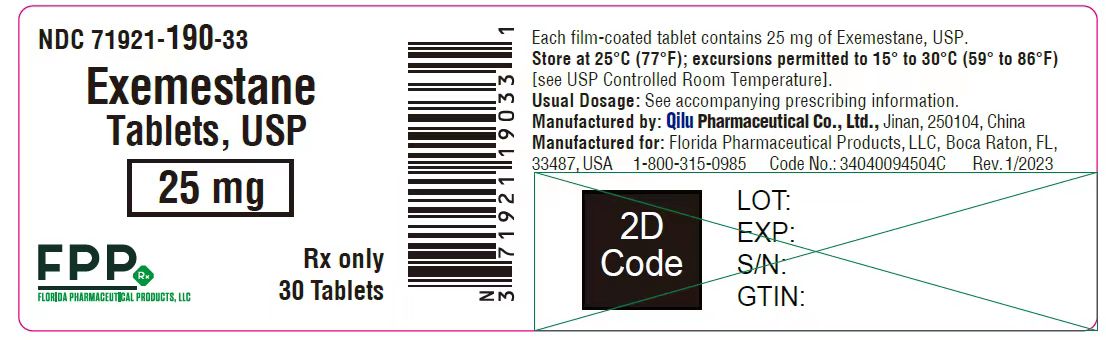
Exemestane 25 mg Tablet, Film Coated, 30-count — NDC 71921-190-33 (Billing 71921-0190-33)
This is a package of 30 tablets of Exemestane 25 mg Tablet, Film Coated from Florida Pharmaceutical Products, LLC, marketed since Jan 2021 and currently FDA-listed; retail pharmacies pay about $0.7478 per tablet (NADAC). It is this product's only package size.
Identity & classification
Regulatory identifiers FDA, NLM and CMS codes for this package
Drug-database identifiers Medi-Span GPI and First Databank GCN / HICL / AHFS classification
- GSN (GCN sequence number): 044186
- GCN: 92896
- GPI-14 (Medi-Span): 21402835000320
- HICL (First Databank): 020803
- AHFS class code: 10:00.00.00
- RxCUI (RxNorm): 310261
Where does this data come from?
- FDA openFDA NDC Directory · synced Oct 1, 2026
- FDA label on DailyMed · label index refreshed Oct 1, 2026
- RxNorm (NLM RxNav) · catalog refreshed Oct 1, 2026
- Medi-Span GPI (licensed)
- First Databank (licensed) · refreshed Oct 1, 2026
RxNorm drug class
This medicine belongs to the Aromatase Inhibitor class.
Where does this data come from?
- RxClass (NLM) · catalog refreshed Oct 1, 2026
Clinical
Exemestane is used to treat early breast cancer in women who have experienced menopause ('change of life'; end of monthly menstrual periods) and who have already been treated with a medication called tamoxifen (Nolvadex) for 2 to 3 years. This medication is also used to treat breast cancer in women who have experienced menopause whose breast cancer has worsened while they were taking tamoxifen. Exemestane is in a class of medications called aromatase inhibitors. It works by decreasing the amount of estrogen produced by the body. This can slow or stop the growth of some breast tumors that need...
Read the full MedlinePlus article ↗- It treats estrogen-receptor positive breast cancer in postmenopausal women. It is used after two to three years of tamoxifen for early breast cancer, and for advanced breast cancer...
- Take one tablet by mouth once a day after a meal. Follow your prescriber's directions and the pharmacy label. If you take medicines like rifampicin or phenytoin, your dose may be c...
- Hot flushes, tiredness, joint pain, headache, trouble sleeping and sweating are the most common. Nausea and dizziness can occur too. Call your doctor about chest pain, fractures, o...
- Yes, it can lower bone density over time. Your doctor may check your bones and vitamin D level, and may recommend vitamin D if it is low.
Patient education
Supplement & herbal interactions
Some supplements/herbs that may interact with Exemestane — tap one for details:
Where does this data come from?
- MedlinePlus (NLM) · refreshed Oct 1, 2026
- FDA label on DailyMed · label index refreshed Oct 1, 2026
Ask a licensed pharmacist directly — free, answered by our team.
Pricing
A drug doesn't have one price. Each row is a different public payment system, and none is what you'd pay at the counter — that depends on your insurance. The ⓘ on each row explains what it measures.
| Price system | Per ea | Per package |
|---|---|---|
| Retail pharmacies payNADAC · weekly | $0.748 | $22.43 / 30 tablets |
| Medicaid paysCMS SDUD · 12 mo | $0.9841 | $29.52 / 30 tablets |
| Medicare drug plans payPart D · Q2 2026 | $1.36 | $40.84 / 30 tablets |
| Medicare Part B allowsASP · J8999 | No ASP payment limit on file for J8999 this quarter. | |
Where does this data come from?
- CMS NADAC weekly file · file of Sep 30, 2026
- CMS ASP pricing files · refreshed Sep 20, 2026
- CMS Medicaid State Drug Utilization Data · through Q1 2026
- CMS Part D plan pricing files · refreshed Sep 24, 2026
- VA National Acquisition Center price file
Billing & reimbursement
Where does this data come from?
- CMS ASP NDC-HCPCS crosswalk · refreshed Sep 22, 2026
- DMEPDAC NDC-HCPCS crosswalk
- openFDA NSDE billing units · refreshed Sep 7, 2026
Packaging — all sizes for this product
| Package NDC | Description | Marketing start | Marketing end | Status |
|---|---|---|---|---|
| 71921-0190-33 You're viewing this Main listing | 30 TABLET, FILM COATED in 1 BOTTLE | 2021-01-15 | — | Active |
Therapeutic equivalents
| Product | Labeler | Pack | NADAC/unit | TE | Status | Price vs. this |
|---|---|---|---|---|---|---|
| Exemestane 25 mg 00832-0595-30 | Upsher-Smith | 30 tablets | $0.748 | AB | Availability likely | — |
| Exemestane 25 mg 51991-0005-90 | Breckenridge | 90 tablets | $0.748 | AB | Availability likely | — |
| Exemestane 25 mg 59651-0516-30 | Aurobindo | 30 tablets | $0.748 | AB | Availability likely | — |
| Exemestane 25 mg 59762-2858-01 | Mylan | 30 tablets | $0.748 | AB | Availability likely | — |
| Exemestane 25 mg 68382-0383-06 | Zydus | 30 tablets | $0.748 | AB | Availability likely | — |
| Exemestane 25 mg 69097-0316-02 | Cipla | 30 tablets | $0.748 | AB | Availability likely | — |
| Exemestane 25 mgthis 71921-0190-33 | Florida | 30 tablets | $0.748 | AB | Availability likely | — |
| Exemestane 25 mg 72603-0329-01 | NorthStar | 30 tablets | $0.748 | AB | Availability likely | — |
| Aromasin 25 mg 00009-7663-04 | Pharmacia | 30 tablets | $38.979 | AB | Availability likely | +5112% |
| Exemestane 25 mg 63629-2056-01 | Bryant | 30 tablets | — | AB | FDA listed | — |
| Exemestane 25 mg 70771-1374-03 | Zydus | 30 tablets | — | AB | FDA listed | — |
Where does this data come from?
- FDA openFDA NDC Directory · synced Oct 1, 2026
- FDA Orange Book · refreshed Sep 3, 2026
- CMS NADAC weekly file · file of Sep 30, 2026
Availability & generic status
This product is an FDA-approved generic. Other versions of the same drug are listed under Therapeutic equivalents, least expensive first.
Where does this data come from?
- FDA Orange Book · refreshed Sep 3, 2026
What it looks like
Where does this data come from?
- FDA label on DailyMed · label index refreshed Oct 1, 2026
Inactive Ingredients / Excipients
Inactive ingredients, also called excipients, are components of the drug product other than the active ingredient. They may include fillers, dyes, coatings, preservatives, flavors, or other formulation ingredients.
💡 Tap an ingredient (hover on desktop) to see what it is and why it’s used.
-
UNII R75537T0T4
Hypromellose 2910 is a plant-derived thickening agent made from cellulose. It serves as a binder that holds tablet ingredients together, a film-coating for pills, and a viscosity controller in liquids.
-
UNII 70097M6I30
Magnesium stearate is a salt made from magnesium and stearic acid, a fatty substance. It's used in tablets and capsules as a lubricant and glidant to help ingredients flow smoothly during manufacturing and prevent sticking.
-
UNII 3OWL53L36A
A natural sugar alcohol derived from seaweed or synthesized in the lab. It's used as a filler to add bulk, a sweetener in sugar-free formulas, and a disintegrant to help tablets break apart in the stomach.
-
UNII OP1R32D61U
Microcrystalline cellulose is a purified form of cellulose, a natural fiber from plant sources. It acts as a binder and filler in tablets and capsules, helping hold ingredients together and give the medicine its shape and size.
-
UNII G2M7P15E5P
Polyethylene glycol 3350 is a synthetic polymer used as a solvent, humectant, and thickening agent in medicines. It helps dissolve other ingredients, retain moisture in the product, and achieve the desired consistency.
-
UNII 6OZP39ZG8H
Polysorbate 80 is a synthetic emulsifier derived from sorbitol and oleic acid. It helps mix oil and water-based ingredients together in medications and improves how the product disperses in the body.
-
UNII 532B59J990
Polyvinyl alcohol is a synthetic polymer made from plant-derived materials. It's used as a binder to hold ingredients together, a film-former in coatings, and a thickener in liquid formulations.
-
UNII ETJ7Z6XBU4
Silicon dioxide is a naturally occurring mineral used as a glidant and anti-caking agent. It helps powder ingredients flow smoothly and prevents clumping during manufacturing and storage.
-
UNII 5856J3G2A2
A starch-based powder made from potatoes and processed with sodium. It acts as a disintegrant, helping the tablet or capsule break apart quickly in the stomach so the medicine can be absorbed.
-
UNII 7SEV7J4R1U
A powder made from a naturally occurring mineral. In medicines, talc works as a glidant and anti-caking agent, helping tablets and capsules flow smoothly during manufacturing and preventing clumping.
-
UNII 15FIX9V2JP
Titanium dioxide is a bright white mineral powder commonly used as a colorant and opacifying agent. It makes pills and tablets white or lighter in color and helps make coatings non-transparent.
11 inactive ingredients listed in the exact product block matched to this NDC.
Where does this data come from?
ingredient classCode="IACT" elements from the exact product block matched by this NDC. Label-section narrative from DailyMed / the openFDA label index is shown separately when available.- FDA label on DailyMed · label index refreshed Oct 1, 2026
- FDA openFDA NDC Directory · synced Oct 1, 2026
Inactive ingredient FAQ
Are inactive ingredients the same for every manufacturer?
Why might an inactive ingredient be missing?
Can inactive ingredients matter?
Manufacturer & labeler
Where does this data come from?
- FDA openFDA NDC Directory · synced Oct 1, 2026
- Drugs@FDA
Full prescribing information FDA SPL
🎯 Indications and Usage ▾
1 INDICATIONS AND USAGE Exemestane is an aromatase inhibitor indicated for: adjuvant treatment of postmenopausal women with estrogen-receptor positive early breast cancer who have received two to three years of tamoxifen and are switched to exemestane for completion of a total of five consecutive years of adjuvant hormonal therapy ( 14.1 ). treatment of advanced breast cancer in postmenopausal women whose disease has progressed following tamoxifen therapy ( 14.2 ).
1.1Adjuvant Treatment of Postmenopausal Women Exemestane is indicated for adjuvant treatment of postmenopausal women with estrogen-receptor positive early breast cancer who have received two to three years of tamoxifen and are switched to exemestane for completion of a total of five consecutive years of adjuvant hormonal therapy [see Clinical Studies (14.1) ].
1.2Advanced Breast Cancer in Postmenopausal Women Exemestane is indicated for the treatment of advanced breast cancer in postmenopausal women whose disease has progressed following tamoxifen therapy [see Clinical Studies (14.2) ].
⏱️ Dosage and Administration ▾
2 DOSAGE AND ADMINISTRATION Recommended Dose: One 25 mg tablet once daily after a meal ( 2.1 ).
2.1Recommended Dose The recommended dose of exemestane in early and advanced breast cancer is one 25 mg tablet once daily after a meal. adjuvant treatment of postmenopausal women with estrogen-receptor positive early breast cancer who have received two to three years of tamoxifen and are switched to exemestane for completion of a total of five consecutive years of adjuvant hormonal therapy. the treatment of advanced breast cancer in postmenopausal women whose disease has progressed following tamoxifen therapy.
2.2Dose Modifications Concomitant use of strong CYP 3A4 inducers decreases exemestane exposure, For patients receiving exemestane with a strong CYP 3A4 inducer such as rifampicin or phenytoin, the recommended dose of exemestane is 50 mg once daily after a meal [see Drug Interactions (7) and Clinical Pharmacology (12.3) ].
💊 Dosage Forms and Strengths ▾
3 DOSAGE FORMS AND STRENGTHS Exemestane Tablets, USP are white or almost white round film-coated tablets, debossed with 111 on one side. Each tablet contains 25 mg of exemestane, USP. Tablets: 25 mg ( 3 )
⛔ Contraindications ▾
4 CONTRAINDICATIONS Exemestane is contraindicated in patients with a known hypersensitivity to the drug or to any of the excipients. Patients with a known hypersensitivity to the drug or to any of the excipients ( 4 ).
⚠️ Warnings and Cautions ▾
5 WARNINGS AND PRECAUTIONS Reductions in bone mineral density (BMD) over time are seen with exemestane use ( 5.1 ). Routine assessment of 25-hydroxy vitamin D levels prior to the start of aromatase inhibitor treatment should be performed ( 5.2 ). Embryo-Fetal Toxicity: Can cause fetal harm. Advise females of reproductive potential of the potential risk to a fetus and to use effective contraception ( 5.6 , 8.1 , 8.3 ).
5.1Reductions in Bone Mineral Density (BMD) Reductions in bone mineral density (BMD) over time are seen with exemestane use. Table 1 describes changes in BMD from baseline to 24 months in patients receiving exemestane compared to patients receiving tamoxifen (IES) or placebo (027). Concomitant use of bisphosphonates, vitamin D supplementation, and calcium was not allowed.
Table 1. Percent Change in BMD from Baseline to 24 months, Exemestane vs. Control 1 IES 027 BMD Exemestane N=29 Tamoxifen 1 N=38 Exemestane N=59 Placebo 1 N=65 Lumbar spine (%) -3.1 -0.2 -3.5 -2.4 Femoral neck (%) -4.2 -0.3 -4.6 -2.6 During adjuvant treatment with exemestane, women with osteoporosis or at risk of osteoporosis should have their bone mineral density formally assessed by bone densitometry at the commencement of treatment.
Monitor patients for bone mineral density loss and treat as appropriate.
5.2Vitamin D Assessment Routine assessment of 25-hydroxy vitamin D levels prior to the start of aromatase inhibitor treatment should be performed, due to the high prevalence of vitamin D deficiency in women with early breast cancer (EBC). Women with vitamin D deficiency should receive supplementation with vitamin D.
5.3Administration with Estrogen-Containing Agents Exemestane should not be coadministered with systemic estrogen-containing agents as these could interfere with its pharmacologic action.
5.4Laboratory Abnormalities In patients with early breast cancer, the incidence of hematological abnormalities of Common Toxicity Criteria (CTC) grade ≥1 was lower in the exemestane treatment group, compared with tamoxifen. Incidence of CTC grade 3 or 4 abnormalities was low (approximately 0.1%) in both treatment groups. Approximately 20% of patients receiving exemestane in clinical studies in advanced breast cancer experienced CTC grade 3 or 4 lymphocytopenia.
Of these patients, 89% had a pre-existing lower grade lymphopenia. Forty percent of patients either recovered or improved to a lesser severity while on treatment. Patients did not have a significant increase in viral infections, and no opportunistic infections were observed.
Elevations of serum levels of AST, ALT, alkaline phosphatase, and gamma glutamyl transferase >5 times the upper value of the normal range (i.e., ≥ CTC grade 3) have been rarely reported in patients treated for advanced breast cancer but appear mostly attributable to the underlying presence of liver and/or bone metastases. In the comparative study in advanced breast cancer patients, CTC grade 3 or 4 elevation of gamma glutamyl transferase without documented evidence of liver metastasis was reported in 2.7% of patients treated with exemestane and in 1.8% of patients treated with megestrol acetate.
In patients with early breast cancer, elevations in bilirubin, alkaline phosphatase, and creatinine were more common in those receiving exemestane than either tamoxifen or placebo. Treatment-emergent bilirubin elevations (any CTC grade) occurred in 5% of exemestane patients and 0.8% of tamoxifen patients on the Intergroup Exemestane Study (IES), and in 7% of exemestane treated patients vs. 0% of placebo treated patients in the 027 study.
CTC grade 3–4 increases in bilirubin occurred in 0.9% of exemestane treated patients compared to 0.1% of tamoxifen treated patients. Alkaline phosphatase elevations of any CTC grade occurred in 15% of exemestane treated patients on the IES compared to 2.6% of tamoxifen treated patients, and in 14% of exemestane treated patients compared to 7% of placebo treated patients in study 027. Creatin… [Excerpted — this section continues on DailyMed.]
🤒 Adverse Reactions ▾
6 ADVERSE REACTIONS The following clinically significant adverse reactions are described elsewhere in the labeling: Reductions in Bone Mineral Density (BMD) [see Warnings and Precautions (5.1) ] Early breast cancer: Adverse reactions occurring in ≥ 10% of patients in any treatment group (exemestane vs. tamoxifen) were hot flushes (21% vs. 20%), fatigue (16% vs. 15%), arthralgia (15% vs.
9%), headache (13% vs. 11%), insomnia (12% vs. 9%), and increased sweating (12% vs.
10%). Discontinuation rates due to AEs were similar between exemestane and tamoxifen (6% vs. 5%).
Incidences of cardiac ischemic events (myocardial infarction, angina, and myocardial ischemia) were exemestane 1.6%, tamoxifen 0.6%. Incidence of cardiac failure: exemestane 0.4%, tamoxifen 0.3% ( 6 , 6.1 ). Advanced breast cancer: Most common adverse reactions were mild to moderate and included hot flushes (13% vs.
5%), nausea (9% vs. 5%), fatigue (8% vs. 10%), increased sweating (4% vs.
8%), and increased appetite (3% vs. 6%) for exemestane and megestrol acetate, respectively ( 6 , 6.1 ). To report SUSPECTED ADVERSE REACTIONS, contact Florida Pharmaceutical Products, LLC at 1-800-315-0985 or FDA at 1-800-FDA-1088 or www.fda.gov/medwatch.
6.1Clinical Trial Experience Because clinical trials are conducted under widely varying conditions, adverse reaction rates observed in the clinical trials of a drug cannot be directly compared to rates in the clinical trials of another drug and may not reflect the rates observed in clinical practice. Adjuvant Therapy The data described below reflect exposure to exemestane in 2325 postmenopausal women with early breast cancer. Exemestane tolerability in postmenopausal women with early breast cancer was evaluated in two well-controlled trials: the IES study [see Clinical Studies (14.1) ] and the 027 study (a randomized, placebo-controlled, double-blind, parallel group study specifically designed to assess the effects of exemestane on bone metabolism, hormones, lipids, and coagulation factors over 2 years of treatment).
The median duration of adjuvant treatment was 27.4 months and 27.3 months for patients receiving exemestane or tamoxifen, respectively, within the IES study and 23.9 months for patients receiving exemestane or placebo within the 027 study. Median duration of observation after randomization for exemestane was 34.5 months and for tamoxifen was 34.6 months. Median duration of observation was 30 months for both groups in the 027 study.
Certain adverse reactions, which were expected based on the known pharmacological properties and side effect profiles of test drugs, were actively sought through a positive checklist. Signs and symptoms were graded for severity using CTC in both studies. Within the IES study, the presence of some illnesses/conditions was monitored through a positive checklist without assessment of severity.
These included myocardial infarction, other cardiovascular disorders, gynecological disorders, osteoporosis, osteoporotic fractures, other primary cancer, and hospitalizations. Within the IES study, discontinuations due to adverse reactions occurred in 6% and 5% of patients receiving exemestane and tamoxifen, respectively, and in 12% and 4.1% of patients receiving exemestane or placebo respectively within study 027. Deaths due to any cause were reported for 1.3% of the exemestane treated patients and 1.4% of the tamoxifen treated patients within the IES study.
There were 6 deaths due to stroke on the exemestane arm compared to 2 on tamoxifen. There were 5 deaths due to cardiac failure on the exemestane arm compared to 2 on tamoxifen. The incidence of cardiac ischemic events (myocardial infarction, angina, and myocardial ischemia) was 1.6% in exemestane treated patients and 0.6% in tamoxifen treated patients in the IES study.
Cardiac failure was observed in 0.4% of exemestane treated patients and 0.3% of tamoxifen treated patients. In the adjuvant treatment of early breast cancer, the most common adverse… [Excerpted — this section continues on DailyMed.]
🔄 Drug Interactions ▾
7 DRUG INTERACTIONS Strong CYP 3A4 inducers: Concomitant use of strong CYP 3A4 inducers decreases exemestane exposure. Increase the exemestane dose to 50 mg ( 2.2 , 7 ). Drugs That Induce CYP 3A4 Co-medications that induce CYP 3A4 (e.g., rifampicin, phenytoin, carbamazepine, phenobarbital, or St.
John's wort) may significantly decrease exposure to exemestane. Dose modification is recommended for patients who are also receiving a strong CYP 3A4 inducer [see Dosage and Administration (2.2) and Clinical Pharmacology (12.3) ] .
👥 Use in Specific Populations ▾
8 USE IN SPECIFIC POPULATIONS Lactation: Advise not to breastfeed ( 8.2 ).
8.1Pregnancy Risk Summary Based on findings in animal studies and its mechanism of action , exemestane can cause fetal harm when administered to a pregnant woman [see Clinical Pharmacology (12.1) ] . Limited human data from case reports are insufficient to inform a drug-associated risk. In animal reproduction studies, administration of exemestane to pregnant rats and rabbits caused increased incidence of abortions, embryo-fetal toxicity, and prolonged gestation with abnormal or difficult labor [ see Data ] .
Advise pregnant women of the potential risk to a fetus. The estimated background risk of major birth defects and miscarriage for the indicated population is unknown. In the US general population, the estimated background risk of major birth defects and miscarriage in clinically recognized pregnancies is 2–4% and 15–20%, respectively.
Data Animal Data In animal reproduction studies in rats and rabbits, exemestane caused embryo-fetal toxicity, and was abortifacient. Radioactivity related to 14 C-exemestane crossed the placenta of rats following oral administration of 1 mg/kg exemestane. The concentration of exemestane and its metabolites was approximately equivalent in maternal and fetal blood.
When rats were administered exemestane from 14 days prior to mating until either days 15 or 20 of gestation, and resuming for the 21 days of lactation, an increase in placental weight was seen at 4 mg/kg/day (approximately 1.5 times the recommended human daily dose on a mg/m 2 basis). Increased resorptions, reduced number of live fetuses, decreased fetal weight, retarded ossification, prolonged gestation and abnormal or difficult labor was observed at doses equal to or greater than 20 mg/kg/day (approximately 7.5 times the recommended human daily dose on a mg/m 2 basis).
Daily doses of exemestane, given to rabbits during organogenesis, caused a decrease in placental weight at 90 mg/kg/day (approximately 70 times the recommended human daily dose on a mg/m 2 basis) and in the presence of maternal toxicity, abortions, an increase in resorptions, and a reduction in fetal body weight were seen at 270 mg/kg/day. No malformations were noted when exemestane was administered to pregnant rats or rabbits during the organogenesis period at doses up to 810 and 270 mg/kg/day, respectively (approximately 320 and 210 times the recommended human dose on a mg/m 2 basis, respectively).
8.2Lactation Risk Summary There is no information on the presence of exemestane in human milk, or on its effects on the breastfed infant or milk production. Exemestane is present in rat milk at concentrations similar to maternal plasma [see Data ] . Because of the potential for serious adverse reactions in breast-fed infants from exemestane, advise a woman not to breastfeed during treatment with exemestane and for 1 month after the final dose.
Data Radioactivity related to exemestane appeared in rat milk within 15 minutes of oral administration of radiolabeled exemestane. Concentrations of exemestane and its metabolites were approximately equivalent in the milk and plasma of rats for 24 hours after a single oral dose of 1 mg/kg 14 C-exemestane.
8.3Females and Males of Reproductive Potential Pregnancy Testing Pregnancy testing is recommended for females of reproductive potential within seven days prior to initiating exemestane. Contraception Females Exemestane can cause fetal harm when administered to a pregnant woman [see Use in Specific Populations (8.1) ] . Advise females of reproductive potential to use effective contraception during treatment with exemestane and for 1 month after the final dose.
Infertility Based on findings in animals, male and female fertility may be impaired by treatment with exemestane [see Nonclinical Toxicology (13.1) ].
8.4Pediatric Use Safety and effectiveness in pediatric patients have not been established.
8.6Hepatic Impairment The AUC of exemestane was increased… [Excerpted — this section continues on DailyMed.]
🤰 Pregnancy ▾
8.1Pregnancy Risk Summary Based on findings in animal studies and its mechanism of action , exemestane can cause fetal harm when administered to a pregnant woman [see Clinical Pharmacology (12.1) ] . Limited human data from case reports are insufficient to inform a drug-associated risk. In animal reproduction studies, administration of exemestane to pregnant rats and rabbits caused increased incidence of abortions, embryo-fetal toxicity, and prolonged gestation with abnormal or difficult labor [ see Data ] .
Advise pregnant women of the potential risk to a fetus. The estimated background risk of major birth defects and miscarriage for the indicated population is unknown. In the US general population, the estimated background risk of major birth defects and miscarriage in clinically recognized pregnancies is 2–4% and 15–20%, respectively.
Data Animal Data In animal reproduction studies in rats and rabbits, exemestane caused embryo-fetal toxicity, and was abortifacient. Radioactivity related to 14 C-exemestane crossed the placenta of rats following oral administration of 1 mg/kg exemestane. The concentration of exemestane and its metabolites was approximately equivalent in maternal and fetal blood.
When rats were administered exemestane from 14 days prior to mating until either days 15 or 20 of gestation, and resuming for the 21 days of lactation, an increase in placental weight was seen at 4 mg/kg/day (approximately 1.5 times the recommended human daily dose on a mg/m 2 basis). Increased resorptions, reduced number of live fetuses, decreased fetal weight, retarded ossification, prolonged gestation and abnormal or difficult labor was observed at doses equal to or greater than 20 mg/kg/day (approximately 7.5 times the recommended human daily dose on a mg/m 2 basis).
Daily doses of exemestane, given to rabbits during organogenesis, caused a decrease in placental weight at 90 mg/kg/day (approximately 70 times the recommended human daily dose on a mg/m 2 basis) and in the presence of maternal toxicity, abortions, an increase in resorptions, and a reduction in fetal body weight were seen at 270 mg/kg/day. No malformations were noted when exemestane was administered to pregnant rats or rabbits during the organogenesis period at doses up to 810 and 270 mg/kg/day, respectively (approximately 320 and 210 times the recommended human dose on a mg/m 2 basis, respectively).
🧒 Pediatric Use ▾
8.4Pediatric Use Safety and effectiveness in pediatric patients have not been established.
🆘 Overdosage ▾
10 OVERDOSAGE Clinical trials have been conducted with exemestane given as a single dose to healthy female volunteers at doses as high as 800 mg and daily for 12 weeks to postmenopausal women with advanced breast cancer at doses as high as 600 mg. These dosages were well tolerated. There is no specific antidote to overdosage and treatment must be symptomatic.
General supportive care, including frequent monitoring of vital signs and close observation of the patient, is indicated. A male child (age unknown) accidentally ingested a 25-mg tablet of exemestane. The initial physical examination was normal, but blood tests performed 1 hour after ingestion indicated leucocytosis (WBC 25000/mm 3 with 90% neutrophils).
Blood tests were repeated 4 days after the incident and were normal. No treatment was given. In mice, mortality was observed after a single oral dose of exemestane of 3200 mg/kg, the lowest dose tested (about 640 times the recommended human dose on a mg/m 2 basis).
In rats and dogs, mortality was observed after single oral doses of exemestane of 5000 mg/kg (about 2000 times the recommended human dose on a mg/m 2 basis) and of 3000 mg/kg (about 4000 times the recommended human dose on a mg/m 2 basis), respectively. Convulsions were observed after single doses of exemestane of 400 mg/kg and 3000 mg/kg in mice and dogs (approximately 80 and 4000 times the recommended human dose on a mg/m 2 basis), respectively.
🧬 Clinical Pharmacology ▾
12 CLINICAL PHARMACOLOGY
12.1Mechanism of Action Breast cancer cell growth may be estrogen-dependent. Aromatase is the principal enzyme that converts androgens to estrogens both in pre- and postmenopausal women. While the main source of estrogen (primarily estradiol) is the ovary in premenopausal women, the principal source of circulating estrogens in postmenopausal women is from conversion of adrenal and ovarian androgens (androstenedione and testosterone) to estrogens (estrone and estradiol) by the aromatase enzyme in peripheral tissues.
Exemestane is an irreversible, steroidal aromatase inactivator, structurally related to the natural substrate androstenedione. It acts as a false substrate for the aromatase enzyme, and is processed to an intermediate that binds irreversibly to the active site of the enzyme, causing its inactivation, an effect also known as "suicide inhibition." Exemestane significantly lowers circulating estrogen concentrations in postmenopausal women, but has no detectable effect on adrenal biosynthesis of corticosteroids or aldosterone.
Exemestane has no effect on other enzymes involved in the steroidogenic pathway up to a concentration at least 600 times higher than that inhibiting the aromatase enzyme.
12.2Pharmacodynamics Effect on Estrogens Multiple doses of exemestane ranging from 0.5 to 600 mg/day were administered to postmenopausal women with advanced breast cancer. Plasma estrogen (estradiol, estrone, and estrone sulfate) suppression was seen starting at a 5-mg daily dose of exemestane, with a maximum suppression of at least 85% to 95% achieved at a 25-mg dose. Exemestane 25 mg daily reduced whole body aromatization (as measured by injecting radiolabeled androstenedione) by 98% in postmenopausal women with breast cancer.
After a single dose of exemestane 25 mg, the maximal suppression of circulating estrogens occurred 2 to 3 days after dosing and persisted for 4 to 5 days. Effect on Corticosteroids In multiple-dose trials of doses up to 200 mg daily, exemestane selectivity was assessed by examining its effect on adrenal steroids. Exemestane did not affect cortisol or aldosterone secretion at baseline or in response to ACTH at any dose.
Thus, no glucocorticoid or mineralocorticoid replacement therapy is necessary with exemestane treatment. Other Endocrine Effects Exemestane does not bind significantly to steroidal receptors, except for a slight affinity for the androgen receptor (0.28% relative to dihydrotestosterone). The binding affinity of its 17-dihydrometabolite for the androgen receptor, however, is 100 times that of the parent compound.
Daily doses of exemestane up to 25 mg had no significant effect on circulating levels of androstenedione, dehydroepiandrosterone sulfate, or 17-hydroxyprogesterone, and were associated with small decreases in circulating levels of testosterone. Increases in testosterone and androstenedione levels have been observed at daily doses of 200 mg or more. A dose-dependent decrease in sex hormone binding globulin (SHBG) has been observed with daily exemestane doses of 2.5 mg or higher.
Slight, nondose-dependent increases in serum luteinizing hormone (LH) and follicle-stimulating hormone (FSH) levels have been observed even at low doses as a consequence of feedback at the pituitary level. Exemestane 25 mg daily had no significant effect on thyroid function [free triiodothyronine (FT3), free thyroxine (FT4), and thyroid stimulating hormone (TSH)]. Coagulation and Lipid Effects In study 027 of postmenopausal women with early breast cancer treated with exemestane (N=73) or placebo (N=73), there was no change in the coagulation parameters activated partial thromboplastin time [APTT], prothrombin time [PT], and fibrinogen.
Plasma HDL cholesterol was decreased 6–9% in exemestane treated patients; total cholesterol, LDL cholesterol, triglycerides, apolipoprotein-A1, apolipoprotein-B, and lipoprotein-a were unchanged. An 18% increase in homocysteine levels was also observed… [Excerpted — this section continues on DailyMed.]
🧬 Mechanism of Action ▾
12.1Mechanism of Action Breast cancer cell growth may be estrogen-dependent. Aromatase is the principal enzyme that converts androgens to estrogens both in pre- and postmenopausal women. While the main source of estrogen (primarily estradiol) is the ovary in premenopausal women, the principal source of circulating estrogens in postmenopausal women is from conversion of adrenal and ovarian androgens (androstenedione and testosterone) to estrogens (estrone and estradiol) by the aromatase enzyme in peripheral tissues.
Exemestane is an irreversible, steroidal aromatase inactivator, structurally related to the natural substrate androstenedione. It acts as a false substrate for the aromatase enzyme, and is processed to an intermediate that binds irreversibly to the active site of the enzyme, causing its inactivation, an effect also known as "suicide inhibition." Exemestane significantly lowers circulating estrogen concentrations in postmenopausal women, but has no detectable effect on adrenal biosynthesis of corticosteroids or aldosterone.
Exemestane has no effect on other enzymes involved in the steroidogenic pathway up to a concentration at least 600 times higher than that inhibiting the aromatase enzyme.
📦 How Supplied / Storage and Handling ▾
16 HOW SUPPLIED/STORAGE AND HANDLING Exemestane Tablets, USP are white or almost white round film-coated tablets, debossed with 111 on one side. Each tablet contains 25 mg of exemestane, USP. Exemestane Tablets, USP are packaged in HDPE bottles with a child-resistant screw cap, supplied in packs as follows.
Bottle of 30 NDC 71921-190-33 Bottle of 90 NDC 71921-190-09 Store at 25°C (77ºF); excursions permitted to 15° to 30°C (59° to 86°F) [see USP Controlled Room Temperature].
📦 Storage and Handling ▾
Store at 25°C (77ºF); excursions permitted to 15° to 30°C (59° to 86°F) [see USP Controlled Room Temperature].
📋 Description ▾
11 DESCRIPTION Exemestane Tablets, USP for oral administration contain 25 mg of exemestane, USP, an irreversible, steroidal aromatase inactivator. Exemestane, USP is chemically described as 6-methylenandrosta-1,4-diene-3,17-dione. Its molecular formula is C 20 H 24 O 2 and its structural formula is as follows: The active ingredient is a white or almost white crystalline powder with a molecular weight of 296.41.
Exemestane, USP is freely soluble in N, N-dimethylformamide, soluble in methanol, and practically insoluble in water. Each Exemestane Tablet, USP contains the following inactive ingredients: mannitol, polysorbate 80, hypromellose, colloidal silicon dioxide, microcrystalline cellulose, sodium starch glycolate, magnesium stearate, talc, polyethylene glycol 3350, titanium dioxide, and polyvinyl alcohol. Chemical Structure
💬 Information for Patients ▾
17 PATIENT COUNSELING INFORMATION Advise the patient to read the FDA - approved patient labeling (Patient Information). Bone Effects Advise patients that exemestane lowers the level of estrogen in the body. This may lead to reduction in bone mineral density (BMD) over time.
The lower the BMD, the greater the risk of osteoporosis and fracture [see Warnings and Precautions (5.1) ] . Other Estrogen-Containing Agents Advise patients that they should not take estrogen-containing agents while they are taking exemestane as these could interfere with its pharmacologic action [see Warnings and Precautions (5.3) ]. Use in Premenopausal Women Advise patients that exemestane is not for use for the treatment of breast cancer in premenopausal women [see Warnings and Precautions (5.5) ].
Embryo-Fetal Toxicity Advise pregnant women and females of reproductive potential that exposure during pregnancy or within 1 month prior to conception can result in fetal harm. Advise females to inform their healthcare provider of a known or suspected pregnancy [see Warnings and Precautions (5.6) and Use in Specific Populations (8.1) ]. Advise females of reproductive potential to use effective contraception while taking exemestane and for 1 month after the last dose [see Use in Specific Populations (8.3) ].
Lactation Advise women not to breastfeed during treatment with exemestane and for 1 month after the last dose [see Use in Specific Populations (8.2) ].
🧬 Pharmacokinetics ▾
12.3Pharmacokinetics Following oral administration to healthy postmenopausal women, plasma concentrations of exemestane decline polyexponentially with a mean terminal half-life of about 24 hours. The pharmacokinetics of exemestane are dose proportional after single (10 to 200 mg) or repeated oral doses (0.5 to 50 mg). Following repeated daily doses of exemestane 25 mg, plasma concentrations of unchanged drug are similar to levels measured after a single dose.
Pharmacokinetic parameters in postmenopausal women with advanced breast cancer following single or repeated doses have been compared with those in healthy, postmenopausal women. After repeated dosing, the average oral clearance in women with advanced breast cancer was 45% lower than the oral clearance in healthy postmenopausal women, with corresponding higher systemic exposure. Mean AUC values following repeated doses in women with breast cancer (75.4 ng∙h/mL) were about twice those in healthy women (41.4 ng∙h/mL).
Absorption Following oral administration, exemestane appeared to be absorbed more rapidly in women with breast cancer than in the healthy women, with a mean t max of 1.2 hours in the women with breast cancer and 2.9 hours in healthy women. Approximately 42% of radiolabeled exemestane was absorbed from the gastrointestinal tract. A high-fat breakfast increased AUC and C max of exemestane by 59% and 39%, respectively, compared to fasted state.
Distribution Exemestane is distributed extensively into tissues. Exemestane is 90% bound to plasma proteins and the fraction bound is independent of the total concentration. Albumin and α 1 1-acid glycoprotein both contribute to the binding.
The distribution of exemestane and its metabolites into blood cells is negligible. Metabolism Exemestane is extensively metabolized, with levels of the unchanged drug in plasma accounting for less than 10% of the total radioactivity. The initial steps in the metabolism of exemestane are oxidation of the methylene group in position 6 and reduction of the 17-keto group with subsequent formation of many secondary metabolites.
Each metabolite accounts only for a limited amount of drug-related material. The metabolites are inactive or inhibit aromatase with decreased potency compared with the parent drug. One metabolite may have androgenic activity [see Clinical Pharmacology (12.2) ] .
Studies using human liver preparations indicate that cytochrome P 450 3A4 (CYP 3A4) is the principal isoenzyme involved in the oxidation of exemestane. Exemestane is metabolized also by aldoketoreductases. Elimination Following administration of radiolabeled exemestane to healthy postmenopausal women, the cumulative amounts of radioactivity excreted in urine and feces were similar (42 ± 3% in urine and 42 ± 6% in feces over a 1-week collection period).
The amount of drug excreted unchanged in urine was less than 1% of the dose. Specific Populations Geriatric: Healthy postmenopausal women aged 43 to 68 years were studied in the pharmacokinetic trials. Age-related alterations in exemestane pharmacokinetics were not seen over this age range.
Gender: The pharmacokinetics of exemestane following administration of a single, 25-mg tablet to fasted healthy males (mean age 32 years) were similar to the pharmacokinetics of exemestane in fasted healthy postmenopausal women (mean age 55 years). Race: The influence of race on exemestane pharmacokinetics has not been evaluated. Hepatic Impairment : The pharmacokinetics of exemestane have been investigated in subjects with moderate or severe hepatic impairment (Childs-Pugh B or C).
Following a single 25-mg oral dose, the AUC of exemestane was approximately 3 times higher than that observed in healthy volunteers. Renal Impairment: The AUC of exemestane after a single 25-mg dose was approximately 3 times higher in subjects with moderate or severe renal insufficiency (creatinine clearance < 35 mL/min/1.73 m 2 ) compared with the AUC in healthy volunteers. Pediatric : The pharm… [Excerpted — this section continues on DailyMed.]
🧬 Pharmacodynamics ▾
12.2Pharmacodynamics Effect on Estrogens Multiple doses of exemestane ranging from 0.5 to 600 mg/day were administered to postmenopausal women with advanced breast cancer. Plasma estrogen (estradiol, estrone, and estrone sulfate) suppression was seen starting at a 5-mg daily dose of exemestane, with a maximum suppression of at least 85% to 95% achieved at a 25-mg dose. Exemestane 25 mg daily reduced whole body aromatization (as measured by injecting radiolabeled androstenedione) by 98% in postmenopausal women with breast cancer.
After a single dose of exemestane 25 mg, the maximal suppression of circulating estrogens occurred 2 to 3 days after dosing and persisted for 4 to 5 days. Effect on Corticosteroids In multiple-dose trials of doses up to 200 mg daily, exemestane selectivity was assessed by examining its effect on adrenal steroids. Exemestane did not affect cortisol or aldosterone secretion at baseline or in response to ACTH at any dose.
Thus, no glucocorticoid or mineralocorticoid replacement therapy is necessary with exemestane treatment. Other Endocrine Effects Exemestane does not bind significantly to steroidal receptors, except for a slight affinity for the androgen receptor (0.28% relative to dihydrotestosterone). The binding affinity of its 17-dihydrometabolite for the androgen receptor, however, is 100 times that of the parent compound.
Daily doses of exemestane up to 25 mg had no significant effect on circulating levels of androstenedione, dehydroepiandrosterone sulfate, or 17-hydroxyprogesterone, and were associated with small decreases in circulating levels of testosterone. Increases in testosterone and androstenedione levels have been observed at daily doses of 200 mg or more. A dose-dependent decrease in sex hormone binding globulin (SHBG) has been observed with daily exemestane doses of 2.5 mg or higher.
Slight, nondose-dependent increases in serum luteinizing hormone (LH) and follicle-stimulating hormone (FSH) levels have been observed even at low doses as a consequence of feedback at the pituitary level. Exemestane 25 mg daily had no significant effect on thyroid function [free triiodothyronine (FT3), free thyroxine (FT4), and thyroid stimulating hormone (TSH)]. Coagulation and Lipid Effects In study 027 of postmenopausal women with early breast cancer treated with exemestane (N=73) or placebo (N=73), there was no change in the coagulation parameters activated partial thromboplastin time [APTT], prothrombin time [PT], and fibrinogen.
Plasma HDL cholesterol was decreased 6–9% in exemestane treated patients; total cholesterol, LDL cholesterol, triglycerides, apolipoprotein-A1, apolipoprotein-B, and lipoprotein-a were unchanged. An 18% increase in homocysteine levels was also observed in exemestane treated patients compared with a 12% increase seen with placebo.
🔬 Clinical Studies ▾
14 CLINICAL STUDIES
14.1Adjuvant Treatment in Early Breast Cancer The Intergroup Exemestane Study 031 (IES) was a randomized, double-blind, multicenter, multinational study comparing exemestane (25 mg/day) vs. tamoxifen (20 or 30 mg/day) in postmenopausal women with early breast cancer. Patients who remained disease-free after receiving adjuvant tamoxifen therapy for 2 to 3 years were randomized to receive an additional 3 or 2 years of exemestane or tamoxifen to complete a total of 5 years of hormonal therapy. The primary objective of the study was to determine whether, in terms of disease-free survival, it was more effective to switch to exemestane rather than continuing tamoxifen therapy for the remainder of five years.
Disease-free survival was defined as the time from randomization to time of local or distant recurrence of breast cancer, contralateral invasive breast cancer, or death from any cause. The secondary objectives were to compare the two regimens in terms of overall survival and long-term tolerability. Time to contralateral invasive breast cancer and distant recurrence-free survival were also evaluated.
A total of 4724 patients in the intent-to-treat (ITT) analysis were randomized to exemestane tablets 25 mg once daily (N = 2352) or to continue to receive tamoxifen once daily at the same dose received before randomization (N = 2372). Demographics and baseline tumor characteristics are presented in Table 5. Prior breast cancer therapy is summarized in Table 6.
Table 5. Demographic and Baseline Tumor Characteristics from the IES Study of Postmenopausal Women with Early Breast Cancer (ITT Population) Parameter Exemestane (N = 2352) Tamoxifen (N = 2372) Age (years): Median age (range) 63.0 (38.0-96.0) 63.0 (31.0-90.0) Race, n (%): Caucasian 2315 (98.4) 2333 (98.4) Hispanic 13 (0.6) 13 (0.5) Asian 10 (0.4) 9 (0.4) Black 7 (0.3) 10 (0.4) Other/not reported 7 (0.3) 7 (0.3) Nodal status, n (%): Negative 1217 (51.7) 1228 (51.8) Positive 1051 (44.7) 1044 (44.0) 1-3 Positive nodes 721 (30.7) 708 (29.8) 4-9 Positive nodes 239 (10.2) 244 (10.3) >9 Positive nodes 88 (3.7) 86 (3.6) Not reported 3 (0.1) 6 (0.3) Unknown or missing 84 (3.6) 100 (4.2) Histologic type, n (%): Infiltrating ductal 1777 (75.6) 1830 (77.2) Infiltrating lobular 341 (14.5) 321 (13.5) Other 231 (9.8) 213 (9.0) Unknown or missing 3 (0.1) 8 (0.3) Receptor status Results for receptor status include the results of the post-randomization testing of specimens from subjects for whom receptor status was unknown at randomization. , n (%): ER and PgR Positive 1331 (56.6) 1319 (55.6) ER Positive and PgR Negative/Unknown 677 (28.8) 692 (29.2) ER Unknown and PgR Positive Only one subject in the exemestane group had unknown ER status and positive PgR status. /Unknown 288 (12.2) 291 (12.3) ER Negative and PgR Positive 6 (0.3) 7 (0.3) ER Negative and PgR Negative/Unknown (none positive) 48 (2.0) 58 (2.4) Missing 2 (0.1) 5 (0.2) Tumor Size, n (%): ≤ 0.5 cm 58 (2.5) 46 (1.9) > 0.5-1.0 cm 315 (13.4) 302 (12.7) > 1.0-2 cm 1031 (43.8) 1033 (43.5) > 2.0-5.0 cm 833 (35.4) 883 (37.2) > 5.0 cm 62 (2.6) 59 (2.5) Not reported 53 (2.3) 49 (2.1) Tumor Grade, n (%): G1 397 (16.9) 393 (16.6) G2 977 (41.5) 1007 (42.5) G3 454 (19.3) 428 (18.0) G4 23 (1.0) 19 (0.8) Unknown/Not Assessed/Not reported 501 (21.3) 525 (22.1) Table 6.
Prior Breast Cancer Therapy of Patients in the IES Study of Postmenopausal Women with Early Breast Cancer (ITT Population) Parameter Exemestane (N = 2352) Tamoxifen (N = 2372) Type of surgery, n (%): Mastectomy 1232 (52.4) 1242 (52.4) Breast-conserving 1116 (47.4) 1123 (47.3) Unknown or missing 4 (0.2) 7 (0.3) Radiotherapy to the breast, n (%): Yes 1524 (64.8) 1523 (64.2) No 824 (35.5) 843 (35.5) Not reported 4 (0.2) 6 (0.3) Prior therapy, n (%): Chemotherapy 774 (32.9) 769 (32.4) Hormone replacement therapy 567 (24.1) 561 (23.7) Bisphosphonates 43 (1.8) 34 (1.4) Duration of tamoxifen therapy at randomization (months): Median (range) 28.5 (15.8-52.2) 28.4 (15.6-63… [Excerpted — this section continues on DailyMed.]
🧪 Nonclinical Toxicology ▾
13 NONCLINICAL TOXICOLOGY
13.1Carcinogenesis, Mutagenesis, Impairment of Fertility A 2-year carcinogenicity study in mice at doses of 50, 150, and 450 mg/kg/day exemestane (gavage), resulted in an increased incidence of hepatocellular adenomas and/or carcinomas in both genders at the high dose level. Plasma AUC (0–24hr) at the high dose were 2575 ± 386 and 5667 ± 1833 ng.hr/mL in males and females (approx. 34 and 75 fold the AUC in postmenopausal patients at the recommended clinical dose).
An increased incidence of renal tubular adenomas was observed in male mice at the high dose of 450 mg/kg/day. Since the doses tested in mice did not achieve an MTD, neoplastic findings in organs other than liver and kidneys remain unknown. A separate carcinogenicity study was conducted in rats at the doses of 30, 100, and 315 mg/kg/day exemestane (gavage) for 92 weeks in males and 2 years in females.
No evidence of carcinogenic activity up to the highest dose tested of 315 mg/kg/day was observed in females. The male rat study was inconclusive since it was terminated prematurely at Week 92. At the highest dose, plasma AUC (0–24hr) levels in male (1418 ± 287 ng.hr/mL) and female (2318 ± 1067 ng.hr/mL) rats were 19 and 31 fold higher than those measured in postmenopausal cancer patients receiving the recommended clinical dose.
Exemestane was not mutagenic in vitro in bacteria (Ames test) or mammalian cells (V79 Chinese hamster lung cells). Exemestane was clastogenic in human lymphocytes in vitro without metabolic activation but was not clastogenic in vivo (micronucleus assay in mouse bone marrow). Exemestane did not increase unscheduled DNA synthesis in rat hepatocytes when tested in vitro.
In a pilot reproductive study in rats, male rats were treated with doses of 125–1000 mg/kg/day exemestane, beginning 63 days prior to and during cohabitation. Untreated female rats showed reduced fertility when mated to males treated with ≥ 500 mg/kg/day exemestane (≥ 200 times the recommended human dose on a mg/m 2 basis). In a separate study, exemestane was given to female rats at 4–100 mg/kg/day beginning 14 days prior to mating and through day 15 or 20 of gestation.
Exemestane increased the placental weights at ≥ 4 mg/kg/day (≥ 1.5 times the human dose on a mg/m 2 basis). Exemestane showed no effects on ovarian function, mating behavior, and conception rate in rats given doses up to 20 mg/kg/day (approximately 8 times the recommended human dose on a mg/m 2 basis); however, decreases in mean litter size and fetal body weight, along with delayed ossification were evidenced at ≥ 20 mg/kg/day. In general toxicology studies, changes in the ovary, including hyperplasia, an increase in the incidence of ovarian cysts, and a decrease in corpora lutea were observed with variable frequency in mice, rats, and dogs at doses that ranged from 3–20 times the human dose on a mg/m 2 basis .
📄 Carcinogenesis, Mutagenesis, Impairment of Fertility ▾
13.1Carcinogenesis, Mutagenesis, Impairment of Fertility A 2-year carcinogenicity study in mice at doses of 50, 150, and 450 mg/kg/day exemestane (gavage), resulted in an increased incidence of hepatocellular adenomas and/or carcinomas in both genders at the high dose level. Plasma AUC (0–24hr) at the high dose were 2575 ± 386 and 5667 ± 1833 ng.hr/mL in males and females (approx. 34 and 75 fold the AUC in postmenopausal patients at the recommended clinical dose).
An increased incidence of renal tubular adenomas was observed in male mice at the high dose of 450 mg/kg/day. Since the doses tested in mice did not achieve an MTD, neoplastic findings in organs other than liver and kidneys remain unknown. A separate carcinogenicity study was conducted in rats at the doses of 30, 100, and 315 mg/kg/day exemestane (gavage) for 92 weeks in males and 2 years in females.
No evidence of carcinogenic activity up to the highest dose tested of 315 mg/kg/day was observed in females. The male rat study was inconclusive since it was terminated prematurely at Week 92. At the highest dose, plasma AUC (0–24hr) levels in male (1418 ± 287 ng.hr/mL) and female (2318 ± 1067 ng.hr/mL) rats were 19 and 31 fold higher than those measured in postmenopausal cancer patients receiving the recommended clinical dose.
Exemestane was not mutagenic in vitro in bacteria (Ames test) or mammalian cells (V79 Chinese hamster lung cells). Exemestane was clastogenic in human lymphocytes in vitro without metabolic activation but was not clastogenic in vivo (micronucleus assay in mouse bone marrow). Exemestane did not increase unscheduled DNA synthesis in rat hepatocytes when tested in vitro.
In a pilot reproductive study in rats, male rats were treated with doses of 125–1000 mg/kg/day exemestane, beginning 63 days prior to and during cohabitation. Untreated female rats showed reduced fertility when mated to males treated with ≥ 500 mg/kg/day exemestane (≥ 200 times the recommended human dose on a mg/m 2 basis). In a separate study, exemestane was given to female rats at 4–100 mg/kg/day beginning 14 days prior to mating and through day 15 or 20 of gestation.
Exemestane increased the placental weights at ≥ 4 mg/kg/day (≥ 1.5 times the human dose on a mg/m 2 basis). Exemestane showed no effects on ovarian function, mating behavior, and conception rate in rats given doses up to 20 mg/kg/day (approximately 8 times the recommended human dose on a mg/m 2 basis); however, decreases in mean litter size and fetal body weight, along with delayed ossification were evidenced at ≥ 20 mg/kg/day. In general toxicology studies, changes in the ovary, including hyperplasia, an increase in the incidence of ovarian cysts, and a decrease in corpora lutea were observed with variable frequency in mice, rats, and dogs at doses that ranged from 3–20 times the human dose on a mg/m 2 basis .
📄 Patient Package Insert ▾
Patient Information Exemestane (EX-e-MES-tane) Tablets, USP This Patient Information has been approved by the U.S. Food and Drug Administration Revised: 2/2025 What is exemestane? Exemestane is used in women who are past menopause for the treatment of: Early breast cancer (cancer that has not spread outside the breast) in women who: have cancer that needs the female hormone estrogen to grow, and have had other treatments for breast cancer, and have taken tamoxifen for 2 to 3 years, and are switching to exemestane to complete 5 years in a row of hormonal therapy.
Advanced breast cancer (cancer that has spread) after treatment with tamoxifen, and it did not work or is no longer working. It is not known if exemestane is safe and effective in children. Do not take exemestane if you are allergic to exemestane or any of the ingredients in exemestane.
See the end of this leaflet for a complete list of ingredients in exemestane. Before you take exemestane, tell your doctor about all your medical conditions, including if you: are still having menstrual periods (are not past menopause). Exemestane is only for women who are past menopause. have weak or brittle bones (osteoporosis) are pregnant or plan to become pregnant.
Taking exemestane during pregnancy or within 1 month of becoming pregnant can harm your unborn baby. Females who are able to become pregnant should have a pregnancy test within 7 days before starting treatment with exemestane. Females who are able to become pregnant should use effective birth control (contraceptive) during treatment with exemestane and for 1 month after your last dose of exemestane.
Tell your doctor right away if you become pregnant or think you may be pregnant. are breastfeeding or plan to breastfeed. It is not known if exemestane passes into your breast milk. Do not breast-feed during treatment with exemestane and for 1 month after your last dose of exemestane.
Have liver or kidney problems. Tell your doctor about all the medicines you take, including prescription and over-the-counter medicines, vitamins and herbal supplements. Especially tell your doctor if you take medicines that contain estrogen, including other hormone replacement therapy or birth control pills or patches.
Exemestane should not be taken with medicines that contain estrogen as they could affect how well exemestane works. How should I take exemestane? Take exemestane exactly as your doctor tells you.
Take exemestane 1 time each day after a meal. If you take too much exemestane, call your doctor right away or go to nearest hospital emergency room. What are the possible side effects of exemestane?
Exemestane may cause serious side effects, including: Bone loss . Exemestane decreases the amount of estrogen in your body which may reduce your bone mineral density (BMD) over time. This may increase your risk for bone fractures or weak and brittle bones (osteoporosis).
Your doctor may check your bones during treatment with exemestane if you have osteoporosis or at risk for osteoporosis. The most common side effects of exemestane in women with early breast cancer include: hot flashes headache feeling tired trouble sleeping joint pain increased sweating The most common side effects of exemestane in women with advanced breast cancer include: hot flashes increased sweating nausea increased appetite feeling tired Your doctor will do blood tests to check your vitamin D level before starting treatment with exemestane.
Exemestane may cause decreased fertility in males and females. Talk to your doctor if you have concerns about fertility. These are not all the possible side effects of exemestane.
Call your doctor for medical advice about side effects. You may report side effects to FDA at 1-800-FDA-1088. How should I store exemestane?
Store exemestane at room temperature 68°F to 77°F (20°C to 25°C). Keep exemestane and all medicines out of the reach of children. General information about the safe and effective use of exemestane.
Medicines are someti… [Excerpted — this section continues on DailyMed.]
📄 Package Label / Principal Display Panel ▾
PRINCIPAL DISPLAY PANEL - 25 mg Tablet Bottle Label NDC 71921- 190 -33 Exemestane Tablets, USP 25 mg FPP logo Rx only 30 tablets image description