
Wakix PITOLISANT HYDROCHLORIDE 4.45 mg Tablet, Film Coated, 30-count — NDC 72028-045-03 (Billing 72028-0045-03)
This is a package of 30 tablets of Wakix PITOLISANT HYDROCHLORIDE 4.45 mg Tablet, Film Coated from Harmony Biosciences, LLC, marketed since Aug 2019 and currently FDA-listed. It is this product's only package size.
NDC database record
One package, one record: these facts belong to NDC 72028-045-03 alone.
- Record
- FDA NDC Directory package listing · Human prescription drug
- Code segments
- 72028 labeler · 045 product · 03 package
- Package marketed since
- Aug 14, 2019
- Sample package
- No — commercial package
- Listing certified through
- Dec 31, 2027
- Billing quantity
- 30 EA per package
- Barcode (UPC-A, from the NDC)
- 3 7202804503 6
- Medicaid fills, this package
- 909 prescriptions in the last four reported quarters
- FDA record last changed
- Jul 24, 2026
Identity & classification
Regulatory identifiers FDA, NLM and CMS codes for this package
Drug-database identifiers Medi-Span GPI and First Databank GCN / HICL / AHFS classification
- GSN (GCN sequence number): 079457
- GCN: 45948
- GPI-14 (Medi-Span): 61450070100318
- HICL (First Databank): 045575
- AHFS class code: 28:20.80.00
- RxCUI (RxNorm): 2197884
Where does this data come from?
- FDA openFDA NDC Directory · synced Oct 8, 2026
- FDA label on DailyMed · label index refreshed Oct 8, 2026
- RxNorm (NLM RxNav) · catalog refreshed Oct 1, 2026
- Medi-Span GPI (licensed)
- First Databank (licensed) · refreshed Oct 8, 2026
RxNorm drug class
This medicine belongs to the Histamine-3 Receptor Antagonist/Inverse Agonist class.
Where does this data come from?
- RxClass (NLM) · catalog refreshed Oct 1, 2026
Clinical
- It treats excessive daytime sleepiness or cataplexy (sudden muscle weakness) in people with narcolepsy. It is approved for adults and children 6 and older.
- Take it by mouth once a day in the morning when you wake up. Your dose starts low and is raised over a few weeks. Food does not meaningfully affect it, so you can take it either wa...
- Headache, trouble sleeping, nausea and anxiety are the most common. Call your doctor if you have a racing or irregular heartbeat, fainting, seizures, hallucinations, or mood change...
- Tell me about everything you take. Some drugs raise or lower Wakix levels, and drugs that affect heart rhythm should be avoided. Certain allergy medicines that enter the brain may...
Patient education
Supplement & herbal interactions
Some supplements/herbs that may interact with Pitolisant Hydrochloride — tap one for details:
Where does this data come from?
- MedlinePlus (NLM) · refreshed Oct 8, 2026
- FDA label on DailyMed · label index refreshed Oct 8, 2026
Ask a licensed pharmacist directly — free, answered by our team.
Pricing
A drug doesn't have one price. Each row is a different public payment system, and none is what you'd pay at the counter — that depends on your insurance. The ⓘ on each row explains what it measures.
| Price system | Per each | Per package |
|---|---|---|
| Retail pharmacies payNADAC · weekly | Not in the retail survey — common for institutional, discontinued, or low-volume packs. | |
| Medicaid paysCMS SDUD · 12 mo | $140.13 | $4,203.99 / 30 tablets |
| Medicare drug plans payPart D · Q2 2026 | $149.13 | $4,473.85 / 30 tablets |
Where does this data come from?
- CMS NADAC weekly file
- CMS ASP pricing files · refreshed Sep 20, 2026
- CMS Medicaid State Drug Utilization Data · through Q1 2026
- CMS Part D plan pricing files · refreshed Sep 24, 2026
- VA National Acquisition Center price file
Packaging — all sizes for this product
| Package NDC | Description | Marketing start | Marketing end | Status |
|---|---|---|---|---|
| 72028-0045-03 You're viewing this Main listing | 1 BOTTLE, PLASTIC in 1 CARTON / 30 TABLET, FILM COATED in 1 BOTTLE, PLASTIC | 2019-08-14 | — | Active |
Therapeutic equivalents
| Product | Labeler | Pack | NADAC/unit | TE | Status | Price vs. this |
|---|---|---|---|---|---|---|
| Wakix 4.45 mgthis 72028-0045-03 | Harmony | 30 tablets | — | AB | FDA listed | — |
Where does this data come from?
- FDA openFDA NDC Directory · synced Oct 8, 2026
- FDA Orange Book · refreshed Oct 3, 2026
- CMS NADAC weekly file
Availability & generic status
The FDA lists approved generic versions of this medicine, but that does not always mean a pharmacy can get one today. Patent rules, launch agreements, supply and pricing can affect when generics actually arrive.
Why the date isn’t exact: Generic timing can change because patents may be challenged, settled, licensed, added, removed, or worked around with a narrower label — and FDA approval does not always mean a pharmacy can get the generic today.
🛈 What do these terms mean?
- Patent
- Legal protection listed in the Orange Book that may delay generic approval or launch. Issued by the U.S. Patent & Trademark Office.
- Substance patent
- Covers the active drug molecule itself — the hardest to design around. A generic generally can’t launch until it expires.
- Formulation (product) patent
- Covers a specific formulation or dosage form. A generic can sometimes work around it with a different formulation.
- Method-of-use patent
- A patent covering one specific approved use of the drug — not necessarily the whole molecule. A generic can sometimes launch with a “skinny label” that carves out the protected use and keeps the others.
- Skinny label
- A generic label that omits a still-patented use when the FDA allows it — letting a generic reach the market for the unprotected uses.
- Exclusivity
- FDA-granted marketing protection, separate from patents — e.g. 5-yr new chemical entity, 7-yr orphan drug, or a +6-month pediatric extension.
- Paragraph IV
- A generic applicant’s formal challenge to a listed patent. It can potentially lead to earlier generic entry, but often involves litigation or a settlement.
- RLD / RS
- Reference Listed Drug — the brand product the FDA uses as the reference for generic applications. Reference Standard — the product the FDA expects generics to compare against in bioequivalence testing.
- TE / AB rating
- FDA therapeutic-equivalence rating. An AB rating generally means the FDA considers a generic therapeutically equivalent to — and substitutable for — the brand.
- LOE (loss of exclusivity)
- The latest patent or exclusivity currently listed — the loss-of-exclusivity / latest-listed-protection date shown on this page. Paragraph-IV challenges and settlements can move the real date earlier; FDA approval and a manufacturer’s decision to market can move it later.
Built from the FDA Orange Book. The bars above are scaled to each protection’s expiry; the red LOE marker is the last one to lapse.
| Patent | Type | Use code | Expires |
|---|---|---|---|
| US 8354430 ↗ | Method of use | U-1101 | Feb 6, 2026 |
| US 8486947 ↗ | Method of use | U-1101 | Sep 26, 2029 |
| US 8486947 ↗ | Method of use | U-1101 | Sep 26, 2029 |
| US 8354430 ↗ | Method of use | U-1101 | Feb 6, 2026 |
| US 8486947 ↗ | Method of use | U-1102 | Sep 26, 2029 |
| US 8354430 ↗ | Method of use | U-1102 | Feb 6, 2026 |
| US 8354430 ↗ | Method of use | U-1102 | Feb 6, 2026 |
| US 8486947 ↗ | Method of use | U-1102 | Sep 26, 2029 |
| US 8207197 ↗ | Drug substance | — | Mar 7, 2030 |
| US 8207197 ↗ | Drug substance | — | Mar 7, 2030 |
| Code | What it grants | Expires |
|---|---|---|
| NPP | New Patient Population | Jun 21, 2027 |
| ODE-255 | Orphan Drug Exclusivity (7-year) | Aug 14, 2026 |
| ODE-331 | Orphan Drug Exclusivity (7-year) | Oct 13, 2027 |
| ODE-489 | Orphan Drug Exclusivity (7-year) | Jun 21, 2031 |
| ODE-519 | Orphan Drug Exclusivity (7-year) | Feb 13, 2033 |
| NPP | New Patient Population | Jun 21, 2027 |
| ODE-255 | Orphan Drug Exclusivity (7-year) | Aug 14, 2026 |
| ODE-331 | Orphan Drug Exclusivity (7-year) | Oct 13, 2027 |
| ODE-489 | Orphan Drug Exclusivity (7-year) | Jun 21, 2031 |
| ODE-519 | Orphan Drug Exclusivity (7-year) | Feb 13, 2033 |
Is there a generic version of WAKIX 4.45 MG TABLET?
The FDA approved a generic — why can’t I get it at my pharmacy yet?
Why do different websites show different generic release dates?
What does “FDA listed” mean?
What does a patent or protection date mean here?
What does “current Orange Book estimate” mean?
Can a generic come out before the last patent expires?
Can a generic come out after the listed dates?
What is the difference between patents and exclusivity?
Why are there multiple patent dates?
Where does this data come from?
- FDA Orange Book · refreshed Oct 3, 2026
What it looks like
Where does this data come from?
- FDA label on DailyMed · label index refreshed Oct 8, 2026
Inactive Ingredients / Excipients
Inactive ingredients, also called excipients, are components of the drug product other than the active ingredient. They may include fillers, dyes, coatings, preservatives, flavors, or other formulation ingredients.
🧪 Avoiding an ingredient? See Pitolisant inactive ingredients by manufacturer: every current product's list side by side, so you can ask your pharmacy for the version that does not list it.
💡 Tap an ingredient (hover on desktop) to see what it is and why it’s used.
-
UNII 2S7830E561
Crospovidone is a synthetic polymer derived from povidone. It acts as a disintegrant, helping the tablet or capsule break apart quickly in the stomach so the active ingredient can be absorbed.
-
UNII 70097M6I30
Magnesium stearate is a salt made from magnesium and stearic acid, a fatty substance. It's used in tablets and capsules as a lubricant and glidant to help ingredients flow smoothly during manufacturing and prevent sticking.
-
UNII OP1R32D61U
Microcrystalline cellulose is a purified form of cellulose, a natural fiber from plant sources. It acts as a binder and filler in tablets and capsules, helping hold ingredients together and give the medicine its shape and size.
-
UNII 3WJQ0SDW1A
Polyethylene glycol is a synthetic liquid or solid polymer used in medicines as a solvent, lubricant, and humectant. It helps dissolve active ingredients, reduces friction during manufacturing, and retains moisture in the final product.
-
UNII 532B59J990
Polyvinyl alcohol is a synthetic polymer made from plant-derived materials. It's used as a binder to hold ingredients together, a film-former in coatings, and a thickener in liquid formulations.
-
UNII ETJ7Z6XBU4
Silicon dioxide is a naturally occurring mineral used as a glidant and anti-caking agent. It helps powder ingredients flow smoothly and prevents clumping during manufacturing and storage.
-
UNII 7SEV7J4R1U
A powder made from a naturally occurring mineral. In medicines, talc works as a glidant and anti-caking agent, helping tablets and capsules flow smoothly during manufacturing and preventing clumping.
-
UNII 15FIX9V2JP
Titanium dioxide is a bright white mineral powder commonly used as a colorant and opacifying agent. It makes pills and tablets white or lighter in color and helps make coatings non-transparent.
8 inactive ingredients listed in the exact product block matched to this NDC.
Where does this data come from?
ingredient classCode="IACT" elements from the exact product block matched by this NDC. Label-section narrative from DailyMed / the openFDA label index is shown separately when available.- FDA label on DailyMed · label index refreshed Oct 8, 2026
- FDA openFDA NDC Directory · synced Oct 8, 2026
Inactive ingredient FAQ
Are inactive ingredients the same for every manufacturer?
Why might an inactive ingredient be missing?
Can inactive ingredients matter?
Manufacturer & labeler
More NDCs from Harmony Biosciences, LLC labeler code 72028
Where does this data come from?
- FDA openFDA NDC Directory · synced Oct 8, 2026
- Drugs@FDA
Full prescribing information FDA SPL
🎯 Indications and Usage ▾
1 INDICATIONS AND USAGE WAKIX is indicated for the treatment of excessive daytime sleepiness (EDS) or cataplexy in patients 6 years of age and older with narcolepsy. WAKIX is a histamine-3 (H3) receptor antagonist/inverse agonist indicated for the treatment of excessive daytime sleepiness (EDS) or cataplexy patients 6 years of age and older with narcolepsy ( 1 )
⏱️ Dosage and Administration ▾
2 DOSAGE AND ADMINISTRATION See Full Prescribing Information for complete dosage instructions ( 2.2 , 2.3 ) Administer orally once daily in the morning upon wakening ( 2.2 , 2.3 ) Dosage Recommendations: Adults ( 2.2 ) Week 1 Initiate with a dosage of 8.9 mg once daily Week 2 Increase dosage to 17.8 mg once daily Week 3 May increase to the maximum recommended dosage of 35.6 mg once daily Pediatric Patients (6 years and older) ( 2.3 ) Week 1 Initiate with a dosage of 4.45 mg once daily Week 2 Increase dosage to 8.9 mg once daily Week 3 Increase dosage to 17.8 mg once daily, the maximum recommended dosage for patients weighing <40 kg Week 4 For patients weighing ≥40 kg, may increase to the maximum recommended dosage of 35.6 mg once daily Hepatic impairment ( 2.4 , 8.6 , 12.3 ): Moderate hepatic impairment (Child-Pugh Class B): Adults: Initial dosage is 8.9 mg once daily.
Increase to a maximum dosage of 17.8 mg once daily after 14 days Pediatric Patients: Initial dosage is 4.45 mg once daily. Increase to 8.9 mg once daily after 14 days; for patients weighing ≥40 kg, may increase to 17.8 mg once daily after another 14 days Renal impairment (eGFR less than 60 mL/minute/1.73 m 2 ) ( 2.5 , 8.7 , 12.3 ): Adults: Initial dosage is 8.9 mg once daily. Increase to a maximum dosage of 17.8 mg once daily after 7 days Pediatric Patients: Initial dosage is 4.45 mg once daily.Increase to 8.9 mg once daily after 7 days; for patients weighing ≥40 kg, may increase to 17.8 mg once daily after another 7 days End-stage renal disease (ESRD): Not recommended Poor Metabolizers of CYP2D6 ( 2.7 ): Adults: Maximum recommended dosage is 17.8 mg once daily Pediatric Patients: Maximum recommended dosage is 8.9 mg once daily for patients weighing <40 kg and 17.8 mg for patients weighing ≥40 kg
2.1Recommendations Prior to WAKIX Initiation Consider genotyping patients for CYP2D6 metabolizer status to determine the maximum recommended dosage [see Dosage and Administration ( 2.7 )].
2.2Recommended Dosage in Adult Patients The recommended dosage range for WAKIX for the treatment of EDS or cataplexy in adult patients is 17.8 mg to 35.6 mg administered orally once daily in the morning upon wakening. Titrate dosage as follows: Week 1: Initiate with a dosage of 8.9 mg (two 4.45 mg tablets) once daily Week 2: Increase dosage to 17.8 mg (one 17.8 mg tablet) once daily Week 3: May increase to the maximum recommended dosage of 35.6 mg (two 17.8 mg tablets) once daily Dose may be adjusted based on tolerability.If a dose is missed, patients should take the next dose the following day in the morning upon wakening.It may take up to 8 weeks for some patients to achieve a clinical response.
2.3Recommended Dosage in Pediatric Patients 6 Years and Older The recommended starting dosage of WAKIX for the treatment of EDS or cataplexy in pediatric patients 6 years and older is 4.45 mg administered orally once daily in the morning upon wakening. Titrate dosage as follows: Week 1: Initiate with a dosage of 4.45 mg (one 4.45 mg tablet) once daily Week 2: Increase dosage to 8.9 mg (two 4.45 mg tablets) once daily Week 3: Increase dosage to 17.8 mg (one 17.8 mg tablet) once daily, which is the maximum recommended dosage for patients weighing <40 kg Week 4: For patients weighing ≥40 kg, may increase to the maximum recommended dosage of 35.6 mg (two 17.8 mg tablets) once daily Dose may be adjusted based on tolerability.
If a dose is missed, patients should take the next dose the following day in the morning upon wakening. It may take up to 8 weeks for some patients to achieve a clinical response.
2.4Dosage Recommendations in Patients with Hepatic Impairment Adult Patients with Moderate (Child-Pugh Class B) Hepatic Impairment Initiate WAKIX at 8.9 mg once daily and increase after 14 days to a maximum recommended dosage of 17.8 mg once daily [see Warnings and Precautions ( 5.1 ), Use in Specific Populations ( 8.6 ), Clinical Pharmacology ( 12.3 )] . Pediatric Patients (6 years and older)… [Excerpted — this section continues on DailyMed.]
💊 Dosage Forms and Strengths ▾
3 DOSAGE FORMS AND STRENGTHS WAKIX 4.45 mg tablets: white, round, biconvex film-coated tablet, marked with “S” on one side and plain on the other side. Each tablet contains 5 mg of pitolisant hydrochloride equivalent to 4.45 mg of pitolisant. WAKIX 17.8 mg tablets: white, round, biconvex film-coated tablet, marked with “H” on one side and plain on the other side.
Each tablet contains 20 mg of pitolisant hydrochloride equivalent to 17.8 mg of pitolisant. Tablets: 4.45 mg and 17.8 mg ( 3 )
⛔ Contraindications ▾
4 CONTRAINDICATIONS WAKIX is contraindicated in patients with: known hypersensitivity to pitolisant or any component of the formulation. Anaphylaxis has been reported in patients treated with WAKIX [see Adverse Reactions ( 6.2 )] . severe hepatic impairment. WAKIX is extensively metabolized by the liver and there is a significant increase in WAKIX exposure in patients with moderate hepatic impairment [see Use in Specific Populations ( 8.6 )] .
Known hypersensitivity to pitolisant or any component of the formulation ( 4 ) Severe hepatic impairment ( 4 )
⚠️ Warnings and Cautions ▾
5 WARNINGS AND PRECAUTIONS QT Interval Prolongation : Increases in QT interval. Avoid use with drugs that also increase the QT interval and in patients with risk factors for prolonged QT interval. Monitor patients with hepatic or renal impairment for increased QTc ( 5.1 )
5.1QT Interval Prolongation WAKIX prolongs the QT interval. The use of WAKIX should be avoided in patients with known QT prolongation or in combination with other drugs known to prolong the QT interval [see Drug Interactions ( 7.1 )]. WAKIX should also be avoided in patients with a history of cardiac arrhythmias, as well as other circumstances that may increase the risk of the occurrence of torsade de pointes or sudden death, including symptomatic bradycardia, hypokalemia or hypomagnesemia, and the presence of congenital prolongation of the QT interval [see Clinical Pharmacology ( 12.2 )].
The risk of QT prolongation may be greater in patients with higher concentrations of pitolisant (e.g., patients with hepatic or renal impairment). Monitor patients with hepatic or renal impairment for increased QTc. Dosage modification is recommended in patients with moderate hepatic impairment and moderate or severe renal impairment [see Dosage and Administration ( 2.4 , 2.5 )] .
WAKIX is contraindicated in patients with severe hepatic impairment [see Contraindications ( 4 )] . WAKIX is not recommended in patients with end-stage renal disease (ESRD) [see Dosage and Administration ( 2.5 ), Use in Specific Populations ( 8.7 ), Clinical Pharmacology ( 12.3 )] .
🤒 Adverse Reactions ▾
6 ADVERSE REACTIONS The following adverse reactions are discussed in more detail in other sections of the labeling: QT Interval Prolongation [see Warnings and Precautions ( 5.1 )] Most common adverse reactions (≥5% and at least twice placebo) in adults: insomnia, nausea, and anxiety ( 6.1 ). Most common adverse reactions (≥5% and greater than placebo) in pediatric patients 6 years and older: headache and insomnia ( 6.1 ). To report SUSPECTED ADVERSE REACTIONS, contact Harmony Biosciences at 1-800-833-7460 or FDA at 1-800-FDA-1088 or www.fda.gov/medwatch .
6.1Clinical Trials Experience Because clinical trials are conducted under widely varying conditions, adverse reaction rates observed in the clinical trials of a drug cannot be directly compared to rates in the clinical trials of another drug and may not reflect the rates observed in practice. Adult Patients with Narcolepsy In clinical trials for narcolepsy, 172 adult patients were treated with WAKIX in placebo-controlled trials for up to 8 weeks and in open-label extension trials for up to 5 years. In trials in which WAKIX was directly compared to placebo, 6 of the 152 patients (3.9%) who received WAKIX and 4 of the 114 patients (3.5%) who received placebo discontinued because of an adverse reaction.
Most Common Adverse Reactions In the placebo-controlled clinical trials conducted in patients with narcolepsy with or without cataplexy, the most common adverse reactions (occurring in ≥5% of patients and at least twice the rate of placebo) with the use of WAKIX were insomnia (6%), nausea (6%), and anxiety (5%). Table 1 presents the adverse reactions that occurred at a rate of ≥2% in patients treated with WAKIX and more frequently than in patients treated with placebo in the placebo-controlled clinical trials in narcolepsy.
Table 1: Adverse Reactions that Occurred in ≥2% of WAKIX-Treated Patients and More Frequently than in Placebo-Treated Patients in Three Placebo-Controlled Narcolepsy Studies * The following terms were combined: Abdominal pain includes: abdominal discomfort; abdominal pain; abdominal pain upper Anxiety includes: anxiety; nervousness; stress; stress at work Hallucinations includes: hallucination; hallucination visual; hypnagogic hallucination Headache includes: cluster headache; headache; migraine; premenstrual headache; tension headache Heart rate increased includes: heart rate increased; sinus tachycardia; tachycardia Insomnia includes: initial insomnia; insomnia; middle insomnia; poor quality sleep Musculoskeletal pain includes: arthralgia; back pain; carpal tunnel syndrome; limb discomfort; musculoskeletal pain; myalgia; neck pain; osteoarthritis; pain in extremity; sciatica Rash includes: eczema; erythema migrans; rash; urticaria Sleep disturbance includes: dyssomnia; sleep disorder; sleep paralysis; sleep talking Upper respiratory tract infection includes: pharyngitis; rhinitis; sinusitis; upper respiratory tract infection; upper respiratory tract inflammation; viral upper respiratory tract infection Adverse Reaction WAKIX (n=152) % Placebo (n=114) % Headache * 18 15 Insomnia * 6 2 Nausea 6 3 Upper respiratory tract infection * 5 3 Musculoskeletal pain * 5 3 Anxiety * 5 1 Heart rate increased * 3 0 Hallucinations * 3 0 Irritability 3 2 Abdominal pain * 3 1 Sleep disturbance * 3 2 Decreased appetite 3 0 Cataplexy 2 1 Dry mouth 2 1 Rash * 2 1 Pediatric Patients (6 years and older) with Narcolepsy In a clinical trial for narcolepsy, 73 pediatric patients 6 years and older were treated with WAKIX in the placebo-controlled phase for up to 8 weeks and 105 patients in the open-label extension phase for up to 8 years.
Most Common Adverse Reactions In the placebo-controlled phase of the study, the most common adverse reactions (occurring in ≥5% of patients and greater than the rate of placebo) with the use of WAKIX were headache (19%) and insomnia (7%). The overall adverse reaction profile of WAKIX in the pediatric clinical trial was similar to that seen in the ad… [Excerpted — this section continues on DailyMed.]
🔄 Drug Interactions ▾
7 DRUG INTERACTIONS Strong CYP2D6 Inhibitors: Increased exposure of WAKIX; reduce the maximum recommended dose of WAKIX by half ( 2.6 , 7.1 ) Strong CYP3A4 Inducers: Decreased exposure of WAKIX; consider dosage adjustment of WAKIX ( 2.6 , 7.1 ) Sensitive CYP3A4 Substrates (including hormonal contraceptives): WAKIX may reduce effectiveness of sensitive CYP3A4 substrates. Use an alternative non-hormonal contraceptive method during treatment with WAKIX and for at least 21 days after discontinuation of treatment ( 7.1 , 8.3 )
7.1Drugs Having Clinically Important Interactions with WAKIX Table 2: Clinically Significant Drug Interactions with WAKIX Effect of Other Drugs on WAKIX Strong CYP2D6 Inhibitors Clinical Implication: Concomitant administration of WAKIX with strong CYP2D6 inhibitors increases pitolisant exposure by 2.2-fold. Prevention or Management: Reduce the dose of WAKIX by half [see see Dosage and Administration ( 2.6 ), Clinical Pharmacology ( 12.3 )] . Strong CYP3A4 Inducers Clinical Implication: Concomitant use of WAKIX with strong CYP3A4 inducers decreases exposure of pitolisant by 50%.
Prevention or Management: Assess for loss of efficacy after initiation of a strong CYP3A4 inducer. For patients stable on WAKIX 8.9 mg or 17.8 mg once daily, increase the dose of WAKIX to reach double the original daily dose (i.e., 17.8 mg or 35.6 mg, respectively) over 7 days. If concomitant dosing of a strong CYP3A4 inducer is discontinued, decrease WAKIX dosage by half [see see Dosage and Administration ( 2.6 ), Clinical Pharmacology ( 12.3 )] .
Histamine-1 (H1) Receptor Antagonists Clinical Implication: WAKIX increases the levels of histamine in the brain; therefore, H1 receptor antagonists that cross the blood-brain barrier may reduce the effectiveness of WAKIX. Prevention or Management: Avoid centrally acting H1 receptor antagonists. QT Interval Prolongation Clinical Implication: Concomitant use of drugs that prolong the QT interval may add to the QT effects of WAKIX and increase the risk of cardiac arrhythmia.
Prevention or Management: Avoid the use of WAKIX in combination with other drugs known to prolong the QT interval [see Warnings and Precautions ( 5.1 )] . Effect of WAKIX on Other Drugs Sensitive CYP3A4 Substrates Clinical Implication: WAKIX is a borderline/weak inducer of CYP3A4. Therefore, reduced effectiveness of sensitive CYP3A4 substrates may occur when used concomitantly with WAKIX [see Clinical Pharmacology ( 12.3 )] .
The effectiveness of hormonal contraceptives (e.g., ethinyl estradiol) may be reduced when used with WAKIX and effectiveness may be reduced for 21 days after discontinuation of therapy. Prevention or Management: Patients using hormonal contraception should be advised to use an alternative non-hormonal contraceptive method during treatment with WAKIX and for at least 21 days after discontinuation of treatment [see Use in Specific Populations ( 8.3 )].
👥 Use in Specific Populations ▾
8 USE IN SPECIFIC POPULATIONS
8.1Pregnancy Pregnancy Exposure Registry There is a pregnancy exposure registry that monitors pregnancy outcomes in women who are exposed to WAKIX during pregnancy. Patients should be encouraged to enroll in the WAKIX pregnancy registry if they become pregnant. To enroll or obtain information from the registry, patients can call 1-800-833-7460.
Risk Summary Available case reports from clinical trials and postmarketing reports with WAKIX use in pregnant women have not determined a drug-associated risk of major birth defects, miscarriage or adverse maternal or fetal outcomes. In animal reproductive studies, administration of pitolisant during organogenesis caused maternal and embryofetal toxicity in rats and rabbits at doses ≥13 and >4 times the maximum recommended human dose (MRHD) of 35.6 mg based on mg/m 2 body surface area, respectively. Oral administration of pitolisant to female rats during pregnancy and lactation adversely affected maternal and fetal health and produced developmental delay at doses ≥13 times the MRHD, based on mg/m 2 body surface area and increased the incidence of major malformations at 22 times the MRHD (see Data ) .
The estimated background risk of major birth defects and miscarriage for the indicated population is unknown. All pregnancies have a background risk of birth defect, loss, or other adverse outcomes. In the U.S. general population, the estimated background risk of major birth defects and miscarriage in clinically recognized pregnancies is 2% to 4% and 15% to 20%, respectively.
Data Animal Data Pitolisant was administered orally to pregnant rats during the period of organogenesis at doses of 30, 52, 90 and 110 mg/kg/day, which are approximately 7, 13, 22 and 27 times the MRHD, based on mg/m2 body surface area, respectively. Maternal toxicity occurred at >22 times the MRHD and included convulsions and decreases in body weight and food consumption. At these maternally toxic doses, no adverse effects on embryofetal development were noted and the no observed-adverse-effect-level for embryofetal toxicity is 27 times the MRHD based on mg/m 2 body surface area.
Pitolisant was administered intramuscularly to pregnant rabbits during the period of organogenesis at doses of 4, 8, and 16 mg/kg/day, which are approximately 2, 4 and 8 times the MRHD, based on mg/m 2 body surface area, respectively. Maternal toxicity occurred at ≥4 times the MRHD and included significant body weight loss and decreased food consumption. Mortality (1 animal) and convulsions (2 animals) occurred at 8 times the MRHD.
At the maternally toxic dose (8 times the MRHD), the incidence of pre-implantation loss and abortions increased with a consequent decrease in both the number of implantations and live fetuses. Pitolisant was not teratogenic at doses up to 8 times the MRHD; however, delayed skeletal development (incomplete ossification and supernumerary ribs) was observed. The no-observed-adverse-effect-level for maternal toxicity and embryofetal development is 2 and 4 times the MRHD based on mg/m 2 body surface area, respectively.
Pitolisant was administered orally to pregnant rats from gestation day 7 through lactation day 20 post-partum at doses of 30, 52, and 90 mg/kg/day, which are 7, 13 and 22 times the MRHD, based on mg/m 2 body surface area, respectively. Maternal toxicity included death, CNS signs including convulsions, and significant decrease in body weight and food consumption at 22 times the MRHD based on mg/m 2 body surface area. At the maternally toxic dose (22 times the MRHD), fetal toxicity included stillbirths, postnatal pup mortality (due to lack of milk and/or failure to nurse), and decreased pup length and weight.
A single female at the mid dose (13 times the MRHD) also failed to produce milk resulting in pup mortality. At the maternally toxic dose (22 times the MRHD), pitolisant was teratogenic causing major malformations (cleft palate, abnormal limb flexure). F 1 toxicity include… [Excerpted — this section continues on DailyMed.]
🤰 Pregnancy ▾
8.1Pregnancy Pregnancy Exposure Registry There is a pregnancy exposure registry that monitors pregnancy outcomes in women who are exposed to WAKIX during pregnancy. Patients should be encouraged to enroll in the WAKIX pregnancy registry if they become pregnant. To enroll or obtain information from the registry, patients can call 1-800-833-7460.
Risk Summary Available case reports from clinical trials and postmarketing reports with WAKIX use in pregnant women have not determined a drug-associated risk of major birth defects, miscarriage or adverse maternal or fetal outcomes. In animal reproductive studies, administration of pitolisant during organogenesis caused maternal and embryofetal toxicity in rats and rabbits at doses ≥13 and >4 times the maximum recommended human dose (MRHD) of 35.6 mg based on mg/m 2 body surface area, respectively. Oral administration of pitolisant to female rats during pregnancy and lactation adversely affected maternal and fetal health and produced developmental delay at doses ≥13 times the MRHD, based on mg/m 2 body surface area and increased the incidence of major malformations at 22 times the MRHD (see Data ) .
The estimated background risk of major birth defects and miscarriage for the indicated population is unknown. All pregnancies have a background risk of birth defect, loss, or other adverse outcomes. In the U.S. general population, the estimated background risk of major birth defects and miscarriage in clinically recognized pregnancies is 2% to 4% and 15% to 20%, respectively.
Data Animal Data Pitolisant was administered orally to pregnant rats during the period of organogenesis at doses of 30, 52, 90 and 110 mg/kg/day, which are approximately 7, 13, 22 and 27 times the MRHD, based on mg/m2 body surface area, respectively. Maternal toxicity occurred at >22 times the MRHD and included convulsions and decreases in body weight and food consumption. At these maternally toxic doses, no adverse effects on embryofetal development were noted and the no observed-adverse-effect-level for embryofetal toxicity is 27 times the MRHD based on mg/m 2 body surface area.
Pitolisant was administered intramuscularly to pregnant rabbits during the period of organogenesis at doses of 4, 8, and 16 mg/kg/day, which are approximately 2, 4 and 8 times the MRHD, based on mg/m 2 body surface area, respectively. Maternal toxicity occurred at ≥4 times the MRHD and included significant body weight loss and decreased food consumption. Mortality (1 animal) and convulsions (2 animals) occurred at 8 times the MRHD.
At the maternally toxic dose (8 times the MRHD), the incidence of pre-implantation loss and abortions increased with a consequent decrease in both the number of implantations and live fetuses. Pitolisant was not teratogenic at doses up to 8 times the MRHD; however, delayed skeletal development (incomplete ossification and supernumerary ribs) was observed. The no-observed-adverse-effect-level for maternal toxicity and embryofetal development is 2 and 4 times the MRHD based on mg/m 2 body surface area, respectively.
Pitolisant was administered orally to pregnant rats from gestation day 7 through lactation day 20 post-partum at doses of 30, 52, and 90 mg/kg/day, which are 7, 13 and 22 times the MRHD, based on mg/m 2 body surface area, respectively. Maternal toxicity included death, CNS signs including convulsions, and significant decrease in body weight and food consumption at 22 times the MRHD based on mg/m 2 body surface area. At the maternally toxic dose (22 times the MRHD), fetal toxicity included stillbirths, postnatal pup mortality (due to lack of milk and/or failure to nurse), and decreased pup length and weight.
A single female at the mid dose (13 times the MRHD) also failed to produce milk resulting in pup mortality. At the maternally toxic dose (22 times the MRHD), pitolisant was teratogenic causing major malformations (cleft palate, abnormal limb flexure). F 1 toxicity included delay in postnatal developme… [Excerpted — this section continues on DailyMed.]
🧒 Pediatric Use ▾
8.4Pediatric Use The safety and effectiveness of WAKIX have been established for the treatment of excessive daytime sleepiness or cataplexy in pediatric patients 6 years of age and older with narcolepsy. Use of WAKIX in this age group is supported by one adequate and well-controlled study in 110 pediatric patients with narcolepsy ages 6 to less than 18 years of age [see Clinical Studies ( 14.1 )] . The safety and effectiveness of WAKIX have not been established for the treatment of excessive daytime sleepiness or cataplexy in pediatric patients less than 6 years of age with narcolepsy.
Juvenile Animal Toxicity Data In a juvenile animal study, male and female rats were administered pitolisant at 9, 21, or 48 mg/kg/day by oral gavage from postnatal day (PND) 7 to PND 70. Mortality occurred at the highest dose of 48 mg/kg/day; however, death was primarily related to aspiration/inhalation of food material. No adverse effects on growth and development up to the high dose were observed; however, plasma exposures at this dose were lower than those predicted to occur in pediatric patients at the maximum recommended human dose (MRHD) of 35.6 mg due to low oral bioavailability in juvenile rats.
In a second juvenile animal study, male and female rats were administered pitolisant at 15 or 30 mg/kg/day or 30 mg/kg/twice daily (60 mg/kg/day) by intraperitoneal injection from PND 7 to PND 70. Mortality and convulsions were observed at the top two doses of 30 and 60 mg/kg/day. Similar findings of convulsions and mortality were also observed in studies in adult rats at comparable doses.
The no-observed-adverse-effect-level (NOAEL) is 15 mg/kg/day in juvenile animals administered pitolisant by intraperitoneal injection, which corresponds to plasma exposures that are approximately 4 times and 1 times the predicted pediatric exposures at the MRHD of 35.6 mg, based on C max and AUC, respectively.
🧓 Geriatric Use ▾
8.5Geriatric Use Limited pharmacokinetic data are available in healthy elderly subjects. A pharmacokinetic study that compared 12 elderly subjects (age 68 to 82 years) to 12 healthy adults (age 18 to 45 years) did not reveal any significant differences in drug exposure [see Clinical Pharmacology ( 12.3 )] . Of the total number of adult patients with narcolepsy in clinical studies of WAKIX, 14 patients (5%) were ≥65 years old.
No overall differences in safety or effectiveness were observed between these patients and younger patients in these clinical trials, but greater sensitivity of some older individuals cannot be ruled out. In general, dose selection for an elderly patient should be cautious, usually starting at the low end of the dosing range, reflecting the greater frequency of decreased hepatic, renal, and cardiac function, concomitant diseases, and other drug therapy.
🧬 Clinical Pharmacology ▾
12 CLINICAL PHARMACOLOGY
12.1Mechanism of Action The mechanism of action of pitolisant in excessive daytime sleepiness (EDS) or cataplexy in patients 6 years and older with narcolepsy is unclear. However, its efficacy could be mediated through its activity as an antagonist/inverse agonist at histamine-3 (H3) receptors.
12.2Pharmacodynamics Pitolisant binds to H3 receptors with a high affinity (K i = 1 nM) and has no appreciable binding to other histamine receptors (H1, H2, or H4 receptors; K i ≥10 µM). Cardiac Electrophysiology WAKIX at the highest recommended dosage (i.e., 35.6 mg daily) led to a QTc increase of 4.2 msec. Exposures 3.8-fold higher than achieved at the highest recommended dose increased QTc 16 msec (mean) [see Warnings and Precautions ( 5.1 )] .
12.3Pharmacokinetics Following oral administration of pitolisant 35.6 mg once daily, the steady state C max and AUC are 73 ng/mL (range: 49.2 to 126 ng/mL) and 812 ng*hr/mL (range: 518 to 1468 ng*hr/mL), respectively. Pitolisant exposure (C max and AUC) increases proportionally with dose and steady state is reached by day 7. Absorption The median time to maximum plasma concentration (T max ) of pitolisant is 3.5 hours (2 to 5 hours).
The oral absorption of WAKIX is around 90%. Food Effect No clinically significant differences in the pharmacokinetics of pitolisant were observed following administration with a high-fat meal (approximately 950 calories, 62% fat). Distribution The apparent volume of distribution of pitolisant is approximately 700 L (5 to 10 L/kg).
Serum protein binding is approximately 91% to 96%. The blood to plasma ratio of pitolisant is 0.55 to 0.89. Elimination After a single dose of 35.6 mg, the median half-life of pitolisant is approximately 20 hours (7.5 to 24.2 hours).
The apparent oral clearance (CL/F) of pitolisant is
43.9L/hr and renal clearance accounts for <2% of the total clearance of pitolisant. Metabolism Pitolisant is primarily metabolized by CYP2D6 and to a lesser extent by CYP3A4; these metabolites are further metabolized or conjugated with glycine or glucuronic acid. None of these metabolites are pharmacologically active.
Excretion After a single oral radiolabeled pitolisant 17.8 mg dose, approximately 90% of the dose was excreted in urine (<2% unchanged) and 2.3% in feces. Specific Populations No clinically significant differences in the pharmacokinetics of pitolisant were observed based on age (18 to 82 years old), sex, race/ethnicity (Caucasians or Blacks), or body weight (48 to 103 kg). The effects of end-stage renal disease and severe hepatic impairment on the pharmacokinetics of pitolisant are unknown.
Pediatric Patients Pharmacokinetic data from 24 pediatric patients with narcolepsy (ages 7 to 17 years) receiving a single dose of WAKIX suggest that pediatric patients have higher exposure to pitolisant than adults. The geometric mean C max and AUC 0-10h of pitolisant were 2.2 and 2.0-fold higher, respectively, in pediatric patients 12 to 17 years and 3.4 and 3.6-fold higher, respectively, in pediatric patients 7 to 11 years compared to adults. Patients with Hepatic Impairment Six subjects with mild hepatic impairment (Child-Pugh Class A), 6 subjects with moderate hepatic impairment (Child-Pugh Class B), and 12 healthy subjects matched for age, sex, body mass index and ethnicity received a single dose of WAKIX 17.8 mg to assess the pharmacokinetics of WAKIX in patients with hepatic impairment.
Exposure of pitolisant in patients with mild or moderate hepatic impairment is summarized in Figure 1 . No studies have been conducted in patients with severe hepatic impairment. Figure 1: Effect of Hepatic Impairment on Pitolisant Pharmacokinetics Dots = Geometric least squares mean ratios, Error bars = 90% CI; reference dashed lines are 0.8 and 1.25.
AUC inf = area under the curve from time 0 to time infinity; C max = maximum plasma concentration. Patients with Renal Impairment A single dose of WAKIX 17.8 mg was administered to 4 subjec… [Excerpted — this section continues on DailyMed.]
🧬 Mechanism of Action ▾
12.1Mechanism of Action The mechanism of action of pitolisant in excessive daytime sleepiness (EDS) or cataplexy in patients 6 years and older with narcolepsy is unclear. However, its efficacy could be mediated through its activity as an antagonist/inverse agonist at histamine-3 (H3) receptors.
📦 How Supplied / Storage and Handling ▾
16 HOW SUPPLIED/STORAGE AND HANDLING
16.1How Supplied WAKIX (pitolisant) tablets are available as: 4.45 mg: white, round, biconvex film-coated tablet, 3.7 mm diameter, marked with “S” on one side and plain on the other side. NDC 72028-045-03 – Bottles of 30 17.8 mg: white, round, biconvex film-coated tablet, 7.5 mm diameter, marked with “H” on one side and plain on the other side. NDC 72028-178-03 – Bottles of 30
16.2Storage and Handling Store at 20° C to 25° C (68° F to 77° F); excursions permitted between 15° C to 30° C (59° F to 86° F) [see USP Controlled Room Temperature].
16.1How Supplied WAKIX (pitolisant) tablets are available as: 4.45 mg: white, round, biconvex film-coated tablet, 3.7 mm diameter, marked with “S” on one side and plain on the other side. NDC 72028-045-03 – Bottles of 30 17.8 mg: white, round, biconvex film-coated tablet, 7.5 mm diameter, marked with “H” on one side and plain on the other side. NDC 72028-178-03 – Bottles of 30
📦 Storage and Handling ▾
16.2Storage and Handling Store at 20° C to 25° C (68° F to 77° F); excursions permitted between 15° C to 30° C (59° F to 86° F) [see USP Controlled Room Temperature].
📋 Description ▾
11 DESCRIPTION WAKIX tablets contain pitolisant hydrochloride. Pitolisant is an antagonist/inverse agonist of the histamine-3 (H3) receptor. Pitolisant hydrochloride is a white or almost white crystalline powder with a molecular formula of C 17 H 26 ClNO·HCl and a molecular weight of 332.31.
Pitolisant hydrochloride is soluble in water, ethanol, and methylene chloride and practically insoluble in cyclohexane. The chemical name of pitolisant hydrochloride is 1-{3-[3-(4-chlorophenyl)propoxy]propyl}piperidine, hydrochloride and its structural formula is: The molecular formula of the pitolisant free base is C 17 H 26 ClNO and its molecular weight is 295.85. WAKIX tablets are for oral administration and each film-coated tablet contains 5 mg or 20 mg of pitolisant hydrochloride (equivalent to 4.45 mg or 17.8 mg of pitolisant free base, respectively) and the following inactive ingredients: colloidal silicon dioxide, crospovidone, magnesium stearate, microcrystalline cellulose, polyethylene glycol, polyvinyl alcohol, talc, and titanium dioxide. chemical structure
💬 Information for Patients ▾
17 PATIENT COUNSELING INFORMATION Prolongation of the QT Interval Inform patients to consult their physician immediately if they feel faint, lose consciousness, or have heart palpitations [see Warnings and Precautions ( 5.1 )] . Advise patients to inform their healthcare provider that they are taking WAKIX before any new drug is taken. Contraception Advise patients that use of WAKIX may reduce the efficacy of hormonal contraceptives.
Advise patients using a hormonal contraceptive to use an alternative non-hormonal contraceptive method of contraception during treatment and for at least 21 days after discontinuing treatment [see Drug Interactions ( 7.1 ), Use in Specific Populations ( 8.3 )]. Pregnancy Advise patients that there is a pregnancy exposure registry that monitors pregnancy outcomes in women exposed to WAKIX during pregnancy [see Use in Specific Populations ( 8.1 )]. Concomitant Medication Advise patients to inform their healthcare provider if they are taking, or plan to take, any prescription or over-the-counter drugs, because of the potential for interactions between WAKIX and other drugs [see Drug Interactions ( 7 )].
Distributed by: Harmony Biosciences, LLC, Plymouth Meeting, PA 19462 USA WAKIX is a registered trademark of Bioprojet Europe, Ltd. Protected by US Patent Numbers 8,207,197 and 8,486,947 Harmony Biosciences name and logo are trademarks of Harmony Biosciences Management, Inc. and are used herein by permission. Label #100.10
🧬 Pharmacokinetics ▾
12.3Pharmacokinetics Following oral administration of pitolisant 35.6 mg once daily, the steady state C max and AUC are 73 ng/mL (range: 49.2 to 126 ng/mL) and 812 ng*hr/mL (range: 518 to 1468 ng*hr/mL), respectively. Pitolisant exposure (C max and AUC) increases proportionally with dose and steady state is reached by day 7. Absorption The median time to maximum plasma concentration (T max ) of pitolisant is 3.5 hours (2 to 5 hours).
The oral absorption of WAKIX is around 90%. Food Effect No clinically significant differences in the pharmacokinetics of pitolisant were observed following administration with a high-fat meal (approximately 950 calories, 62% fat). Distribution The apparent volume of distribution of pitolisant is approximately 700 L (5 to 10 L/kg).
Serum protein binding is approximately 91% to 96%. The blood to plasma ratio of pitolisant is 0.55 to 0.89. Elimination After a single dose of 35.6 mg, the median half-life of pitolisant is approximately 20 hours (7.5 to 24.2 hours).
The apparent oral clearance (CL/F) of pitolisant is
43.9L/hr and renal clearance accounts for <2% of the total clearance of pitolisant. Metabolism Pitolisant is primarily metabolized by CYP2D6 and to a lesser extent by CYP3A4; these metabolites are further metabolized or conjugated with glycine or glucuronic acid. None of these metabolites are pharmacologically active.
Excretion After a single oral radiolabeled pitolisant 17.8 mg dose, approximately 90% of the dose was excreted in urine (<2% unchanged) and 2.3% in feces. Specific Populations No clinically significant differences in the pharmacokinetics of pitolisant were observed based on age (18 to 82 years old), sex, race/ethnicity (Caucasians or Blacks), or body weight (48 to 103 kg). The effects of end-stage renal disease and severe hepatic impairment on the pharmacokinetics of pitolisant are unknown.
Pediatric Patients Pharmacokinetic data from 24 pediatric patients with narcolepsy (ages 7 to 17 years) receiving a single dose of WAKIX suggest that pediatric patients have higher exposure to pitolisant than adults. The geometric mean C max and AUC 0-10h of pitolisant were 2.2 and 2.0-fold higher, respectively, in pediatric patients 12 to 17 years and 3.4 and 3.6-fold higher, respectively, in pediatric patients 7 to 11 years compared to adults. Patients with Hepatic Impairment Six subjects with mild hepatic impairment (Child-Pugh Class A), 6 subjects with moderate hepatic impairment (Child-Pugh Class B), and 12 healthy subjects matched for age, sex, body mass index and ethnicity received a single dose of WAKIX 17.8 mg to assess the pharmacokinetics of WAKIX in patients with hepatic impairment.
Exposure of pitolisant in patients with mild or moderate hepatic impairment is summarized in Figure 1 . No studies have been conducted in patients with severe hepatic impairment. Figure 1: Effect of Hepatic Impairment on Pitolisant Pharmacokinetics Dots = Geometric least squares mean ratios, Error bars = 90% CI; reference dashed lines are 0.8 and 1.25.
AUC inf = area under the curve from time 0 to time infinity; C max = maximum plasma concentration. Patients with Renal Impairment A single dose of WAKIX 17.8 mg was administered to 4 subjects with mild renal impairment (eGFR of 60 to 89 mL/min/1.73 m 2 ), 4 subjects with moderate renal impairment (eGFR of 30 to 59 mL/min/1.73 m 2 ), 4 subjects with severe renal impairment (eGFR of 15 to 29 mL/min/1.73 m 2 ), and 12 subjects with normal renal function (i.e., eGFR >90 mL/min/1.73 m 2 ) to assess the pharmacokinetics of WAKIX in patients with renal impairment.
Exposure of pitolisant in patients with mild, moderate, and severe renal impairment is summarized in Figure 2 . No studies have been conducted in patients with ESRD. Figure 2: Effect of Renal Impairment on Pitolisant Pharmacokinetics Dots = Geometric least squares mean ratios, Error bars = 90% CI; reference dashed lines are 0.8 and 1.25.
AUC inf = area under the curve from time 0 to time infinity;… [Excerpted — this section continues on DailyMed.]
🧬 Pharmacodynamics ▾
12.2Pharmacodynamics Pitolisant binds to H3 receptors with a high affinity (K i = 1 nM) and has no appreciable binding to other histamine receptors (H1, H2, or H4 receptors; K i ≥10 µM). Cardiac Electrophysiology WAKIX at the highest recommended dosage (i.e., 35.6 mg daily) led to a QTc increase of 4.2 msec. Exposures 3.8-fold higher than achieved at the highest recommended dose increased QTc 16 msec (mean) [see Warnings and Precautions ( 5.1 )] .
🔬 Clinical Studies ▾
14 CLINICAL STUDIES
14.1Excessive Daytime Sleepiness (EDS) in Patients with Narcolepsy Adult Patients with Narcolepsy The efficacy of WAKIX for the treatment of excessive daytime sleepiness in adult patients with narcolepsy was evaluated in two multicenter, randomized, double-blind, placebo-controlled studies (Study 1; NCT01067222 and Study 2; NCT01638403). Patients ≥18 years of age who met the International Classification of Sleep Disorders (ICSD-2) criteria for narcolepsy (with or without cataplexy) and who had an Epworth Sleepiness Scale (ESS) score ≥14 were eligible to enroll in the studies.
EDS was assessed using the ESS, an 8-item questionnaire by which patients rate their perceived likelihood of falling asleep during usual daily life activities. Each of the 8 items on the ESS is rated from 0 (would never doze) to 3 (high chance of dozing); the maximum score is 24. Study 1 and Study 2 included an 8-week treatment period: a 3-week dose titration phase followed by a 5-week stable dose phase.
These studies compared WAKIX to both a placebo and an active control. In Study 1, 95 patients were randomized to receive WAKIX, placebo, or active control. The dose of WAKIX was initiated at 8.9 mg once daily and could be increased at weekly intervals to 17.8 mg or 35.6 mg, based on clinical response and tolerability.
No dose adjustments were permitted during the 5-week stable dose phase. 61% of patients reached a stable dose of 35.6 mg. Median age in the study was 37 years.
More than 90% of patients in the WAKIX and placebo groups were Caucasian and 54% were male. Approximately 80% of the population had a history of cataplexy. WAKIX demonstrated statistically significantly greater improvement on the primary endpoint, the least squares mean final ESS score compared to placebo ( Table 3 ).
In Study 2, 166 patients were randomized to receive WAKIX, placebo, or active control. The dose of WAKIX was initiated at 4.45 mg and could be increased at weekly intervals to 8.9 mg or 17.8 mg, based on clinical response and tolerability. No dose adjustments were permitted during the 5-week stable-dose phase.
76% of patients reached a stable dose of 17.8 mg. Median age in the study was 40 years. In the WAKIX and placebo groups, approximately 50% of patients were male, 90% of patients were Caucasian, and 75% of patients had a history of cataplexy.
WAKIX demonstrated statistically significantly greater improvement on the primary endpoint, the least squares mean final ESS score compared to placebo ( Table 3 ). Examination of demographic subgroups by sex did not suggest differences in response. The efficacy results from Study 1 and Study 2 are shown in Table 3 .
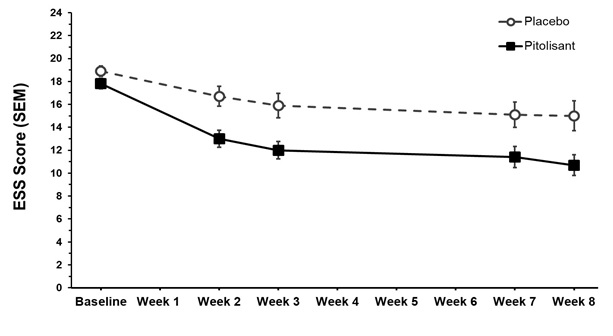
Table 3: Efficacy Results for Epworth Sleepiness Scale in Adult Patients with Narcolepsy (Study 1 and Study 2) CI = confidence interval; LS Mean = least squares mean; SD = standard deviation; SE = standard error a Maximum dose randomized to was 35.6 mg b Maximum dose randomized to was 17.8 mg c A lower score on the ESS represents improvement; scores range from 0 (no symptoms) to 24 (worst symptoms) d A negative value for the placebo subtracted difference represents improvement Study Treatment Group (N) Baseline ESS Score Mean (SD) Final ESS Score c LS Mean at Week 8 (SE) Placebo Subtracted Difference [95% CI] at Week 8 d Study 1 a WAKIX (n=31) 17.8 (2.5) 12.4 (1.01) -3.1 [-5.73; -0.46] Placebo (n=30) 18.9 (2.5) 15.5 (1.03) Study 2 b WAKIX (n=66) 18.3 (2.4) 13.3 (1.19) -2.2 [-4.17; -0.22] Placebo (n=32) 18.2 (2.3) 15.5 (1.32) Figure 5 shows the ESS score from baseline to Week 8 in Study 1.
Figure 5: Epworth Sleepiness Scale Score (mean ± SEM) from Baseline to Week 8 in Study 1 SEM = standard error of the mean (raw mean scores) ESS scores range from 0 to 24, with 0 being the best score and 24 being the worst score Pediatric Patients (6 years of age and older) with Narcolepsy The efficacy of WAKIX for the treatment of excessive daytime sleepiness in pediatric patients 6 years of age and older with… [Excerpted — this section continues on DailyMed.]
🧪 Nonclinical Toxicology ▾
13 NONCLINICAL TOXICOLOGY
13.1Carcinogenesis, Mutagenesis, Impairment of Fertility Carcinogenesis Pitolisant was not carcinogenic in mice or rats. Oral administration of pitolisant at 15, 30, and 75 mg/kg/day for 6 months to CB6F1 TgrasH2 transgenic mice did not increase tumor incidence. These doses are 2, 4, and 9 times the MRHD, respectively, based on mg/m 2 body surface area.
Oral administration of pitolisant at 5, 15, and 30 mg/kg/day for 105 weeks to Sprague-Dawley rats did not increase tumor incidence. These doses are 1.4, 4, and 8 times the MRHD based on mg/m 2 body surface area. Mutagenesis Pitolisant and its metabolites were not mutagenic in the in vitro bacterial reverse mutation assay (Ames), or clastogenic in the in vitro mammalian chromosomal aberration assay.
Pitolisant was negative in the in vivo mouse micronucleus assay. Impairment of Fertility Oral administration of pitolisant at 30, 52, and 90 mg/kg/day to male and female rats prior to and throughout mating and continuing in females through early gestation resulted in adverse effects at the mid and high doses. These doses are 13 and 22 times the MRHD, respectively, based on mg/m 2 body surface area (BSA).
A dose-related increase in the percentage of post-implantation loss was observed compared to controls, leading to a decrease in the percentage of live conceptuses, at doses 13 and 22 times the MRHD, based on mg/m 2 BSA. Pitolisant caused dose-related abnormalities in sperm morphology and decreased motility at doses that are 13 and 22 times the MRHD based on mg/m 2 BSA, without any significant effects on fertility indices in male rats. No effects on fertility were observed at 30 mg/kg/day (7 times the MRHD based on mg/m 2 BSA).
13.2Animal Toxicology and/or Pharmacology Adverse CNS-related clinical signs including tremors and convulsions occurred after single and repeated oral administration of pitolisant across multiple species. In a 9-month repeat-dose toxicity study in adult monkeys, sporadic incidences of convulsions occurred at doses corresponding to exposures approximately 3 times the MRHD based on C max and 1 times the MRHD, based on AUC. Convulsions were first observed close to T max and resolved by 2 hours after dosing.
Convulsions were not observed after discontinuation of dosing and were not associated with microscopic findings in the brain. Safety margins at the no-observed-adverse-effect-level (NOAEL) correspond to 1 times the MRHD based on C max and 0.4 times based on AUC.
📄 Carcinogenesis, Mutagenesis, Impairment of Fertility ▾
13.1Carcinogenesis, Mutagenesis, Impairment of Fertility Carcinogenesis Pitolisant was not carcinogenic in mice or rats. Oral administration of pitolisant at 15, 30, and 75 mg/kg/day for 6 months to CB6F1 TgrasH2 transgenic mice did not increase tumor incidence. These doses are 2, 4, and 9 times the MRHD, respectively, based on mg/m 2 body surface area.
Oral administration of pitolisant at 5, 15, and 30 mg/kg/day for 105 weeks to Sprague-Dawley rats did not increase tumor incidence. These doses are 1.4, 4, and 8 times the MRHD based on mg/m 2 body surface area. Mutagenesis Pitolisant and its metabolites were not mutagenic in the in vitro bacterial reverse mutation assay (Ames), or clastogenic in the in vitro mammalian chromosomal aberration assay.
Pitolisant was negative in the in vivo mouse micronucleus assay. Impairment of Fertility Oral administration of pitolisant at 30, 52, and 90 mg/kg/day to male and female rats prior to and throughout mating and continuing in females through early gestation resulted in adverse effects at the mid and high doses. These doses are 13 and 22 times the MRHD, respectively, based on mg/m 2 body surface area (BSA).
A dose-related increase in the percentage of post-implantation loss was observed compared to controls, leading to a decrease in the percentage of live conceptuses, at doses 13 and 22 times the MRHD, based on mg/m 2 BSA. Pitolisant caused dose-related abnormalities in sperm morphology and decreased motility at doses that are 13 and 22 times the MRHD based on mg/m 2 BSA, without any significant effects on fertility indices in male rats. No effects on fertility were observed at 30 mg/kg/day (7 times the MRHD based on mg/m 2 BSA).
📄 Recent Major Changes ▾
Indications and Usage ( 1 ) 2/2026 Dosage and Administration ( 2.1 , 2.3 ) 2/2026
📄 Package Label / Principal Display Panel ▾
PRINCIPAL DISPLAY PANEL - NDC 72028-045-03 - 4.45 mg Bottle Label 4.45 mg Bottle Label
PRINCIPAL DISPLAY PANEL - NDC 72028-045-03 - 4.45 mg Carton Label 4.45 mg Carton Label
PRINCIPAL DISPLAY PANEL - NDC 72028-178-03 - 17.8 mg Bottle Label 17.8 mg Bottle Label
PRINCIPAL DISPLAY PANEL - NDC 72028-178-03 - 17.8 mg Carton Label 17.8 mg Carton Label
Medicaid utilization & spend
Medicare Part D spend CMS · PART D · 2026 (Q1)
About this NDC listing & data coverage
What data is (and isn’t) available for this NDC — tap to expand
| NDC identity (package / product / labeler codes) | ✓ Available |
| Labeler | ✓ Available |
| Product & package description | ✓ Available |
| Marketing category & status | ✓ Available |
| Active ingredient / dosage form / route | ✓ Available |
| FDA label (SPL via DailyMed) | ✓ Available |
| Package photos | ✓ Available |
| Inactive ingredients (structured) | ✓ Available |
| NADAC pharmacy acquisition price (CMS) | — Not published for this NDC CMS publishes NADAC only for NDCs reported in its retail-pharmacy survey. |
| Orange Book / therapeutic-equivalence data | ✓ Available |
| HCPCS J-code billing crosswalk | — Not published for this NDC Most self-administered / retail products have no J-code — that is normal. |
| Medicaid utilization (CMS SDUD) | ✓ Available |