
Caplyta lumateperone 21 mg Capsule, 30-count — NDC 72060-121-40 (Billing 72060-0121-40)
This is a package of 30 capsules of Caplyta lumateperone 21 mg Capsule from Intra-Cellular Therapies, Inc, marketed since Aug 2022 and currently FDA-listed; retail pharmacies pay about $57.20 per capsule (NADAC). It is the main listing for this product, which comes in 2 package sizes.
NDC database record
One package, one record: these facts belong to NDC 72060-121-40 alone.
- Record
- FDA NDC Directory package listing · Human prescription drug
- Code segments
- 72060 labeler · 121 product · 40 package
- Package marketed since
- Aug 9, 2022
- Sample package
- No — commercial package
- Listing certified through
- Dec 31, 2027
- Billing quantity
- 30 EA per package
- Barcode (UPC)
- 0372060110402, 0372060121408
- Medicaid fills, this package
- 61,327 prescriptions in the last four reported quarters
- FDA record last changed
- Jul 24, 2026
Identity & classification
Regulatory identifiers FDA, NLM and CMS codes for this package
Drug-database identifiers Medi-Span GPI and First Databank GCN / HICL / AHFS classification
- GSN (GCN sequence number): 083619
- GCN: 52617
- GPI-14 (Medi-Span): 59400022400115
- HICL (First Databank): 046280
- AHFS class code: 28:16.08.04
- RxCUI (RxNorm): 2275607
Where does this data come from?
- FDA openFDA NDC Directory · synced Oct 8, 2026
- FDA label on DailyMed · label index refreshed Oct 8, 2026
- RxNorm (NLM RxNav) · catalog refreshed Oct 8, 2026
- Medi-Span GPI (licensed)
- First Databank (licensed) · refreshed Oct 8, 2026
RxNorm drug class
This medicine belongs to the Atypical Antipsychotic class.
Where does this data come from?
- RxClass (NLM) · catalog refreshed Oct 8, 2026
Clinical
Lumateperone is used to treat: schizophrenia (a mental illness that affects how a person thinks, feels and behaves) bipolar I disorder (a disease that causes depression, mania, and other abnormal moods) major depressive disorderLumateperone is in a class of medications called atypical antipsychotics. It works by changing the activity of certain natural substances in the brain.
Read the full MedlinePlus article ↗- Caplyta (lumateperone) treats schizophrenia in adults. It also treats depressive episodes of bipolar I or II disorder, alone or with lithium or valproate. And it is added to an ant...
- Take one capsule by mouth once a day. You can take it with or without food. Follow your prescriber's directions and the label.
- The most common are sleepiness, dizziness, dry mouth, nausea, headache, and fatigue. Use caution driving until you know how it affects you. Call me or your doctor if side effects a...
- Call right away for new or worse depression or thoughts of suicide. Also call for high fever with stiff muscles and confusion, uncontrolled movements, fainting, seizures, or signs...
Patient education
Supplement & herbal interactions
Some supplements/herbs that may interact with Lumateperone — tap one for details:
Where does this data come from?
- MedlinePlus (NLM) · refreshed Oct 8, 2026
- FDA label on DailyMed · label index refreshed Oct 8, 2026
Ask a licensed pharmacist directly — free, answered by our team.
Pricing
A drug doesn't have one price. Each row is a different public payment system, and none is what you'd pay at the counter — that depends on your insurance. The ⓘ on each row explains what it measures.
| Price system | Per ea | Per package |
|---|---|---|
| Retail pharmacies payNADAC · weekly | $57.200 | $1,716.01 / 30 capsules |
| Medicaid paysCMS SDUD · 12 mo | $55.43 | $1,663.04 / 30 capsules |
| Medicare drug plans payPart D · Q2 2026 | $57.46 | $1,723.80 / 30 capsules |
Where does this data come from?
- CMS NADAC weekly file · file of Oct 7, 2026
- CMS ASP pricing files · refreshed Sep 20, 2026
- CMS Medicaid State Drug Utilization Data · through Q1 2026
- CMS Part D plan pricing files · refreshed Sep 24, 2026
- VA National Acquisition Center price file
Packaging — all sizes for this product
| Package NDC | Description | Per unit | Per pack | Marketing start | Marketing end | Status |
|---|---|---|---|---|---|---|
| 72060-0121-40 You're viewing this Main listing | 30 CAPSULE in 1 BOTTLE | $57.20 / ea | $1,716.01 | 2022-08-09 | — | Active |
| 72060-0121-07 72060-121-07 | 7 CAPSULE in 1 BOTTLE | — | — | 2023-06-01 | — | Active |
You're viewing the largest of 2 pack sizes for this product.
In Medicaid, this is the most-dispensed pack of this product — about 100% of fills over the last four reported quarters. See all packs ↓
Pack size FAQ
What quantity is in this package?
How does this package differ from NDC 72060-0121-07?
What NDC number is used to bill for this package of Caplyta lumateperone 21 mg Capsule?
Prices are the latest CMS NADAC pharmacy acquisition cost per NDC; per-pack figures are per-unit × pack quantity, shown only when the pack is denominated in the same measure NADAC prices.
Therapeutic equivalents
| Product | Labeler | Pack | NADAC/unit | TE | Status | Price vs. this |
|---|---|---|---|---|---|---|
| Caplyta 21 mgthis 72060-0121-40 | Intra-Cellular | 30 capsules | $57.200 | — | Availability likely | — |
Where does this data come from?
- FDA openFDA NDC Directory · synced Oct 8, 2026
- FDA Orange Book · refreshed Oct 3, 2026
- CMS NADAC weekly file · file of Oct 7, 2026
Availability & generic status
We did not find an FDA-approved generic match for this exact strength, form and route. Patent/protection dates below may affect future generic timing.
Why the date isn’t exact: Generic timing can change because patents may be challenged, settled, licensed, added, removed, or worked around with a narrower label — and FDA approval does not always mean a pharmacy can get the generic today.
🛈 What do these terms mean?
- Patent
- Legal protection listed in the Orange Book that may delay generic approval or launch. Issued by the U.S. Patent & Trademark Office.
- Substance patent
- Covers the active drug molecule itself — the hardest to design around. A generic generally can’t launch until it expires.
- Formulation (product) patent
- Covers a specific formulation or dosage form. A generic can sometimes work around it with a different formulation.
- Method-of-use patent
- A patent covering one specific approved use of the drug — not necessarily the whole molecule. A generic can sometimes launch with a “skinny label” that carves out the protected use and keeps the others.
- Skinny label
- A generic label that omits a still-patented use when the FDA allows it — letting a generic reach the market for the unprotected uses.
- Exclusivity
- FDA-granted marketing protection, separate from patents — e.g. 5-yr new chemical entity, 7-yr orphan drug, or a +6-month pediatric extension.
- Paragraph IV
- A generic applicant’s formal challenge to a listed patent. It can potentially lead to earlier generic entry, but often involves litigation or a settlement.
- RLD / RS
- Reference Listed Drug — the brand product the FDA uses as the reference for generic applications. Reference Standard — the product the FDA expects generics to compare against in bioequivalence testing.
- TE / AB rating
- FDA therapeutic-equivalence rating. An AB rating generally means the FDA considers a generic therapeutically equivalent to — and substitutable for — the brand.
- LOE (loss of exclusivity)
- The latest patent or exclusivity currently listed — the loss-of-exclusivity / latest-listed-protection date shown on this page. Paragraph-IV challenges and settlements can move the real date earlier; FDA approval and a manufacturer’s decision to market can move it later.
Built from the FDA Orange Book. The bars above are scaled to each protection’s expiry; the red LOE marker is the last one to lapse.
| Patent | Type | Use code | Expires |
|---|---|---|---|
| US 9956227 ↗ | Method of use | U-2714 | Dec 3, 2034 |
| US 9199995 ↗ | Method of use | U-2713 | Mar 12, 2029 |
| US 8598119 ↗ delist req. | Method of use | U-543 | Dec 28, 2029 |
| US 12122792 ↗ | Method of use | U-4019 | Dec 10, 2040 |
| US 12122792 ↗ | Method of use | U-4019 | Dec 10, 2040 |
| US 12122792 ↗ | Method of use | U-4019 | Dec 10, 2040 |
| US 12122792 ↗ | Method of use | U-4020 | Dec 10, 2040 |
| US 12122792 ↗ | Method of use | U-4020 | Dec 10, 2040 |
| US 12122792 ↗ | Method of use | U-4020 | Dec 10, 2040 |
| US 12090155 ↗ | Method of use | U-4000 | Jul 7, 2040 |
| US 10695345 ↗ | Method of use | U-543 | Aug 30, 2039 |
| US 12128043 ↗ | Method of use | U-3362 | Aug 30, 2039 |
| US 12128043 ↗ | Method of use | U-3363 | Aug 30, 2039 |
| US 11806348 ↗ | Method of use | U-3362 | Aug 30, 2039 |
| US 11806348 ↗ | Method of use | U-3363 | Aug 30, 2039 |
| US 11806348 ↗ | Method of use | U-3363 | Aug 30, 2039 |
| US 11806348 ↗ | Method of use | U-3363 | Aug 30, 2039 |
| US 11806348 ↗ | Method of use | U-3362 | Aug 30, 2039 |
| US 11806348 ↗ | Method of use | U-3362 | Aug 30, 2039 |
| US 12070459 ↗ | Method of use | U-3362 | Aug 30, 2039 |
| US 12070459 ↗ | Method of use | U-3363 | Aug 30, 2039 |
| US 12122792 ↗ | Method of use | U-4340 | Dec 10, 2040 |
| US 12122792 ↗ | Method of use | U-4340 | Dec 10, 2040 |
| US 12122792 ↗ | Method of use | U-4340 | Dec 10, 2040 |
| US 12070459 ↗ | Method of use | U-4341 | Aug 30, 2039 |
| US 11980617 ↗ | Method of use | U-4342 | Oct 27, 2039 |
| US 11980617 ↗ | Method of use | U-4342 | Oct 27, 2039 |
| US 12409176 ↗ | Method of use | U-4261 | Mar 15, 2039 |
| US 12409176 ↗ | Method of use | U-4261 | Mar 15, 2039 |
| US 9199995 ↗ | Method of use | U-4343 | Mar 12, 2029 |
| US 9199995 ↗ | Method of use | U-4343 | Mar 12, 2029 |
| US 9199995 ↗ | Method of use | U-4343 | Mar 12, 2029 |
| US 11980617 ↗ | Method of use | U-4342 | Oct 27, 2039 |
| US 11806348 ↗ | Method of use | U-4341 | Aug 30, 2039 |
| US 11806348 ↗ | Method of use | U-4341 | Aug 30, 2039 |
| US 11806348 ↗ | Method of use | U-4341 | Aug 30, 2039 |
| US 11690842 ↗ | Method of use | U-4341 | Aug 30, 2039 |
| US 11690842 ↗ | Method of use | U-4341 | Aug 30, 2039 |
| US 11690842 ↗ | Method of use | U-4341 | Aug 30, 2039 |
| US 11052084 ↗ | Method of use | U-4341 | Aug 30, 2039 |
| US 11052084 ↗ | Method of use | U-4341 | Aug 30, 2039 |
| US RE48839 ↗ | Method of use | U-4344 | Aug 19, 2033 |
| US RE48839 ↗ | Method of use | U-4344 | Aug 19, 2033 |
| US RE48839 ↗ | Method of use | U-4344 | Aug 19, 2033 |
| US 12409176 ↗ | Method of use | U-4261 | Mar 15, 2039 |
| US 11980617 ↗ | Method of use | U-3940 | Oct 27, 2039 |
| US 11980617 ↗ | Method of use | U-3940 | Oct 27, 2039 |
| US 11980617 ↗ | Method of use | U-3940 | Oct 27, 2039 |
| US RE48839 ↗ | Method of use | U-3271 | Aug 19, 2033 |
| US 10960009 ↗ | Method of use | U-814 | Dec 3, 2034 |
| US RE48839 ↗ | Method of use | U-814 | Aug 19, 2033 |
| US 10117867 ↗ | Method of use | U-3271 | May 27, 2029 |
| US 11026951 ↗ | Method of use | U-3274 | Dec 3, 2034 |
| US 11690842 ↗ | Method of use | U-3362 | Aug 30, 2039 |
| US 11690842 ↗ | Method of use | U-3362 | Aug 30, 2039 |
| US 11690842 ↗ | Method of use | U-3362 | Aug 30, 2039 |
| US 11690842 ↗ | Method of use | U-3363 | Aug 30, 2039 |
| US 11690842 ↗ | Method of use | U-3363 | Aug 30, 2039 |
| US 11690842 ↗ | Method of use | U-3363 | Aug 30, 2039 |
| US 11052084 ↗ | Method of use | U-3362 | Aug 30, 2039 |
| US 11052084 ↗ | Method of use | U-3363 | Aug 30, 2039 |
| US 11052084 ↗ | Method of use | U-3363 | Aug 30, 2039 |
| US 11052084 ↗ | Method of use | U-3362 | Aug 30, 2039 |
| US 11026951 ↗ | Method of use | U-3364 | Dec 3, 2034 |
| US 11026951 ↗ | Method of use | U-3364 | Dec 3, 2034 |
| US 10695345 ↗ | Method of use | U-814 | Aug 30, 2039 |
| US 10695345 ↗ | Method of use | U-814 | Aug 30, 2039 |
| US 10117867 ↗ | Method of use | U-3271 | May 27, 2029 |
| US 10117867 ↗ | Method of use | U-3271 | May 27, 2029 |
| US 9956227 ↗ | Method of use | U-2714 | Dec 3, 2034 |
| US 9956227 ↗ | Method of use | U-2714 | Dec 3, 2034 |
| US 9199995 ↗ | Method of use | U-2713 | Mar 12, 2029 |
| US 9199995 ↗ | Method of use | U-2713 | Mar 12, 2029 |
| US RE48839 ↗ | Method of use | U-3271 | Aug 19, 2033 |
| US RE48839 ↗ | Method of use | U-814 | Aug 19, 2033 |
| US RE48839 ↗ | Method of use | U-814 | Aug 19, 2033 |
| US RE48839 ↗ | Method of use | U-3271 | Aug 19, 2033 |
| US 12410195 ↗ | Drug product | — | Dec 10, 2040 |
| US 8648077 ↗ | Drug substance | — | Dec 1, 2029 |
| US 9616061 ↗ | Drug product | — | May 27, 2029 |
| US 11753419 ↗ delist req. | Drug product | — | Dec 10, 2040 |
| US 9168258 ↗ | Drug product | — | May 27, 2029 |
| US 11753419 ↗ delist req. | Drug product | — | Dec 10, 2040 |
| US 12410195 ↗ | Drug product | — | Dec 10, 2040 |
| US RE48825 ↗ | Drug substance | — | Mar 12, 2029 |
| US 8648077 ↗ | Drug substance | — | Dec 1, 2029 |
| US 12410195 ↗ | Drug product | — | Dec 10, 2040 |
| US RE48825 ↗ | Drug substance | — | Mar 12, 2029 |
| US 11753419 ↗ delist req. | Drug product | — | Dec 10, 2040 |
| US 10464938 ↗ | Drug product | — | Mar 12, 2028 |
| US 9586960 ↗ | Drug substance | — | Mar 12, 2029 |
| US 8648077 ↗ | Drug substance | — | Dec 1, 2029 |
| US 9616061 ↗ | Drug product | — | May 27, 2029 |
| US RE48825 ↗ | Drug substance | — | Mar 12, 2029 |
| US 9616061 ↗ | Drug product | — | May 27, 2029 |
| US 10464938 ↗ | Drug product | — | Mar 12, 2028 |
| US 10464938 ↗ | Drug product | — | Mar 12, 2028 |
| Code | What it grants | Expires |
|---|---|---|
| I-904 | New indication (3-year) | Nov 5, 2028 |
| M-319 | New indication / labeling change (3-year) | Apr 24, 2029 |
| I-904 | New indication (3-year) | Nov 5, 2028 |
| M-319 | New indication / labeling change (3-year) | Apr 24, 2029 |
| I-904 | New indication (3-year) | Nov 5, 2028 |
| M-319 | New indication / labeling change (3-year) | Apr 24, 2029 |
Is there a generic version of CAPLYTA 21 MG CAPSULE?
The FDA approved a generic — why can’t I get it at my pharmacy yet?
Why do different websites show different generic release dates?
What does “FDA listed” mean?
What does a patent or protection date mean here?
What does “current Orange Book estimate” mean?
Can a generic come out before the last patent expires?
Can a generic come out after the listed dates?
What is the difference between patents and exclusivity?
Why are there multiple patent dates?
Where does this data come from?
- FDA Orange Book · refreshed Oct 3, 2026
What it looks like
Where does this data come from?
- FDA label on DailyMed · label index refreshed Oct 8, 2026
Inactive Ingredients / Excipients
Inactive ingredients, also called excipients, are components of the drug product other than the active ingredient. They may include fillers, dyes, coatings, preservatives, flavors, or other formulation ingredients.
🧪 Avoiding an ingredient? See Lumateperone inactive ingredients by manufacturer: every current product's list side by side, so you can ask your pharmacy for the version that does not list it.
Where does this data come from?
IACT rows and label-wide narrative are kept separate; availability and product-level specificity depend on the submitted label.- FDA label on DailyMed · label index refreshed Oct 8, 2026
- FDA openFDA NDC Directory · synced Oct 8, 2026
Inactive ingredient FAQ
Are inactive ingredients the same for every manufacturer?
Why might an inactive ingredient be missing?
Can inactive ingredients matter?
Manufacturer & labeler
More NDCs from Intra-Cellular Therapies, Inc labeler code 72060
Where does this data come from?
- FDA openFDA NDC Directory · synced Oct 8, 2026
- Drugs@FDA
Full prescribing information FDA SPL
🚨 Boxed Warning ▾
WARNING: INCREASED MORTALITY IN ELDERLY PATIENTS WITH DEMENTIA-RELATED PSYCHOSIS; and SUICIDAL THOUGHTS AND BEHAVIORS Increased Mortality in Elderly Patients with Dementia-Related Psychosis Elderly patients with dementia-related psychosis treated with antipsychotic drugs are at an increased risk of death. CAPLYTA is not approved for the treatment of patients with dementia-related psychosis [see Warnings and Precautions (5.1) ]. Suicidal Thoughts and Behaviors Antidepressants increased the risk of suicidal thoughts and behaviors in pediatric and young adults in short-term studies.
Closely monitor all antidepressant-treated patients for clinical worsening, and for emergence of suicidal thoughts and behaviors [see Warnings and Precautions (5.2) ]. The safety and effectiveness of CAPLYTA have not been established in pediatric patients [see Use in Specific Populations (8.4) ]. WARNING: INCREASED MORTALITY IN ELDERLY PATIENTS WITH DEMENTIA-RELATED PSYCHOSIS ; and SUICIDAL THOUGHTS AND BEHAVIORS See full prescribing information for complete boxed warning.
Elderly patients with dementia-related psychosis treated with antipsychotic drugs are at an increased risk of death. CAPLYTA is not approved for the treatment of patients with dementia-related psychosis. ( 5.1 ) Antidepressants increased the risk of suicidal thoughts and behaviors in pediatric and young adult patients.
Closely monitor all antidepressant-treated patients for worsening and emergence of suicidal thoughts and behaviors. Safety and effectiveness of CAPLYTA have not been established in pediatric patients . ( 5.2 , 8.4 )
🎯 Indications and Usage ▾
1 INDICATIONS AND USAGE CAPLYTA is indicated for: Treatment of schizophrenia in adults [see Clinical Studies (14.1) ] . Treatment of depressive episodes associated with bipolar I or II disorder (bipolar depression) in adults, as monotherapy and as adjunctive therapy with lithium or valproate [see Clinical Studies (14.2) ] . Adjunctive therapy with antidepressants for the treatment of major depressive disorder (MDD) in adults [see Clinical Studies ( 14.3 ) ].
CAPLYTA is an atypical antipsychotic indicated for: Treatment of schizophrenia in adults. ( 1 ) Treatment of depressive episodes associated with bipolar I or II disorder (bipolar depression) in adults, as monotherapy and as adjunctive therapy with lithium or valproate. ( 1 ) Adjunctive therapy with antidepressants for the treatment of major depressive disorder (MDD) in adults.
( 1 )
⏱️ Dosage and Administration ▾
2 DOSAGE AND ADMINISTRATION Recommended oral dosage of CAPLYTA is 42 mg once daily with or without food. ( 2.1 ) Moderate hepatic impairment or severe hepatic impairment: Recommended dosage is 21 mg once daily. ( 2.3 , 8.6 )
2.1Recommended Dosage The recommended CAPLYTA dosage is 42 mg administered orally once daily with or without food. Dose titration is not needed.
2.2Dosage Recommendations for Concomitant Use with Moderate or Strong CYP3A4 Inhibitors The recommended CAPLYTA dosage in patients who receive [see Drug Interactions ( 7.1 ) ] : Strong CYP3A4 inhibitors is 10.5 mg once daily. Moderate CYP3A4 inhibitors is 21 mg once daily.
2.3Dosage Recommendations for Patients with Hepatic Impairment For patients with moderate hepatic impairment (HI) (Child-Pugh class B) or severe HI (Child-Pugh class C), the recommended CAPLYTA dosage is 21 mg once daily [see Use in Specific Populations (8.6) ] . The recommended CAPLYTA dosage in patients with mild HI is the same as those with normal hepatic function.
💊 Dosage Forms and Strengths ▾
3 DOSAGE FORMS AND STRENGTHS CAPLYTA capsules are available in three strengths: 42 mg: Blue cap and opaque white body imprinted with “ITI-007 42 mg” 21 mg: Opaque white cap and body imprinted with “ITI-007 21 mg” 10.5 mg: Opaque light pink cap and body imprinted with “ITI-007 10.5 mg” Capsules: 42 mg, 21 mg, 10.5 mg ( 3 )
⛔ Contraindications ▾
4 CONTRAINDICATIONS CAPLYTA is contraindicated in patients with history of hypersensitivity reaction to lumateperone or any components of CAPLYTA. Reactions have included pruritus, rash (e.g. allergic dermatitis, papular rash, and generalized rash), and urticaria. CAPLYTA is contraindicated in patients with history of hypersensitivity reaction to lumateperone or any components of CAPLYTA. ( 4 )
⚠️ Warnings and Cautions ▾
5 WARNINGS AND PRECAUTIONS Cerebrovascular Adverse Reactions in Elderly Patients with Dementia-Related Psychosis: Increased incidence of cerebrovascular adverse reactions (e.g., stroke and transient ischemic attack). ( 5.3 ) Neuroleptic Malignant Syndrome: If NMS is suspected, immediately discontinue CAPLYTA and provide intensive symptomatic treatment and monitoring. ( 5.4 ) Tardive Dyskinesia: If signs and symptoms of TD occur consider discontinuing CAPLYTA treatment.
( 5.5 ) Metabolic Changes: Monitor for hyperglycemia/diabetes mellitus, dyslipidemia, and weight gain. ( 5.6 ) Leukopenia, Neutropenia, and Agranulocytosis : In patients with pre-existing low white blood cell count (WBC) or history of leukopenia or neutropenia, perform complete blood counts (CBC). Consider discontinuing CAPLYTA if clinically significant decline in WBC occurs in absence of other causative factors.
Discontinue CAPLYTA in patients with clinically significant neutropenia or ANC < 1000/mm 3 and monitor closely until the neutropenia resolve. ( 5.7 ) Orthostatic Hypotension and Syncope: Monitor heart rate and blood pressure in patients who are vulnerable to hypotension. ( 5.8 ) Seizures: Use cautiously in patients with a history of seizures or with other conditions that lower seizure threshold.
( 5.10 ) Potential for Cognitive and Motor Impairment: Use caution when operating machinery and driving a motor vehicle until patients are reasonably certain that therapy with CAPLYTA does not affect them adversely. ( 5.11 )
5.1Increased Mortality in Elderly Patients with Dementia-Related Psychosis Elderly patients with dementia-related psychosis treated with antipsychotic drugs are at an increased risk of death. In an analysis of 17 placebo-controlled trials (modal duration of 10 weeks), largely in patients taking atypical antipsychotic drugs, the risk of death in antipsychotic drug-treated patients was 1.6 to 1.7 times the risk of death in placebo-treated patients. Over the course of a typical 10-week controlled trial, the incidence of death in antipsychotic-treated patients was about 4.5%, compared to an incidence of about 2.6% in placebo-treated patients.
Although the causes of death varied, most of the deaths appeared to be either cardiovascular (e.g., heart failure, sudden death) or infectious (e.g., pneumonia). CAPLYTA is not approved for the treatment of patients with dementia-related psychosis [see Indications and Usage (1) ] .
5.2Suicidal Thoughts and Behaviors in Pediatric and Young Adult Patients In pooled analyses of placebo-controlled trials of antidepressant drugs (SSRIs and other antidepressant classes) that included approximately 77,000 adult patients and 4,500 pediatric patients, the incidence of suicidal thoughts and behaviors in antidepressant-treated pediatric and young adult patients was greater than in placebo-treated patients. There were differences in absolute risk of suicidal thoughts and behaviors across the different uses, with the highest incidence in patients with MDD.
The drug-placebo differences in the number of cases of suicidal thoughts and behaviors per 1,000 patients treated are provided in Table 1. Table 1: Risk Differences of the Number of Patients with Suicidal Thoughts and Behaviors in the Pooled Placebo-Controlled Trials of Antidepressants in Pediatric* and Adult Patients Age Range Drug-Placebo Difference in Number of Patients of Suicidal Thoughts or Behaviors per 1000 Patients Treated Increases Compared to Placebo <18 years old 14 additional patients 18-24 years old 5 additional patients Decreases Compared to Placebo 25-64 years old 1 fewer patient > 65 years old 6 fewer patients * CAPLYTA is not approved for use in pediatric patients.
It is unknown whether the risk of suicidal thoughts and behaviors in pediatric and young adult patients extends to longer-term use, i.e., beyond four months. However, there is substantial evidence from placebo-controlled maintenance trials in adults with MDD that antidepressants delay th… [Excerpted — this section continues on DailyMed.]
🤒 Adverse Reactions ▾
6 ADVERSE REACTIONS The following adverse reactions are discussed in detail in other sections of the labeling: Increased Mortality in Elderly Patients with Dementia-Related Psychosis [see Boxed Warning , Warnings and Precautions (5.1) ] Suicidal Thoughts and Behaviors [see Boxed Warning , Warnings and Precautions (5.2) ] Cerebrovascular Adverse Reactions, Including Stroke, in Elderly Patients with Dementia-related Psychosis [see Warnings and Precautions (5.3) ] Neuroleptic Malignant Syndrome [see Warnings and Precautions (5.4) ] Tardive Dyskinesia [see Warnings and Precautions (5.5) ] Metabolic Changes [see Warnings and Precautions (5.6) ] Leukopenia, Neutropenia, and Agranulocytosis [see Warnings and Precautions (5.7) ] Orthostatic Hypotension and Syncope [see Warnings and Precautions (5.8) ] Falls [see Warnings and Precautions (5.9) ] Seizures [see Warnings and Precautions (5.10) ] Potential for Cognitive and Motor Impairment [see Warnings and Precautions (5.11) ] Body Temperature Dysregulation [see Warnings and Precautions (5.12) ] Dysphagia [see Warnings and Precautions (5.13) ] Most common adverse reactions in clinical trials (incidence ≥ 5% and greater than twice placebo) were ( 6.1 ): Schizophrenia: somnolence/sedation and dry mouth.
Bipolar depression: somnolence/sedation, dizziness, nausea, dry mouth. MDD: dizziness, dry mouth, somnolence/sedation, nausea, fatigue, diarrhea. To report SUSPECTED ADVERSE REACTIONS, contact Intra-Cellular Therapies, Inc. at 1-800-526-7736 or FDA at 1-800-FDA-1088 or www.fda.gov/medwatch.
6.1Clinical Trials Experience Because clinical trials are conducted under widely varying conditions, adverse reaction rates observed in the clinical trials of a drug cannot be directly compared to rates in the clinical trials of another drug and may not reflect the rates observed in practice. The safety of CAPLYTA has been evaluated in placebo-controlled clinical trials that included 3575 adult patients with schizophrenia, bipolar depression, or major depressive disorder, exposed to one or more CAPLYTA doses. A total of 852 CAPLYTA-treated patients had at least 6 months of treatment and 108 had at least 1 year of treatment with the 42-mg once daily dosage.
Adverse Reactions in Patients with Schizophrenia The following adverse reactions are based on the pooled short-term (4- to 6-week), placebo-controlled studies in adult patients with schizophrenia in which CAPLYTA was administered at a dosage of 42 mg once daily (N=406) [see Clinical Studies (14.1) ]. There was no single adverse reaction that led to discontinuation that occurred at a rate of >2% in CAPLYTA-treated patients. The most common adverse reactions (incidence of at least 5% of CAPLYTA-treated patients and greater than twice the rate of placebo-treated patients) were somnolence/sedation and dry mouth.
Adverse reactions (incidence of at least 2% in CAPLYTA-treated patients and greater than in placebo-treated patients) are shown in Table 2. Table 2: Adverse Reactions Reported in ≥2% of CAPLYTA-Treated Patients and Greater Incidence Than in Placebo-Treated Patients in 4- to 6-week Schizophrenia Trials CAPLYTA 42 mg (N=406) Placebo (N=412) Somnolence/Sedation 24% 10% Nausea 9% 5% Dry Mouth 6% 2% Dizziness 1 5% 3% Creatine Phosphokinase Increased 4% 1% Fatigue 3% 1% Vomiting 3% 2% Hepatic Transaminases Increased 2 2% 1% Decreased Appetite 2% 1% 1 Dizziness, dizziness postural 2 ALT, AST, “hepatic enzymes” increased, or liver function test abnormal Adverse Reactions in Patients with Bipolar Depression (CAPLYTA Monotherapy) The following adverse reactions are based on the pooled short-term (6-week), placebo-controlled monotherapy bipolar depression studies in adult patients treated with CAPLYTA 42 mg once daily (N=372) [see Clinical Studies (14.2) ] .
There was no single adverse reaction leading to discontinuation that occurred at a rate of >2% in CAPLYTA-treated patients. The most common adverse reactions (incidence of at least 5% of CAPLYTA-treated… [Excerpted — this section continues on DailyMed.]
🔄 Drug Interactions ▾
7 DRUG INTERACTIONS CYP3A4 inducers: Avoid concomitant use with CAPLYTA. ( 7.1 ) Strong CYP3A4 inhibitors: Recommended dosage is 10.5 mg once daily. ( 2.2 , 7.1 ) Moderate CYP3A4 inhibitors: Recommended dosage is 21 mg once daily. ( 2.2 , 7.1 )
7.1Drugs Having Clinically Important Interactions with CAPLYTA Clinically important drug interactions with CAPLYTA are presented in Table 6. Table 6: Clinically Important Drug Interactions with CAPLYTA CYP3A4 Inducers* Prevention or Management Avoid concomitant use of CAPLYTA with CYP3A4 inducers . Clinical Impact Concomitant use of CAPLYTA with CYP3A4 inducers decreases the exposure of lumateperone [see Clinical Pharmacology ( 12.3 ) ].
Moderate or Strong CYP3A4 Inhibitors* Prevention or Management Reduce the CAPLYTA dosage when used concomitantly with moderate or strong CYP3A4 inhibitors [see Dosage and Administration ( 2.2 ) ]. Clinical Impact Concomitant use of CAPLYTA with moderate or strong CYP3A4 inhibitors increases lumateperone exposure [see Clinical Pharmacology ( 12.3 ) ] , which may increase the risk of adverse reactions. Serotonin Reuptake Inhibitors Prevention or Management Increased monitoring for SRI- associated adverse reactions is recommended.
Clinical Impact Although no clinically significant drug interactions with adjunctive SSRI/SNRIs in MDD were observed in CAPLYTA clinical trials, CAPLYTA’s moderate serotonin transporter (SERT) activity may increase the risk of SRI-associated adverse reactions (e.g., serotonin syndrome, hyponatremia). * See www.fda.gov/CYPandTransporterInteractingDrugs for examples of CYP3A4 Inducers and Moderate or Strong CYP3A4 Inhibitors
👥 Use in Specific Populations ▾
8 USE IN SPECIFIC POPULATIONS Pregnancy: May cause extrapyramidal and/or withdrawal symptoms in neonates with third trimester exposure. ( 8.1 )
8.1Pregnancy Pregnancy Exposure Registry There is a pregnancy exposure registry that monitors pregnancy outcomes in women exposed to atypical antipsychotics, including CAPLYTA, during pregnancy. Healthcare providers are encouraged to advise patients to register by calling the National Pregnancy Registry for Atypical Antipsychotics at 1-866-961-2388 or visiting online at https://womensmentalhealth.org/research/pregnancyregistry/. Risk Summary Neonates exposed to antipsychotic drugs during the third trimester are at risk for extrapyramidal and/or withdrawal symptoms following delivery (see Clinical Considerations ).
Available data from case reports on CAPLYTA use in pregnant women are insufficient to establish any drug associated risks for birth defects, miscarriage, or adverse maternal or fetal outcomes. There are risks to the mother associated with untreated schizophrenia and with exposure to antipsychotics, including CAPLYTA, during pregnancy (see Clinical Considerations ). In animal reproduction studies, no malformations were observed with oral administration of lumateperone to pregnant rats and rabbits during organogenesis at doses up to 2.4 and 9.7 times, respectively, the maximum recommended human dose (MRHD) of 42 mg/day on a mg/m 2 basis.
When pregnant rats were administered lumateperone during the period of organogenesis through lactation, the number of perinatal deaths of pups was increased at 4.9 times the MRHD, with no adverse effects on pups at 2.4 times the MRHD (see Data ) . The estimated background risk of major birth defects and miscarriage for the indicated population is unknown. All pregnancies have a background risk of birth defect, loss, or other adverse outcomes.
In the U.S. general population, the estimated background risk of major birth defects and miscarriage in clinically recognized pregnancies is 2 to 4% and 15 to 20%, respectively. Clinical Considerations Disease Associated Maternal and/or Embryo/fetal Risk: There is risk to the mother from untreated schizophrenia, including increased risk of relapse, hospitalization, and suicide. Schizophrenia is associated with increased adverse perinatal outcomes, including preterm birth.
It is not known if this is a direct result of the illness or other comorbid factors. Fetal/neonatal Adverse Reactions: Extrapyramidal and/or withdrawal symptoms, including agitation, hypertonia, hypotonia, tremor, somnolence, respiratory distress, and feeding disorder have been reported in neonates who were exposed to antipsychotic drugs during the third trimester of pregnancy. These symptoms have varied in severity.
Monitor neonates for extrapyramidal and/or withdrawal symptoms and manage symptoms appropriately. Some neonates recovered within hours or days without specific treatment; others required prolonged hospitalization. Data Animal Data Pregnant rats were treated with oral doses of 3.5, 10.5, 21, and 63 mg/kg/day lumateperone (0.8, 2.4, 4.9, and 14.6 times the MRHD on a mg/m 2 basis) during the period of organogenesis.
No malformations were observed with lumateperone at doses up to 2.4 times the MRHD. Findings of decreased body weight were observed in fetuses at 4.9 and 14.6 times the MRHD. Findings of incomplete ossification and increased incidences of visceral and skeletal variations were recorded in fetuses at 14.6 times the MRHD, a dose that induced maternal toxicity.
Pregnant rabbits were treated with oral doses of 2.1, 7, and 21 mg/kg/day lumateperone (1.0, 3.2, and 9.7 times the MRHD on a mg/m 2 basis) during the period of organogenesis. Lumateperone did not cause adverse developmental effects at doses up to 9.7 times the MRHD. In a study in which pregnant rats were administered oral doses of 3.5, 10.5, and 21 mg/kg/day lumateperone (0.8, 2.4, and 4.9 times the MRHD on a mg/m 2 basis) during the period of organogenesis and… [Excerpted — this section continues on DailyMed.]
🤰 Pregnancy ▾
8.1Pregnancy Pregnancy Exposure Registry There is a pregnancy exposure registry that monitors pregnancy outcomes in women exposed to atypical antipsychotics, including CAPLYTA, during pregnancy. Healthcare providers are encouraged to advise patients to register by calling the National Pregnancy Registry for Atypical Antipsychotics at 1-866-961-2388 or visiting online at https://womensmentalhealth.org/research/pregnancyregistry/. Risk Summary Neonates exposed to antipsychotic drugs during the third trimester are at risk for extrapyramidal and/or withdrawal symptoms following delivery (see Clinical Considerations ).
Available data from case reports on CAPLYTA use in pregnant women are insufficient to establish any drug associated risks for birth defects, miscarriage, or adverse maternal or fetal outcomes. There are risks to the mother associated with untreated schizophrenia and with exposure to antipsychotics, including CAPLYTA, during pregnancy (see Clinical Considerations ). In animal reproduction studies, no malformations were observed with oral administration of lumateperone to pregnant rats and rabbits during organogenesis at doses up to 2.4 and 9.7 times, respectively, the maximum recommended human dose (MRHD) of 42 mg/day on a mg/m 2 basis.
When pregnant rats were administered lumateperone during the period of organogenesis through lactation, the number of perinatal deaths of pups was increased at 4.9 times the MRHD, with no adverse effects on pups at 2.4 times the MRHD (see Data ) . The estimated background risk of major birth defects and miscarriage for the indicated population is unknown. All pregnancies have a background risk of birth defect, loss, or other adverse outcomes.
In the U.S. general population, the estimated background risk of major birth defects and miscarriage in clinically recognized pregnancies is 2 to 4% and 15 to 20%, respectively. Clinical Considerations Disease Associated Maternal and/or Embryo/fetal Risk: There is risk to the mother from untreated schizophrenia, including increased risk of relapse, hospitalization, and suicide. Schizophrenia is associated with increased adverse perinatal outcomes, including preterm birth.
It is not known if this is a direct result of the illness or other comorbid factors. Fetal/neonatal Adverse Reactions: Extrapyramidal and/or withdrawal symptoms, including agitation, hypertonia, hypotonia, tremor, somnolence, respiratory distress, and feeding disorder have been reported in neonates who were exposed to antipsychotic drugs during the third trimester of pregnancy. These symptoms have varied in severity.
Monitor neonates for extrapyramidal and/or withdrawal symptoms and manage symptoms appropriately. Some neonates recovered within hours or days without specific treatment; others required prolonged hospitalization. Data Animal Data Pregnant rats were treated with oral doses of 3.5, 10.5, 21, and 63 mg/kg/day lumateperone (0.8, 2.4, 4.9, and 14.6 times the MRHD on a mg/m 2 basis) during the period of organogenesis.
No malformations were observed with lumateperone at doses up to 2.4 times the MRHD. Findings of decreased body weight were observed in fetuses at 4.9 and 14.6 times the MRHD. Findings of incomplete ossification and increased incidences of visceral and skeletal variations were recorded in fetuses at 14.6 times the MRHD, a dose that induced maternal toxicity.
Pregnant rabbits were treated with oral doses of 2.1, 7, and 21 mg/kg/day lumateperone (1.0, 3.2, and 9.7 times the MRHD on a mg/m 2 basis) during the period of organogenesis. Lumateperone did not cause adverse developmental effects at doses up to 9.7 times the MRHD. In a study in which pregnant rats were administered oral doses of 3.5, 10.5, and 21 mg/kg/day lumateperone (0.8, 2.4, and 4.9 times the MRHD on a mg/m 2 basis) during the period of organogenesis and through lactation, the number of live-born pups was decreased at 2.4 and 4.9 times the MRHD, and early postnatal deaths increased at a dose 4.9… [Excerpted — this section continues on DailyMed.]
🧒 Pediatric Use ▾
8.4Pediatric Use Safety and effectiveness of CAPLYTA have not been established in pediatric patients. Antidepressants increased the risk of suicidal thoughts and behaviors in pediatric patients [see Boxed Warning , Warnings and Precautions (5.2) ].
🧓 Geriatric Use ▾
8.5Geriatric Use Controlled clinical studies of CAPLYTA for the treatment of schizophrenia and as adjunctive therapy with antidepressants for the treatment of MDD did not include any patients aged 65 or older to determine whether or not they respond differently from younger adult patients. Among the CAPLYTA-treated patients in clinical studies for the treatment of depressive episodes associated with bipolar depression, 20 (6%) were 65 to 74 years of age, and none were 75 years of age or older [see Clinical Studies (14.2) ].
These clinical studies did not include sufficient numbers of patients aged 65 years of age or older to determine whether or not they respond differently from younger adult patients. Antipsychotic drugs increase the risk of death in elderly patients with dementia-related psychosis. CAPLYTA is not approved for the treatment of patients with dementia-related psychosis [see Boxed Warning , Warnings and Precautions ( 5.1 ) and ( 5.3 ) ] .
Elderly patients with dementia-related psychosis treated with antipsychotics have an increased risk of cerebrovascular adverse reactions (e.g., stroke, transient ischemic attack) including fatalities, compared to those treated with placebo [see Warnings and Precautions (5.1) ]. Antipsychotic drugs increase the risk of tardive dyskinesia and this risk appears to be highest among the elderly, particularly elderly women [see Warnings and Precautions (5.5) ]. The use of serotonin reuptake inhibitors (SRIs) has been associated with clinically significant hyponatremia in geriatric patients, who may be at greater risk for this adverse reaction.
The concomitant use of CAPLYTA with an SRI may increase this risk [see Drug Interactions (7.1) ].
🆘 Overdosage ▾
10 OVERDOSAGE No specific antidotes for CAPLYTA are known. In managing a CAPLYTA overdose, provide supportive care, including close medical supervision and monitoring and consider the possibility of multiple drug involvement. Consider contacting the Poison Help line (1-800-222-1222) or a medical toxicologist for additional overdose management recommendations.
🧬 Clinical Pharmacology ▾
12 CLINICAL PHARMACOLOGY
12.1Mechanism of Action The mechanism of action of lumateperone for the treatment of schizophrenia in adults, for the treatment of depressive episodes associated with bipolar depression (as monotherapy or as adjunctive therapy with lithium or valproate), and as adjunctive therapy with antidepressants for the treatment of MDD is unknown. However, the mechanism of action of lumateperone for these uses could be mediated through a combination of antagonist activity at central serotonin 5-HT 2A receptors, and partial agonist activity at central dopamine D 2 receptors.
12.2Pharmacodynamics Lumateperone has high binding affinity for serotonin 5-HT 2A receptors (K i = 0.54 nM) and moderate binding affinity for dopamine D 2 (K i = 32 nM) receptors. Lumateperone has moderate binding affinity for dopamine D 1 (K i = 41 nM) and D 4 and adrenergic alpha 1A and alpha 1B receptors (K i ≤ 100 nM), serotonin transporters (K i = 33 nM), and inhibits uptake of serotonin in cells expressing the human SERT (IC 50 = 150 nM). Lumateperone has low binding affinity (less than 50% inhibition at 100 nM) for muscarinic and histaminergic receptors.
In healthy human volunteers the mean cortical 5-HT 2A receptor occupancy and the mean striatal D 2 receptor occupancy were greater than 80% and approximately 12%, respectively, after a single 7 mg dose of CAPLYTA. D 2 receptor occupancy increased with a dose from 7 mg to 28 mg. In patients with schizophrenia treated with CAPLYTA 42 mg for 2 weeks, mean dorsal striatal D 2 receptor occupancy was 39%.
Cardiac Electrophysiology QTcF interval was evaluated in a randomized, placebo- and active- (moxifloxacin 400 mg) controlled, four-arm crossover study utilizing concentration-QTc effect modeling in 33 patients with schizophrenia. The placebo-corrected change from baseline QTcF (90% two-sided upper confidence interval) values of 4.9 (8.9) and 15.8 (19.8) ms for a CAPLYTA 42 mg once daily oral dosage for five days and a CAPLYTA 126 mg once daily oral dosage (three times the recommended daily dosage) for five days, respectively.
12.3Pharmacokinetics Following once daily oral administration of CAPLYTA, lumateperone steady state is reached in about 5 days. Lumateperone steady-state exposure is approximately dose-proportional in the range of 3.5 mg to 56 mg (0.08 to 1.3 times the approved recommended daily dosage). A large inter-subject variability in lumateperone PK parameters was observed, with coefficients of variation for C max (peak plasma concentration) and AUC (area under the concentration vs time curve) ranging from 68% to 97% at steady state.
Absorption After CAPLYTA dosing, the absolute bioavailability of lumateperone is about 4.4%. C max of lumateperone is reached approximately 1-2 hours after CAPLYTA dosing. Effect of Food: Ingestion of a high-fat meal with CAPLYTA lowered lumateperone mean C max by 33% and increased mean AUC by 9%.
Median T max was delayed about 1 hour (from 1 hour at fasted state to 2 hours in the presence of food). Distribution Protein binding of lumateperone is 97.4% at 5 µM (about 70-fold higher than therapeutic concentrations) in human plasma. The volume of distribution of lumateperone following intravenous administration is about
4.1L/kg. Elimination The clearance of lumateperone is approximately
27.9L/hour and the terminal half-life is about 18 hours after intravenous administration. Metabolism: Lumateperone is extensively metabolized with more than twenty metabolites identified in vivo . After a single 14 C-labeled oral dose, lumateperone and glucuronidated metabolites represent about 2.8% and 51% of the total plasma radioactivity, respectively.
In vitro studies show that multiple enzymes, including but not limited to uridine 5'-diphospho-glucuronosyltransferases (UDP-glucuronosyltransferase, UGT) 1A1, 1A4, and 2B15, aldoketoreductase (AKR)1C1, 1B10, and 1C4, and cytochrome P450 (CYP) 3A4, 2C8, and 1A2, are involved in the metabolism of lumateperone. Excr… [Excerpted — this section continues on DailyMed.]
🧬 Mechanism of Action ▾
12.1Mechanism of Action The mechanism of action of lumateperone for the treatment of schizophrenia in adults, for the treatment of depressive episodes associated with bipolar depression (as monotherapy or as adjunctive therapy with lithium or valproate), and as adjunctive therapy with antidepressants for the treatment of MDD is unknown. However, the mechanism of action of lumateperone for these uses could be mediated through a combination of antagonist activity at central serotonin 5-HT 2A receptors, and partial agonist activity at central dopamine D 2 receptors.
📦 How Supplied / Storage and Handling ▾
16 HOW SUPPLIED/ STORAGE AND HANDLING CAPLYTA (lumateperone) capsules are supplied as follows: Capsule Strength Capsule Color Imprint Codes Package Configuration NDC Code 42 mg Blue cap and opaque white body ITI-007 42 mg Bottle of 30 72060-142-40 21 mg Opaque white cap and body ITI-007 21 mg Bottle of 30 72060-121-40 10.5 mg Opaque light pink cap and body ITI-007 10.5 mg Bottle of 30 72060-110-40 Store at controlled room temperature 20°C to 25°C (68°F to 77°F); excursions permitted to 15°C to 30°C (59°F to 86°F) [see USP Controlled Room Temperature] .
📋 Description ▾
11 DESCRIPTION Lumateperone is an atypical antipsychotic present as lumateperone tosylate salt with the chemical name 4-((6b R ,10a S )-3-methyl-2,3,6b,9,10,10 a -hexahydro-1 H ,7 H -pyrido[3',4':4,5]pyrrolo[1,2,3- de ]quinoxalin-8-yl)-1-(4-fluoro-phenyl)-butan-1-one 4-methylbenzenesulfonate. Its molecular formula is C 31 H 36 FN 3 O 4 S, and its molecular weight is 565.71 g/mol with the following structure: CAPLYTA (lumateperone) capsules are for oral administration. Each capsule contains: 42 mg of lumateperone (equivalent to 60 mg of lumateperone tosylate), or 21 mg of lumateperone (equivalent to 30 mg of lumateperone tosylate), or 10.5 mg of lumateperone (equivalent to 15 mg of lumateperone tosylate).
The capsules include the following inactive ingredients: croscarmellose sodium, gelatin, magnesium stearate, mannitol, and talc. Colorants include FD&C blue #1 and red #3 (42 mg), FDA/E172 black iron oxide, FDA/E172 red iron oxide and FD&C red #3 (10.5 mg), and titanium dioxide (42 mg, 21 mg and 10.5 mg). Chemical Structure
💬 Information for Patients ▾
17 PATIENT COUNSELING INFORMATION Advise the patient or caregiver to read the FDA-approved patient labeling (Medication Guide). Suicidal Thoughts and Behavior Advise patients and caregivers to look for the emergence of suicidal thoughts and behaviors, especially early during CAPLYTA treatment and instruct them to report such symptoms to their healthcare provider [see Boxed Warning, Warnings and Precautions (5.2) ]. Neuroleptic Malignant Syndrome Counsel patients about a potentially fatal neuroleptic malignant syndrome (NMS), that has been reported with administration of antipsychotic drugs.
Advise patients, family members, or caregivers to contact the healthcare provider or to report to the emergency room if they experience signs and symptoms of NMS [see Warnings and Precautions (5.4) ]. Tardive Dyskinesia Counsel patients on the signs and symptoms of tardive dyskinesia and to contact their healthcare provider if these abnormal movements occur [see Warnings and Precautions (5.5) ]. Metabolic Changes Educate patients about the risk of metabolic changes, how to recognize symptoms of hyperglycemia and diabetes mellitus, and the need for specific monitoring, including blood glucose, lipids, and weight [see Warnings and Precautions (5.6) ].
Leukopenia/Neutropenia Advise patients with a pre-existing low WBC or a history of drug induced leukopenia/ neutropenia that they should have their CBC monitored while taking CAPLYTA [see Warnings and Precautions (5.7) ]. Orthostatic Hypotension and Syncope Educate patients about the risk of orthostatic hypotension and syncope, especially early in treatment, and also at times of re-initiating treatment [see Warnings and Precautions (5.8) ]. Effects on Driving and Operating Heavy Machinery Caution patients about performing activities requiring mental alertness, such as operating hazardous machinery or operating a motor vehicle, until they are reasonably certain that CAPLYTA therapy does not affect them adversely [see Warnings and Precautions (5.11) ].
Heat Exposure and Dehydration Educate patients regarding appropriate care in avoiding overheating and dehydration [see Warnings and Precautions (5.12) ]. Concomitant Drugs Advise patients to inform their health care providers of any changes to their current prescription or over-the-counter drugs because there is a potential for clinically significant interactions [see Drug Interactions (7.1) ]. Pregnancy Advise patients to notify their healthcare provider if they become pregnant or intend to become pregnant during treatment with CAPLYTA.
Advise patients that CAPLYTA used during the third trimester may cause extrapyramidal and/or withdrawal symptoms (agitation, hypertonia, hypotonia, tremor, somnolence, respiratory distress, and feeding disorder) in the neonate. Advise patients that there is a pregnancy registry that monitors pregnancy outcomes in women exposed to CAPLYTA during pregnancy [see Use in Specific Populations (8.1) ]. Infertility Advise males and females of reproductive potential that CAPLYTA may impair fertility [see Use in Specific Populations (8.3) ].
Distributed by Intra-Cellular Therapies, Inc. Titusville, NJ 08560 CAPLYTA is a registered trademark of Intra-Cellular Therapies, Inc. © 2026 Intra-Cellular Therapies, Inc. All rights reserved.
💬 Medication Guide ▾
This Medication Guide has been approved by the U.S. Food and Drug Administration. Revised: 04/2026 MEDICATION GUIDE CAPLYTA (kap-LITE-ah) (lumateperone) capsules, for oral use What is the most important information I should know about CAPLYTA?
CAPLYTA may cause serious side effects, including : Increased risk of death in elderly people with dementia related psychosis. Medicines like CAPLYTA can raise the risk of death in elderly people who have lost touch with reality (psychosis) due to confusion and memory loss (dementia). CAPLYTA is not approved for the treatment of people with dementia-related psychosis.
Increased risk of suicidal thoughts and actions. CAPLYTA and antidepressant medicines increase the risk of suicidal thoughts and actions in people 24 years of age and younger, especially within the first few months of treatment or when the dose is changed. Depression and other mental illnesses are the most important causes of suicidal thoughts and actions.
How can I watch for and try to prevent suicidal thoughts and actions in myself or a family member? Pay close attention to any changes, especially sudden changes in mood, behaviors, thoughts, or feelings. This is very important when CAPLYTA or the antidepressant medicine is started or when the dose is changed.
Call your healthcare provider right away to report new or sudden changes in mood, behavior, thoughts, or feelings, or if you develop suicidal thoughts or actions. Keep all follow-up visits with your healthcare provider as scheduled. Call your healthcare provider between visits as needed, especially if you have concerns about symptoms.
Call a healthcare provider right away if you or your family member have any of the following symptoms, especially if they are new, worse, or worry you: thoughts about suicide or dying new or worse depression feeling very agitated or restless trouble sleeping acting aggressive, being angry, or violent an extreme increase in activity and talking (mania) suicide attempts new or worse anxiety panic attacks new or worse irritability acting on dangerous impulses other unusual changes in behavior or mood See “ What are the possible side effects of CAPLYTA? ” for more information about side effects.
What is CAPLYTA? CAPLYTA is a prescription medicine used in adults: to treat schizophrenia alone or along with the medicine lithium or valproate to treat depressive episodes that happen with bipolar I or bipolar II disorder (bipolar depression) along with antidepressant medicines to treat major depressive disorder (MDD) It is not known if CAPLYTA is safe and effective in children. Who should not take CAPLYTA?
Do not take CAPLYTA if you: are allergic to lumateperone or any of the ingredients in CAPLYTA. See the end of this Medication Guide for a complete list of ingredients in CAPLYTA. Before taking CAPLYTA, tell your healthcare provider about all of your medical conditions, including if you: have or have had heart problems or a stroke have or have had low or high blood pressure have or have had diabetes or high blood sugar, or a family history of diabetes or high blood sugar. have or have had high levels of total cholesterol, LDL cholesterol, or triglycerides or low levels of HDL cholesterol have or have had a low white blood cell count have or have had seizures (convulsions) have or have had kidney or liver problems are pregnant or plan to become pregnant.
CAPLYTA may harm your unborn baby. Taking CAPLYTA during your third trimester of pregnancy may cause your baby to have abnormal muscle movements or withdrawal symptoms after birth. Talk to your healthcare provider about the risk to your unborn baby if you take CAPLYTA during pregnancy.
Tell your healthcare provider if you become pregnant or think you are pregnant during treatment with CAPLYTA. There is a pregnancy registry for females who are exposed to CAPLYTA during pregnancy. If you become pregnant during treatment with CAPLYTA, talk to your healthcare provider about registering with the Natio… [Excerpted — this section continues on DailyMed.]
🧬 Pharmacokinetics ▾
12.3Pharmacokinetics Following once daily oral administration of CAPLYTA, lumateperone steady state is reached in about 5 days. Lumateperone steady-state exposure is approximately dose-proportional in the range of 3.5 mg to 56 mg (0.08 to 1.3 times the approved recommended daily dosage). A large inter-subject variability in lumateperone PK parameters was observed, with coefficients of variation for C max (peak plasma concentration) and AUC (area under the concentration vs time curve) ranging from 68% to 97% at steady state.
Absorption After CAPLYTA dosing, the absolute bioavailability of lumateperone is about 4.4%. C max of lumateperone is reached approximately 1-2 hours after CAPLYTA dosing. Effect of Food: Ingestion of a high-fat meal with CAPLYTA lowered lumateperone mean C max by 33% and increased mean AUC by 9%.
Median T max was delayed about 1 hour (from 1 hour at fasted state to 2 hours in the presence of food). Distribution Protein binding of lumateperone is 97.4% at 5 µM (about 70-fold higher than therapeutic concentrations) in human plasma. The volume of distribution of lumateperone following intravenous administration is about
4.1L/kg. Elimination The clearance of lumateperone is approximately
27.9L/hour and the terminal half-life is about 18 hours after intravenous administration. Metabolism: Lumateperone is extensively metabolized with more than twenty metabolites identified in vivo . After a single 14 C-labeled oral dose, lumateperone and glucuronidated metabolites represent about 2.8% and 51% of the total plasma radioactivity, respectively.
In vitro studies show that multiple enzymes, including but not limited to uridine 5'-diphospho-glucuronosyltransferases (UDP-glucuronosyltransferase, UGT) 1A1, 1A4, and 2B15, aldoketoreductase (AKR)1C1, 1B10, and 1C4, and cytochrome P450 (CYP) 3A4, 2C8, and 1A2, are involved in the metabolism of lumateperone. Excretion: In a human mass‑balance study, 58% and 29% of the radioactive dose was recovered in the urine and feces, respectively. Less than 1% of the dose was excreted as unchanged lumateperone in the urine.
Specific Populations No clinically significant differences in the pharmacokinetics of lumateperone were observed based on age, sex, or race. Patients with Hepatic Impairment: The pharmacokinetics of lumateperone were evaluated in patients with varying degrees of hepatic impairment (HI) and in those with normal hepatic function following administration of a single 14 mg dose of CAPLYTA. Table 7 displays the geometric mean ratios (90% confidence intervals) of lumateperone pharmacokinetic parameters in CAPLYTA-treated patients with varying degrees of HI to those with normal hepatic function [see Use in Specific Populations (8.6) ] .
Table 7: Geometric Mean Ratios (90% confidence interval) of Lumateperone Pharmacokinetic Parameters in CAPLYTA-treated Patients with Hepatic Impairment AUC t C max Mild HI (Child-Pugh Class A) 1.1 (0.8, 1.7) 1.4 (0.8, 2.3) Moderate HI (Child-Pugh Class B) 2.4 (1.6, 3.6) 2 (1.2, 3.2) Severe HI (Child-Pugh Class C) 1.8 (1.2, 2.8) 1.6 (0.9, 2.6) Patients with Renal Impairment: The pharmacokinetics of lumateperone were evaluated in patients with varying degrees of renal impairment (RI) and in those with normal renal function following administration of a single 14 mg dose of CAPLYTA.
Table 8 displays the geometric mean ratios (90% confidence intervals) of lumateperone pharmacokinetic parameters in CAPLYTA-treated patients with varying degrees of RI to those with normal renal function (eGFR > 90 mL/minute/1.73 m 2 ). Table 8: Geometric Mean Ratios (90% confidence interval) of Lumateperone Pharmacokinetic Parameters in CAPLYTA-treated Patients with Renal Impairment AUC t C max Mild RI (eGFR of 60 - 89 mL/minute/1.73 m 2 ) 0.54 (0.31, 0.92) 0.62 (0.35, 1.10) Moderate RI (eGFR of 30 - 59 mL/minute/1.73 m 2 ) 1 (0.6, 1.8)* 1 (0.6, 1.9)* Severe RI (eGFR ≤ 29 mL/minute/1.73 m 2 ) 1.5 (0.8, 2.6) 1.4 (0.8, 2.4) * The pharmacokinetics were unchanged.
D… [Excerpted — this section continues on DailyMed.]
🧬 Pharmacodynamics ▾
12.2Pharmacodynamics Lumateperone has high binding affinity for serotonin 5-HT 2A receptors (K i = 0.54 nM) and moderate binding affinity for dopamine D 2 (K i = 32 nM) receptors. Lumateperone has moderate binding affinity for dopamine D 1 (K i = 41 nM) and D 4 and adrenergic alpha 1A and alpha 1B receptors (K i ≤ 100 nM), serotonin transporters (K i = 33 nM), and inhibits uptake of serotonin in cells expressing the human SERT (IC 50 = 150 nM). Lumateperone has low binding affinity (less than 50% inhibition at 100 nM) for muscarinic and histaminergic receptors.
In healthy human volunteers the mean cortical 5-HT 2A receptor occupancy and the mean striatal D 2 receptor occupancy were greater than 80% and approximately 12%, respectively, after a single 7 mg dose of CAPLYTA. D 2 receptor occupancy increased with a dose from 7 mg to 28 mg. In patients with schizophrenia treated with CAPLYTA 42 mg for 2 weeks, mean dorsal striatal D 2 receptor occupancy was 39%.
Cardiac Electrophysiology QTcF interval was evaluated in a randomized, placebo- and active- (moxifloxacin 400 mg) controlled, four-arm crossover study utilizing concentration-QTc effect modeling in 33 patients with schizophrenia. The placebo-corrected change from baseline QTcF (90% two-sided upper confidence interval) values of 4.9 (8.9) and 15.8 (19.8) ms for a CAPLYTA 42 mg once daily oral dosage for five days and a CAPLYTA 126 mg once daily oral dosage (three times the recommended daily dosage) for five days, respectively.
🔬 Clinical Studies ▾
14 CLINICAL STUDIES
14.1Schizophrenia CAPLYTA was evaluated for the treatment of schizophrenia in adults in two placebo-controlled trials (i.e., Studies 1 and 2). Study 1 (Adults with Schizophrenia) Study 1 Design: Study 1 (NCT01499563) was a four-week, randomized, double-blind, placebo-controlled, multi-center study in adult patients with a diagnosis of schizophrenia according to the DSM-IV-TR criteria. The primary efficacy measure was change from baseline in the Positive and Negative Syndrome Scale (PANSS) total score at Week 4.
The PANSS is a 30-item scale used to measure symptoms of schizophrenia. Each item is rated by a clinician on a seven-point scale. A score of 1 indicates the absence of symptoms, and a score of 7 indicates extremely severe symptoms.
The PANSS total score ranges from 30 to 210 with higher scores reflecting greater overall symptom severity. A total of 335 patients were randomized to receive oral CAPLYTA 42 mg, CAPLYTA 84 mg (two times the recommended daily dose), an active comparator, or placebo once daily. The study was not designed to allow for efficacy comparison of CAPLYTA and the active comparator.
Study 1 Baseline Demographics: Demographic and baseline disease characteristics were similar for the CAPLYTA, active comparator, and placebo groups. Median age was 42 years (range 20 to 55 years). 17% were female, 19% were White, and 78% were Black.
Study 1: Summary of Primary Efficacy Results: Compared to the placebo group, patients randomized to CAPLYTA 42 mg once daily showed a statistically significant reduction from baseline to Day 28 in the PANSS total score. The treatment effect in the CAPLYTA 84 mg once daily treatment group (vs. placebo group) was not statistically significant. The results of Study 1 are shown in Table 9.
Study 2 (Adults with Schizophrenia) Study 2 Design: Study 2 (NCT02282761) was a four-week, randomized, double-blind, placebo-controlled, multi-center study in adult patients with a diagnosis of schizophrenia according to the DSM-5 criteria. The primary efficacy measure was change from baseline in the PANSS total score at Week 4. A total of 450 patients were randomized to receive oral CAPLYTA 28 mg (two-thirds the recommended daily dose), CAPLYTA 42 mg, or placebo once daily.
Study 2 Baseline Demographics: Demographic and baseline disease characteristics were similar for the CAPLYTA and placebo groups. Median age was 44 years (range 19 to 60 years); 23% were female, 26% were White and 66% were Black. Study 2: Summary of Primary Efficacy Results: Compared to the placebo group, patients in the CAPLYTA 42 mg group showed a statistically significant reduction from baseline to Day 28 in the PANSS total score.
The treatment effect in the CAPLYTA 28 mg group (vs. placebo group) was not statistically significant. The results of Study 2 are shown in Table 9. Efficacy Results in Studies 1 and 2 (Adults with Schizophrenia) Studies 1 and 2 did not include any patients aged 65 or older.
Examination of subgroups by sex and race did not suggest differences in response in either study. Table 9: Primary Efficacy Results for Change from Baseline in PANSS Total Score in Adult Patients with Schizophrenia (Studies 1 and 2) Primary Efficacy Endpoint: PANSS Total Score Study Number Treatment Group N Mean Baseline Score (SD) LS Mean Change from Baseline (SE) Placebo-subtracted Difference (95% CI) 1 CAPLYTA (42 mg once daily)* 84 88.1 (11.0) -13.2 (1.7) -5.8 (-10.5, -1.1) a Placebo 85 86.3 (13.1) -7.4 (1.7) -- 2 CAPLYTA (42 mg once daily)* 150 90.0 (9.6) -14.5 (1.3) -4.2 (-7.8, -0.6) Placebo 150 89.0 (10.3) -10.3 (1.3) -- The PANSS total score may range from 30 to 210; higher scores reflect greater symptom severity.
SD: standard deviation; SE: standard error; LS Mean: least squares mean; CI: unadjusted confidence interval. a Difference (CAPLYTA minus placebo) in LS mean change from baseline not adjusted for sample size increase after unblinded interim analysis. * CAPLYTA statistically significantly sup… [Excerpted — this section continues on DailyMed.]
🧪 Nonclinical Toxicology ▾
13 NONCLINICAL TOXICOLOGY
13.1Carcinogenesis, Mutagenesis, Impairment of Fertility Carcinogenesis Lifetime carcinogenicity studies were conducted in rats and mice, and results showed no carcinogenic potential in either species. In Sprague-Dawley rats, males were administered lumateperone (free base) at oral doses of 3.5, 7 or 14 mg/kg/day and females were administered lumateperone at oral doses of 3.5, 10.5, or 21 mg/kg/day for the first 385 days, then doses were reduced for the two higher dose groups so that the females were administered 3.5, 7 or 14 mg/kg/day, respectively, for the duration of the study.
In this study the no adverse effect level for neoplastic lesions was determined to be 14 mg/kg/day (84 mg/m 2 /day) for males and 10.5/7 mg/kg/day (42 mg/m 2 /day) for females, which are 1.6 times (females) to 3.2 times (males) the MRHD on a mg/m 2 basis. Male and female CD-1 mice were administered lumateperone at oral doses of 3.5, 10.5 or 21 mg/kg/day for the first 35 days, then doses were reduced to 1.4, 4.9, and 14 mg/kg/day, respectively, for the duration of the study. In this study, the no adverse effect level for neoplastic lesions was determined to be 10.5/4.9 mg/kg/day (15 mg/m 2 /day) for each sex which is 0.6 times the MRHD on a mg/m 2 basis.
Mutagenesis No evidence of mutagenic potential was found in the in vitro bacterial reverse mutation assay (Ames test) and the mouse lymphoma test without metabolic activation. Lumateperone was positive in the Ames test only in the presence of metabolic activation and only in the TA1537 strain and was positive in the mouse lymphoma test only in the presence of metabolic activation and only at high concentrations that inhibited cell growth; together these results were thought to be related to solubility limits and/or nonspecific effects on cellular function.
Lumateperone was negative for clastogenic activity in the in vivo micronucleus assay in rats and was not genotoxic in the in vivo Comet assay in rats. Impairment of Fertility Female rats were treated with oral doses of 3.5, 10.5, 21 or 42 mg/kg/day lumateperone (free base) (0.8, 2.4, 4.9, and 9.7 times the MRHD on a mg/m 2 basis) prior to mating and continuing through conception and implantation. Estrus cycle irregularities were observed at doses ≥10.5 mg/kg/day.
Decreases in the median number of corpora lutea and implantation sites, and increases in the number of non-gravid uteruses, were recorded at 42 mg/kg/day. Decreased gestation body weight and body weight gain, and increases in time to mating, were observed at 21 and 42 mg/kg/day. Male rats were treated with oral doses of 3.5, 10.5, 21 or 42 mg/kg/day lumateperone (0.8, 2.4, 4.9, and 9.7 times the MRHD on a mg/m 2 basis) for 9 weeks prior to mating and throughout 14 days of mating.
Decreased sperm motility, changes in sperm morphology, reduced epididymal counts, and adverse histopathology changes in testes and epididymides were observed at 21 and 42 mg/kg/day.
13.2Animal Toxicology and/or Pharmacology Oral administration of lumateperone caused systemic intracytoplasmic accumulation of pigmented material in dogs, rats, and mice at clinically relevant exposures (AUC). Intracytoplasmic pigmentation appeared to be localized in lysosomes. Accumulation of pigmented material persisted without reversal at the end of 1- to 2-month drug-free periods.
Pigmented material was observed in the brain and spinal cord of all three species, and in the heart and eye of rats. Although the composition of the pigmented material was not established, the material is likely polymers or protein adducts formed from aniline metabolites of lumateperone. In the dog, accumulation of pigmented material in the brain and spinal cord was associated with neuronal degeneration and necrosis, followed by axonal degeneration and histiocytic inflammation after oral administration of lumateperone for up to 9 months.
In the rat, accumulation of pigmented material was associated with degenerative changes and… [Excerpted — this section continues on DailyMed.]
📄 Carcinogenesis, Mutagenesis, Impairment of Fertility ▾
13.1Carcinogenesis, Mutagenesis, Impairment of Fertility Carcinogenesis Lifetime carcinogenicity studies were conducted in rats and mice, and results showed no carcinogenic potential in either species. In Sprague-Dawley rats, males were administered lumateperone (free base) at oral doses of 3.5, 7 or 14 mg/kg/day and females were administered lumateperone at oral doses of 3.5, 10.5, or 21 mg/kg/day for the first 385 days, then doses were reduced for the two higher dose groups so that the females were administered 3.5, 7 or 14 mg/kg/day, respectively, for the duration of the study.
In this study the no adverse effect level for neoplastic lesions was determined to be 14 mg/kg/day (84 mg/m 2 /day) for males and 10.5/7 mg/kg/day (42 mg/m 2 /day) for females, which are 1.6 times (females) to 3.2 times (males) the MRHD on a mg/m 2 basis. Male and female CD-1 mice were administered lumateperone at oral doses of 3.5, 10.5 or 21 mg/kg/day for the first 35 days, then doses were reduced to 1.4, 4.9, and 14 mg/kg/day, respectively, for the duration of the study. In this study, the no adverse effect level for neoplastic lesions was determined to be 10.5/4.9 mg/kg/day (15 mg/m 2 /day) for each sex which is 0.6 times the MRHD on a mg/m 2 basis.
Mutagenesis No evidence of mutagenic potential was found in the in vitro bacterial reverse mutation assay (Ames test) and the mouse lymphoma test without metabolic activation. Lumateperone was positive in the Ames test only in the presence of metabolic activation and only in the TA1537 strain and was positive in the mouse lymphoma test only in the presence of metabolic activation and only at high concentrations that inhibited cell growth; together these results were thought to be related to solubility limits and/or nonspecific effects on cellular function.
Lumateperone was negative for clastogenic activity in the in vivo micronucleus assay in rats and was not genotoxic in the in vivo Comet assay in rats. Impairment of Fertility Female rats were treated with oral doses of 3.5, 10.5, 21 or 42 mg/kg/day lumateperone (free base) (0.8, 2.4, 4.9, and 9.7 times the MRHD on a mg/m 2 basis) prior to mating and continuing through conception and implantation. Estrus cycle irregularities were observed at doses ≥10.5 mg/kg/day.
Decreases in the median number of corpora lutea and implantation sites, and increases in the number of non-gravid uteruses, were recorded at 42 mg/kg/day. Decreased gestation body weight and body weight gain, and increases in time to mating, were observed at 21 and 42 mg/kg/day. Male rats were treated with oral doses of 3.5, 10.5, 21 or 42 mg/kg/day lumateperone (0.8, 2.4, 4.9, and 9.7 times the MRHD on a mg/m 2 basis) for 9 weeks prior to mating and throughout 14 days of mating.
Decreased sperm motility, changes in sperm morphology, reduced epididymal counts, and adverse histopathology changes in testes and epididymides were observed at 21 and 42 mg/kg/day.
📄 Recent Major Changes ▾
Indications and Usage, adjunctive treatment of major depressive disorder ( 1 ) 11/2025
📄 Package Label / Principal Display Panel ▾
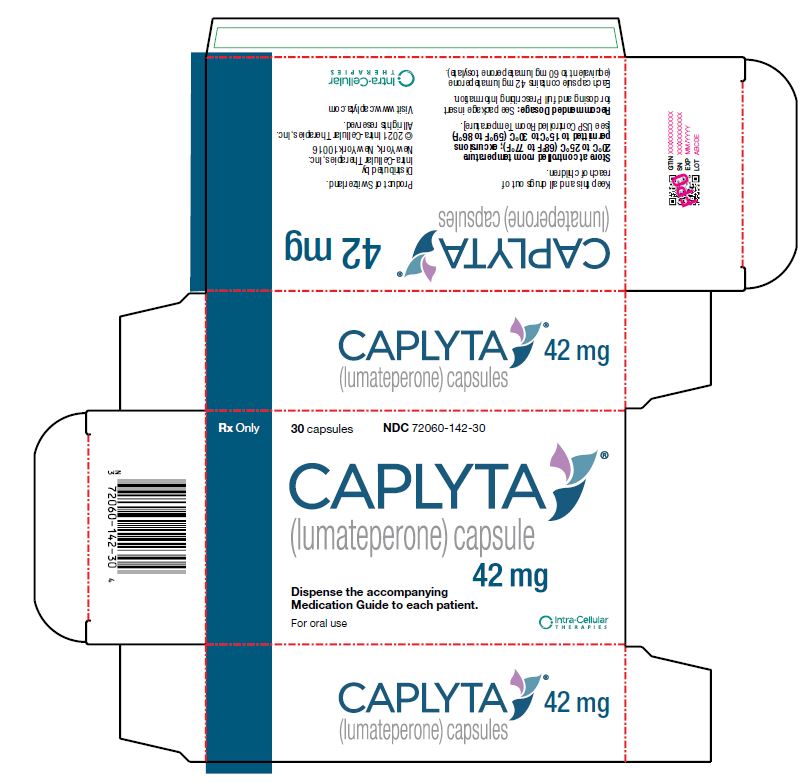
PRINCIPAL DISPLAY PANEL 42 mg 30 Count Bottle Label Rx Only 30 capsules NDC 72060-142-40 21 mg 30 Count Bottle Label Rx Only 30 capsules NDC 72060-121-40 10.5 mg 30 Count Bottle Label Rx Only 30 capsules NDC 72060-110-40 42 m g 7 Count Sample Carton Professional Sample. Not for Sale. NDC 72060-142-07 21 m g 7 Count Sample Carton Professional Sample.
Not for Sale. NDC 72060-121-07 10.5 m g 7 Count Sample Carton Professional Sample. Not for Sale.
NDC 72060-110-07 42 mg Bottle Label 21 mg label 10.5 mg label 42 mg Sample 21 mg sample 10.5 mg sample