
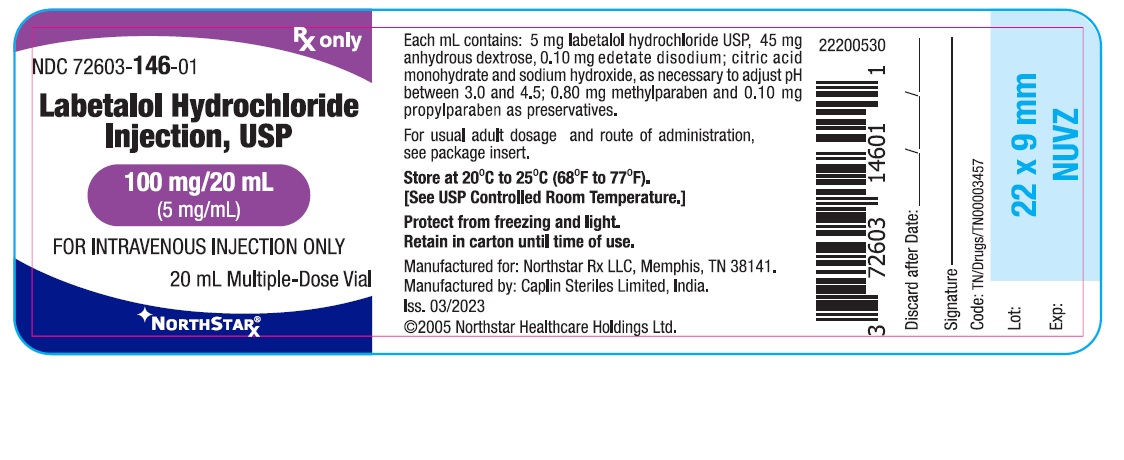
Labetalol Hydrochloride 5 mg/mL Injection, Solution — NDC 72603-146-01 (Billing 72603-0146-01)
This is a package of Labetalol Hydrochloride 5 mg/mL Injection, Solution from NorthStar Rx LLC, marketed since Apr 2023 and currently FDA-listed; retail pharmacies pay about $0.1852 per mL (NADAC). It is this product's only package size.
NDC database record
One package, one record: these facts belong to NDC 72603-146-01 alone.
- Record
- FDA NDC Directory package listing · Human prescription drug
- Code segments
- 72603 labeler · 146 product · 01 package
- Package marketed since
- Apr 28, 2023
- Sample package
- No — commercial package
- Listing certified through
- Dec 31, 2026
- Barcode (UPC)
- 0372603146011
- FDA record last changed
- Jul 24, 2026
Other active recalls for Labetalol Hydrochloride (different manufacturers) — 1 · tap to view
Identity & classification
Regulatory identifiers FDA, NLM and CMS codes for this package
Drug-database identifiers Medi-Span GPI and First Databank GCN / HICL / AHFS classification
- GSN (GCN sequence number): 005097
- GCN: 18990
- HICL (First Databank): 002095
- AHFS class code: 12:16.04.12
- RxCUI (RxNorm): 896771
Where does this data come from?
- FDA openFDA NDC Directory · synced Oct 8, 2026
- FDA label on DailyMed · label index refreshed Oct 6, 2026
- RxNorm (NLM RxNav) · catalog refreshed Oct 1, 2026
- Medi-Span GPI (licensed)
- First Databank (licensed) · refreshed Oct 8, 2026
RxNorm drug class
This medicine belongs to the beta-Adrenergic Blocker class.
Where does this data come from?
- RxClass (NLM) · catalog refreshed Oct 1, 2026
Clinical
- Labetalol lowers blood pressure. The tablets are used for high blood pressure, and the IV form is used in the hospital for severe high blood pressure. Keeping blood pressure down r...
- Take them by mouth, usually twice a day, as your prescriber directs. Food increases how much of the drug your body absorbs, so try to be consistent about taking it with or without...
- Dizziness, nausea, tiredness and headache are the most common, and they often fade early in treatment. Standing up slowly helps with lightheadedness. Call your doctor if you get it...
- Please don't stop suddenly. Stopping a beta blocker abruptly can worsen chest pain and, in some cases, lead to a heart attack. If you need to stop, your prescriber will lower the d...
Patient education
Supplement & herbal interactions
Labetalol may be associated with lower levels of 1 nutrient — worth a chat with your pharmacist, not a cause for alarm.
Where does this data come from?
- MedlinePlus (NLM) · refreshed Oct 1, 2026
- FDA label on DailyMed · label index refreshed Oct 6, 2026
Ask a licensed pharmacist directly — free, answered by our team.
Pricing
A drug doesn't have one price. Each row is a different public payment system, and none is what you'd pay at the counter — that depends on your insurance. The ⓘ on each row explains what it measures.
| Price system | Per mL | Per package |
|---|---|---|
| Retail pharmacies payNADAC · weekly | $0.185 | $3.70 / 20 ml |
| Medicaid paysCMS SDUD · 12 mo | No recent Medicaid claims on file for this NDC — rare and low-volume NDCs are suppressed in the public data. | |
| Medicare drug plans payPart D · quarterly | No Part D plan price is available for this NDC in our data. | |
| Medicare Part B allowsASP · J1920 | $0.218 / J1920 unit | — |
Where does this data come from?
- CMS NADAC weekly file · file of Sep 30, 2026
- CMS ASP pricing files · refreshed Sep 20, 2026
- CMS Medicaid State Drug Utilization Data · refreshed Oct 8, 2026
- CMS Part D plan pricing files · refreshed Sep 24, 2026
- VA National Acquisition Center price file
Billing & reimbursement
Where does this data come from?
- CMS ASP NDC-HCPCS crosswalk · refreshed Sep 22, 2026
- DMEPDAC NDC-HCPCS crosswalk
- openFDA NSDE billing units · refreshed Oct 7, 2026
Packaging — all sizes for this product
| Package NDC | Description | Marketing start | Marketing end | Status |
|---|---|---|---|---|
| 72603-0146-01 You're viewing this Main listing | 1 VIAL, MULTI-DOSE in 1 CARTON / 20 mL in 1 VIAL, MULTI-DOSE | 2023-04-28 | — | Active |
Therapeutic equivalents
| Product | Labeler | Pack | NADAC/unit | TE | Status | Price vs. this |
|---|---|---|---|---|---|---|
| Labetalol Hydrochloride 5 mg/mL 00143-9320-01 | Hikma | 1 vial | $0.185 | AP | Availability likely | — |
| Labetalol Hydrochloride 5 mg/mL 00143-9622-01 | Hikma | 1 vial | $0.185 | AP | Availability likely | — |
| labetalol hydrochloride 5 mg/mL 25021-0317-20 | Sagent | 1 vial | $0.185 | AP | Availability likely | — |
| Labetalol Hydrochloride 5 mg/mL 36000-0322-02 | Baxter | 1 vial | $0.185 | AP | Availability likely | — |
| Labetalol Hydrochloride 5 mg/mL 65145-0124-01 | Caplin | 1 vial | $0.185 | AP | Availability likely | — |
| Labetalol Hydrochloride 5 mg/mL 72266-0102-01 | Fosun | 1 vial | $0.185 | AP | Availability likely | — |
| Labetalol Hydrochloride 5 mg/mL 72572-0350-01 | Civica, | 1 vial | $0.185 | AP | Availability likely | — |
| Labetalol Hydrochloride 5 mg/mLthis 72603-0146-01 | NorthStar | 1 vial | $0.185 | AP | Availability likely | — |
| Labetalol Hydrochloride 100 mg/20mL 83301-0058-01 | Mullan | 1 vial | $0.185 | AP | Availability likely | — |
| Labetalol Hydrochloride 5 mg/mL 00143-9623-01 | Hikma | 1 vial | — | AP | FDA listed | — |
| Labetalol Hydrochloride 5 mg/mL 00409-0125-25 | Hospira, | 25 vials | — | AP | FDA listed | — |
| Labetalol Hydrochloride 5 mg/mL 00409-2267-20 | Hospira, | 1 vial | — | AP | Discontinued | — |
| Labetalol Hydrochloride 5 mg/mL 36000-0324-02 | Baxter | 1 vial | — | AP | FDA listed | — |
| LABETALOL HCl 5 mg/mL 51662-1602-01 | HF | 1 vial | — | AP | FDA listed | — |
| Labetalol Hydrochloride 5 mg/mL 65145-0125-01 | Caplin | 1 vial | — | AP | FDA listed | — |
| Labetalol Hydrochloride 5 mg/mL 68083-0111-01 | Gland | 10 vials | — | AP | FDA listed | — |
| Labetalol Hydrochloride 5 mg/mL 72266-0103-01 | Fosun | 1 vial | — | AP | FDA listed | — |
| Labetalol Hydrochloride 200 mg/40mL 83301-0059-01 | Mullan | 1 vial | — | AP | FDA listed | — |
| Labetalol Hydrochloride 5 mg/mL 00409-2339-34 | Hospira, | 1 cartridge | — | AP | FDA listed | — |
| Labetalol Hydrochloride 5 mg/mL 55154-4747-05 | Cardinal | 5 cartridges | — | AP | FDA listed | — |
| Labetalol Hydrochloride 5 mg/mL 36000-0320-10 | Baxter | 10 vials | — | AP | FDA listed | — |
| Labetalol Hydrochloride 5 mg/mL 70121-2428-03 | Amneal | 1 syringe | — | AP | FDA listed | — |
| Labetalol Hydrochloride 5 mg/mL 00143-9183-10 | Hikma | 10 vials | — | — | FDA listed | — |
| Labetalol Hydrochloride 5 mg/mL 83270-0178-01 | Onesource | 1 vial | — | — | FDA listed | — |
| Labetalol Hydrochloride 5 mg/mL 83270-0179-01 | Onesource | 1 vial | — | — | FDA listed | — |
Where does this data come from?
- FDA openFDA NDC Directory · synced Oct 8, 2026
- FDA Orange Book · refreshed Oct 3, 2026
- CMS NADAC weekly file · file of Sep 30, 2026
Availability & generic status
This product is an FDA-approved generic. Other versions of the same drug are listed under Therapeutic equivalents, least expensive first.
Where does this data come from?
- FDA Orange Book · refreshed Oct 3, 2026
Inactive Ingredients / Excipients
Inactive ingredients, also called excipients, are components of the drug product other than the active ingredient. They may include fillers, dyes, coatings, preservatives, flavors, or other formulation ingredients.
🧪 Avoiding an ingredient? See Labetalol inactive ingredients by manufacturer: every current product's list side by side, so you can ask your pharmacy for the version that does not list it.
💡 Tap an ingredient (hover on desktop) to see what it is and why it’s used.
-
45 mg / 1 mL
UNII 5SL0G7R0OK
A simple sugar made from corn or other plants, used in medicines as a filler and sweetener. It helps create the right texture and taste in tablets, powders, and liquid formulations.
-
UNII 2968PHW8QP
A weak organic acid derived from citrus fruits or made through fermentation. It works as a buffer to control pH, a preservative to extend shelf life, and a flavoring agent in medications.
-
0.1 mg / 1 mL
UNII 7FLD91C86K
Edetate disodium is a chemical compound that binds and removes certain metal ions. In medicines, it acts as a preservative and stabilizer by preventing metals like calcium from interfering with the product's shelf life and consistency.
-
0.8 mg / 1 mL
UNII A2I8C7HI9T
Methylparaben is a preservative derived from benzoic acid that prevents growth of bacteria, fungi, and mold in medicines. It extends the product's shelf life and maintains safety during storage.
-
0.1 mg / 1 mL
UNII Z8IX2SC1OH
Propylparaben is a chemical preservative used to prevent bacterial and fungal growth in medicines and personal care products. It helps extend shelf life and maintain product safety during storage.
-
UNII 55X04QC32I
A strong alkaline chemical used to adjust and maintain the pH balance of liquid medicines. It helps keep the medicine stable and ensures it stays effective during storage.
6 inactive ingredients listed in the exact product block matched to this NDC.
Where does this data come from?
ingredient classCode="IACT" elements from the exact product block matched by this NDC. Label-section narrative from DailyMed / the openFDA label index is shown separately when available.- FDA label on DailyMed · label index refreshed Oct 6, 2026
- FDA openFDA NDC Directory · synced Oct 8, 2026
Inactive ingredient FAQ
Are inactive ingredients the same for every manufacturer?
Why might an inactive ingredient be missing?
Can inactive ingredients matter?
Manufacturer & labeler
More NDCs from NorthStar Rx LLC labeler code 72603
- Thiamine 100 mg/mL Injection, Solution NDC 72603-139-25
- Sumatriptan Succinate 6 mg/.5mL Injection NDC 72603-141-02
- Metoprolol succinate 25 mg Tablet, Film Coated, Extended Release NDC 72603-142-01
- Metoprolol succinate 50 mg Tablet, Film Coated, Extended Release NDC 72603-143-01
- Metoprolol succinate 100 mg Tablet, Film Coated, Extended Release NDC 72603-144-01
- Metoprolol succinate 200 mg Tablet, Film Coated, Extended Release NDC 72603-145-01
- Daptomycin 350 mg/7mL Injection, Powder, Lyophilized, For Solution NDC 72603-147-01
- sevelamer hydrochloride 800 mg Tablet, Film Coated NDC 72603-148-01
- Escitalopram Oxalate 5 mg Tablet, Film Coated NDC 72603-149-01
- Escitalopram Oxalate 10 mg/21 Tablet, Film Coated NDC 72603-150-01
- Escitalopram Oxalate 20 mg/21 Tablet, Film Coated NDC 72603-151-01
- Daptomycin 500 mg/10mL Injection, Powder, Lyophilized, For Solution NDC 72603-152-01
Where does this data come from?
- FDA openFDA NDC Directory · synced Oct 8, 2026
- Drugs@FDA
Full prescribing information FDA SPL
🎯 Indications and Usage ▾
INDICATIONS & USAGE Labetalol hydrochloride injection is indicated for control of blood pressure in severe hypertension.
⏱️ Dosage and Administration ▾
DOSAGE AND ADMINISTRATION Labetalol hydrochloride injection is intended for intravenous use in hospitalized patients. DOSAGE MUST BE INDIVIDUALIZED depending upon the severity of hypertension and the response of the patient during dosing. Patients should always be kept in a supine position during the period of intravenous drug administration.
A substantial fall in blood pressure on standing should be expected in these patients. The patient's ability to tolerate an upright position should be established before permitting any ambulation, such as using toilet facilities. Either of two methods of administration of labetalol hydrochloride injection may be used: a) repeated intravenous injections, b) slow continuous infusion.
Repeated Intravenous Injection Initially, labetalol hydrochloride injection should be given in a dose of 20 mg labetalol HCl (which corresponds to 0.25 mg/kg for an 80 kg patient) by slow intravenous injection over a 2-minute period. Immediately before the injection and at 5 and 10 minutes after injection, supine blood pressure should be measured to evaluate response. Additional injections of 40 mg or 80 mg can be given at 10 minute intervals until a desired supine blood pressure is achieved or a total of 300 mg labetalol HCl has been injected.
The maximum effect usually occurs within 5 minutes of each injection. Slow Continuous Infusion Labetalol hydrochloride injection is prepared for continuous intravenous infusion by diluting the contents with commonly used intravenous fluids (see below). Examples of methods of preparing the infusion solution are: The contents of either two 20 mL vials (40 mL), or one 40 mL vial, are added to 160 mL of a commonly used intravenous fluid such that the resultant 200 mL of solution contains 200 mg of labetalol hydrochloride, 1 mg/mL.
The diluted solution should be administered at a rate of 2 mL/min to deliver 2 mg/min. Alternatively, the contents of either two 20 mL vials (40 mL), or one 40 mL vial, of labetalol hydrochloride injection are added to 250 mL of a commonly used intravenous fluid. The resultant solution will contain 200 mg of labetalol hydrochloride, approximately 2 mg/3 mL.
The diluted solution should be administered at a rate of 3 mL/min to deliver approximately 2 mg/min. The rate of infusion of the diluted solution may be adjusted according to the blood pressure response, at the discretion of the physician. To facilitate a desired rate of infusion, the diluted solution can be infused using a controlled administration mechanism, e.g., graduated burette or mechanically driven infusion pump.
Since the half-life of labetalol is 5 to 8 hours, steady-state blood levels (in the face of a constant rate of infusion) would not be reached during the usual infusion time period. The infusion should be continued until a satisfactory response is obtained and should then be stopped and oral labetalol hydrochloride started. The effective intravenous dose is usually in the range of 50 to 200 mg.
A total dose of up to 300 mg may be required in some patients. Blood Pressure Monitoring The blood pressure should be monitored during and after completion of the infusion or intravenous injections. Rapid or excessive falls in either systolic or diastolic blood pressure during intravenous treatment should be avoided.
In patients with excessive systolic hypertension, the decrease in systolic pressure should be used as indicator of effectiveness in addition to the response of the diastolic pressure. Initiation of Dosing with Labetalol Hydrochloride Tablets Subsequent oral dosing with labetalol hydrochloride tablets should begin when it has been established that the supine diastolic blood pressure has begun to rise. The recommended initial dose is 200 mg, followed in 6 to 12 hours by an additional dose of 200 or 400 mg, depending on the blood pressure response.
Thereafter, inpatient titration with labetalol hydrochloride tablets may proceed as follows: Inpatient Titration Instructions Regimen… [Excerpted — this section continues on DailyMed.]
⛔ Contraindications ▾
CONTRAINDICATIONS Labetalol hydrochloride injection is contraindicated in bronchial asthma, overt cardiac failure, greater than first degree heart block, cardiogenic shock, severe bradycardia, other conditions associated with severe and prolonged hypotension, and in patients with a history of hypersensitivity to any component of the product (see WARNINGS ). Beta-blockers, even those with apparent cardioselectivity, should not be used in patients with a history of obstructive airway disease, including asthma.
⚠️ Warnings ▾
WARNINGS Hepatic Injury Severe hepatocellular injury, confirmed by rechallenge in at least one case, occurs rarely with labetalol therapy. The hepatic injury is usually reversible, but hepatic necrosis and death have been reported. Injury has occurred after both short- and long-term treatment and may be slowly progressive despite minimal symptomatology.
Similar hepatic events have been reported with a related compound, dilevalol HCl, including two deaths. Dilevalol HCl is one of the four isomers of labetalol. Thus, for patients taking labetalol, periodic determination of suitable hepatic laboratory tests would be appropriate.
Laboratory testing should also be done at the very first symptom or sign of liver dysfunction (e.g., pruritus, dark urine, persistent anorexia, jaundice, right upper quadrant tenderness, or unexplained "flu-like" symptoms). If the patient has jaundice or laboratory evidence of liver injury, labetalol should be stopped and not restarted. Cardiac Failure Sympathetic stimulation is a vital component supporting circulatory function in congestive heart failure.
Beta-blockade carries a potential hazard of further depressing myocardial contractility and precipitating more severe failure. Although beta-blockers should be avoided in overt congestive heart failure, if necessary, labetalol can be used with caution in patients with a history of heart failure, who are well compensated. Congestive heart failure has been observed in patients receiving labetalol.
Labetalol does not abolish the inotropic action of digitalis on heart muscle. In Patients without a History of Cardiac Failure In patients with latent cardiac insufficiency, continued depression of the myocardium with beta-blocking agents over a period of time can lead, in some cases, to cardiac failure. At the first sign or symptom of impending cardiac failure, patients should be fully digitalized and/or be given a diuretic, and the response observed closely.
If cardiac failure continues, despite adequate digitalization and diuretic, labetalol therapy should be withdrawn (gradually if possible). Ischemic Heart Disease Angina pectoris has not been reported upon labetalol discontinuation. However, following abrupt cessation of therapy with some beta-blocking agents in patients with coronary artery disease, exacerbations of angina pectoris and, in some cases, myocardial infarction have been reported.
Therefore, such patients should be cautioned against interruption of therapy without the physician's advice. Even in the absence of overt angina pectoris, when discontinuation of labetalol is planned, the patient should be carefully observed and should be advised to limit physical activity. If angina markedly worsens or acute coronary insufficiency develops, labetalol administration should be reinstituted promptly, at least temporarily, and other measures appropriate for the management of unstable angina should be taken.
Nonallergic Bronchospasm (e.g., chronic bronchitis and emphysema) Since labetalol hydrochloride injection at the usual intravenous therapeutic doses has not been studied in patients with nonallergic bronchospastic disease, it should not be used in such patients. Pheochromocytoma Intravenous labetalol has been shown to be effective in lowering the blood pressure and relieving symptoms in patients with pheochromocytoma; higher than usual doses may be required. However, paradoxical hypertensive responses have been reported in a few patients with this tumor; therefore, use caution when administering labetalol to patients with pheochromocytoma.
Diabetes Mellitus and Hypoglycemia Beta-adrenergic blockade may prevent the appearance of premonitory signs and symptoms (e.g., tachycardia) of acute hypoglycemia. This is especially important with labile diabetics. Beta-blockade also reduces the release of insulin in response to hyperglycemia; it may therefore be necessary to adjust the dose of antidiabetic drugs.
Major Surgery Do not routinely withdraw chronic bet… [Excerpted — this section continues on DailyMed.]
🤒 Adverse Reactions ▾
ADVERSE REACTIONS Labetalol hydrochloride injection is usually well tolerated. Most adverse effects have been mild and transient and in controlled trials involving 92 patients did not require labetalol withdrawal. Symptomatic postural hypotension (incidence 58%) is likely to occur if patients are tilted or allowed to assume the upright position within 3 hours of receiving Labetalol hydrochloride injection.
Moderate hypotension occurred in 1 of 100 patients while supine. Increased sweating was noted in 4 of 100 patients, and flushing occurred in 1 of 100 patients. The following also were reported with labetalol hydrochloride injection with the incidence per 100 patients as noted: Cardiovascular System: Ventricular arrhythmia in 1.
Central and Peripheral Nervous Systems: Dizziness in 9; tingling of the scalp/skin 7; hypoesthesia (numbness) and vertigo, 1 each. Gastrointestinal System: Nausea in 13; vomiting 4; dyspepsia and taste distortion, 1 each. Metabolic Disorders: Transient increases in blood urea nitrogen and serum creatinine levels occurred in 8 of 100 patients; these were associated with drops in blood pressure, generally in patients with prior renal insufficiency.
Psychiatric Disorders: Somnolence/yawning in 3. Respiratory System: Wheezing in 1. Skin: Pruritus in 1.
The incidence of adverse reactions depends upon the dose of labetalol. The largest experience is with oral labetalol. Certain of the side effects increased with increasing oral dose as shown in the table below which depicts the entire U.S. therapeutic trials data base for adverse reactions that are clearly or possibly dose related.
Labetalol Daily Dose (mg) 200 300 400 600 800 900 1200 1600 2400 Number of Patients 522 181 606 608 503 117 411 242 175 Dizziness (%) 2 3 3 3 5 1 9 13 16 Fatigue 2 1 4 4 5 3 7 6 10 Nausea <1 0 1 2 4 0 7 11 19 Vomiting 0 0 <1 <1 <1 0 1 2 3 Dyspepsia 1 0 2 1 1 0 2 2 4 Paresthesias 2 0 2 2 1 1 2 5 5 Nasal Stuffiness 1 1 2 2 2 2 4 5 6 Ejaculation Failure 0 2 1 2 3 0 4 3 5 Impotence 1 1 1 1 2 4 3 4 3 Edema 1 0 1 1 1 0 1 2 2 In addition, a number of other less common adverse events have been reported: Cardiovascular: Hypotension, and rarely, syncope, bradycardia, heart block.
Liver and Biliary System: Hepatic necrosis, hepatitis, cholestatic jaundice, elevated liver function tests. Hypersensitivity : Rare reports of hypersensitivity (e.g., rash, urticaria, pruritus, angioedema, dyspnea) and anaphylactoid reactions. The oculomucocutaneous syndrome associated with the beta-blocker practolol has not been reported with labetalol during investigational use and extensive foreign marketing experience.
Clinical Laboratory Tests Among patients dosed with labetalol hydrochloride tablets, there have been reversible increases of serum transaminases in 4% of patients tested, and more rarely, reversible increases in blood urea. To report SUSPECTED ADVERSE REACTIONS, contact NorthStar Rx LLC at 1-800-206-7821 or FDA at 1-800-FDA-1088 or www.fda.gov/medwatch.
🔄 Drug Interactions ▾
Drug Interactions Since labetalol hydrochloride injection may be administered to patients already being treated with other medications, including other antihypertensive agents, careful monitoring of these patients is necessary to detect and treat promptly any undesired effect from concomitant administration. In one survey, 2.3% of patients taking labetalol orally in combination with tricyclic antidepressants experienced tremor as compared to 0.7% reported to occur with labetalol alone. The contribution of each of the treatments to this adverse reaction is unknown but the possibility of a drug interaction cannot be excluded.
Drugs possessing beta-blocking properties can blunt the bronchodilator effect of beta-receptor agonist drugs in patients with bronchospasm; therefore, doses greater than the normal antiasthmatic dose of beta-agonist bronchodilator drugs may be required. Cimetidine has been shown to increase the bioavailability of labetalol administered orally. Since this could be explained either by enhanced absorption or by an alteration of hepatic metabolism of labetalol, special care should be used in establishing the dose required for blood pressure control in such patients.
Synergism has been shown between halothane anesthesia and intravenously administered labetalol. During controlled hypotensive anesthesia using labetalol in association with halothane, high concentrations (3% or above) of halothane should not be used because the degree of hypotension will be increased and because of the possibility of a large reduction in cardiac output and an increase in central venous pressure. The anesthesiologist should be informed when a patient is receiving labetalol.
Labetalol blunts the reflex tachycardia produced by nitroglycerin without preventing its hypotensive effect. If labetalol is used with nitroglycerin in patients with angina pectoris, additional antihypertensive effects may occur. Care should be taken if labetalol is used concomitantly with calcium antagonists of the verapamil type.
When drug products that are alkaline, such as furosemide, have been administered in combination with labetalol, a white precipitate has been noted. Therefore, these drugs should not be administered in the same infusion line. Risk of Anaphylactic Reaction While taking beta-blockers, patients with a history of severe anaphylactic reactions to a variety of allergens may be more reactive to repeated challenge, either accidental, diagnostic, or therapeutic.
Such patients may be unresponsive to the usual doses of epinephrine used to treat allergic reaction.
🔄 Drug / Laboratory Test Interactions ▾
Drug/Laboratory Test Interactions The presence of labetalol metabolites in the urine may result in falsely elevated levels of urinary catecholamines, metanephrine, normetanephrine, and vanillylmandelic acid (VMA) when measured by fluorimetric or photometric methods. In screening patients suspected of having a pheochromocytoma and being treated with labetalol, a specific method, such as a high-performance liquid chromatographic assay with solid phase extraction (e.g., J Chromatogr . 385:241, 1987) should be employed in determining levels of catecholamines.
Labetalol has also been reported to produce a false-positive test for amphetamine when screening urine for the presence of drugs using the commercially available assay methods Toxi-Lab A ® (thin-layer chromatographic assay) and Emit-d.a.u. ® (radioenzymatic assay). When patients being treated with labetalol have a positive urine test for amphetamine using these techniques, confirmation should be made by using more specific methods, such as a gas chromatographic-mass spectrometer technique.
🤰 Pregnancy ▾
Pregnancy Teratogenic Effects Teratogenic studies have been performed with labetalol in rats and rabbits at oral doses up to approximately 6 and 4 times the maximum recommended human dose (MRHD), respectively. No reproducible evidence of fetal malformations was observed. Increased fetal resorptions were seen in both species at doses approximating the MRHD.
A teratology study performed with labetalol in rabbits at intravenous doses up to 1.7 times the MRHD revealed no evidence of drug-related harm to the fetus. There are no adequate and well-controlled studies in pregnant women. Labetalol should be used during pregnancy only if the potential benefit justifies the potential risk to the fetus.
Nonteratogenic Effects Hypotension, bradycardia, hypoglycemia, and respiratory depression have been reported in infants of mothers who were treated with labetalol for hypertension during pregnancy. Oral administration of labetalol to rats during late gestation through weaning at doses of 2 to 4 times the MRHD caused a decrease in neonatal survival.
🧒 Pediatric Use ▾
Pediatric Use Safety and effectiveness in children have not been established.
🆘 Overdosage ▾
OVERDOSAGE Overdosage with labetalol hydrochloride injection causes excessive hypotension that is posture sensitive, and sometimes, excessive bradycardia. Patients should be placed supine and their legs raised if necessary to improve the blood supply to the brain. If overdosage with labetalol follows oral ingestion, gastric lavage or pharmacologically induced emesis (using syrup of ipecac) may be useful for removal of the drug shortly after ingestion.
The following additional measures should be employed if necessary: Excessive bradycardia -administer atropine or epinephrine. Cardiac failure -administer a digitalis glycoside and a diuretic. Dopamine or dobutamine may also be useful.
Hypotension -administer vasopressors, e.g., norepinephrine. There is pharmacological evidence that norepinephrine may be the drug of choice. Bronchospasm -administer epinephrine and/or an aerosolized beta 2 -agonist.
Seizures -administer diazepam. In severe beta-blocker overdose resulting in hypotension and/or bradycardia, glucagon has been shown to be effective when administered in large doses (5 to 10 mg rapidly over 30 seconds, followed by continuous infusion of 5 mg/hr that can be reduced as the patient improves). Neither hemodialysis nor peritoneal dialysis removes a significant amount of labetalol from the general circulation (<1%).
The oral LD 50 value of labetalol in the mouse is approximately 600 mg/kg and in the rat is greater than 2 g/kg. The intravenous LD 50 in these species is 50 to 60 mg/kg.
🧬 Clinical Pharmacology ▾
CLINICAL PHARMACOLOGY Labetalol combines both selective, competitive alpha 1 -adrenergic blocking and nonselective, competitive beta-adrenergic blocking activity in a single substance. In man, the ratios of alpha- to beta- blockade have been estimated to be approximately 1:3 and 1:7 following oral and intravenous administration, respectively. Beta 2 -agonist activity has been demonstrated in animals with minimal beta 1 -agonist (ISA) activity detected.
In animals, at doses greater than those required for alpha- or beta-adrenergic blockade, a membrane-stabilizing effect has been demonstrated. Pharmacodynamics The capacity of labetalol to block alpha-receptors in man has been demonstrated by attenuation of the pressor effect of phenylephrine and by a significant reduction of the pressor response caused by immersing the hand in ice-cold water ("cold-pressor test"). Labetalol's beta 1 -receptor blockade in man was demonstrated by a small decrease in the resting heart rate, attenuation of tachycardia produced by isoproterenol or exercise, and by attenuation of the reflex tachycardia to the hypotension produced by amyl nitrite.
Beta 2 -receptor blockade was demonstrated by inhibition of the isoproterenol-induced fall in diastolic blood pressure. Both the alpha- and beta-blocking actions of orally administered labetalol contribute to a decrease in blood pressure in hypertensive patients. Labetalol consistently, in dose-related fashion, blunted increases in exercise-induced blood pressure and heart rate, and in their double product.
The pulmonary circulation during exercise was not affected by labetalol dosing. Single oral doses of labetalol administered in patients with coronary artery disease had no significant effect on sinus rate, intraventricular conduction, or QRS duration. The atrioventricular (AV) conduction time was modestly prolonged in 2 of 7 patients.
In another study, intravenous labetalol slightly prolonged AV nodal conduction time and atrial effective refractory period with only small changes in heart rate. The effects on AV nodal refractoriness were inconsistent. Labetalol produces dose-related falls in blood pressure without reflex tachycardia and without significant reduction in heart rate, presumably through a mixture of its alpha-blocking and beta-blocking effects.
Hemodynamic effects are variable with small nonsignificant changes in cardiac output seen in some studies but not others, and small decreases in total peripheral resistance. Elevated plasma renins are reduced. Doses of labetalol that controlled hypertension did not affect renal function in mild to severe hypertensive patients with normal renal function.
Due to the alpha 1 -receptor blocking activity of labetalol, blood pressure is lowered more in the standing than in the supine position, and symptoms of postural hypotension can occur. During dosing with intravenous labetalol, the contribution of the postural component should be considered when positioning patients for treatment, and patients should not be allowed to move to an erect position unmonitored until their ability to do so is established. In a clinical pharmacologic study in severe hypertensives, an initial 0.25 mg/kg injection of labetalol, administered to patients in the supine position, decreased blood pressure by an average of 11/7 mmHg.
Additional injections of 0.5 mg/kg at 15 minute intervals up to a total cumulative dose of 1.75 mg/kg of labetalol caused further dose-related decreases in blood pressure. Some patients required cumulative doses of up to 3.25 mg/kg. The maximal effect of each dose level occurred within 5 minutes.
Following discontinuation of intravenous treatment with labetalol, the blood pressure rose gradually and progressively approaching pretreatment baseline values within an average of 16 to 18 hours in the majority of patients. Similar results were obtained in the treatment of patients with severe hypertension requiring urgent blood pressure reduction with an initial d… [Excerpted — this section continues on DailyMed.]
📦 How Supplied / Storage and Handling ▾
HOW SUPPLIED Labetalol hydrochloride injection, USP is a sterile, nonpyrogenic clear colorless to light yellow aqueous solution supplied in multiple dose vials as follows: NDC NDC 72603-146-01 Strength 100 mg/20 mL (5 mg/mL) Package Factor Multiple Dose Vial, Carton of 1 Store at 20 ° to 25°C (68 ° to 77°F). [See USP Controlled Room Temperature.] Protect from freezing and light. Retain in carton until time of use. Manufactured for: Northstar Rx LLC Memphis, TN 38141.
Manufactured by: Caplin Steriles Limited, India. Code: TN/Drugs/TN00003457 Iss. March 2023 22200534
📋 Description ▾
DESCRIPTION Labetalol hydrochloride is an adrenergic receptor blocking agent that has both selective alpha 1 - and nonselective beta-adrenergic receptor blocking actions in a single substance. Labetalol hydrochloride (HCl) is a racemate, chemically designated as 5-[1-hydroxy-2-[(1-methyl-3-phenylpropyl) amino] ethyl]-salicylamide monohydrochloride, and has the following structural formula: Labetalol hydrochloride has the molecular formula C 19 H 24 N 2 O 3 • HCl and a molecular weight of 364.87. It has two asymmetric centers and therefore exists as a molecular complex of two diastereoisomeric pairs.
Dilevalol, the R,R' stereoisomer, makes up 25% of racemic labetalol. Labetalol hydrochloride is a white or off-white crystalline powder, soluble in water. Labetalol hydrochloride injection, USP is a clear, colorless to light yellow aqueous sterile isotonic solution for intravenous injection.
It has a pH range of 3.0 to 4.5. Each mL contains 5 mg labetalol hydrochloride USP, 45 mg anhydrous dextrose, 0.1 mg edetate disodium; 0.8 mg methylparaben and 0.1 mg propylparaben as preservatives; citric acid monohydrate and sodium hydroxide, as necessary, to bring the solution into the pH range. structure
💬 Information for Patients ▾
Information for Patients The following information is intended to aid in the safe and effective use of this medication. It is not a disclosure of all possible adverse or intended effects. During and immediately following (for up to 3 hours) labetalol hydrochloride injection, the patient should remain supine.
Subsequently, the patient should be advised on how to proceed gradually to become ambulatory, and should be observed at the time of first ambulation. When the patient is started on labetalol hydrochloride tablets following adequate control of blood pressure with labetalol hydrochloride injection, appropriate directions for titration of dosage should be provided (see DOSAGE AND ADMINISTRATION ). As with all drugs with beta-blocking activity, certain advice to patients being treated with labetalol is warranted: While no incident of the abrupt withdrawal phenomenon (exacerbation of angina pectoris) has been reported with labetalol, dosing with labetalol hydrochloride tablets should not be interrupted or discontinued without a physician's advice.
Patients being treated with labetalol hydrochloride tablets should consult a physician at any signs or symptoms of impending cardiac failure or hepatic dysfunction (see WARNINGS ). Also, transient scalp tingling may occur, usually when treatment with labetalol hydrochloride tablets is initiated (see ADVERSE REACTIONS ).
⚠️ Precautions ▾
PRECAUTIONS General Impaired Hepatic Function Labetalol hydrochloride injection should be used with caution in patients with impaired hepatic function since metabolism of the drug may be diminished. Hypotension Symptomatic postural hypotension (incidence 58%) is likely to occur if patients are tilted or allowed to assume the upright position within 3 hours of receiving labetalol hydrochloride injection. Therefore, the patient's ability to tolerate an upright position should be established before permitting any ambulation.
Intraoperative Floppy Iris Syndrome (IFIS) has been observed during cataract surgery in some patients treated with alpha-1 blockers (labetalol is an alpha/beta blocker). This variant of small pupil syndrome is characterized by the combination of a flaccid iris that billows in response to intraoperative irrigation currents, progressive intraoperative miosis despite preoperative dilation with standard mydriatic drugs, and potential prolapse of the iris toward the phacoemulsification incisions. The patient's ophthalmologist should be prepared for possible modifications to the surgical technique, such as the utilization of iris hooks, iris dilator rings, or viscoelastic substances.
There does not appear to be a benefit of stopping alpha-1 blocker therapy prior to cataract surgery. Following Coronary Artery Bypass Surgery In one uncontrolled study, patients with low cardiac indices and elevated systemic vascular resistance following intravenous labetalol experienced significant declines in cardiac output with little change in systemic vascular resistance. One of these patients developed hypotension following labetalol treatment.
Therefore, use of labetalol should be avoided in such patients. High-Dose Labetalol Administration of up to 3 g/d as an infusion for up to 2 to 3 days has been anecdotally reported; several patients experienced hypotension or bradycardia. Jaundice or Hepatic Dysfunction (See WARNINGS. ) Information for Patients The following information is intended to aid in the safe and effective use of this medication.
It is not a disclosure of all possible adverse or intended effects. During and immediately following (for up to 3 hours) labetalol hydrochloride injection, the patient should remain supine. Subsequently, the patient should be advised on how to proceed gradually to become ambulatory, and should be observed at the time of first ambulation.
When the patient is started on labetalol hydrochloride tablets following adequate control of blood pressure with labetalol hydrochloride injection, appropriate directions for titration of dosage should be provided (see DOSAGE AND ADMINISTRATION ). As with all drugs with beta-blocking activity, certain advice to patients being treated with labetalol is warranted: While no incident of the abrupt withdrawal phenomenon (exacerbation of angina pectoris) has been reported with labetalol, dosing with labetalol hydrochloride tablets should not be interrupted or discontinued without a physician's advice.
Patients being treated with labetalol hydrochloride tablets should consult a physician at any signs or symptoms of impending cardiac failure or hepatic dysfunction (see WARNINGS ). Also, transient scalp tingling may occur, usually when treatment with labetalol hydrochloride tablets is initiated (see ADVERSE REACTIONS ). Laboratory Tests Routine laboratory tests are ordinarily not required before or after intravenous labetalol.
In patients with concomitant illnesses, such as impaired renal function, appropriate tests should be done to monitor these conditions. Drug Interactions Since labetalol hydrochloride injection may be administered to patients already being treated with other medications, including other antihypertensive agents, careful monitoring of these patients is necessary to detect and treat promptly any undesired effect from concomitant administration. In one survey, 2.3% of patients taking labetalol orally in combination with tricyclic antidepressants e… [Excerpted — this section continues on DailyMed.]
🍼 Nursing Mothers ▾
Nursing Mothers Small amounts of labetalol (approximately 0.004% of the maternal dose) are excreted in human milk. Caution should be exercised when labetalol hydrochloride injection is administered to a nursing woman.
📄 Carcinogenesis, Mutagenesis, Impairment of Fertility ▾
Carcinogenesis, Mutagenesis, Impairment of Fertility Long-term oral dosing studies with labetalol for 18 months in mice and for 2 years in rats showed no evidence of carcinogenesis. Studies with labetalol, using dominant lethal assays in rats and mice, and exposing microorganisms according to modified Ames tests, showed no evidence of mutagenesis.
📄 Package Label / Principal Display Panel ▾
PACKAGE LABEL.PRINCIPAL DISPLAY PANEL Labetalol Hydrochloride Injection, USP 100 mg/20 mL (5 mg/mL) NDC 72603-146-01 Rx only For Intravenous Injection Only 20 mL Multiple-Dose Vial Label Labetalol Hydrochloride Injection, USP 100 mg/20 mL (5 mg/mL) NDC 72603-146-01 Rx only For Intravenous Injection Only 20 mL Multiple-Dose Carton Label vial carton