
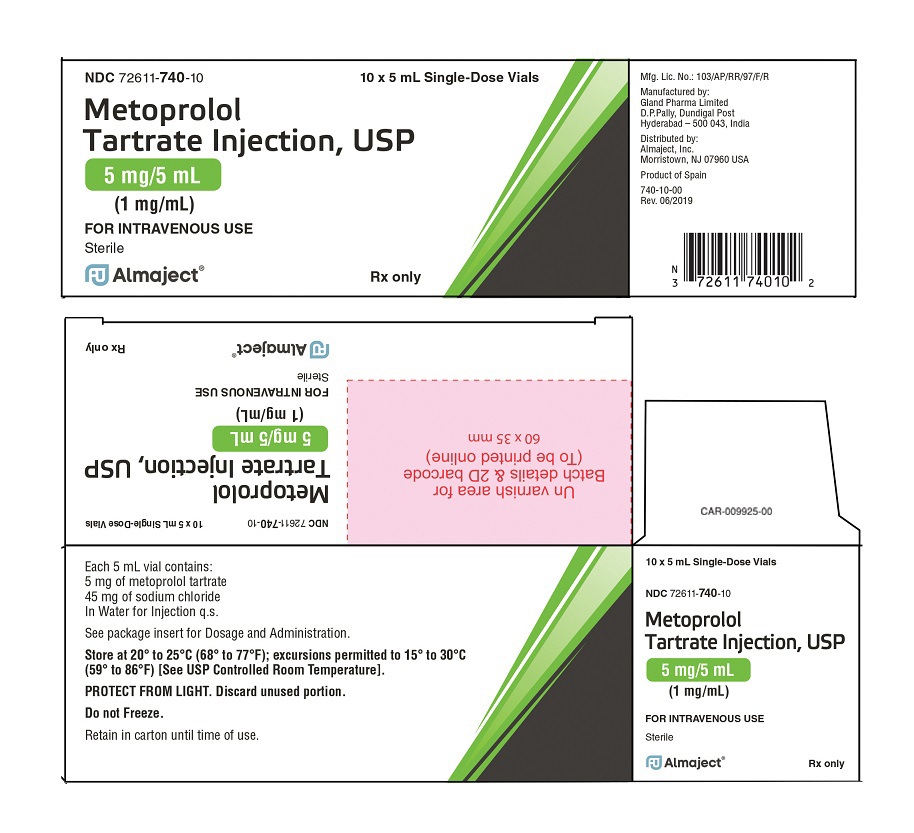
Metoprolol Tartrate 1 mg/mL Injection, Solution — NDC 72611-740-10 (Billing 72611-0740-10)
This is a package of Metoprolol Tartrate 1 mg/mL Injection, Solution from Almaject, Inc., marketed since Mar 2020 and currently FDA-listed, this package's marketing is listed to end Nov 2026. It is this product's only package size.
NDC database record
One package, one record: these facts belong to NDC 72611-740-10 alone.
- Record
- FDA NDC Directory package listing · Human prescription drug
- Code segments
- 72611 labeler · 740 product · 10 package
- Package marketed since
- Mar 31, 2020
- Package marketing ended
- Nov 1, 2026
- Sample package
- No — commercial package
- Barcode (UPC)
- 0372611740102
- Medicaid fills, this package
- 167 prescriptions in the last four reported quarters
- FDA record last changed
- Jul 24, 2026
Other active recalls for Metoprolol Tartrate (different manufacturers) — 1 · tap to view
Identity & classification
Regulatory identifiers FDA, NLM and CMS codes for this package
Drug-database identifiers Medi-Span GPI and First Databank GCN / HICL / AHFS classification
- GSN (GCN sequence number): 019808
- GCN: 12241
- GPI-14 (Medi-Span): 33200030102005
- HICL (First Databank): 002102
- AHFS class code: 12:16.08.08
- RxCUI (RxNorm): 866508
Where does this data come from?
- FDA openFDA NDC Directory · synced Oct 1, 2026
- FDA label on DailyMed · label index refreshed Oct 6, 2026
- RxNorm (NLM RxNav) · catalog refreshed Oct 1, 2026
- Medi-Span GPI (licensed)
- First Databank (licensed) · refreshed Oct 1, 2026
RxNorm drug class
This medicine belongs to the beta-Adrenergic Blocker class.
Where does this data come from?
- RxClass (NLM) · catalog refreshed Oct 1, 2026
Clinical
- It depends on which form you have. Metoprolol tartrate and Lopressor tablets treat high blood pressure and angina, and lower the risk of death after a heart attack. Metoprolol succ...
- Take it exactly as prescribed. Tartrate tablets go with or right after a meal. Extended-release succinate tablets are taken once daily and should not be crushed or chewed. Ask your...
- Please don't stop suddenly. Stopping abruptly can make angina worse and has led to heart attacks. Even if you only take it for blood pressure, your doctor will lower the dose gradu...
- Tiredness, dizziness, a slow heartbeat, low blood pressure, diarrhea, itching or rash are the more common ones. Most were mild and temporary. Call your doctor if you faint, your he...
Patient education
Supplement & herbal interactions
Metoprolol may be associated with lower levels of 1 nutrient — worth a chat with your pharmacist, not a cause for alarm.
Where does this data come from?
- MedlinePlus (NLM) · refreshed Oct 1, 2026
- FDA label on DailyMed · label index refreshed Oct 6, 2026
Ask a licensed pharmacist directly — free, answered by our team.
Pricing
A drug doesn't have one price. Each row is a different public payment system, and none is what you'd pay at the counter — that depends on your insurance. The ⓘ on each row explains what it measures.
| Price system | Per mL | Per package |
|---|---|---|
| Retail pharmacies payNADAC · weekly | Not in the retail survey — common for institutional, discontinued, or low-volume packs. | |
| Medicaid paysCMS SDUD · 12 mo | $0.6278 | $31.39 / 50 ml |
| Medicare drug plans payPart D · quarterly | No Part D plan price is available for this NDC in our data. | |
| Medicare Part B allowsASP · J0616 | $0.155 / J0616 unit | — |
Where does this data come from?
- CMS NADAC weekly file
- CMS ASP pricing files · refreshed Sep 20, 2026
- CMS Medicaid State Drug Utilization Data · through Q1 2026
- CMS Part D plan pricing files · refreshed Sep 24, 2026
- VA National Acquisition Center price file
Billing & reimbursement
Where does this data come from?
- CMS ASP NDC-HCPCS crosswalk · refreshed Sep 22, 2026
- DMEPDAC NDC-HCPCS crosswalk
- openFDA NSDE billing units · refreshed Sep 7, 2026
Packaging — all sizes for this product
| Package NDC | Description | Marketing start | Marketing end | Status |
|---|---|---|---|---|
| 72611-0740-10 You're viewing this Main listing | 10 VIAL, SINGLE-DOSE in 1 CARTON / 5 mL in 1 VIAL, SINGLE-DOSE | 2020-03-31 | Nov 1, 2026 | Active |
Therapeutic equivalents
| Product | Labeler | Pack | NADAC/unit | TE | Status | Price vs. this |
|---|---|---|---|---|---|---|
| Metoprolol Tartrate 5 mg/5mL 00143-9660-10 | Hikma | 10 vials | — | AP | FDA listed | — |
| Metoprolol Tartrate 5 mg/5mL 00143-9873-10 | Hikma | 5 ml | — | AP | FDA listed | — |
| Metoprolol Tartrate 1 mg/mL 00409-1778-05 | Hospira, | 10 vials | — | AP | FDA listed | — |
| Metoprolol Tartrate 1 mg/mL 00409-2016-10 | Hospira, | 10 vials | — | AP | FDA listed | — |
| Metoprolol Tartrate 1 mg/mL 25021-0303-05 | Sagent | 10 vials | — | AP | FDA listed | — |
| Metoprolol 5 mg/5mL 36000-0033-10 | Baxter | 10 vials | — | AP | FDA listed | — |
| Metoprolol Tartrate 5 mg/5mL 51662-1365-01 | HF | 5 ml | — | AP | FDA listed | — |
| Metoprolol Tartrate 1 mg/mL 51662-1478-01 | HF | 5 ml | — | AP | FDA listed | — |
| Metoprolol Tartrate 1 mg/mL 55154-1557-05 | Cardinal | 5 vials | — | AP | FDA listed | — |
| Metoprolol 5 mg/5mL 55154-4451-05 | Cardinal | 5 vials | — | AP | FDA listed | — |
| Metoprolol Tartrate 1 mg/mL 55154-4745-05 | Cardinal | 5 vials | — | AP | FDA listed | — |
| Metoprolol 5 mg/5mL 63323-0660-05 | Fresenius | 10 vials | — | AP | FDA listed | — |
| Metoprolol 5 mg/5mL 65219-0665-05 | Fresenius | 10 vials | — | AP | FDA listed | — |
| Metoprolol Tartrate 5 mg/5mL 68083-0131-01 | Gland | 10 vials | — | AP | FDA listed | — |
| Metoprolol 5 mg/5mL 71872-7155-01 | Medical | 1 vial | — | AP | FDA listed | — |
| Metoprolol Tartrate 5 mg/5mL 71872-7225-01 | Medical | 1 vial | — | AP | FDA listed | — |
| Metoprolol Tartrate 1 mg/mL 71872-7226-01 | Medical | 1 vial | — | AP | FDA listed | — |
| Metoprolol Tartrate 5 mg/5mL 71872-7244-01 | Medical | 1 vial | — | AP | FDA listed | — |
| Metoprolol Tartrate 5 mg/5mL 71872-7283-01 | Medical | 1 vial | — | AP | FDA listed | — |
| Metoprolol Tartrate 5 mg/5mL 72266-0122-05 | FOSUN | 5 vials | — | AP | FDA listed | — |
| Metoprolol Tartrate 5 mg/5mL 72572-0420-10 | Civica, | 10 vials | — | AP | FDA listed | — |
| Metoprolol Tartrate 1 mg/mLthis 72611-0740-10 | Almaject, | 10 vials | — | AP | FDA listed | — |
| Metoprolol Tartrate 1 mg/mL 84549-0778-05 | ProPharma | 5 ml | — | AP | FDA listed | — |
Where does this data come from?
- FDA openFDA NDC Directory · synced Oct 1, 2026
- FDA Orange Book · refreshed Oct 3, 2026
- CMS NADAC weekly file
Availability & generic status
This product is an FDA-approved generic. Other versions of the same drug are listed under Therapeutic equivalents, least expensive first.
Where does this data come from?
- FDA Orange Book · refreshed Oct 3, 2026
Inactive Ingredients / Excipients
Inactive ingredients, also called excipients, are components of the drug product other than the active ingredient. They may include fillers, dyes, coatings, preservatives, flavors, or other formulation ingredients.
🧪 Avoiding an ingredient? See Metoprolol inactive ingredients by manufacturer: every current product's list side by side, so you can ask your pharmacy for the version that does not list it.
💡 Tap an ingredient (hover on desktop) to see what it is and why it’s used.
-
9 mg / 1 mL
UNII 451W47IQ8X
Sodium chloride is common table salt. It's used in medicines as a buffer to maintain proper pH, as a filler to add bulk, or to adjust the osmotic balance in liquid formulations.
-
UNII 059QF0KO0R
Water is a liquid solvent that dissolves and mixes ingredients together in liquid medicines, syrups, and injections. It helps distribute the active drug evenly throughout the product.
2 inactive ingredients listed in the exact product block matched to this NDC.
Where does this data come from?
ingredient classCode="IACT" elements from the exact product block matched by this NDC. Label-section narrative from DailyMed / the openFDA label index is shown separately when available.- FDA label on DailyMed · label index refreshed Oct 6, 2026
- FDA openFDA NDC Directory · synced Oct 1, 2026
Inactive ingredient FAQ
Are inactive ingredients the same for every manufacturer?
Why might an inactive ingredient be missing?
Can inactive ingredients matter?
Manufacturer & labeler
More NDCs from Almaject, Inc. labeler code 72611
Where does this data come from?
- FDA openFDA NDC Directory · synced Oct 1, 2026
- Drugs@FDA
Full prescribing information FDA SPL
🎯 Indications and Usage ▾
1 INDICATIONS AND USAGE Metoprolol tartrate injection is indicated in the treatment of definite or suspected acute myocardial infarction in hemodynamically stable patients to reduce cardiovascular mortality when used in conjunction with oral metoprolol maintenance therapy. Metoprolol is a beta-adrenergic receptor inhibitor indicated for the treatment of definite or suspected acute myocardial infarction in hemodynamically stable patients to reduce cardiovascular mortality when used in conjunction with oral metoprolol maintenance therapy ( 1 ).
⏱️ Dosage and Administration ▾
2 DOSAGE AND ADMINISTRATION Parenteral drug products should be inspected visually for particulate matter and discoloration prior to administration, whenever solution and container permit. Initiate treatment in a coronary care or similar unit immediately after the patient’s hemodynamic condition has stabilized. Begin treatment in this early phase with the intravenous administration of three bolus injections of 5 mg of metoprolol each; give the injections at approximately 2-minute intervals.
During the intravenous administration of metoprolol tartrate injection, monitor blood pressure, heart rate, and electrocardiogram. Transition to Oral Metoprolol: Following administration of metoprolol tartrate injection, transition patients to an oral formulation of metoprolol. See prescribing information for oral metoprolol for dose selection. • Initiate therapy in a coronary care or similar unit immediately after the patients hemodynamic condition has stabilized ( 2 ). • Begin treatment with an intravenous administration of three bolus injections of 5 mg each, at approximately 2-minute intervals.
Monitor blood pressure, heart rate and electrocardiogram ( 2 ). • Following administration of metoprolol tartrate injection, transition the patient to an oral formulation of metoprolol ( 2 ).
💊 Dosage Forms and Strengths ▾
3 DOSAGE FORMS AND STRENGTHS Injection: 5 mg metoprolol tartrate as a clear liquid supplied in 5 mL clear vials. Injection: 5 mg metoprolol tartrate supplied in 5 mL vials ( 3 )
⛔ Contraindications ▾
4 CONTRAINDICATIONS Hypersensitivity to metoprolol and related derivatives, or to any of the excipients; hypersensitivity to other beta blockers (cross sensitivity between beta blockers can occur). Metoprolol is contraindicated in patients with a heart rate <45 beats/min; second-and third-degree heart block (unless a functioning pacemaker is present); significant first-degree heart block (P-R interval ≥0.24 sec); systolic blood pressure <100 mmHg; or decompensated cardiac failure. • Known hypersensitivity to product components.
( 4 ) • Severe bradycardia, greater than first degree heart block, or sick sinus syndrome without a pacemaker. ( 4 ) • Cardiogenic shock or decompensated heart failure. ( 4 )
⚠️ Warnings and Cautions ▾
5 WARNINGS AND PRECAUTIONS • Worsening cardiac failure may occur. ( 5.1 ) • Bronchospastic Disease: Avoid beta blockers. ( 5.2 ) • Pheochromocytoma: First initiate therapy with an alpha blocker. ( 5.3 ) • May aggravate symptoms of arterial insufficiency. ( 5.4 )
5.1Bradycardia Bradycardia, including sinus pause, heart block, and cardiac arrest have occurred with the use of metoprolol. Patients with first-degree atrioventricular block, sinus node dysfunction, or conduction disorders may be at increased risk. Monitor heart rate and rhythm in patients receiving metoprolol. If severe bradycardia develops, reduce or stop metoprolol.
5.2Heart Failure Worsening cardiac failure may occur during metoprolol use. If such symptoms occur, increase diuretics and restore clinical stability before administering the next dose of metoprolol [see Dosage and Administration (2) ]. Such episodes do not preclude subsequent successful titration of oral metoprolol.
5.3Bronchospastic Disease PATIENTS WITH BRONCHOSPASTIC DISEASES, IN GENERAL, SHOULD NOT RECEIVE BETA-BLOCKERS because they can exacerbate bronchospasm. Because of its relative beta 1 cardio-selectivity, however, metoprolol may be used in patients with bronchospastic disease for initial treatment of myocardial infarction. Bronchodilators, including beta 2 -agonists, should be readily available or administered concomitantly [see Dosage and Administration (2) ].
5.4Pheochromocytoma If metoprolol tartrate is used in the setting of pheochromocytoma, it should be given in combination with an alpha blocker, and only after the alpha blocker has been initiated. Administration of beta-blockers alone in the setting of pheochromocytoma has been associated with a paradoxical increase in blood pressure due to the attenuation of beta-mediated vasodilatation in skeletal muscle.
5.5Peripheral Vascular Disease Beta-blockers can precipitate or aggravate symptoms of arterial insufficiency in patients with peripheral vascular disease.
🤒 Adverse Reactions ▾
6 ADVERSE REACTIONS The following adverse reactions are described elsewhere in labeling: Worsening angina or myocardial infarction [see Warnings and Precautions (5) ] Worsening heart failure [see Warnings and Precautions (5) ] Worsening AV block [see Contraindications (4) ] • Most common adverse reactions: tiredness, dizziness, shortness of breath, bradycardia, hypotension, pruritus. ( 6.1 ) To report SUSPECTED ADVERSE REACTIONS, contact Almaject, Inc. at 1-866-770-3024 or FDA at 1-800-FDA-1088 or www.fda.gov/medwatch .
6.1Clinical Trials Experience Because clinical trials are conducted under widely varying conditions, adverse reaction rates observed in the clinical trials of a drug cannot be directly compared to rates in the clinical trials of another drug and may not reflect the rates observed in practice. The adverse reaction information from clinical trials does, however, provide a basis for identifying the adverse events that appear to be related to drug use and for approximating rates. Myocardial Infarction These adverse reactions were reported from treatment regimens where intravenous metoprolol was administered, when tolerated.
Central Nervous System: Tiredness has been reported in about 1 of 100 patients. Vertigo, sleep disturbances, hallucinations, headache, dizziness, visual disturbances, confusion, and reduced libido have also been reported, but a drug relationship is not clear. Cardiovascular: In a randomized comparison of metoprolol and placebo, the following adverse reactions were reported: Metoprolol Placebo Hypotension (systolic BP <90 mmHg) 27.4% 23.2% Bradycardia (heart rate <40 beats/min) 15.9% 6.7% Second- or third-degree heart block 4.7% 4.7% First-degree heart block (P-R ≥0.26 sec) 5.3% 1.9% Heart failure 27.5% 29.6% Respiratory: Dyspnea of pulmonary origin has been reported in fewer than 1 of 100 patients.
Gastrointestinal: Nausea and abdominal pain have been reported in fewer than 1 of 100 patients. Miscellaneous: Unstable diabetes and claudication have been reported.
6.2Post-Marketing Experience The following adverse reactions have been identified during post-approval use of metoprolol. Because these reactions are reported voluntarily from a population of uncertain size, it is not always possible to reliably estimate their frequency or establish a causal relationship to drug exposure. Cardiovascular: Cold extremities, arterial insufficiency (usually of the Raynaud type), palpitations, peripheral edema, syncope, and hypotension.
Respiratory: Wheezing (bronchospasm), dyspnea. Central Nervous System: Confusion, short-term memory loss, headache, nightmares, insomnia, nervousness, hallucinations. Gastrointestinal: Nausea, dry mouth, constipation, flatulence, heartburn, hepatitis, vomiting.
Hypersensitive Reactions: Pruritus. Miscellaneous: Musculoskeletal pain, arthritis, blurred vision, decreased libido, tinnitus, reversible alopecia, agranulocytosis, dry eyes, worsening of psoriasis, Peyronie’s disease, photosensitivity.
🔄 Drug Interactions ▾
7 DRUG INTERACTIONS • Catecholamine-depleting drugs may have an additive effect when given with beta-blocking agents. ( 7.1 ) • Patients may be unresponsive to the usual doses of epinephrine used to treat allergic reaction. ( 7.2 ) • CYP2D6 Inhibitors are likely to increase metoprolol concentration.
( 7.3 ) • Concomitant use of glycosides, clonidine, and diltiazem and verapamil with beta-blockers can increase the risk of bradycardia. ( 7.4 ) • Beta-blockers including metoprolol, may exacerbate the rebound hypertension that can follow the withdrawal of clonidine. ( 7.4 )
7.1Catecholamine Depleting Drugs and Monoamine Oxidate (MAO) Inhibitors Catecholamine depleting drugs (e.g., reserpine) and monoamine oxidase (MAO) inhibitors) may have an additive effect when given with beta-blocking agents. Observe patients treated with metoprolol plus a catecholamine depletor for evidence of hypotension or marked bradycardia, which may produce vertigo, syncope, or postural hypotension.
7.2Epinephrine While taking beta-blockers, patients with a history of severe anaphylactic reactions to a variety of allergens may be more reactive to repeated challenge and may be unresponsive to the usual doses of epinephrine used to treat an allergic reaction.
7.3CYP2D6 Inhibitors Drugs that are strong inhibitors of CYP2D6, such as quinidine, fluoxetine, paroxetine, and propafenone, were shown to double metoprolol concentrations. While there is no information about moderate or weak inhibitors, these too are likely to increase metoprolol concentration. Increases in plasma concentration decrease the cardioselectivity of metoprolol [see Clinical Pharmacology (12.3) ].
Monitor patients closely, when the combination cannot be avoided.
7.4Digitalis, Clonidine, and Calcium Channel Blockers and Other Drugs that Decrease Heart Rate Digitalis glycosides, clonidine, diltiazem and verapamil slow atrioventricular conduction and decrease heart rate. Concomitant administration of beta-blockers with these and other drugs known to decrease heart rate such as sphingosine-1-phosphate receptor modulators (e.g. fingolimod) may result in additive heart rate lowering effects. If clonidine and metoprolol are coadministered, withdraw the metoprolol several days before the gradual withdrawal of clonidine because beta-blockers may exacerbate the rebound hypertension that can follow the withdrawal of clonidine.
If replacing clonidine by beta-blocker therapy, delay the introduction of beta-blockers for several days after clonidine administration has stopped .
7.5Drugs that Decrease Blood Pressure Concomitant administration of beta-blockers with other drugs known to decrease blood pressure may result in an enhanced hypotensive effect.
👥 Use in Specific Populations ▾
8 USE IN SPECIFIC POPULATIONS • Hepatic Impairment: Consider initiating metoprolol tartrate therapy at low doses while monitoring closely for adverse events. ( 8.6 )
8.1Pregnancy Risk Summary Available data from published observational studies have not demonstrated an association of adverse developmental outcomes with maternal use of metoprolol during pregnancy (see Data). Untreated hypertension and heart failure during pregnancy can lead to adverse outcomes for the mother and the fetus (see Clinical Considerations). In animal reproduction studies, metoprolol has been shown to increase post-implantation loss and decrease neonatal survival in rats at oral dosages of 500 mg/kg/day, approximately 24 times the daily dose of 200 mg in a 60-kg patient on a mg/m 2 basis.
All pregnancies have a background risk of birth defect, loss, or other adverse outcomes. The estimated background risk of major birth defects and miscarriage for the indicated population is unknown. In the U.S. general population, the estimated background risk of major birth defects and miscarriage in clinically recognized pregnancies is 2 to 4% and 15 to 20%, respectively.
Clinical consideration Disease-associated maternal and/or embryo/fetal risk Hypertension in pregnancy increases the maternal risk for pre-eclampsia, gestational diabetes, premature delivery, and delivery complications (e.g., need for cesarean section, and post-partum hemorrhage). Hypertension increases the fetal risk for intrauterine growth restriction and intrauterine death. Pregnant women with hypertension should be carefully monitored and managed accordingly.
Stroke volume and heart rate increase during pregnancy, increasing cardiac output, especially during the first trimester. There is a risk for preterm birth with pregnant women with chronic heart failure in 3 rd trimester of pregnancy. Fetal/Neonatal adverse reactions Metoprolol crosses the placenta.
Neonates born to mothers who are receiving metoprolol during pregnancy, may be at risk for hypotension, hypoglycemia, bradycardia, and respiratory depression. Observe neonates for symptoms of hypotension, bradycardia, hypoglycemia and respiratory depression and manage accordingly. Data Human Data Data from published observational studies did not demonstrate an association of major congenital malformations and use of metoprolol in pregnancy.
The published literature has reported inconsistent findings of intrauterine growth retardation, preterm birth and perinatal mortality with maternal use of metoprolol during pregnancy; however, these studies have methodological limitations hindering interpretation. Methodological limitations include retrospective design, concomitant use of other medications, and other unadjusted confounders that may account for the study findings including the underlying disease in the mother. These observational studies cannot definitely establish or exclude any drug-associated risk during pregnancy.
Animal Data Metoprolol has been shown to increase post-implantation loss and decrease neonatal survival in rats at oral dosages of 500 mg/kg/day, i.e. 24 times, on a mg/m 2 basis, the daily dose of 200 mg in a 60-kg patient. No fetal abnormalities were observed when pregnant rats received metoprolol orally up to a dose of 200 mg/kg/day, i.e.
10 times, the daily dose of 200 mg in a 60-kg patient.
8.2Lactation Risk Summary Limited available data from published literature report that metoprolol is present in human milk. The estimated daily infant dose of metoprolol received from breastmilk range from 0.05 mg to less than 1 mg. The estimated relative infant dosage was 0.5% to 2% of the mother's weight-adjusted dosage (see Data).
No adverse reactions of metoprolol on the breastfed infant have been identified. There is no information regarding the effects of metoprolol on milk production. Clinical consideration Monitoring for adverse reactions For a lactating woman who is a slow metabolizer of metoprolol, monitor the breastfed infan… [Excerpted — this section continues on DailyMed.]
🤰 Pregnancy ▾
8.1Pregnancy Risk Summary Available data from published observational studies have not demonstrated an association of adverse developmental outcomes with maternal use of metoprolol during pregnancy (see Data). Untreated hypertension and heart failure during pregnancy can lead to adverse outcomes for the mother and the fetus (see Clinical Considerations). In animal reproduction studies, metoprolol has been shown to increase post-implantation loss and decrease neonatal survival in rats at oral dosages of 500 mg/kg/day, approximately 24 times the daily dose of 200 mg in a 60-kg patient on a mg/m 2 basis.
All pregnancies have a background risk of birth defect, loss, or other adverse outcomes. The estimated background risk of major birth defects and miscarriage for the indicated population is unknown. In the U.S. general population, the estimated background risk of major birth defects and miscarriage in clinically recognized pregnancies is 2 to 4% and 15 to 20%, respectively.
Clinical consideration Disease-associated maternal and/or embryo/fetal risk Hypertension in pregnancy increases the maternal risk for pre-eclampsia, gestational diabetes, premature delivery, and delivery complications (e.g., need for cesarean section, and post-partum hemorrhage). Hypertension increases the fetal risk for intrauterine growth restriction and intrauterine death. Pregnant women with hypertension should be carefully monitored and managed accordingly.
Stroke volume and heart rate increase during pregnancy, increasing cardiac output, especially during the first trimester. There is a risk for preterm birth with pregnant women with chronic heart failure in 3 rd trimester of pregnancy. Fetal/Neonatal adverse reactions Metoprolol crosses the placenta.
Neonates born to mothers who are receiving metoprolol during pregnancy, may be at risk for hypotension, hypoglycemia, bradycardia, and respiratory depression. Observe neonates for symptoms of hypotension, bradycardia, hypoglycemia and respiratory depression and manage accordingly. Data Human Data Data from published observational studies did not demonstrate an association of major congenital malformations and use of metoprolol in pregnancy.
The published literature has reported inconsistent findings of intrauterine growth retardation, preterm birth and perinatal mortality with maternal use of metoprolol during pregnancy; however, these studies have methodological limitations hindering interpretation. Methodological limitations include retrospective design, concomitant use of other medications, and other unadjusted confounders that may account for the study findings including the underlying disease in the mother. These observational studies cannot definitely establish or exclude any drug-associated risk during pregnancy.
Animal Data Metoprolol has been shown to increase post-implantation loss and decrease neonatal survival in rats at oral dosages of 500 mg/kg/day, i.e. 24 times, on a mg/m 2 basis, the daily dose of 200 mg in a 60-kg patient. No fetal abnormalities were observed when pregnant rats received metoprolol orally up to a dose of 200 mg/kg/day, i.e.
10 times, the daily dose of 200 mg in a 60-kg patient.
🧒 Pediatric Use ▾
8.4Pediatric Use Safety and effectiveness in pediatric patients have not been established.
🧓 Geriatric Use ▾
8.5Geriatric Use In worldwide clinical trials of metoprolol in myocardial infarction, where approximately 478 patients were over 65 years of age (0 over 75 years of age), no age-related differences in safety and effectiveness were found. Other reported clinical experience in myocardial infarction has not identified differences in response between the elderly and younger patients. However, greater sensitivity of some elderly individuals taking metoprolol cannot be categorically ruled out.
Therefore, in general, it is recommended that dosing proceed with caution in this population.
🆘 Overdosage ▾
10 OVERDOSAGE Signs and Symptoms - Overdosage of metoprolol may lead to severe bradycardia, hypotension, and cardiogenic shock. Clinical presentation can also include: atrioventricular block, heart failure, bronchospasm, hypoxia, impairment of consciousness/coma, nausea and vomiting. Treatment – Consider treating the patient with intensive care.
Patients with myocardial infarction or heart failure may be prone to significant hemodynamic instability. Beta-blocker overdose may result in significant resistance to resuscitation with adrenergic agents, including beta-agonists. On the basis of the pharmacologic actions of metoprolol, employ the following measures.
Hemodialysis is unlikely to make a useful contribution to metoprolol elimination [see Clinical Pharmacology (12.3) ]. Bradycardia: Evaluate the need for atropine, adrenergic-stimulating drugs or pacemaker to treat bradycardia and conduction disorders. Hypotension: Treat underlying bradycardia.
Consider intravenous vasopressor infusion, such as dopamine or norepinephrine. Heart failure and shock: May be treated when appropriate with suitable volume expansion, injection of glucagon (if necessary, followed by an intravenous infusion of glucagon), intravenous administration of adrenergic drugs such as dobutamine, with α 1 receptor agonistic drugs added in presence of vasodilation. Bronchospasm: Can usually be reversed by bronchodilators.
🧬 Clinical Pharmacology ▾
12 CLINICAL PHARMACOLOGY
12.1Mechanism of Action Metoprolol is a beta 1 -selective (cardioselective) adrenergic receptor blocking agent. This preferential effect is not absolute, however, and at higher plasma concentrations, metoprolol also inhibits beta 2 - adrenoreceptors, chiefly located in the bronchial and vascular musculature. Metoprolol has no intrinsic sympathomimetic activity, and membrane-stabilizing activity is detectable only at plasma concentrations much greater than required for beta-blockade.
Animal and human experiments indicate that metoprolol slows the sinus rate and decreases AV nodal conduction. The relative beta 1 -selectivity of metoprolol has been confirmed by the following: (1) In normal subjects, metoprolol is unable to reverse the beta 2 -mediated vasodilating effects of epinephrine. This contrasts with the effect of nonselective beta-blockers, which completely reverse the vasodilating effects of epinephrine.
(2) In asthmatic patients, metoprolol reduces FEV 1 and FVC significantly less than a nonselective beta-blocker, propranolol, at equivalent beta 1 -receptor blocking doses. The precise mechanism of action of metoprolol in patients with suspected or definite myocardial infarction is not known.
12.2Pharmacodynamics When the drug was infused over a 10-minute period, in normal volunteers, maximum beta blockade was achieved at approximately 20 minutes. Equivalent maximal beta-blocking effect is achieved with oral and intravenous doses in the ratio of approximately 2.5:1. There is a linear relationship between the log of plasma levels and reduction of exercise heart rate.
In several studies of patients with acute myocardial infarction, intravenous followed by oral administration of metoprolol caused a reduction in heart rate, systolic blood pressure and cardiac output. Stroke volume, diastolic blood pressure and pulmonary artery end diastolic pressure remained unchanged.
12.3Pharmacokinetics Distribution About 12% of the drug is bound to human serum albumin. Metoprolol crosses the blood-brain barrier and has been reported in the CSF in a concentration 78% of the simultaneous plasma concentration. Elimination Elimination is mainly by biotransformation in the liver, and the plasma half-life ranges from approximately 3 to 7 hours.
Metabolism Metoprolol is a racemic mixture of R- and S- enantiomers, and is primarily metabolized by CYP2D6. When administered orally, it exhibits stereoselective metabolism that is dependent on oxidation phenotype. Excretion Less than 5% of an oral dose of metoprolol is recovered unchanged in the urine; the rest is excreted by the kidneys as metabolites that appear to have no beta-blocking activity.
Following intravenous administration of metoprolol, the urinary recovery of unchanged drug is approximately 10%. Mean dialytic clearance of metoprolol following oral administration in patients receiving high-flux hemodialysis is 87 mL/min. Mean total systemic clearance of metoprolol following intravenous administration in patients with chronic renal failure is 1 L/min.
Drug Interactions CYP2D6 Metoprolol is metabolized predominantly by CYP2D6. In healthy subjects with CYP2D6 extensive metabolizer phenotype, coadministration of quinidine 100 mg, a potent CYP2D6 inhibitor, and immediate-release metoprolol 200 mg tripled the concentration of S-metoprolol and doubled the metoprolol elimination half-life. In four patients with cardiovascular disease, coadministration of propafenone 150 mg t.i.d. with immediate-release metoprolol 50 mg t.i.d. resulted in steady-state concentration of metoprolol 2-to 5-fold what is seen with metoprolol alone.
Extensive metabolizers who concomitantly use CYP2D6 inhibiting drugs will have increased (several-fold) metoprolol blood levels, decreasing metoprolol's cardioselectivity [see Drug Interactions (7.2) ] .
12.5Pharmacogenomics CYP2D6 is absent in about 8% of Caucasians (poor metabolizers) and about 2% of most other populations. CYP2D6 can be inhibit… [Excerpted — this section continues on DailyMed.]
🧬 Mechanism of Action ▾
12.1Mechanism of Action Metoprolol is a beta 1 -selective (cardioselective) adrenergic receptor blocking agent. This preferential effect is not absolute, however, and at higher plasma concentrations, metoprolol also inhibits beta 2 - adrenoreceptors, chiefly located in the bronchial and vascular musculature. Metoprolol has no intrinsic sympathomimetic activity, and membrane-stabilizing activity is detectable only at plasma concentrations much greater than required for beta-blockade.
Animal and human experiments indicate that metoprolol slows the sinus rate and decreases AV nodal conduction. The relative beta 1 -selectivity of metoprolol has been confirmed by the following: (1) In normal subjects, metoprolol is unable to reverse the beta 2 -mediated vasodilating effects of epinephrine. This contrasts with the effect of nonselective beta-blockers, which completely reverse the vasodilating effects of epinephrine.
(2) In asthmatic patients, metoprolol reduces FEV 1 and FVC significantly less than a nonselective beta-blocker, propranolol, at equivalent beta 1 -receptor blocking doses. The precise mechanism of action of metoprolol in patients with suspected or definite myocardial infarction is not known.
📦 How Supplied / Storage and Handling ▾
16 HOW SUPPLIED/STORAGE AND HANDLING Metoprolol Tartrate Injection, USP is supplied as follows: NDC Metoprolol Tartrate Injection, USP (1 mg per mL) Package Factor 72611-740-10 5 mg per 5mL Single-Dose Vial 10 vials per carton Storage Conditions Store at 20° to 25°C (68° to 77°F); excursions permitted to 15° to 30°C (59° to 86°F). [See USP Controlled Room Temperature]. Protect from light and heat. Do not freeze. Retain in carton until time of use.
📋 Description ▾
11 DESCRIPTION Metoprolol tartrate USP, is a selective beta 1 -adrenoreceptor blocking agent, available in 5 mL vials for intravenous administration. Each vial contains a sterile solution of metoprolol tartrate USP, 5 mg, and sodium chloride USP, 45 mg, and water for injection USP. Metoprolol tartrate USP is (±)-1-(Isopropylamino)-3-[ p -(2-methoxyethyl)phenoxy]-2-propanol L- (+)-tartrate (2:1) salt, and its structural formula is: Metoprolol tartrate USP is a white, practically odorless, crystalline powder with a molecular weight of 684.82.
It is very soluble in water; freely soluble in methylene chloride, in chloroform, and in alcohol; slightly soluble in acetone; and insoluble in ether. metoprolol-structure
💬 Information for Patients ▾
17 PATIENT COUNSELING INFORMATION Advise patients (1) to avoid operating automobiles and machinery or engaging in other tasks requiring alertness until the patient’s response to therapy with metoprolol has been determined; (2) to contact the physician if any difficulty in breathing occurs; (3) to inform the physician or dentist before any type of surgery that he or she is taking metoprolol. Manufactured by: Gland Pharma Limited D.P.Pally, Dundigal Post Hyderabad - 500 043, India or Gland Pharma Limited Pashamylaram, Patancheru, Hyderabad - 502 307, India Distributed by: Almaject, Inc.
Morristown, NJ 07960 USA Product of Spain Revised: December 2020 PI740-01 PSLEA-020302-01
🍼 Nursing Mothers ▾
8.3Females and Males of Reproductive Potential Risk Summary Based on the published literature, beta blockers (including metoprolol) may cause erectile dysfunction and inhibit sperm motility. In animal fertility studies, metoprolol has been associated with reversible adverse effects on spermatogenesis starting at oral dose level of 3.5 mg/kg in rats, which would correspond to a dose of 34 mg/day in humans in mg/m 2 equivalent, although other studies have shown no effect of metoprolol on reproductive performance in male rats.
No evidence of impaired fertility due to metoprolol was observed in rats [see Nonclinical Toxicology (13.1) ].
🧬 Pharmacokinetics ▾
12.3Pharmacokinetics Distribution About 12% of the drug is bound to human serum albumin. Metoprolol crosses the blood-brain barrier and has been reported in the CSF in a concentration 78% of the simultaneous plasma concentration. Elimination Elimination is mainly by biotransformation in the liver, and the plasma half-life ranges from approximately 3 to 7 hours.
Metabolism Metoprolol is a racemic mixture of R- and S- enantiomers, and is primarily metabolized by CYP2D6. When administered orally, it exhibits stereoselective metabolism that is dependent on oxidation phenotype. Excretion Less than 5% of an oral dose of metoprolol is recovered unchanged in the urine; the rest is excreted by the kidneys as metabolites that appear to have no beta-blocking activity.
Following intravenous administration of metoprolol, the urinary recovery of unchanged drug is approximately 10%. Mean dialytic clearance of metoprolol following oral administration in patients receiving high-flux hemodialysis is 87 mL/min. Mean total systemic clearance of metoprolol following intravenous administration in patients with chronic renal failure is 1 L/min.
Drug Interactions CYP2D6 Metoprolol is metabolized predominantly by CYP2D6. In healthy subjects with CYP2D6 extensive metabolizer phenotype, coadministration of quinidine 100 mg, a potent CYP2D6 inhibitor, and immediate-release metoprolol 200 mg tripled the concentration of S-metoprolol and doubled the metoprolol elimination half-life. In four patients with cardiovascular disease, coadministration of propafenone 150 mg t.i.d. with immediate-release metoprolol 50 mg t.i.d. resulted in steady-state concentration of metoprolol 2-to 5-fold what is seen with metoprolol alone.
Extensive metabolizers who concomitantly use CYP2D6 inhibiting drugs will have increased (several-fold) metoprolol blood levels, decreasing metoprolol's cardioselectivity [see Drug Interactions (7.2) ] .
🧬 Pharmacodynamics ▾
12.2Pharmacodynamics When the drug was infused over a 10-minute period, in normal volunteers, maximum beta blockade was achieved at approximately 20 minutes. Equivalent maximal beta-blocking effect is achieved with oral and intravenous doses in the ratio of approximately 2.5:1. There is a linear relationship between the log of plasma levels and reduction of exercise heart rate.
In several studies of patients with acute myocardial infarction, intravenous followed by oral administration of metoprolol caused a reduction in heart rate, systolic blood pressure and cardiac output. Stroke volume, diastolic blood pressure and pulmonary artery end diastolic pressure remained unchanged.
🔬 Clinical Studies ▾
14 CLINICAL STUDIES In a large (1,395 patients randomized), double-blind, placebo-controlled clinical study, metoprolol was shown to reduce 3-month mortality by 36% in patients with suspected or definite myocardial infarction. Patients were randomized and treated as soon as possible after their arrival in the hospital, once their clinical condition had stabilized and their hemodynamic status had been carefully evaluated. Subjects were ineligible if they had hypotension, bradycardia, peripheral signs of shock, and/or more than minimal basal rales as signs of congestive heart failure.
Initial treatment consisted of intravenous followed by oral administration of metoprolol or placebo, given in a coronary care or comparable unit. Oral maintenance therapy with metoprolol or placebo was then continued for 3 months. After this double-blind period, all patients were given metoprolol and followed up to 1 year.
The median delay from the onset of symptoms to the initiation of therapy was 8 hours in both the metoprolol- and placebo-treatment groups. Among patients treated with metoprolol, there were comparable reductions in 3-month mortality for those treated early (≤8 hours) and those in whom treatment was started later. Significant reductions in the incidence of ventricular fibrillation and in chest pain following initial intravenous therapy were also observed with metoprolol and were independent of the interval between onset of symptoms and initiation of therapy.
In this study, patients treated with metoprolol received the drug both very early (intravenously) and during a subsequent 3-month period, while placebo patients received no beta-blocker treatment for this period. The study thus was able to show a benefit from the overall metoprolol regimen but cannot separate the benefit of very early intravenous treatment from the benefit of later beta-blocker therapy. Nonetheless, because the overall regimen showed a clear beneficial effect on survival without evidence of an early adverse effect on survival, one acceptable dosage regimen is the precise regimen used in the trial.
Because the specific benefit of very early treatment remains to be defined however, it is also reasonable to administer the drug orally to patients at a later time as is recommended for certain other beta blockers.
🧪 Nonclinical Toxicology ▾
13 NONCLINICAL TOXICOLOGY
13.1Carcinogenesis, Mutagenesis, Impairment of Fertility Long-term studies in animals have been conducted to evaluate the carcinogenic potential of metoprolol tartrate. In 2-year studies in rats at three oral dosage levels of up to 800 mg/kg/day (39 times, on a mg/m 2 basis, the daily dose of 200 mg for a 60 kg patient), there was no increase in the development of spontaneously occurring benign or malignant neoplasms of any type. The only histologic changes that appeared to be drug related were an increased incidence of generally mild focal accumulation of foamy macrophages in pulmonary alveoli and a slight increase in biliary hyperplasia.
In a 21-month study in Swiss albino mice at three oral dosage levels of up to 750 mg/kg/day (18 times, on a mg/m 2 basis, the daily dose of 200 mg for a 60-kg patient), benign lung tumors (small adenomas) occurred more frequently in female mice receiving the highest dose than in untreated control animals. There was no increase in malignant or total (benign plus malignant) lung tumors, nor in the overall incidence of tumors or malignant tumors. This 21-month study was repeated in CD-1 mice, and no statistically or biologically significant differences were observed between treated and control mice of either sex for any type of tumor.
All genotoxicity tests performed on metoprolol tartrate (a dominant lethal study in mice, chromosome studies in somatic cells, a Salmonella /mammalian-microsome mutagenicity test, and a nucleus anomaly test in somatic interphase nuclei) and metoprolol succinate (a Salmonella /mammalian-microsome mutagenicity test) were negative. No evidence of impaired fertility due to metoprolol tartrate was observed in a study performed in rats at doses up to 24 times, on a mg/m 2 basis, the daily dose of 200 mg in a 60-kg patient.
📄 Carcinogenesis, Mutagenesis, Impairment of Fertility ▾
13.1Carcinogenesis, Mutagenesis, Impairment of Fertility Long-term studies in animals have been conducted to evaluate the carcinogenic potential of metoprolol tartrate. In 2-year studies in rats at three oral dosage levels of up to 800 mg/kg/day (39 times, on a mg/m 2 basis, the daily dose of 200 mg for a 60 kg patient), there was no increase in the development of spontaneously occurring benign or malignant neoplasms of any type. The only histologic changes that appeared to be drug related were an increased incidence of generally mild focal accumulation of foamy macrophages in pulmonary alveoli and a slight increase in biliary hyperplasia.
In a 21-month study in Swiss albino mice at three oral dosage levels of up to 750 mg/kg/day (18 times, on a mg/m 2 basis, the daily dose of 200 mg for a 60-kg patient), benign lung tumors (small adenomas) occurred more frequently in female mice receiving the highest dose than in untreated control animals. There was no increase in malignant or total (benign plus malignant) lung tumors, nor in the overall incidence of tumors or malignant tumors. This 21-month study was repeated in CD-1 mice, and no statistically or biologically significant differences were observed between treated and control mice of either sex for any type of tumor.
All genotoxicity tests performed on metoprolol tartrate (a dominant lethal study in mice, chromosome studies in somatic cells, a Salmonella /mammalian-microsome mutagenicity test, and a nucleus anomaly test in somatic interphase nuclei) and metoprolol succinate (a Salmonella /mammalian-microsome mutagenicity test) were negative. No evidence of impaired fertility due to metoprolol tartrate was observed in a study performed in rats at doses up to 24 times, on a mg/m 2 basis, the daily dose of 200 mg in a 60-kg patient.
📄 Package Label / Principal Display Panel ▾
PRINCIPLE DISPLAY PANEL - Vial NDC 68083-131-01 Rx only Metoprolol Tartrate Injection, USP 5 mg per 5 mL (1 mg/mL) FOR INTRAVENOUS USE Vial Label metoprolol-label
PRINCIPAL DISPLAY PANEL - Carton NDC 72611- 740 -10 Metoprolol Tartrate Injection, USP 5 mg/5 mL (1 mg/mL) For Intravenous Use Sterile
Medicaid utilization & spend
Medicare Part D spend CMS · PART D · 2026 (Q1)
About this NDC listing & data coverage
What data is (and isn’t) available for this NDC — tap to expand
| NDC identity (package / product / labeler codes) | ✓ Available |
| Labeler | ✓ Available |
| Product & package description | ✓ Available |
| Marketing category & status | ✓ Available |
| Active ingredient / dosage form / route | ✓ Available |
| FDA label (SPL via DailyMed) | ✓ Available |
| Package photos | ✓ Available |
| Inactive ingredients (structured) | ✓ Available |
| NADAC pharmacy acquisition price (CMS) | — Not published for this NDC CMS publishes NADAC only for NDCs reported in its retail-pharmacy survey. |
| Orange Book / therapeutic-equivalence data | ✓ Available |
| HCPCS J-code billing crosswalk | ✓ Available |
| Medicaid utilization (CMS SDUD) | ✓ Available |