
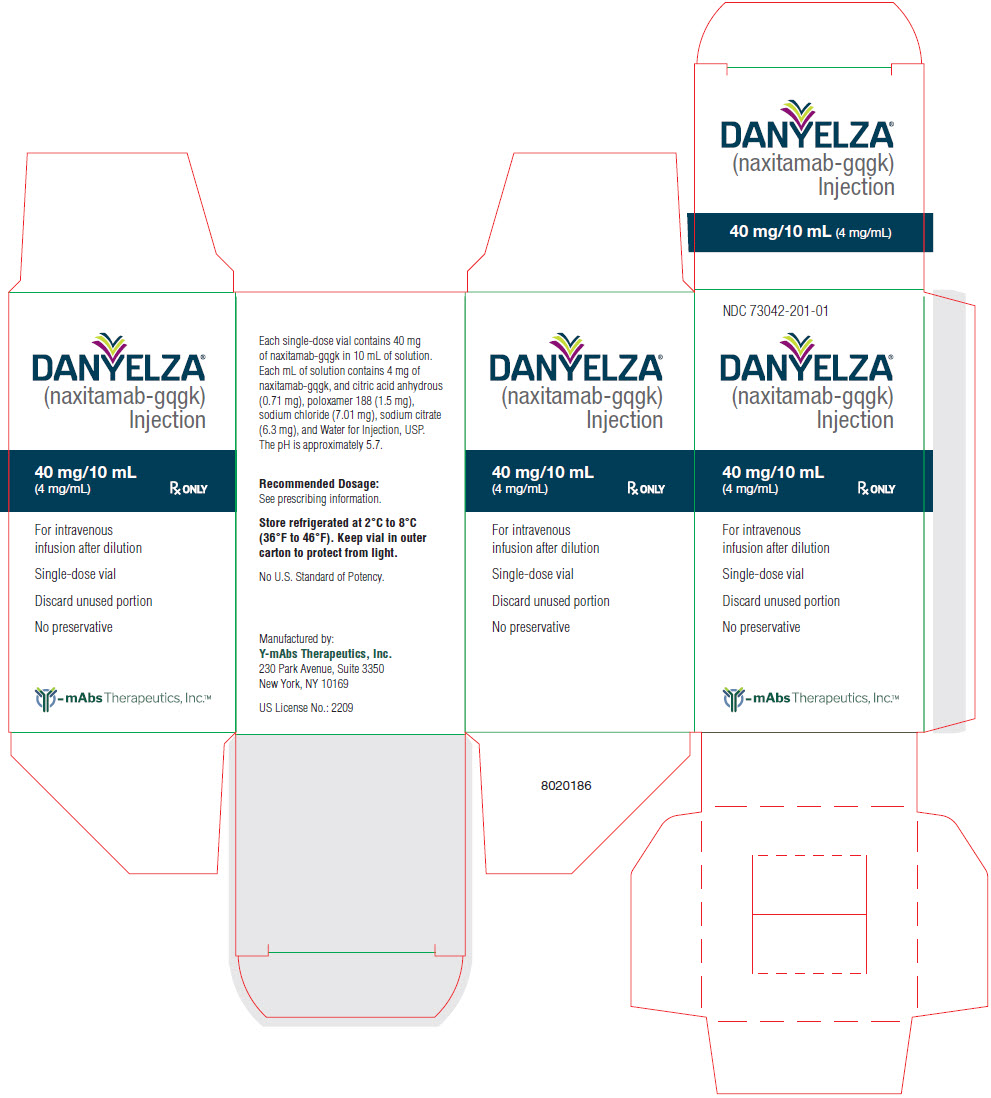
DANYELZA Naxitamab 40 mg/10mL Injection — NDC 73042-201-01 (Billing 73042-0201-01)
This is a package of DANYELZA Naxitamab 40 mg/10mL Injection from Y-mAbs Therapeutics, Inc., no longer marketed (first marketed Nov 2020), no longer in the FDA NDC Directory. It is this product's only package size.
NDC database record
One package, one record: these facts belong to NDC 73042-201-01 alone.
- Record
- FDA NDC Directory package listing · Human prescription drug
- Code segments
- 73042 labeler · 201 product · 01 package
- Package marketed since
- Nov 25, 2020
- Sample package
- No — commercial package
- Listing certified through
- Dec 31, 2026
- Barcode (UPC-A, from the NDC)
- 3 7304220101 9
- Medicaid fills, this package
- 198 prescriptions in the last four reported quarters
- FDA record last changed
- Jul 24, 2026
Identity & classification
Regulatory identifiers FDA, NLM and CMS codes for this package
Drug-database identifiers Medi-Span GPI and First Databank GCN / HICL / AHFS classification
- GSN (GCN sequence number): 081722
- GCN: 48919
- GPI-14 (Medi-Span): 21356050302020
- HICL (First Databank): 047001
- AHFS class code: 10:00.00.00
- RxCUI (RxNorm): 2474239
Where does this data come from?
- FDA openFDA NDC Directory · synced Oct 1, 2026
- FDA label on DailyMed · label index refreshed Oct 6, 2026
- RxNorm (NLM RxNav) · catalog refreshed Oct 1, 2026
- Medi-Span GPI (licensed)
- First Databank (licensed) · refreshed Oct 1, 2026
RxNorm drug class
This medicine belongs to the Glycolipid Disialoganglioside-directed Antibody class.
Where does this data come from?
- RxClass (NLM) · catalog refreshed Oct 1, 2026
Clinical
Naxitamab-gqgk injection is used in combination with another medication in adults and children 1 year of age and older to treat neuroblastoma (a cancer that begins in nerve cells) in the bone or bone marrow that has returned or that did not respond to a previous treatment, but who have responded to other treatments. Naxitamab-gqgk injection is in a class of medications called monoclonal antibodies. It works by killing cancer cells.
Read the full MedlinePlus article ↗Patient education
Supplement & herbal interactions
Where does this data come from?
- MedlinePlus (NLM) · refreshed Oct 1, 2026
- FDA label on DailyMed · label index refreshed Oct 6, 2026
Ask a licensed pharmacist directly — free, answered by our team.
Pricing
A drug doesn't have one price. Each row is a different public payment system, and none is what you'd pay at the counter — that depends on your insurance. The ⓘ on each row explains what it measures.
| Price system | Per each | Per package |
|---|---|---|
| Retail pharmacies payNADAC · weekly | Not in the retail survey — common for institutional, discontinued, or low-volume packs. | |
| Medicaid paysCMS SDUD · 12 mo | $2,148.10 | $2,148.10 / 1 vial |
| Medicare drug plans payPart D · quarterly | No Part D plan price is available for this NDC in our data. | |
| Medicare Part B allowsASP · J9348 | $684.898 / J9348 unit | — |
Where does this data come from?
- CMS NADAC weekly file
- CMS ASP pricing files · refreshed Sep 20, 2026
- CMS Medicaid State Drug Utilization Data · through Q1 2026
- CMS Part D plan pricing files · refreshed Sep 24, 2026
- VA National Acquisition Center price file
Billing & reimbursement
Where does this data come from?
- CMS ASP NDC-HCPCS crosswalk · refreshed Sep 22, 2026
- DMEPDAC NDC-HCPCS crosswalk
- openFDA NSDE billing units · refreshed Sep 7, 2026
Packaging — all sizes for this product
| Package NDC | Description | Marketing start | Marketing end | Status |
|---|---|---|---|---|
| 73042-0201-01 You're viewing this Main listing | 1 VIAL, SINGLE-DOSE in 1 CARTON / 10 mL in 1 VIAL, SINGLE-DOSE | 2020-11-25 | — | Inactivated by FDA |
Therapeutic equivalents
| Product | Labeler | Pack | NADAC/unit | TE | Status | Price vs. this |
|---|---|---|---|---|---|---|
| Danyelza 40 mg/10mL 50633-0230-01 | BTG | 1 vial | — | — | FDA listed | — |
| Danyelza 40 mg/10mLthis 73042-0201-01 | Y-mAbs | 1 vial | — | — | Discontinued | — |
Where does this data come from?
- FDA openFDA NDC Directory · synced Oct 1, 2026
- FDA Purple Book · refreshed Oct 5, 2026
- CMS NADAC weekly file
Availability & biosimilar status
Biologics have no small-molecule generics; biosimilar competition is tracked in the FDA Purple Book.
Why the date isn’t exact: Biosimilar timing can change because patents may be challenged, settled, licensed, added or removed, and litigation can move the real date earlier or later.
🛈 What do these terms mean?
- Biologic patent
- A patent the reference product’s maker has publicly listed. A biosimilar generally can’t launch until these expire — unless they’re invalidated or resolved in a settlement.
- Reference-product exclusivity
- A flat 12 years of FDA market protection from the biologic’s first licensure (the BPCIA). No biosimilar can be licensed before it ends, regardless of patents.
- Interchangeable exclusivity
- The first interchangeable biosimilar can earn a period as the only interchangeable version (pharmacists can substitute it without the prescriber).
- Earliest biosimilar (LOE)
- The latest of all the dates above — the soonest a biosimilar can realistically reach the market. Litigation and settlements can move it earlier.
Biologics have no small-molecule “generics” — competition comes from FDA-licensed biosimilars, tracked in the FDA Purple Book.
| Code | What it grants | Expires |
|---|---|---|
| RefProduct | Reference-product exclusivity (12-year, BPCIA) — no biosimilar can be licensed before this date | Nov 25, 2032 |
Is there a biosimilar for DANYELZA 40 MG/10 ML VIAL?
Why do different websites show different biosimilar dates?
Can a biosimilar launch before the last patent expires?
What does “current Purple Book estimate” mean?
What does “FDA listed” mean?
What does a patent or protection date mean here?
Where does this data come from?
- FDA Purple Book · refreshed Oct 5, 2026
Inactive Ingredients / Excipients
Inactive ingredients, also called excipients, are components of the drug product other than the active ingredient. They may include fillers, dyes, coatings, preservatives, flavors, or other formulation ingredients.
💡 Tap an ingredient (hover on desktop) to see what it is and why it’s used.
-
UNII XF417D3PSL
Anhydrous citric acid is a sour, crystalline powder derived from citric acid with water removed. In medicines, it acts as a buffer to control pH, adds tartness to improve taste, and helps tablets disintegrate.
-
UNII LQA7B6G8JG
A synthetic polymer made by combining water-soluble compounds. It acts as a surfactant and solubilizer to help mix oil and water-based ingredients, improving the medicine's texture and how active ingredients dissolve.
-
UNII 451W47IQ8X
Sodium chloride is common table salt. It's used in medicines as a buffer to maintain proper pH, as a filler to add bulk, or to adjust the osmotic balance in liquid formulations.
-
UNII B22547B95K
A salt derived from citric acid that helps maintain the proper acid-base balance in the medicine. It's used as a buffer to keep the product stable and at the right pH level.
-
UNII 059QF0KO0R
Water is a liquid solvent that dissolves and mixes ingredients together in liquid medicines, syrups, and injections. It helps distribute the active drug evenly throughout the product.
5 inactive ingredients listed in the exact product block matched to this NDC.
Where does this data come from?
ingredient classCode="IACT" elements from the exact product block matched by this NDC. Label-section narrative from DailyMed / the openFDA label index is shown separately when available.- FDA label on DailyMed · label index refreshed Oct 6, 2026
- FDA openFDA NDC Directory · synced Oct 1, 2026
Inactive ingredient FAQ
Are inactive ingredients the same for every manufacturer?
Why might an inactive ingredient be missing?
Can inactive ingredients matter?
Manufacturer & labeler
Where does this data come from?
- FDA openFDA NDC Directory · synced Oct 1, 2026
- Drugs@FDA
Full prescribing information FDA SPL
🚨 Boxed Warning ▾
WARNING: SERIOUS INFUSION-RELATED REACTIONS and NEUROTOXICITY WARNING: SERIOUS INFUSION-RELATED REACTIONS and NEUROTOXICITY See full prescribing information for complete boxed warning Serious Infusion-Related Reactions: DANYELZA can cause serious infusion reactions, including cardiac arrest, anaphylaxis, hypotension, bronchospasm, and stridor. Premedicate prior to each DANYELZA infusion as recommended. Reduce the rate, interrupt infusion, or permanently discontinue DANYELZA based on severity ( 2.2 , 2.3 , 4 , 5.1 ).
Neurotoxicity: DANYELZA can cause severe neurotoxicity, including severe neuropathic pain, transverse myelitis, and reversible posterior leukoencephalopathy syndrome (RPLS). Premedicate to treat neuropathic pain as recommended. Permanently discontinue DANYELZA based on the adverse reaction and severity ( 2.2 , 2.3 , 5.2 ).
Serious Infusion-Related Reactions DANYELZA can cause serious infusion reactions, including cardiac arrest, anaphylaxis, hypotension, bronchospasm, and stridor. Infusion reactions of any Grade occurred in 94-100% of patients. Severe infusion reactions occurred in 32-68% and serious infusion reactions occurred in 4 - 18% of patients in DANYELZA clinical studies [see Warnings and Precautions (5.1) ].
Premedicate prior to each DANYELZA infusion as recommended and monitor patients for at least 2 hours following completion of each infusion. Reduce the rate, interrupt infusion, or permanently discontinue DANYELZA based on severity [see Dosage and Administration (2.2 , 2.3) , Contraindications (4) , and Warnings and Precautions (5.1) ]. Neurotoxicity DANYELZA can cause severe neurotoxicity, including severe neuropathic pain, transverse myelitis and reversible posterior leukoencephalopathy syndrome (RPLS).
Pain of any Grade occurred in 94-100% of patients in DANYELZA clinical studies [see Warnings and Precautions (5.2) ]. Premedicate to treat neuropathic pain as recommended. Permanently discontinue DANYELZA based on the adverse reaction and severity [see Dosage and Administration (2.2 , 2.3) and Warnings and Precautions (5.2) ].
🎯 Indications and Usage ▾
1 INDICATIONS AND USAGE DANYELZA is indicated, in combination with granulocyte-macrophage colony-stimulating factor (GM-CSF), for the treatment of pediatric patients 1 year of age and older and adult patients with relapsed or refractory high-risk neuroblastoma in the bone or bone marrow who have demonstrated a partial response, minor response, or stable disease to prior therapy. This indication is approved under accelerated approval based on overall response rate and duration of response [see Clinical Studies (14) ] .
Continued approval for this indication may be contingent upon verification and description of clinical benefit in a confirmatory trial(s). DANYELZA is a GD2-binding monoclonal antibody indicated, in combination with granulocyte-macrophage colony-stimulating factor (GM-CSF), for the treatment of pediatric patients 1 year of age and older and adult patients with relapsed or refractory high-risk neuroblastoma in the bone or bone marrow who have demonstrated a partial response, minor response, or stable disease to prior therapy.
This indication is approved under accelerated approval based on overall response rate and duration of response. Continued approval for this indication may be contingent upon verification and description of clinical benefit in a confirmatory trial(s). ( 1 )
⏱️ Dosage and Administration ▾
2 DOSAGE AND ADMINISTRATION The recommended dosage of DANYELZA is 3 mg/kg/day (up to 150 mg/day), administered as an intravenous infusion after dilution on Days 1, 3, and 5 of each treatment cycle. Treatment cycles are repeated every 4 weeks until complete response or partial response, followed by 5 additional cycles every 4 weeks. Subsequent cycles may be repeated every 8 weeks.
Discontinue DANYELZA and GM-CSF for disease progression or unacceptable toxicity. Administer GM-CSF subcutaneously prior to and during each treatment cycle as recommended. ( 2.1 )
2.1Recommended Dosage The recommended dosage of DANYELZA is 3 mg/kg/day (up to 150 mg/day) on Days 1, 3, and 5 of each treatment cycle, administered as an intravenous infusion after dilution [see Dosage and Administration (2.4 and 2.5) ] in combination with GM-CSF subcutaneously as shown in Table 1. Refer to the GM-CSF Prescribing Information for recommended dosing information. Treatment cycles are repeated every 4 weeks until complete response or partial response, followed by 5 additional cycles every 4 weeks.
Subsequent cycles may be repeated every 8 weeks. Discontinue DANYELZA and GM-CSF for disease progression or unacceptable toxicity. Administer pre-infusion medications and supportive treatment, as appropriate, during infusion. [see Dosage and Administration (2.2) ] The recommended dosage regimen for each treatment cycle is described below and in Table 1: Days -4 to 0: administer GM-CSF 250 µg/m 2 /day by subcutaneous injection, beginning 5 days prior to DANYELZA infusion.
Days 1 to 5: administer GM-CSF 500 µg/m 2 /day by subcutaneous injection. Administer at least 1 hour prior to DANYELZA administration on Days 1, 3, and 5. Days, 1, 3, and 5: administer DANYELZA 3 mg/kg/day (up to 150 mg/day) by intravenous infusion.
Table 1 Dose and Schedule of GM-CSF and DANYELZA Within One Treatment Cycle Day -4 -3 -2 -1 0 1 2 3 4 5 Subcutaneous GM-CSF 250 µg/m 2 /day 500 µg/m 2 /day Intravenous DANYELZA 3 mg/kg/day 3 mg/kg/day 3 mg/kg/day Missed Dose If a DANYELZA dose is missed, administer the missed dose the following week by Day 10. Administer GM-CSF 500 µg /m 2 /day on the first day of the DANYELZA infusion, and on the day before and on the day of the second and third infusion, respectively (i.e. a total of 5 days with 500 µg /m 2 /day).
2.2Premedications and Supportive Medications Pain Management Prior to and During Infusion [see Warnings and Precautions (5.2) ]: Five days prior to the first infusion of DANYELZA in each cycle, initiate a 12-day course (Day -4 through Day 7) of prophylactic medication for neuropathic pain, such as gabapentin. Administer oral opioids 45-60 minutes prior to initiation of each DANYELZA infusion and additional intravenous opioids as needed for breakthrough pain during the infusion. Consider use of ketamine for pain that is not adequately controlled by opioids.
Premedication: Reduce Risk of Infusion-Related Reactions and Nausea/Vomiting [see Warnings and Precautions (5.1) and Adverse Reactions (6.1) ] . Administer intravenous corticosteroids (e.g. methylprednisolone 2 mg/kg with maximum dose of 80 mg or equivalent corticosteroid dose) 30 minutes to 2 hours prior to the first infusion of DANYELZA. Administer corticosteroid premedication for subsequent infusions if a severe infusion reaction occurred with the previous infusion or during the previous cycle.
Administer an antihistamine, an H2 antagonist, acetaminophen and an antiemetic 30 minutes prior to each infusion.
2.3Dosage Modifications for Adverse Reactions The recommended dosage modifications for DANYELZA for adverse reactions are presented in Table 2. Table 2. Recommended DANYELZA Dosage Modifications for Adverse Reactions Adverse Reaction Severity Based on Common Terminology Criteria for Adverse Events (CTCAE) v
5.0Dosage Modifications Infusion-related reactions [see Warnings and Precautions (5.1) ] Grade 2 Defined as: Therapy or infusion interruption indicated but responds promptly to sy… [Excerpted — this section continues on DailyMed.]
💊 Dosage Forms and Strengths ▾
3 DOSAGE FORMS AND STRENGTHS Injection: 40 mg/10 mL (4 mg/mL) clear to slightly opalescent and colorless to slightly yellow solution in a single-dose vial. Injection: 40 mg/10 mL (4 mg/mL) in a single-dose vial. ( 3 )
⛔ Contraindications ▾
4 CONTRAINDICATIONS DANYELZA is contraindicated in patients with a history of severe hypersensitivity reaction to naxitamab-gqgk. Reactions have included anaphylaxis [see Warnings and Precautions (5.1) ]. History of severe hypersensitivity reaction to naxitamab-gqgk. ( 4 )
⚠️ Warnings and Cautions ▾
5 WARNINGS AND PRECAUTIONS Neurotoxicity: Peripheral neuropathy, neurological disorders of the eye, and prolonged urinary retention have also occurred. Permanently discontinue as recommended. ( 2.3 , 5.2 ) Myocarditis: Withhold, reduce dose, or discontinue based on severity.
( 2.3 , 5.3 ) Hypertension: Monitor blood pressure during and after infusion as recommended. Withhold, reduce infusion rate, or discontinue based on severity. ( 2.3 , 5.4 ) Orthostatic Hypotension: Severe orthostatic hypotension, including cases requiring hospitalization, have occurred.
Withhold, reduce dose, or discontinue based on severity. ( 2.3 , 5.5 ) Embryo-Fetal Toxicity: May cause fetal harm. Advise females of reproductive potential of potential risk to a fetus and to use effective contraception.
( 5.6 )
5.1Serious Infusion-Related Reactions DANYELZA can cause serious infusion reactions requiring urgent intervention including fluid resuscitation, administration of bronchodilators and corticosteroids, intensive care unit admission, infusion rate reduction or interruption of DANYELZA infusion. Infusion-related reactions included hypotension, bronchospasm, hypoxia, and stridor [see Adverse Reactions (6.1) ]. Serious infusion-related reactions occurred in 4% of patients in Study 201 and in 18% of patients in Study 12-230.
Infusion-related reactions of any Grade occurred in 100% of patients in Study 201 and 94% of patients in Study 12-230. Hypotension of any grade occurred in 100% of patients in Study 201 and 89% of patients in Study 12-230. In Study 201, 68% of patients experienced Grade 3 or 4 infusion reactions; and in Study 12-230, 32% of patients experienced Grade 3 or 4 infusion reactions.
Anaphylaxis occurred in 12% of patients and 2 patients (8%) permanently discontinued DANYELZA due to anaphylaxis in Study 201. One patient in Study 12-230 (1.4%) experienced a Grade 4 cardiac arrest 1.5 hours following completion of DANYELZA infusion. In Study 201, infusion reactions generally occurred within 24 hours of completing a DANYELZA infusion, most often within 30 minutes of initiation.
Infusion reactions were most frequent during the first infusion of DANYELZA in each cycle. Eighty percent of patients required reduction in infusion rate and 80% of patients had an infusion interrupted for at least one infusion-related reaction. Caution is advised in patients with pre-existing cardiac disease, as this may exacerbate the risk of severe hypotension.
Premedicate with an antihistamine, acetaminophen, an H2 antagonist and corticosteroid as recommended [see Dosage and Administration (2.2) ]. Monitor patients closely for signs and symptoms of infusion reactions during and for at least 2 hours following completion of each DANYELZA infusion in a setting where cardiopulmonary resuscitation medication and equipment are available. Reduce the rate, interrupt infusion, or permanently discontinue DANYELZA based on severity and institute appropriate medical management as needed [see Dosage and Administration (2.3) and Contraindications (4) ].
5.2Neurotoxicity DANYELZA can cause severe neurotoxicity, including severe neuropathic pain, transverse myelitis, and reversible posterior leukoencephalopathy syndrome. Pain Pain, including abdominal pain, bone pain, neck pain, and extremity pain, occurred in 100% of patients in Study 201 and 94% of patients in Study 12-230. Grade 3 pain occurred in 72% of patients in Study 201.
One patient in Study 201 (4%) required interruption of an infusion due to pain. Pain typically began during the infusion of DANYELZA and lasted a median of less than one day in Study 201 (range less than one day and up to 62 days) [see Adverse Reactions (6.1) ] . Premedicate with drugs that treat neuropathic pain (e.g., gabapentin) and oral opioids.
Administer intravenous opioids as needed for breakthrough pain [see Dosage and Administration (2.2) ]. Permanently discontinue DANYELZA based on severity [see Dosage and Administration (2.3) ]. Transverse Myel… [Excerpted — this section continues on DailyMed.]
🤒 Adverse Reactions ▾
6 ADVERSE REACTIONS The following clinically significant adverse reactions are also described elsewhere in the labeling: Serious Infusion-Related Reactions [see Warnings and Precautions (5.1) ] Neurotoxicity [see Warnings and Precautions (5.2) ] Myocarditis [see Warnings and Precautions (5.3) ] Hypertension [see Warnings and Precautions (5.4) ] Orthostatic Hypotension [see Warnings and Precautions (5.5) ] The most common adverse reactions (≥25%) are infusion-related reaction, pain, tachycardia, vomiting, cough, nausea, diarrhea, decreased appetite, hypertension, fatigue, erythema multiforme, peripheral neuropathy, urticaria, pyrexia, headache, injection site reaction, edema, anxiety, localized edema, and irritability ( 6.1 ).
The most common Grade 3 or 4 laboratory abnormalities (≥5%) are decreased lymphocytes, decreased neutrophils, decreased hemoglobin, decreased platelet count, decreased potassium, increased alanine aminotransferase, decreased glucose, decreased calcium, decreased albumin, decreased sodium, and decreased phosphate ( 6.1 ). To report SUSPECTED ADVERSE REACTIONS, contact Y-mAbs Therapeutics, Inc, at 1-833-339-6227 (1-833-33YMABS), or FDA at 1-800-FDA-1088 or www.fda.gov/medwatch.
6.1Clinical Trials Experience Because clinical trials are conducted under widely varying conditions, adverse reaction rates observed in the clinical trials of a drug cannot be directly compared to rates in the clinical trials of another drug and may not reflect the rates observed in practice. The safety of DANYELZA in combination with GM-CSF was evaluated in patients with refractory or relapsed high-risk neuroblastoma in bone or bone marrow who had demonstrated a partial response, minor response, or stable disease following initial or subsequent therapy, and in patients who were in second complete remission, from two open-label, single arm studies, Study 201 (n=25) and Study 12-230 (n=72).
Patients received DANYELZA 9 mg/kg/cycle administered as three separate intravenous infusions of 3 mg/kg (Day 1, 3 and 5) in the first week of each cycle. Patients also received GM-CSF 250 µg/m 2 /day subcutaneously on Days -4 to 0 and GM-CSF 500 µg/m 2 /day subcutaneously on Days 1 to 5 [see Clinical Studies (14) ]. The most common adverse reactions in Studies 201 and 12-230 (≥25% in either study) were infusion-related reaction, pain, tachycardia, vomiting, cough, nausea, diarrhea, decreased appetite, hypertension, fatigue, erythema multiforme, peripheral neuropathy, urticaria, pyrexia, headache, injection site reaction, edema, anxiety, localized edema and irritability.
The most common Grade 3 or 4 laboratory abnormalities (≥5% in either study) were decreased lymphocytes, decreased neutrophils, decreased hemoglobin, decreased platelet count, decreased potassium, increased alanine aminotransferase, decreased glucose, decreased calcium, decreased albumin, decreased sodium and decreased phosphate. Study 201 In Study 201, among 25 patients who received DANYELZA in combination with GM-CSF, 12% were exposed for 6 months or longer and none were exposed for greater than one year. Serious adverse reactions occurred in 32% of patients who received DANYELZA in combination with GM-CSF.
Serious adverse reactions in more than one patient included anaphylactic reaction (12%) and pain (8%). Permanent discontinuation of DANYELZA due to an adverse reaction occurred in 12% of patients. Adverse reactions resulting in permanent discontinuation of DANYELZA included anaphylactic reaction (8%) and respiratory depression (4%).
Dosage interruptions of DANYELZA due to an adverse reaction occurred in 84% of patients. Adverse reactions requiring dosage interruption in > 10% of patients included hypotension and bronchospasm. Table 4 summarizes adverse reactions in Study 201.
Table 4. Adverse Reactions (>10%) in Patients with Refractory or Relapsed High-Risk Neuroblastoma in Bone or Bone Marrow Who Received DANYELZA with GM-CSF in Study 201 DANYELZA with GM-CSF Adverse reactio… [Excerpted — this section continues on DailyMed.]
👥 Use in Specific Populations ▾
8 USE IN SPECIFIC POPULATIONS Lactation: Advise not to breastfeed. ( 8.2 )
8.1Pregnancy Risk Summary Based on its mechanism of action, DANYELZA may cause fetal harm when administered to pregnant women [see Clinical Pharmacology (12.1) ]. There are no available data on the use of DANYELZA in pregnant women and no animal reproduction studies have been conducted with DANYELZA. IgG1 monoclonal antibodies are transported across the placenta in a linear fashion as pregnancy progresses, with the largest amount transferred during the third trimester.
Advise pregnant women of potential risk to a fetus. In the U.S. general population, the estimated background risk of major birth defects and miscarriage in clinically recognized pregnancies is 2% to 4% and 15% to 20%, respectively.
8.2Lactation Risk Summary There are no data on the presence of naxitamab-gqgk in human milk or its effects on the breastfed child, or on milk production, however, human IgG is present in human milk. Because of the potential for serious adverse reactions in a breastfed child from DANYELZA, advise women not to breastfeed during treatment and for 2 months after the last dose of DANYELZA.
8.3Females and Males of Reproductive Potential DANYELZA may cause fetal harm when administered to a pregnant woman [see Use in Specific Populations (8.1) ]. Pregnancy Testing Verify pregnancy status in females of reproductive potential prior to initiating DANYELZA. Contraception Females Advise females of reproductive potential to use effective contraception during treatment and for 2 months after the last dose of DANYELZA.
8.4Pediatric Use The safety and effectiveness of DANYELZA, in combination with GM-CSF for the treatment of relapsed or refractory high-risk neuroblastoma in the bone or bone marrow who have demonstrated a partial response, minor response or stable disease following prior therapy, have been established in pediatric patients 1 year of age and older. Safety and effectiveness have not been established in pediatric patients younger than 1 year of age.
8.5Geriatric Use Neuroblastoma is largely a disease of pediatric and young adult patients. Clinical studies of DANYELZA in combination with GM-CSF did not include patients 65 years of age and older.
🤰 Pregnancy ▾
8.1Pregnancy Risk Summary Based on its mechanism of action, DANYELZA may cause fetal harm when administered to pregnant women [see Clinical Pharmacology (12.1) ]. There are no available data on the use of DANYELZA in pregnant women and no animal reproduction studies have been conducted with DANYELZA. IgG1 monoclonal antibodies are transported across the placenta in a linear fashion as pregnancy progresses, with the largest amount transferred during the third trimester.
Advise pregnant women of potential risk to a fetus. In the U.S. general population, the estimated background risk of major birth defects and miscarriage in clinically recognized pregnancies is 2% to 4% and 15% to 20%, respectively.
🧒 Pediatric Use ▾
8.4Pediatric Use The safety and effectiveness of DANYELZA, in combination with GM-CSF for the treatment of relapsed or refractory high-risk neuroblastoma in the bone or bone marrow who have demonstrated a partial response, minor response or stable disease following prior therapy, have been established in pediatric patients 1 year of age and older. Safety and effectiveness have not been established in pediatric patients younger than 1 year of age.
🧓 Geriatric Use ▾
8.5Geriatric Use Neuroblastoma is largely a disease of pediatric and young adult patients. Clinical studies of DANYELZA in combination with GM-CSF did not include patients 65 years of age and older.
🧬 Clinical Pharmacology ▾
12 CLINICAL PHARMACOLOGY
12.1Mechanism of Action Naxitamab-gqgk binds to the glycolipid GD2. GD2 is a disialoganglioside that is overexpressed on neuroblastoma cells and other cells of neuroectodermal origin, including the central nervous system and peripheral nerves. In vitro, naxitamab-gqgk was able to bind to cell surface GD2 and induce complement dependent cytotoxicity (CDC) and antibody dependent cell-mediated cytotoxicity (ADCC).
12.2Pharmacodynamics The exposure-response relationship and time course of pharmacodynamic response for the safety and effectiveness of naxitamab-gqgk have not been fully characterized.
12.3Pharmacokinetics The geometric mean (CV%) maximum plasma concentration (C max ) of naxitamab-gqgk was 57.4 µg/mL (49%) following DANYELZA 3 mg/kg intravenous infusion over 30 minutes. Elimination The mean terminal half-life of naxitamab-gqgk was 8.2 days. Metabolism Naxitamab-gqgk is expected to be metabolized into small peptides by catabolic pathways.
Specific Populations Population pharmacokinetic analyses suggest that age (range: 1 to 34 years), sex and race have no clinically important effect on the clearance (CL) of naxitamab-gqgk. The naxitamab-gqgk systemic exposure (AUC) at 150 mg/day (450 mg per cycle) for patients with body weight over 50 kg is not expected to differ clinically from that of the naxitamab-gqgk exposures at 3 mg/kg/day (9 mg/kg per cycle) for patients with body weight of 30 - 50 kg.
🧬 Mechanism of Action ▾
12.1Mechanism of Action Naxitamab-gqgk binds to the glycolipid GD2. GD2 is a disialoganglioside that is overexpressed on neuroblastoma cells and other cells of neuroectodermal origin, including the central nervous system and peripheral nerves. In vitro, naxitamab-gqgk was able to bind to cell surface GD2 and induce complement dependent cytotoxicity (CDC) and antibody dependent cell-mediated cytotoxicity (ADCC).
📦 How Supplied / Storage and Handling ▾
16 HOW SUPPLIED / STORAGE AND HANDLING DANYELZA (naxitamab-gqgk) injection is a sterile, preservative-free, clear to slightly opalescent and colorless to slightly yellow solution for intravenous infusion supplied as a carton containing one 40mg/10 mL (4 mg/mL) single-dose vial. NDC 73042-201-01 Store DANYELZA vial refrigerated at 2°C to 8°C (36°F to 46°F) in the outer carton to protect from light until time of use.
📦 Storage and Handling ▾
Store DANYELZA vial refrigerated at 2°C to 8°C (36°F to 46°F) in the outer carton to protect from light until time of use.
📋 Description ▾
11 DESCRIPTION Naxitamab-gqgk is a glycolipid disialoganglioside (GD2)-binding recombinant humanized monoclonal IgG1 antibody, that contains human framework regions and murine complementarity-determining regions. Naxitamab-gqgk is produced in a Chinese hamster ovary cell line and has an approximate molecular weight of 144 kDa without glycosylation. DANYELZA (naxitamab-gqgk) injection is a sterile, preservative-free, clear to slightly opalescent and colorless to slightly yellow solution for intravenous infusion.
Each single-dose vial contains 40 mg of naxitamab-gqgk in 10 mL of solution. Each mL of solution contains 4 mg of naxitamab-gqgk, and citric acid anhydrous (0.71 mg), poloxamer 188 (1.5 mg), sodium chloride (7.01 mg), sodium citrate (6.3 mg), and Water for Injection, USP. The pH is approximately 5.7.
💬 Information for Patients ▾
17 PATIENT COUNSELING INFORMATION Advise the patient and caregiver to read the FDA-approved patient labeling (Patient Information). Serious Infusion-Related Reactions Advise patients and caregivers that DANYELZA can cause serious infusion-related reactions and anaphylaxis and to immediately report any signs or symptoms, such as facial or lip swelling, urticaria, or difficulty breathing, that occur during or following the infusion [see Warnings and Precautions (5.1) ] . Neurotoxicity Advise patients and caregivers that DANYELZA can cause neurotoxicity, including severe pain, peripheral neuropathy, neurological disorders of the eye, prolonged urinary retention, transverse myelitis, and reverse posterior leukoencephalopathy syndrome.
Advise patients to contact their healthcare provider for any new or worsening neurological symptoms [see Warnings and Precautions (5.2) ]. Myocarditis Advise patients and caregivers that myocarditis has been seen in patients taking DANYELZA and to report any signs or symptoms, such as chest pain, shortness of breath or abnormal heart rhythms during treatment with DANYELZA [see Warnings and Precautions (5.3) ]. Hypertension Advise patients and caregivers that DANYELZA can cause hypertension and to immediately report signs or symptoms of hypertension [see Warnings and Precautions (5.4) ].
Orthostatic Hypotension Advise patients and caregivers that DANYELZA can cause severe low blood pressure when standing after sitting or lying down. Advise patients and caregivers to report any signs or symptoms, such as dizziness, lightheadedness or fainting during treatment with DANYELZA [see Warnings and Precautions (5.5) ]. Embryo-Fetal Toxicity [see Warnings and Precautions (5.6) and Use in Specific Populations (8.1 , 8.3) ] .
Advise females of reproductive potential, including pregnant women, of the potential risk to the fetus. Advise females of reproductive potential to inform their healthcare provider of a known or suspected pregnancy and to use effective contraception during treatment with and for 2 months after the last dose of DANYELZA. Lactation Advise women not to breastfeed during treatment with DANYELZA and for 2 months after the last dose [see Use in Specific Populations (8.2) ].
🧬 Pharmacokinetics ▾
12.3Pharmacokinetics The geometric mean (CV%) maximum plasma concentration (C max ) of naxitamab-gqgk was 57.4 µg/mL (49%) following DANYELZA 3 mg/kg intravenous infusion over 30 minutes. Elimination The mean terminal half-life of naxitamab-gqgk was 8.2 days. Metabolism Naxitamab-gqgk is expected to be metabolized into small peptides by catabolic pathways.
Specific Populations Population pharmacokinetic analyses suggest that age (range: 1 to 34 years), sex and race have no clinically important effect on the clearance (CL) of naxitamab-gqgk. The naxitamab-gqgk systemic exposure (AUC) at 150 mg/day (450 mg per cycle) for patients with body weight over 50 kg is not expected to differ clinically from that of the naxitamab-gqgk exposures at 3 mg/kg/day (9 mg/kg per cycle) for patients with body weight of 30 - 50 kg.
🧬 Pharmacodynamics ▾
12.2Pharmacodynamics The exposure-response relationship and time course of pharmacodynamic response for the safety and effectiveness of naxitamab-gqgk have not been fully characterized.
🔬 Clinical Studies ▾
14 CLINICAL STUDIES The efficacy of DANYELZA in combination with GM-CSF was evaluated in two open-label, single arm trials in patients with high-risk neuroblastoma with refractory or relapsed disease in the bone or bone marrow, Study 201 and Study 12-230. Study 201 The efficacy of DANYELZA in combination with GM-CSF was evaluated in Study 201 (NCT03363373), a multicenter open-label, single arm trial, in a subpopulation of patients who had refractory or relapsed high-risk neuroblastoma in the bone or bone marrow and demonstrated a partial response, minor response, or stable disease to prior therapy.
Patients with progressive disease were excluded. All patients received at least one systemic therapy to treat disease outside of the bone or bone marrow prior to enrollment. Patients received DANYELZA 9 mg/kg/cycle administered as three separate intravenous infusions of 3 mg/kg on Days 1, 3 and 5 of each cycle.
Patients received GM-CSF subcutaneously at 250 µg/m 2 /day on Days -4 to 0 and at 500 µg/m 2 /day on Days 1 to 5. Preplanned radiation to the primary site was allowed. The major efficacy outcome measure was overall response rate (ORR) according to the revised International Neuroblastoma Response Criteria (INRC), as determined by independent pathology and imaging review and confirmed by at least one subsequent assessment.
An additional efficacy outcome measure was duration of response (DOR). Of the 22 patients included in the efficacy analysis, 64% had refractory disease and 36% had relapsed disease; the median age was 5 years (range 3 to 10 years), 59% were male; 45% were White, 50% were Asian and 5% were Black. MYCN amplification was present in 14% of patients and 86% of patients were International Neuroblastoma Staging System (INSS) stage 4 at time of diagnosis.
Disease sites included 59% in the bone only, 9% in bone marrow only, and 32% in both. Prior therapies included surgery (91%), chemotherapy (95%), radiation (36%), autologous stem cell transplant (ASCT) (18%), and anti-GD2 antibody treatment (18%). Efficacy results for Study 201 are described in Table 8.
Table 8. Efficacy Results from Study 201 DANYELZA with GM-CSF (n=22) CI = confidence interval NE: not estimable. Overall response rate Overall response rate is defined as a complete or partial response according to the revised INRC (2017) that was confirmed by at least one subsequent assessment.
Responses were observed in the bone, bone marrow, or both bone and bone marrow. (95% CI) 45% (24%, 68%) Complete response rate 36% Partial response rate 9% Duration of response Median (95% CI), months 6.2 (4.9, NE) Responders with DOR ≥ 6 months 30% In an exploratory analysis in the subset of patients previously treated with an anti-GD2 antibody (n=4), one patient demonstrated a confirmed complete response and no patients demonstrated a partial response. Study 12-230 The efficacy of DANYELZA in combination with GM-CSF was evaluated in Study 12-230 (NCT01757626), a single center, open-label, single arm trial, in a subpopulation of patients who had relapsed or refractory high-risk neuroblastoma in bone or bone marrow and demonstrated a partial response, minor response, or stable disease to prior therapy.
Patients with progressive disease were excluded. All patients received at least one systemic therapy to treat disease outside of the bone or bone marrow prior to enrollment. Patients were required to have received at least one dose of DANYELZA at a dose of 3 mg/kg or greater per infusion and have evaluable disease at baseline according to independent review per the revised INRC.
Patients received DANYELZA 9 mg/kg/cycle administered as three separate intravenous infusions of 3 mg/kg (on Days 1, 3 and 5) in the first week of each cycle. Patients received GM-CSF subcutaneously at 250 µg/m 2 /day on Days -4 to 0 and at 500 µg/m 2 /day on Days 1 to 5. Radiation to non-target bony lesions and soft tissue lesions was permitted at the investigator's discretion; assessment of response e… [Excerpted — this section continues on DailyMed.]
🧪 Nonclinical Toxicology ▾
13 NONCLINICAL TOXICOLOGY
13.1Carcinogenesis, Mutagenesis, Impairment of Fertility No animal studies have been conducted to evaluate the carcinogenic or mutagenic potential of naxitamab-gqgk. Dedicated studies evaluating the effects of naxitamab-gqgk on fertility in animals have not been conducted.
13.2Animal Toxicology and/or Pharmacology Non-clinical studies suggest that naxitamab-gqgk-induced neuropathic pain is mediated by binding of the antibody to the GD2 antigen located on the surface of peripheral nerve fibers and myelin and subsequent induction of immune-mediated cytotoxic activity. In a nude rat model, slight-moderate hyperplasia and erosion of the glandular mucosa of the stomach occurred, occasionally accompanied by diffuse inflammation. Complete recovery of all histopathological findings in the stomachs of male rats was observed; however, only partial recovery was observed in the stomachs of female rats during the four week off-drug period.
📄 Carcinogenesis, Mutagenesis, Impairment of Fertility ▾
13.1Carcinogenesis, Mutagenesis, Impairment of Fertility No animal studies have been conducted to evaluate the carcinogenic or mutagenic potential of naxitamab-gqgk. Dedicated studies evaluating the effects of naxitamab-gqgk on fertility in animals have not been conducted.
📄 Patient Package Insert ▾
This Patient Information has been approved by the U.S. Food and Drug Administration Revised: 08/2025 PATIENT INFORMATION DANYELZA ® (dan-YEL-zah) (naxitamab-gqgk) injection, for intravenous use What is the most important information I should know about DANYELZA? DANYELZA may cause serious side effects, including: Serious infusion-related reactions.
DANYELZA can cause serious infusion-related reactions that require immediate medical attention. Infusion-related reactions are common with DANYELZA. Tell your healthcare provider right away if you get any signs or symptoms during or after your DANYELZA infusion, including: swelling of your face, eyes, lips, mouth, or tongue itching redness on your face (flushing) skin rash or hives trouble breathing cough or wheezing noisy high-pitched breathing feeling faint or dizziness (low blood pressure) Nervous system problems .
Talk to your healthcare provider right away if you have new symptoms or worsening of nervous system problems, including: Severe pain from nerves (neuropathic pain), including pain in the belly (abdomen), bone, neck, legs or arms. Pain is common with DANYELZA and can be severe. Inflammation of the spinal cord.
Signs or symptoms may include: weakness in your legs or arms bladder and bowel problems pain in back, legs, or stomach (abdomen) numbness tingling burning sensation Reversible Posterior Leukoencephalopathy Syndrome (RPLS – also known as Posterior Reversible Encephalopathy Syndrome - PRES). PRES is a condition that affects the brain. Your healthcare provider will monitor your blood pressure and check for any neurologic symptoms after your DANYELZA infusion.
Signs or symptoms of PRES may include: severe headache vision changes changes in mental status, such as confusion, disorientation, or decreased alertness difficulty speaking weakness in your arms or legs seizures Numbness, tingling, or burning sensation in the arms or legs. Nervous system problems of the eye. Signs or symptoms may include: unequal pupil size blurred vision trouble focusing your eyes larger pupil size (dilated) decreased ability to see sensitivity to light Problems urinating or emptying your bladder (prolonged urinary retention).
What is DANYELZA? DANYELZA is a prescription medicine used in combination with a medicine called granulocyte-macrophage colony-stimulating factor (GM-CSF) to treat children 1 year of age and older and adults with high-risk neuroblastoma in the bone or bone marrow that: has come back (relapsed) or that did not respond to previous treatment (refractory), and has shown a partial response, minor response, or stable disease to prior therapy. It is not known if DANYELZA is safe and effective in children younger than 1 year of age.
Do not receive DANYELZA if you have had a severe allergic reaction to naxitamab-gqgk, the active ingredient in DANYELZA . Ask your healthcare provider if you are not sure. Before receiving DANYELZA, tell your healthcare provider about all your medical conditions, including if you: have high blood pressure have heart disease are pregnant or plan to become pregnant.
DANYELZA may harm your unborn baby. Your healthcare provider will do a pregnancy test before you start treatment with DANYELZA. Females who are able to become pregnant should use effective birth control (contraception) during treatment and for 2 months after your last dose of DANYELZA.
Talk to your healthcare provider about birth control choices that may be right for you during this time. Tell your healthcare provider right away if you become pregnant or think you might be pregnant during treatment with DANYELZA. are breastfeeding or plan to breastfeed. It is not known if DANYELZA passes into your breast milk.
Do not breastfeed during treatment and for 2 months after your last dose of DANYELZA. Tell your healthcare provider about all the medicines you take, including prescription and over-the-counter medicines, vitamins, and herbal supplements. How will I receive DANYELZA?
Your healthcare p… [Excerpted — this section continues on DailyMed.]
📄 Package Label / Principal Display Panel ▾
PRINCIPAL DISPLAY PANEL - 10 mL Vial Carton NDC 73042-201-01 DANYELZA ® (naxitamab-gqgk) Injection 40 mg/10 mL (4 mg/mL) Rx ONLY For intravenous infusion after dilution Single-dose vial Discard unused portion No preservative Y-mAbs Therapeutics, Inc.™ PRINCIPAL DISPLAY PANEL - 10 mL Vial Carton
Medicaid utilization & spend
Reported adverse events (FAERS)
Top reported reactions
Age at onset
Reporter sex
Serious outcomes
Where does this data come from?
About this NDC listing & data coverage
What data is (and isn’t) available for this NDC — tap to expand
| NDC identity (package / product / labeler codes) | ✓ Available |
| Labeler | ✓ Available |
| Product & package description | ✓ Available |
| Marketing category & status | ✓ Available |
| Active ingredient / dosage form / route | ✓ Available |
| FDA label (SPL via DailyMed) | ✓ Available |
| Package photos | ✓ Available |
| Inactive ingredients (structured) | ✓ Available |
| NADAC pharmacy acquisition price (CMS) | — Not published for this NDC CMS publishes NADAC only for NDCs reported in its retail-pharmacy survey. |
| Orange Book / therapeutic-equivalence data | ✓ Available |
| HCPCS J-code billing crosswalk | ✓ Available |
| Medicaid utilization (CMS SDUD) | ✓ Available |