
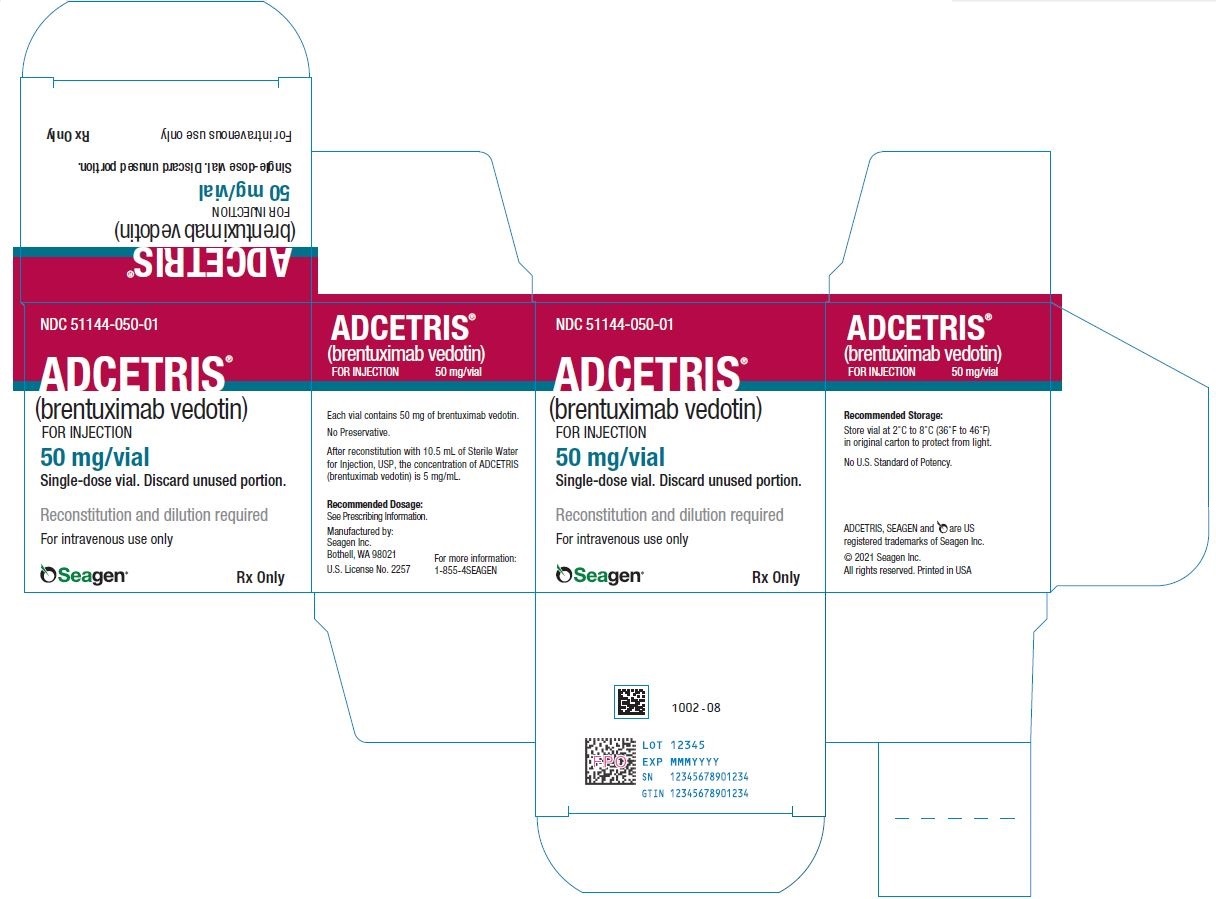
ADCETRIS brentuximab vedotin 50 mg/10.5mL Injection, Powder, Lyophilized, For Solution, 1 vial — NDC 51144-050-01 (Billing 51144-0050-01)
This is a package of 1 vial of ADCETRIS brentuximab vedotin 50 mg/10.5mL Injection, Powder, Lyophilized, For Solution from SEAGEN INC., marketed since Aug 2011 and currently FDA-listed. It is this product's only package size.
NDC database record
One package, one record: these facts belong to NDC 51144-050-01 alone.
- Record
- FDA NDC Directory package listing · Human prescription drug
- Code segments
- 51144 labeler · 050 product · 01 package
- Package marketed since
- Aug 25, 2011
- Sample package
- No — commercial package
- Listing certified through
- Dec 31, 2026
- Billing quantity
- 1 EA per package
- Barcode (UPC-A, from the NDC)
- 3 5114405001 8
- Medicaid fills, this package
- 1,933 prescriptions in the last four reported quarters
- FDA record last changed
- Jul 24, 2026
Identity & classification
Regulatory identifiers FDA, NLM and CMS codes for this package
Drug-database identifiers Medi-Span GPI and First Databank GCN / HICL / AHFS classification
- GSN (GCN sequence number): 067777
- GCN: 30404
- GPI-14 (Medi-Span): 21353220202120
- HICL (First Databank): 037879
- AHFS class code: 10:00.00.00
- RxCUI (RxNorm): 1147323
Where does this data come from?
- FDA openFDA NDC Directory · synced Oct 1, 2026
- FDA label on DailyMed · label index refreshed Oct 5, 2026
- RxNorm (NLM RxNav) · catalog refreshed Oct 1, 2026
- Medi-Span GPI (licensed)
- First Databank (licensed) · refreshed Oct 1, 2026
RxNorm drug class
This medicine belongs to the CD30-directed Immunoconjugate class.
Where does this data come from?
- RxClass (NLM) · catalog refreshed Oct 1, 2026
Clinical
Brentuximab vedotin injection is used to treat certain types of Hodgkin lymphoma and non-Hodgkin lymphoma (types of cancer that begin in a type of white blood cell that normally fights infection). Brentuximab vedotin injection is in a class of medications called antibody-drug conjugates. It works by killing cancer cells.
Read the full MedlinePlus article ↗- It treats several lymphomas, including classical Hodgkin lymphoma, systemic anaplastic large cell lymphoma, other CD30-positive T-cell lymphomas, some skin lymphomas, and relapsed...
- It is given through a vein as a 30-minute infusion by a healthcare professional, usually every 2 or 3 weeks. You do not take it at home. Your team decides the number of doses and m...
- Common ones include numbness or tingling in the hands and feet, nausea, tiredness, muscle aches, constipation or diarrhea, and fever. Tell your team about nerve symptoms early, bec...
- Call for fever or signs of infection, trouble breathing, severe stomach pain, severe skin rash or blistering, or signs of an allergic reaction. Also call about confusion, balance t...
Patient education
Supplement & herbal interactions
Some supplements/herbs that may interact with Brentuximab Vedotin — tap one for details:
Where does this data come from?
- MedlinePlus (NLM) · refreshed Oct 1, 2026
- FDA label on DailyMed · label index refreshed Oct 5, 2026
Ask a licensed pharmacist directly — free, answered by our team.
Pricing
A drug doesn't have one price. Each row is a different public payment system, and none is what you'd pay at the counter — that depends on your insurance. The ⓘ on each row explains what it measures.
| Price system | Per mL | Per package |
|---|---|---|
| Retail pharmacies payNADAC · weekly | Not in the retail survey — common for institutional, discontinued, or low-volume packs. | |
| Medicaid paysCMS SDUD · 12 mo | $10,269.99 | $107,834.90 / 10.5 ml |
| Medicare drug plans payPart D · quarterly | No Part D plan price is available for this NDC in our data. | |
| Medicare Part B allowsASP · J9042 | $279.207 / J9042 unit | — |
Where does this data come from?
- CMS NADAC weekly file
- CMS ASP pricing files · refreshed Sep 20, 2026
- CMS Medicaid State Drug Utilization Data · through Q1 2026
- CMS Part D plan pricing files · refreshed Sep 24, 2026
- VA National Acquisition Center price file
Billing & reimbursement
Where does this data come from?
- CMS ASP NDC-HCPCS crosswalk · refreshed Sep 22, 2026
- DMEPDAC NDC-HCPCS crosswalk
- openFDA NSDE billing units · refreshed Sep 7, 2026
Packaging — all sizes for this product
| Package NDC | Description | Marketing start | Marketing end | Status |
|---|---|---|---|---|
| 51144-0050-01 You're viewing this Main listing | 1 VIAL, SINGLE-DOSE in 1 BOX / 10.5 mL in 1 VIAL, SINGLE-DOSE | 2011-08-25 | — | Active |
Therapeutic equivalents
| Product | Labeler | Pack | NADAC/unit | TE | Status | Price vs. this |
|---|---|---|---|---|---|---|
| Adcetris 50 mg/10.5mLthis 51144-0050-01 | SEAGEN | 1 vial | — | — | FDA listed | — |
Where does this data come from?
- FDA openFDA NDC Directory · synced Oct 1, 2026
- FDA Purple Book · refreshed Oct 5, 2026
- CMS NADAC weekly file
Availability & biosimilar status
Biologics have no small-molecule generics; biosimilar competition is tracked in the FDA Purple Book.
Why the date isn’t exact: Biosimilar timing can change because patents may be challenged, settled, licensed, added or removed, and litigation can move the real date earlier or later.
🛈 What do these terms mean?
- Biologic patent
- A patent the reference product’s maker has publicly listed. A biosimilar generally can’t launch until these expire — unless they’re invalidated or resolved in a settlement.
- Reference-product exclusivity
- A flat 12 years of FDA market protection from the biologic’s first licensure (the BPCIA). No biosimilar can be licensed before it ends, regardless of patents.
- Interchangeable exclusivity
- The first interchangeable biosimilar can earn a period as the only interchangeable version (pharmacists can substitute it without the prescriber).
- Earliest biosimilar (LOE)
- The latest of all the dates above — the soonest a biosimilar can realistically reach the market. Litigation and settlements can move it earlier.
Biologics have no small-molecule “generics” — competition comes from FDA-licensed biosimilars, tracked in the FDA Purple Book.
| Code | What it grants | Expires |
|---|---|---|
| RefProduct | Reference-product exclusivity (12-year, BPCIA) — no biosimilar can be licensed before this date | Aug 19, 2023 |
Is there a biosimilar for ADCETRIS 50 MG VIAL?
Why do different websites show different biosimilar dates?
Can a biosimilar launch before the last patent expires?
What does “current Purple Book estimate” mean?
What does “FDA listed” mean?
What does a patent or protection date mean here?
Where does this data come from?
- FDA Purple Book · refreshed Oct 5, 2026
What it looks like
Where does this data come from?
- FDA label on DailyMed · label index refreshed Oct 5, 2026
Inactive Ingredients / Excipients
Inactive ingredients, also called excipients, are components of the drug product other than the active ingredient. They may include fillers, dyes, coatings, preservatives, flavors, or other formulation ingredients.
🧪 Avoiding an ingredient? See Brentuximab Vedotin Injection inactive ingredients by manufacturer: every current product's list side by side, so you can ask your pharmacy for the version that does not list it.
💡 Tap an ingredient (hover on desktop) to see what it is and why it’s used.
-
UNII 2968PHW8QP
A weak organic acid derived from citrus fruits or made through fermentation. It works as a buffer to control pH, a preservative to extend shelf life, and a flavoring agent in medications.
-
UNII 6OZP39ZG8H
Polysorbate 80 is a synthetic emulsifier derived from sorbitol and oleic acid. It helps mix oil and water-based ingredients together in medications and improves how the product disperses in the body.
-
UNII 7YIN7J07X4
A natural sugar derived from plants and microorganisms. It acts as a filler to give the medication bulk and stability, and helps preserve the active ingredient during storage and manufacturing.
-
UNII B22547B95K
A salt derived from citric acid that helps maintain the proper acid-base balance in the medicine. It's used as a buffer to keep the product stable and at the right pH level.
4 inactive ingredients listed in the exact product block matched to this NDC.
Where does this data come from?
ingredient classCode="IACT" elements from the exact product block matched by this NDC. Label-section narrative from DailyMed / the openFDA label index is shown separately when available.- FDA label on DailyMed · label index refreshed Oct 5, 2026
- FDA openFDA NDC Directory · synced Oct 1, 2026
Inactive ingredient FAQ
Are inactive ingredients the same for every manufacturer?
Why might an inactive ingredient be missing?
Can inactive ingredients matter?
Manufacturer & labeler
More NDCs from SEAGEN INC. labeler code 51144
- Tukysa tucatinib 50 mg Tablet NDC 51144-001-60
- Tukysa tucatinib 150 mg Tablet NDC 51144-002-12
- TIVDAK tisotumab vedotin 40 mg/4mL Injection, Powder, For Solution NDC 51144-003-01
- PADCEV EJFV ENFORTUMAB VEDOTIN 20 mg/2mL Injection, Powder, Lyophilized, For Solution NDC 51144-020-01
- PADCEV EJFV ENFORTUMAB VEDOTIN 30 mg/3mL Injection, Powder, Lyophilized, For Solution NDC 51144-030-01
Where does this data come from?
- FDA openFDA NDC Directory · synced Oct 1, 2026
- Drugs@FDA
Full prescribing information FDA SPL
🚨 Boxed Warning ▾
WARNING: PROGRESSIVE MULTIFOCAL LEUKOENCEPHALOPATHY (PML) JC virus infection resulting in PML and death can occur in patients receiving ADCETRIS [see Warnings and Precautions (5.9) , Adverse Reactions (6.1) ] . WARNING: PROGRESSIVE MULTIFOCAL LEUKOENCEPHALOPATHY (PML) See full prescribing information for complete boxed warning. JC virus infection resulting in PML and death can occur in patients receiving ADCETRIS ( 5.9 , 6.1 ).
🎯 Indications and Usage ▾
1 INDICATIONS AND USAGE ADCETRIS is a CD30-directed antibody and microtubule inhibitor conjugate indicated for treatment of: • Adult patients with previously untreated Stage III or IV classical Hodgkin lymphoma (cHL), in combination with doxorubicin, vinblastine, and dacarbazine ( 1.1 ). • Pediatric patients 2 years and older with previously untreated high risk classical Hodgkin lymphoma (cHL), in combination with doxorubicin, vincristine, etoposide, prednisone, and cyclophosphamide ( 1.2 ). • Adult patients with classical Hodgkin lymphoma (cHL) at high risk of relapse or progression as post-autologous hematopoietic stem cell transplantation (auto-HSCT) consolidation ( 1.3 ). • Adult patients with classical Hodgkin lymphoma (cHL) after failure of auto-HSCT or after failure of at least two prior multi-agent chemotherapy regimens in patients who are not auto-HSCT candidates ( 1.4 ). • Adult patients with previously untreated systemic anaplastic large cell lymphoma (sALCL) or other CD30-expressing peripheral T-cell lymphomas (PTCL), including angioimmunoblastic T-cell lymphoma and PTCL not otherwise specified (NOS), in combination with cyclophosphamide, doxorubicin, and prednisone ( 1.5 ). • Adult patients with systemic anaplastic large cell lymphoma (sALCL) after failure of at least one prior multi-agent chemotherapy regimen ( 1.6 ). • Adult patients with primary cutaneous anaplastic large cell lymphoma (pcALCL) or CD30-expressing mycosis fungoides (MF) who have received prior systemic therapy ( 1.7 ). • Adult patients with relapsed or refractory large B-cell lymphoma (LBCL), including diffuse large B-cell lymphoma (DLBCL) NOS, DLBCL arising from indolent lymphoma, or high-grade B-cell lymphoma (HGBL), after two or more lines of systemic therapy who are not eligible for auto-HSCT or CAR T-cell therapy, in combination with lenalidomide and a rituximab product ( 1.8 ).
1.1Previously Untreated Stage III or IV Classical Hodgkin Lymphoma (cHL), in Combination with Chemotherapy ADCETRIS is indicated for the treatment of adult patients with previously untreated Stage III or IV cHL, in combination with doxorubicin, vinblastine, and dacarbazine.
1.2Previously Untreated High Risk Classical Hodgkin Lymphoma (cHL), in Combination with Chemotherapy ADCETRIS is indicated for the treatment of pediatric patients 2 years and older with previously untreated high risk cHL, in combination with doxorubicin, vincristine, etoposide, prednisone, and cyclophosphamide.
1.3Classical Hodgkin Lymphoma (cHL) Consolidation ADCETRIS is indicated for the treatment of adult patients with cHL at high risk of relapse or progression as post-autologous hematopoietic stem cell transplantation (auto-HSCT) consolidation.
1.4Relapsed Classical Hodgkin Lymphoma (cHL) ADCETRIS is indicated for the treatment of adult patients with cHL after failure of auto-HSCT or after failure of at least two prior multi-agent chemotherapy regimens in patients who are not auto-HSCT candidates.
1.5Previously Untreated Systemic Anaplastic Large Cell Lymphoma (sALCL) or Other CD30-Expressing Peripheral T-cell Lymphomas (PTCL), in Combination with Chemotherapy ADCETRIS is indicated for the treatment of adult patients with previously untreated sALCL or other CD30-expressing PTCL, including angioimmunoblastic T-cell lymphoma and PTCL not otherwise specified (NOS), in combination with cyclophosphamide, doxorubicin, and prednisone.
1.6Relapsed Systemic Anaplastic Large Cell Lymphoma (sALCL) ADCETRIS is indicated for the treatment of adult patients with sALCL after failure of at least one prior multi-agent chemotherapy regimen.
1.7Relapsed Primary Cutaneous Anaplastic Large Cell Lymphoma (pcALCL) or CD30-Expressing Mycosis Fungoides (MF) ADCETRIS is indicated for the treatment of adult patients with pcALCL or CD30-expressing MF who have received prior systemic therapy.
1.8Relapsed or Refractory Large B-Cell Lymphoma (LBCL) ADCETRIS in combination with lenalidomide and a rituximab product i… [Excerpted — this section continues on DailyMed.]
⏱️ Dosage and Administration ▾
2 DOSAGE AND ADMINISTRATION • Administer only as an intravenous infusion over 30 minutes ( 2.1 ). • The recommended dosage as monotherapy for adult patients is 1.8 mg/kg up to a maximum of 180 mg every 3 weeks ( 2.1 ). • The recommended dosage in combination with chemotherapy for adult patients with previously untreated Stage III or IV cHL is 1.2 mg/kg up to a maximum of 120 mg every 2 weeks for a maximum of 12 doses ( 2.1 ). • The recommended dosage in combination with chemotherapy for pediatric patients 2 years and older with previously untreated high risk cHL is 1.8 mg/kg up to a maximum of 180 mg every 3 weeks for a maximum of 5 doses ( 2.1 ). • The recommended dosage in combination with chemotherapy for adult patients with previously untreated PTCL is 1.8 mg/kg up to a maximum of 180 mg every 3 weeks for 6 to 8 doses ( 2.1 ). • The recommended dosage in combination with lenalidomide and a rituximab product for adult patients with relapsed or refractory LBCL is 1.2 mg/kg up to a maximum of 120 mg every 3 weeks ( 2.1 ). • Avoid use in patients with severe renal impairment ( 2.2 ) • Reduce dose in patients with mild hepatic impairment; avoid use in patients with moderate or severe hepatic impairment ( 2.3 ).
2.1Recommended Dosage The recommended ADCETRIS dosage is provided in Table 1 . Administer ADCETRIS as a 30-minute intravenous infusion. For recommended dosage for patients with renal or hepatic impairment, see Dosage and Administration (2.2 and 2.3 ) .
For dosing instructions of combination agents administered with ADCETRIS, see Clinical Studies (14.1 , 14.2, and 14.5 ) and the manufacturer’s prescribing information. Table 1: Recommended ADCETRIS Dosage Indication Recommended Dose The dose for patients weighing greater than 100 kg should be calculated based on a weight of 100 kg. Frequency and Duration Adult patients with previously untreated Stage III or IV classical Hodgkin lymphoma 1.2 mg/kg up to a maximum of 120 mg in combination with chemotherapy Administer every 2 weeks until a maximum of 12 doses, disease progression, or unacceptable toxicity Pediatric patients with previously untreated high risk classical Hodgkin lymphoma 1.8 mg/kg up to a maximum of 180 mg in combination with chemotherapy Administer every 3 weeks with each cycle of chemotherapy for a maximum of 5 doses Adult patients with classical Hodgkin lymphoma consolidation 1.8 mg/kg up to a maximum of 180 mg Initiate ADCETRIS treatment within 4‑6 weeks post-auto-HSCT or upon recovery from auto-HSCT Administer every 3 weeks until a maximum of 16 cycles, disease progression, or unacceptable toxicity Adult patients with relapsed classical Hodgkin lymphoma 1.8 mg/kg up to a maximum of 180 mg Administer every 3 weeks until disease progression or unacceptable toxicity Adult patients with previously untreated systemic ALCL or other CD30-expressing peripheral T-cell lymphomas 1.8 mg/kg up to a maximum of 180 mg in combination with chemotherapy Administer every 3 weeks with each cycle of chemotherapy for 6 to 8 doses Adult patients with relapsed Systemic ALCL 1.8 mg/kg up to a maximum of 180 mg Administer every 3 weeks until disease progression or unacceptable toxicity Adult patients with relapsed primary cutaneous ALCL or CD30-expressing mycosis fungoides 1.8 mg/kg up to a maximum of 180 mg Administer every 3 weeks until a maximum of 16 cycles, disease progression, or unacceptable toxicity Adult patients with relapsed or refractory LBCL 1.2 mg/kg up to a maximum of 120 mg in combination with lenalidomide and rituximab Starting with cycle 2, rituximab intravenous treatment could be substituted with rituximab and hyaluronidase human via subcutaneous injection every 3 weeks.
Administer every 3 weeks until disease progression, or unacceptable toxicity
2.2Recommended Dosage in Patients with Renal Impairment No dosage adjustment is required for mild renal impairment (CrCL greater than 50‑80 mL/min) and moderate renal impairment (CrCL 30-50 mL/min). Avoid use in patie… [Excerpted — this section continues on DailyMed.]
💊 Dosage Forms and Strengths ▾
3 DOSAGE FORMS AND STRENGTHS For injection: 50 mg of brentuximab vedotin as a sterile, white to off-white lyophilized, preservative-free cake or powder in a single-dose vial for reconstitution. For injection: 50 mg lyophilized powder in a single-dose vial (3) .
⛔ Contraindications ▾
4 CONTRAINDICATIONS ADCETRIS is contraindicated with concomitant bleomycin due to pulmonary toxicity (e.g., interstitial infiltration and/or inflammation) [see Adverse Reactions (6.1) ] . Concomitant use with bleomycin due to pulmonary toxicity (4) .
⚠️ Warnings and Cautions ▾
5 WARNINGS AND PRECAUTIONS • Peripheral neuropathy : Monitor patients for neuropathy and institute dose modifications accordingly ( 5.1 ). • Anaphylaxis and infusion reactions : If an infusion reaction occurs, interrupt the infusion. If anaphylaxis occurs, immediately discontinue the infusion ( 5.2 ). • Hematologic toxicities : Monitor complete blood counts. Monitor for signs of infection.
Manage using dose delays and growth factor support ( 5.3 ). • Serious infections and opportunistic infections : Closely monitor patients for the emergence of bacterial, fungal or viral infections ( 5.4 ). • Tumor lysis syndrome : Closely monitor patients with rapidly proliferating tumor or high tumor burden ( 5.5 ). • Hepatotoxicity : Monitor liver enzymes and bilirubin ( 5.8 ). • Pulmonary toxicity : Monitor patients for new or worsening symptoms ( 5.10 ). • Serious dermatologic reactions : Discontinue if Stevens-Johnson syndrome or toxic epidermal necrolysis occurs ( 5.11 ). • Gastrointestinal complications : Monitor patients for new or worsening symptoms ( 5.12 ). • Hyperglycemia : Monitor patients for new or worsening hyperglycemia.
Manage with anti-hyperglycemic medications as clinically indicated ( 5.13 ). • Embryo-Fetal toxicity : Can cause fetal harm. Advise females of reproductive potential and males with female partners of reproductive potential of the potential risk to a fetus and to use effective contraception ( 5.14 , 8.1 , 8.3 ).
5.1Peripheral Neuropathy ADCETRIS treatment causes a peripheral neuropathy that is predominantly sensory. Cases of peripheral motor neuropathy have also been reported. ADCETRIS-induced peripheral neuropathy is cumulative.
In studies of ADCETRIS as monotherapy, 62% of patients experienced any grade of peripheral neuropathy. The median time to onset was 3 months (range, 0–12). Of the patients who experienced neuropathy, 62% had complete resolution, 24% had partial improvement, and 14% had no improvement at their last evaluation.
The median time from onset to resolution or improvement was 5 months (range, 0–45). Of the patients with ongoing neuropathy (38%), 71% had Grade 1, 24% had Grade 2, and 4% had Grade 3. In ECHELON-1 (Study 5), 67% of patients treated with ADCETRIS + AVD experienced any grade of peripheral neuropathy.
The median time to onset of any grade was 2 months (range, 0–7), of Grade 2 was 3 months (range, 0–6) and of Grade 3 was 4 months (range, <1–7). By the time of the primary analysis, 43% of affected patients had complete resolution, 24% had partial improvement, and 33% had no improvement at their last evaluation. The median time from onset to resolution or improvement of any grade was 2 months (range, 0–32).
At the updated analysis of ECHELON-1, 72% of the patients who experienced peripheral neuropathy had complete resolution, 14% had partial improvement, and 14% had no improvement. The median time to partial improvement was 2.9 months (range, <1–50), and the median time to complete resolution was 6.6 months (range, <1–67). Of the patients with ongoing neuropathy (28%), 57% had Grade 1, 30% had Grade 2, 12% had Grade 3, and <1% had Grade 4.
In ECHELON-2 (Study 6), 52% of patients treated with ADCETRIS + CHP experienced new or worsening peripheral neuropathy of any grade (by maximum grade, 34% Grade 1, 15% Grade 2, 3% Grade 3, <1% Grade 4). The peripheral neuropathy was predominantly sensory (94% sensory, 16% motor) and had a median onset time of 2 months (range, <1–5). At last evaluation, 50% had complete resolution of neuropathy, 12% had partial improvement, and 38% had no improvement.
The median time to resolution or improvement overall was 4 months (range, 0–45). Of patients with ongoing neuropathy (50%), 72% had Grade 1, 25% had Grade 2, and 3% had Grade 3. In AHOD1331 (Study 7), 20% of pediatric patients treated with ADCETRIS + AVEPC experienced peripheral neuropathy of any grade (7% Grade 3, <1% Grade 4).
Peripheral neuropathy was predominantly sensory. Of the patients who exper… [Excerpted — this section continues on DailyMed.]
🤒 Adverse Reactions ▾
6 ADVERSE REACTIONS The following clinically significant adverse reactions are described elsewhere in the labeling: • Peripheral Neuropathy [see Warnings and Precautions (5.1) ] • Anaphylaxis and Infusion Reactions [see Warnings and Precautions (5.2) ] • Hematologic Toxicities [see Warnings and Precautions (5.3) ] • Serious Infections and Opportunistic Infections [see Warnings and Precautions (5.4) ] • Tumor Lysis Syndrome [see Warnings and Precautions (5.5) ] o Increased Toxicity in the Presence of Severe Renal Impairment [see Warnings and Precautions (5.6) ] • Increased Toxicity in the Presence of Moderate or Severe Hepatic Impairment [see Warnings and Precautions (5.7) ] • Hepatotoxicity [see Warnings and Precautions (5.8) ] • Progressive Multifocal Leukoencephalopathy [see Warnings and Precautions (5.9) ] • Pulmonary Toxicity [see Warnings and Precautions (5.10) ] • Serious Dermatologic Reactions [see Warnings and Precautions (5.11) ] • Gastrointestinal Complications [see Warnings and Precautions (5.12) ] • Hyperglycemia [see Warnings and Precautions (5.13) ] The most common adverse reactions (≥20%) are peripheral neuropathy, nausea, fatigue, musculoskeletal pain, constipation, diarrhea, vomiting, pyrexia, upper respiratory tract infection, mucositis, abdominal pain, and rash.
The most common laboratory abnormalities (≥20%) are decreased neutrophils, increased creatinine, decreased hemoglobin, decreased lymphocytes, increased glucose, increased alanine aminotransferase (ALT), and increased aspartate aminotransferase (AST) ( 6.1 ). To report SUSPECTED ADVERSE REACTIONS, contact Seagen Inc. at 1-855-473-2436 or FDA at 1-800-FDA-1088 or www.fda.gov/Safety/MedWatch .
6.1Clinical Trials Experience Because clinical trials are conducted under widely varying conditions, adverse reaction rates observed in clinical trials of a drug cannot be directly compared to rates in the clinical trials of another drug and may not reflect the rates observed in practice. The data below reflect exposure to ADCETRIS in 931 adult patients with cHL including 662 patients who received ADCETRIS in combination with chemotherapy in a randomized controlled trial, 269 who received ADCETRIS as monotherapy (167 in a randomized controlled trial and 102 in a single arm trial), and 296 pediatric patients with high risk cHL who received ADCETRIS in combination with chemotherapy.
Data summarizing ADCETRIS exposure are also provided for 347 patients with T-cell lymphoma, including 223 patients with PTCL who received ADCETRIS in combination with chemotherapy in a randomized, double-blind, controlled trial; 58 patients with sALCL who received ADCETRIS monotherapy in a single-arm trial; and 66 patients with pcALCL or CD30-expressing MF who received ADCETRIS monotherapy in a randomized, controlled trial. ADCETRIS was administered intravenously at a dose of either 1.2 mg/kg every 2 weeks in combination with AVD, 1.8 mg/kg every 3 weeks in combination with AVEPC in pediatric patients, 1.8 mg/kg every 3 weeks in combination with CHP, or 1.8 mg/kg every 3 weeks as monotherapy.
The most common adverse reactions (≥20%) with monotherapy in adult patients were peripheral neuropathy, fatigue, upper respiratory tract infection, musculoskeletal pain, nausea, diarrhea, pyrexia, rash, and cough. The most common laboratory abnormalities (≥20%) with monotherapy in adult patients were decreased neutrophils, increased creatinine, increased glucose, increased aspartate aminotransferase (AST), increased alanine aminotransferase (ALT), decreased lymphocytes, decreased hemoglobin, and decreased platelets.
The most common adverse reactions (≥20%) with combination therapy in adult patients were peripheral neuropathy, nausea, fatigue, musculoskeletal pain, constipation, diarrhea, mucositis, vomiting, abdominal pain, pyrexia, alopecia, upper respiratory tract infection, and rash. The most common laboratory abnormalities (≥20%) with combination therapy in adult patients were decreased neutrop… [Excerpted — this section continues on DailyMed.]
🔄 Drug Interactions ▾
7 DRUG INTERACTIONS Concomitant use of strong CYP3A4 inhibitors or inducers has the potential to affect the exposure to monomethyl auristatin E (MMAE) ( 7.1 ).
7.1Effect of Other Drugs on ADCETRIS CYP3A4 Inhibitors: Co-administration of ADCETRIS with ketoconazole, a potent CYP3A4 inhibitor, increased exposure to MMAE [see Clinical Pharmacology (12.3) ], which may increase the risk of adverse reaction. Closely monitor adverse reactions when ADCETRIS is given concomitantly with strong CYP3A4 inhibitors.
👥 Use in Specific Populations ▾
8 USE IN SPECIFIC POPULATIONS • Moderate or severe hepatic impairment or severe renal impairment: MMAE exposure and adverse reactions are increased ( 6 , 7 , 8.6 , 8.7 ). • Lactation: Advise women not to breastfeed ( 8.2 ).
8.1Pregnancy Risk Summary ADCETRIS can cause fetal harm based on the findings from animal studies and the drug’s mechanism of action [see Clinical Pharmacology (12.1) ] . In animal reproduction studies, administration of brentuximab vedotin to pregnant rats during organogenesis at doses similar to the clinical dose of 1.8 mg/kg every three weeks caused embryo-fetal toxicities, including congenital malformations (see Data ). The available data from case reports on ADCETRIS use in pregnant women are insufficient to inform a drug-associated risk of adverse developmental outcomes.
Advise a pregnant woman of the potential risk to a fetus. The estimated background risk of major birth defects and miscarriage for the indicated population is unknown. All pregnancies have a background risk of birth defect, loss, or other adverse outcomes.
In the U.S. general population, the estimated background risk of major birth defects and miscarriage in clinically recognized pregnancies is 2–4% and 15–20%, respectively. Data Animal Data In an embryo-fetal developmental study, pregnant rats received 2 intravenous doses of 0.3, 1, 3, or 10 mg/kg brentuximab vedotin during the period of organogenesis (once each on Pregnancy Days 6 and 13). Drug-induced embryo-fetal toxicities were seen mainly in animals treated with 3 and 10 mg/kg of the drug and included increased early resorption (≥99%), post-implantation loss (≥99%), decreased numbers of live fetuses, and external malformations (i.e., umbilical hernias and malrotated hindlimbs).
Systemic exposure in animals at the brentuximab vedotin dose of 3 mg/kg is approximately the same exposure in patients with cHL or sALCL who received the recommended dose of 1.8 mg/kg every three weeks.
8.2Lactation Risk Summary There is no information regarding the presence of brentuximab vedotin in human milk, the effects on the breastfed child, or the effects on milk production. Because of the potential for serious adverse reactions in a breastfed child from ADCETRIS, including cytopenias and neurologic or gastrointestinal toxicities, advise patients that breastfeeding is not recommended during ADCETRIS treatment.
8.3Females and Males of Reproductive Potential ADCETRIS can cause fetal harm based on the findings from animal studies and the drug’s mechanism of action [see Use in Specific Populations (8.1) ] . Pregnancy Testing Verify the pregnancy status of females of reproductive potential prior to initiating ADCETRIS therapy. Contraception Females Advise females of reproductive potential to use effective contraception during ADCETRIS treatment and for 2 months after the last dose of ADCETRIS.
Advise females to immediately report pregnancy [see Use in Specific Populations (8.1) ]. Males ADCETRIS may damage spermatozoa and testicular tissue, resulting in possible genetic abnormalities. Males with female sexual partners of reproductive potential should use effective contraception during ADCETRIS treatment and for 4 months after the last dose of ADCETRIS [see Nonclinical Toxicology (13.1) ].
Infertility Females Based on findings in animal studies with MMAE-containing antibody-drug conjugates (ADCs), ADCETRIS may impair female fertility. The effect on fertility is reversible [see Nonclinical Toxicology (13.1) ]. Males Based on findings in rats, male fertility may be compromised by treatment with ADCETRIS [see Nonclinical Toxicology (13.1) ].
8.4Pediatric Use The safety and effectiveness of ADCETRIS have been established in pediatric patients age 2 years and older with previously untreated high risk classical Hodgkin lymphoma in combination with doxorubicin, vincristine, etoposide, prednisone, and cyclophosphamide. The safety and effectiveness of ADCETRIS have not been established for all other indicatio… [Excerpted — this section continues on DailyMed.]
🤰 Pregnancy ▾
8.1Pregnancy Risk Summary ADCETRIS can cause fetal harm based on the findings from animal studies and the drug’s mechanism of action [see Clinical Pharmacology (12.1) ] . In animal reproduction studies, administration of brentuximab vedotin to pregnant rats during organogenesis at doses similar to the clinical dose of 1.8 mg/kg every three weeks caused embryo-fetal toxicities, including congenital malformations (see Data ). The available data from case reports on ADCETRIS use in pregnant women are insufficient to inform a drug-associated risk of adverse developmental outcomes.
Advise a pregnant woman of the potential risk to a fetus. The estimated background risk of major birth defects and miscarriage for the indicated population is unknown. All pregnancies have a background risk of birth defect, loss, or other adverse outcomes.
In the U.S. general population, the estimated background risk of major birth defects and miscarriage in clinically recognized pregnancies is 2–4% and 15–20%, respectively. Data Animal Data In an embryo-fetal developmental study, pregnant rats received 2 intravenous doses of 0.3, 1, 3, or 10 mg/kg brentuximab vedotin during the period of organogenesis (once each on Pregnancy Days 6 and 13). Drug-induced embryo-fetal toxicities were seen mainly in animals treated with 3 and 10 mg/kg of the drug and included increased early resorption (≥99%), post-implantation loss (≥99%), decreased numbers of live fetuses, and external malformations (i.e., umbilical hernias and malrotated hindlimbs).
Systemic exposure in animals at the brentuximab vedotin dose of 3 mg/kg is approximately the same exposure in patients with cHL or sALCL who received the recommended dose of 1.8 mg/kg every three weeks.
🧒 Pediatric Use ▾
8.4Pediatric Use The safety and effectiveness of ADCETRIS have been established in pediatric patients age 2 years and older with previously untreated high risk classical Hodgkin lymphoma in combination with doxorubicin, vincristine, etoposide, prednisone, and cyclophosphamide. The safety and effectiveness of ADCETRIS have not been established for all other indications [see Indications and Usage (1) ] . Previously Untreated, High Risk Classical Hodgkin Lymphoma (cHL) in Combination with Doxorubicin, Vincristine, Etoposide, Prednisone, and Cyclophosphamide The safety and effectiveness of ADCETRIS have been established in pediatric patients 2 years and older with previously untreated high risk cHL in combination with doxorubicin, vincristine, etoposide, prednisone, and cyclophosphamide chemotherapy.
Use of ADCETRIS for this indication is supported by evidence from Study 7: AHOD1331, a randomized study which included pediatric patients with previously untreated high risk cHL, including patients in the following age groups: 9 patients 3 to less than 6 years of age, 81 patients 6 to less than 12 years of age, and 345 patients 12 to less than 17 years of age [see Adverse Reactions (6.1) and Clinical Studies (14.1) ] . The safety and efficacy of ADCETRIS have not been established for this indication in patients younger than 2 years.
Previously Untreated High Risk Classical Hodgkin Lymphoma (cHL) in Combination with Etoposide, Prednisone, Doxorubicin, Cyclophosphamide, Prednisone, and Dacarbazine The safety and effectiveness of ADCETRIS in combination with etoposide (E), prednisone (P), and doxorubicin (A)/cyclophosphamide (C), prednisone (P), and dacarbazine (Dac) (AEPA/CAPDac) were assessed but have not been established based on a single arm, open-label trial (NCT01920932) in 77 patients, which included 48 pediatric patients age 6 to less than 17 with previously untreated high risk (IIB, IIIB, IVA, or IVB) cHL.
No new safety signals were identified in this study. Relapsed or Refractory Classical HL (cHL) ADCETRIS in Combination with Gemcitabine The safety and effectiveness of ADCETRIS in combination with gemcitabine were assessed but have not been established based on a study (NCT01780662) in 45 patients, which included 18 pediatric patients age 5 to less than 17 with relapsed or refractory cHL. No new safety signals were identified in this study.
ADCETRIS Monotherapy The safety and effectiveness of ADCETRIS monotherapy was assessed but have not been established based on a study (NCT01492088) in 36 patients, which included 15 pediatric patients age 8 to less than 17 with relapsed or refractory cHL. No new safety signals were identified in this study. Relapsed or Refractory Systemic ALCL (sALCL) ADCETRIS monotherapy The safety and effectiveness of ADCETRIS monotherapy was assessed but have not been established based on a study (NCT01492088) in 36 patients, which included 16 pediatric patients age 7 to less than 17 with sALCL.
No new safety signals were identified in this study. Newly Diagnosed ALK+ ALCL The safety and effectiveness of ADCETRIS in combination with alternating chemotherapy Courses A (dexamethasone, ifosfamide, methotrexate, etoposide, cytarabine) and B (dexamethasone, methotrexate, cyclophosphamide, doxorubicin) administered every 21 days for a total of 6 cycles was assessed but have not been established based on a study (NCT01979536) in 67 patients, which included 61 pediatric patients age 2 to less than 17 years with newly diagnosed ALK+ ALCL.
No new safety signals were identified in this study.
🧓 Geriatric Use ▾
8.5Geriatric Use In the clinical trial of ADCETRIS in combination with AVD for patients with previously untreated Stage III or IV cHL (Study 5: ECHELON-1), 9% of ADCETRIS + AVD-treated patients were age 65 and older. Older age was a risk factor for febrile neutropenia, occurring in 39% of patients who were age 65 and older versus 17% of patients less than age 65, who received ADCETRIS + AVD [see Dosage and Administration (2.3) ]. The ECHELON-1 trial did not contain sufficient information on patients age 65 and older to determine whether they respond differently from younger patients [see Clinical Studies (14.1) ] .
In the clinical trial of ADCETRIS in combination with CHP for patients with previously untreated, CD30-expressing PTCL (Study 6: ECHELON-2), 31% of ADCETRIS + CHP-treated patients were age 65 and older [see Clinical Studies (14.2) ] . Among older patients, 74% had adverse reactions ≥ Grade 3 and 49% had serious adverse reactions. Among patients younger than age 65, 62% had adverse reactions ≥ Grade 3 and 33% had serious adverse reactions.
Older age was a risk factor for febrile neutropenia, occurring in 29% of patients who were age 65 and older versus 14% of patients less than age 65. Other clinical trials of ADCETRIS in cHL (Study 1; Study 3: AETHERA) and sALCL (Study 2) did not include sufficient numbers of patients who were age 65 and older to determine whether they respond differently from younger patients [see Clinical Studies (14.1 , 14.3 )] . In the clinical trial of ADCETRIS in pcALCL or CD30-expressing MF (Study 4: ALCANZA), 42% of ADCETRIS-treated patients were age 65 and older [see Clinical Studies (14.4) ] .
No meaningful differences in safety or efficacy were observed between these patients and younger patients. In the clinical trial of ADCETRIS in relapsed or refractory LBCL (Study 8: ECHELON-3) [see Clinical Studies (14.5) ] , 79 (71%) of ADCETRIS-treated patients were age 65 and older. No meaningful differences in safety or efficacy were observed between these patients and younger patients.
🆘 Overdosage ▾
10 OVERDOSAGE There is no known antidote for overdosage of ADCETRIS. In case of overdosage, the patient should be closely monitored for adverse reactions, particularly neutropenia, and supportive treatment should be administered.
🧬 Clinical Pharmacology ▾
12 CLINICAL PHARMACOLOGY
12.1Mechanism of Action CD30 is a member of the tumor necrosis factor receptor family and is expressed on the surface of sALCL cells and on Hodgkin Reed-Sternberg (HRS) cells in cHL. CD30 is variably expressed in other T-cell lymphomas. Expression of CD30 on healthy tissue and cells is limited.
In vitro data suggest that signaling through CD30-CD30L binding may affect cell survival and proliferation. Brentuximab vedotin is an antibody-drug conjugate (ADC). The antibody is a chimeric IgG1 directed against CD30.
The small molecule, MMAE, is a microtubule-disrupting agent. MMAE is covalently attached to the antibody via a linker. Nonclinical data suggest that the anticancer activity of ADCETRIS is due to the binding of the ADC to CD30-expressing cells, followed by internalization of the ADC‑CD30 complex, and the release of MMAE via proteolytic cleavage.
Binding of MMAE to tubulin disrupts the microtubule network within the cell, subsequently inducing cell cycle arrest and apoptotic death of the cells. Additionally, in vitro data provide evidence for antibody-dependent cellular phagocytosis (ADCP).
12.2Pharmacodynamics Cardiac Electrophysiology At the recommended dose of 1.8 mg/kg, brentuximab vedotin had no large QTc prolongation (>10ms).
12.3Pharmacokinetics The pharmacokinetics of brentuximab vedotin were evaluated in monotherapy and combination chemotherapy in patients with hematological malignancies. The pharmacokinetics of brentuximab vedotin in combination therapy were similar to those in monotherapy. Total antibody and ADC had similar pharmacokinetic profiles.
The pharmacokinetics of the ADC and MMAE are presented. ADC Maximum concentrations of ADC were observed near the end of infusion. Exposures were approximately dose proportional from 1.2 to 2.7 mg/kg (1.5 times the highest approved recommended dosage). • 1.8 mg/kg Q3W: Steady state was achieved within 21 days, and minimal to no accumulation of ADC was observed. • 1.2 mg/kg Q2W: Steady state was achieved within 56 days, 1.27-fold accumulation (14‑day AUC) was observed. • 1.2 mg/kg Q3W: Steady state was achieved within 21 days, and minimal to no accumulation of ADC was observed.
MMAE Maximum concentrations of MMAE were observed approximately 1 to 3 days after end of infusion. Exposures decreased with continued administration of ADCETRIS with approximately 50% to 80% of the exposure of the first dose observed at subsequent doses. • 1.8 mg/kg Q3W: Steady state was achieved within 21 days. • 1.2 mg/kg Q2W: Steady state was achieved within 56 days. • 1.2 mg/kg Q3W: Steady state was achieved within 21 days. Distribution In humans, the mean steady state volume of distribution was approximately 6–10 L for ADC.
In vitro, the binding of MMAE to human plasma proteins ranged from 68–82%. MMAE is not likely to displace or to be displaced by highly protein-bound drugs. Elimination ADC elimination exhibited a multi-exponential decline with a t1/2 of approximately 4 to 6 days.
MMAE elimination exhibited a mono-exponential decline with a t1/2 of approximately 3 to 4 days. Elimination of MMAE appeared to be limited by its rate of release from ADC. Metabolism A small fraction of MMAE released from brentuximab vedotin is metabolized.
In vitro data indicate that the MMAE metabolism that occurs is primarily via oxidation by CYP3A4/5. Excretion After a single dose of 1.8 mg/kg of ADCETRIS in patients, approximately 24% of the total MMAE administered was recovered in both urine and feces over a 1-week period, approximately 72% of which was recovered in the feces, and the majority was excreted unchanged. Specific Populations Sex and race do not have a meaningful effect on the pharmacokinetics of brentuximab vedotin.
Pediatric Patients The pharmacokinetics of brentuximab vedotin and MMAE were evaluated in 65 pediatric patients aged 3 to <6 years (N=3), 6 to <12 years (N=30) and 12 to <17 years (N=32). Following the recommended dosage of brentuximab vedotin 1.8 mg/kg… [Excerpted — this section continues on DailyMed.]
🧬 Mechanism of Action ▾
12.1Mechanism of Action CD30 is a member of the tumor necrosis factor receptor family and is expressed on the surface of sALCL cells and on Hodgkin Reed-Sternberg (HRS) cells in cHL. CD30 is variably expressed in other T-cell lymphomas. Expression of CD30 on healthy tissue and cells is limited.
In vitro data suggest that signaling through CD30-CD30L binding may affect cell survival and proliferation. Brentuximab vedotin is an antibody-drug conjugate (ADC). The antibody is a chimeric IgG1 directed against CD30.
The small molecule, MMAE, is a microtubule-disrupting agent. MMAE is covalently attached to the antibody via a linker. Nonclinical data suggest that the anticancer activity of ADCETRIS is due to the binding of the ADC to CD30-expressing cells, followed by internalization of the ADC‑CD30 complex, and the release of MMAE via proteolytic cleavage.
Binding of MMAE to tubulin disrupts the microtubule network within the cell, subsequently inducing cell cycle arrest and apoptotic death of the cells. Additionally, in vitro data provide evidence for antibody-dependent cellular phagocytosis (ADCP).
📦 How Supplied / Storage and Handling ▾
16 HOW SUPPLIED/STORAGE AND HANDLING How Supplied ADCETRIS (brentuximab vedotin) for Injection is supplied as a sterile, white to off-white preservative-free lyophilized cake or powder in individually-boxed single-dose vials: • NDC (51144-050-01), 50 mg brentuximab vedotin Storage Store vial refrigerated at 2°C to 8°C (36°F to 46°F) in the original carton to protect from light. Special Handling ADCETRIS is a hazardous product. Follow special handling and disposal procedures 1 .
📋 Description ▾
11 DESCRIPTION ADCETRIS (brentuximab vedotin) is a CD30-directed antibody and microtubule inhibitor conjugate consisting of three components: 1) the chimeric IgG1 antibody cAC10, specific for human CD30, 2) the microtubule disrupting agent MMAE, and 3) a protease-cleavable linker that covalently attaches MMAE to cAC10. Brentuximab vedotin has an approximate molecular weight of 153 kDa. Approximately 4 molecules of MMAE are attached to each antibody molecule.
Brentuximab vedotin is produced by chemical conjugation of the antibody and small molecule components. The antibody is produced by mammalian (Chinese hamster ovary) cells, and the small molecule components are produced by chemical synthesis. ADCETRIS (brentuximab vedotin) for injection is supplied as a sterile, white to off-white, preservative-free lyophilized cake or powder in single-dose vials.
Following reconstitution with 10.5 mL Sterile Water for Injection, USP, a solution containing 5 mg/mL brentuximab vedotin is produced. The reconstituted product contains 70 mg/mL trehalose dihydrate, 5.6 mg/mL sodium citrate dihydrate, 0.21 mg/mL citric acid monohydrate, and 0.20 mg/mL polysorbate 80 and water for injection. The pH is approximately 6.6.
Structural Formula
💬 Information for Patients ▾
17 PATIENT COUNSELING INFORMATION Peripheral Neuropathy Advise patients that ADCETRIS can cause a peripheral neuropathy. They should be advised to report to their health care provider any numbness or tingling of the hands or feet or any muscle weakness [see Warnings and Precautions (5.1) ] . Fever/Neutropenia Advise patients to contact their health care provider if a fever of 100.5°F or greater or other evidence of potential infection such as chills, cough, or pain on urination develops [see Warnings and Precautions (5.3) ] .
Infusion Reactions Advise patients to contact their health care provider if they experience signs and symptoms of infusion reactions including fever, chills, rash, or breathing problems within 24 hours of infusion [see Warnings and Precautions (5.2) ] . Hepatotoxicity Advise patients to report symptoms that may indicate liver injury, including fatigue, anorexia, right upper abdominal discomfort, dark urine, or jaundice [see Warnings and Precautions (5.8) ] . Progressive Multifocal Leukoencephalopathy Instruct patients receiving ADCETRIS to immediately report if they have any of the following neurological, cognitive, or behavioral signs and symptoms or if anyone close to them notices these signs and symptoms [see Boxed Warning , Warnings and Precautions (5.9) ] : • changes in mood or usual behavior • confusion, thinking problems, loss of memory • changes in vision, speech, or walking • decreased strength or weakness on one side of the body Pulmonary Toxicity Instruct patients to report symptoms that may indicate pulmonary toxicity, including cough or shortness of breath [see Warnings and Precautions (5.10) ] .
Acute Pancreatitis Advise patients to contact their health care provider if they develop severe abdominal pain [see Warnings and Precautions (5.12) ] . Gastrointestinal Complications Advise patients to contact their health care provider if they develop severe abdominal pain, chills, fever, nausea, vomiting, or diarrhea [see Warnings and Precautions (5.12) ] . Hyperglycemia Educate patients about the risk of hyperglycemia and how to recognize associated symptoms [see Warnings and Precautions (5.13) ] .
Females and Males of Reproductive Potential ADCETRIS can cause fetal harm. Advise women receiving ADCETRIS to use effective contraception during ADCETRIS treatment and for 2 months after the last dose of ADCETRIS. Advise males with female sexual partners of reproductive potential to use effective contraception during ADCETRIS treatment and for 4 months after the last dose of ADCETRIS [see Use in Specific Populations (8.3) ] .
Advise patients to report pregnancy immediately [see Warnings and Precautions (5.14) ] . Lactation Advise patients to avoid breastfeeding while receiving ADCETRIS [see Use in Specific Populations (8.2) ] . Manufactured by: Seagen Inc.
Bothell, WA 98021 1-855-473-2436 U.S. License 2257 ADCETRIS, Seagen and are US registered trademarks of Seagen Inc. © 2025 Seagen Inc., Bothell, WA 98021. All rights reserved.
LAB-1598-1.0 logo Logo
🧬 Pharmacokinetics ▾
12.3Pharmacokinetics The pharmacokinetics of brentuximab vedotin were evaluated in monotherapy and combination chemotherapy in patients with hematological malignancies. The pharmacokinetics of brentuximab vedotin in combination therapy were similar to those in monotherapy. Total antibody and ADC had similar pharmacokinetic profiles.
The pharmacokinetics of the ADC and MMAE are presented. ADC Maximum concentrations of ADC were observed near the end of infusion. Exposures were approximately dose proportional from 1.2 to 2.7 mg/kg (1.5 times the highest approved recommended dosage). • 1.8 mg/kg Q3W: Steady state was achieved within 21 days, and minimal to no accumulation of ADC was observed. • 1.2 mg/kg Q2W: Steady state was achieved within 56 days, 1.27-fold accumulation (14‑day AUC) was observed. • 1.2 mg/kg Q3W: Steady state was achieved within 21 days, and minimal to no accumulation of ADC was observed.
MMAE Maximum concentrations of MMAE were observed approximately 1 to 3 days after end of infusion. Exposures decreased with continued administration of ADCETRIS with approximately 50% to 80% of the exposure of the first dose observed at subsequent doses. • 1.8 mg/kg Q3W: Steady state was achieved within 21 days. • 1.2 mg/kg Q2W: Steady state was achieved within 56 days. • 1.2 mg/kg Q3W: Steady state was achieved within 21 days. Distribution In humans, the mean steady state volume of distribution was approximately 6–10 L for ADC.
In vitro, the binding of MMAE to human plasma proteins ranged from 68–82%. MMAE is not likely to displace or to be displaced by highly protein-bound drugs. Elimination ADC elimination exhibited a multi-exponential decline with a t1/2 of approximately 4 to 6 days.
MMAE elimination exhibited a mono-exponential decline with a t1/2 of approximately 3 to 4 days. Elimination of MMAE appeared to be limited by its rate of release from ADC. Metabolism A small fraction of MMAE released from brentuximab vedotin is metabolized.
In vitro data indicate that the MMAE metabolism that occurs is primarily via oxidation by CYP3A4/5. Excretion After a single dose of 1.8 mg/kg of ADCETRIS in patients, approximately 24% of the total MMAE administered was recovered in both urine and feces over a 1-week period, approximately 72% of which was recovered in the feces, and the majority was excreted unchanged. Specific Populations Sex and race do not have a meaningful effect on the pharmacokinetics of brentuximab vedotin.
Pediatric Patients The pharmacokinetics of brentuximab vedotin and MMAE were evaluated in 65 pediatric patients aged 3 to <6 years (N=3), 6 to <12 years (N=30) and 12 to <17 years (N=32). Following the recommended dosage of brentuximab vedotin 1.8 mg/kg Q3W, the dose-normalized steady state C avg of brentuximab vedotin in patients 12 to <17 years of age were generally consistent with those in adult patients administered brentuximab vedotin 1.2 mg/kg Q2W. The median AUC of ADC was 22% lower in patients 6 to <12 years of age (median [range] body weight = 28.8 kg [16.2, 80.8 kg]), and 37% lower in patients 3 to <6 years of age (median [range] body weight = 17.0 kg [10.7, 31.1 kg]), respectively, compared to that in patients 12 to <17 years of age (median [range] body weight = 52.7 kg [28.5, 123.9 kg]).
The AUC of MMAE was 25% lower in patients 6 to <12 years of age, and 41% lower in patients 3 to <6 years of age, respectively, compared to that in patients 12 to <17 years of age. After accounting for body weight, other factors such as age, sex, race, and baseline albumin had no clinically significant effect on the PK of ADC and MMAE in pediatric patients 3 to <17 years of age. Renal Impairment The pharmacokinetics of brentuximab vedotin and MMAE were evaluated after the administration of 1.2 mg/kg of ADCETRIS to patients with mild (CrCL >50–80 mL/min; n=4), moderate (CrCL 30–50 mL/min; n=3) and severe (CrCL <30 mL/min; n=3) renal impairment.
The AUC of MMAE was approximately 2-fold higher in patients with severe ren… [Excerpted — this section continues on DailyMed.]
🧬 Pharmacodynamics ▾
12.2Pharmacodynamics Cardiac Electrophysiology At the recommended dose of 1.8 mg/kg, brentuximab vedotin had no large QTc prolongation (>10ms).
🔬 Clinical Studies ▾
14 CLINICAL STUDIES
14.1Classical Hodgkin Lymphoma Randomized Clinical Trial in Previously Untreated Stage III or IV Classical Hodgkin Lymphoma (Study 5: ECHELON-1, NCT01712490) The efficacy of ADCETRIS in combination with chemotherapy for the treatment of patients with previously untreated Stage III or IV cHL was evaluated in a randomized, open-label, 2-arm, multicenter trial. Of the 1334 total patients, 664 patients were randomized to the ADCETRIS + doxorubicin [A], vinblastine [V] and dacarbazine [D] (ADCETRIS + AVD) arm and 670 patients were randomized to the A+ bleomycin [B] + V + D (ABVD) arm.
Patients in both treatment arms were treated intravenously on Days 1 and 15 of each 28-day cycle for up to 6 cycles. Dosing in each treatment arm was administered according to the following: • ADCETRIS + AVD arm: ADCETRIS 1.2 mg/kg over 30 minutes, doxorubicin 25 mg/m 2 , vinblastine 6 mg/m 2 , and dacarbazine 375 mg/m 2 • ABVD arm: doxorubicin 25 mg/m 2 , bleomycin 10 units/m 2 , vinblastine 6 mg/m 2 , and dacarbazine 375 mg/m 2 Efficacy was established based on modified progression-free survival (modified PFS) per independent review facility (IRF).
A modified PFS event is defined as progression, death, or receipt of additional anticancer therapy for patients who are not in a complete response (CR) after completion of frontline therapy. Patients had Stage III (36%) or IV disease (64%), and 62% had extranodal involvement at diagnosis. Most patients were male (58%) and white (84%).
The median age was 36 years (range, 18‑83); 186 patients (14%) were 60 years or older. The efficacy results are summarized in Table 13 and Figure 1 . Table 13: Efficacy Results in Patients with Previously Untreated Stage III or IV Classical Hodgkin Lymphoma (Study 5: ECHELON‑1) Modified Progression-Free Survival per IRF At the time of analysis, the median follow-up time for both arms was 24.6 months.
ADCETRIS + AVD N=664 ABVD N=670 Number of events (%) 117 (18%) 146 (22%) Median months (95% CI) NE Not estimable. NE Hazard ratio (95% CI) Hazard ratio (A+AVD/ABVD) and 95% confidence intervals are based on a stratified Cox’s proportional hazard regression model with stratification factors region and number of International Prognostic Factor Project (IPFP) risk factors at baseline with treatment as the explanatory variable in the model. 0.77 (0.60, 0.98) P-value P-value is from a stratified log-rank test with stratification factors baseline IPFP group and region; alpha = 0.05.
0.035 Reason leading to a modified PFS event Progressive disease 90 (14) 102 (15) Death due to any cause 18 (3) 22 (3) Receipt of additional anticancer therapy for patients not in CR after frontline therapy 9 (1) 22 (3) At the time of the modified PFS analysis, the prespecified interim OS analysis did not demonstrate a significant difference. The CR rate per IRF assessment at the end of the randomized regimen was 73% on the ADCETRIS + AVD arm and 70% on the ABVD arm. A prespecified second interim analysis showed a statistically significant improvement in OS in the ADCETRIS + AVD arm (39 deaths) compared to the ABVD arm (64 deaths).
With an estimated median follow-up of 6.1 years, the stratified hazard ratio was 0.59 (95% CI, 0.396; 0.879), with a 2-sided p-value of 0.009 (significance level, 0.0365). Median OS was not reached in either treatment arm ( Figure 2 ). Randomized Clinical Trial in Previously Untreated High Risk Classical Hodgkin Lymphoma (Study 7, AHOD1331, NCT02166463) The efficacy of ADCETRIS in combination with chemotherapy for the treatment of pediatric patients (2 to <22 years of age) with previously untreated, high risk cHL was evaluated in a randomized, open-label, actively controlled trial.
High risk was defined as Ann Arbor Stage IIB with bulk disease, Stage IIIB, Stage IVA, and Stage IVB. Of the 600 total patients randomized, 300 were randomized to ADCETRIS + Doxorubicin [A], Vincristine [V], Etoposide [E], Prednisone [P], Cyclophosphamide [C] (ADCETRIS + AVEPC) ar… [Excerpted — this section continues on DailyMed.]
🧪 Nonclinical Toxicology ▾
13 NONCLINICAL TOXICOLOGY
13.1Carcinogenesis, Mutagenesis, Impairment of Fertility Carcinogenicity studies with brentuximab vedotin or the small molecule (MMAE) have not been conducted. MMAE was genotoxic in the rat bone marrow micronucleus study through an aneugenic mechanism. This effect is consistent with the pharmacological effect of MMAE as a microtubule-disrupting agent.
MMAE was not mutagenic in the bacterial reverse mutation assay (Ames test) or the L5178Y mouse lymphoma forward mutation assay. Fertility studies with brentuximab vedotin or MMAE have not been conducted. However, results of repeat-dose toxicity studies indicate the potential for brentuximab vedotin to impair female and male reproductive function and fertility.
In a 4-week repeat-dose toxicity study in rats with weekly dosing at 0.5, 5, or 10 mg/kg brentuximab vedotin, seminiferous tubule degeneration, Sertoli cell vacuolation, reduced spermatogenesis, and aspermia were observed. Effects in animals were seen mainly at 5 and 10 mg/kg of brentuximab vedotin. These doses are approximately 3 and 6-fold the human recommended dose of 1.8 mg/kg, respectively, based on body weight.
MMAE-containing ADCs have been associated with adverse ovarian effects when administered to sexually immature animals. Adverse effects included decrease in, or absence of, secondary and tertiary ovarian follicles after weekly administration to cynomolgus monkeys in studies of 4-week duration. These effects showed a trend towards recovery 6 weeks after the end of dosing; no changes were observed in primordial follicles.
📄 Carcinogenesis, Mutagenesis, Impairment of Fertility ▾
13.1Carcinogenesis, Mutagenesis, Impairment of Fertility Carcinogenicity studies with brentuximab vedotin or the small molecule (MMAE) have not been conducted. MMAE was genotoxic in the rat bone marrow micronucleus study through an aneugenic mechanism. This effect is consistent with the pharmacological effect of MMAE as a microtubule-disrupting agent.
MMAE was not mutagenic in the bacterial reverse mutation assay (Ames test) or the L5178Y mouse lymphoma forward mutation assay. Fertility studies with brentuximab vedotin or MMAE have not been conducted. However, results of repeat-dose toxicity studies indicate the potential for brentuximab vedotin to impair female and male reproductive function and fertility.
In a 4-week repeat-dose toxicity study in rats with weekly dosing at 0.5, 5, or 10 mg/kg brentuximab vedotin, seminiferous tubule degeneration, Sertoli cell vacuolation, reduced spermatogenesis, and aspermia were observed. Effects in animals were seen mainly at 5 and 10 mg/kg of brentuximab vedotin. These doses are approximately 3 and 6-fold the human recommended dose of 1.8 mg/kg, respectively, based on body weight.
MMAE-containing ADCs have been associated with adverse ovarian effects when administered to sexually immature animals. Adverse effects included decrease in, or absence of, secondary and tertiary ovarian follicles after weekly administration to cynomolgus monkeys in studies of 4-week duration. These effects showed a trend towards recovery 6 weeks after the end of dosing; no changes were observed in primordial follicles.
📚 References ▾
15 REFERENCES 1. OSHA Hazardous Drugs. OSHA . [Accessed on 30 July 2013, from http://www.osha.gov/SLTC/hazardousdrugs/index.html ]
📄 Recent Major Changes ▾
Indications and Usage ( 1.8 ) 2/2025 Dosage and Administration ( 2.1 , 2.3 , 2.4 , 2.5 ) 2/2025 Warnings and Precautions ( 5.1 ) 2/2025
📄 Package Label / Principal Display Panel ▾
PACKAGE LABEL NDC 51144-050-01 ADCETRIS ® (brentuximab vedotin) FOR INJECTION 50 mg/vial Single-dose vial. Discard unused portion. Reconstitution and dilution required For intravenous use only Rx Only Recommended Storage: Store vial at 2°C to 8°C (36°F to 46°F) in original carton to protect from light.
See Prescribing Information for dosage and dilution. Manufactured by Seagen Inc., Bothell, WA 98021 U.S. License No.
2257 Seagen ® 123456 MMMYYYY NDC 51144-050-01 ADCETRIS ® (brentuximab vedotin) FOR INJECTION 50 mg/vial Single-dose vial. Discard unused portion. Reconstitution and dilution required For intravenous use only Seagen ® Rx Only Each vial contains 50 mg of Brentuximab vedotin.
No Preservative. After reconstitution with 10.5 mL of Sterile Water for Injection, USP, the concentration of ADCETRIS (brentuximab vedotin) is 5 mg/mL. Recommended Dosage: See Prescribing Information.
Manufactured by: Seagen Inc. Bothell, WA 98021 U.S. License No.
2257 For more information: 1-855-4SEAGEN Recommended Storage: Store vial at 2°C to 8°C (36°F to 46°F) in original carton to protect from light. No U.S. Standard of Potency.
ADCETRIS, SEAGEN AND are US registered trademarks of Seagen Inc. © 2021 Seagen Inc. All rights reserved. Printed in USA.
LOT 123456 EXP MMMYYYY SN 12345678901234 GTIN 12345678901234 Vial Label Trademark Logo Carton Label
Medicaid utilization & spend
Medicare Part D spend CMS · PART D · 2026 (Q1)
Reported adverse events (FAERS)
Top reported reactions
Age at onset
Reporter sex
Serious outcomes
Where does this data come from?
About this NDC listing & data coverage
What data is (and isn’t) available for this NDC — tap to expand
| NDC identity (package / product / labeler codes) | ✓ Available |
| Labeler | ✓ Available |
| Product & package description | ✓ Available |
| Marketing category & status | ✓ Available |
| Active ingredient / dosage form / route | ✓ Available |
| FDA label (SPL via DailyMed) | ✓ Available |
| Package photos | ✓ Available |
| Inactive ingredients (structured) | ✓ Available |
| NADAC pharmacy acquisition price (CMS) | — Not published for this NDC CMS publishes NADAC only for NDCs reported in its retail-pharmacy survey. |
| Orange Book / therapeutic-equivalence data | ✓ Available |
| HCPCS J-code billing crosswalk | ✓ Available |
| Medicaid utilization (CMS SDUD) | ✓ Available |