
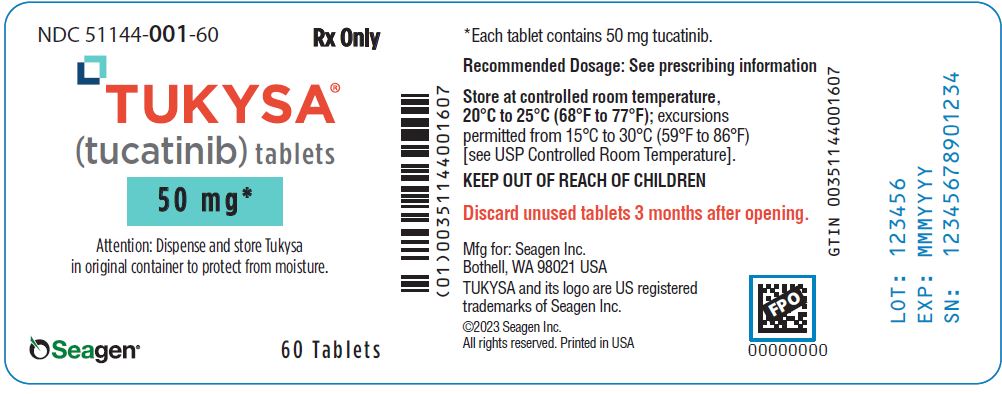
Tukysa tucatinib 50 mg Tablet, 60-count — NDC 51144-001-60 (Billing 51144-0001-60)
This is a package of 60 tablets of Tukysa tucatinib 50 mg Tablet from SEAGEN INC., marketed since Apr 2020 and currently FDA-listed. It is this product's only package size.
NDC database record
One package, one record: these facts belong to NDC 51144-001-60 alone.
- Record
- FDA NDC Directory package listing · Human prescription drug
- Code segments
- 51144 labeler · 001 product · 60 package
- Package marketed since
- Apr 17, 2020
- Sample package
- No — commercial package
- Listing certified through
- Dec 31, 2026
- Billing quantity
- 60 EA per package
- Barcode (UPC-A, from the NDC)
- 3 5114400160 7
- Medicaid fills, this package
- 12 prescriptions in the last four reported quarters
- FDA record last changed
- Jul 24, 2026
Identity & classification
Regulatory identifiers FDA, NLM and CMS codes for this package
Drug-database identifiers Medi-Span GPI and First Databank GCN / HICL / AHFS classification
- GSN (GCN sequence number): 080941
- GCN: 47929
- GPI-14 (Medi-Span): 21170080000320
- HICL (First Databank): 046459
- AHFS class code: 10:00.00.00
- RxCUI (RxNorm): 2361290
Where does this data come from?
- FDA openFDA NDC Directory · synced Oct 8, 2026
- FDA label on DailyMed · label index refreshed Oct 8, 2026
- RxNorm (NLM RxNav) · catalog refreshed Oct 1, 2026
- Medi-Span GPI (licensed)
- First Databank (licensed) · refreshed Oct 8, 2026
RxNorm drug class
This medicine belongs to the Kinase Inhibitor class.
Where does this data come from?
- RxClass (NLM) · catalog refreshed Oct 1, 2026
Clinical
- It treats HER2-positive breast cancer and HER2-positive colorectal cancer in adults. It is always used with other medicines: trastuzumab and capecitabine for breast cancer, and tra...
- Swallow the tablet whole twice a day, about 12 hours apart, with or without food. Don't chew, crush or split it. If you vomit or miss a dose, just take the next one at your usual t...
- Diarrhea is the most common, along with nausea, vomiting, mouth sores, rash and sore hands and feet. Call your doctor if diarrhea is severe or you feel dehydrated, since it can bec...
- Tucatinib can cause serious liver problems. Your liver tests are checked before you start and about every 3 weeks, so your doctor can adjust the dose early if needed.
Patient education
Supplement & herbal interactions
Some supplements/herbs that may interact with Tucatinib — tap one for details:
Where does this data come from?
- MedlinePlus (NLM) · refreshed Oct 8, 2026
- FDA label on DailyMed · label index refreshed Oct 8, 2026
Ask a licensed pharmacist directly — free, answered by our team.
Pricing
A drug doesn't have one price. Each row is a different public payment system, and none is what you'd pay at the counter — that depends on your insurance. The ⓘ on each row explains what it measures.
| Price system | Per each | Per package |
|---|---|---|
| Retail pharmacies payNADAC · weekly | Not in the retail survey — common for institutional, discontinued, or low-volume packs. | |
| Medicaid paysCMS SDUD · 12 mo | $109.47 | $6,568.16 / 60 tablets |
| Medicare drug plans payPart D · Q2 2026 | $112.63 | $6,757.85 / 60 tablets |
Where does this data come from?
- CMS NADAC weekly file
- CMS ASP pricing files · refreshed Sep 20, 2026
- CMS Medicaid State Drug Utilization Data · through Q1 2026
- CMS Part D plan pricing files · refreshed Sep 24, 2026
- VA National Acquisition Center price file
Packaging — all sizes for this product
| Package NDC | Description | Marketing start | Marketing end | Status |
|---|---|---|---|---|
| 51144-0001-60 You're viewing this Main listing | 60 TABLET in 1 BOTTLE | 2020-04-17 | — | Active |
Therapeutic equivalents
| Product | Labeler | Pack | NADAC/unit | TE | Status | Price vs. this |
|---|---|---|---|---|---|---|
| Tukysa 50 mgthis 51144-0001-60 | SEAGEN | 60 tablets | — | — | FDA listed | — |
Where does this data come from?
- FDA openFDA NDC Directory · synced Oct 8, 2026
- FDA Orange Book · refreshed Oct 3, 2026
- CMS NADAC weekly file
Availability & generic status
We did not find an FDA-approved generic match for this exact strength, form and route. Patent/protection dates below may affect future generic timing.
Why the date isn’t exact: Generic timing can change because patents may be challenged, settled, licensed, added, removed, or worked around with a narrower label — and FDA approval does not always mean a pharmacy can get the generic today.
🛈 What do these terms mean?
- Patent
- Legal protection listed in the Orange Book that may delay generic approval or launch. Issued by the U.S. Patent & Trademark Office.
- Substance patent
- Covers the active drug molecule itself — the hardest to design around. A generic generally can’t launch until it expires.
- Formulation (product) patent
- Covers a specific formulation or dosage form. A generic can sometimes work around it with a different formulation.
- Method-of-use patent
- A patent covering one specific approved use of the drug — not necessarily the whole molecule. A generic can sometimes launch with a “skinny label” that carves out the protected use and keeps the others.
- Skinny label
- A generic label that omits a still-patented use when the FDA allows it — letting a generic reach the market for the unprotected uses.
- Exclusivity
- FDA-granted marketing protection, separate from patents — e.g. 5-yr new chemical entity, 7-yr orphan drug, or a +6-month pediatric extension.
- Paragraph IV
- A generic applicant’s formal challenge to a listed patent. It can potentially lead to earlier generic entry, but often involves litigation or a settlement.
- RLD / RS
- Reference Listed Drug — the brand product the FDA uses as the reference for generic applications. Reference Standard — the product the FDA expects generics to compare against in bioequivalence testing.
- TE / AB rating
- FDA therapeutic-equivalence rating. An AB rating generally means the FDA considers a generic therapeutically equivalent to — and substitutable for — the brand.
- LOE (loss of exclusivity)
- The latest patent or exclusivity currently listed — the loss-of-exclusivity / latest-listed-protection date shown on this page. Paragraph-IV challenges and settlements can move the real date earlier; FDA approval and a manufacturer’s decision to market can move it later.
Built from the FDA Orange Book. The bars above are scaled to each protection’s expiry; the red LOE marker is the last one to lapse.
| Patent | Type | Use code | Expires |
|---|---|---|---|
| US 11504370 ↗ | Method of use | U-2788 | Mar 25, 2033 |
| US 11504370 ↗ | Method of use | U-2788 | Mar 25, 2033 |
| US 11666572 ↗ | Method of use | U-3783 | Apr 27, 2038 |
| US 11666572 ↗ | Method of use | U-3783 | Apr 27, 2038 |
| US 12048698 ↗ | Method of use | U-3783 | Apr 27, 2038 |
| US 12048698 ↗ | Method of use | U-3783 | Apr 27, 2038 |
| US 9457093 ↗ | Method of use | U-2788 | Oct 12, 2032 |
| US 9693989 ↗ | Method of use | U-2788 | May 9, 2027 |
| US 9457093 ↗ | Method of use | U-2788 | Oct 12, 2032 |
| US 9693989 ↗ | Method of use | U-2788 | May 9, 2027 |
| US 11207324 ↗ | Method of use | U-3783 | Apr 27, 2038 |
| US 11207324 ↗ | Method of use | U-3783 | Apr 27, 2038 |
| US 8648087 ↗ | Drug substance | — | Apr 17, 2034 |
| US 8648087 ↗ | Drug substance | — | Apr 17, 2034 |
| Code | What it grants | Expires |
|---|---|---|
| I-906 | New indication (3-year) | Jan 19, 2026 |
| ODE-309 | Orphan Drug Exclusivity (7-year) | Apr 17, 2027 |
| ODE-422 | Orphan Drug Exclusivity (7-year) | Jan 19, 2030 |
| I-906 | New indication (3-year) | Jan 19, 2026 |
| ODE-309 | Orphan Drug Exclusivity (7-year) | Apr 17, 2027 |
| ODE-422 | Orphan Drug Exclusivity (7-year) | Jan 19, 2030 |
Is there a generic version of TUKYSA 50 MG TABLET?
The FDA approved a generic — why can’t I get it at my pharmacy yet?
Why do different websites show different generic release dates?
What does “FDA listed” mean?
What does a patent or protection date mean here?
What does “current Orange Book estimate” mean?
Can a generic come out before the last patent expires?
Can a generic come out after the listed dates?
What is the difference between patents and exclusivity?
Why are there multiple patent dates?
Where does this data come from?
- FDA Orange Book · refreshed Oct 3, 2026
What it looks like
Where does this data come from?
- FDA label on DailyMed · label index refreshed Oct 8, 2026
Inactive Ingredients / Excipients
Inactive ingredients, also called excipients, are components of the drug product other than the active ingredient. They may include fillers, dyes, coatings, preservatives, flavors, or other formulation ingredients.
🧪 Avoiding an ingredient? See Tucatinib inactive ingredients by manufacturer: every current product's list side by side, so you can ask your pharmacy for the version that does not list it.
💡 Tap an ingredient (hover on desktop) to see what it is and why it’s used.
-
UNII D9C330MD8B
Copovidone is a synthetic polymer made by combining two types of plastic-like molecules. It acts as a binder and film-former to help hold tablet ingredients together and improve how the medicine dissolves in your body.
-
UNII 68401960MK
Crospovidone is a synthetic polymer made from polyvinylpyrrolidone. It acts as a disintegrant, helping tablets break apart quickly in the stomach so the medicine dissolves and absorbs into the body.
-
UNII EX438O2MRT
Ferric oxide yellow is a naturally occurring iron compound used as a colorant in medications. It gives tablets, capsules, and other forms a yellow or golden hue for identification and appearance.
-
UNII 70097M6I30
Magnesium stearate is a salt made from magnesium and stearic acid, a fatty substance. It's used in tablets and capsules as a lubricant and glidant to help ingredients flow smoothly during manufacturing and prevent sticking.
-
UNII PNR0YF693Y
A plant-based powder made from purified wood cellulose. It acts as a filler to add bulk, a binder to hold ingredients together, and a disintegrant to help the tablet break apart in the stomach.
-
UNII 3WJQ0SDW1A
Polyethylene glycol is a synthetic liquid or solid polymer used in medicines as a solvent, lubricant, and humectant. It helps dissolve active ingredients, reduces friction during manufacturing, and retains moisture in the final product.
-
UNII 532B59J990
Polyvinyl alcohol is a synthetic polymer made from plant-derived materials. It's used as a binder to hold ingredients together, a film-former in coatings, and a thickener in liquid formulations.
-
UNII 660YQ98I10
Potassium chloride is a mineral salt used in medicines as a buffer and to help maintain the proper pH balance and stability of the formulation during storage and use.
-
UNII ETJ7Z6XBU4
Silicon dioxide is a naturally occurring mineral used as a glidant and anti-caking agent. It helps powder ingredients flow smoothly and prevents clumping during manufacturing and storage.
-
UNII 8MDF5V39QO
A white powder form of baking soda that acts as a buffer and pH regulator in medicines. It helps maintain the right acid-base balance and may aid tablet disintegration.
-
UNII 451W47IQ8X
Sodium chloride is common table salt. It's used in medicines as a buffer to maintain proper pH, as a filler to add bulk, or to adjust the osmotic balance in liquid formulations.
-
UNII 7SEV7J4R1U
A powder made from a naturally occurring mineral. In medicines, talc works as a glidant and anti-caking agent, helping tablets and capsules flow smoothly during manufacturing and preventing clumping.
-
UNII 15FIX9V2JP
Titanium dioxide is a bright white mineral powder commonly used as a colorant and opacifying agent. It makes pills and tablets white or lighter in color and helps make coatings non-transparent.
13 inactive ingredients listed in the exact product block matched to this NDC.
Where does this data come from?
ingredient classCode="IACT" elements from the exact product block matched by this NDC. Label-section narrative from DailyMed / the openFDA label index is shown separately when available.- FDA label on DailyMed · label index refreshed Oct 8, 2026
- FDA openFDA NDC Directory · synced Oct 8, 2026
Inactive ingredient FAQ
Are inactive ingredients the same for every manufacturer?
Why might an inactive ingredient be missing?
Can inactive ingredients matter?
Manufacturer & labeler
More NDCs from SEAGEN INC. labeler code 51144
- Tukysa tucatinib 150 mg Tablet NDC 51144-002-12
- TIVDAK tisotumab vedotin 40 mg/4mL Injection, Powder, For Solution NDC 51144-003-01
- PADCEV EJFV ENFORTUMAB VEDOTIN 20 mg/2mL Injection, Powder, Lyophilized, For Solution NDC 51144-020-01
- PADCEV EJFV ENFORTUMAB VEDOTIN 30 mg/3mL Injection, Powder, Lyophilized, For Solution NDC 51144-030-01
- ADCETRIS brentuximab vedotin 50 mg/10.5mL Injection, Powder, Lyophilized, For Solution NDC 51144-050-01
Where does this data come from?
- FDA openFDA NDC Directory · synced Oct 8, 2026
- Drugs@FDA
Full prescribing information FDA SPL
🎯 Indications and Usage ▾
1 INDICATIONS AND USAGE TUKYSA is a kinase inhibitor indicated: • in combination with trastuzumab and capecitabine for treatment of adult patients with advanced unresectable or metastatic HER2-positive breast cancer, including patients with brain metastases, who have received one or more prior anti-HER2-based regimens in the metastatic setting. ( 1.1 ) • in combination with trastuzumab for the treatment of adult patients with RAS wild-type HER2-positive unresectable or metastatic colorectal cancer that has progressed following treatment with fluoropyrimidine-, oxaliplatin-, and irinotecan-based chemotherapy.
( 1.2 ) This indication is approved under accelerated approval based on tumor response rate and durability of response [see Clinical Studies (14.2) ]. Continued approval for this indication may be contingent upon verification and description of clinical benefit in confirmatory trials.
1.1Metastatic Breast Cancer TUKYSA is indicated in combination with trastuzumab and capecitabine for treatment of adult patients with advanced unresectable or metastatic HER2-positive breast cancer, including patients with brain metastases, who have received one or more prior anti-HER2-based regimens in the metastatic setting.
1.2Unresectable or Metastatic Colorectal Cancer TUKYSA is indicated in combination with trastuzumab for the treatment of adult patients with RAS wild-type, HER2-positive unresectable or metastatic colorectal cancer that has progressed following treatment with fluoropyrimidine-, oxaliplatin-, and irinotecan-based chemotherapy. This indication is approved under accelerated approval based on tumor response rate and durability of response [see Clinical Studies (14.2) ]. Continued approval for this indication may be contingent upon verification and description of clinical benefit in confirmatory trials.
⏱️ Dosage and Administration ▾
2 DOSAGE AND ADMINISTRATION • In patients with unresectable or metastatic colorectal cancer, confirm the presence of HER2 protein overexpression and RAS wild-type in tumor specimens prior to the initiation of TUKYSA ( 2.1 ) • Recommended dosage: 300 mg taken orally twice daily with or without food. ( 2.1 ) • For patients with severe hepatic impairment, the recommended dosage is 200 mg orally twice daily. ( 2.3 , 8.7 )
2.1Patient Selection Select patients for treatment of unresectable or metastatic colorectal cancer with TUKYSA based on the presence of: • HER2 overexpression or gene amplification [see Clinical Studies (14.2) ]. FDA-approved tests for the detection of HER2 overexpression and gene amplification in patients with unresectable or metastatic colorectal cancer are not currently available, and • RAS wild-type [see Clinical Studies (14.2) ]. Information on FDA-approved tests for the detection of RAS mutations in patients with unresectable or metastatic colorectal cancer is available at http://www.fda.gov/CompanionDiagnostics .
2.2Recommended Dosage Metastatic Breast Cancer The recommended dosage of TUKYSA is 300 mg taken orally twice daily in combination with trastuzumab and capecitabine until disease progression or unacceptable toxicity [see Clinical Studies (14.1) ] . Unresectable or Metastatic Colorectal Cancer The recommended dosage of TUKYSA is 300 mg taken orally twice daily in combination with trastuzumab until disease progression or unacceptable toxicity [see Clinical Studies (14.2) ]. Advise patients to swallow TUKYSA tablets whole and not to chew, crush, or split prior to swallowing.
Advise patients not to ingest tablet if it is broken, cracked, or not otherwise intact. Advise patients to take TUKYSA approximately 12 hours apart and at the same time each day with or without a meal. If the patient vomits or misses a dose of TUKYSA, instruct the patient to take the next dose at its usual scheduled time.
When given in combination with TUKYSA, the recommended dosage of capecitabine is 1000 mg/m 2 orally twice daily taken within 30 minutes after a meal. TUKYSA and capecitabine can be taken at the same time. Refer to the Full Prescribing Information for trastuzumab and capecitabine for additional information.
2.3Dosage Modifications for Adverse Reactions The recommended TUKYSA dose reductions and dosage modifications for adverse reactions are provided in Tables 1 and 2. Refer to the Full Prescribing Information for trastuzumab and capecitabine for information about dosage modifications for these drugs. Table 1: Recommended TUKYSA Dose Reductions for Adverse Reactions Dose Reduction Recommended TUKYSA Dosage First 250 mg orally twice daily Second 200 mg orally twice daily Third 150 mg orally twice daily Permanently discontinue TUKYSA in patients unable to tolerate 150 mg orally twice daily.
Table 2: Recommended TUKYSA Dosage Modifications for Adverse Reactions Adverse Reaction Grades based on National Cancer Institute Common Terminology Criteria for Adverse Events Version
4.03Severity TUKYSA Dosage Modification Diarrhea [see Warnings and Precautions (5.1) ] Grade 3 without anti-diarrheal treatment Initiate or intensify appropriate medical therapy. Hold TUKYSA until recovery to ≤ Grade 1, then resume TUKYSA at the same dose level. Grade 3 with anti-diarrheal treatment Initiate or intensify appropriate medical therapy.
Hold TUKYSA until recovery to ≤ Grade 1, then resume TUKYSA at the next lower dose level. Grade 4 Permanently discontinue TUKYSA. Hepatotoxicity Abbreviations: ULN = upper limit of normal; ALT = alanine aminotransferase; AST = aspartate aminotransferase [see Warnings and Precautions (5.2) ] Grade 2 bilirubin (>1.5 to 3 × ULN) Hold TUKYSA until recovery to ≤ Grade 1, then resume TUKYSA at the same dose level.
Grade 3 ALT or AST (> 5 to 20 × ULN) OR Grade 3 bilirubin (> 3 to 10 × ULN) Hold TUKYSA until recovery to ≤ Grade 1, then resume TUKYSA at the next lower dose level. Grade 4 ALT or AST (> 20 × UL… [Excerpted — this section continues on DailyMed.]
💊 Dosage Forms and Strengths ▾
3 DOSAGE FORMS AND STRENGTHS Tablets: • 50 mg: round, yellow, film-coated, debossed with “TUC” on one side and “50” on the other side. • 150 mg: oval-shaped, yellow, film-coated, debossed with “TUC” on one side and “150” on the other side. Tablets: 50 mg and 150 mg. ( 3 )
⛔ Contraindications ▾
4 CONTRAINDICATIONS None. None. ( 4 )
⚠️ Warnings and Cautions ▾
5 WARNINGS AND PRECAUTIONS • Diarrhea : Severe diarrhea, including dehydration, acute kidney injury, and death, has been reported. Administer antidiarrheal treatment as clinically indicated. Interrupt dose, then dose reduce, or permanently discontinue TUKYSA based on severity.
( 2.2 , 5.1 ) • Hepatotoxicity : Severe hepatotoxicity has been reported on TUKYSA. Monitor ALT, AST and bilirubin prior to starting TUKYSA, every 3 weeks during treatment and as clinically indicated. Interrupt dose, then dose reduce, or permanently discontinue TUKYSA based on severity.
( 2.2 , 5.2 ) • Embryo-Fetal Toxicity : TUKYSA can cause fetal harm. Advise patients of potential risk to a fetus and to use effective contraception. ( 5.3 , 8.1 , 8.3 ) Also, refer to the Full Prescribing Information of trastuzumab and capecitabine for pregnancy and contraception information.
5.1Diarrhea TUKYSA can cause severe diarrhea including dehydration, hypotension, acute kidney injury, and death [see Adverse Reactions (6.1) ] . If diarrhea occurs, administer antidiarrheal treatment as clinically indicated. Perform diagnostic tests as clinically indicated to exclude other causes of diarrhea.
Based on the severity of the diarrhea, interrupt dose, then dose reduce or permanently discontinue TUKYSA [see Dosage and Administration (2.2) ] . TUKYSA with trastuzumab and capecitabine In HER2CLIMB, 81% of patients who received TUKYSA experienced diarrhea, including 0.5% with Grade 4 diarrhea and 12% with Grade 3 diarrhea. Both patients who developed Grade 4 diarrhea subsequently died, with diarrhea as a contributor to death.
The median time to onset of the first episode of diarrhea was 12 days and the median time to resolution was 8 days. Diarrhea led to dose reductions of TUKYSA in 6% of patients and discontinuation of TUKYSA in 1% of patients. Prophylactic use of antidiarrheal treatment was not required on HER2CLIMB.
TUKYSA with trastuzumab In MOUNTAINEER, diarrhea occurred in 64% of patients, including Grade 3 (3.5%), Grade 2 (10%), and Grade 1 (50%).
5.2Hepatotoxicity TUKYSA can cause severe hepatotoxicity [see Adverse Reactions (6.1) ] . Monitor ALT, AST, and bilirubin prior to starting TUKYSA, every 3 weeks during treatment, and as clinically indicated. Based on the severity of hepatotoxicity, interrupt dose, then dose reduce or permanently discontinue TUKYSA [see Dosage and Administration (2.2) ] .
TUKYSA with trastuzumab and capecitabine In HER2CLIMB, 8% of patients who received TUKYSA had an ALT increase > 5 × ULN, 6% had an AST increase > 5 × ULN, and 1.5% had a bilirubin increase > 3 × ULN (Grade ≥3). Hepatotoxicity led to dose reduction of TUKYSA in 8% of patients and discontinuation of TUKYSA in 1.5% of patients. TUKYSA with trastuzumab In MOUNTAINEER, 6% of patients had a bilirubin increase > 3 × ULN (Grade ≥3), 6% had an AST increase > 5 × ULN, and 4.7% had an ALT increase > 5 × ULN.
Hepatotoxicity led to dose reduction of TUKYSA in 3.5% of patients and discontinuation of TUKYSA in 2.3% of patients.
5.3Embryo-Fetal Toxicity Based on findings from animal studies and its mechanism of action, TUKYSA can cause fetal harm when administered to a pregnant woman. In animal reproduction studies, administration of tucatinib to pregnant rats and rabbits during organogenesis caused embryo-fetal mortality, reduced fetal weight and fetal abnormalities at maternal exposures ≥ 1.3 times the human exposure (AUC) at the recommended dose. Advise pregnant women and females of reproductive potential of the potential risk to a fetus.
Advise females of reproductive potential to use effective contraception during treatment with TUKYSA and for 1 week after the last dose. Advise male patients with female partners of reproductive potential to use effective contraception during treatment with TUKYSA and for 1 week after the last dose [see Use in Specific Populations (8.1 , 8.3 )] . TUKYSA is used in combination with trastuzumab and capecitabine.
Refer to the Full Prescribing Informat… [Excerpted — this section continues on DailyMed.]
🤒 Adverse Reactions ▾
6 ADVERSE REACTIONS The following clinically significant adverse reactions are described elsewhere in the labeling: • Diarrhea [see Warnings and Precautions (5.1) ] • Hepatotoxicity [see Warnings and Precautions (5.2) ] • The most common adverse reactions (≥20%) with TUKYSA in combination with trastuzumab and capecitabine in patients with metastatic breast cancer are diarrhea, palmar-plantar erythrodysesthesia, nausea, hepatotoxicity, vomiting, stomatitis, decreased appetite, anemia, and rash. ( 6.1 ) • The most common adverse reactions (≥20%) with TUKYSA in combination with trastuzumab in patients with unresectable or metastatic colorectal cancer are diarrhea, fatigue, rash, nausea, abdominal pain, infusion related reactions, and pyrexia.
To report SUSPECTED ADVERSE REACTIONS, contact Seagen at 1-855-4SEAGEN or FDA at 1-800-FDA-1088 or www.fda.gov/medwatch .
6.1Clinical Trials Experience Because clinical trials are conducted under widely varying conditions, adverse reaction rates observed in the clinical trials of a drug cannot be directly compared to rates in the clinical trials of another drug and may not reflect the rates observed in practice. HER2-Positive Metastatic Breast Cancer The safety of TUKYSA in combination with trastuzumab and capecitabine was evaluated in HER2CLIMB [see Clinical Studies (14) ]. Patients received either TUKYSA 300 mg twice daily plus trastuzumab or a non-US approved trastuzumab product, and capecitabine (n=404) or placebo plus trastuzumab or a non-US approved trastuzumab product and capecitabine (n=197).
The median duration of treatment was 5.8 months (range: 3 days, 2.9 years) for the TUKYSA arm. Serious adverse reactions occurred in 26% of patients who received TUKYSA. Serious adverse reactions in ≥ 2% of patients who received TUKYSA were diarrhea (4%), vomiting (2.5%), nausea (2%), abdominal pain (2%), and seizure (2%).
Fatal adverse reactions occurred in 2% of patients who received TUKYSA including sudden death, sepsis, dehydration, and cardiogenic shock. Adverse reactions leading to treatment discontinuation occurred in 6% of patients who received TUKYSA. Adverse reactions leading to treatment discontinuation of TUKYSA in ≥1% of patients were hepatotoxicity (1.5%) and diarrhea (1%).
Adverse reactions leading to dose reduction occurred in 21% of patients who received TUKYSA. Adverse reactions leading to dose reduction of TUKYSA in ≥2% of patients were hepatotoxicity (8%) and diarrhea (6%). The most common adverse reactions in patients who received TUKYSA (≥20%) were diarrhea, palmar-plantar erythrodysesthesia, nausea, hepatotoxicity, vomiting, stomatitis, decreased appetite, anemia, and rash.
Table 3 summarizes the adverse reactions in HER2CLIMB. Table 3: Adverse Reactions (≥10%) in Patients Who Received TUKYSA and with a Difference Between Arms of ≥ 5% Compared to Placebo in HER2CLIMB (All Grades) Adverse Reaction TUKYSA + Trastuzumab + Capecitabine N = 404 Placebo + Trastuzumab + Capecitabine N = 197 All Grades % Grade 3 % Grade 4 % All Grades % Grade 3 % Grade 4 % Gastrointestinal disorders Diarrhea 81 12 0.5 53 9 0 Nausea 58 3.7 0 44 3 0 Vomiting 36 3 0 25 3.6 0 Stomatitis Stomatitis includes stomatitis, oropharyngeal pain, oropharyngeal discomfort, mouth ulceration, oral pain, lip ulceration, glossodynia, tongue blistering, lip blister, oral dysesthesia, tongue ulceration, and aphthous ulcer 32 2.5 0 21 0.5 0 Skin and subcutaneous tissue disorders Palmar-plantar erythrodysesthesia syndrome 63 13 0 53 9 0 Rash Rash includes rash maculo-papular, rash, dermatitis acneiform, erythema, rash macular, rash papular, rash pustular, rash pruritic, rash erythematous, skin exfoliation, urticaria, dermatitis allergic, palmar erythema, plantar erythema, skin toxicity, and dermatitis 20 0.7 0 15 0.5 0 Hepatobiliary disorders Hepatotoxicity Hepatotoxicity includes hyperbilirubinemia, blood bilirubin increased, bilirubin conjugated increased, alanine aminotransferase increased, transaminases increased,… [Excerpted — this section continues on DailyMed.]
🔄 Drug Interactions ▾
7 DRUG INTERACTIONS • Strong CYP3A Inducers or Moderate CYP2C8 Inducers : Avoid concomitant use. ( 7.1 ) • Strong CYP2C8 Inhibitors : Avoid concomitant use; reduce TUKYSA dose if concomitant use cannot be avoided. ( 2.4 , 7.1 ) • CYP3A Substrates : Avoid concomitant use with CYP3A substrates, where minimal concentration changes may lead to serious or life-threatening toxicities.
( 7.2 ) • P-gp Substrates : Consider reducing the dose of P-gp substrates, where minimal concentration changes may lead to serious or life-threatening toxicities. ( 7.2 )
7.1Effects of Other Drugs on TUKYSA Table 7 summarizes the effect of other drugs on TUKYSA. Table 7: Drug Interactions that Affect TUKYSA Strong CYP3A Inducers or Moderate CYP2C8 Inducers Clinical Impact Concomitant use of TUKYSA with a strong CYP3A or moderate CYP2C8 inducer decreased tucatinib plasma concentrations [see Clinical Pharmacology (12.3) ] , which may reduce TUKYSA activity. Management Avoid concomitant use of TUKYSA with a strong CYP3A inducer or a moderate CYP2C8 inducer.
Strong or Moderate CYP2C8 Inhibitors Clinical Impact Concomitant use of TUKYSA with a strong CYP2C8 inhibitor increased tucatinib plasma concentrations [see Clinical Pharmacology (12.3) ] , which may increase the risk of TUKYSA toxicity. Management Avoid concomitant use of TUKYSA with a strong CYP2C8 inhibitor. Increase monitoring for TUKYSA toxicity with moderate CYP2C8 inhibitors.
7.2Effects of TUKYSA on Other Drugs Table 8 summarizes the effect of TUKYSA on other drugs. Table 8: TUKYSA Drug Interactions that Affect Other Drugs CYP3A Substrates Clinical Impact Concomitant use of TUKYSA with a CYP3A substrate increased the plasma concentrations of CYP3A substrate [see Clinical Pharmacology (12.3) ] , which may increase the toxicity associated with a CYP3A substrate. Management Avoid concomitant use of TUKYSA with CYP3A substrates, where minimal concentration changes may lead to serious or life-threatening toxicities.
If concomitant use is unavoidable, decrease the CYP3A substrate dosage in accordance with approved product labeling. P-glycoprotein (P-gp) Substrates Clinical Impact Concomitant use of TUKYSA with a P-gp substrate increased the plasma concentrations of P-gp substrate [see Clinical Pharmacology (12.3) ] , which may increase the toxicity associated with a P-gp substrate. Management Consider reducing the dosage of P-gp substrates, where minimal concentration changes may lead to serious or life-threatening toxicities.
🔄 Drug / Laboratory Test Interactions ▾
7.1Effects of Other Drugs on TUKYSA Table 7 summarizes the effect of other drugs on TUKYSA. Table 7: Drug Interactions that Affect TUKYSA Strong CYP3A Inducers or Moderate CYP2C8 Inducers Clinical Impact Concomitant use of TUKYSA with a strong CYP3A or moderate CYP2C8 inducer decreased tucatinib plasma concentrations [see Clinical Pharmacology (12.3) ] , which may reduce TUKYSA activity. Management Avoid concomitant use of TUKYSA with a strong CYP3A inducer or a moderate CYP2C8 inducer.
Strong or Moderate CYP2C8 Inhibitors Clinical Impact Concomitant use of TUKYSA with a strong CYP2C8 inhibitor increased tucatinib plasma concentrations [see Clinical Pharmacology (12.3) ] , which may increase the risk of TUKYSA toxicity. Management Avoid concomitant use of TUKYSA with a strong CYP2C8 inhibitor. Increase monitoring for TUKYSA toxicity with moderate CYP2C8 inhibitors.
7.2Effects of TUKYSA on Other Drugs Table 8 summarizes the effect of TUKYSA on other drugs. Table 8: TUKYSA Drug Interactions that Affect Other Drugs CYP3A Substrates Clinical Impact Concomitant use of TUKYSA with a CYP3A substrate increased the plasma concentrations of CYP3A substrate [see Clinical Pharmacology (12.3) ] , which may increase the toxicity associated with a CYP3A substrate. Management Avoid concomitant use of TUKYSA with CYP3A substrates, where minimal concentration changes may lead to serious or life-threatening toxicities.
If concomitant use is unavoidable, decrease the CYP3A substrate dosage in accordance with approved product labeling. P-glycoprotein (P-gp) Substrates Clinical Impact Concomitant use of TUKYSA with a P-gp substrate increased the plasma concentrations of P-gp substrate [see Clinical Pharmacology (12.3) ] , which may increase the toxicity associated with a P-gp substrate. Management Consider reducing the dosage of P-gp substrates, where minimal concentration changes may lead to serious or life-threatening toxicities.
👥 Use in Specific Populations ▾
8 USE IN SPECIFIC POPULATIONS Lactation : Advise not to breastfeed. ( 8.2 )
8.1Pregnancy Risk Summary TUKYSA is used in combination with trastuzumab and capecitabine. Refer to the Full Prescribing Information of trastuzumab and capecitabine for pregnancy information. Based on findings in animals and its mechanism of action, TUKYSA can cause fetal harm when administered to a pregnant woman [see Clinical Pharmacology (12.1) ] .
There are no available human data on TUKYSA use in pregnant women to inform a drug-associated risk. In animal reproduction studies, administration of tucatinib to pregnant rats and rabbits during organogenesis resulted in embryo-fetal mortality, reduced fetal weight and fetal abnormalities at maternal exposures ≥ 1.3 times the human exposure (AUC) at the recommended dose (see Data ) . Advise pregnant women and females of reproductive potential of the potential risk to the fetus.
The background risk of major birth defects and miscarriage for the indicated population is unknown. In the U.S. general population, the estimated background risk of major birth defects and miscarriage in clinically recognized pregnancies is 2%-4% and 15%-20%, respectively. Data Animal Data In pilot embryo-fetal development studies, pregnant rats and rabbits received oral doses of tucatinib up to 150 mg/kg/day during the period of organogenesis.
In rats, oral administration of tucatinib resulted in maternal toxicity (body weight loss, reduced body weight gain, low food consumption) at doses ≥ 90 mg/kg/day. Fetal effects included reduced number of live fetuses, decreased fetal weight, and fetal abnormalities (increase in skeletal variations, incomplete ossification) at ≥ 90 mg/kg/day (approximately 3.5 times the human exposure at the recommended dose based on AUC). In rabbits, oral administration of tucatinib resulted in increased resorptions, decreased percentages of live fetuses, and skeletal, visceral, and external malformations in fetuses at doses ≥ 90 mg/kg/day (1.3 times the human exposure at the recommended dose based on AUC).
Fetal abnormalities included domed head, brain dilation, incomplete ossification of frontal and parietal bones, and a hole in the parietal bone.
8.2Lactation Risk Summary TUKYSA is used in combination with trastuzumab and capecitabine. Refer to the Full Prescribing Information of trastuzumab and capecitabine for lactation information. There are no data on the presence of tucatinib or its metabolites in human or animal milk or its effects on the breastfed child or on milk production.
Because of the potential for serious adverse reactions in a breastfed child, advise women not to breastfeed during treatment with TUKYSA and for 1 week after the last dose.
8.3Females and Males of Reproductive Potential TUKYSA can cause fetal harm when administered to a pregnant woman [see Use in Specific Populations (8.1) ] . TUKYSA is used in combination with trastuzumab and capecitabine. Refer to the Full Prescribing Information of trastuzumab and capecitabine for contraception and infertility information.
Pregnancy Testing Verify the pregnancy status of females of reproductive potential prior to initiating treatment with TUKYSA. Contraception Females Advise females of reproductive potential to use effective contraception during treatment with TUKYSA and for 1 week after the last dose. Males Advise male patients with female partners of reproductive potential to use effective contraception during treatment with TUKYSA and for 1 week after the last dose.
Infertility Based on findings from animal studies, TUKYSA may impair male and female fertility [see Nonclinical Toxicology (13.1) ] .
8.4Pediatric Use The safety and effectiveness of TUKYSA in pediatric patients have not been established.
8.5Geriatric Use In HER2CLIMB, 82 patients who received TUKYSA were ≥ 65 years, of whom 8 patients were ≥ 75 years. The incidence of serious adverse reactions in those receiving TUKYSA was 34% in patients ≥ 65 years compared to 24% in… [Excerpted — this section continues on DailyMed.]
🤰 Pregnancy ▾
8.1Pregnancy Risk Summary TUKYSA is used in combination with trastuzumab and capecitabine. Refer to the Full Prescribing Information of trastuzumab and capecitabine for pregnancy information. Based on findings in animals and its mechanism of action, TUKYSA can cause fetal harm when administered to a pregnant woman [see Clinical Pharmacology (12.1) ] .
There are no available human data on TUKYSA use in pregnant women to inform a drug-associated risk. In animal reproduction studies, administration of tucatinib to pregnant rats and rabbits during organogenesis resulted in embryo-fetal mortality, reduced fetal weight and fetal abnormalities at maternal exposures ≥ 1.3 times the human exposure (AUC) at the recommended dose (see Data ) . Advise pregnant women and females of reproductive potential of the potential risk to the fetus.
The background risk of major birth defects and miscarriage for the indicated population is unknown. In the U.S. general population, the estimated background risk of major birth defects and miscarriage in clinically recognized pregnancies is 2%-4% and 15%-20%, respectively. Data Animal Data In pilot embryo-fetal development studies, pregnant rats and rabbits received oral doses of tucatinib up to 150 mg/kg/day during the period of organogenesis.
In rats, oral administration of tucatinib resulted in maternal toxicity (body weight loss, reduced body weight gain, low food consumption) at doses ≥ 90 mg/kg/day. Fetal effects included reduced number of live fetuses, decreased fetal weight, and fetal abnormalities (increase in skeletal variations, incomplete ossification) at ≥ 90 mg/kg/day (approximately 3.5 times the human exposure at the recommended dose based on AUC). In rabbits, oral administration of tucatinib resulted in increased resorptions, decreased percentages of live fetuses, and skeletal, visceral, and external malformations in fetuses at doses ≥ 90 mg/kg/day (1.3 times the human exposure at the recommended dose based on AUC).
Fetal abnormalities included domed head, brain dilation, incomplete ossification of frontal and parietal bones, and a hole in the parietal bone.
🧒 Pediatric Use ▾
8.4Pediatric Use The safety and effectiveness of TUKYSA in pediatric patients have not been established.
🧓 Geriatric Use ▾
8.5Geriatric Use In HER2CLIMB, 82 patients who received TUKYSA were ≥ 65 years, of whom 8 patients were ≥ 75 years. The incidence of serious adverse reactions in those receiving TUKYSA was 34% in patients ≥ 65 years compared to 24% in patients <65 years. The most frequent serious adverse reactions in patients ≥65 years who received TUKYSA were diarrhea (9%), vomiting (6%), and nausea (5%).
There were no observed overall differences in the effectiveness of TUKYSA in patients ≥ 65 years compared to younger patients. There were too few patients ≥75 years to assess differences in effectiveness or safety. In MOUNTAINEER, 12 patients were ≥65 years of age.
There were too few patients ≥65 years to assess differences in effectiveness or safety.
🧬 Clinical Pharmacology ▾
12 CLINICAL PHARMACOLOGY
12.1Mechanism of Action Tucatinib is a tyrosine kinase inhibitor of HER2. In vitro, tucatinib inhibits phosphorylation of HER2 and HER3, resulting in inhibition of downstream MAPK and AKT signaling and cell proliferation, and showed anti-tumor activity in HER2 expressing tumor cells. In vivo, tucatinib inhibited the growth of HER2 expressing tumors.
The combination of tucatinib and trastuzumab showed increased anti-tumor activity in vitro and in vivo compared to either drug alone.
12.2Pharmacodynamics Exposure Response Relationship Tucatinib exposure-response relationships and the time course of pharmacodynamics response have not been fully characterized. Cardiac Electrophysiology No large mean increase in QTc (i.e., > 20 ms) was detected following treatment with TUKYSA at the recommended dose of 300 mg taken orally twice daily.
12.3Pharmacokinetics Tucatinib AUC 0-INF and C max increased proportionally over a dosage range from 50 mg to 300 mg (0.17 to 1 times the approved recommended dosage). Time to steady state was approximately 4 days. Steady-state pharmacokinetic parameters following administration of TUKYSA 300 mg twice daily for 7 days in patients with mBC and mCRC are described in Table 9.
The geometric mean (CV%) tucatinib AUC accumulation ratios ranged from 2.0 (26) fold to 2.5 (28) fold. Table 9: Tucatinib C max and AUC Tumor Type AUC ss (ng*h/mL) C max,ss (ng/mL) C trough,ss (ng/mL) mBC 5620 (43) 747 (45) 288 (59) mCRC 3370 (49) 405 (45) 197 (63) Absorption The median time to peak plasma concentration of tucatinib was approximately 2 hours (range 1 to 4 hours). Effects of Food Following administration of a single oral dose of TUKYSA in 11 subjects after a high-fat meal (approximately 58% fat, 26% carbohydrate, and 16% protein), the mean AUC 0-INF increased by 1.5-fold, the T max shifted from 1.5 hours to 4 hours, and C max was unaltered.
The effect of food on the pharmacokinetics of tucatinib was not clinically meaningful. Distribution The geometric mean (CV%) apparent volume of distribution of tucatinib at steady-state were 903 (42) L and 829 (21) L in patients with mBC and mCRC, respectively. The plasma protein binding was 97.1% at clinically relevant concentrations.
At steady-state, concentrations of tucatinib and its metabolite ONT-993 in the cerebrospinal fluid were comparable to unbound plasma concentrations. Elimination At steady-state, tucatinib effective half-life was approximately 11.9 hours and geometric mean (CV%) apparent clearance was 53 (43) L/h in patients with mBC. Tucatinib effective half-life was approximately 16.4 hours and geometric mean (CV%) apparent clearance was 89 (49) L/h in patients with mCRC.
Metabolism Tucatinib is metabolized primarily by CYP2C8 and to a lesser extent via CYP3A. Excretion Following a single oral dose of 300 mg radiolabeled tucatinib, approximately 86% of the total radiolabeled dose was recovered in feces (16% of the administered dose as unchanged tucatinib) and 4.1% in urine with an overall total recovery of 90% within 13 days post-dose. In plasma, approximately 76% of the plasma radioactivity was unchanged, 19% was attributed to identified metabolites, and approximately 5% was unassigned.
Specific Populations Age (18-77 years), albumin (19 to 52 g/L), creatinine clearance (CLcr: 60 to 89 mL/min (n = 63); CLcr 30 to 59 mL/min (n = 6)), body weight (41 to 146 kg), sex (male (n = 170), female (n = 113)) and race (White (n = 205), Black (n = 37), or Asian (n = 25)) did not have a clinically meaningful effect on tucatinib exposure. Renal Impairment No clinically significant differences in the pharmacokinetics of tucatinib were observed in patients with mild to moderate renal impairment (CLcr: 30 to 89 mL/min by Cockcroft-Gault).
The effect of severe renal impairment (CLcr: < 30 mL/min) on the pharmacokinetics of tucatinib is unknown. Hepatic Impairment Mild (Child-Pugh A) and moderate (Child-Pugh B) hepatic impairment had no clinically relevant… [Excerpted — this section continues on DailyMed.]
🧬 Mechanism of Action ▾
12.1Mechanism of Action Tucatinib is a tyrosine kinase inhibitor of HER2. In vitro, tucatinib inhibits phosphorylation of HER2 and HER3, resulting in inhibition of downstream MAPK and AKT signaling and cell proliferation, and showed anti-tumor activity in HER2 expressing tumor cells. In vivo, tucatinib inhibited the growth of HER2 expressing tumors.
The combination of tucatinib and trastuzumab showed increased anti-tumor activity in vitro and in vivo compared to either drug alone.
📦 How Supplied / Storage and Handling ▾
16 HOW SUPPLIED/STORAGE AND HANDLING
16.1How Supplied TUKYSA 50 mg tablets are supplied as yellow, film-coated, round tablets containing 50 mg of tucatinib. Each tablet is debossed with “TUC” on one side and “50” on the other side, and is packaged as follows: 50 mg tablets: 60 count in 75 cc bottle: NDC 51144-001-60 TUKYSA 150 mg tablets are supplied as yellow, film-coated, oval-shaped tablets containing 150 mg of tucatinib. Each tablet is debossed with “TUC” on one side and “150” on the other side, and is packaged as follows: 150 mg tablets: 60 count in 75 cc bottle: NDC 51144-002-60 150 mg tablets: 120 count in 150 cc bottle: NDC 51144-002-12 Store at controlled room temperature, 20ºC to 25ºC (68ºF to 77ºF); excursions permitted from 15ºC to 30ºC (59ºF to 86ºF) [see USP Controlled Room Temperature].
Dispense to patient in original container only. Store in original container to protect from moisture. Replace cap securely each time after opening.
Do not discard desiccant. Once opened, use within 3 months. Discard any unused tablets 3 months after opening the bottle.
📋 Description ▾
11 DESCRIPTION Tucatinib is a kinase inhibitor. The chemical name is (N4-(4-([1,2,4]triazolo[1,5-a]pyridin-7-yloxy)-3-methylphenyl)-N6-(4,4-dimethyl-4,5-dihydrooxazol-2-yl)quinazoline-4,6-diamine. The molecular formula is C 26 H 24 N 8 O 2 and the molecular weight is 480.52 g/mol.
The chemical structure is as follows: TUKYSA (tucatinib) is supplied as 50 mg and 150 mg film-coated tablets for oral use and contain the following inactive ingredients: Tablet core: copovidone, crospovidone, sodium chloride, potassium chloride, sodium bicarbonate, colloidal silicon dioxide, magnesium stearate, and microcrystalline cellulose. Coating: yellow film coat: polyvinyl alcohol, titanium dioxide, macrogol/polyethylene glycol, talc, and yellow iron oxide non-irradiated. Each TUKYSA 50 mg tablet contains 10.10 mg (0.258 mEq) potassium and 9.21 mg (0.401 mEq) sodium.
Each TUKYSA 150 mg tablet contains 30.29 mg (0.775 mEq) potassium and 27.64 mg (1.202 mEq) sodium. structural formula
💬 Information for Patients ▾
17 PATIENT COUNSELING INFORMATION Advise the patient to read the FDA-approved patient labeling (Patient Information). Diarrhea • Inform patients that TUKYSA has been associated with severe diarrhea. Instruct patients on how to manage diarrhea and to inform their healthcare provider immediately if there is any change in bowel patterns [see Warnings and Precautions (5.1) ] .
Hepatotoxicity • Inform patients that TUKYSA has been associated with severe hepatotoxicity and that they should report signs and symptoms of liver dysfunction to their healthcare provider immediately [see Warnings and Precautions (5.2) ] . Embryo-Fetal Toxicity • Inform pregnant women and females of reproductive potential of the risk to a fetus. Advise females to inform their healthcare provider of a known or suspected pregnancy [see Warnings and Precautions (5.3) and Use in Specific Populations (8.1) ]. • Advise females of reproductive potential to use effective contraception during treatment with TUKYSA and for 1 week after the last dose [see Use in Specific Populations (8.3) ] . • Advise male patients with female partners of reproductive potential to use effective contraception during treatment with TUKYSA and for 1 week after the last dose [see Use in Specific Populations (8.3) ] . • Refer to the Full Prescribing Information of trastuzumab and capecitabine for pregnancy and contraception information.
Lactation • Advise women not to breastfeed during treatment with TUKYSA and for 1 week after the last dose [see Use in Specific Populations (8.2) ] . Refer to the Full Prescribing Information of trastuzumab and capecitabine for lactation information. Infertility • Advise males and females of reproductive potential that TUKYSA may impair fertility [see Use in Specific Populations (8.3) ] .
Refer to the Full Prescribing Information of trastuzumab and capecitabine for infertility information. Manufactured for: Seagen Inc. Bothell, WA 98021 1-855-4SEAGEN TUKYSA, Seagen, and are US registered trademarks of Seagen Inc. © 2023 Seagen Inc., Bothell, WA 98021.
All rights reserved. USPI-213411-v04 logo small logo
🧬 Pharmacokinetics ▾
12.3Pharmacokinetics Tucatinib AUC 0-INF and C max increased proportionally over a dosage range from 50 mg to 300 mg (0.17 to 1 times the approved recommended dosage). Time to steady state was approximately 4 days. Steady-state pharmacokinetic parameters following administration of TUKYSA 300 mg twice daily for 7 days in patients with mBC and mCRC are described in Table 9.
The geometric mean (CV%) tucatinib AUC accumulation ratios ranged from 2.0 (26) fold to 2.5 (28) fold. Table 9: Tucatinib C max and AUC Tumor Type AUC ss (ng*h/mL) C max,ss (ng/mL) C trough,ss (ng/mL) mBC 5620 (43) 747 (45) 288 (59) mCRC 3370 (49) 405 (45) 197 (63) Absorption The median time to peak plasma concentration of tucatinib was approximately 2 hours (range 1 to 4 hours). Effects of Food Following administration of a single oral dose of TUKYSA in 11 subjects after a high-fat meal (approximately 58% fat, 26% carbohydrate, and 16% protein), the mean AUC 0-INF increased by 1.5-fold, the T max shifted from 1.5 hours to 4 hours, and C max was unaltered.
The effect of food on the pharmacokinetics of tucatinib was not clinically meaningful. Distribution The geometric mean (CV%) apparent volume of distribution of tucatinib at steady-state were 903 (42) L and 829 (21) L in patients with mBC and mCRC, respectively. The plasma protein binding was 97.1% at clinically relevant concentrations.
At steady-state, concentrations of tucatinib and its metabolite ONT-993 in the cerebrospinal fluid were comparable to unbound plasma concentrations. Elimination At steady-state, tucatinib effective half-life was approximately 11.9 hours and geometric mean (CV%) apparent clearance was 53 (43) L/h in patients with mBC. Tucatinib effective half-life was approximately 16.4 hours and geometric mean (CV%) apparent clearance was 89 (49) L/h in patients with mCRC.
Metabolism Tucatinib is metabolized primarily by CYP2C8 and to a lesser extent via CYP3A. Excretion Following a single oral dose of 300 mg radiolabeled tucatinib, approximately 86% of the total radiolabeled dose was recovered in feces (16% of the administered dose as unchanged tucatinib) and 4.1% in urine with an overall total recovery of 90% within 13 days post-dose. In plasma, approximately 76% of the plasma radioactivity was unchanged, 19% was attributed to identified metabolites, and approximately 5% was unassigned.
Specific Populations Age (18-77 years), albumin (19 to 52 g/L), creatinine clearance (CLcr: 60 to 89 mL/min (n = 63); CLcr 30 to 59 mL/min (n = 6)), body weight (41 to 146 kg), sex (male (n = 170), female (n = 113)) and race (White (n = 205), Black (n = 37), or Asian (n = 25)) did not have a clinically meaningful effect on tucatinib exposure. Renal Impairment No clinically significant differences in the pharmacokinetics of tucatinib were observed in patients with mild to moderate renal impairment (CLcr: 30 to 89 mL/min by Cockcroft-Gault).
The effect of severe renal impairment (CLcr: < 30 mL/min) on the pharmacokinetics of tucatinib is unknown. Hepatic Impairment Mild (Child-Pugh A) and moderate (Child-Pugh B) hepatic impairment had no clinically relevant effect on tucatinib exposure. Tucatinib AUC 0-INF was increased by 1.6 fold in subjects with severe (Child-Pugh C) hepatic impairment compared to subjects with normal hepatic function.
Drug Interaction Studies Clinical Studies Table 10: Effect of Other Drugs on TUKYSA Concomitant Drug (Dose) TUKYSA Dose Ratio (90% CI) of Tucatinib Exposure With and Without Concomitant Drug C max AUC Strong CYP3A Inhibitor Itraconazole (200 mg BID) 300 mg single dose 1.3 (1.2, 1.4) 1.3 (1.3, 1.4) Strong CYP3A/Moderate 2C8 Inducer Rifampin (600 mg once daily) 0.6 (0.5, 0.8) 0.5 (0.4, 0.6) Strong CYP2C8 Inhibitor Gemfibrozil (600 mg BID) 1.6 (1.5, 1.8) 3.0 (2.7, 3.5) Table 11: Effect of TUKYSA on Other Drugs Concomitant Drug (Dose) TUKYSA Dose Ratio (90% CI) of Exposure Measures of Concomitant Drug with/without Tucatinib C max AUC CYP2C8 Substrate Repaglinide (0.5 mg single… [Excerpted — this section continues on DailyMed.]
🧬 Pharmacodynamics ▾
12.2Pharmacodynamics Exposure Response Relationship Tucatinib exposure-response relationships and the time course of pharmacodynamics response have not been fully characterized. Cardiac Electrophysiology No large mean increase in QTc (i.e., > 20 ms) was detected following treatment with TUKYSA at the recommended dose of 300 mg taken orally twice daily.
🔬 Clinical Studies ▾
14 CLINICAL STUDIES
14.1HER2-Positive Metastatic Breast Cancer The efficacy of TUKYSA in combination with trastuzumab and capecitabine was evaluated in 612 patients in HER2CLIMB (NCT02614794), a randomized (2:1), double-blind, placebo-controlled trial. Patients were required to have HER2-positive, unresectable locally advanced or metastatic breast cancer, with or without brain metastases, and prior treatment with trastuzumab, pertuzumab, and ado-trastuzumab emtansine (T-DM1) separately or in combination, in the neoadjuvant, adjuvant or metastatic setting.
HER2 positivity was based on archival or fresh tissue tested with an FDA-approved test at a central laboratory prior to enrollment with HER2 positivity defined as HER2 IHC 3+ or ISH positive. Patients with brain metastases, including those with progressing or untreated lesions, were eligible provided they were neurologically stable and did not require immediate radiation or surgery. The trial excluded patients with leptomeningeal disease.
Randomization was stratified by the presence or history of brain metastases (yes vs. no), Eastern Cooperative Oncology Group (ECOG) performance status (0 vs. 1), and region (U.S., Canada, or rest of world). Patients received TUKYSA 300 mg or placebo orally twice daily with a trastuzumab or a non-US approved trastuzumab product loading dose of 8 mg/kg on Day 1 of Cycle 1 if needed and then a maintenance dose of 6 mg/kg on Day 1 of every 21-day cycle thereafter and capecitabine 1000 mg/m 2 orally twice daily on Days 1 through 14 of every 21-day cycle.
An alternate trastuzumab dosing regimen was 600 mg administered subcutaneously on Day 1 of every 21-day cycle. Patients were treated until disease progression or unacceptable toxicity. Tumor assessments, including brain-MRI in patients with presence or history of brain metastases at baseline, occurred every 6 weeks for the first 24 weeks and every 9 weeks thereafter.
The major efficacy outcome measure was progression-free survival (PFS) in the first 480 randomized patients assessed by blinded independent central review (BICR) using Response Evaluation Criteria in Solid Tumors (RECIST) v1.1. Additional efficacy outcome measures were evaluated in all randomized patients and included overall survival (OS), PFS among patients with a history or presence of brain metastases (PFS BrainMets ), and confirmed objective response rate (ORR). The median age was 54 years (range: 22 - 82); 116 (19%) patients were age 65 or older.
The majority were White (73%) and female (99%) and 51% had an ECOG performance status of 1. Sixty percent had estrogen and/or progesterone receptor-positive disease. Forty-eight percent had a presence or history of brain metastases; of these patients, 23% had untreated brain metastases, 40% had treated but stable brain metastases, and 37% had treated but radiographically progressing brain metastases.
Seventy-four percent of patients had visceral metastases. Patients had received a median of 4 (range, 2 to 17) prior lines of systemic therapy and a median of 3 (range, 1 to 14) prior lines of systemic therapy in the metastatic setting. All patients received prior trastuzumab and T-DM1 and all but two patients had prior pertuzumab.
Efficacy results are summarized in Table 12 and Figure 1 and 2. Efficacy results were consistent across patient subgroups defined by stratification factors (presence or history of brain metastases, ECOG status, region of world) and hormone receptor status. Table 12: Efficacy Results in HER2CLIMB BICR=blinded independent central review; CI=confidence interval; PFS=progression-free survival; OS=overall survival; ORR=objective response rate; CR=complete response; PR=partial response; DOR=duration of response.
TUKYSA + Trastuzumab + Capecitabine Placebo + Trastuzumab + Capecitabine PFS Primary PFS analysis conducted in first 480 randomized patients. N=320 N=160 Number of events (%) 178 (56) 97 (61) Median, months (95% CI) 7.8 (7.5, 9.6) 5.6 (4.2, 7.1) Hazard ratio… [Excerpted — this section continues on DailyMed.]
🧪 Nonclinical Toxicology ▾
13 NONCLINICAL TOXICOLOGY
13.1Carcinogenesis, Mutagenesis, Impairment of Fertility Carcinogenicity studies have not been conducted with tucatinib. Tucatinib was not mutagenic in an in vitro bacterial reverse mutation (Ames) assay. Tucatinib was not clastogenic in either an in vitro chromosome aberration assay or an in vivo mouse bone marrow micronucleus assay.
Fertility studies in animals have not been conducted. In repeat-dose toxicity studies up to 13 weeks duration, decreased corpora lutea/corpus luteum cyst, increased interstitial cells of the ovary, atrophy of the uterus, and mucification of the vagina were observed in female rats at doses ≥ 6 mg/kg/day (approximately 0.1 times the human exposure at the recommended dose based on AUC). Atrophy and edema of the testes and oligospermia/germ cell debris in the epididymides were observed in male rats at ≥ 120 mg/kg/day (approximately 13 times the human exposure at the recommended dose based on AUC).
📄 Carcinogenesis, Mutagenesis, Impairment of Fertility ▾
13.1Carcinogenesis, Mutagenesis, Impairment of Fertility Carcinogenicity studies have not been conducted with tucatinib. Tucatinib was not mutagenic in an in vitro bacterial reverse mutation (Ames) assay. Tucatinib was not clastogenic in either an in vitro chromosome aberration assay or an in vivo mouse bone marrow micronucleus assay.
Fertility studies in animals have not been conducted. In repeat-dose toxicity studies up to 13 weeks duration, decreased corpora lutea/corpus luteum cyst, increased interstitial cells of the ovary, atrophy of the uterus, and mucification of the vagina were observed in female rats at doses ≥ 6 mg/kg/day (approximately 0.1 times the human exposure at the recommended dose based on AUC). Atrophy and edema of the testes and oligospermia/germ cell debris in the epididymides were observed in male rats at ≥ 120 mg/kg/day (approximately 13 times the human exposure at the recommended dose based on AUC).
📄 Patient Package Insert ▾
This Patient Information has been approved by the U.S. Food and Drug Administration. Revised: 01/2023 PATIENT INFORMATION TUKYSA ® (too-KYE-sah) (tucatinib) tablets Important information: If your healthcare provider prescribes TUKYSA in combination with capecitabine for your breast cancer, also read the Patient Information that comes with capecitabine.
What is TUKYSA? TUKYSA is a prescription medicine used to treat adults with: • a type of breast cancer called human epidermal growth factor receptor-2 (HER2)-positive breast cancer. TUKYSA is used with the medicines trastuzumab and capecitabine, when your cancer has spread to other parts of the body such as the brain (metastatic), or cannot be removed by surgery, and you have received one or more anti-HER2 breast cancer treatments. • a type of colorectal cancer called RAS wild-type HER2-positive colorectal cancer.
TUKYSA is used with the medicine trastuzumab, when your cancer has spread to other parts of the body (metastatic), or cannot be removed by surgery, and you have received treatment with fluoropyrimidine-, oxaliplatin-, and irinotecan-based chemotherapy and it did not work or is no longer working. It is not known if TUKYSA is safe and effective in children. Before taking TUKYSA, tell your healthcare provider about all of your medical conditions, including if you: • have liver problems. • are pregnant or plan to become pregnant.
TUKYSA can harm your unborn baby. Females who are able to become pregnant: o Your healthcare provider will do a pregnancy test before you start treatment with TUKYSA. o You should use effective birth control (contraception) during treatment with TUKYSA and for 1 week after the last dose of TUKYSA. Talk with your healthcare provider about forms of birth control that you can use during this time. o Tell your healthcare provider right away if you become pregnant or think you may be pregnant during treatment with TUKYSA.
Males with female partner who are able to become pregnant should use effective birth control during treatment with TUKYSA and for 1 week after the last dose of TUKYSA. • are breastfeeding or plan to breastfeed. It is not known if TUKYSA passes into your breast milk. Do not breastfeed during treatment with TUKYSA and for 1 week after the last dose of TUKYSA.
Tell your healthcare provider about all the medicines you take, including prescription and over-the-counter medicines, vitamins, and herbal supplements. TUKYSA may affect the way your other medicines work, and other medicines may affect the way TUKYSA works. Know the medicines you take.
Keep a list of all the medicines you take and show it to your healthcare provider and pharmacist every time you get a new medicine. How should I take TUKYSA? • Take TUKYSA exactly as your healthcare provider tells you. • TUKYSA is used with the medicine trastuzumab for colorectal cancer or with trastuzumab and capecitabine for breast cancer. Your healthcare provider will tell you the dose of trastuzumab and capecitabine you will take and how you will receive them. • Take TUKYSA 2 times a day, with or without a meal. • Take TUKYSA about 12 hours apart or at the same times every day. • Swallow TUKYSA tablets whole.
Do not chew, crush, or split TUKYSA tablets before swallowing. Do not take TUKYSA tablets if they are broken, cracked, or damaged. • If you vomit or miss a dose of TUKYSA, take your next dose at your regular time. What are the possible side effects of TUKYSA?
TUKYSA may cause serious side effects, including: • Diarrhea. Diarrhea is common with TUKYSA and can sometimes be severe. Tell your healthcare provider if you have a change in your bowel movements or severe diarrhea.
Severe diarrhea can lead to loss of too much body fluids (dehydration), low blood pressure, kidney problems and death. Your healthcare provider may prescribe medicines to treat your diarrhea during treatment with TUKYSA. • Liver Problems. TUKYSA can cause severe liver problems.
Your healthcare provider will do blood tests… [Excerpted — this section continues on DailyMed.]
📄 Recent Major Changes ▾
Indications and Usage ( 1.2 ) 1/2023 Patient Selection ( 2.1 ) 1/2023 Warnings and Precautions ( 5.1 ), ( 5.2 ) 1/2023
📄 Package Label / Principal Display Panel ▾
PRINCIPAL DISPLAY PANEL NDC 51144- 001 -60 Rx Only TUKYSA ® (tucatinib) tablets 50 mg* Attention: Dispense and store Tukysa in original container to protect from moisture. Seagen ® 60 Tablets * Each tablet contains 50 mg tucatinib. Recommended Dosage: See prescribing information Store at controlled room temperature, 20°C to 25°C (68° to 77°F); excursions permitted from 15°C to 30°C (59°F to 86°F) [see USP Controlled Room Temperature].
KEEP OUT OF REACH OF CHILDREN Discard unused tablets 3 months after opening. Mfg for: Seagen Inc. Bothell, WA 98021 USA TUKYSA and its logo are US registered trademarks of Seagen Inc. ©2023 Seagen Inc.
All rights reserved. Printed in USA 00000000 GTIN 00351144001607 LOT: 123456 EXP: MMMYYYY SN: 12345678901234 NDC 51144- 002 -60 Rx Only TUKYSA ® (tucatinib) tablets 150 mg* Attention: Dispense and store Tukysa in original container to protect from moisture. Seagen ® 60 Tablets * Each tablet contains 150 mg tucatinib.
Recommended Dosage: See prescribing information Store at controlled room temperature, 20°C to 25°C (68° to 77°F); excursions permitted from 15°C to 30°C (59°F to 86°F) [see USP Controlled Room Temperature]. KEEP OUT OF REACH OF CHILDREN Discard unused tablets 3 months after opening. Mfg for: Seagen Inc.
Bothell, WA 98021 USA TUKYSA and its logo are US registered trademarks of Seagen Inc. ©2023 Seagen Inc. All rights reserved. Printed in USA 00000000 GTIN 00351144002604 LOT: 123456 EXP: MMMYYYY SN: 12345678901234 NDC 51144- 002 -12 Rx Only TUKYSA ® (tucatinib) tablets 150 mg* Attention: Dispense and store Tukysa in original container to protect from moisture.
SeaGen ® 120 Tablets * Each tablet contains 150 mg tucatinib. Recommended Dosage: See prescribing information Store at controlled room temperature, 20°C to 25°C (68° to 77°F); excursions permitted from 15°C to 30°C (59°F to 86°F) [see USP Controlled Room Temperature]. KEEP OUT OF REACH OF CHILDREN Discard unused tablets 3 months after opening.
Mfg for: Seagen Inc. Bothell, WA 98021 USA TUKYSA and its logo are US registered trademarks of Seagen Inc. ©2021 Seagen Inc. All rights reserved.
Printed in USA 1204-02 GTIN 00351144002604 LOT: 123456 EXP: MMMYYYY SN: 12345678901234 50 mg Label 150 mg Label 60 count 150 mg Label 120 count
Medicaid utilization & spend
Medicare Part D spend CMS · PART D · 2026 (Q1)
Reported adverse events (FAERS)
Top reported reactions
Age at onset
Reporter sex
Serious outcomes
Where does this data come from?
About this NDC listing & data coverage
What data is (and isn’t) available for this NDC — tap to expand
| NDC identity (package / product / labeler codes) | ✓ Available |
| Labeler | ✓ Available |
| Product & package description | ✓ Available |
| Marketing category & status | ✓ Available |
| Active ingredient / dosage form / route | ✓ Available |
| FDA label (SPL via DailyMed) | ✓ Available |
| Package photos | ✓ Available |
| Inactive ingredients (structured) | ✓ Available |
| NADAC pharmacy acquisition price (CMS) | — Not published for this NDC CMS publishes NADAC only for NDCs reported in its retail-pharmacy survey. |
| Orange Book / therapeutic-equivalence data | ✓ Available |
| HCPCS J-code billing crosswalk | — Not published for this NDC Most self-administered / retail products have no J-code — that is normal. |
| Medicaid utilization (CMS SDUD) | ✓ Available |