
ACCRUFER Ferric Maltol 30 mg Capsule, 10-count — NDC 73059-001-10 (Billing 73059-0001-10)
This is a package of 10 capsules of ACCRUFER Ferric Maltol 30 mg Capsule from Shield TX (UK) Ltd, marketed since Jul 2021 and currently FDA-listed.
NDC database record
One package, one record: these facts belong to NDC 73059-001-10 alone.
- Record
- FDA NDC Directory package listing · Human prescription drug
- Code segments
- 73059 labeler · 001 product · 10 package
- Package marketed since
- Apr 1, 2022
- Sample package
- Yes — professional sample, not for sale
- Listing certified through
- Dec 31, 2027
- Billing quantity
- 10 EA per package
- Barcode (UPC)
- 0373059001602
- FDA record last changed
- Jul 24, 2026
Identity & classification
Regulatory identifiers FDA, NLM and CMS codes for this package
Drug-database identifiers Medi-Span GPI and First Databank GCN / HICL / AHFS classification
- GSN (GCN sequence number): 077127
- GCN: 43028
- GPI-14 (Medi-Span): 82300063000120
- HICL (First Databank): 044098
- AHFS class code: 20:04.04.00
- RxCUI (RxNorm): 2539943
Where does this data come from?
- FDA openFDA NDC Directory · synced Oct 8, 2026
- FDA label on DailyMed · label index refreshed Oct 8, 2026
- RxNorm (NLM RxNav) · catalog refreshed Oct 1, 2026
- Medi-Span GPI (licensed)
- First Databank (licensed) · refreshed Oct 8, 2026
RxNorm drug class
This medicine belongs to the Iron trivalent, oral preparations class.
Where does this data come from?
- RxClass (NLM) · catalog refreshed Oct 1, 2026
Clinical
Ferric maltol is used to treat or prevent anemia (a lower-than-normal number of red blood cells) when the amount of iron taken in from your diet is not enough. Ferric maltol is in a class of medications called iron replacement products. It works by providing iron to help the body to produce red blood cells.
Read the full MedlinePlus article ↗Patient education
Supplement & herbal interactions
Some supplements/herbs that may interact with Ferric Maltol — tap one for details:
Where does this data come from?
- MedlinePlus (NLM) · refreshed Oct 8, 2026
- FDA label on DailyMed · label index refreshed Oct 8, 2026
Ask a licensed pharmacist directly — free, answered by our team.
Pricing
A drug doesn't have one price. Each row is a different public payment system, and none is what you'd pay at the counter — that depends on your insurance. The ⓘ on each row explains what it measures.
| Price system | Per each | Per package |
|---|---|---|
| Retail pharmacies payNADAC · weekly | Not in the retail survey — common for institutional, discontinued, or low-volume packs. | |
| Medicaid paysCMS SDUD · 12 mo | No recent Medicaid claims on file for this NDC — rare and low-volume NDCs are suppressed in the public data. | |
| Medicare drug plans payPart D · quarterly | No Part D plan price is available for this NDC in our data. | |
Where does this data come from?
- CMS NADAC weekly file
- CMS ASP pricing files · refreshed Sep 20, 2026
- CMS Medicaid State Drug Utilization Data · refreshed Oct 8, 2026
- CMS Part D plan pricing files · refreshed Sep 24, 2026
- VA National Acquisition Center price file
Packaging — all sizes for this product
| Package NDC | Description | Per unit | Per pack | Marketing start | Marketing end | Status |
|---|---|---|---|---|---|---|
| 73059-0001-06 73059-001-06 | 1 BOTTLE, PLASTIC in 1 CARTON / 6 CAPSULE in 1 BOTTLE, PLASTIC | — | — | 2021-11-01 | — | Discontinued by firm |
| 73059-0001-10 You're viewing this | 1 BOTTLE, PLASTIC in 1 CARTON / 10 CAPSULE in 1 BOTTLE, PLASTIC Sample | — | — | 2022-04-01 | — | Active |
| 73059-0001-60 73059-001-60 Main listing | 1 BOTTLE, PLASTIC in 1 CARTON / 60 CAPSULE in 1 BOTTLE, PLASTIC | $10.09 / ea | $605.10 | 2021-07-01 | — | Active |
This pack shows little to no recent Medicaid volume — a different pack size carries most fills. See all packs ↓
Pack size FAQ
What quantity is in this package?
How does this package differ from NDC 73059-0001-06?
What NDC number is used to bill for this package of ACCRUFER Ferric Maltol 30 mg Capsule?
Prices are the latest CMS NADAC pharmacy acquisition cost per NDC; per-pack figures are per-unit × pack quantity, shown only when the pack is denominated in the same measure NADAC prices.
Therapeutic equivalents
| Product | Labeler | Pack | NADAC/unit | TE | Status | Price vs. this |
|---|---|---|---|---|---|---|
| Accrufer 30 mgthis 73059-0001-10 | Shield | 10 capsules | — | — | FDA listed | — |
Where does this data come from?
- FDA openFDA NDC Directory · synced Oct 8, 2026
- FDA Orange Book · refreshed Oct 3, 2026
- CMS NADAC weekly file
Availability & generic status
We did not find an FDA-approved generic match for this exact strength, form and route. Patent/protection dates below may affect future generic timing.
Why the date isn’t exact: Generic timing can change because patents may be challenged, settled, licensed, added, removed, or worked around with a narrower label — and FDA approval does not always mean a pharmacy can get the generic today.
🛈 What do these terms mean?
- Patent
- Legal protection listed in the Orange Book that may delay generic approval or launch. Issued by the U.S. Patent & Trademark Office.
- Substance patent
- Covers the active drug molecule itself — the hardest to design around. A generic generally can’t launch until it expires.
- Formulation (product) patent
- Covers a specific formulation or dosage form. A generic can sometimes work around it with a different formulation.
- Method-of-use patent
- A patent covering one specific approved use of the drug — not necessarily the whole molecule. A generic can sometimes launch with a “skinny label” that carves out the protected use and keeps the others.
- Skinny label
- A generic label that omits a still-patented use when the FDA allows it — letting a generic reach the market for the unprotected uses.
- Exclusivity
- FDA-granted marketing protection, separate from patents — e.g. 5-yr new chemical entity, 7-yr orphan drug, or a +6-month pediatric extension.
- Paragraph IV
- A generic applicant’s formal challenge to a listed patent. It can potentially lead to earlier generic entry, but often involves litigation or a settlement.
- RLD / RS
- Reference Listed Drug — the brand product the FDA uses as the reference for generic applications. Reference Standard — the product the FDA expects generics to compare against in bioequivalence testing.
- TE / AB rating
- FDA therapeutic-equivalence rating. An AB rating generally means the FDA considers a generic therapeutically equivalent to — and substitutable for — the brand.
- LOE (loss of exclusivity)
- The latest patent or exclusivity currently listed — the loss-of-exclusivity / latest-listed-protection date shown on this page. Paragraph-IV challenges and settlements can move the real date earlier; FDA approval and a manufacturer’s decision to market can move it later.
Built from the FDA Orange Book. The bars above are scaled to each protection’s expiry; the red LOE marker is the last one to lapse.
| Patent | Type | Use code | Expires |
|---|---|---|---|
| US 10179120 ↗ | Method of use | U-2603 | Jan 6, 2035 |
| US 9802973 ↗ | Drug substance | U-2603 | Oct 23, 2035 |
| US 9248148 ↗ | Method of use | U-2603 | Mar 29, 2031 |
| Code | What it grants | Expires |
|---|---|---|
| NPP | New Patient Population | Dec 19, 2028 |
Is there a generic version of ACCRUFER 30 MG CAPSULE?
The FDA approved a generic — why can’t I get it at my pharmacy yet?
Why do different websites show different generic release dates?
What does “FDA listed” mean?
What does a patent or protection date mean here?
What does “current Orange Book estimate” mean?
Can a generic come out before the last patent expires?
Can a generic come out after the listed dates?
What is the difference between patents and exclusivity?
Why are there multiple patent dates?
Where does this data come from?
- FDA Orange Book · refreshed Oct 3, 2026
What it looks like
Where does this data come from?
- FDA label on DailyMed · label index refreshed Oct 8, 2026
Inactive Ingredients / Excipients
Inactive ingredients, also called excipients, are components of the drug product other than the active ingredient. They may include fillers, dyes, coatings, preservatives, flavors, or other formulation ingredients.
💡 Tap an ingredient (hover on desktop) to see what it is and why it’s used.
-
UNII 2S7830E561
Crospovidone is a synthetic polymer derived from povidone. It acts as a disintegrant, helping the tablet or capsule break apart quickly in the stomach so the active ingredient can be absorbed.
-
UNII H3R47K3TBD
FD&C Blue No. 1 is a synthetic blue dye approved for use in foods and medicines. It serves as a colorant to give the medication its distinctive appearance and help with product identification.
-
UNII WZB9127XOA
A synthetic red dye used to color medications and make them easier to identify. It serves as a colorant in tablets, capsules, and liquid formulations.
-
UNII H77VEI93A8
A synthetic yellow dye used to color medications. It helps identify the drug and make it visually distinctive, with no effect on how the medicine works.
-
UNII 3NXW29V3WO
Hypromellose is a plant-based thickener made from cellulose. It's used in medicines as a binder to hold ingredients together, a coating for tablets, and a thickener for liquids.
-
UNII EWQ57Q8I5X
Lactose monohydrate is a natural sugar derived from milk. It serves as a filler and binder in tablets and capsules, helping create the proper size, texture, and consistency of the medicine.
-
UNII 70097M6I30
Magnesium stearate is a salt made from magnesium and stearic acid, a fatty substance. It's used in tablets and capsules as a lubricant and glidant to help ingredients flow smoothly during manufacturing and prevent sticking.
-
UNII ETJ7Z6XBU4
Silicon dioxide is a naturally occurring mineral used as a glidant and anti-caking agent. It helps powder ingredients flow smoothly and prevents clumping during manufacturing and storage.
-
UNII 368GB5141J
A detergent and foaming agent derived from coconut or palm oil. In medications, it helps break down and mix oil and water-based ingredients, aids in tablet disintegration, and improves how the drug dissolves and spreads in the mouth or digestive system.
-
UNII 15FIX9V2JP
Titanium dioxide is a bright white mineral powder commonly used as a colorant and opacifying agent. It makes pills and tablets white or lighter in color and helps make coatings non-transparent.
10 inactive ingredients listed in the exact product block matched to this NDC.
Where does this data come from?
ingredient classCode="IACT" elements from the exact product block matched by this NDC. Label-section narrative from DailyMed / the openFDA label index is shown separately when available.- FDA label on DailyMed · label index refreshed Oct 8, 2026
- FDA openFDA NDC Directory · synced Oct 8, 2026
Inactive ingredient FAQ
Are inactive ingredients the same for every manufacturer?
Why might an inactive ingredient be missing?
Can inactive ingredients matter?
Manufacturer & labeler
Where does this data come from?
- FDA openFDA NDC Directory · synced Oct 8, 2026
- Drugs@FDA
Full prescribing information FDA SPL
🎯 Indications and Usage ▾
1 INDICATIONS AND USAGE ACCRUFER is indicated for the treatment of iron deficiency in adult and pediatric patients 10 years of age and older. ACCRUFER is an iron replacement product indicated for the treatment of iron deficiency in adult and pediatric patients 10 years of age and older. ( 1 )
⏱️ Dosage and Administration ▾
2 DOSAGE AND ADMINISTRATION 30 mg orally twice daily on an empty stomach 1 hour before or 2 hours after meals ( 2.1 ) Swallow capsules whole. Do not open, break, or chew capsules. ( 2.1 ) Continue as long as necessary to replenish body iron stores ( 2.1 )
2.1Recommended Dosage Adults and Children Aged 10 Years and Above The recommended dosage of ACCRUFER is 30 mg orally twice daily, on an empty stomach 1 hour before or 2 hours after meals. Swallow capsules whole. Do not open, break, or chew capsules.
Treatment duration will depend on the severity of iron deficiency but generally at least 12 weeks of treatment is required. The treatment should be continued as long as necessary until ferritin levels are within the normal range.
💊 Dosage Forms and Strengths ▾
3 DOSAGE FORMS AND STRENGTHS Capsules: ACCRUFER contains 30 mg iron, as ferric maltol, in red capsules printed with “30”. Capsules: 30 mg ( 3 )
⛔ Contraindications ▾
4 CONTRAINDICATIONS ACCRUFER is contraindicated in patients with a history of: Hypersensitivity to the active substance or to any of the excipients [see Description ( 11 )] . Reactions could include shock, clinically significant hypotension, loss of consciousness, and/or collapse. Hemochromatosis and other iron overload syndromes [see Warnings and Precautions ( 5.1 )] .
Use may result in iron overdose [see Overdosage ( 10 )]. Receiving repeated blood transfusions. Use may result in iron overload [see Warnings and Precautions ( 5.2 ) and Overdosage ( 10 )].
Hypersensitivity to the active substance or any excipient ( 4 ) Hemochromatosis and other iron overload syndromes ( 4 ) Patients receiving repeated blood transfusions ( 4 )
⚠️ Warnings and Cautions ▾
5 WARNINGS AND PRECAUTIONS IBD Flare: Avoid use in patients with IBD flare ( 5.1 ) Iron Overload: Do not administer to patients with iron overload or those receiving intravenous iron. ( 5.2 ) Risk of Overdosage in Children Due to Accidental Ingestion: Keep out of reach of children. ( 5.3 )
5.1Increased Risk of Inflammatory Bowel Disease (IBD) Flare Avoid use of ACCRUFER in patients with an active inflammatory bowel disease (IBD) flare, as there is potential risk of increased inflammation in the gastrointestinal tract.
5.2Iron Overload Excessive therapy with iron products can lead to excess storage of iron with the possibility of iatrogenic hemosiderosis. Do not administer ACCRUFER to patients with evidence of iron overload or patients receiving intravenous iron [see Contraindications ( 4 )] . Assess iron parameters prior to initiating ACCRUFER and monitor iron parameters while on therapy [see Overdosage ( 10 ) and Clinical Pharmacology ( 12.2 )] .
5.3Risk of Overdosage in Children Due to Accidental Ingestion Accidental overdose of iron-containing products is a leading cause of fatal poisoning in children under 6. Keep this product out of reach of children. In case of accidental overdose, call a doctor or poison control center immediately.
🤒 Adverse Reactions ▾
6 ADVERSE REACTIONS The following clinically significant adverse reactions are described elsewhere in the labeling: Increased Risk of Inflammatory Bowel Disease Flare [see Warnings and Precautions ( 5.1 )] Iron Overload [see Warnings and Precautions ( 5.2 )] Most common adverse reactions (incidence > 1%) are flatulence, diarrhea, constipation, feces discolored, abdominal pain, nausea, vomiting and abdominal discomfort/distension. ( 6.1 ) To report SUSPECTED ADVERSE REACTIONS, contact Shield Therapeutics Inc at 1-888-963-6267 or FDA at 1-800-FDA-1088 or www.fda.gov/medwatch .
6.1Clinical Trials Experience Because clinical trials are conducted under widely varying conditions, adverse reaction rates observed in the clinical trials of a drug cannot be directly compared to rates in the clinical trials of another drug and may not reflect the rates observed in practice. The data described below reflect exposure to ACCRUFER in 175 adult patients in the placebo-controlled phase of three randomized studies conducted in patients with anemia and quiescent inflammatory bowel disease (IBD) (Studies AEGIS 1 & 2) or non-dialysis dependent chronic kidney disease (CKD) (AEGIS 3).
The pooled patient population had a mean age of 58 years, 67.4% were female (n=118), and 81.7% (n=143) were Caucasian. Table 1 presents all adverse reactions occurring in the placebo-controlled period of the pooled randomized studies [see Clinical Studies ( 14 )] occurring at a rate of > 1% in the treated group, and for which the rate for ACCRUFER exceeds the rate for placebo. Table 1.
Adverse Reactions Reported by ≥1% of Patients Treated with ACCRUFER During Placebo-Controlled Period of Pooled Studies (Studies AEGIS1/2 and AEGIS 3) ACCRUFER 30 mg Twice Daily (N = 175) Placebo (N = 120) Body System Adverse Reaction Gastrointestinal Flatulence 4.6% 0.0% Diarrhea 4.0% 1.7% Constipation 4.0% 0.8% Feces discolored 4.0% 0.8% Abdominal pain 2.9% 2.5% Nausea 1.7% 0.8% Vomiting 1.7% 0.0% Abdominal discomfort 1.1% 0.0% Abdominal distension 1.1% 0.0% The proportion of patients who discontinued treatment due to adverse reactions during the double-blind, placebo-controlled portion of studies was 4.6% for patients taking ACCRUFER.
The most common adverse reaction leading to discontinuation of ACCRUFER in these studies was abdominal pain (1.7% of patients). Pediatric Patients with Iron Deficiency Anemia The safety profile of ACCRUFER in pediatric patients was assessed in 24 patients aged 10 to <18 years of age enrolled to the FORTIS trial and treated with ACCRUFER. Overall, the safety profile reported in pediatric patients was consistent with the safety profile reported in adult patients with iron deficiency anemia.
🔄 Drug Interactions ▾
7 DRUG INTERACTIONS Dimercaprol : Avoid concomitant use. ( 7.2 ) Oral Medications : Separate administration of ACCRUFER from certain oral medications. Monitor clinical responses as appropriate. ( 7.1 , 7.2 )
7.1Effect of Other Drugs on ACCRUFER Oral Medications There are no empirical data on avoiding drug interactions between ACCRUFER and concomitant oral medications. Concomitant use of some drugs may reduce the bioavailability of iron after administration of ACCRUFER. Separate the administration of ACCRUFER from these drugs.
The duration of separation may depend on the absorption characteristics of the medication concomitantly administered, such as time to peak concentration or whether the drug is an immediate or extended release product. Monitor clinical response to ACCRUFER.
7.2Effect of ACCRUFER on Other Drugs Dimercaprol Concomitant use of iron products with dimercaprol may increase the risk of nephrotoxicity. Avoid concomitant use of ACCRUFER with dimercaprol. Oral Medications Concomitant use of ACCRUFER may decrease the bioavailability of some drugs, including mycophenolate, ethinyl estradiol, ciprofloxacin and doxycycline [see Clinical Pharmacology ( 12.3 )] .
For oral drugs where reductions in bioavailability may cause clinically significant effects on its safety or efficacy, separate the administration of ACCRUFER by at least 4 hours. Monitor clinical responses to concomitant drugs as appropriate.
👥 Use in Specific Populations ▾
8 USE IN SPECIFIC POPULATIONS
8.1Pregnancy Risk Summary ACCRUFER is not absorbed systemically as an intact complex following oral administration, and maternal use is not expected to result in fetal exposure to the drug [see Clinical Pharmacology ( 12.3 )] . In animal reproduction studies, oral administration of ferric or ferrous compounds to gravid CD1-mice and Wistar-rats during organogenesis at doses 13 to 32 times the recommended human dose resulted in no adverse developmental outcomes. An overdose of iron in pregnant women may carry a risk for spontaneous abortion, gestational diabetes and fetal malformation (see Data) .
In animal reproduction studies, oral administration of maltol to pregnant Crl: COBS-CD (SD) BR rats during organogenesis at doses 6 times the recommended human dose resulted in no adverse developmental outcomes (see Data) . The estimated background risk of major birth defects and miscarriage for the indicated population is unknown. All pregnancies have a background risk of birth defect, loss, or other adverse outcomes.
In the U.S. general population, the estimated background risk of major birth defects and miscarriage in clinically recognized pregnancies is 2-4% and 15-20%, respectively. Clinical Considerations Disease-Associated Maternal and/or Embryo/Fetal Risk Untreated iron deficiency anemia (IDA) in pregnancy is associated with adverse maternal outcomes such as post-partum anemia. Adverse pregnancy outcomes associated with IDA include increased risk for preterm delivery and low birth weight.
Data Animal Data In embryofetal development studies in mice and rats, pregnant animals received oral doses of ferric or ferrous compounds (ferrous sulfate or ferric sodium pyrophosphate) of up to 160 mg/kg/day in mice, or up to 200 mg/kg/day in rats, during the period of organogenesis. Administration of ferric or ferrous compounds at doses 13 times (in mice) or 32 times (in rats) the recommended human dose resulted in no maternal toxicity and no adverse developmental outcomes. In a multigeneration reproductive and developmental study in rats, pregnant animals received oral doses of maltol of 100, 200, and 400 mg/kg/day, during the period of organogenesis.
Administration of maltol at doses 6 times the recommended human dose resulted in no maternal toxicity and no adverse developmental outcomes.
8.2Lactation Risk Summary There are no data on the presence of ACCRUFER in human milk, the effects on the breastfed child, or the effects on milk production. ACCRUFER is not absorbed systemically as an intact complex by the mother following oral administration, and breastfeeding is not expected to result in exposure of the child to ACCRUFER.
8.4Pediatric Use The safety and effectiveness of ACCRUFER for the treatment of iron deficiency have been established in pediatric patients 10 years and older. Use of ACCRUFER for this indication is supported by evidence from adequate and well-controlled studies of ACCRUFER in adults with additional data from an adequate and well-controlled study conducted in pediatric patients aged 10 years and older [ see Clinical Studies ( 14.3 )]. Safety and effectiveness of ACCRUFER have not been established in pediatric patients under 10 years.
8.5Geriatric Use Of the 295 patients in the randomized trials of ACCRUFER, 39% of patients were aged 65 and older, while 23% were aged 75 and older. No overall differences in safety or effectiveness were observed between these patients and younger patients.
🆘 Overdosage ▾
10 OVERDOSAGE No data are available regarding overdose of ACCRUFER in patients. Acute iron ingestion of 20 mg/kg elemental iron is potentially toxic and 200- 250 mg/kg is potentially fatal. Early signs and symptoms of iron overdose may include nausea, vomiting, abdominal pain and diarrhea.
In more serious cases there may be evidence of hypoperfusion, metabolic acidosis and systemic toxicity. Dosages of ACCRUFER in excess of iron needs may lead to accumulation of iron in storage sites leading to hemosiderosis. Periodic monitoring of iron parameters such as serum ferritin and transferrin saturation may assist in recognizing iron accumulation.
Do not administer ACCRUFER to patients with iron overload [ see Contraindications ( 4 ) ] . Consider contacting the Poison Help line (1-800-222-1222) or a medical toxicologist for additional overdose management recommendations.
🧬 Clinical Pharmacology ▾
12 CLINICAL PHARMACOLOGY
12.1Mechanism of Action ACCRUFER delivers iron for uptake across the intestinal wall and transfer to transferrin and ferritin.
12.2Pharmacodynamics ACCRUFER has been shown to increase serum iron parameters, including ferritin and transferrin saturation (TSAT) in adults and pediatric patients 10 years and older.
12.3Pharmacokinetics Adults The pharmacokinetic properties of serum iron after administration of ACCRUFER was assessed in subjects with iron deficiency (with or without anemia) following a single dose and at steady state (after 1 week) of ACCRUFER 30 mg, 60 mg, or 90 mg twice daily (1 to 3 times the approved recommended dosage). Total serum iron concentrations increase in a less than dose proportional manner with increasing ACCRUFER doses. Total serum iron peak values were reached 1.5 to 3 hours after administration of ACCRUFER, and were comparable between Day 1 and Day 8.
Pediatric Population In a pharmacokinetic substudy of the FORTIS trial [see Clinical Studies ( 14.3 )] in pediatric patients with iron-deficiency anemia, ferric maltol 15 mg or 30 mg was administered orally twice daily, for 7-10 days in children aged 10 to <18 years. After a single dose of 30 mg on Day 1, baseline-corrected serum iron reached peak concentration (C max = 119 µg/dL) at 2 hours, with a AUC 0-t of 374 h·µg/dL in children aged 12 to <18 years. After a single dose of 15 mg on Day 1, baseline-corrected serum iron reached peak concentration (C max = 40 µg/dL) at 2.1 hours, with a AUC 0-t of 60.1 h·µg/dL in children aged 10 to 11 years.
No accumulation of maltol glucuronide was observed. Absorption ACCRUFER dissociates upon uptake from the gastrointestinal tract allowing iron and maltol to be absorbed separately. Effect of Food Food has been shown to decrease the bioavailability of iron after administration of ferric maltol capsules.
Drug Interaction Studies In vitro Of the drugs screened for an interaction with ferric maltol in vitro at pH 1.2, 4.5 and 6.8, only mycophenolate and ethinyl estradiol showed any potential for interaction. Mycophenolate recovery was reduced by up to 16% at pH 1.2 but there was no interaction at pH 4.5; due to solubility issues data are not available for pH 6.8. Ethinyl estradiol recovery was reduced by up to 35% at pH 4.5; due to solubility issues data are not available for pH 1.2 and pH 6.8.
These potential oral interactions can be avoided by spacing the administration of those drugs and ACCRUFER [see Drug Interactions ( 7.2 )] . Lisinopril, metoprolol and warfarin showed no interaction at any of the 3 pH conditions and can be taken with ACCRUFER. No interaction with ferric maltol was observed for atorvastatin (pH 6.8), and norgestimate (pH 1.2) (data were not obtainable at the other pH conditions due to solubility issues).
In vivo No clinical studies evaluating the drug interaction potential of ACCRUFER have been conducted. Iron-containing preparations may decrease ciprofloxacin absorption into the bloodstream, resulting in lower serum and urine levels and reduced effectiveness. Absorption of tetracyclines including doxycycline is reported to be impaired by iron-containing preparations.
12.6Maltol Phamacokinetics Maltol is metabolized through glucuronidation (UGT1A6) and sulphation in vitro . Of the total maltol ingested, a mean of between 39.8% and 60% was excreted in the urine as maltol glucuronide. There was no clinically meaningful change in exposure of maltol or maltol glucuronide in subjects with non-dialysis dependent chronic kidney disease (eGFR of > 15 mL/min/1.73m 2 and <60 mL/min/1.73m 2 ).
📦 How Supplied / Storage and Handling ▾
16 HOW SUPPLIED/STORAGE AND HANDLING
16.1How Supplied ACCRUFER (ferric maltol) 30 mg iron capsules are supplied as 60 red capsules, printed with “30”, in HDPE bottles with a child-proof polypropylene push-lock. 1 Bottle of 60-count 30 mg ferric iron capsules (NDC 73059-001-60).
16.2Storage and Handling Store at 20°C to 25°C (68°F to 77°F); excursions permitted to 15°C to 30°C (59°F to 86°F) [See USP controlled room temperature].
📋 Description ▾
11 DESCRIPTION ACCRUFER (ferric maltol) capsules, an iron replacement product for oral administration, contain 30 mg iron and 201.5 mg maltol. Ferric maltol contains iron in a stable ferric state as a complex with a trimaltol ligand. Ferric maltol is 3-hydroxy-2-methyl-4H-pyrane-4-one iron (III) complex (3:1) and has the molecular formula (C 6 H 5 O 3 ) 3 Fe and a molecular mass of 431.2.
Each red capsule, printed with “30”, contains colloidal anhydrous silica, crospovidone (Type A), lactose monohydrate, magnesium stearate and sodium lauryl sulfate as inactive ingredients. In addition, the capsule shell contains FD&C Blue No. 1, FD&C Red No.
40, FD&C Yellow No.6, hypromellose and titanium dioxide. The ink used for printing the marking contains Shellac, ammonium hydroxide, ethanol, iron oxide black and propylene glycol. Image 1
💬 Information for Patients ▾
17 PATIENT COUNSELING INFORMATION Advise the patient to read the FDA-approved patient labeling (Patient Information). Administration Inform patients to take ACCRUFER as directed on an empty stomach 1 hour before or 2 hours after meals. Instruct patients on concomitant medications that should be dosed apart from ACCRUFER [see Dosage and Administration ( 2.1 ) and Drug Interactions ( 7.2 )] .
Advise patients to swallow the capsules whole and not to open, break, or chew capsules. Adverse Reactions Advise patients that ACCRUFER may cause, flatulence, diarrhea, constipation, discolored feces, abdominal pain, nausea, vomiting or abdominal bloating or discomfort. Advise patients to report severe or persistent gastrointestinal symptoms or any allergic reactions to their physician [see Adverse Reactions ( 6.1 )].
Increased Risk of IBD Flare Advise patients that they should not use ACCRUFER if they are experiencing an IBD flare [see Warnings and Precautions ( 5.1 )] . Iron Overload and Risk of Accidental Overdose in Children Inform patients to keep this product out of reach of children as accidental overdose of iron products is a leading cause of fatal poisonings in children. In case of accidental overdose, advise them to call a doctor or poison control center immediately [see Warnings and Precautions ( 5.2, 5.3 )].
Distributed by Shield Therapeutics Inc, 7-57 Wells Avenue Newton, MA, 02459
🔬 Clinical Studies ▾
14 CLINICAL STUDIES
14.1Patients with Inflammatory Bowel Disease (IBD) The safety and efficacy of ACCRUFER for the treatment of iron deficiency anemia was studied in two randomized, placebo-controlled trials: AEGIS 1 ( NCT01252221 ) and AEGIS 2 ( NCT01340872 ). These trials enrolled 128 patients (age range 18-76 years; 45 males and 83 females) with quiescent IBD (58 patients with Ulcerative Colitis [UC] and 70 patients with Crohns disease [CD]) and baseline Hb concentrations between 9.5 g/dL and 12 /13 g/dL for females / males and ferritin < 30 mcg/L.
All patients had discontinued prior oral ferrous product treatment due to lack of efficacy or inability to tolerate oral iron replacement products. Subjects were randomized 1:1 to receive either 30 mg ACCRUFER twice daily or a matched placebo control for 12 weeks.) and AEGIS 2 ( NCT01340872 ). These trials enrolled 128 patients (age range 18-76 years; 45 males and 83 females) with quiescent IBD (58 patients with Ulcerative Colitis [UC] and 70 patients with Crohns disease [CD]) and baseline Hb concentrations between 9.5 g/dL and 12 /13 g/dL for females / males and ferritin < 30 mcg/L.
All patients had discontinued prior oral ferrous product treatment due to lack of efficacy or inability to tolerate oral iron replacement products. Subjects were randomized 1:1 to receive either 30 mg ACCRUFER twice daily or a matched placebo control for 12 weeks. The major efficacy outcome was the mean difference in Hb concentration from baseline to week 12 between ACCRUFER and placebo.
The Least Square [LS] mean difference from baseline was 2.18 g/dL (p<0.0001)(see Table 2). Table 2. Summary of Hemoglobin Concentration (g/dL) and Change from Baseline to Week 12 AEGIS 1 & 2 - Analysis Using Multiple Imputation - Full Analysis Set Population Visit (Week) Statistic ACCRUFER (N = 64) Placebo (N =64) Baseline Mean (SD) 11.0 (1.03) 11.10 (0.85) Mean change from baseline to Week 12 LS Mean (SE) 2.25 (0.12) 0.06 (0.13) Treatment Comparison Difference in Change from Baseline LSM Difference (SE) ACCRUFER Placebo) 1-sided lower 97.5%CI p-value ACCRUFER versus placebo 2.18 (0.19) (1.81) <0.0001 Note: Multiple imputation was based on treatment, gender, disease [UC or CD], and Hb concentration at baseline, Week 4, and 8.
For each imputed dataset, the change from baseline to Week 12 was analyzed using an ANCOVA model with treatment as the factor and gender, disease, baseline Hb concentration as covariates. The LS mean difference in change from baseline Hb to Week 4 and 8 between ACCRUFER and placebo were 1.04 g/dl and 1.73 g/dl, respectively. The mean ferritin (mcg/L) levels in ACCRUFER subjects at baseline were 8.6 mcg/L [SD 6.77]) and the mean ferritin (mcg/L) levels at Week 12 were 26.0 mcg/L [SD 30.57] with a mean overall improvement of 17.3 mcg/L.
Following completion of the 12-week placebo-controlled phase of the studies, eligible patients transitioned to ACCRUFER 30 mg twice daily open-label treatment for an additional 52 weeks. During the open-label phase with ACCRUFER, the mean change in Hb concentration from baseline to Week 64 was 3.1 g/dL [SD 1.46 g/dL, n = 35] and the ferritin value demonstrated a mean of 68.9 mcg/L [SD 96.24] at 64 weeks, with a mean overall improvement of 60.4 mcg/L.
14.2Patients with Chronic Kidney Disease (CKD) The safety and efficacy of ACCRUFER for the treatment of iron deficiency anemia was studied in AEGIS 3 ( NCT02968368 ), a trial that enrolled 167 patients (mean age 67.4 years, range 30-90 years; 50 males and 117 females) with non-dialysis dependent chronic kidney disease (CKD) and baseline hemoglobin (Hb) concentrations between 8g/dL and 11 g/dL and ferritin < 250 mcg/L with a Transferrin saturation (TSAT) <25% or ferritin < 500 mcg/L with a TSAT <15%. ACCRUFER was administered at a dose of 30 mg twice daily.
Subjects were randomized 2:1 to receive either 30 mg ACCRUFER twice daily or a matched placebo control for 16 weeks. The major efficacy outcome was the mean differ… [Excerpted — this section continues on DailyMed.]
🧪 Nonclinical Toxicology ▾
13 NONCLINICAL TOXICOLOGY
13.1Carcinogenesis, Mutagenesis, Impairment of Fertility Ferric Maltol ACCRUFER is not absorbed systemically as an intact complex. Carcinogenicity studies have not been conducted with ferric maltol. Ferric maltol was mutagenic in vitro in reverse bacterial mutation (Ames) assays.
Ferric maltol increased revertant frequency in the absence and presence of metabolic activation. Fertility studies have not been conducted with ferric maltol. Maltol The carcinogenic potential of maltol has been evaluated in long-term animal toxicity studies in two species: CD-1 mice and Sprague-Dawley rats.
Maltol was not carcinogenic in a 18-month study in mice at doses up to 400 mg/kg (approximately 5.6 times the human daily dose). Maltol was not carcinogenic in a 2-year study in rats at doses up to 400 mg/kg (approximately 11.2 times the human daily dose). Maltol was mutagenic in vitro in reverse bacterial mutation (Ames) assays.
Maltol increased revertant frequency in the absence and presence of metabolic activation. Maltol was clastogenic in vivo in a mouse micronucleus assay (increase in polychromatic erythrocytes) at intraperitoneal doses of 774 mg/kg. Absorbed maltol is rapidly conjugated with glucuronic acid.
It is therefore unlikely that the mutagenic activity of maltol would be expressed under the conditions of oral human intake. In a multi-generation animal reproduction study in male and female rats, there were no effects on mating, fertility, or early embryonic development at doses up to 400 mg/kg/day (approximately 11.2 times the human daily dose).
📄 Patient Package Insert ▾
Patient Information ACCRUFER ® (ak-roo-fer) (ferric maltol) capsules What is ACCRUFER? ACCRUFER is a prescription medicine used in adults and children 10 years of age and older to treat low iron stores in your body. It is not known if ACCRUFER is safe and effective in children under 10 years of age.
Do not take ACCRUFER if you: are allergic to ferric maltol or any of the ingredients in ACCRUFER. See the end of this leaflet for a complete list of ingredients in ACCRUFER. have any illness that causes you to store too much iron in your body or if you have a problem with how your body uses iron. are receiving repeated blood transfusions. Before taking ACCRUFER, tell your healthcare provider about all your medical conditions, including if you: have inflammatory bowel disease (IBD). are pregnant or plan to become pregnant.
It is not known if ACCRUFER will harm your unborn baby. are breastfeeding or plan to breastfeed. It is not known if ACCRUFER passes into your breast milk and may harm your baby. Talk to your healthcare provider about the best way to feed your baby during treatment with ACCRUFER.
Tell your healthcare provider about all the medicines you take , including prescription and over-the-counter medicines, vitamins, and herbal supplements. Taking ACCRUFER with certain other medicines may affect each other causing serious side effects. You may need to take ACCRUFER at least 4 hours before or 4 hours after you take certain medicines.
Ask your healthcare provider for a list of these medicines if you are not sure if you take one of these medicines. Especially tell your healthcare provider if you take: dimercaprol other oral iron tablets or health supplements containing iron Ask your healthcare provider if you are not sure if you take one of these medicines. Know the medicines you take.
Keep a list of them to show to your healthcare provider and pharmacist when you get a new medicine. How should I take ACCRUFER? Take ACCRUFER exactly as your healthcare provider tells you to.
Take ACCRUFER 2 times a day on an empty stomach 1 hour before or 2 hours after meals. Swallow ACCRUFER capsules whole. Do not open, break, or chew ACCRUFER capsules.
In case of accidental overdose, call your healthcare provider or Poison Help line at 1-800-222-1222 or go to the nearest hospital emergency room right away. What are the possible side effects of ACCRUFER? ACCRUFER may cause serious side effects, including: Increased risk of inflammatory bowel disease (IBD) flare.
You should avoid taking ACCRUFER if you have inflammatory bowel disease (IBD) and are experiencing a flare. Too much iron stored in your body (iron overload). Your healthcare provider should check the iron level in your blood before you start and during treatment with ACCRUFER.
Risk of overdose in children due to accidental swallowing. Accidental overdose of iron-containing products is a leading cause of death from poisoning in children under 6. Keep ACCRUFER in a safe place and out of the reach of children.
The most common side effects of ACCRUFER include: gas diarrhea constipation discolored stools stomach pain nausea vomiting stomach area discomfort or bloating These are not all the possible side effects of ACCRUFER. Call your doctor for medical advice about side effects. You may report side effects to FDA at 1-800-FDA-1088.
How should I store ACCRUFER? Store ACCRUFER at room temperature between 68°F to 77°F (20°C to 25°C). ACCRUFER comes in a child-resistant bottle.
Keep ACCRUFER and all medicines out of reach of children. General information about the safe and effective use of ACCRUFER. Medicines are sometimes prescribed for purposes other than those listed in a Patient Information leaflet.
Do not use ACCRUFER for a condition for which it was not prescribed. Do not give ACCRUFER to other people, even if they have the same symptoms that you have. It may harm them.
You can ask your healthcare provider or pharmacist for information about ACCRUFER that is written for health professiona… [Excerpted — this section continues on DailyMed.]
📄 Recent Major Changes ▾
Indications and Usage ( 1 ) 12/2025
📄 Package Label / Principal Display Panel ▾
PRINCIPAL DISPLAY PANEL - 60 Capsules Carton Label - ACCRUFER ® (ferric maltol) capsules 30 mg (60 Capsules) NDC 73059-001-60 ACCRUFeR ® (ferric maltol*) capsules 30 mg For oral administration only 60 capsules Distributed by Shield Therapeutics Inc SHIELD THERAPEUTICS Rx only Bottle Label - ACCRUFER ® (ferric maltol) capsules 30 mg NDC 73059-001-60 ACCRUFeR ® (ferric maltol*) capsules 30 mg For oral administration only 60 capsules SHIELD THERAPEUTICS Rx only *Each capsule contains 30 mg iron (as ferric maltol) WARNING: Accidental overdose of iron-containing products is a leading cause of fatal poisoning in children under 6.
Keep this product out of reach of children. In case of accidental overdose, call a doctor or poison control center immediately. Store at 20°C to 25°C (68°F to 77°F); excursions permitted to 15°C to 30°C (59°F to 86°F).
(See USP controlled room temperature). Usual Dosage: 1 capsule twice daily on an empty stomach. See prescribing information.
Distributed by Shield Therapeutics Inc. Carton Label Bottle Label
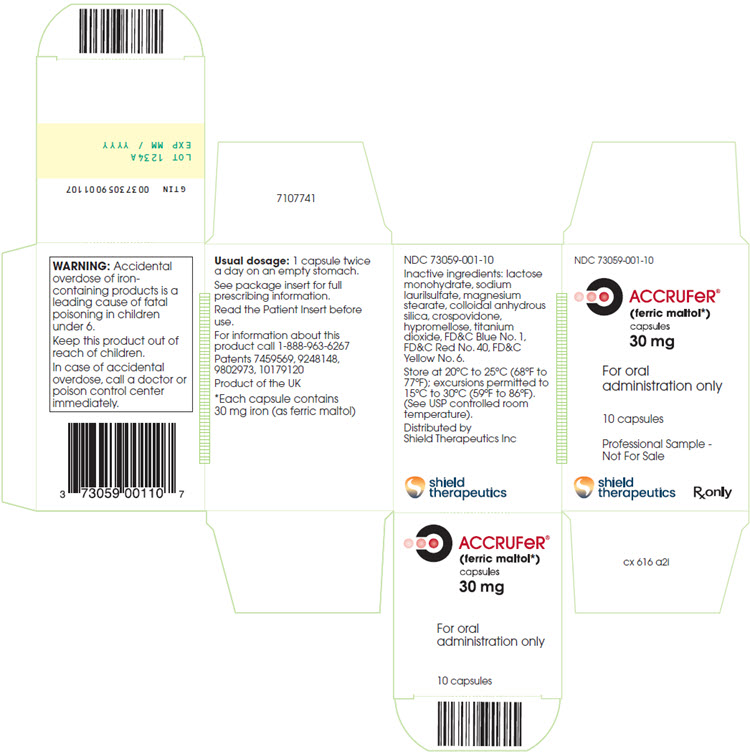
PRINCIPAL DISPLAY PANEL - 10 Capsules Carton Label - ACCRUFER ® (ferric maltol) capsules 30 mg (10 Capsules) NDC 73059-001-10 ACCRUFeR® (ferric maltol*) capsules 30 mg For oral administration only 10 capsules Professional Sample - Not For Sale SHIELD THERAPEUTICS Rx only Bottle Label - ACCRUFER ® (ferric maltol) capsules 30 mg (10 Capsules) NDC 73059-001-10 ACCRUFeR® (ferric maltol*) 30 mg capsules For oral administration only 10 capsules Sample-Not for Sale SHIELD THERAPEUTICS Rx only *Each capsule contains 30 mg iron (as ferric maltol).
Store at 20°C to 25°C (68°F to 77°F); Usual Dosage: 1 capsule twice daily on an empty stomach. See Prescribing Information. Distributed by Shield Therapeutics Inc.
10 Count Carton Label 10 Count Bottle Label
Medicaid utilization by pack size
About this NDC listing & data coverage
What data is (and isn’t) available for this NDC — tap to expand
| NDC identity (package / product / labeler codes) | ✓ Available |
| Labeler | ✓ Available |
| Product & package description | ✓ Available |
| Marketing category & status | ✓ Available |
| Active ingredient / dosage form / route | ✓ Available |
| FDA label (SPL via DailyMed) | ✓ Available |
| Package photos | ✓ Available |
| Inactive ingredients (structured) | ✓ Available |
| NADAC pharmacy acquisition price (CMS) | — Not published for this NDC CMS publishes NADAC only for NDCs reported in its retail-pharmacy survey. |
| Orange Book / therapeutic-equivalence data | ✓ Available |
| HCPCS J-code billing crosswalk | — Not published for this NDC Most self-administered / retail products have no J-code — that is normal. |
| Medicaid utilization (CMS SDUD) | — Not published for this NDC CMS reports utilization only for NDCs with Medicaid claims above its privacy threshold. |