
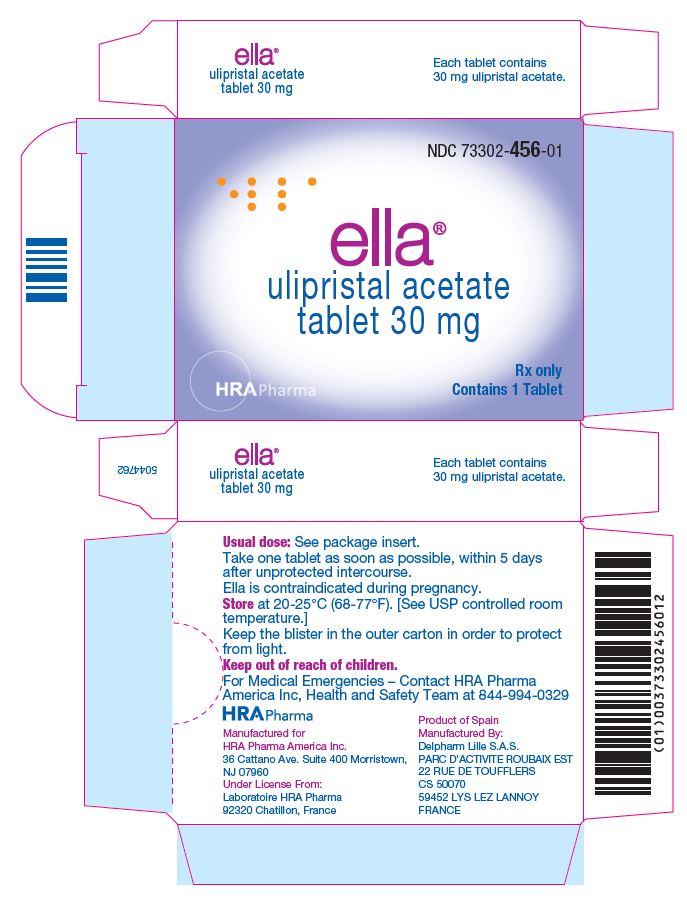
Ella ulipristal acetate 30 mg Tablet, 1 tablet
🆔 Identity & classification
Where does this data come from?
🏷️ RxNorm drug class
This medicine belongs to the Progesterone Agonist/Antagonist class.
Where does this data come from?
🏭 Manufacturer & labeler
Where does this data come from?
🩺 Clinical
- Take it as soon as possible — the sooner, the better. Ella is effective up to 5 days (120 hours) after unprotected sex or contraceptive failure, but it works best the earlier you t...
- How quickly do I need to take ella after unprotected sex?
- Some people do feel some side effects after taking ella. The most common ones are headache, nausea, abdominal pain, fatigue, and dizziness. Most of these are mild and temporary. On...
- Will ella make me feel sick or cause any side effects?
Patient education
Supplement & herbal interactions
Some supplements/herbs that may interact with Ulipristal Acetate — tap one for details:
Ulipristal Acetate may be associated with lower levels of 2 nutrients — worth a chat with your pharmacist, not a cause for alarm.
Where does this data come from?
Ask a licensed pharmacist directly — free, answered by our team.
🧪 Inactive Ingredients / Excipients
Inactive ingredients, also called excipients, are components of the drug product other than the active ingredient. They may include fillers, dyes, coatings, preservatives, flavors, or other formulation ingredients.
Where does this data come from?
IACT rows and label-wide narrative are kept separate; availability and product-level specificity depend on the submitted label.Inactive ingredient FAQ
Are inactive ingredients the same for every manufacturer?
Why might an inactive ingredient be missing?
Can inactive ingredients matter?
💲 Pricing
A drug doesn't have one price. Each row is a different public payment system, and none is what you'd pay at the counter — that depends on your insurance. The ⓘ on each row explains what it measures.
| Price system | Per ea | Per package |
|---|---|---|
| Retail pharmacies payNADAC · weekly | $37.100 | $37.10 / 1 tablet |
| Medicaid paysCMS SDUD · 12 mo | $43.18 | $43.18 / 1 tablet |
| Medicare drug plans payPart D · quarterly | No Part D plan price is available for this NDC in our data. | |
Where does this data come from?
🔁 Therapeutic equivalents
| Product | Labeler | Pack | NADAC/unit | TE | Status | Price vs. this |
|---|---|---|---|---|---|---|
| Ella 30 mgthis 73302-0456-01 | PMI | 1 tablet | $37.100 | AB | Availability likely | — |
| Ella 30 mg 50090-5422-00 | A-S | 1 tablet | — | AB | FDA listed | — |
Where does this data come from?
⏳ Availability & generic status
The FDA lists approved generic versions of this medicine, but that does not always mean a pharmacy can get one today. Patent rules, launch agreements, supply and pricing can affect when generics actually arrive.
Why the date isn’t exact: Generic timing can change because patents may be challenged, settled, licensed, added, removed, or worked around with a narrower label — and FDA approval does not always mean a pharmacy can get the generic today.
🛈 What do these terms mean?
- Patent
- Legal protection listed in the Orange Book that may delay generic approval or launch. Issued by the U.S. Patent & Trademark Office.
- Substance patent
- Covers the active drug molecule itself — the hardest to design around. A generic generally can’t launch until it expires.
- Formulation (product) patent
- Covers a specific formulation or dosage form. A generic can sometimes work around it with a different formulation.
- Method-of-use patent
- A patent covering one specific approved use of the drug — not necessarily the whole molecule. A generic can sometimes launch with a “skinny label” that carves out the protected use and keeps the others.
- Skinny label
- A generic label that omits a still-patented use when the FDA allows it — letting a generic reach the market for the unprotected uses.
- Exclusivity
- FDA-granted marketing protection, separate from patents — e.g. 5-yr new chemical entity, 7-yr orphan drug, or a +6-month pediatric extension.
- Paragraph IV
- A generic applicant’s formal challenge to a listed patent. It can potentially lead to earlier generic entry, but often involves litigation or a settlement.
- RLD / RS
- Reference Listed Drug — the brand product the FDA uses as the reference for generic applications. Reference Standard — the product the FDA expects generics to compare against in bioequivalence testing.
- TE / AB rating
- FDA therapeutic-equivalence rating. An AB rating generally means the FDA considers a generic therapeutically equivalent to — and substitutable for — the brand.
- LOE (loss of exclusivity)
- The latest patent or exclusivity currently listed — the loss-of-exclusivity / latest-listed-protection date shown on this page. Paragraph-IV challenges and settlements can move the real date earlier; FDA approval and a manufacturer’s decision to market can move it later.
Built from the FDA Orange Book. The bars above are scaled to each protection’s expiry; the red LOE marker is the last one to lapse.
| Patent | Type | Use code | Expires |
|---|---|---|---|
| US 8426392 ↗ | Method of use | U-1389 | Jun 12, 2030 |
| US 8962603 ↗ | Method of use | U-1657 | Jun 12, 2030 |
| US 9283233 ↗ | Method of use | U-1821 | Apr 13, 2030 |
| US 10159681 ↗ | Method of use | U-2510 | Apr 13, 2030 |
| US 10772897 ↗ | Method of use | U-2958 | Apr 13, 2030 |
| US 8735380 ↗ | Drug product | — | Feb 20, 2029 |
| US 9844510 ↗ | Drug product | — | Dec 8, 2028 |
| US 8512745 ↗ | Drug product | — | Jun 2, 2030 |
Is there a generic version of ELLA 30 MG TABLET?
The FDA approved a generic — why can’t I get it at my pharmacy yet?
Why do different websites show different generic release dates?
What does “FDA listed” mean?
What does a patent or protection date mean here?
What does “current Orange Book estimate” mean?
Can a generic come out before the last patent expires?
Can a generic come out after the listed dates?
What is the difference between patents and exclusivity?
Why are there multiple patent dates?
Where does this data come from?
🗺️ Medicaid utilization & spend
🔬 Reported adverse events (FAERS)
Top reported reactions
Age at onset
Reporter sex
Serious outcomes
Where does this data come from?
📦 Packaging — all sizes for this product
| Package NDC | Description | Marketing start | Status |
|---|---|---|---|
| 73302-0456-01 You're viewing this | 1 BLISTER PACK in 1 CARTON (73302-456-01) / 1 TABLET in 1 BLISTER PACK | 2020-05-11 | Active |
📄 Full prescribing information FDA SPL
🎯 Indications and Usage ▾
1 INDICATIONS AND USAGE Ella is a progesterone agonist/antagonist emergency contraceptive indicated for prevention of pregnancy following unprotected intercourse or a known or suspected contraceptive failure [see Dosage and Administration (2.1) ] . Ella is not intended for routine use as a contraceptive. Ella is a progesterone agonist/antagonist emergency contraceptive indicated for prevention of pregnancy following unprotected intercourse or a known or suspected contraceptive failure.
Ella is not intended for routine use as a contraceptive. ( 1 )
⏱️ Dosage and Administration ▾
2 DOSAGE AND ADMINISTRATION • Take one tablet orally as soon as possible, within 120 hours (5 days) after unprotected intercourse or a known or suspected contraceptive failure. Take with or without food. Take at any time during the menstrual cycle.
( 2.1 ) • After ella use, initiate or resume hormonal contraception no sooner than 5 days after the intake of ella and use a reliable barrier method until the next menstrual period. ( 2.2 ) • If vomiting occurs within 3 hours of taking ella , consider repeating the dose. ( 2.3 )
2.1Recommended Dosage and Administration • Take one tablet of ella orally as soon as possible within 120 hours (5 days) after unprotected intercourse or a known or suspected contraceptive failure. • Take ella with or without food. • Take ella at any time during the menstrual cycle.
2.2Recommendations Regarding Use with Hormonal Contraception After ella use, initiate or resume hormonal contraception no sooner than 5 days after the intake of ella and use a reliable barrier method until the next menstrual period. For known or suspected failure of hormonal contraception refer to the hormonal contraceptive’s prescribing information for instructions on what to do [see Warnings and Precautions (5.5) , Drug Interactions (7.1) and Clinical Pharmacology (12.2 )] .
2.3Recommendation in Case of Gastrointestinal Disturbances If vomiting occurs within 3 hours of taking ella , consider repeating the dose.
💊 Dosage Forms and Strengths ▾
3 DOSAGE FORMS AND STRENGTHS The ella tablet is supplied as a white to off-white, round, curved tablet containing 30 mg of ulipristal acetate and is marked " ella " on both sides. 30 mg tablet ( 3 )
⛔ Contraindications ▾
4 CONTRAINDICATIONS Ella is contraindicated for use in the case of known or suspected pregnancy [see Use in Specific Populations (8.1) ]. • Known or suspected pregnancy ( 4 )
⚠️ Warnings and Cautions ▾
5 WARNINGS AND PRECAUTIONS • Existing Pregnancy: ella is not indicated for termination of an existing pregnancy. ( 5.1) • Ectopic pregnancy: Evaluate women who become pregnant or complain of lower abdominal pain after taking ella for ectopic pregnancy. ( 5.2 ) • Fertility Following Use : Rapid return of fertility is likely.
Subsequent acts of intercourse should be protected by a reliable barrier method of contraception until the next menstrual period. ( 5.5 ) • Effect on Menstrual Cycle: ella may alter the next expected menses. If menses is delayed beyond 1 week, rule out pregnancy.
( 5.6 ) • Ella does not protect against STI/HIV. ( 5.7 )
5.1Existing Pregnancy Ella is not indicated for termination of an existing pregnancy.
5.2Ectopic Pregnancy A history of ectopic pregnancy is not a contraindication to use of this emergency contraceptive method. Healthcare providers, however, should consider the possibility of ectopic pregnancy in women who become pregnant or complain of lower abdominal pain after taking ella . A follow-up physical or pelvic examination is recommended if there is any doubt concerning the general health or pregnancy status of any woman after taking ella .
5.3Repeated Use Ella is for occasional use as an emergency contraceptive. It should not replace a regular method of contraception. Repeated use of ella within the same menstrual cycle is not recommended, as safety and efficacy of repeat use within the same cycle has not been evaluated.
5.4CYP3A4 Inducers A CYP3A4 inducer, rifampin, decreases the plasma concentration of ella significantly. Ella should not be administered with CYP3A4 inducers [see Drug interactions (7.1) and Clinical Pharmacology (12.3) ] .
5.5Fertility Following Use A rapid return of fertility is likely following treatment with ella for emergency contraception. After use of ella , a reliable barrier method of contraception should be used with subsequent acts of intercourse until the next menstrual period. After using ella , if a woman wishes to initiate hormonal contraception as a regular method, she can do so, no sooner than 5 days after the intake of ella and she should use a reliable barrier method until the next menstrual period [ see Dosage and Administration (2.2) , Drug Interactions (7.1 and 7.3 ) and Clinical Pharmacology (12.2) ].
Progestin-containing contraceptives may impair the ability of ella to delay ovulation. Advise women to follow the instructions on the initiation or resumption of hormonal contraceptives after ella intake [see Dosage and Administration(2.2) ].
5.6Effect on Menstrual Cycle After ella intake, menses sometimes occur earlier or later than expected by a few days. In clinical trials, cycle length was increased by a mean of 2.5 days but returned to normal in the subsequent cycle. Seven percent of subjects reported menses occurring more than 7 days earlier than expected, and 19% reported a delay of more than 7 days.
If there is a delay in the onset of expected menses beyond 1 week, rule out pregnancy. Nine percent of women studied reported intermenstrual bleeding after use of ella .
5.7Sexually Transmitted Infections/HIV Ella does not protect against HIV infection (the virus that causes AIDS) or other sexually transmitted infections (STIs).
🤒 Adverse Reactions ▾
6 ADVERSE REACTIONS The most common adverse reactions (≥ 5%) in the clinical trials were headache (18%), abdominal pain (12%), nausea (12%), dysmenorrhea (9%), fatigue (6%) and dizziness (5%). ( 6 )To report SUSPECTED ADVERSE REACTIONS, contact HRA Pharma America Inc., at 844-994-0329 or FDA at 1-800-FDA-1088 or www.fda.gov/medwatch.
6.1Clinical Trials Experience Because clinical trials are conducted under widely varying conditions, adverse reaction rates observed in the clinical trials of a drug cannot be directly compared to rates in the clinical trials of another drug and may not reflect the rates observed in clinical practice. Ella was studied in an open-label multicenter trial (Open-Label Study) and in a comparative, randomized, single-blind, multicenter trial (Single-Blind Comparative Study). In these studies, a total of 2,637 (1,533 + 1,104) women in the 30 mg ulipristal acetate groups were included in the safety analysis.
The mean age of women who received ulipristal acetate was 24.5 years and the mean body mass index (BMI) was 25.3. The racial demographics of those enrolled were 67% Caucasian, 20% Black or African American, 2% Asian, and 12% other. The most common adverse reactions (≥ 10%) in the clinical trials for women receiving ella were headache (18% overall), nausea (12% overall) and abdominal and upper abdominal pain (12% overall).
Table 1 lists those adverse reactions that were reported in ≥ 5% of subjects in the clinical studies ( 14 ). Table 1: Adverse Reactions in ≥ 5% of Women (%) Receiving a Single Dose of ella (30 mg Ulipristal Acetate) Most Common Adverse Reactions Open-Label Study Single-Blind Comparative Study N = 1,533 N = 1,104 Headache 18 19 Nausea 12 13 Abdominal and upper abdominal pain 15 8 Dysmenorrhea 7 13 Fatigue 6 6 Dizziness 5 5
6.2Postmarketing Experience Adolescents: the safety profile observed in adolescents aged 17 and younger in studies and post-marketing is similar to the safety profile in adults [see Pediatric Use (8.4) ] . The following adverse reactions have been identified during post-approval use of ella : Skin and Subcutaneous Tissue Disorders: Acne Hypersensitivity reactions, including rash, urticaria, pruritis, and angioedema Because these reactions are reported voluntarily from a population of uncertain size, it is not always possible to reliably estimate their frequency or establish a causal relationship to drug exposure.
🔄 Drug Interactions ▾
7 DRUG INTERACTIONS Several in vivo drug interaction studies have shown that ella is predominantly metabolized by CYP3A4. • Drugs or herbal products that induce CYP3A4 decrease the effectiveness of ella . ( 7.1 ) • Initiation of progestin-containing contraceptives may impair the ability of ella to delay ovulation. ( 7.1 )
7.1Changes in Emergency Contraceptive Effectiveness Associated with Co-Administration of Other Products CYP3A inducers Drugs or herbal products that induce CYP3A4 decrease the plasma concentrations of ella , and may decrease its effectiveness [see Warnings and Precautions (5.4) and Clinical Pharmacology (12.3) ] . Avoid co-administration of ella and drugs or herbal products such as: • barbiturates • bosentan • carbamazepine • felbamate • griseofulvin • oxcarbazepine • phenytoin • rifampin • St. John's Wort • topiramate Hormonal contraceptives Progestin-containing contraceptives may impair the ability of ella to delay ovulation.
After using ella , if a woman wishes to initiate or resume hormonal contraception, she can do so, no sooner than 5 days after the intake of ella and she should use a reliable barrier method until the next menstrual period. If a woman used ella due to a known or suspected failure of her hormonal contraception refer to the hormonal contraceptive’s prescribing information for instructions on what to do [see Dosage and Administration (2.2) , Warnings and Precautions (5.5) and Clinical Pharmacology (12.2) ] .
7.2Increase in Plasma Concentrations of ella Associated with Co-Administered Drugs CYP3A4 inhibitors such as itraconazole or ketoconazole increase plasma concentrations of ella [see Pharmacokinetics (12.3) ] .
7.3Effects of ella on Co-Administered Drugs Hormonal contraceptives: ella may impact the effect of the progestin component of hormonal contraceptives. Therefore, if a woman wishes to use hormonal contraception after using ella , she should use a reliable barrier method for subsequent acts of intercourse until her next menstrual period [see Dosage and Administration (2.2) , Warnings and Precautions (5.5) and Clinical Pharmacology (12.2) ] .
👥 Use in Specific Populations ▾
8 USE IN SPECIFIC POPULATIONS
8.1Pregnancy Risk Summary Ella is contraindicated for use during an existing or suspected pregnancy. No signal of concern regarding pregnancy complications was found in postmarketing studies [see Data ]. Isolated cases of major malformations in ella- exposed pregnancies were identified; however, the data are not sufficient to determine a risk for birth defects with inadvertent use of ella during pregnancy.
Miscarriage was reported in 14% of the known pregnancy outcomes; a rate that is similar to the U.S. background rate for miscarriage. In the U.S. general population, the estimated background risk of major birth defects and miscarriage in clinically recognized pregnancies is 2-4% and 15-20%, respectively. In animal reproduction studies, no malformations were observed during repeated administration of ulipristal acetate to pregnant rats, rabbits and monkeys at daily drug exposures ⅓, ½, and 3 times respectively, the human exposure at a dose of 30 mg [ see Data ] .
Data Human Data Ella pregnancy exposure data was collected in the U.S. and Europe from 1999 to 2015 and analyzed post-marketing using data from interventional clinical trials, observational studies and pharmacovigilance reports. Known pregnancy outcomes were available for 462/784 pregnancies in which women received ella at doses of 30 mg or greater during the conception cycle or during pregnancy. Data of pregnancies with known outcome were analyzed prospectively for 272 cases and retrospectively for 190 cases.
Pregnancy outcomes included 302 elective abortions (2 for fetal anomalies including 1 with trisomy 21), 63 spontaneous abortions, and 13 ectopic pregnancies. No maternal or fetal deaths were reported. 84 pregnancies continued until birth, with congenital anomalies reported in 5 infants, including 4 major malformations (2/4 with genetic syndromes).
Although these data do not allow estimation of the prevalence rate of congenital anomalies associated with inadvertent use of ella in pregnancy or determination of a causal relationship between reported anomalies and ella , they show that ella -exposed pregnancies were not associated with a pattern of increased risk of adverse outcomes. Animal Data Ulipristal acetate was administered repeatedly to pregnant rats and rabbits during the period of organogenesis. Embryofetal loss was noted in all pregnant rats and in half of the pregnant rabbits following 12 and 13 days of dosing, at daily drug exposures 1/3 and 1/2 the human exposure, respectively, based on body surface area (mg/m 2 ).
There were no malformations of the surviving fetuses in these studies. Adverse effects were not observed in the offspring of pregnant rats administered ulipristal acetate during the period of organogenesis through lactation at drug exposures 1/24 the human exposure based on AUC. Administration of ulipristal acetate to pregnant monkeys for 4 days during the first trimester caused pregnancy termination in 2/5 animals at daily drug exposures 3 times the human exposure based on body surface area.
8.2Lactation Risk Summary Ulipristal acetate and its active metabolite, monodemethyl-ulipristal acetate, are present in human milk in small amounts (see Data ). Based on the levels of drug and active metabolite measured in breastmilk, a fully breastfed child would receive a weight-adjusted dosage of approximately 0.8% of ulipristal acetate and monodemethyl-ulipristal acetate on Day 1 of drug administration and an approximate total of 1% of the maternal dose over a 5-day period after drug administration. There is no information on the effects on the breastfed child or the effects on milk production.
The developmental and health benefits of breastfeeding should be considered along with the mother’s clinical need for ella and any potential adverse effects on the breastfed child from ella or from the underlying maternal condition. Data The breast milk of 12 lactating women following administration of ella was collected in 24-…
🤰 Pregnancy ▾
8.1Pregnancy Risk Summary Ella is contraindicated for use during an existing or suspected pregnancy. No signal of concern regarding pregnancy complications was found in postmarketing studies [see Data ]. Isolated cases of major malformations in ella- exposed pregnancies were identified; however, the data are not sufficient to determine a risk for birth defects with inadvertent use of ella during pregnancy.
Miscarriage was reported in 14% of the known pregnancy outcomes; a rate that is similar to the U.S. background rate for miscarriage. In the U.S. general population, the estimated background risk of major birth defects and miscarriage in clinically recognized pregnancies is 2-4% and 15-20%, respectively. In animal reproduction studies, no malformations were observed during repeated administration of ulipristal acetate to pregnant rats, rabbits and monkeys at daily drug exposures ⅓, ½, and 3 times respectively, the human exposure at a dose of 30 mg [ see Data ] .
Data Human Data Ella pregnancy exposure data was collected in the U.S. and Europe from 1999 to 2015 and analyzed post-marketing using data from interventional clinical trials, observational studies and pharmacovigilance reports. Known pregnancy outcomes were available for 462/784 pregnancies in which women received ella at doses of 30 mg or greater during the conception cycle or during pregnancy. Data of pregnancies with known outcome were analyzed prospectively for 272 cases and retrospectively for 190 cases.
Pregnancy outcomes included 302 elective abortions (2 for fetal anomalies including 1 with trisomy 21), 63 spontaneous abortions, and 13 ectopic pregnancies. No maternal or fetal deaths were reported. 84 pregnancies continued until birth, with congenital anomalies reported in 5 infants, including 4 major malformations (2/4 with genetic syndromes).
Although these data do not allow estimation of the prevalence rate of congenital anomalies associated with inadvertent use of ella in pregnancy or determination of a causal relationship between reported anomalies and ella , they show that ella -exposed pregnancies were not associated with a pattern of increased risk of adverse outcomes. Animal Data Ulipristal acetate was administered repeatedly to pregnant rats and rabbits during the period of organogenesis. Embryofetal loss was noted in all pregnant rats and in half of the pregnant rabbits following 12 and 13 days of dosing, at daily drug exposures 1/3 and 1/2 the human exposure, respectively, based on body surface area (mg/m 2 ).
There were no malformations of the surviving fetuses in these studies. Adverse effects were not observed in the offspring of pregnant rats administered ulipristal acetate during the period of organogenesis through lactation at drug exposures 1/24 the human exposure based on AUC. Administration of ulipristal acetate to pregnant monkeys for 4 days during the first trimester caused pregnancy termination in 2/5 animals at daily drug exposures 3 times the human exposure based on body surface area.
🧒 Pediatric Use ▾
8.4Pediatric Use There is no relevant use of ulipristal acetate for children of prepubertal age in the indication emergency contraception . Adolescents: Safety and efficacy of ella have been established in women of reproductive age. The clinical trials of ella enrolled 41 females under age 18, and a post-marketing observational study evaluating effectiveness and safety of ella in adolescents enrolled 279 females under age 18, including 76 under age 16 years.
In these studies, the safety and efficacy profile observed in adolescents aged 17 and younger was similar to that in adults. Use of ella before menarche is not indicated.
🧓 Geriatric Use ▾
8.5Geriatric Use This product is not intended for use in postmenopausal women.
🆘 Overdosage ▾
10 OVERDOSAGE Experience with ulipristal acetate overdose is limited. In a clinical study, single doses equivalent to up to 4 times ella were administered to a limited number of subjects without any adverse reactions.
🧬 Clinical Pharmacology ▾
12 CLINICAL PHARMACOLOGY
12.1Mechanism of Action When taken immediately before ovulation is to occur, ella postpones follicular rupture. The likely primary mechanism of action of ulipristal acetate for emergency contraception is therefore inhibition or delay of ovulation; however, alterations to the endometrium that may affect implantation may also contribute to efficacy.
12.2Pharmacodynamics Ulipristal acetate is a selective progesterone receptor modulator with antagonistic and partial agonistic effects (a progesterone agonist/antagonist) at the progesterone receptor. It binds the human progesterone receptor and prevents progesterone from occupying its receptor. The pharmacodynamics of ulipristal acetate depend on the timing of administration in the menstrual cycle.
Administration in the mid-follicular phase causes inhibition of folliculogenesis and reduction of estradiol concentration. Pharmacodynamic data showed that administration of ella to 34 women in the late follicular phase postponed follicular rupture for at least 5 days in all (100%) of 8 subjects who took ella before the luteinizing hormone (LH) surge and 11 (79%) of 14 subjects who took ella immediately before ovulation (when LH has already started to rise). However, treatment was not effective in postponing follicular rupture when administered on the day of LH peak.
Dosing in the early luteal phase does not significantly delay endometrial maturation but decreases endometrial thickness by 0.6 ± 2.2 mm (mean ± SD). Hormonal Contraceptives after ella intake: In women initiating hormonal contraception (quickstart scenario) : When a combined oral contraceptive pill (COC) containing ethinyl estradiol 30 µg + levonorgestrel 150 µg was started the day after ella intake during the follicular phase, ella did not interfere with the COC’s ability to suppress ovarian activity, as assessed by measurement of follicle size via transvaginal ultrasound, combined with serum progesterone and estradiol levels: ovarian activity was suppressed in 61.5% (24/39) of subjects receiving ella plus COC and 62.2% (23/37) of subjects receiving a placebo plus the COC.
The incidence of ovulation was similar between the group that received ella plus the COC [33.3% (13/39)] and the group that received a placebo plus the COC [32.4% (12/37)]. [see Dosage and Administration (2.2) , Warnings and Precautions (5.5) and Drug Interactions (7.3) ] . The initiation of a desogestrel 75 µg progestin-only pill (POP) the day after ella intake during the follicular phase was associated with a higher incidence of ovulation in the six days following ella intake compared to an ella -only treatment group, and a relatively slower onset (3 to 4 days) of thickened cervical mucus compared to a group given desogestrel without prior ella intake (2 days), suggesting an effect of prior use of ella on the ability of desogestrel to inhibit mucus permeability. [See Dosage and Administration (2.2) , Warnings and Precautions (5.5) and Drug Interactions (7.1 ; 7.3 )] .
When a COC containing ethinyl estradiol 30 µg + levonorgestrel 150 µg was started 2 days after ella intake, ella 's ability to delay ovulation, as assessed by transvaginal ultrasound, was reduced: follicular rupture occurred in 9/33 subjects (27%) in less than 5 days, compared to 1/33 subjects after ella alone (3%). [See Dosage and Administration (2.2) , Warnings and Precautions (5.5) and Drug Interactions (7.1) ] . In women resuming combined hormonal contraception (missed pills scenario): The effects on ovarian activity of delaying versus immediately resuming COCs after ella intake were investigated in 49 women who had been using COCs containing ethinyl estradiol 30 µg + levonorgestrel 150 µg once daily for 21 days followed by 7 days of placebo pills for at least one cycle.
All subjects missed three consecutive pills (Days 5-7) during the first week of pills in the subsequent cycle and took ella on the following day (Day 8). These subjects were randomized to resu…
🧬 Mechanism of Action ▾
12.1Mechanism of Action When taken immediately before ovulation is to occur, ella postpones follicular rupture. The likely primary mechanism of action of ulipristal acetate for emergency contraception is therefore inhibition or delay of ovulation; however, alterations to the endometrium that may affect implantation may also contribute to efficacy.
📦 How Supplied / Storage and Handling ▾
16 HOW SUPPLIED/STORAGE AND HANDLING Ella (ulipristal acetate) tablet, 30 mg is supplied in a PVC-PE-PVDC or PVC-PVDC-aluminum blister. The tablet is a white to off-white, round, curved tablet marked with “ ella ” on both sides. NDC 73302-456-01 (1 tablet unit of use package) Store at 20-25°C (68-77°F); excursions permitted to 15-30°C (59-86°F) [See USP controlled room temperature.] Keep the blister in the outer carton in order to protect from light.
Keep out of reach of children .
📋 Description ▾
11 DESCRIPTION The ella (ulipristal acetate) tablet for oral use contains 30 mg of a single active steroid ingredient, ulipristal acetate [17α-acetoxy-11β-(4-N,N-dimethylaminophenyl)-19-norpregna-4,9-diene-3,20-dione], a synthetic progesterone agonist/antagonist. The inactive ingredients are lactose monohydrate, povidone K-30, croscarmellose sodium and magnesium stearate. Ulipristal acetate is a white to yellow crystalline powder which has a molecular weight of 475.6.
The structural formula is: C 30 H 37 NO 4 Ulipristal acetate structural formula
💬 Information for Patients ▾
17 PATIENT COUNSELING INFORMATION Advise the patient to read the FDA-Approved patient Labeling (Patient Information). Administration Instructions • Instruct patients to take ella as soon as possible and not more than 120 hours after unprotected intercourse or a known or suspected contraceptive failure. • Advise patients to contact their healthcare provider immediately in case of vomiting within 3 hours of taking the tablet, to discuss whether to take another tablet. • Advise patients that after using ella , a reliable barrier method of contraception should be used for all subsequent acts of intercourse until the next menstrual period. • Advise patients that after using ella , additional levonorgestrel emergency contraceptive pills should not be used within 5 days of ella intake. • Advise patients that after using ella , hormonal contraception should be initiated or resumed no sooner than 5 days after the intake of ella and to use a reliable contraceptive barrier method until the next menstrual period. • Advise patients with known or suspected failure of a hormonal contraceptive to refer to the hormonal contraceptive’s prescribing information for instructions on what to do.
Ectopic Pregnancy Advise patients to seek medical attention if they experience severe lower abdominal pain 3 to 5 weeks after taking ella , in order to be evaluated for an ectopic pregnancy [see Warnings and Precautions (5.2) ] . Effect on Menstrual Cycle Advise women that after ella intake, menses may occur earlier or later than expected, by a few days. Advise patients to contact their healthcare provider and consider the possibility of pregnancy if their period is delayed after taking ella by more than 1 week beyond the date it was expected [see Warnings and Precautions (5.6) ] .
Sexually Transmistted Infections/HIV Inform women that ella does not protect against HIV infection (the virus that causes AIDS) and other sexually transmitted diseases/infections [see Warnings and Precautions (5.7) ]. Drug Interactions Advise women to inform their healthcare provider if they take herbal supplements such as St. John’s wort [see Drug Interactions (7.1) ].