
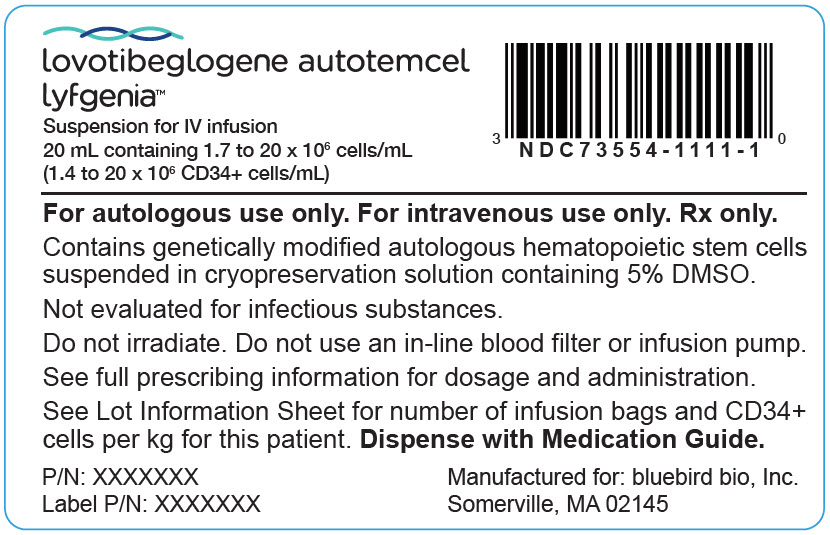
Lyfgenia lovotibeglogene autotemcel 20000000 1/20mL Suspension, 1 mL
🆔 Identity & classification
Where does this data come from?
🏷️ RxNorm drug class
This medicine belongs to the Other hematological agents class.
Where does this data come from?
🏭 Manufacturer & labeler
Where does this data come from?
🩺 Clinical
Patient education
Supplement & herbal interactions
Where does this data come from?
Ask a licensed pharmacist directly — free, answered by our team.
🧪 Inactive Ingredients / Excipients
Inactive ingredients, also called excipients, are components of the drug product other than the active ingredient. They may include fillers, dyes, coatings, preservatives, flavors, or other formulation ingredients.
Where does this data come from?
IACT rows and label-wide narrative are kept separate; availability and product-level specificity depend on the submitted label.Inactive ingredient FAQ
Are inactive ingredients the same for every manufacturer?
Why might an inactive ingredient be missing?
Can inactive ingredients matter?
💲 Pricing
A drug doesn't have one price. Each row is a different public payment system, and none is what you'd pay at the counter — that depends on your insurance. The ⓘ on each row explains what it measures.
| Price system | Per mL | Per package |
|---|---|---|
| Retail pharmacies payNADAC · weekly | Not in the retail survey — common for institutional, discontinued, or low-volume packs. | |
| Medicaid paysCMS SDUD · 12 mo | No recent Medicaid claims on file for this NDC — rare and low-volume NDCs are suppressed in the public data. | |
| Medicare drug plans payPart D · quarterly | No Part D plan price is available for this NDC in our data. | |
| Medicare Part B allowsASP · J3394 | No ASP payment limit on file for J3394 this quarter. | |
Where does this data come from?
🧾 Billing & reimbursement
Where does this data come from?
🔁 Therapeutic equivalents
| Product | Labeler | Pack | NADAC/unit | TE | Status | Price vs. this |
|---|---|---|---|---|---|---|
| Lyfgenia 20000000 1/20mLthis 73554-1111-01 | Genetix | 1 ml | — | — | FDA listed | — |
Where does this data come from?
⏳ Availability & biosimilar status
Biologics have no small-molecule generics; biosimilar competition is tracked in the FDA Purple Book.
Why the date isn’t exact: Biosimilar timing can change because patents may be challenged, settled, licensed, added or removed, and litigation can move the real date earlier or later.
🛈 What do these terms mean?
- Biologic patent
- A patent the reference product’s maker has publicly listed. A biosimilar generally can’t launch until these expire — unless they’re invalidated or resolved in a settlement.
- Reference-product exclusivity
- A flat 12 years of FDA market protection from the biologic’s first licensure (the BPCIA). No biosimilar can be licensed before it ends, regardless of patents.
- Interchangeable exclusivity
- The first interchangeable biosimilar can earn a period as the only interchangeable version (pharmacists can substitute it without the prescriber).
- Earliest biosimilar (LOE)
- The latest of all the dates above — the soonest a biosimilar can realistically reach the market. Litigation and settlements can move it earlier.
Biologics have no small-molecule “generics” — competition comes from FDA-licensed biosimilars, tracked in the FDA Purple Book.
| Code | What it grants | Expires |
|---|---|---|
| RefProduct | Reference-product exclusivity (12-year, BPCIA) — no biosimilar can be licensed before this date | Dec 8, 2035 |
Is there a biosimilar for LYFGENIA BAG?
Why do different websites show different biosimilar dates?
Can a biosimilar launch before the last patent expires?
What does “current Purple Book estimate” mean?
What does “FDA listed” mean?
What does a patent or protection date mean here?
Where does this data come from?
🔬 Reported adverse events (FAERS)
Top reported reactions
Reporter sex
Serious outcomes
Where does this data come from?
📦 Packaging — all sizes for this product
| Package NDC | Description | Marketing start | Status |
|---|---|---|---|
| 73554-1111-01 You're viewing this | 1 mL in 1 BAG (73554-1111-1) | 2023-12-08 | Active |
🧭 About this NDC listing & data coverage
What data is (and isn’t) available for this NDC — tap to expand
| NDC identity (package / product / labeler codes) | ✓ Available |
| Labeler | ✓ Available |
| Product & package description | ✓ Available |
| Marketing category & status | ✓ Available |
| Active ingredient / dosage form / route | ✓ Available |
| FDA label (SPL via DailyMed) | ✓ Available |
| Package photos | ✓ Available |
| Inactive ingredients (structured) | — Not published for this NDC The labeler did not submit a structured excipient list, or no SPL is available. |
| NADAC pharmacy acquisition price (CMS) | — Not published for this NDC CMS publishes NADAC only for NDCs reported in its retail-pharmacy survey. |
| Orange Book / therapeutic-equivalence data | ✓ Available |
| HCPCS J-code billing crosswalk | ✓ Available |
| Medicaid utilization (CMS SDUD) | — Not published for this NDC CMS reports utilization only for NDCs with Medicaid claims above its privacy threshold. |
Questions about this listing
Why is there no price listed?
Is the NDC printed on the package the same as the 11-digit billing NDC?
What do the three segments of this NDC mean?
Is this package still being marketed?
Who lists this product with the FDA?
Does this product have a billing J-code?
Where does this data come from?
📄 Full FDA label FDA SPL
🚨 Boxed Warning ▾
WARNING: HEMATOLOGIC MALIGNANCY Hematologic malignancy has occurred in patients treated with LYFGENIA. Monitor patients closely for evidence of malignancy through complete blood counts at least every 6 months and through integration site analysis at Months 6, 12, and as warranted [see Warnings and Precautions (5.1) ]. WARNING: HEMATOLOGIC MALIGNANCY See full prescribing information for complete boxed warning.
Hematologic malignancy has occurred in patients treated with LYFGENIA. Monitor patients closely for evidence of malignancy through complete blood counts at least every 6 months and through integration site analysis at Months 6, 12, and as warranted. ( 5.1 )
🎯 Indications and Usage ▾
1 INDICATIONS AND USAGE LYFGENIA is indicated for the treatment of patients 12 years of age or older with sickle cell disease and a history of vaso-occlusive events. LYFGENIA is an autologous hematopoietic stem cell-based gene therapy indicated for the treatment of patients 12 years of age or older with sickle cell disease and a history of vaso-occlusive events. ( 1 ) Limitations of Use Following treatment with LYFGENIA, patients with α-thalassemia trait (-α3.7/-α3.7) may experience anemia with erythroid dysplasia that may require chronic red blood cell transfusions.
LYFGENIA has not been studied in patients with more than two α-globin gene deletions. ( 1 ) Limitations of Use Following treatment with LYFGENIA, patients with α-thalassemia trait (-α3.7/-α3.7) may experience anemia with erythroid dysplasia that may require chronic red blood cell transfusions [see Adverse Reactions (6.1) ] . LYFGENIA has not been studied in patients with more than two α-globin gene deletions.
⏱️ Dosage and Administration ▾
2 DOSAGE AND ADMINISTRATION For autologous use only. For one-time single-dose intravenous use only. For autologous use only.
For intravenous use only. Patients are required to undergo hematopoietic stem cell (HSC) mobilization followed by apheresis to obtain CD34+ cells for LYFGENIA manufacturing. ( 2.2 ) Dosing of LYFGENIA is based on the number of CD34+ cells in the infusion bag(s) per kg of body weight.
( 2.1 ) The minimum recommended dose is 3 × 10 6 CD34+ cells/kg. ( 2.1 ) Myeloablative conditioning must be administered before infusion of LYFGENIA. ( 2.2 ) Following myeloablative conditioning, allow a minimum of 48 hours of washout before LYFGENIA infusion.
( 2.2 ) Verify that the patient's identity matches the unique patient identification information on the LYFGENIA infusion bag(s) prior to infusion. ( 2.2 ) Do not sample, alter, irradiate, or refreeze LYFGENIA. ( 2.2 ) Do not use an in-line blood filter or an infusion pump.
( 2.3 ) Administer LYFGENIA within 4 hours after thawing. ( 2.3 ) Administer each infusion bag of LYFGENIA via intravenous infusion over a period of less than 30 minutes. ( 2.3 )
2.1Dose LYFGENIA is provided as a single dose for infusion containing a suspension of CD34+ cells in one to four infusion bags. The minimum recommended dose of LYFGENIA is 3 × 10 6 CD34+ cells/kg. See the Lot Information Sheet provided with the product shipment for additional information pertaining to dose.
2.2Preparation Before LYFGENIA Infusion Confirm that autologous hematopoietic stem cell (HSC) transplantation is appropriate for the patient before mobilization and apheresis and before myeloablative conditioning are initiated. Perform screening for infectious diseases, specifically human immunodeficiency virus 1 & 2 (HIV-1/HIV-2), in accordance with clinical guidelines before collection of cells for manufacturing. There are no data on use of LYFGENIA in HIV-positive patients.
Prepare for Mobilization and Apheresis Prepare patients for mobilization with at least 2 cycles of scheduled transfusions (one each month) with erythrocytapheresis being preferred. For at least 60 days prior to mobilization and through myeloablative conditioning, patients should undergo a transfusion regimen to reach a target Hb of 8-10 g/dL, not to exceed 12 g/dL, and HbS of less than 30% to reduce the risk of SCD-related complications. Perform erythrocytapheresis within a recommended 4 days preceding mobilization to reach the target of less than 30% HbS.
Manage other concomitant medications (as applicable) as described below: Hydroxyurea: Discontinue at least 2 months prior to mobilization. Patients should not resume hydroxyurea until all cycles of apheresis are completed. Disease-modifying agents (e.g., L-glutamine, voxelotor and crizanlizumab): Discontinue at least 2 months prior to mobilization as the interaction between disease modifying agents and mobilization agents is unknown.
Erythropoietin: Discontinue at least 2 months prior to mobilization. Iron chelation: Discontinue at least 7 days prior to mobilization. Granulocyte-colony stimulating factor (G-CSF): Do not administer G-CSF prior to or with mobilization agents.
Anti-retrovirals: Discontinue prophylactic HIV anti-retroviral medications at least one month prior to mobilization and do not resume until all cycles of apheresis are completed. There are some long-acting anti-retroviral medications that may require a longer duration of discontinuation for elimination of the medication. Mobilization and Apheresis Perform HSC mobilization followed by apheresis to obtain CD34+ cells for product manufacturing.
Administer plerixafor to mobilize stem cells prior to the apheresis procedure at a dose of 0.24 mg/kg/day. 1 Begin apheresis approximately 4 to 6 hours after plerixafor administration. If more than one apheresis day is required, confirm platelet counts to be ≥ 75 × 10 9 /L within 24 hours of subsequent apheresis sessions, prior to administration of plerixafor on that day.
If platelet cou…
💊 Dosage Forms and Strengths ▾
3 DOSAGE FORMS AND STRENGTHS LYFGENIA is a cell suspension for intravenous infusion. LYFGENIA is composed of one to four infusion bags which contain 1.7 to 20 × 10 6 cells/mL suspended in cryopreservation solution [see How Supplied/Storage and Handling (16) ] . Each infusion bag contains approximately 20 mL of LYFGENIA.
A single dose of LYFGENIA contains a minimum of 3 × 10 6 CD34+ cells per kg of body weight, suspended in cryopreservation solution . See the Lot Information Sheet for actual dose. LYFGENIA is a cell suspension for intravenous infusion.
( 3) A single dose of LYFGENIA contains a minimum of 3 × 10 6 CD34+ cells/kg of body weight, in one to four infusion bags. ( 3 )
⛔ Contraindications ▾
4 CONTRAINDICATIONS None. None. ( 4 )
⚠️ Warnings and Cautions ▾
5 WARNINGS AND PRECAUTIONS Delayed Platelet Engraftment : Monitor patients frequently for thrombocytopenia and bleeding until platelet engraftment and platelet recovery are achieved. ( 5.2 ) Neutrophil Engraftment Failure: Monitor absolute neutrophil counts (ANC) after LYFGENIA infusion. If neutrophil engraftment does not occur, administer rescue cells.
( 5.3 ) Insertional Oncogenesis : There is a potential risk of insertional oncogenesis after treatment with LYFGENIA. ( 5.4 ) Hypersensitivity Reactions: Monitor for hypersensitivity reactions during infusion. ( 5.5 )
5.1Hematologic Malignancy Hematologic malignancy has occurred in patients treated with LYFGENIA (Study 1, Group A). At the time of initial product approval, two patients treated with an earlier version of LYFGENIA using a different manufacturing process and transplant procedure (Study 1, Group A) developed acute myeloid leukemia (AML). One patient with α-thalassemia trait (Study 1, Group C) has been diagnosed with myelodysplastic syndrome (MDS) [see Adverse Reactions (6.1) ] .
The additional hematopoietic stress associated with mobilization, conditioning, and infusion of LYFGENIA, including the need to regenerate the hematopoietic system, may increase the risk of a hematologic malignancy. Patients with sickle cell disease have an increased risk of hematologic malignancy as compared to the general population. 3, 4 Patients treated with LYFGENIA may develop hematologic malignancies and should have lifelong monitoring.
Monitor for hematologic malignancies with a complete blood count (with differential) at least every 6 months for at least 15 years after treatment with LYFGENIA, and integration site analysis at Months 6, 12, and as warranted. In the event that a malignancy occurs, contact Genetix Biotherapeutics at 1-833-999-6378 for reporting and to obtain instructions on collection of samples for testing. Post-Marketing Long Term Follow-Up Study Patients who intend to receive treatment with LYFGENIA are encouraged to enroll in the study, as available, to assess the long-term safety of LYFGENIA and the risk of malignancies occurring after treatment with LYFGENIA by calling Genetix Biotherapeutics at 1-833-999-6378.
The study includes monitoring (at pre-specified intervals) for clonal expansion.
5.2Delayed Platelet Engraftment Delayed platelet engraftment has been observed with LYFGENIA. Bleeding risk is increased prior to platelet engraftment and may continue after engraftment in patients with prolonged thrombocytopenia. Two patients (4%) required more than 100 days post treatment with LYFGENIA to achieve platelet engraftment [see Adverse Reactions (6.1) ] .
Patients should be made aware of the risk of bleeding until platelet recovery has been achieved. Monitor patients for thrombocytopenia and bleeding according to standard guidelines. Conduct frequent platelet counts until platelet engraftment and platelet recovery are achieved.
Perform blood cell count determination and other appropriate testing whenever clinical symptoms suggestive of bleeding arise.
5.3Neutrophil Engraftment Failure There is a potential risk of neutrophil engraftment failure after treatment with LYFGENIA. Neutrophil engraftment failure is defined as failure to achieve three consecutive absolute neutrophil counts (ANC) ≥ 0.5 × 10 9 cells/L obtained on different days by Day 43 after infusion of LYFGENIA. Monitor neutrophil counts until engraftment has been achieved.
If neutrophil engraftment failure occurs in a patient treated with LYFGENIA, provide rescue treatment with the back-up collection of CD34+ cells [see Adverse Reactions (6.1) ] .
5.4Insertional Oncogenesis There is a potential risk of lentiviral vector-mediated insertional oncogenesis after treatment with LYFGENIA.
5.5Hypersensitivity Reactions Allergic reactions may occur with the infusion of LYFGENIA. The dimethyl sulfoxide (DMSO) or dextran 40 in LYFGENIA may cause hypersensitivity reactions, including anaphylaxis.
5.6 Anti-retr…
🤒 Adverse Reactions ▾
6 ADVERSE REACTIONS The following adverse reactions are described elsewhere in the labeling: Hematologic Malignancy [see Warnings and Precautions (5.1) ] Delayed Platelet Engraftment [see Warnings and Precautions (5.2) ] Neutrophil Engraftment Failure [see Warnings and Precautions (5.3) ] Insertional Oncogenesis [see Warnings and Precautions (5.4) ] Hypersensitivity Reactions [see Warnings and Precautions (5.5) ] Most common adverse reactions ≥ Grade 3 (incidence ≥ 20%) were stomatitis, thrombocytopenia, neutropenia, febrile neutropenia, anemia, and leukopenia.
( 6.1 ) To report SUSPECTED ADVERSE REACTIONS, contact Genetix Biotherapeutics at 1-833-999-6378 or FDA at 1-800-FDA-1088 or www.fda.gov/medwatch.
6.1Clinical Trials Experience Because clinical trials are conducted under widely varying conditions, adverse reaction rates observed in the clinical trials of a drug cannot be directly compared to rates in the clinical trials of another drug and may not reflect the rates observed in practice. Safety was based on patients with sickle cell disease in one open-label, single-arm clinical trial and one long-term follow-up study. Of the 54 patients who initiated stem cell collection, the median (min, max) age across the studies was 25 (12, 43) years, 63% were males, 89% were Black or African American, 2% were Asian, 2% White/Caucasian and 4% were not reported.
The median (min, max) duration of follow-up was 42 (12, 87) months. Mobilization and apheresis triggered SAEs of sickle cell crisis in 6 (14%, 6/44) patients who initiated mobilization in the intent-to-treat population. All patients who initiated conditioning (100%, 45/45) experienced at least one adverse event attributed to conditioning.
The majority of conditioning-attributed events were non-serious and were consistent with the known effects of alkylating agents. Thirty-three (73%, 33/45) patients who received LYFGENIA experienced at least one serious adverse event (SAE). Most SAEs were related to conditioning or underlying disease.
Table 1 presents the adverse drug reactions following treatment with LYFGENIA (Day 1) to Month 24. Table 1: Adverse Reactions ≥ Grade 3 (> 5%) Following Treatment with LYFGENIA from Day 1 to Month 24 (N = 45) Includes adverse events associated with busulfan myeloablative conditioning and underlying sickle cell disease. Adverse Reaction Grade 3 or Higher n (%) Blood and lymphatic system disorders -- Thrombocytopenia 31 (69) Neutropenia 27 (60) Febrile neutropenia 20 (44) Anemia Includes a patient with α-thalassemia trait who was diagnosed with myelodysplastic syndrome after Month 24.
15 (33) Leukopenia 15 (33) Sickle cell anemia with crisis Includes events prior to Month 6 and non-adjudicated occurrences. 7 (16) Gastrointestinal disorders -- Stomatitis 32 (71) Nausea 4 (9) General disorders and administration site conditions -- Pyrexia 3 (7) Infections and infestations -- Bacteremia 3 (7) Investigations -- Aspartate aminotransferase increased 8 (18) Alanine aminotransferase increased 6 (13) Gamma-glutamyl transferase increased 6 (13) Blood bilirubin increased 3 (7) Metabolism and nutrition disorders -- Decreased appetite 5 (11) Respiratory, thoracic, and mediastinal disorders -- Pharyngeal inflammation 5 (11) Three patients died during LYFGENIA clinical trials; one from sudden cardiac death due to underlying disease and two from acute myeloid leukemia who were treated with an earlier version of LYFGENIA using a different manufacturing process and transplant procedure (Study 1, Group A).
Anemia Two patients developed anemia following LYFGENIA treatment; one patient continues to require monthly packed red blood cell (pRBC) transfusions. The other patient has been diagnosed with MDS. Both subjects had α-thalassemia trait (-α3.7 /-α3.7) [see Limitations of Use (1) ].
Infusion-related reactions to LYFGENIA Pre-medication for infusion reactions was managed at physician discretion. Infusion-related reactions to LYFGENIA were observed in 2 patients on t…
🔄 Drug Interactions ▾
7 DRUG INTERACTIONS No formal drug interaction studies have been performed. LYFGENIA is not expected to interact with the hepatic cytochrome P-450 family of enzymes or drug transporters. Anti-retrovirals : Discontinue anti-retroviral medications at least one month prior to mobilization and until all cycles of apheresis are completed.
There are some long-acting anti-retroviral medications that may require a longer duration of discontinuation for elimination of the medication. ( 7.2 ) Hydroxyurea : Discontinue 2 months prior to mobilization and 2 days prior to conditioning. ( 7.3 ) Iron chelation : Discontinue at least 7 days prior to mobilization and conditioning.
( 7.4 )
7.1Live Vaccines Follow institutional guidelines for vaccine administration. The safety of immunization with live viral vaccines during or following LYFGENIA treatment has not been studied. Recommendations for vaccination schedules should be followed as per guidelines post-autologous hematopoietic stem cell transplant and functional asplenia.
7.2Anti-retrovirals Patients should not take anti-retroviral medications for at least one month prior to mobilization for required and until all cycles of apheresis are completed [see Warnings and Precautions (5.6) ] . There are some long-acting anti-retroviral medications that may require a longer duration of discontinuation for elimination of the medication. Anti-retroviral medications may interfere with manufacturing of LYFGENIA.
7.3Hydroxyurea Patients should not take hydroxyurea for at least 2 months prior to mobilization and until all cycles of apheresis are completed and should discontinue 2 days prior to initiation of conditioning [see Warnings and Precautions (5.7) ].
7.4Iron Chelation Drug-drug interactions between iron chelators and the mobilization process and myeloablative conditioning agent must be considered. Iron chelators should be discontinued at least 7 days prior to initiation of mobilization or conditioning. Myelosuppressive iron chelators (e.g., deferiprone) should be restarted no sooner than 6 months after LYFGENIA infusion [see Warnings and Precautions (5.8) ] .
Non-myelosuppressive iron chelation should be restarted no sooner than 3 months after LYFGENIA infusion. Phlebotomy can be used in lieu of iron chelation, when appropriate.
👥 Use in Specific Populations ▾
8 USE IN SPECIFIC POPULATIONS
8.1Pregnancy Risk Summary There are no available data on LYFGENIA administration in pregnant women. Consider the risks associated with myeloablative conditioning agents on pregnancy and fertility. No reproductive and developmental toxicity studies in animals have been conducted with LYFGENIA to assess whether it can cause fetal harm when administered to a pregnant woman.
It is not known whether LYFGENIA has the potential to be transferred to the fetus. Therefore, LYFGENIA should not be administered to women who are pregnant, and pregnancy after LYFGENIA infusion should be discussed with the treating physician. In the U.S. general population, the estimated background risk of major birth defects and miscarriage in clinically recognized pregnancies is 2%-4% and 15%-20%, respectively.
8.2Lactation Risk Summary There is no information regarding the presence of LYFGENIA in human milk, the effect on the breastfed infant, and the effects on milk production. The developmental and health benefits of breastfeeding should be considered along with the mother's clinical need for LYFGENIA and any potential adverse effects on the breastfed child from LYFGENIA. Therefore, LYFGENIA is not recommended for women who are breastfeeding, and breastfeeding after LYFGENIA infusion should be discussed with the treating physician.
8.3Females and Males of Reproductive Potential Pregnancy Testing A negative serum pregnancy test must be confirmed prior to the start of mobilization and re‑confirmed prior to conditioning procedures and before LYFGENIA administration. Contraception There are insufficient exposure data to provide a precise recommendation on duration of contraception following treatment with LYFGENIA. Women of childbearing potential and men capable of fathering a child should use an effective method of contraception (intra-uterine device or combination of hormonal and barrier contraception) from start of mobilization through at least 6 months after administration of LYFGENIA.
Advise patients of the risks associated with conditioning agents. Infertility There are no data on the effects of LYFGENIA on fertility. Data are available on the risk of infertility with myeloablative conditioning.
Advise patients of the risks and the options for fertility preservation.
8.4Pediatric Use The safety and efficacy of LYFGENIA have been established in pediatric patients 12 years of age and older with sickle cell disease, including 8 adolescents (age 12 years to less than 18) [see Clinical Studies (14) ]. No clinically meaningful differences in efficacy or safety were observed between the adult and pediatric subgroups. The safety and efficacy of LYFGENIA in children less than 12 years of age have not been established.
No data are available.
8.5Geriatric Use LYFGENIA has not been studied in patients 65 years of age and older. Autologous hematopoietic stem cell (HSC) transplantation must be appropriate for a patient to be treated with LYFGENIA.
8.6Patients Seropositive for Human Immunodeficiency Virus (HIV) LYFGENIA has not been studied in patients with HIV-1 or HIV-2. A negative serology test for HIV is necessary prior to apheresis. Patients with a positive test for HIV will not be accepted for LYFGENIA treatment.
8.7Renal Impairment LYFGENIA has not been studied in patients with renal impairment (defined as creatinine clearance ≤ 70 mL/min/1.73 m 2 ). Patients' renal function should be assessed for renal impairment to ensure autologous HSC transplantation is appropriate.
8.8Hepatic Impairment LYFGENIA has not been studied in patients with advanced hepatic disease. Patients' hepatic function should be assessed for hepatic impairment to ensure autologous HSC transplantation is appropriate.
🤰 Pregnancy ▾
8.1Pregnancy Risk Summary There are no available data on LYFGENIA administration in pregnant women. Consider the risks associated with myeloablative conditioning agents on pregnancy and fertility. No reproductive and developmental toxicity studies in animals have been conducted with LYFGENIA to assess whether it can cause fetal harm when administered to a pregnant woman.
It is not known whether LYFGENIA has the potential to be transferred to the fetus. Therefore, LYFGENIA should not be administered to women who are pregnant, and pregnancy after LYFGENIA infusion should be discussed with the treating physician. In the U.S. general population, the estimated background risk of major birth defects and miscarriage in clinically recognized pregnancies is 2%-4% and 15%-20%, respectively.
🧒 Pediatric Use ▾
8.4Pediatric Use The safety and efficacy of LYFGENIA have been established in pediatric patients 12 years of age and older with sickle cell disease, including 8 adolescents (age 12 years to less than 18) [see Clinical Studies (14) ]. No clinically meaningful differences in efficacy or safety were observed between the adult and pediatric subgroups. The safety and efficacy of LYFGENIA in children less than 12 years of age have not been established.
No data are available.
🧓 Geriatric Use ▾
8.5Geriatric Use LYFGENIA has not been studied in patients 65 years of age and older. Autologous hematopoietic stem cell (HSC) transplantation must be appropriate for a patient to be treated with LYFGENIA.
🧬 Clinical Pharmacology ▾
12 CLINICAL PHARMACOLOGY
12.1Mechanism of Action LYFGENIA adds functional copies of a modified β A -globin gene (threonine [T] replaced with glutamine [Q] at position 87, T87Q or β A-T87Q -globin) into patients' hematopoietic stem cells (HSCs) through transduction of autologous CD34+ cells with BB305 LVV. After LYFGENIA infusion, the transduced CD34+ HSCs engraft in the bone marrow and differentiate to produce red blood cells containing biologically active β A-T87Q -globin that will combine with α-globin to produce functional Hb containing β A-T87Q -globin (HbA T87Q ). β A-T87Q -globin can be distinguished from wildtype β A -globin and from β S -globin through reverse-phase high-performance liquid chromatography (RPHPLC) or ultra-high performance liquid chromatography (UPLC).
HbA T87Q has similar oxygen-binding affinity and oxygen hemoglobin dissociation curve to wild type HbA, reduces intracellular and total hemoglobin S (HbS) levels, and is designed to sterically inhibit polymerization of HbS thereby limiting the sickling of red blood cells.
12.2Pharmacodynamics HbA T87Q generally increased steadily after LYFGENIA infusion and stabilized by approximately Month 6 after infusion. Patients had a Month 6 median (min, max) HbA T87Q of 5.2 (2.6, 8.8) g/dL in an ongoing Phase 1/2 Study Group C (Study 1-C) (N = 33). HbA T87Q remained durable with a median (min, max) of 5.5 (2.4, 9.4) g/dL at Month 24 (N = 34).
HbA T87Q comprised a median (min, max) 45.7 (26.9, 63.2) (N = 34) percent of total non-transfused Hb at Month 24. Expression of HbA T87Q continued to remain durable through Month 48 (N = 10), demonstrating sustained expression of the β A-T87Q protein derived from irreversible integration of the β A-T87Q -globin gene into long-term hematopoietic stem cells (HSCs).
12.3Pharmacokinetics LYFGENIA is an autologous gene therapy which includes hematopoietic stem cells (HSCs) that have been genetically modified ex vivo. The nature of LYFGENIA is such that conventional studies on pharmacokinetics, absorption, distribution, metabolism, and elimination are not applicable.
🧬 Mechanism of Action ▾
12.1Mechanism of Action LYFGENIA adds functional copies of a modified β A -globin gene (threonine [T] replaced with glutamine [Q] at position 87, T87Q or β A-T87Q -globin) into patients' hematopoietic stem cells (HSCs) through transduction of autologous CD34+ cells with BB305 LVV. After LYFGENIA infusion, the transduced CD34+ HSCs engraft in the bone marrow and differentiate to produce red blood cells containing biologically active β A-T87Q -globin that will combine with α-globin to produce functional Hb containing β A-T87Q -globin (HbA T87Q ). β A-T87Q -globin can be distinguished from wildtype β A -globin and from β S -globin through reverse-phase high-performance liquid chromatography (RPHPLC) or ultra-high performance liquid chromatography (UPLC).
HbA T87Q has similar oxygen-binding affinity and oxygen hemoglobin dissociation curve to wild type HbA, reduces intracellular and total hemoglobin S (HbS) levels, and is designed to sterically inhibit polymerization of HbS thereby limiting the sickling of red blood cells.
📦 How Supplied / Storage and Handling ▾
16 HOW SUPPLIED/STORAGE AND HANDLING LYFGENIA is supplied in one to four infusion bags containing a frozen suspension of genetically modified autologous cells, enriched for CD34+ cells. Each bag contains approximately 20 mL. Each infusion bag is individually packed within an overwrap in a metal cassette.
LYFGENIA is shipped from the manufacturing facility to the treatment center storage facility in a cryoshipper, which may contain multiple metal cassettes intended for a single patient. A Lot Information Sheet is affixed inside the shipper. 20 mL infusion bag, overwrap, and metal cassette (NDC 73554-1111-1) Match the identity of the patient with the patient identifiers on the metal cassette(s), infusion bag(s), and Lot Information Sheet upon receipt.
Keep the infusion bag(s) in the metal cassette(s) and store in the vapor phase of liquid nitrogen at less than or equal to -140°C (≤ -220°F) until ready for thaw and administration. Thaw LYFGENIA prior to infusion [see Dosage and Administration (2.2) ]. Do not re-freeze after thawing.
Do not irradiate LYFGENIA, as this could lead to inactivation.
📦 Storage and Handling ▾
Match the identity of the patient with the patient identifiers on the metal cassette(s), infusion bag(s), and Lot Information Sheet upon receipt. Keep the infusion bag(s) in the metal cassette(s) and store in the vapor phase of liquid nitrogen at less than or equal to -140°C (≤ -220°F) until ready for thaw and administration. Thaw LYFGENIA prior to infusion [see Dosage and Administration (2.2) ].
Do not re-freeze after thawing. Do not irradiate LYFGENIA, as this could lead to inactivation.
📋 Description ▾
11 DESCRIPTION LYFGENIA (lovotibeglogene autotemcel) is a β A-T87Q -globin gene therapy consisting of autologous CD34+ cells from patients with sickle cell disease containing hematopoietic stem cells (HSCs) transduced with BB305 LVV encoding β A-T87Q -globin, suspended in cryopreservation solution. LYFGENIA is intended for one-time administration to add functional copies of a modified form of the β-globin gene (β A-T87Q -globin gene) into the patient's own HSCs. LYFGENIA is prepared using the patient's own HSCs, which are collected via apheresis procedure(s).
The autologous cells are enriched for CD34+ cells, then transduced ex vivo with BB305 LVV. The promoter, a regulatory element that controls the expression of the transgene selected for BB305 LVV, is a cellular (non-viral) promoter that controls gene expression specific to the erythroid lineage cells (red blood cells and their precursors). BB305 LVV encodes β A-T87Q -globin.
The transduced CD34+ cells are washed, formulated into a suspension, and then cryopreserved. LYFGENIA is frozen in a patient-specific infusion bag(s) and is thawed prior to administration [see Dosage and Administration (2.2) , How Supplied/Storage and Handling (16) ] . The thawed product is colorless to white to red, including shades of white or pink, light yellow, and orange, and may contain small proteinaceous particles.
Due to the presence of cells, the solution may be clear to slightly cloudy and may contain visible cell aggregates. The formulation contains 5% dimethyl sulfoxide (DMSO).
💬 Information for Patients ▾
17 PATIENT COUNSELING INFORMATION Advise the patient to read the FDA-approved patient labeling (Medication Guide). Ensure that patients understand the risk of manufacturing failure. In case of manufacturing failure or the need for additional cells, additional cell collection and manufacturing of LYFGENIA would be needed [see Dosage and Administration (2.2) ] .
Prior to treatment, advise patients of the following: Risks associated with mobilization and myeloablative conditioning agents [see Use in Specific Populations (8.1 , 8.3) ] . Hematologic Malignancy – Hematologic malignancy has occurred in patients treated with LYFGENIA. Patients with sickle cell disease have an increased risk of hematologic malignancy as compared to the general population.
The additional hematopoietic stress associated with mobilization, conditioning, and infusion of LYFGENIA, including the need to regenerate the hematopoietic system, may increase the risk of a hematologic malignancy [see Warnings and Precautions (5.1) ] . Delayed Platelet Engraftment - Delayed platelet engraftment has been observed with LYFGENIA. Patients should be made aware of the risk of bleeding until platelet recovery has been achieved [see Warnings and Precautions (5.2) ] .
Risk of Neutrophil Engraftment Failure – Patients who experience neutrophil engraftment failure will receive rescue treatment with their back-up collection of CD34+ cells [see Warnings and Precautions (5.3) ] . Insertional Oncogenesis – There is a potential risk of insertional oncogenesis after treatment with LYFGENIA [see Warnings and Precautions (5.4) ] . Patients should be monitored lifelong.
Monitoring will include assessment for hematologic malignancies with a complete blood count at least every 6 months for at least 15 years after treatment with LYFGENIA. This will include integration site analysis at Months 6, 12, and as warranted [see Warnings and Precautions (5.1) and (5.4) ] . Advise patients: to have their treating physician contact Genetix Biotherapeutics at 1-833-999-6378 if they are diagnosed with a malignancy [see Warnings and Precautions (5.1 , 5.4) ] . to monitor for signs and symptoms of bleeding and have frequent blood draws for platelet counts, until platelet recovery has been achieved [see Warnings and Precautions (5.2) ] . that they may test positive for HIV if tested using a PCR assay after being treated with LYFGENIA [see Warnings and Precautions (5.9) ] . that they should not donate blood, organs, tissues, or cells at any time in the future [see Dosage and Administration (2.3) ] .
💬 Medication Guide ▾
MEDICATION GUIDE LYFGENIA ® (pronounced lif -JEN-ee-uh ) (lovotibeglogene autotemcel) This Medication Guide has been approved by the U.S. Food and Drug Administration. Issued: December 2023 What is the most important information I should know about LYFGENIA?
Patients treated with LYFGENIA have developed blood cancers. Treatment with LYFGENIA may increase your risk of developing blood cancer. Blood cancer can develop many years after treatment with LYFGENIA.
Blood cancer can be life-threatening and/or cause death. Because of the risk of blood cancer, you should talk to your doctor about the benefits and risks of LYFGENIA, and about your treatment options. Your doctor may evaluate if you have risk factors that increase your chances of developing blood cancer after LYFGENIA.
Because of the risk of cancer, it is important for you to be monitored at least every 6 months for a minimum of 15 years after LYFGENIA. Monitoring will include blood tests that measure your blood cell counts and evaluation of the blood cells where the gene product is present with specialized tests. If these tests are abnormal, additional testing may be recommended by your doctor.
Additional testing might include more frequent blood tests to watch you more closely for changes in your blood. Additional testing could also include a bone marrow evaluation, which can tell your doctor if a blood cancer is developing. Blood cancer may cause no symptoms, or symptoms can be general.
You or your caregiver should call your healthcare provider right away for any of these signs or symptoms: Abnormal bruising or bleeding (including nosebleed) Blood in urine, stool, or vomit Coughing up blood Severe headache Unusual stomach or back pain Fever (100.4°F/38°C or higher) Swollen glands Abnormal tiredness If you are diagnosed with a cancer, have your treating physician contact Genetix Biotherapeutics at 1-833-999-6378. You may experience side effects associated with other medicines administered as part of the LYFGENIA treatment regimen.
Talk to your physician regarding those possible side effects. Your healthcare providers may give you other medicines to treat your side effects. It is important that you or your caregiver tell your healthcare providers that you have received LYFGENIA.
What is LYFGENIA? LYFGENIA is a one-time gene therapy to treat sickle cell disease. Sickle cell disease is a genetic, inherited, lifelong disease caused by an alteration in one of the genes in the red blood cell, the beta-globin gene, that causes the normal disc-shaped red cells to take the shape of a sickle, causing anemia and vaso-occlusive events, like a pain crisis.
LYFGENIA is made specifically for each patient, using the patient's own blood stem cells (from which red blood cells are produced). It adds functional copies of the beta-globin gene to your cells leading to production of anti-sickling hemoglobin that may decrease or stop vaso-occlusive events. How will I get LYFGENIA?
Before treatment: Your healthcare providers will give you other medicines, including a chemotherapy medicine (given in the vein), as part of your treatment with LYFGENIA. It's important to talk to your healthcare provider about the risks and benefits of all medicines involved in your treatment. You will be admitted to a treatment center during this process (see Step 3 ).
After receiving the chemotherapy, it may not be possible for you to become pregnant or father a child. You should consider discussing options for fertility preservation with your doctor before treatment. STEP 1 : LYFGENIA is made specifically for you from your own blood stem cells.
Your healthcare provider will collect your blood stem cells through a procedure/process called mobilization and apheresis (A-feh-REE-sis) . This process takes approximately one week and may need to be repeated to obtain a sufficient number of cells. 'Back-up' stem cells (or 'rescue cells') are also collected and stored at the treatment center. This is a precaution in case th…