
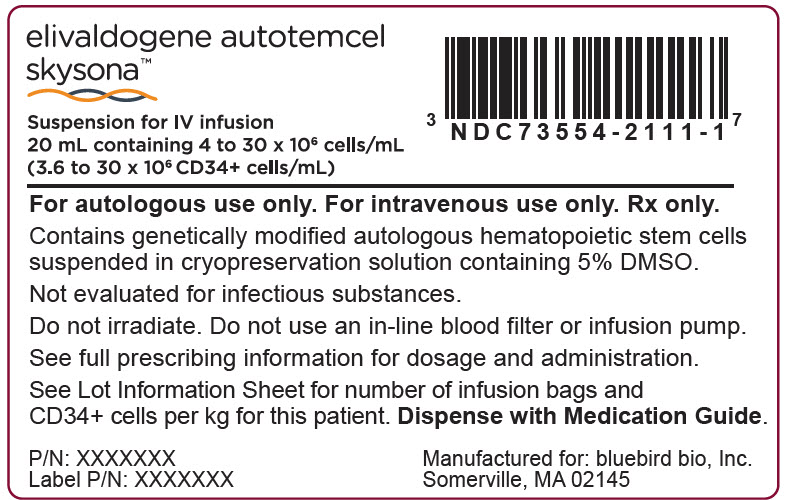
Skysona elivaldogene autotemcel 30000000 1/1 Suspension, 1 suspension — NDC 73554-2111-1 (Billing 73554-2111-01)
This is a package of 1 suspension of Skysona elivaldogene autotemcel 30000000 1/1 Suspension from Genetix Biotherapeutics Inc., marketed since Sep 2022 and currently FDA-listed. It is this product's only package size.
NDC database record
One package, one record: these facts belong to NDC 73554-2111-1 alone.
- Record
- FDA NDC Directory package listing · Cellular therapy
- Code segments
- 73554 labeler · 2111 product · 1 package
- Package marketed since
- Sep 16, 2022
- Sample package
- No — commercial package
- Listing certified through
- Dec 31, 2027
- Billing quantity
- 1 EA per package
- Barcode (UPC)
- 0373554211117
- FDA record last changed
- Aug 6, 2026
Identity & classification
Regulatory identifiers FDA, NLM and CMS codes for this package
Drug-database identifiers Medi-Span GPI and First Databank GCN / HICL / AHFS classification
- GSN (GCN sequence number): 083860
- GCN: 52933
- HICL (First Databank): 048336
- AHFS class code: 26:12.00.00
- RxCUI (RxNorm): 2612552
Where does this data come from?
- FDA openFDA NDC Directory · synced Oct 8, 2026
- FDA label on DailyMed · label index refreshed Oct 8, 2026
- RxNorm (NLM RxNav) · catalog refreshed Oct 1, 2026
- Medi-Span GPI (licensed)
- First Databank (licensed) · refreshed Oct 8, 2026
RxNorm drug class
This medicine belongs to the Various alimentary tract and metabolism products class.
Where does this data come from?
- RxClass (NLM) · catalog refreshed Oct 1, 2026
Clinical
Elivaldogene autotemcel injection is used to slow the progression of brain damage and slow the decline of nerve function in males 4–17 years of age with early, active cerebral adrenoleukodystrophy (CALD; an inherited condition in which fatty acids build up in the brain, resulting in nerve and brain damage). Elivaldogene autotemcel injection is in a class of medications called autologous cellular immunotherapy, a type of medication prepared using cells from the patient's own blood. It works by helping your body to break down the fatty acids and slow the progression of nerve and brain damage.
Read the full MedlinePlus article ↗- Skysona is a gene therapy — not a pill or a regular infusion drug. Your son's own blood stem cells are collected, taken to a lab where a working copy of the faulty ABCD1 gene is in...
- What exactly is Skysona and how is it different from regular medicine?
- This is the most important thing to understand before choosing Skysona. The way the therapy delivers the corrective gene into cells can sometimes land near genes that promote cance...
- Why does the label say there's a cancer risk? Should we be scared?
Patient education
Supplement & herbal interactions
Where does this data come from?
- MedlinePlus (NLM) · refreshed Oct 8, 2026
- FDA label on DailyMed · label index refreshed Oct 8, 2026
Ask a licensed pharmacist directly — free, answered by our team.
Pricing
A drug doesn't have one price. Each row is a different public payment system, and none is what you'd pay at the counter — that depends on your insurance. The ⓘ on each row explains what it measures.
| Price system | Per mL | Per package |
|---|---|---|
| Retail pharmacies payNADAC · weekly | Not in the retail survey — common for institutional, discontinued, or low-volume packs. | |
| Medicaid paysCMS SDUD · 12 mo | No recent Medicaid claims on file for this NDC — rare and low-volume NDCs are suppressed in the public data. | |
| Medicare drug plans payPart D · quarterly | No Part D plan price is available for this NDC in our data. | |
| Medicare Part B allowsASP · J3387 | No ASP payment limit on file for J3387 this quarter. | |
Where does this data come from?
- CMS NADAC weekly file
- CMS ASP pricing files · refreshed Sep 20, 2026
- CMS Medicaid State Drug Utilization Data · refreshed Oct 8, 2026
- CMS Part D plan pricing files · refreshed Sep 24, 2026
- VA National Acquisition Center price file
Billing & reimbursement
Where does this data come from?
- CMS ASP NDC-HCPCS crosswalk · refreshed Sep 22, 2026
- DMEPDAC NDC-HCPCS crosswalk
- openFDA NSDE billing units · refreshed Oct 7, 2026
Packaging — all sizes for this product
| Package NDC | Description | Marketing start | Marketing end | Status |
|---|---|---|---|---|
| 73554-2111-01 You're viewing this Main listing | 1 SUSPENSION in 1 BAG | 2022-09-16 | — | Active |
Therapeutic equivalents
| Product | Labeler | Pack | NADAC/unit | TE | Status | Price vs. this |
|---|---|---|---|---|---|---|
| Skysona 30000000 1this 73554-2111-01 | Genetix | 1 suspension | — | — | FDA listed | — |
Where does this data come from?
- FDA openFDA NDC Directory · synced Oct 8, 2026
- FDA Purple Book · refreshed Oct 5, 2026
- CMS NADAC weekly file
Availability & biosimilar status
Biologics have no small-molecule generics; biosimilar competition is tracked in the FDA Purple Book.
Why the date isn’t exact: Biosimilar timing can change because patents may be challenged, settled, licensed, added or removed, and litigation can move the real date earlier or later.
🛈 What do these terms mean?
- Biologic patent
- A patent the reference product’s maker has publicly listed. A biosimilar generally can’t launch until these expire — unless they’re invalidated or resolved in a settlement.
- Reference-product exclusivity
- A flat 12 years of FDA market protection from the biologic’s first licensure (the BPCIA). No biosimilar can be licensed before it ends, regardless of patents.
- Interchangeable exclusivity
- The first interchangeable biosimilar can earn a period as the only interchangeable version (pharmacists can substitute it without the prescriber).
- Earliest biosimilar (LOE)
- The latest of all the dates above — the soonest a biosimilar can realistically reach the market. Litigation and settlements can move it earlier.
Biologics have no small-molecule “generics” — competition comes from FDA-licensed biosimilars, tracked in the FDA Purple Book.
| Code | What it grants | Expires |
|---|---|---|
| RefProduct | Reference-product exclusivity (12-year, BPCIA) — no biosimilar can be licensed before this date | Sep 16, 2034 |
Is there a biosimilar for SKYSONA INFUSION BAG-CASSETTE?
Why do different websites show different biosimilar dates?
Can a biosimilar launch before the last patent expires?
What does “current Purple Book estimate” mean?
What does “FDA listed” mean?
What does a patent or protection date mean here?
Where does this data come from?
- FDA Purple Book · refreshed Oct 5, 2026
Inactive Ingredients / Excipients
Inactive ingredients, also called excipients, are components of the drug product other than the active ingredient. They may include fillers, dyes, coatings, preservatives, flavors, or other formulation ingredients.
🧪 Avoiding an ingredient? See Elivaldogene autotemcel Injection inactive ingredients by manufacturer: every current product's list side by side, so you can ask your pharmacy for the version that does not list it.
Where does this data come from?
IACT rows and label-wide narrative are kept separate; availability and product-level specificity depend on the submitted label.- FDA label on DailyMed · label index refreshed Oct 8, 2026
- FDA openFDA NDC Directory · synced Oct 8, 2026
Inactive ingredient FAQ
Are inactive ingredients the same for every manufacturer?
Why might an inactive ingredient be missing?
Can inactive ingredients matter?
Manufacturer & labeler
More NDCs from Genetix Biotherapeutics Inc. labeler code 73554
Where does this data come from?
- FDA openFDA NDC Directory · synced Oct 8, 2026
- Drugs@FDA
Full FDA label FDA SPL
🚨 Boxed Warning ▾
WARNING: HEMATOLOGIC MALIGNANCY Hematologic malignancies, including life-threatening cases of myelodysplastic syndrome and acute myeloid leukemia, have occurred in patients treated with SKYSONA. Patients have been diagnosed between 14 months and 10 years after SKYSONA administration, and the cancers appear to be related to treatment with SKYSONA. Monitor patients closely for evidence of malignancy through complete blood counts at least every 3 months.
Monitor patients through assessments for evidence for clonal expansion or predominance at least twice in the first year and annually thereafter; consider bone marrow evaluations as clinically indicated [see Warnings and Precautions (5.1) ] . WARNING: HEMATOLOGIC MALIGNANCY See full prescribing information for complete boxed warning. Hematologic malignancies, including life-threatening cases of myelodysplastic syndrome and acute myeloid leukemia, have occurred in patients treated with SKYSONA.
The cancers appear to be the result of treatment with SKYSONA. Monitor patients closely for evidence of malignancy through complete blood counts at least every 3 months and through assessments for evidence for clonal expansion or predominance at least twice in the first year and annually thereafter; consider bone marrow evaluations as clinically indicated. ( 5.1 )
🎯 Indications and Usage ▾
1 INDICATIONS AND USAGE SKYSONA is indicated to slow the progression of neurologic dysfunction in boys 4-17 years of age with early, active cerebral adrenoleukodystrophy (CALD) without an available human leukocyte antigen (HLA)-matched donor for allogeneic hematopoietic stem cell transplant. Early, active cerebral adrenoleukodystrophy refers to asymptomatic or mildly symptomatic (neurologic function score, NFS ≤ 1) boys who have gadolinium enhancement on brain magnetic resonance imaging (MRI) and Loes scores of 0.5-9.
This indication is approved under accelerated approval based on 24-month Major Functional Disability (MFD)-free survival [see Clinical Studies (14) ] . Continued approval for this indication may be contingent upon verification and description of clinical benefit in a confirmatory trial(s). SKYSONA is an autologous hematopoietic stem cell-based gene therapy indicated to slow the progression of neurologic dysfunction in boys 4-17 years of age with early, active cerebral adrenoleukodystrophy (CALD) without an available human leukocyte antigen (HLA)-matched donor for allogeneic hematopoietic stem cell transplant.
Early, active CALD refers to asymptomatic or mildly symptomatic (neurologic function score, NFS ≤ 1) boys who have gadolinium enhancement on brain magnetic resonance imaging (MRI) and Loes scores of 0.5-9. This indication is approved under accelerated approval based on 24-month Major Functional Disability (MFD)-free survival. [see Clinical Studies (14) ] . Continued approval for this indication may be contingent upon verification and description of clinical benefit in a confirmatory trial(s).
( 1 ) Limitations of Use SKYSONA does not treat or prevent adrenal insufficiency. ( 1 ) An immune response to SKYSONA may cause rapid loss of efficacy of SKYSONA in patients with full deletions of the human adenosine triphosphate binding cassette, sub family D, member 1 ( ABCD1) gene. ( 1 ) SKYSONA has not been studied in CALD secondary to head trauma.
( 1 ) Given the risk of hematologic malignancy with SKYSONA, and unclear long-term durability of SKYSONA and human adrenoleukodystrophy protein (ALDP) expression, careful consideration should be given to the timing of treatment for each boy and treatment of boys with isolated pyramidal tract disease as clinical manifestations do not usually occur until adulthood. ( 1 ) Limitations of Use SKYSONA does not prevent the development of or treat adrenal insufficiency due to adrenoleukodystrophy. An immune response to SKYSONA may limit the persistence of descendent cells of SKYSONA, causing rapid loss of efficacy of SKYSONA in patients with full deletions of the human adenosine triphosphate binding cassette, sub family D, member 1 ( ABCD1) gene.
SKYSONA has not been studied in patients with CALD secondary to head trauma. Given the risk of hematologic malignancy with SKYSONA, and unclear long-term durability of SKYSONA and human adrenoleukodystrophy protein (ALDP) expression, careful consideration should be given to the appropriateness and timing of treatment for each boy, especially for boys with isolated pyramidal tract disease since their clinical symptoms do not usually occur until adulthood.
⏱️ Dosage and Administration ▾
2 DOSAGE AND ADMINISTRATION For autologous use only. For intravenous use only. For autologous use only.
For intravenous use only. Patients must undergo hematopoietic stem cell (HSC) mobilization and apheresis to obtain CD34+ cells for SKYSONA manufacturing. ( 2.2 ) Dosing of SKYSONA is based on the number of CD34+ cells in the infusion bag(s) per kg of body weight.
( 2.1 ) The minimum recommended dose is 5.0 × 10 6 CD34+ cells/kg. ( 2.1 ) Full myeloablative and lymphodepleting conditioning must be administered before infusion of SKYSONA. ( 2.2 ) Verify the patient's identity matches the unique patient identification information on the SKYSONA infusion bag(s) prior to infusion.
( 2.2 ) Do not sample, alter, or irradiate SKYSONA. ( 2.2 ) Do not use an in-line blood filter or an infusion pump. ( 2.3 )
2.1Dose SKYSONA is provided as a single dose for infusion containing a suspension of CD34+ cells in one or two infusion bags. The minimum recommended dose of SKYSONA is 5.0 × 10 6 CD34+ cells/kg. The dose is calculated based on the patient's weight prior to first apheresis. See the Lot Information Sheet provided with the product shipment for additional information pertaining to dose.
2.2Preparation Before SKYSONA Infusion Before mobilization, apheresis, and conditioning are initiated, confirm that hematopoietic stem cell (HSC) transplantation is appropriate for the patient. Perform screening for hepatitis B virus (HBV), hepatitis C virus (HCV), human immunodeficiency virus 1 & 2 (HIV-1/HIV-2) and Human T-lymphotropic virus 1 & 2 (HTLV-1/HTLV-2) in accordance with clinical guidelines before collection of cells for manufacturing. Mobilization and Apheresis Patients are required to undergo HSC mobilization followed by apheresis to obtain CD34+ cells for product manufacturing.
Weigh the patient prior to the first apheresis collection. Collect a minimum number of CD34+ cells of 12 × 10 6 CD34+ cells/kg. A back-up collection of CD34+ cells of ≥ 1.5 × 10 6 CD34+ cells/kg (if collected by apheresis) or ≥ 1.0 × 10 8 TNC/kg (Total Nucleated Cells, if collected by bone marrow harvest) is required.
Collect and cryopreserve these cells prior to initiating conditioning and infusion with SKYSONA. The back-up collection may be needed for rescue treatment if there is: 1) compromise of SKYSONA after initiation of conditioning and before SKYSONA infusion, 2) primary engraftment failure, or 3) loss of engraftment after infusion with SKYSONA. Myeloablative and Lymphodepleting Conditioning Full myeloablative and lymphodepleting conditioning must be administered before infusion of SKYSONA.
Consult prescribing information for the conditioning agents prior to treatment. Do not begin conditioning until SKYSONA has been received and stored at the treatment center and the availability of the back-up collection of CD34+ cells is confirmed. After completion of conditioning, allow a minimum of 48 hours of washout before SKYSONA infusion.
Receipt and Storage of SKYSONA Ensure the availability of vapor phase of liquid nitrogen storage at less than or equal to -140°C (-220°F) at the treatment center. SKYSONA is shipped to the treatment center in the vapor phase of liquid nitrogen shipper. Confirm Patient Identifiers on the product labels and Lot Information Sheet within the shipper.
If there are any concerns about the product or packaging upon receipt, contact Genetix Biotherapeutics at 1-833-999-6378. Keep the infusion bag(s) in the metal cassette(s) and transfer SKYSONA from the vapor phase of liquid nitrogen shipper to the treatment center vapor phase of liquid nitrogen storage at less than or equal to -140°C (-220°F) until ready for thaw and administration. Preparation of SKYSONA for Infusion Coordinate the timing of SKYSONA thaw and infusion.
Confirm the infusion time in advance and adjust the start time of SKYSONA thaw such that it will be available for infusion when the patient and healthcare providers are ready. SKYSONA contains human blood cells that are… [Excerpted — this section continues on DailyMed.]
💊 Dosage Forms and Strengths ▾
3 DOSAGE FORMS AND STRENGTHS SKYSONA is a cell suspension for intravenous infusion. SKYSONA is composed of one or two infusion bags which contain 4 to 30 × 10 6 cells/mL suspended in cryopreservation solution [see How Supplied/Storage and Handling (16) ] . Each infusion bag contains approximately 20 mL of SKYSONA.
A single dose of SKYSONA contains a minimum of 5.0 × 10 6 CD34+ cells per kg of body weight, suspended in cryopreservation solution . See the Lot Information Sheet for actual dose. SKYSONA is a cell suspension for intravenous infusion.
( 3 ) A single dose of SKYSONA contains a minimum of 5.0 × 10 6 CD34+ cells/kg of body weight, suspended in a solution containing 5% dimethyl sulfoxide (DMSO). ( 3 )
⛔ Contraindications ▾
4 CONTRAINDICATIONS None. None. ( 4 )
⚠️ Warnings and Cautions ▾
5 WARNINGS AND PRECAUTIONS Serious Infections: Life-threatening bacterial and viral infections may occur. Monitor patients for signs and symptoms of infection. ( 5.2 ) Prolonged Cytopenias: Patients may exhibit cytopenias >1 year after treatment.
Monitor patients for bleeding and infection. ( 5.3 ) Delayed Platelet Engraftment: Monitor patients for thrombocytopenia and bleeding until platelet engraftment and count recovery. ( 5.4 ) Risk of Neutrophil Engraftment Failure: Monitor absolute neutrophil counts and if neutrophil engraftment does not occur, give rescue cells.
( 5.5 )
5.1Hematologic Malignancy Hematologic malignancies, including myelodysplastic syndrome (MDS) and acute myeloid leukemia (AML), have developed in patients treated with SKYSONA in clinical studies between 14 months and 10 years after SKYSONA administration [see Adverse Reactions (6.1) ] . Malignancies are life-threatening. Death related to treatment for malignancy and relapse of malignancy have occurred .
SKYSONA Lenti-D lentiviral vector genomic integration, including into the proto-oncogene MECOM , appears to have mediated the cases of hematologic malignancy. All patients treated with SKYSONA in clinical studies have integrations into MECOM ; however, it is unknown which integrations into MECOM or other genes are likely to lead to malignancy. Consider consultation with hematology experts prior to SKYSONA treatment to inform benefit-risk treatment decision and to ensure adequate monitoring for hematologic malignancy.
Consider performing the following baseline hematologic assessments: complete blood count with differential, hematopathology review of peripheral blood smear, and bone marrow biopsy (core and aspirate) with flow cytometry, conventional karyotyping, and next generation sequencing (NGS) with a molecular panel appropriate for age and including coverage for gene mutations expected in myeloid and lymphoid malignancies; and testing for germline mutations that are associated with hematologic malignancy. Early diagnosis of hematologic malignancy can be critically important, therefore, monitor patients treated with SKYSONA lifelong for hematologic malignancy.
For at least the first fifteen years after treatment with SKYSONA, monitor via complete blood count (with differential) at least every 3 months and via integration site analysis or other testing for evidence of clonal expansion and predominance at least twice in the first year and then annually. Consider appropriate expert consultation and additional testing such as more frequent complete blood count (with differential) and integration site analysis, bone marrow studies, and gene expression studies in the following settings after treatment with SKYSONA: Delayed or failed engraftment of platelets or other cell lines (while all patients are at risk for hematologic malignancy, patients who do not achieve unsupported platelet counts of ≥ 20 × 10 9 /L on or after Day 60 appear to be at higher risk); or New or prolonged cytopenias; or, Presence of clonal expansion or predominance (e.g., increasing relative frequency of an integration site, especially if ≥ 10% and present in MECOM or another proto-oncogene known to be involved in hematologic malignancy).
If hematologic malignancy is detected in a patient who received SKYSONA, contact Genetix Biotherapeutics at 1-833-999-6378 for reporting and to obtain instructions on collection of samples for further testing. Post-Marketing Long Term Follow-Up Study Patients who intend to receive treatment with SKYSONA are encouraged to enroll in the study, as available, to assess the long-term safety of SKYSONA and the risk of malignancies occurring after treatment with SKYSONA by calling Genetix Biotherapeutics, Inc. at 1-833-999-6378.
The study includes monitoring (at pre-specified intervals) for clonal expansion.
5.2Serious Infections Severe infections, including life-threatening and fatal infections, have occurred in patients after SKYSONA infusion. Febrile neutr… [Excerpted — this section continues on DailyMed.]
🤒 Adverse Reactions ▾
6 ADVERSE REACTIONS Most common non-laboratory adverse reactions (≥ 20%): mucositis, nausea, vomiting, febrile neutropenia, alopecia, decreased appetite, abdominal pain, constipation, pyrexia, diarrhea, headache, rash. ( 6.1 ) Most common Grade 3 or 4 laboratory abnormalities (≥ 40%): leukopenia, lymphopenia, thrombocytopenia, neutropenia, anemia, hypokalemia. ( 6.1 ) To report SUSPECTED ADVERSE REACTIONS, contact Genetix Biotherapeutics at 1-833-999-6378 or FDA at 1-800-FDA-1088 or www.fda.gov/medwatch.
6.1Clinical Trials Experience Because clinical trials are conducted under widely varying conditions, adverse reaction rates observed in the clinical trials of a drug cannot be directly compared to rates in the clinical trials of another drug and may not reflect the rates observed in practice. The safety data described in this section reflect exposure to a single dose of SKYSONA in 67 patients with CALD. Data were obtained from two single-arm trials and, for 36 patients, from a long-term follow-up study [see Clinical Studies (14) ] .
The median (min, max) age across studies was 6 (4, 14) years; 100% were male; 54% were White/Caucasian, 4% were Black or African American, 1% were Asian, 10% were of other races including mixed race, and 30% did not report race; 25% were of Hispanic ethnicity. The median (min, max) duration of follow-up at time of initial approval was 24 (1, 88) months. In the two trials, serious adverse reactions from Day 1 (SKYSONA infusion) to last follow-up occurred in 54% of patients.
The most common non-laboratory, serious adverse reactions (≥ 3% incidence) that occurred after treatment with SKYSONA were febrile neutropenia (18%), pyrexia (fever) (18%), seizure (7%), myelodysplastic syndrome (4%), pseudomonal bacteremia (3%), pancytopenia (3%), vascular device infection (3%), mucositis (3%), and vomiting (3%). Most common non-laboratory adverse reactions by time of onset follow: During mobilization and conditioning and occurring in ≥ 20% of patients: nausea (79%), vomiting (72%), decreased appetite (42%), catheter site pain (39%), constipation (30%), headache (24%), abdominal pain (21%), rash (13%) In the first 60 days after treatment with SKYSONA in ≥ 15% of patients: mucositis (88%), febrile neutropenia (73%), alopecia (72%), abdominal pain (33%), vomiting (31%), decreased appetite (31%), pyrexia (27%), nausea (27%), constipation (21%), diarrhea (21%), epistaxis (19%), pruritus (18%), headache (16%), oropharyngeal pain (16%), skin hyperpigmentation (16%), anxiety (15%) Between 60 days and 1 year after treatment with SKYSONA in ≥ 5% of patients: pyrexia (fever) (9%) and vomiting (6%) Table 1 presents non-laboratory adverse reactions reported in at least 10% of patients between the start of conditioning and 24 months after SKYSONA administration.
Table 2 presents Grade 3 or 4 laboratory abnormalities that occurred in at least 40% of patients between the start of conditioning and 24 months after SKYSONA administration. Table 1: Non-Laboratory Adverse Reactions Reported in ≥ 10% of Patients Between the Start of Conditioning and 24 Months Following Treatment with SKYSONA Includes adverse events associated with conditioning. Adverse Reaction Any Grade n (%) Grade 3 or Higher n (%) Blood and lymphatic system disorders -- -- Febrile neutropenia Febrile neutropenia includes febrile bone marrow aplasia and febrile neutropenia.
49 (73%) 49 (73%) Cardiac disorders -- -- Tachycardia Tachycardia includes sinus tachycardia and tachycardia. 10 (15%) 0 Eye disorders -- -- Vision blurred 7 (10%) 0 Gastrointestinal disorders -- -- Mucositis Mucositis includes anal inflammation, colitis, gastrointestinal inflammation, mucosal inflammation, proctitis, and stomatitis. Encompasses more than one system organ class.
62 (92%) 34 (51%) Nausea 56 (84%) 17 (25%) Vomiting 51 (76%) 12 (18%) Abdominal pain Abdominal pain includes abdominal discomfort, abdominal pain, and abdominal pain upper. 30 (45%) 2 (3%) Constipation 28 (42%) 0 Diarr… [Excerpted — this section continues on DailyMed.]
🔄 Drug Interactions ▾
7 DRUG INTERACTIONS Anti-retrovirals : Do not take these medications from at least one month prior to starting mobilization agents until all cycles of apheresis are complete and after the expected duration of elimination. ( 7.2 )
7.1Vaccines The safety and effectiveness of vaccination during or following SKYSONA treatment have not been studied. Vaccination is not recommended during the 6 weeks preceding the start of myeloablative conditioning, and until hematological recovery following treatment with SKYSONA. Where feasible, administer childhood vaccinations prior to myeloablative conditioning for SKYSONA.
7.2Anti-retrovirals Patients should not take anti-retroviral medications for at least one month prior to initiating medications for stem cell mobilization and for the expected duration for elimination of the medications, and until all cycles of apheresis are completed [see Warnings and Precautions (5.5) ] . Anti-retroviral medications may interfere with SKYSONA manufacture.
👥 Use in Specific Populations ▾
8 USE IN SPECIFIC POPULATIONS
8.1Pregnancy Risk Summary There are no available data with SKYSONA administration in pregnant women. Consider the risks associated with mobilization and conditioning agents on pregnancy and fertility. No animal reproductive and developmental toxicity studies have been conducted to assess whether SKYSONA can cause fetal harm when administered to a pregnant woman.
No nonclinical germline transmission studies have been conducted with SKYSONA. In the U.S. general population, the estimated background risk of major birth defects and miscarriage in clinically recognized pregnancies is 2% to 4% and 15% to 20%, respectively.
8.2Lactation Risk Summary There is no information regarding the presence of SKYSONA in human milk, the effect on the breastfed infant, and the effects on milk production.
8.3Females and Males of Reproductive Potential Contraception Consult the Prescribing Information of the mobilization and conditioning agents for information on the need for effective contraception. There are insufficient exposure data to provide a precise recommendation on duration of contraception following treatment with SKYSONA. Males capable of fathering a child and their female partners of childbearing potential should use an effective method of contraception (intra-uterine device or combination of hormonal and barrier contraception) from start of mobilization through at least 6 months after administration of SKYSONA.
Infertility There are no data on the effects of SKYSONA on fertility. Data are available on the risk of infertility with myeloablative conditioning. Advise patients of the option to cryopreserve semen before treatment if appropriate.
8.4Pediatric Use The safety and efficacy of SKYSONA in children less than 4 years of age have not been established. No data are available [see Clinical Studies (14) ] .
8.6Patients with a Full ABCD1 Gene Deletion In the only patient in the SKYSONA clinical studies who had a full ABCD1 deletion, disease progression occurred. The patient experienced radiologic disease progression in the setting of declining peripheral blood vector copy number, suggesting loss of product efficacy which may have been immune mediated . The patient was subsequently treated with allogeneic hematopoietic stem cell transplant.
8.7Renal Impairment SKYSONA has not been studied in patients with renal impairment. Patients should be assessed for renal impairment to ensure hematopoietic stem cell (HSC) transplantation is appropriate.
8.8Hepatic Impairment SKYSONA has not been studied in patients with hepatic impairment. Patients should be assessed for hepatic impairment to ensure HSC transplantation is appropriate.
8.9Patients Seropositive for Human Immunodeficiency Virus (HIV) SKYSONA has not been studied in patients with HIV-1, HIV-2, HTLV-1, or HTLV-2. A negative serology test for HIV is necessary to ensure acceptance of apheresis material for SKYSONA manufacturing. Apheresis material from patients with a positive test for HIV will not be accepted for SKYSONA manufacturing.
🤰 Pregnancy ▾
8.1Pregnancy Risk Summary There are no available data with SKYSONA administration in pregnant women. Consider the risks associated with mobilization and conditioning agents on pregnancy and fertility. No animal reproductive and developmental toxicity studies have been conducted to assess whether SKYSONA can cause fetal harm when administered to a pregnant woman.
No nonclinical germline transmission studies have been conducted with SKYSONA. In the U.S. general population, the estimated background risk of major birth defects and miscarriage in clinically recognized pregnancies is 2% to 4% and 15% to 20%, respectively.
🧒 Pediatric Use ▾
8.4Pediatric Use The safety and efficacy of SKYSONA in children less than 4 years of age have not been established. No data are available [see Clinical Studies (14) ] .
🧬 Clinical Pharmacology ▾
12 CLINICAL PHARMACOLOGY
12.1Mechanism of Action SKYSONA adds functional copies of the ABCD1 cDNA into patients' hematopoietic stem cells (HSCs) through transduction of autologous CD34+ cells with Lenti-D LVV. After SKYSONA infusion, transduced CD34+ HSCs engraft in the bone marrow and differentiate into various cell types, including monocytes (CD14 + ) capable of producing functional ALDP. Functional ALDP can then participate in the local degradation of very long chain fatty acids (VLCFAs), which is believed to slow or possibly prevent further inflammation and demyelination.
12.2Pharmacodynamics All patients who received SKYSONA with at least 1 month of follow-up produced ALDP in CD14 + cells (N=23, Study 1; N=31, Study 2), demonstrating early expression of the transgene. The %ALDP+ cell counts stabilized at 6 months after SKYSONA infusion. Patients had a Month 6 median (min, max) %ALDP+ CD14 + cells of 16% (2%, 71%) in Study 1 (N=23) and 26% (2%, 86%) in Study 2 (N=25).
In peripheral blood, the %ALDP+ CD14 + cells remained generally stable through Month 24 with a median (min, max) of 15% (6%, 45%) in Study 1 (N=23) and 28% (2%, 40%) in Study 2 (N=11). ALDP expression was quantifiable in 43% of the patients who had follow-up through Month 60 in Study 1 (N=7), indicating long-term expression of transgenic ALDP in the progeny of hematopoietic stem cells.
12.3Pharmacokinetics SKYSONA is an autologous gene therapy which includes HSCs that have been genetically modified ex vivo . The nature of SKYSONA is such that conventional studies on pharmacokinetics, absorption, distribution, metabolism, and elimination are not applicable.
🧬 Mechanism of Action ▾
12.1Mechanism of Action SKYSONA adds functional copies of the ABCD1 cDNA into patients' hematopoietic stem cells (HSCs) through transduction of autologous CD34+ cells with Lenti-D LVV. After SKYSONA infusion, transduced CD34+ HSCs engraft in the bone marrow and differentiate into various cell types, including monocytes (CD14 + ) capable of producing functional ALDP. Functional ALDP can then participate in the local degradation of very long chain fatty acids (VLCFAs), which is believed to slow or possibly prevent further inflammation and demyelination.
📦 How Supplied / Storage and Handling ▾
16 HOW SUPPLIED/STORAGE AND HANDLING SKYSONA is supplied in one or two infusion bags containing a frozen suspension of genetically modified autologous cells enriched for CD34+ cells. Each bag contains approximately 20 mL. Each SKYSONA infusion bag is individually packed within an overwrap in a metal cassette.
SKYSONA is shipped from the manufacturing facility to the infusion center in a cryoshipper, which may contain multiple metal cassettes intended for treatment of a single patient. A Lot Information Sheet is affixed inside the shipper. 20 mL infusion bag, overwrap, and metal cassette (NDC 73554-2111-1) Match the identity of the patient with the patient identifiers on the metal cassette(s), infusion bag(s), and Lot Information Sheet upon receipt.
Store SKYSONA frozen in the vapor phase of liquid nitrogen at less than or equal to -140°C (-220°F) until ready for thaw and administration. Thaw SKYSONA prior to infusion [see Dosage and Administration (2) ]. Do not re-freeze after thawing.
Do not irradiate SKYSONA as this could lead to inactivation.
📦 Storage and Handling ▾
Match the identity of the patient with the patient identifiers on the metal cassette(s), infusion bag(s), and Lot Information Sheet upon receipt. Store SKYSONA frozen in the vapor phase of liquid nitrogen at less than or equal to -140°C (-220°F) until ready for thaw and administration. Thaw SKYSONA prior to infusion [see Dosage and Administration (2) ]. Do not re-freeze after thawing. Do not irradiate SKYSONA as this could lead to inactivation.
📋 Description ▾
11 DESCRIPTION SKYSONA (elivaldogene autotemcel) is an autologous HSC-based gene therapy prepared from the patient's HSCs, which are collected via apheresis procedure(s). The autologous cells are enriched for CD34+ cells, then transduced ex vivo with Lenti-D LVV, and cultured with growth factors overnight. Lenti-D LVV is a replication-incompetent, self-inactivating LVV carrying ABCD1 cDNA that encodes normal ALDP.
The ABCD1 gene is under the control of an internal MNDU3 promoter, which is a modified viral promoter and has been shown to control expression of the transgene in HSCs and their progeny in all lineages. The transduced CD34+ cells are washed, formulated into a suspension, and then cryopreserved. SKYSONA is frozen in a patient-specific infusion bag(s) and is thawed prior to administration [see Dosage and Administration (2.1) , How Supplied/Storage and Handling (16) ].
The thawed product is colorless to white to red, including shades of white or pink, light yellow, and orange suspension of cells and may contain small proteinaceous particles. Due to the presence of cells, the solution may be clear to slightly cloudy and may contain visible cell aggregates. The formulation contains 5% dimethyl sulfoxide (DMSO).
💬 Information for Patients ▾
17 PATIENT COUNSELING INFORMATION Advise the patient and their caregiver(s) to read the FDA-approved patient labeling (Medication Guide). Discuss the following with the patient and their caregiver(s): Hematologic Malignancy Inform the patient and/or caregiver that insertional oncogenesis has been observed and resulted in myelodysplastic syndrome (MDS) and acute myeloid leukemia (AML) in children following treatment with SKYSONA. Inform the patient that these are life-threatening diseases and children have died from complications of treatment for malignancy.
Treatment for hematologic malignancies can include chemotherapy and bone marrow transplant. Relapse of MDS or AML may occur which may require retreatment. Patients treated with SKYSONA will need lifelong monitoring for hematologic malignancies via blood tests.
Advise patients that they may require more frequent blood tests and invasive bone marrow biopsies if routine blood test results are concerning for the development of malignancy [see Warnings and Precautions (5.1) ]. Advise the patient and/or caregiver to seek attention for any signs or symptoms of malignancy, such as fatigue or easy bleeding or bruising, and advise the patient to contact Genetix Biotherapeutics at 1-833-999-6378 if they are diagnosed with a hematologic malignancy. Efficacy Failure Inform the patient and/or caregiver that there has been unexplained efficacy failure after treatment with SKYSONA [see Use in Specific Populations (8.6) ] .
Need for Allogeneic Hematopoietic Stem Cell Transplant Inform the patient that some patients have required an allogeneic hematopoietic stem cell transplant after treatment with SKYSONA, in order to treat efficacy failure or hematologic malignancy. Advise the patients that they will be monitored for these complications [see Warnings and Precautions (5.1) ] . Serious Infections Inform the patient that severe infections, including life-threatening infections, have occurred following SKYSONA treatment and may require prolonged hospitalization [see Warnings and Precautions (5.2) ] .
Prolonged Cytopenias Inform the patient and/or caregiver that prolonged cytopenias have been observed following SKYSONA treatment and that they may require frequent blood draws until blood counts have returned to safe levels. Advise the patient and/or caregiver to seek attention for any signs or symptoms of thrombocytopenia, neutropenia, or anemia, such as easy bleeding, serious infections, or fatigue [see Warnings and Precautions (5.3) ] . Delayed Platelet Engraftment Inform the patient that a risk of bleeding and a likely need for platelet transfusion exists after myeloablative conditioning and during the weeks to months before platelet engraftment occurs [see Warnings and Precautions (5.4) ].
Risk of Neutrophil Engraftment Failure Inform the patient and/or caregiver of the potential risk of neutrophil engraftment failure and the need for rescue treatment with their back-up collection of CD34+ cells, if engraftment failure occurs [see Warnings and Precautions (5.5) ] . Laboratory Test Interference Advise patients that they may test positive for HIV if tested using a PCR test after being treated with SKYSONA [see Warnings and Precautions (5.8) ] . Advise the patient and/or caregiver that they should notify any healthcare provider about this possibility prior to being tested for HIV.
Manufacturing Failure Ensure that the patient and/or caregiver understands the risk of manufacturing failure. In case of manufacturing failure or the need for additional cells, additional cell collection and manufacturing of SKYSONA may be needed [see Dosage and Administration (2.2) ] . Advise patients that they will be screened for HBV, HCV, HIV, and HTLV before collection of cells [see Dosage and Administration (2.2) ] .
Inform patients that they should not donate blood, organs, tissues, or cells at any time in the future [see Dosage and Administration (2.3) ] .
💬 Medication Guide ▾
MEDICATION GUIDE SKYSONA ® (pronounced sky-SO-nuh ) (elivaldogene autotemcel) This Medication Guide has been approved by the U.S. Food and Drug Administration. Issued: August 2025 What is the most important information I or my caregiver should know about SKYSONA?
SKYSONA may cause cancer of the blood and bone marrow, which can be life-threatening and lead to death. Blood cancer has resulted from treatment with SKYSONA because cancer-causing genes have been turned on by the gene therapy. Patients have developed cancer as early as one year after SKYSONA administration, prior to SKYSONA having time to potentially help their CALD.
Blood cancer can also take years to develop, and has been diagnosed more than 9 years later. The percent of patients who will develop cancer and the maximum timeframe when cancer caused by SKYSONA could develop is unknown. Blood cancer is usually treated with chemotherapy and may require stem cell transplant.
Stem cell transplant using cells from a donor have been used to treat children diagnosed with blood cancer that was caused by SKYSONA. Blood cancers, including those following SKYSONA treatment, will lead to death if not treated. Cancer may recur and require further treatment.
Treatment of blood cancer has led to death due to complications. Because of the risk of cancer caused by SKYSONA, your doctor may recommend that you are evaluated by a hematologist to determine if you have underlying risk factors that could further increase your risk for cancer and change whether SKYSONA is appropriate for you. Before you are treated with SKYSONA, you should have a detailed discussion with your doctor about the risks and benefits of SKYSONA and alternative treatment options.
Alternative treatment may include an allogeneic hematopoietic stem cell transplant. Discuss with your physician the possibility of a stem cell transplant using cells from a suitable donor if one is available. Because of the risk of cancer, it is important for you to be monitored lifelong.
At a minimum we recommend blood tests every 3 months for 15 years. Blood tests will look at your blood cell counts and the locations in your blood cells where the gene therapy is inserted. If your blood counts are too low or too high, or if you have lots of cells with the same gene therapy insertion sites, additional testing may be recommended.
Additional testing might include more frequent blood tests to watch you more closely for changes in your blood. Additional testing could also include a bone marrow evaluation, which can tell your doctor more than blood tests about the health of your bone marrow and if there is cancer forming. If blood cancer develops quickly or if you have not been having the recommended blood or bone marrow tests, you might experience symptoms of cancer before it is diagnosed.
You or your caregiver should call your healthcare provider right away for any of these signs or symptoms: Abnormal bruising or bleeding (including nosebleed) Blood in urine, stool, or vomit Coughing up blood Severe headache Unusual stomach or back pain Fever (100.4°F/38°C or higher) Swollen glands Abnormal tiredness If you are diagnosed with a cancer, have your treating physician contact Genetix Biotherapeutics at 1-833-999-6378. SKYSONA may cause life-threatening allergic reactions as it contains DMSO, a commonly used preserving agent.
Please inform your healthcare provider if you have been told that your child has a DMSO allergy or has experienced a reaction after receiving a DMSO-containing product. It is important that you or your caregiver tell your healthcare providers that you have received SKYSONA. What is SKYSONA?
SKYSONA is a one-time gene therapy to treat boys with early, active cerebral adrenoleukodystrophy (CALD). CALD is a genetic disease caused by mutations in the ABCD1 gene that lead to the buildup of very long chain fatty acids (VLCFAs) in the brain. These VLCFAs may destroy the protective covering around nerve cells and cause damage to the… [Excerpted — this section continues on DailyMed.]
🧬 Pharmacokinetics ▾
12.3Pharmacokinetics SKYSONA is an autologous gene therapy which includes HSCs that have been genetically modified ex vivo . The nature of SKYSONA is such that conventional studies on pharmacokinetics, absorption, distribution, metabolism, and elimination are not applicable.
🧬 Pharmacodynamics ▾
12.2Pharmacodynamics All patients who received SKYSONA with at least 1 month of follow-up produced ALDP in CD14 + cells (N=23, Study 1; N=31, Study 2), demonstrating early expression of the transgene. The %ALDP+ cell counts stabilized at 6 months after SKYSONA infusion. Patients had a Month 6 median (min, max) %ALDP+ CD14 + cells of 16% (2%, 71%) in Study 1 (N=23) and 26% (2%, 86%) in Study 2 (N=25).
In peripheral blood, the %ALDP+ CD14 + cells remained generally stable through Month 24 with a median (min, max) of 15% (6%, 45%) in Study 1 (N=23) and 28% (2%, 40%) in Study 2 (N=11). ALDP expression was quantifiable in 43% of the patients who had follow-up through Month 60 in Study 1 (N=7), indicating long-term expression of transgenic ALDP in the progeny of hematopoietic stem cells.
🔬 Clinical Studies ▾
14 CLINICAL STUDIES The safety and efficacy of SKYSONA were assessed in two 24-month, open-label, single-arm studies in patients with early, active CALD as defined by Loes score between 0.5 and 9 (inclusive) and gadolinium enhancement (GdE+) on MRI, as well as a neurologic function score (NFS) of ≤ 1 , indicating limited changes in neurologic function. The NFS was used to evaluate 15 domains of neurological function with a maximum score of 25. A total NFS=0 indicates absence of neurologic dysfunction or asymptomatic disease.
The patients enrolled and treated with SKYSONA (Study 1, N=32; Study 2, N=35) all had elevated very long chain fatty acid (VLCFA) levels and confirmed mutations in the ABCD1 gene. Following completion of Study 1 and Study 2, patients enroll in a subsequent and ongoing long-term follow-up study. The efficacy of SKYSONA was compared to an external untreated natural history control.
Data for the Natural History Population in the retrospective natural history study (Study 3) was collected from existing medical records for patients with CALD. The Natural History Population had early, active disease at diagnosis, though gadolinium status was defined by either having a GdE+ MRI during the study or unknown GdE status and clinical course that suggested active disease. SKYSONA Studies Study 1 is complete and Study 2 is ongoing at the time of product approval.
In Study 1, patients were 47% White/Caucasian, 38% Hispanic, 3% Asian, 3% Black or African American, and 16% other races including mixed race. In Study 2, patients were 60% White/Caucasian, 14% Hispanic, 6% Black or African American, 6% other races including mixed race. Mobilization and Apheresis: G-CSF 10 µg/kg (median) for a minimum of 4 days Plerixafor 0.24 mg/kg for up to 3 days – optional in Study 1 (administered to 34% of patients) and required in Study 2 For all patients, one cycle of mobilization and apheresis and one to two apheresis collection days were sufficient to obtain the requisite number of cells needed for manufacturing.
Pre-treatment Myeloablative Conditioning: Study 1: Busulfan dose median (min, max) 14 (11.2 to 16.8) mg/kg over 4 days Study 2: Busulfan dose median (min, max) 16.8 (12 to 21.2) mg/kg over 4 days Pre-treatment Lymphodepletion: Study 1: Cyclophosphamide dose median (min, max) 199 (151 to 213) mg/kg over 4 days Study 2: Fludarabine dose 180 mg/m 2 over 6 days for 11 patients; 160 mg/m 2 over 4 days (actual dose range 122 to 196 mg/m 2 ) for 24 patients; (fludarabine dose decreased due to viral infections in the initial cohort) Patients received seizure, hepatic veno-occlusive disease, anti-fungal, and antibiotic prophylaxis in accordance with institutional guidelines.
SKYSONA Administration: All patients were administered SKYSONA as an intravenous infusion with a median (min, max) dose of 12 × 10 6 (5, 38.2) CD34+ cells/kg (N=67). After SKYSONA Administration: G-CSF – optional in Study 1 (administered to 75% of patients) and required in Study 2 (beginning on Day 5) See Section 6 for engraftment information. Comparison of SKYSONA with the Natural History of CALD A post-hoc enrichment analysis in symptomatic patients compared time from onset of symptoms (NFS ≥ 1) to time to first Major Functional Disability (MFD) or death (i.e., MFD-free survival) in SKYSONA treated and Natural History patients.
The MFDs are defined as: loss of communication, cortical blindness, requirement for tube feeding, total incontinence, wheelchair dependence, or complete loss of voluntary movement. To be included in the analysis, patients had to have symptoms at baseline (NFS=1) or be asymptomatic (NFS=0) at baseline and have developed symptoms (NFS ≥ 1) during the course of follow-up in the study. Additionally, they had to have at least 24 months of follow-up after initial NFS ≥ 1 or have had an event (MFD or death).
The 7 patients in the Natural History Population were a median (min, max) 9 (5, 15) years old at time of CALD diagnosis, and 10 (5, 17) year… [Excerpted — this section continues on DailyMed.]
🧪 Nonclinical Toxicology ▾
13 NONCLINICAL TOXICOLOGY
13.1Carcinogenesis, Mutagenesis, Impairment of Fertility No carcinogenicity studies have been performed with SKYSONA. No studies have been conducted to evaluate the effects of SKYSONA on fertility.
📄 Carcinogenesis, Mutagenesis, Impairment of Fertility ▾
13.1Carcinogenesis, Mutagenesis, Impairment of Fertility No carcinogenicity studies have been performed with SKYSONA. No studies have been conducted to evaluate the effects of SKYSONA on fertility.
📄 Recent Major Changes ▾
Boxed Warning 8/2025 Indications and Usage 8/2025 Warnings and Precautions, Hematologic Malignancy ( 5.1 ) 8/2025
📄 Package Label / Principal Display Panel ▾
PRINCIPAL DISPLAY PANEL - 20 mL Bag Patient Identifier Label elivaldogene autotemcel skysona™ Suspension for IV infusion 20 mL containing 4 to 30 x 10 6 cells/mL (3.6 to 30 x 10 6 CD34+ cells/mL) Confirm Patient Identifiers Last Name: $LastName$ First Name: $First Name$ Date of Birth: $DOB$ bbb Patient ID: $bbb_PatientID$ COI ID: $bbb_COI_ID$ LOT: $LOT$ EXP: $Expiry$ Bag X of X DIN $DIN1_DIN2$ DIN $DIN3_DIN4$ GENETIX™ Biotherapeutics U.S. Lic. # 2425 Label P/N: 1000817 PRINCIPAL DISPLAY PANEL - 20 mL Bag Patient Identifier Label
PRINCIPAL DISPLAY PANEL - 20 mL Bag Label elivaldogene autotemcel skysona™ Suspension for IV infusion 20 mL containing 4 to 30 x 10 6 cells/mL (3.6 to 30 x 10 6 CD34+ cells/mL) NDC 73554-2111-1 For autologous use only. For intravenous use only. Rx only.
Contains genetically modified autologous hematopoietic stem cells suspended in cryopreservation solution containing 5% DMSO. Not evaluated for infectious substances. Do not irradiate.
Do not use an in-line blood filter or infusion pump. See full prescribing information for dosage and administration. See Lot Information Sheet for number of infusion bags and CD34+ cells per kg for this patient.
Dispense with Medication Guide. P/N: 1000734 Label P/N: XXXXXXX Manufactured for: Genetix Biotherapeutics Inc. Somerville, MA 02145 PRINCIPAL DISPLAY PANEL - 20 mL Bag Label
PRINCIPAL DISPLAY PANEL - 20 mL Bag Cassette Label elivaldogene autotemcel skysona™ Suspension for IV infusion 20 mL containing 4 to 30 x 10 6 cells/mL (3.6 to 30 x 10 6 CD34+ cells/mL) NDC73554-2111-1 For autologous use only. For intravenous use only. Rx only.
Contains autologous hematopoietic stem cells transduced with Lenti-D lentiviral vector suspended in cryopreservation solution containing 5% DMSO. Keep infusion bag(s) in the metal cassette(s). Store in the vapor phase of liquid nitrogen at ≤ -140°C until ready for thaw and administration.
Once thawed do not re-freeze. See full prescribing information for dosage and administration. Do not irradiate.
Do not use an in-line blood filter or infusion pump. This medicine contains genetically modified cells. Not evaluated for infectious substances.
No preservatives. See Lot Information Sheet for number of infusion bags and CD34+ cells per kg for this patient. Dispense with Medication Guide.
Confirm Patient Identifiers Last Name: $LastName$ First Name: $FirstName$ Date of Birth: $DOB$ bbb Patient ID: $bbb_PatientID$ COI ID: $bbb_COI_ID$ DIN $DIN1_DIN2$ DIN $DIN3_DIN4$ LOT: $LOT$ EXP: $Expiry$ Bag X of X GENETIX™ Biotherapeutics P/N: 1000734 Label P/N: 1000817 U.S. Lic. # 2425 Manufactured for: Genetix Biotherapeutics Inc. Somerville, MA 02145 1-833-999-6378 SKYSONA.com PRINCIPAL DISPLAY PANEL - 20 mL Bag Cassette Label
Reported adverse events (FAERS)
Top reported reactions
Reporter sex
Serious outcomes
Where does this data come from?
About this NDC listing & data coverage
What data is (and isn’t) available for this NDC — tap to expand
| NDC identity (package / product / labeler codes) | ✓ Available |
| Labeler | ✓ Available |
| Product & package description | ✓ Available |
| Marketing category & status | ✓ Available |
| Active ingredient / dosage form / route | ✓ Available |
| FDA label (SPL via DailyMed) | ✓ Available |
| Package photos | ✓ Available |
| Inactive ingredients (structured) | — Not published for this NDC The labeler did not submit a structured excipient list, or no SPL is available. |
| NADAC pharmacy acquisition price (CMS) | — Not published for this NDC CMS publishes NADAC only for NDCs reported in its retail-pharmacy survey. |
| Orange Book / therapeutic-equivalence data | ✓ Available |
| HCPCS J-code billing crosswalk | ✓ Available |
| Medicaid utilization (CMS SDUD) | — Not published for this NDC CMS reports utilization only for NDCs with Medicaid claims above its privacy threshold. |