
CASGEVY exagamglogene autotemcel 13000000 1/mL Injection, Suspension — NDC 51167-290-09 (Billing 51167-0290-09)
This is a package of CASGEVY exagamglogene autotemcel 13000000 1/mL Injection, Suspension from Vertex Pharmaceuticals Incorporated, marketed since Dec 2023 and currently FDA-listed. It is this product's only package size.
NDC database record
One package, one record: these facts belong to NDC 51167-290-09 alone.
- Record
- FDA NDC Directory package listing · Cellular therapy
- Code segments
- 51167 labeler · 290 product · 09 package
- Package marketed since
- Dec 8, 2023
- Sample package
- No — commercial package
- Listing certified through
- Dec 31, 2027
- Barcode (UPC-A, from the NDC)
- 3 5116729009 5
- FDA record last changed
- Jul 24, 2026
Identity & classification
Regulatory identifiers FDA, NLM and CMS codes for this package
Drug-database identifiers Medi-Span GPI and First Databank GCN / HICL / AHFS classification
- GSN (GCN sequence number): 085589
- GCN: 55103
- GPI-14 (Medi-Span): 82804020101820
- HICL (First Databank): 049339
- AHFS class code: 26:12.00.00
- RxCUI (RxNorm): 2671671
Where does this data come from?
- FDA openFDA NDC Directory · synced Oct 8, 2026
- FDA label on DailyMed · label index refreshed Oct 8, 2026
- RxNorm (NLM RxNav) · catalog refreshed Oct 1, 2026
- Medi-Span GPI (licensed)
- First Databank (licensed) · refreshed Oct 8, 2026
RxNorm drug class
This medicine belongs to the Other hematological agents class.
Where does this data come from?
- RxClass (NLM) · catalog refreshed Oct 1, 2026
Clinical
Exagamglogene autotemcel is used to treat sickle cell disease (SCD; inherited disease of the red blood cells that cause them to not move as well causing disruption of blood flow) with a history of vaso-occlusive events (complications from SCD that may include pain crises, chest pain, and stroke) and transfusion-dependent beta thalassemia (TDT; inherited blood disorder where body does not product enough beta globin, required to make hemoglobin, so blood transfusions are required for survival). Exagamglogene autotemcel is in a class of medications called autologous cellular immunotherapy, a typ...
Read the full MedlinePlus article ↗Patient education
Supplement & herbal interactions
Where does this data come from?
- MedlinePlus (NLM) · refreshed Oct 8, 2026
- FDA label on DailyMed · label index refreshed Oct 8, 2026
Ask a licensed pharmacist directly — free, answered by our team.
Pricing
A drug doesn't have one price. Each row is a different public payment system, and none is what you'd pay at the counter — that depends on your insurance. The ⓘ on each row explains what it measures.
| Price system | Per mL | Per package |
|---|---|---|
| Retail pharmacies payNADAC · weekly | Not in the retail survey — common for institutional, discontinued, or low-volume packs. | |
| Medicaid paysCMS SDUD · 12 mo | No recent Medicaid claims on file for this NDC — rare and low-volume NDCs are suppressed in the public data. | |
| Medicare drug plans payPart D · quarterly | No Part D plan price is available for this NDC in our data. | |
| Medicare Part B allowsASP · J3392 | No ASP payment limit on file for J3392 this quarter. | |
Where does this data come from?
- CMS NADAC weekly file
- CMS ASP pricing files · refreshed Sep 20, 2026
- CMS Medicaid State Drug Utilization Data · refreshed Oct 8, 2026
- CMS Part D plan pricing files · refreshed Sep 24, 2026
- VA National Acquisition Center price file
Billing & reimbursement
Where does this data come from?
- CMS ASP NDC-HCPCS crosswalk · refreshed Sep 22, 2026
- DMEPDAC NDC-HCPCS crosswalk
- openFDA NSDE billing units · refreshed Oct 7, 2026
Packaging — all sizes for this product
| Package NDC | Description | Marketing start | Marketing end | Status |
|---|---|---|---|---|
| 51167-0290-09 You're viewing this Main listing | 9 VIAL in 1 CARTON / 20 mL in 1 VIAL | 2023-12-08 | — | Active |
Therapeutic equivalents
| Product | Labeler | Pack | NADAC/unit | TE | Status | Price vs. this |
|---|---|---|---|---|---|---|
| Casgevy 13000000 1/mLthis 51167-0290-09 | Vertex | 9 vials | — | — | FDA listed | — |
Where does this data come from?
- FDA openFDA NDC Directory · synced Oct 8, 2026
- FDA Purple Book · refreshed Oct 5, 2026
- CMS NADAC weekly file
Availability & biosimilar status
Biologics have no small-molecule generics; biosimilar competition is tracked in the FDA Purple Book.
Why the date isn’t exact: Biosimilar timing can change because patents may be challenged, settled, licensed, added or removed, and litigation can move the real date earlier or later.
🛈 What do these terms mean?
- Biologic patent
- A patent the reference product’s maker has publicly listed. A biosimilar generally can’t launch until these expire — unless they’re invalidated or resolved in a settlement.
- Reference-product exclusivity
- A flat 12 years of FDA market protection from the biologic’s first licensure (the BPCIA). No biosimilar can be licensed before it ends, regardless of patents.
- Interchangeable exclusivity
- The first interchangeable biosimilar can earn a period as the only interchangeable version (pharmacists can substitute it without the prescriber).
- Earliest biosimilar (LOE)
- The latest of all the dates above — the soonest a biosimilar can realistically reach the market. Litigation and settlements can move it earlier.
Biologics have no small-molecule “generics” — competition comes from FDA-licensed biosimilars, tracked in the FDA Purple Book.
| Code | What it grants | Expires |
|---|---|---|
| RefProduct | Reference-product exclusivity (12-year, BPCIA) — no biosimilar can be licensed before this date | Dec 8, 2035 |
Is there a biosimilar for CASGEVY VIAL?
Why do different websites show different biosimilar dates?
Can a biosimilar launch before the last patent expires?
What does “current Purple Book estimate” mean?
What does “FDA listed” mean?
What does a patent or protection date mean here?
Where does this data come from?
- FDA Purple Book · refreshed Oct 5, 2026
Inactive Ingredients / Excipients
Inactive ingredients, also called excipients, are components of the drug product other than the active ingredient. They may include fillers, dyes, coatings, preservatives, flavors, or other formulation ingredients.
Where does this data come from?
IACT rows and label-wide narrative are kept separate; availability and product-level specificity depend on the submitted label.- FDA label on DailyMed · label index refreshed Oct 8, 2026
- FDA openFDA NDC Directory · synced Oct 8, 2026
Inactive ingredient FAQ
Are inactive ingredients the same for every manufacturer?
Why might an inactive ingredient be missing?
Can inactive ingredients matter?
Manufacturer & labeler
More NDCs from Vertex Pharmaceuticals Incorporated labeler code 51167
- Trikafta Elexacaftor, Tezacaftor, and Ivacaftor Kit NDC 51167-106-02
- SYMDEKO Tezacaftor and Ivacaftor Kit NDC 51167-113-01
- Alyftrek vanzacaftor, tezacaftor, and deutivacaftor 10 mg; 50 mg; 125 mg Tablet, Film Coated NDC 51167-121-01
- Orkambi lumacaftor and ivacaftor 75 mg; 94 mg Granule NDC 51167-122-01
- Alyftrek vanzacaftor, tezacaftor, and deutivacaftor 4 mg; 20 mg; 50 mg Tablet, Film Coated NDC 51167-135-01
- Kalydeco ivacaftor 150 mg Tablet, Film Coated NDC 51167-200-01
- Kalydeco ivacaftor 50 mg Granule NDC 51167-300-01
- Trikafta Elexacaftor, Tezacaftor, and Ivacaftor Kit NDC 51167-331-01
- Kalydeco ivacaftor 75 mg Granule NDC 51167-400-01
- Trikafta Elexacaftor, Tezacaftor, and Ivacaftor Kit NDC 51167-445-01
- Trikafta Elexacaftor, Tezacaftor, and Ivacaftor Kit NDC 51167-446-01
- Orkambi lumacaftor and ivacaftor 150 mg; 188 mg Granule NDC 51167-500-02
Where does this data come from?
- FDA openFDA NDC Directory · synced Oct 8, 2026
- Drugs@FDA
Full FDA label FDA SPL
🎯 Indications and Usage ▾
1. INDICATIONS AND USAGE CASGEVY is indicated for the treatment of patients aged 2 years and older with: sickle cell disease (SCD) with recurrent vaso-occlusive crises transfusion-dependent β - thalassemia (TDT) CASGEVY is an autologous genome edited hematopoietic stem cell-based gene therapy indicated for the treatment of patients aged 2 years and older with: sickle cell disease (SCD) with recurrent vaso-occlusive crises (VOCs). ( 1 ) transfusion-dependent β-thalassemia (TDT).
( 1 )
⏱️ Dosage and Administration ▾
2 DOSAGE AND ADMINISTRATION For autologous use only. For intravenous use only. Patients are required to undergo hematopoietic stem cell (HSC) mobilization followed by apheresis to obtain CD34 + cells for CASGEVY manufacturing.
( 2.2 ) Dosing of CASGEVY is based on body weight. The minimum recommended dose is 3 × 10 6 CD34 + cells/kg. ( 2.1 , 2.3 ) Full myeloablative conditioning must be administered between 48 hours and 7 days before infusion of CASGEVY.
( 2.2 ) Prophylaxis for seizures should be considered prior to initiating myeloablative conditioning. ( 2.2 ) Prophylaxis for hepatic veno-occlusive disease (VOD) should be considered prior to initiating myeloablative conditioning. ( 2.2 ) Verify that the patient's identity matches the unique patient identification information on the product labels and Lot Information Sheet prior to thaw and infusion.
( 2.2 ) Do not sample, alter, or irradiate CASGEVY. ( 2.2 ) Do not use an in-line blood filter when infusing CASGEVY. ( 2.3 ) Administer each vial of CASGEVY via intravenous infusion within 20 minutes of thaw.
( 2.3 )
2.1Dose For autologous use only. For one-time, single dose intravenous use only. The minimum recommended dose of CASGEVY is 3 × 10 6 CD34 + cells/kg. CASGEVY is provided as a single dose for infusion containing a suspension of CD34 + cells in one or more vials. See the Lot Information Sheet provided with the product shipment for additional information pertaining to the number of vials required to achieve the patient-specific dose. Administer all vials.
2.2Preparation Before CASGEVY Infusion Confirm that autologous hematopoietic stem cell (HSC) transplantation is appropriate for the patient before mobilization, apheresis and myeloablative conditioning are initiated. It is recommended that patients with SCD weigh at least 12 kg prior to start of mobilization since patients below this weight may experience difficulty in achieving the minimum target cell dose. Screen patients for HIV-1, HIV-2, HBV, HCV, and any other infectious agents in accordance with local guidelines before collection of cells for manufacturing.
CASGEVY should not be used in patients with active HIV-1, HIV-2, HBV or HCV. Discontinue disease modifying therapies (e.g., hydroxyurea, crizanlizumab) 8 weeks before the planned start of mobilization and conditioning [see Drug Interactions (7.2 , 7.3) ] . Preparation for Mobilization and Apheresis Sickle Cell Disease : Prior to planned start of mobilization, it is recommended to transfuse red blood cells (RBCs) (simple or exchange) as needed, for a minimum of 8 weeks and continue until initiation of myeloablation or reinitiate transfusion for a minimum of 8 weeks prior to start of myeloablation with a goal to maintain hemoglobin S (HbS) levels < 30% of total hemoglobin (Hb) while keeping total Hb concentration ≤ 11 g/dL.
Transfusion-dependent β thalassemia : Prior to planned start of mobilization, it is recommended to transfuse RBCs as needed, with a goal to maintain hemoglobin (Hb) ≥ 11 g/dL and continue until start of myeloablation or reinitiate transfusion for at least 60 days prior to start of myeloablation. Mobilization and Apheresis HSC mobilization followed by apheresis to isolate the CD34 + cells is required to manufacture CASGEVY. Refer to the prescribing information for the mobilization agent(s) used, prior to treatment.
See Clinical Studies (14) for description of the mobilization agents used in the clinical trials. Alternative mobilization regimens may be considered if clinically indicated. Sickle Cell Disease : Administer plerixafor 0.24 mg/kg/day via subcutaneous injection 2 to 3 hours prior to planned apheresis for a maximum of 3 days.
Do not use Granulocyte Colony-Stimulating Factor (G-CSF) for mobilization in patients with SCD. Transfusion-dependent β thalassemia : Administer G-CSF for 5 to 6 days, starting 4 days prior to plerixafor administration. In non-splenectomized patients, administer 5 μg/kg G-CSF every 12 hours intravenously or su… [Excerpted — this section continues on DailyMed.]
💊 Dosage Forms and Strengths ▾
3 DOSAGE FORMS AND STRENGTHS CASGEVY is a cell suspension for intravenous infusion. A single dose of CASGEVY is composed of one or more vials. Each vial contains 4 to 13 × 10 6 CD34 + cells/mL suspended in 1.5 to 20 mL cryopreservation medium [see How Supplied/Storage and Handling (16) ] .
The minimum recommended dose of CASGEVY is 3 × 10 6 CD34 + cells per kg of body weight. See the Lot Information Sheet(s) for actual strength and dose. The Lot Information Sheet is included inside the lid of each liquid nitrogen dry shipper used to transport CASGEVY.
CASGEVY is a cell suspension for intravenous infusion. ( 3 ) The minimum recommended dose of CASGEVY is 3 × 10 6 CD34 + cells per kg of body weight, which may be composed of multiple vials. ( 3 )
⛔ Contraindications ▾
4 CONTRAINDICATIONS None. None. ( 4 )
⚠️ Warnings and Cautions ▾
5 WARNINGS AND PRECAUTIONS Neutrophil Engraftment Failure: Monitor absolute neutrophil counts (ANC) after CASGEVY infusion. Administer rescue cells in the event of neutrophil engraftment failure. ( 5.1 ) Delayed Platelet Engraftment: Monitor platelet counts until platelet engraftment and recovery are achieved.
Patients should be monitored for bleeding. ( 5.2 ) Hypersensitivity Reactions: Monitor for hypersensitivity reactions during and after infusion. ( 5.3 ) Off-Target Genome Editing Risk: The risk of unintended, off-target editing in CD34 + cells due to genetic variants cannot be ruled out.
( 5.4 )
5.1Neutrophil Engraftment Failure There is potential risk of neutrophil engraftment failure after treatment with CASGEVY. In the clinical trials, all treated patients achieved neutrophil engraftment and no patients received rescue CD34 + cells. Monitor absolute neutrophil counts (ANC) and manage infections according to standard guidelines and medical judgement.
In the event of neutrophil engraftment failure, patients should be infused with rescue CD34 + cells [see Adverse Reactions (6.1) ] . Granulocyte Colony-Stimulating Factor (G-CSF) is not recommended for 21 days after CASGEVY infusion.
5.2Delayed Platelet Engraftment Delayed platelet engraftment has been observed with CASGEVY treatment. There is an increased risk of bleeding until platelet engraftment is achieved [see Adverse Reactions (6.1) ] . Monitor patients for bleeding according to standard guidelines and medical judgement.
Conduct frequent platelet counts until platelet engraftment and platelet recovery are achieved. Perform blood cell count determination and other appropriate testing whenever clinical symptoms suggestive of bleeding arise.
5.3Hypersensitivity Reactions Hypersensitivity reactions, including anaphylaxis, can occur due to dimethyl sulfoxide (DMSO) or dextran 40 in the cryopreservation solution. Monitor patients for hypersensitivity reactions during and after infusion.
5.4Off-Target Genome Editing Risk The risk of unintended, off-target editing in an individual's CD34 + cells cannot be ruled out due to genetic variants. The clinical significance of potential off-target editing is unknown.
🤒 Adverse Reactions ▾
6 ADVERSE REACTIONS The most common Grade 3 or 4 non-laboratory adverse reactions (incidence ≥ 25%) were mucositis and febrile neutropenia in patients with SCD and TDT, and decreased appetite in patients with SCD. ( 6 ) The most common Grade 3 or 4 laboratory abnormalities (≥ 50%) were neutropenia, thrombocytopenia, leukopenia, anemia, and lymphopenia. ( 6 ) To report SUSPECTED ADVERSE REACTIONS, contact Vertex Pharmaceuticals Incorporated at 1-877-634-8789 or FDA at 1-800-FDA-1088 or www.fda.gov/medwatch.
6.1Clinical Trials Experience Because clinical trials are conducted under widely varying conditions, adverse reaction rates observed in the clinical trials of a drug cannot be directly compared to rates in the clinical trials of another drug and may not reflect the rates observed in practice. The most common Grade 3 or 4 non-laboratory adverse reactions (occurring in ≥ 25%) were mucositis and febrile neutropenia in patients with SCD and patients with TDT, and decreased appetite in patients with SCD. All (100%) of the patients with TDT and SCD experienced Grade 3 or 4 neutropenia and thrombocytopenia.
Other common Grade 3 or 4 laboratory abnormalities (≥ 50%) include leukopenia, anemia and lymphopenia. Sickle Cell Disease The safety of CASGEVY in patients with SCD was evaluated in two open-label, single-arm trials (Trial 1 and Trial 4) and a long-term follow-up trial that included patients with SCD and TDT (Trial 3). Trial 1 included 44 patients 12 years and older and Trial 4 included 11 patients 5 years to less than 12 years of age.
Patients were treated with CASGEVY after undergoing myeloablative conditioning with busulfan. Trial 1 (patients 12 years and older) The median (min, max) duration of follow-up for 44 patients with SCD after being administered CASGEVY was 19.3 (0.8, 48.1) months. Serious adverse reactions after myeloablative conditioning and CASGEVY infusion were observed in 45% of patients with SCD.
The most common serious adverse reactions (≥ 2 patients) were cholelithiasis, pneumonia, abdominal pain, constipation, pyrexia, abdominal pain upper, non-cardiac chest pain, oropharyngeal pain, pain, and sepsis. One (2%) patient died due to a COVID-19 infection and subsequent respiratory failure. The event was not related to CASGEVY.
Trial 4 (patients 5 years to less than 12 years of age) The median (min, max) duration of follow-up after being administered CASGEVY was 16.9 (7.6, 24.3) months [see Use in Specific Populations (8.4) , Clinical Pharmacology (12.3) , and Clinical Studies (14) ] . Serious adverse reactions after myeloablative conditioning and CASGEVY infusion were observed in 46% of patients with SCD. The most common serious adverse reactions (all in 1 patient each) were enterococcal sepsis, platelet count decreased, and viral abdominal infection.
Table 2 presents the Grade 3 or 4 non-laboratory adverse reactions observed after myeloablative conditioning and CASGEVY infusion in at least 10% of patients in Trial 1 with corresponding incidences for Trial 4. Table 3 presents the Grade 3 or 4 laboratory abnormalities that occurred in at least 10% of patients with SCD. Table 2: Grade 3 or 4 non-laboratory adverse reactions in ≥ 10% of patients with SCD who underwent busulfan myeloablative conditioning and received CASGEVY in Trial 1 with corresponding incidences in Trial 4: Day 1 to Month 24 after CASGEVY infusion Table includes adverse events associated with busulfan myeloablative conditioning and treatment with CASGEVY.
System organ class, preferred term Trial 1 (N=44) n (%) Trial 4 (N=11) n (%) Blood and lymphatic system disorders Febrile neutropenia 21 (48) 8 (73) Gastrointestinal disorders Mucositis Mucositis includes mucosal inflammation, pharyngeal inflammation, and stomatitis. , Encompasses preferred terms that belong to other system organ class. 38 (86) 8 (73) Abdominal pain Abdominal pain includes abdominal pain and abdominal pain upper. 5 (11) 0 Hepatobiliary disorders Cholelithiasis 5 (11) 0 Metabol… [Excerpted — this section continues on DailyMed.]
🔄 Drug Interactions ▾
7 DRUG INTERACTIONS No formal drug interaction studies have been performed. CASGEVY is not expected to interact with the hepatic cytochrome P-450 family of enzymes or drug transporters. Granulocyte Colony-Stimulating Factor: Granulocyte Colony-Stimulating Factor (G-CSF) must not be used for CD34 + HSC mobilization of patients with SCD.
( 7.1 ) Hydroxyurea: Discontinue hydroxyurea at least 8 weeks prior to start of mobilization and conditioning. ( 7.2 ) Crizanlizumab: Discontinue the use of crizanlizumab at least 8 weeks prior to start of mobilization and conditioning. ( 7.3 ) Iron Chelators: Discontinue iron chelators at least 7 days prior to initiation of myeloablative conditioning.
Avoid the use of non-myelosuppressive iron chelators for at least 3 months and use of myelosuppressive iron chelators for at least 6 months after CASGEVY infusion. ( 7.4 )
7.1Use of Granulocyte Colony-Stimulating Factor (G-CSF) Granulocyte Colony - Stimulating Factor (G-CSF) must not be used for CD34 + HSC mobilization of patients with SCD [ see Warnings and Precautions (5.1) ] .
7.2Use of Hydroxyurea Discontinue the use of hydroxyurea at least 8 weeks prior to start of each mobilization cycle and conditioning. There is no experience of the use of hydroxyurea after CASGEVY infusion.
7.3Use of Crizanlizumab Discontinue the use of crizanlizumab at least 8 weeks prior to start of mobilization and conditioning, as its interaction potential with mobilization and myeloablative conditioning agents is not known.
7.4Use of Iron Chelators Discontinue the use of iron chelators at least 7 days prior to initiation of myeloablative conditioning, due to potential interaction with the conditioning agent. Some iron chelators are myelosuppressive. If iron chelation is required, avoid the use of non-myelosuppressive iron chelators for at least 3 months and use of myelosuppressive iron chelators for at least 6 months after CASGEVY infusion.
Phlebotomy can be used instead of iron chelation, when appropriate.
7.5Live Vaccines The safety of immunization with live viral vaccines during or following CASGEVY treatment has not been studied.
👥 Use in Specific Populations ▾
8 USE IN SPECIFIC POPULATIONS Consider the risks of mobilization and myeloablative conditioning agents in patients with reproductive potential and patients that are pregnant or breastfeeding.
8.1Pregnancy Risk Summary There are no clinical data from the use of exagamglogene autotemcel during pregnancy. No animal reproductive and developmental toxicity studies have been conducted with exagamglogene autotemcel to assess whether it can cause fetal harm when administered to a pregnant patient. CASGEVY must not be administered during pregnancy because of the risks associated with myeloablative conditioning.
Pregnancy after CASGEVY infusion should be discussed with the treating physician(s). In the U.S. general population, the estimated background risk of major birth defects and miscarriage in clinically recognized pregnancies is 2-4% and 15-20%, respectively.
8.2Lactation Risk Summary There are no data on the presence of exagamglogene autotemcel in human or animal milk, the effects on the breastfed child, or the effects on milk production. Because of the potential risks associated with myeloablative conditioning, breastfeeding should be discontinued during conditioning. The developmental and health benefits of breastfeeding should be considered along with the mother's clinical need for CASGEVY and any potential adverse effects on the breastfed child from CASGEVY or from the underlying maternal condition.
Breastfeeding after CASGEVY infusion should be discussed with the treating physician(s).
8.3Females and Males of Reproductive Potential Pregnancy Testing A negative serum pregnancy test must be confirmed prior to the start of each mobilization cycle and re-confirmed prior to myeloablative conditioning. Contraception There are insufficient exposure data to provide a precise recommendation on duration of contraception following treatment with CASGEVY. Females of childbearing potential and males capable of fathering a child should use an effective method of contraception from start of mobilization through at least 6 months after administration of CASGEVY.
Advise patients of the risks associated with conditioning agents. Infertility There are no data on the effects of exagamglogene autotemcel on human fertility. Effects on male and female fertility have not been evaluated in animal studies.
Infertility has been observed with myeloablative conditioning therefore, advise patients of fertility preservation options before treatment, if appropriate.
8.4Pediatric Use Sickle Cell Disease The safety and effectiveness of CASGEVY have been established in pediatric patients with SCD aged 5 years and older and are supported by 2 adequate and well-controlled clinical studies (Trials 1 and 4). Trial 1 included 12 patients aged 12 years to less than 18 years and Trial 4 included 11 patients aged 5 years to less than 12 years. The primary efficacy outcome of VF12 was 86% in patients aged 12 years to less than 18 years and 100% in patients aged 5 years to less than 12 years [see Adverse Reactions (6.1) and Clinical Studies (14.1) ] .
CASGEVY has not been studied in patients less than 5 years of age in clinical trials. The use of CASGEVY in pediatric patients aged 2 years to less than 5 years of age with SCD is supported by extrapolation of data from 2 adequate and well-controlled studies (Trials 1 and 4). The safety and efficacy of CASGEVY in pediatric patients aged less than 2 years have not been established.
Transfusion dependent β-thalassemia The safety and effectiveness of CASGEVY have been established in pediatric patients with TDT aged 5 years and older and are supported by 2 adequate and well-controlled clinical studies (Trials 2 and 5). Trial 2 included 18 patients aged 12 years to less than 18 years and Trial 5 included 15 patients aged 5 years to less than 12 years. The primary efficacy outcome of TI12 was 91% in patients aged 12 years to less than 18 years and 89% in patients aged 5 years to less than 12 years [see Adverse Reactions (6.1… [Excerpted — this section continues on DailyMed.]
🤰 Pregnancy ▾
8.1Pregnancy Risk Summary There are no clinical data from the use of exagamglogene autotemcel during pregnancy. No animal reproductive and developmental toxicity studies have been conducted with exagamglogene autotemcel to assess whether it can cause fetal harm when administered to a pregnant patient. CASGEVY must not be administered during pregnancy because of the risks associated with myeloablative conditioning.
Pregnancy after CASGEVY infusion should be discussed with the treating physician(s). In the U.S. general population, the estimated background risk of major birth defects and miscarriage in clinically recognized pregnancies is 2-4% and 15-20%, respectively.
🧒 Pediatric Use ▾
8.4Pediatric Use Sickle Cell Disease The safety and effectiveness of CASGEVY have been established in pediatric patients with SCD aged 5 years and older and are supported by 2 adequate and well-controlled clinical studies (Trials 1 and 4). Trial 1 included 12 patients aged 12 years to less than 18 years and Trial 4 included 11 patients aged 5 years to less than 12 years. The primary efficacy outcome of VF12 was 86% in patients aged 12 years to less than 18 years and 100% in patients aged 5 years to less than 12 years [see Adverse Reactions (6.1) and Clinical Studies (14.1) ] .
CASGEVY has not been studied in patients less than 5 years of age in clinical trials. The use of CASGEVY in pediatric patients aged 2 years to less than 5 years of age with SCD is supported by extrapolation of data from 2 adequate and well-controlled studies (Trials 1 and 4). The safety and efficacy of CASGEVY in pediatric patients aged less than 2 years have not been established.
Transfusion dependent β-thalassemia The safety and effectiveness of CASGEVY have been established in pediatric patients with TDT aged 5 years and older and are supported by 2 adequate and well-controlled clinical studies (Trials 2 and 5). Trial 2 included 18 patients aged 12 years to less than 18 years and Trial 5 included 15 patients aged 5 years to less than 12 years. The primary efficacy outcome of TI12 was 91% in patients aged 12 years to less than 18 years and 89% in patients aged 5 years to less than 12 years [see Adverse Reactions (6.1) and Clinical Studies (14.2) ] .
CASGEVY has not been studied in patients less than 5 years of age in clinical trials. The use of CASGEVY in pediatric patients 2 years to less than 5 years of age with TDT is supported by extrapolation of data from 2 adequate and well-controlled studies (Trials 2 and 5). The safety and efficacy of CASGEVY in pediatric patients aged less than 2 years have not been established.
🧓 Geriatric Use ▾
8.5Geriatric Use CASGEVY has not been studied in patients > 65 years of age. Autologous HSC transplantation must be appropriate for a patient to be treated with CASGEVY.
🧬 Clinical Pharmacology ▾
12 CLINICAL PHARMACOLOGY
12.1Mechanism of Action After CASGEVY infusion, the edited CD34 + cells engraft in the bone marrow and differentiate to erythroid lineage cells with reduced BCL11A expression. Reduced BCL11A expression results in an increase in γ-globin expression and HbF protein production in erythroid cells. In patients with severe sickle cell disease, HbF expression reduces intracellular hemoglobin S (HbS) concentration, preventing the red blood cells from sickling and addressing the underlying cause of disease, thereby eliminating VOCs.
In patients with transfusion-dependent β-thalassemia, γ-globin production improves the α-globin to non-α-globin imbalance thereby reducing ineffective erythropoiesis and hemolysis and increasing total hemoglobin levels, addressing the underlying cause of disease, and eliminating the dependence on regular red blood cell (RBC) transfusions.
12.2Pharmacodynamics Sickle Cell Disease Fetal Hemoglobin and Total Hemoglobin Trial 1 (patients 12 years and older) HbF and total Hb over time are provided in Table 10 for all patients administered CASGEVY in Trial 1 for the treatment of sickle cell disease (full analysis set). HbF and total Hb over time for the subset of patients included in the primary efficacy analysis were consistent with full analysis set. Table 10: Proportion of hemoglobin comprised by HbF (%) and total Hb (g/dL) over time in patients with SCD in Trial 1 CASGEVY Full Analysis Set (FAS) (N=44) Proportion of total Hb comprised by HbF (%) %HbF/Hb data not available for all patients at all timepoints.
SD: Standard Deviation. Total Hb (g/dL) Month 3 n 43 43 Mean (SD) 36.9 (9.0) 11.9 (1.5) Median (min, max) 36.2 (17.8, 59.6) 11.9 (8.2, 15.4) Month 6 n 38 38 Mean (SD) 43.9 (8.6) 12.5 (1.8) Median (min, max) 44.3 (14.9, 68.4) 12.3 (7.2, 15.9) Month 12 n 32 31 Mean (SD) 43.4 (4.6) 13.0 (1.5) Median (min, max) 42.9 (35.1, 52.1) 12.9 (10.3, 15.7) Month 18 n 27 27 Mean (SD) 42.3 (5.8) 13.3 (1.9) Median (min, max) 43.1 (27.5, 53.3) 12.7 (11.0, 17.3) Month 24 n 17 17 Mean (SD) 42.1 (5.2) 13.1 (1.8) Median (min, max) 42.2 (33.3, 49.1) 13.0 (10.5, 17.3) The mean (SD) proportion of Hb comprised by HbF was 43.9% (8.6%) at Month 6 and was maintained thereafter.
Increases in mean (SD) total Hb levels were observed as early as Month 3 after CASGEVY infusion, continued to increase to 12.5 (1.8) g/dL at Month 6, and was maintained thereafter. Of the 44 patients infused with CASGEVY, three male patients reached total Hb levels of at least 16.5 g/dL at one or more time points after Month 9. Consistent with the increase in HbF levels, the mean (SD) proportion of circulating erythrocytes expressing HbF (F-cells) at Month 3 was 70.1% (13.8%) and continued to increase over time to 94.0% (12.4%) at Month 6, with levels remaining stable thereafter, indicating sustained pan-cellular expression of HbF.
Trial 4 (patients 5 years to less than 12 years of age) Of the 11 patients with SCD treated with CASGEVY in Trial 4, the median (min, max) duration of follow up after infusions was 16.9 (7.6, 24.3) months. Increases in mean (SD) total Hb and HbF levels were observed by Month 3 after CASGEVY infusion. Mean total Hb (SD) continued to increase to 12.2 (1.4) g/dL at Month 6 and was maintained at normal values for age (≥ 11.5 g/dL) through the duration of follow-up.
The mean (SD) proportion of Hb comprised by HbF was 49.5% (6.4%) at Month 6 and was maintained at ≥ 40% through the duration of follow-up. Consistent with the increase in HbF levels, the mean (SD) proportion of circulating erythrocytes expressing HbF (F-cells) at Month 6 was 98.8% (0.9%) with levels remaining stable through the duration of follow-up, indicating sustained pan-cellular expression of HbF. Proportion of Alleles with Intended Genetic Modification Trial 1 (patients 12 years and older) The mean (SD) proportion of alleles with intended genetic modification in the bone marrow and in peripheral blood is shown in Table 11 for all patients admin… [Excerpted — this section continues on DailyMed.]
🧬 Mechanism of Action ▾
12.1Mechanism of Action After CASGEVY infusion, the edited CD34 + cells engraft in the bone marrow and differentiate to erythroid lineage cells with reduced BCL11A expression. Reduced BCL11A expression results in an increase in γ-globin expression and HbF protein production in erythroid cells. In patients with severe sickle cell disease, HbF expression reduces intracellular hemoglobin S (HbS) concentration, preventing the red blood cells from sickling and addressing the underlying cause of disease, thereby eliminating VOCs.
In patients with transfusion-dependent β-thalassemia, γ-globin production improves the α-globin to non-α-globin imbalance thereby reducing ineffective erythropoiesis and hemolysis and increasing total hemoglobin levels, addressing the underlying cause of disease, and eliminating the dependence on regular red blood cell (RBC) transfusions.
📦 How Supplied / Storage and Handling ▾
16 HOW SUPPLIED/STORAGE AND HANDLING CASGEVY is supplied in one or more vials containing a frozen suspension of genome edited autologous CD34 + cells in a cryopreservation medium containing 5% DMSO and dextran 40. CASGEVY is stored in the vapor phase of liquid nitrogen and is shipped from the manufacturing facility to the treatment center storage facility in one or more cryoshipper(s). CASGEVY is supplied in vial(s) packaged in carton(s).
One carton contains a single lot of CASGEVY consisting of 1 to 9 vials. A single dose of CASGEVY may consist of multiple CASGEVY lots, and therefore may consist of multiple cartons. A Lot Information Sheet listing the total dose of CASGEVY is affixed inside each shipper.
NDC 51167-290-09 Match the identity of the patient with the patient identifiers on each carton, vial, and Lot Information Sheet upon receipt. Store the vial(s) in the vapor phase of liquid nitrogen at ≤ -135 °C (≤ -211 °F) until ready for thaw and administration. Thaw CASGEVY prior to administration.
Thaw and infuse one vial of CASGEVY at a time [see Dosage and Administration (2.2 , 2.3) ] . Once thawed, CASGEVY must be administered within 20 minutes [see Dosage and Administration (2.2 , 2.3) ] . Do not re-freeze CASGEVY after thawing.
Do not irradiate CASGEVY.
📦 Storage and Handling ▾
NDC 51167-290-09 Match the identity of the patient with the patient identifiers on each carton, vial, and Lot Information Sheet upon receipt. Store the vial(s) in the vapor phase of liquid nitrogen at ≤ -135 °C (≤ -211 °F) until ready for thaw and administration. Thaw CASGEVY prior to administration.
Thaw and infuse one vial of CASGEVY at a time [see Dosage and Administration (2.2 , 2.3) ] . Once thawed, CASGEVY must be administered within 20 minutes [see Dosage and Administration (2.2 , 2.3) ] . Do not re-freeze CASGEVY after thawing.
Do not irradiate CASGEVY.
📋 Description ▾
11 DESCRIPTION CASGEVY (exagamglogene autotemcel) is a cellular gene therapy consisting of autologous CD34 + HSCs edited by CRISPR/Cas9-technology at the erythroid specific enhancer region of the BCL11A gene to reduce BCL11A expression in erythroid lineage cells, leading to increased fetal hemoglobin (HbF) protein production. CASGEVY is prepared from the patient's own HSCs, which are obtained via apheresis procedure(s). The autologous cells are enriched for CD34 + cells, and then genome edited ex vivo by introducing the CRISPR/Cas9 ribonucleoprotein (RNP) complex by electroporation.
The guide RNA included in the RNP complex enables CRISPR/Cas9 to make a precise DNA double-strand break at a critical transcription factor binding site (GATA1) in the erythroid specific enhancer region of the BCL11A gene. As a result of the editing, GATA1 binding is disrupted and BCL11A expression is reduced. This reduction in BCL11A expression conversely results in an increase in gamma-globin expression and downstream fetal hemoglobin formation.
The edited CD34 + cells are formulated into a suspension in a sterile cryopreservation medium and cryopreserved. CASGEVY is shipped as a frozen suspension in patient-specific vial(s). The product is thawed prior to infusion and administered as an autologous HSC transplant [see Dosage and Administration (2.2) and How Supplied/Storage and Handling (16) ] .
Due to the presence of cells, the thawed product may be clear to slightly cloudy and may contain small inherent proteinaceous particles or visible cell aggregates. The formulation contains 5% dimethyl sulfoxide (DMSO) and dextran 40.
💬 Information for Patients ▾
17 PATIENT COUNSELING INFORMATION Advise the patient or caregiver to read the FDA-approved patient labeling (Patient Information). Prior to treatment, advise patients or caregivers of the following: Risks of mobilization and conditioning agents - Advise patients of the risks associated with mobilization and myeloablative conditioning agents and to read the FDA-approved patient labeling (Patient Information) for these agents. Potential need for additional cell collection - Ensure patients understand that if the minimum dose of CASGEVY is not met after initial product manufacturing, additional cycles of mobilization and apheresis will be needed to collect additional cells for product manufacture [see Dosage and Administration (2.2) ] .
Concomitant medications - Advise patients of the need to avoid the following medications: Disease modifying therapies (e.g., hydroxyurea, crizanlizumab) should be discontinued 8 weeks before the planned start of mobilization and conditioning [see Drug Interactions (7.2 , 7.3) ] . Iron chelation should be stopped at least 7 days prior to myeloablative conditioning. If iron chelation is required, the use of non-myelosuppressive iron chelators should be avoided for at least 3 months after CASGEVY administration and use of myelosuppressive iron chelators should be avoided for at least 6 months after CASGEVY administration.
Phlebotomy can be used in lieu of iron chelation, when appropriate [see Drug Interactions (7.4) ] . After treatment, advise patients or caregivers of the following: Risk of neutrophil engraftment failure - Advise patients they will need to receive rescue treatment with their collection of unmodified CD34 + cells if they do not achieve neutrophil engraftment after CASGEVY administration [see Dosage and Administration (2.3) and Warnings and Precautions (5.1) ] . Risk of bleeding - There is an increased risk of bleeding from initiation of myeloablative conditioning until platelet engraftment is achieved.
Advise patients to monitor for signs and symptoms of new or worsening bleeding or bruising and have frequent blood draws for platelet counts, until platelet recovery has been achieved [see Warnings and Precautions (5.2) ] . Donation of blood products - Advise patients that they should not donate blood, organs, tissues, or cells at any time in the future.
🧬 Pharmacokinetics ▾
12.3Pharmacokinetics CASGEVY is an autologous cellular therapy which includes CD34 + cells that have been edited ex vivo . The nature of CASGEVY is such that conventional studies on pharmacokinetics, absorption, distribution, metabolism, and elimination are not applicable.
🧬 Pharmacodynamics ▾
12.2Pharmacodynamics Sickle Cell Disease Fetal Hemoglobin and Total Hemoglobin Trial 1 (patients 12 years and older) HbF and total Hb over time are provided in Table 10 for all patients administered CASGEVY in Trial 1 for the treatment of sickle cell disease (full analysis set). HbF and total Hb over time for the subset of patients included in the primary efficacy analysis were consistent with full analysis set. Table 10: Proportion of hemoglobin comprised by HbF (%) and total Hb (g/dL) over time in patients with SCD in Trial 1 CASGEVY Full Analysis Set (FAS) (N=44) Proportion of total Hb comprised by HbF (%) %HbF/Hb data not available for all patients at all timepoints.
SD: Standard Deviation. Total Hb (g/dL) Month 3 n 43 43 Mean (SD) 36.9 (9.0) 11.9 (1.5) Median (min, max) 36.2 (17.8, 59.6) 11.9 (8.2, 15.4) Month 6 n 38 38 Mean (SD) 43.9 (8.6) 12.5 (1.8) Median (min, max) 44.3 (14.9, 68.4) 12.3 (7.2, 15.9) Month 12 n 32 31 Mean (SD) 43.4 (4.6) 13.0 (1.5) Median (min, max) 42.9 (35.1, 52.1) 12.9 (10.3, 15.7) Month 18 n 27 27 Mean (SD) 42.3 (5.8) 13.3 (1.9) Median (min, max) 43.1 (27.5, 53.3) 12.7 (11.0, 17.3) Month 24 n 17 17 Mean (SD) 42.1 (5.2) 13.1 (1.8) Median (min, max) 42.2 (33.3, 49.1) 13.0 (10.5, 17.3) The mean (SD) proportion of Hb comprised by HbF was 43.9% (8.6%) at Month 6 and was maintained thereafter.
Increases in mean (SD) total Hb levels were observed as early as Month 3 after CASGEVY infusion, continued to increase to 12.5 (1.8) g/dL at Month 6, and was maintained thereafter. Of the 44 patients infused with CASGEVY, three male patients reached total Hb levels of at least 16.5 g/dL at one or more time points after Month 9. Consistent with the increase in HbF levels, the mean (SD) proportion of circulating erythrocytes expressing HbF (F-cells) at Month 3 was 70.1% (13.8%) and continued to increase over time to 94.0% (12.4%) at Month 6, with levels remaining stable thereafter, indicating sustained pan-cellular expression of HbF.
Trial 4 (patients 5 years to less than 12 years of age) Of the 11 patients with SCD treated with CASGEVY in Trial 4, the median (min, max) duration of follow up after infusions was 16.9 (7.6, 24.3) months. Increases in mean (SD) total Hb and HbF levels were observed by Month 3 after CASGEVY infusion. Mean total Hb (SD) continued to increase to 12.2 (1.4) g/dL at Month 6 and was maintained at normal values for age (≥ 11.5 g/dL) through the duration of follow-up.
The mean (SD) proportion of Hb comprised by HbF was 49.5% (6.4%) at Month 6 and was maintained at ≥ 40% through the duration of follow-up. Consistent with the increase in HbF levels, the mean (SD) proportion of circulating erythrocytes expressing HbF (F-cells) at Month 6 was 98.8% (0.9%) with levels remaining stable through the duration of follow-up, indicating sustained pan-cellular expression of HbF. Proportion of Alleles with Intended Genetic Modification Trial 1 (patients 12 years and older) The mean (SD) proportion of alleles with intended genetic modification in the bone marrow and in peripheral blood is shown in Table 11 for all patients administered CASGEVY for the treatment of sickle cell disease in Trial 1.
Table 11: Proportion of alleles with intended genetic modification over time in patients with SCD in Trial 1 CASGEVY Full Analysis Set (FAS) (N=44) Proportion of Alleles with Intended Genetic Modification in CD34 + Cells in Bone Marrow Allelic editing data not available for all patients at all timepoints. Allelic editing in bone marrow was first assessed at Month 6. Proportion of Alleles with Intended Genetic Modification in Peripheral Blood Month 1 n -- 42 Mean (SD) 53.5 (18.2) Month 3 n -- 42 Mean (SD) 70.8 (10.6) Month 6 n 37 38 Mean (SD) 86.1 (7.5) 73.4 (8.1) Month 12 n 31 31 Mean (SD) 86.1 (8.6) 74.2 (8.7) Month 24 n 16 17 Mean (SD) 88.5 (4.6) 79.2 (5.6) Subgroup analyses evaluating the effects of age (adolescent versus adult) and sex (male versus female) showed consistent results on total hemoglobin, fetal hemo… [Excerpted — this section continues on DailyMed.]
🔬 Clinical Studies ▾
14 CLINICAL STUDIES
14.1Sickle Cell Disease The efficacy and safety of CASGEVY in patients with sickle cell disease (SCD) were evaluated in two multicenter, open-label, single arm trials. Trial 1 (NCT03745287) included 44 patients aged 12 years and older and Trial 4 (NCT05329649) included 11 patients 5 years to less than 12 years of age. Patients were then followed for 24 months after CASGEVY infusion.
Patients from Trial 1 or Trial 4 are eligible to enroll in an ongoing trial for long-term follow up for a total of 15 years after CASGEVY infusion. Patients were eligible for the trials if they were ≥ 12 kg (Trial 4 only) and had a history of at least 2 protocol-defined severe vaso-occlusive crisis (VOC) events during each of the 2 years prior to screening. In these trials severe VOC is defined as an occurrence of at least one of the following events: Acute pain event (including dactylitis for Trial 4) requiring a visit to a medical facility and administration of pain medications (opioids or intravenous [IV] non-steroidal anti-inflammatory drugs [NSAIDs]) or RBC transfusions Acute chest syndrome Priapism lasting > 2 hours and requiring a visit to a medical facility Splenic sequestration.
Patients were excluded if they had an available 10/10 human leukocyte antigen (HLA) matched related hematopoietic stem cell donor, advanced liver disease, history of untreated Moyamoya disease or Moyamoya disease at risk of bleeding, and more than 10 unplanned hospitalizations or emergency department visits related to chronic pain in the year prior to screening. Patients aged 5 to 18 years were excluded if they had any history of abnormal transcranial doppler. All patients received pre-treatment RBC transfusion, mobilization with plerixafor, apheresis to collect CD34 + stem cells for CASGEVY manufacture and myeloablative conditioning with busulfan prior to treatment with CASGEVY [see Dosage and Administration (2) ] .
The primary efficacy outcome was the proportion of VF12 responders, defined as patients who did not experience any protocol defined severe VOCs for at least 12 consecutive months within the first 24 months after CASGEVY infusion. The proportion of patients who did not require hospitalization due to severe VOCs for at least 12 consecutive months within the 24-month evaluation period (HF12) was also assessed. The evaluation of VF12 and HF12 began 60 days after the last RBC transfusion for post-transplant support or SCD management.
Trial 1 (patients 12 years of age and older) Sixty-three patients enrolled in the trial, of whom 58 (92%) started mobilization, 44 of 58 (76%) received CASGEVY infusion. Thirty of 44 (68%) with at least 16 months of follow-up post CASGEVY infusion constituted the primary efficacy population. One patient who had less than 16 months of follow-up was determined to be a non-responder and was included in the efficacy analysis.
Of the 31 efficacy-evaluable patients which included 24 adults and 7 adolescents (aged 12 to less than 18 years), the median (range) age was 21 (12, 34) years, 17 (55%) were male, the majority 27 (87%) were Black, and most (30, 97%) had β S /β S genotype. The median (min, max) annualized rate of severe VOCs and hospitalizations due to severe VOCs in the 2 years prior to enrollment were 3.5 (2.0, 18.5) and 2.0 (0.5, 8.5) events per year, respectively. The mean (SD) and median (min, max) number of mobilization and apheresis cycles required for the manufacture of CASGEVY and for the back-up collection of rescue CD34 + cells were 2.3 (1.41) and 2 (1, 6), respectively.
Six (10%) patients were unable to receive CASGEVY therapy due to inadequate cell collection. The median (min, max) CASGEVY dose was 4.0 (2.9, 14.4) × 10 6 CD34 + cells/kg. The median (min, max) duration of follow-up was 26.0 (17.8, 48.1) months from the time of CASGEVY infusion and the median (min, max) time to the last RBC transfusion was 19 (11, 52) days following CASGEVY infusion.
There were no cases of graft failure or graft… [Excerpted — this section continues on DailyMed.]
🧪 Nonclinical Toxicology ▾
13 NONCLINICAL TOXICOLOGY
13.1Carcinogenesis, Mutagenesis, Impairment of Fertility Conventional mutagenicity and carcinogenicity studies have not been conducted for CASGEVY. No studies on the effects of CASGEVY on fertility have been conducted.
📄 Carcinogenesis, Mutagenesis, Impairment of Fertility ▾
13.1Carcinogenesis, Mutagenesis, Impairment of Fertility Conventional mutagenicity and carcinogenicity studies have not been conducted for CASGEVY. No studies on the effects of CASGEVY on fertility have been conducted.
📄 Patient Package Insert ▾
This Patient Information has been approved by the U.S. Food and Drug Administration. Revised 07/2026 Patient Information CASGEVY ® (cass-JEH-vee) (exagamglogene autotemcel) suspension for intravenous infusion This leaflet is written for you or your child.
In this leaflet, "you" refers to you or your child. What is the most important information I should know about CASGEVY? After treatment with CASGEVY you will have fewer blood cells for a while, until CASGEVY takes hold ( engrafts ) into your bone marrow.
This includes low levels of platelets (cells that usually help the blood to clot) and white blood cells (cells that usually fight infections). Your healthcare provider will monitor this and give you treatment as required. The healthcare provider will tell you when blood cell levels return to safe levels.
Tell your healthcare provider right away if you experience any of the following, which could be signs of low levels of platelet cells: severe headache abnormal bruising prolonged bleeding bleeding without injury such as nosebleeds, bleeding from gums, blood in your urine, stool, or vomit, or coughing up blood . Tell your healthcare provider right away if you experience any of the following, which could be signs of low levels of white blood cells: fever chills infections You may experience side effects associated with other medicines administered as part of the CASGEVY treatment regimen.
Talk to your healthcare provider regarding those possible side effects. Your healthcare provider may give you other medicines to treat your side effects. What is CASGEVY?
CASGEVY is a one-time therapy used to treat people aged 2 years and older with: sickle cell disease (SCD) who have frequent vaso-occlusive crises or VOCs beta-thalassemia (β-thal) who need regular blood transfusions. CASGEVY is made specifically for each patient, using the patient's own edited blood stem cells, and increases the production of a special type of hemoglobin called hemoglobin F (fetal hemoglobin or HbF). Having more HbF increases overall hemoglobin levels and has been shown to improve the production and function of red blood cells.
This can eliminate VOCs in people with sickle cell disease and eliminate the need for regular blood transfusions in people with β-thalassemia. How will I receive CASGEVY? Your healthcare provider will give you other medicines, including a chemotherapy medicine, as part of your treatment with CASGEVY.
It's important to talk to your healthcare provider about the risks and benefits of all medicines involved in your treatment. After receiving the chemotherapy medicine, it may not be possible for you to become pregnant or father a child. You should discuss options for fertility preservation with your healthcare provider before treatment.
CASGEVY is made specifically for you from your own blood stem cells. Receiving CASGEVY is a multi-step process: Your healthcare provider will collect your blood stem cells through a process called mobilization and apheresis. This process may happen more than once.
Each time, it can take up to one week. Back-up cells are also collected and stored at the hospital. These are kept and may be given to you in case there is a problem in the treatment process.
If you receive back-up cells, you will not have any benefit from CASGEVY. Your collected blood stem cells will be sent to the manufacturing site where they are used to make CASGEVY. Manufacturing may take up to 6 months.
Shortly before you receive CASGEVY, you will be admitted to the hospital. Your healthcare provider will give you chemotherapy medicine for a few days to make room in the bone marrow for your edited stem cells. After you are given this medicine, your blood cell levels will fall to very low levels.
One or more vials of CASGEVY will be given into a vein ( intravenous infusion) . After the CASGEVY infusion, you will stay in hospital so that your healthcare provider can closely monitor your recovery. This can take 4-6 weeks, but times can vary.
Yo… [Excerpted — this section continues on DailyMed.]
📄 Recent Major Changes ▾
Indications and Usage ( 1 ) 07/2026 Dosage and Administration ( 2.2 ) 07/2026 Warnings and Precautions, Off-Target Genome Editing Risk ( 5.4 ) 08/2025
📄 Package Label / Principal Display Panel ▾
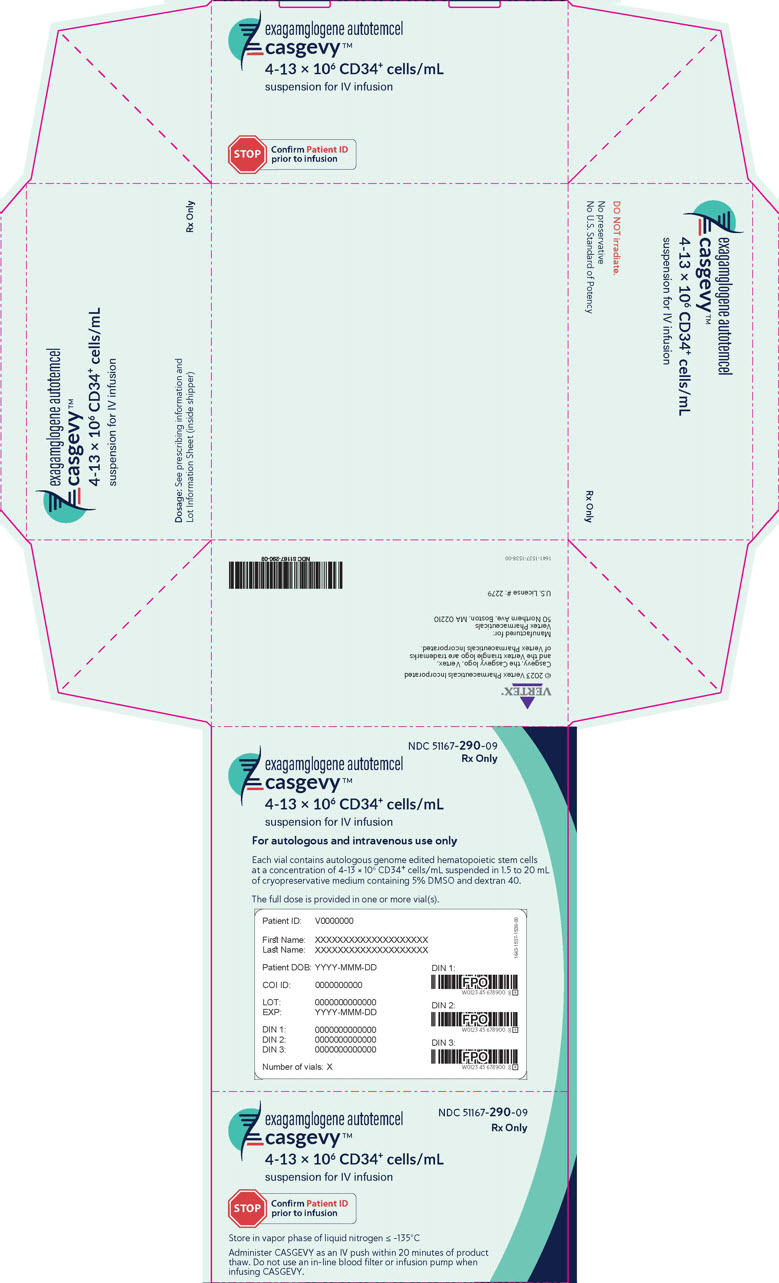
PRINCIPAL DISPLAY PANEL - 20 mL Vial Carton NDC 51167-290-09 Rx Only exagamglogene autotemcel casgevy ® 4-13 × 10 6 CD34 + cells/mL suspension for IV infusion For autologous and intravenous use only Each vial contains autologous genome edited hematopoietic stem cells at a concentration of 4-13 × 10 6 CD34 + cells/mL suspended in 1.5 to 20 mL of cryopreservation medium containing 5% DMSO and dextran 40. The full dose is provided in one or more vial(s). Patient ID: V0000000 First Name: XXXXXXXXXXXXXXXXXXXX Last Name: XXXXXXXXXXXXXXXXXXXX Patient DOB: YYYY-MMM-DD COI ID: 000000000000000 LOT: 0000000000000 EXP: YYYY-MMM-DD DIN 1: 0000000000000 DIN 2: 0000000000000 DIN 3: 0000000000000 Number of vials: X DIN 1: DIN 2: DIN 3: 1643-1537-1538-01 PRINCIPAL DISPLAY PANEL - 20 mL Vial Carton
Reported adverse events (FAERS)
Top reported reactions
Age at onset
Reporter sex
Serious outcomes
Where does this data come from?
About this NDC listing & data coverage
What data is (and isn’t) available for this NDC — tap to expand
| NDC identity (package / product / labeler codes) | ✓ Available |
| Labeler | ✓ Available |
| Product & package description | ✓ Available |
| Marketing category & status | ✓ Available |
| Active ingredient / dosage form / route | ✓ Available |
| FDA label (SPL via DailyMed) | ✓ Available |
| Package photos | ✓ Available |
| Inactive ingredients (structured) | — Not published for this NDC The labeler did not submit a structured excipient list, or no SPL is available. |
| NADAC pharmacy acquisition price (CMS) | — Not published for this NDC CMS publishes NADAC only for NDCs reported in its retail-pharmacy survey. |
| Orange Book / therapeutic-equivalence data | ✓ Available |
| HCPCS J-code billing crosswalk | ✓ Available |
| Medicaid utilization (CMS SDUD) | — Not published for this NDC CMS reports utilization only for NDCs with Medicaid claims above its privacy threshold. |