
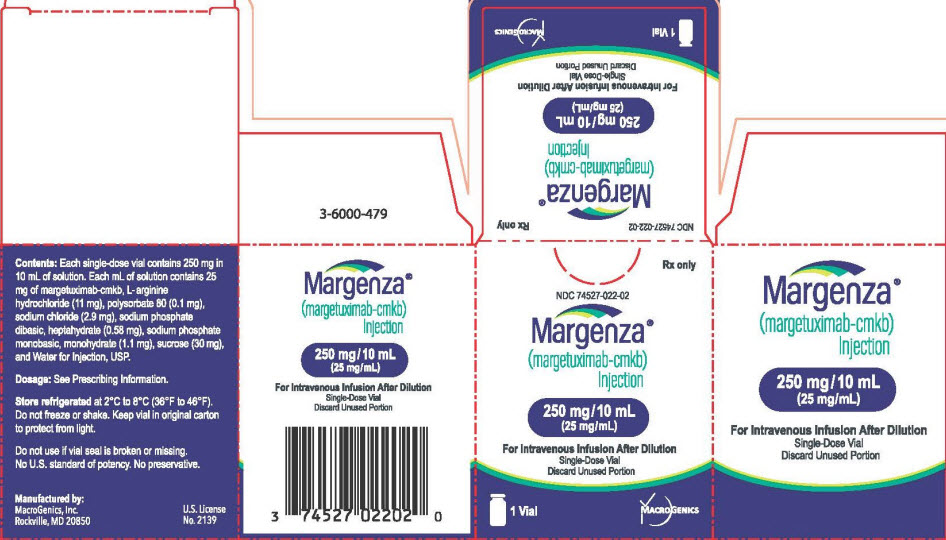
MARGENZA margetuximab-cmkb 25 mg/mL Injection, Solution, Concentrate — NDC 74527-022-03 (Billing 74527-0022-03)
This is a package of MARGENZA margetuximab-cmkb 25 mg/mL Injection, Solution, Concentrate from MacroGenics, Inc, marketed since Jan 2021 and currently FDA-listed.
NDC database record
One package, one record: these facts belong to NDC 74527-022-03 alone.
- Record
- FDA NDC Directory package listing · Human prescription drug
- Code segments
- 74527 labeler · 022 product · 03 package
- Package marketed since
- Jan 15, 2021
- Sample package
- No — commercial package
- Listing certified through
- Dec 31, 2026
- Barcode (UPC-A, from the NDC)
- 3 7452702203 7
- FDA record last changed
- Jul 24, 2026
Identity & classification
Regulatory identifiers FDA, NLM and CMS codes for this package
Drug-database identifiers Medi-Span GPI and First Databank GCN / HICL / AHFS classification
- GSN (GCN sequence number): 081784
- GCN: 49006
- GPI-14 (Medi-Span): 21170034202020
- HICL (First Databank): 047037
- AHFS class code: 10:00.00.00
- RxCUI (RxNorm): 2474028
Where does this data come from?
- FDA openFDA NDC Directory · synced Oct 8, 2026
- FDA label on DailyMed · label index refreshed Oct 8, 2026
- RxNorm (NLM RxNav) · catalog refreshed Oct 8, 2026
- Medi-Span GPI (licensed)
- First Databank (licensed) · refreshed Oct 8, 2026
RxNorm drug class
This medicine belongs to the HER2/neu Receptor Antagonist class.
Where does this data come from?
- RxClass (NLM) · catalog refreshed Oct 8, 2026
Clinical
Margetuximab-cmkb is used along with chemotherapy to treat a certain type of breast cancer (HER-2 positive) that has spread to other parts of the body after treatment with at least two other chemotherapy medications. Margetuximab-cmkb is in a class of medications called monoclonal antibodies. It works by stopping the growth of cancer cells.
Read the full MedlinePlus article ↗- It is used with chemotherapy to treat adults with metastatic HER2-positive breast cancer. It is for people who have already had two or more anti-HER2 treatments.
- It is given as an IV infusion every 3 weeks. The first infusion takes longer than later ones. Your team will watch you during it.
- Tiredness, nausea, diarrhea, headache, fever and hair loss are common. Infusion reactions can occur, mostly with the first dose. Tell staff right away if you feel dizzy, short of b...
- It can lower how well the heart pumps. That is why your heart is checked before and during treatment. Tell us about new shortness of breath or swelling.
Patient education
Supplement & herbal interactions
Where does this data come from?
- MedlinePlus (NLM) · refreshed Oct 8, 2026
- FDA label on DailyMed · label index refreshed Oct 8, 2026
Ask a licensed pharmacist directly — free, answered by our team.
Pricing
A drug doesn't have one price. Each row is a different public payment system, and none is what you'd pay at the counter — that depends on your insurance. The ⓘ on each row explains what it measures.
| Price system | Per mL | Per package |
|---|---|---|
| Retail pharmacies payNADAC · weekly | Not in the retail survey — common for institutional, discontinued, or low-volume packs. | |
| Medicaid paysCMS SDUD · 12 mo | No recent Medicaid claims on file for this NDC — rare and low-volume NDCs are suppressed in the public data. | |
| Medicare drug plans payPart D · quarterly | No Part D plan price is available for this NDC in our data. | |
| Medicare Part B allowsASP · J9353 | $56.442 / J9353 unit | — |
Where does this data come from?
- CMS NADAC weekly file
- CMS ASP pricing files · refreshed Sep 20, 2026
- CMS Medicaid State Drug Utilization Data · refreshed Oct 9, 2026
- CMS Part D plan pricing files · refreshed Sep 24, 2026
- VA National Acquisition Center price file
Billing & reimbursement
Where does this data come from?
- CMS ASP NDC-HCPCS crosswalk · refreshed Sep 22, 2026
- DMEPDAC NDC-HCPCS crosswalk
- openFDA NSDE billing units · refreshed Oct 7, 2026
Packaging — all sizes for this product
| Package NDC | Description | Marketing start | Marketing end | Status |
|---|---|---|---|---|
| 74527-0022-02 74527-022-02 Main listing | 1 VIAL, SINGLE-DOSE in 1 CARTON / 10 mL in 1 VIAL, SINGLE-DOSE | 2021-01-15 | — | Active |
| 74527-0022-03 You're viewing this | 4 VIAL, SINGLE-DOSE in 1 CARTON / 10 mL in 1 VIAL, SINGLE-DOSE | 2021-01-15 | — | Active |
Pack size FAQ
What quantity is in this package?
What NDC number is used to bill for this package of MARGENZA margetuximab-cmkb 25 mg/mL Injection, Solution, Concentrate?
Therapeutic equivalents
| Product | Labeler | Pack | NADAC/unit | TE | Status | Price vs. this |
|---|---|---|---|---|---|---|
| Margenza 25 mg/mLthis 74527-0022-03 | MacroGenics, | 4 vials | — | — | FDA listed | — |
Where does this data come from?
- FDA openFDA NDC Directory · synced Oct 8, 2026
- FDA Purple Book · refreshed Oct 5, 2026
- CMS NADAC weekly file
Availability & biosimilar status
Biologics have no small-molecule generics; biosimilar competition is tracked in the FDA Purple Book.
Why the date isn’t exact: Biosimilar timing can change because patents may be challenged, settled, licensed, added or removed, and litigation can move the real date earlier or later.
🛈 What do these terms mean?
- Biologic patent
- A patent the reference product’s maker has publicly listed. A biosimilar generally can’t launch until these expire — unless they’re invalidated or resolved in a settlement.
- Reference-product exclusivity
- A flat 12 years of FDA market protection from the biologic’s first licensure (the BPCIA). No biosimilar can be licensed before it ends, regardless of patents.
- Interchangeable exclusivity
- The first interchangeable biosimilar can earn a period as the only interchangeable version (pharmacists can substitute it without the prescriber).
- Earliest biosimilar (LOE)
- The latest of all the dates above — the soonest a biosimilar can realistically reach the market. Litigation and settlements can move it earlier.
Biologics have no small-molecule “generics” — competition comes from FDA-licensed biosimilars, tracked in the FDA Purple Book.
| Code | What it grants | Expires |
|---|---|---|
| RefProduct | Reference-product exclusivity (12-year, BPCIA) — no biosimilar can be licensed before this date | Dec 16, 2032 |
Is there a biosimilar for MARGENZA 250 MG/10 ML VIAL?
Why do different websites show different biosimilar dates?
Can a biosimilar launch before the last patent expires?
What does “current Purple Book estimate” mean?
What does “FDA listed” mean?
What does a patent or protection date mean here?
Where does this data come from?
- FDA Purple Book · refreshed Oct 5, 2026
Inactive Ingredients / Excipients
Inactive ingredients, also called excipients, are components of the drug product other than the active ingredient. They may include fillers, dyes, coatings, preservatives, flavors, or other formulation ingredients.
🧪 Avoiding an ingredient? See Margetuximab-cmkb Injection inactive ingredients by manufacturer: every current product's list side by side, so you can ask your pharmacy for the version that does not list it.
💡 Tap an ingredient (hover on desktop) to see what it is and why it’s used.
-
UNII F7LTH1E20Y
Arginine hydrochloride is an amino acid salt used as a buffer and pH adjuster in medicines. It helps maintain the correct acidity level to keep the drug stable and effective.
-
UNII 6OZP39ZG8H
Polysorbate 80 is a synthetic emulsifier derived from sorbitol and oleic acid. It helps mix oil and water-based ingredients together in medications and improves how the product disperses in the body.
-
UNII 451W47IQ8X
Sodium chloride is common table salt. It's used in medicines as a buffer to maintain proper pH, as a filler to add bulk, or to adjust the osmotic balance in liquid formulations.
-
UNII 70WT22SF4B
A mineral salt that acts as a buffer to maintain the pH balance of the medication. It helps stabilize the drug's potency and prevents unwanted chemical changes during storage.
-
UNII 593YOG76RN
A salt made from sodium and phosphate that helps regulate acidity and maintain proper pH balance in the medicine. It also acts as a buffer to keep the product stable.
-
UNII C151H8M554
A natural sugar derived from sugar cane or sugar beets. It's used as a sweetener, filler, and binder to improve taste, add bulk, and help hold tablet or capsule ingredients together.
-
UNII 059QF0KO0R
Water is a liquid solvent that dissolves and mixes ingredients together in liquid medicines, syrups, and injections. It helps distribute the active drug evenly throughout the product.
7 inactive ingredients listed in the exact product block matched to this NDC.
Where does this data come from?
ingredient classCode="IACT" elements from the exact product block matched by this NDC. Label-section narrative from DailyMed / the openFDA label index is shown separately when available.- FDA label on DailyMed · label index refreshed Oct 8, 2026
- FDA openFDA NDC Directory · synced Oct 8, 2026
Inactive ingredient FAQ
Are inactive ingredients the same for every manufacturer?
Why might an inactive ingredient be missing?
Can inactive ingredients matter?
Manufacturer & labeler
More NDCs from MacroGenics, Inc labeler code 74527
Where does this data come from?
- FDA openFDA NDC Directory · synced Oct 8, 2026
- Drugs@FDA
Full prescribing information FDA SPL
🚨 Boxed Warning ▾
WARNING: LEFT VENTRICULAR DYSFUNCTION AND EMBRYO-FETAL TOXICITY WARNING: LEFT VENTRICULAR DYSFUNCTION AND EMBRYO-FETAL TOXICITY See full prescribing information for complete boxed warning. Left Ventricular Dysfunction: MARGENZA may lead to reductions in left ventricular ejection fraction (LVEF). Evaluate cardiac function prior to and during treatment.
Discontinue MARGENZA treatment for a confirmed clinically significant decrease in left ventricular function. ( 2.2 , 5.1 , 6.1 ) Embryo-Fetal Toxicity: Exposure to MARGENZA during pregnancy can cause embryo-fetal harm. Advise patients of the risk and need for effective contraception.
( 5.2 , 8.1 , 8.3 ) Left Ventricular Dysfunction: MARGENZA may lead to reductions in left ventricular ejection fraction (LVEF). Evaluate cardiac function prior to and during treatment. Discontinue MARGENZA treatment for a confirmed clinically significant decrease in left ventricular function [see Dosage and Administration (2.2) , Warnings and Precautions (5.1) , and Adverse Reactions (6.1) ].
Embryo-Fetal Toxicity: Exposure to MARGENZA during pregnancy can cause embryo-fetal harm. Advise patients of the risk and need for effective contraception [see Warnings and Precautions (5.2) , Use in Specific Populations (8.1 , 8.3) ].
🎯 Indications and Usage ▾
1 INDICATIONS AND USAGE MARGENZA is indicated, in combination with chemotherapy, for the treatment of adult patients with metastatic HER2-positive breast cancer who have received two or more prior anti-HER2 regimens, at least one of which was for metastatic disease [see Dosage and Administration (2.1) and Clinical Studies (14.1) ]. MARGENZA is a HER2/neu receptor antagonist indicated, in combination with chemotherapy, for the treatment of adult patients with metastatic HER2-positive breast cancer who have received two or more prior anti-HER2 regimens, at least one of which was for metastatic disease.
( 1 , 2.1 , 14.1 )
⏱️ Dosage and Administration ▾
2 DOSAGE AND ADMINISTRATION For intravenous infusion only. ( 2.1 ) Administer MARGENZA as an intravenous infusion at 15 mg/kg over 120 minutes for the initial dose, then over a minimum of 30 minutes every 3 weeks for all subsequent doses. ( 2.1 ) On days when both MARGENZA and chemotherapy are to be administered, MARGENZA may be administered immediately after chemotherapy completion. ( 2.1 )
2.1Recommended Doses and Schedules The recommended dose of MARGENZA is 15 mg/kg, administered as an intravenous infusion every 3 weeks (21-day cycle) until disease progression or unacceptable toxicity. Administer MARGENZA as an intravenous infusion at 15 mg/kg over 120 minutes for the initial dose, then over a minimum of 30 minutes every 3 weeks for all subsequent doses. On days when both MARGENZA and chemotherapy are to be administered, MARGENZA may be administered immediately after chemotherapy completion.
Refer to the respective Prescribing Information for each therapeutic agent administered in combination with MARGENZA for the recommended dosage information, as appropriate.
2.2Dose Modification or Important Dosing Considerations If a patient misses a dose of MARGENZA, administer the scheduled dose as soon as possible. Adjust the administration schedule to maintain a 3-week interval between doses. Left Ventricular Dysfunction [see Warnings and Precautions (5.1) ] Assess left ventricular ejection fraction (LVEF) before starting MARGENZA and regularly during treatment.
Withhold MARGENZA dosing for at least 4 weeks for any of the following: ≥ 16% absolute decrease in LVEF from pretreatment values LVEF below institutional limits of normal (or 50% if no limits are available) and ≥ 10% absolute decrease in LVEF from pretreatment values. MARGENZA dosing may be resumed if, within 8 weeks, LVEF returns to normal limits and absolute decrease from baseline is ≤ 15%. Permanently discontinue MARGENZA if LVEF decline persists for greater than 8 weeks, or if dosing is interrupted on greater than 3 occasions for LVEF decline.
Infusion-Related Reactions [see Warnings and Precautions (5.3) ] Decrease the rate of infusion for mild or moderate infusion-related reactions (IRRs). Interrupt the infusion for dyspnea or clinically significant hypotension. Permanently discontinue MARGENZA dosing in patients with severe or life-threatening IRRs .
2.3Preparation for Administration Administer as an intravenous infusion after dilution. Preparation for Intravenous Infusion Prepare solution for infusion, using aseptic technique, as follows: Parenteral drug products should be inspected visually for particulate matter and discoloration prior to administration, whenever solution and container permit. The solution is clear to slightly opalescent, colorless to pale yellow or pale brown.
Some visible, translucent, inherent proteinaceous particles may be present. Swirl the vial(s) gently. Do not shake the vial(s).
Calculate the required volume of MARGENZA needed to obtain the appropriate dose according to patient's body weight. The calculated total dose volume should be rounded to the nearest 0.1 mL. Withdraw appropriate volume of MARGENZA solution from the vial(s) using a syringe.
Transfer MARGENZA into an intravenous bag containing 100 mL or 250 mL 0.9% Sodium Chloride Injection, USP. Polyvinyl chloride (PVC) intravenous bags or intravenous bags made with polyolefins (polyethylene and polypropylene) and polyamide or polyolefins only or copolymer of olefins may be used. Do not use 5% Dextrose Injection, USP solution.
The final concentration of the diluted solution should be between 0.5 mg/mL to 7.2 mg/mL. Gently invert the intravenous bag to mix the diluted solution. Do not shake the intravenous bag.
Discard any unused portion left in the vial(s). Do not administer as an intravenous push or bolus. Do not mix MARGENZA with other drugs.
Storage of Diluted Solution The product does not contain a preservative. If diluted infusion solution is not used immediately, it can be s… [Excerpted — this section continues on DailyMed.]
💊 Dosage Forms and Strengths ▾
3 DOSAGE FORMS AND STRENGTHS Injection: 250 mg/10 mL (25 mg/mL) clear to slightly opalescent, colorless to pale yellow or pale brown solution in a single-dose vial. Injection: 250 mg/10 mL (25 mg/mL) in a single-dose vial. ( 3 )
⛔ Contraindications ▾
4 CONTRAINDICATIONS None. None. ( 4 )
⚠️ Warnings and Cautions ▾
5 WARNINGS AND PRECAUTIONS Infusion-Related Reactions (IRRs): Monitor for signs and symptoms. If a significant infusion-associated reaction occurs, slow or interrupt the infusion and administer appropriate medical therapies. ( 5.3 )
5.1Left Ventricular Dysfunction Left ventricular cardiac dysfunction can occur with MARGENZA. In SOPHIA, left ventricular dysfunction occurred in 1.9% of patients treated with MARGENZA. MARGENZA has not been studied in patients with a pretreatment LVEF value of < 50%, a prior history of myocardial infarction or unstable angina within 6 months, or congestive heart failure NYHA class II-IV.
Withhold MARGENZA for ≥ 16% absolute decrease in LVEF from pretreatment values or LVEF value below institutional limits of normal (or 50% if no limits are available) and ≥ 10% absolute decrease in LVEF from pretreatment values. Permanently discontinue MARGENZA if LVEF decline persists for greater than 8 weeks, or if dosing is interrupted on greater than 3 occasions due to LVEF decline [see Dosage and Administration (2.2) ]. Cardiac Monitoring Conduct thorough cardiac assessment, including history, physical examination, and determination of LVEF by echocardiogram or MUGA scan.
The following schedule is recommended: Baseline LVEF measurement within 4 weeks prior to initiation of MARGENZA LVEF measurements (MUGA/echocardiogram) every 3 months during and upon completion of MARGENZA Repeat LVEF measurement at 4-week intervals if MARGENZA is withheld for significant left ventricular cardiac dysfunction [see Dosage and Administration (2.2) ] .
5.2Embryo-Fetal Toxicity Based on findings in animals and mechanism of action, MARGENZA can cause fetal harm when administered to a pregnant woman. There are no available data on the use of MARGENZA in pregnant women to inform the drug-associated risk. In postmarketing reports, use of a HER2-directed antibody during pregnancy resulted in cases of oligohydramnios and oligohydramnios sequence manifesting as pulmonary hypoplasia, skeletal abnormalities and neonatal death.
In an animal reproduction study, intravenous administration of margetuximab-cmkb to pregnant cynomolgus monkeys once every 3 weeks starting at gestational day (GD) 20 until delivery resulted in oligohydramnios and delayed infant kidney development. Animal exposures were ≥ 3 times the human exposures at the recommended dose, based on C max . Verify pregnancy status of females of reproductive potential prior to initiation of MARGENZA.
Advise pregnant women and females of reproductive potential that exposure to MARGENZA during pregnancy or within 4 months prior to conception can result in fetal harm. Advise females of reproductive potential to use effective contraception during treatment and for 4 months following the last dose of MARGENZA [see Use in Specific Populations (8.1 , 8.3) ].
5.3Infusion-Related Reactions MARGENZA can cause infusion-related reactions (IRRs) [see Adverse Reactions (6.1) ]. Symptoms may include fever, chills, arthralgia, cough, dizziness, fatigue, nausea, vomiting, headache, diaphoresis, tachycardia, hypotension, pruritus, rash, urticaria, and dyspnea. In SOPHIA, IRRs were reported by 13% of patients on MARGENZA plus chemotherapy.
Most of the IRRs occur during Cycle 1. Grade 3 IRRs were reported in 1.5% of MARGENZA-treated patients. All IRRs resolved within 24 hours, irrespective of severity.
In SOPHIA, IRRs leading to interruption of treatment occurred in 9% of patients treated with MARGENZA and chemotherapy. One patient (0.4%) on MARGENZA discontinued treatment due to IRR. An infusion substudy in 88 patients in SOPHIA evaluated MARGENZA administered over 120 minutes for the initial dose, then 30 minutes from Cycle 2 forward.
IRRs were ≤ Grade 2 and most occurred during the first (120 minutes) administration of MARGENZA. From Cycle 2 onward, one patient (1.1%) had an IRR (Grade 1). Monitor patients for IRRs during MARGENZA administration and as clinically indicated after completion of infus… [Excerpted — this section continues on DailyMed.]
🤒 Adverse Reactions ▾
6 ADVERSE REACTIONS The following adverse reactions are discussed in greater detail in other sections of the label: Left Ventricular Dysfunction [see Warnings and Precautions (5.1) ] Embryo-Fetal Toxicity [see Warnings and Precautions (5.2) ] Infusion-Related Reactions [see Warnings and Precautions (5.3) ] The most common adverse drug reactions (>10%) with MARGENZA in combination with chemotherapy are fatigue/asthenia, nausea, diarrhea, vomiting, constipation, headache, pyrexia, alopecia, abdominal pain, peripheral neuropathy, arthralgia/myalgia, cough, decreased appetite, dyspnea, infusion-related reactions, palmar-plantar erythrodysesthesia, and extremity pain.
( 6.1 ) To report SUSPECTED ADVERSE REACTIONS, contact MacroGenics at 1-844-633-6469 or FDA at 1-800-FDA-1088 or www.fda.gov/medwatch.
6.1Clinical Trials Experience Because clinical trials are conducted under widely varying conditions, adverse reaction rates observed in the clinical trials of a drug cannot be directly compared to rates in the clinical trials of another drug and may not reflect rates observed in practice. The safety of MARGENZA was evaluated in HER2-positive breast cancer patients who received two or more prior anti-HER2 regimens in SOPHIA [see Clinical Studies (14.1) ]. Patients were randomized (1:1) to receive either MARGENZA 15 mg/kg every 3 weeks plus chemotherapy or trastuzumab plus chemotherapy.
Among patients who received MARGENZA, 40% were exposed for 6 months or longer and 11% were exposed for greater than one year. Serious adverse reactions occurred in 16% of patients who received MARGENZA. Serious adverse reactions in > 1% of patients included febrile neutropenia (1.5%), neutropenia/neutrophil count decrease (1.5%) and infusion related reactions (1.1%).
Fatal adverse reactions occurred in 1.1% of patients who received MARGENZA, including viral pneumonia (0.8%) and aspiration pneumonia (0.4%). Permanent discontinuation due to an adverse reaction occurred in 3% of patients who received MARGENZA. Adverse reactions which resulted in permanent discontinuation in > 1% of patients who received MARGENZA included left ventricular dysfunction and infusion-related reactions.
Dosage interruptions due to an adverse reaction occurred in 11% of patients who received MARGENZA. Adverse reactions which required dosage interruption in > 5% of patients who received MARGENZA included infusion-related reactions. Table 1 summarizes the adverse reactions in SOPHIA.
Table 1 Adverse Reactions (>10%) in Patients with Metastatic HER2-Positive Breast Cancer Who Received MARGENZA in SOPHIA Adverse Reaction MARGENZA + Chemotherapy (n = 264) Trastuzumab + Chemotherapy (n = 266) All Grades (%) Grade 3 or 4 (%) All Grades (%) Grade 3 or 4 (%) General disorders and administration site conditions Fatigue/Asthenia 57 7 47
4.5Pyrexia 19 0.4 14
0.4Gastrointestinal disorders Nausea 33 1.1 32
0.4Diarrhea 25 2.3 25
2.3Vomiting 21 0.8 14
1.5Constipation 19 0.8 17
0.8Abdominal pain Includes abdominal pain, abdominal discomfort, lower abdominal pain and upper abdominal pain 17 1.5 21
1.5Skin and Subcutaneous tissue Alopecia 18 0 15 0 Palmar-plantar erythrodysesthesia 13 0 15 3 Nervous System Disorders Headache Includes headache and migraine 19 0 16 0 Peripheral neuropathy Includes peripheral neuropathy, peripheral sensory neuropathy, peripheral motor neuropathy, and neuropathy 16 1.1 15
2.3Respiratory, thoracic and mediastinal disorders Cough 14 0.4 12 0 Dyspnea 13 1.1 11
2.3Metabolism and nutrition disorders Decreased appetite 14 0.4 14
0.4Musculoskeletal and connective tissue disorders Arthralgia/Myalgia 14 0.4 12
0.8Extremity pain 11 0.8 9 0 Injury, poisoning and procedural complications Infusion-related reaction 13 1.5 3 0 Clinically relevant adverse reactions in ≤10% of patients who received MARGENZA in combination with chemotherapy included: dizziness and stomatitis (10%) each, decreased weight, dysgeusia, rash, and insomnia (6%) each, hypertension (5%), and syncope (… [Excerpted — this section continues on DailyMed.]
🔄 Drug Interactions ▾
7 DRUG INTERACTIONS Anthracyclines Patients who receive anthracyclines less than 4 months after stopping MARGENZA [see Clinical Pharmacology (12.3) ] may be at increased risk of cardiac dysfunction. While this interaction has not been studied with MARGENZA, clinical data from other HER2-directed antibodies warrants consideration. Avoid anthracycline-based therapy for up to 4 months after stopping MARGENZA.
If concomitant use is unavoidable, closely monitor patient's cardiac function.
👥 Use in Specific Populations ▾
8 USE IN SPECIFIC POPULATIONS Females and Males of Reproductive Potential: Verify the pregnancy status of females prior to initiation of MARGENZA. ( 8.3 )
8.1Pregnancy Risk Summary Based on findings in animals and mechanism of action, MARGENZA can cause fetal harm when administered to a pregnant woman. There are no available data on use of MARGENZA in pregnant women to inform the drug-associated risk. In postmarketing reports, use of a HER2-directed antibody during pregnancy resulted in cases of oligohydramnios and oligohydramnios sequence manifesting as pulmonary hypoplasia, skeletal abnormalities, and neonatal death.
In an animal reproduction study, intravenous administration of margetuximab-cmkb to pregnant cynomolgus monkeys once every 3 weeks, starting at gestational day (GD) 20 until delivery, resulted in oligohydramnios and delayed infant kidney development. Animal exposures were ≥ 3 times the human exposures at the recommended dose, based on C max (see Data ) . Advise patients of potential risks to a fetus.
There are clinical considerations if MARGENZA is used during pregnancy or within 4 months prior to conception (see Clinical Considerations ). Estimated background risk of major birth defects and miscarriage for the indicated population is unknown. In the U.S. general population, background risks of major birth defects and miscarriage in clinically recognized pregnancies are 2 - 4% and 15 - 20%, respectively.
Clinical Considerations Fetal/Neonatal Adverse Reactions Monitor women who received MARGENZA during pregnancy or within 4 months prior to conception for oligohydramnios. If oligohydramnios occurs, perform fetal testing that is appropriate for gestational age and consistent with community standards of care. Data Animal Data In an enhanced pre- and post-natal development study, pregnant cynomolgus monkeys received intravenous doses of 50 or 100 mg/kg margetuximab-cmkb once every 3 weeks starting on GD 20 and until delivery.
Animal exposures at doses of 50 and 100 mg/kg were 3 and 6 times, respectively, the human exposures at the recommended dose, based on C max . Treatment with 50 and 100 mg/kg margetuximab-cmkb resulted in oligohydramnios beginning on GD 75. An infant mortality occurred on post-natal day 63 following maternal exposure to 100 mg/kg margetuximab-cmkb.
Clinical findings included tubular degeneration/necrosis and tubular dilatation in the kidney. Maternal doses of 50 and 100 mg/kg resulted in decreased infant kidney weights and histologic immature nephrons. Measurable serum concentrations of margetuximab-cmkb were observed in infant animals, which is consistent with margetuximab-cmkb crossing the placenta.
8.2Lactation Risk Summary There is no information regarding presence of MARGENZA in human milk, effects on the breastfed child, or effects on milk production. Published data suggest human IgG is present in human milk but does not enter neonatal or infant circulation in substantial amounts. Consider developmental and health benefits of breastfeeding along with the mother's clinical need for MARGENZA treatment and any potential adverse effects on the breastfed child from MARGENZA or from the underlying maternal condition.
This consideration should also take into account the MARGENZA washout period of 4 months [see Clinical Pharmacology (12.3) ].
8.3Females and Males of Reproductive Potential MARGENZA can cause fetal harm when administered to a pregnant woman. Pregnancy Testing Verify pregnancy status of females of reproductive potential prior to initiation of MARGENZA. Contraception Females Advise females of reproductive potential to use effective contraception during treatment and for 4 months following the last dose of MARGENZA [see Use in Specific Populations (8.1) and Clinical Pharmacology (12.3) ].
8.4Pediatric Use Safety and effectiveness of MARGENZA have not been established in pediatric patients.
8.5Geriatric Use Of the 266 patients treated with MARGENZA 20% were 65 years of age or older… [Excerpted — this section continues on DailyMed.]
🤰 Pregnancy ▾
8.1Pregnancy Risk Summary Based on findings in animals and mechanism of action, MARGENZA can cause fetal harm when administered to a pregnant woman. There are no available data on use of MARGENZA in pregnant women to inform the drug-associated risk. In postmarketing reports, use of a HER2-directed antibody during pregnancy resulted in cases of oligohydramnios and oligohydramnios sequence manifesting as pulmonary hypoplasia, skeletal abnormalities, and neonatal death.
In an animal reproduction study, intravenous administration of margetuximab-cmkb to pregnant cynomolgus monkeys once every 3 weeks, starting at gestational day (GD) 20 until delivery, resulted in oligohydramnios and delayed infant kidney development. Animal exposures were ≥ 3 times the human exposures at the recommended dose, based on C max (see Data ) . Advise patients of potential risks to a fetus.
There are clinical considerations if MARGENZA is used during pregnancy or within 4 months prior to conception (see Clinical Considerations ). Estimated background risk of major birth defects and miscarriage for the indicated population is unknown. In the U.S. general population, background risks of major birth defects and miscarriage in clinically recognized pregnancies are 2 - 4% and 15 - 20%, respectively.
Clinical Considerations Fetal/Neonatal Adverse Reactions Monitor women who received MARGENZA during pregnancy or within 4 months prior to conception for oligohydramnios. If oligohydramnios occurs, perform fetal testing that is appropriate for gestational age and consistent with community standards of care. Data Animal Data In an enhanced pre- and post-natal development study, pregnant cynomolgus monkeys received intravenous doses of 50 or 100 mg/kg margetuximab-cmkb once every 3 weeks starting on GD 20 and until delivery.
Animal exposures at doses of 50 and 100 mg/kg were 3 and 6 times, respectively, the human exposures at the recommended dose, based on C max . Treatment with 50 and 100 mg/kg margetuximab-cmkb resulted in oligohydramnios beginning on GD 75. An infant mortality occurred on post-natal day 63 following maternal exposure to 100 mg/kg margetuximab-cmkb.
Clinical findings included tubular degeneration/necrosis and tubular dilatation in the kidney. Maternal doses of 50 and 100 mg/kg resulted in decreased infant kidney weights and histologic immature nephrons. Measurable serum concentrations of margetuximab-cmkb were observed in infant animals, which is consistent with margetuximab-cmkb crossing the placenta.
🧒 Pediatric Use ▾
8.4Pediatric Use Safety and effectiveness of MARGENZA have not been established in pediatric patients.
🧓 Geriatric Use ▾
8.5Geriatric Use Of the 266 patients treated with MARGENZA 20% were 65 years of age or older and 4% were 75 years or older. No overall differences in efficacy were observed between patients ≥ 65 years of age compared to younger patients. There was a higher incidence of Grade ≥ 3 adverse reactions observed in patients age 65 years or older (56%) compared to younger patients (47%), as well as adverse reactions associated with potential cardiotoxicity (35% vs 18%).
🧬 Clinical Pharmacology ▾
12 CLINICAL PHARMACOLOGY
12.1Mechanism of Action Margetuximab-cmkb binds to the extracellular domain of the human epidermal growth factor receptor 2 protein (HER2). Upon binding to HER2-expressing tumor cells, margetuximab-cmkb inhibits tumor cell proliferation, reduces shedding of the HER2 extracellular domain and mediates antibody-dependent cellular cytotoxicity (ADCC). In vitro, the modified Fc region of margetuximab-cmkb increases binding to activating Fc receptor FCGR3A (CD16A) and decreases binding to inhibitory Fc receptor FCGR2B (CD32B).
These changes lead to greater in vitro ADCC and NK cell activation.
12.2Pharmacodynamics The exposure-response relationship and time course of pharmacodynamic response for the safety and effectiveness of margetuximab-cmkb have not been fully characterized.
12.3Pharmacokinetics Following the approved recommended dosage, the steady-state geometric mean (%CV) C max of margetuximab-cmkb is 466 (20%) µg/mL and AUC 0-21d is 4120 (21%) µg.day/mL in patients with HER2-positive relapsed or refractory advanced breast cancer. Margetuximab-cmkb undergoes both linear and nonlinear elimination. After a single dose, margetuximab-cmkb C max and AUC 0-21d increase in an approximately dose proportional manner from 10 to 18 mg/kg (0.67 to 1.2 times the approved recommended dose).
At the approved recommended dosage, time to steady-state was 2 months, and accumulation ratio was 1.65 based on AUC 0-21d . No clinically significant differences in margetuximab-cmkb exposure were observed when infusion time was reduced from 120 minutes to 30 minutes. Distribution Margetuximab-cmkb geometric mean (%CV) steady-state volume of distribution is
5.47L (22%). Elimination The geometric mean (%CV) terminal half-life of margetuximab-cmkb is 19.2 days (28%) and clearance is
0.22L/day (24%). Four months after margetuximab-cmkb discontinuation, concentrations decrease to approximately 3% of the steady-state trough serum concentration. Metabolism Margetuximab-cmkb is expected to be metabolized into small peptides by catabolic pathways.
Specific Populations No clinically significant differences in margetuximab-cmkb PK were observed based on age (29 to 83 years), sex, race (Caucasian, Black, Asian), mild to moderate (CLcr 30 to 89 mL/min estimated using the Cockcroft-Gault equation) renal impairment, mild hepatic impairment (total bilirubin ≤ ULN and AST > ULN, or total bilirubin 1 to
1.5ULN and any AST), HER2 expression level (0 to 3 by IHC), tumor burden (2 – 317 mm), ECOG score (0 to 2), albumin (24 to 50 g/L), FCGR3A (CD16A), FCGR2A (CD32A) and FCGR2B (CD32B) genotype, number of metastatic sites (≤ 2 or > 2), number of prior therapy lines (≤ 2 or > 2) or concurrent chemotherapies (capecitabine, gemcitabine, eribulin and vinorelbine). The effect of severe renal impairment (CLcr 15 to 29 mL/min), end-stage renal disease with or without hemodialysis, and moderate (total bilirubin > 1.5 to ≤ 3 ULN and any AST) or severe hepatic impairment (total bilirubin >3 ULN and any AST) on margetuximab-cmkb PK is unknown.
12.6Immunogenicity The observed incidence of anti-drug antibodies is highly dependent on the sensitivity and specificity of the assay. Differences in assay methods preclude meaningful comparisons of the incidence of anti-drug antibodies in the studies described below with the incidence of anti-drug antibodies in other studies, including those of MARGENZA or of other margetuximab products. In patients who received MARGENZA in combination with chemotherapy in SOPHIA (up to 68 months) or the Infusion substudy (up to 42 months), the incidence of anti-margetuximab antibodies was 2% (7/350).
No patients developed treatment-emergent neutralizing antibodies. Given the low incidence of anti-margetuximab antibodies, the effect of anti-margetuximab antibodies on the pharmacokinetics, pharmacodynamics, safety, and/or effectiveness of margetuximab-cmkb is unknown.
🧬 Mechanism of Action ▾
12.1Mechanism of Action Margetuximab-cmkb binds to the extracellular domain of the human epidermal growth factor receptor 2 protein (HER2). Upon binding to HER2-expressing tumor cells, margetuximab-cmkb inhibits tumor cell proliferation, reduces shedding of the HER2 extracellular domain and mediates antibody-dependent cellular cytotoxicity (ADCC). In vitro, the modified Fc region of margetuximab-cmkb increases binding to activating Fc receptor FCGR3A (CD16A) and decreases binding to inhibitory Fc receptor FCGR2B (CD32B).
These changes lead to greater in vitro ADCC and NK cell activation.
📦 How Supplied / Storage and Handling ▾
16 HOW SUPPLIED/STORAGE AND HANDLING
16.1How Supplied MARGENZA (margetuximab-cmkb) injection is a clear to slightly opalescent, colorless to pale yellow or pale brown solution in a single-dose vial supplied as: Carton Contents NDC One 250 mg/10 mL (25 mg/mL) single-dose vial NDC 74527-022-02 Four 250 mg/10 mL (25 mg/mL) single-dose vials NDC 74527-022-03
16.2Storage Store vials refrigerated at 2°C to 8°C (36°F to 46°F) in original carton to protect from light until time of use. Do not freeze. Do not shake.
📦 Storage and Handling ▾
16.2Storage Store vials refrigerated at 2°C to 8°C (36°F to 46°F) in original carton to protect from light until time of use. Do not freeze. Do not shake.
📋 Description ▾
11 DESCRIPTION Margetuximab-cmkb, a HER2/neu receptor antagonist, is a chimeric Fc-engineered IgG1 kappa monoclonal antibody. Margetuximab-cmkb is produced by recombinant DNA technology in a mammalian cell (Chinese Hamster Ovary) culture. Margetuximab-cmkb has an approximate molecular weight of 149 kDa.
MARGENZA (margetuximab-cmkb) injection is a sterile, preservative-free, clear to slightly opalescent, colorless to pale yellow or pale brown solution that requires dilution for intravenous use. Some visible, translucent, inherent proteinaceous particles may be present. Each single-dose vial contains 250 mg of margetuximab-cmkb in 10 mL of solution.
Each mL of solution contains 25 mg of margetuximab-cmkb, L-arginine hydrochloride (11 mg), polysorbate 80 (0.1 mg), sodium chloride (2.9 mg), sodium phosphate dibasic, heptahydrate (0.58 mg), sodium phosphate monobasic, monohydrate (1.1 mg), sucrose (30 mg), and Water for Injection, USP at a pH of approximately 6.1.
💬 Information for Patients ▾
17 PATIENT COUNSELING INFORMATION Left Ventricular Dysfunction Advise patients to contact a health care professional immediately for any of the following: new onset or worsening shortness of breath, cough, swelling of the ankles/legs, swelling of the face, palpitations, weight gain of more than 5 pounds in 24 hours, dizziness or loss of consciousness [see Warnings and Precautions (5.1) ]. Embryo-Fetal Toxicity Advise pregnant women and females of reproductive potential that exposure to MARGENZA during pregnancy or within 4 months prior to conception can result in fetal harm.
Advise female patients to contact their healthcare provider with a known or suspected pregnancy [see Warnings and Precautions (5.2) , Use in Specific Populations (8.1) ]. Advise females of reproductive potential to use effective contraception during treatment with MARGENZA and for 4 months following the last dose [see Warnings and Precautions (5.2) , Use in Specific Populations (8.3) ].
🧬 Pharmacokinetics ▾
12.3Pharmacokinetics Following the approved recommended dosage, the steady-state geometric mean (%CV) C max of margetuximab-cmkb is 466 (20%) µg/mL and AUC 0-21d is 4120 (21%) µg.day/mL in patients with HER2-positive relapsed or refractory advanced breast cancer. Margetuximab-cmkb undergoes both linear and nonlinear elimination. After a single dose, margetuximab-cmkb C max and AUC 0-21d increase in an approximately dose proportional manner from 10 to 18 mg/kg (0.67 to 1.2 times the approved recommended dose).
At the approved recommended dosage, time to steady-state was 2 months, and accumulation ratio was 1.65 based on AUC 0-21d . No clinically significant differences in margetuximab-cmkb exposure were observed when infusion time was reduced from 120 minutes to 30 minutes. Distribution Margetuximab-cmkb geometric mean (%CV) steady-state volume of distribution is
5.47L (22%). Elimination The geometric mean (%CV) terminal half-life of margetuximab-cmkb is 19.2 days (28%) and clearance is
0.22L/day (24%). Four months after margetuximab-cmkb discontinuation, concentrations decrease to approximately 3% of the steady-state trough serum concentration. Metabolism Margetuximab-cmkb is expected to be metabolized into small peptides by catabolic pathways.
Specific Populations No clinically significant differences in margetuximab-cmkb PK were observed based on age (29 to 83 years), sex, race (Caucasian, Black, Asian), mild to moderate (CLcr 30 to 89 mL/min estimated using the Cockcroft-Gault equation) renal impairment, mild hepatic impairment (total bilirubin ≤ ULN and AST > ULN, or total bilirubin 1 to
1.5ULN and any AST), HER2 expression level (0 to 3 by IHC), tumor burden (2 – 317 mm), ECOG score (0 to 2), albumin (24 to 50 g/L), FCGR3A (CD16A), FCGR2A (CD32A) and FCGR2B (CD32B) genotype, number of metastatic sites (≤ 2 or > 2), number of prior therapy lines (≤ 2 or > 2) or concurrent chemotherapies (capecitabine, gemcitabine, eribulin and vinorelbine). The effect of severe renal impairment (CLcr 15 to 29 mL/min), end-stage renal disease with or without hemodialysis, and moderate (total bilirubin > 1.5 to ≤ 3 ULN and any AST) or severe hepatic impairment (total bilirubin >3 ULN and any AST) on margetuximab-cmkb PK is unknown.
🧬 Pharmacodynamics ▾
12.2Pharmacodynamics The exposure-response relationship and time course of pharmacodynamic response for the safety and effectiveness of margetuximab-cmkb have not been fully characterized.
🔬 Clinical Studies ▾
14 CLINICAL STUDIES
14.1Metastatic Breast Cancer The efficacy of MARGENZA plus chemotherapy was evaluated in SOPHIA (NCT02492711), a randomized, multicenter, open-label trial of 536 patients with IHC 3+ or ISH-amplified HER2+ metastatic breast cancer who had received prior treatment with other anti-HER2 therapies. Patients were randomized (1:1) to MARGENZA plus chemotherapy or trastuzumab plus chemotherapy. Randomization was stratified by chemotherapy choice (capecitabine, eribulin, gemcitabine, or vinorelbine), number of lines of therapy in the metastatic setting (≤ 2, > 2), and number of metastatic sites (≤ 2, > 2).
Patients were required to have progressed on or after the most recent line of therapy. Prior radiotherapy and hormonal therapy were allowed. Patients received MARGENZA intravenously at a dose of 15 mg/kg every 3 weeks administered over 120 minutes for the initial administration and then over 30 to 120 minutes thereafter.
Trastuzumab was given intravenously at an initial dose of 8 mg/kg over 90 minutes, followed by 6 mg/kg over 30 minutes every 3 weeks thereafter. Patients were treated with MARGENZA or trastuzumab in combination with chemotherapy until disease progression or unacceptable toxicity. Major efficacy outcome measures were progression-free survival (PFS) by blinded independent central (BICR) review and overall survival (OS) of MARGENZA plus chemotherapy, compared with trastuzumab plus chemotherapy.
Additional efficacy outcome measures were objective response rate (ORR) and duration of response (DOR) assessed by BICR. The median age was 56 years (range: 27-86); 78% of patients were < 65 years. The majority of patients were female (99.4%), and the majority were White (80%).
Patients had an ECOG performance status of 0 (58%) or 1 (42%) at baseline. Forty seven percent had visceral disease, 57% had bone metastases, and 13% had brain metastases. Sixty percent were hormone receptor positive.
The median number of prior lines of therapy in the locally advanced/metastatic setting was 2 (range: 1-4). All study patients had previously received trastuzumab, all but 1 patient had previously received pertuzumab, and 91% had previously received ado-trastuzumab emtansine. Efficacy results are summarized in Table 3 and Figure 1 .
Table 3 Efficacy Results in SOPHIA MARGENZA + Chemotherapy (n = 266) Trastuzumab + Chemotherapy (n = 270) CI: confidence interval; n: number of patients. Progression-free Survival Assessed per BICR. Number of events (%) 130 (48.9) 135 (50.0) Disease progression 118 (44.4) 125 (46.3) Death 12 (4.5) 10 (3.7) Median, months (95% CI) Based on Kaplan-Meier estimates.
5.8(5.5, 7.0) 4.9 (4.2, 5.6) Hazard Ratio (HR) (95% CI) Based on stratified Cox Model. 0.76 (0.59, 0.98) p-value p-value based on 2-sided stratified log rank test. 0.033 Overall Survival Number of events (%) 194 (72.9) 191 (70.7) Median, months (95% CI) 21.6 (18.9, 25.1) 21.9 (18.7, 24.2) Hazard Ratio (HR) (95% CI) 0.95 (0.77, 1.17) p-value 0.620 Not statistically significant Objective Response for Patients with Measurable Disease (n = 262) (n = 262) Confirmed Objective Response Rate (95% CI) 22 (17, 27) 16 (12, 20) Duration of Objective Response (n = 58) (n = 42) Median (months) (95% CI) 6.1 (4.1, 9.1) 6.0 (4.0, 6.9) Figure 1 Kaplan-Meier Curve for Progression-Free Survival in SOPHIA Results for investigator-assessed PFS were similar to the independent blinded PFS results.
Consistent PFS results were observed across patient subgroups defined by study stratification factors (chemotherapy choice, number of lines of therapy in the metastatic setting, and number of metastatic sites). Figure 1
🧪 Nonclinical Toxicology ▾
13 NONCLINICAL TOXICOLOGY
13.1Carcinogenesis, Mutagenesis, and Impairment of Fertility Studies have not been performed to evaluate carcinogenic or mutagenic potential of margetuximab-cmkb. Animal fertility studies have not been conducted with margetuximab-cmkb. In repeat-dose toxicity studies of up to 13-week duration, margetuximab-cmkb had no effect on male and female reproductive organs in sexually mature cynomolgus monkeys.
📄 Carcinogenesis, Mutagenesis, Impairment of Fertility ▾
13.1Carcinogenesis, Mutagenesis, and Impairment of Fertility Studies have not been performed to evaluate carcinogenic or mutagenic potential of margetuximab-cmkb. Animal fertility studies have not been conducted with margetuximab-cmkb. In repeat-dose toxicity studies of up to 13-week duration, margetuximab-cmkb had no effect on male and female reproductive organs in sexually mature cynomolgus monkeys.
📄 Package Label / Principal Display Panel ▾
PRINCIPAL DISPLAY PANEL - 250 mg/10 mL Vial Carton Rx only NDC 74527-022-02 Margenza ® (margetuximab-cmkb) Injection 250 mg/10 mL (25 mg/mL) For Intravenous Infusion After Dilution Single-Dose Vial Discard Unused Portion 1 Vial MACROGENICS PRINCIPAL DISPLAY PANEL - 250 mg/10 mL Vial Carton
About this NDC listing & data coverage
What data is (and isn’t) available for this NDC — tap to expand
| NDC identity (package / product / labeler codes) | ✓ Available |
| Labeler | ✓ Available |
| Product & package description | ✓ Available |
| Marketing category & status | ✓ Available |
| Active ingredient / dosage form / route | ✓ Available |
| FDA label (SPL via DailyMed) | ✓ Available |
| Package photos | ✓ Available |
| Inactive ingredients (structured) | ✓ Available |
| NADAC pharmacy acquisition price (CMS) | — Not published for this NDC CMS publishes NADAC only for NDCs reported in its retail-pharmacy survey. |
| Orange Book / therapeutic-equivalence data | ✓ Available |
| HCPCS J-code billing crosswalk | ✓ Available |
| Medicaid utilization (CMS SDUD) | — Not published for this NDC CMS reports utilization only for NDCs with Medicaid claims above its privacy threshold. |