
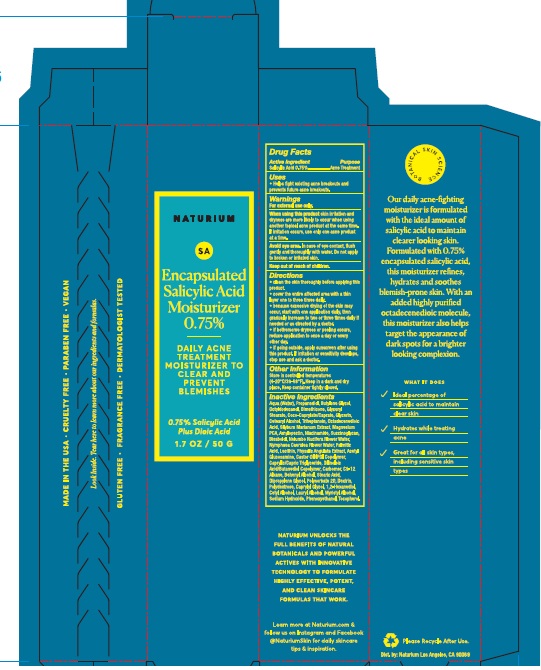
Naturium Encapsulated Salicylic Acid Moisturizer 0.75% 7.5 mg/g Lotion — NDC 76354-121-01 (Billing 76354-0121-01)
This is a package of Naturium Encapsulated Salicylic Acid Moisturizer 0.75% 7.5 mg/g Lotion from e.l.f. Cosmetics, Inc, marketed since Jun 2022 and currently FDA-listed. It is this product's only package size.
NDC database record
One package, one record: these facts belong to NDC 76354-121-01 alone.
- Record
- FDA NDC Directory package listing · Human OTC drug
- Code segments
- 76354 labeler · 121 product · 01 package
- Package marketed since
- Jun 17, 2022
- Sample package
- No — commercial package
- Listing certified through
- Dec 31, 2026
- Barcode (UPC-A, from the NDC)
- 3 7635412101 3
- FDA record last changed
- Jul 24, 2026
Identity & classification
Regulatory identifiers FDA, NLM and CMS codes for this package
- RxCUI (RxNorm): 2391153
Where does this data come from?
- FDA openFDA NDC Directory · synced Oct 8, 2026
- FDA label on DailyMed · label index refreshed Oct 8, 2026
- RxNorm (NLM RxNav) · catalog refreshed Oct 8, 2026
- Medi-Span GPI (licensed)
- First Databank (licensed) · refreshed Oct 8, 2026
RxNorm drug class
This medicine belongs to the Salicylic acid and derivatives class.
Where does this data come from?
- RxClass (NLM) · catalog refreshed Oct 8, 2026
Clinical
Topical salicylic acid is used to help clear and prevent pimples and skin blemishes in people who have acne. Topical salicylic acid is also used to treat skin conditions that involve scaling or overgrowth of skin cells such as psoriasis (a skin disease in which red, scaly patches form on some areas of the body), ichthyoses (inborn conditions that cause skin dryness and scaling), dandruff, corns, calluses, and warts on the hands or feet. Topical salicylic acid should not be used to treat genital warts, warts on the face, warts with hair growing from them, warts in the nose or mouth, moles, or b...
Read the full MedlinePlus article ↗- It is used in a facial routine for acne-prone and oil-prone skin. The routine includes a cleanser, serum, toner and emulsion. Salicylic acid helps loosen and shed dead skin cells.
- Use the cleanser morning and evening, and the serum in the morning after cleansing. Use the toner in the evening on dry skin, and the emulsion at night after cleansing. Avoid your...
- Mild stinging, burning, itching, dryness and extra peeling can happen. If dryness or peeling bothers you, try using the serum or toner every other day. If it gets excessive, stop a...
- It is best not to. Using another topical acne medication at the same time makes irritation and dryness more likely. If you get irritated, use only one at a time.
Patient education
Supplement & herbal interactions
Where does this data come from?
- MedlinePlus (NLM) · refreshed Oct 8, 2026
- FDA label on DailyMed · label index refreshed Oct 8, 2026
Ask a licensed pharmacist directly — free, answered by our team.
Pricing
A drug doesn't have one price. Each row is a different public payment system, and none is what you'd pay at the counter — that depends on your insurance. The ⓘ on each row explains what it measures.
| Price system | Per g | Per package |
|---|---|---|
| Retail pharmacies payNADAC · weekly | Not in the retail survey — common for institutional, discontinued, or low-volume packs. | |
| Medicaid paysCMS SDUD · 12 mo | No recent Medicaid claims on file for this NDC — rare and low-volume NDCs are suppressed in the public data. | |
| Medicare drug plans payPart D · quarterly | No Part D plan price is available for this NDC in our data. | |
Where does this data come from?
- CMS NADAC weekly file
- CMS ASP pricing files · refreshed Sep 20, 2026
- CMS Medicaid State Drug Utilization Data · refreshed Oct 9, 2026
- CMS Part D plan pricing files · refreshed Sep 24, 2026
- VA National Acquisition Center price file
Packaging — all sizes for this product
| Package NDC | Description | Marketing start | Marketing end | Status |
|---|---|---|---|---|
| 76354-0121-01 You're viewing this Main listing | 1 BOTTLE in 1 CARTON / 50 g in 1 BOTTLE | 2022-06-17 | — | Active |
Therapeutic equivalents
| Product | Labeler | Pack | NADAC/unit | TE | Status | Price vs. this |
|---|---|---|---|---|---|---|
| Naturium Encapsulated Salicylic Acid Moisturizer 0.75% 7.5 mg/gthis 76354-0121-01 | e.l.f. | 1 bottle | — | — | FDA listed | — |
Where does this data come from?
- FDA openFDA NDC Directory · synced Oct 8, 2026
- FDA Orange Book · refreshed Oct 3, 2026
- CMS NADAC weekly file
Availability & generic status
We did not find an FDA-approved generic match for this exact strength, form and route.
Where does this data come from?
- FDA Orange Book · refreshed Oct 3, 2026
Inactive Ingredients / Excipients
Inactive ingredients, also called excipients, are components of the drug product other than the active ingredient. They may include fillers, dyes, coatings, preservatives, flavors, or other formulation ingredients.
🧪 Avoiding an ingredient? See Salicylic Acid Topical inactive ingredients by manufacturer: every current product's list side by side, so you can ask your pharmacy for the version that does not list it.
💡 Tap an ingredient (hover on desktop) to see what it is and why it’s used.
-
UNII TR046Y3K1G
A liquid alcohol derived from petroleum or plant sources. It acts as a solvent and humectant in medicines, helping dissolve active ingredients and retain moisture in the formulation.
-
UNII 4XO4QFV777
A branched starch polymer derived from plant sources. It acts as a binder to hold tablet ingredients together and as a filler to add bulk and structure to solid dosage forms.
-
UNII 3XUS85K0RA
Butylene glycol is a clear liquid derived from petroleum or plants that acts as a humectant, solvent, and preservative booster in medicines. It helps keep formulations stable, dissolve active ingredients, and maintain moisture in topical products.
-
UNII 7J5R5W72QM
C9-12 alkane is a clear, colorless liquid hydrocarbon mixture derived from petroleum. In medicines, it serves as a solvent, lubricant, or component in liquid formulations to help dissolve or suspend active ingredients.
-
UNII 00YIU5438U
Caprylyl glycol is a clear liquid derived from coconut oil. In medicines, it acts as a humectant to retain moisture, a preservative booster to prevent microbial growth, and a solvent to help dissolve or mix other ingredients.
-
UNII 0A5MM307FC
A synthetic polymer that absorbs water and forms a thick, gel-like substance. In medicines, it works as a thickener and stabilizer to improve texture and help ingredients stay mixed together in creams, gels, and lotions.
-
UNII 2DMT128M1S
A waxy solid derived from plant or animal sources. It acts as an emulsifier to blend oil and water components, and also thickens the medicine to give it the right texture and consistency.
-
UNII 936JST6JCN
Cetyl alcohol is a waxy, fatty substance derived from plant or animal sources. It acts as an emulsifier and thickener in medicines, helping blend oil and water components and giving products a smooth, creamy texture.
-
UNII 8D9H4QU99H
A synthetic fatty acid ester derived from coconut oil, used as an emulsifier and solubilizer to help mix oil and water-based ingredients and improve how the body absorbs certain drugs.
-
UNII 1F2S8T535O
A synthetic polymer made from fatty acids and a chemical compound that binds ingredients together. It works as a binder and film-former in solid dosage forms, helping hold tablets together and coat their surface.
-
UNII 92RU3N3Y1O
Dimethicone is a silicone-based oil that acts as an anti-foaming agent and lubricant in medicines. It reduces gas bubbles in liquid formulations and helps coat and protect the stomach lining when ingested.
-
UNII E107L85C40
Dipropylene glycol is a clear liquid made from propylene glycol. It acts as a solvent and humectant in medicines, helping dissolve active ingredients and retain moisture in the formulation.
-
UNII 9G1OE216XY
Docosanol is a waxy, fatty alcohol derived from plant sources. It acts as an emollient and thickener in topical medicines, helping to soften the skin and improve product texture and stability.
-
UNII PDC6A3C0OX
Glycerin is a clear, thick liquid derived from plant oils or fats. It acts as a humectant to retain moisture, a sweetener, and a solvent in medications.
-
UNII 230OU9XXE4
A waxy substance made from glycerin and stearic acid that acts as an emulsifier to blend oily and watery ingredients together. It also helps thicken and stabilize the medicine's texture.
-
UNII 2NX48Z0A9G
Icodextrin is a glucose polymer derived from starch. It acts as a thickening agent and osmotic agent in medicines, helping to control texture and absorption in formulations like eye drops or injectable solutions.
-
UNII 178A96NLP2
Lauryl alcohol is a fatty alcohol derived from natural oils or made synthetically. It acts as an emulsifier and thickener in medicines, helping blend oil and water-based ingredients and giving the product a smooth, creamy texture.
-
UNII 1DI56QDM62
A natural fatty substance from soybeans that helps mix oil and water-based ingredients together. It acts as an emulsifier and lubricant in medicines to improve texture and help the product break down properly in your body.
-
UNII 24WE03BX2T
Levomenol is a naturally derived alcohol compound used as a skin-conditioning and anti-inflammatory agent in topical formulations. It helps soothe and protect the skin while improving product texture and absorption.
-
UNII V5PC588N7G
Magnesium pidolate is a magnesium salt combined with pidolic acid. It's used as a mineral supplement ingredient and buffering agent to help stabilize the medicine's pH and improve absorption.
-
UNII C9H2L21V7U
A fat derived from coconut or palm oil containing shorter fatty acid chains. It serves as a solvent and carrier to help dissolve or suspend active ingredients, improving absorption and stability in liquid formulations.
-
UNII U946SH95EE
Milk thistle is a plant extract used in some supplements and herbal formulations. It may act as an active botanical ingredient rather than a traditional inactive excipient, though it can also serve as a filler or binder in tablet or capsule preparations.
-
UNII V42034O9PU
A fatty alcohol derived from coconut or palm oil. It serves as an emulsifier and thickener to help blend oil and water in creams or lotions, and improves the product's texture and consistency.
-
UNII V956696549
N-Acetylglucosamine is a naturally occurring sugar compound derived from chitin. In medicines, it typically serves as a filler or binding agent to help hold tablet ingredients together and add bulk to the formulation.
-
UNII P658Q19EG2
A plant oil extracted from lotus flowers, used in medicines as an emollient and skin-conditioning agent. It helps soften the product texture and can improve how the medicine feels or spreads on skin.
-
UNII 25X51I8RD4
Niacinamide is a form of vitamin B3, a water-soluble nutrient. In medicines, it may be added as a nutritional supplement or to support skin health, though its primary role here is as an active ingredient rather than a traditional inactive filler.
-
UNII 869334Z0JF
A fragrant plant oil extracted from blue water lily flowers. It serves as a flavoring agent and fragrance ingredient to improve the taste and aroma of the medicine.
-
UNII 565ZMT5QRG
A long-chain fatty acid derived from plant oils, used as a binder and emulsifier to help hold ingredients together and improve texture in solid medications.
-
UNII 461N1O614Y
A synthetic oily liquid used as an emollient and solvent in medications. It helps dissolve active ingredients and improves how the medicine spreads or absorbs through the skin.
-
UNII 2V16EO95H1
Palmitic acid is a saturated fatty acid derived from plant and animal sources. It serves as an emulsifier and lubricant in medicines, helping ingredients mix smoothly and preventing sticking during manufacturing.
-
UNII HIE492ZZ3T
Phenoxyethanol is a synthetic preservative and antimicrobial agent used to prevent bacterial and fungal growth in medicines and cosmetic products, extending shelf life and maintaining product safety.
-
UNII W4TKW9D5GG
Physalis angulata is a plant extract used as a natural flavoring or coloring agent in some medicines. It may also serve as a botanical ingredient to support the product's formulation.
-
UNII VH2XOU12IE
Polydextrose is a synthetic polymer made from dextrose (sugar) that acts as a bulking agent and filler in medicines. It helps give tablets and capsules proper volume and texture while often adding slight sweetness.
-
UNII 7T1F30V5YH
A synthetic emulsifier derived from sorbitol and oleic acid. It helps mix oil and water-based ingredients together and keeps them from separating in liquid formulations.
-
UNII 5965N8W85T
Propanediol is a clear liquid organic compound derived from vegetable sources or synthesized chemically. It acts as a humectant to retain moisture, a solvent to dissolve active ingredients, and a preservative booster in liquid medications and supplements.
-
UNII 55X04QC32I
A strong alkaline chemical used to adjust and maintain the pH balance of liquid medicines. It helps keep the medicine stable and ensures it stays effective during storage.
-
UNII 4ELV7Z65AP
Stearic acid is a fatty acid derived from plant or animal sources. It acts as a binder and lubricant in tablets and capsules, helping them hold together and flow smoothly during manufacturing.
-
UNII R0ZB2556P8
Tocopherol is a form of vitamin E derived from plant oils. It acts as an antioxidant in medicines to prevent oils and fats from breaking down and spoiling during storage.
-
UNII 2P6O7CFW5K
Triheptanoin is a synthetic fat made from glycerol and seven-carbon fatty acids. It's used as a caloric supplement and carrier in certain formulations to deliver active ingredients and provide nutritional support.
-
UNII 059QF0KO0R
Water is a liquid solvent that dissolves and mixes ingredients together in liquid medicines, syrups, and injections. It helps distribute the active drug evenly throughout the product.
40 inactive ingredients listed in the exact product block matched to this NDC.
Label-section wording can be broader than the structured product block and may mention additional formulation ingredients.
Where does this data come from?
ingredient classCode="IACT" elements from the exact product block matched by this NDC. Label-section narrative from DailyMed / the openFDA label index is shown separately when available.- FDA label on DailyMed · label index refreshed Oct 8, 2026
- FDA openFDA NDC Directory · synced Oct 8, 2026
Inactive ingredient FAQ
Are inactive ingredients the same for every manufacturer?
Why might an inactive ingredient be missing?
Can inactive ingredients matter?
Manufacturer & labeler
More NDCs from e.l.f. Cosmetics, Inc labeler code 76354
- Well People Daygleamer Liquid Mineral Sunscreen SPF 34 Zinc Oxide 142.8 mg/mL Lotion NDC 76354-020-01
- Naturium Sulfur Spot Treatment 8% 80 mg/mL Liquid NDC 76354-120-01
- Naturium Salicylic Acid Serum 2% 20 mg/mL Liquid NDC 76354-122-01
- Naturium Benzoyl Peroxide Cleanser 5% 50 mg/mL Cream NDC 76354-123-01
- Naturium Salicylic Acid Body 2% 20 mg/mL Aerosol, Spray NDC 76354-124-01
- Naturium UV Reflect Antioxidant SPF 50 Homosalate, Octisalate, Avobenzone 30 mg/mL; 100 mg/mL; 50 mg/mL Lotion NDC 76354-125-01
- elf Sun Boss Gloss SPF 25 Sunscreen Pink Me Girl ZINC OXIDE 100 mg/mL Cream NDC 76354-126-01
- e.l.f Sun Boss Gloss SPF 25 Sunscreen Blush Much ZINC OXIDE 100 mg/mL Cream NDC 76354-127-01
Where does this data come from?
- FDA openFDA NDC Directory · synced Oct 8, 2026
- Drugs@FDA
FDA label — Drug Facts FDA SPL
🎯 Indications and Usage ▾
Uses Helps fight existing acne breakouts and prevents future acne breakouts.
⏱️ Dosage and Administration ▾
Directions clean the skin thoroughly before applying this product. cover the entire affected area with a thin layer one to three times daily. because excessive drying of the skin may occur, start with one application daily, then gradually increase to two or three times daily if needed or as directed by a doctor. if bothersome dryness or peeling occurs, reduce application to once a day or every other day. if going outside, apply sunscreen after using this product. If irritation or sensitivity develops, stop use and ask a doctor.
⚠️ Warnings ▾
Warnings For external use only. When using this product skin irritation and dryness are more likely to occur when using another topical acne product at the same time. If irritation occurs, use only one acne product at a time. Avoid eye area. In case of eye contact, flush gently and thoroughly with water. Do not apply to broken or irritated skin. Keep out of reach of children. If swallowed, seek medical help.
🧪 Active Ingredient ▾
Active Ingredient Salicylic Acid 0.75%
🧪 Inactive Ingredients ▾
Inactive Ingredients Aqua (Water), Propanediol, Butylene Glycol, Octyldodecanol, Dimethicone, Glyceryl Stearate, Coco-Caprylate/Caprate, Glycerin, Cetearyl Alcohol, Triheptanoin, Octadecenedioic Acid, Silybum Marianum Extract, Magnesium PCA, Amylopectin, Niacinamide, Succinoglycan, Bisabolol, Nelumbo Nucifera Flower Water, Nymphaea Caerulea Flower Water, Palmitic Acid, Lecithin, Physalis Angulata Extract, Acetyl Glucosamine, Castor Oil/IPDI Copolymer, Caprylic/Capric Triglyceride, Dilinoleic Acid/Butanediol Copolymer, Carbomer, C9-12 Alkane, Behenyl Alcohol, Stearic Acid, Dipropylene Glycol, Polysorbate 20, Dextrin, Polydextrose, Caprylyl Glycol, 1,2-Hexanediol, Cetyl Alcohol, Lauryl Alcohol, Myristyl Alcohol, Sodium Hydroxide, Phenoxyethanol, Tocopherol.
🎯 Purpose ▾
Purpose Acne Treatment
📄 When Using This Product ▾
When using this product skin irritation and dryness are more likely to occur when using another topical acne product at the same time. If irritation occurs, use only one acne product at a time. Avoid eye area. In case of eye contact, flush gently and thoroughly with water. Do not apply to broken or irritated skin.
📄 Keep Out of Reach of Children ▾
Keep out of reach of children. If swallowed, seek medical help.
📄 Other Information ▾
Other Information Store in controlled temperatures (4-20°C/39-68°F). Keep in a dark and dry place. Keep container tightly closed.
📄 Package Label / Principal Display Panel ▾
Product Packaging 1
Medicare Part D spend CMS · PART D · 2026 (Q1)
Reported adverse events (FAERS)
Top reported reactions
Age at onset
Reporter sex
Serious outcomes
Where does this data come from?
About this NDC listing & data coverage
What data is (and isn’t) available for this NDC — tap to expand
| NDC identity (package / product / labeler codes) | ✓ Available |
| Labeler | ✓ Available |
| Product & package description | ✓ Available |
| Marketing category & status | ✓ Available |
| Active ingredient / dosage form / route | ✓ Available |
| FDA label (SPL via DailyMed) | ✓ Available |
| Package photos | ✓ Available |
| Inactive ingredients (structured) | ✓ Available |
| NADAC pharmacy acquisition price (CMS) | — Not published for this NDC CMS publishes NADAC only for NDCs reported in its retail-pharmacy survey. |
| Orange Book / therapeutic-equivalence data | — Not published for this NDC Applies only to products approved under an NDA/ANDA; many listings are out of scope. |
| HCPCS J-code billing crosswalk | — Not published for this NDC Most self-administered / retail products have no J-code — that is normal. |
| Medicaid utilization (CMS SDUD) | — Not published for this NDC CMS reports utilization only for NDCs with Medicaid claims above its privacy threshold. |