
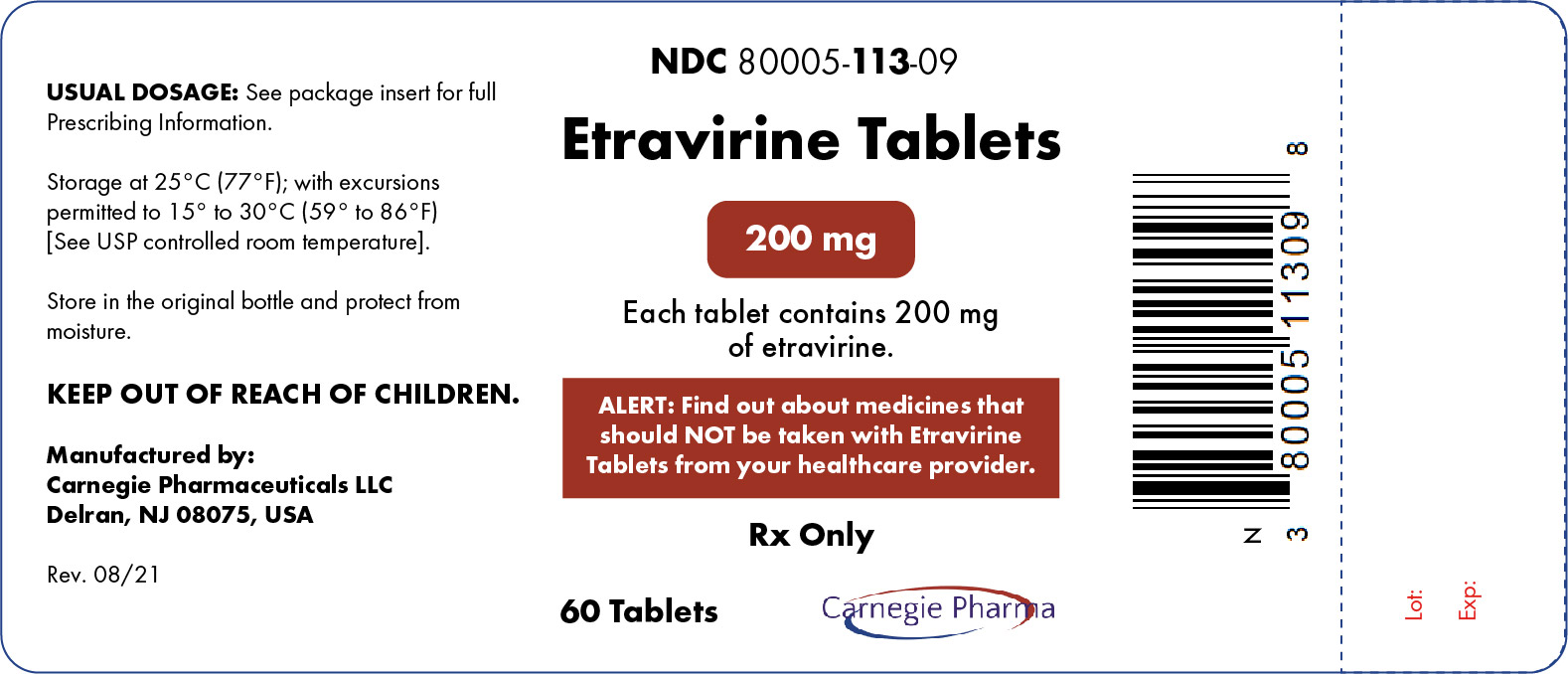
Etravirine 200 mg Tablet, 60-count — NDC 80005-113-09 (Billing 80005-0113-09)
This is a package of 60 tablets of Etravirine 200 mg Tablet from Carnegie Pharmaceuticals LLC, marketed since Jun 2022 and currently FDA-listed. It is this product's only package size.
NDC database record
One package, one record: these facts belong to NDC 80005-113-09 alone.
- Record
- FDA NDC Directory package listing · Human prescription drug
- Code segments
- 80005 labeler · 113 product · 09 package
- Package marketed since
- Jun 7, 2022
- Sample package
- No — commercial package
- Listing certified through
- Dec 31, 2026
- Barcode (UPC)
- 0380005113098, 0380005112121
- FDA record last changed
- Oct 1, 2026
Identity & classification
Regulatory identifiers FDA, NLM and CMS codes for this package
- RxCUI (RxNorm): 754761
Where does this data come from?
- FDA openFDA NDC Directory · synced Oct 1, 2026
- FDA label on DailyMed · label index refreshed Oct 6, 2026
- RxNorm (NLM RxNav) · catalog refreshed Oct 1, 2026
- Medi-Span GPI (licensed)
- First Databank (licensed) · refreshed Oct 1, 2026
RxNorm drug class
This medicine belongs to the Human Immunodeficiency Virus 1 Non-Nucleoside Analog Reverse Transcriptase Inhibitor class.
Where does this data come from?
- RxClass (NLM) · catalog refreshed Oct 1, 2026
Clinical
Etravirine is used to treat human immunodeficiency virus (HIV) infection. Etravirine is in a class of medications called non-nucleoside reverse transcriptase inhibitors (NNRTIs). It works by decreasing the amount of HIV in the blood. Although etravirine does not cure HIV, it may decrease your chance of developing acquired immunodeficiency syndrome (AIDS) and HIV-related illnesses. Taking these medications and making other lifestyle changes may decrease the risk of giving the HIV virus to other people.
Read the full MedlinePlus article ↗- It treats HIV-1 infection and is always used with other HIV medicines. It's for adults and children 2 years and older who have taken HIV treatment before.
- Take it by mouth twice a day after a meal. Food matters because without it, your body absorbs about half as much. Swallow the tablets whole with water. If that's hard, ask me how t...
- Rash is the most common, usually mild and often clearing in 1 to 2 weeks. Nerve problems, such as tingling or numbness, can also occur, and children may get diarrhea. Tell your doc...
- Get help right away if a rash is severe or comes with fever, tiredness, aches, blisters, mouth sores, red eyes, or facial swelling. Stop the medicine and contact your doctor immedi...
Patient education
Supplement & herbal interactions
Some supplements/herbs that may interact with Etravirine — tap one for details:
Where does this data come from?
- MedlinePlus (NLM) · refreshed Oct 1, 2026
- FDA label on DailyMed · label index refreshed Oct 6, 2026
Ask a licensed pharmacist directly — free, answered by our team.
Pricing
A drug doesn't have one price. Each row is a different public payment system, and none is what you'd pay at the counter — that depends on your insurance. The ⓘ on each row explains what it measures.
| Price system | Per each | Per package |
|---|---|---|
| Retail pharmacies payNADAC · weekly | Not in the retail survey — common for institutional, discontinued, or low-volume packs. | |
| Medicaid paysCMS SDUD · 12 mo | No recent Medicaid claims on file for this NDC — rare and low-volume NDCs are suppressed in the public data. | |
| Medicare drug plans payPart D · Q2 2026 | $8.86 | $531.79 / 60 tablets |
Where does this data come from?
- CMS NADAC weekly file
- CMS ASP pricing files · refreshed Sep 20, 2026
- CMS Medicaid State Drug Utilization Data · refreshed Oct 6, 2026
- CMS Part D plan pricing files · refreshed Sep 24, 2026
- VA National Acquisition Center price file
Packaging — all sizes for this product
| Package NDC | Description | Marketing start | Marketing end | Status |
|---|---|---|---|---|
| 80005-0113-09 You're viewing this Main listing | 60 TABLET in 1 BOTTLE | 2022-06-07 | — | Active |
Therapeutic equivalents
| Product | Labeler | Pack | NADAC/unit | TE | Status | Price vs. this |
|---|---|---|---|---|---|---|
| Etravirine 200 mg 10147-0571-01 | Patriot | 60 tablets | $9.943 | AB | Availability likely | — |
| etravirine 200 mg 60219-1722-06 | Amneal | 60 tablets | $9.943 | AB | Availability likely | — |
| Etravirine 200 mg 69315-0286-06 | Leading | 60 tablets | $9.943 | AB | Availability likely | — |
| etravirine 200 mg 69452-0255-17 | Bionpharma | 60 tablets | $9.943 | AB | Availability likely | — |
| Intelence 200 mg 59676-0571-01 | Janssen | 60 tablets | $24.303 | AB | Availability likely | — |
| etravirine 200 mg 42291-0474-60 | AvKARE | 60 tablets | — | AB | FDA listed | — |
| Etravirine 200 mgthis 80005-0113-09 | Carnegie | 60 tablets | — | AB | FDA listed | — |
Where does this data come from?
- FDA openFDA NDC Directory · synced Oct 1, 2026
- FDA Orange Book · refreshed Oct 3, 2026
- CMS NADAC weekly file
Availability & generic status
This product is an FDA-approved generic. Other versions of the same drug are listed under Therapeutic equivalents, least expensive first.
Where does this data come from?
- FDA Orange Book · refreshed Oct 3, 2026
What it looks like
Where does this data come from?
- FDA label on DailyMed · label index refreshed Oct 6, 2026
Inactive Ingredients / Excipients
Inactive ingredients, also called excipients, are components of the drug product other than the active ingredient. They may include fillers, dyes, coatings, preservatives, flavors, or other formulation ingredients.
🧪 Avoiding an ingredient? See Etravirine inactive ingredients by manufacturer: every current product's list side by side, so you can ask your pharmacy for the version that does not list it.
💡 Tap an ingredient (hover on desktop) to see what it is and why it’s used.
-
UNII 2S7830E561
Crospovidone is a synthetic polymer derived from povidone. It acts as a disintegrant, helping the tablet or capsule break apart quickly in the stomach so the active ingredient can be absorbed.
-
UNII 70097M6I30
Magnesium stearate is a salt made from magnesium and stearic acid, a fatty substance. It's used in tablets and capsules as a lubricant and glidant to help ingredients flow smoothly during manufacturing and prevent sticking.
-
UNII OP1R32D61U
Microcrystalline cellulose is a purified form of cellulose, a natural fiber from plant sources. It acts as a binder and filler in tablets and capsules, helping hold ingredients together and give the medicine its shape and size.
-
UNII FZ989GH94E
Povidone is a synthetic polymer made from a plastic-like material. It acts as a binder to hold tablet ingredients together and as a disintegrant to help the tablet break apart in your stomach so the medicine can be absorbed.
-
UNII ETJ7Z6XBU4
Silicon dioxide is a naturally occurring mineral used as a glidant and anti-caking agent. It helps powder ingredients flow smoothly and prevents clumping during manufacturing and storage.
-
UNII 368GB5141J
A detergent and foaming agent derived from coconut or palm oil. In medications, it helps break down and mix oil and water-based ingredients, aids in tablet disintegration, and improves how the drug dissolves and spreads in the mouth or digestive system.
-
UNII H8AV0SQX4D
A modified starch derived from potato or corn starch. It absorbs water quickly and helps tablets or capsules break apart and dissolve in the stomach, acting as a disintegrant to ensure the medicine releases its active ingredients properly.
7 inactive ingredients listed in the exact product block matched to this NDC.
Where does this data come from?
ingredient classCode="IACT" elements from the exact product block matched by this NDC. Label-section narrative from DailyMed / the openFDA label index is shown separately when available.- FDA label on DailyMed · label index refreshed Oct 6, 2026
- FDA openFDA NDC Directory · synced Oct 1, 2026
Inactive ingredient FAQ
Are inactive ingredients the same for every manufacturer?
Why might an inactive ingredient be missing?
Can inactive ingredients matter?
Manufacturer & labeler
More NDCs from Carnegie Pharmaceuticals LLC labeler code 80005
- Etravirine 100 mg Tablet NDC 80005-112-12
- Lomustine 10 mg Capsule NDC 80005-114-02
- Lomustine 40 mg Capsule NDC 80005-115-02
- Lomustine 100 mg Capsule NDC 80005-116-02
- Primidone 50 mg Tablet NDC 80005-117-11
- Primidone 250 mg Tablet NDC 80005-118-11
- FAMOTIDINE 40 mg/5mL Powder, For Suspension NDC 80005-119-16
Where does this data come from?
- FDA openFDA NDC Directory · synced Oct 1, 2026
- Drugs@FDA
Full prescribing information FDA SPL
🎯 Indications and Usage ▾
1 INDICATIONS AND USAGE Etravirine, in combination with other antiretroviral agents, is indicated for the treatment of human immunodeficiency virus type 1 (HIV-1) infection in antiretroviral treatment-experienced adult patients and pediatric patients 2 years of age and older [see Microbiology (12.4) and Clinical Studies (14) ] Etravirine is a human immunodeficiency virus type 1 (HIV-1) non-nucleoside reverse transcriptase inhibitor (NNRTI) indicated for treatment of HIV-1 infection in treatment-experienced patients 2 years of age and older.
(1)
⏱️ Dosage and Administration ▾
2 DOSAGE AND ADMINISTRATION Adult patients: 200 mg (one 200 mg tablet or two 100 mg tablets) taken twice daily following a meal. ( 2.1 , 2.2 , 2.4 ) Pregnant patients: 200 mg (one 200 mg tablet or two 100 mg tablets) taken twice daily following a meal. ( 2.2 ) Pediatric patients (2 years to less than 18 years of age and weighing at least 10 kg): dosage of etravirine is based on body weight and should not exceed the recommended adult dose.
Etravirine tablets should be taken following a meal. ( 2.3 )
2.1Recommended Dosage in Adult Patients The recommended oral dosage of etravirine for adult patients is 200 mg (one 200 mg tablet or two 100 mg tablets) taken twice daily following a meal. The type of food does not affect the exposure to etravirine [see Clinical Pharmacology (12.3) ] .
2.2Recommended Dosage During Pregnancy The recommended oral dosage of etravirine for pregnant individuals is 200 mg (one 200 mg tablet or two 100 mg tablets) taken twice daily following a meal [see Use in Specific Populations (8.1) ]
2.3Recommended Dosage in Pediatric Patients (2 Years to Less Than 18 Years of Age) The recommended dosage of etravirine for pediatric patients 2 years to less than 18 years of age and weighing at least 10 kg is based on body weight (see Table 1) not exceeding the recommended adult dosage. Etravirine should be taken orally, following a meal. The type of food does not affect the exposure to etravirine [see Clinical Pharmacology (12.3) ] .
Table 1: Recommended Dosage of Etravirine Tablets for Pediatric Patients 2 Years to Less Than 18 Years of Age Body Weight kilograms (kg) Dose greater than or equal to 10 kg to less than 20 kg 100 mg twice daily greater than or equal to 20 kg to less than 25 kg 125 mg twice daily greater than or equal to 25 kg to less than 30 kg 150 mg twice daily greater than or equal to 30 kg 200 mg twice daily
2.4Method of Administration Instruct patients to swallow the etravirine tablet(s) whole with liquid such as water. Patients who are unable to swallow the etravirine tablet(s) whole may disperse the tablet(s) in water. Instruct the patient to do the following: place the tablet(s) in 5 mL (1 teaspoon) of water, or at least enough liquid to cover the medication, stir well until the water looks milky, add approximately 15 mL (1 tablespoon) of liquid.
Water may be used but other liquids, such as orange juice or milk, may improve taste. Patients should not place the tablets in orange juice or milk without first adding water. The use of warm (temperature greater than 104°F [greater than 40°C]) or carbonated beverages should be avoided. drink the mixture immediately, rinse the glass several times with orange juice, milk or water and completely swallow the rinse each time to make sure the patient takes the entire dose.
2.1Recommended Dosage in Adult Patients The recommended oral dosage of etravirine for adult patients is 200 mg (one 200 mg tablet or two 100 mg tablets) taken twice daily following a meal. The type of food does not affect the exposure to etravirine [see Clinical Pharmacology (12.3) ] .
2.2Recommended Dosage During Pregnancy The recommended oral dosage of etravirine for pregnant individuals is 200 mg (one 200 mg tablet or two 100 mg tablets) taken twice daily following a meal [see Use in Specific Populations (8.1) ]
2.3Recommended Dosage in Pediatric Patients (2 Years to Less Than 18 Years of Age) The recommended dosage of etravirine for pediatric patients 2 years to less than 18 years of age and weighing at least 10 kg is based on body weight (see Table 1) not exceeding the recommended adult dosage. Etravirine should be taken orally, following a meal. The type of food does not affect the exposure to etravirine [see Clinical Pharmacology (12.3) ] .
Table 1: Recommended Dosage of Etravirine Tablets for Pediatric Patients 2 Years to Less Than 18 Years of Age Body Weight kilograms (kg) Dose greater than or equal to 10 kg to less than 20 kg 100 mg twice daily greater than or equal to 20… [Excerpted — this section continues on DailyMed.]
💊 Dosage Forms and Strengths ▾
3 DOSAGE FORMS AND STRENGTHS 100 mg white to off-white, uncoated, oval shaped tablet, debossed “CP112” on one side and plain on other side. 200 mg white to off-white, uncoated, oval shaped tablet, debossed “CP113” on one side and plain on other side. Tablets: 100 mg, and 200 mg (3)
⛔ Contraindications ▾
4 CONTRAINDICATIONS None. None. ( 4 )
⚠️ Warnings and Cautions ▾
5 WARNINGS AND PRECAUTIONS Severe, potentially life threatening and fatal skin reactions have been reported. This includes cases of Stevens-Johnson syndrome, hypersensitivity reaction, toxic epidermal necrolysis and erythema multiforme. Immediately discontinue treatment if severe hypersensitivity, severe rash or rash with systemic symptoms or liver transaminase elevations develops and monitor clinical status, including liver transaminases closely.
( 5.1 ) Monitor for immune reconstitution syndrome and fat redistribution. ( 5.3, 5.4 )
5.1Severe Skin and Hypersensitivity Reactions Severe, potentially life-threatening and fatal skin reactions have been reported. In clinical trials, these include cases of Stevens-Johnson syndrome, toxic epidermal necrolysis and erythema multiforme. Hypersensitivity reactions including Drug Rash with Eosinophilia and Systemic Symptoms (DRESS) have also been reported and were characterized by rash, constitutional findings, and sometimes organ dysfunction, including hepatic failure.
In Phase 3 clinical trials, Grade 3 and 4 rashes were reported in 1.3% of subjects receiving etravirine compared to 0.2% of placebo subjects. A total of 2.2% of HIV-1-infected subjects receiving etravirine discontinued from Phase 3 trials due to rash [see Adverse Reactions (6.1 )] . Rash occurred most commonly during the first 6 weeks of therapy.
The incidence of rash was higher in females [see Adverse Reactions (6.1) ] . Stevens-Johnson syndrome was reported in 1.1% (2/177) of pediatric patients less than 18 years of age receiving etravirine in combination with other HIV-1 antiretroviral agents in an observational study. Discontinue etravirine immediately if signs or symptoms of severe skin reactions or hypersensitivity reactions develop (including, but not limited to, severe rash or rash accompanied by fever, general malaise, fatigue, muscle or joint aches, blisters, oral lesions, conjunctivitis, facial edema, hepatitis, eosinophilia, angioedema).
Clinical status including liver transaminases should be monitored and appropriate therapy initiated. Delay in stopping etravirine treatment after the onset of severe rash may result in a life-threatening reaction.
5.2Risk of Adverse Reactions or Loss of Virologic Response Due to Drug Interactions The concomitant use of etravirine and other drugs may result in potentially significant drug interactions, some of which may lead to [see Drug Interactions (7.3) ]: Loss of therapeutic effect of concomitant drug or etravirine and possible development of resistance. Possible clinically significant adverse reactions from greater exposures of etravirine or other concomitant drugs. See Table 4 for steps to prevent or manage these possible and known significant drug interactions, including dosing recommendations.
Consider the potential for drug interactions prior to and during etravirine therapy and review concomitant medications during etravirine therapy.
5.3Immune Reconstitution Syndrome Immune reconstitution syndrome has been reported in patients treated with combination antiretroviral therapy, including etravirine. During the initial phase of combination antiretroviral treatment, patients whose immune system responds may develop an inflammatory response to indolent or residual opportunistic infections (such as Mycobacterium avium infection, cytomegalovirus, Pneumocystis jiroveci pneumonia (PCP) or tuberculosis), which may necessitate further evaluation and treatment.
Autoimmune disorders (such as Graves' disease, polymyositis, Guillain-Barré syndrome, and autoimmune hepatitis) have also been reported to occur in the setting of immune reconstitution; however, the time to onset is more variable, and can occur many months after initiation of treatment.
5.4Fat Redistribution Redistribution/accumulation of body fat, including central obesity, dorsocervical fat enlargement (buffalo hump), peripheral wasting, facial wasting, breast enlargement, and "cushingoid appearance" have been observ… [Excerpted — this section continues on DailyMed.]
🤒 Adverse Reactions ▾
6 ADVERSE REACTIONS The following adverse reactions are described in greater detail in other sections: Severe skin and hypersensitivity reactions [see Warnings and Precautions (5.1) ] . Immune reconstitution syndrome [see Warnings and Precautions (5.3) ] . The most common adverse drug reactions of moderate to severe intensity (at least 2%) which occurred at a higher rate than placebo in adults are rash and peripheral neuropathy.
( 6.1 ) The most common adverse drug reactions in at least 2% of pediatric patients are rash and diarrhea. ( 6.1 ) To report SUSPECTED ADVERSE REACTIONS, contact Carnegie Pharmaceuticals, LLC at 1-732-783-7010 or FDA at 1-800-FDA-1088 or www.fda.gov/medwatch.
6.1Clinical Trial Experience Because clinical trials are conducted under widely varying conditions, adverse reaction rates observed in the clinical trials of a drug cannot be directly compared to rates in the clinical trials of another drug and may not reflect the rates observed in practice. Clinical Trials Experience in Adults The safety assessment is based on all data from 1203 subjects in the Phase 3 placebo-controlled trials, TMC125-C206 and TMC125-C216, conducted in antiretroviral treatment-experienced HIV-1-infected adult subjects, 599 of whom received etravirine tablets (200 mg twice daily).
In these pooled trials, the median exposure for subjects in the etravirine tablets arm and placebo arm was 52.3 and 51.0 weeks, respectively. Discontinuations due to adverse drug reactions (ADRs) were 5.2% in the etravirine tablets arm and 2.6% in the placebo arm. The most frequently reported ADR at least Grade 2 in severity was rash (10.0%).
Stevens-Johnson syndrome, drug hypersensitivity reaction and erythema multiforme were reported in less than 0.1% of subjects during clinical development with etravirine tablets [see Warnings and Precautions (5.1) ] . A total of 2.2% of HIV-1-infected subjects in Phase 3 trials receiving etravirine tablets discontinued due to rash. In general, in clinical trials, rash was mild to moderate, occurred primarily in the second week of therapy, and was infrequent after Week 4.
Rash generally resolved within 1 to 2 weeks on continued therapy. The incidence of rash was higher in women compared to men in the etravirine tablets arm in the Phase 3 trials (rash ≥ Grade 2 was reported in 9/60 [15.0%] women versus 51/539 [9.5%] men; discontinuations due to rash were reported in 3/60 [5.0%] women versus 10/539 [1.9%] men) [see Warnings and Precautions (5.1) ] . Patients with a history of NNRTI-related rash did not appear to be at increased risk for the development of etravirine tablets-related rash compared to patients without a history of NNRTI- related rash.
Common Adverse Reactions Clinical ADRs of moderate intensity or greater (greater than or equal to Grade 2) and reported in at least 2% of subjects treated with etravirine tablets and occurring at a higher rate compared to placebo (excess of 1%) are presented in Table 2. Laboratory abnormalities considered ADRs are included in Table 3. Table 2: Adverse Drug Reactions (Grades 2 to 4) in at Least 2% of Adult Subjects (Pooled TMC125-C206 and TMC125-C216 Trials) Preferred Term Etravirine tablets + BR N=599 % Placebo + BR N=604 % Rash 10% 3% Peripheral neuropathy 4% 2% N=total number of subjects per treatment group; BR=background regimen Less Common Adverse Reactions Treatment-emergent ADRs occurring in less than 2% of subjects (599 subjects) receiving etravirine tablets and of at least moderate intensity (greater than or equal to Grade 2) are listed below by body system: Cardiac Disorders : myocardial infarction, angina pectoris, atrial fibrillation Ear and Labyrinth Disorders : vertigo Eye Disorders : blurred vision Gastrointestinal Disorders : gastroesophageal reflux disease, flatulence, gastritis, abdominal distension, pancreatitis, constipation, dry mouth, hematemesis, retching, stomatitis General Disorders and Administration Site Conditions : sluggishness Hematologic Disord… [Excerpted — this section continues on DailyMed.]
🔄 Drug Interactions ▾
7 DRUG INTERACTIONS Co-administration of etravirine with other drugs can alter the concentrations of other drugs and other drugs may alter the concentrations of etravirine. The potential drug-drug interactions must be considered prior to and during therapy. ( 7 , 12.3 )
7.1Potential for Other Drugs to Affect Etravirine Tablets Etravirine is a substrate of CYP3A, CYP2C9, and CYP2C19. Therefore, co-administration of etravirine tablets with drugs that induce or inhibit CYP3A, CYP2C9, and CYP2C19 may alter the therapeutic effect or adverse reaction profile of etravirine tablets (see Table 4) [see Clinical Pharmacology (12.3) ].
7.2Potential for Etravirine Tablets to Affect Other Drugs Etravirine is an inducer of CYP3A and inhibitor of CYP2C9, CYP2C19 and P-glycoprotein (P-gp). Therefore, co-administration of drugs that are substrates of CYP3A, CYP2C9 and CYP2C19 or are transported by P-gp with etravirine tablets may alter the therapeutic effect or adverse reaction profile of the co-administered drug(s) (see Table 4) [see Clinical Pharmacology (12.3) ].
7.3Significant Drug Interactions Table 4 shows significant drug interactions based on which, alterations in dose or regimen of etravirine tablets and/or co-administered drug may be recommended. Drugs that are not recommended for co-administration with etravirine tablets are also included in Table 4 [see Clinical Pharmacology (12.3) ] . Table 4: Significant Drug Interactions Concomitant Drug Class: Drug Name Effect on Concentration of Etravirine or Concomitant Drug Clinical Comment ↑ = increase; ↓ = decrease; ↔ = no change HIV-antiviral agents: integrase strand inhibitors dolutegravir The interaction between INTELENCE and the drug was evaluated in a clinical study.
All other drug interactions shown are predicted. ↓ dolutegravir ↔ etravirine Etravirine significantly reduced plasma concentrations of dolutegravir. Using cross - study comparisons to historical pharmacokinetic data for etravirine, dolutegravir did not appear to affect the pharmacokinetics of etravirine. dolutegravir/darunavir/ritonavir ↓ dolutegravir ↔ etravirine The effect of etravirine on dolutegravir plasma concentrations was mitigated by co- administration of darunavir/ritonavir or lopinavir/ritonavir, and is expected to be mitigated by atazanavir/ritonavir. dolutegravir/lopinavir/ritonavir ↔ dolutegravir ↔ etravirine Dolutegravir should only be used with etravirine tablets when co- administered with atazanavir/ritonavir, darunavir/ritonavir, or lopinavir/ritonavir.
HIV-antiviral agents: non-nucleoside reverse transcriptase inhibitors (NNRTIs) efavirenz nevirapine ↓ etravirine Combining two NNRTIs has not been shown to be beneficial. Concomitant use of etravirine tablets with efavirenz or nevirapine may cause a significant decrease in the plasma concentrations of Etravirine and loss of therapeutic effect of etravirine tablets. Co-administration of etravirine tablets and other NNRTIs is not recommended. delavirdine rilpivirine ↓ etravirine ↓ rilpivirine ↔ etravirine Combining two NNRTIs has not been shown to be beneficial.
Etravirine tablets and delavirdine should not be co-administered. Combining two NNRTIs has not been shown to be beneficial. Co- administration of etravirine tablets and rilpivirine is not recommended.
HIV-antiviral agents: protease inhibitors (PIs) atazanavir (without ritonavir) atazanavir/ritonavir atazanavir/cobicistat darunavir/ritonavir darunavir/cobicistat fosamprenavir (without ritonavir) fosamprenavir/ritonavir indinavir (without ritonavir) lopinavir/ritonavir ↓ atazanavir ↓ atazanavir ↔ etravirine ↓ atazanavir ↓ cobicistat ↓ etravirine ↓ cobicistat darunavir: effect unknown ↑ amprenavir ↑ amprenavir ↓ indinavir ↓ etravirine Co-administration of etravirine tablets and atazanavir without low- dose ritonavir is not recommended.
Concomitant use of etravirine tablets with atazanavir/ritonavir decreased atazanavir Cmin but it is not considered clinically relevant. The mean systemic exposure (AUC… [Excerpted — this section continues on DailyMed.]
🆘 Overdosage ▾
10 OVERDOSAGE There is no specific antidote for overdose with etravirine tablets. Human experience of overdose with etravirine tablets is limited. The highest dose studied in healthy volunteers was 400 mg once daily.
Treatment of overdose with etravirine tablets consists of general supportive measures including monitoring of vital signs and observation of the clinical status of the patient. Because etravirine is highly protein bound, dialysis is unlikely to result in significant removal of the active substance.
🧬 Clinical Pharmacology ▾
12 CLINICAL PHARMACOLOGY
12.1Mechanism of Action Etravirine is an antiretroviral drug [see Microbiology (12.4) ] .
12.2Pharmacodynamics Cardiac Electrophysiology In a thorough QT/QTc study in 41 healthy subjects, etravirine tablets 200 mg twice daily or 400 mg once daily did not affect the QT/QTc interval.
12.3Pharmacokinetics The pharmacokinetic properties of etravirine tablets were determined in healthy adult subjects and in treatment-experienced HIV-1-infected adult and pediatric subjects. The systemic exposures (AUC) to etravirine were lower in HIV-1-infected subjects (Table 5) than in healthy subjects. Table 5: Population Pharmacokinetic Estimates of Etravirine 200 mg Twice Daily in HIV-1-Infected Adult Subjects (Integrated Data from Phase 3 Trials at Week 48) All HIV- 1- infected subjects enrolled in Phase 3 clinical trials received darunavir/ritonavir 600/100 mg twice daily as part of their background regimen.
Therefore, the pharmacokinetic parameter estimates shown in Table 5 account for reductions in the pharmacokinetic parameters of etravirine due to co-administration of etravirine tablets with darunavir/ritonavir. Parameter Etravirine N=575 AUC 12h (ng·h/mL) Geometric mean ± standard deviation 4522 ± 4710 Median (range) 4380 (458-59084) C 0h (ng/mL) Geometric mean ± standard deviation 297 ± 391 Median (range) 298 (2-4852) Note: The median protein binding adjusted EC50 for MT4 cells infected with HIV-1/IIIB in vitro equals 4 ng/mL.
Absorption and Bioavailability Following oral administration, Etravirine was absorbed with a T max of about 2.5 to 4 hours. The absolute oral bioavailability of etravirine tablets are unknown. In healthy subjects, the absorption of etravirine is not affected by co-administration of oral ranitidine or omeprazole, drugs that increase gastric pH.
Effects of Food on Oral Absorption The systemic exposure (AUC) to etravirine was decreased by about 50% when etravirine tablets were administered under fasting conditions, as compared to when etravirine tablets were administered following a meal. Within the range of meals studied, the systemic exposures to etravirine were similar. The total caloric content of the various meals evaluated ranged from 345 kilocalories (17 grams fat) to 1160 kilocalories (70 grams fat).
Distribution Etravirine is about 99.9% bound to plasma proteins, primarily to albumin (99.6%) and alpha 1-acid glycoprotein (97.66% to 99.02%) in vitro . The distribution of etravirine into compartments other than plasma (e.g., cerebrospinal fluid, genital tract secretions) has not been evaluated in humans. Metabolism In vitro experiments with human liver microsomes (HLMs) indicate that etravirine primarily undergoes metabolism by CYP3A, CYP2C9, and CYP2C19 enzymes.
The major metabolites, formed by methyl hydroxylation of the dimethylbenzonitrile moiety, were at least 90% less active than etravirine against wild-type HIV in cell culture. Elimination After single dose oral administration of 800 mg 14 C-etravirine, 93.7% and 1.2% of the administered dose of 14 C-etravirine was recovered in the feces and urine, respectively. Unchanged etravirine accounted for 81.2% to 86.4% of the administered dose in feces.
Unchanged etravirine was not detected in urine. The mean (± standard deviation) terminal elimination half-life of etravirine was about 41 (±20) hours. Specific Populations Geriatric Patients Population pharmacokinetic analysis in HIV-infected subjects showed that etravirine pharmacokinetics are not considerably different within the age range (18 to 77 years) evaluated [see Use in Specific Populations (8.5) ].
Pediatric Patients The pharmacokinetics of etravirine in 115 treatment-experienced HIV-1-infected pediatric subjects, 2 years to less than 18 years of age showed that the administered weight-based dosages resulted in etravirine exposure comparable to that in adults receiving etravirine tablets 200 mg twice daily [see Dosage and Administration (2.3) ]. The pharmacokinetic paramete… [Excerpted — this section continues on DailyMed.]
🧬 Mechanism of Action ▾
12.1Mechanism of Action Etravirine is an antiretroviral drug [see Microbiology (12.4) ] .
📦 How Supplied / Storage and Handling ▾
16 HOW SUPPLIED/STORAGE AND HANDLING Etravirine 100 mg tablets are supplied as white to off-white, uncoated, oval shaped tablet, debossed "CP112" on one side and plain on other side. Etravirine 200 mg tablets are supplied as white to off-white, uncoated, oval shaped tablet, debossed "CP113" on one side and plain on other side. Etravirine tablets are packaged in bottles in the following configuration: 100 mg tablets—bottles of 120 (NDC 80005-112-12).
Each bottle contains 3 desiccant pouches. 200 mg tablets—bottles of 60 (NDC 80005-113-09). Each bottle contains 3 desiccant pouches.
Store etravirine tablets at 25°C (77°F); with excursions permitted to 15° to 30°C (59° to 86°F) [see USP controlled room temperature]. Store in the original bottle. Keep the bottle tightly closed in order to protect from moisture.
Do not remove the desiccant pouches.
📋 Description ▾
11 DESCRIPTION Etravirine is a non-nucleoside reverse transcriptase inhibitor (NNRTI) of human immunodeficiency virus type 1 (HIV-1). The chemical name for etravirine is 4-[[6-amino-5-bromo-2-[(4-cyanophenyl)amino]-4- pyrimidinyl]oxy]-3,5-dimethylbenzonitrile. Its molecular formula is C20H15BrN6O and its molecular weight is 435.28.
Etravirine has the following structural formula: Etravirine is a white to slightly yellowish-brown powder. Etravirine is practically insoluble in water over a wide pH range. It is very slightly soluble in propylene glycol and slightly soluble in ethanol.
Etravirine is soluble in polyethylene glycol (PEG)400 and freely soluble in some organic solvents (e.g., N,N-dimethylformamide and tetrahydrofuran). Etravirine 100 mg tablets are available as white to off-white, oval tablets for oral administration. Each 100 mg tablet contains 100 mg of etravirine and the inactive ingredients povidone, microcrystalline cellulose, sodium lauryl sulfate, crospovidone, sodium starch glycolate, silicon dioxide and magnesium stearate.
Etravirine 200 mg tablets are available as white to off-white, oval tables for oral administration. Each 200 mg tablet contains 200 mg of etravirine and the inactive ingredients povidone, microcrystalline cellulose, sodium lauryl sulfate, crospovidone, sodium starch glycolate, silicon dioxide and magnesium stearate. chemicalstructure
💬 Information for Patients ▾
17 PATIENT COUNSELING INFORMATION Advise the patient to read the FDA-approved patient labeling (Patient Information). Administration Advise patients to take etravirine tablets following a meal twice a day on a regular dosing schedule, as missed doses can result in development of resistance. The type of food does not affect the exposure to etravirine.
Inform patients not to take more or less than the prescribed dose of etravirine tablets or discontinue therapy with etravirine tablets without consulting their physician. Etravirine tablets must always be used in combination with other antiretroviral drugs [see Dosage and Administration (2.4) ]. Advise patients to swallow the etravirine tablet(s) whole with a liquid such as water.
Instruct patients not to chew the tablets. Patients who are unable to swallow the etravirine tablet(s) whole may disperse the tablet(s) in water. The patient should be instructed to do the following: place the tablet(s) in 5 mL (1 teaspoon) of water, or at least enough liquid to cover the medication, stir well until the water looks milky, add approximately 15 mL (1 tablespoon) of liquid.
Water may be used, but orange juice or milk may improve taste. Patients should not place the tablets in orange juice or milk without first adding water. The use of warm (temperature greater than 104°F [greater than 40°C]) or carbonated beverages should be avoided. drink the mixture immediately, rinse the glass several times with orange juice, milk or water and completely swallow the rinse each time to make sure the patient takes the entire dose.
Severe Skin Reactions Inform patients that severe and potentially life-threatening rash has been reported with etravirine tablets. Rash has been reported most commonly in the first 6 weeks of therapy. Advise patients to immediately contact their healthcare provider if they develop rash.
Instruct patients to immediately stop taking etravirine tablets and seek medical attention if they develop a rash associated with any of the following symptoms as it may be a sign of a more serious reaction such as Stevens-Johnson syndrome, toxic epidermal necrolysis or severe hypersensitivity: fever, generally ill feeling, extreme tiredness, muscle or joint aches, blisters, oral lesions, eye inflammation, facial swelling, swelling of the eyes, lips, mouth, breathing difficulty, and/or signs and symptoms of liver problems (e.g., yellowing of your skin or whites of your eyes, dark or tea colored urine, pale colored stools/bowel movements, nausea, vomiting, loss of appetite, or pain, aching or sensitivity on your right side below your ribs).
Patients should understand that if severe rash occurs, they will be closely monitored, laboratory tests will be ordered and appropriate therapy will be initiated [see Warnings and Precautions (5.1) ]. Drug Interactions Etravirine tablets may interact with many drugs; therefore, advise patients to report to their healthcare provider the use of any other prescription or nonprescription medication or herbal products, including St. John's wort [see Warnings and Precautions (5.2) ].
Immune Reconstitution Syndrome Advise patients to inform their healthcare provider immediately of any symptoms of infection, as in some patients with advanced HIV infection (AIDS), signs and symptoms of inflammation from previous infections may occur soon after anti-HIV treatment is started [see Warnings and Precautions (5.3) ]. Fat Redistribution Inform patients that redistribution or accumulation of body fat may occur in patients receiving antiretroviral therapy, including etravirine tablets, and that the cause and long-term health effects of these conditions are not known at this time [see Warnings and Precautions (5.4) ].
Pregnancy Registry Inform patients that there is an antiretroviral pregnancy registry to monitor fetal outcomes of pregnant individuals exposed to etravirine tablets [see Use in Specific Populations (8.1) ]. Lactation Instruct mothers with HIV-1 infection not to brea… [Excerpted — this section continues on DailyMed.]
🧬 Pharmacokinetics ▾
12.3Pharmacokinetics The pharmacokinetic properties of etravirine tablets were determined in healthy adult subjects and in treatment-experienced HIV-1-infected adult and pediatric subjects. The systemic exposures (AUC) to etravirine were lower in HIV-1-infected subjects (Table 5) than in healthy subjects. Table 5: Population Pharmacokinetic Estimates of Etravirine 200 mg Twice Daily in HIV-1-Infected Adult Subjects (Integrated Data from Phase 3 Trials at Week 48) All HIV- 1- infected subjects enrolled in Phase 3 clinical trials received darunavir/ritonavir 600/100 mg twice daily as part of their background regimen.
Therefore, the pharmacokinetic parameter estimates shown in Table 5 account for reductions in the pharmacokinetic parameters of etravirine due to co-administration of etravirine tablets with darunavir/ritonavir. Parameter Etravirine N=575 AUC 12h (ng·h/mL) Geometric mean ± standard deviation 4522 ± 4710 Median (range) 4380 (458-59084) C 0h (ng/mL) Geometric mean ± standard deviation 297 ± 391 Median (range) 298 (2-4852) Note: The median protein binding adjusted EC50 for MT4 cells infected with HIV-1/IIIB in vitro equals 4 ng/mL.
Absorption and Bioavailability Following oral administration, Etravirine was absorbed with a T max of about 2.5 to 4 hours. The absolute oral bioavailability of etravirine tablets are unknown. In healthy subjects, the absorption of etravirine is not affected by co-administration of oral ranitidine or omeprazole, drugs that increase gastric pH.
Effects of Food on Oral Absorption The systemic exposure (AUC) to etravirine was decreased by about 50% when etravirine tablets were administered under fasting conditions, as compared to when etravirine tablets were administered following a meal. Within the range of meals studied, the systemic exposures to etravirine were similar. The total caloric content of the various meals evaluated ranged from 345 kilocalories (17 grams fat) to 1160 kilocalories (70 grams fat).
Distribution Etravirine is about 99.9% bound to plasma proteins, primarily to albumin (99.6%) and alpha 1-acid glycoprotein (97.66% to 99.02%) in vitro . The distribution of etravirine into compartments other than plasma (e.g., cerebrospinal fluid, genital tract secretions) has not been evaluated in humans. Metabolism In vitro experiments with human liver microsomes (HLMs) indicate that etravirine primarily undergoes metabolism by CYP3A, CYP2C9, and CYP2C19 enzymes.
The major metabolites, formed by methyl hydroxylation of the dimethylbenzonitrile moiety, were at least 90% less active than etravirine against wild-type HIV in cell culture. Elimination After single dose oral administration of 800 mg 14 C-etravirine, 93.7% and 1.2% of the administered dose of 14 C-etravirine was recovered in the feces and urine, respectively. Unchanged etravirine accounted for 81.2% to 86.4% of the administered dose in feces.
Unchanged etravirine was not detected in urine. The mean (± standard deviation) terminal elimination half-life of etravirine was about 41 (±20) hours. Specific Populations Geriatric Patients Population pharmacokinetic analysis in HIV-infected subjects showed that etravirine pharmacokinetics are not considerably different within the age range (18 to 77 years) evaluated [see Use in Specific Populations (8.5) ].
Pediatric Patients The pharmacokinetics of etravirine in 115 treatment-experienced HIV-1-infected pediatric subjects, 2 years to less than 18 years of age showed that the administered weight-based dosages resulted in etravirine exposure comparable to that in adults receiving etravirine tablets 200 mg twice daily [see Dosage and Administration (2.3) ]. The pharmacokinetic parameters for etravirine (AUC 12h and C 0h ) are summarized in Table 6. Table 6: Pharmacokinetic Parameters for Etravirine in Treatment- Experienced HIV-1-Infected Pediatric Subjects 2 Years to Less Than 18 Years of Age (TMC125-C213 [Population PK] and TMC125- C234/P1090) Study TMC125-C213 TMC125- C234/IMPAACT P1090… [Excerpted — this section continues on DailyMed.]
🧬 Pharmacodynamics ▾
12.2Pharmacodynamics Cardiac Electrophysiology In a thorough QT/QTc study in 41 healthy subjects, etravirine tablets 200 mg twice daily or 400 mg once daily did not affect the QT/QTc interval.
🔬 Clinical Studies ▾
14 CLINICAL STUDIES
14.1Treatment-Experienced Adult Subjects The clinical efficacy of etravirine tablets are derived from the analyses of 48-week data from 2 ongoing, randomized, double-blinded, placebo-controlled, Phase 3 trials, TMC125-C206 and TMC125-C216 (DUET-1 and DUET-2) in subjects with 1 or more NNRTI resistance-associated substitutions. These trials are identical in design and the results below are pooled data from the two trials. TMC125-C206 and TMC125-C216 are Phase 3 studies designed to evaluate the safety and antiretroviral activity of etravirine in combination with a background regimen (BR) as compared to placebo in combination with a BR.
Eligible subjects were treatment-experienced HIV-1-infected subjects with plasma HIV-1 RNA greater than 5000 copies/mL while on an antiretroviral regimen for at least 8 weeks. In addition, subjects had 1 or more NNRTI resistance-associated substitutions at screening or from prior genotypic analysis, and 3 or more of the following primary PI substitutions at screening: D30N, V32I, L33F, M46I/L, I47A/V, G48V, I50L/V, V82A/F/L/S/T, I84V, N88S, or L90M. Randomization was stratified by the intended use of ENF in the BR, previous use of darunavir/ritonavir, and screening viral load.
Virologic response was defined as HIV-1 RNA less than 50 copies/mL at Week 48. All study subjects received darunavir/ritonavir as part of their BR, and at least 2 other investigator- selected antiretroviral drugs (N[t]RTIs with or without ENF). Of etravirine tablets-treated subjects, 25.5% used ENF for the first time ( de novo ) and 20.0% re-used ENF.
Of placebo-treated subjects, 26.5% used de novo ENF and 20.4% re-used ENF. In the pooled analysis for TMC125-C206 and TMC125-C216, demographics and baseline characteristics were balanced between the etravirine tablets arm and the placebo arm (Table 13). Table 13 displays selected demographic and baseline disease characteristics of the subjects in the etravirine tablets and placebo arms.
Table 13: Demographic and Baseline Disease Characteristics of Subjects (Pooled Analysis TMC125-C206 and TMC125-C216)-- Etravirine + BR N=599 Placebo + BR N=604 RASs = Resistance-Associated Substitutions, BR=background regimen, FC = fold change in EC 50 Demographic characteristics Median age, years (range) 46 (18-77) 45 (18-72) Sex Male 90.0% 88.6% Female 10.0% 11.4% Race White 70.1% 69.8% Black 13.2% 13.0% Hispanic 11.3% 12.2% Asian 1.3% 0.6% Other 4.1% 4.5% Baseline disease characteristics Median baseline plasma HIV-1 RNA (range), log 10 copies/mL 4.8 (2.76.8) 4.8 (2.26.5) Percentage of subjects with baseline viral load: < 30,000 copies/mL ≥ 30,000 copies/mL and < 100,000 copies/mL ≥ 100,000 copies/mL 27.5% 34.4% 38.1% 28.8% 35.3% 35.9% Median baseline CD4+ cell count (range), cells/mm 3 99 (1-789) 109 (0-912) Percentage of subjects with baseline CD4+ cell count: < 50 cells/mm 3 ≥ 50 cells/mm 3 and < 200 cells/mm 3 ≥ 200 cells/mm 3 35.6% 34.8% 29.6% 34.7% 34.5% 30.8% Median (range) number of primary PI substitutions IAS- USA primary PI substitutions [August/September 2007]: D30N, V32I, L33F, M4 6I/L, I4 7A/V, G4 8V, I50L/V, I54 L/M, L76V, V82A/F/L/S/T, I84 V, N88S, L90MIAS- USA primary PI substitutions [August/September 2007]: D30N, V32I, L33F, M4 6I/L, I4 7A/V, G4 8V, I50L/V, I54 L/M, L76V, V82A/F/L/S/T, I84 V, N88S, L90M 4 (0-7) 4 (0-8) Percentage of subjects with previous use of NNRTIs: 0 1 >1 8.2% 46.9% 44.9% 7.9% 46.7% 45.4% Percentage of subjects with previous use of the following NNRTIs: Efavirenz Nevirapine Delavirdine 70.3% 57.1% 13.7% 72.5% 58.6% 12.6% Median (range) number of NNRTI RASs Tibotec NNRTI RASs [June 2008]: A98G, V90I, L100I, K101E/H/P/Q, K103H/N/S/T, V106A/M/I, V108I, E138A/G/K/Q, V179D/E/F/G/I/T, Y181C/I/V, Y188C/H/L, V189I, G190A/C/E/Q/S, H221Y, P255H, F227C/L, M230I/L, P236L, K238N/T, Y318FTibotec NNRTI RASs [June 2008]: A98G, V90I, L100I, K101E/H/P/Q, K103H/N/S/T, V106A/M/I, V108I, E138A/G/K/Q, V179D/E/F/G/I/T, Y181C/I/V, Y188C/H/L, V189I, G190A/C… [Excerpted — this section continues on DailyMed.]
🧪 Nonclinical Toxicology ▾
13 NONCLINICAL TOXICOLOGY
13.1Carcinogenesis, Mutagenesis, Impairment of Fertility Carcinogenesis Etravirine was evaluated for carcinogenic potential by oral gavage administration to mice and rats for up to approximately 104 weeks. Daily doses of 50, 200 and 400 mg/kg were administered to mice and doses of 70, 200 and 600 mg/kg were administered to rats in the initial period of approximately 41 to 52 weeks. The high and middle doses were subsequently adjusted due to tolerability and reduced by 50% in mice and by 50 to 66% in rats to allow for completion of the studies.
In the mouse study, statistically significant increases in the incidences of hepatocellular carcinoma and incidences of hepatocellular adenomas or carcinomas combined were observed in treated females. In the rat study, no statistically significant increases in tumor findings were observed in either sex. The relevance of these liver tumor findings in mice to humans is not known.
Because of tolerability of the formulation in these rodent studies, maximum systemic drug exposures achieved at the doses tested were lower than those in humans at the clinical dose (400 mg/day), with animal vs. human AUC ratios being 0.6-fold (mice) and 0.2-to-0.7-fold (rats). Mutagenesis Etravirine tested negative in the in vitro Ames reverse mutation assay, in vitro chromosomal aberration assay in human lymphocyte, and in vitro clastogenicity mouse lymphoma assay, tested in the absence and presence of a metabolic activation system.
Etravirine did not induce chromosomal damage in the in vivo micronucleus test in mice. Impairment of Fertility No effects on fertility and early embryonic development were observed when etravirine was tested in rats at maternal doses up to 500 mg/day, resulting in systemic drug exposure up to the recommended human dose (400 mg/day).
📄 Carcinogenesis, Mutagenesis, Impairment of Fertility ▾
13.1Carcinogenesis, Mutagenesis, Impairment of Fertility Carcinogenesis Etravirine was evaluated for carcinogenic potential by oral gavage administration to mice and rats for up to approximately 104 weeks. Daily doses of 50, 200 and 400 mg/kg were administered to mice and doses of 70, 200 and 600 mg/kg were administered to rats in the initial period of approximately 41 to 52 weeks. The high and middle doses were subsequently adjusted due to tolerability and reduced by 50% in mice and by 50 to 66% in rats to allow for completion of the studies.
In the mouse study, statistically significant increases in the incidences of hepatocellular carcinoma and incidences of hepatocellular adenomas or carcinomas combined were observed in treated females. In the rat study, no statistically significant increases in tumor findings were observed in either sex. The relevance of these liver tumor findings in mice to humans is not known.
Because of tolerability of the formulation in these rodent studies, maximum systemic drug exposures achieved at the doses tested were lower than those in humans at the clinical dose (400 mg/day), with animal vs. human AUC ratios being 0.6-fold (mice) and 0.2-to-0.7-fold (rats). Mutagenesis Etravirine tested negative in the in vitro Ames reverse mutation assay, in vitro chromosomal aberration assay in human lymphocyte, and in vitro clastogenicity mouse lymphoma assay, tested in the absence and presence of a metabolic activation system.
Etravirine did not induce chromosomal damage in the in vivo micronucleus test in mice. Impairment of Fertility No effects on fertility and early embryonic development were observed when etravirine was tested in rats at maternal doses up to 500 mg/day, resulting in systemic drug exposure up to the recommended human dose (400 mg/day).
📄 Patient Package Insert ▾
PATIENT INFORMATION Etravirine (et-ra-vi-rine) Important: Ask your healthcare provider or pharmacist about medicines that should not be taken with Etravirine Tablets. For more information, see the section "What should I tell my healthcare provider before taking etravirine tablets?" What is Etravirine Tablets? Etravirine tablet is a prescription medicine that is used to treat human immunodeficiency virus-1 (HIV-1) infection in combination with other HIV-1 medicines, in adults and children 2 years of age and older who have taken HIV-1 medicines in the past.
HIV-1 is the virus that causes AIDS (Acquired Immune Deficiency Syndrome). Etravirine tablet is not recommended for use in children less than 2 years of age. What should I tell my healthcare provider before taking Etravirine Tablets?
Before taking etravirine tablets tell your healthcare provider about all of your medical conditions, including if you: have liver problems, including hepatitis B or C. are pregnant or plan to become pregnant. Tell your healthcare provider if you become pregnant during treatment with etravirine tablets. Pregnancy Registry: There is a pregnancy registry for people who take etravirine tablets during pregnancy.
The purpose of this registry is to collect information about the health of you and your baby. Talk to your healthcare provider about how you can take part in this registry. are breastfeeding or plan to breastfeed. Do not breastfeed if you take etravirine tablets.
You should not breastfeed if you have HIV-1 because of the risk of passing HIV-1 to your baby. Etravirine tablets can pass to your baby in your breast milk. Talk with your healthcare provider about the best way to feed your baby.
Tell your healthcare provider about all the medicines you take, including prescription and over-the-counter medicines, vitamins, and herbal supplements. Some medicines may interact with etravirine tablets. Keep a list of your medicines and show it to your healthcare provider and pharmacist when you get a new medicine.
You can ask your healthcare provider or pharmacist for a list of medicines that interact with etravirine tablets. Do not start a new medicine without telling your healthcare provider. Your healthcare provider can tell you if it is safe to take etravirine tablets with other medicines.
How should I take Etravirine Tablets? Stay under the care of your healthcare provider during treatment with etravirine tablets. Take etravirine tablets every day exactly as prescribed by your healthcare provider.
Your healthcare provider will tell you how many etravirine tablets to take and when to take them. Talk to your healthcare provider if you have questions about when to take etravirine tablets. Take etravirine tablets 2 times each day.
If your child takes etravirine tablets, your healthcare provider will prescribe the right dose based on your child's weight. Always take etravirine tablets following a meal. Do not take etravirine tablets on an empty stomach.
Etravirine tablets may not work as well if you take it on an empty stomach. Do not change your dose or stop taking etravirine tablets without first talking with your healthcare provider. Swallow etravirine tablets whole, with liquid, such as water.
Do not chew the tablet(s). If you are unable to swallow etravirine tablets whole, you may take your dose of etravirine tablets as follows: Step 1: Measure approximately 5 mL (1 teaspoon) of water and pour into a cup. Step 2: Place the tablets in the cup containing 5 mL of water.
If needed, add more water to cover the tablets. Do not put the tablets in other liquids. Step 3: Stir well until the water looks milky.
Step 4: Add a small amount (approximately 15 mL or 1 tablespoon) of liquid. Water may be used but adding orange juice or milk rather than water may make it easier to take. Do not use warm (temperature more than 104°F or 40°C) or carbonated beverages.
Step 5: Drink the mixture right away. Step 6: Add more orange juice, milk, or water to the cup to rinse t… [Excerpted — this section continues on DailyMed.]
📄 Recent Major Changes ▾
RECENT MAJOR CHANGES Indications and Usage (1) 11/2018 Dosage and Administration: Recommended Dosage During Pregnancy (2.2) 11/2018 Warnings and Precautions: Severe Skin and Hypersensitivity Reactions (5.1) 07/2019 Risk of Adverse Reactions or Loss of Virologic Response Due to Drug Interactions (5.2) 11/2018 Immune Reconstitution Syndrome (5.3) 07/2019
📄 Package Label / Principal Display Panel ▾
PRINCIPAL DISPLAY PANEL - 100 mg Tablet Bottle Label 120 Tablets NDC 80005- 112 -12 Etravirine tablets 100 mg Each tablet contains 100 mg of etravirine. Rx only Carnegie Pharmaceuticals LLC ALERT: Find out about medicines that should NOT be taken with etravirine tablets from your healthcare provider. containerlabel100mg
PRINCIPAL DISPLAY PANEL - 200 mg Tablet Bottle Label 60 Tablets NDC 80005- 113 -09 Etravirine tablets 200 mg Each tablet contains 200 mg of etravirine. Rx only Carnegie Pharmaceuticals LLC ALERT: Find out about medicines that should NOT be taken with etravirine tablets from your healthcare provider. containerlabel200mg
Medicare Part D spend CMS · PART D · 2026 (Q1)
About this NDC listing & data coverage
What data is (and isn’t) available for this NDC — tap to expand
| NDC identity (package / product / labeler codes) | ✓ Available |
| Labeler | ✓ Available |
| Product & package description | ✓ Available |
| Marketing category & status | ✓ Available |
| Active ingredient / dosage form / route | ✓ Available |
| FDA label (SPL via DailyMed) | ✓ Available |
| Package photos | ✓ Available |
| Inactive ingredients (structured) | ✓ Available |
| NADAC pharmacy acquisition price (CMS) | — Not published for this NDC CMS publishes NADAC only for NDCs reported in its retail-pharmacy survey. |
| Orange Book / therapeutic-equivalence data | ✓ Available |
| HCPCS J-code billing crosswalk | — Not published for this NDC Most self-administered / retail products have no J-code — that is normal. |
| Medicaid utilization (CMS SDUD) | — Not published for this NDC CMS reports utilization only for NDCs with Medicaid claims above its privacy threshold. |