
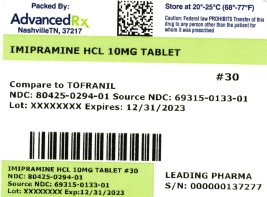
Imipramine hydrochloride 10 mg Tablet, Film Coated, 30-count
🆔 Identity & classification
Where does this data come from?
🏷️ RxNorm drug class
This medicine belongs to the Tricyclic Antidepressant class.
Where does this data come from?
🏭 Manufacturer & labeler
Where does this data come from?
🩺 Clinical
Imipramine tablets and capsules are used to treat depression. Imipramine tablets are also used to prevent bedwetting in children. Imipramine is in a class of medications called tricyclic antidepressants. It treats depression by increasing the amounts of certain natural substances in the brain that are needed to maintain mental balance. There is not enough information to explain how imipramine prevents bedwetting.
Read the full MedlinePlus article ↗- It's common to not notice a change right away — imipramine typically takes one to three weeks before you feel a meaningful difference in your mood. Some people take even longer. Tr...
- How long does it take for imipramine to start working for depression?
- It's best to avoid alcohol entirely while on imipramine. This medication intensifies the sedating effects of alcohol, so even a small amount can make you feel much more drowsy or i...
- Is it safe to drink alcohol while taking imipramine?
Patient education
Supplement & herbal interactions
Imipramine may be associated with lower levels of 3 nutrients — worth a chat with your pharmacist, not a cause for alarm.
Where does this data come from?
Ask a licensed pharmacist directly — free, answered by our team.
💊 What it looks like
Where does this data come from?
🧪 Inactive Ingredients / Excipients
Inactive ingredients, also called excipients, are components of the drug product other than the active ingredient. They may include fillers, dyes, coatings, preservatives, flavors, or other formulation ingredients.
Where does this data come from?
IACT rows and label-wide narrative are kept separate; availability and product-level specificity depend on the submitted label.Inactive ingredient FAQ
Are inactive ingredients the same for every manufacturer?
Why might an inactive ingredient be missing?
Can inactive ingredients matter?
💲 Pricing
A drug doesn't have one price. Each row is a different public payment system, and none is what you'd pay at the counter — that depends on your insurance. The ⓘ on each row explains what it measures.
| Price system | Per each | Per package |
|---|---|---|
| Retail pharmacies payNADAC · weekly | Not in the retail survey — common for institutional, discontinued, or low-volume packs. | |
| Medicaid paysCMS SDUD · 12 mo | No recent Medicaid claims on file for this NDC — rare and low-volume NDCs are suppressed in the public data. | |
| Medicare drug plans payPart D · Q2 2026 | $0.1075 | $3.23 / 30 tablets |
Where does this data come from?
🔁 Therapeutic equivalents
| Product | Labeler | Pack | NADAC/unit | TE | Status | Price vs. this |
|---|---|---|---|---|---|---|
| Imipramine Hydrochloride 10 mg 64380-0169-01 | Strides | 100 tablets | $0.066 | AB | Availability likely | — |
| Imipramine Hydrochloride 10 mg 69315-0133-01 | Leading | 100 tablets | $0.066 | AB | Availability likely | — |
| Imipramine Hydrochloride 10 mg 69584-0425-10 | Oxford | 100 tablets | $0.066 | AB | Availability likely | — |
| Imipramine Hydrochloride 10 mg 71205-0804-30 | Proficient | 30 tablets | — | AB | FDA listed | — |
| Imipramine Hydrochloride 10 mg 71335-3106-01 | Bryant | 30 tablets | — | AB | FDA listed | — |
| Imipramine Hydrochloride 10 mg 72789-0240-01 | PD-Rx | 100 tablets | — | AB | FDA listed | — |
| Imipramine hydrochloride 10 mgthis 80425-0294-01 | Advanced | 30 tablets | — | AB | FDA listed | — |
| Imipramine Hydrochloride 10 mg 82804-0956-00 | Proficient | 100 tablets | — | AB | FDA listed | — |
Where does this data come from?
⏳ Availability & generic status
This product is an FDA-approved generic. Other versions of the same drug are listed under Therapeutic equivalents, least expensive first.
Where does this data come from?
🔬 Reported adverse events (FAERS)
Top reported reactions
Age at onset
Reporter sex
Serious outcomes
Where does this data come from?
📦 Packaging — all sizes for this product
| Package NDC | Description | Marketing start | Status |
|---|---|---|---|
| 80425-0294-01 You're viewing this | 30 TABLET, FILM COATED in 1 BOTTLE (80425-0294-1) | 2023-04-04 | Active |
| 80425-0294-02 | 60 TABLET, FILM COATED in 1 BOTTLE (80425-0294-2) | 2023-04-04 | Active |
| 80425-0294-03 | 90 TABLET, FILM COATED in 1 BOTTLE (80425-0294-3) | 2023-04-04 | Active |
You're viewing the smallest of 3 pack sizes for this product.
Pack size FAQ
What quantity is in NDC 80425-0294-01?
What is the difference between NDC 80425-0294-01 and NDC 80425-0294-02?
What NDC number is used to bill for this package of Imipramine hydrochloride 10 mg Tablet, Film Coated?
🧭 About this NDC listing & data coverage
What data is (and isn’t) available for this NDC — tap to expand
| NDC identity (package / product / labeler codes) | ✓ Available |
| Labeler | ✓ Available |
| Product & package description | ✓ Available |
| Marketing category & status | ✓ Available |
| Active ingredient / dosage form / route | ✓ Available |
| FDA label (SPL via DailyMed) | ✓ Available |
| Package photos | ✓ Available |
| Inactive ingredients (structured) | — Not published for this NDC The labeler did not submit a structured excipient list, or no SPL is available. |
| NADAC pharmacy acquisition price (CMS) | — Not published for this NDC CMS publishes NADAC only for NDCs reported in its retail-pharmacy survey. |
| Orange Book / therapeutic-equivalence data | ✓ Available |
| HCPCS J-code billing crosswalk | — Not published for this NDC Most self-administered / retail products have no J-code — that is normal. |
| Medicaid utilization (CMS SDUD) | — Not published for this NDC CMS reports utilization only for NDCs with Medicaid claims above its privacy threshold. |
Questions about this listing
Why is there no price listed?
Is the NDC printed on the package the same as the 11-digit billing NDC?
What do the three segments of this NDC mean?
Is this package still being marketed?
Does this product come in other package sizes?
Who lists this product with the FDA?
Do I need a prescription for this product?
Where does this data come from?
📄 Full prescribing information FDA SPL
🚨 Boxed Warning ▾
Suicidality and Antidepressant Drugs Antidepressants increased the risk compared to placebo of suicidal thinking and behavior (suicidality) in children, adolescents , and young adults in short-term studies of major depressive dis order (MDD) and other psychiatric disorders . Anyone considering the use of imipramine hydrochloride or any other antidepressant in a child, adolescent, or young adult must balance this risk with the clinical need. Short-term studies did not show an increase in the risk of suicidality with antidepressants compared to placebo in adults beyond age 24; there was a reduction in risk with antidepressants compared to placebo in adults aged 65 and older.
Depression and certain other psychiatric disorders are themselves associated with increases in the risk of suicide. Patients of all ages who are started on antidepressant therapy should be monitored appropriately and observed closely for clinical worsening, suicidality, or unusual changes in behavior. Families and caregivers should be advised of the need for close observation and communication with the prescriber.
Imipramine hydrochloride is not approved for use in pediatric patients (see WARNINGS: Clinical Worsening and Suicide Risk, PRECAUTIONS, Information for Patients , and PRECAUTIONS: Pediatric Use).
🎯 Indications and Usage ▾
Depression - For the relief of symptoms of depression. Endogenous depression is more likely to be alleviated than other depressive states. One to three weeks of treatment may be needed before optimal therapeutic effects are evident.
Childhood Enuresis - May be useful as temporary adjunctive therapy in reducing enuresis in children aged 6 years and older, after possible organic causes have been excluded by appropriate tests. In patients having daytime symptoms of frequency and urgency, examination should include voiding cystourethrography and cystoscopy, as necessary. The effectiveness of treatment may decrease with continued drug administration.
⏱️ Dosage and Administration ▾
Depression Lower dosages are recommended for elderly patients and adolescents. Lower dosages are also recommended for outpatients as compared to hospitalized patients who will be under close supervision.Dosage should be initiated at a low level and increased gradually, noting carefully the clinical response and any evidence of intolerance. Following remission, maintenance medication may be required for a longer period of time, at the lowest dose that will maintain remission.
Usual Adult Dose Hospitalized Patients - Initially, 100 mg/day in divided doses gradually increased to 200 mg/day as required. If no response after two weeks, increase to 250 to 300 mg/day. Outpatients - Initially, 75 mg/day increased to 150 mg/day.
Dosages over 200 mg/day are not recommended. Maintenance, 50 to 150 mg/day. Adolescent and Geriatric Patients - Initially, 30 to 40 mg/day; it is generally not necessary to exceed 100 mg/day.
Childhood Enuresis Initially, an oral dose of 25 mg/day should be tried in children aged 6 and older. Medication should be given one hour before bedtime. If a satisfactory response does not occur within one week, increase the dose to 50 mg nightly in children under 12 years; children over 12 may receive up to 75 mg nightly.
A daily dose greater than 75 mg does not enhance efficacy and tends to increase side effects. Evidence suggests that in early night bedwetters, the drug is more effective given earlier and in divided amounts, i.e., 25 mg in midafternoon, repeated at bedtime. Consideration should be given to instituting a drug free period following an adequate therapeutic trial with a favorable response, Dosage should be tapered off gradually rather than abruptly discontinued; this may reduce the tendency to relapse.
Children who relapse when the drug is discontinued do not always respond to a subsequent course of treatment. A dose of 2.5 mg/kg/day should not be exceeded, ECG changes of unknown significance have been reported in pediatric patients with doses twice this amount. The safety and effectiveness of Imipramine hydrochloride tablets, USP as temporary adjunctive therapy for nocturnal enuresis in children less than 6 years of age has not been established.
⛔ Contraindications ▾
The concomitant use of monoamine oxidase inhibiting compounds is contraindicated. Hyperpyretic crises or severe convulsive seizures may occur in patients receiving such combinations. The potentiation of adverse effects can be serious, or even fatal.
When it is desired to substitute Imipramine hydrochloride tablets, USP in patients receiving a monoamine oxidase inhibitor, as long an interval should elapse as the clinical situation will allow, with a minimum of 14 days. Initial dosage should be low and increases should be gradual and cautiously prescribed. The drug is contraindicated during the acute recovery period after a myocardial infarction.
Patients with a known hypersensitivity to this compound should not be given the drug. The possibility of cross-sensitivity to other dibenzazepine compounds should be kept in mind.
⚠️ Warnings and Cautions ▾
Clinical Worsening and Suicide Risk Patients with major depressive disorder (MDD), both adult and pediatric, may experience worsening of their depression and/or the emergence of suicidal ideation and behavior (suicidality) or unusual changes in behavior, whether or not they are taking antidepressant medications, and this risk may persist until significant remission occurs. Suicide is a known risk of depression and certain other psychiatric disorders, and these disorders themselves are the strongest predictors of suicide.
There has been a long-standing concern, however, that antidepressants may have a role in inducing worsening of depression and the emergence of suicidality in certain patients during the early phases of treatment.Pooled analyses of short-term placebo-controlled trials of antidepressant drugs (SSIRs and others) showed that these drugs increase the risk of suicidal thinking and behavior (suicidality) in children, adolescents, and young adults (ages 18-24) with major depressive disorder (MDD) and other psychiatric disorders.
Short-term studies did not show an increase in the risk of suicidality with antidepressants compared to placebo in adults beyond age 24; there was a reduction with antidepressants compared to placebo in adults aged 65 and older. The pooled analyses of placebo-controlled trials in children and adolescents with MDD, obsessive compulsive disorder (OCD), or other psychiatric disorders included a total of 24 short-term trials of 9 antidepressant drugs in over 4400 patients. The pooled analyses of placebo controlled trials in adults with MDD or other psychiatric disorders included a total of 295 short-term trials (median duration of 2 months) of 11 antidepressant drugs in over 77,000 patients.
There was considerable variation in risk of suicidality among drugs, but a tendency toward an increase in the younger patients for almost all drugs studied. There were differences in absolute risk of suicidality across the different indications, with the highest incidence in MDD. The risk differences (drug vs. placebo), however, were relatively stable within age strata and across indications.
These risk differences (drug-placebo difference in the number of cases of suicidality per 1000 patients treated) are provided in Table 1. Table 1 Age Range Drug-Placebo Difference in Number of Cases of Suicidality per 1000 Patients Treated Increases Compared to Placebo <18 14 additional cases 18-24 5 additional cases Decreases Compared to Placebo 25-64 1 fewer case ≥65 6 fewer cases No suicides occurred in any of the pediatric trials. There were suicides in the adult trials, but the number was not sufficient to reach any conclusion about drug effect on suicide.
It is unknown whether the suicidality risk extends to longer-term use, i.e., beyond several months.However, there is substantial evidence from placebo-controlled maintenance trials in adults with depression that the use of antidepressants can delay the recurrence of depression. All patients being treated with antidepressants ants for any indication should be monitored appropriately and observed closely for clinical worsening, suicidality, and unusual changes in behavior, especially during the initial few months of a course of drug therapy, or at times of dose changes , either increases or decreases .
The following symptoms, anxiety, agitation, panic attacks, insomnia, irritability, hostility, aggressiveness, impulsivity, akathisia (psychomotor restlessness), hypomania, and mania, have been reported in adult and pediatric patients being treated with antidepressants for major depressive disorder as well as for other indications, both psychiatric and nonpsychiatric. Although a causal link between the emergence of such symptoms and either the worsening of depression and/or the emergence of suicidal impulses has not been established, there is concern that such symptoms may represent precursors to emerging suicidality.
Consideration should be given to changing the therap…
🤒 Adverse Reactions ▾
Adverse Reactions Note — Although the listing which follows includes a few adverse reactions which have not been reported with this specific drug, the pharmacological similarities among the tricyclic antidepressant drugs require that each of the reactions be considered when Imipramine hydrochloride tablets, USP is administered. Cardiovascular: Orthostatic hypotension, hypertension, tachycardia, palpitation, myocardial infarction, arrhythmias, heart block, ECG changes, precipitation of congestive heart failure, stroke.
Psychiatric: Confusional states (especially in the elderly) with hallucinations, disorientation, delusions; anxiety, restlessness, agitation; insomnia and nightmares; hypomania; exacerbation of psychosis. Neurological: Numbness, tingling, paresthesias of extremities; incoordination, ataxia, tremors; peripheral neuropathy; extrapyramidal symptoms; seizures, alterations in EEG patterns; tinnitus. Anticholinergic: Dry mouth, and, rarely, associated sublingual adenitis; blurred vision, disturbances of accommodation, mydriasis; constipation, paralytic ileus; urinary retention, delayed micturition, dilation of the urinary tract.
Allergic: Skin rash, petechiae, urticaria, itching, photosensitization; edema (general or of face and tongue); drug fever; cross-sensitivity with desipramine. Hematologic: Bone marrow depression including agranulocytosis; eosinophilia; purpura; thrombocytopenia. Gastrointestinal: Nausea and vomiting, anorexia, epigastric distress, diarrhea; peculiar taste, stomatitis, abdominal cramps, black tongue.
Endocrine: Gynecomastia in the male; breast enlargement and galactorrhea in the female; increased or decreased libido, impotence; testicular swelling; elevation or depression of blood sugar levels; inappropriate antidiuretic hormone (ADH) secretion syndrome. Other: Jaundice (simulating obstructive); altered liver function; weight gain or loss; perspiration; flushing; urinary frequency; drowsiness, dizziness, weakness and fatigue; headache; parotid swelling; alopecia; proneness to falling. Withdrawal Symptoms: Though not indicative of addiction, abrupt cessation of treatment after prolonged therapy may produce nausea, headache, and malaise.
Note — In enuretic children treated with Imipramine hydrochloride tablets, USP the most common adverse reactions have been nervousness, sleep disorders, tiredness, and mild gastrointestinal disturbances. These usually disappear during continued drug administration or when dosage is decreased. Other reactions which have been reported include constipation, convulsions, anxiety, emotional instability, syncope, and collapse.
All of the adverse effects reported with adult use should be considered. Postmarketing Experience The following adverse drug reaction has been reported during post-approval use of imipramine. Because this reaction is reported voluntarily from a population of uncertain size, it is not always possible to reliably estimate frequency.
Eye disorders: angle-closure glaucoma
🆘 Overdosage ▾
Deaths may occur from overdosage with this class of drugs. Multiple drug ingestion (including alcohol) is common in deliberate tricyclic overdose. As the management is complex and changing, it is recommended that the physician contact a poison control center for current information on treatment.
Signs and symptoms of toxicity develop rapidly after tricyclic overdose. Therefore, hospital monitoring is required as soon as possible. Children have been reported to be more sensitive than adults to an acute overdosage of imipramine hydrochloride.
An acute overdose of any amount in infants or young children, especially, must be considered serious and potentially fatal. Manifestations These may vary in severity depending upon factors such as the amount of drug absorbed, the age of the patient, and the interval between drug ingestion and the start of treatment. Critical manifestations of overdose include cardiac dysrhythmias, severe hypotension, convulsions, and CNS depression including coma.
Changes in the electrocardiogram, particularly in QRS axis or width, are clinically significant indicators of tricyclic toxicity. Other CNS manifestations may include drowsiness, stupor, ataxia, restlessness, agitation, hyperactive reflexes, muscle rigidity, athetoid and choreiform movements. Cardiac abnormalities may include tachycardia and signs of congestive failure, Respiratory depression, cyanosis, shock, vomiting, hyperpyrexia, mydriasis, and diaphoresis may also be present.
Management Obtain an ECG and immediately initiate cardiac monitoring. Protect the patient's airway, establish an intravenous line and initiate gastric decontamination. A minimum of 6 hours of observation with cardiac monitoring and observation for signs of CNS or respiratory depression, hypotension, cardiac dysrhythmias and/or conduction blocks, and seizures is necessary.
If signs of toxicity occur at anytime during this period, extended monitoring is required. There are case reports of patients succumbing to fatal dysrhythmias late after overdose; these patients had clinical evidence of significant poisoning prior to death and most received inadequate gastrointestinal decontamination. Monitoring of plasma drug levels should not guide management of the patient.
Gastrointestinal Decontamination - All patients suspected of tricyclic overdose should receive gastrointestinal decontamination. This should include large volume gastric lavage followed by activated charcoal. If consciousness is impaired, the airway should be secured prior to lavage.
Emesis is contraindicated. Cardiovascular - A maximal limb-lead QRS duration of ≥ 0.10 seconds may be the best indication of the severity of the overdose. Intravenous sodium bicarbonate should be used to maintain the serum pH in the range of 7.45 to 7.55.
If the pH response is inadequate, hyperventilation may also be used. Concomitant use of hyperventilation and sodium bicarbonate should be done with extreme caution, with frequent pH monitoring. A pH >7.60 or a pCO2 <20 mmHg is undesirable.
Dysrhythmias unresponsive to sodium bicarbonate therapy/hyperventilation may respond to lidocaine, bretylium, or phenytoin, Type 1A and 1C antiarrhythmics are generally contraindicated (e.g., quinidine, disopyrarnide, and procainamide). In rare instances, hemoperfusion may be beneficial in acute refractory cardiovascular instability in patients with acute toxicity. However, hemodialysis, peritoneal dialysis, exchange transfusions, and forced diuresis generally have been reported as ineffective in tricyclic poisoning.
CNS - In patients with CNS depression, early intubation is advised because of the potential for abrupt deterioration, Seizures should be controlled with benzodiazepines, or if these are ineffective, other anticonvulsants (e.g., phenobarbital, phenytoin). Physostigmine is not recommended except to treat lifethreatening symptoms that have been unresponsive to other therapies, and then only in consultation with a poison control center. Ps…
🧬 Clinical Pharmacology ▾
The mechanism of action of Imipramine hydrochloride, USP is not definitely known. However, it does not act primarily by stimulation of the central nervous system. The clinical effect is hypothesized as being due to potentiation of adrenergic synapses by blocking uptake of norepinephrine at nerve endings. The mode of action of the drug in controlling childhood enuresis is thought to be apart from its antidepressant effect.
📦 How Supplied / Storage and Handling ▾
Imipramine hydrochloride tablets USP, are available as follows: Tablets 10 mg - round, yellow, compressed, film-coated tablet, debossed with "EP" and "133" on one side and plain on the other side. Bottles of 30 Tablets NDC 80425-0294-01 Bottles of 60 Tablets NDC 80425-0294-02 Bottles of 90 Tablets NDC 80425-0294-03 Store at 20° to 25°C (68° to 77°F) [see USP Controlled Room Temperature]. Dispense in tight container (USP) with a child-resistant closure.
📋 Description ▾
Imipramine hydrochloride tablets USP is supplied in tablet form for oral administration. Imipramine hydrochloride USP, the original tricyclic antidepressant, is a member of the dibenzazepine group of compounds. It is designated 5-3-(dimethylamino) propyl-10, 11-dihydro-5H dibenz [‘b, f]- azepine monohydrochloride.
Its structural formula is: C19H24N2 • HCl MW = 316.88 Imipramine hydrochloride USP is a white to off-white, odorless, or practically odorless crystalline powder. It is freely soluble in water and in alcohol, soluble in acetone, and insoluble in ether and in benzene. Inactive Ingredients: Colloidal silicon dioxide, D & C red # 30 and # 40, D & C yellow # 6 and # 10, dicalcium phosphate, F D & C blue # 1 and # 2, hydroxypropyl methylcellulose, magnesium stearate, microcrystalline cellulose, polyethylene glycol, polysorbate, sodium starch glycolate, titanium dioxide.
Description
💬 Medication Guide ▾
Antidepressant Medicines , Depression and other Serious Mental Illnesses, and Suicidal Thoughts or Actions Read the Medication Guide that comes with you or your family member's antidepressant medicine. This Medication Guide is only about the risk of suicidal thoughts and actions with antidepressant medicines. Talk to your, or your family member's , healthcare provider about: all risks and benefits of treatment with antidepressant medicines all treatment choices for depression or other serious mental illness What is the most important information I should know about antidepressant medicines ,depression and other serious mental illnesses, and suicidal thoughts or actions ?
Antidepressant medicines may increase suicidal thoughts or actions in some children, teenagers , and young adults within the first few months of treatment. Depression and other serious mental illnesses are the most important causes of suicidal thoughts and actions.Some people may have a particularly high risk of having suicidal thoughts or actions. These include people who have (or have a family history of) bipolar illness (also called manic-depressive illness ) or suicidal thoughts or actions .
How can I watch for and try to prevent suicidal thoughts and actions in myself or a family member? Pay close attention to any changes, especially sudden changes, in mood, behaviors, thoughts, or feelings. This is very important when an antidepressant medicine is started or when the dose is changed.
Call the healthcare provider right away to report new or sudden changes in mood, behavior, thoughts, or feelings. Keep all follow-up visits with the healthcare provider as scheduled. Call the healthcare provider between visits as needed, especially if you have concerns about symptoms.
Call a healthcare provider right away if you or your family member has any of the following symptoms , especially if they are new, worse, or worry you: thoughts about suicide or dying attempts to commit suicide new or worse depression new or worse anxiety feeling very agitated or restless panic attacks trouble sleeping (insomnia) new or worse irritability acting aggressive, being angry, or violent acting on dangerous impulses an extreme increase in activity and talking (mania) other unusual changes in behavior or mood Visual problems: eye pain, changes in vision, swelling or redness in or around the eye Who should not take Imiparmine hydrochloride tablets USP?
Do not take Imiparmine hydrochloride tablets USP if you: take a monoamine oxidase inhibitor (MAOI). Ask your healthcare provider or pharmacist if you are not sure if you take an MAOI, including the antibiotic linezolid. Do not take an MAOI within 2 weeks of stopping Imipramine hydrochloride tablets, USP unless directed to do so by your physician.
Do not Imipramine hydrochloride tablets, USP if you stopped taking an MAOI in the last 2 weeks unless directed to do so by your physician. What else do I need to know about antidepressant medicines ? Never stop an antidepressant medicine without first talking to a healthcare provider.
Stopping an antidepressant medicine suddenly can cause other symptoms. Visual problems: Only some people are at risk for these problems.You may want to undergo an eye examination to see if you are at risk and receive preventive treatment if you are. Antidepressants are medicines used to treat depression and other illnesses.
It is important to discuss all the risks of treating depression and also the risks of not treating it. Patients and their families or other caregivers should discuss all treatment choices with the healthcare provider, not just the use of antidepressants. Antidepressant medicines have other side effects .
Talk to the healthcare provider about the side effects of the medicine prescribed for you or your family member. Antidepressant medicines can interact with other medicines . Know all of the medicines that you or your family member takes.
Keep a list of all medicines to show the healthcare provide…