
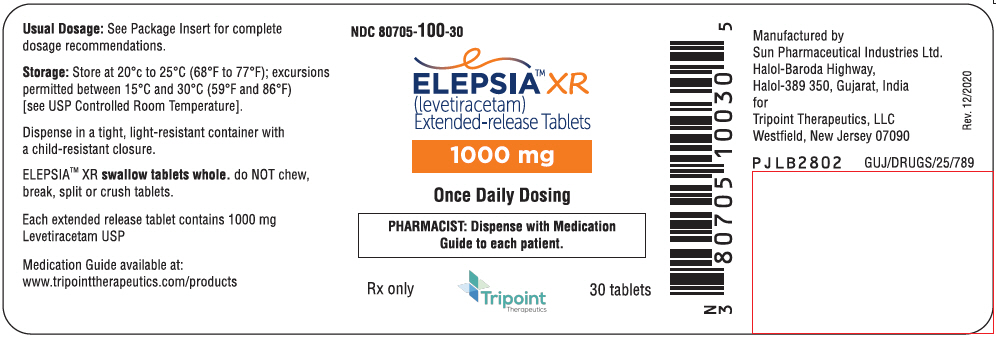
ELEPSIA XR 1000 MG levetiracetam 1000 mg Tablet, Extended Release, 30-count
🆔 Identity & classification
Where does this data come from?
🏷️ RxNorm drug class
This medicine belongs to the Other antiepileptics class.
Where does this data come from?
🏭 Manufacturer & labeler
Where does this data come from?
🩺 Clinical
- Levetiracetam is an anti-seizure medicine. Depending on the product and your age, it can be used to treat partial-onset seizures (seizures starting in one part of the brain), myocl...
- What is levetiracetam actually used for?
- It can, especially when you first start taking it. Drowsiness, fatigue, and dizziness are among the most common side effects and tend to be most noticeable in the first few weeks....
- Will levetiracetam make me feel tired or foggy?
Patient education
Supplement & herbal interactions
Some supplements/herbs that may interact with Levetiracetam — tap one for details:
Levetiracetam may be associated with lower levels of 1 nutrient — worth a chat with your pharmacist, not a cause for alarm.
Where does this data come from?
Ask a licensed pharmacist directly — free, answered by our team.
💊 What it looks like
Where does this data come from?
🧪 Inactive Ingredients / Excipients
Inactive ingredients, also called excipients, are components of the drug product other than the active ingredient. They may include fillers, dyes, coatings, preservatives, flavors, or other formulation ingredients.
💡 Tap an ingredient (hover on desktop) to see what it is and why it’s used.
-
UNII 2S7830E561
Crospovidone is a synthetic polymer derived from povidone. It acts as a disintegrant, helping the tablet or capsule break apart quickly in the stomach so the active ingredient can be absorbed.
-
UNII 4W5IH7FLNY
A clear, oily liquid derived from sebacic acid and butanol. It works as a plasticizer and solvent in pharmaceutical coatings and films, helping them stay flexible and smooth.
-
UNII 905HNO1SIH
A synthetic polymer made from methacrylate compounds that forms a film coating on tablets or capsules. It helps control how quickly the medicine dissolves and releases its active ingredient in the digestive system.
-
UNII 7Z8S9VYZ4B
Ethylcellulose is a plant-derived thickener and film-former made by chemically modifying cellulose. It's used as a binder to hold tablet ingredients together, a coating to control how quickly medicine is released, or a thickener in liquid formulations.
-
UNII J9EQA3S2JM
FD&C Blue No. 1 Aluminum Lake is a blue colorant made by combining FD&C Blue No. 1 dye with aluminum salts. It is used to color tablets, capsules, and other medicines for easy identification and appearance.
-
UNII 3NXW29V3WO
Hypromellose is a plant-based thickener made from cellulose. It's used in medicines as a binder to hold ingredients together, a coating for tablets, and a thickener for liquids.
-
UNII 70097M6I30
Magnesium stearate is a salt made from magnesium and stearic acid, a fatty substance. It's used in tablets and capsules as a lubricant and glidant to help ingredients flow smoothly during manufacturing and prevent sticking.
-
UNII 3WJQ0SDW1A
Polyethylene glycol is a synthetic liquid or solid polymer used in medicines as a solvent, lubricant, and humectant. It helps dissolve active ingredients, reduces friction during manufacturing, and retains moisture in the final product.
-
UNII 7T1F30V5YH
A synthetic emulsifier derived from sorbitol and oleic acid. It helps mix oil and water-based ingredients together and keeps them from separating in liquid formulations.
-
UNII 6OZP39ZG8H
Polysorbate 80 is a synthetic emulsifier derived from sorbitol and oleic acid. It helps mix oil and water-based ingredients together in medications and improves how the product disperses in the body.
-
UNII 532B59J990
Polyvinyl alcohol is a synthetic polymer made from plant-derived materials. It's used as a binder to hold ingredients together, a film-former in coatings, and a thickener in liquid formulations.
-
UNII FZ989GH94E
Povidone is a synthetic polymer made from a plastic-like material. It acts as a binder to hold tablet ingredients together and as a disintegrant to help the tablet break apart in your stomach so the medicine can be absorbed.
-
UNII ETJ7Z6XBU4
Silicon dioxide is a naturally occurring mineral used as a glidant and anti-caking agent. It helps powder ingredients flow smoothly and prevents clumping during manufacturing and storage.
-
UNII 368GB5141J
A detergent and foaming agent derived from coconut or palm oil. In medications, it helps break down and mix oil and water-based ingredients, aids in tablet disintegration, and improves how the drug dissolves and spreads in the mouth or digestive system.
-
UNII 7SEV7J4R1U
A powder made from a naturally occurring mineral. In medicines, talc works as a glidant and anti-caking agent, helping tablets and capsules flow smoothly during manufacturing and preventing clumping.
-
UNII 8Z96QXD6UM
Triethyl citrate is a clear liquid derived from citric acid. It acts as a plasticizer and solvent in tablet coatings and film formulations, helping the coating remain flexible and adhere properly to the medicine.
16 inactive ingredients listed in the exact product block matched to this NDC.
Where does this data come from?
ingredient classCode="IACT" elements from the exact product block matched by this NDC. Label-section narrative from DailyMed / the openFDA label index is shown separately when available.Inactive ingredient FAQ
Are inactive ingredients the same for every manufacturer?
Why might an inactive ingredient be missing?
Can inactive ingredients matter?
💲 Pricing
A drug doesn't have one price. Each row is a different public payment system, and none is what you'd pay at the counter — that depends on your insurance. The ⓘ on each row explains what it measures.
| Price system | Per each | Per package |
|---|---|---|
| Retail pharmacies payNADAC · weekly | Not in the retail survey — common for institutional, discontinued, or low-volume packs. | |
| Medicaid paysCMS SDUD · 12 mo | No recent Medicaid claims on file for this NDC — rare and low-volume NDCs are suppressed in the public data. | |
| Medicare drug plans payPart D · quarterly | No Part D plan price is available for this NDC in our data. | |
Where does this data come from?
🔁 Therapeutic equivalents
| Product | Labeler | Pack | NADAC/unit | TE | Status | Price vs. this |
|---|---|---|---|---|---|---|
| Levetiracetam 1000 mg 60505-3518-06 | Apotex | 60 tablets | — | — | FDA listed | — |
| Elepsia Xr 1000 Mgthis 80705-0100-30 | TRIPOINT | 30 tablets | — | — | FDA listed | — |
Where does this data come from?
⏳ Availability & generic status
FDA-approved generic versions are listed, and recent pricing/market data suggests they may be available — see Therapeutic equivalents.
Why the date isn’t exact: Generic timing can change because patents may be challenged, settled, licensed, added, removed, or worked around with a narrower label — and FDA approval does not always mean a pharmacy can get the generic today.
🛈 What do these terms mean?
- Patent
- Legal protection listed in the Orange Book that may delay generic approval or launch. Issued by the U.S. Patent & Trademark Office.
- Substance patent
- Covers the active drug molecule itself — the hardest to design around. A generic generally can’t launch until it expires.
- Formulation (product) patent
- Covers a specific formulation or dosage form. A generic can sometimes work around it with a different formulation.
- Method-of-use patent
- A patent covering one specific approved use of the drug — not necessarily the whole molecule. A generic can sometimes launch with a “skinny label” that carves out the protected use and keeps the others.
- Skinny label
- A generic label that omits a still-patented use when the FDA allows it — letting a generic reach the market for the unprotected uses.
- Exclusivity
- FDA-granted marketing protection, separate from patents — e.g. 5-yr new chemical entity, 7-yr orphan drug, or a +6-month pediatric extension.
- Paragraph IV
- A generic applicant’s formal challenge to a listed patent. It can potentially lead to earlier generic entry, but often involves litigation or a settlement.
- RLD / RS
- Reference Listed Drug — the brand product the FDA uses as the reference for generic applications. Reference Standard — the product the FDA expects generics to compare against in bioequivalence testing.
- TE / AB rating
- FDA therapeutic-equivalence rating. An AB rating generally means the FDA considers a generic therapeutically equivalent to — and substitutable for — the brand.
- LOE (loss of exclusivity)
- The latest patent or exclusivity currently listed — the loss-of-exclusivity / latest-listed-protection date shown on this page. Paragraph-IV challenges and settlements can move the real date earlier; FDA approval and a manufacturer’s decision to market can move it later.
Built from the FDA Orange Book. The bars above are scaled to each protection’s expiry; the red LOE marker is the last one to lapse.
| Patent | Type | Use code | Expires |
|---|---|---|---|
| US 8535717 ↗ | Drug product | — | Feb 22, 2026 |
| US 8163306 ↗ | Drug product | — | Sep 3, 2027 |
| US 8163306 ↗ | Drug product | — | Sep 3, 2027 |
| US 8425938 ↗ | Drug product | — | Feb 22, 2026 |
| US 8535717 ↗ | Drug product | — | Feb 22, 2026 |
| US 8431156 ↗ | Drug product | — | Oct 31, 2027 |
| US 8470367 ↗ | Drug product | — | Oct 31, 2027 |
| US 8425938 ↗ | Drug product | — | Feb 22, 2026 |
| US 8431156 ↗ | Drug product | — | Oct 31, 2027 |
| US 8470367 ↗ | Drug product | — | Oct 31, 2027 |
Is there a generic version of ELEPSIA XR 1,000 MG TABLET?
The FDA approved a generic — why can’t I get it at my pharmacy yet?
Why do different websites show different generic release dates?
What does “FDA listed” mean?
What does a patent or protection date mean here?
What does “current Orange Book estimate” mean?
Can a generic come out before the last patent expires?
Can a generic come out after the listed dates?
What is the difference between patents and exclusivity?
Why are there multiple patent dates?
Where does this data come from?
📊 Medicare Part D spend CMS · PART D · 2026 (Q1)
🔬 Reported adverse events (FAERS)
Top reported reactions
Age at onset
Reporter sex
Serious outcomes
Where does this data come from?
📦 Packaging — all sizes for this product
| Package NDC | Description | Marketing start | Status |
|---|---|---|---|
| 80705-0100-02 | 1 BLISTER PACK in 1 CARTON (80705-100-02) / 2 TABLET, EXTENDED RELEASE in 1 BLISTER PACK | 2021-09-29 | Active |
| 80705-0100-30 You're viewing this | 30 TABLET, EXTENDED RELEASE in 1 BOTTLE, PLASTIC (80705-100-30) | 2021-02-12 | Active |
| 80705-0100-99 | 1 BLISTER PACK in 1 CARTON (80705-100-99) / 7 TABLET, EXTENDED RELEASE in 1 BLISTER PACK | 2021-02-12 | Active |
Pack size FAQ
What quantity is in NDC 80705-0100-30?
What is the difference between NDC 80705-0100-30 and NDC 80705-0100-02?
What NDC number is used to bill for this package of ELEPSIA XR 1000 MG levetiracetam 1000 mg Tablet, Extended Release?
🧭 About this NDC listing & data coverage
What data is (and isn’t) available for this NDC — tap to expand
| NDC identity (package / product / labeler codes) | ✓ Available |
| Labeler | ✓ Available |
| Product & package description | ✓ Available |
| Marketing category & status | ✓ Available |
| Active ingredient / dosage form / route | ✓ Available |
| FDA label (SPL via DailyMed) | ✓ Available |
| Package photos | ✓ Available |
| Inactive ingredients (structured) | ✓ Available |
| NADAC pharmacy acquisition price (CMS) | — Not published for this NDC CMS publishes NADAC only for NDCs reported in its retail-pharmacy survey. |
| Orange Book / therapeutic-equivalence data | ✓ Available |
| HCPCS J-code billing crosswalk | — Not published for this NDC Most self-administered / retail products have no J-code — that is normal. |
| Medicaid utilization (CMS SDUD) | — Not published for this NDC CMS reports utilization only for NDCs with Medicaid claims above its privacy threshold. |
Questions about this listing
Why is there no price listed?
Is the NDC printed on the package the same as the 11-digit billing NDC?
What do the three segments of this NDC mean?
Is this package still being marketed?
Does this product come in other package sizes?
Who lists this product with the FDA?
Do I need a prescription for this product?
Where does this data come from?
📄 Full prescribing information FDA SPL
🎯 Indications and Usage ▾
1 INDICATIONS AND USAGE ELEPSIA XR is indicated as adjunctive therapy for the treatment of partial-onset seizures in patients 12 years of age and older. ELEPSIA XR is indicated as adjunctive therapy for the treatment of partial-onset seizures in patients 12 years of age and older ( 1 )
⏱️ Dosage and Administration ▾
2 DOSAGE AND ADMINISTRATION Initiate treatment with a dose of 1000 mg once daily; increase by 1000 mg every 2 weeks to a maximum recommended dose of 3000 mg once daily ( 2.1 ) ELEPSIA XR should be taken whole; do not split or cut tablets ( 2.1 ) Not recommended for use in patients with moderate or severe renal impairment; the maximum recommended dose in patients with mild renal impairment is 2000 mg ( 2.2 )
2.1Recommended Dosing ELEPSIA XR is administered orally once daily. Initiate treatment with a dose of 1000 mg once daily. The once daily dosage may be adjusted in increments of 1000 mg every 2 weeks, to a maximum recommended daily dose of 3000 mg/day. ELEPSIA XR should be taken whole; do not split or cut tablets.
2.2Dosage Adjustment in Adult Patients with Renal Impairment ELEPSIA XR is not recommended for use in patients with moderate or severe renal impairment. Recommended doses and adjustment for patients with mild renal impairment are shown in Table 1. In order to calculate the dose recommended for patients with renal impairment, creatinine clearance adjusted for body surface area must be calculated.
To do this, an estimate of the patient's creatinine clearance (CL cr ) in mL/min must first be calculated using the following formula: CL cr = [140-age (years)] × weight (kg) (× 0.85 for female patients) 72 × serum creatinine (mg/dL) Then CL cr is adjusted for body surface area (BSA) as follows: CL cr (mL/min/1.73m 2 ) = CL cr (mL/min) ×
1.73BSA subject (m 2 ) Table 1: Dosing Adjustment Regimen for Adult Patients with Impaired Renal Function Group Creatinine Clearance (mL/min/1.73m 2 ) Dosage (mg) Frequency Normal greater than 80 1000 to 3000 Every 24 hours Mild 50 to 80 1000 to 2000 Every 24 hours
2.3Discontinuation of ELEPSIA XR When discontinuing ELEPSIA XR, reduce the dosage gradually and avoid abrupt discontinuation because of the risk of increased seizure frequency and status epilepticus [see Warnings and Precautions (5.8) ].
💊 Dosage Forms and Strengths ▾
3 DOSAGE FORMS AND STRENGTHS Extended-release tablets: 1000 mg: oval biconvex, coated, blue and white to off-white, bilayer tablet with drilled portal on blue layer; imprinted with "574" with black ink on one side and plain on the other side. 1500 mg: oval biconvex, coated, blue and white to off-white, bilayer tablet with drilled portal on blue layer; imprinted with "575" with black ink on one side and plain on the other side. Extended-release tablets, 1000 mg, 1500 mg ( 3 )
⛔ Contraindications ▾
4 CONTRAINDICATIONS ELEPSIA XR is contraindicated in patients with a hypersensitivity to levetiracetam. Reactions have included anaphylaxis and angioedema [see Warnings and Precautions (5.4) ]. Known hypersensitivity to levetiracetam; angioedema and anaphylaxis have occurred ( 4 )
⚠️ Warnings and Cautions ▾
5 WARNINGS AND PRECAUTIONS Behavioral abnormalities including psychotic symptoms, suicidal ideation, irritability, and aggressive behavior have been observed; monitor patients for psychiatric signs and symptoms ( 5.1 ) Suicidal Behavior and Ideation: Monitor patients for new or worsening depression, suicidal thoughts/behavior, and/or unusual changes in mood or behavior ( 5.2 ) Monitor for somnolence and fatigue and advise patients not to drive or operate machinery until they have gained sufficient experience on ELEPSIA XR ( 5.3 ) Serious Dermatological Reactions: Discontinue ELEPSIA XR at the first sign of rash unless clearly not drug related ( 5.5 ) Drug Reaction with Eosinophilia and Systemic Symptoms (DRESS)/Multi-Organ Hypersensitivity: Discontinue if no alternative etiology ( 5.6 ) Coordination Difficulties: Monitor for ataxia, abnormal gait, and incoordination.
Advise patients to not drive or operate machinery until they have gained experience on ELEPSIA XR ( 5.7 ) Withdrawal Seizures: ELEPSIA XR must be gradually withdrawn ( 5.8 )
5.1Behavioral Abnormalities and Psychotic Symptoms ELEPSIA XR may cause behavioral abnormalities and psychotic symptoms. Patients treated with ELEPSIA XR should be monitored for psychiatric signs and symptoms. Behavioral Abnormalities Levetiracetam Extended-Release Tablets A total of 7% of levetiracetam extended-release tablets-treated patients experienced non-psychotic behavioral disorders (reported as irritability and aggression), compared to 0% of placebo-treated patients.
Irritability was reported in 7% of levetiracetam extended-release tablet-treated patients. Aggression was reported in 1% of levetiracetam extended-release tablet-treated patients. No patient discontinued treatment or had a dose reduction as a result of these adverse reactions.
The number of patients exposed to levetiracetam extended-release tablets was considerably smaller than the number of patients exposed to immediate-release levetiracetam tablets in controlled trials. Therefore, certain adverse reactions observed in the immediate-release levetiracetam controlled trials will likely to occur in patients receiving ELEPSIA XR. Immediate-Release Levetiracetam Tablets A total of 13% of adult patients and 38% of pediatric patients (4 to 16 years of age) treated with immediate-release levetiracetam tablets experienced non-psychotic behavioral symptoms (reported as aggression, agitation, anger, anxiety, apathy, depersonalization, depression, emotional lability, hostility, hyperkinesias, irritability, nervousness, neurosis, and personality disorder), compared to 6% and 19% of adult and pediatric patients on placebo.
A randomized, double-blind, placebo-controlled study was performed to assess the neurocognitive and behavioral effects of immediate-release levetiracetam tablets as adjunctive therapy in pediatric patients (4 to 16 years of age). An exploratory analysis suggested a worsening in aggressive behavior in patients treated with immediate-release levetiracetam tablets in that study [see Use in Specific Populations (8.4) ] . A total of 1.7% of adult patients treated with immediate-release levetiracetam tablets discontinued treatment due to behavioral adverse reactions, compared to 0.2% of placebo-treated patients.
The treatment dose was reduced in 0.8% of adult patients treated with immediate-release levetiracetam tablets, compared to 0.5% of placebo-treated patients. Overall, 11% of pediatric patients treated with immediate-release levetiracetam tablets experienced behavioral symptoms associated with discontinuation or dose reduction, compared to 6.2% of placebo-treated pediatric patients. One percent of adult patients and 2% of pediatric patients (4 to 16 years of age) treated with immediate-release levetiracetam tablets experienced psychotic symptoms, compared to 0.2% and 2%, respectively, in adult and pediatric placebo-treated patients.
In the controlled study that assessed the neurocognitive and behavioral effects of…
🤒 Adverse Reactions ▾
6 ADVERSE REACTIONS The following serious adverse reactions are discussed in more detail in other sections of labeling: Behavioral Abnormalities and Psychotic Symptoms [see Warnings and Precautions (5.1) ] Suicidal Behavior and Ideation [see Warnings and Precautions (5.2) ] Somnolence and Fatigue [see Warnings and Precautions (5.3) ] Anaphylaxis and Angioedema [see Warnings and Precautions (5.4) ] Serious Dermatological Reactions [see Warnings and Precautions (5.5) ] Drug Reaction with Eosinophilia and Systemic Symptoms (DRESS)/Multiorgan Hypersensitivity [see Warnings and Precautions (5.6) ] Coordination Difficulties [see Warnings and Precautions (5.7) ] Hematologic Abnormalities [see Warnings and Precautions (5.9) ] Most common adverse reactions (incidence ≥5% more than placebo) include: somnolence and irritability ( 6.1 ) To report SUSPECTED ADVERSE REACTIONS, contact Tripoint Therapeutics at (908) 928-4500 or FDA at 1-800-FDA-1088 or www.fda.gov/medwatch.
6.1Clinical Trials Experience Because clinical trials are conducted under widely varying conditions, adverse reaction rates observed in the clinical trials of a drug cannot be directly compared to rates in the clinical trials of another drug and may not reflect the rates observed in practice. Levetiracetam Extended-Release Tablets In the controlled clinical study in patients with partial-onset seizures, the most common adverse reactions in patients receiving levetiracetam extended-release tablets in combination with other AEDs, for events with rates greater than placebo, were irritability and somnolence.
Table 3 lists adverse reactions that occurred in at least 5% of epilepsy patients receiving levetiracetam extended-release tablets in the placebo-controlled study and were numerically more common than in patients treated with placebo. In this study, either levetiracetam extended-release tablets or placebo was added to concurrent AED therapy. Table 3: Adverse Reactions in the Placebo-Controlled, Add-On Study in Patients Experiencing Partial-Onset Seizures Adverse Reactions Levetiracetam Extended-Release Tablets (N=77) % Placebo (N=79) % Influenza 8 4 Somnolence 8 3 Irritability 7 0 Nasopharyngitis 7 5 Dizziness 5 3 Nausea 5 3 Discontinuation or Dose Reduction in the Levetiracetam Extended-Release Tablets Controlled Clinical Study In the controlled clinical study, 5% of patients receiving levetiracetam extended-release tablets and 3% receiving placebo discontinued as a result of an adverse reaction.
The adverse reactions that resulted in discontinuation and that occurred more frequently in levetiracetam extended-release tablet-treated patients than in placebo-treated patients were asthenia, epilepsy, mouth ulceration, rash, and respiratory failure. Each of these adverse reactions led to discontinuation in a levetiracetam extended-release tablet-treated patient and no placebo-treated patients. Immediate-Release Levetiracetam Tablets Table 4 lists the adverse reactions in the controlled studies of immediate-release levetiracetam tablets in adult patients experiencing partial-onset seizures.
Although the pattern of adverse reactions in the levetiracetam extended-release tablets study seems somewhat different from that seen in partial-onset seizure controlled studies for immediate-release levetiracetam tablets, this is possibly due to the much smaller number of patients in this study compared to the immediate- release tablet studies. The adverse reactions for levetiracetam extended-release tablets are expected to be similar to those seen with immediate-release levetiracetam tablets. Adults In controlled clinical studies of immediate-release levetiracetam tablets as adjunctive therapy to other AEDs in adults with partial-onset seizures, the most common adverse reactions, for events with rates greater than placebo, were somnolence, asthenia, infection, and dizziness.
Table 4 lists adverse reactions that occurred in at least 1% of adult epilepsy patients receiving immediate-relea…
👥 Use in Specific Populations ▾
8 USE IN SPECIFIC POPULATIONS Pregnancy: Plasma levels of levetiracetam may be decreased and therefore need to be monitored closely during pregnancy. Based on animal data, may cause fetal harm ( 5.10 , 8.1 )
8.1Pregnancy Pregnancy Exposure Registry There is a pregnancy exposure registry that monitors pregnancy outcomes in women exposed to antiepileptic drugs (AEDs), including ELEPSIA XR, during pregnancy. Encourage women who are taking ELEPSIA XR during pregnancy to enroll in the North American Antiepileptic Drug (NAAED) pregnancy registry by calling 1-888-233-2334 or visiting http://www.aedpregnancyregistry.org/. Risk Summary Prolonged experience with levetiracetam in pregnant women has not identified a drug-associated risk of major birth defects or miscarriage, based on published literature, which includes data from pregnancy registries and reflects experience over two decades [see Human Data ] .
In animal studies, levetiracetam produced developmental toxicity (increased embryofetal and offspring mortality, increased incidences of fetal structural abnormalities, decreased embryofetal and offspring growth, neurobehavioral alterations in offspring) at doses similar to human therapeutic doses [see Animal Data ] . In the U.S. general population, the estimated background risk of major birth defects and miscarriage in clinically recognized pregnancies is 2-4% and 15-20%, respectively. The background risk of major birth defects and miscarriage for the indicated population is unknown.
Clinical Considerations Levetiracetam levels may decrease during pregnancy [see Warnings and Precautions (5.10) ] . Physiological changes during pregnancy may affect levetiracetam concentration. Decrease in levetiracetam plasma concentrations has been observed during pregnancy.
This decrease is more pronounced during the third trimester. Dose adjustments may be necessary to maintain clinical response. Data Human Data While available studies cannot definitively establish the absence of risk, data from the published literature and pregnancy registries have not established an association with levetiracetam use during pregnancy and major birth defects or miscarriage.
Animal Data When levetiracetam (0, 400, 1200, or 3600 mg/kg/day) was administered orally to pregnant rats during the period of organogenesis, reduced fetal weights and increased incidence of fetal skeletal variations were observed at the highest dose tested. There was no evidence of maternal toxicity. The no-effect dose for adverse effects on embryofetal development in rats (1200 mg/kg/day) is approximately 4 times the maximum recommended human dose (MRHD) of 3000 mg on a body surface area (mg/m 2 ) basis.
Oral administration of levetiracetam (0, 200, 600, or 1800 mg/kg/day) to pregnant rabbits during the period of organogenesis resulted in increased embryofetal mortality and incidence of fetal skeletal variations at the mid and high dose and decreased fetal weights and increased incidence of fetal malformations at the high dose, which was associated with maternal toxicity. The no-effect dose for adverse effects on embryofetal development in rabbits (200 mg/kg/day) is approximately equivalent to the MRHD on a mg/m 2 basis.
Oral administration of levetiracetam (0, 70, 350, or 1800 mg/kg/day) to female rats throughout pregnancy and lactation led to an increased incidence of fetal skeletal variations, reduced fetal body weight, and decreased growth in offspring at the mid and high doses and increased pup mortality and neurobehavioral alterations in offspring at the highest dose tested. There was no evidence of maternal toxicity. The no-effect dose for adverse effects on pre- and postnatal development in rats (70 mg/kg/day) is less than the MRHD on a mg/m 2 basis.
Oral administration of levetiracetam to rats during the latter part of gestation and throughout lactation produced no adverse developmental or maternal effects at doses of up to 1800 mg/kg/day (6 times the MRHD on a mg/m 2 basis).
8.2 L…
🤰 Pregnancy ▾
8.1Pregnancy Pregnancy Exposure Registry There is a pregnancy exposure registry that monitors pregnancy outcomes in women exposed to antiepileptic drugs (AEDs), including ELEPSIA XR, during pregnancy. Encourage women who are taking ELEPSIA XR during pregnancy to enroll in the North American Antiepileptic Drug (NAAED) pregnancy registry by calling 1-888-233-2334 or visiting http://www.aedpregnancyregistry.org/. Risk Summary Prolonged experience with levetiracetam in pregnant women has not identified a drug-associated risk of major birth defects or miscarriage, based on published literature, which includes data from pregnancy registries and reflects experience over two decades [see Human Data ] .
In animal studies, levetiracetam produced developmental toxicity (increased embryofetal and offspring mortality, increased incidences of fetal structural abnormalities, decreased embryofetal and offspring growth, neurobehavioral alterations in offspring) at doses similar to human therapeutic doses [see Animal Data ] . In the U.S. general population, the estimated background risk of major birth defects and miscarriage in clinically recognized pregnancies is 2-4% and 15-20%, respectively. The background risk of major birth defects and miscarriage for the indicated population is unknown.
Clinical Considerations Levetiracetam levels may decrease during pregnancy [see Warnings and Precautions (5.10) ] . Physiological changes during pregnancy may affect levetiracetam concentration. Decrease in levetiracetam plasma concentrations has been observed during pregnancy.
This decrease is more pronounced during the third trimester. Dose adjustments may be necessary to maintain clinical response. Data Human Data While available studies cannot definitively establish the absence of risk, data from the published literature and pregnancy registries have not established an association with levetiracetam use during pregnancy and major birth defects or miscarriage.
Animal Data When levetiracetam (0, 400, 1200, or 3600 mg/kg/day) was administered orally to pregnant rats during the period of organogenesis, reduced fetal weights and increased incidence of fetal skeletal variations were observed at the highest dose tested. There was no evidence of maternal toxicity. The no-effect dose for adverse effects on embryofetal development in rats (1200 mg/kg/day) is approximately 4 times the maximum recommended human dose (MRHD) of 3000 mg on a body surface area (mg/m 2 ) basis.
Oral administration of levetiracetam (0, 200, 600, or 1800 mg/kg/day) to pregnant rabbits during the period of organogenesis resulted in increased embryofetal mortality and incidence of fetal skeletal variations at the mid and high dose and decreased fetal weights and increased incidence of fetal malformations at the high dose, which was associated with maternal toxicity. The no-effect dose for adverse effects on embryofetal development in rabbits (200 mg/kg/day) is approximately equivalent to the MRHD on a mg/m 2 basis.
Oral administration of levetiracetam (0, 70, 350, or 1800 mg/kg/day) to female rats throughout pregnancy and lactation led to an increased incidence of fetal skeletal variations, reduced fetal body weight, and decreased growth in offspring at the mid and high doses and increased pup mortality and neurobehavioral alterations in offspring at the highest dose tested. There was no evidence of maternal toxicity. The no-effect dose for adverse effects on pre- and postnatal development in rats (70 mg/kg/day) is less than the MRHD on a mg/m 2 basis.
Oral administration of levetiracetam to rats during the latter part of gestation and throughout lactation produced no adverse developmental or maternal effects at doses of up to 1800 mg/kg/day (6 times the MRHD on a mg/m 2 basis).
🧒 Pediatric Use ▾
8.4Pediatric Use Safety and effectiveness of ELEPSIA XR in pediatric patients 12 years of age and older has been established based on pharmacokinetic data in adults and adolescents using levetiracetam extended-release tablets and efficacy and safety data in controlled pediatric studies using immediate-release levetiracetam tablets [see Adverse Reactions (6.1) , Clinical Pharmacology (12.3) , and Clinical Studies (14.1) ]. Safety and effectiveness in pediatric patients below the age of 12 years have not been established.
A 3-month, randomized, double-blind, placebo-controlled study was performed to assess the neurocognitive and behavioral effects of immediate-release levetiracetam tablets as adjunctive therapy in 98 pediatric patients with inadequately controlled partial seizures, ages 4 to 16 years (levetiracetam N=64; placebo N=34). The target dose of immediate-release levetiracetam tablets was 60 mg/kg/day. Neurocognitive effects were measured by the Leiter-R Attention and Memory (AM) Battery, which assesses various aspects of a child's memory and attention.
Although no substantive differences were observed between the placebo-and levetiracetam-treated groups in the median change from baseline in this battery, the study was not adequate to assess formal statistical non-inferiority between the drug and placebo. The Achenbach Child Behavior Checklist (CBCL/6-18), a standardized validated tool used to assess a child's competencies and behavioral/emotional problems, was also assessed in this study. An analysis of the CBCL/6-18 indicated a worsening in aggressive behavior, one of the eight syndrome scores, in patients treated with levetiracetam [see Warnings and Precautions (5.1) ] .
Juvenile Animal Toxicity Data Studies of levetiracetam in juvenile rats (dosing from day 4 through day 52 of age) and dogs (dosing from week 3 through week 7 of age) at doses of up to 1,800 mg/kg/day (approximately 7 and 24 times, respectively, the maximum recommended pediatric dose of 60 mg/kg/day on a mg/m 2 basis) did not indicate a potential for age-specific toxicity.
🧓 Geriatric Use ▾
8.5Geriatric Use There were insufficient numbers of elderly subjects in controlled trials of epilepsy to adequately assess the effectiveness of levetiracetam extended-release tablets in these patients. It is expected that the safety of ELEPSIA XR in elderly patients 65 and over would be comparable to the safety observed in clinical studies of immediate-release levetiracetam tablets. There were 347 subjects in clinical studies of immediate-release levetiracetam that were 65 and over.
No overall differences in safety were observed between these subjects and younger subjects. There were insufficient numbers of elderly subjects in controlled trials of epilepsy to adequately assess the effectiveness of immediate-release levetiracetam tablets in these patients. Levetiracetam is known to be substantially excreted by the kidney, and the risk of adverse reactions to this drug may be greater in patients with impaired renal function.
Because elderly patients are more likely to have decreased renal function, care should be taken in dose selection, and it may be useful to monitor renal function [see Clinical Pharmacology (12.3) ] .
🆘 Overdosage ▾
10 OVERDOSAGE
10.1Signs, Symptoms and Laboratory Findings of Acute Overdosage in Humans The signs and symptoms for ELEPSIA XR overdose are expected to be similar to those seen with immediate-release levetiracetam tablets. The highest known dose of oral immediate-release levetiracetam tablets received in the clinical development program was 6000 mg/day. Other than drowsiness, there were no adverse reactions in the few known cases of overdose in clinical trials.
Cases of somnolence, agitation, aggression, depressed level of consciousness, respiratory depression and coma were observed with immediate-release levetiracetam tablet overdoses in postmarketing use.
10.2Management of Overdose There is no specific antidote for overdose with ELEPSIA XR. If indicated, elimination of unabsorbed drug should be attempted by emesis or gastric lavage; usual precautions should be observed to maintain airway. General supportive care of the patient is indicated including monitoring of vital signs and observation of the patient's clinical status.
A Certified Poison Control Center should be contacted for up to date information on the management of overdose with ELEPSIA XR.
10.3Hemodialysis Standard hemodialysis procedures result in significant clearance of levetiracetam (approximately 50% in 4 hours) and should be considered in cases of overdose. Although hemodialysis has not been performed in the few known cases of overdose, it may be indicated by the patient's clinical state or in patients with significant renal impairment.
🧬 Clinical Pharmacology ▾
12 CLINICAL PHARMACOLOGY
12.1Mechanism of Action The precise mechanism(s) by which levetiracetam exerts its antiepileptic effect is unknown. A saturable and stereoselective neuronal binding site in rat brain tissue has been described for levetiracetam. Experimental data indicate that this binding site is the synaptic vesicle protein SV2A, thought to be involved in the regulation of vesicle exocytosis.
Although the molecular significance of levetiracetam binding to synaptic vesicle protein SV2A is not understood, levetiracetam and related analogs showed a rank order of affinity for SV2A which correlated with the potency of their antiseizure activity in audiogenic seizure-prone mice. These findings suggest that the interaction of levetiracetam with the SV2A protein may contribute to the antiepileptic mechanism of action of the drug.
12.2Pharmacodynamics Effects on QTc Interval The effects of ELEPSIA XR on QTc prolongation is expected to be the same as that of immediate-release levetiracetam tablets. The effect of immediate-release levetiracetam tablets on QTc prolongation was evaluated in a randomized, double-blind, positive-controlled (moxifloxacin 400 mg) and placebo-controlled crossover study of immediate-release levetiracetam tablets (1000 mg or 5000 mg) in 52 healthy subjects. The upper bound of the 90% confidence interval for the largest placebo-adjusted, baseline-corrected QTc was below 10 milliseconds.
Therefore, there was no evidence of significant QTc prolongation in this study.
12.3Pharmacokinetics Overview Bioavailability of levetiracetam extended-release tablets is similar to that of the immediate-release levetiracetam tablets. The pharmacokinetics (AUC and C max ) were shown to be dose proportional after single dose administration of 1000 mg, 2000 mg, and 3000 mg extended-release levetiracetam. Plasma half-life of extended-release levetiracetam is approximately 7 hours.
ELEPSIA XR 1500 mg tablets are bioequivalent to Keppra XR (levetiracetam) extended release tablets (2 tablets of 750 mg) in both fasted and fed states. Levetiracetam is almost completely absorbed after oral administration. The pharmacokinetics of levetiracetam are linear and time-invariant, with low intra- and inter-subject variability.
Levetiracetam is not significantly protein-bound (<10% bound) and its volume of distribution is close to the volume of intracellular and extracellular water. Sixty-six percent (66%) of the dose is renally excreted unchanged. The major metabolic pathway of levetiracetam (24% of dose) is an enzymatic hydrolysis of the acetamide group.
It is not liver cytochrome P450 dependent. The metabolites have no known pharmacological activity and are renally excreted. Plasma half-life of levetiracetam across studies is approximately 6 to 8 hours.
The half-life is increased in the elderly (primarily due to impaired renal clearance) and in subjects with renal impairment. Absorption and Distribution Extended-release levetiracetam peak plasma concentrations occur in about 4 hours. The time to peak plasma concentrations is about 3 hours longer with extended-release levetiracetam than with immediate-release tablets.
After multiple dose levetiracetam extended-release tablets intake, extent of exposure (AUC 0-24 ) was similar to extent of exposure after multiple dose immediate-release tablets intake. C max and C min were lower by 17% and 26% after multiple dose levetiracetam extended-release tablets intake in comparison to multiple dose immediate-release tablets intake. Intake of a high fat, high calorie breakfast before the administration of levetiracetam extended-release tablets resulted in a longer median time to peak.
The median time to peak (T max ) was 3 to 4.5 hours longer in the fed state. There was no effect on peak plasma concentration however; the extent of exposure (AUC) was 21 to 25% higher. Metabolism Levetiracetam is not extensively metabolized in humans.
The major metabolic pathway is the enzymatic hydrolysis of the ace…
🧬 Mechanism of Action ▾
12.1Mechanism of Action The precise mechanism(s) by which levetiracetam exerts its antiepileptic effect is unknown. A saturable and stereoselective neuronal binding site in rat brain tissue has been described for levetiracetam. Experimental data indicate that this binding site is the synaptic vesicle protein SV2A, thought to be involved in the regulation of vesicle exocytosis.
Although the molecular significance of levetiracetam binding to synaptic vesicle protein SV2A is not understood, levetiracetam and related analogs showed a rank order of affinity for SV2A which correlated with the potency of their antiseizure activity in audiogenic seizure-prone mice. These findings suggest that the interaction of levetiracetam with the SV2A protein may contribute to the antiepileptic mechanism of action of the drug.
📦 How Supplied / Storage and Handling ▾
16 HOW SUPPLIED/STORAGE AND HANDLING
16.1How Supplied ELEPSIA XR tablets, 1000 mg are oval biconvex, coated, blue and white to off-white, bilayer tablet with drilled portal on the blue layer; imprinted with "574" with black ink on one side and plain on the other side. They are supplied as follows: Bottles of 30 with child resistant cap NDC 80705-100-30 Blister of 7 as a physician sample NDC 80705-100-99 Blister of 2 as a physician sample NDC 80705-100-02 ELEPSIA XR tablets, 1500 mg are oval biconvex, coated, blue and white to off-white, bilayer tablet with drilled portal on the blue layer; imprinted with "575" with black ink on one side and plain on the other side.
They are supplied as follows: Bottles of 30 with child resistant cap NDC 80705-101-30 Blister of 7 as a physician sample NDC 80705-101-99 Blister of 2 as a physician sample NDC 80705-101-02
16.2Storage and Handling Store at 20°C to 25°C (68°F to 77°F); excursions permitted between 15°C and 30°C (59°F and 86°F) [see USP Controlled Room Temperature]. Dispense in tight, light-resistant container.
📦 Storage and Handling ▾
16.2Storage and Handling Store at 20°C to 25°C (68°F to 77°F); excursions permitted between 15°C and 30°C (59°F and 86°F) [see USP Controlled Room Temperature]. Dispense in tight, light-resistant container.
📋 Description ▾
11 DESCRIPTION ELEPSIA XR contains levetiracetam, an antiepileptic drug, as extended-release tablets for oral administration. The chemical name of levetiracetam, a single enantiomer, is (-)-(S)-α-ethyl-2-oxo-1-pyrrolidine acetamide, its molecular formula is C 8 H 14 N 2 O 2 and its molecular weight is 170.21. Levetiracetam is chemically unrelated to existing antiepileptic drugs (AEDs).
It has the following structural formula: Levetiracetam, USP is a white to off-white crystalline powder with a faint odor and a bitter taste. It is very soluble in water (104 g/100 mL). It is freely soluble in chloroform (65.3 g/100 mL) and in methanol (53.6 g/100 mL), soluble in ethanol (16.5 g/100 mL), sparingly soluble in acetonitrile (5.7 g/100 mL), and practically insoluble in n-hexane.
Each extended-release tablet contains 1000 mg or 1500 mg of levetiracetam. Inactive ingredients: amino methacrylate copolymer, colloidal silicon dioxide, crospovidone, dibutyl sebacate, ethyl cellulose, FD&C Blue #1 aluminum lake, hypromellose, magnesium stearate, polyethylene glycol, polysorbate 20, polysorbate 80, polyvinyl alcohol, povidone, silicified microcrystalline cellulose, sodium lauryl sulfate, talc, and triethyl citrate. The imprinting ink contains ammonium hydroxide, iron oxide black, N-butyl alcohol, propylene glycol, and shellac glaze.
ELEPSIA XR is a bilayer coated tablet. The medication is present in core of tablet and release controlling polymers are present in core and coating of tablet. The biologically inert components of core tablet and/or coating may occasionally remain intact during GI transit and may be eliminated in feces as inert fragments of coating and/or soft, hydrated mass.
Chemical Structure
💬 Information for Patients ▾
17 PATIENT COUNSELING INFORMATION Advise the patient to read the FDA-approved Patient Labeling (Medication Guide). Psychiatric Reactions and Changes in Behavior Advise patients that ELEPSIA XR may cause changes in behavior (e.g. irritability and aggression). In addition, patients should be advised that they may experience changes in behavior that have been seen with other formulations of levetiracetam, which include agitation, anger, anxiety, apathy, depression, hostility, psychotic symptoms [see Warnings and Precautions (5.1) ] .
Suicidal Behavior and Ideation Counsel patients, their caregivers, and/or families that antiepileptic drugs (AEDs), including ELEPSIA XR, may increase the risk of suicidal thoughts and behavior and advise patients to be alert for the emergence or worsening of symptoms of depression; unusual changes in mood or behavior; or suicidal thoughts, behavior, or thoughts about self-harm. Advise patients, their caregivers, and/or families to immediately report behaviors of concern to a healthcare provider [see Warnings and Precautions (5.2) ] .
Effects on Driving or Operating Machinery Inform patients that ELEPSIA XR may cause dizziness and somnolence. Inform patients not to drive or operate machinery until they have gained sufficient experience on ELEPSIA XR to gauge whether it adversely affects their ability to drive or operate machinery [see Warnings and Precautions (5.3) ] . Anaphylaxis and Angioedema Advise patients to discontinue ELEPSIA XR and seek medical care if they develop signs and symptoms of anaphylaxis or angioedema [see Warnings and Precautions (5.4) ] .
Dermatological Adverse Reactions Advise patients that serious dermatological adverse reactions have occurred in patients treated with levetiracetam and instruct them to call their physician immediately if a rash develops [see Warnings and Precautions (5.5) ] . DRESS/Multi-organ Hypersensitivity Instruct patients and caregivers that a fever or rash associated with signs of other organ system involvement (e.g., lymphadenopathy, hepatic dysfunction) may be drug-related and should be reported to their healthcare provider immediately.
ELEPSIA XR should be discontinued immediately if a serious hypersensitivity reaction is suspected [see Warnings and Precautions (5.6) ]. Dosing and Administration Patients should be instructed to only take ELEPSIA XR once daily and to swallow the tablets whole. The tablet should not be chewed, broken, or crushed [see Dosage and Administration (2.1) ] .
Inform patients that they should not be concerned if they occasionally notice something that looks like inert fragments of coating and/or swollen pieces of the original tablet in their stool. Each coated bilayer tablet consists of a distinctly visible blue layer and a white to off white layer. Do not consume the tablet if one layer is absent and report this to your pharmacist [see Dosage Forms and Strengths (3) ] .
Pregnancy Advise patients to notify their healthcare provider if they become pregnant or intend to become pregnant during ELEPSIA XR therapy. Encourage patients to enroll in the North American Antiepileptic Drug (NAAED) pregnancy registry if they become pregnant. This registry is collecting information about the safety of antiepileptic drugs during pregnancy [see Use in Specific Populations (8.1) ] .
💬 Medication Guide ▾
MEDICATION GUIDE ELEPSIA™ XR (e lep' see a ex are) (levetiracetam) extended-release tablets, for oral use Read this Medication Guide before you start taking ELEPSIA XR and each time you get a refill. There may be new information. This information does not take the place of talking to your healthcare provider about your medical condition or treatment.
What is the most important information I should know about ELEPSIA XR? Like other antiepileptic drugs, ELEPSIA XR may cause suicidal thoughts or actions in a very small number of people, about 1 in 500 people taking it. Call a healthcare provider right away if you have any of these symptoms, especially if they are new, worse, or worry you: thoughts about suicide or dying attempts to commit suicide new or worse depression new or worse anxiety feeling agitated or restless panic attacks trouble sleeping (insomnia) new or worse irritability acting aggressive, being angry, or violent acting on dangerous impulses an extreme increase in activity and talking (mania) other unusual changes in behavior or mood Do not stop ELEPSIA XR without first talking to a healthcare provider.
Stopping ELEPSIA XR suddenly can cause serious problems. Stopping a seizure medicine suddenly can cause seizures that will not stop (status epilepticus). Suicidal thoughts or actions can be caused by things other than medicines.
If you have suicidal thoughts or actions, your healthcare provider may check for other causes. How can I watch for early symptoms of suicidal thoughts and actions? Pay attention to any changes, especially sudden changes, in mood, behaviors, thoughts, or feelings.
Keep all follow-up visits with your healthcare provider as scheduled. Call your healthcare provider between visits as needed, especially if you are worried about symptoms. What is ELEPSIA XR?
ELEPSIA XR is a prescription medicine taken by mouth that is used with other medicines to treat partial onset seizures in people 12 years of age and older. It is not known if ELEPSIA XR is safe or effective in people under 12 years of age. Who should not take ELEPSIA XR?
Do not take ELEPSIA XR if you are allergic to levetiracetam. What should I tell my healthcare provider before starting ELEPSIA XR? Before taking ELEPSIA XR, tell your healthcare provider about all of your medical conditions, including if you: have or have had depression, mood problems or suicidal thoughts or behavior. have kidney problems. are pregnant or planning to become pregnant.
It is not known if ELEPSIA XR will harm your unborn baby. You and your healthcare provider will have to decide if you should take ELEPSIA XR while you are pregnant. If you become pregnant while taking ELEPSIA XR, talk to your healthcare provider about registering with the North American Antiepileptic Drug Pregnancy Registry.
You can enroll in this registry by calling 1-888-233-2334 or go to http://www.aedpregnancyregistry.org. The purpose of this registry is to collect information about the safety of ELEPSIA XR and other antiepileptic medicines during pregnancy. are breastfeeding or plan to breastfeed. ELEPSIA XR can pass into your breast milk.
It is not known if the ELEPSIA XR that passes into your breast milk can harm your baby. Talk to your healthcare provider about the best way to feed your baby while you receive ELEPSIA XR. Tell your healthcare provider about all the medicines you take, including prescription and over -the-counter medicines, vitamins, and herbal supplements.
Do not start a new medicine without first talking with your healthcare provider. Know the medicines you take. Keep a list of them to show your healthcare provider and pharmacist each time you get a new medicine.
How should I take ELEPSIA XR? Take ELEPSIA XR exactly as your healthcare provider tells you take it. Your healthcare provider will tell you how much ELEPSIA XR to take and when to take it.
ELEPSIA XR is usually taken 1 time per day. Your healthcare provider may change your dose. Do not change your dose without talk…