
JYLAMVO Methotrexate 2 mg/mL Solution
🆔 Identity & classification
Where does this data come from?
🏷️ RxNorm drug class
This medicine belongs to the Folate Analog Metabolic Inhibitor class.
Where does this data come from?
🏭 Manufacturer & labeler
Where does this data come from?
🩺 Clinical
Methotrexate is used to treat severe psoriasis (a skin disease in which red, scaly patches form on some areas of the body). Methotrexate is also used to treat rheumatoid arthritis (RA; a condition in which the body attacks its own joints, causing pain, swelling, and loss of function). Methotrexate is also used in children to treat polyarticular juvenile idiopathic arthritis (PJIA; a type of childhood arthritis that affects five or more joints during the first six months of the condition, causing pain, swelling, and loss of function). Methotrexate is also used in combination with other chemoth...
Read the full MedlinePlus article ↗- That's a great question, and it's really important you keep that in mind. For arthritis and psoriasis, methotrexate is always dosed once weekly — not daily. The drug works in a way...
- Why am I only taking this once a week? That seems unusual.
- Mild nausea, some fatigue, or the occasional mouth sore are common and manageable — let your doctor know, but they usually don't require an urgent call. However, if you develop a f...
- What side effects should I just watch and wait on, versus call the doctor about right away?
Patient education
Supplement & herbal interactions
Some supplements/herbs that may interact with Methotrexate — tap one for details:
Methotrexate may be associated with lower levels of 1 nutrient — worth a chat with your pharmacist, not a cause for alarm.
Where does this data come from?
Ask a licensed pharmacist directly — free, answered by our team.
💊 What it looks like
Where does this data come from?
🧪 Inactive Ingredients / Excipients
Inactive ingredients, also called excipients, are components of the drug product other than the active ingredient. They may include fillers, dyes, coatings, preservatives, flavors, or other formulation ingredients.
💡 Tap an ingredient (hover on desktop) to see what it is and why it’s used.
-
UNII 2968PHW8QP
A weak organic acid derived from citrus fruits or made through fermentation. It works as a buffer to control pH, a preservative to extend shelf life, and a flavoring agent in medications.
-
UNII 14255EXE39
Ethylparaben is a preservative, a chemical that stops bacteria and mold from growing in the medicine. It keeps the product safe and effective throughout its shelf life.
-
UNII PDC6A3C0OX
Glycerin is a clear, thick liquid derived from plant oils or fats. It acts as a humectant to retain moisture, a sweetener, and a solvent in medications.
-
UNII CR6K9C2NHK
A synthetic preservative derived from methylparaben. It prevents bacterial and fungal growth in medicines, extending shelf life and maintaining product safety during storage.
-
UNII 3WJQ0SDW1A
Polyethylene glycol is a synthetic liquid or solid polymer used in medicines as a solvent, lubricant, and humectant. It helps dissolve active ingredients, reduces friction during manufacturing, and retains moisture in the final product.
-
UNII 1Q73Q2JULR
Sodium citrate is a salt derived from citric acid. It works as a buffer to maintain the medicine's pH level and may also help improve taste or act as a preservative in the formulation.
-
UNII 96K6UQ3ZD4
Sucralose is a synthetic sweetener made from sugar. It's added to medicines to improve taste without adding calories, helping make bitter or unpleasant-tasting drugs easier to take.
-
UNII 059QF0KO0R
Water is a liquid solvent that dissolves and mixes ingredients together in liquid medicines, syrups, and injections. It helps distribute the active drug evenly throughout the product.
8 inactive ingredients listed in the exact product block matched to this NDC.
Where does this data come from?
ingredient classCode="IACT" elements from the exact product block matched by this NDC. Label-section narrative from DailyMed / the openFDA label index is shown separately when available.Inactive ingredient FAQ
Are inactive ingredients the same for every manufacturer?
Why might an inactive ingredient be missing?
Can inactive ingredients matter?
💲 Pricing
A drug doesn't have one price. Each row is a different public payment system, and none is what you'd pay at the counter — that depends on your insurance. The ⓘ on each row explains what it measures.
| Price system | Per mL | Per package |
|---|---|---|
| Retail pharmacies payNADAC · weekly | Not in the retail survey — common for institutional, discontinued, or low-volume packs. | |
| Medicaid paysCMS SDUD · 12 mo | No recent Medicaid claims on file for this NDC — rare and low-volume NDCs are suppressed in the public data. | |
| Medicare drug plans payPart D · Q2 2026 | $15.05 | $903.27 / 60 ml |
| Medicare Part B allowsASP · NONE | No ASP payment limit on file for NONE this quarter. | |
Where does this data come from?
🧾 Billing & reimbursement
Where does this data come from?
🔁 Therapeutic equivalents
| Product | Labeler | Pack | NADAC/unit | TE | Status | Price vs. this |
|---|---|---|---|---|---|---|
| Jylamvo 2 mg/mLthis 81927-0204-01 | SHORLA | 1 bottle | — | — | FDA listed | — |
Where does this data come from?
⏳ Availability & generic status
We did not find an FDA-approved generic match for this exact strength, form and route. Patent/protection dates below may affect future generic timing.
Why the date isn’t exact: Generic timing can change because patents may be challenged, settled, licensed, added, removed, or worked around with a narrower label — and FDA approval does not always mean a pharmacy can get the generic today.
🛈 What do these terms mean?
- Patent
- Legal protection listed in the Orange Book that may delay generic approval or launch. Issued by the U.S. Patent & Trademark Office.
- Substance patent
- Covers the active drug molecule itself — the hardest to design around. A generic generally can’t launch until it expires.
- Formulation (product) patent
- Covers a specific formulation or dosage form. A generic can sometimes work around it with a different formulation.
- Method-of-use patent
- A patent covering one specific approved use of the drug — not necessarily the whole molecule. A generic can sometimes launch with a “skinny label” that carves out the protected use and keeps the others.
- Skinny label
- A generic label that omits a still-patented use when the FDA allows it — letting a generic reach the market for the unprotected uses.
- Exclusivity
- FDA-granted marketing protection, separate from patents — e.g. 5-yr new chemical entity, 7-yr orphan drug, or a +6-month pediatric extension.
- Paragraph IV
- A generic applicant’s formal challenge to a listed patent. It can potentially lead to earlier generic entry, but often involves litigation or a settlement.
- RLD / RS
- Reference Listed Drug — the brand product the FDA uses as the reference for generic applications. Reference Standard — the product the FDA expects generics to compare against in bioequivalence testing.
- TE / AB rating
- FDA therapeutic-equivalence rating. An AB rating generally means the FDA considers a generic therapeutically equivalent to — and substitutable for — the brand.
- LOE (loss of exclusivity)
- The latest patent or exclusivity currently listed — the loss-of-exclusivity / latest-listed-protection date shown on this page. Paragraph-IV challenges and settlements can move the real date earlier; FDA approval and a manufacturer’s decision to market can move it later.
Built from the FDA Orange Book. The bars above are scaled to each protection’s expiry; the red LOE marker is the last one to lapse.
| Patent | Type | Use code | Expires |
|---|---|---|---|
| US 11771701 ↗ | Method of use | U-3700 | Oct 29, 2034 |
| US 11771701 ↗ | Method of use | U-3701 | Oct 29, 2034 |
| US 11771701 ↗ | Method of use | U-3702 | Oct 29, 2034 |
| US 11771701 ↗ | Method of use | U-3703 | Oct 29, 2034 |
| US 11771701 ↗ | Method of use | U-3704 | Oct 29, 2034 |
| US 12605385 ↗ | Drug product | — | Oct 25, 2035 |
| US 11129833 ↗ | Drug product | — | Oct 28, 2035 |
Is there a generic version of JYLAMVO 2 MG/ML ORAL SOLUTION?
The FDA approved a generic — why can’t I get it at my pharmacy yet?
Why do different websites show different generic release dates?
What does “FDA listed” mean?
What does a patent or protection date mean here?
What does “current Orange Book estimate” mean?
Can a generic come out before the last patent expires?
Can a generic come out after the listed dates?
What is the difference between patents and exclusivity?
Why are there multiple patent dates?
Where does this data come from?
📊 Medicare Part D spend CMS · PART D · 2026 (Q1)
🔬 Reported adverse events (FAERS)
Top reported reactions
Age at onset
Reporter sex
Serious outcomes
Where does this data come from?
📦 Packaging — all sizes for this product
| Package NDC | Description | Marketing start | Status |
|---|---|---|---|
| 81927-0204-01 You're viewing this | 1 BOTTLE, GLASS in 1 CARTON (81927-204-01) / 60 mL in 1 BOTTLE, GLASS | 2023-12-15 | Active |
🧭 About this NDC listing & data coverage
What data is (and isn’t) available for this NDC — tap to expand
| NDC identity (package / product / labeler codes) | ✓ Available |
| Labeler | ✓ Available |
| Product & package description | ✓ Available |
| Marketing category & status | ✓ Available |
| Active ingredient / dosage form / route | ✓ Available |
| FDA label (SPL via DailyMed) | ✓ Available |
| Package photos | ✓ Available |
| Inactive ingredients (structured) | ✓ Available |
| NADAC pharmacy acquisition price (CMS) | — Not published for this NDC CMS publishes NADAC only for NDCs reported in its retail-pharmacy survey. |
| Orange Book / therapeutic-equivalence data | ✓ Available |
| HCPCS J-code billing crosswalk | ✓ Available |
| Medicaid utilization (CMS SDUD) | — Not published for this NDC CMS reports utilization only for NDCs with Medicaid claims above its privacy threshold. |
Questions about this listing
Why is there no price listed?
Is the NDC printed on the package the same as the 11-digit billing NDC?
What do the three segments of this NDC mean?
Is this package still being marketed?
Who lists this product with the FDA?
Do I need a prescription for this product?
Does this product have a billing J-code?
Where does this data come from?
📄 Full prescribing information FDA SPL
🚨 Boxed Warning ▾
WARNING: EMBRYO-FETAL TOXICITY, HYPERSENSITIVITY REACTIONS and SEVERE ADVERSE REACTIONS Methotrexate can cause embryo-fetal toxicity, including fetal death. For non-neoplastic diseases, Jylamvo is contraindicated in pregnancy. For neoplastic diseases, advise females and males of reproductive potential to use effective contraception during and after treatment with Jylamvo [see Contraindications (4), Warnings and Precautions (5.1), Use in Specific Populations (8.1, 8.3) ] .
Jylamvo is contraindicated in patients with a history of severe hypersensitivity reactions to methotrexate, including anaphylaxis [ Contraindications (4), Warnings and Precautions (5.2) ] . Serious adverse reactions, including death, have been reported with methotrexate. Closely monitor for infections and adverse reactions of the bone marrow, gastrointestinal tract, liver, lungs, skin, and kidneys.
Withhold or discontinue Jylamvo as appropriate [ Warnings and Precautions (5.3, 5.4, 5.5, 5.6, 5.7, 5.8 , 5.9, 5.11) ] . WARNING: EMBRYO-FETAL TOXICITY, HYPERSENSITIVITY REACTIONS, and SEVERE ADVERSE REACTIONS See full prescribing information for complete boxed warning. Methotrexate can cause embryo-fetal toxicity, including fetal death.
For non-neoplastic diseases, Jylamvo is contraindicated in pregnancy. For neoplastic diseases, advise patients of reproductive potential of the potential risk to a fetus and to use effective contraception during and after treatment with Jylamvo ( 4, 5.1, 8.1, 8.3 ). Jylamvo is contraindicated in patients with a history of severe hypersensitivity reactions to methotrexate, including anaphylaxis ( 4, 5.2 ).
Serious adverse reactions, including death, have been reported with methotrexate. Closely monitor for infections and adverse reactions of the bone marrow, gastrointestinal tract, liver, lungs, skin, and kidneys. Withhold or discontinue Jylamvo as appropriate ( 5.3, 5.4, 5.5, 5.6, 5.7, 5.8, 5.9 , 5.11 ).
🎯 Indications and Usage ▾
1 INDICATIONS AND USAGE JYLAMVO is a folate analog metabolic inhibitor indicated for the: Treatment of adults and pediatric patients with acute lymphoblastic leukemia (ALL) as part of a combination chemotherapy maintenance regimen ( 1.1 ) Treatment of adults with mycosis fungoides ( 1.1 ) Treatment of adults with relapsed or refractory non-Hodgkin lymphoma as part of a metronomic combination regimen ( 1.1 ) Treatment of adults with rheumatoid arthritis ( 1.2 ) Treatment of pediatric patients with polyarticular juvenile idiopathic arthritis (pJIA) ( 1.3 ) Treatment of adults with severe psoriasis (1.4 )
1.1Neoplastic Disease JYLAMVO is indicated for the: treatment of adults and pediatric patients with acute lymphoblastic leukemia (ALL) as part of a combination chemotherapy maintenance regimen. treatment of adults with mycosis fungoides (cutaneous T-cell lymphoma) as a single agent or as part of a combination chemotherapy regimen. treatment of adults with relapsed or refractory non-Hodgkin lymphomas as part of a metronomic combination chemotherapy regimen.
1.2Rheumatoid Arthritis JYLAMVO is indicated for the treatment of adults with rheumatoid arthritis.
1.3Polyarticular Juvenile Idiopathic Arthritis JYLAMVO is indicated for the treatment of pediatric patients with polyarticular Juvenile Idiopathic Arthritis (pJIA).
1.4Psoriasis JYLAMVO is indicated for the treatment of adults with severe psoriasis.
⏱️ Dosage and Administration ▾
2 DOSAGE AND ADMINISTRATION Verify pregnancy status in females of reproductive potential before starting JYLAMVO. ( 2.1, 4, 5.1 ) Instruct patients and caregivers to take the recommended dosage as directed, because medication errors have led to deaths. ( 2.1, 5.9 ) ALL : The recommended dosage is 20 mg/m 2 orally once weekly as a part of a combination chemotherapy maintenance regimen.
( 2.2 ) Mycosis fungoides : The recommended dosage is 25 mg to 75 mg orally once weekly as monotherapy; 10 mg/m 2 orally twice weekly as part of combination chemotherapy. ( 2.2 ) Relapsed or refractory non-Hodgkin lymphoma : The recommended dosage is 2.5 mg orally two to four times per week as part of metronomic combination chemotherapy. ( 2.2 ) Rheumatoid Arthritis : The recommended starting dosage is 7.5 mg orally once weekly; adjust dose to achieve an optimal response.
( 2.3 ) pJIA : The recommended starting dosage is 10 mg/m 2 orally once weekly; adjust dose to achieve an optimal response. ( 2.4 ) Psoriasis : The recommended dosage is 10 mg to 25 mg orally once weekly until adequate response is achieved. ( 2.5 )
2.1Important Dosage and Safety Information Verify pregnancy status in females of reproductive potential before starting JYLAMVO [see Contraindications (4), Warnings and Precautions (5.1) ]. Instruct patients and caregivers on how to measure and administer the recommended dosage using the copackaged syringe and bottle adaptor as directed, because medication errors have led to deaths [see Warnings and Precautions (5.9) ]. Ensure patients and caregivers understand the instructions provided in the Patient Information on proper dosing of JYLAMVO based on volume (mL) utilizing the copackaged syringe before use.
Advise patients and caregivers to only use the copackaged syringe to measure JYLAMVO and that a teaspoon is not an appropriate measuring device. The dosing syringe utilizes mL as the unit of measure; ensure that the correct dose expressed in volume (mL) is prescribed. JYLAMVO contains 2 mg of methotrexate in each mL of solution.
JYLAMVO is intended for oral use only. When switching the patient’s dosing regimen from a methotrexate product for oral administration to a methotrexate product for intravenous, intramuscular, or subcutaneous administration, an alternative dosing regimen may be necessary due to potential differences in bioavailability. JYLAMVO is a hazardous drug.
Follow applicable special handling and disposal procedures 1 .
2.2Recommended Dosage for Neoplastic Diseases Acute Lymphoblastic Leukemia The recommended starting dosage of JYLAMVO is 20 mg/m 2 orally once weekly, as part of a combination chemotherapy maintenance regimen. After initiating JYLAMVO, periodically monitor absolute neutrophil count (ANC) and platelet count and adjust the dose to maintain ANC at a desirable level and for excessive myelosuppression. Mycosis Fungoides The recommended dosage of JYLAMVO is 25 mg to 75 mg orally once weekly when administered as a single agent or 10 mg/m 2 orally twice weekly as part of a combination chemotherapy regimen.
Relapsed or Refractory Non-Hodgkin Lymphomas The recommended dosage of JYLAMVO is 2.5 mg orally 2 to 4 times per week (maximum 10 mg per week) as part of a metronomic combination chemotherapy regimen.
2.3Recommended Dosage for Rheumatoid Arthritis The recommended starting dosage of JYLAMVO is 7.5 mg orally once weekly with escalation to achieve optimal response. Dosages of more than 20 mg once weekly result in an increased risk of serious adverse reactions, including myelosuppression. When responses are observed, the majority occur between 3 and 6 weeks from initiation of treatment; however, responses have occurred up to 12 weeks after treatment initiation.
Administer folic acid or folinic acid to reduce the risk of methotrexate adverse reactions [see Warnings and Precautions (5.10) ] .
2.4Recommended Dosage for Polyarticular Juvenile Idiopathic Arthritis The recommended starting dose of JYLAMVO is 10 mg/m…
💊 Dosage Forms and Strengths ▾
3 DOSAGE FORMS AND STRENGTHS Oral solution: clear yellow solution containing methotrexate 2 mg/mL. Oral solution: 2 mg/mL ( 3 )
⛔ Contraindications ▾
4 CONTRAINDICATIONS JYLAMVO is contraindicated in: Pregnant women for treatment of non-neoplastic diseases [see Warnings and Precautions (5.1), and Use in Specific Populations (8.1, 8.3) ] . Patients with a history of a severe hypersensitivity reactions, including anaphylaxis, to methotrexate. [see Warnings and Precautions (5.2) ] . Pregnant patients with non-neoplastic diseases ( 4 ) History of severe hypersensitivity to methotrexate ( 4 )
⚠️ Warnings and Cautions ▾
5 WARNINGS AND PRECAUTIONS Serious Infections : Monitor patients for infection during and after treatment with JYLAMVO. Withhold or discontinue methotrexate for serious infections as appropriate. ( 5.11 ) Neurotoxicity : Monitor patients for neurotoxicity and withhold or discontinue methotrexate as appropriate.
( 5.12 ) Secondary Malignancies : Can occur with methotrexate. ( 5.13 ) Tumor Lysis Syndrome : Institute appropriate prophylactic measures in patients at risk for tumor lysis syndrome prior to initiation of JYLAMVO. ( 5.14 ) Immunizations and Risks Associated with Live Vaccines : Immunizations with live vaccines is not recommended.
Follow current vaccination practice guidelines. ( 5.15 ) Infertility : Can cause impairment of fertility, oligospermia, and menstrual dysfunction. ( 5.16, 8.3 )
5.1Embryo-Fetal Toxicity Based on published reports and its mechanism of action, methotrexate can cause fetal harm, including fetal death, when administered to a pregnant woman. JYLAMVO is contraindicated for use in pregnant women receiving JYLAMVO for the treatment of non-malignant diseases. Advise pregnant women with neoplastic diseases of the potential risk to a fetus.
Advise females of reproductive potential to use effective contraception during treatment with JYLAMVO and for 6 months after the final dose. Advise males with female partners of reproductive potential to use effective contraception during JYLAMVO treatment and for at least 3 months after the final dose [see Contraindications (4), Use in Specific Populations (8.1, 8.3) ] .
5.2Hypersensitivity Reactions Hypersensitivity reactions, including anaphylaxis, can occur with methotrexate [see Contraindications (4), Adverse Reactions (6.1) ] . If anaphylaxis or other serious hypersensitivity reaction occurs, immediately and permanently discontinue JYLAMVO [see Dosage and Administration (2.6) ] .
5.3Myelosuppression Methotrexate suppresses hematopoiesis and can cause severe and life-threatening pancytopenia, anemia, leukopenia, neutropenia, and thrombocytopenia [see Adverse Reactions (6.1) ] . Obtain blood counts at baseline, periodically during treatment, and as clinically indicated. Monitor patients for clinical complications of myelosuppression.
Withhold, dose reduce, or discontinue JYLAMVO taking into account the importance of JYLAMVO treatment in the context of the severity of the disease being treated, the severity of the adverse drug reaction, and availability of alternative therapy [see Dosage and Administration (2.6) ] .
5.4Gastrointestinal Toxicity Diarrhea, vomiting, nausea, and stomatitis occurred in up to 10% of patients receiving methotrexate for treatment of non-neoplastic diseases. Hemorrhagic enteritis and fatal intestinal perforation have been reported [see Adverse Reactions (6.1, 6.2) ] . Patients with peptic ulcer disease or ulcerative colitis are at a greater risk of developing severe gastrointestinal adverse reactions [see Drug Interactions (7.1) ] .
Withhold or discontinue JYLAMVO for severe gastrointestinal toxicity taking into account the importance of JYLAMVO treatment in the context of the severity of the disease being treated, the severity of the adverse drug reaction, and availability of alternative therapy [see Dosage and Administration (2.6) ] .
5.5Hepatotoxicity Methotrexate can cause severe and potentially irreversible hepatotoxicity, including fibrosis, cirrhosis, and fatal liver failure [see Adverse Reactions (6.1) ] . The safety of JYLAMVO in patients with hepatic disease is unknown. The risk of hepatotoxicity is increased with heavy alcohol consumption.
In patients with psoriasis, fibrosis or cirrhosis may occur in the absence of symptoms or abnormal liver tests; the risk of hepatotoxicity appears to increase with total cumulative dose and generally occurs after receipt of a total cumulative dose of 1.5 g or more. Monitor liver tests at baseline, periodically during treatment and as clinically indicated. Withhold or discontinue JYLAMVO…
🤒 Adverse Reactions ▾
6 ADVERSE REACTIONS The following clinically significant adverse reactions are described elsewhere in the labeling: Hypersensitivity Reactions [see Warnings and Precautions (5.2) ] Myelosuppression [see Warnings and Precautions (5.3) ] Gastrointestinal Toxicity [see Warnings and Precautions (5.4) ] Hepatotoxicity [see Warnings and Precautions (5.5) ] Pulmonary Toxicity [see Warnings and Precautions (5.6) ] Dermatologic Reactions [see Warnings and Precautions (5.7) ] Renal Toxicity [see Warnings and Precautions (5.8) ] Serious Infections [see Warnings and Precautions (5.11) ] Neurotoxicity [see Warnings and Precautions (5.12) ] Secondary Malignancies [see Warnings and Precautions (5.13) ] Tumor Lysis Syndrome [see Warnings and Precautions (5.14) ] Increased Risk of Adverse Reactions Due to Third-Space Accumulation [see Warnings and Precautions (5.17) ] Common adverse reactions include ulcerative stomatitis, leukopenia, nausea, abdominal distress.
( 6.1 ) To report SUSPECTED ADVERSE REACTIONS, contact Shorla Oncology at 844-9-SHORLA or FDA at 1-800-FDA-1088 or www.fda.gov/medwatch .
6.1Clinical Trials Experience Because clinical trials are conducted under widely varying conditions, adverse reaction rates observed in the clinical trials of a drug cannot be directly compared to rates in the clinical trials of another drug and may not reflect the rates observed in practice. Common adverse reactions were: ulcerative stomatitis, leukopenia, nausea, and abdominal distress. Other clinically relevant adverse reactions were infection, malaise, fatigue, chills, fever, and dizziness.
Rheumatoid Arthritis The most common adverse reactions of methotrexate that exceeded the rate of placebo in 12- to 18-week double-blind studies in patients (n=128) with rheumatoid arthritis are listed below. Patients received methotrexate 7.5 mg to 15 mg orally once weekly. Most patients received concomitant nonsteroidal anti-inflammatory drugs (NSAIDs) and some also received corticosteroids.
Hepatic histology was not examined in these short-term studies. Incidence ≥10%: Elevated liver tests 15%, nausea/vomiting 10% Incidence 3% to <10%: Stomatitis, thrombocytopenia (platelet count < 100,000/mm 3 ) Incidence 1% to <3%: Rash/pruritus/dermatitis, diarrhea, alopecia, leukopenia (white blood cell count < 3000/mm 3 ), pancytopenia, dizziness Two other controlled trials of patients (n=680) with rheumatoid arthritis who received methotrexate 7.5 mg to 15 mg orally once weekly showed the following serious adverse reaction: Incidence 1%: Interstitial pneumonitis Other less common adverse reactions were: anemia, headache, upper respiratory infection, anorexia, arthralgias, chest pain, coughing, dysuria, eye discomfort, epistaxis, fever, infection, sweating, tinnitus, vaginal discharge.
Polyarticular Juvenile Idiopathic Arthritis (pJIA) The most common adverse reactions reported in patients 2 to 18 years of age with pJIA treated with methotrexate 5 mg/m 2 to 20 mg/m 2 orally once weekly or 0.1 mg/kg to 0.65 mg/kg orally once weekly were as follows: elevated liver tests 14%; gastrointestinal reactions (e.g., nausea, vomiting, diarrhea) 11%; stomatitis 2%; leukopenia 2%; headache 1.2%; alopecia 0.5%; dizziness 0.2%; rash 0.2%. Most patients received concomitant NSAIDs and some also received corticosteroids.
Psoriasis In two published series of adults with psoriasis (n=204, 248) who received methotrexate up to 25 mg per week for up to 4 years, adverse reaction rates were similar to those in patients with rheumatoid arthritis, except for alopecia, photosensitivity, and “burning of skin lesions” (3% to 10% each). Painful plaque erosions have been reported.
6.2Postmarketing Experience The following adverse reactions have been identified during postapproval use of methotrexate. Because these reactions are reported voluntarily from a population of uncertain size, it is not always possible to reliably estimate their frequency or establish a causal relationship to drug exposure.…
🔄 Drug Interactions ▾
7 DRUG INTERACTIONS Refer to the full prescribing information for drug interactions with JYLAMVO. ( 7 )
7.1Effects of Other Drugs on Methotrexate Drugs that Increase Methotrexate Exposure Coadministration of methotrexate with the following products may increase methotrexate plasma concentrations, which may increase the risk of methotrexate severe adverse reactions. In some cases, the coadministration of methotrexate with these products may also subsequently reduce active metabolite formation, which may decrease the clinical effectiveness of methotrexate. Increased organ specific adverse reactions may also occur when methotrexate is coadministered with hepatotoxic or nephrotoxic products.
If coadministration cannot be avoided, monitor closely for methotrexate adverse reactions when coadministered with: Oral antibiotics (including neomycin) Oral or intravenous penicillin or sulfonamide antibiotics Antifolate drugs (e.g., dapsone, pemetrexed, pyrimethamine and sulfonamides) Aspirin and other nonsteroidal anti-inflammatory drugs Hepatotoxic products Highly protein-bound drugs (e.g., oral anticoagulants, phenytoin, salicylates, sulfonamides, sulfonylureas, and tetracyclines) Probenecid Proton pump inhibitors Weak acids (e.g., salicylates) Nephrotoxic products Nitrous Oxide Coadministration of methotrexate with nitrous oxide anesthesia potentiates the effect of methotrexate on folate-dependent metabolic pathways, which may increase the risk of severe methotrexate adverse reactions.
Avoid nitrous oxide anesthesia in patients receiving methotrexate. Consider alternative therapies in patients who have received prior nitrous oxide anesthesia. Folic Acid Coadministration of methotrexate with folic acid or its derivatives decreases the clinical effectiveness of methotrexate in patients with neoplastic diseases.
Methotrexate competes with reduced folates for active transport across cell membranes. Instruct patients to take folic or folinic acid only as directed by their healthcare provider [see Warnings and Precautions (5.10) ] .
👥 Use in Specific Populations ▾
8 USE IN SPECIFIC POPULATIONS Lactation : Advise women not to breastfeed. ( 8.2 )
8.1Pregnancy Risk Summary Based on published reports and methotrexate’s mechanism of action, methotrexate can cause embryo-fetal toxicity and fetal death when administered to a pregnant woman [see Clinical Pharmacology (12.1) ] . There are no animal data that meet current standards for nonclinical developmental toxicity studies. In pregnant women with non-malignant disease, JYLAMVO is contraindicated.
Consider the benefits and risks of JYLAMVO and risks to the fetus when prescribing JYLAMVO to a pregnant patient with a neoplastic disease. The background risk of major birth defects and miscarriage for the indicated populations are unknown. All pregnancies have a background risk of birth defect, loss, or other adverse outcomes.
In the U.S. general population, the estimated background risk of major birth defects and miscarriage in clinically recognized pregnancies is 2% to 4% and 15% to 20%, respectively. Data Human Data Published data from case reports, literature reviews, and observational studies report that methotrexate exposure during pregnancy is associated with an increased risk of embryo-fetal toxicity and fetal death. Methotrexate exposure during the first trimester of pregnancy is associated with an increased incidence of spontaneous abortions and multiple adverse developmental outcomes, including skull anomalies, facial dysmorphism, central nervous system abnormalities, limb abnormalities, and sometimes cardiac anomalies and intellectual impairment.
Adverse outcomes associated with exposure during second and third trimesters of pregnancy include intrauterine growth restriction and functional abnormalities. Because methotrexate is widely distributed and persists in the body for a prolonged period, there is a potential risk to the fetus from preconception methotrexate exposure. A prospective multicenter study evaluated pregnancy outcomes in women taking methotrexate less than or equal to 30 mg/week after conception.
The rate of spontaneous abortion and miscarriage in pregnant women exposed to methotrexate was 42% (95% confidence interval [95% CI] 29, 59), which was higher than in unexposed patients with autoimmune disease (22%; 95% CI: 17, 30) and unexposed patients with nonautoimmune disease (17%; 95% CI: 13, 23). Of the live births, the rate of major birth defects in pregnant women exposed to methotrexate after conception was higher than in unexposed patients with autoimmune disease (adjusted odds ratio (OR) 1.8 [95% CI: 0.6, 6]) and unexposed patients with non-autoimmune disease (adjusted OR 3.1 [95% CI: 1, 10]) (2.9%).
Major birth defects associated with pregnancies exposed to methotrexate after conception were not always consistent with methotrexate-associated adverse developmental outcomes.
8.2Lactation Risk Summary Limited published literature report the presence of methotrexate in human milk in low amounts, with the highest breast milk to plasma concentration ratio reported to be 0.08:1. There are no data on the effects of methotrexate or its metabolites on the breastfed child or their effects on milk production. Because of the potential for serious adverse reactions in a breastfed child, including myelosuppression, advise women not to breastfeed during treatment with JYLAMVO and for 1 week after the final dose.
8.3Females and Males of Reproductive Potential Methotrexate can cause malformations and fetal death at doses less than or equal to the recommended clinical doses [ Use in Specific Populations (8.1) ] . Pregnancy Testing Verify the pregnancy status of females of reproductive potential prior to initiating JYLAMVO [see Contraindications (4), Use in Specific Populations (8.1) ] . Contraception Females JYLAMVO can cause fetal harm when administered to a pregnant woman [see Use in Specific Populations (8.1) ].
Advise females of reproductive potential to use effective contraception during treatment with JYLAMVO and for 6 months…
🤰 Pregnancy ▾
8.1Pregnancy Risk Summary Based on published reports and methotrexate’s mechanism of action, methotrexate can cause embryo-fetal toxicity and fetal death when administered to a pregnant woman [see Clinical Pharmacology (12.1) ] . There are no animal data that meet current standards for nonclinical developmental toxicity studies. In pregnant women with non-malignant disease, JYLAMVO is contraindicated.
Consider the benefits and risks of JYLAMVO and risks to the fetus when prescribing JYLAMVO to a pregnant patient with a neoplastic disease. The background risk of major birth defects and miscarriage for the indicated populations are unknown. All pregnancies have a background risk of birth defect, loss, or other adverse outcomes.
In the U.S. general population, the estimated background risk of major birth defects and miscarriage in clinically recognized pregnancies is 2% to 4% and 15% to 20%, respectively. Data Human Data Published data from case reports, literature reviews, and observational studies report that methotrexate exposure during pregnancy is associated with an increased risk of embryo-fetal toxicity and fetal death. Methotrexate exposure during the first trimester of pregnancy is associated with an increased incidence of spontaneous abortions and multiple adverse developmental outcomes, including skull anomalies, facial dysmorphism, central nervous system abnormalities, limb abnormalities, and sometimes cardiac anomalies and intellectual impairment.
Adverse outcomes associated with exposure during second and third trimesters of pregnancy include intrauterine growth restriction and functional abnormalities. Because methotrexate is widely distributed and persists in the body for a prolonged period, there is a potential risk to the fetus from preconception methotrexate exposure. A prospective multicenter study evaluated pregnancy outcomes in women taking methotrexate less than or equal to 30 mg/week after conception.
The rate of spontaneous abortion and miscarriage in pregnant women exposed to methotrexate was 42% (95% confidence interval [95% CI] 29, 59), which was higher than in unexposed patients with autoimmune disease (22%; 95% CI: 17, 30) and unexposed patients with nonautoimmune disease (17%; 95% CI: 13, 23). Of the live births, the rate of major birth defects in pregnant women exposed to methotrexate after conception was higher than in unexposed patients with autoimmune disease (adjusted odds ratio (OR) 1.8 [95% CI: 0.6, 6]) and unexposed patients with non-autoimmune disease (adjusted OR 3.1 [95% CI: 1, 10]) (2.9%).
Major birth defects associated with pregnancies exposed to methotrexate after conception were not always consistent with methotrexate-associated adverse developmental outcomes.
🧒 Pediatric Use ▾
8.4Pediatric Use The safety and effectiveness of JYLAMVO in pediatric patients have been established for the treatment of ALL as part of the combination chemotherapy maintenance regimen and the treatment of pJIA [see Indications and Usage (1) , Dosage and Administration (2) , and Adverse Reactions (6.1) ]. The safety and effectiveness of JYLAMVO have not been established in pediatric patients for the other indications [see Indications and Usage (1) ].
🧓 Geriatric Use ▾
8.5Geriatric Use Clinical studies of methotrexate did not include sufficient numbers of subjects aged 65 and over to determine whether they respond differently from younger subjects.
🆘 Overdosage ▾
10 OVERDOSAGE Overdosage, including fatal overdosage, has occurred with methotrexate [see Warnings and Precautions (5.9) ] . Manifestations Manifestations of methotrexate overdosage include adverse reactions reported at pharmacologic doses, particularly hematologic and gastrointestinal reactions (e.g., leukopenia, thrombocytopenia, anemia, pancytopenia, myelosuppression, mucositis, stomatitis, oral ulceration, nausea, vomiting, gastrointestinal ulceration, or gastrointestinal bleeding). In some cases, no symptoms were reported; however, sepsis or septic shock, renal failure, and aplastic anemia were also reported.
Management Leucovorin and levoleucovorin are indicated for diminishing the methotrexate adverse reactions of methotrexate overdosage. Administer leucovorin or levoleucovorin as soon as possible after methotrexate overdosage. Monitor serum creatinine and methotrexate levels to guide leucovorin or levoleucovorin therapy.
Refer to the leucovorin or levoleucovorin prescribing information for additional dosage information. Glucarpidase is indicated for the treatment of toxic plasma methotrexate concentrations (>1 micromole per liter) in patients with delayed methotrexate clearance due to impaired renal function. Refer to the glucarpidase prescribing information for additional dosage information.
Administer concomitant hydration and urinary alkalinization. Neither hemodialysis nor peritoneal dialysis has been shown to improve methotrexate elimination; however, methotrexate has been effectively cleared with acute, intermittent hemodialysis using a high-flux dialyzer.
🧬 Clinical Pharmacology ▾
12 CLINICAL PHARMACOLOGY
12.1Mechanism of Action Methotrexate inhibits dihydrofolic acid reductase. Dihydrofolates must be reduced to tetrahydrofolates by this enzyme before they can be utilized as carriers of one-carbon groups in the synthesis of purine nucleotides and thymidylate. Therefore, methotrexate interferes with DNA synthesis, repair, and cellular replication.
Actively proliferating tissues such as malignant cells, bone marrow, fetal cells, buccal and intestinal mucosa, and cells of the urinary bladder are in general more sensitive to this effect of methotrexate. The mechanism of action in rheumatoid arthritis and in psoriasis is unknown.
12.3Pharmacokinetics Absorption At doses of 30 mg/m 2 or less, the mean bioavailability is approximately 60%. Peak plasma concentrations are reached within 0.75 to 6 hours following oral administration. Methotrexate may undergo enterohepatic recirculation; however, this pathway has not been fully characterized.
Effect of Food Food has been shown to delay absorption and reduce peak concentration. Distribution Methotrexate in serum is approximately 50% protein bound. Methotrexate does not penetrate the blood-cerebrospinal fluid barrier at concentrations achieved with the recommended dosages.
Elimination The elimination half-life of methotrexate is approximately 3 to 10 hours. Small amounts of methotrexate polyglutamates may remain in tissues for extended periods. The retention and prolonged drug action of these active metabolites vary among different cells, tissues, and tumors.
Nonlinear elimination due to saturation of renal tubular reabsorption has been observed in studies of patients with psoriasis receiving methotrexate doses between 7.5 mg and 30 mg. Metabolism Methotrexate is partially metabolized by intestinal flora after oral administration. Methotrexate primarily undergoes hepatic and intracellular metabolism to active polyglutamated forms which can be converted back to methotrexate by hydrolase enzymes.
Methotrexate also undergoes minor metabolism to active 7-hydroxymethotrexate. Excretion Methotrexate primarily undergoes renal excretion by glomerular filtration and active tubular secretion that is dependent upon dosage and route of administration. Biliary excretion accounts for ≤10% of the methotrexate dose.
Specific Populations The effect of hepatic impairment on the pharmacokinetics of methotrexate is unknown. Pediatric Patients In pediatric patients with leukemia, oral absorption (23% to 95%) of methotrexate is variable and dose-dependent. The difference between highest and lowest peak methotrexate concentrations (C max 0.11 to 2.3 micromolar after a 20 mg/m 2 dose) was 20-fold.
The time to peak concentration (T max 0.67 to 4 hours after a 15 mg/m 2 dose) and fraction of dose absorbed is variable. The absorption of doses greater than 40 mg/m 2 is significantly less than that of lower doses. In pediatric patients with pJIA, plasma concentrations of methotrexate are variable.
Following oral administration of methotrexate 6.4 mg/m 2 /week to 11.2 mg/m 2 /week, mean serum concentrations were 0.59 micromolar (0.03 to 1.40) at 1 hour, 0.44 micromolar (0.01 to 1.00) at 2 hours, and 0.29 micromolar (0.06 to 0.58) at 3 hours. In pediatric patients receiving methotrexate for acute lymphoblastic leukemia (6.3 mg/m 2 to 30 mg/m 2 ) or for JIA (3.75 mg/m 2 to 26.2 mg/m 2 ), the terminal half-life has been reported to range from 0.7 to 5.8 hours or from 0.9 to 2.3 hours, respectively. Patients with Renal Impairment The elimination half-life of methotrexate is variable and increases with the severity of renal impairment.
🧬 Mechanism of Action ▾
12.1Mechanism of Action Methotrexate inhibits dihydrofolic acid reductase. Dihydrofolates must be reduced to tetrahydrofolates by this enzyme before they can be utilized as carriers of one-carbon groups in the synthesis of purine nucleotides and thymidylate. Therefore, methotrexate interferes with DNA synthesis, repair, and cellular replication.
Actively proliferating tissues such as malignant cells, bone marrow, fetal cells, buccal and intestinal mucosa, and cells of the urinary bladder are in general more sensitive to this effect of methotrexate. The mechanism of action in rheumatoid arthritis and in psoriasis is unknown.
📦 How Supplied / Storage and Handling ▾
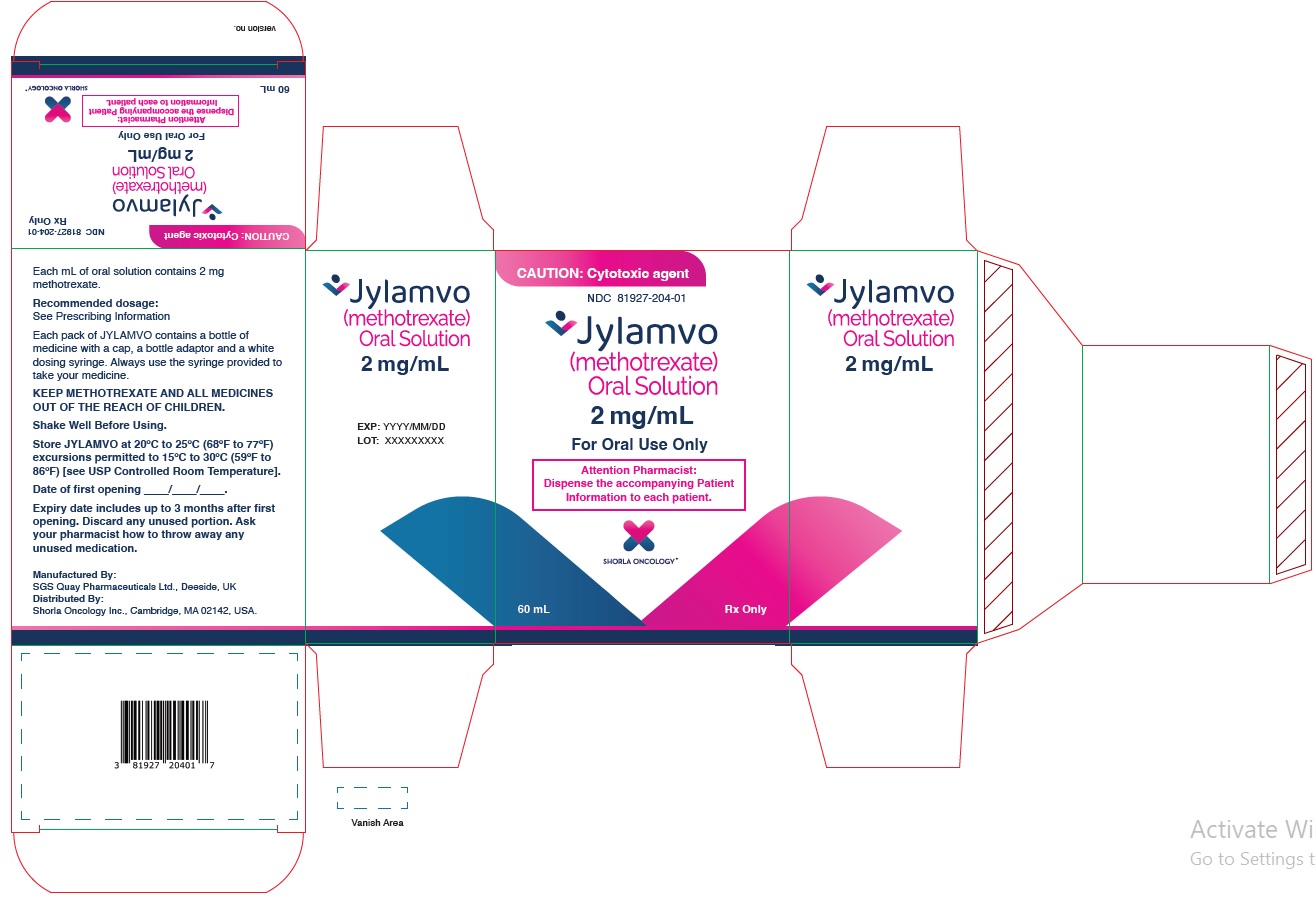
16 HOW SUPPLIED / STORAGE AND HANDLING JYLAMVO is supplied as a clear yellow oral solution that contains 2 mg of methotrexate per mL. It is packaged in an amber type III glass bottle with tamper evident child-resistant closure (polypropylene with expanded polyethylene liner) containing 60 mL of oral solution. Each pack contains one bottle, a low-density polyethylene (LDPE) bottle adaptor and a 10 mL white polypropylene dosing syringe (with major graduations at every 1 mL and minor graduations at every 0.25 mL) (NDC 81927-204-01).
Store JYLAMVO at 20°C to 25°C (68°F to 77°F) excursions permitted to 15°C to 30°C (59°F to 86°F) [see USP Controlled Room Temperature]. In Use storage conditions: Store JYLAMVO at room temperature 20°C to 25°C (68°F to 77°F). Keep the bottle tightly closed.
After first opening, discard any unused medicine after 3 months. JYLAMVO is a hazardous drug. Follow applicable special handling and disposal procedures.
1
📋 Description ▾
11 DESCRIPTION Methotrexate is a folate analog metabolic inhibitor with the chemical name of N-[4-[[(2,4 diamino-6-pteridinyl) methyl]methylamino]benzoyl]-L glutamic acid. The molecular formula is C 20 H 22 N 8 O 5 and the molecular weight is 454.4 g/mol. The structural formula is: JYLAMVO (methotrexate) oral solution is a clear yellow solution that contains methotrexate, 2 mg/mL.
Inactive ingredients include citric acid, ethylparaben, glycerin, methylparaben sodium, orange flavoring powder, polyethylene glycol, purified water, sodium citrate and sucralose. The target pH of the oral solution is 6.8. Structural Formula
💬 Information for Patients ▾
17 PATIENT COUNSELING INFORMATION Advise the patient to read the FDA-approved patient labeling (Patient Information). Embryo-Fetal Toxicity Advise females of reproductive potential of the potential risk to a fetus and to inform their healthcare provider of a known or suspected pregnancy [see Contraindications (4), Warnings and Precautions (5.1), Use in Specific Populations (8.1) ]. Advise females of reproductive potential to use effective contraception during treatment with JYLAMVO and for 6 months after the final dose [see Use in Specific Populations (8.3) ].
Advise males of reproductive potential to use effective contraception during treatment with JYLAMVO and for at least 3 months after the final dose [see Use in Specific Populations (8.3) ]. Hypersensitivity Reactions Advise patients and their caregivers of the potential risk of hypersensitivity and that JYLAMVO is contraindicated in patients with a history of hypersensitivity reactions to methotrexate. Instruct patients to seek immediate medical attention for signs of a hypersensitivity reaction [see Warnings and Precautions (5.2) ].
Myelosuppression and Serious Infections Inform patients and their caregivers that JYLAMVO can cause myelosuppression and the need for frequent monitoring of blood cell counts. Advise patients and their caregivers to immediately report new onset fever, symptoms of infection, easy bruising or persistent bleeding to their healthcare provider [see Warnings and Precautions (5.3 , 5.11) ]. Gastrointestinal Toxicity Advise patients and their caregivers to report new or worsening diarrhea, vomiting, or stomatitis to their healthcare provider.
Advise patients to immediately contact their healthcare provider for high fever, rigors, persistent or severe abdominal pain, severe constipation, hematemesis, or melena [see Warnings and Precautions (5.4) ]. Hepatotoxicity Advise patients and their caregivers to report signs or symptoms of hepatic toxicity to their healthcare provider [see Warnings and Precautions (5.5) ]. Pulmonary Toxicity Advise patients and their caregivers to report new or worsening cough, fever, or dyspnea to their healthcare provider [see Warnings and Precautions (5.6) ].
Dermatologic Reactions Advise patients and their caregivers that JYLAMVO can cause serious skin rash and to immediately contact their healthcare provider for new or worsening skin rash. Advise patients and their caregivers to avoid excessive sun exposure and use sun protection measures [see Warnings and Precautions (5.7) ]. Renal Toxicity Advise patients and their caregivers to immediately contact their healthcare provider for signs or symptoms of renal toxicity, such as marked increases or decreases in urinary output [see Warnings and Precautions (5.8) ].
Risk of Fatal Adverse Reactions with Medication Error For patients who are prescribed a once weekly dosing regimen, advise patients and caregivers that the recommended dosage is to be taken once weekly as a single dose and that mistakenly taking the recommended weekly dosage once daily has led to death [see Warnings and Precautions (5.9) ]. Importance of Proper Dosage and Administration Before use, instruct patients and caregivers on how to measure and administer the recommended dosage, utilizing the copackaged syringe and bottle adaptor and that a teaspoon is not an appropriate measuring device.
Advise patients and caregivers to only use the copackaged syringe and that a household spoon is not an accurate measuring device [see Dosage and Administration (2) ]. Neurotoxicity Advise patients and their caregivers to report new neurological signs or symptoms to their healthcare provider [see Warnings and Precautions (5.12) ]. Secondary Malignancies Advise patients on the risk of second primary malignancies during treatment with JYLAMVO [see Warnings and Precautions (5.13) ].
Ineffective Immunization and Risks Associated with Live Vaccines Advise patients to avoid receiving vaccines during treatment with JYLAMVO because th…