
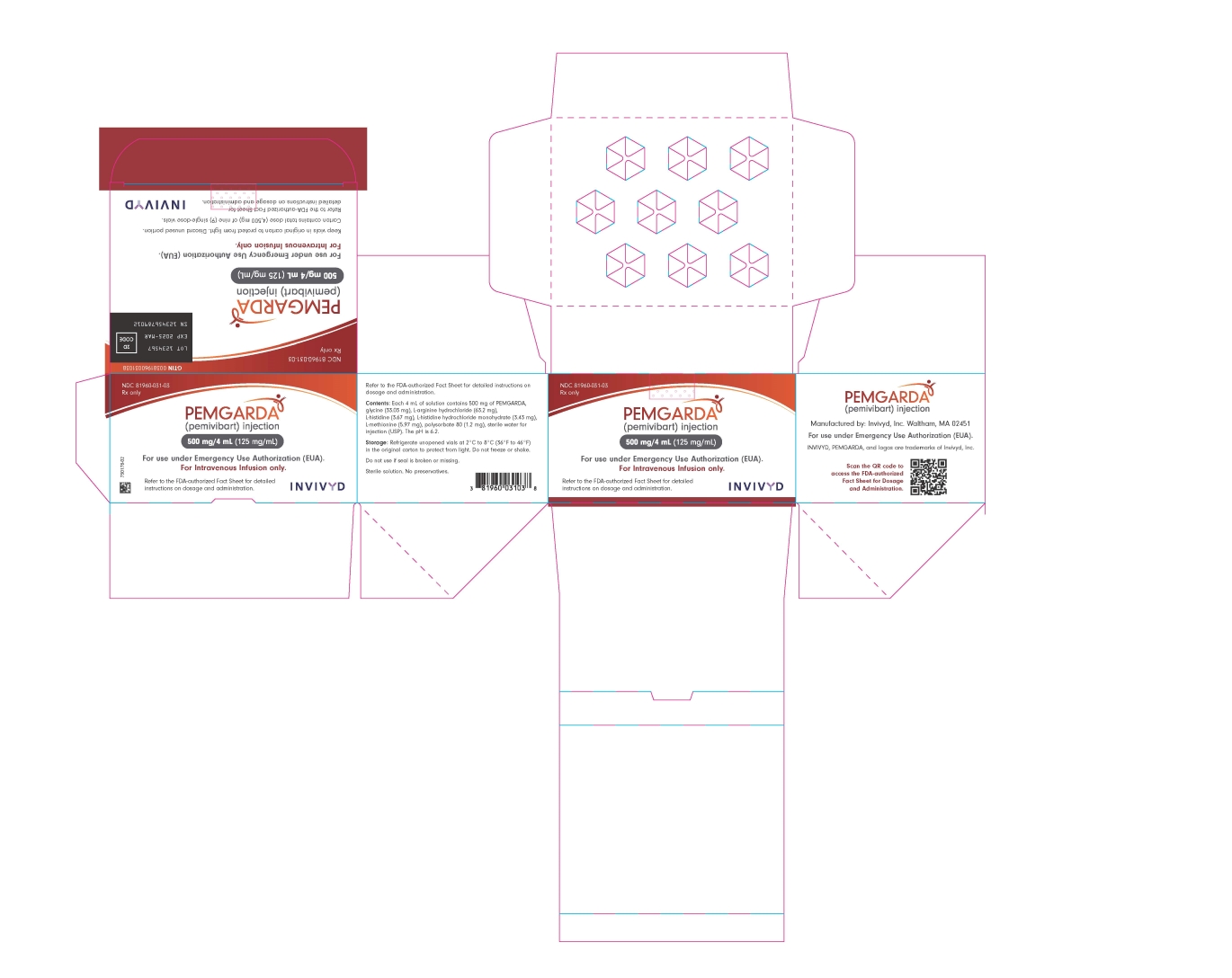
pemgarda pemivibart 125 mg/mL Injection
🆔 Identity & classification
Where does this data come from?
🏭 Manufacturer & labeler
Where does this data come from?
🩺 Clinical
Pemivibart is used to prevent COVID-19 in people 12 years of age and older who weigh at least 88 pounds (40 kg) and who are not currently infected with the SARS-CoV-2 virus and who have not had recent exposure to an individual infected with the SARS-CoV-2 virus and are immunocompromised (have a weakened immune system) due to a medical condition or being on certain medicines which may cause them not to respond to a COVID-19 vaccine. Pemivibart is in a class of medications called monoclonal antibodies. It works by preventing the virus from entering and infecting human cells.
Read the full MedlinePlus article ↗Pemgarda is a prescription injection given into a vein that contains the active ingredient pemivibart. This product is authorized for emergency use and is typically used as an antiviral treatment. Pemivibart functions as a monoclonal antibody designed to target and neutralize specific viral particles, commonly explored in the treatment of certain viral infections during public health emergencies.
Patient education
Supplement & herbal interactions
Where does this data come from?
Ask a licensed pharmacist directly — free, answered by our team.
🧪 Inactive Ingredients / Excipients
Inactive ingredients, also called excipients, are components of the drug product other than the active ingredient. They may include fillers, dyes, coatings, preservatives, flavors, or other formulation ingredients.
💡 Tap an ingredient (hover on desktop) to see what it is and why it’s used.
-
UNII F7LTH1E20Y
Arginine hydrochloride is an amino acid salt used as a buffer and pH adjuster in medicines. It helps maintain the correct acidity level to keep the drug stable and effective.
-
UNII TE7660XO1C
Glycine is an amino acid used in medicines as a buffer to help stabilize pH and improve taste. It may also serve as a filler or binder to give the product proper form and consistency.
-
UNII 4QD397987E
An amino acid used as a buffer and stabilizer in medications. It helps maintain the pH balance and protects the active drug from breaking down during storage and use.
-
UNII X573657P6P
Histidine monohydrochloride monohydrate is an amino acid salt used as a buffer in medicines. It helps maintain the proper acidity level of liquid formulations to keep the drug stable and effective.
-
UNII AE28F7PNPL
Methionine is an amino acid used as a nutrient supplement and pH buffer in medicines. It helps stabilize the formulation and supports the product's overall composition.
-
UNII 6OZP39ZG8H
Polysorbate 80 is a synthetic emulsifier derived from sorbitol and oleic acid. It helps mix oil and water-based ingredients together in medications and improves how the product disperses in the body.
-
UNII 059QF0KO0R
Water is a liquid solvent that dissolves and mixes ingredients together in liquid medicines, syrups, and injections. It helps distribute the active drug evenly throughout the product.
7 inactive ingredients listed in the exact product block matched to this NDC.
Where does this data come from?
ingredient classCode="IACT" elements from the exact product block matched by this NDC. Label-section narrative from DailyMed / the openFDA label index is shown separately when available.Inactive ingredient FAQ
Are inactive ingredients the same for every manufacturer?
Why might an inactive ingredient be missing?
Can inactive ingredients matter?
💲 Pricing
A drug doesn't have one price. Each row is a different public payment system, and none is what you'd pay at the counter — that depends on your insurance. The ⓘ on each row explains what it measures.
| Price system | Per each | Per package |
|---|---|---|
| Retail pharmacies payNADAC · weekly | Not in the retail survey — common for institutional, discontinued, or low-volume packs. | |
| Medicaid paysCMS SDUD · 12 mo | No recent Medicaid claims on file for this NDC — rare and low-volume NDCs are suppressed in the public data. | |
| Medicare drug plans payPart D · quarterly | No Part D plan price is available for this NDC in our data. | |
Where does this data come from?
🔁 Therapeutic equivalents
| Product | Labeler | Pack | NADAC/unit | TE | Status | Price vs. this |
|---|---|---|---|---|---|---|
| pemgarda 125 mg/mLthis 81960-0031-03 | Invivyd, | 9 vials | — | — | FDA listed | — |
Where does this data come from?
⏳ Availability & generic status
We did not find an FDA-approved generic match for this exact strength, form and route.
Where does this data come from?
🔬 Reported adverse events (FAERS)
Top reported reactions
Age at onset
Reporter sex
Serious outcomes
Where does this data come from?
📦 Packaging — all sizes for this product
| Package NDC | Description | Marketing start | Status |
|---|---|---|---|
| 81960-0031-03 You're viewing this | 9 VIAL, SINGLE-DOSE in 1 CARTON (81960-031-03) / 4 mL in 1 VIAL, SINGLE-DOSE | 2024-03-22 | Active |
🧭 About this NDC listing & data coverage
What data is (and isn’t) available for this NDC — tap to expand
| NDC identity (package / product / labeler codes) | ✓ Available |
| Labeler | ✓ Available |
| Product & package description | ✓ Available |
| Marketing category & status | ✓ Available |
| Active ingredient / dosage form / route | ✓ Available |
| FDA label (SPL via DailyMed) | ✓ Available |
| Package photos | ✓ Available |
| Inactive ingredients (structured) | ✓ Available |
| NADAC pharmacy acquisition price (CMS) | — Not published for this NDC CMS publishes NADAC only for NDCs reported in its retail-pharmacy survey. |
| Orange Book / therapeutic-equivalence data | — Not published for this NDC Applies only to products approved under an NDA/ANDA; many listings are out of scope. |
| HCPCS J-code billing crosswalk | — Not published for this NDC Most self-administered / retail products have no J-code — that is normal. |
| Medicaid utilization (CMS SDUD) | — Not published for this NDC CMS reports utilization only for NDCs with Medicaid claims above its privacy threshold. |
Questions about this listing
Is this NDC FDA-approved?
Why is there no price listed?
Is the NDC printed on the package the same as the 11-digit billing NDC?
What do the three segments of this NDC mean?
Is this package still being marketed?
Who lists this product with the FDA?
Do I need a prescription for this product?
Where does this data come from?
📄 Full prescribing information FDA SPL
🚨 Boxed Warning ▾
WARNING: ANAPHYLAXIS Anaphylaxis has been observed with PEMGARDA in 0.6% (4/623) of participants in a clinical trial. Anaphylaxis was reported during the first and second infusion of PEMGARDA. ( 5.1 , 6.1 ) Anaphylaxis can be life-threatening.
Prior to administering PEMGARDA, consider the potential benefit of COVID-19 prevention along with the risk of anaphylaxis. ( 5.1 , 6.1 , 14 ) Administer PEMGARDA only in settings in which healthcare providers have immediate access to medications to treat anaphylaxis and the ability to activate the emergency medical system (EMS), as necessary. Clinically monitor individuals during the infusion and for at least two hours after completion of the infusion.
Discontinue PEMGARDA use permanently if signs or symptoms of anaphylaxis or any severe systemic reaction are observed and initiate appropriate medications and/or supportive therapy.
🎯 Indications and Usage ▾
1 EMERGENCY USE AUTHORIZATION FOR PEMGARDA The U.S. Food and Drug Administration (FDA) has issued an Emergency Use Authorization (EUA) for the emergency use of the unapproved product PEMGARDA (pemivibart) for the pre-exposure prophylaxis of coronavirus disease 2019 (COVID-19) in adults and adolescents (12 years of age and older weighing at least 40 kg): Who are not currently infected with SARS-CoV-2 and who have not had a known recent exposure to an individual infected with SARS-CoV-2 and Who have moderate-to-severe immune compromise due to a medical condition or receipt of immunosuppressive medications or treatments and are unlikely to mount an adequate response to COVID-19 vaccination.
Medical conditions or treatments that may result in moderate to severe immune compromise and an inadequate immune response to COVID-19 vaccination include: Active treatment for solid tumor and hematologic malignancies Hematologic malignancies associated with poor responses to COVID-19 vaccines regardless of current treatment status (e.g., chronic lymphocytic leukemia, non-Hodgkin lymphoma, multiple myeloma, acute leukemia) Receipt of solid-organ transplant or an islet transplant and taking immunosuppressive therapy Receipt of chimeric antigen receptor (CAR)-T-cell or hematopoietic stem cell transplant (within 2 years of transplantation or taking immunosuppressive therapy) Moderate or severe primary immunodeficiency (e.g., common variable immunodeficiency disease, severe combined immunodeficiency, DiGeorge syndrome, Wiskott-Aldrich syndrome) Advanced or untreated HIV infection (people with HIV and CD4 cell counts <200/mm 3 , history of an AIDS-defining illness without immune reconstitution, or clinical manifestations of symptomatic HIV) Active treatment with high-dose corticosteroids (i.e., ≥20 mg prednisone or equivalent per day when administered for ≥2 weeks), alkylating agents, antimetabolites, transplant-related immunosuppressive drugs, cancer chemotherapeutic agents classified as severely immunosuppressive, and biologic agents that are immunosuppressive or immunomodulatory (e.g., B-cell depleting agents) Limitations of Authorized Use PEMGARDA is not authorized for use: -For treatment of COVID-19, or -For post-exposure prophylaxis of COVID-19 in individuals who have been exposed to someone infected with SARS-CoV-2.
PEMGARDA is authorized for use only when the combined national frequency of variants with substantially reduced susceptibility to PEMGARDA is less than or equal to 90%, based on available information including variant susceptibility to PEMGARDA and national variant frequencies FDA will monitor conditions to determine whether use is consistent with the scope of authorization, referring to available information, including information on variant susceptibility (e.g., Section 12.4 of the authorized Fact Sheet for Healthcare Providers) and CDC variant frequency data available at: https://covid.cdc.gov/covid-data-tracker/#variant-proportions. .
Pre-exposure prophylaxis with PEMGARDA is not a substitute for vaccination in individuals for whom COVID-19 vaccination is recommended. Individuals for whom COVID-19 vaccination is recommended, including individuals with moderate-to-severe immune compromise who may derive benefit from COVID-19 vaccination, should receive COVID‑19 vaccination. In individuals who have recently received a COVID-19 vaccine, PEMGARDA should be administered at least 2 weeks after vaccination.
PEMGARDA may only be prescribed for an individual patient by physicians, advanced practice registered nurses, and physician assistants that are licensed or authorized under State law to prescribe drugs. PEMGARDA has been authorized by FDA for the emergency use described above. PEMGARDA is not FDA-approved for any use, including use for pre-exposure prophylaxis of COVID-19.
PEMGARDA is authorized only for the duration of the declaration that circumstances exist justifying the authorization of the emergency use of PEMGARDA under se…
⏱️ Dosage and Administration ▾
2 DOSAGE AND ADMINISTRATION
2.1Dosage for Emergency Use of PEMGARDA Initial Dosing : The initial dosage of PEMGARDA in adults and adolescents (12 years of age and older weighing at least 40 kg) is 4500 mg administered as a single intravenous (IV) infusion [see Clinical Pharmacology (1 2.3 ) ]. Repeat Dose : The repeat dosage is 4500 mg of PEMGARDA administered as a single IV infusion every 3 months. Repeat dosing should be timed from the date of the most recent PEMGARDA dose.
The recommendations for dosing are based on the totality of the scientific evidence including clinical pharmacology data, antiviral activity data, and clinical study data [see Clinical Pharmacology (12.3 ) , Microbiology ( 12.4 ), and Clinical Studies ( 14 ) ] .
2.2Dosage Adjustment in Specific Populations No dosage adjustment is recommended in pregnant or lactating individuals, in geriatrics, or in individuals with renal or hepatic impairment [see Use in Specific Populations ( 8 ) ] . 2.3Dose Preparation and Administration General Information : PEMGARDA should be prepared and administered by a qualified healthcare provider using aseptic technique . Vials of PEMGARDA are for one-time use only.
Visually inspect the vials for particulate matter and discoloration. PEMGARDA is a clear to slightly opalescent, colorless to yellow solution. Discard the vial if the solution is cloudy, discolored, or if visible particles are observed.
PEMGARDA should be administered as an IV infusion diluted with 0.9% sodium chloride. Materials Needed: 9 single-dose vials of PEMGARDA (125 mg/mL) 50 mL prefilled bag of 0.9% sodium chloride (normal saline) for IV injection IV extension set with inline 0.2-micron filter Infusion pump or gravity infusion set 0.9% sodium chloride injection for flushing Preparation : Remove PEMGARDA vials from refrigerated storage and allow to equilibrate to room temperature (18℃ to 26℃ [64℉ to 79℉]) for 10 minutes before preparation. Do not expose to direct heat.
Do not shake vials. Inspect the vials. Prepare IV bag by removing and discarding 36 mL from a 50 mL prefilled bag of 0.9% sodium chloride for IV injection.
Withdraw 36 mL of PEMGARDA from nine (9) vials into appropriately sized polypropylene syringe(s) (e.g., one 40 mL syringe or two 20 mL syringes) and inject into prepared 0.9% sodium chloride IV bag. The final product for administration will contain 50 mL: 36 mL of PEMGARDA and 14 mL of 0.9% sodium chloride. This product is preservative-free and therefore should be administered immediately.
If immediate administration is not possible, the diluted solution may be stored at room temperature under ambient light for up to 4 hours. Do not shake the diluted solution. Administration: PEMGARDA should only be administered in settings in which healthcare providers have immediate access to medications to treat a severe hypersensitivity reaction, such as anaphylaxis, and the ability to activate the emergency medical system (EMS), as necessary [see Warnings and Precautions ( 5.1 ) ] .
Attach infusion set including inline 0.2-micron filter to prepared IV bag, then prime the infusion set. Administer the entire 50 mL infusion using infusion pump or gravity infusion set over a minimum of 60 minutes. Due to potential overfill, the entire contents of prepared IV bag should be administered to avoid underdosing.
Once infusion is complete, flush line with 0.9% sodium chloride. Clinically monitor patients during infusion and observe patients for at least 2 hours after infusion is complete [see Warnings and Precautions (5.1 ) ] .
2.1Dosage for Emergency Use of PEMGARDA Initial Dosing : The initial dosage of PEMGARDA in adults and adolescents (12 years of age and older weighing at least 40 kg) is 4500 mg administered as a single intravenous (IV) infusion [see Clinical Pharmacology (1 2.3 ) ]. Repeat Dose : The repeat dosage is 4500 mg of PEMGARDA administered as a single IV infusion every 3 months. Repeat dosing should be timed from the date of the most recent P…
💊 Dosage Forms and Strengths ▾
3 DOSAGE FORMS AND STRENGTHS PEMGARDA is a sterile, preservative-free, clear to slightly opalescent, colorless to yellow solution available as: Injection: 500 mg/4 mL (125 mg/mL) in a single-dose vial
⛔ Contraindications ▾
4 CONTRAINDICATIONS PEMGARDA is contraindicated in individuals with previous severe hypersensitivity reactions, including anaphylaxis, to any component of PEMGARDA.
⚠️ Warnings and Cautions ▾
5 WARNINGS AND PRECAUTIONS
5.1Anaphylaxis Anaphylaxis has been observed with PEMGARDA in 4 of 623 (0.6%) participants in a clinical trial [see Adverse Reactions (6.1 )] . Two participants had anaphylaxis during the first infusion, and two participants had anaphylaxis during the second infusion. Anaphylaxis can be life-threatening, and two of the anaphylactic reactions in the clinical trial were reported as life-threatening.
Manifestations included pruritus, flushing, urticaria, erythema, angioedema, diaphoresis, dizziness, tinnitus, wheezing, dyspnea, chest discomfort, and tachycardia. In all 4 cases, PEMGARDA was permanently discontinued. Prior to administering PEMGARDA, consider the potential benefit of COVID-19 prevention along with the risk of anaphylaxis [see Adverse Reactions (6.1 ), and Clinical Studies (14 )] .
Administer PEMGARDA only in settings in which healthcare providers have immediate access to medications to treat anaphylaxis and the ability to activate the emergency medical system (EMS), as necessary. Clinically monitor individuals during the 60-minute infusion and for at least two hours after completion of the infusion. If signs or symptoms of an anaphylactic reaction occur, immediately discontinue administration, and initiate appropriate medications and/or supportive therapy.
Discontinue PEMGARDA use permanently in individuals who experience signs or symptoms of anaphylaxis [see Contraindications (4 )] .
5.2Hypersensitivity and Infusion-Related Reactions Hypersensitivity and infusion-related reactions occurring during the infusion and up to 24 hours after the infusion have been observed with administration of PEMGARDA. Hypersensitivity or infusion-related reactions may be severe or life threatening. If signs or symptoms of a clinically significant hypersensitivity or infusion-related reaction occur, immediately discontinue administration, and initiate appropriate medications and/or supportive therapy.
Signs and symptoms of hypersensitivity or infusion-related reactions may include: Fever, difficulty breathing, reduced oxygen saturation, chills, fatigue, arrhythmia (e.g., atrial fibrillation, sinus tachycardia, bradycardia), chest pain or discomfort, weakness, altered mental status, nausea, headache, bronchospasm, hypotension, hypertension, angioedema, throat irritation, rash including urticaria, pruritus, myalgia, vasovagal reactions (e.g., pre-syncope, syncope), dizziness, and diaphoresis. If a mild infusion-related reaction occurs, consider slowing or stopping the infusion and administer appropriate medications and/or supportive care.
Clinically monitor individuals during infusion and for at least two hours after completion of the infusion for signs and symptoms of hypersensitivity. Hypersensitivity reactions occurring more than 24 hours after the infusion have also been reported with the use of SARS-CoV-2 monoclonal antibodies under Emergency Use Authorization.
5.3Risk of Cross-Hypersensitivity With COVID-19 Vaccines PEMGARDA contains polysorbate 80, which is in some COVID-19 vaccines and is structurally similar to polyethylene glycol (PEG), an ingredient in other COVID-19 vaccines [see Description (11 ) ] . For individuals with a history of a severe hypersensitivity reaction to a COVID-19 vaccine, consider consultation with an allergist-immunologist prior to PEMGARDA administration. Administration of PEMGARDA should be done under the supervision of a healthcare provider with appropriate medical support to manage severe hypersensitivity reactions.
If signs and symptoms of a clinically significant hypersensitivity reaction or anaphylaxis occur during administration of PEMGARDA, immediately discontinue administration and initiate appropriate medications and/or supportive care. Clinically monitor individuals after infusion and observe for at least two hours.
5.4Risk for COVID-19 Due to SARS-CoV-2 Viral Variants with Substantially Reduced Susceptibility to PEMGARDA Certain SARS-CoV-2 viral variants may em…
🤒 Adverse Reactions ▾
6 ADVERSE REACTIONS To report SERIOUS ADVERSE REACTIONS or MEDICATION ERRORS potentially related to PEMGARDA (1) do so by submitting FDA Form 3500 online, (2) by downloading this form, and then submitting it by mail or fax, or (3) by contacting the FDA at 1-800-332-1088 to request this form. To report suspected adverse reactions, please also provide a copy of this form to Invivyd, Inc. by email at: [email protected] or call 1-800-890-3385 to report adverse events.
6.1Adverse Reactions from Clinical Studies The following adverse reactions have been observed in the clinical study of PEMGARDA that supported the EUA [see Clinical Studies (14 )] . The adverse reaction rates observed in the clinical study cannot be directly compared to rates in the clinical studies of other products and may not reflect the rates observed in clinical practice. Additional adverse reactions associated with PEMGARDA may become apparent with more widespread use.
The safety of PEMGARDA is based on exposure of 623 participants who received at least one dose of PEMGARDA 4500 mg IV in one of two cohorts in the ongoing CANOPY trial. Cohort A is a single-arm, open-label trial in adults who have moderate-to-severe immune compromise (n=306), while Cohort B is a randomized, placebo-controlled trial in which adults who do not have moderate-to-severe immune compromise received PEMGARDA (n=317) or placebo (n=162). In Cohort A, 297 participants received a second dose of PEMGARDA 4500 mg IV three months after the initial dose.
In Cohort B, 296 participants received a second dose of PEMGARDA 4500 mg IV and 154 received a second dose of placebo three months after the initial dose. Anaphylaxis Anaphylaxis was observed in 4 of 623 (0.6%) participants in CANOPY, all in Cohort A. Two participants had anaphylaxis during the first infusion, and two participants had anaphylaxis during the second infusion.
All four reactions led to permanent discontinuation of PEMGARDA. Three participants had complete resolution, and one participant had acute resolution with sequelae related to a flare of an underlying condition. Symptoms of anaphylaxis during the first dose included dyspnea, diaphoresis, erythema (face), chest discomfort, and tachycardia in one participant, and flushing, dizziness, tinnitus, and wheezing in one participant.
Treatment for both included diphenhydramine. Both instances of anaphylaxis with the second dose were reported as life-threatening. Symptoms during the second infusion and following discontinuation of the infusion in both participants included pruritus, urticaria, angioedema, dyspnea, and either erythema or flushing.
One participant also experienced headache, dizziness, and chest pain; additionally, pruritus, erythema, and urticaria reoccurred in this participant within 24 hours of the initial onset of anaphylaxis. Both participants were treated with diphenhydramine and epinephrine, and one participant also received oral prednisone and metoprolol for an associated flare of an underlying condition. Systemic Infusion-Related Reactions and Hypersensitivity Reactions First Dose Systemic infusion-related reactions and hypersensitivity reactions (i.e., adverse events assessed as causally related) were observed with the first dose in CANOPY in 4% (24/623) of participants who received PEMGARDA across cohorts, including: 7% (20/306) of participants who have moderate-to-severe immune compromise (Cohort A), and 1% (4/317) of participants who received PEMGARDA in Cohort B Infusion-related reactions and hypersensitivity reactions were not observed in any participants who received placebo in Cohort B.
Systemic infusion-related or hypersensitivity reactions that started within 24 hours of the first dose of PEMGARDA treatment were reported as infusion-related reaction, infusion-related hypersensitivity, hypersensitivity, fatigue, headache, tachycardia, dermatitis, diarrhea, myalgia, nausea, paresthesia, presyncope, and tremor. All reactions were mild or moderate, but two reac…
🔄 Drug Interactions ▾
7 DRUG INTERACTIONS Drug-drug interaction studies have not been performed. PEMGARDA is not renally excreted or metabolized by cytochrome P450 enzymes; therefore, interactions with concomitant medications that are renally excreted or that are substrates, inducers, or inhibitors of cytochrome P450 enzymes are unlikely [see Clinical Pharmacology (12.3 )] .
👥 Use in Specific Populations ▾
8 USE IN SPECIFIC POPULATIONS
8.1Pregnancy Risk Summary : There are insufficient data to evaluate a drug-associated risk of major birth defects, miscarriage, or adverse maternal or fetal outcomes. PEMGARDA should only be used during pregnancy if the potential benefit outweighs the potential risk for the mother and the fetus. Nonclinical reproductive toxicity studies have not been performed with pemivibart.
In tissue cross-reactivity studies using human fetal tissues, no off-target binding was detected for pemivibart. Human immunoglobulin G1 (IgG1) antibodies are known to cross the placental barrier; therefore, pemivibart has the potential to be transferred from the mother to the developing fetus. It is unknown whether the potential transfer of pemivibart provides any treatment benefit or risk to the developing fetus.
The estimated background risk of major birth defects and miscarriage for the indicated population is unknown. All pregnancies have a background risk of birth defect, loss, or other adverse outcomes. In the US general population, the estimated background risk of major birth defects and miscarriage in clinically recognized pregnancies is 2% to 4% and 15% to 20%, respectively.
8.2Lactation Risk Summary : There are no available data on the presence of PEMGARDA in human or animal milk, the effects on the breastfed infant, or the effects on milk production. Maternal IgG is known to be present in human milk. The developmental and health benefits of breastfeeding should be considered along with the mother’s clinical need for PEMGARDA and any potential adverse effects on the breastfed infant from PEMGARDA.
8.4Pediatric Use PEMGARDA is not authorized for use in pediatrics less than 12 years of age or weighing less than 40 kg. The safety and effectiveness of PEMGARDA has not been established in pediatrics. The recommended dosing regimen is expected to result in comparable serum exposures of pemivibart in adolescents 12 years of age and older and weighing at least 40 kg as observed in adults, since adults with similar body weight have been included in the CANOPY study [see Adverse Reactions (6.1 ) and Clinical Studies (14 )] .
8.5Geriatric Use Of the 623 participants who received PEMGARDA in the CANOPY trial, 156 (25%) were aged ≥65 years and 31 (5%) were aged ≥75 years. Based on population pharmacokinetic (PK) analyses, there was no clinically meaningful difference of age on the PK of pemivibart.
8.6Renal Impairment PEMGARDA is not eliminated intact in the urine, thus renal impairment is not expected to affect the exposure of pemivibart. Similarly, dialysis is not expected to impact the PK of pemivibart.
8.7Hepatic Impairment The effect of hepatic impairment on the PK of pemivibart is unknown.
8.1Pregnancy Risk Summary : There are insufficient data to evaluate a drug-associated risk of major birth defects, miscarriage, or adverse maternal or fetal outcomes. PEMGARDA should only be used during pregnancy if the potential benefit outweighs the potential risk for the mother and the fetus. Nonclinical reproductive toxicity studies have not been performed with pemivibart.
In tissue cross-reactivity studies using human fetal tissues, no off-target binding was detected for pemivibart. Human immunoglobulin G1 (IgG1) antibodies are known to cross the placental barrier; therefore, pemivibart has the potential to be transferred from the mother to the developing fetus. It is unknown whether the potential transfer of pemivibart provides any treatment benefit or risk to the developing fetus.
The estimated background risk of major birth defects and miscarriage for the indicated population is unknown. All pregnancies have a background risk of birth defect, loss, or other adverse outcomes. In the US general population, the estimated background risk of major birth defects and miscarriage in clinically recognized pregnancies is 2% to 4% and 15% to 20%, respectively.
8.2 Lactation Risk Summary : There are no available data on the presen…
🆘 Overdosage ▾
10 OVERDOSAGE Doses above 4500 mg PEMGARDA (the authorized dose of pemivibart) were not administered in clinical studies. There is no specific treatment for overdose with PEMGARDA.
🧬 Clinical Pharmacology ▾
12 CLINICAL PHARMACOLOGY 12.1Mechanism of Action Pemivibart is a SARS-CoV-2 antiviral drug [see Microbiology ( 12.4 )].
12.2Pharmacodynamics Available data suggest a positive relationship between serum neutralizing antibody titers and COVID-19 pre-exposure-prophylactic efficacy using clinical data (completed prior to the emergence of Omicron and Omicron lineage VOCs) and drug concentration data of neutralizing human monoclonal antibodies against SARS-CoV-2. Following single-dose administration of pemivibart 4500 mg IV, calculated geometric mean titer values (pemivibart concentration divided by the pseudotyped virus-like particle neutralization assay EC50 value against JN.1) [ see Microbiology ( 12.4 ) ] range from 2839 (on Day 90) to 20246 (end of infusion on Day 1).
After the repeat dose of pemivibart 4500 mg IV every 3 months, it is anticipated that the range of titers at steady-state will be approximately 33% higher than those observed following the first dose administration.
12.3Pharmacokinetics A summary of PK parameters of pemivibart following administration of a single 4500 IV dose of pemivibart to adults based on population PK modeling is provided in Table 1. Table 1. Summary Statistics of Population PK Parameters of Pemivibart Following a Single 4500 mg Intravenous Dose in Adults Parameter Pemivibart C max (μg/mL) 1820 (18.4) C Day 28 (μg/mL) 468 (23.9) C Day 90 (μg/mL) 188 (40.4) AUC 0-3 months (days × μg/mL) 40500 (22.5) T 1/2 (days) 49.0 (18.4-190) Accumulation ratio
1.33CL (L/d) 0.0862 (31.1) V ss (L) 5.62 (17.3) Metabolism Catabolic pathways; same manner as endogenous IgG Excretion Not likely to undergo renal excretion AUC 0-3 months= area under the serum concentration-time curve from Day 0 to Month 3; CL=renal clearance; C max =maximum concentration; PK=pharmacokinetic; T 1/2 =half-life; V ss =steady state volume of distribution. Note: All values presented as geometric mean (% coefficient of variation), except for T 1/2 , which is presented as median (min, max), and for accumulation ratio, which is represented as median.
Numerical values are post-hoc PK parameter estimates for participants enrolled in Phase 3 CANOPY. Specific Populations : The PK of pemivibart was not substantially affected by age, sex, or race based on a population PK analysis to the pooled data from VYD222-1-001 and Phase 3 CANOPY. Body weight is not expected to have a clinically relevant effect on the PK of pemivibart in individuals with body weights ranging from 43 to 190 kg through 3 months postdose.
Patients with Immune Compromise Population PK analysis showed immune compromise status had no clinically relevant effect on the PK of pemivibart. Pediatric Patients The PK of pemivibart in pediatric individuals has not been evaluated. The dosing regimen is expected to result in comparable plasma exposures of pemivibart in pediatric individuals 12 years of age or older who weigh at least 40 kg as observed in adult individuals [see Use in Specific Populations ( 8.4 )] .
Patients with Renal Impairment Renal impairment is not expected to impact the PK of pemivibart since mAbs with molecular weight >69 kDa are known not to undergo renal elimination. Similarly, dialysis is not expected to impact the PK of pemivibart. Patients with Hepatic Impairment Pemivibart is not anticipated to be impacted by hepatic impairment.
Pemivibart is expected to be degraded into small peptides and amino acids via catabolic pathways in the same manner as other IgG mAbs and human endogenous IgG antibodies.
12.4Microbiology Mechanism of Action: Pemivibart is a recombinant human monoclonal IgG1λ antibody that targets the SARS-CoV-2 spike protein receptor binding domain (RBD), thereby inhibiting virus attachment to the human angiotensin-converting enzyme 2 (ACE2) receptor on host cells. Amino acid substitutions in the Fc region (M435L/N441A) of pemivibart extend serum half-life. Pemivibart binds the spike RBD proteins of ancestral SARS‑CoV-2 B.1 (D614G) and Omicron varian…
📦 How Supplied / Storage and Handling ▾
16 HOW SUPPLIED/STORAGE AND HANDLING PEMGARDA injection is a sterile, preservative-free, clear to slightly opalescent, colorless to yellow solution supplied in a single-dose 6R vial intended for intravenous infusion only. Antibody Concentration Package Size NDC Pemivibart 500 mg/4 mL vial (125 mg/mL) Nine vials per carton 81960-031-03 Refrigerate unopened vials at 2 ℃ to 8 °C (36 ℉ to 46 °F) in the original carton to protect from light. Do not freeze or shake.
Do not use if seal is broken or missing.
📋 Description ▾
11 DESCRIPTION Pemivibart is a human IgG1 mAb produced by a Chinese Hamster Ovary cell line and has a molecular weight of 147.51 kDa. PEMGARDA (pemivibart) injection is a sterile, preservative-free, clear to slightly opalescent, colorless to yellow solution for intravenous infusion after dilution. Each 4 mL of solution contains 500 mg of pemivibart, glycine (33.03 mg), L-arginine hydrochloride (63.2 mg), L‑histidine (3.67 mg), L-histidine hydrochloride monohydrate (3.43 mg), L-methionine (5.97 mg), polysorbate 80 (1.2 mg), sterile water for injection (USP).
The pH is 6.2.