
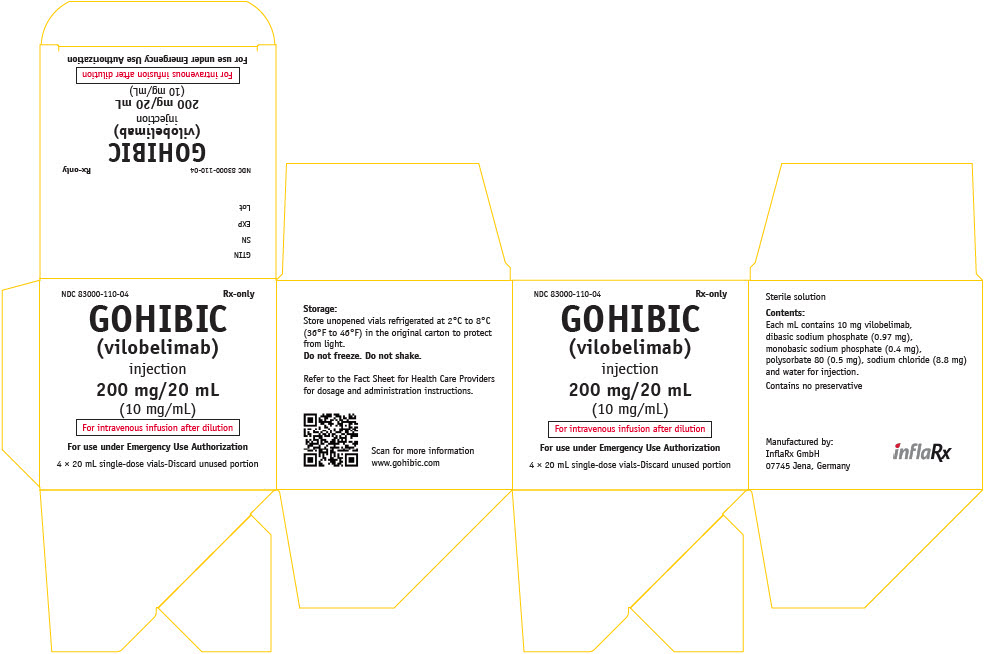
GOHIBIC vilobelimab 10 mg/mL Injection
🆔 Identity & classification
Where does this data come from?
🏷️ RxNorm drug class
This medicine belongs to the Complement inhibitors class.
Where does this data come from?
🏭 Manufacturer & labeler
Where does this data come from?
🩺 Clinical
GOHIBIC is an intravenous injection containing vilobelimab, a monoclonal antibody. Vilobelimab is typically used to modulate immune system responses by targeting complement component C5a, which plays a role in inflammatory and immune processes. This product is available under emergency use authorization and is used as a prescription medication in hospital or clinical settings.
Patient education
Supplement & herbal interactions
Where does this data come from?
Ask a licensed pharmacist directly — free, answered by our team.
🧪 Inactive Ingredients / Excipients
Inactive ingredients, also called excipients, are components of the drug product other than the active ingredient. They may include fillers, dyes, coatings, preservatives, flavors, or other formulation ingredients.
💡 Tap an ingredient (hover on desktop) to see what it is and why it’s used.
-
UNII 6OZP39ZG8H
Polysorbate 80 is a synthetic emulsifier derived from sorbitol and oleic acid. It helps mix oil and water-based ingredients together in medications and improves how the product disperses in the body.
-
UNII 451W47IQ8X
Sodium chloride is common table salt. It's used in medicines as a buffer to maintain proper pH, as a filler to add bulk, or to adjust the osmotic balance in liquid formulations.
-
UNII 94255I6E2T
Sodium phosphate dibasic dihydrate is a salt that helps control the acidity level of a medicine. It acts as a buffer and pH regulator to keep the medication stable and effective.
-
UNII 5QWK665956
A salt derived from phosphoric acid and sodium, used primarily as a buffer to control the acidity or pH of a medication, helping keep it stable during storage and use.
4 inactive ingredients listed in the exact product block matched to this NDC.
Where does this data come from?
ingredient classCode="IACT" elements from the exact product block matched by this NDC. Label-section narrative from DailyMed / the openFDA label index is shown separately when available.Inactive ingredient FAQ
Are inactive ingredients the same for every manufacturer?
Why might an inactive ingredient be missing?
Can inactive ingredients matter?
💲 Pricing
A drug doesn't have one price. Each row is a different public payment system, and none is what you'd pay at the counter — that depends on your insurance. The ⓘ on each row explains what it measures.
| Price system | Per each | Per package |
|---|---|---|
| Retail pharmacies payNADAC · weekly | Not in the retail survey — common for institutional, discontinued, or low-volume packs. | |
| Medicaid paysCMS SDUD · 12 mo | No recent Medicaid claims on file for this NDC — rare and low-volume NDCs are suppressed in the public data. | |
| Medicare drug plans payPart D · quarterly | No Part D plan price is available for this NDC in our data. | |
Where does this data come from?
🔁 Therapeutic equivalents
| Product | Labeler | Pack | NADAC/unit | TE | Status | Price vs. this |
|---|---|---|---|---|---|---|
| Gohibic 10 mg/mLthis 83000-0110-04 | InflaRx | 4 vials | — | — | FDA listed | — |
Where does this data come from?
⏳ Availability & generic status
We did not find an FDA-approved generic match for this exact strength, form and route.
Where does this data come from?
📦 Packaging — all sizes for this product
| Package NDC | Description | Marketing start | Status |
|---|---|---|---|
| 83000-0110-04 You're viewing this | 4 VIAL, SINGLE-DOSE in 1 CARTON (83000-110-04) / 20 mL in 1 VIAL, SINGLE-DOSE | 2023-04-04 | Active |
🧭 About this NDC listing & data coverage
What data is (and isn’t) available for this NDC — tap to expand
| NDC identity (package / product / labeler codes) | ✓ Available |
| Labeler | ✓ Available |
| Product & package description | ✓ Available |
| Marketing category & status | ✓ Available |
| Active ingredient / dosage form / route | ✓ Available |
| FDA label (SPL via DailyMed) | ✓ Available |
| Package photos | ✓ Available |
| Inactive ingredients (structured) | ✓ Available |
| NADAC pharmacy acquisition price (CMS) | — Not published for this NDC CMS publishes NADAC only for NDCs reported in its retail-pharmacy survey. |
| Orange Book / therapeutic-equivalence data | — Not published for this NDC Applies only to products approved under an NDA/ANDA; many listings are out of scope. |
| HCPCS J-code billing crosswalk | — Not published for this NDC Most self-administered / retail products have no J-code — that is normal. |
| Medicaid utilization (CMS SDUD) | — Not published for this NDC CMS reports utilization only for NDCs with Medicaid claims above its privacy threshold. |
Questions about this listing
Is this NDC FDA-approved?
Why is there no price listed?
Is the NDC printed on the package the same as the 11-digit billing NDC?
What do the three segments of this NDC mean?
Is this package still being marketed?
Who lists this product with the FDA?
Do I need a prescription for this product?
Where does this data come from?
📄 Full prescribing information FDA SPL
⏱️ Dosage and Administration ▾
2 DOSAGE AND ADMINISTRATION
2.1Recommended Dosage The recommended dosage of GOHIBIC for the treatment of adults with COVID-19 is 800 mg administered by intravenous infusion after dilution [see Dosage and Administration (2.2) ] for a maximum of 6 (six) doses over the treatment period as described below. Treatment should be started within 48 hours of intubation (Day 1) followed by administration on Days 2, 4, 8, 15 and 22 as long as the patient is hospitalized (even if discharged from ICU).
2.2Preparation and Administration Preparation Using aseptic technique, dilute and prepare GOHIBIC for intravenous infusion before administration. For the recommended dose of 800 mg GOHIBIC, dilute 80 mL of GOHIBIC in 170 mL of 0.9% Sodium Chloride at room temperature. Use a 250 mL infusion bag of 0.9% Sodium Chloride solution USP and the follow steps below: Withdraw 80 mL of 0.9% Sodium Chloride solution USP from the infusion bag and discard.
Withdraw the 80 mL of GOHIBIC from the vials and add slowly to the 0.9% Sodium Chloride solution USP infusion bag to a final concentration of 3.2 mg/mL. To mix the solution, gently invert the bag to avoid foaming. Storage of Diluted GOHIBIC Diluted GOHIBIC must be used within 4 hours when stored at room temperature 20°C to 25°C (68°F to 77°F).
Diluted GOHIBIC stored under refrigeration at 2°C to 8°C (36°F to 46°F) must be used within 24 hours. After removal of diluted GOHIBIC from the refrigerator stored at 2°C to 8°C (36°F to 46°F), it must be left to acclimatize to room temperature prior to administration. Administration Visually inspect for particulate matter and discoloration prior to administration, whenever solution and container permit.
Do not use if discoloration or visible particles are present. Administer diluted GOHIBIC via intravenous infusion over 30 - 60 minutes. Avoid concomitant administration of GOHIBIC with other drugs in the same intravenous line.
💊 Dosage Forms and Strengths ▾
3 DOSAGE FORMS AND STRENGTHS Injection: 200 mg/20 mL (10 mg/mL) clear to slightly opalescent, colorless solution in a single-dose vial.
⛔ Contraindications ▾
4 CONTRAINDICATIONS No contraindications have been identified based on the limited available data for the emergency use of GOHIBIC under this EUA.
⚠️ Warnings and Cautions ▾
5 WARNINGS AND PRECAUTIONS There are limited clinical data available for GOHIBIC. Serious and unexpected adverse events (AEs) may occur that have not been previously reported with GOHIBIC use.
5.1Serious Infections Serious infections due to bacterial, fungal, and viral pathogens have been reported in patients with COVID-19 receiving GOHIBIC. In patients with COVID-19, monitor for signs and symptoms of new infections during and after treatment with GOHIBIC. There is limited information regarding the use of GOHIBIC in patients with COVID-19 and concomitant active serious infections.
The risks and benefits of treatment with GOHIBIC in COVID-19 patients with other concurrent infections should be considered [see Adverse Reactions (6) ] .
5.2Hypersensitivity Reactions Hypersensitivity reactions have been observed with GOHIBIC. If a severe hypersensitivity reaction occurs, administration of GOHIBIC should be discontinued and appropriate therapy initiated.
🤒 Adverse Reactions ▾
6 ADVERSE REACTIONS
6.1Clinical Trial Experience The following adverse reactions have been observed in the clinical studies of GOHIBIC that supported the EUA. The adverse reaction rates observed in these clinical studies cannot be directly compared to rates in the clinical studies of other products and may not reflect the rates observed in clinical practice. The safety of GOHIBIC is based on PANAMO, a Phase 3 randomized, placebo-controlled trial in COVID-19 patients requiring IMV or ECMO [see Clinical Studies (14) ] .
The analysis of adverse reactions included a total of 364 adult patients who received at least one dose of either GOHIBIC (n=175) or placebo (n=189) plus standard of care. Patients received GOHIBIC 800 mg administered by intravenous infusion on Days 1, 2, 4, 8, 15 and 22 or placebo. During the study, there were 62 deaths in the GOHIBIC arm and 85 deaths in the placebo arm [see Clinical Studies (14) ] .
Fatal infections occurred in more placebo patients. Nonfatal serious infections occurred in 58 patients (33.1%) in the GOHIBIC arm and in 55 patients (29.1%) in the placebo arm. The most commonly reported nonfatal serious infections with GOHIBIC were pneumonia (18.9% vs 13.8% in placebo), sepsis (14.9% versus 7.4% in placebo), and septic shock (9.1% versus 7.4% in placebo).
Discontinuation of study treatment due to an adverse reaction occurred in 2.9% of the GOHIBIC group and 1.6% of the placebo group. Adverse reactions leading to discontinuation of GOHIBIC included eczema, bronchopulmonary aspergillosis, rash, hemodynamic instability, thrombocytopenia, and multi-organ failure. The most common adverse reactions occurring in at least 3% of GOHIBIC-treated patients and at least 1% more frequently than observed in the placebo arm are summarized in Table 1.
Table 1. Adverse Reactions that Occurred in ≥3% of Patients Treated with GOHIBIC and at least 1% More Frequently than Observed in the Placebo Arm through Day 60 Adverse Reactions GOHIBIC + SoC (N=175) Placebo + SoC (N=189) n (%) n (%) SoC = standard of care. A patient is only listed once (regardless of event numbers) but one patient can be listed in different categories with one or additional reactions Pneumonia "Pneumonia" includes preferred terms containing the term "pneumonia"; does not include "COVID-19 pneumonia" 55 (31.4%) 44 (23.3%) Sepsis "Sepsis" includes preferred terms containing the term "sepsis".
38 (21.7%) 30 (15.9%) Delirium "Delirium includes the following preferred terms: Delirium, Intensive care unit delirium 22 (12.6%) 20 10.6%) Pulmonary embolism 19 (10.9%) 17 (9.0%) Hypertension 16 (9.1%) 13 (6.9%) Pneumothorax 14 (8.0%) 11 (5.8%) Deep vein thrombosis 11 (6.3%) 9 (4.8%) Herpes simplex 11 (6.3%) 5 (2.6%) Enterococcal infection 10 (5.7%) 8 (4.2%) Bronchopulmonary aspergillosis 10 (5.7%) 7 (3.7%) Hepatic enzyme increased 9 (5.1%) 7 (3.7%) Urinary tract infection 9 (5.1%) 6 (3.2%) Hypoxia 8 (4.6%) 6 (3.2%) Thrombocytopenia 8 (4.6%) 2 (1.1%) Pneumomediastinum 8 (4.6%) 0 (0.0%) Respiratory tract infection 7 (4.0%) 5 (2.6%) Supraventricular tachycardia 7 (4.0%) 1 (0.5%) Constipation 6 (3.4%) 3 (1.6%) Rash 6 (3.4%) 0 (0.0%)
6.3Required Reporting for Serious Adverse Events and Medication Errors The prescribing healthcare provider and/or the provider's designee is/are responsible for mandatory reporting of all serious adverse events (SAEs) SAEs are defined as: Death;A life-threatening AE;Inpatient hospitalization or prolongation of existing hospitalization;A persistent or significant incapacity or substantial disruption of the ability to conduct normal life functions;A congenital anomaly/birth defect;Other important medical event, which may require a medical or surgical intervention to prevent death, a life-threatening event, hospitalization, disability, or congenital anomaly and medication errors potentially related to GOHIBIC within 7 calendar days from the healthcare provider's awareness of the event, using FDA Form 3500 (for information on how to ac…
🔄 Drug Interactions ▾
7 DRUG INTERACTIONS No drug interaction studies have been conducted with GOHIBIC.
👥 Use in Specific Populations ▾
8 USE IN SPECIFIC POPULATIONS
8.1Pregnancy Risk Summary There are no available data on GOHIBIC use in pregnant women to evaluate for a drug-associated risk of major birth defects, miscarriage or other adverse maternal or fetal outcomes. Placental transfer of monoclonal antibodies such as GOHIBIC is greater during the third trimester of pregnancy; therefore, potential effects on a fetus are likely to be greater during the third trimester of pregnancy. In an enhanced pre- and post-natal (ePPND) study conducted in cynomolgus monkeys, placental transport of GOHIBIC was observed but there was no evidence of fetal harm following intravenous administration of GOHIBIC throughout pregnancy at doses 2.5 times the maximum recommended human dose (MRHD) of 800 mg on a mg/kg basis (see Data ) .
The estimated background risk of major birth defects and miscarriage for the indicated population is unknown. All pregnancies have a background risk of birth defect, loss, or other adverse outcomes. In the U.S. general population, the estimated background risk for major birth defects and miscarriage in clinical recognized pregnancies is 2% - 4% and 15% - 20%, respectively.
Data Animal Data In the ePPND study, pregnant cynomolgus monkeys received GOHIBIC from GD20 to GD22 (dependent on pregnancy determination), at the beginning of organogenesis, and once every 7 days until the end of gestation at intravenous doses up to 50.6 mg/kg/wk (2.5 times the MRHD on a mg/kg basis). There were no GOHIBIC-related adverse effects on maternal health, pregnancy outcome, embryo-fetal development, or neonatal growth and development up to 6 months of age (PND183). GOHIBIC crossed the placenta in cynomolgus monkeys and GOHIBIC plasma concentrations were similar in infants relative to maternal animals on PND28 and were 8-12 times higher in infants relative to maternal animals on PND91.
GOHIBIC was not detected in infant plasma on PND183.
8.2Lactation Risk Summary There are no available data on the presence of GOHIBIC in either human or animal milk, the effects on the breastfed infant, or the effects on milk production. Maternal IgG is known to be present in human milk. The effects of local gastrointestinal exposure and limited systemic exposure in the breastfed infant to GOHIBIC are unknown.
The lack of clinical data during lactation precludes clear determination of the risk of GOHIBIC to an infant during lactation. Therefore, the developmental and health benefits of breastfeeding should be considered along with the mother's clinical need for GOHIBIC and any potential adverse effects on the breastfed child from GOHIBIC or from the underlying maternal condition.
8.3Pediatric Use GOHIBIC is not authorized or approved for the emergency use in pediatric patients for the treatment of coronavirus disease 2019 (COVID-19) in hospitalized patients when initiated within 48 hours of receiving invasive mechanical ventilation (IMV), or extracorporeal membrane oxygenation (ECMO).
8.4Geriatric Use Of the total number of GOHIBIC-treated patients in clinical studies for COVID-19 receiving invasive mechanical ventilation (IMV), or extracorporeal membrane oxygenation (ECMO), 53 (30%) were >65 years. No overall differences in effectiveness or safety of GOHIBIC have been observed between patients 65 years of age and older and younger adult patients.
🤰 Pregnancy ▾
8.1Pregnancy Risk Summary There are no available data on GOHIBIC use in pregnant women to evaluate for a drug-associated risk of major birth defects, miscarriage or other adverse maternal or fetal outcomes. Placental transfer of monoclonal antibodies such as GOHIBIC is greater during the third trimester of pregnancy; therefore, potential effects on a fetus are likely to be greater during the third trimester of pregnancy. In an enhanced pre- and post-natal (ePPND) study conducted in cynomolgus monkeys, placental transport of GOHIBIC was observed but there was no evidence of fetal harm following intravenous administration of GOHIBIC throughout pregnancy at doses 2.5 times the maximum recommended human dose (MRHD) of 800 mg on a mg/kg basis (see Data ) .
The estimated background risk of major birth defects and miscarriage for the indicated population is unknown. All pregnancies have a background risk of birth defect, loss, or other adverse outcomes. In the U.S. general population, the estimated background risk for major birth defects and miscarriage in clinical recognized pregnancies is 2% - 4% and 15% - 20%, respectively.
Data Animal Data In the ePPND study, pregnant cynomolgus monkeys received GOHIBIC from GD20 to GD22 (dependent on pregnancy determination), at the beginning of organogenesis, and once every 7 days until the end of gestation at intravenous doses up to 50.6 mg/kg/wk (2.5 times the MRHD on a mg/kg basis). There were no GOHIBIC-related adverse effects on maternal health, pregnancy outcome, embryo-fetal development, or neonatal growth and development up to 6 months of age (PND183). GOHIBIC crossed the placenta in cynomolgus monkeys and GOHIBIC plasma concentrations were similar in infants relative to maternal animals on PND28 and were 8-12 times higher in infants relative to maternal animals on PND91.
GOHIBIC was not detected in infant plasma on PND183.
🧒 Pediatric Use ▾
8.3Pediatric Use GOHIBIC is not authorized or approved for the emergency use in pediatric patients for the treatment of coronavirus disease 2019 (COVID-19) in hospitalized patients when initiated within 48 hours of receiving invasive mechanical ventilation (IMV), or extracorporeal membrane oxygenation (ECMO).
🧓 Geriatric Use ▾
8.4Geriatric Use Of the total number of GOHIBIC-treated patients in clinical studies for COVID-19 receiving invasive mechanical ventilation (IMV), or extracorporeal membrane oxygenation (ECMO), 53 (30%) were >65 years. No overall differences in effectiveness or safety of GOHIBIC have been observed between patients 65 years of age and older and younger adult patients.
🧬 Clinical Pharmacology ▾
12 CLINICAL PHARMACOLOGY
12.1Mechanism of Action GOHIBIC is a chimeric monoclonal IgG4-kappa antibody that binds to C5a with a dissociation constant of 9.6pM and blocks its interaction with the C5a receptor. C5a is part of the complement system and is activated as part of the innate immune response initiating an inflammatory cascade that includes increased vascular permeability, coagulation, proinflammatory cytokine release, and recruitment and activation of neutrophils and other myeloid cells.
12.2Pharmacodynamics The reduction of C5a plasma concentration was evaluated in PANAMO. The median plasma concentrations of C5a at baseline in patients with severe COVID-19 pneumonia requiring IMV or ECMO were elevated and the values were comparable between the GOHIBIC group (118.29 ng/mL) and the placebo group (104.62 ng/mL). In the GOHIBIC group, the median concentrations of C5a decreased to 14.53 ng/mL by Day 8 and remained at approximately this level up to Day 30 after the initiation of treatment.
In the placebo group, the median concentrations of C5a remained approximately at the baseline level during the study up to Day 30 after the initiation of the treatment. However, the direct clinical relevance of C5a plasma concentration reduction is unclear.
12.3Pharmacokinetics In healthy subjects, following a single intravenous infusion of GOHIBIC ranging from 2 mg/kg to 4 mg/kg, GOHIBIC C max showed dose proportionality while the AUC showed greater than dose proportionality. The elimination half-life of GOHIBIC following a 4 mg/kg single intravenous dose in healthy subjects was 95 hours. Pre-dose plasma samples were collected in patients with severe COVID-19 pneumonia requiring IMV or ECMO.
Following intravenous infusion of GOHIBIC 800 mg on Days 1, 2, and 4, the pre-dose geometric mean (geometric CV%) plasma concentration of GOHIBIC on Day 8 was 137.9 µg/mL (51%). Drug Interaction Studies No drug interaction studies have been conducted with GOHIBIC.
🧬 Mechanism of Action ▾
12.1Mechanism of Action GOHIBIC is a chimeric monoclonal IgG4-kappa antibody that binds to C5a with a dissociation constant of 9.6pM and blocks its interaction with the C5a receptor. C5a is part of the complement system and is activated as part of the innate immune response initiating an inflammatory cascade that includes increased vascular permeability, coagulation, proinflammatory cytokine release, and recruitment and activation of neutrophils and other myeloid cells.
📦 How Supplied / Storage and Handling ▾
16 HOW SUPPLIED/STORAGE AND HANDLING How supplied GOHIBIC (vilobelimab) 200 mg/20 mL (10 mg/mL) injection is a clear to slightly opalescent, colorless solution in a single-dose vial (NDC 83000-110-04). Storage and Handling Store unopened vials refrigerated at 2°C to 8°C (36°F to 46°F) in the original carton to protect from light. Do not freeze. Do not shake.
📦 Storage and Handling ▾
Storage and Handling Store unopened vials refrigerated at 2°C to 8°C (36°F to 46°F) in the original carton to protect from light. Do not freeze. Do not shake.
📋 Description ▾
11 DESCRIPTION Vilobelimab is a chimeric human/mouse immunoglobulin G4 (IgG4) antibody consisting of mouse anti-human complement factor 5a (C5a) monoclonal binding sites (variable regions of heavy and light chain regions), and human gamma 4 heavy chain and kappa light chain constant regions. GOHIBIC is composed of 1,328 amino acids, and the glycosylated intact protein has an approximate molecular weight of 149 kDa produced in Chinese Hamster Ovary (CHO) cell line genetically engineered using ribonucleic acid transfer through a retro-vector system.
GOHIBIC (vilobelimab) injection is a clear to slightly opalescent, colorless solution for intravenous infusion after further dilution. GOHIBIC is provided in single-dose vials at a concentration of 200 mg/20 mL (10 mg/mL). Each mL also contains dibasic sodium phosphate (0.97 mg), monobasic sodium phosphate (0.4 mg), polysorbate 80 (0.5 mg), sodium chloride (8.8 mg), and Water for Injection.
The pH is 6.6 – 7.3.
💬 Information for Patients ▾
17 PATIENT COUNSELING INFORMATION As a healthcare practitioner, you must communicate to the patient and/or caregiver information consistent with the "FACT SHEET FOR PATIENTS AND CAREGIVERS" and provide them with a copy of this Fact Sheet prior to administration of GOHIBIC. However, if providing this information will delay administration of GOHIBIC to a degree that would endanger the life of a patient, then information must be provided to the caregiver as soon as feasible after GOHIBIC administration.