
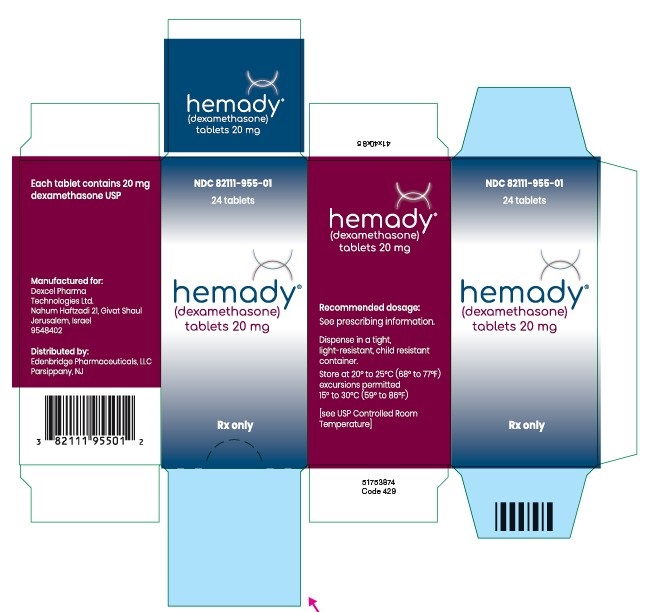
Hemady dexamethasone 20 mg Tablet, 24-count — NDC 82111-955-01 (Billing 82111-0955-01)
This is a package of 24 tablets of Hemady dexamethasone 20 mg Tablet from Edenbridge Pharmaceuticals LLC., marketed since Oct 2019 and currently FDA-listed. It is the main listing for this product, which comes in 2 package sizes.
NDC database record
One package, one record: these facts belong to NDC 82111-955-01 alone.
- Record
- FDA NDC Directory package listing · Human prescription drug
- Code segments
- 82111 labeler · 955 product · 01 package
- Package marketed since
- Dec 1, 2023
- Sample package
- No — commercial package
- Listing certified through
- Dec 31, 2027
- Billing quantity
- 24 EA per package
- Barcode (UPC-A, from the NDC)
- 3 8211195501 2
- Medicaid fills, this package
- 11 prescriptions in the last four reported quarters
- FDA record last changed
- Jul 24, 2026
Identity & classification
Regulatory identifiers FDA, NLM and CMS codes for this package
Drug-database identifiers Medi-Span GPI and First Databank GCN / HICL / AHFS classification
- GSN (GCN sequence number): 080270
- GCN: 47022
- GPI-14 (Medi-Span): 22100020000360
- HICL (First Databank): 002889
- AHFS class code: 52:08.08.00
- RxCUI (RxNorm): 2261802
Where does this data come from?
- FDA openFDA NDC Directory · synced Oct 8, 2026
- FDA label on DailyMed · label index refreshed Oct 8, 2026
- RxNorm (NLM RxNav) · catalog refreshed Oct 8, 2026
- Medi-Span GPI (licensed)
- First Databank (licensed) · refreshed Oct 8, 2026
RxNorm drug class
This medicine belongs to the Corticosteroid class.
Where does this data come from?
- RxClass (NLM) · catalog refreshed Oct 8, 2026
Clinical
Dexamethasone, a corticosteroid, is similar to a natural hormone produced by your adrenal glands. It often is used to replace this chemical when your body does not make enough of it. It relieves inflammation (swelling, heat, redness, and pain) and is used to treat certain forms of arthritis; skin, blood, kidney, eye, thyroid, and intestinal disorders (e.g., colitis); severe allergies; and asthma. Dexamethasone is also used to treat certain types of cancer. This medication is sometimes prescribed for other uses; ask your doctor or pharmacist for more information.
Read the full MedlinePlus article ↗- It's a steroid that calms inflammation and immune overreaction. Depending on the product, it treats allergic conditions, skin diseases, hormone disorders and eye conditions. Hemady...
- Follow your prescription label exactly. Tablets and liquid are swallowed, and your prescriber sets the amount based on your condition. Please don't stop suddenly after long use, be...
- Increased appetite, weight gain, trouble sleeping, mood swings, nausea and fluid retention are common. Call your doctor for signs of infection, black stools, vision changes, or sev...
- Some medicines interact with it, including certain antifungals, blood thinners, diabetes medicines, aspirin or NSAIDs, and estrogen products. Check with me before adding anything n...
Patient education
Supplement & herbal interactions
Some supplements/herbs that may interact with Dexamethasone — tap one for details:
Dexamethasone may be associated with lower levels of 8 nutrients — worth a chat with your pharmacist, not a cause for alarm.
Where does this data come from?
- MedlinePlus (NLM) · refreshed Oct 8, 2026
- FDA label on DailyMed · label index refreshed Oct 8, 2026
Ask a licensed pharmacist directly — free, answered by our team.
Pricing
A drug doesn't have one price. Each row is a different public payment system, and none is what you'd pay at the counter — that depends on your insurance. The ⓘ on each row explains what it measures.
| Price system | Per each | Per package |
|---|---|---|
| Retail pharmacies payNADAC · weekly | Not in the retail survey — common for institutional, discontinued, or low-volume packs. | |
| Medicaid paysCMS SDUD · 12 mo | $10.76 | $258.24 / 24 tablets |
| Medicare drug plans payPart D · Q2 2026 | $28.81 | $691.52 / 24 tablets |
| Medicare Part B allowsASP · J8541 | No ASP payment limit on file for J8541 this quarter. | |
Where does this data come from?
- CMS NADAC weekly file
- CMS ASP pricing files · refreshed Sep 20, 2026
- CMS Medicaid State Drug Utilization Data · through Q1 2026
- CMS Part D plan pricing files · refreshed Sep 24, 2026
- VA National Acquisition Center price file
Billing & reimbursement
Where does this data come from?
- CMS ASP NDC-HCPCS crosswalk · refreshed Sep 22, 2026
- DMEPDAC NDC-HCPCS crosswalk
- openFDA NSDE billing units · refreshed Oct 7, 2026
Packaging — all sizes for this product
| Package NDC | Description | Marketing start | Marketing end | Status |
|---|---|---|---|---|
| 82111-0955-01 You're viewing this Main listing | 1 BOTTLE in 1 CARTON / 24 TABLET in 1 BOTTLE | 2023-12-01 | — | Active |
| 82111-0955-02 82111-955-02 | 1 BOTTLE in 1 CARTON / 100 TABLET in 1 BOTTLE | 2023-12-01 | — | Active |
Pack size FAQ
What quantity is in this package?
How does this package differ from NDC 82111-0955-02?
What NDC number is used to bill for this package of Hemady dexamethasone 20 mg Tablet?
Therapeutic equivalents
| Product | Labeler | Pack | NADAC/unit | TE | Status | Price vs. this |
|---|---|---|---|---|---|---|
| Hemady 20 mgthis 82111-0955-01 | Edenbridge | 24 tablets | — | — | FDA listed | — |
Where does this data come from?
- FDA openFDA NDC Directory · synced Oct 8, 2026
- FDA Orange Book · refreshed Oct 9, 2026
- CMS NADAC weekly file
Availability & generic status
FDA-approved generic versions are listed, and recent pricing/market data suggests they may be available — see Therapeutic equivalents.
Why the date isn’t exact: Generic timing can change because patents may be challenged, settled, licensed, added, removed, or worked around with a narrower label — and FDA approval does not always mean a pharmacy can get the generic today.
Our estimate: December 2037 about 11 years away
How sure: Toss-up. Still unsettled. Just as likely to slip as to hold.
Why then: A patent that protects the brand runs out. After that, approved generics can be sold.
See the full forecast for generic Hemady →🛈 What do these terms mean?
- Patent
- Legal protection listed in the Orange Book that may delay generic approval or launch. Issued by the U.S. Patent & Trademark Office.
- Substance patent
- Covers the active drug molecule itself — the hardest to design around. A generic generally can’t launch until it expires.
- Formulation (product) patent
- Covers a specific formulation or dosage form. A generic can sometimes work around it with a different formulation.
- Method-of-use patent
- A patent covering one specific approved use of the drug — not necessarily the whole molecule. A generic can sometimes launch with a “skinny label” that carves out the protected use and keeps the others.
- Skinny label
- A generic label that omits a still-patented use when the FDA allows it — letting a generic reach the market for the unprotected uses.
- Exclusivity
- FDA-granted marketing protection, separate from patents — e.g. 5-yr new chemical entity, 7-yr orphan drug, or a +6-month pediatric extension.
- Paragraph IV
- A generic applicant’s formal challenge to a listed patent. It can potentially lead to earlier generic entry, but often involves litigation or a settlement.
- RLD / RS
- Reference Listed Drug — the brand product the FDA uses as the reference for generic applications. Reference Standard — the product the FDA expects generics to compare against in bioequivalence testing.
- TE / AB rating
- FDA therapeutic-equivalence rating. An AB rating generally means the FDA considers a generic therapeutically equivalent to — and substitutable for — the brand.
- LOE (loss of exclusivity)
- The latest patent or exclusivity currently listed — the loss-of-exclusivity / latest-listed-protection date shown on this page. Paragraph-IV challenges and settlements can move the real date earlier; FDA approval and a manufacturer’s decision to market can move it later.
Built from the FDA Orange Book. The bars above are scaled to each protection’s expiry; the red LOE marker is the last one to lapse.
| Patent | Type | Use code | Expires |
|---|---|---|---|
| US 11304961 ↗ | Method of use | U-3344 | Dec 18, 2037 |
| US 10537585 ↗ | Drug product | — | Dec 18, 2037 |
| Code | What it grants | Expires |
|---|---|---|
| ODE-271 | Orphan Drug Exclusivity (7-year) | Oct 3, 2026 |
Is there a generic version of HEMADY 20 MG TABLET?
The FDA approved a generic — why can’t I get it at my pharmacy yet?
Why do different websites show different generic release dates?
What does “FDA listed” mean?
What does a patent or protection date mean here?
What does “current Orange Book estimate” mean?
Can a generic come out before the last patent expires?
Can a generic come out after the listed dates?
What is the difference between patents and exclusivity?
Why are there multiple patent dates?
Where does this data come from?
- FDA Orange Book · refreshed Oct 9, 2026
What it looks like
Where does this data come from?
- FDA label on DailyMed · label index refreshed Oct 8, 2026
Inactive Ingredients / Excipients
Inactive ingredients, also called excipients, are components of the drug product other than the active ingredient. They may include fillers, dyes, coatings, preservatives, flavors, or other formulation ingredients.
🧪 Avoiding an ingredient? See Dexamethasone inactive ingredients by manufacturer: every current product's list side by side, so you can ask your pharmacy for the version that does not list it.
💡 Tap an ingredient (hover on desktop) to see what it is and why it’s used.
-
UNII EWQ57Q8I5X
Lactose monohydrate is a natural sugar derived from milk. It serves as a filler and binder in tablets and capsules, helping create the proper size, texture, and consistency of the medicine.
-
UNII 70097M6I30
Magnesium stearate is a salt made from magnesium and stearic acid, a fatty substance. It's used in tablets and capsules as a lubricant and glidant to help ingredients flow smoothly during manufacturing and prevent sticking.
-
UNII U725QWY32X
Povidone K30 is a synthetic polymer made from petroleum. It acts as a binder to hold tablet ingredients together and as a disintegrant to help the tablet break apart in the stomach so the medicine can be absorbed.
-
UNII 5856J3G2A2
A starch-based powder made from potatoes and processed with sodium. It acts as a disintegrant, helping the tablet or capsule break apart quickly in the stomach so the medicine can be absorbed.
-
UNII O8232NY3SJ
A plant-based carbohydrate derived from corn kernels. It acts as a filler to add bulk, a binder to hold ingredients together, and a disintegrant to help the tablet break apart in your stomach for absorption.
5 inactive ingredients listed in the exact product block matched to this NDC.
Where does this data come from?
ingredient classCode="IACT" elements from the exact product block matched by this NDC. Label-section narrative from DailyMed / the openFDA label index is shown separately when available.- FDA label on DailyMed · label index refreshed Oct 8, 2026
- FDA openFDA NDC Directory · synced Oct 8, 2026
Inactive ingredient FAQ
Are inactive ingredients the same for every manufacturer?
Why might an inactive ingredient be missing?
Can inactive ingredients matter?
Manufacturer & labeler
More NDCs from Edenbridge Pharmaceuticals LLC. labeler code 82111
- Zubsolv buprenorphine hydrochloride and naloxone .7 mg; .18 mg Tablet, Orally Disintegrating NDC 82111-201-30
- Zubsolv buprenorphine hydrochloride and naloxone 1.4 mg; .36 mg Tablet, Orally Disintegrating NDC 82111-202-30
- Zubsolv buprenorphine hydrochloride and naloxone 2.9 mg; .71 mg Tablet, Orally Disintegrating NDC 82111-203-30
- Zubsolv buprenorphine hydrochloride and naloxone 5.7 mg; 1.4 mg Tablet, Orally Disintegrating NDC 82111-204-30
- Zubsolv buprenorphine hydrochloride and naloxone 8.6 mg; 2.1 mg Tablet, Orally Disintegrating NDC 82111-205-30
- Zubsolv buprenorphine hydrochloride and naloxone 11.4 mg; 2.9 mg Tablet, Orally Disintegrating NDC 82111-206-30
Where does this data come from?
- FDA openFDA NDC Directory · synced Oct 8, 2026
- Drugs@FDA
Full prescribing information FDA SPL
🎯 Indications and Usage ▾
1 INDICATIONS AND USAGE HEMADY is indicated in combination with other anti-myeloma products for the treatment of adults with multiple myeloma (MM). HEMADY is a corticosteroid indicated in combination with other anti-myeloma products for the treatment of adults with multiple myeloma. ( 1 )
⏱️ Dosage and Administration ▾
2 DOSAGE AND ADMINISTRATION Recommended Dosage: 20 mg or 40 mg orally once daily, on specific days depending on the protocol regimen. ( 2 )
2.1Recommended Dosage The recommended dosage of HEMADY is 20 mg or 40 mg, orally, once daily, on specific days depending on the treatment regimen. Refer to the Prescribing Information of the other anti-myeloma products used in combination with HEMADY for specific HEMADY dosing. HEMADY can be administered with or without food.
2.2Dose Modification for Elderly Patients Dose-reduction for HEMADY is recommended for elderly patients, due to increased toxicity in these patients. Refer to the Prescribing Information of the other anti-myeloma products used as part of a combination regimen with HEMADY, for dosing recommendations in elderly patients.
💊 Dosage Forms and Strengths ▾
3 DOSAGE FORMS AND STRENGTHS Tablets: 20 mg white, round, biconvex tablet embossed with “20” on one side. Tablets: 20 mg ( 3 )
⛔ Contraindications ▾
4 CONTRAINDICATIONS HEMADY is contraindicated in patients with: Hypersensitivity to dexamethasone, or any of the excipients. Rare instances of anaphylactic reactions have been reported [see Adverse Reactions ( 6 ), Description ( 11 )] . Systemic fungal infections.
Corticosteroids may exacerbate systemic fungal infections [see Warnings and Precautions ( 5.2 )] . • Patients with hypersensitivity to dexamethasone ( 4 ) • Patients with systemic fungal infections ( 4 )
⚠️ Warnings and Cautions ▾
5 WARNINGS AND PRECAUTIONS • Alterations in Endocrine Function: Hypothalamic-pituitary adrenal (HPA) axis suppression, Cushing’s syndrome, and hyperglycemia can occur. Monitor patients for these conditions with chronic use. ( 5.1 ) • Immunosuppression and Increased Risk of Infections: Increased risk of new, exacerbation, dissemination, or reactivation of latent infections.
( 5.2 ) • Alteration in Cardiovascular/Renal Function: Monitor for elevated blood pressure and sodium, and for decreased potassium levels. ( 5.3 ) • Venous and Arterial Thromboembolism: Risk increased; consider anticoagulant prophylaxis and monitor for evidence of thromboembolism. ( 5.4 ) • Vaccination: Avoid the administration of live or live attenuated vaccines in patients receiving immunosuppressive doses of corticosteroids.
( 5.5 ) • Ophthalmic Effects: May include cataracts, infections, and glaucoma. ( 5.6 ) • Gastrointestinal Perforation: Avoid use in active or latent peptic ulcers, diverticulitis, fresh intestinal anastomoses, and nonspecific ulcerative colitis, since they may increase the risk of a perforation. ( 5.7 ) • Osteoporosis: Increased risk; monitor for changes in bone density with chronic use.
( 5.8 ) • Behavioral and Mood Disturbances: May include euphoria, insomnia, mood swings, personality changes, severe depression, and psychosis. Monitor for signs and symptoms and manage promptly. ( 5.10 ) • Kaposi’s Sarcoma: Kaposi’s sarcoma has been reported to occur in patients receiving corticosteroid therapy, most often for chronic conditions.
( 5.11 ) • Embryo-Fetal Toxicity: Can cause fetal harm. Advise females of reproductive potential of the potential risk to a fetus. ( 5.13 , 8.1 )
5.1Alterations in Endocrine Function Corticosteroids, such as HEMADY, can cause serious and life-threatening alterations in endocrine function, especially with chronic use. Monitor patients receiving HEMADY for adrenal insufficiency after corticosteroid withdrawal and Cushing’s syndrome and hyperglycemia while receiving corticosteroids. In addition, patients with hypopituitarism, primary adrenal insufficiency, or congenital adrenal hyperplasia, altered thyroid function, or pheochromocytoma may be at risk for adverse endocrine events.
Risk of Adrenal Insufficiency Following Corticosteroid Withdrawal Corticosteroids can produce reversible hypothalamic-pituitary adrenal (HPA) axis suppression, with the potential for the development of secondary adrenal insufficiency after withdrawal of corticosteroid treatment. Acute adrenal insufficiency can occur if glucocorticoids are withdrawn abruptly and can be fatal. The degree and duration of adrenocortical insufficiently produced is variable among patients and depends on the dose, frequency, and duration of glucocorticoid therapy.
The risk may be reduced by gradually tapering the corticosteroid dose when withdrawing treatment. This insufficiency may persist for months after discontinuation of therapy; therefore, in any situation of stress occurring during that period, corticosteroid therapy should be reinstituted. For patients already taking corticosteroids during times of stress, the dosage may have to be increased.
A steroid “withdrawal syndrome”, seemingly unrelated to adrenocortical insufficiency, may also occur following abrupt discontinuance of corticosteroids. This syndrome includes symptoms such as: anorexia, nausea, vomiting, lethargy, headache, fever, joint pain, desquamation, myalgia, and/or weight loss. These effects are thought to be due to the sudden change in glucocorticoid concentration rather than to low corticosteroid levels.
Cushing’s Syndrome Cushing’s syndrome (hypercortisolism) may occur with prolonged exposure to exogenous corticosteroids, including HEMADY. Symptoms include hypertension, truncal obesity and thinning of the limbs, purple striae, facial rounding, facial plethora, muscle weakness, easy and frequent bruising with thin fragile skin, posterior neck fat deposition, osteopenia, acn… [Excerpted — this section continues on DailyMed.]
🤒 Adverse Reactions ▾
6 ADVERSE REACTIONS The following clinically significant adverse reactions are described in detail in other labeling sections: Hypersensitivity [see Contraindications ( 4 )] Alterations in Endocrine Function [see Warnings and Precautions ( 5.1 )] Immunosuppression and Increased Risk of Infections [see Warnings and Precautions ( 5.2 ) ] Alterations in Cardiovascular/Renal Function [see Warnings and Precautions ( 5.3 )] Venous and Arterial Thromboembolism [see Warnings and Precautions ( 5.4 )] Vaccination [see Warnings and Precautions ( 5.5 )] Ophthalmic Effects [see Warnings and Precautions ( 5.6 )] Gastrointestinal Perforation [see Warnings and Precautions ( 5.7 )] Osteoporosis [see Warnings and Precautions ( 5.8 )] Myopathy [see Warnings and Precautions ( 5.9 )] Behavioral and Mood Disturbances [see Warnings and Precautions ( 5.10 )] Kaposi's Sarcoma [see Warnings and Precautions ( 5.11 )] HEMADY in Combination with Anti-Myeloma Products [see Warnings and Precautions ( 5.12 )] Embryo-Fetal Toxicity [see Warnings and Precautions ( 5.13 )] The following adverse reactions associated with the use of HEMADY or other corticosteroids were identified in clinical trials or postmarketing reports.
Because these reactions were reported voluntarily from a population of uncertain size, it is not always possible to estimate their frequency reliably or to establish a causal relationship to drug exposure. Allergic reactions: Allergic or hypersensitivity reaction, anaphylaxis, angioedema. Blood and Lymphatic System Disorders: Leukocytosis.
Cardiovascular: Bradycardia, cardiac arrest, cardiac arrhythmias, cardiac enlargement, circulatory collapse, congestive heart failure, fat embolism, hypertension, hypertrophic cardiomyopathy in premature infants, myocardial rupture following recent myocardial infarction, edema, pulmonary edema, syncope, tachycardia, thromboembolism, thrombophlebitis, vasculitis. Dermatologic: Acne, allergic dermatitis, cutaneous and subcutaneous atrophy, dry scaly skin, ecchymoses and petechiae, edema, erythema, hyperpigmentation, hypopigmentation, impaired wound healing, increased sweating, sterile abscess, rash, striae, suppressed reactions to skin tests, thin fragile skin, thinning scalp hair, urticaria.
Endocrine: Decreased carbohydrate and glucose tolerance, development of cushingoid state, hyperglycemia, glycosuria, hirsutism, hypertrichosis, increased requirements for insulin or oral hypoglycemic agents in diabetes, manifestations of latent diabetes mellitus, menstrual irregularities, secondary adrenocortical and pituitary unresponsiveness (particularly in times of stress, as in trauma, surgery, or illness), suppression of growth in pediatric patients. Fluid and electrolyte disturbances: Fluid retention, hypokalemic alkalosis, potassium loss, sodium retention, increased urinary excretion of calcium, tumor lysis syndrome.
Gastrointestinal: Abdominal distention, elevation in serum liver enzyme levels (usually reversible upon discontinuation), hepatomegaly, increased appetite, nausea, pancreatitis, peptic ulcer with possible perforation and hemorrhage, perforation of the small and large intestine (particularly in patients with inflammatory bowel disease), ulcerative esophagitis. Infection: Decreased resistance to infection, injection site infections following non-sterile administration. Metabolic: Negative nitrogen balance due to protein catabolism.
Musculoskeletal: Osteonecrosis of femoral and humeral heads, Charcot-like arthropathy, loss of muscle mass, muscle weakness, osteoporosis, pathologic fracture of long bones, steroid myopathy, tendon rupture, vertebral compression fractures. Neurological: Convulsions, epidural lipomatosis, headache, increased intracranial pressure with papilledema (pseudotumor cerebri) usually following discontinuation of treatment, neuritis, neuropathy, paresthesia, vertigo. Ophthalmic: Central serous chorioretinopathy, exophthalmos, glaucoma, increased intraocular pressure, pos… [Excerpted — this section continues on DailyMed.]
🔄 Drug Interactions ▾
7 DRUG INTERACTIONS • Avoid concomitant use of strong CYP3A4 inhibitors or inducers. ( 7.1 ) • Concomitant therapies such as erythropoietin stimulating agents or estrogen containing therapies may have an increased risk of thromboembolism. ( 7.2 )
7.1Effect of Other Drugs on HEMADY Strong CYP3A4 inhibitors Coadministration of strong and moderate CYP3A4 inhibitors increased dexamethasone exposure [see Clinical Pharmacology ( 12.3 )] , which may increase the risk of adverse reactions [see Warnings and Precautions ( 5 ) and Adverse Reactions ( 6 )] . Avoid coadministration of strong CYP3A4 inhibitors or consider alternative medication that are not strong CYP3A4 inhibitors. If concomitant use of strong CYP3A4 inhibitors cannot be avoided, closely monitor for adverse drug reactions.
Strong CYP3A4 inducers Coadministration of strong CYP3A4 inducers may decrease dexamethasone exposure [see Clinical Pharmacology ( 12.3 )] , which may result in loss of efficacy. Avoid coadministration of strong CYP3A4 inducers or consider alternative medication that are not CYP3A4 inducers. If concomitant use strong CYP3A4 inducers cannot be avoided, consider increasing the dose of HEMADY.
Cholestyramine Cholestyramine may increase the clearance of corticosteroids and potentially decrease corticosteroid exposure. Avoid coadministration of cholestyramine and HEMADY and consider alternative agents. Anticholinesterases Concomitant use of anticholinesterase agents and corticosteroids may produce severe weakness in patients with myasthenia gravis.
If possible, anticholinesterase agents should be withdrawn at least 24 hours before initiating corticosteroid therapy. Ephedrine Ephedrine may decrease dexamethasone exposure. Decreased exposure may result in loss of efficacy.
Consider increasing the dose of HEMADY when used concomitantly with ephedrine. Estrogens, Including Oral Contraceptives Estrogens may decrease the hepatic metabolism of certain corticosteroids and increase exposures, which may increase the risk of adverse reactions [see Warnings and Precautions ( 5 ) and Adverse Reactions ( 6 )] .
7.2Effect of HEMADY on Other Drugs CYP3A4 Substrates Coadministration of dexamethasone with drugs that are CYP3A4 substrates may decrease the concentration of these drugs. This may result in loss of efficacy of these drugs. Oral Anticoagulants Coadministration of anticoagulants with corticosteroids may reduce the response to anticoagulants [see Adverse Reactions ( 6 )] .
Frequently monitor coagulation indices to maintain the desired anticoagulant effect when administered with HEMADY. Amphotericin B Injection and Potassium-Depleting Agents Sodium retention with resultant edema and potassium loss may occur in patients receiving corticosteroids [see Warnings and Precautions ( 5.3 ), and Adverse Reactions ( 6 )] . Closely monitor potassium levels when potassium-depleting agents are coadministered with HEMADY.
In addition, there have been cases reported in which concomitant use of amphotericin B and hydrocortisone was followed by cardiac enlargement and congestive heart failure. Antidiabetics Corticosteroids, including HEMADY, may increase blood glucose concentrations [see Warnings and Precautions ( 5.1 ) and Adverse Reactions ( 6 )] . Consider adjusting the dose of antidiabetic agents, as necessary, when coadministered with HEMADY.
Isoniazid Serum concentrations of isoniazid may be decreased with corticosteroids. Cyclosporine Increased activity of both cyclosporine and corticosteroids may occur when the two are used concurrently. Convulsions have been reported with this concurrent use.
Digitalis Glycosides Patients on digitalis glycosides may be at increased risk of arrhythmias due to hypokalemia [ see Warnings and Precautions ( 5.3 ) and Adverse Reactions ( 6 )] . Nonsteroidal Anti-Inflammatory Agents (NSAIDS) Concomitant use of aspirin (or other nonsteroidal anti-inflammatory agents) and corticosteroids increases the risk of gastrointestinal side effe… [Excerpted — this section continues on DailyMed.]
👥 Use in Specific Populations ▾
8 USE IN SPECIFIC POPULATIONS Lactation: Advise not to breastfeed. ( 8.2 )
8.1Pregnancy Risk Summary Corticosteroids, including HEMADY, readily cross the placenta. Adverse developmental outcomes including orofacial clefts (cleft lip with or without cleft palate), intrauterine growth restriction, and decreased birth weight have been reported with maternal use of corticosteroids, including HEMADY, during pregnancy. In animal developmental and reproductive toxicology studies administration of corticosteroids to pregnant animals during organogenesis resulted in structural abnormalities, embryo-fetal mortality, functional impairment, and alterations to growth at doses equivalent to or below the recommended doses (see Data) .
Advise pregnant women of the potential risk to a fetus. HEMADY is administered in combination with anti-myeloma products that can cause embryo-fetal harm and are contraindicated for use in pregnancy. Refer to the Prescribing Information of the other anti-myeloma products used in combination with HEMADY for additional information.
The estimated background risk of major birth defects and miscarriage for the indicated population is unknown. All pregnancies have a background risk of birth defect, loss, or other adverse outcomes. The background risk in the U.S. general population of major birth defects is 2% to 4% and of miscarriage is 15% to 20% of clinically recognized pregnancies.
Data Human Data HEMADY should be used during pregnancy only if the potential benefit justifies the potential risk to the fetus. Multiple courses of antenatal dexamethasone had been associated with reduced birth weight, susceptibility to infections, and increase blood glucose level in the newborns. Neonatal hypoglycemia was also reported.
Infants born to mothers who have received substantial doses of corticosteroids during pregnancy should be carefully observed for signs of hypoadrenalism. Animal Data In pregnant animals administered dexamethasone during organogenesis, doses equivalent to or below the recommended human dose have caused adverse developmental outcomes including structural abnormalities (cleft palate), alterations to growth (growth restrictions including reduced bone lengths and fetal weights), functional impairment (neurodevelopmental and metabolic effects), and embryo-fetal mortality (reduced number of embryonic implantations and fewer live fetuses).
8.2Lactation Risk Summary Systemically administered corticosteroids appear in human milk and could suppress growth, interfere with endogenous corticosteroid production, or cause other untoward effects. Advise women not to breastfeed during treatment and for 2 weeks after the last dose.
8.3Females and Males of Reproductive Potential Pregnancy Testing Pregnancy testing is recommended for females of reproductive potential prior to initiating HEMADY [see Use in Specific Populations ( 8.1 )] . HEMADY is used in combination with other anti-myeloma products that require pregnancy testing in females of reproductive potential. Refer to the Prescribing Information for the products used in combination with HEMADY.
Contraception Advise patients of reproductive potential to use effective contraception during treatment with HEMADY and for at least one month following the final dose of HEMADY. HEMADY is used in combination with other anti-myeloma products that require contraception in females and males of reproductive potential. Refer to the Prescribing Information for the products used in combination with HEMADY.
Infertility Males Steroids may increase or decrease motility and number of spermatozoa in some patients. In animals, dexamethasone affects male spermatogenesis [see Nonclinical Toxicology ( 13.1 )] .
8.4Pediatric Use Safety and effectiveness in pediatric patients have not been established.
8.5Geriatric Use No overall differences in safety or effectiveness were observed between elderly subjects and younger subjects, and other reported clinical experience with dexamethasone… [Excerpted — this section continues on DailyMed.]
🤰 Pregnancy ▾
8.1Pregnancy Risk Summary Corticosteroids, including HEMADY, readily cross the placenta. Adverse developmental outcomes including orofacial clefts (cleft lip with or without cleft palate), intrauterine growth restriction, and decreased birth weight have been reported with maternal use of corticosteroids, including HEMADY, during pregnancy. In animal developmental and reproductive toxicology studies administration of corticosteroids to pregnant animals during organogenesis resulted in structural abnormalities, embryo-fetal mortality, functional impairment, and alterations to growth at doses equivalent to or below the recommended doses (see Data) .
Advise pregnant women of the potential risk to a fetus. HEMADY is administered in combination with anti-myeloma products that can cause embryo-fetal harm and are contraindicated for use in pregnancy. Refer to the Prescribing Information of the other anti-myeloma products used in combination with HEMADY for additional information.
The estimated background risk of major birth defects and miscarriage for the indicated population is unknown. All pregnancies have a background risk of birth defect, loss, or other adverse outcomes. The background risk in the U.S. general population of major birth defects is 2% to 4% and of miscarriage is 15% to 20% of clinically recognized pregnancies.
Data Human Data HEMADY should be used during pregnancy only if the potential benefit justifies the potential risk to the fetus. Multiple courses of antenatal dexamethasone had been associated with reduced birth weight, susceptibility to infections, and increase blood glucose level in the newborns. Neonatal hypoglycemia was also reported.
Infants born to mothers who have received substantial doses of corticosteroids during pregnancy should be carefully observed for signs of hypoadrenalism. Animal Data In pregnant animals administered dexamethasone during organogenesis, doses equivalent to or below the recommended human dose have caused adverse developmental outcomes including structural abnormalities (cleft palate), alterations to growth (growth restrictions including reduced bone lengths and fetal weights), functional impairment (neurodevelopmental and metabolic effects), and embryo-fetal mortality (reduced number of embryonic implantations and fewer live fetuses).
🧒 Pediatric Use ▾
8.4Pediatric Use Safety and effectiveness in pediatric patients have not been established.
🧓 Geriatric Use ▾
8.5Geriatric Use No overall differences in safety or effectiveness were observed between elderly subjects and younger subjects, and other reported clinical experience with dexamethasone has not identified differences in responses between the elderly and younger patients. However, the incidence of corticosteroid-induced adverse reactions may be increased in geriatric patients and are dose-related. Osteoporosis is the most frequently encountered complication, which occurs at a higher incidence rate in corticosteroid-treated geriatric patients as compared to younger populations and in age-matched controls.
Losses of bone mineral density appear to be greatest early on in the course of treatment and may recover over time after steroid withdrawal or use of lower doses. Higher doses increase the relative risk of both vertebral and nonvertebral fractures, even in the presence of higher bone density compared to patients with involution osteoporosis. Perform routine screening of geriatric patients, including regular assessments of bone mineral density and institution of fracture prevention strategies, along with regular review of the dose of and need for continued dexamethasone therapy [see Warnings and Precautions ( 5.8 )] .
HEMADY is used in combination with other anti-myeloma products. Refer to the Prescribing Information of the other anti-myeloma products used as part of a combination regimen with HEMADY, for information on the use of those products in elderly patients.
🆘 Overdosage ▾
10 OVERDOSAGE Treatment of overdosage is by supportive and symptomatic therapy. In the case of acute overdosage, according to the patient’s condition, supportive therapy may include gastric lavage or induced vomiting.
🧬 Clinical Pharmacology ▾
12 CLINICAL PHARMACOLOGY
12.1Mechanism of Action Dexamethasone is a corticosteroid with anti-inflammatory effects and low mineralocorticoid activity. The precise mechanism of action in multiple myeloma is unknown. Dexamethasone induces apoptosis of multiple myeloma cells.
12.2Pharmacodynamics Following oral administration of a single dose of dexamethasone tablet to healthy subjects, the decrease in mean baseline cortisol concentration was maximal by 12 hours post-dose, with mean cortisol concentrations returning to near baseline approximately 3 days after drug administration.
12.3Pharmacokinetics The pharmacokinetics of oral dexamethasone were dose proportional between single dose of 0.5 to 40 mg. Following a single HEMADY dose of 20 mg, the geometric mean (coefficient of variation, %CV) dexamethasone peak concentrations (C max ) was 247 ng/mL (31%) and area under the curve over time to infinity (AUC inf ) was 1271 ng.hr/mL (31%) in subjects. Absorption Following 20 mg dose of HEMADY, dexamethasone median time to peak concentrations (T max ) was 1 hour (range: 0.5 to 4 hours).
Effect of Food A high-fat, high-calorie (total 800-1000 calories: approximately 60% from fat, 25% from carbohydrate and 15% from protein) meal had no effect on AUC inf and decreased C max by 23% of a single 20 mg dose of HEMADY. Distribution Dexamethasone is about 77% bound to human plasma proteins in vitro. Elimination The mean terminal half-life (coefficient of variation) of dexamethasone is 4 hours (18%) and oral clearance (CL/F) was
15.7L/hr following a single dose of HEMADY. Metabolism Dexamethasone is metabolized by CYP3A4. Excretion Renal excretion of dexamethasone is less than 10% of total body clearance.
Less than 10% of dexamethasone is excreted in the urine. Specific Populations The effect of baseline renal and hepatic impairment on the pharmacokinetics of dexamethasone has not been studied. Drug Interactions Studies Effect of Strong and Moderate CYP3A4 Inhibitors Coadministration of itraconazole (strong CYP3A4 inhibitor: 200 mg once daily x 4 days) with a single dose of oral dexamethasone (4.5 mg) increased dexamethasone AUC inf by 3.7-fold [see Drug Interactions ( 7.1 )] .
Coadministration of aprepitant (moderate CYP3A4 inhibitor: 125 mg on Day 1, and 80 mg once daily on Days 2 to 5) with oral dexamethasone (20 mg on Day 1, and 8 mg once daily on Day 2-5) increased dexamethasone AUC inf by 2.2 -fold on Day 1 and 5 [see Drug Interactions ( 7.1 )] . Effects of Other Anti-Myeloma Products Coadministration of thalidomide, lenalidomide, pomalidomide, ixazomib, bortezomib or carfilzomib with dexamethasone is not expected to affect the pharmacokinetics of dexamethasone. Effect on Other Anti-Myeloma Products Coadministration of dexamethasone had no effect on the mean AUC inf of lenalidomide, pomalidomide, ixazomib, and bortezomib.
Coadministration of dexamethasone with carfilzomib or thalidomide is not expected to affect the pharmacokinetics of these drugs, as these drugs are not primarily metabolized by CYP3A4 in vitro. For additional information on the drug interaction studies with dexamethasone and other anti-myeloma products, refer to the Prescribing Information of the other anti-myeloma products.
🧬 Mechanism of Action ▾
12.1Mechanism of Action Dexamethasone is a corticosteroid with anti-inflammatory effects and low mineralocorticoid activity. The precise mechanism of action in multiple myeloma is unknown. Dexamethasone induces apoptosis of multiple myeloma cells.
📦 How Supplied / Storage and Handling ▾
16 HOW SUPPLIED/STORAGE AND HANDLING How Supplied 20 mg tablet: white, round, biconvex tablets embossed "20" on one side. NDC 82111-955-01: Bottle of 24, NDC 82111-955-02: Bottle of 100 Storage Store at 20°C to 25°C (68°F to 77°F) excursions permitted 15°C to 30°C (59°F to 86°F) [see USP Controlled Room Temperature]. Dispense in a tight, light-resistant, child resistant container.
📋 Description ▾
11 DESCRIPTION HEMADY (dexamethasone, USP) is an anti-inflammatory, 9-fluoro-glucocorticoid. The chemical name is 9-fluoro-11β,17,21trihydroxy-16α-methylpregna-1,4-diene-3,20-dione. The molecular weight is 392.47 g/mol.
The molecular formula is C 22 H 29 FO 5. The structural formula is: Dexamethasone is a white to practically white, odorless, crystalline powder. It is stable in air.
It is practically insoluble in water. HEMADY for oral administration is available as an immediate-release tablet in a strength of 20 mg. Each tablet contains dexamethasone USP and the following inactive ingredients: corn starch NF, lactose monohydrate NF, magnesium stearate NF, povidone NF, and sodium starch glycolate NF.
1
💬 Information for Patients ▾
17 PATIENT COUNSELING INFORMATION Discuss the following with patients prior to treatment with HEMADY: Administration HEMADY is administered as part of combination regimens with anti-myeloma products; instruct patients to take HEMADY exactly as prescribed in the Prescribing Information of the anti-myeloma products administered with HEMADY [see Dosage and Administration ( 2.1 ) and Warning and Precautions ( 5.12 )] . Inform elderly patients regarding dose-reduction, if needed [see Dosage and Administration ( 2.2 ) and Use in Specific Populations ( 8.5 )] .
Warn patients to not stop taking HEMADY abruptly or without first checking with their healthcare providers as there may be a need for gradual dose reduction to decrease the risk of adrenal insufficiency [see Warnings and Precautions ( 5.1 )] . HEMADY may be taken with or without food. Alterations in Endocrine Function Advise patients to inform any medical attendants that they are taking corticosteroids, as prolonged use may cause adrenal insufficiency, Cushing's syndrome and make patients dependent on corticosteroids.
Instruct patients to notify their healthcare provider if they have diabetes, or thyroid gland problems as the dose of medications used to control these other conditions may need to be adjusted while they are taking HEMADY [see Warnings and Precautions ( 5.1 )] . Advise the patient that, following prolonged therapy, withdrawal of corticosteroids may result in symptoms of the corticosteroid withdrawal syndrome including myalgia, arthralgia, and malaise. Advise patients to not discontinue use of HEMADY abruptly or without medical supervision [see Warnings and Precautions ( 5.1 )] .
Immunosuppression and Increased Risk of Infection Advise patients that they are at increased risk of infection. Tell patients to inform their healthcare provider if they have had recent or ongoing infections or if they have recently received a vaccine. Medical advice should be sought immediately if the patient develops fever or other signs of infection.
Patients should be made aware that some infections can potentially be severe and fatal [see Warnings and Precautions ( 5.2 )] . Warn patients who are on corticosteroids to avoid exposure to chickenpox or measles and to alert their healthcare provider immediately if they are exposed [see Warnings and Precautions ( 5.2 )] . Alterations in Cardiovascular/Renal Function Inform patients that HEMADY can cause an increase in blood pressure and water retention.
If this occurs, dietary salt restriction and potassium supplementation may be needed [see Warnings and Precautions ( 5.3 )] . Venous and Arterial Thromboembolism Inform patients of the potential risk of developing venous and arterial thromboembolism and discuss the need for appropriate prophylactic treatment [see Warnings and Precautions ( 5.4 )] . Vaccination Inform patients that they may receive concurrent vaccinations with use of HEMADY, except for live-attenuated or live vaccines [see Warnings and Precautions ( 5.5 )] .
Ophthalmic Effects Inform patients that HEMADY may cause cataracts or glaucoma and advise monitoring if corticosteroid therapy is continued for more than 6 weeks [see Warnings and Precautions ( 5.6 )] . Gastrointestinal Perforation HEMADY may increase the risk of developing gastrointestinal perforation. Advise patients to promptly seek medical attention if they develop unusually severe, persistent or worsening abdominal pain.
Warn patients to avoid corticosteroids if there is a possibility of gastrointestinal perforation [see Warnings and Precautions ( 5.7 )] . Osteoporosis Advise patients about the risk of osteoporosis with prolonged use of HEMADY, which can predispose the patient to vertebral and long bone fractures [see Warnings and Precautions ( 5.8 )] . Myopathy Advise patients to contact their healthcare provider if they experience new or worsening symptoms of myopathy such as unexplained muscle pain, tenderness or weakness [see Warnings and Precauti… [Excerpted — this section continues on DailyMed.]
🍼 Nursing Mothers ▾
8.3Females and Males of Reproductive Potential Pregnancy Testing Pregnancy testing is recommended for females of reproductive potential prior to initiating HEMADY [see Use in Specific Populations ( 8.1 )] . HEMADY is used in combination with other anti-myeloma products that require pregnancy testing in females of reproductive potential. Refer to the Prescribing Information for the products used in combination with HEMADY.
Contraception Advise patients of reproductive potential to use effective contraception during treatment with HEMADY and for at least one month following the final dose of HEMADY. HEMADY is used in combination with other anti-myeloma products that require contraception in females and males of reproductive potential. Refer to the Prescribing Information for the products used in combination with HEMADY.
Infertility Males Steroids may increase or decrease motility and number of spermatozoa in some patients. In animals, dexamethasone affects male spermatogenesis [see Nonclinical Toxicology ( 13.1 )] .
🧬 Pharmacokinetics ▾
12.3Pharmacokinetics The pharmacokinetics of oral dexamethasone were dose proportional between single dose of 0.5 to 40 mg. Following a single HEMADY dose of 20 mg, the geometric mean (coefficient of variation, %CV) dexamethasone peak concentrations (C max ) was 247 ng/mL (31%) and area under the curve over time to infinity (AUC inf ) was 1271 ng.hr/mL (31%) in subjects. Absorption Following 20 mg dose of HEMADY, dexamethasone median time to peak concentrations (T max ) was 1 hour (range: 0.5 to 4 hours).
Effect of Food A high-fat, high-calorie (total 800-1000 calories: approximately 60% from fat, 25% from carbohydrate and 15% from protein) meal had no effect on AUC inf and decreased C max by 23% of a single 20 mg dose of HEMADY. Distribution Dexamethasone is about 77% bound to human plasma proteins in vitro. Elimination The mean terminal half-life (coefficient of variation) of dexamethasone is 4 hours (18%) and oral clearance (CL/F) was
15.7L/hr following a single dose of HEMADY. Metabolism Dexamethasone is metabolized by CYP3A4. Excretion Renal excretion of dexamethasone is less than 10% of total body clearance.
Less than 10% of dexamethasone is excreted in the urine. Specific Populations The effect of baseline renal and hepatic impairment on the pharmacokinetics of dexamethasone has not been studied. Drug Interactions Studies Effect of Strong and Moderate CYP3A4 Inhibitors Coadministration of itraconazole (strong CYP3A4 inhibitor: 200 mg once daily x 4 days) with a single dose of oral dexamethasone (4.5 mg) increased dexamethasone AUC inf by 3.7-fold [see Drug Interactions ( 7.1 )] .
Coadministration of aprepitant (moderate CYP3A4 inhibitor: 125 mg on Day 1, and 80 mg once daily on Days 2 to 5) with oral dexamethasone (20 mg on Day 1, and 8 mg once daily on Day 2-5) increased dexamethasone AUC inf by 2.2 -fold on Day 1 and 5 [see Drug Interactions ( 7.1 )] . Effects of Other Anti-Myeloma Products Coadministration of thalidomide, lenalidomide, pomalidomide, ixazomib, bortezomib or carfilzomib with dexamethasone is not expected to affect the pharmacokinetics of dexamethasone. Effect on Other Anti-Myeloma Products Coadministration of dexamethasone had no effect on the mean AUC inf of lenalidomide, pomalidomide, ixazomib, and bortezomib.
Coadministration of dexamethasone with carfilzomib or thalidomide is not expected to affect the pharmacokinetics of these drugs, as these drugs are not primarily metabolized by CYP3A4 in vitro. For additional information on the drug interaction studies with dexamethasone and other anti-myeloma products, refer to the Prescribing Information of the other anti-myeloma products.
🧬 Pharmacodynamics ▾
12.2Pharmacodynamics Following oral administration of a single dose of dexamethasone tablet to healthy subjects, the decrease in mean baseline cortisol concentration was maximal by 12 hours post-dose, with mean cortisol concentrations returning to near baseline approximately 3 days after drug administration.
🧪 Nonclinical Toxicology ▾
13 NONCLINICAL TOXICOLOGY
13.1Carcinogenesis, Mutagenesis, Impairment of Fertility No adequate studies have been conducted in animals to determine whether corticosteroids have a potential for carcinogenesis. Dexamethasone was tested for in vitro and in vivo genotoxic potential and was positive in the following assays: chromosomal aberrations and sister-chromatid exchanges in human lymphocytes, and micronuclei and sister-chromatid exchanges in mouse bone marrow. The Ames/Salmonella assay, with and without S9 mix, did not show an increase in His+ revertants.
Published literature identified reduced testicular spermatozoids and reduced spermatogenesis in male mice dosed intraperitoneally for 7 days at doses equivalent to the human dose based on a mg/m 2 body surface area comparison.
📄 Carcinogenesis, Mutagenesis, Impairment of Fertility ▾
13.1Carcinogenesis, Mutagenesis, Impairment of Fertility No adequate studies have been conducted in animals to determine whether corticosteroids have a potential for carcinogenesis. Dexamethasone was tested for in vitro and in vivo genotoxic potential and was positive in the following assays: chromosomal aberrations and sister-chromatid exchanges in human lymphocytes, and micronuclei and sister-chromatid exchanges in mouse bone marrow. The Ames/Salmonella assay, with and without S9 mix, did not show an increase in His+ revertants.
Published literature identified reduced testicular spermatozoids and reduced spermatogenesis in male mice dosed intraperitoneally for 7 days at doses equivalent to the human dose based on a mg/m 2 body surface area comparison.
📄 Recent Major Changes ▾
Warnings and Precautions, Immunosuppression and Increased Risk of Infection ( 5.2 ) 6/2024 Warnings and Precautions, Kaposi’s Sarcoma ( 5.11 ) 6/2024
📄 Package Label / Principal Display Panel ▾
PACKAGE LABEL.PRINCIPAL DISPLAY PANEL 1 1 1 1
Medicaid utilization & spend
Medicaid utilization by pack size
Medicare Part D spend CMS · PART D · 2026 (Q1)
Reported adverse events (FAERS)
Top reported reactions
Age at onset
Reporter sex
Serious outcomes
Where does this data come from?
About this NDC listing & data coverage
What data is (and isn’t) available for this NDC — tap to expand
| NDC identity (package / product / labeler codes) | ✓ Available |
| Labeler | ✓ Available |
| Product & package description | ✓ Available |
| Marketing category & status | ✓ Available |
| Active ingredient / dosage form / route | ✓ Available |
| FDA label (SPL via DailyMed) | ✓ Available |
| Package photos | ✓ Available |
| Inactive ingredients (structured) | ✓ Available |
| NADAC pharmacy acquisition price (CMS) | — Not published for this NDC CMS publishes NADAC only for NDCs reported in its retail-pharmacy survey. |
| Orange Book / therapeutic-equivalence data | ✓ Available |
| HCPCS J-code billing crosswalk | ✓ Available |
| Medicaid utilization (CMS SDUD) | ✓ Available |