
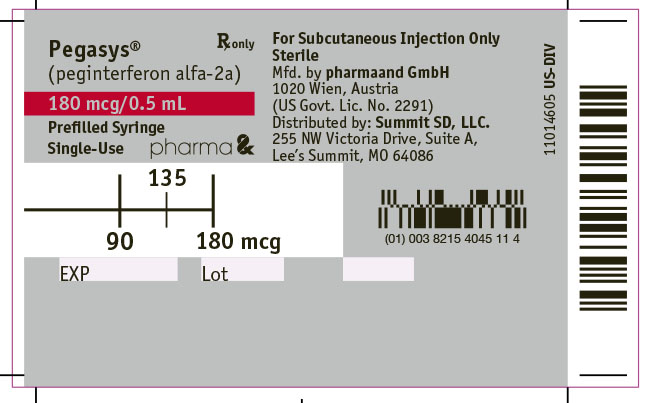
Pegasys peginterferon alfa-2a 180 ug/.5mL Injection, Solution
🆔 Identity & classification
Where does this data come from?
🏷️ RxNorm drug class
This medicine belongs to the Interferon alpha class.
Where does this data come from?
🏭 Manufacturer & labeler
Where does this data come from?
🩺 Clinical
Peginterferon alfa-2a is used alone or in combination with other medications to treat chronic (long-term) hepatitis C infection (swelling of the liver caused by a virus) in people who show signs of liver damage. Peginterferon alfa-2a is also used to treat chronic hepatitis B infection (swelling of the liver caused by a virus) in people who show signs of liver damage. Peginterferon alfa-2a is in a class of medications called interferons. Peginterferon is a combination of interferon and polyethylene glycol, which helps the interferon stay active in your body for a longer period of time. Peginter...
Read the full MedlinePlus article ↗- Pegasys is a man-made version of a protein your immune system naturally produces called interferon. It essentially boosts your body's own antiviral defenses to help fight the hepat...
- What exactly is Pegasys and why did my doctor prescribe it for hepatitis?
- Yes, Pegasys is given as a small injection under the skin — subcutaneously — once a week, into your abdomen or thigh. Your healthcare team will train you (or a family member) on ho...
- How do I take this medication? Do I have to inject it myself?
Patient education
Supplement & herbal interactions
Where does this data come from?
Ask a licensed pharmacist directly — free, answered by our team.
🧪 Inactive Ingredients / Excipients
Inactive ingredients, also called excipients, are components of the drug product other than the active ingredient. They may include fillers, dyes, coatings, preservatives, flavors, or other formulation ingredients.
💡 Tap an ingredient (hover on desktop) to see what it is and why it’s used.
-
UNII Q40Q9N063P
Acetic acid is a weak organic acid commonly used in medicines as a buffer and pH adjuster. It helps maintain the proper acidity level to ensure the drug remains stable and effective in its formulation.
-
UNII LKG8494WBH
Benzyl alcohol is a clear liquid used as a preservative and solvent in medicines. It helps prevent bacterial and fungal growth and dissolves other ingredients to create uniform liquid formulations.
-
UNII 6OZP39ZG8H
Polysorbate 80 is a synthetic emulsifier derived from sorbitol and oleic acid. It helps mix oil and water-based ingredients together in medications and improves how the product disperses in the body.
-
UNII 4550K0SC9B
Sodium acetate is a salt derived from acetic acid. It acts as a buffer to help maintain the medicine's pH stability and may serve as a preservative or solubilizer in liquid formulations.
-
UNII 451W47IQ8X
Sodium chloride is common table salt. It's used in medicines as a buffer to maintain proper pH, as a filler to add bulk, or to adjust the osmotic balance in liquid formulations.
-
UNII 059QF0KO0R
Water is a liquid solvent that dissolves and mixes ingredients together in liquid medicines, syrups, and injections. It helps distribute the active drug evenly throughout the product.
6 inactive ingredients listed in the exact product block matched to this NDC.
Where does this data come from?
ingredient classCode="IACT" elements from the exact product block matched by this NDC. Label-section narrative from DailyMed / the openFDA label index is shown separately when available.Inactive ingredient FAQ
Are inactive ingredients the same for every manufacturer?
Why might an inactive ingredient be missing?
Can inactive ingredients matter?
💲 Pricing
A drug doesn't have one price. Each row is a different public payment system, and none is what you'd pay at the counter — that depends on your insurance. The ⓘ on each row explains what it measures.
| Price system | Per mL | Per package |
|---|---|---|
| Retail pharmacies payNADAC · weekly | Not in the retail survey — common for institutional, discontinued, or low-volume packs. | |
| Medicaid paysCMS SDUD · 12 mo | $2,195.77 | $4,391.54 / 2 ml |
| Medicare drug plans payPart D · Q2 2026 | $2,191.22 | $4,382.44 / 2 ml |
Where does this data come from?
🔁 Therapeutic equivalents
| Product | Labeler | Pack | NADAC/unit | TE | Status | Price vs. this |
|---|---|---|---|---|---|---|
| Pegasys 180 ug/.5mLthis 82154-0451-04 | pharmaand | 1 packet | — | — | FDA listed | — |
Where does this data come from?
⏳ Availability & biosimilar status
Biologics have no small-molecule generics; biosimilar competition is tracked in the FDA Purple Book.
Where does this data come from?
🗺️ Medicaid utilization & spend
📊 Medicare Part D spend CMS · PART D · 2026 (Q1)
📦 Packaging — all sizes for this product
| Package NDC | Description | Marketing start | Status |
|---|---|---|---|
| 82154-0451-04 You're viewing this | 1 PACKET in 1 BOX (82154-0451-4) / 4 SYRINGE, GLASS in 1 PACKET / .5 mL in 1 SYRINGE, GLASS | 2011-03-29 | Active |
🧭 About this NDC listing & data coverage
What data is (and isn’t) available for this NDC — tap to expand
| NDC identity (package / product / labeler codes) | ✓ Available |
| Labeler | ✓ Available |
| Product & package description | ✓ Available |
| Marketing category & status | ✓ Available |
| Active ingredient / dosage form / route | ✓ Available |
| FDA label (SPL via DailyMed) | ✓ Available |
| Package photos | ✓ Available |
| Inactive ingredients (structured) | ✓ Available |
| NADAC pharmacy acquisition price (CMS) | — Not published for this NDC CMS publishes NADAC only for NDCs reported in its retail-pharmacy survey. |
| Orange Book / therapeutic-equivalence data | — Not published for this NDC Applies only to products approved under an NDA/ANDA; many listings are out of scope. |
| HCPCS J-code billing crosswalk | — Not published for this NDC Most self-administered / retail products have no J-code — that is normal. |
| Medicaid utilization (CMS SDUD) | ✓ Available |
Questions about this listing
Why is there no price listed?
Is the NDC printed on the package the same as the 11-digit billing NDC?
What do the three segments of this NDC mean?
Is this package still being marketed?
Who lists this product with the FDA?
Do I need a prescription for this product?
Where does this data come from?
📄 Full prescribing information FDA SPL
🚨 Boxed Warning ▾
WARNING: RISK OF SERIOUS DISORDERS WARNING: RISK OF SERIOUS DISORDERS See full prescribing information for complete boxed warning. Risk of Serious Disorders May cause or aggravate fatal or life-threatening neuropsychiatric, autoimmune, ischemic, and infectious disorders. Monitor closely and withdraw therapy with persistently severe or worsening signs or symptoms of the above disorders ( 5 ) Risk of Serious Disorders Alpha interferons, including PEGASYS (peginterferon alfa-2a), may cause or aggravate fatal or life-threatening neuropsychiatric, autoimmune, ischemic, and infectious disorders.
Patients should be monitored closely with periodic clinical and laboratory evaluations. Therapy should be withdrawn in patients with persistently severe or worsening signs or symptoms of these conditions. In many, but not all cases, these disorders resolve after stopping PEGASYS therapy [see Warnings and Precautions (5.2 , 5.5 , 5.8 , 5.11 , 5.14 , 5.16) , Adverse Reactions (6.1) and Nonclinical Toxicology (13.1) ] .
🎯 Indications and Usage ▾
1 INDICATIONS AND USAGE PEGASYS is an inducer of the innate immune response indicated for the treatment of Chronic Hepatitis C (CHC) ( 1.1 ) Adult Patients: In combination therapy with other hepatitis C virus drugs for adults with compensated liver disease. PEGASYS monotherapy is indicated only if patient has contraindication or significant intolerance to other HCV drugs. Pediatric Patients: In combination with ribavirin for pediatric patients 5 years of age and older with compensated liver disease Chronic Hepatitis B (CHB) ( 1.2 ) Adult Patients: Treatment of adults with HBeAg-positive and HBeAg-negative chronic hepatitis B (CHB) infection who have compensated liver disease and evidence of viral replication and liver inflammation Pediatric Patients: Treatment of non-cirrhotic pediatric patients 3 years of age and older with HBeAg-positive CHB and evidence of viral replication and elevations in serum alanine aminotransferase (ALT)
1.1Chronic Hepatitis C (CHC) Adult Patients: PEGASYS, as part of a combination regimen with other hepatitis C virus (HCV) antiviral drugs, is indicated for the treatment of adults with CHC and compensated liver disease. For information about the safe and effective use of other HCV antiviral drugs to be used in combination with PEGASYS, refer to their prescribing information. PEGASYS monotherapy is only indicated for the treatment of patients with CHC and compensated liver disease if there are contraindications or significant intolerance to other HCV antiviral drugs.
Pediatric Patients: PEGASYS in combination with ribavirin is indicated for the treatment of pediatric patients 5 years of age and older with CHC and compensated liver disease. Limitations of Use : PEGASYS alone or in combination with ribavirin without additional HCV antiviral drugs is not recommended for treatment of patients with CHC who previously failed therapy with an interferon-alfa. PEGASYS is not recommended for treatment of patients with CHC who have had solid organ transplantation [see Use in Specific Populations (8.8) ] .
1.2Chronic Hepatitis B (CHB) Adult Patients: PEGASYS is indicated for the treatment of adults with HBeAg-positive and HBeAg-negative CHB infection who have compensated liver disease and evidence of viral replication and liver inflammation. Pediatric Patients: PEGASYS is indicated for the treatment of HBeAg-positive CHB in non-cirrhotic pediatric patients 3 years of age and older with evidence of viral replication and elevations in serum alanine aminotransferase (ALT).
⏱️ Dosage and Administration ▾
2 DOSAGE AND ADMINISTRATION PEGASYS is administered by subcutaneous injection ( 2 ) In adult patients with CHC, PEGASYS is dosed as 180 mcg per week and the duration of treatment depends on indication, genotype, and whether it is administered with other HCV antiviral drugs ( 2.2 ). In adult patients with CHB, PEGASYS is dosed as 180 mcg per week for 48 weeks ( 2.4 ). In pediatric patients with CHC, PEGASYS is dosed as 180 mcg/1.73 m 2 × BSA per week, in combination with ribavirin, and the duration of treatment depends on genotype ( 2.3 ) In pediatric patients with CHB, PEGASYS is dosed as 180 mcg/1.73 m 2 × BSA per week for 48 weeks ( 2.5 ): Dosage modification is recommended in patients experiencing certain laboratory abnormalities, adverse reactions or renal impairment ( 2.6 , 12.3 )
2.1Dosage Overview Administer PEGASYS by subcutaneous injection once weekly in the abdomen or thigh for the treatment of: Adult patients with CHC without or with HIV coinfection [see Dosage and Administration (2.2) ]; Pediatric patients with CHC [see Dosage and Administration (2.3) ] ; Adult patients with CHB [see Dosage and Administration (2.4) ] ; and Pediatric patients with CHB [see Dosage and Administration (2.5) ]. For treatment of CHC, use PEGASYS in combination with other HCV antiviral drugs. For information about the recommended dosage and administration and the safe and effective use of these other HCV antiviral drugs, refer to their prescribing information.
PEGASYS monotherapy is only indicated in the treatment of CHC if there are contraindications to or significant intolerance to other HCV antiviral drugs. For dosage modifications in patients with CHC or CHB: Due to neutropenia, thrombocytopenia, ALT elevation, and depression [see Dosage and Administration (2.6) ] . In patients with severe renal impairment (creatinine clearance less than 30 mL/minute) and in patients with creatinine clearance between 30 and 50 mL/minute [see Dosage and Administration (2.6) ] .
For important administration instructions for all the PEGASYS injection presentations (i.e., vial and prefilled syringe) [ see Dosage and Administration (2.7) ].
2.2Recommended Dosage for Adults with CHC Dosage in Adults with CHC without HIV Coinfection Table 1 displays the recommended dosage and duration of PEGASYS and other HCV antiviral drugs in adults with CHC (without HIV coinfection) based on HCV genotype. For treatment of HCV genotype 1 with PEGASYS in combination with ribavirin or alone, discontinuation of treatment is recommended if at least a 2 log 10 reduction from baseline in HCV RNA has not been demonstrated by 12 weeks of therapy or if undetectable HCV RNA has not been achieved after 24 weeks of therapy [see Clinical Studies (14) ] .
Refer to the prescribing information for specific HCV antiviral drugs used in combination with PEGASYS for information on stopping therapy based on treatment response. Immediately discontinue PEGASYS for hepatic decompensation (Child-Pugh score greater than 6 [class B and C]). Table 1 Recommended Dosage for PEGASYS for Adults with CHC Infection If PEGASYS is used in combination with other antiviral drugs for CHC, refer to the prescribing information of the other HCV antiviral drugs for the recommended dosage of the other HCV antiviral drugs and duration of the entire treatment regimen.
Hepatitis C Virus Genotype PEGASYS Dosage PEGASYS Duration Genotypes 1, 4 If PEGASYS and ribavirin are used without other HCV antiviral drugs the recommended duration of therapy is 48 weeks. 180 mcg subcutaneous injection in thigh or abdomen once weekly Refer to the prescribing information of HCV antiviral drugs. Genotypes 2, 3 If PEGASYS and ribavirin are used without other HCV antiviral drugs the recommended duration of therapy is 24 weeks.
Genotypes 5, 6 There are insufficient data for dosage recommendations If PEGASYS monotherapy is used for treatment of CHC, the recommended PEGASYS dosage is 180 mcg via subcutaneous injection in thigh or abdomen o…
💊 Dosage Forms and Strengths ▾
3 DOSAGE FORMS AND STRENGTHS PEGASYS is a colorless to slightly yellowish solution available as: Injection: 180 mcg/mL in a single-dose vial Injection: 180 mcg/0.5 mL in a single-dose prefilled syringe Injection: 180 mcg/mL solution in a single-dose vial ( 3 ) 180 mcg/0.5 mL solution in a single-dose prefilled syringe ( 3 )
⛔ Contraindications ▾
4 CONTRAINDICATIONS PEGASYS is contraindicated in patients with: Known hypersensitivity reactions such as urticaria, angioedema, bronchoconstriction, anaphylaxis, or Stevens-Johnson syndrome to alpha interferons, including PEGASYS, or any of its components. Autoimmune hepatitis Hepatic decompensation (Child-Pugh score greater than 6 [class B and C]) in cirrhotic patients before treatment Hepatic decompensation with Child-Pugh score greater than or equal to 6 in cirrhotic CHC patients coinfected with HIV before treatment PEGASYS is contraindicated in neonates and infants because it contains benzyl alcohol.
Benzyl alcohol is associated with an increased incidence of neurologic and other complications which are sometimes fatal in neonates and infants. When PEGASYS is used in combination with other HCV antiviral drugs, the contraindications applicable to those agents are applicable to combination therapies. PEGASYS combination treatment with ribavirin is contraindicated in women who are pregnant and men whose female partners are pregnant [See Warnings and Precautions (5.1) and Use in Specific Populations (8.1) ].
Refer to the prescribing information of the other HCV antiviral drugs, including ribavirin, for a list of their contraindications. Autoimmune hepatitis ( 4 ) Hepatic decompensation in patients with cirrhosis ( 4 ) Use in neonates/infants ( 4 ) Known hypersensitivity reactions such as urticaria, angioedema, bronchoconstriction and anaphylaxis to alpha interferons or any component of the product ( 4 ) Additional contraindications for use with other HCV antiviral drugs: When used in combination with other HCV antiviral drugs, all contraindications also apply to PEGASYS combination therapy ( 4 ) Ribavirin is contraindicated in pregnant women and men whose female partners are pregnant ( 4 , 8.1 )
⚠️ Warnings and Cautions ▾
5 WARNINGS AND PRECAUTIONS Refer to the prescribing information of the other HCV antiviral drugs, including ribavirin, for their Warnings and Precautions. Use with ribavirin Birth defects and fetal death: patients must have a negative pregnancy test prior to therapy, use 2 forms of effective contraception, and have monthly pregnancy tests ( 5.1 ) PEGASYS Clinically Significant Adverse Reactions or Risks Patients exhibiting the following events should be closely monitored and may require dose reduction or discontinuation of therapy: Neuropsychiatric reactions ( 5.2 ) Cardiovascular disorders ( 5.3 ) Bone marrow suppression ( 5.4 ) Autoimmune and endocrine disorders (including thyroid disorders; hyperglycemia) ( 5.5 , 5.6 ) Ophthalmologic disorders ( 5.7 ) Cerebrovascular disorders ( 5.8 ) Hepatic decompensation in cirrhotic patients.
Exacerbation of hepatitis during hepatitis B treatment ( 5.9 ) Pulmonary disorders ( 5.10 ) Infections (bacterial, viral, fungal) ( 5.11 ) Colitis and pancreatitis ( 5.12 , 5.13 ) Hypersensitivity and serious skin reactions including Stevens-Johnson syndrome ( 5.14 ) Growth impairment with combination therapy in pediatric patients ( 5.15 ) Peripheral neuropathy when used in combination with telbivudine ( 5.16 )
5.1Pregnancy: Use with ribavirin Ribavirin may cause birth defects and/or death of the exposed fetus. Patients must avoid pregnancy (female patients or female partners of male patients) while taking PEGASYS and ribavirin combination therapy. Ribavirin therapy should not be started unless a confirmed negative pregnancy test has been obtained immediately prior to initiation of therapy.
Women of childbearing potential and men must use two forms of effective contraception during treatment and for at least 6 months after treatment has concluded. Routine monthly pregnancy tests must be performed during this time [see Contraindications (4) , Patient Counseling Information (17) and ribavirin labeling] .
5.2Neuropsychiatric Reactions Life-threatening or fatal neuropsychiatric reactions may manifest in all patients receiving therapy with PEGASYS and include suicide, suicidal ideation, homicidal ideation, depression, relapse of drug addiction, and drug overdose. These reactions may occur in patients with and without previous psychiatric illness. PEGASYS should be used with extreme caution in all patients who report a history of depression.
Neuropsychiatric adverse events observed with alpha interferon treatment include aggressive behavior, psychoses, hallucinations, bipolar disorders, and mania. Physicians should monitor all patients for evidence of depression and other psychiatric symptoms. Patients should be advised to report any sign or symptom of depression or suicidal ideation to their prescribing physicians.
In severe cases, therapy should be stopped immediately and psychiatric intervention instituted [see Boxed Warning , Adverse Reactions (6.1) and Dosage and Administration (2.6) ] .
5.3Cardiovascular Disorders Hypertension, supraventricular arrhythmias, chest pain, and myocardial infarction have been observed in patients treated with PEGASYS. PEGASYS should be administered with caution to patients with pre-existing cardiac disease. Because cardiac disease may be worsened by ribavirin-induced anemia, patients with a history of significant or unstable cardiac disease should not receive PEGASYS/ribavirin [see ribavirin prescribing information] .
5.4Bone Marrow Suppression PEGASYS suppresses bone marrow function and may result in severe cytopenias. Ribavirin may potentiate the neutropenia and lymphopenia induced by alpha interferons including PEGASYS. Very rarely, alpha interferons may be associated with aplastic anemia.
It is advised that complete blood counts (CBC) be obtained pre-treatment and monitored routinely during therapy [see ribavirin prescribing information] . PEGASYS/ribavirin should be used with caution in patients with baseline neutrophil counts less than 1,500 cells/mm 3 , with…
🤒 Adverse Reactions ▾
6 ADVERSE REACTIONS In clinical trials, a broad variety of serious adverse reactions were observed in 1,010 subjects who received PEGASYS at doses of 180 mcg for 48 weeks, alone or in combination with ribavirin [see Boxed Warning and Warnings and Precautions (5) ] . The most common life-threatening or fatal events induced or aggravated by PEGASYS and ribavirin include depression, suicide, relapse of drug abuse/overdose, and bacterial infections, each occurring at a frequency of less than 1%. Hepatic decompensation occurred in 2% (10/574) of CHC/HIV subjects [see Warnings and Precautions (5.9) ] .
Adult subjects: The most common adverse reactions (incidence greater than 40%) are fatigue/asthenia, pyrexia, myalgia, and headache ( 6.1 ) Pediatric subjects: The most common adverse reactions are similar to those seen in adults ( 6.1 ) To report SUSPECTED ADVERSE REACTIONS, contact pharma& agent at 1-888-814-7734 or FDA at 1-800-FDA-1088 or www.fda.gov/medwatch.
6.1Clinical Trials Experience Because clinical trials are conducted under widely varying and controlled conditions, adverse reaction rates observed in clinical trials of a drug cannot be directly compared to rates in the clinical trials of another drug, and may not reflect the rates observed in clinical practice. Chronic Hepatitis C Adult Subjects In all hepatitis C studies, one or more serious adverse reactions occurred in 10% of CHC monoinfected subjects and in 19% of CHC/HIV subjects receiving PEGASYS alone or in combination with ribavirin.
The most common serious adverse reactions (3% in CHC and 5% in CHC/HIV) was bacterial infection (e.g., sepsis, osteomyelitis, endocarditis, pyelonephritis, pneumonia). Other SAEs occurred at a frequency of less than 1% and included: suicide, suicidal ideation, aggression, anxiety, drug abuse and drug overdose, angina, hepatic dysfunction, fatty liver, cholangitis, arrhythmia, diabetes mellitus, autoimmune phenomena (e.g., hyperthyroidism, hypothyroidism, sarcoidosis, systemic lupus erythematosus, rheumatoid arthritis), peripheral neuropathy, aplastic anemia, peptic ulcer, gastrointestinal bleeding, pancreatitis, colitis, corneal ulcer, pulmonary embolism, coma, myositis, cerebral hemorrhage, thrombotic thrombocytopenic purpura, psychotic disorder, and hallucination.
In clinical trials, 98 to 99 percent of subjects experienced one or more adverse reactions. For hepatitis C subjects, the most commonly reported adverse reactions were psychiatric reactions, including depression, insomnia, irritability, anxiety, and flu-like symptoms such as fatigue, pyrexia, myalgia, headache, and rigors. Other common reactions were anorexia, nausea and vomiting, diarrhea, arthralgias, injection site reactions, alopecia, and pruritus.
Table 7 displays pooled rates of adverse reactions occurring in greater than 5% of subjects in the PEGASYS monotherapy and PEGASYS/ribavirin combination therapy clinical trials. Overall, 11% of CHC monoinfected subjects receiving 48 weeks of therapy with PEGASYS either alone or in combination with ribavirin discontinued therapy; 16% of CHC/HIV coinfected subjects discontinued therapy. The most common reasons for discontinuation of therapy were psychiatric, flu-like syndrome (e.g., lethargy, fatigue, headache), dermatologic and gastrointestinal disorders, and laboratory abnormalities (thrombocytopenia, neutropenia, and anemia).
Overall, 39% of subjects with CHC or CHC/HIV required modification of PEGASYS and/or ribavirin therapy. The most common reasons for dose modification of PEGASYS in CHC and CHC/HIV subjects was for neutropenia (20% and 27%, respectively) and thrombocytopenia (4% and 6%, respectively). The most common reason for dose modification of ribavirin in CHC and CHC/HIV subjects was anemia (22% and 16%, respectively).
PEGASYS dose was reduced in 12% of subjects receiving 1000 mg to 1200 mg ribavirin for 48 weeks and in 7% of subjects receiving 800 mg ribavirin for 24 weeks. Ribavirin dose was reduced in 21% of su…
🔄 Drug Interactions ▾
7 DRUG INTERACTIONS Drugs metabolized by CYP1A2: monitor for increased serum levels of theophylline and adjust dose accordingly ( 7.2 ) Methadone: monitor for signs and symptoms of methadone toxicity ( 7.3 ) Nucleoside analogues: closely monitor for toxicities. Reduce or discontinue the dose of PEGASYS or ribavirin or both should the events worsen ( 7.4 ) Zidovudine: monitor for worsening neutropenia and/or anemia with PEGASYS and/or ribavirin ( 7.4 )
7.1Drugs Metabolized by Cytochrome P450 There was no effect on the pharmacokinetics of representative drugs metabolized by CYP 2C9, CYP 2C19, CYP 2D6 or CYP 3A4. Treatment with PEGASYS once weekly for 4 weeks in healthy subjects was associated with an inhibition of P450 1A2 and a 25% increase in theophylline AUC.
7.2Theophylline Treatment with PEGASYS once weekly for 4 weeks in healthy subjects was associated with an inhibition of P450 1A2 and a 25% increase in theophylline AUC. Theophylline serum levels should be monitored and appropriate dose adjustments considered for patients given both theophylline and PEGASYS.
7.3Methadone In a PK study of HCV subjects concomitantly receiving methadone, treatment with PEGASYS once weekly for 4 weeks was associated with methadone levels that were 10% to 15% higher than at baseline. The clinical significance of this finding is unknown; however, patients should be monitored for the signs and symptoms of methadone toxicity. The pharmacokinetics of concomitant administration of methadone and PEGASYS were evaluated in 24 PEGASYS naïve CHC subjects (15 male, 9 female) who received 180 mcg PEGASYS subcutaneously weekly.
All subjects were on stable methadone maintenance therapy (median dose 95 mg, range 30 mg to 150 mg) prior to receiving PEGASYS. Mean methadone PK parameters were 10% to 15% higher after 4 weeks of PEGASYS treatment as compared to baseline. Methadone did not significantly alter the PK of PEGASYS as compared to a PK study of 6 chronic hepatitis C subjects not receiving methadone.
7.4Nucleoside Analogues NRTIs In Study 7 among the CHC/HIV coinfected cirrhotic subjects receiving NRTIs cases of hepatic decompensation (some fatal) were observed [see Warnings and Precautions (5.9) ] . Patients receiving PEGASYS/ribavirin in combination with other HCV antiviral drugs and NRTIs should be closely monitored for treatment associated toxicities. Physicians should refer to prescribing information for other HCV antiviral drugs and the respective NRTIs for guidance regarding toxicity management.
In addition, dose reduction or discontinuation of PEGASYS, ribavirin or both, should also be considered if worsening toxicities are observed [see Warnings and Precautions (5.3 , 5.9) and Dosage and Administration (2.6) ] . Zidovudine In Study 7, subjects who were administered zidovudine in combination with PEGASYS/ribavirin developed severe neutropenia (ANC less than 500 cells/mm 3 ) and severe anemia (hemoglobin less than 8 g/dL) more frequently than similar subjects not receiving zidovudine (neutropenia 15% vs. 9%) (anemia 5% vs.
1%). Discontinuation of zidovudine should be considered as medically appropriate. Dose reduction or discontinuation of PEGASYS, ribavirin or both should also be considered if worsening clinical toxicities are observed, including hepatic decompensation (e.g., Child-Pugh greater than 6).
Refer to the prescribing information for specific HCV antiviral drugs used in combination with PEGASYS for information on drug interaction potential.
👥 Use in Specific Populations ▾
8 USE IN SPECIFIC POPULATIONS Pediatric patients: Safety and efficacy in CHC pediatric patients less than 5 years old and CHB pediatric patients less than 3 years old have not been established ( 8.4 ) Geriatric patients: Neuropsychiatric, cardiac, and systemic (flu-like) adverse reactions may be more severe ( 8.5 ) Patients with hepatic impairment: Clinical status and hepatic function should be closely monitored and treatment should be immediately discontinued if decompensation occurs ( 8.6 ) Patients with renal impairment: PEGASYS dose should be reduced in patients with creatinine clearance less than 30 mL/min ( 2.6 , 8.7 ) CHB: Safety and efficacy have not been established in hepatitis B patients coinfected with HCV or HIV ( 8.9 )
8.1Pregnancy Pregnancy Exposure Registry – Use with ribavirin A ribavirin Pregnancy Registry has been established to monitor maternal and fetal outcomes of pregnancies of female patients and female partners of male patients exposed to ribavirin during pregnancy or who become pregnant within 6 months following cessation of treatment with ribavirin. Healthcare providers and patients are encouraged to report such cases by calling 1-800-593-2214. Risk Summary There are no adequate and well-controlled studies of PEGASYS in pregnant women to inform a drug-associated risk.
Based on animal reproduction studies, PEGASYS can cause fetal harm and should be assumed to have abortifacient potential. Non-pegylated interferon alfa-2a treatment caused abortion when given to pregnant rhesus monkeys (see Data ). The background risk of major birth defects and miscarriage in the indicated population is 3% and 4-22%, respectively.
In the U.S. general population, the estimated background risk for major birth defects and miscarriage in the clinically recognized pregnancies is 2-4% and 15-20%, respectively. PEGASYS combination treatment with ribavirin is contraindicated in women who are pregnant and in the male partners of women who are pregnant [see Contraindications (4) , Warnings and Precautions (5.1) , and ribavirin labeling] . Significant teratogenic and/or embryocidal effects have been demonstrated in all animal species exposed to ribavirin [see ribavirin labeling].
Data Animal Data – Groups of 8 or 9 pregnant rhesus monkeys were given non-pegylated interferon alfa-2a by daily intramuscular injection over days 22 to 70 of gestation at doses of 1, 5 and 25 million IU/day. Two, 3 and 6 monkeys aborted in the low, mid and high dose groups compared with 1 in the control group. Maternal toxicity, characterized by transient body weight loss, was seen at all dose levels.
There were too few remaining pregnancies to assess teratogenic potential but no developmental abnormalities were observed in surviving fetuses.
8.2Lactation There is no information regarding the presence of peginterferon alfa-2a in human milk, the effects on the breastfed infant, or the effects on milk production. Because of the potential for adverse reactions from the drugs in nursing infants, a decision must be made whether to discontinue nursing or discontinue PEGASYS. The developmental and health benefits of breastfeeding should be considered along with the mother's clinical need for PEGASYS and any potential adverse effects on the breastfed child from PEGASYS or from the underlying maternal condition.
The Centers for Disease Control and Prevention recommends that HIV-infected mothers not breastfeed their infants to avoid potential transmission of HIV; therefore, CHC- and CHB-infected mothers coinfected with HIV should not breastfeed their infants.
8.3Females and Males of Reproductive Potential Pregnancy Testing Females of reproductive potential must undergo pregnancy testing before initiation of treatment with PEGASYS or with PEGASYS in combination with ribavirin or with other HCV drugs [see Warnings and Precautions (5.17) ] . Females of reproductive potential receiving PEGASYS in combination with ribavirin must have a routine pregnancy test perform…
🤰 Pregnancy ▾
8.1Pregnancy Pregnancy Exposure Registry – Use with ribavirin A ribavirin Pregnancy Registry has been established to monitor maternal and fetal outcomes of pregnancies of female patients and female partners of male patients exposed to ribavirin during pregnancy or who become pregnant within 6 months following cessation of treatment with ribavirin. Healthcare providers and patients are encouraged to report such cases by calling 1-800-593-2214. Risk Summary There are no adequate and well-controlled studies of PEGASYS in pregnant women to inform a drug-associated risk.
Based on animal reproduction studies, PEGASYS can cause fetal harm and should be assumed to have abortifacient potential. Non-pegylated interferon alfa-2a treatment caused abortion when given to pregnant rhesus monkeys (see Data ). The background risk of major birth defects and miscarriage in the indicated population is 3% and 4-22%, respectively.
In the U.S. general population, the estimated background risk for major birth defects and miscarriage in the clinically recognized pregnancies is 2-4% and 15-20%, respectively. PEGASYS combination treatment with ribavirin is contraindicated in women who are pregnant and in the male partners of women who are pregnant [see Contraindications (4) , Warnings and Precautions (5.1) , and ribavirin labeling] . Significant teratogenic and/or embryocidal effects have been demonstrated in all animal species exposed to ribavirin [see ribavirin labeling].
Data Animal Data – Groups of 8 or 9 pregnant rhesus monkeys were given non-pegylated interferon alfa-2a by daily intramuscular injection over days 22 to 70 of gestation at doses of 1, 5 and 25 million IU/day. Two, 3 and 6 monkeys aborted in the low, mid and high dose groups compared with 1 in the control group. Maternal toxicity, characterized by transient body weight loss, was seen at all dose levels.
There were too few remaining pregnancies to assess teratogenic potential but no developmental abnormalities were observed in surviving fetuses.
🧒 Pediatric Use ▾
8.4Pediatric Use PEGASYS is indicated for the treatment of CHC in pediatric patients 5 to 17 years of age and for the treatment of CHB in pediatric patients 3 to 17 years of age [see Indications and Usage (1.1) , (1.2) , Dosage and Administration (2.3) , (2.5) , Clinical Studies (14.1) , (14.4) ]. The use of PEGASYS for the treatment of pediatric patients 5 to 17 years of age with CHC is based on one clinical trial in 114 previously untreated CHC subjects 5 to 17 years of age with compensated liver disease and detectable HCV RNA [see Clinical Trials Experience (6.1) , Clinical Studies (14.1) ] .
The safety and efficacy of PEGASYS in pediatric patients with CHC below the age of 5 years have not been established. The use of PEGASYS for the treatment of pediatric patients 3 to 17 years of age with CHB is based on one clinical trial in 161 previously untreated CHB subjects 3 to 17 years of age of whom 111 were assigned to treatment with PEGASYS [ see Clinical Trials Experience (6.1) , Clinical Studies (14.4) ] . PEGASYS has not been studied in pediatric CHB patients with liver cirrhosis and the safety and efficacy of PEGASYS in pediatric patients with CHB below the age of 3 years have not been established.
PEGASYS contains benzyl alcohol. In neonates and infants, benzyl alcohol has been reported to be associated with an increased incidence of neurological and other complications which are sometimes fatal in neonates and infants [see Contraindications (4) ] .
🧓 Geriatric Use ▾
8.5Geriatric Use Younger patients have higher virologic response rates than older patients. Clinical studies of PEGASYS alone or in combination with ribavirin did not include sufficient numbers of subjects aged 65 or over to determine whether they respond differently from younger subjects. Adverse reactions related to alpha interferons, such as CNS, cardiac, and systemic (e.g., flu-like) effects may be more severe in the elderly and caution should be exercised in the use of PEGASYS in this population.
PEGASYS is excreted by the kidney, and the risk of toxic reactions to this therapy may be greater in patients with impaired renal function. Because elderly patients are more likely to have decreased renal function, care should be taken in dose selection and it may be useful to monitor renal function. PEGASYS should be used with caution in patients with creatinine clearance less than or equal to 50 mL/min.
The dose of PEGASYS should be reduced for patients with creatinine clearance less than 30 mL/min [see Dosage and Administration (2.6) and Use in Specific Populations (8.7) ] .
🆘 Overdosage ▾
10 OVERDOSAGE There is limited experience with overdosage. The maximum dose received by any patient was 7 times the intended dose of PEGASYS (180 mcg/day for 7 days). There were no serious reactions attributed to overdosages.
Weekly doses of up to 630 mcg have been administered to patients with cancer. Dose-limiting toxicities were fatigue, elevated liver enzymes, neutropenia, and thrombocytopenia. There is no specific antidote for PEGASYS.
Hemodialysis and peritoneal dialysis are not effective.
🧬 Clinical Pharmacology ▾
12 CLINICAL PHARMACOLOGY
12.1Mechanism of Action Pegylated recombinant human interferon alfa-2a is an inducer of the innate antiviral immune response [see Microbiology (12.4) ] .
12.2Pharmacodynamics PEGASYS stimulates the production of effector proteins such as serum neopterin and 2', 5'-oligoadenylate synthetase.
12.3Pharmacokinetics Maximal serum concentrations (C max ) and AUC increased in a nonlinear dose related manner following administration of 90 to 270 mcg of PEGASYS. Maximal serum concentrations (C max ) occur between 72 to 96 hours post-dose. Week 48 mean trough concentrations (16 ng/mL; range 4 to 28) at 168 hours post-dose are approximately 2-fold higher than week 1 mean trough concentrations (9 ng/mL; range 0 to 15).
Steady-state serum levels are reached within 5 to 8 weeks of once weekly dosing. The peak to trough ratio at week 48 is approximately 2. The mean systemic clearance in healthy subjects given PEGASYS was 94 mL/h, which is approximately 100-fold lower than that for interferon alfa-2a (ROFERON ® -A).
The mean terminal half-life after subcutaneous dosing in subjects with chronic hepatitis C was 160 hours (range 84 to 353 hours) compared to 5 hours (range 3.7 to 8.5 hours) for ROFERON-A. Specific Populations Gender and Age PEGASYS administration yielded similar pharmacokinetics in male and female healthy subjects. The AUC was increased from 1295 to 1663 ng∙h/mL in subjects older than 62 years taking 180 mcg PEGASYS, but peak concentrations were similar (9 vs.
10 ng/mL) in those older and younger than 62 years. Pediatric Patients In a population pharmacokinetics study, 14 children 2 to 8 years of age with CHC received PEGASYS based on their body surface area (BSA of the child × 180 mcg/1.73 m 2 ). The clearance of PEGASYS in children was nearly 4-fold lower compared to the clearance reported in adults.
Steady-state trough levels in children with the BSA-adjusted dosing were similar to trough levels observed in adults with 180 mcg fixed dosing. Time to reach the steady state in children is approximately 12 weeks, whereas in adults, steady state is reached within 5 to 8 weeks. In these children receiving the BSA adjusted dose, the mean exposure (AUC) during the dosing interval is predicted to be 25% to 70% higher than that observed in adults receiving 180 mcg fixed dosing.
Based on the population pharmacokinetic model including data from 30 pediatric CHB patients who received the BSA based dosing regimen [see Dosage and Administration (2.5) ] , AUC values in pediatric CHB patients were comparable with that observed in adults receiving 180 mcg dosing. Renal Impairment A clinical trial evaluated 50 CHC subjects with either moderate (creatinine clearance 30 to 50 mL/min) or severe (creatinine clearance less than 30 mL/min) renal impairment or end stage renal disease (ESRD) requiring chronic hemodialysis (HD).
Subjects with moderate renal impairment receiving PEGASYS 180 mcg once weekly dose exhibited similar peginterferon alfa-2a plasma exposures compared to subjects with normal renal function (creatinine clearance greater than 80 mL/min) receiving the standard dose of PEGASYS. No PEGASYS dose adjustment is required for patients with mild or moderate renal impairment [see Dosage and Administration (2.6) and Use in Specific Populations (8.7) ] . For subjects with severe renal impairment, peginterferon alfa-2a apparent clearance was 43% lower as compared to subjects with normal renal function.
A reduced dose of 135 mcg once weekly PEGASYS is recommended in patients with severe renal impairment. This dose may result in 30% higher peginterferon alfa-2a exposure compared to that of the recommended dose for patients with normal renal function. Signs and symptoms of interferon toxicity should be closely monitored in patients with severe renal impairment and the dose reduced to 90 mcg once weekly as appropriate [see Dosage and Administration (2.6) and Use in Specific Populations (8.7) ] .
In 18 subjects with ESRD r…
🧬 Mechanism of Action ▾
12.1Mechanism of Action Pegylated recombinant human interferon alfa-2a is an inducer of the innate antiviral immune response [see Microbiology (12.4) ] .
📦 How Supplied / Storage and Handling ▾
16 HOW SUPPLIED/STORAGE AND HANDLING PEGASYS (peginterferon alfa-2a) injection is a sterile, preservative-free, colorless to slightly yellowish solution administered subcutaneously. Each PEGASYS Single-Dose Vial Package Contains: A box containing 180 mcg per 1 mL solution in a single-dose vial. (NDC 82154-0449-1) Each PEGASYS Prefilled Syringe Monthly Convenience Pack Contains: A box containing four 180 mcg per 0.5 mL (½ cc) single-dose prefilled syringes with 4 needles.
Each prefilled syringe is supplied with a 27-gauge, ½-inch needle with a needle-stick protection device. (NDC 82154-0451-4) Storage and Handling Store in the refrigerator at 2°C to 8°C (36°F to 46°F). Do not leave PEGASYS out of the refrigerator for more than 24 hours.
Do not freeze or shake. Protect from light. Vials and prefilled syringes are for single use only.
Discard any unused portion remaining in the vial, prefilled syringe. Disposal Instructions If home use is prescribed, a puncture-resistant container for the disposal of used needles and syringes should be supplied to the patients. Patients should be thoroughly instructed in the importance of proper disposal and cautioned against any reuse of any needles and syringes.
The full container should be disposed of according to the directions provided by the physician [see FDA-Approved Medication Guide ] .
📦 Storage and Handling ▾
Storage and Handling Store in the refrigerator at 2°C to 8°C (36°F to 46°F). Do not leave PEGASYS out of the refrigerator for more than 24 hours. Do not freeze or shake. Protect from light. Vials and prefilled syringes are for single use only. Discard any unused portion remaining in the vial, prefilled syringe.
📋 Description ▾
11 DESCRIPTION Peginterferon alfa-2a, is a covalent conjugate of recombinant alfa-2a interferon (approximate molecular weight [MW] 20,000 daltons) with a single branched bis-monomethoxy polyethylene glycol (PEG) chain (approximate MW 40,000 daltons). The PEG moiety is linked at a single site to the interferon alfa moiety via a stable amide bond to lysine. Peginterferon alfa-2a has an approximate molecular weight of 60,000 daltons.
Interferon alfa-2a is produced using recombinant DNA technology in which a cloned human leukocyte interferon gene is inserted into and expressed in Escherichia coli . PEGASYS is a sterile, preservative-free, colorless to slightly yellowish solution available as an injection and is administered subcutaneously. Each vial of 180 mcg/mL peginterferon alfa-2a (expressed as the amount of interferon alfa-2a) also contains acetic acid (0.05 mg), benzyl alcohol (10 mg), polysorbate 80 (0.05 mg), sodium acetate trihydrate (2.62 mg), and sodium chloride (8 mg) at pH 6 ± 0.5.
Each prefilled syringe of 180 mcg/0.5 mL peginterferon alfa-2a (expressed as the amount of interferon alfa-2a) also contains acetic acid (0.0231 mg), benzyl alcohol (5 mg), polysorbate 80 (0.025 mg), sodium acetate trihydrate (1.3085 mg), and sodium chloride (4 mg) at pH 6 ± 0.5.
💬 Information for Patients ▾
17 PATIENT COUNSELING INFORMATION Advise the patient to read the FDA-approved patient labeling ( Medication Guide and Instructions for Use ) Patients receiving PEGASYS alone or in combination with an approved HCV antiviral drug should be directed in its appropriate use, informed of the benefits and risks associated with treatment, and referred to FDA-approved patient labeling ( Medication Guide and Instructions for Use ). Pregnancy Patients must be informed that ribavirin must not be used by women who are pregnant or by men whose female partners are pregnant. ribavirin therapy should not be initiated until a report of a negative pregnancy test has been obtained immediately before starting therapy.
Female patients of childbearing potential and male patients with female partners of childbearing potential must be advised of the teratogenic/embryocidal risks and must be instructed to practice effective contraception during ribavirin therapy and for 6 months post-therapy. Patients should be advised to notify the healthcare provider immediately in the event of a pregnancy [see Contraindications (4) and Warnings and Precautions (5.1) ] . Women of childbearing potential and men must use two forms of effective contraception during treatment and during the 6 months after treatment has been stopped; routine monthly pregnancy tests must be performed during this time [see Contraindications (4) , Warnings and Precautions (5.1) , Use in Specific Populations (8.1) , and ribavirin prescribing information] .
To monitor maternal and fetal outcomes of pregnant women exposed to ribavirin, the ribavirin Pregnancy Registry has been established. Patients should be encouraged to register by calling 1-800-593-2214. Flu-like symptoms Inform patients that flu-like symptoms are very common in patients taking PEGASYS.
Symptoms may include tiredness, weakness, fever, chills, muscle aches, joint pain, and headaches. Inform patients that some of these symptoms may be decreased by injecting PEGASYS in the evening. Also inform patients which over-the-counter medicines can be taken to help prevent or decrease some of the symptoms.
Laboratory Evaluations and Hydration Patients should be advised that laboratory evaluations are required before starting therapy and periodically thereafter [see Warnings and Precautions (5.17) ] . Patients should be instructed to remain well hydrated, especially during the initial stages of treatment. General Information Patients should be questioned about prior history of drug abuse before initiating PEGASYS; as relapse of drug addiction and drug overdoses have been reported in patients treated with interferons.
Patients should be informed that it is not known if therapy with PEGASYS will prevent transmission of HBV infection to others or prevent cirrhosis, liver failure or liver cancer that might result from HBV infection. Patients should be informed that the effect of treatment of hepatitis C infection on transmission is not known, and that appropriate precautions to prevent transmission of the hepatitis C virus during treatment or in the event of treatment failure should be taken. Patients who develop dizziness, confusion, somnolence, and fatigue should be cautioned to avoid driving or operating machinery.
Patients should be advised to avoid drinking alcohol to reduce the chance of further injury to the liver. Patients should not switch to another brand of interferon without consulting their healthcare provider. Dosing Instructions Patients should be advised to take their prescribed dose of PEGASYS on the same day and approximately same time each week.
Patients should also be advised that if they miss a dose, but remember within 2 days, to take their missed dose as soon as they remember and then to take their next dose on the day they normally do. If they remember when more than 2 days have passed, patients should be advised to consult their healthcare provider. Patients should also be advised to consult their healthcare provider…
💬 Medication Guide ▾
This Medication Guide has been approved by the U.S. Food and Drug Administration Revised: February 2024 Medication Guide PEGASYS ® (PEG-ah-sis) (peginterferon alfa-2a) injection, for subcutaneous use Important: If you are taking PEGASYS with other medicines for treatment of hepatitis C, you should also read the Medication Guides or Patient Information that comes with the other medicines. What is the most important information I should know about PEGASYS?
Ribavirin in combination with PEGASYS may cause birth defects or death of your unborn baby.If you are pregnant or your sexual partner is pregnant or plans to become pregnant, do not take PEGASYS and ribavirin combination therapy. You or your sexual partner should not become pregnant during treatment with PEGASYS and ribavirin combination therapy and for 6 months after treatment is over. You must use 2 effective forms of birth control, one of which should be a condom with spermicide during treatment with PEGASYS and ribavirin combination therapy, and for the 6 months after the last dose.
Females must have a pregnancy test before starting PEGASYS and ribavirin combination therapy, every month while being treated, and every month for the 6 months after stopping treatment with PEGASYS and ribavirin combination therapy. If you or your female sexual partner becomes pregnant during treatment with PEGASYS and ribavirin or within 6 months after you stop taking PEGASYS and ribavirin,tell your healthcare provider right away. You or your healthcare provider should contact the ribavirin Pregnancy Registry by calling 1-800-593-2214.
The ribavirin Pregnancy Registry collects information about the health of you and your baby if you take PEGASYS and ribavirin during pregnancy or if you become pregnant within 6 months after you stop taking PEGASYS and ribavirin. Mental health problems and suicide. PEGASYS may cause you to develop mood or behavioral problems, including: irritability (getting upset easily) depression (feeling low, feeling bad about yourself or feeling hopeless) and anxiety aggressive behavior former drug addicts may fall back into drug addiction or overdose thoughts of hurting yourself or others, or suicide Heart problems.PEGASYS may cause heart problems, including: high blood pressure fast heart rate or abnormal heart beat chest pain heart attacks trouble breathing Stroke or symptoms of a stroke.Symptoms may include weakness, loss of coordination, and numbness.
Stroke or symptoms of a stroke may happen in people who have some risk factors or no known risk factors for a stroke. New or worsening autoimmune problems.Some people taking PEGASYS develop autoimmune problems (a condition where the body's immune cells attack other cells or organs in the body), such as rheumatoid arthritis, systemic lupus erythematosus, and psoriasis. In some people who already have an autoimmune problem, it may get worse during your treatment with PEGASYS.
Infections. Symptoms may include: fever chills burning and painful urination urinating often coughing up yellow or pink mucus (phlegm) Before and during treatment with PEGASYS you will need to see your healthcare provider regularly and have blood tests to make sure that your treatment is working and to check for side effects. PEGASYS can cause serious side effects.
Some of these side effects may cause death. Tell your healthcare provider right away if you have any of these symptoms during treatment with PEGASYS. For more information about side effects, see " What are the possible side effects of PEGASYS? " What is PEGASYS?
PEGASYS is a prescription medicine that is: used with other hepatitis C virus (HCV) antiviral medicines to treat adults who have chronic (lasting a long time) hepatitis C infection and compensated liver disease. used alone to treat adults with chronic hepatitis C (CHC) and compensated liver disease, and who are not able to take other HCV antiviral medicines. used with ribavirin to treat children 5 years of age and older who have CHC…