
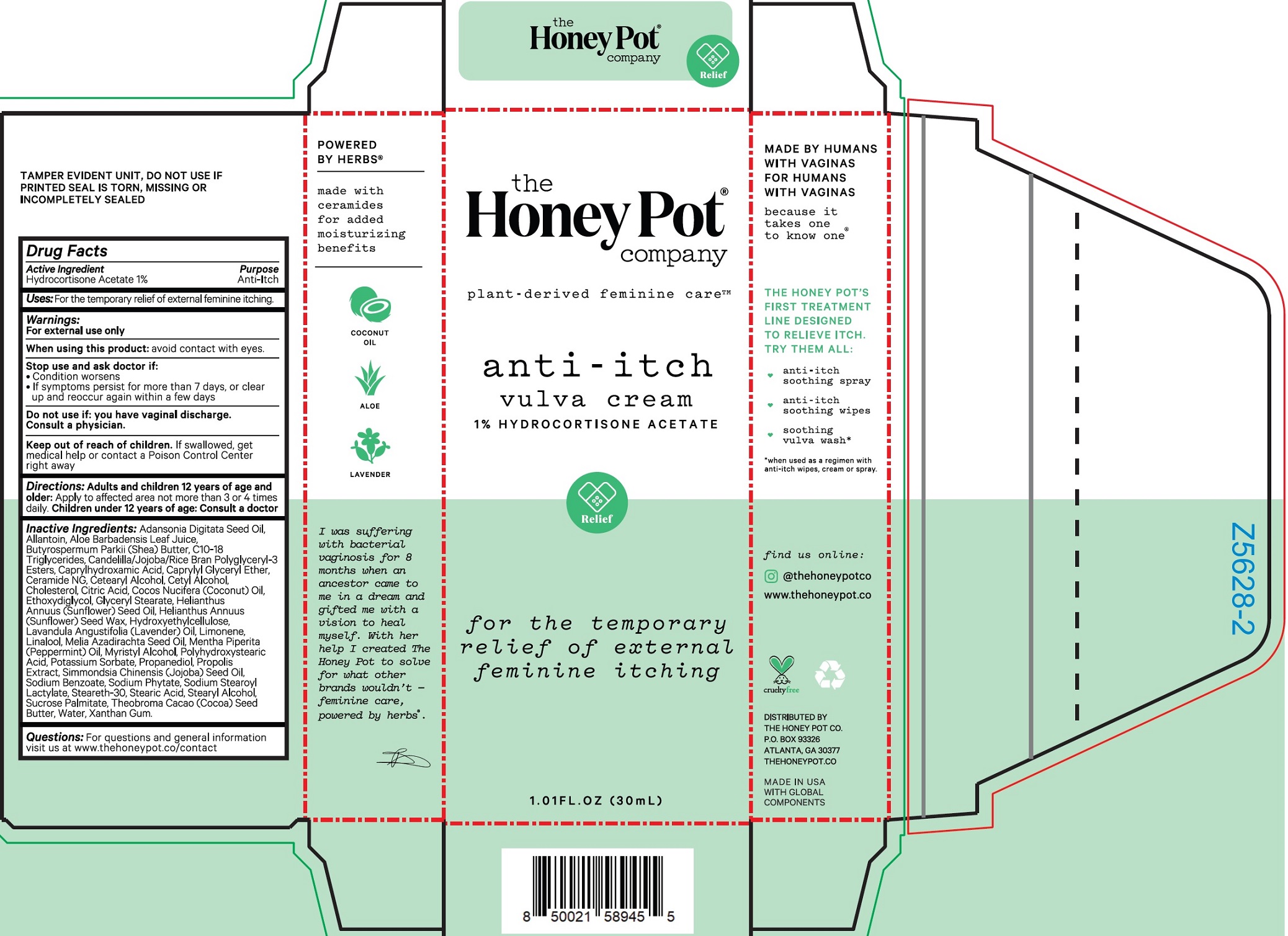
Anti-Itch Vulva Cream 1 Hydrocortisone Acetate 10 mg/mL Cream — NDC 82637-9455-1 (Billing 82637-9455-01)
This is a package of Anti-Itch Vulva Cream 1 Hydrocortisone Acetate 10 mg/mL Cream from The Honey Pot Company LLC, marketed since Mar 2022 and currently FDA-listed. It is this product's only package size.
NDC database record
One package, one record: these facts belong to NDC 82637-9455-1 alone.
- Record
- FDA NDC Directory package listing · Human OTC drug
- Code segments
- 82637 labeler · 9455 product · 1 package
- Package marketed since
- Mar 1, 2022
- Sample package
- No — commercial package
- Listing certified through
- Dec 31, 2026
- Barcode (UPC)
- 0850021589455
- FDA record last changed
- Jul 24, 2026
Identity & classification
Regulatory identifiers FDA, NLM and CMS codes for this package
- RxCUI (RxNorm): 1039349
Where does this data come from?
- FDA openFDA NDC Directory · synced Oct 1, 2026
- FDA label on DailyMed · label index refreshed Oct 5, 2026
- RxNorm (NLM RxNav) · catalog refreshed Oct 1, 2026
- Medi-Span GPI (licensed)
- First Databank (licensed) · refreshed Oct 1, 2026
RxNorm drug class
This medicine belongs to the Corticosteroid class.
Where does this data come from?
- RxClass (NLM) · catalog refreshed Oct 1, 2026
Clinical
- It depends on the product. Tablets and oral granules are used for adrenal insufficiency, among other conditions. Injections are used for severe allergic states and skin diseases. R...
- Don't stop it suddenly if you take it for adrenal insufficiency. Stopping abruptly can cause adrenal crisis, which can be fatal. Talk to your prescriber before making any changes.
- Common ones are fluid retention, higher blood pressure, changes in blood sugar, mood changes, bigger appetite and weight gain. Call your doctor for signs of infection, vision chang...
- Grapefruit juice and some antifungals and antibiotics can raise hydrocortisone levels. Some seizure medicines and rifampicin can lower them. Tell me about any diabetes medicines, w...
Patient education
Supplement & herbal interactions
Hydrocortisone may be associated with lower levels of 8 nutrients — worth a chat with your pharmacist, not a cause for alarm.
Where does this data come from?
- MedlinePlus (NLM) · refreshed Oct 1, 2026
- FDA label on DailyMed · label index refreshed Oct 5, 2026
Ask a licensed pharmacist directly — free, answered by our team.
Pricing
A drug doesn't have one price. Each row is a different public payment system, and none is what you'd pay at the counter — that depends on your insurance. The ⓘ on each row explains what it measures.
| Price system | Per g | Per package |
|---|---|---|
| Retail pharmacies payNADAC · weekly | Not in the retail survey — common for institutional, discontinued, or low-volume packs. | |
| Medicaid paysCMS SDUD · 12 mo | No recent Medicaid claims on file for this NDC — rare and low-volume NDCs are suppressed in the public data. | |
| Medicare drug plans payPart D · quarterly | No Part D plan price is available for this NDC in our data. | |
Where does this data come from?
- CMS NADAC weekly file
- CMS ASP pricing files · refreshed Sep 20, 2026
- CMS Medicaid State Drug Utilization Data · refreshed Oct 5, 2026
- CMS Part D plan pricing files · refreshed Sep 24, 2026
- VA National Acquisition Center price file
Packaging — all sizes for this product
| Package NDC | Description | Marketing start | Marketing end | Status |
|---|---|---|---|---|
| 82637-9455-01 You're viewing this Main listing | 1 TUBE in 1 CARTON / 30 mL in 1 TUBE | 2022-03-01 | — | Active |
Therapeutic equivalents
| Product | Labeler | Pack | NADAC/unit | TE | Status | Price vs. this |
|---|---|---|---|---|---|---|
| Vagisil Anti-Itch Creme Maximum Strength Sensitive Skin Formula 280 mg/28g 11509-5101-01 | Combe | 28 g | — | — | FDA listed | — |
| Anti-Itch Vulva Cream 1 Hydrocortisone Acetate 10 mg/mLthis 82637-9455-01 | The | 1 tube | — | — | FDA listed | — |
Where does this data come from?
- FDA openFDA NDC Directory · synced Oct 1, 2026
- FDA Orange Book · refreshed Oct 3, 2026
- CMS NADAC weekly file
Availability & generic status
We did not find an FDA-approved generic match for this exact strength, form and route.
Where does this data come from?
- FDA Orange Book · refreshed Oct 3, 2026
Inactive Ingredients / Excipients
Inactive ingredients, also called excipients, are components of the drug product other than the active ingredient. They may include fillers, dyes, coatings, preservatives, flavors, or other formulation ingredients.
🧪 Avoiding an ingredient? See Hydrocortisone inactive ingredients by manufacturer: every current product's list side by side, so you can ask your pharmacy for the version that does not list it.
💡 Tap an ingredient (hover on desktop) to see what it is and why it’s used.
-
UNII 77MKL7AR5I
A natural oil extracted from baobab tree seeds. It's used as an emollient and skin-conditioning agent to help soften the product texture and improve how the medicine feels on application.
-
UNII 344S277G0Z
Allantoin is a naturally derived compound that helps soften and soothe skin. In medicines, it works as a skin-conditioning agent and may help support wound healing and reduce irritation in topical formulations.
-
UNII ZY81Z83H0X
Aloe vera leaf is a plant extract derived from the aloe plant. It is used in medicines as a natural moisturizer and skin-soothing agent in topical formulations.
-
UNII 4DKJ9B3K2T
A natural oil derived from neem tree seeds, used in medicines as an emollient and skin-conditioning agent to help soften and protect the product's texture.
-
UNII 43AGM4PHPI
A mixture of plant or animal oils and fats with 10 to 18 carbon chains. Used as a solvent and carrier to dissolve or suspend active ingredients, helping deliver the medicine effectively.
-
UNII WL0328HX19
A natural plant-based wax derived from candelilla shrub leaves. It acts as a coating agent, hardener, and texture modifier to control how quickly the medicine releases and to improve the tablet or capsule's appearance and stability.
-
UNII UPY805K99W
A synthetic compound derived from caprylic acid that works as a preservative and antimicrobial agent to help prevent bacterial and fungal growth in the medicine.
-
UNII MI97BW74XZ
A synthetic compound derived from coconut oil and glycerin. It acts as an emulsifier and solubilizer to help mix oil and water components, and improves how the medicine dissolves and spreads in the body.
-
UNII C04977SRJ5
Ceramide NG is a naturally occurring lipid compound that helps form protective barriers in skin and cosmetic formulations. It functions as an emollient and skin-conditioning agent, helping products retain moisture and maintain smooth texture.
-
UNII 2DMT128M1S
A waxy solid derived from plant or animal sources. It acts as an emulsifier to blend oil and water components, and also thickens the medicine to give it the right texture and consistency.
-
UNII 936JST6JCN
Cetyl alcohol is a waxy, fatty substance derived from plant or animal sources. It acts as an emulsifier and thickener in medicines, helping blend oil and water components and giving products a smooth, creamy texture.
-
UNII 97C5T2UQ7J
Cholesterol is a fatty substance found naturally in animal tissues. In medications, it's used as an ingredient in liposomal formulations and lipid-based drug delivery systems to help encapsulate and stabilize active drugs for better absorption.
-
UNII 2968PHW8QP
A weak organic acid derived from citrus fruits or made through fermentation. It works as a buffer to control pH, a preservative to extend shelf life, and a flavoring agent in medications.
-
UNII 512OYT1CRR
Cocoa butter is a natural fat extracted from cocoa beans. It's used in medicines as a base for suppositories and as a lubricant to help pills dissolve smoothly.
-
UNII Q9L0O73W7L
Coconut oil is a natural fat extracted from coconut fruit. It's used in medicines as a lubricant, emollient, or carrier to help dissolve or deliver active ingredients smoothly through the formulation.
-
UNII A1A1I8X02B
A clear liquid solvent derived from ethylene glycol. It helps dissolve active ingredients and improve how the medicine flows and mixes in liquid formulations.
-
UNII 230OU9XXE4
A waxy substance made from glycerin and stearic acid that acts as an emulsifier to blend oily and watery ingredients together. It also helps thicken and stabilize the medicine's texture.
-
UNII 42DG15CHXV
A natural plant wax derived from sunflower seeds. It serves as a lubricant and glidant to help powders flow smoothly during manufacturing and tablet formation.
-
UNII T4V6TWG28D
A plant-derived thickening agent made from cellulose. It increases viscosity and helps form a gel or paste consistency in medications, and may serve as a binder or coating material in various formulations.
-
UNII 724GKU717M
Jojoba oil is a natural liquid wax extracted from jojoba plant seeds. It's used in medicines as an emollient and lubricant to soften and smooth the product, and sometimes as a carrier or penetration enhancer.
-
UNII ZBP1YXW0H8
A fragrant oil extracted from lavender plants, used as a flavoring and scent agent in medicines to improve taste and aroma.
-
UNII GFD7C86Q1W
A natural oil extracted from citrus peels, (+)-limonene is used as a flavoring agent and solvent in medicines. It helps dissolve active ingredients and provides a lemon or orange taste.
-
UNII D81QY6I88E
Linalool is a natural fragrant oil found in plants like lavender and citrus. It's used in medicines as a flavoring agent and to mask unpleasant tastes or smells.
-
UNII V42034O9PU
A fatty alcohol derived from coconut or palm oil. It serves as an emulsifier and thickener to help blend oil and water in creams or lotions, and improves the product's texture and consistency.
-
UNII AV092KU4JH
A natural oil extracted from peppermint plants. It's used as a flavoring agent to mask bitter tastes and add a refreshing mint flavor to medicines, making them easier to take.
-
UNII 88496G1ERL
Sodium phytate is a plant-derived salt used in medications as a chelating agent and preservative. It helps stabilize formulations and may improve how the body absorbs certain minerals in the medicine.
-
UNII 1VPU26JZZ4
Potassium sorbate is a salt derived from sorbic acid, a naturally occurring preservative. It prevents growth of mold, yeast, and some bacteria, extending the medicine's shelf life.
-
UNII 5965N8W85T
Propanediol is a clear liquid organic compound derived from vegetable sources or synthesized chemically. It acts as a humectant to retain moisture, a solvent to dissolve active ingredients, and a preservative booster in liquid medications and supplements.
-
UNII 6Y8XYV2NOF
A waxy substance made by honeybees from plant resins and pollen. In medicines, it acts as a binder and coating agent to hold ingredients together and protect the product.
-
UNII K49155WL9Y
Shea butter is a fat extracted from shea tree nuts. It's used in medicines as an emollient and lubricant to soften the product, improve texture, and help ingredients blend smoothly together.
-
UNII OJ245FE5EU
Sodium benzoate is a salt derived from benzoic acid, a preservative. It's added to medicines to prevent growth of bacteria, fungi, and other microorganisms that could spoil the product.
-
UNII IN99IT31LN
Sodium stearoyl lactylate is a synthetic compound made from stearic acid and lactic acid. It works as an emulsifier to help keep oils and water mixed together, and as a dough conditioner in solid dosage forms.
-
UNII 5776GCL1DG
A synthetic compound made by combining stearic acid (a fatty substance) with polyethylene glycol. It acts as an emulsifier and solubilizer to help mix oil and water ingredients together in the medicine.
-
UNII 4ELV7Z65AP
Stearic acid is a fatty acid derived from plant or animal sources. It acts as a binder and lubricant in tablets and capsules, helping them hold together and flow smoothly during manufacturing.
-
UNII 2KR89I4H1Y
Stearyl alcohol is a waxy, fatty substance derived from natural oils or made synthetically. It acts as an emulsifier and thickener in medicines, helping mix ingredients together and give the product the right texture.
-
UNII 3OSQ643ZK5
Sucrose palmitate is a manufactured ingredient made by combining sugar with palmitic acid. It acts as an emulsifier and surfactant, helping oils and water mix together smoothly in liquid or semi-solid medicines.
-
UNII 3W1JG795YI
Sunflower oil is a natural vegetable oil derived from sunflower seeds. It serves as a solvent, lubricant, and carrier in medicines, helping dissolve active ingredients and improve how the medication flows and absorbs in the body.
-
UNII 059QF0KO0R
Water is a liquid solvent that dissolves and mixes ingredients together in liquid medicines, syrups, and injections. It helps distribute the active drug evenly throughout the product.
-
UNII TTV12P4NEE
Xanthan gum is a thickening and stabilizing ingredient made from fermented corn or other sugars. It's added to medicines to improve texture, prevent separation of liquids and solids, and help the product stay consistent.
39 inactive ingredients listed in the exact product block matched to this NDC.
Label-section wording can be broader than the structured product block and may mention additional formulation ingredients.
Where does this data come from?
ingredient classCode="IACT" elements from the exact product block matched by this NDC. Label-section narrative from DailyMed / the openFDA label index is shown separately when available.- FDA label on DailyMed · label index refreshed Oct 5, 2026
- FDA openFDA NDC Directory · synced Oct 1, 2026
Inactive ingredient FAQ
Are inactive ingredients the same for every manufacturer?
Why might an inactive ingredient be missing?
Can inactive ingredients matter?
Manufacturer & labeler
More NDCs from The Honey Pot Company LLC labeler code 82637
Where does this data come from?
- FDA openFDA NDC Directory · synced Oct 1, 2026
- Drugs@FDA
FDA label — Drug Facts FDA SPL
🎯 Indications and Usage ▾
Uses: For the temporary relief of external feminine itching.
⏱️ Dosage and Administration ▾
Directions: Apply to affected area not more than 3 to 4 times daily. Adults and children 12 years of age and older: Children under 12 years of age: Consult a doctor
⚠️ Warnings ▾
Warnings: For external use only When using this product: avoid contact with eyes. Stop use and ask doctor if: Condition worsens If symptoms persist for more than 7 days, or clear up and reoccur again within a few days Do not use if: you have vaginal discharge. Consult a physician. Keep out of reach of children. If swallowed, get medical help or contact a Poison Control Center right away
🧪 Active Ingredient ▾
Active Ingredient Hydrocortisone Acetate 1% Purpose Anti-Itch
🧪 Inactive Ingredients ▾
Inactive Ingredients: Adansonia Digitata Seed Oil, Allantoin, Aloe Barbadensis Leaf Juice, Butyrospermum Parkii (Shea) Butter, C10-18 Triglycerides, Candelilla/Jojoba/Rice Bran Polyglyceryl-3 Esters, Caprylhydroxamic Acid, Caprylyl Glyceryl Ether, Ceramide NG, Cetearyl Alcohol, Cetyl Alcohol, Cholesterol, Citric Acid, Cocos Nucifera (Coconut) Oil, Ethoxydiglycol, Glyceryl Stearate, Helianthus Annuus (Sunflower) Seed Oil, Helianthus Annuus (Sunflower) Seed Wax, Hydroxyethylcellulose, Lavandula Angustifolia (Lavender) Oil, Limonene, Linalool, Melia Azadirachta Seed Oil, Mentha Piperita (Peppermint) Oil, Myristyl Alcohol, Polyhydroxystearic Acid, Potassium Sorbate, Propanediol, Propolis Extract, Simmondsia Chinensis (Jojoba) Seed Oil, Sodium Benzoate, Sodium Phytate, Sodium Stearoyl Lactylate, Steareth-30, Stearic Acid, Steary Alcohol, Sucrose Palmitate, Theobroma Cacao (Cocoa) Seed Butter, Water, Xanthan Gum
🎯 Purpose ▾
Purpose Anti-Itch
📄 Do Not Use ▾
Do not use if: you have vaginal discharge. Consult a physician.
📄 When Using This Product ▾
When using this product: avoid contact with eyes.
📄 Stop Use and Ask a Doctor If ▾
Stop use and ask doctor if: Condition worsens If symptoms persist for more than 7 days, or clear up and reoccur again within a few days
📄 Keep Out of Reach of Children ▾
Keep out of reach of children. If swallowed, get medical help or contact a Poison Control Center right away
📄 Questions or Comments ▾
Questions: For questions and general information visit us at www.thehoneypot.co/contact
📄 Package Label / Principal Display Panel ▾
Package Labeling: Label inner_labek
Medicare Part D spend CMS · PART D · 2026 (Q1)
About this NDC listing & data coverage
What data is (and isn’t) available for this NDC — tap to expand
| NDC identity (package / product / labeler codes) | ✓ Available |
| Labeler | ✓ Available |
| Product & package description | ✓ Available |
| Marketing category & status | ✓ Available |
| Active ingredient / dosage form / route | ✓ Available |
| FDA label (SPL via DailyMed) | ✓ Available |
| Package photos | ✓ Available |
| Inactive ingredients (structured) | ✓ Available |
| NADAC pharmacy acquisition price (CMS) | — Not published for this NDC CMS publishes NADAC only for NDCs reported in its retail-pharmacy survey. |
| Orange Book / therapeutic-equivalence data | — Not published for this NDC Applies only to products approved under an NDA/ANDA; many listings are out of scope. |
| HCPCS J-code billing crosswalk | — Not published for this NDC Most self-administered / retail products have no J-code — that is normal. |
| Medicaid utilization (CMS SDUD) | — Not published for this NDC CMS reports utilization only for NDCs with Medicaid claims above its privacy threshold. |