
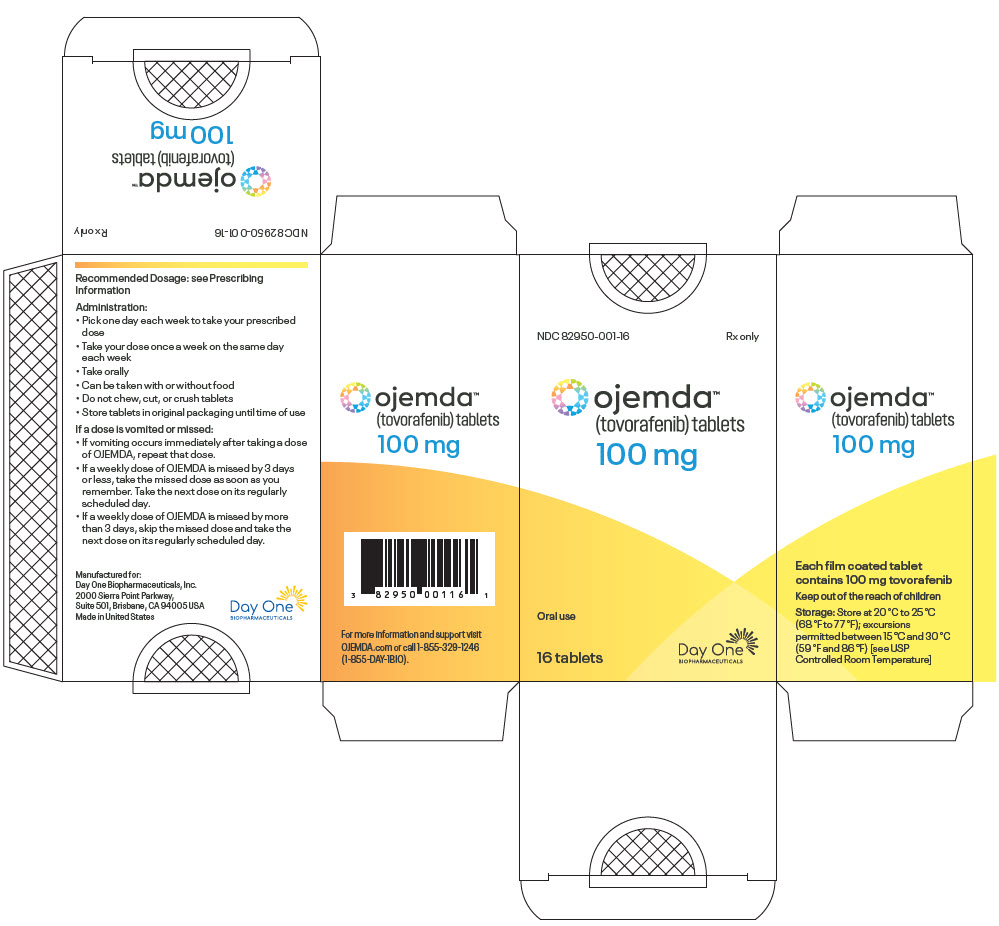
Ojemda Tovorafenib 100 mg Tablet, Film Coated — NDC 82950-001-16 (Billing 82950-0001-16)
This is a package of Ojemda Tovorafenib 100 mg Tablet, Film Coated from Day One Biopharmaceuticals, Inc., marketed since Apr 2024 and currently FDA-listed.
NDC database record
One package, one record: these facts belong to NDC 82950-001-16 alone.
- Record
- FDA NDC Directory package listing · Human prescription drug
- Code segments
- 82950 labeler · 001 product · 16 package
- Package marketed since
- Apr 30, 2024
- Sample package
- No — commercial package
- Listing certified through
- Dec 31, 2026
- Barcode (UPC-A, from the NDC)
- 3 8295000116 1
- Medicaid fills, this package
- 56 prescriptions in the last four reported quarters
- FDA record last changed
- Jul 24, 2026
Identity & classification
Regulatory identifiers FDA, NLM and CMS codes for this package
Drug-database identifiers Medi-Span GPI and First Databank GCN / HICL / AHFS classification
- GSN (GCN sequence number): 085995
- GCN: 55613
- GPI-14 (Medi-Span): 21532075000320
- HICL (First Databank): 049542
- AHFS class code: 10:00.00.00
- RxCUI (RxNorm): 2682439
Where does this data come from?
- FDA openFDA NDC Directory · synced Oct 1, 2026
- FDA label on DailyMed · label index refreshed Oct 6, 2026
- RxNorm (NLM RxNav) · catalog refreshed Oct 1, 2026
- Medi-Span GPI (licensed)
- First Databank (licensed) · refreshed Oct 1, 2026
RxNorm drug class
This medicine belongs to the Kinase Inhibitor class.
Where does this data come from?
- RxClass (NLM) · catalog refreshed Oct 1, 2026
Clinical
Tovorafenib is used to treat certain types of glioma (a cancerous brain tumor). Tovorafenib is in a class of medications called kinase inhibitors. It works by stopping the tumor growth.
Read the full MedlinePlus article ↗Patient education
Supplement & herbal interactions
Where does this data come from?
- MedlinePlus (NLM) · refreshed Oct 1, 2026
- FDA label on DailyMed · label index refreshed Oct 6, 2026
Ask a licensed pharmacist directly — free, answered by our team.
Pricing
A drug doesn't have one price. Each row is a different public payment system, and none is what you'd pay at the counter — that depends on your insurance. The ⓘ on each row explains what it measures.
| Price system | Per each | Per package |
|---|---|---|
| Retail pharmacies payNADAC · weekly | Not in the retail survey — common for institutional, discontinued, or low-volume packs. | |
| Medicaid paysCMS SDUD · 12 mo | $2,352.60 | $37,641.64 / 16 tablets |
| Medicare drug plans payPart D · Q2 2026 | $2,454.30 | $39,268.77 / 16 tablets |
Where does this data come from?
- CMS NADAC weekly file
- CMS ASP pricing files · refreshed Sep 20, 2026
- CMS Medicaid State Drug Utilization Data · through Q1 2026
- CMS Part D plan pricing files · refreshed Sep 24, 2026
- VA National Acquisition Center price file
Packaging — all sizes for this product
| Package NDC | Description | Marketing start | Marketing end | Status |
|---|---|---|---|---|
| 82950-0001-16 You're viewing this | 4 BLISTER PACK in 1 CARTON / 4 TABLET, FILM COATED in 1 BLISTER PACK | 2024-04-30 | — | Active |
| 82950-0001-20 82950-001-20 | 4 BLISTER PACK in 1 CARTON / 5 TABLET, FILM COATED in 1 BLISTER PACK | 2025-04-30 | — | Active |
| 82950-0001-24 82950-001-24 Main listing | 4 BLISTER PACK in 1 CARTON / 6 TABLET, FILM COATED in 1 BLISTER PACK | 2024-04-30 | — | Active |
This pack accounts for about 16% of this product's recent Medicaid fills; most go to a different pack size. See all packs ↓
Pack size FAQ
What quantity is in this package?
What NDC number is used to bill for this package of Ojemda Tovorafenib 100 mg Tablet, Film Coated?
Therapeutic equivalents
| Product | Labeler | Pack | NADAC/unit | TE | Status | Price vs. this |
|---|---|---|---|---|---|---|
| Ojemda 100 mgthis 82950-0001-16 | Day | 4 tablets | — | — | FDA listed | — |
Where does this data come from?
- FDA openFDA NDC Directory · synced Oct 1, 2026
- FDA Orange Book · refreshed Oct 3, 2026
- CMS NADAC weekly file
Availability & generic status
We did not find an FDA-approved generic match for this exact strength, form and route. Patent/protection dates below may affect future generic timing.
Why the date isn’t exact: Generic timing can change because patents may be challenged, settled, licensed, added, removed, or worked around with a narrower label — and FDA approval does not always mean a pharmacy can get the generic today.
🛈 What do these terms mean?
- Patent
- Legal protection listed in the Orange Book that may delay generic approval or launch. Issued by the U.S. Patent & Trademark Office.
- Substance patent
- Covers the active drug molecule itself — the hardest to design around. A generic generally can’t launch until it expires.
- Formulation (product) patent
- Covers a specific formulation or dosage form. A generic can sometimes work around it with a different formulation.
- Method-of-use patent
- A patent covering one specific approved use of the drug — not necessarily the whole molecule. A generic can sometimes launch with a “skinny label” that carves out the protected use and keeps the others.
- Skinny label
- A generic label that omits a still-patented use when the FDA allows it — letting a generic reach the market for the unprotected uses.
- Exclusivity
- FDA-granted marketing protection, separate from patents — e.g. 5-yr new chemical entity, 7-yr orphan drug, or a +6-month pediatric extension.
- Paragraph IV
- A generic applicant’s formal challenge to a listed patent. It can potentially lead to earlier generic entry, but often involves litigation or a settlement.
- RLD / RS
- Reference Listed Drug — the brand product the FDA uses as the reference for generic applications. Reference Standard — the product the FDA expects generics to compare against in bioequivalence testing.
- TE / AB rating
- FDA therapeutic-equivalence rating. An AB rating generally means the FDA considers a generic therapeutically equivalent to — and substitutable for — the brand.
- LOE (loss of exclusivity)
- The latest patent or exclusivity currently listed — the loss-of-exclusivity / latest-listed-protection date shown on this page. Paragraph-IV challenges and settlements can move the real date earlier; FDA approval and a manufacturer’s decision to market can move it later.
Built from the FDA Orange Book. The bars above are scaled to each protection’s expiry; the red LOE marker is the last one to lapse.
| Patent | Type | Use code | Expires |
|---|---|---|---|
| US 10426782 ↗ | Drug product | — | Jun 23, 2035 |
| US 8293752 ↗ | Drug substance | — | Aug 4, 2031 |
| Code | What it grants | Expires |
|---|---|---|
| NCE | New Chemical Entity (5-year) | Apr 23, 2029 |
| ODE-478 | Orphan Drug Exclusivity (7-year) | Apr 23, 2031 |
Is there a generic version of OJEMDA 100 MG TAB (400MG DOSE)?
The FDA approved a generic — why can’t I get it at my pharmacy yet?
Why do different websites show different generic release dates?
What does “FDA listed” mean?
What does a patent or protection date mean here?
What does “current Orange Book estimate” mean?
Can a generic come out before the last patent expires?
Can a generic come out after the listed dates?
What is the difference between patents and exclusivity?
Why are there multiple patent dates?
Where does this data come from?
- FDA Orange Book · refreshed Oct 3, 2026
What it looks like
Where does this data come from?
- FDA label on DailyMed · label index refreshed Oct 6, 2026
Inactive Ingredients / Excipients
Inactive ingredients, also called excipients, are components of the drug product other than the active ingredient. They may include fillers, dyes, coatings, preservatives, flavors, or other formulation ingredients.
💡 Tap an ingredient (hover on desktop) to see what it is and why it’s used.
-
UNII D9C330MD8B
Copovidone is a synthetic polymer made by combining two types of plastic-like molecules. It acts as a binder and film-former to help hold tablet ingredients together and improve how the medicine dissolves in your body.
-
UNII M28OL1HH48
Croscarmellose sodium is a plant-based substance derived from cellulose. It acts as a disintegrant, helping tablets and capsules break down quickly in the digestive system so the medicine can be absorbed.
-
UNII 70097M6I30
Magnesium stearate is a salt made from magnesium and stearic acid, a fatty substance. It's used in tablets and capsules as a lubricant and glidant to help ingredients flow smoothly during manufacturing and prevent sticking.
-
UNII OP1R32D61U
Microcrystalline cellulose is a purified form of cellulose, a natural fiber from plant sources. It acts as a binder and filler in tablets and capsules, helping hold ingredients together and give the medicine its shape and size.
-
UNII ETJ7Z6XBU4
Silicon dioxide is a naturally occurring mineral used as a glidant and anti-caking agent. It helps powder ingredients flow smoothly and prevents clumping during manufacturing and storage.
5 inactive ingredients listed in the exact product block matched to this NDC.
Where does this data come from?
ingredient classCode="IACT" elements from the exact product block matched by this NDC. Label-section narrative from DailyMed / the openFDA label index is shown separately when available.- FDA label on DailyMed · label index refreshed Oct 6, 2026
- FDA openFDA NDC Directory · synced Oct 1, 2026
Inactive ingredient FAQ
Are inactive ingredients the same for every manufacturer?
Why might an inactive ingredient be missing?
Can inactive ingredients matter?
Manufacturer & labeler
More NDCs from Day One Biopharmaceuticals, Inc. labeler code 82950
Where does this data come from?
- FDA openFDA NDC Directory · synced Oct 1, 2026
- Drugs@FDA
Full prescribing information FDA SPL
🎯 Indications and Usage ▾
1 INDICATIONS AND USAGE OJEMDA is indicated for the treatment of patients 6 months of age and older with relapsed or refractory pediatric low-grade glioma (LGG) harboring a BRAF fusion or rearrangement, or BRAF V600 mutation. This indication is approved under accelerated approval based on response rate and duration of response [see Clinical Studies (14) ]. Continued approval for this indication may be contingent upon verification and description of clinical benefit in a confirmatory trial(s).
OJEMDA is a kinase inhibitor indicated for the treatment of patients 6 months of age and older with relapsed or refractory pediatric low-grade glioma (LGG) harboring a BRAF fusion or rearrangement, or BRAF V600 mutation. ( 1 ) This indication is approved under accelerated approval based on response rate and duration of response [see Clinical Studies (14) ]. Continued approval for this indication may be contingent upon verification and description of clinical benefit in a confirmatory trial(s).
⏱️ Dosage and Administration ▾
2 DOSAGE AND ADMINISTRATION Confirm the presence of BRAF fusion or rearrangement, or BRAF V600 mutation prior to initiation of treatment with OJEMDA. ( 2.1 ) Recommended dosage of OJEMDA is based on body surface area ( see Tables 1 and 2 ). ( 2.3 ) Administer OJEMDA orally, once weekly, with or without food.
( 2.3 , 2.4 ). Tablets : Swallow tablets whole with water. Do not chew, cut, or crush.
( 2.4 ) For Oral Suspension : See full prescribing information for preparation and administration instructions. ( 2.4 )
2.1Patient Selection Select patients for treatment with OJEMDA based on the presence of BRAF fusion or rearrangement, or BRAF V600 mutation in tumor specimens [see Clinical Studies (14) ]. Information on FDA-approved tests for the detection of BRAF fusions, BRAF rearrangements, and BRAF V600 mutations is available at http://www.fda.gov/companiondiagnostics .
2.2Recommended Testing Before Initiating OJEMDA Before initiating OJEMDA, evaluate liver function tests, including ALT, AST and bilirubin [see Warnings and Precautions (5.3) ].
2.3Recommended Dosage The recommended dosage of OJEMDA based on body surface area (BSA) is 380 mg/m 2 orally once weekly (the maximum recommended dosage is 600 mg orally once weekly) with or without food [see Administration (2.4) and Clinical Pharmacology (12.3) ] until disease progression or intolerable toxicity. OJEMDA may be administered as an immediate release tablet (see Table 1 ) or as an oral suspension (see Table 2 ). A recommended dosage for patients with BSA less than 0.3 m 2 has not been established.
Table 1 Recommended OJEMDA Tablets Dosage Based on Body Surface Area Body Surface Area (m 2 ) Recommended Dosage 0.30-0.89 Administer OJEMDA oral suspension once weekly (see Table 2 ) 0.90-1.12 400 mg once weekly 1.13-1.39 500 mg once weekly ≥ 1.40 600 mg once weekly Table 2 Recommended Dosage for OJEMDA for Oral Suspension Based on Body Surface Area Body Surface Area (m 2 ) Dose Volume (mL) OJEMDA for oral suspension has a concentration of 25 mg/mL. Each bottle of OJEMDA for oral suspension delivers 300 mg/12 mL. Dosage 0.30-0.35 5 125 mg once weekly 0.36-0.42 6 150 mg once weekly 0.43-0.48 7 175 mg once weekly 0.49-0.54 8 200 mg once weekly 0.55-0.63 9 225 mg once weekly 0.64-0.77 11 275 mg once weekly 0.78-0.83 12 300 mg once weekly 0.84-0.89 14 350 mg once weekly 0.90-1.05 15 375 mg once weekly 1.06-1.25 18 450 mg once weekly 1.26-1.39 21 525 mg once weekly ≥1.40 24 600 mg once weekly Continue once weekly dosing until disease progression or intolerable toxicity.
2.4Administration Take OJEMDA at a regularly scheduled time once weekly. OJEMDA may be taken with or without food [see Clinical Pharmacology (12.3) ]. If a dose is missed by: 3 days or less, take the missed dose as soon as possible, and take the next dose on its regularly scheduled day. more than 3 days, skip the missed dose and take the next dose on its regularly scheduled day.
If vomiting occurs immediately after taking a dose, repeat that dose. OJEMDA tablets Swallow tablets whole with water. Do not chew, cut, or crush.
OJEMDA for oral suspension Prior to first time use of OJEMDA for oral suspension, ensure that caregivers (and if appropriate, patients) read and understand the "Instructions for Use" before preparing, measuring, and administering OJEMDA. Preparation and Administration Reconstitute the powder in each supplied bottle with exactly 14 mL of room temperature water to form the OJEMDA for oral suspension. After reconstitution each mL contains 25 mg of tovorafenib.
Product foaming after reconstitution reduces the deliverable volume. Each bottle delivers 300 mg of tovorafenib in 12 mL. For doses greater than 300 mg, reconstitute two bottles to achieve the dose.
Split the dose as equally as possible between the two bottles (e.g., 6 mL and 7 mL for a 325 mg dose). Prepare the first bottle and administer dose prior to preparing the second bottle. Administer OJEMDA for oral suspension using the supplied oral dosin… [Excerpted — this section continues on DailyMed.]
💊 Dosage Forms and Strengths ▾
3 DOSAGE FORMS AND STRENGTHS Tablets: 100 mg: orange, film-coated, oval tablets debossed with "100"; on one side and "D101" on the opposite side. Each tablet contains 100 mg of tovorafenib. For Oral Suspension: 25 mg/mL: white to off white powder.
After reconstitution, each mL of strawberry flavored tovorafenib suspension contains 25 mg of tovorafenib. Each bottle delivers 300 mg of tovorafenib in 12 mL. Tablets: 100 mg ( 3 ) For Oral Suspension: 25 mg/mL ( 3 )
⛔ Contraindications ▾
4 CONTRAINDICATIONS None . None. ( 4 )
⚠️ Warnings and Cautions ▾
5 WARNINGS AND PRECAUTIONS Hemorrhage: Major hemorrhagic events can occur during treatment with OJEMDA. Withhold, resume at reduced dose, or permanently discontinue based on severity. ( 5.1 ) Skin Toxicity Including Photosensitivity : Advise patients to monitor for new or worsening skin reactions.
Advise patients to limit direct ultraviolet exposure and use precautionary measures such as sunscreen, sunglasses and/or protective clothing during treatment with OJEMDA. Withhold, reduce the dose or permanently discontinue based on severity. ( 5.2 ) Hepatotoxicity: OJEMDA can cause hepatotoxicity.
Monitor liver function tests prior to administration and during treatment. Withhold, reduce the dose or permanently discontinue based on severity. ( 5.3 ) Effect on Growth : Reductions in growth velocity have been reported.
Routinely monitor growth in pediatric patients. ( 5.4 ) Embryo-Fetal Toxicity : Can cause fetal harm. Advise of the potential risk to a fetus and to use effective nonhormonal contraception.
( 5.5 , 8.1 , 8.3 ) NF1 Associated Tumors : Increased tumor growth may occur with OJEMDA. (5.6, 13.2)
5.1Hemorrhage Hemorrhage, including major hemorrhage defined as symptomatic bleeding in a critical area or organ, can occur with OJEMDA. In the pooled safety population [see Adverse Reactions (6.1) ], hemorrhagic events occurred in 37% of patients, including epistaxis in 26% and intratumoral hemorrhage in 9%. Serious events of bleeding occurred in 5% of patients including Grade 5 tumor hemorrhage in 1 patient (0.6%).
OJEMDA was permanently discontinued for hemorrhage in 2% of patients. Advise patients and caregivers of the risk of hemorrhage during treatment with OJEMDA. Monitor for signs and symptoms of hemorrhage and evaluate as clinically indicated .
Withhold and resume at reduced dose upon improvement, or permanently discontinue based on severity [see Dosage and Administration (2.5) ].
5.2Skin Toxicity Including Photosensitivity OJEMDA can cause rash, including maculopapular rash and photosensitivity. In the pooled safety population [see Adverse Reactions (6.1) ], rash occurred in 67% of patients treated with OJEMDA, including Grade 3 rash in 12%. Rash resulted in dose interruption in 15% of patients and dose reduction in 7% of patients.
OJEMDA was permanently discontinued due to rash in 1% of patients (n=2). In the pooled safety population, dermatitis acneiform occurred in 26% of patients treated with OJEMDA, including Grade 3 dermatitis acneiform in 0.6% of patients (n=1). Dose reduction was required in 2% of patients (n=3) due to dermatitis acneiform.
Monitor for new or worsening skin reactions. Consider dermatologic consultation and initiate supportive care as clinically indicated. Withhold, reduce the dose, or permanently discontinue OJEMDA based on severity of adverse reaction [see Dosage and Administration (2.5) ].
Photosensitivity In the pooled safety population [see Adverse Reactions (6.1) ], photosensitivity occurred in 12% of patients treated with OJEMDA, including Grade 3 events in 0.6% of patients (n=1). Advise patients to use precautionary measures against ultraviolet exposure such as use of sunscreen, sunglasses, and/or protective clothing during treatment with OJEMDA. Withhold, reduce the dose, or permanently discontinue OJEMDA based on severity of adverse reaction [see Dosage and Administration (2.5) ].
5.3Hepatotoxicity OJEMDA can cause hepatotoxicity. In the pooled safety population [see Adverse Reactions (6.1) ] , increased alanine aminotransferase (ALT) occurred in 42% and increased aspartate aminotransferase (AST) occurred in 74%, including Grade 3 ALT in 4% and increased AST in 2% of patients treated with OJEMDA. The median time to onset of increased ALT or AST was 14 days (range: 3 to 280 days).
Increased ALT or AST leading to dose interruption occurred in 5% of patients and dose reductions were required in 1.2% of patients. Increased bilirubin occurred in 23% of patients, including Grade 3 increased bi… [Excerpted — this section continues on DailyMed.]
🤒 Adverse Reactions ▾
6 ADVERSE REACTIONS The following clinically significant adverse reactions are described elsewhere in the labeling: Hemorrhage [see Warnings and Precautions (5.1) ] Skin Toxicity Including Photosensitivity [see Warnings and Precautions (5.2) ] Hepatotoxicity [see Warnings and Precautions (5.3) ] Effect on Growth [see Warnings and Precautions (5.4) ] The most common adverse reactions (≥30%) were rash, hair color changes, fatigue, viral infection, vomiting, headache, hemorrhage, pyrexia, dry skin, constipation, nausea, dermatitis acneiform, and upper respiratory tract infection.
( 6.1 ) The most common Grade 3 or 4 laboratory abnormalities (≥2%) were decreased phosphate, decreased hemoglobin, increased creatine phosphokinase, increased alanine aminotransferase, decreased albumin, decreased lymphocytes, decreased leukocytes, increased aspartate aminotransferase, decreased potassium, and decreased sodium. To report SUSPECTED ADVERSE REACTIONS, contact Day One Biopharmaceuticals at toll-free phone # 1-877-204-2820 or FDA at 1-800-FDA-1088 or www.fda.gov/medwatch.
6.1Clinical Trials Experience Because clinical trials are conducted under widely varying conditions, adverse reaction rates observed in the clinical trials of a drug cannot be directly compared to rates in the clinical trials of another drug and may not reflect the rates observed in practice. The safety population described in WARNINGS AND PRECAUTIONS reflects exposure to OJEMDA taken orally once weekly at a dose based on body surface area [see Clinical Studies (14) ] in 140 patients with relapsed or refractory pediatric LGG or advanced solid tumors harboring a RAF alteration and a flat dose of 600 mg in 32 adult patients with advanced solid tumors until disease progression or intolerable toxicity.
Among 172 patients treated with OJEMDA, 86% were exposed for 6 months or longer and 49% were exposed for 1 year or longer. Pediatric Low-grade Glioma The safety of OJEMDA was evaluated in 137 patients with relapsed or refractory pediatric LGG harboring a BRAF alteration in FIREFLY-1 (Arms 1 and 2) [see Clinical Studies (14) ]. Patients received OJEMDA at a dose based on body surface area [see Dosage and Administration (2.3 ] orally once weekly until disease progression or intolerable toxicity.
The median age of patients was 9 years (range 1 to 24 years); 53% male; 58% White, 7% Asian, 2% Black or African American, 6% other races, 25% race was not reported; 2.9% were Hispanic or Latino; and 90% Karnofsky/Lansky performance status of 80 to 100. Serious adverse reactions occurred in 45% of patients who received OJEMDA. Serious adverse reactions in >2% of patients included viral infection (9%), pneumonia (4%), and sepsis (4%).
A fatal adverse reaction of tumor hemorrhage occurred in 1 patient (1%). Permanent discontinuation of OJEMDA due to an adverse reaction occurred in 7% of patients. Adverse reactions which resulted in permanent discontinuation of OJEMDA in more than one patient were tumor hemorrhage and reduction in growth velocity.
Dosage interruptions of OJEMDA due to an adverse reaction occurred in 57% of patients. Adverse reactions which required dose interruption in ≥5% of patients included rash, pyrexia, vomiting, and hemorrhage. Dosage reductions of OJEMDA due to an adverse reaction occurred in 24% of patients.
Adverse reactions which required dose reduction in ≥2% of patients included rash, and fatigue. The most common adverse reactions (≥30%) were rash, hair color changes, fatigue, viral infection, vomiting, headache, hemorrhage, pyrexia, dry skin, constipation, nausea, dermatitis acneiform, and upper respiratory tract infection. The most common Grade 3 or 4 laboratory abnormalities (≥2%) were decreased phosphate, decreased hemoglobin, increased creatine phosphokinase, increased alanine aminotransferase, decreased albumin, decreased lymphocytes, decreased leukocytes, increased aspartate transferase, decreased potassium, and decreased sodium.
Table 6 and Table 7 presen… [Excerpted — this section continues on DailyMed.]
🔄 Drug Interactions ▾
7 DRUG INTERACTIONS Moderate and Strong CYP2C8 Inhibitors : Avoid coadministration with OJEMDA. ( 7.1 ). Moderate and Strong CYP2C8 Inducers : Avoid coadministration with OJEMDA. ( 7.1 ). Certain CYP3A Substrates : Avoid coadministration of OJEMDA with CYP3A substrates where minimal concentration changes can cause reduced efficacy. ( 7.2 ). Hormonal contraceptives : Avoid coadministration with OJEMDA. ( 7.2 ).
7.1Effects of Other Drugs on OJEMDA Table 8 describes drug interactions where coadministration with another drug affects OJEMDA. Table 8 Coadministration with Other Drugs that Affect the Use of OJEMDA Strong or Moderate CYP2C8 Inhibitors Prevention or Management Avoid coadministration of OJEMDA with a strong or moderate CYP2C8 inhibitor. Mechanism and Clinical Effect(s) Tovorafenib is a CYP2C8 substrate.
Strong or moderate CYP2C8 inhibitors are predicted to increase tovorafenib exposure based on a mechanistic understanding of its elimination [see Clinical Pharmacology (12.3) ], which may increase the risk of adverse reactions with OJEMDA. Strong or Moderate CYP2C8 Inducers Prevention or Management Avoid coadministration of OJEMDA with a strong or moderate CYP2C8 inducer. Mechanism and Clinical Effect(s) Tovorafenib is a CYP2C8 substrate.
Strong or moderate CYP2C8 inducers are predicted to decrease tovorafenib exposure based on a mechanistic understanding of its elimination [see Clinical Pharmacology (12.3) ], which may reduce the effectiveness of OJEMDA.
7.2Effects of OJEMDA on Other Drugs Table 9 describes drug interactions where coadministration with OJEMDA affects another drug. Table 9 Coadministration with OJEMDA that Affects the Use of Other Drugs CYP3A Substrates Prevention or Management Hormonal Contraceptives : Avoid coadministration of hormonal contraceptives with OJEMDA. If coadministration is unavoidable, use an additional effective nonhormonal contraceptive method during coadministration and for 28 days after discontinuation of OJEMDA.
Other CYP3A Substrates: Avoid coadministration of OJEMDA with certain CYP3A substrates where minimal concentration changes may lead to serious therapeutic failures. If coadministration is unavoidable, monitor patients for loss of efficacy unless otherwise recommended in the Prescribing Information for CYP3A substrates. Mechanism and Clinical Effect(s) Tovorafenib is a CYP3A inducer.
Tovorafenib is predicted to decrease exposure of certain CYP3A substrates where minimal concentration changes may lead to serious therapeutic failures [see Clinical Pharmacology (12.3) ], which may reduce the effectiveness of these substrates. Coadministration with hormonal contraceptives (CYP3A substrate) may decrease progestin-x and ethinyl estradiol exposure, which may lead to contraceptive failure and/or an increase in breakthrough bleeding [see Warnings and Precautions (5.5) , Use in Specific Populations (8.3) ].
👥 Use in Specific Populations ▾
8 USE IN SPECIFIC POPULATIONS Lactation : Advise not to breastfeed. ( 8.2 ) Infertility : May impair fertility in males and females. ( 8.3 )
8.1Pregnancy Risk Summary Based on findings from animal studies and its mechanism of action [see Clinical Pharmacology (12.1) ], OJEMDA can cause fetal harm when administered to a pregnant woman. There are no available data on the use of OJEMDA in pregnant women. Oral administration of tovorafenib to pregnant rats during the period of organogenesis resulted in embryo lethality at exposures 0.8 times the human exposure at the recommended dose based on AUC ( see Data ).
Advise pregnant women of the potential risk to a fetus. In the U.S. general population, the estimated background risk of major birth defects and miscarriage in clinically recognized pregnancies is 2% to 4% and 15% to 20%, respectively. Data Animal Data In an embryo-fetal development study, once daily oral administration of tovorafenib to pregnant rats during the period of organogenesis from gestation days 7 through 17 at doses of 37.5, 75, and 150 mg/kg resulted in early resorptions and total litter loss at all doses.
The dose of 37.5 mg/kg/day is approximately 0.8-fold the human exposure at the recommended dose based on AUC.
8.2Lactation Risk Summary There are no data on the presence of tovorafenib or its metabolites in human milk, their effects on the breastfed child, or on milk production. Due to the potential for serious adverse reactions in breastfed children from OJEMDA, advise lactating women not to breastfeed during treatment with OJEMDA and for 2 weeks following the last dose.
8.3Females and Males of Reproductive Potential OJEMDA can cause fetal harm when administered to pregnant women [see Use in Specific Populations (8.1) ]. Pregnancy Testing Verify pregnancy status in females of reproductive potential prior to initiating OJEMDA [see Use in Specific Populations (8.1) ] . Contraception Females Advise females of reproductive potential to use effective nonhormonal contraception during treatment with OJEMDA and for 28 days after the last dose.
OJEMDA can render hormonal contraceptives ineffective [see Drug Interactions (7.2) ]. Males Advise male patients with female partners of reproductive potential to use effective contraception during treatment with OJEMDA and for 2 weeks after the last dose. Infertility Based on findings in animals, OJEMDA may impact fertility in males and females of reproductive potential.
The effects on male animal fertility were reversible. The effects on female animal fertility were not reversible [see Nonclinical Toxicology (13.1) ] .
8.4Pediatric Use The safety and effectiveness of OJEMDA in pediatric patients 6 months of age and older with relapsed or refractory pediatric LGG harboring a BRAF fusion or rearrangement, or BRAF V600 mutation have been established based on data from a multicenter, open-label, single-arm clinical trial [see Clinical Studies (14) ] . The efficacy of OJEMDA was evaluated in 76 patients with relapsed or refractory pediatric LGG . The safety of OJEMDA was evaluated in 137 patients with relapsed or refractory pediatric LGG in FIREFLY-1 (Arms 1 and 2).
Of these 137 patients, 2% (n=3) were 6 month to < 2 years of age, 67% (n=92) were 2 years to < 12 years of age, and 31% (n=42) were >12 years of age [see Adverse Reactions (6.1) ]. C max and AUC in pediatric patients aged 11 months to 17 years were within the range of values observed in adults given the same dose per body surface area. The safety and effectiveness of OJEMDA in patients younger than 6 months of age have not been established.
Effect on Growth Patients with pediatric LGG treated with OJEMDA for up to 24 months showed reductions from baseline in Z-scores for height compared to age and sex-matched normative data. Among 35 patients who experienced reductions in growth velocity who had hand radiographs taken to assess bone age, there was no evidence of premature closure of the epiphyseal growth plates or a… [Excerpted — this section continues on DailyMed.]
🤰 Pregnancy ▾
8.1Pregnancy Risk Summary Based on findings from animal studies and its mechanism of action [see Clinical Pharmacology (12.1) ], OJEMDA can cause fetal harm when administered to a pregnant woman. There are no available data on the use of OJEMDA in pregnant women. Oral administration of tovorafenib to pregnant rats during the period of organogenesis resulted in embryo lethality at exposures 0.8 times the human exposure at the recommended dose based on AUC ( see Data ).
Advise pregnant women of the potential risk to a fetus. In the U.S. general population, the estimated background risk of major birth defects and miscarriage in clinically recognized pregnancies is 2% to 4% and 15% to 20%, respectively. Data Animal Data In an embryo-fetal development study, once daily oral administration of tovorafenib to pregnant rats during the period of organogenesis from gestation days 7 through 17 at doses of 37.5, 75, and 150 mg/kg resulted in early resorptions and total litter loss at all doses.
The dose of 37.5 mg/kg/day is approximately 0.8-fold the human exposure at the recommended dose based on AUC.
🧒 Pediatric Use ▾
8.4Pediatric Use The safety and effectiveness of OJEMDA in pediatric patients 6 months of age and older with relapsed or refractory pediatric LGG harboring a BRAF fusion or rearrangement, or BRAF V600 mutation have been established based on data from a multicenter, open-label, single-arm clinical trial [see Clinical Studies (14) ] . The efficacy of OJEMDA was evaluated in 76 patients with relapsed or refractory pediatric LGG . The safety of OJEMDA was evaluated in 137 patients with relapsed or refractory pediatric LGG in FIREFLY-1 (Arms 1 and 2).
Of these 137 patients, 2% (n=3) were 6 month to < 2 years of age, 67% (n=92) were 2 years to < 12 years of age, and 31% (n=42) were >12 years of age [see Adverse Reactions (6.1) ]. C max and AUC in pediatric patients aged 11 months to 17 years were within the range of values observed in adults given the same dose per body surface area. The safety and effectiveness of OJEMDA in patients younger than 6 months of age have not been established.
Effect on Growth Patients with pediatric LGG treated with OJEMDA for up to 24 months showed reductions from baseline in Z-scores for height compared to age and sex-matched normative data. Among 35 patients who experienced reductions in growth velocity who had hand radiographs taken to assess bone age, there was no evidence of premature closure of the epiphyseal growth plates or advancement of bone age. Patients followed after interruption of treatment with OJEMDA showed recovery of growth and increase in Z-scores.
Monitor growth routinely during treatment [see Warnings and Precautions (5.4) ].
🧬 Clinical Pharmacology ▾
12 CLINICAL PHARMACOLOGY
12.1Mechanism of Action Tovorafenib is a Type II RAF kinase inhibitor of mutant BRAF V600E , wild-type BRAF , and wild-type CRAF kinases. Tovorafenib exhibited antitumor activity in cultured cells and xenograft tumor models harboring BRAF V600E and V600D mutations, and in a xenograft model harboring a BRAF fusion.
12.2Pharmacodynamics Exposure Response Relationships Tovorafenib exposure is associated with reduction in height-for-age z-scores in pediatric patients. Reduced height-for-age risk persists during treatment with tovorafenib. Higher tovorafenib exposure is associated with increased risk of skin rash, elevated liver enzymes (AST and ALT), and elevated creatine phosphokinase.
The exposure-response relationship for overall response rate based on RAPNO-LGG (Response Assessment in Pediatric Neuro-Oncology), and RANO-LGG (Response Assessment in Neuro-Oncology) were not clinically significant over the dosage range of 290 to 476 mg/m 2 (0.76-1.25 times the approved recommended dosage) [see Dosage and Administration (2.3) and Clinical Studies (14) ] . Cardiac Electrophysiology At the recommended OJEMDA dosage of 380 mg/m 2 orally once weekly (not to exceed 600 mg), a mean increase in the QT interval >20 milliseconds was not observed.
12.3Pharmacokinetics Tovorafenib pharmacokinetic parameters are presented as mean (CV%) unless otherwise indicated. Tovorafenib steady state maximum concentration (C max ) is 6.9 µg/mL (23%) and the area under the concentration-time curve (AUC) is 508 µg*h/mL (31%). Time to reach steady state of tovorafenib is 12 days (33%).
Tovorafenib exposure increases in a dose-proportional manner. No clinically significant tovorafenib accumulation occurs. Absorption Tovorafenib median (minimum, maximum) time to achieve peak plasma concentration (T max ) is 3 hours (1.5, 4 hours), following a single dose with tablets or oral suspension.
Effect of Food No clinically significant differences in tovorafenib C max and AUC were observed following administration of tablets with a high-fat meal (approximately 859 total calories, 54% fat) compared to fasted conditions, but the T max was delayed to 6.5 hours. Distribution Tovorafenib apparent volume of distribution is 60 L/m 2 (23%). Tovorafenib is 97.5% bound to human plasma proteins in vitro.
Elimination Tovorafenib terminal half-life is approximately 56 hours (33%) and the apparent clearance is
0.7L/h/m 2 (31%). Metabolism Tovorafenib is primarily metabolized by aldehyde oxidase and CYP2C8 in vitro. CYP3A, CYP2C9, and CYP2C19 metabolize tovorafenib to a minor extent.
Excretion Following a single oral dose of radiolabeled tovorafenib, 65% of the total radiolabeled dose was recovered in the feces (8.6% unchanged) and 27% of the dose was recovered in the urine (0.2% unchanged). Specific Populations No clinically significant differences of tovorafenib were observed based on age (range: 1 to 94 years), sex, race (White, Black, Asian), mild hepatic impairment [bilirubin ≤ upper limit of normal (ULN) and AST > ULN or bilirubin > 1 to 1.5× ULN and any AST], and mild-to-moderate renal impairment (eGFR) ≥ 30 mL/min/1.73 m 2 calculated by Schwartz equation or MDRD equation.
Drug Interaction Studies Clinical Studies and Model-Informed Approaches CYP3A Substrates: Midazolam (CYP3A4 substrate) steady-state C max and AUC are predicted to decrease by at least 20% following coadministration with tovorafenib. In Vitro Studies CYP450 Enzymes : Tovorafenib inhibits CYP2C8, CYP2C9, CYP2C19 and CYP3A, but does not inhibit CYP1A2, CYP2B6, and CYP2D6 at clinically relevant concentrations. Tovorafenib induces CYP3A, CYP2C8, CYP1A2, CYP2B6, CYP2C9 and CYP2C19 at clinically relevant concentrations.
Transporter Systems: Tovorafenib is not a substrate of BCRP, P-glycoprotein (P-gp), OATP1B1 and OATP1B3. Tovorafenib has not been evaluated as a substrate of OAT1, OAT3, MATE1, MATE2-K and OCT2. Tovorafenib inhibits BCRP at clinically relevant concentrations.
🧬 Mechanism of Action ▾
12.1Mechanism of Action Tovorafenib is a Type II RAF kinase inhibitor of mutant BRAF V600E , wild-type BRAF , and wild-type CRAF kinases. Tovorafenib exhibited antitumor activity in cultured cells and xenograft tumor models harboring BRAF V600E and V600D mutations, and in a xenograft model harboring a BRAF fusion.
📦 How Supplied / Storage and Handling ▾
16 HOW SUPPLIED/STORAGE AND HANDLING OJEMDA tablets: 100 mg: orange, film-coated, oval tablets debossed with "100" on one side and "D101" on the opposite side and supplied as follows: Weekly dose Each carton contains Each blister card contains NDC 400 mg 4 blister cards four 100 mg tablets NDC 82950-001-16 500 mg 4 blister cards five 100 mg tablets NDC 82950-001-20 600 mg 4 blister cards six 100 mg tablets NDC 82950-001-24 Store at 20°C to 25°C (68°F to 77°F); excursions permitted between 15°C to 30°C (59°F to 86°F) [see USP Controlled Room Temperature].
Dispense product in the original package. Tablets should not be removed from blister cards until immediately before use. OJEMDA for oral suspension: 25 mg/mL: white to off white powder in a clear glass bottle, co-packaged with a press-in bottle adaptor and a 20 mL oral dosing syringe (NDC# 82950-012-01).
Each mL of reconstituted, strawberry flavored tovorafenib suspension contains 25 mg of tovorafenib. Each bottle delivers 300 mg of tovorafenib in 12 mL. Store at 20°C to 25°C (68°F to 77°F); excursions permitted between 15°C to 30°C (59°F to 86°F) [see USP Controlled Room Temperature].
Do not use if safety seal under cap is broken or missing. Suspension must be used immediately after reconstitution. Discard the bottle (including any unused portion) and syringe after dosing.
📦 Storage and Handling ▾
OJEMDA for oral suspension: 25 mg/mL: white to off white powder in a clear glass bottle, co-packaged with a press-in bottle adaptor and a 20 mL oral dosing syringe (NDC# 82950-012-01). Each mL of reconstituted, strawberry flavored tovorafenib suspension contains 25 mg of tovorafenib. Each bottle delivers 300 mg of tovorafenib in 12 mL.
Store at 20°C to 25°C (68°F to 77°F); excursions permitted between 15°C to 30°C (59°F to 86°F) [see USP Controlled Room Temperature]. Do not use if safety seal under cap is broken or missing. Suspension must be used immediately after reconstitution.
Discard the bottle (including any unused portion) and syringe after dosing.
📋 Description ▾
11 DESCRIPTION OJEMDA contains tovorafenib, a kinase inhibitor. Tovorafenib has the molecular formula C 17 H 12 Cl 2 F 3 N 7 O 2 S and a molecular weight of 506.29. The chemical name for tovorafenib is 6-amino-5-chloro-N-[(1R)-1-[5-[[[5-chloro-4-(trifluoromethyl)-2-pyridinyl]amino]carbonyl]-2-thiazolyl]ethyl]-4-pyrimidinecarboxamide.
Tovorafenib has the following chemical structure: It is a white to off-white powder. The solubility of tovorafenib at 37ºC is ≤ 3 micrograms/mL from pH 1.2 to 8 in aqueous media. OJEMDA (tovorafenib) tablets are supplied as 100 mg strength tablets for oral administration.
Each tablet contains 100 mg tovorafenib and the following inactive ingredients: copovidone, colloidal silicon dioxide, croscarmellose sodium, magnesium stearate, microcrystalline cellulose, and orange film coating (hypromellose, polyethylene glycol 8000, titanium dioxide, ferric oxide yellow, ferric oxide red). OJEMDA (tovorafenib) for oral suspension is a white to off white powder which produces a white suspension when reconstituted with water. Each mL of reconstituted tovorafenib suspension contains 25 mg of tovorafenib and the following inactive ingredients: artificial strawberry flavor, colloidal silicon dioxide, copovidone, maltodextrin, mannitol, microcrystalline cellulose, simethicone, sodium lauryl sulfate, and sucralose.
Chemical Structure
💬 Information for Patients ▾
17 PATIENT COUNSELING INFORMATION Advise the patient to read the FDA-approved patient labeling (Patient Information and Instructions for Use). Hemorrhage Advise patients that OJEMDA can cause bleeding and to contact their healthcare provider for signs or symptoms of bleeding [see Warnings and Precautions (5.1) ]. Skin Toxicities Advise patients that OJEMDA can cause skin toxicities and to contact their healthcare provider for worsening or intolerable rash [see Warnings and Precautions (5.2) ].
Photosensitivity Advise patients that OJEMDA can cause photosensitivity. Advise patients to limit direct ultraviolet exposure during treatment with OJEMDA. Recommend that patients use precautionary measures such as use of sunscreen, sunglasses, and/or protective clothing during treatment with OJEMDA [see Warnings and Precautions (5.2) ].
Hepatotoxicity Advise patients that OJEMDA can cause liver toxicity and to contact their healthcare provider for signs or symptoms of liver dysfunction. Advise patients that serial testing of serum liver tests (ALT, AST, bilirubin) is recommended during treatment with OJEMDA [see Warnings and Precautions (5.3) ] . Effect on Growth Advise patients and caregivers that treatment with OJEMDA may cause a reduction in growth velocity, and that growth will be monitored during treatment with OJEMDA [see Warnings and Precautions (5.4) ] .
Embryo-Fetal Toxicity Advise pregnant women and females of reproductive potential of the potential risk to a fetus [see Warnings and Precautions (5.5) , Use in Specific Populations (8.1 , 8.3) ]. Advise females to inform their healthcare provider of a known or suspected pregnancy during treatment with OJEMDA. Advise females of reproductive potential to use effective nonhormonal contraception during treatment and for 28 days after discontinuation of treatment with OJEMDA.
Advise male patients with female partners of reproductive potential to use effective nonhormonal contraception during treatment with OJEMDA and for 2 weeks after the last dose. Lactation Advise women not to breastfeed during treatment with OJEMDA and for 2 weeks after the last dose of OJEMDA [see Use in Specific Populations (8.2) ] . Infertility Advise males and females of reproductive potential of the potential risk for impaired fertility with OJEMDA [see Nonclinical Toxicology (13.1) ] .
Dosing and Administration Inform patients and caregivers on how to take OJEMDA and what to do for missed or vomited doses [see Dosage and Administration (2.4) ]. Prior to use of the oral suspension, ensure patients or caregivers receive training on proper dosing, preparation, and administration [see Dosage and Administration (2.4) and Instructions for Use ]. Storage Advise patients not to take the OJEMDA tablets out of the blister card until ready to use.
Discard the bottle (including any unused portion) and syringe after dosing. OJEMDA is a trademark of Day One Biopharmaceuticals Inc. © 2025 Day One Biopharmaceuticals, Inc. All rights reserved.
🧬 Pharmacokinetics ▾
12.3Pharmacokinetics Tovorafenib pharmacokinetic parameters are presented as mean (CV%) unless otherwise indicated. Tovorafenib steady state maximum concentration (C max ) is 6.9 µg/mL (23%) and the area under the concentration-time curve (AUC) is 508 µg*h/mL (31%). Time to reach steady state of tovorafenib is 12 days (33%).
Tovorafenib exposure increases in a dose-proportional manner. No clinically significant tovorafenib accumulation occurs. Absorption Tovorafenib median (minimum, maximum) time to achieve peak plasma concentration (T max ) is 3 hours (1.5, 4 hours), following a single dose with tablets or oral suspension.
Effect of Food No clinically significant differences in tovorafenib C max and AUC were observed following administration of tablets with a high-fat meal (approximately 859 total calories, 54% fat) compared to fasted conditions, but the T max was delayed to 6.5 hours. Distribution Tovorafenib apparent volume of distribution is 60 L/m 2 (23%). Tovorafenib is 97.5% bound to human plasma proteins in vitro.
Elimination Tovorafenib terminal half-life is approximately 56 hours (33%) and the apparent clearance is
0.7L/h/m 2 (31%). Metabolism Tovorafenib is primarily metabolized by aldehyde oxidase and CYP2C8 in vitro. CYP3A, CYP2C9, and CYP2C19 metabolize tovorafenib to a minor extent.
Excretion Following a single oral dose of radiolabeled tovorafenib, 65% of the total radiolabeled dose was recovered in the feces (8.6% unchanged) and 27% of the dose was recovered in the urine (0.2% unchanged). Specific Populations No clinically significant differences of tovorafenib were observed based on age (range: 1 to 94 years), sex, race (White, Black, Asian), mild hepatic impairment [bilirubin ≤ upper limit of normal (ULN) and AST > ULN or bilirubin > 1 to 1.5× ULN and any AST], and mild-to-moderate renal impairment (eGFR) ≥ 30 mL/min/1.73 m 2 calculated by Schwartz equation or MDRD equation.
Drug Interaction Studies Clinical Studies and Model-Informed Approaches CYP3A Substrates: Midazolam (CYP3A4 substrate) steady-state C max and AUC are predicted to decrease by at least 20% following coadministration with tovorafenib. In Vitro Studies CYP450 Enzymes : Tovorafenib inhibits CYP2C8, CYP2C9, CYP2C19 and CYP3A, but does not inhibit CYP1A2, CYP2B6, and CYP2D6 at clinically relevant concentrations. Tovorafenib induces CYP3A, CYP2C8, CYP1A2, CYP2B6, CYP2C9 and CYP2C19 at clinically relevant concentrations.
Transporter Systems: Tovorafenib is not a substrate of BCRP, P-glycoprotein (P-gp), OATP1B1 and OATP1B3. Tovorafenib has not been evaluated as a substrate of OAT1, OAT3, MATE1, MATE2-K and OCT2. Tovorafenib inhibits BCRP at clinically relevant concentrations.
🧬 Pharmacodynamics ▾
12.2Pharmacodynamics Exposure Response Relationships Tovorafenib exposure is associated with reduction in height-for-age z-scores in pediatric patients. Reduced height-for-age risk persists during treatment with tovorafenib. Higher tovorafenib exposure is associated with increased risk of skin rash, elevated liver enzymes (AST and ALT), and elevated creatine phosphokinase.
The exposure-response relationship for overall response rate based on RAPNO-LGG (Response Assessment in Pediatric Neuro-Oncology), and RANO-LGG (Response Assessment in Neuro-Oncology) were not clinically significant over the dosage range of 290 to 476 mg/m 2 (0.76-1.25 times the approved recommended dosage) [see Dosage and Administration (2.3) and Clinical Studies (14) ] . Cardiac Electrophysiology At the recommended OJEMDA dosage of 380 mg/m 2 orally once weekly (not to exceed 600 mg), a mean increase in the QT interval >20 milliseconds was not observed.
🔬 Clinical Studies ▾
14 CLINICAL STUDIES The efficacy of OJEMDA was evaluated in a multicenter, open-label, single-arm clinical trial (FIREFLY-1; NCT04775485). Eligible patients (N=76) were required to have a relapsed or refractory pediatric low-grade glioma (LGG) harboring an activating BRAF alteration based on local laboratory testing. Patients were also required to have at least one measurable lesion as defined by RANO 2010 criteria.
All patients had received at least one line of prior systemic therapy and had documented evidence of radiographic progression. Patients with tumors harboring additional activating molecular alteration(s) (e.g., IDH1/2 mutations, FGFR mutations, etc.) or patients with known or suspected diagnosis of neurofibromatosis type 1 (NF1) were excluded. Patients received OJEMDA approximately 420 mg/m 2 orally once weekly (range: 290 to 476 mg/m 2 , 0.76-1.25 times the approved recommended dosage) according to body surface area with a maximum dose of 600 mg until disease progression or unacceptable toxicity.
Although the OJEMDA dosages administered in FIREFLY-1 were between 290 mg/m 2 to 476 mg/m 2 , the recommended OJEMDA dosage is 380 mg/m 2 orally once weekly because this dosage was determined to be safe and effective for the treatment of patients 6 months of age and older with relapsed or refractory pediatric LGG harboring a BRAF fusion or rearrangement, or BRAF V600 mutation [see Dosage and Administration (2.3) ]. Tumor assessments were performed every 12 weeks. The major efficacy outcome measure was overall response rate (ORR), defined as the proportion of patients with complete response (CR), partial response (PR), or minor response (MR) by blinded independent central review based on RAPNO-LGG (Response Assessment in Pediatric Neuro-Oncology) criteria.
Additional efficacy outcome measures were duration of response, time to response, and ORR by independent review based on RANO-LGG (2011) criteria. The efficacy population included 76 patients who had measurable disease at baseline and who received OJEMDA. The median age was 8.5 years (range 2 to 21 years); 53% were male; 61% White, 7% Asian, 2.6% Black or African American, 3.9% multiple races, 8% other race, 18% where race was not reported; 3.9% were Hispanic or Latino, and 93% had Karnofsky/Lansky performance status of 80 to 100.
Patients received a median of 3 prior systemic regimens (range: 1 to 9). Forty-five patients (59%) received prior treatment with a MAP kinase pathway inhibitor. The most common tumor locations were the optic pathway (51%), deep midline structures (12%), brain stem (8%), cerebellum (7%), and cerebral hemisphere (5%).
Fifty-six patients (74%) had a KIAA1549:BRAF fusion, twelve patients (16%) had a V600E mutation, and eight patients (11%) had a BRAF alteration classified as "other" including BRAF duplication or BRAF rearrangement. Efficacy results are shown in Table 10. Table 10 Efficacy Results in FIREFLY-1 Efficacy Parameter OJEMDA Efficacy Results Based on RAPNO-LGG criteria in FIREFLY-1 N=76 At least one measurable lesion at baseline based on RAPNO-LGG criteria.
Abbreviations: LGG = low-grade glioma; RAPNO = Response Assessment in Pediatric Neuro-Oncology; CI = confidence interval. Overall Response Rate ORR (95% CI) Based on Clopper-Pearson exact confidence interval. 53% (41, 64) Partial Response (PR), n (%) 29 (38) Minor Response (MR), n (%) 11 (14) Duration of Response (DoR) N=40 Median (95% CI) Based on Kaplan-Meier estimate. , Months 18 (12.0, 22.8) % with observed DoR ≥ 12 months 65% % with observed DoR ≥ 18 months 50% Among responders, the median time to response was 5.4 months (range 1.6, 17.5).
In exploratory analyses of BRAF alteration status, the ORR was 53% among patients with BRAF fusion or rearrangement (n=64), and 50% among patients with BRAF V600E mutation (n=12), respectively. In exploratory analyses of prior therapies, the ORR was 51% among patients who had received prior MAPK-targeted therapy (n=45), and 55% among patients wh… [Excerpted — this section continues on DailyMed.]
🧪 Nonclinical Toxicology ▾
13 NONCLINICAL TOXICOLOGY
13.1Carcinogenesis, Mutagenesis, Impairment of Fertility Tovorafenib was not carcinogenic in the 6-month study in transgenic rasH2 mice that received oral doses up to 100 mg/kg/day. Tovorafenib was not mutagenic in the in vitro bacterial reverse mutation (Ames) assay. Tovorafenib was not genotoxic in cultured human lymphocytes without metabolic activation.
Tovorafenib induced chromosomal aberrations in cultured human lymphocytes with metabolic activation at a single concentration in vitro. Tovorafenib was not genotoxic in an in vivo rat bone marrow micronucleus assay. In a fertility and early embryonic development study in rats, animals were administered tovorafenib doses of 37.5, 75, or 150 mg/kg/day orally.
Female animals, paired with untreated males, were dosed for 14 days prior to pairing, during the mating period, and up to Gestation Day 6. Tovorafenib decreased the number of pregnancies, corpora lutea, and live embryos, as well as increased post-implantation losses at all doses. The dose of 37.5 mg/kg/day is approximately 0.8-fold the human exposure at the recommended dose based on AUC.
In repeat- dose toxicology studies in rats of up to 3 months duration, tovorafenib-related findings in female rats included reversible increased thickness of the vaginal mucosa, increased size and/or numbers of corpora hemorrhagicum and hemorrhage, and non-reversible cystic follicles, decreased corpora lutea, and interstitial cell hyperplasia were observed in ovaries at doses ≥ 50 mg/kg once every other day (approximately 0.4-fold the human exposure at the recommended dose based on AUC). In male rats, tovorafenib reduced weights of epididymis and testes, which correlated with reversible tubular degeneration/atrophy of the testes and reduced epididymal sperm at doses ≥ 50 mg/kg once every other day (approximately 0.3-fold the human exposure at the recommended dose based on AUC).
13.2Animal Toxicology and/or Pharmacology In vitro, tovorafenib increased phosphorylation of ERK at clinically relevant concentrations in cells with neurofibromatosis Type 1-loss of function (NF1-LOF) suggesting activation, rather than inhibition, of the MAP kinase pathway. In an NF1 genetically engineered mouse model of plexiform neurofibroma without BRAF alteration, tovorafenib did not have antitumor activity, and while not statistically significant, an increase in tumor volume was noted in 2/12 mice (approximately 17%).
📄 Carcinogenesis, Mutagenesis, Impairment of Fertility ▾
13.1Carcinogenesis, Mutagenesis, Impairment of Fertility Tovorafenib was not carcinogenic in the 6-month study in transgenic rasH2 mice that received oral doses up to 100 mg/kg/day. Tovorafenib was not mutagenic in the in vitro bacterial reverse mutation (Ames) assay. Tovorafenib was not genotoxic in cultured human lymphocytes without metabolic activation.
Tovorafenib induced chromosomal aberrations in cultured human lymphocytes with metabolic activation at a single concentration in vitro. Tovorafenib was not genotoxic in an in vivo rat bone marrow micronucleus assay. In a fertility and early embryonic development study in rats, animals were administered tovorafenib doses of 37.5, 75, or 150 mg/kg/day orally.
Female animals, paired with untreated males, were dosed for 14 days prior to pairing, during the mating period, and up to Gestation Day 6. Tovorafenib decreased the number of pregnancies, corpora lutea, and live embryos, as well as increased post-implantation losses at all doses. The dose of 37.5 mg/kg/day is approximately 0.8-fold the human exposure at the recommended dose based on AUC.
In repeat- dose toxicology studies in rats of up to 3 months duration, tovorafenib-related findings in female rats included reversible increased thickness of the vaginal mucosa, increased size and/or numbers of corpora hemorrhagicum and hemorrhage, and non-reversible cystic follicles, decreased corpora lutea, and interstitial cell hyperplasia were observed in ovaries at doses ≥ 50 mg/kg once every other day (approximately 0.4-fold the human exposure at the recommended dose based on AUC). In male rats, tovorafenib reduced weights of epididymis and testes, which correlated with reversible tubular degeneration/atrophy of the testes and reduced epididymal sperm at doses ≥ 50 mg/kg once every other day (approximately 0.3-fold the human exposure at the recommended dose based on AUC).
📄 Patient Package Insert ▾
This Patient Information has been approved by the U.S. Food and Drug Administration. DAY101-PPI-082025v04 Revised: 08/2025 PATIENT INFORMATION OJEMDA (oh-JEM-dah) (tovorafenib) tablets, for oral use OJEMDA (oh-JEM-dah) (tovorafenib) for oral suspension What is OJEMDA?
OJEMDA is a prescription medicine used to treat certain types of brain tumors (cancers) called gliomas in people 6 months and older: that is a pediatric low-grade glioma (LGG), and that has come back after previous treatment or has not responded to previous treatment and that has a certain type of abnormal BRAF gene. Your healthcare provider will perform a test to make sure that OJEMDA is right for you. It is not known if OJEMDA is safe and effective in children younger than 6 months of age.
Before taking or giving OJEMDA, tell your healthcare provider about all of your or your child's medical conditions, including if you: have bleeding problems have skin problems have liver problems are pregnant or plan to become pregnant. OJEMDA can harm your unborn baby. Females who are able to become pregnant: Your healthcare provider will do a test to see if you are pregnant before starting treatment with OJEMDA.
You should use effective nonhormonal birth control (contraception) during treatment with OJEMDA and for 28 days after your last dose of OJEMDA. Birth control methods that contain hormones (such as birth control pills, injections, or transdermal systems) may not work as well during treatment with OJEMDA and you could become pregnant. You should use another nonhormonal, effective method of birth control during treatment with OJEMDA.
Talk to your healthcare provider about birth control methods that may be right for you during this time. Tell your healthcare provider right away if you become pregnant or think you might be pregnant during treatment with OJEMDA. Males with female partners who are able to become pregnant should use effective nonhormonal birth control (contraception) during treatment with OJEMDA and for 2 weeks after your last dose of OJEMDA. are breastfeeding or plan to breastfeed.
It is not known if OJEMDA passes into your breast milk. Do not breastfeed during treatment and for 2 weeks after your last dose of OJEMDA. Talk to your healthcare provider about the best way to feed your baby during this time.
Tell your healthcare provider about all the medicines you take , including prescription and over-the-counter medicines, vitamins, and herbal supplements. Taking certain other medicines can affect how OJEMDA works and may increase your risk of side effects. OJEMDA may also affect how other medicines work.
Know the medicines you take. Keep a list of them to show your healthcare provider and pharmacist when you get any new medicine. How should I take or give OJEMDA?
Take or give OJEMDA exactly as your healthcare provider tells you to. Do not change your or your child's dose or stop taking OJEMDA unless your healthcare provider tells you. Your healthcare provider may change your or your child's dose of OJEMDA, temporarily stop, or completely stop your treatment with OJEMDA if you develop certain side effects.
Your healthcare provider will either prescribe you or your child OJEMDA tablets or OJEMDA for oral suspension. Take or give OJEMDA 1 time each week. Take or give OJEMDA with or without food.
If you miss a weekly dose of OJEMDA by: 3 days or less, take or give the missed dose as soon as you remember. Take or give the next dose of OJEMDA on the next regularly scheduled day. more than 3 days, skip the missed dose and take or give the next dose of OJEMDA on the next regularly scheduled day. If vomiting happens right after taking a dose of OJEMDA, take or give the dose again.
If you are not sure if you should take or give another dose, contact your healthcare provider. OJEMDA tablets: Swallow tablets whole with water. Do not chew, cut, or crush the tablets.
OJEMDA for oral suspension: See the Instructions for Use for instructions on how to prepare, measure and… [Excerpted — this section continues on DailyMed.]
📖 Instructions for Use ▾
INSTRUCTIONS FOR USE OJEMDA (oh-JEM-dah) (tovorafenib) for oral suspension This Instructions for Use has been approved by the U.S. Food and Drug Administration. Revised: 08/2025 This Instructions for Use contains information on how to prepare, measure, and take or give a dose of OJEMDA for oral suspension.
Important information you need to know before preparing, measuring, and taking or giving a dose of OJEMDA for oral suspension. Read this Instructions for Use carefully before you prepare, measure, and take or give a dose of OJEMDA for oral suspension for the first time and each time you get a refill. There may be new information.
This information does not take the place of talking with your or your child's healthcare provider about your or your child's medical treatment or condition. Your healthcare provider or pharmacist should show you how to prepare, measure, and take or give a dose of OJEMDA for oral suspension correctly. Talk to your healthcare provider or pharmacist if you have questions.
Take or give OJEMDA for oral suspension exactly as your healthcare provider tells you to. You will receive the OJEMDA prescription in a box that contains a bottle with powder, a 20 mL oral dosing syringe, and a bottle adaptor. Contact your healthcare provider or pharmacist if you do not have one or more of these items .
The bottle is made of glass. Do not use the bottle if it is broken or damaged. Contact your healthcare provider or pharmacist for a new bottle.
Check the expiration date on the bottle and box. Contact your pharmacist if the expiration date has passed. Expired or unused product can be thrown away (disposed of) in your household trash.
Only use room temperature water for preparing OJEMDA for oral suspension. Each dose of OJEMDA for oral suspension must be given within 15 minutes after the medicine has been prepared. Each bottle of OJEMDA for oral suspension is for single use only .
See " How to throw away used bottles, expired or unused OJEMDA for oral suspension, and oral dosing syringes ?" at the end of this Instructions for Use. The OJEMDA box contains: Included in the box: Not included in the box: 1 empty clean cup room temperature water ENFIT syringe and ENFIT adaptor (if taking or giving OJEMDA oral suspension through a feeding tube) Always use the oral dosing syringe provided to make sure that you correctly measure your prescribed dose. The 20 mL oral dosing syringe is marked to help you correctly measure your prescribed dose of OJEMDA for oral suspension.
The barrel of the oral dosing syringe has markings in milliliters (mL). Add exactly 14 mL of room temperature water to the bottle to prepare the OJEMDA for oral suspension. Only 12 mL of OJEMDA oral suspension will be taken or given from each prepared bottle.
Note: Your prescribed dose of OJEMDA for oral suspension may require preparing 2 bottles of the powder to give your prescribed dose of OJEMDA for oral suspension. If 2 bottles are required: always add exactly 14 mL of room temperature water to each bottle, and prepare, take or give the dose of OJEMDA for oral suspension from the first bottle and then repeat the same steps to prepare, take or give the dose of OJEMDA for oral suspension from the second bottle. OJEMDA for oral suspension can be taken or given by mouth using the 20 mL oral dosing syringe, or through a feeding tube with a minimum size of 12 French using an ENFIT syringe.
If you are taking or giving OJEMDA for oral suspension by mouth, follow Section A, Steps 1 to 19 . If taking or giving OJEMDA for oral suspension by a feeding tube, follow Section B, Steps 20 to 25 . Section A: Preparing, measuring, and taking or giving a dose of OJEMDA for oral suspension Step 1.
Wash and dry your hands before preparing, measuring, and taking or giving a dose of OJEMDA for oral suspension. Step 2. Place your supplies on a clean, flat work surface.
Step 3. Fill a cup half-way with room temperature water. Do not use cold water.
Step 4. Remove air from the oral do… [Excerpted — this section continues on DailyMed.]
📄 Recent Major Changes ▾
Dosage and Administration ( 2.1 ) 08/2025 Warnings and Precautions ( 5.4 ) 08/2025
📄 Package Label / Principal Display Panel ▾
PRINCIPAL DISPLAY PANEL - Kit Carton NDC 82950-012-01 Rx only ojemda™ (tovorafenib) for oral suspension 25 mg/mL After reconstitution with 14 mL of water, each bottle delivers a maximum of 300 mg/12 mL (25mg/mL) of tovorafenib suspension. Contents: 1 bottle of OJEMDA 1 oral dosing syringe 1 bottle adapter 1 Instructions for Use Day One BIOPHARMACEUTICALS PRINCIPAL DISPLAY PANEL - Kit Carton
PRINCIPAL DISPLAY PANEL - 100 mg Tablet Blister Pack Carton NDC 82950-001-16 Rx only ojemda™ (tovorafenib) tablets 400 mg Once Weekly Dose Take four 100-mg tablets once weekly Oral use Contains 4 individual weekly blister cards. Each blister card contains four tablets (100 mg per tablet) 16 tablets Day One BIOPHARMACEUTICALS PRINCIPAL DISPLAY PANEL - 100 mg Tablet Blister Pack Carton
Medicaid utilization & spend
Medicaid utilization by pack size
Medicare Part D spend CMS · PART D · 2026 (Q1)
Reported adverse events (FAERS)
Top reported reactions
Age at onset
Reporter sex
Serious outcomes
Where does this data come from?
About this NDC listing & data coverage
What data is (and isn’t) available for this NDC — tap to expand
| NDC identity (package / product / labeler codes) | ✓ Available |
| Labeler | ✓ Available |
| Product & package description | ✓ Available |
| Marketing category & status | ✓ Available |
| Active ingredient / dosage form / route | ✓ Available |
| FDA label (SPL via DailyMed) | ✓ Available |
| Package photos | ✓ Available |
| Inactive ingredients (structured) | ✓ Available |
| NADAC pharmacy acquisition price (CMS) | — Not published for this NDC CMS publishes NADAC only for NDCs reported in its retail-pharmacy survey. |
| Orange Book / therapeutic-equivalence data | ✓ Available |
| HCPCS J-code billing crosswalk | — Not published for this NDC Most self-administered / retail products have no J-code — that is normal. |
| Medicaid utilization (CMS SDUD) | ✓ Available |