
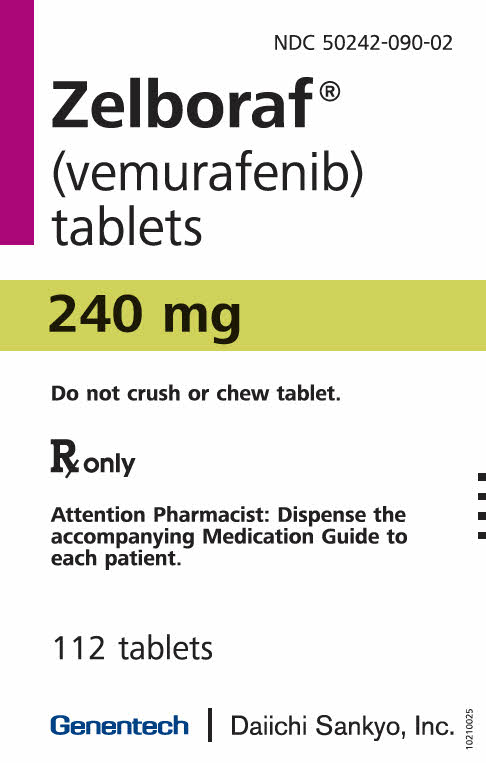
ZELBORAF Vemurafenib 240 mg Tablet, Film Coated, 112-count — NDC 50242-090-02 (Billing 50242-0090-02)
This is a package of 112 tablets of ZELBORAF Vemurafenib 240 mg Tablet, Film Coated from Genentech, Inc., marketed since Aug 2011 and currently FDA-listed. It is the main listing for this product, which comes in 2 package sizes.
Identity & classification
Regulatory identifiers FDA, NLM and CMS codes for this package
Drug-database identifiers Medi-Span GPI and First Databank GCN / HICL / AHFS classification
- GSN (GCN sequence number): 067716
- GCN: 30332
- HICL (First Databank): 037837
- AHFS class code: 10:00.00.00
- RxCUI (RxNorm): 1147223
Where does this data come from?
- FDA openFDA NDC Directory · synced Oct 1, 2026
- FDA label on DailyMed · label index refreshed Oct 1, 2026
- RxNorm (NLM RxNav) · catalog refreshed Oct 1, 2026
- Medi-Span GPI (licensed)
- First Databank (licensed) · refreshed Oct 1, 2026
RxNorm drug class
This medicine belongs to the Kinase Inhibitor class.
Where does this data come from?
- RxClass (NLM) · catalog refreshed Oct 1, 2026
Clinical
Vemurafenib is used to treat certain types of melanoma (a type of skin cancer) that cannot be treated with surgery or that has spread to other parts of the body. It is also used to treat a certain type of Erdheim-Chester disease (ECD; a disease that causes an overproduction of a type of white blood cells). Vemurafenib is in a class of medications called kinase inhibitors. It works by blocking the action of an abnormal protein that signals cancer cells to multiply. This helps slow or stop the spread of cancer cells.
Read the full MedlinePlus article ↗- Zelboraf is used for melanoma that has spread or can't be removed by surgery, and for Erdheim-Chester disease. Your tumor has to carry a BRAF mutation. Testing confirms that before...
- Swallow the tablets whole about every 12 hours, with or without food. Don't crush or chew them. If you vomit, skip the extra dose and take the next one on time. A missed dose can b...
- Joint pain, rash, hair loss, tiredness, nausea, itching and sun sensitivity are common. Skin growths can also appear. Tell your care team about anything that bothers you, as doses...
- This medicine can cause new skin cancers, heart rhythm changes, and liver and kidney problems. That's why you'll have skin exams, ECGs and blood tests. Call me or your doctor about...
Patient education
Supplement & herbal interactions
Some supplements/herbs that may interact with Vemurafenib — tap one for details:
Where does this data come from?
- MedlinePlus (NLM) · refreshed Oct 1, 2026
- FDA label on DailyMed · label index refreshed Oct 1, 2026
Ask a licensed pharmacist directly — free, answered by our team.
Pricing
A drug doesn't have one price. Each row is a different public payment system, and none is what you'd pay at the counter — that depends on your insurance. The ⓘ on each row explains what it measures.
| Price system | Per each | Per package |
|---|---|---|
| Retail pharmacies payNADAC · weekly | Not in the retail survey — common for institutional, discontinued, or low-volume packs. | |
| Medicaid paysCMS SDUD · 12 mo | $52.48 | $5,877.82 / 112 tablets |
| Medicare drug plans payPart D · Q2 2026 | $52.93 | $5,927.87 / 112 tablets |
Where does this data come from?
- CMS NADAC weekly file
- CMS ASP pricing files · refreshed Sep 20, 2026
- CMS Medicaid State Drug Utilization Data · through Q1 2026
- CMS Part D plan pricing files · refreshed Sep 24, 2026
- VA National Acquisition Center price file
Packaging — all sizes for this product
| Package NDC | Description | Marketing start | Marketing end | Status |
|---|---|---|---|---|
| 50242-0090-02 You're viewing this Main listing | 1 BOTTLE, PLASTIC in 1 CARTON / 112 TABLET, FILM COATED in 1 BOTTLE, PLASTIC | 2015-09-08 | — | Active |
| 50242-0090-86 50242-090-86 | 1 BOTTLE, PLASTIC in 1 CARTON / 112 TABLET, FILM COATED in 1 BOTTLE, PLASTIC | 2014-04-10 | — | Active |
Pack size FAQ
What quantity is in this package?
How does this package differ from NDC 50242-0090-86?
What NDC number is used to bill for this package of ZELBORAF Vemurafenib 240 mg Tablet, Film Coated?
Therapeutic equivalents
| Product | Labeler | Pack | NADAC/unit | TE | Status | Price vs. this |
|---|---|---|---|---|---|---|
| Zelboraf 240 mgthis 50242-0090-02 | Genentech, | 112 tablets | — | — | FDA listed | — |
Where does this data come from?
- FDA openFDA NDC Directory · synced Oct 1, 2026
- FDA Orange Book · refreshed Sep 3, 2026
- CMS NADAC weekly file
Availability & generic status
We did not find an FDA-approved generic match for this exact strength, form and route. Patent/protection dates below may affect future generic timing.
Why the date isn’t exact: Generic timing can change because patents may be challenged, settled, licensed, added, removed, or worked around with a narrower label — and FDA approval does not always mean a pharmacy can get the generic today.
🛈 What do these terms mean?
- Patent
- Legal protection listed in the Orange Book that may delay generic approval or launch. Issued by the U.S. Patent & Trademark Office.
- Substance patent
- Covers the active drug molecule itself — the hardest to design around. A generic generally can’t launch until it expires.
- Formulation (product) patent
- Covers a specific formulation or dosage form. A generic can sometimes work around it with a different formulation.
- Method-of-use patent
- A patent covering one specific approved use of the drug — not necessarily the whole molecule. A generic can sometimes launch with a “skinny label” that carves out the protected use and keeps the others.
- Skinny label
- A generic label that omits a still-patented use when the FDA allows it — letting a generic reach the market for the unprotected uses.
- Exclusivity
- FDA-granted marketing protection, separate from patents — e.g. 5-yr new chemical entity, 7-yr orphan drug, or a +6-month pediatric extension.
- Paragraph IV
- A generic applicant’s formal challenge to a listed patent. It can potentially lead to earlier generic entry, but often involves litigation or a settlement.
- RLD / RS
- Reference Listed Drug — the brand product the FDA uses as the reference for generic applications. Reference Standard — the product the FDA expects generics to compare against in bioequivalence testing.
- TE / AB rating
- FDA therapeutic-equivalence rating. An AB rating generally means the FDA considers a generic therapeutically equivalent to — and substitutable for — the brand.
- LOE (loss of exclusivity)
- The latest patent or exclusivity currently listed — the loss-of-exclusivity / latest-listed-protection date shown on this page. Paragraph-IV challenges and settlements can move the real date earlier; FDA approval and a manufacturer’s decision to market can move it later.
Built from the FDA Orange Book. The bars above are scaled to each protection’s expiry; the red LOE marker is the last one to lapse.
| Patent | Type | Use code | Expires |
|---|---|---|---|
| US 8470818 ↗ | Method of use | U-2164 | Aug 2, 2026 |
| US 8470818 ↗ | Method of use | U-1418 | Aug 2, 2026 |
| US 8143271 ↗ | Drug substance | — | Jun 21, 2026 |
| US 9447089 ↗ | Drug product | — | Jun 6, 2032 |
| US 7863288 ↗ | Drug substance | — | Jun 20, 2029 |
| US 8741920 ↗ | Drug substance | — | Jul 27, 2030 |
| US 7504509 ↗ | Drug substance | — | Oct 22, 2026 |
Is there a generic version of ZELBORAF 240 MG TABLET?
The FDA approved a generic — why can’t I get it at my pharmacy yet?
Why do different websites show different generic release dates?
What does “FDA listed” mean?
What does a patent or protection date mean here?
What does “current Orange Book estimate” mean?
Can a generic come out before the last patent expires?
Can a generic come out after the listed dates?
What is the difference between patents and exclusivity?
Why are there multiple patent dates?
Where does this data come from?
- FDA Orange Book · refreshed Sep 3, 2026
What it looks like
Where does this data come from?
- FDA label on DailyMed · label index refreshed Oct 1, 2026
Inactive Ingredients / Excipients
Inactive ingredients, also called excipients, are components of the drug product other than the active ingredient. They may include fillers, dyes, coatings, preservatives, flavors, or other formulation ingredients.
💡 Tap an ingredient (hover on desktop) to see what it is and why it’s used.
-
UNII M28OL1HH48
Croscarmellose sodium is a plant-based substance derived from cellulose. It acts as a disintegrant, helping tablets and capsules break down quickly in the digestive system so the medicine can be absorbed.
-
UNII 1K09F3G675
Ferric oxide red is an inorganic iron compound used as a colorant in medicines. It gives tablets, capsules, or other dosage forms a red or reddish tint for identification and appearance.
-
UNII UKE75GEA7F
Hydroxypropyl cellulose is a plant-based polymer used as a binder and thickener. It helps hold tablet ingredients together, controls how fast the medicine dissolves, and improves the texture of liquid formulations.
-
UNII 24P2YXD2PW
A cellulose derivative used as a film-coating agent and binder in tablets and capsules. It helps protect the medicine from moisture, controls how quickly the drug dissolves, and holds ingredients together.
-
UNII G2M7P15E5P
Polyethylene glycol 3350 is a synthetic polymer used as a solvent, humectant, and thickening agent in medicines. It helps dissolve other ingredients, retain moisture in the product, and achieve the desired consistency.
-
UNII 532B59J990
Polyvinyl alcohol is a synthetic polymer made from plant-derived materials. It's used as a binder to hold ingredients together, a film-former in coatings, and a thickener in liquid formulations.
-
UNII 7SEV7J4R1U
A powder made from a naturally occurring mineral. In medicines, talc works as a glidant and anti-caking agent, helping tablets and capsules flow smoothly during manufacturing and preventing clumping.
-
UNII 15FIX9V2JP
Titanium dioxide is a bright white mineral powder commonly used as a colorant and opacifying agent. It makes pills and tablets white or lighter in color and helps make coatings non-transparent.
8 inactive ingredients listed in the exact product block matched to this NDC.
Where does this data come from?
ingredient classCode="IACT" elements from the exact product block matched by this NDC. Label-section narrative from DailyMed / the openFDA label index is shown separately when available.- FDA label on DailyMed · label index refreshed Oct 1, 2026
- FDA openFDA NDC Directory · synced Oct 1, 2026
Inactive ingredient FAQ
Are inactive ingredients the same for every manufacturer?
Why might an inactive ingredient be missing?
Can inactive ingredients matter?
Manufacturer & labeler
Where does this data come from?
- FDA openFDA NDC Directory · synced Oct 1, 2026
- Drugs@FDA
Full prescribing information FDA SPL
🎯 Indications and Usage ▾
1 INDICATIONS AND USAGE ZELBORAF ® is a kinase inhibitor indicated for the treatment of patients with unresectable or metastatic melanoma with BRAF V600E mutation as detected by an FDA-approved test. ( 1.1 , 2.1 ) ZELBORAF ® is indicated for the treatment of patients with Erdheim- Chester Disease with BRAF V600 mutation. ( 1.2 , 2.1 ) Limitation of Use: ZELBORAF is not indicated for treatment of patients with wild-type BRAF melanoma ( 2.1 , 5.2 )
1.1Unresectable or Metastatic Melanoma ZELBORAF ® is indicated for the treatment of patients with unresectable or metastatic melanoma with BRAF V600E mutation as detected by an FDA-approved test. Limitation of Use: ZELBORAF is not indicated for treatment of patients with wild-type BRAF melanoma [see Warnings and Precautions (5.2) ] .
1.2Erdheim-Chester Disease ZELBORAF ® is indicated for the treatment of patients with Erdheim-Chester Disease (ECD) with BRAF V600 mutation.
⏱️ Dosage and Administration ▾
2 DOSAGE AND ADMINISTRATION Confirm the presence of BRAF V600E mutation in tumor specimens prior to initiation of treatment with ZELBORAF. ( 2.1 ) Recommended dose: 960 mg orally twice daily taken approximately 12 hours apart with or without a meal. ( 2.2 )
2.1Patient Selection for Treatment of Melanoma Confirm the presence of BRAF V600E mutation in melanoma tumor specimens prior to initiation of treatment with ZELBORAF [see Warnings and Precautions (5.2) ] . Information on FDA-approved tests for the detection of BRAF V600 mutations in melanoma is available at http://www.fda.gov/CompanionDiagnostics.
2.2Recommended Dose The recommended dose of ZELBORAF is 960 mg (four 240 mg tablets) orally every 12 hours with or without a meal. A missed dose can be taken up to 4 hours prior to the next dose. Treat patients with ZELBORAF until disease progression or unacceptable toxicity occurs. Do not take an additional dose if vomiting occurs after ZELBORAF administration, but continue with the next scheduled dose. Do not crush or chew the tablets.
2.3Dose Modifications For New Primary Cutaneous Malignancies: No dose modifications are recommended. For Other Adverse Reactions: Permanently discontinue ZELBORAF for any of the following: Grade 4 adverse reaction, first appearance (if clinically appropriate) or second appearance QTc prolongation > 500 ms and increased by > 60 ms from pre-treatment values [see Warnings and Precautions (5.5) ] Withhold ZELBORAF for NCI-CTCAE (v4.0) intolerable Grade 2 or greater adverse reactions. Upon recovery to Grade 0–1, restart ZELBORAF at a reduced dose as follows: 720 mg twice daily for first appearance of intolerable Grade 2 or Grade 3 adverse reactions 480 mg twice daily for second appearance of Grade 2 (if intolerable) or Grade 3 adverse reactions or for first appearance of Grade 4 adverse reaction (if clinically appropriate) Do not dose reduce to below 480 mg twice daily.
2.4Dose Modification for Strong CYP3A4 Inducers Avoid concomitant use of strong CYP3A4 inducers during treatment with ZELBORAF [see Drug Interactions (7.1) and Clinical Pharmacology (12.3) ] . If concomitant use of a strong CYP3A4 inducer is unavoidable, increase the dose of ZELBORAF by 240 mg (one tablet) as tolerated. After discontinuation of a strong CYP3A4 inducer for two weeks, resume the ZELBORAF dose that was taken prior to initiating the strong CYP3A4 inducer.
💊 Dosage Forms and Strengths ▾
3 DOSAGE FORMS AND STRENGTHS Tablet: 240 mg. Tablet: 240 mg ( 3 )
⛔ Contraindications ▾
4 CONTRAINDICATIONS None. None
⚠️ Warnings and Cautions ▾
5 WARNINGS AND PRECAUTIONS New Primary Cutaneous Malignancies: Perform dermatologic evaluations prior to initiation of therapy, every 2 months while on therapy, and for up to 6 months following discontinuation of ZELBORAF. Manage with excision and continue treatment without dose adjustment. ( 5.1 ) New Non-Cutaneous Squamous Cell Carcinoma: Evaluate for symptoms or clinical signs of new non-cutaneous SCC before initiation of treatment and periodically during treatment.
( 5.1 ) Other Malignancies: Monitor patients receiving ZELBORAF closely for signs or symptoms of other malignancies ( 5.1 ). Tumor Promotion in BRAF Wild-Type Melanoma: Increased cell proliferation can occur with BRAF inhibitors ( 5.2 ). Serious Hypersensitivity Reactions including anaphylaxis and Drug Reaction with Eosinophilia and Systemic Symptoms (DRESS Syndrome): Discontinue ZELBORAF for severe hypersensitivity reactions.
( 5.3 ) Severe Dermatologic Reactions, including Stevens-Johnson Syndrome and Toxic Epidermal Necrolysis: Discontinue ZELBORAF for severe dermatologic reactions. ( 5.4 ) QT Prolongation: Monitor ECG and electrolytes before and during treatment. Withhold ZELBORAF for QTc of 500 ms or greater.
Correct electrolyte abnormalities and control for cardiac risk factors for QT prolongation. ( 5.5 ) Hepatotoxicity: Measure liver enzymes and bilirubin before initiating ZELBORAF and monitor monthly during treatment. ( 5.6 ) Photosensitivity: Advise patients to avoid sun exposure.
( 5.7 ) Serious Ophthalmologic Reactions: Monitor for signs and symptoms of uveitis. ( 5.8 ) Embryo-Fetal Toxicity: Can cause fetal harm. Advise females of the potential risk to the fetus and to use effective contraception.
( 5.9 , 8.1 , 8.3 ) Radiation Sensitization and Radiation Recall: Severe cases have been reported. ( 5.10 ). Renal Failure: Measure serum creatinine before initiating ZELBORAF and monitor periodically during treatment ( 5.11 ).
Dupuytren's Contracture and plantar fascial fibromatosis: Events should be managed with dose reduction, treatment interruption, or treatment discontinuation. ( 5.12 ).
5.1New Primary Malignancies Cutaneous Malignancies Cutaneous squamous cell carcinoma, keratoacanthoma, and melanoma occurred at a higher incidence in patients receiving ZELBORAF compared to those in the control arm in Trial 1. The incidence of cutaneous squamous cell carcinomas (cuSCC) and keratoacanthomas in the ZELBORAF arm was 24% compared to < 1% in the dacarbazine arm [see Adverse Reactions (6.1) ] . The median time to the first appearance of cuSCC was 7 to 8 weeks; approximately 33% of patients who developed a cuSCC while receiving ZELBORAF experienced at least one additional occurrence with median time between occurrences of 6 weeks.
Potential risk factors associated with cuSCC observed in clinical studies using ZELBORAF included age (≥ 65 years), prior skin cancer, and chronic sun exposure. In Trial 4, in patients with ECD, the incidence of cuSCC and/or keratoacanthomas was 40.9% (9/22). The median time to first appearance of cuSCC amongst patients with at least one occurrence was 12.1 weeks.
In Trial 1, in patients with unresectable or metastatic melanoma, new primary malignant melanoma occurred in 2.1% (7/336) of patients receiving ZELBORAF compared to none of the patients receiving dacarbazine. Perform dermatologic evaluations prior to initiation of therapy and every 2 months while on therapy. Manage suspicious skin lesions with excision and dermatopathologic evaluation.
Consider dermatologic monitoring for 6 months following discontinuation of ZELBORAF. Non-Cutaneous Squamous Cell Carcinoma Non-cutaneous squamous cell carcinomas (non-cuSCC) of the head and neck can occur in patients receiving ZELBORAF [see Adverse Reactions (6.1) ] . Monitor patients receiving ZELBORAF closely for signs or symptoms of new non-cuSCC.
Other Malignancies Based on mechanism of action, ZELBORAF may promote malignancies associated with activation of RAS through mutation or othe… [Excerpted — this section continues on DailyMed.]
🤒 Adverse Reactions ▾
6 ADVERSE REACTIONS The following adverse reactions are discussed in greater detail in other sections of the label: New Primary Malignancies [see Warnings and Precautions (5.1) ] Hypersensitivity Reactions [see Warnings and Precautions (5.3) ] Dermatologic Reactions [see Warnings and Precautions (5.4) ] QT Prolongation [see Warnings and Precautions (5.5) ] Hepatotoxicity [see Warnings and Precautions (5.6) ] Photosensitivity [see Warnings and Precautions (5.7) ] Ophthalmologic Reactions [see Warnings and Precautions (5.8) ] Radiation Sensitization and Radiation Recall [see Warnings and Precautions (5.10) ] Renal Failure [see Warnings and Precautions (5.11) ] Dupuytren's Contracture and Plantar Fascial Fibromatosis [see Warnings and Precautions (5.12) ] Melanoma: Most common adverse reactions (≥ 30%) are arthralgia, rash, alopecia, fatigue, photosensitivity reaction, nausea, pruritus, and skin papilloma.
( 6.1 ) Erdheim-Chester Disease: Most common adverse reactions (>50%) are arthralgia, rash maculo-papular, alopecia, fatigue, electrocardiogram QT interval prolonged, and skin papilloma. ( 6.1 ) To report SUSPECTED ADVERSE REACTIONS, contact Genentech at 1-888-835-2555 or FDA at 1-800-FDA-1088 or www.fda.gov/medwatch .
6.1Clinical Trials Experience Because clinical studies are conducted under widely varying conditions, adverse reaction rates observed in the clinical studies of a drug cannot be directly compared to rates in the clinical studies of another drug and may not predict the rates observed in a broader patient population in clinical practice. Unresectable or Metastatic Melanoma with BRAF V600E Mutation This section describes adverse drug reactions (ADRs) identified from analyses of Trial 1 and Trial 2 [see Clinical Studies (14) ] .
Trial 1 randomized (1:1) 675 treatment-naive patients with unresectable or metastatic melanoma to receive ZELBORAF 960 mg orally twice daily or dacarbazine 1000 mg/m 2 intravenously every 3 weeks. In Trial 2, 132 patients with metastatic melanoma and failure of at least one prior systemic therapy received treatment with ZELBORAF 960 mg orally twice daily. Table 1 presents adverse reactions reported in at least 10% of unresectable or metastatic melanoma patients treated with ZELBORAF.
The most common adverse reactions of any grade (≥ 30% in either study) in ZELBORAF-treated patients were arthralgia, rash, alopecia, fatigue, photosensitivity reaction, nausea, pruritus, and skin papilloma. The most common (≥ 5%) Grade 3 adverse reactions were cuSCC and rash. The incidence of Grade 4 adverse reactions was ≤ 4% in both studies.
The incidence of adverse events resulting in permanent discontinuation of study medication in Trial 1 was 7% for the ZELBORAF arm and 4% for the dacarbazine arm. In Trial 2, the incidence of adverse events resulting in permanent discontinuation of study medication was 3% in ZELBORAF-treated patients. The median duration of study treatment was 4.2 months for ZELBORAF and 0.8 months for dacarbazine in Trial 1, and 5.7 months for ZELBORAF in Trial 2.
Table 1 Adverse Reactions Reported in ≥ 10% of Unresectable or Metastatic Melanoma Patients Treated with ZELBORAF Adverse drug reactions, reported using MedDRA and graded using NCI-CTC-AE v 4.0 (NCI common toxicity criteria) for assessment of toxicity. ADRs Trial 1: Treatment-Naïve Patients Trial 2: Patients with Failure of at Least One Prior Systemic Therapy ZELBORAF n=336 Dacarbazine n=287 ZELBORAF n=132 All Grades (%) Grade 3 Grade 4 adverse reactions limited to gamma-glutamyltransferase increased (< 1% in Trial 1 and 4% in Trial 2).
(%) All Grades (%) Grade 3 (%) All Grades (%) Grade 3 (%) Skin and subcutaneous tissue disorders Rash 37 8 2 0 52 7 Photosensitivity reaction 33 3 4 0 49 3 Alopecia 45 < 1 2 0 36 0 Pruritus 23 1 1 0 30 2 Hyperkeratosis 24 1 < 1 0 28 0 Rash maculo-papular 9 2 < 1 0 21 6 Actinic keratosis 8 0 3 0 17 0 Dry skin 19 0 1 0 16 0 Rash papular 5 < 1 0 0 13 0 Erythema 14 0 2 0 8 0 Musculoskeletal and connec… [Excerpted — this section continues on DailyMed.]
🔄 Drug Interactions ▾
7 DRUG INTERACTIONS Avoid concomitant administration of ZELBORAF with strong CYP3A4 inhibitors or inducers. ( 7.1 ) CYP1A2 Substrates: ZELBORAF can increase concentrations of CYP1A2 substrates. Avoid concomitant use of ZELBORAF with CYP1A2 substrates with a narrow therapeutic window. If coadministration cannot be avoided, monitor closely for toxicities and consider dose reduction of CYP1A2 substrates. ( 7.2 ).
7.1Effect of Strong CYP3A4 Inhibitors or Inducers on Vemurafenib Strong CYP3A4 Inhibitors Coadministration of a strong CYP3A4 inhibitor increased vemurafenib plasma concentrations and may lead to increased toxicity. Avoid coadministration of ZELBORAF with strong CYP3A4 inhibitors. If coadministration of a strong CYP3A4 inhibitor is unavoidable, consider dose reduction of ZELBORAF, if clinically indicated. [see Dosage and Administration (2.3) , Clinical Pharmacology (12.3) ] .
Strong CYP3A4 Inducers Coadministration of ZELBORAF with rifampin, a strong CYP3A4 inducer, decreased vemurafenib plasma concentrations and may result in decreased efficacy. Avoid coadministration of ZELBORAF with strong CYP3A4 inducers (e.g., phenytoin, carbamazepine, rifampin), and replace these drugs with alternative drugs when possible. If coadministration of a strong CYP3A4 inducer is unavoidable, increase the dose of ZELBORAF by 240 mg (one tablet) as tolerated [see Dosage and Administration (2.4) , Clinical Pharmacology (12.3) ] .
7.2Effect of Vemurafenib on CYP1A2 Substrates Coadministration of ZELBORAF with tizanidine, a sensitive CYP1A2 substrate, increased tizanidine systemic exposure by 4.7-fold. Avoid concomitant use of ZELBORAF with drugs having a narrow therapeutic window that are predominantly metabolized by CYP1A2 [see Clinical Pharmacology (12.3) ] . If coadministration cannot be avoided, monitor closely for toxicities and consider a dose reduction of concomitant CYP1A2 substrates.
7.3Concurrent Ipilimumab Increases in transaminases and bilirubin occurred in a majority of patients who received concurrent ipilimumab and ZELBORAF [see Warnings and Precautions Section 5.6 ].
7.4Effect of Vemurafenib on P-gp Substrates Coadministration of ZELBORAF with digoxin, a sensitive P-glycoprotein (P-gp) substrate, increased digoxin systemic exposure by 1.8-fold. Avoid concurrent use of P-gp substrates known to have narrow therapeutic indices. If use of these medications is unavoidable, consider dose reduction of P-gp substrates with narrow therapeutic indices.
👥 Use in Specific Populations ▾
8 USE IN SPECIFIC POPULATIONS Lactation: Do not breastfeed while taking ZELBORAF. ( 8.2 )
8.1Pregnancy Risk Summary Based on its mechanism of action, ZELBORAF can cause fetal harm when administered to a pregnant woman [see Clinical Pharmacology (12.1) ] . There are no available data on the use of ZELBORAF in pregnant women to determine the drug-associated risk; however, placental transfer of vemurafenib to a fetus has been reported. Exposure to vemurafenib could not be achieved in animals at levels sufficient to fully address its potential toxicity in pregnant women.
Advise pregnant women of the potential harm to a fetus. The estimated background risks of major birth defects and miscarriage for the indicated population(s) are unknown. In the U.S. general population, the estimated background risk of major birth defects and miscarriage in clinically recognized pregnancies is 2-4% and 15-20%, respectively.
Data Animal Data Vemurafenib showed no evidence of developmental toxicity in rat fetuses at doses up to 250 mg/kg/day (approximately 1.3 times the clinical exposure at 960 mg twice daily based on AUC) or rabbit fetuses at doses up to 450 mg/kg/day (approximately 0.6 times the clinical exposure at 960 mg twice daily based on AUC). Fetal drug levels were 3–5% of maternal levels, indicating that vemurafenib has the potential to be transmitted from the mother to the developing fetus.
8.2Lactation There is no information available regarding the presence of vemurafenib in human milk, effects on the breastfed infant, or effects on milk production. Because of the potential for serious adverse reactions in a breastfed infant, including malignancy, severe dermatologic reactions, QT prolongation, hepatotoxicity, photosensitivity, and ophthalmologic toxicity, [see Warnings and Precautions (5) ] , advise women not to breastfeed during treatment with ZELBORAF and for 2 weeks after the final dose.
8.3Females and Males of Reproductive Potential Contraception Based on its mechanism of action, ZELBORAF can cause fetal harm when administered to a pregnant woman [see Use in Specific Populations (8.1) ] . Advise females of reproductive potential to use effective contraception during treatment with ZELBORAF and for 2 weeks after the final dose.
8.4Pediatric Use The safety and effectiveness of ZELBORAF in pediatric patients have not been established. Vemurafenib was studied in 6 adolescent patients 15 to 17 years of age with unresectable or metastatic melanoma with BRAF V600 mutation. A maximum tolerated dose was not reached with doses up to vemurafenib 960 mg twice daily.
No new safety signals were observed. Vemurafenib steady-state exposure in these 6 adolescent patients was generally similar to that in adults.
8.5Geriatric Use Clinical studies of ZELBORAF did not include sufficient numbers of subjects aged 65 and over to determine whether they respond differently from younger subjects.
8.6Hepatic Impairment No formal clinical study has been conducted to evaluate the effect of hepatic impairment on the pharmacokinetics of vemurafenib. No dose adjustment is recommended for patients with mild and moderate hepatic impairment based on a population pharmacokinetic analysis [see Clinical Pharmacology (12.3) ]. The appropriate dose of ZELBORAF has not been established in patients with severe hepatic impairment.
8.7Renal Impairment No formal clinical study has been conducted to evaluate the effect of renal impairment on the pharmacokinetics of vemurafenib. No dose adjustment is recommended for patients with mild and moderate renal impairment based on a population pharmacokinetic analysis [see Clinical Pharmacology (12.3) ]. The appropriate dose of ZELBORAF has not been established in patients with severe renal impairment.
🤰 Pregnancy ▾
8.1Pregnancy Risk Summary Based on its mechanism of action, ZELBORAF can cause fetal harm when administered to a pregnant woman [see Clinical Pharmacology (12.1) ] . There are no available data on the use of ZELBORAF in pregnant women to determine the drug-associated risk; however, placental transfer of vemurafenib to a fetus has been reported. Exposure to vemurafenib could not be achieved in animals at levels sufficient to fully address its potential toxicity in pregnant women.
Advise pregnant women of the potential harm to a fetus. The estimated background risks of major birth defects and miscarriage for the indicated population(s) are unknown. In the U.S. general population, the estimated background risk of major birth defects and miscarriage in clinically recognized pregnancies is 2-4% and 15-20%, respectively.
Data Animal Data Vemurafenib showed no evidence of developmental toxicity in rat fetuses at doses up to 250 mg/kg/day (approximately 1.3 times the clinical exposure at 960 mg twice daily based on AUC) or rabbit fetuses at doses up to 450 mg/kg/day (approximately 0.6 times the clinical exposure at 960 mg twice daily based on AUC). Fetal drug levels were 3–5% of maternal levels, indicating that vemurafenib has the potential to be transmitted from the mother to the developing fetus.
🧒 Pediatric Use ▾
8.4Pediatric Use The safety and effectiveness of ZELBORAF in pediatric patients have not been established. Vemurafenib was studied in 6 adolescent patients 15 to 17 years of age with unresectable or metastatic melanoma with BRAF V600 mutation. A maximum tolerated dose was not reached with doses up to vemurafenib 960 mg twice daily.
No new safety signals were observed. Vemurafenib steady-state exposure in these 6 adolescent patients was generally similar to that in adults.
🧓 Geriatric Use ▾
8.5Geriatric Use Clinical studies of ZELBORAF did not include sufficient numbers of subjects aged 65 and over to determine whether they respond differently from younger subjects.
🆘 Overdosage ▾
10 OVERDOSAGE There is no information on overdosage of ZELBORAF.
🧬 Clinical Pharmacology ▾
12 CLINICAL PHARMACOLOGY
12.1Mechanism of Action Vemurafenib is a low molecular weight, orally available inhibitor of some mutated forms of BRAF serine- threonine kinase, including BRAF V600E. Vemurafenib also inhibits other kinases in vitro such as CRAF, ARAF, wild-type BRAF, SRMS, ACK1, MAP4K5, and FGR at similar concentrations. Some mutations in the BRAF gene including V600E result in constitutively activated BRAF proteins, which can cause cell proliferation in the absence of growth factors that would normally be required for proliferation.
Vemurafenib has anti-tumor effects in cellular and animal models of melanomas with mutated BRAF V600E.
12.2Pharmacodynamics Cardiac Electrophysiology In a multi-center, open-label, single-arm study in 132 patients with BRAF V600E mutation-positive metastatic melanoma, patients administered vemurafenib 960 mg orally twice daily did not experience large changes in mean QTc interval (i.e., > 20 ms) from baseline. Vemurafenib is associated with concentration- dependent QTc interval prolongation. The largest mean change from baseline in the first month of treatment occurred at 2 hours post-dose on Day 15—an increase of 12.8 ms (upper boundary of the two-sided 90% confidence interval of 14.9 ms).
In the first 6 months of treatment, the largest observed mean change from baseline occurred at a pre-dose time point—an increase of 15.1 ms (upper boundary of the two-sided 90% confidence interval of 17.7 ms).
12.3Pharmacokinetics The pharmacokinetics of vemurafenib were determined in patients with BRAF mutation-positive metastatic melanoma following 15 days of 960 mg twice daily with dosing approximately 12 hours apart. The population pharmacokinetic analysis pooled data from 458 patients. At steady-state, vemurafenib exhibits linear pharmacokinetics within the 240 mg to 960 mg dose range.
Absorption The mean bioavailability of vemurafenib at steady state was 64% (56% CV). The median time to reach maximum plasma vemurafenib concentration (T max ) was 3 hours following multiple doses. The mean (± SD) C max and AUC 0-12 were 62 ± 17 µg/mL and 601 ± 170 µg*h/mL, respectively.
The median accumulation ratio estimate from the population pharmacokinetic analysis for the twice daily regimen is 7.4, with steady-state achieved at approximately 15 to 22 days. In clinical trials, vemurafenib was administered without regard to food. A food effect study has demonstrated that a single dose of vemurafenib administered with a high-fat meal increased AUC by approximately 5-fold, increased C max by 2.5-fold, and delayed T max by approximately 4 hours as compared to the fasted state.
QTc prolongation may occur with increased exposures as vemurafenib is associated with concentration-dependent QTc interval prolongation [see Clinical Pharmacology (12.2) ] . Distribution Vemurafenib is highly bound (> 99%) to human albumin and alpha-1 acid glycoprotein plasma proteins. The population apparent volume of distribution is estimated to be 106 L (with 66% inter-patient variability).
Metabolism Following oral administration of 960 mg of 14 C-vemurafenib, mean data showed that vemurafenib and its metabolites represented 95% and 5% of the components in plasma over 48 hours, respectively. Elimination Following oral administration of 960 mg of 14 C-vemurafenib, approximately 94% of the radioactive dose was recovered in feces and approximately 1% was recovered in the urine. The population apparent clearance is estimated to be 31 L/day (with 32% inter-patient variability).
The median elimination half-life estimate for vemurafenib is 57 hours (the 5th and 95th percentile range is 30 to 120 hours). Specific Populations Hepatic Impairment : The pharmacokinetics of vemurafenib were examined in patients with metastatic melanoma enrolled in the clinical trials with normal hepatic function (n=158, total bilirubin ≤ ULN) and mild (n=58, total bilirubin 1.0–1.5 × ULN), moderate (n=27, total bilirubin 1.5–3 × ULN), or severe (n=3, total biliru… [Excerpted — this section continues on DailyMed.]
🧬 Mechanism of Action ▾
12.1Mechanism of Action Vemurafenib is a low molecular weight, orally available inhibitor of some mutated forms of BRAF serine- threonine kinase, including BRAF V600E. Vemurafenib also inhibits other kinases in vitro such as CRAF, ARAF, wild-type BRAF, SRMS, ACK1, MAP4K5, and FGR at similar concentrations. Some mutations in the BRAF gene including V600E result in constitutively activated BRAF proteins, which can cause cell proliferation in the absence of growth factors that would normally be required for proliferation.
Vemurafenib has anti-tumor effects in cellular and animal models of melanomas with mutated BRAF V600E.
📦 How Supplied / Storage and Handling ▾
16 HOW SUPPLIED/STORAGE AND HANDLING ZELBORAF (vemurafenib) is supplied as 240 mg film-coated tablets with VEM debossed on one side. The following packaging configurations are available: NDC 50242-090-01 single bottle of 120 count NDC 50242-090-02 single bottle of 112 count Storage and Stability: Store at room temperature 20°C–25°C (68°F–77°F); excursions permitted between 15°C and 30°C (59°F and 86°F), See USP Controlled Room Temperature. Store in the original container with the lid tightly closed.
Disposal of unused/expired medicines: The release of pharmaceuticals in the environment should be minimized. Medicines should not be disposed of via wastewater and disposal through household waste should be avoided. Use established "collection systems," if available in your location.
📦 Storage and Handling ▾
Storage and Stability: Store at room temperature 20°C–25°C (68°F–77°F); excursions permitted between 15°C and 30°C (59°F and 86°F), See USP Controlled Room Temperature. Store in the original container with the lid tightly closed.
📋 Description ▾
11 DESCRIPTION ZELBORAF (vemurafenib) is a kinase inhibitor available as 240 mg tablets for oral use. Vemurafenib has the chemical name propane-1-sulfonic acid {3-[5-(4-chlorophenyl)-1H-pyrrolo[2,3-b]pyridine-3-carbonyl]- 2,4-difluoro-phenyl}-amide. It has the molecular formula C 23 H 18 ClF 2 N 3 O 3 S and a molecular weight of 489.9.
Vemurafenib has the following chemical structure: Vemurafenib is a white to off-white crystalline solid. It is practically insoluble in aqueous media. Tablets of ZELBORAF are for oral administration.
Each tablet contains 240 mg of vemurafenib. The inactive ingredients of ZELBORAF are: Tablet core: hypromellose acetate succinate, croscarmellose sodium, colloidal silicon dioxide, magnesium stearate, and hydroxypropyl cellulose. Coating: pinkish white: poly (vinyl alcohol), titanium dioxide, polyethylene glycol 3350, talc, and iron oxide red.
Chemical Structure
💬 Information for Patients ▾
17 PATIENT COUNSELING INFORMATION Advise the patient to read the FDA-approved patient labeling ( Medication Guide ). Healthcare providers should advise patients of the potential benefits and risks of ZELBORAF and instruct their patients to read the Medication Guide before starting ZELBORAF therapy. Inform patients of the following: Evidence of BRAF V600E mutation in the tumor specimen with an FDA approved test is necessary to identify patients with melanoma for whom treatment with ZELBORAF is indicated [see Dosage and Administration (2.1) ] .
ZELBORAF increases the risk of developing new primary cutaneous malignancies. Advise patients of the importance of contacting their healthcare provider immediately for any changes in their skin [see Warnings and Precautions (5.1) ] . Anaphylaxis and other serious hypersensitivity reactions can occur during treatment and upon re- initiation of treatment with ZELBORAF.
Advise patients to stop taking ZELBORAF and to seek immediate medical attention for symptoms of anaphylaxis or hypersensitivity [see Warnings and Precautions (5.3) ] . Severe dermatologic reactions can occur in patients receiving ZELBORAF. Advise patients to stop taking ZELBORAF and to contact their health-care provider for severe dermatologic reactions [see Warnings and Precautions (5.4) ] .
ZELBORAF can prolong QT interval, which may result in ventricular arrhythmias. Advise patients of the importance of monitoring of their electrolytes and the electrical activity of their heart (via an ECG) during ZELBORAF treatment [see Warnings and Precautions (5.5) ] . Liver injury leading to functional hepatic impairment, including coagulopathy or other organ dysfunction, can occur with ZELBORAF.
Advise patients of the importance of laboratory monitoring of their liver during ZELBORAF treatment and to contact their health-care provider for relevant symptoms [see Warnings and Precautions (5.6) ] . ZELBORAF can cause mild to severe photosensitivity. Advise patients to avoid sun exposure, wear protective clothing, and use a broad spectrum UVA/UVB sunscreen and lip balm (SPF ≥ 30) when outdoors to help protect against sunburn [see Warnings and Precautions (5.7) ] .
Ophthalmologic reactions can occur in patients treated with ZELBORAF. Advise patients to contact their health-care provider immediately for ophthalmologic symptoms [see Warnings and Precautions (5.8) ] . Embryo-fetal Toxicity Advise pregnant women and females of reproductive potential of the potential risk to a fetus [see Warnings and Precautions (5.9) and Use in Special Populations (8.1) ] .
Advise females of reproductive potential to use effective contraception during treatment with ZELBORAF and for 2 weeks after the final dose [see Warnings and Precautions (5.9) and Use in Special Populations (8.1 , 8.3) ] . Advise female patients to contact their health-care provider immediately with a known or suspected pregnancy [see Warnings and Precautions (5.9) and Use in Special Populations (8.1 , 8.3) ] . Lactation Advise a woman not to breastfeed during treatment with ZELBORAF and for 2 weeks after the final dose [see Use in Specific Populations (8.2) ] .
Radiation sensitization and recall can occur in patients treated with radiation prior to, during, or subsequent to ZELBORAF treatment. Advise patients to inform their health care provider if they have had or are planning to receive radiation therapy [see Warnings and Precautions (5.10) , Adverse Reactions (6.2) ]. Renal failure can occur in patients treated with ZELBORAF.
Advise patients of the importance of monitoring serum creatinine prior to and during ZELBORAF treatment [see Warnings and Precautions (5.11) , Adverse Reactions (6.2) ]. Advise patients to contact their health care provider for symptoms of Dupuytren's contracture or plantar fascial fibromatosis [see Warnings and Precautions (5.12) ] .
💬 Medication Guide ▾
This Medication Guide has been approved by the U.S. Food and Drug Administration Revised: 11/2017 MEDICATION GUIDE ZELBORAF ® (ZEL-bor-raf) (vemurafenib) tablet What is the most important information I should know about ZELBORAF? ZELBORAF can cause serious side effects, including: Risk of new cancers.
ZELBORAF may cause certain types of skin cancer called cutaneous squamous cell carcinoma (cuSCC) and keratoacanthoma. New melanoma lesions have occurred in people who take ZELBORAF. ZELBORAF may also cause another type of cancer called non-cutaneous squamous cell carcinoma (non-cuSCC).
Talk with your healthcare provider about your risk for these cancers. Check your skin and tell your healthcare provider right away about any skin changes including a: new wart skin sore or reddish bump that bleeds or does not heal change in size or color of a mole Your healthcare provider should check your skin before you start taking ZELBORAF, and every 2 months during treatment with ZELBORAF, to look for any new skin cancers. Your healthcare provider may continue to check your skin for 6 months after you stop taking ZELBORAF.
Your healthcare provider should also check for cancers that may not occur on the skin. Tell your healthcare provider about any new symptoms that you get while taking ZELBORAF. Other blood cell cancers have happened in some people with Erdheim-Chester Disease (ECD) including those who take ZELBORAF.
If you have other blood cell cancers and take ZELBORAF for ECD, your healthcare provider will monitor your blood cancer through routine blood tests. See " What are the possible side effects of ZELBORAF? " for more information about side effects. What is ZELBORAF?
ZELBORAF is a prescription medicine used to treat: a type of skin cancer called melanoma that: has spread to other parts of the body or cannot be removed by surgery, and has a certain type of abnormal "BRAF" gene. ZELBORAF is not used to treat melanoma with a normal BRAF gene. Your healthcare provider will perform a test to make sure that ZELBORAF is right for you. a type of blood cell cancer called Erdheim-Chester Disease (ECD) that: can affect body tissues and organs, and has a certain type of abnormal "BRAF" gene.
It is not known if ZELBORAF is safe and effective in children under 18 years of age. Before you take ZELBORAF, tell your healthcare provider about all of your medical conditions, including if you: have any heart problems, including a condition called long QT syndromes have liver or kidney problems have had or are planning to receive radiation therapy have been told that you have low blood levels of potassium, calcium, or magnesium are pregnant or plan to become pregnant. ZELBORAF can harm your unborn baby.
Females who are able to become pregnant should use effective birth control during treatment with ZELBORAF and for 2 weeks after the final dose of ZELBORAF. Talk to your healthcare provider about birth control methods that may be right for you. Tell your healthcare provider right away if you become pregnant or think you are pregnant during treatment with ZELBORAF. are breastfeeding or plan to breastfeed.
It is not known if ZELBORAF passes into your breast milk. Do not breastfeed during treatment with ZELBORAF and for 2 weeks after the final dose of ZELBORAF. Talk to your healthcare provider about the best way to feed your baby during this time.
Tell your healthcare provider about all the medicines you take , including prescription and over-the-counter medicines, vitamins, and herbal supplements. Know the medicines you take. Keep a list of them to show your healthcare provider and pharmacist when you get a new medicine.
How should I take ZELBORAF? Take ZELBORAF exactly as your healthcare provider tells you. Do not change your dose or stop taking ZELBORAF unless your healthcare provider tells you to.
Take ZELBORAF every 12 hours with or without a meal. Do not crush or chew ZELBORAF tablets. Do not take an additional dose of ZELBORAF if you vomit after taking y… [Excerpted — this section continues on DailyMed.]
🧬 Pharmacokinetics ▾
12.3Pharmacokinetics The pharmacokinetics of vemurafenib were determined in patients with BRAF mutation-positive metastatic melanoma following 15 days of 960 mg twice daily with dosing approximately 12 hours apart. The population pharmacokinetic analysis pooled data from 458 patients. At steady-state, vemurafenib exhibits linear pharmacokinetics within the 240 mg to 960 mg dose range.
Absorption The mean bioavailability of vemurafenib at steady state was 64% (56% CV). The median time to reach maximum plasma vemurafenib concentration (T max ) was 3 hours following multiple doses. The mean (± SD) C max and AUC 0-12 were 62 ± 17 µg/mL and 601 ± 170 µg*h/mL, respectively.
The median accumulation ratio estimate from the population pharmacokinetic analysis for the twice daily regimen is 7.4, with steady-state achieved at approximately 15 to 22 days. In clinical trials, vemurafenib was administered without regard to food. A food effect study has demonstrated that a single dose of vemurafenib administered with a high-fat meal increased AUC by approximately 5-fold, increased C max by 2.5-fold, and delayed T max by approximately 4 hours as compared to the fasted state.
QTc prolongation may occur with increased exposures as vemurafenib is associated with concentration-dependent QTc interval prolongation [see Clinical Pharmacology (12.2) ] . Distribution Vemurafenib is highly bound (> 99%) to human albumin and alpha-1 acid glycoprotein plasma proteins. The population apparent volume of distribution is estimated to be 106 L (with 66% inter-patient variability).
Metabolism Following oral administration of 960 mg of 14 C-vemurafenib, mean data showed that vemurafenib and its metabolites represented 95% and 5% of the components in plasma over 48 hours, respectively. Elimination Following oral administration of 960 mg of 14 C-vemurafenib, approximately 94% of the radioactive dose was recovered in feces and approximately 1% was recovered in the urine. The population apparent clearance is estimated to be 31 L/day (with 32% inter-patient variability).
The median elimination half-life estimate for vemurafenib is 57 hours (the 5th and 95th percentile range is 30 to 120 hours). Specific Populations Hepatic Impairment : The pharmacokinetics of vemurafenib were examined in patients with metastatic melanoma enrolled in the clinical trials with normal hepatic function (n=158, total bilirubin ≤ ULN) and mild (n=58, total bilirubin 1.0–1.5 × ULN), moderate (n=27, total bilirubin 1.5–3 × ULN), or severe (n=3, total bilirubin > 3 × ULN) hepatic impairment. Patients received vemurafenib 960 mg orally twice daily.
The apparent clearance of vemurafenib in patients with mild and moderate hepatic impairment was similar to that in patients with normal hepatic function. The appropriate dose for patients with severe hepatic impairment cannot be determined as clinical and pharmacokinetic data were available for only three patients [see Use in Specific Populations (8.6) ]. Renal Impairment : The pharmacokinetics of vemurafenib were examined in patients with metastatic melanoma enrolled in the clinical trials with normal renal function (CLcr ≥ 90 mL/min) and mild (n=94, CLcr > 60 to 89 mL/min), moderate (n=11, CLcr 30 to 59 mL/min) or severe (n=1, CLcr < 29 mL/min) renal impairment.
Patients received vemurafenib 960 mg orally twice daily. The apparent clearance of vemurafenib in patients with mild and moderate renal impairment was similar to that in patients with normal renal function. The appropriate dose for patients with severe renal impairment cannot be determined as clinical and pharmacokinetic data were available for only one patient [see Use in Specific Populations (8.7) ].
Age, Body Weight, Sex, and Race : Based on the population pharmacokinetic analysis, age, body weight, and sex do not have a clinically important effect on the exposure of vemurafenib. There are insufficient data to evaluate potential differences in the pharmacokinetics of vemurafenib by rac… [Excerpted — this section continues on DailyMed.]
🧬 Pharmacodynamics ▾
12.2Pharmacodynamics Cardiac Electrophysiology In a multi-center, open-label, single-arm study in 132 patients with BRAF V600E mutation-positive metastatic melanoma, patients administered vemurafenib 960 mg orally twice daily did not experience large changes in mean QTc interval (i.e., > 20 ms) from baseline. Vemurafenib is associated with concentration- dependent QTc interval prolongation. The largest mean change from baseline in the first month of treatment occurred at 2 hours post-dose on Day 15—an increase of 12.8 ms (upper boundary of the two-sided 90% confidence interval of 14.9 ms).
In the first 6 months of treatment, the largest observed mean change from baseline occurred at a pre-dose time point—an increase of 15.1 ms (upper boundary of the two-sided 90% confidence interval of 17.7 ms).
🔬 Clinical Studies ▾
14 CLINICAL STUDIES Treatment-Naïve Patients with BRAF V600E Mutation-Positive Unresectable or Metastatic Melanoma Trial 1, an international, open-label, randomized controlled trial, equally allocated 675 patients with treatment-naive, BRAF V600E mutation-positive unresectable or metastatic melanoma, as detected by the cobas ® 4800 BRAF V600 Mutation Test, to receive ZELBORAF 960 mg by mouth twice daily (n=337) or dacarbazine 1000 mg/m 2 intravenously on Day 1 every 3 weeks (n=338). Randomization stratification factors were disease stage, lactate dehydrogenase (LDH), ECOG performance status, and geographic region.
Treatment continued until disease progression, unacceptable toxicity, and/or consent withdrawal. The major efficacy outcome measures of the trial were overall survival (OS) and investigator-assessed progression-free survival (PFS). Other outcome measures included confirmed investigator-assessed best overall response rate.
Baseline characteristics were balanced between treatment groups. Most patients were male (56%) and Caucasian (99%), the median age was 54 years (24% were ≥ 65 years), all patients had ECOG performance status of 0 or 1, and the majority of patients had metastatic disease (95%). Trial 1 demonstrated statistically significant increases in overall survival and progression-free survival in the ZELBORAF arm compared to the dacarbazine control arm.
Table 5 and Figure 1 summarize the efficacy results. Table 5 Efficacy of ZELBORAF in Treatment-Naïve Patients with BRAF V600E Mutation-Positive Melanoma As detected by the cobas ® 4800 BRAF V600 Mutation Test ZELBORAF (n=337) Dacarbazine (n=338) p-value Unstratified log-rank test Overall Survival Number of Deaths Total of 200 deaths (ZELBORAF median follow-up 6.2 months) 78 (23%) 122 (36%) Hazard Ratio (95% CI) Hazard ratio estimated using Cox model; a hazard ratio of < 1 favors ZELBORAF 0.47 (0.35, 0.62) < 0.0001 Updated Median Survival (months) (95 % CI) Kaplan-Meier estimate , Updated based on 478 deaths (ZELBORAF median follow-up 13.4 months) 13.6 (12.0, 15.3) 10.3 (9.1, 12.8) - Progression-Free Survival Hazard Ratio (95% CI) 0.26 (0.20, 0.33) < 0.0001 Median PFS (months) (95% CI) 5.3 (4.9, 6.6) 1.6 (1.6, 1.7) - Figure 1 Kaplan-Meier Curves of Overall Survival – Treatment-Naïve Patients The confirmed, investigator-assessed best overall response rate was 48.4% (95% CI: 41.6%, 55.2%) in the ZELBORAF arm compared to 5.5% (95% CI: 2.8%, 9.3%) in the dacarbazine arm.
There were 2 complete responses (0.9%) and 104 partial responses (47.4%) in the ZELBORAF arm and all 12 responses were partial responses (5.5%) in the dacarbazine arm. Figure 1 Patients with BRAF V600E Mutation-Positive Metastatic Melanoma Who Received Prior Systemic Therapy In a single-arm, multicenter, multinational trial (Trial 2), 132 patients with BRAF V600E mutation-positive metastatic melanoma, as detected by the cobas ® 4800 BRAF V600 Mutation Test, who had received at least one prior systemic therapy, received ZELBORAF 960 mg by mouth twice daily.
The median age was 52 years with 19% of patients being older than 65 years. The majority of patients were male (61%) and Caucasian (99%). Forty-nine percent of patients received ≥ 2 prior therapies.
The median duration of follow-up was 6.87 months (range, 0.6 to 11.3). The confirmed best overall response rate as assessed by an independent review committee (IRC) was 52% (95% CI: 43%, 61%). There were 3 complete responses (2.3%) and 66 partial responses (50.0%).
The median time to response was 1.4 months with 75% of responses occurring by month 1.6 of treatment. The median duration of response by IRC was 6.5 months (95% CI: 5.6, not reached). Patients with BRAF V600E Mutation-Positive Melanoma with Brain Metastases The activity of ZELBORAF for the treatment of BRAF V600E mutation-positive melanoma, metastatic to the brain was evaluated in an open-label, multicenter, single-arm, two cohort trial (Trial 3).
All patients received ZELBORAF 960 mg orally… [Excerpted — this section continues on DailyMed.]
🧪 Nonclinical Toxicology ▾
13 NONCLINICAL TOXICOLOGY
13.1Carcinogenesis, Mutagenesis, Impairment of Fertility There have been no formal studies conducted assessing the carcinogenic potential of vemurafenib. ZELBORAF increased the development of cutaneous squamous cell carcinomas in patients in clinical trials. Vemurafenib did not cause genetic damage when tested in in vitro assays (bacterial mutation [AMES Assay], human lymphocyte chromosome aberration) or in the in vivo rat bone marrow micronucleus test.
No specific studies with vemurafenib have been conducted in animals to evaluate the effect on fertility; nevertheless, no histopathological findings were noted in reproductive organs in males and females in repeat-dose toxicology studies in rats at doses up to 450 mg/kg/day (approximately 0.6 and 1.6 times the human exposure based on AUC in males and females, respectively) and dogs at doses up to 450 mg/kg/day (approximately 0.3 times the human clinical exposure based on AUC in both males and females, respectively).
13.2Animal Toxicology and/or Pharmacology Consistent with the increased incidence of cutaneous squamous cell carcinomas in patients treated with vemurafenib, the treatment of mice implanted with human cuSCC cells with vemurafenib caused a dose- dependent acceleration of the growth of the implanted tumors.
📄 Carcinogenesis, Mutagenesis, Impairment of Fertility ▾
13.1Carcinogenesis, Mutagenesis, Impairment of Fertility There have been no formal studies conducted assessing the carcinogenic potential of vemurafenib. ZELBORAF increased the development of cutaneous squamous cell carcinomas in patients in clinical trials. Vemurafenib did not cause genetic damage when tested in in vitro assays (bacterial mutation [AMES Assay], human lymphocyte chromosome aberration) or in the in vivo rat bone marrow micronucleus test.
No specific studies with vemurafenib have been conducted in animals to evaluate the effect on fertility; nevertheless, no histopathological findings were noted in reproductive organs in males and females in repeat-dose toxicology studies in rats at doses up to 450 mg/kg/day (approximately 0.6 and 1.6 times the human exposure based on AUC in males and females, respectively) and dogs at doses up to 450 mg/kg/day (approximately 0.3 times the human clinical exposure based on AUC in both males and females, respectively).
📄 Package Label / Principal Display Panel ▾
PRINCIPAL DISPLAY PANEL - 240 mg Tablet Bottle Carton NDC 50242-090-02 Zelboraf ® (vemurafenib) tablets 240 mg Do not crush or chew tablet. Rx only Attention Pharmacist: Dispense the accompanying Medication Guide to each patient. 112 tablets Genentech | Daiichi Sankyo, Inc. 10210025 PRINCIPAL DISPLAY PANEL - 240 mg Tablet Bottle Carton
Medicaid utilization & spend
Medicaid utilization by pack size
Medicare Part D spend CMS · PART D · 2026 (Q1)
About this NDC listing & data coverage
What data is (and isn’t) available for this NDC — tap to expand
| NDC identity (package / product / labeler codes) | ✓ Available |
| Labeler | ✓ Available |
| Product & package description | ✓ Available |
| Marketing category & status | ✓ Available |
| Active ingredient / dosage form / route | ✓ Available |
| FDA label (SPL via DailyMed) | ✓ Available |
| Package photos | ✓ Available |
| Inactive ingredients (structured) | ✓ Available |
| NADAC pharmacy acquisition price (CMS) | — Not published for this NDC CMS publishes NADAC only for NDCs reported in its retail-pharmacy survey. |
| Orange Book / therapeutic-equivalence data | ✓ Available |
| HCPCS J-code billing crosswalk | — Not published for this NDC Most self-administered / retail products have no J-code — that is normal. |
| Medicaid utilization (CMS SDUD) | ✓ Available |