
D-mannose + Quetiapine
Quetiapine brand names: Seroquel, Dopaquel.
We found no known interaction between D-mannose and Quetiapine in our sources. Absence of a documented interaction is not the same as proven safety, and does not guarantee one does not exist. Do not start, stop, or change a medication or supplement based on this page; confirm with your pharmacist or doctor first. Additionally, although there is no interaction, the label for Quetiapine states a food rule worth keeping to, and the two are separately associated with some of the same side effects, which would make a new symptom harder to attribute to one or the other.
D-mannose and Quetiapine
We checked these two against our interaction database. Here is what we found.
No Known Interaction Found
We did not find a documented interaction between Quetiapine and D-mannose in our sources. This does not guarantee that the combination is completely free of risk — there is often limited research on supplements and herbal products, especially around drug interactions.
Worth understanding: our licensed dataset holds no drug-interaction record for D-mannose at all — not against Quetiapine, and not against any other medication we track. This verdict therefore rests on the absence of any recorded data, not on research that looked at this combination and found nothing. We cannot rule an interaction out.
If you decide to take both, the practical routine is simple: add one new thing at a time and note the date you started it. If the combination is going to disagree with you, it usually shows in the first days to a couple of weeks — and a start date turns “I’ve been feeling off” into something a pharmacist can actually work with. Do not stop a prescribed medicine on your own.
Always talk with your pharmacist or doctor before making changes to your medications or supplements, particularly if you take several medications or have an ongoing health condition.
D-mannose safety at a glance
Safety guidance is general; always confirm with your pharmacist or doctor for your situation.
Some Quetiapine Products Have a Food Rule — D-mannose Should Not Break It
At least one FDA label for a product containing Quetiapine says to take it on an empty stomach. Most supplements — D-mannose included — are taken with a meal, so the easy mistake is swallowing both together at breakfast. Where that rule applies, keep Quetiapine on its own and move D-mannose to a meal later in the day.
This may not be true of your version. Food instructions belong to the product, not the ingredient: two Quetiapine products can carry different directions, and extended-release forms often differ from immediate-release ones. The label we read is quoted below — check the directions on your own box or bottle, or ask your pharmacist, for how to take the exact product you were given.
It is recommended that SEROQUEL XR be taken without food or with a light meal (approximately 300 calories) [see Clinical Pharmacology (12.3) ].
From the Dosage and Administration section of the FDA label we read for Quetiapine — where that label names a specific product, the instruction is that product's. Read the label on DailyMed ›
A food rule is not an interaction — it is about how much of the medicine you absorb. The directions that came with your own product, and your pharmacist, outrank anything on this page.
Questions About D-mannose or Quetiapine
These are real questions from readers, answered by the pharmacists at HelloPharmacist — written by a person, not generated from a database. Each one covers D-mannose or Quetiapine, not necessarily both, but if one is close to what you were about to ask it will usually go further than a database entry can:
- Can You Split Seroquel Tablets? ›
- Accidentally Took Two Seroquel During The Day Instead Of One ›
- Seroquel - Mirapex Interaction Details ›
Not quite your question? Ask our pharmacists directly — it is free, there is no account required, and answers usually come back within 24 hours.
See Every Supplement That Interacts With Quetiapine
This page covers D-mannose only. If you take other supplements — a multivitamin, a sleep aid, something for joints — the Quetiapine page lists 199 supplements it has a documented interaction with, worst first, each one explained.
The most serious there right now: Activated Charcoal (major), American Hellebore (major), Arsenic (major), Cesium (major) and Ephedra (major).
By severity: 11 major · 147 moderate · 41 minor.
From our pharmacist’s overview on the Quetiapine page
“Quetiapine (Seroquel) treats schizophrenia and bipolar disorder, illnesses where an unplanned swing in the drug's blood level has real consequences, and that is why these 199 supplement interactions deserve a careful read rather than a shrug. Most of the risk runs through CYP3A4, the liver enzyme that clears quetiapine: grapefruit bloc…”
Reviewed by 2 · Jul 18, 2026
Where D-mannose and Quetiapine Sit Against Everything Else
Out of every supplement and medication people look up on HelloPharmacist, here is where these two land this week — and which way each has been moving.
#429 of 1,452 supplements looked up here in the last 7 days
#61 of 2,830 medications looked up here in the last 7 days
Position among everything looked up on this site, not a measure of how commonly either one is used or how important it is. A supplement can climb this list because of a news story. It counts every request to the page, automated ones included, and nothing here identifies anyone.
Where does our data come from?
- Source: the Natural Medicines (TRC Healthcare) clinical database — the evidence-graded professional reference for herb & supplement interactions.
- Citation library: 103,510 references behind our interaction content, 65,311 of them resolved to verified PubMed/DOI sources. See every D-mannose reference on this page ↓
- Freshness: we automatically re-check this combination every week — this pair was last verified October 4, 2026. The D-mannose and Quetiapine records this page draws on were last updated July 10, 2026.
- What “no known interaction” means: no documented interaction in the sources above — not a guarantee of safety. Supplements are studied far less than prescription drugs, so we say exactly what the evidence supports, and nothing more.
About D-mannose
What is D-mannose?
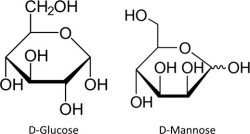
- Preventing urinary tract infections (UTIs)
- Treating mild UTIs
- Urinary tract health
- Carbohydrate-deficient glycoprotein syndrome (a rare genetic condition)
D-mannose is a natural sugar most often used to help prevent urinary tract infections, especially those caused by E. coli. Early research is promising for prevention, but the evidence is still limited and it should not replace antibiotics for an active infection. Talk to your pharmacist or doctor before using it, particularly if you are pregnant, breastfeeding, or have diabetes.
Simple sugar (monosaccharide) derived from plants such as cranberries, apples, and other fruits and vegetables · Capsules, tablets, powder; often combined with cranberry
An interaction check asks whether these two react with each other — it does not ask whether D-mannose is a good idea for someone in your situation. Here is what our D-mannose record says about it on its own.
D-mannose: dosing
There is no official, standardized dose of D-mannose, and the amounts used in research have varied. Do not use D-mannose in place of prescribed antibiotics for an active infection.
From our D-mannose monograph — the full record covers uses, side effects and every documented interaction.
About Quetiapine
What Is Quetiapine Used For?
Brand names: Seroquel, Dopaquel
Quetiapine treats schizophrenia and bipolar I disorder. This includes manic episodes (and mixed episodes for extended-release products), alone or added to lithium or divalproex. It is also used for depressive episodes of bipolar disorder.
Extended-release quetiapine products (including Seroquel XR) are also approved as add-on therapy with antidepressants for major depressive disorder. The immediate-release tablet labels supplied do not list that use.
Other Drugs & D-mannose
Browse every other medication we’ve checked against D-mannose — both the ones with a known interaction and the ones without. Select any drug for the full detail.
No drugs match “”.
No interaction 2,829 drugs checked — show the list
We also checked D-mannose against these medications and found no known interaction in our sources. Open any page to confirm.
- Apixaban ›
- Levothyroxine ›
- Amlodipine ›
- Methylphenidate ›
- Warfarin ›
- Ivermectin ›
- Abemaciclib ›
- Sertraline ›
- Testosterone ›
- Rosuvastatin ›
- Losartan Potassium ›
- Acetaminophen ›
- Aspirin ›
- Metoprolol ›
- Clopidogrel ›
- Escitalopram ›
- Atorvastatin ›
- Rivaroxaban ›
- Warfarin Sodium ›
- Isotretinoin ›
- Tirzepatide ›
- Ibuprofen ›
- Levothyroxine, Liothyronine ›
- Metformin ›
- Docusate ›
- Prednisone ›
- Amlodipine Besylate ›
- Amitriptyline ›
- Tadalafil ›
- Semaglutide ›
- Propranolol ›
- Methamphetamine ›
- Amphetamine ›
- Sumatriptan ›
- Lisdexamfetamine ›
- Valacyclovir ›
- Hydroxyurea ›
- Lisinopril ›
- Amoxicillin ›
- Methotrexate ›
- Bupropion ›
- Azithromycin ›
- Fluoxetine ›
- Doxycycline ›
- Pregabalin ›
- Gabapentin ›
- Acetaminophen, Aspirin, Caffeine ›
- Dextroamphetamine ›
- Naproxen ›
- Lamotrigine ›
- Clonazepam ›
- Buspirone ›
- Acyclovir ›
- Bendamustine ›
- Duloxetine ›
- Omeprazole ›
- Letrozole ›
- Citalopram ›
- Methylene Blue ›
- Ciprofloxacin ›
Showing the 60 most looked-up of 2,829 medications checked with no known interaction — see the full D-mannose list.
D-mannose References
The 6 references that drive our D-mannose monograph and interaction data, from the evidence-graded Natural Medicines (TRC Healthcare) database. Citations with a link open the study on PubMed or the publisher’s site.
- Westphal V, Kjaergaard S, Davis JA, et al. Genetic and metabolic analysis of the first adult with congenital disorder of glycosylation type Ib: long-term outcome and effects of mannose supplementation. Mol Genet Metab 2001;73:77-85. PubMed
- Kranjcec B, Papes D, Altarac S. D-mannose powder for prophylaxis of recurrent urinary tract infections in women: a randomized clinical trial. World J Urol. 2014 Feb;32(1):79-84.
- de Lonlay P, Seta N. The clinical spectrum of phosphomannose isomerase deficiency, with an evaluation of mannose treatment for CDG-Ib. Biochim Biophys Acta. 2009;1792(9):841-3. PubMed
- Harms HK, Zimmer KP, Kurnik K, Bertele-Harms RM, Weidinger S, Reiter K. Oral mannose therapy persistently corrects the severe clinical symptoms and biochemical abnormalities of phosphomannose isomerase deficiency. Acta Paediatr. 2002;91(10):1065-72. DOI
- . Damen G, de Klerk H, Huijmans J, den Hollander J, Sinaasappel M. Gastrointestinal and other clinical manifestations in 17 children with congenital disorders of glycosylation type Ia, Ib, and Ic. J Pediatr Gastroenterol Nutr. 2004;38(3):282-7. DOI
- Lenger SM, Bradley MS, Thomas DA, Bertolet MH, Lowder JL, Sutcliffe S. D-mannose vs other agents for recurrent urinary tract infection prevention in adult women: a systematic review and meta-analysis. Am J Obstet Gynecol. 2020;223(2):265.e1-265.e13. PubMed
Medication overviews come from MedlinePlus (NIH); supplement label data from the NIH Dietary Supplement Label Database. Content is written and reviewed by licensed HelloPharmacist pharmacists — see our data sources and editorial standards.
Taking D-mannose and Quetiapine Together: Common Questions
Is it safe to take D-mannose with Quetiapine?
Do D-mannose and Quetiapine have any of the same side effects?
Should I take D-mannose and Quetiapine at the same time of day?
Does Quetiapine interact with any supplements?
Written and reviewed by the HelloPharmacist editorial staff. Our editorial policy
Keep Exploring
Still Have a Question About Quetiapine and D-mannose?
Our pharmacists answer your medication & supplement questions — free.
This information is for education only and is not a substitute for professional medical advice. Always check with your pharmacist or doctor before starting, stopping, or combining supplements and medications.