
D-mannose Drug Interactions, Uses, Effectiveness, Safety & More
What is this page for?
First and foremost: how D-mannose interacts with medications. The heart of this page is the interaction list — every drug D-mannose is known to interact with, and how serious each one is.
But these pages have grown well beyond that into a full monograph — what D-mannose is, what people use it for and how strong the evidence is, its safety and side effects, and answers to the questions we’re asked most — written and reviewed by the clinical staff at HelloPharmacist. It’s educational information from our licensed clinical databases, not medical advice, and we don’t sell or endorse products. Our editorial policy
Check D-mannose against your medication
Add one medicationDrugs that interact with D-mannose
0 medications have a known interaction with D-mannose, graded by severity. Select any drug for the full evidence-based detail.
We don’t currently list any known drug interactions for D-mannose. This doesn’t guarantee none exist — always confirm with your pharmacist before combining supplements with your medications.
What Severity, Likelihood & Evidence Mean
Severity — How Serious It Can Be
- Major. Clinically significant; generally best avoided, or used only under direct professional supervision.
- Moderate. May need monitoring, a dose adjustment, or separating the times you take each one.
- Minor. Generally not clinically significant, but still worth noting and mentioning to your pharmacist.
- No known interaction. Checked against our sources with nothing documented — not the same as proven safety.
Likelihood — How Well It’s Documented
- Likely. Well-controlled human studies have demonstrated the likely existence of this interaction
- Probable. Interaction has not been documented in well-controlled studies, however, the interaction has been demonstrated in some small human studies or in controlled animal studies in conjunction with multiple case reports.
- Possible. Interaction has been documented in animal or in lab research, or the interaction has been documented in humans but is limited to case reports or conflicting clinical research exists
- Unlikely. Interaction has been demonstrated in animal or in lab research but has been shown not to occur in humans.
Where This Data Comes From
- Interaction records are evidence-graded and sourced from the Natural Medicines database (TRC Healthcare), the same reference used by pharmacists and hospitals.
- Each drug listed above links to the full report for that exact D-mannose combination — clinical detail, likelihood, evidence level, and citations.
- Content is reviewed by licensed HelloPharmacist pharmacists — see our data sources and editorial standards.
D-mannose: Uses, Safety & Side Effects
D-mannose is a natural sugar most often used to help prevent urinary tract infections, especially those caused by E. coli. Early research is promising for prevention, but the evidence is still limited and it should not replace antibiotics for an active infection. Talk to your pharmacist or doctor before using it, particularly if you are pregnant, breastfeeding, or have diabetes.
- Part used
- Simple sugar (monosaccharide) derived from plants such as cranberries, apples, and other fruits and vegetables
- Common forms
- Capsules, tablets, powder; often combined with cranberry
- Preventing urinary tract infections (UTIs)
- Treating mild UTIs
- Urinary tract health
- Carbohydrate-deficient glycoprotein syndrome (a rare genetic condition)
Popular and traditional uses — not proof it works. See “Uses & effectiveness” below for the evidence.
Generally well tolerated short-term, but high-quality long-term safety data are limited.
Insufficient reliable information available; avoid using.
Read the full pregnancy detailInsufficient reliable information available; avoid using.
Read the full breastfeeding detailPregnancy & breastfeeding ratings are from Natural Medicines (Therapeutic Research Center). Safety guidance is general; always confirm with your pharmacist or doctor for your situation.
Overview
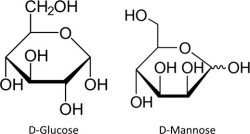
D-mannose is a simple sugar (a monosaccharide) that is closely related to glucose. It occurs naturally in the body and in some fruits and vegetables, such as cranberries, apples, oranges, peaches, and green beans. Your body makes small amounts of it on its own and uses it in normal cell functions.
As a supplement, D-mannose is sold as a powder, capsule, or tablet. People most often take it for urinary tract health, especially to try to prevent urinary tract infections (UTIs). It is frequently combined with cranberry in the same product.
How it works
The main idea is that D-mannose may stop certain bacteria, especially E. coli, from sticking to the walls of the urinary tract. Many of these bacteria have tiny finger-like structures that latch onto sugar molecules on the bladder lining. D-mannose is thought to bind to these structures instead, so the bacteria get flushed out in the urine rather than staying and causing infection.
Because D-mannose is mostly not used for energy by the body, much of it passes into the urine. Some people also believe it may slightly change the urine environment to make it less friendly to bacteria. Much of this understanding comes from laboratory studies, and the way it works in real people is still being researched.
Does D-mannose work?
How to read these evidence grades
Natural Medicines’ 7-point scale. We show each rating’s label word-for-word.
Likely Effective Carbohydrate-deficient glycoprotein syndrome type 1b
Oral D-mannose prevents certain hematologic and gastrointestinal complications in patients with this condition. However, it's unclear if it helps to prevent liver complications.
Possibly Ineffective Urinary tract infections (UTIs)
Clinical studies suggest that oral D-mannose does not reduce the rate of UTI recurrence in community dwelling pre- and postmenopausal adults. It is unclear if oral D-mannose is beneficial for the treatment of UTIs when used alone or in combination with other ingredients.
Source & disclaimer. Effectiveness ratings and evidence summaries are provided by Natural Medicines (Therapeutic Research Center) and shown as licensed. Where Natural Medicines hasn’t rated a use, HelloPharmacist’s pharmacists may add their own reviewed rating and evidence (each such entry is labeled). This is educational information, not medical advice — talk with your pharmacist or doctor before starting, stopping, or changing a supplement.
Safety & precautions
D-mannose appears to be reasonably well tolerated when used short-term in typical supplement amounts. Still, long-term safety has not been well studied.
People with diabetes or blood sugar concerns should be cautious. D-mannose is a sugar, and although it is handled differently from glucose, the effect on blood sugar is not fully clear. Check with your healthcare provider before using it.
People with kidney problems should use caution, since D-mannose is cleared through the kidneys and into the urine.
Pregnancy and breastfeeding: There is not enough reliable safety information for these situations. It is best to avoid D-mannose during pregnancy and to use caution while breastfeeding unless your doctor specifically recommends it.
If you have symptoms of a UTI such as fever, back or side pain, blood in the urine, or symptoms that do not improve, see a healthcare provider promptly rather than relying on a supplement.
Side effects
D-mannose is usually well tolerated, but it can cause digestive side effects, especially at higher doses. These may include:
- Bloating
- Loose stools or diarrhea
- Gas or stomach discomfort
Because it is processed by the kidneys, there has been some theoretical concern about effects on kidney function with very high or long-term use, though this is not well established. Stop using it and contact your healthcare provider if you have an allergic reaction or any unusual or severe symptoms.
D-mannose: Reported Adverse Effects
Documented safety reports on D-mannose from the evidence-graded Natural Medicines (TRC Healthcare) database, shown word-for-word from the licensed record.
Orally, D-mannose seems to be well tolerated.
Most Common Adverse Effects:
Orally: Bloating, diarrhea, and nausea.
Diarrhea Gastrointestinal
Orally, D-mannose can cause loose stools, diarrhea, abdominal bloating, and nausea. In children, loose stools and abdominal bloating have been reported at D-mannose doses ranging from 100 mg/kg three times daily to 150 mg/kg five times daily. Diarrhea has been reported in adults taking D-mannose 2 grams daily for 6 months. While diarrhea and loose stools have been reported at lower doses, taking a single D-mannose dose greater than 200 mg/kg is more likely to cause osmotic diarrhea.
- Westphal V, Kjaergaard S, Davis JA, et al. Genetic and metabolic analysis of the first adult with congenital disorder of glycosylation type Ib: long-term outcome and effects of mannose supplementation. Mol Genet Metab 2001;73:77-85.
- Kranjcec B, Papes D, Altarac S. D-mannose powder for prophylaxis of recurrent urinary tract infections in women: a randomized clinical trial. World J Urol. 2014 Feb;32(1):79-84.
- Harms HK, Zimmer KP, Kurnik K, Bertele-Harms RM, Weidinger S, Reiter K. Oral mannose therapy persistently corrects the severe clinical symptoms and biochemical abnormalities of phosphomannose isomerase deficiency. Acta Paediatr. 2002;91(10):1065-72.
- . Damen G, de Klerk H, Huijmans J, den Hollander J, Sinaasappel M. Gastrointestinal and other clinical manifestations in 17 children with congenital disorders of glycosylation type Ia, Ib, and Ic. J Pediatr Gastroenterol Nutr. 2004;38(3):282-7.
- Lenger SM, Bradley MS, Thomas DA, Bertolet MH, Lowder JL, Sutcliffe S. D-mannose vs other agents for recurrent urinary tract infection prevention in adult women: a systematic review and meta-analysis. Am J Obstet Gynecol. 2020;223(2):265.e1-265.e13.
- de Lonlay P, Seta N. The clinical spectrum of phosphomannose isomerase deficiency, with an evaluation of mannose treatment for CDG-Ib. Biochim Biophys Acta. 2009;1792(9):841-3.
Adverse-effects data: Natural Medicines, Therapeutic Research Center
Dosing
There is no official, standardized dose of D-mannose, and the amounts used in research have varied. Products come in different strengths and may be combined with cranberry, so the right amount depends on the specific product.
The safest approach is to follow the directions on the product label and ask your pharmacist or doctor whether it is appropriate for you and how much to take. Do not use D-mannose in place of prescribed antibiotics for an active infection.
D-mannose & Pregnancy
D-mannose & Breastfeeding
© 2026 Therapeutic Research Center
Pregnancy & lactation ratings: Natural Medicines, Therapeutic Research Center
References & further reading
The 6 references that drive our D-mannose monograph and interaction data, from the evidence-graded Natural Medicines (TRC Healthcare) database. Citations with a link open the study on PubMed or the publisher’s site.
- Westphal V, Kjaergaard S, Davis JA, et al. Genetic and metabolic analysis of the first adult with congenital disorder of glycosylation type Ib: long-term outcome and effects of mannose supplementation. Mol Genet Metab 2001;73:77-85. PubMed
- Kranjcec B, Papes D, Altarac S. D-mannose powder for prophylaxis of recurrent urinary tract infections in women: a randomized clinical trial. World J Urol. 2014 Feb;32(1):79-84.
- de Lonlay P, Seta N. The clinical spectrum of phosphomannose isomerase deficiency, with an evaluation of mannose treatment for CDG-Ib. Biochim Biophys Acta. 2009;1792(9):841-3. PubMed
- Harms HK, Zimmer KP, Kurnik K, Bertele-Harms RM, Weidinger S, Reiter K. Oral mannose therapy persistently corrects the severe clinical symptoms and biochemical abnormalities of phosphomannose isomerase deficiency. Acta Paediatr. 2002;91(10):1065-72. DOI
- . Damen G, de Klerk H, Huijmans J, den Hollander J, Sinaasappel M. Gastrointestinal and other clinical manifestations in 17 children with congenital disorders of glycosylation type Ia, Ib, and Ic. J Pediatr Gastroenterol Nutr. 2004;38(3):282-7. DOI
- Lenger SM, Bradley MS, Thomas DA, Bertolet MH, Lowder JL, Sutcliffe S. D-mannose vs other agents for recurrent urinary tract infection prevention in adult women: a systematic review and meta-analysis. Am J Obstet Gynecol. 2020;223(2):265.e1-265.e13. PubMed
This information is for education only and is not a substitute for professional medical advice. Always check with your pharmacist or doctor before starting, stopping, or combining supplements and medications.
Parts of this content are provided by the Therapeutic Research Center, LLC.
DISCLAIMER: Currently this does not check for drug-drug interactions. This is not an all-inclusive comprehensive list of potential interactions and is for informational purposes only. Not all interactions are known or well-reported in the scientific literature, and new interactions are continually being reported. Input is needed from a qualified healthcare provider including a pharmacist before starting any therapy. Application of clinical judgment is necessary.
© 2021 Therapeutic Research Center, LLC
D-mannose: Common Questions
What is D-mannose used for, and does it work?
Does D-mannose interact with prescription medications?
How are D-mannose interactions rated?
Is it safe to take D-mannose with my medications?
Where does this D-mannose interaction information come from?
What is D-mannose used for?
Can D-mannose cure a UTI on its own?
Is D-mannose safe for people with diabetes?
Can I take D-mannose while pregnant or breastfeeding?
Written and reviewed by the HelloPharmacist editorial staff. Our editorial policy
Have a question about D-mannose?
Our pharmacists answer your medication & supplement questions — free.