
Acerola Drug Interactions, Uses, Effectiveness, Safety & More
What is this page for?
First and foremost: how Acerola interacts with medications. The heart of this page is the interaction list — every drug Acerola is known to interact with, and how serious each one is.
But these pages have grown well beyond that into a full monograph — what Acerola is, what people use it for and how strong the evidence is, its safety and side effects, and answers to the questions we’re asked most — written and reviewed by the clinical staff at HelloPharmacist. It’s educational information from our licensed clinical databases, not medical advice, and we don’t sell or endorse products. Our editorial policy
Check Acerola against your medication
Add one medicationAcerola Drug Interactions: The Bottom Line
From the HelloPharmacist Editorial Team · Updated July 2026Based on the available evidence, the overall risk of a clinically significant Acerola drug interaction appears low for most people. None of the listed interactions are rated major, and the great majority are minor, with almost all resting on theoretical or lab-based reasoning rather than human studies.
The concerns that stand out most involve chemotherapy drugs, specifically alkylating agents and antitumor antibiotics. Because acerola is rich in vitamin C, an antioxidant, there is a theory it could blunt chemotherapy drugs that work by generating free radicals, though researchers disagree and some suggest the opposite effect. People taking estrogens, including birth control or hormone therapy, may see somewhat higher estrogen levels when vitamin C is added. Notably, the feared effects on warfarin and aspirin are rated unlikely, since acerola's vitamin C content appears too low to matter.
A long list of interacting medications does not mean each combination is harmful. Nearly all of these entries trace back to acerola's vitamin C content and what high-dose vitamin C might do in theory. In several cases, the predicted effect has been shown not to occur in people at realistic amounts.
Based on HelloPharmacist’s Acerola interaction data and reviewed under our editorial standards.
Drugs that interact with Acerola
128 medications have a known interaction with Acerola, graded by severity. Select any drug for the full evidence-based detail.
Don’t want to scroll the list? Just ask.
Tell us the medications you take and we’ll check each one against Acerola using our pharmacist-reviewed interaction data.
AI summaries are generated from our Acerola interaction data for education only — always confirm with your pharmacist. How we use AI
No drugs match “”.
What Severity, Likelihood & Evidence Mean
Severity — How Serious It Can Be
- Major. Clinically significant; generally best avoided, or used only under direct professional supervision.
- Moderate. May need monitoring, a dose adjustment, or separating the times you take each one.
- Minor. Generally not clinically significant, but still worth noting and mentioning to your pharmacist.
- No known interaction. Checked against our sources with nothing documented — not the same as proven safety.
Likelihood — How Well It’s Documented
- Likely. Well-controlled human studies have demonstrated the likely existence of this interaction
- Probable. Interaction has not been documented in well-controlled studies, however, the interaction has been demonstrated in some small human studies or in controlled animal studies in conjunction with multiple case reports.
- Possible. Interaction has been documented in animal or in lab research, or the interaction has been documented in humans but is limited to case reports or conflicting clinical research exists
- Unlikely. Interaction has been demonstrated in animal or in lab research but has been shown not to occur in humans.
Where This Data Comes From
- Interaction records are evidence-graded and sourced from the Natural Medicines database (TRC Healthcare), the same reference used by pharmacists and hospitals.
- Each drug listed above links to the full report for that exact Acerola combination — clinical detail, likelihood, evidence level, and citations.
- Content is reviewed by licensed HelloPharmacist pharmacists — see our data sources and editorial standards.
The kinds of drugs Acerola affects
Every type of medication (drug category) Acerola is known to interact with. Open any category for the detail — or search your exact drug in the checker above.
Alkylating Agents
Theoretically, the antioxidant effects of acerola might reduce the effectiveness of alkylating agents.
Acerola contains vitamin C, an antioxidant. There is concern that antioxidants might reduce the activity of chemotherapy drugs that generate free radicals, such as alkylating agents. In contrast, other researchers theorize that antioxidants might make alkylating chemotherapy more effective by reducing oxidative stress that could interfere with apoptosis (cell death) of cancer cells. More evidence is needed to determine what effect, if any, antioxidants such as vitamin C have on chemotherapy.
Antitumor Antibiotics
Theoretically, the antioxidant effects of acerola might reduce the effectiveness of antitumor antibiotics.
Acerola contains vitamin C, an antioxidant. There is concern that antioxidants might reduce the activity of chemotherapy drugs that generate free radicals, such as antitumor antibiotics. In contrast, other researchers theorize that antioxidants might make antitumor antibiotic chemotherapy more effective by reducing oxidative stress that could interfere with apoptosis (cell death) of cancer cells. More evidence is needed to determine what effects, if any, antioxidants such as vitamin C have on antitumor antibiotic chemotherapy.
Aluminum
Theoretically, concomitant use of acerola with aluminum salts might increase the amount of aluminum absorbed.
Acerola contains vitamin C. It is thought that vitamin C chelates aluminum, keeping it in solution and available for absorption. In people with normal renal function, urinary excretion of aluminum likely increases, making aluminum retention and toxicity unlikely. However, patients with renal failure who take aluminum-containing compounds, such as phosphate binders, should avoid acerola in doses that provide more vitamin C than the recommended dietary allowances.
Aspirin
Theoretically, acerola might reduce the clearance of aspirin; however, its vitamin C content is likely too low to produce clinically significant effects.
Acerola contains vitamin C. It has been suggested that acidification of the urine by vitamin C can decrease the urinary excretion of salicylates, increasing plasma salicylate levels. However, short-term use of up to 6 grams daily of vitamin C does not seem to affect urinary pH or salicylate excretion. The vitamin C content of acerola is typically about 2000 mg per 100 grams. Thus, a clinically significant interaction between acerola and aspirin is unlikely.
Estrogens
Theoretically, concomitant use of acerola with estrogens might increase estrogenic effects.
Acerola contains vitamin C. Increases in plasma estrogen levels of up to 55% have occurred under some circumstances when vitamin C is taken concurrently with oral contraceptives or hormone replacement therapy, including topical products. It is suggested that vitamin C prevents oxidation of estrogen in the tissues, regenerates oxidized estrogen, and reduces sulfate conjugation of estrogen in the gut wall. When tissue levels of vitamin C are high, these processes are already maximized and supplemental vitamin C does not have any effect on estrogen levels. However, increases in plasma estrogen levels may occur when women who are deficient in vitamin C take supplements.
Warfarin (Coumadin)
Theoretically, acerola might reduce the effectiveness of warfarin; however, its vitamin C content is likely too low to produce clinically significant effects.
Acerola contains vitamin C. High doses of vitamin C may reduce the response to warfarin, possibly by causing diarrhea and reducing warfarin absorption. This occurred in two people who took up to 16 grams daily of vitamin C, and resulted in decreased prothrombin time. Lower doses of 5-10 grams daily of vitamin C can also reduce warfarin absorption, but this does not seem to be clinically significant. The vitamin C content of acerola is typically about 2000 mg per 100 grams. Thus, a clinically significant interaction between acerola and warfarin is unlikely.
Acerola: Uses, Safety & Side Effects
Acerola is a small tropical fruit prized for its very high natural vitamin C content, and it is mostly used as a food-based source of vitamin C and antioxidants. While vitamin C itself has well-known roles in the body, strong human studies showing that acerola specifically treats or prevents disease are limited. It is generally considered safe in food amounts, but check with your pharmacist or doctor before using concentrated supplements.
- Scientific name
- Malpighia emarginata
- Family
- Malpighiaceae
- Part used
- Fruit (cherry)
- Common forms
- Capsules, tablets, chewables, powder, juice, gummies
- Vitamin C source
- Immune support
- Antioxidant support
- General wellness
- Skin health
Popular and traditional uses — not proof it works. See “Uses & effectiveness” below for the evidence.
Generally considered safe when used in food amounts or as directed on supplement labels.
Insufficient reliable information available; avoid using in amounts greater than found in foods.
Read the full pregnancy detailInsufficient reliable information available; avoid using in amounts greater than found in foods.
Read the full breastfeeding detailPregnancy & breastfeeding ratings are from Natural Medicines (Therapeutic Research Center). Safety guidance is general; always confirm with your pharmacist or doctor for your situation.
Overview
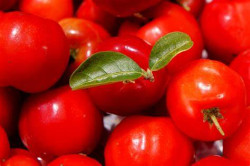
Acerola (Malpighia emarginata) is a small, bright red fruit that looks a bit like a cherry. It grows on shrubs or small trees native to Central America, the Caribbean, and parts of South America. You may also see it called Barbados cherry or West Indian cherry.
The fruit is best known for being one of the richest natural sources of vitamin C. Because of this, acerola is widely used in dietary supplements and is added to juices, jams, gummies, and powders.
People take acerola mainly to boost their vitamin C intake and to get its natural plant antioxidants. It comes in many forms, including capsules, tablets, chewables, and powders.
How it works
The main active ingredient in acerola is vitamin C (ascorbic acid), which it contains in unusually high amounts. Vitamin C is an antioxidant, meaning it can help protect cells from damage caused by unstable molecules called free radicals. It also supports the immune system and helps the body build collagen, a protein important for skin, blood vessels, and connective tissue.
Acerola also contains other plant compounds, such as polyphenols and carotenoids, which may add to its antioxidant activity. Some of these compounds have shown antioxidant effects in laboratory studies.
It is important to know that many of these proposed effects are based on test-tube or animal research. How much benefit a person actually gets from acerola supplements in real life is not fully proven.
Does Acerola work?
How to read these evidence grades
Natural Medicines’ 7-point scale. We show each rating’s label word-for-word.
Possibly Effective Vitamin C deficiency
Orally, consuming acerola might help to prevent or treat vitamin C deficiency since acerola contains a significant amount of vitamin C.
Also studied for 3 conditions — evidence insufficient to rate
Insufficient Reliable Evidence To Rate Atherosclerosis
Although there is interest in using oral acerola for atherosclerosis, there is insufficient reliable information about the clinical effects of acerola for this condition.
Insufficient Reliable Evidence To Rate Common cold
Although there is interest in using oral acerola for the common cold, there is insufficient reliable information about the clinical effects of acerola for this condition.
Insufficient Reliable Evidence To Rate Diarrhea
Although there is interest in using oral acerola for diarrhea, there is insufficient reliable information about the clinical effects of acerola for this condition.
Source & disclaimer. Effectiveness ratings and evidence summaries are provided by Natural Medicines (Therapeutic Research Center) and shown as licensed. Where Natural Medicines hasn’t rated a use, HelloPharmacist’s pharmacists may add their own reviewed rating and evidence (each such entry is labeled). This is educational information, not medical advice — talk with your pharmacist or doctor before starting, stopping, or changing a supplement.
Safety & precautions
Acerola is a common food and is generally considered safe when eaten or taken as directed. Most concerns relate to its high vitamin C content. Very large amounts of vitamin C can cause stomach upset and, in some people, may increase the risk of kidney stones.
People with a history of kidney stones, kidney disease, or conditions involving iron overload (such as hemochromatosis) should be cautious, since high vitamin C can affect these conditions. If you have these issues, talk to your doctor first.
For pregnancy and breastfeeding, normal food amounts of acerola are likely fine, but the safety of concentrated supplements has not been well studied. To be safe, pregnant or breastfeeding people should check with their doctor before using acerola supplements.
As with any supplement, talk to your pharmacist or doctor before starting acerola, especially if you have a health condition or take medications.
Side effects
Acerola is usually well tolerated. When side effects occur, they are most often linked to its vitamin C content and may include stomach upset, nausea, diarrhea, or cramping, especially with large doses.
Some people may be allergic to acerola. Stop using it and seek medical care if you notice signs of an allergic reaction, such as rash, itching, swelling, or trouble breathing.
Taking very high amounts of vitamin C over time may raise the risk of kidney stones in people who are prone to them.
Acerola: Reported Adverse Effects
Documented safety reports on Acerola from the evidence-graded Natural Medicines (TRC Healthcare) database, shown word-for-word from the licensed record.
Reports by conditionAllergic rhinitis (hay fever) Immunologic
There is a case report of a 37 year old man who developed a pruritic rash, dyspnea, and tachycardia 5 minutes after drinking a mixture of apple and acerola juices. He had a history of hay fever, oral allergy symptoms with avocado, celery, walnut, and curry, and contact urticaria with latex, but tolerated apples and apple juice. IgE antibodies to acerola were identified in the patient's serum. Ultimately, cross-reactivity between a latex protein and acerola was determined.
Constipation Gastrointestinal
Osmotic diarrhea and gastrointestinal upset have been reported with doses of vitamin C greater than the tolerable upper intake level (UL) of 2000 mg daily. Theoretically this could occur with large doses of oral acerola. A case report describes rectal obstruction with mass consisting of partially digested acerola fruits in a 5-year-old child who had ingested an unknown quantity of fruits daily for 7 days. The child presented with vomiting, abdominal pain and distension, tenesmus, constipation, and dehydration, and required surgical disimpaction.
- Food and Nutrition Board, Institute of Medicine. Dietary Reference Intakes for Vitamin C, Vitamin E, Selenium, and Carotenoids. Washington, DC: National Academy Press, 2000. Available at: http://www.nap.edu/books/0309069351/html/.
- Denadai R, Souza FM, Valle MR. Fecal impaction by rectal acerola bezoar. Indian J Pediatr 2013;80(5):432-3.
Adverse-effects data: Natural Medicines, Therapeutic Research Center
Dosing
There is no official standardized dose for acerola. Products vary widely in their strength and in how much vitamin C they provide.
The best approach is to follow the directions on the product label and not exceed the recommended amount. Keep in mind that you may also be getting vitamin C from other foods and supplements, so very high combined intakes are best avoided.
If you are unsure how much to take or whether acerola is right for you, ask your pharmacist or doctor for guidance.
Acerola & Pregnancy
Acerola & Breastfeeding
© 2026 Therapeutic Research Center
Pregnancy & lactation ratings: Natural Medicines, Therapeutic Research Center
References & further reading
The 20 references that drive our Acerola monograph and interaction data, from the evidence-graded Natural Medicines (TRC Healthcare) database. Citations with a link open the study on PubMed or the publisher’s site.
- Back DJ, Breckenridge AM, MacIver M, et al. Interaction of ethinyloestradiol with ascorbic acid in man. Br Med J (Clin Res Ed) 1981;282:1516.
- Morris JC, Beeley L, Ballantine N. Interaction of ethinyloestradiol with ascorbic acid in man [letter]. Br Med J (Clin Res Ed) 1981;283:503.
- Labriola D, Livingston R. Possible interactions between dietary antioxidants and chemotherapy. Oncology 1999;13:1003-8.
- Hansten PD, Horn JR. Drug Interactions Analysis and Management. Vancouver, WA: Applied Therapeutics Inc., 1997 and updates.
- Food and Nutrition Board, Institute of Medicine. Dietary Reference Intakes for Vitamin C, Vitamin E, Selenium, and Carotenoids. Washington, DC: National Academy Press, 2000. Available at: http://www.nap.edu/books/0309069351/html/.
- Rosenthal G. Interaction of ascorbic acid and warfarin. JAMA 1971;215:1671. DOI
- Hume R, Johnstone JM, Weyers E. Interaction of ascorbic acid and warfarin. JAMA 1972;219:1479. DOI
- Smith EC, Skalski RJ, Johnson GC, Rossi GV. Interaction of ascorbic acid and warfarin. JAMA 1972;221:1166. DOI
- Domingo JL, Gomez M, Llobet JM, Richart C. Effect of ascorbic acid on gastrointestinal aluminum absorption (letter). Lancet 1991;338:1467.
- Domingo JL, Gomez M, Llobet JM, Corbella J. Influence of some dietary constituents on aluminum absorption and retention in rats. Kidney Int 1991;39:598-601. PubMed
- Partridge NA, Regnier FE, White JL, Hem SL. Influence of dietary constituents on intestinal absorption of aluminum. Kidney Int 1989;35:1413-7. PubMed
- Mc Leod DC, Nahata MC. Inefficacy of ascorbic acid as a urinary acidifier (letter). N Engl J Med 1977;296:1413. DOI
- Hansten PD, Hayton WL. Effect of antacid and ascorbic acid on serum salicylate concentration. J Clin Pharmacol 1980;20:326-31. PubMed
- Vihtamaki T, Parantainen J, Koivisto AM, et al. Oral ascorbic acid increases plasma oestradiol during postmenopausal hormone replacement therapy. Maturitas 2002;42:129-35. PubMed
- Feetam CL, Leach RH, Meynell MJ. Lack of a clinically important interaction between warfarin and ascorbic acid. Toxicol Appl Pharmacol 1975;31:544-7. PubMed
- Weintraub M, Griner PF. Warfarin and ascorbic acid: lack of evidence for a drug interaction. Toxicol Appl Pharmacol 1974;28:53-6. PubMed
- Prasad KN. Rationale for using high-dose multiple dietary antioxidants as an adjunct to radiation therapy and chemotherapy. J Nutr 2004;134:3182S-3S. PubMed
- Conklin KA. Cancer chemotherapy and antioxidants. J Nutr 2004;134:3201S-3204S. PubMed
- Denadai R, Souza FM, Valle MR. Fecal impaction by rectal acerola bezoar. Indian J Pediatr 2013;80(5):432-3. PubMed
- Raulf-Heimsoth M, Stark R, Sander I, et al. Anaphylactic reaction to apple juice containing acerola: cross-reactivity to latex due to prohevein. J Allergy Clin Immunol 2002;109(4):715-6. PubMed
This information is for education only and is not a substitute for professional medical advice. Always check with your pharmacist or doctor before starting, stopping, or combining supplements and medications.
Parts of this content are provided by the Therapeutic Research Center, LLC.
DISCLAIMER: Currently this does not check for drug-drug interactions. This is not an all-inclusive comprehensive list of potential interactions and is for informational purposes only. Not all interactions are known or well-reported in the scientific literature, and new interactions are continually being reported. Input is needed from a qualified healthcare provider including a pharmacist before starting any therapy. Application of clinical judgment is necessary.
© 2021 Therapeutic Research Center, LLC
Brands that make products with Acerola
553 brands in our database make a supplement containing Acerola.
Supplement products with Acerola
3,133 products in our database contain Acerola. Open any to see its full ingredient list and every drug interaction we check.
Acerola: Common Questions
What is Acerola used for, and does it work?
Does Acerola interact with prescription medications?
How are Acerola interactions rated?
Is it safe to take Acerola with my medications?
Where does this Acerola interaction information come from?
What is Acerola used for?
Is Acerola the same as vitamin C?
Is Acerola safe to take every day?
Can I take Acerola while pregnant or breastfeeding?
Written and reviewed by the HelloPharmacist editorial staff. Our editorial policy
Products that contain Acerola
A rotating sample of real supplements in our database that list Acerola — open any to see its full ingredients and every drug interaction we check.
- Organic SuperFoods Spectrum by Swiss BioEnergetics
- Chewable Vitamin C 500 mg Raspberry-Cherry by Harmonia
- Athletic Pure Pack by Pure Encapsulations
- Optimum-C Formula by Bluebonnet
- Formula VM-75 by Solgar
- Keto Fitastic Super Fruit Gummies Max by Justified Laboratories
- Power Greens by Dr. Seth's Vitamin Vibrations
- Prenatal Plus by 1st Phorm
- GREENS Berry Bliss by Core Nutritionals
- Go Ruby Go! by IVL
Have a question about Acerola?
Our pharmacists answer your medication & supplement questions — free.