
Acerola + Azithromycin
Azithromycin brand names: Zithromax, Zmax, Azasite.
We found no known interaction between Acerola and Azithromycin in our sources. Absence of a documented interaction is not the same as proven safety, and does not guarantee one does not exist. Do not start, stop, or change a medication or supplement based on this page; confirm with your pharmacist or doctor first. Additionally, although there is no interaction, the two are separately associated with some of the same side effects, which would make a new symptom harder to attribute to one or the other.
Acerola and Azithromycin
We checked these two against our interaction database. Here is what we found.
No Known Interaction Found
We did not find a documented interaction between Azithromycin and Acerola in our sources. This does not guarantee that the combination is completely free of risk — there is often limited research on supplements and herbal products, especially around drug interactions.
If you decide to take both, the practical routine is simple: add one new thing at a time and note the date you started it. If the combination is going to disagree with you, it usually shows in the first days to a couple of weeks — and a start date turns “I’ve been feeling off” into something a pharmacist can actually work with. Do not stop a prescribed medicine on your own.
Always talk with your pharmacist or doctor before making changes to your medications or supplements, particularly if you take several medications or have an ongoing health condition.
Acerola safety at a glance
Safety guidance is general; always confirm with your pharmacist or doctor for your situation.
Why No Interaction Is Listed for Azithromycin
Interactions in our licensed database are recorded against drug classes, not just single drug names. Azithromycin is filed under 7 classifications — including macrolide antibiotics, qt interval-prolonging drugs, antibiotic drugs. Acerola has documented interactions with 6 drug classes — the most serious being alkylating agents (moderate), antitumor antibiotics (moderate) and aluminum (minor) — and none of Azithromycin’s classifications are among them.
Classification data comes from our licensed Natural Medicines dataset. A medication can belong to classes beyond those recorded there, so this describes how the check was run — it is not a safety guarantee.
Acerola Does Interact With Other Medications
Acerola has 39 moderate, 89 minor known drug interactions in our database — Azithromycin isn’t one of them. If you take anything else, check it against the full list below.
Check Another of Your Medications Against Acerola
We haven’t checked that one against Acerola yet — ask our pharmacists directly.
Covers the 2,830 medications we’ve checked against Acerola. Pick one to open its full report.
Questions About Acerola or Azithromycin
These are real questions from readers, answered by the pharmacists at HelloPharmacist — written by a person, not generated from a database. Each one covers Acerola or Azithromycin, not necessarily both, but if one is close to what you were about to ask it will usually go further than a database entry can:
- Is Intermittent Vitamin D3 Dosing Reasonable After Past Side Effects? ›
- Is Taking Azithromycin and Clindamycin Together Too Much? ›
- Can You Take a Z-Pack With Primatene? ›
Not quite your question? Ask our pharmacists directly — it is free, there is no account required, and answers usually come back within 24 hours.
See Every Supplement That Interacts With Azithromycin
This page covers Acerola only. If you take other supplements — a multivitamin, a sleep aid, something for joints — the Azithromycin page lists 92 supplements it has a documented interaction with, worst first, each one explained.
The most serious there right now: Activated Charcoal (major), American Hellebore (major), Arsenic (major), Cesium (major) and Ephedra (major).
By severity: 8 major · 71 moderate · 13 minor.
From our pharmacist’s overview on the Azithromycin page
“A five-day Z-Pak for a sinus or chest infection seems too brief to fuss over, but azithromycin (Zithromax, Zmax) deserves genuine caution around supplements, and the eight major-rated entries on this list are the ones to understand first. Most of those involve the heart.”
Reviewed by 2 · Jul 18, 2026
Taking Acerola as Part of a Dietary Supplement Product? Check It for Interactions
We hold 2,642 real supplement products containing Acerola, each one broken down to its full ingredient list — and combination products often carry several ingredients besides Acerola. Even though Acerola itself has no known interaction with Azithromycin, another ingredient on your label might. Find your product and we’ll check every ingredient on its label:
Where Acerola and Azithromycin Sit Against Everything Else
Out of every supplement and medication people look up on HelloPharmacist, here is where these two land this week — and which way each has been moving.
#113 of 1,452 supplements looked up here in the last 7 days
#38 of 2,830 medications looked up here in the last 7 days
Position among everything looked up on this site, not a measure of how commonly either one is used or how important it is. A supplement can climb this list because of a news story. It counts every request to the page, automated ones included, and nothing here identifies anyone.
Where does our data come from?
- Source: the Natural Medicines (TRC Healthcare) clinical database — the evidence-graded professional reference for herb & supplement interactions.
- Citation library: 103,510 references behind our interaction content, 65,311 of them resolved to verified PubMed/DOI sources. See every Acerola reference on this page ↓
- Freshness: we automatically re-check this combination every week — this pair was last verified October 4, 2026. The Acerola and Azithromycin records this page draws on were last updated July 10, 2026.
- What “no known interaction” means: no documented interaction in the sources above — not a guarantee of safety. Supplements are studied far less than prescription drugs, so we say exactly what the evidence supports, and nothing more.
About Acerola
What is Acerola?
- Vitamin C source
- Immune support
- Antioxidant support
- General wellness
- Skin health
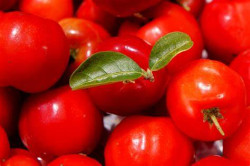
Acerola is a small tropical fruit prized for its very high natural vitamin C content, and it is mostly used as a food-based source of vitamin C and antioxidants. While vitamin C itself has well-known roles in the body, strong human studies showing that acerola specifically treats or prevents disease are limited. It is generally considered safe in food amounts, but check with your pharmacist or doctor before using concentrated supplements.
Malpighia emarginata · Malpighiaceae · Fruit (cherry) · Capsules, tablets, chewables, powder, juice, gummies
An interaction check asks whether these two react with each other — it does not ask whether Acerola is a good idea for someone in your situation. Here is what our Acerola record says about it on its own.
Acerola: dosing
There is no official standardized dose for acerola. Products vary widely in their strength and in how much vitamin C they provide.The best approach is to follow the directions on the product label and not exceed the recommended amount.
From our Acerola monograph — the full record covers uses, side effects and every documented interaction.
About Azithromycin
What Is Azithromycin Used For?
Brand names: Zithromax, Zmax, Azasite
Azithromycin treats mild to moderate infections caused by susceptible bacteria. Oral tablets and oral suspension are used for several infection types in adults and, for some, children.
Oral uses include acute bacterial flare-ups of chronic bronchitis, acute bacterial sinusitis, uncomplicated skin infections, urethritis and cervicitis, genital ulcer disease in men, ear infections (acute otitis media) in children, community-acquired pneumonia, and pharyngitis/tonsillitis. The injection (Zithromax and azithromycin for injection) is used for community-acquired pneumonia in adults and pelvic inflammatory disease. AzaSite eye drops are used only for bacterial conjunctivitis (pink eye).
Other Drugs & Acerola
Browse every other medication we’ve checked against Acerola — both the ones with a known interaction and the ones without. Select any drug for the full detail.
No drugs match “”.
39 interactions
- Doxorubicin ›
- Bendamustine ›
- Carmustine ›
- Mitomycin ›
- Busulfan ›
- Cyclophosphamide ›
- Dactinomycin ›
- Melphalan ›
- Retapamulin ›
- Thiotepa ›
- Altretamine ›
- Bendamustine Hydrochloride ›
- Bleomycin ›
- Carboplatin ›
- Chlorambucil ›
- Cisplatin ›
- Dacarbazine ›
- Daunorubicin Citrate ›
- Daunorubicin Hydrochloride ›
- Doripenem ›
- Epirubicin ›
- Estramustine Phosphate Sodium ›
- Idarubicin ›
- Ifosfamide ›
- Lomustine ›
- Lurbinectedin ›
- Mechlorethamine Hydrochloride ›
- Melphalan Flufenamide ›
- Melphalan Hydrochloride ›
- Mitomycin C ›
- Mitoxantrone ›
- Oxaliplatin ›
- Procarbazine ›
- Streptozocin ›
- Temozolomide ›
- Tigecycline ›
- Trabectedin ›
- Valrubicin ›
- Daunorubicin, Cytarabine ›
89 interactions
- Aspirin ›
- Estradiol ›
- Aluminum Chloride ›
- Conjugated Estrogens ›
- Aluminum Hydroxide ›
- Warfarin Sodium ›
- Esterified Estrogens ›
- Estropipate ›
- Acetylsalicylic Acid ›
- Dihydroxyaluminum Sodium Carbonate ›
- Estrogen ›
- Estrone ›
- Ethinyl Estradiol ›
- Fish Oil Triglycerides ›
- Oestrogen ›
- Prasterone (prescription Drug) ›
- Tibolone ›
- Warfarin ›
- Ethinyl Estradiol, Norethindrone ›
- Ethinyl Estradiol, Levonorgestrel ›
- Ethinyl Estradiol, Norgestimate ›
- Ethinyl Estradiol, Desogestrel ›
- Ethinyl Estradiol, Norethindrone, Ferrous Fumarate ›
- Desogestrel, Ethinyl Estradiol ›
- Ethinyl Estradiol, Ethynodiol Diacetate ›
- Levonorgestrel, Ethinyl Estradiol ›
- Aspirin, Caffeine, Orphenadrine ›
- Ethinyl Estradiol, Norgestrel ›
- Acetaminophen, Aspirin, Caffeine ›
- Drospirenone, Ethinyl Estradiol ›
- Aluminum Hydroxide, Magnesium Hydroxide (otc Drug) ›
- Aspirin, Caffeine, Dover's Pwd ›
- Aspirin, Dipyridamole ›
- Aspirin, Hydrocodone ›
- Conjugated Estrogens, Medroxyprogesterone Acetate ›
- Conjugated Estrogens, Meprobamate ›
- Cyproterone Acetate, Ethinyl Estradiol ›
- Ethiny Estradiol, Levonorgestrel ›
- Norelgestromin, Ethinyl Estradiol ›
- Norethindrone Acetate, Ethinyl Estradiol, Ferrous Fumarate ›
- Acetaminophen, Aspirin ›
- Alginic Acid, Aluminum Hydroxide ›
- Aluminum Acetate, Benzethonium Chloride ›
- Aluminum Hydroxide, Aspirin, Codeine Phosphate, Magnesium Hydroxide ›
- Aluminum Hydroxide, Aspirin, Magnesium Hydroxide ›
- Aluminum Hydroxide, Magnesium Hydroxide, Simethicone (otc Drug) ›
- Aluminum, Calcium ›
- Aluminum, Magnesium (otc Drug) ›
- Aluminum, Magnesium Hydroxide (otc Drug) ›
- Aspirin, Aluminum Hydroxide, Codeine Phosphate, Magnesium Hydroxide ›
- Aspirin, Butalbital ›
- Aspirin, Butalbital, Caffeine ›
- Aspirin, Butalbital, Caffeine, Codeine Phosphate ›
- Aspirin, Butalbital, Caffeine, Phenacetin ›
- Aspirin, Caffeine ›
- Aspirin, Caffeine, Codeine Phosphate ›
- Aspirin, Caffeine, Dihydrocodeine Bitartrate ›
- Aspirin, Caffeine, Hydrocodone ›
- Aspirin, Caffeine, Isobutylallylbarbituric Acid, Phenacetin ›
- Aspirin, Caffeine, Phenacetin, Propoxyphene ›
Showing 60 of 89 minor interactions — see all 89 on the Acerola page.
No interaction 2,701 drugs checked — show the list
We also checked Acerola against these medications and found no known interaction in our sources. Open any page to confirm.
- Apixaban ›
- Levothyroxine ›
- Amlodipine ›
- Methylphenidate ›
- Ivermectin ›
- Abemaciclib ›
- Testosterone ›
- Losartan Potassium ›
- Sertraline ›
- Rosuvastatin ›
- Acetaminophen ›
- Metoprolol ›
- Escitalopram ›
- Clopidogrel ›
- Atorvastatin ›
- Rivaroxaban ›
- Isotretinoin ›
- Tirzepatide ›
- Levothyroxine, Liothyronine ›
- Ibuprofen ›
- Amlodipine Besylate ›
- Docusate ›
- Metformin ›
- Prednisone ›
- Amitriptyline ›
- Methamphetamine ›
- Tadalafil ›
- Semaglutide ›
- Lisdexamfetamine ›
- Amphetamine ›
- Hydroxyurea ›
- Sumatriptan ›
- Valacyclovir ›
- Propranolol ›
- Amoxicillin ›
- Lisinopril ›
- Methotrexate ›
- Bupropion ›
- Fluoxetine ›
- Doxycycline ›
- Pregabalin ›
- Gabapentin ›
- Dextroamphetamine ›
- Naproxen ›
- Lamotrigine ›
- Quetiapine ›
- Clonazepam ›
- Acyclovir ›
- Buspirone ›
- Duloxetine ›
- Omeprazole ›
- Citalopram ›
- Letrozole ›
- Methylene Blue ›
- Ciprofloxacin ›
- Acetaminophen, Codeine ›
- Acetaminophen, Butalbital, Caffeine ›
- Candesartan Cilexetil ›
- Amoxicillin, Clavulanate Potassium ›
- Acetaminophen, Chlorpheniramine, Dextromethorphan, Phenylpropanolamine ›
Showing the 60 most looked-up of 2,701 medications checked with no known interaction — see the full Acerola list.
Acerola References
The 20 references that drive our Acerola monograph and interaction data, from the evidence-graded Natural Medicines (TRC Healthcare) database. Citations with a link open the study on PubMed or the publisher’s site.
- Back DJ, Breckenridge AM, MacIver M, et al. Interaction of ethinyloestradiol with ascorbic acid in man. Br Med J (Clin Res Ed) 1981;282:1516.
- Morris JC, Beeley L, Ballantine N. Interaction of ethinyloestradiol with ascorbic acid in man [letter]. Br Med J (Clin Res Ed) 1981;283:503.
- Labriola D, Livingston R. Possible interactions between dietary antioxidants and chemotherapy. Oncology 1999;13:1003-8.
- Hansten PD, Horn JR. Drug Interactions Analysis and Management. Vancouver, WA: Applied Therapeutics Inc., 1997 and updates.
- Food and Nutrition Board, Institute of Medicine. Dietary Reference Intakes for Vitamin C, Vitamin E, Selenium, and Carotenoids. Washington, DC: National Academy Press, 2000. Available at: http://www.nap.edu/books/0309069351/html/.
- Rosenthal G. Interaction of ascorbic acid and warfarin. JAMA 1971;215:1671. DOI
- Hume R, Johnstone JM, Weyers E. Interaction of ascorbic acid and warfarin. JAMA 1972;219:1479. DOI
- Smith EC, Skalski RJ, Johnson GC, Rossi GV. Interaction of ascorbic acid and warfarin. JAMA 1972;221:1166. DOI
- Domingo JL, Gomez M, Llobet JM, Richart C. Effect of ascorbic acid on gastrointestinal aluminum absorption (letter). Lancet 1991;338:1467.
- Domingo JL, Gomez M, Llobet JM, Corbella J. Influence of some dietary constituents on aluminum absorption and retention in rats. Kidney Int 1991;39:598-601. PubMed
- Partridge NA, Regnier FE, White JL, Hem SL. Influence of dietary constituents on intestinal absorption of aluminum. Kidney Int 1989;35:1413-7. PubMed
- Mc Leod DC, Nahata MC. Inefficacy of ascorbic acid as a urinary acidifier (letter). N Engl J Med 1977;296:1413. DOI
- Hansten PD, Hayton WL. Effect of antacid and ascorbic acid on serum salicylate concentration. J Clin Pharmacol 1980;20:326-31. PubMed
- Vihtamaki T, Parantainen J, Koivisto AM, et al. Oral ascorbic acid increases plasma oestradiol during postmenopausal hormone replacement therapy. Maturitas 2002;42:129-35. PubMed
- Feetam CL, Leach RH, Meynell MJ. Lack of a clinically important interaction between warfarin and ascorbic acid. Toxicol Appl Pharmacol 1975;31:544-7. PubMed
- Weintraub M, Griner PF. Warfarin and ascorbic acid: lack of evidence for a drug interaction. Toxicol Appl Pharmacol 1974;28:53-6. PubMed
- Prasad KN. Rationale for using high-dose multiple dietary antioxidants as an adjunct to radiation therapy and chemotherapy. J Nutr 2004;134:3182S-3S. PubMed
- Conklin KA. Cancer chemotherapy and antioxidants. J Nutr 2004;134:3201S-3204S. PubMed
- Denadai R, Souza FM, Valle MR. Fecal impaction by rectal acerola bezoar. Indian J Pediatr 2013;80(5):432-3. PubMed
- Raulf-Heimsoth M, Stark R, Sander I, et al. Anaphylactic reaction to apple juice containing acerola: cross-reactivity to latex due to prohevein. J Allergy Clin Immunol 2002;109(4):715-6. PubMed
Medication overviews come from MedlinePlus (NIH); supplement label data from the NIH Dietary Supplement Label Database. Content is written and reviewed by licensed HelloPharmacist pharmacists — see our data sources and editorial standards.
Azithromycin Is Linked to Lower Levels of 7 Nutrients
Natural Medicines records Azithromycin as a medicine that can lower these. This is not an interaction with Acerola — it is a separate effect of the medicine, and it is a reason some people are advised to supplement rather than to avoid one:
Read the full Azithromycin nutrient depletion report ›
Depletion records come from the licensed Natural Medicines database. Do not start a supplement on the strength of this page — ask your pharmacist or doctor whether it applies to you.
Taking Acerola and Azithromycin Together: Common Questions
Is it safe to take Acerola with Azithromycin?
Do Acerola and Azithromycin have any of the same side effects?
How was the Acerola and Azithromycin combination checked?
Does Acerola interact with any other medications?
Does Azithromycin interact with any supplements?
Written and reviewed by the HelloPharmacist editorial staff. Our editorial policy
Keep Exploring
Still Have a Question About Azithromycin and Acerola?
Our pharmacists answer your medication & supplement questions — free.
This information is for education only and is not a substitute for professional medical advice. Always check with your pharmacist or doctor before starting, stopping, or combining supplements and medications.