
Citrus Bergamot Complex 1,000 mg Ingredients & Drug Interactions
What is this page for?
First and foremost: checking Citrus Bergamot Complex 1,000 mg against your medications. The heart of this page is the interaction checker and the full interaction report — how this product’s ingredients may interact with prescription and over-the-counter medicines you may be taking.
Around that, we add a pharmacist’s high-level view of the product as a whole — what’s inside, the evidence for its stated use, how transparent the label is, and what safety data exists — so you can see the full picture in one place. It’s educational information from our licensed clinical databases and the clinical staff at HelloPharmacist — not medical advice — and we don’t sell or endorse products. Our editorial policy
Citrus Bergamot Complex 1,000 mg is a dietary supplement by eleva NUTRITION with 4 active ingredients. Its ingredients are commonly taken for seasonal allergies, antioxidant support, heart and blood pressure health.Based on those ingredients, 1,339 medications have a known interaction with it, the most serious rated moderate. The ingredients most likely to interact are Citrus Bioflavonoid Complex, Black Pepper, Powder, Citrus Bergamot, Powder. Use the checker below to test your specific medication, or read the full HelloPharmacist Interaction Report.
Check Your Meds Against Citrus Bergamot Complex 1,000 mg by eleva NUTRITION
Ask about any prescription or over-the-counter medication and we check it for interactions with Citrus Bergamot Complex 1,000 mg by eleva NUTRITION — and tell you which ingredient is responsible.
AI summaries are generated from our interaction database for education only — always confirm with your pharmacist. How we use AI
Ask the Pharmacist
A licensed pharmacist will answer your question by email — free, usually within 24 hours.
Got it — thank you!
A licensed pharmacist will answer within 24 hours. Keep an eye on your email (worth checking spam, just in case).
HelloPharmacist Scorecard of Citrus Bergamot Complex 1,000 mg by eleva NUTRITION
Our pharmacy team’s full take, with four database checks built into the cards below — a summary of what is known, not a grade of the product itself.
What’s inside
Full disclosure
This formula has four ingredients: Citrus Bioflavonoid Complex, Black Pepper Powder, Citrus Bergamot Powder, and Citrus Bergamot Fruit Extract, plus methylcellulose as an inactive capsule ingredient. Black pepper contains piperine, which is the compound responsible for most of the documented interactions.
The two bergamot components—the powder and the fruit extract—come from the same plant and carry the same safety and interaction profile. We couldn't check the bioflavonoid complex for interactions.
Does it work?
Moderate evidence
The bergamot components (both the powder and the fruit extract) are rated Possibly Effective for high cholesterol (hyperlipidemia). They're rated Possibly Ineffective for mental alertness.
For nonalcoholic fatty liver disease and autism spectrum disorder, there isn't enough evidence in our data to rate them. The evidence for black pepper's effectiveness for headache, depression, hay fever (allergic rhinitis), asthma, or athletic performance is insufficient to rate.
How safe is it?
Well-documented data
Black pepper from food or in medicine-strength single doses is generally well tolerated. Most side effects are mild: burning aftertaste, indigestion, and reduced taste perception.
Allergic reactions are rare but possible. Cough has been reported when inhaled.
Bergamot extract taken orally appears well tolerated short-term, though one case of heartburn was reported in clinical trials. The safety data advises against bergamot supplements during pregnancy and breastfeeding because there isn't enough safety information.
Don't rely on bergamot essential oil—it can be toxic if swallowed and causes sun-related skin reactions when applied to skin.
Meds to double-check
Moderate interaction found
Check with your pharmacist or doctor before taking this if you're on propranolol or other heart medications, seizure drugs like phenytoin, antibiotics such as rifampin, theophylline (for breathing), antidiabetes medications, or any photosensitizing drugs. Black pepper may raise blood levels of these drugs, and bergamot may increase low-blood-sugar risk.
The bottom line
Scorecard at a glanceFully disclosed formula with some supporting evidence for its stated purpose. Moderate medication interactions have been identified, and safety information is well characterized.
If you take heart, seizure, antibiotic, asthma, or diabetes medications, you should check this product with your pharmacist or doctor before starting. Bergamot isn't recommended in pregnancy or while breastfeeding.
Black pepper at food amounts is generally fine, but concentrated supplements warrant caution.
Educational only — not medical advice; always confirm with your pharmacist. Our editorial policy · How we use AI
Assessment coverage: 4 of 4 active ingredients matched to our full ingredient reviews (monographs). Based on the product label dated Jan 23, 2025.
This Scorecard evaluates available label information, ingredient evidence, and known medication-safety considerations. It does not independently verify product identity, purity, potency, contamination, or manufacturing quality. How these ratings are computed
General information
Key facts about Citrus Bergamot Complex 1,000 mg, straight from the product label.
| Brand | eleva NUTRITION |
|---|---|
| Net contents | 180 Capsule(s) |
| Market status | On market |
| Date entered into DSLD | Jan 23, 2025 |
| DSLD ID | 321416 |
| Product type | Other Combinations |
| Supplement form | Capsule |
| Dietary claims / uses | All Other, Structure/Function |
| Intended target group(s) | Adult (18 - 50 Years), Gluten Free |
Everything in this section is reproduced from the manufacturer’s own product label — it’s the label speaking, not HelloPharmacist. We show it so you can see exactly what the maker states; we don’t verify or endorse those statements.
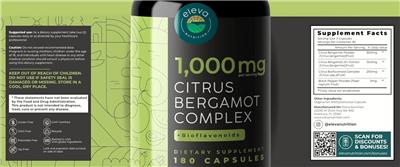
Supplement Facts
The label details for Citrus Bergamot Complex 1,000 mg by eleva NUTRITION, sourced from the NIH Dietary Supplement Label Database.
Supplement Facts
| Ingredient | Amount | % DV |
|---|---|---|
| Citrus Bioflavonoid Complex | 200 mg | -- |
| Black Pepper, Powder | 5 mg | -- |
| Citrus Bergamot, Powder | 500 mg | -- |
| Citrus Bergamot Fruit Extract | 300 mg | -- |
Other ingredients: Methylcellulose
Tap any ingredient to jump to its full detail below.
These statements are the manufacturer’s wording, reproduced from the product label — the label is saying it, not HelloPharmacist. We don’t verify or endorse them.
Suggested/Recommended/Usage/Directions
Suggested use: as a dietary supplement take two (2) capsules daily or as directed by your healthcare professional.
Precautions
Caution: do not exceed recommended dose. Do not use if safety seal is damaged or missing.
Pregnant or nursing mothers, children under the age of 18, and individuals with heart disease or any other medical condition should consult a physician before using this dietary supplement.
Pregnant or nursing mothers, children under the age of 18, and individuals with heart disease or any other medical condition should consult a physician before using this dietary supplement. Keep out of reach of children.
Storage
Store in a cool, dry place.
FDA Disclaimer Statement
These statements have not been evaluated by the Food and Drug Administration. This product is not intended to diagnose, treat, cure or prevent any disease.
Formulation
Gluten free GMO free Pesticides free Soy free
Seals/Symbols
GMP ceritified Bottled in USA with global ingredients
General Statements
Recycle
Instagram @elevanutrition Scan for discounts & bonuses! elevanutrition.com/bonuses
Formula
Citrus Bergamot Complex 1,000 mg per serving Citrus Bergamot Complex + Bioflavonoids
FDA Statement of Identity
Dietary Supplement
Is this label outdated? Report a formula or label change and our pharmacy team will review it.
Citrus Bergamot Complex 1,000 mg by eleva NUTRITION label
The label scan from the NIH Dietary Supplement Label Database. Tap to enlarge.
Label images are published by the NIH Dietary Supplement Label Database for the version of this product on file. Always read your actual product label.
View the full label (PDF)The Ingredients in Citrus Bergamot Complex 1,000 mg by eleva NUTRITION
These are the 4 active ingredients this product is made of. Select any to open its full monograph.
Serving size2 Capsule(s) Dosage formCapsule Servings per container90 Amounts shown are per serving.
Most supplement products combine several ingredients, and a medication can interact with the product through any one of them. Each ingredient below shows whether it has known drug interactions.
Citrus Bioflavonoid Complex
Interacts with1,170 drugs
Quercetin is a plant flavonoid with antioxidant and anti-inflammatory properties found in many common foods and sold as a supplement. While early rese...
Citrus Bioflavonoid Complex monograph & interactionsBlack Pepper, Powder
Interacts with1,020 drugs
Black pepper is a common kitchen spice that is generally safe in the amounts used in food. Its extract, piperine, is mostly added to supplements to he...
Black Pepper, Powder monograph & interactionsCitrus Bergamot, Powder
Interacts with410 drugs
Bergamot is a Mediterranean citrus fruit, and its standardized extract is most often used to support cholesterol and heart health, with some early but...
Citrus Bergamot, Powder monograph & interactionsCitrus Bergamot Fruit Extract
Interacts with410 drugs
Bergamot is a Mediterranean citrus fruit, and its standardized extract is most often used to support cholesterol and heart health, with some early but...
Citrus Bergamot Fruit Extract monograph & interactionsOther (inactive) ingredients: Methylcellulose. These complete the product’s ingredient list but are not active constituents.
Citrus Bergamot Complex 1,000 mg by eleva NUTRITION Drug Interactions
HelloPharmacist Interaction Report
Citrus Bergamot Complex by eleva NUTRITION contains black pepper and two forms of bergamot, both of which have documented interactions with medications.
The most serious concern is black pepper: it may increase blood levels of several drugs, including the heart medication propranolol (Inderal), the seizure drug phenytoin (Dilantin), the antibiotic rifampin (Rifadin), theophylline (used for breathing), and others. These are all Moderate-severity interactions.
A single gram of black pepper with phenytoin may double the drug's level in your bloodstream.
Read the full breakdown — every affected drug type, severity by severity
Bergamot (in two forms here) also interacts with antidiabetes drugs—animal research suggests it may lower blood sugar, raising the risk of low blood sugar (hypoglycemia) if you're already taking diabetes medication. Bergamot also theoretically increases risk with photosensitizing drugs (medications that make your skin more sun-sensitive).
Both of these bergamot interactions are Moderate in severity.
We could not check the Citrus Bioflavonoid Complex ingredient. Altogether, these interactions span 1,174 individual medications.
Before you start this product, run your exact medications through the checker below.
Check your own medications below · Editorial policy · How we use AI
Want to check YOUR meds against Citrus Bergamot Complex 1,000 mg?
Ask about interactions with your drugs in plain English — “Can I take it with lisinopril?” — and we find you the answer in seconds, ingredient by ingredient.
Go to the checkerIngredients driving the most interactions
Individual Drug Interactions
The ingredients in Citrus Bergamot Complex 1,000 mg interact with 1,339 drugs. Click any drug to see the details.
3 of the 4 ingredients in Citrus Bergamot Complex 1,000 mg interact with drugs. Each result below shows which ingredient is responsible. Citrus Bioflavonoid Complex Black Pepper, Powder Citrus Bergamot, Powder
Ado-trastuzumab EmtansineKadcyla
How Ado-trastuzumab Emtansine interacts with Citrus Bergamot Complex 1,000 mg — through 2 ingredients. Tap an ingredient for the detail:
Citrus Bioflavonoid ComplexCytochrome P450 3a4 (cyp3a4) Substrates Moderate
Interaction Summary
Theoretically, concomitant use might alter the effects and adverse effects of CYP3A4 substrates.
Read the full Citrus Bioflavonoid Complex + Ado-trastuzumab Emtansine interactionBlack Pepper, PowderCytochrome P450 3a4 (cyp3a4) Substrates Moderate
Interaction Summary
Theoretically, black pepper might increase levels of drugs metabolized by CYP3A4.
Read the full Black Pepper, Powder + Ado-trastuzumab Emtansine interactionAbciximabReoPro
How Abciximab interacts with Citrus Bergamot Complex 1,000 mg — through 1 ingredient. Tap an ingredient for the detail:
Black Pepper, PowderAnticoagulant/antiplatelet Drugs Moderate
Interaction Summary
Theoretically, black pepper might increase the risk of bleeding when taken with antiplatelet or anticoagulant drugs.
Read the full Black Pepper, Powder + Abciximab interactionAbemaciclibVerzenio
How Abemaciclib interacts with Citrus Bergamot Complex 1,000 mg — through 2 ingredients. Tap an ingredient for the detail:
Black Pepper, PowderCytochrome P450 3a4 (cyp3a4) Substrates Moderate
Interaction Summary
Theoretically, black pepper might increase levels of drugs metabolized by CYP3A4.
Read the full Black Pepper, Powder + Abemaciclib interactionCitrus Bioflavonoid ComplexCytochrome P450 3a4 (cyp3a4) Substrates Moderate
Interaction Summary
Theoretically, concomitant use might alter the effects and adverse effects of CYP3A4 substrates.
Read the full Citrus Bioflavonoid Complex + Abemaciclib interactionAbiraterone
How Abiraterone interacts with Citrus Bergamot Complex 1,000 mg — through 2 ingredients. Tap an ingredient for the detail:
Black Pepper, PowderCytochrome P450 3a4 (cyp3a4) Substrates Moderate
Interaction Summary
Theoretically, black pepper might increase levels of drugs metabolized by CYP3A4.
Read the full Black Pepper, Powder + Abiraterone interactionCitrus Bioflavonoid ComplexCytochrome P450 3a4 (cyp3a4) Substrates Moderate
Interaction Summary
Theoretically, concomitant use might alter the effects and adverse effects of CYP3A4 substrates.
Read the full Citrus Bioflavonoid Complex + Abiraterone interactionAbiraterone AcetateYonsa, Zytiga
How Abiraterone Acetate interacts with Citrus Bergamot Complex 1,000 mg — through 2 ingredients. Tap an ingredient for the detail:
Citrus Bioflavonoid ComplexCytochrome P450 3a4 (cyp3a4) Substrates Moderate
Interaction Summary
Theoretically, concomitant use might alter the effects and adverse effects of CYP3A4 substrates.
Read the full Citrus Bioflavonoid Complex + Abiraterone Acetate interactionBlack Pepper, PowderCytochrome P450 3a4 (cyp3a4) Substrates Moderate
Interaction Summary
Theoretically, black pepper might increase levels of drugs metabolized by CYP3A4.
Read the full Black Pepper, Powder + Abiraterone Acetate interactionAbrocitinibCibinqo
How Abrocitinib interacts with Citrus Bergamot Complex 1,000 mg — through 2 ingredients. Tap an ingredient for the detail:
Black Pepper, PowderAnticoagulant/antiplatelet Drugs Moderate
Interaction Summary
Theoretically, black pepper might increase the risk of bleeding when taken with antiplatelet or anticoagulant drugs.
Read the full Black Pepper, Powder + Abrocitinib interactionCitrus Bioflavonoid ComplexCytochrome P450 2c9 (cyp2c9) Substrates Moderate
Interaction Summary
Theoretically, concomitant use might increase the levels and adverse effects of CYP2C9 substrates.
Read the full Citrus Bioflavonoid Complex + Abrocitinib interactionAcalabrutinibCalquence
How Acalabrutinib interacts with Citrus Bergamot Complex 1,000 mg — through 2 ingredients. Tap an ingredient for the detail:
Citrus Bioflavonoid ComplexP-glycoprotein Substrates, Cytochrome P450 3a4 (cyp3a4) Substrates Moderate
Interaction Summary
Theoretically, concomitant use might alter the effects and adverse effects of P-glycoprotein substrates.
Read the full Citrus Bioflavonoid Complex + Acalabrutinib interactionBlack Pepper, PowderCytochrome P450 3a4 (cyp3a4) Substrates, P-glycoprotein Substrates Moderate
Interaction Summary
Theoretically, black pepper might increase levels of drugs metabolized by CYP3A4.
Read the full Black Pepper, Powder + Acalabrutinib interactionAcarboseGlucobay, Prandase, Precose
How Acarbose interacts with Citrus Bergamot Complex 1,000 mg — through 3 ingredients. Tap an ingredient for the detail:
Black Pepper, PowderAntidiabetes Drugs Moderate
Interaction Summary
Theoretically, black pepper might increase the risk of hypoglycemia when taken with antidiabetes drugs.
Read the full Black Pepper, Powder + Acarbose interactionCitrus Bioflavonoid ComplexAntidiabetes Drugs Moderate
Interaction Summary
Theoretically, concomitant use of quercetin and antidiabetes drugs might increase the risk of hypoglycemia.
Read the full Citrus Bioflavonoid Complex + Acarbose interactionCitrus Bergamot Fruit ExtractAntidiabetes Drugs Moderate
Interaction Summary
Theoretically, taking bergamot with antidiabetes drugs might increase the risk of hypoglycemia.
Read the full Citrus Bergamot Fruit Extract + Acarbose interactionAcebutololRhotral, Sectral
How Acebutolol interacts with Citrus Bergamot Complex 1,000 mg — through 1 ingredient. Tap an ingredient for the detail:
Citrus Bioflavonoid ComplexAntihypertensive Drugs Moderate
Interaction Summary
Theoretically, taking quercetin with antihypertensive drugs might increase the risk of hypotension.
Read the full Citrus Bioflavonoid Complex + Acebutolol interactionAcenocoumarolSintrom
How Acenocoumarol interacts with Citrus Bergamot Complex 1,000 mg — through 1 ingredient. Tap an ingredient for the detail:
Black Pepper, PowderAnticoagulant/antiplatelet Drugs Moderate
Interaction Summary
Theoretically, black pepper might increase the risk of bleeding when taken with antiplatelet or anticoagulant drugs.
Read the full Black Pepper, Powder + Acenocoumarol interactionAcepromazineAtravet
How Acepromazine interacts with Citrus Bergamot Complex 1,000 mg — through 1 ingredient. Tap an ingredient for the detail:
Citrus Bergamot Fruit ExtractPhotosensitizing Drugs Moderate
Interaction Summary
Theoretically, topical bergamot essential oil might increase the risk of side effects when used along with photosensitizing drugs.
Read the full Citrus Bergamot Fruit Extract + Acepromazine interactionAcetaminophen, AspirinGemnisyn
How Acetaminophen, Aspirin interacts with Citrus Bergamot Complex 1,000 mg — through 2 ingredients. Tap an ingredient for the detail:
Black Pepper, PowderAnticoagulant/antiplatelet Drugs, Cytochrome P450 1a2 (cyp1a2) Substrates Moderate
Interaction Summary
Theoretically, black pepper might increase the risk of bleeding when taken with antiplatelet or anticoagulant drugs.
Read the full Black Pepper, Powder + Acetaminophen, Aspirin interactionCitrus Bioflavonoid ComplexOrganic Anion Transporter 1 (oat1) Substrates, Organic Anion Transporter 3 (oat3) Substrates Moderate
Interaction Summary
Theoretically, concomitant use might increase the effects and adverse effects of OAT1 substrates.
Read the full Citrus Bioflavonoid Complex + Acetaminophen, Aspirin interactionAcetaminophen, Aspirin, CaffeineExcedrin, Excedrin Extra Strength, Excedrin Migraine
How Acetaminophen, Aspirin, Caffeine interacts with Citrus Bergamot Complex 1,000 mg — through 2 ingredients. Tap an ingredient for the detail:
Citrus Bioflavonoid ComplexOrganic Anion Transporter 3 (oat3) Substrates, Organic Anion Transporter 1 (oat1) Substrates +1 Moderate
Interaction Summary
Theoretically, concomitant use might increase the effects and adverse effects of OAT3 substrates.
Read the full Citrus Bioflavonoid Complex + Acetaminophen, Aspirin, Caffeine interactionBlack Pepper, PowderAnticoagulant/antiplatelet Drugs, Cytochrome P450 1a2 (cyp1a2) Substrates +1 Moderate
Interaction Summary
Theoretically, black pepper might increase the risk of bleeding when taken with antiplatelet or anticoagulant drugs.
Read the full Black Pepper, Powder + Acetaminophen, Aspirin, Caffeine interactionAcetaminophen, Brompheniramine, PhenylpropanolamineDimetapp Cold and Flu
How Acetaminophen, Brompheniramine, Phenylpropanolamine interacts with Citrus Bergamot Complex 1,000 mg — through 2 ingredients. Tap an ingredient for the detail:
Citrus Bergamot Fruit ExtractPhotosensitizing Drugs Moderate
Interaction Summary
Theoretically, topical bergamot essential oil might increase the risk of side effects when used along with photosensitizing drugs.
Read the full Citrus Bergamot Fruit Extract + Acetaminophen, Brompheniramine, Phenylpropanolamine interactionBlack Pepper, PowderCytochrome P450 1a2 (cyp1a2) Substrates Minor
Interaction Summary
Theoretically, black pepper might decrease levels and clinical effects of drugs metabolized by CYP1A2.
Read the full Black Pepper, Powder + Acetaminophen, Brompheniramine, Phenylpropanolamine interactionAcetaminophen, Butalbital, CaffeineEsgic, Esgic Plus, Fiogesic, Fioricet, Repan, Tecnal +1 more
How Acetaminophen, Butalbital, Caffeine interacts with Citrus Bergamot Complex 1,000 mg — through 2 ingredients. Tap an ingredient for the detail:
Black Pepper, PowderCytochrome P450 3a4 (cyp3a4) Substrates, Cytochrome P450 1a2 (cyp1a2) Substrates Moderate
Interaction Summary
Theoretically, black pepper might increase levels of drugs metabolized by CYP3A4.
Read the full Black Pepper, Powder + Acetaminophen, Butalbital, Caffeine interactionCitrus Bioflavonoid ComplexCytochrome P450 3a4 (cyp3a4) Substrates Moderate
Interaction Summary
Theoretically, concomitant use might alter the effects and adverse effects of CYP3A4 substrates.
Read the full Citrus Bioflavonoid Complex + Acetaminophen, Butalbital, Caffeine interactionAcetaminophen, Butalbital, Caffeine, CodeineEsgic with Codeine, Fioricet w/ Codeine
How Acetaminophen, Butalbital, Caffeine, Codeine interacts with Citrus Bergamot Complex 1,000 mg — through 2 ingredients. Tap an ingredient for the detail:
Citrus Bioflavonoid ComplexCytochrome P450 3a4 (cyp3a4) Substrates, Cytochrome P450 2d6 (cyp2d6) Substrates Moderate
Interaction Summary
Theoretically, concomitant use might alter the effects and adverse effects of CYP3A4 substrates.
Read the full Citrus Bioflavonoid Complex + Acetaminophen, Butalbital, Caffeine, Codeine interactionBlack Pepper, PowderCytochrome P450 1a2 (cyp1a2) Substrates, Cytochrome P450 2d6 (cyp2d6) Substrates +1 Moderate
Interaction Summary
Theoretically, black pepper might decrease levels and clinical effects of drugs metabolized by CYP1A2.
Read the full Black Pepper, Powder + Acetaminophen, Butalbital, Caffeine, Codeine interactionAcetaminophen, Butalbital, CodeineBancap w/ Codeine
How Acetaminophen, Butalbital, Codeine interacts with Citrus Bergamot Complex 1,000 mg — through 2 ingredients. Tap an ingredient for the detail:
Black Pepper, PowderCytochrome P450 1a2 (cyp1a2) Substrates, Cytochrome P450 2d6 (cyp2d6) Substrates Moderate
Interaction Summary
Theoretically, black pepper might decrease levels and clinical effects of drugs metabolized by CYP1A2.
Read the full Black Pepper, Powder + Acetaminophen, Butalbital, Codeine interactionCitrus Bioflavonoid ComplexCytochrome P450 2d6 (cyp2d6) Substrates Moderate
Interaction Summary
Theoretically, concomitant use might increase the levels and adverse effects of CYP2D6 substrates.
Read the full Citrus Bioflavonoid Complex + Acetaminophen, Butalbital, Codeine interactionAcetaminophen, Butalbital, Codeine PhosphatePhrenilin #3
How Acetaminophen, Butalbital, Codeine Phosphate interacts with Citrus Bergamot Complex 1,000 mg — through 2 ingredients. Tap an ingredient for the detail:
Citrus Bioflavonoid ComplexCytochrome P450 2d6 (cyp2d6) Substrates Moderate
Interaction Summary
Theoretically, concomitant use might increase the levels and adverse effects of CYP2D6 substrates.
Read the full Citrus Bioflavonoid Complex + Acetaminophen, Butalbital, Codeine Phosphate interactionBlack Pepper, PowderCytochrome P450 2d6 (cyp2d6) Substrates, Cytochrome P450 1a2 (cyp1a2) Substrates Moderate
Interaction Summary
Theoretically, black pepper might increase levels of drugs metabolized by CYP2D6.
Read the full Black Pepper, Powder + Acetaminophen, Butalbital, Codeine Phosphate interactionAcetaminophen, Caffeine, Chlorpheniramine, Hydrocodone, PhenylephrineHycomine Compound
How Acetaminophen, Caffeine, Chlorpheniramine, Hydrocodone, Phenylephrine interacts with Citrus Bergamot Complex 1,000 mg — through 3 ingredients. Tap an ingredient for the detail:
Black Pepper, PowderCytochrome P450 3a4 (cyp3a4) Substrates, Cytochrome P450 1a2 (cyp1a2) Substrates +1 Moderate
Interaction Summary
Theoretically, black pepper might increase levels of drugs metabolized by CYP3A4.
Read the full Black Pepper, Powder + Acetaminophen, Caffeine, Chlorpheniramine, Hydrocodone, Phenylephrine interactionCitrus Bioflavonoid ComplexCytochrome P450 2d6 (cyp2d6) Substrates, Cytochrome P450 3a4 (cyp3a4) Substrates Moderate
Interaction Summary
Theoretically, concomitant use might increase the levels and adverse effects of CYP2D6 substrates.
Read the full Citrus Bioflavonoid Complex + Acetaminophen, Caffeine, Chlorpheniramine, Hydrocodone, Phenylephrine interactionCitrus Bergamot Fruit ExtractPhotosensitizing Drugs Moderate
Interaction Summary
Theoretically, topical bergamot essential oil might increase the risk of side effects when used along with photosensitizing drugs.
Read the full Citrus Bergamot Fruit Extract + Acetaminophen, Caffeine, Chlorpheniramine, Hydrocodone, Phenylephrine interactionAcetaminophen, Caffeine, CodeineGesic C15, Gesic C30, Gesic C8, Lenoltec 1, Lenoltec 2, Lenoltec 3 +1 more
How Acetaminophen, Caffeine, Codeine interacts with Citrus Bergamot Complex 1,000 mg — through 2 ingredients. Tap an ingredient for the detail:
Citrus Bioflavonoid ComplexCytochrome P450 3a4 (cyp3a4) Substrates, Cytochrome P450 2d6 (cyp2d6) Substrates Moderate
Interaction Summary
Theoretically, concomitant use might alter the effects and adverse effects of CYP3A4 substrates.
Read the full Citrus Bioflavonoid Complex + Acetaminophen, Caffeine, Codeine interactionBlack Pepper, PowderCytochrome P450 2d6 (cyp2d6) Substrates, Cytochrome P450 3a4 (cyp3a4) Substrates +1 Moderate
Interaction Summary
Theoretically, black pepper might increase levels of drugs metabolized by CYP2D6.
Read the full Black Pepper, Powder + Acetaminophen, Caffeine, Codeine interactionAcetaminophen, Caffeine, Codeine, SalicylamideCodalan No.1, Codalan No.2, Codalan No.3
How Acetaminophen, Caffeine, Codeine, Salicylamide interacts with Citrus Bergamot Complex 1,000 mg — through 2 ingredients. Tap an ingredient for the detail:
Black Pepper, PowderCytochrome P450 2d6 (cyp2d6) Substrates, Cytochrome P450 1a2 (cyp1a2) Substrates +1 Moderate
Interaction Summary
Theoretically, black pepper might increase levels of drugs metabolized by CYP2D6.
Read the full Black Pepper, Powder + Acetaminophen, Caffeine, Codeine, Salicylamide interactionCitrus Bioflavonoid ComplexCytochrome P450 2d6 (cyp2d6) Substrates, Cytochrome P450 3a4 (cyp3a4) Substrates Moderate
Interaction Summary
Theoretically, concomitant use might increase the levels and adverse effects of CYP2D6 substrates.
Read the full Citrus Bioflavonoid Complex + Acetaminophen, Caffeine, Codeine, Salicylamide interactionAcetaminophen, Caffeine, DihydrocodeineDHC Plus, Panlor DC, Panlor SS
How Acetaminophen, Caffeine, Dihydrocodeine interacts with Citrus Bergamot Complex 1,000 mg — through 2 ingredients. Tap an ingredient for the detail:
Citrus Bioflavonoid ComplexCytochrome P450 3a4 (cyp3a4) Substrates, Cytochrome P450 2d6 (cyp2d6) Substrates Moderate
Interaction Summary
Theoretically, concomitant use might alter the effects and adverse effects of CYP3A4 substrates.
Read the full Citrus Bioflavonoid Complex + Acetaminophen, Caffeine, Dihydrocodeine interactionBlack Pepper, PowderCytochrome P450 3a4 (cyp3a4) Substrates, Cytochrome P450 2d6 (cyp2d6) Substrates +1 Moderate
Interaction Summary
Theoretically, black pepper might increase levels of drugs metabolized by CYP3A4.
Read the full Black Pepper, Powder + Acetaminophen, Caffeine, Dihydrocodeine interactionAcetaminophen, Caffeine, IsomethepteneMigralam
How Acetaminophen, Caffeine, Isometheptene interacts with Citrus Bergamot Complex 1,000 mg — through 2 ingredients. Tap an ingredient for the detail:
Black Pepper, PowderCytochrome P450 1a2 (cyp1a2) Substrates, Cytochrome P450 3a4 (cyp3a4) Substrates Moderate
Interaction Summary
Theoretically, black pepper might decrease levels and clinical effects of drugs metabolized by CYP1A2.
Read the full Black Pepper, Powder + Acetaminophen, Caffeine, Isometheptene interactionCitrus Bioflavonoid ComplexCytochrome P450 3a4 (cyp3a4) Substrates Moderate
Interaction Summary
Theoretically, concomitant use might alter the effects and adverse effects of CYP3A4 substrates.
Read the full Citrus Bioflavonoid Complex + Acetaminophen, Caffeine, Isometheptene interactionAcetaminophen, Caffeine, PyrilamineMidol Max Strength Menstrual
How Acetaminophen, Caffeine, Pyrilamine interacts with Citrus Bergamot Complex 1,000 mg — through 2 ingredients. Tap an ingredient for the detail:
Citrus Bioflavonoid ComplexCytochrome P450 3a4 (cyp3a4) Substrates Moderate
Interaction Summary
Theoretically, concomitant use might alter the effects and adverse effects of CYP3A4 substrates.
Read the full Citrus Bioflavonoid Complex + Acetaminophen, Caffeine, Pyrilamine interactionBlack Pepper, PowderCytochrome P450 3a4 (cyp3a4) Substrates, Cytochrome P450 1a2 (cyp1a2) Substrates Moderate
Interaction Summary
Theoretically, black pepper might increase levels of drugs metabolized by CYP3A4.
Read the full Black Pepper, Powder + Acetaminophen, Caffeine, Pyrilamine interactionAcetaminophen, Chlorpheniramine Maleate, Dextromethorphan HbrVicks Formula 44M Cough, Cold & Flu Relief
How Acetaminophen, Chlorpheniramine Maleate, Dextromethorphan Hbr interacts with Citrus Bergamot Complex 1,000 mg — through 3 ingredients. Tap an ingredient for the detail:
Black Pepper, PowderCytochrome P450 1a2 (cyp1a2) Substrates, Cytochrome P450 2d6 (cyp2d6) Substrates +1 Moderate
Interaction Summary
Theoretically, black pepper might decrease levels and clinical effects of drugs metabolized by CYP1A2.
Read the full Black Pepper, Powder + Acetaminophen, Chlorpheniramine Maleate, Dextromethorphan Hbr interactionCitrus Bioflavonoid ComplexCytochrome P450 3a4 (cyp3a4) Substrates, Cytochrome P450 2d6 (cyp2d6) Substrates Moderate
Interaction Summary
Theoretically, concomitant use might alter the effects and adverse effects of CYP3A4 substrates.
Read the full Citrus Bioflavonoid Complex + Acetaminophen, Chlorpheniramine Maleate, Dextromethorphan Hbr interactionCitrus Bergamot Fruit ExtractPhotosensitizing Drugs Moderate
Interaction Summary
Theoretically, topical bergamot essential oil might increase the risk of side effects when used along with photosensitizing drugs.
Read the full Citrus Bergamot Fruit Extract + Acetaminophen, Chlorpheniramine Maleate, Dextromethorphan Hbr interactionAcetaminophen, Chlorpheniramine, Codeine, PhenylephrineColrex
How Acetaminophen, Chlorpheniramine, Codeine, Phenylephrine interacts with Citrus Bergamot Complex 1,000 mg — through 3 ingredients. Tap an ingredient for the detail:
Citrus Bioflavonoid ComplexCytochrome P450 2d6 (cyp2d6) Substrates, Cytochrome P450 3a4 (cyp3a4) Substrates Moderate
Interaction Summary
Theoretically, concomitant use might increase the levels and adverse effects of CYP2D6 substrates.
Read the full Citrus Bioflavonoid Complex + Acetaminophen, Chlorpheniramine, Codeine, Phenylephrine interactionCitrus Bergamot Fruit ExtractPhotosensitizing Drugs Moderate
Interaction Summary
Theoretically, topical bergamot essential oil might increase the risk of side effects when used along with photosensitizing drugs.
Read the full Citrus Bergamot Fruit Extract + Acetaminophen, Chlorpheniramine, Codeine, Phenylephrine interactionBlack Pepper, PowderCytochrome P450 3a4 (cyp3a4) Substrates, Cytochrome P450 1a2 (cyp1a2) Substrates +1 Moderate
Interaction Summary
Theoretically, black pepper might increase levels of drugs metabolized by CYP3A4.
Read the full Black Pepper, Powder + Acetaminophen, Chlorpheniramine, Codeine, Phenylephrine interactionAcetaminophen, Chlorpheniramine, DextromethorphanCoricidin II Extra Strength Cold and Flu
How Acetaminophen, Chlorpheniramine, Dextromethorphan interacts with Citrus Bergamot Complex 1,000 mg — through 3 ingredients. Tap an ingredient for the detail:
Black Pepper, PowderCytochrome P450 2d6 (cyp2d6) Substrates, Cytochrome P450 1a2 (cyp1a2) Substrates +1 Moderate
Interaction Summary
Theoretically, black pepper might increase levels of drugs metabolized by CYP2D6.
Read the full Black Pepper, Powder + Acetaminophen, Chlorpheniramine, Dextromethorphan interactionCitrus Bioflavonoid ComplexCytochrome P450 3a4 (cyp3a4) Substrates, Cytochrome P450 2d6 (cyp2d6) Substrates Moderate
Interaction Summary
Theoretically, concomitant use might alter the effects and adverse effects of CYP3A4 substrates.
Read the full Citrus Bioflavonoid Complex + Acetaminophen, Chlorpheniramine, Dextromethorphan interactionCitrus Bergamot Fruit ExtractPhotosensitizing Drugs Moderate
Interaction Summary
Theoretically, topical bergamot essential oil might increase the risk of side effects when used along with photosensitizing drugs.
Read the full Citrus Bergamot Fruit Extract + Acetaminophen, Chlorpheniramine, Dextromethorphan interactionAcetaminophen, Chlorpheniramine, Dextromethorphan HydrobromideCoricidin HBP Maximum Strength Flu
How Acetaminophen, Chlorpheniramine, Dextromethorphan Hydrobromide interacts with Citrus Bergamot Complex 1,000 mg — through 3 ingredients. Tap an ingredient for the detail:
Citrus Bioflavonoid ComplexCytochrome P450 2d6 (cyp2d6) Substrates, Cytochrome P450 3a4 (cyp3a4) Substrates Moderate
Interaction Summary
Theoretically, concomitant use might increase the levels and adverse effects of CYP2D6 substrates.
Read the full Citrus Bioflavonoid Complex + Acetaminophen, Chlorpheniramine, Dextromethorphan Hydrobromide interactionCitrus Bergamot Fruit ExtractPhotosensitizing Drugs Moderate
Interaction Summary
Theoretically, topical bergamot essential oil might increase the risk of side effects when used along with photosensitizing drugs.
Read the full Citrus Bergamot Fruit Extract + Acetaminophen, Chlorpheniramine, Dextromethorphan Hydrobromide interactionBlack Pepper, PowderCytochrome P450 1a2 (cyp1a2) Substrates, Cytochrome P450 2d6 (cyp2d6) Substrates +1 Moderate
Interaction Summary
Theoretically, black pepper might decrease levels and clinical effects of drugs metabolized by CYP1A2.
Read the full Black Pepper, Powder + Acetaminophen, Chlorpheniramine, Dextromethorphan Hydrobromide interactionAcetaminophen, Chlorpheniramine, Dextromethorphan, PhenylpropanolamineMulti Symptom Cold Relief
How Acetaminophen, Chlorpheniramine, Dextromethorphan, Phenylpropanolamine interacts with Citrus Bergamot Complex 1,000 mg — through 3 ingredients. Tap an ingredient for the detail:
Black Pepper, PowderCytochrome P450 1a2 (cyp1a2) Substrates, Cytochrome P450 3a4 (cyp3a4) Substrates +1 Moderate
Interaction Summary
Theoretically, black pepper might decrease levels and clinical effects of drugs metabolized by CYP1A2.
Read the full Black Pepper, Powder + Acetaminophen, Chlorpheniramine, Dextromethorphan, Phenylpropanolamine interactionCitrus Bioflavonoid ComplexCytochrome P450 2d6 (cyp2d6) Substrates, Cytochrome P450 3a4 (cyp3a4) Substrates Moderate
Interaction Summary
Theoretically, concomitant use might increase the levels and adverse effects of CYP2D6 substrates.
Read the full Citrus Bioflavonoid Complex + Acetaminophen, Chlorpheniramine, Dextromethorphan, Phenylpropanolamine interactionCitrus Bergamot Fruit ExtractPhotosensitizing Drugs Moderate
Interaction Summary
Theoretically, topical bergamot essential oil might increase the risk of side effects when used along with photosensitizing drugs.
Read the full Citrus Bergamot Fruit Extract + Acetaminophen, Chlorpheniramine, Dextromethorphan, Phenylpropanolamine interactionAcetaminophen, Chlorpheniramine, Dextromethorphan, PseudoephedrineChildren's Tylenol Cold Plus Cough, Tylenol Cold Ex Strength
How Acetaminophen, Chlorpheniramine, Dextromethorphan, Pseudoephedrine interacts with Citrus Bergamot Complex 1,000 mg — through 3 ingredients. Tap an ingredient for the detail:
Citrus Bergamot Fruit ExtractPhotosensitizing Drugs Moderate
Interaction Summary
Theoretically, topical bergamot essential oil might increase the risk of side effects when used along with photosensitizing drugs.
Read the full Citrus Bergamot Fruit Extract + Acetaminophen, Chlorpheniramine, Dextromethorphan, Pseudoephedrine interactionCitrus Bioflavonoid ComplexCytochrome P450 3a4 (cyp3a4) Substrates, Cytochrome P450 2d6 (cyp2d6) Substrates Moderate
Interaction Summary
Theoretically, concomitant use might alter the effects and adverse effects of CYP3A4 substrates.
Read the full Citrus Bioflavonoid Complex + Acetaminophen, Chlorpheniramine, Dextromethorphan, Pseudoephedrine interactionBlack Pepper, PowderCytochrome P450 2d6 (cyp2d6) Substrates, Cytochrome P450 1a2 (cyp1a2) Substrates +1 Moderate
Interaction Summary
Theoretically, black pepper might increase levels of drugs metabolized by CYP2D6.
Read the full Black Pepper, Powder + Acetaminophen, Chlorpheniramine, Dextromethorphan, Pseudoephedrine interactionEach ingredient & the kinds of drugs it affects
For each ingredient in Citrus Bergamot Complex 1,000 mg with known interactions, here are the types of medications they can affect. Open any type for the detail — or search your exact drug in the checker above.
Citrus Bioflavonoid Complex
Antidiabetes Drugs
Theoretically, concomitant use of quercetin and antidiabetes drugs might increase the risk of hypoglycemia.
Clinical research suggests that a combination of quercetin, myricetin, and chlorogenic acid reduce levels of fasting glucose in patients with type 2 diabetes, including those already taking antidiabetes agents. The effect of quercetin alone is unknown.
Antihypertensive Drugs
Theoretically, taking quercetin with antihypertensive drugs might increase the risk of hypotension.
Quercetin can modestly decrease blood pressure in people with mild hypertension. Theoretically, it might have additive blood pressure lowering effects when used with antihypertensive drugs.
Cyclosporine (Neoral, Sandimmune)
Theoretically, concomitant use might increase the levels and adverse effects of cyclosporine.
A small study in healthy volunteers shows that pretreatment with quercetin increases plasma levels and prolongs the half-life of a single dose of cyclosporine, possibly due to inhibition of p-glycoprotein or cytochrome P450 3A4 (CYP3A4), which metabolizes cyclosporin.
Cytochrome P450 2C8 (Cyp2C8) Substrates
Theoretically, concomitant use might increase the levels and adverse effects of CYP2C8 substrates.
In vitro research shows that quercetin inhibits CYP2C8. Inhibition of paclitaxel (Taxol) metabolism via CYP2C8 has been reported in vitro. However, a small study in humans found no effect of quercetin on rosiglitazone (Avandia), which is also a CYP2C8 substrate.
Cytochrome P450 2C9 (Cyp2C9) Substrates
Theoretically, concomitant use might increase the levels and adverse effects of CYP2C9 substrates.
A small clinical study in healthy volunteers shows that taking quercetin 500 mg twice daily for 10 days prior to taking diclofenac, a CYP2C9 substrate, increases diclofenac plasma levels by 75% and prolongs the half-life by 32.5%. Animal research also shows that pretreatment with quercetin increases plasma levels and prolongs the half-life of losartan (Cozaar), a substrate of CYP2C9. Furthermore, laboratory research shows that quercetin inhibits CYP2C9.
Cytochrome P450 2D6 (Cyp2D6) Substrates
Theoretically, concomitant use might increase the levels and adverse effects of CYP2D6 substrates.
In vitro research show that quercetin inhibits CYP2D6. This effect has not been reported in humans.
Cytochrome P450 3A4 (Cyp3A4) Substrates
Theoretically, concomitant use might alter the effects and adverse effects of CYP3A4 substrates.
A small clinical study in healthy volunteers shows that pretreatment with quercetin increases plasma levels and prolongs the half-life of a single dose of cyclosporine (Neoral, Sandimmune), a substrate of CYP3A4. Animal research also shows that pretreatment with quercetin increases plasma levels and prolongs the half-life of losartan (Cozaar) and quetiapine (Seroquel), substrates of CYP3A4. Other laboratory research also shows that quercetin inhibits CYP3A4. However, one clinical study shows that quercetin can increase the metabolism of midazolam, a substrate of CYP3A4, and decrease serum concentrations of midazolam by about 24% in some healthy individuals, suggesting possible induction of CYP3A4.
Diclofenac (Voltaren, Others)
Theoretically, concomitant use might increase the levels and adverse effects of diclofenac.
A small clinical study in healthy volunteers shows that taking quercetin 500 mg twice daily for 10 days prior to taking diclofenac increases diclofenac plasma levels by 75% and prolongs the half-life by 32.5%. This is thought to be due to inhibition of CYP2C9 by quercetin.
Losartan (Cozaar)
Theoretically, concomitant use might increase the effects and adverse effects of losartan and decrease the effects of its active metabolite.
Animal research shows that pretreatment with quercetin increases plasma levels and prolongs the half-life of losartan (Cozaar) while decreasing plasma levels of losartan's active metabolite. This metabolite, which is around 10-fold more potent than losartan, is the result of cytochrome P450 (CYP) 2C9- and CYP3A4-mediated transformation of losartan. Additionally, in vitro research shows that quercetin may inhibit P-glycoprotein-mediated efflux of losartan from the intestines, resulting in increased absorption of losartan. These results suggest that concomitant use of quercetin and losartan might increase systemic exposure to losartan while also decreasing plasma concentrations of losartan's active and more potent metabolite.
Midazolam (Versed)
Theoretically, concomitant use might decrease the levels and effects of midazolam.
A small clinical study in healthy volunteers shows that quercetin can increase the metabolism of midazolam, with a decrease in AUC of about 24%.
Mitoxantrone
Theoretically, quercetin might increase the effects and adverse effects of mitoxantrone.
In vitro research shows that quercetin increases the intracellular accumulation and cytotoxicity of mitoxantrone, possibly through inhibition of breast cancer resistance protein (BCRP), of which mitoxantrone is a substrate. So far, this interaction has not been reported in humans.
Organic Anion Transporter 1 (Oat1) Substrates
Theoretically, concomitant use might increase the effects and adverse effects of OAT1 substrates.
In vitro research shows that quercetin is a strong non-competitive inhibitor of OAT1, with half-maximal inhibitory concentration (IC50) values less than 10 mcM. So far, this interaction has not been reported in humans.
Organic Anion Transporter 3 (Oat3) Substrates
Theoretically, concomitant use might increase the effects and adverse effects of OAT3 substrates.
In vitro research shows that quercetin is a strong non-competitive inhibitor of OAT3, with half-maximal inhibitory concentration (IC50) values as low as 0.75 mcM. So far, this interaction has not been reported in humans.
Organic Anion-Transporting Polypeptide Substrates (Oatp)
Theoretically, concomitant use might increase the effects and adverse effects of OATP substrates.
In vitro evidence shows that quercetin can inhibit organic anion-transporting peptide (OATP) 1B1-mediated uptake of estrone-3-sulfate and pravastatin. Furthermore, clinical research in healthy males shows that intake of quercetin along with pravastatin increases the AUC of pravastatin by 24%, prolongs its half-life by 14%, and decreases its apparent clearance by 18%, suggesting that quercetin modestly inhibits the uptake of pravastatin in hepatic cells.
P-Glycoprotein Substrates
Theoretically, concomitant use might alter the effects and adverse effects of P-glycoprotein substrates.
There is preliminary evidence that quercetin inhibits the gastrointestinal P-glycoprotein efflux pump, which might increase the bioavailability and serum levels of drugs transported by the pump. A small study in healthy volunteers reported that pretreatment with quercetin increased bioavailability and plasma levels after a single dose of cyclosporine (Neoral, Sandimmune). Also, two small studies have shown that quercetin might decrease the absorption of talinolol, a substrate transported by the gastrointestinal P-glycoprotein efflux pump. However, in another small study, several days of quercetin treatment did not significantly affect the pharmacokinetics of saquinavir (Invirase). The reason for these discrepancies is not entirely clear. Until more is known, use quercetin cautiously in combination with P-glycoprotein substrates.
Pravastatin (Pravachol)
Theoretically, concomitant use might increase the effects and adverse effects of pravastatin.
In vitro evidence shows that quercetin can inhibit OATP 1B1-mediated uptake of pravastatin. Also, preliminary clinical research in healthy males shows that intake of quercetin along with pravastatin increases the maximum concentration of pravastatin by 24%, prolongs its half-life by 14%, and decreases its apparent clearance by 18%, suggesting that quercetin modestly inhibits the uptake of pravastatin in hepatic cells.
Prazosin (Minipress)
Theoretically, quercetin might increase the effects and adverse effects of prazosin.
In vitro research shows that quercetin inhibits the transcellular efflux of prazosin, possibly through inhibition of breast cancer resistance protein (BCRP), of which prazosin is a substrate. BCRP is an ATP-binding cassette efflux transporter in the intestines, kidneys, and liver. So far, this interaction has not been reported in humans.
Quetiapine (Seroquel)
Theoretically, concomitant use might increase the effects and adverse effects of quetiapine.
Animal research shows that pretreatment with quercetin can increase plasma levels of quetiapine and prolong its clearance, possibly due to inhibition of cytochrome P450 3A4 (CYP3A4) by quercetin. Additionally, the brain-to-plasma ratio of quetiapine concentrations increased, possibly due to inhibition of P-glycoprotein at the blood-brain barrier. This interaction has not been reported in humans.
Quinolone Antibiotics
Theoretically, concomitant use might inhibit the effects of quinolone antibiotics.
In vitro, quercetin binds to the DNA gyrase site on bacteria, which may interfere with the activity of quinolone antibiotics.
Sulfasalazine (Azulfidine)
Theoretically, quercetin might increase the effects and adverse effects of sulfasalazine.
Animal research shows that quercetin increases the maximum serum concentration (Cmax) and area under the curve (AUC) of sulfasalazine, possibly through inhibition of breast cancer resistance protein (BCRP), of which sulfasalazine is a substrate. So far, this interaction has not been reported in humans.
Warfarin (Coumadin)
Theoretically, quercetin may increase the risk of bleeding if used with warfarin.
Animal and in vitro studies show that quercetin might increase serum levels of warfarin. Quercetin and warfarin have the same human serum albumin (HSA) binding site, and in vitro research shows that quercetin has stronger affinity for the HSA binding site and can theoretically displace warfarin, causing higher serum levels of warfarin. Animal research shows that taking quercetin for 2 weeks before initiating warfarin increases the maximum serum level of warfarin by 30%, the half-life by 10%, and the overall exposure by 63% when compared with control. Concomitant administration of quercetin and warfarin, without quercetin pre-treatment, also increased these measures, but to a lesser degree. Researchers theorize that inhibition of CYP3A4 by quercetin may explain these effects. So far, this interaction has not been reported in humans.
Black Pepper, Powder
Anticoagulant/Antiplatelet Drugs
Theoretically, black pepper might increase the risk of bleeding when taken with antiplatelet or anticoagulant drugs.
In vitro research shows that piperine, a constituent of black pepper, seems to inhibit platelet aggregation. This has not been reported in humans.
Antidiabetes Drugs
Theoretically, black pepper might increase the risk of hypoglycemia when taken with antidiabetes drugs.
Animal research shows that piperine, a constituent of black pepper, can reduce blood glucose levels. Monitor blood glucose levels closely. Dose adjustments might be necessary.
Atorvastatin (Lipitor)
Theoretically, black pepper might increase blood levels of atorvastatin.
Animal research shows that taking piperine, a constituent of black pepper, 35 mg/kg can increase the maximum serum concentration of atorvastatin three-fold. This has not been reported in humans.
Cyclosporine (Neoral, Sandimmune)
Theoretically, black pepper might increase the effects and side effects of cyclosporine.
In vitro research shows that piperine, a constituent of black pepper, increases the bioavailability of cyclosporine. This has not been reported in humans.
Cytochrome P450 2D6 (Cyp2D6) Substrates
Theoretically, black pepper might increase levels of drugs metabolized by CYP2D6.
In vitro research suggests that some constituents of black pepper inhibit CYP2D6. This has not been reported in humans.
Cytochrome P450 3A4 (Cyp3A4) Substrates
Theoretically, black pepper might increase levels of drugs metabolized by CYP3A4.
In vitro research and pharmacokinetic simulation data suggest that piperine, a constituent of black pepper, as well as the pepper fruit seem to inhibit CYP3A4. This has not been reported in humans.
Lithium
Theoretically, black pepper might increase blood levels of lithium due to its diuretic effects. The dose of lithium might need to be reduced.
Black pepper is thought to have diuretic properties.
Nevirapine (Viramune)
Black pepper might increase blood levels of nevirapine.
Clinical research shows that piperine, a constituent of black pepper, increases the plasma concentration of nevirapine. However, no adverse effects were observed in this study.
P-Glycoprotein Substrates
Theoretically, black pepper might increase levels of P-glycoprotein substrates.
In vitro research shows that piperine, a constituent of black pepper, seems to inhibit P-glycoprotein.
Pentobarbital (Nembutal)
Theoretically, black pepper might increase the sedative effects of pentobarbital.
Animal research shows that piperine, a constituent of black pepper, increases pentobarbital-induced sleeping time.
Phenytoin (Dilantin)
Black pepper might increase blood levels of phenytoin.
Clinical research shows that piperine, a constituent of black pepper, seems to increase absorption, slow elimination, and increase levels of phenytoin. Taking a single dose of black pepper 1 gram along with phenytoin seems to double the serum concentration of phenytoin. Consuming a soup with black pepper providing piperine 44 mg/200 mL of soup along with phenytoin also seems to increase phenytoin levels when compared with consuming the same soup without black pepper.
Propranolol (Inderal)
Black pepper might increase blood levels of propranolol.
Clinical research shows that piperine, a constituent of black pepper, seems to increase absorption and slow elimination of propranolol.
Rifampin (Rifadin)
Black pepper might increase blood levels of rifampin.
Clinical research shows that piperine, a constituent of black pepper, seems to increase absorption and serum levels of rifampin.
Theophylline
Black pepper might increase blood levels of theophylline.
Clinical research shows that piperine, a constituent of black pepper, seems to increase absorption and slow elimination of theophylline.
Amoxicillin (Amoxil, Trimox)
Theoretically, black pepper might increase the effects and side effects of amoxicillin.
Animal research shows that taking piperine, a constituent of black pepper, with amoxicillin increases plasma levels of amoxicillin. This has not been reported in humans.
Carbamazepine (Tegretol)
Theoretically, black pepper might increase blood levels of carbamazepine, potentially increasing the effects and side effects of carbamazepine.
One clinical study in patients taking carbamazepine 300 mg or 500 mg twice daily shows that taking a single 20 mg dose of purified piperine, a constituent of black pepper, increases carbamazepine levels. Piperine may increase carbamazepine absorption by increasing blood flow to the GI tract, increasing the surface area of the small intestine, or inhibiting cytochrome P450 3A4 (CYP3A4) in the gut wall. Absorption was significantly increased by 7-10 mcg/mL/hour. The time to eliminate carbamazepine was also increased by 4-8 hours. Although carbamazepine levels were increased, this did not appear to increase side effects. In vitro research also shows that piperine can increase carbamazepine levels by 11% in a time-dependent manner.
Cytochrome P450 1A2 (Cyp1A2) Substrates
Theoretically, black pepper might decrease levels and clinical effects of drugs metabolized by CYP1A2.
In vitro research suggests that black pepper induces CYP1A2. This has not been reported in humans.
Citrus Bergamot, Powder
Antidiabetes Drugs
Theoretically, taking bergamot with antidiabetes drugs might increase the risk of hypoglycemia.
Animal research suggests that bergamot juice has hypoglycemic effects.
Photosensitizing Drugs
Theoretically, topical bergamot essential oil might increase the risk of side effects when used along with photosensitizing drugs.
Bergamot contains bergapten, which has photosensitizing effects.
Brand information
Manufacturer and brand details for Citrus Bergamot Complex 1,000 mg, from the product label.
eleva NUTRITION
See all eleva NUTRITION products- Name
- Eleva Nutrition
- Street Address
- 20200 W. Dixie Hwy Ste. 902
- City
- Aventura
- State
- FL
- ZipCode
- 33180
- Web Address
- www.elevanutrition.com
Citrus Bergamot Complex 1,000 mg by eleva NUTRITION: Common Questions
Does Citrus Bergamot Complex 1,000 mg by eleva NUTRITION interact with any medications?
How can one product interact with so many drugs?
Where does this information come from?
Does this product work for high cholesterol?
Can I take this if I'm pregnant or breastfeeding?
What are the side effects I should watch for?
Is this safe to take every day?
What is black pepper doing in a heart and cholesterol supplement?
Written and reviewed by the HelloPharmacist editorial staff. Our editorial policy
Not sure if Citrus Bergamot Complex 1,000 mg is safe with your meds?
Our pharmacists answer your medication & supplement questions — free.
Label information is sourced from the NIH Dietary Supplement Label Database and reflects the product version on file; always read your actual product label. This page is for education only and is not a substitute for professional medical advice. Confirm with your pharmacist or doctor before combining supplements and medications.
The Full Monographs Behind Citrus Bergamot Complex 1,000 mg’s Ingredients
Every ingredient we hold a full HelloPharmacist monograph for — uses, evidence, safety, and the complete interaction list.
Quercetin
Interacts with 1,170 drugsQuercetin is a plant flavonoid with antioxidant and anti-inflammatory properties found in many common foods and sold as a supplement. While early research is interesting for allergies, blood...
Read the full Quercetin monograph → Herb & supplement monographBlack Pepper
Interacts with 1,020 drugsBlack pepper is a common kitchen spice that is generally safe in the amounts used in food. Its extract, piperine, is mostly added to supplements to help the body absorb other ingredients (li...
Read the full Black Pepper monograph → Herb & supplement monographBergamot
Interacts with 410 drugsBergamot is a Mediterranean citrus fruit, and its standardized extract is most often used to support cholesterol and heart health, with some early but promising research. The essential oil i...
Read the full Bergamot monograph →Sources & How We Checked
Citrus Bergamot Complex 1,000 mg's label data comes from the NIH Dietary Supplement Label Database; the ingredient interaction data is from the Natural Medicines database, reviewed by our pharmacists.
- NIH Dietary Supplement Label Database (DSLD) — The official product label on file for this supplement.
- Natural Medicines (Therapeutic Research Center) — Evidence-graded clinical reference behind the ingredient interaction data.
Content is written and reviewed by licensed HelloPharmacist pharmacists. See our data sources and editorial standards for how this information is built and checked.
The 72 references behind this product’s interaction data
Every citation that drives the interaction findings for this product’s ingredients, from the evidence-graded Natural Medicines (TRC Healthcare) database. Open an ingredient to browse its citations — links open the study on PubMed or the publisher’s site.
Quercetin 26 references
- Shoskes DA, Zeitlin SI, Shahed A, Rajfer J. Quercetin in men with category III chronic prostatitis: A preliminary prospective, double-blind, placebo-controlled trial. Urol 1999;54:960-3. PubMed
- Starvic B. Quercetin in our diet: from potent mutagen to probable anticarcinogen. Clin Biochem 1994;27:245-8. PubMed
- Ferry DR, Smith A, Malkhandi J, et al. Phase I clinical trial of the flavonoid quercetin: Pharmacokinetics and evidence for in vivo tyrosine kinase inhibition. Clin Cancer Res 1996;2:659-67..
- Obach RS. Inhibition of human cytochrome P450 enzymes by constituents of St. John's wort, an herbal preparation used in the treatment of depression. J Pharmacol Exp Ther 2000;294:88-95. DOI
- Edwards RL, Lyon T, Litwin SE, et al. Quercetin reduces blood pressure in hypertensive subjects. J Nutr 2007;137:2405-11.
- Kim KA, Park PW, Kim HK, et al. Effect of quercetin on the pharmacokinetics of rosiglitazone, a CYP2C8 substrate, in healthy subjects. J Clin Pharmacol 2005;45:941-6. PubMed
- DiCenzo R, Frerichs V, Larppanichpoonphol P, et al. Effect of quercetin on the plasma and intracellular concentrations of saquinavir in healthy adults. Pharmacotherapy 2006;26:1255-61. PubMed
- Choi JS, Choi BC, Choi KE. Effect of quercetin on the pharmacokinetics of oral cyclosporine. Am J Health Syst Pharm 2004;61:2406-9. PubMed
- Choi JS, Jo BW, Kim YC. Enhanced paclitaxel bioavailability after oral administration of paclitaxel or prodrug to rats pretreated with quercetin. Eur J Pharm Biopharm 2004;57:313-8. PubMed
- Vaclavikova R, Horsky S, Simek P, Gut I. Paclitaxel metabolism in rat and human liver microsomes is inhibited by phenolic antioxidants. Naunyn Schmiedebergs Arch Pharmacol 2003;368:200-9. PubMed
- Di Bari L, Ripoli S, Pradhan S, Salvadori P. Interactions between quercetin and warfarin for albumin binding: A new eye on food/drug interference. Chirality 2010;22:593-6. PubMed
- Lamson, D. W. and Brignall, M. S. Antioxidants and cancer, part 3: quercetin. Altern.Med.Rev. 2000;5(3):196-208.
- Duan KM, Wang SY, Ouyang W, Mao YM, Yang LJ. Effect of quercetin on CYP3A activity in Chinese healthy participants. J Clin Pharmacol 2012;52(6):940-6. PubMed
- Wang SY, Duan KM, Li Y, et al. Effect of quercetin on P-glycoprotein transport ability in Chinese healthy subjects. Eur J Clin Nutr 2013;67(4):390-4. PubMed
- Nguyen MA, Staubach P, Wolffram S, Langguth P. Effect of single-dose and short-term administration of quercetin on the pharmacokinetics of talinolol in humans - Implications for the evaluation of transporter-mediated flavonoid-drug interactions. Eur J Pha PubMed
- Wu LX, Guo CX, Chen WQ, et al. Inhibition of the organic anion-transporting polypeptide 1B1 by quercetin: an in vitro and in vivo assessment. Br J Clin Pharmacol 2012;73(5):750-7.
- Ahrens MJ, Thompson DL. Effect of emulin on blood glucose in type 2 diabetics. J Med Food. 2013;16(3):211-5. PubMed
- Larson A, Witman MA, Guo Y, et al. Acute, quercetin-induced reductions in blood pressure in hypertensive individuals are not secondary to lower plasma angiotensin-converting enzyme activity or endothelin-1: nitric oxide. Nutr Res. 2012;32(8):557-64. PubMed
- Bedada SK, Neerati P. Evaluation of the effect of quercetin treatment on CYP2C9 enzyme activity of diclofenac in healthy human volunteers. Phytother Res. 2018 Feb;32(2):305-311. doi: 10.1002/ptr.5978. PubMed
- Zhao Q, Wei J, Zhang H. Effects of quercetin on the pharmacokinetics of losartan and its metabolite EXP3174 in rats. Xenobiotica 2019;49(5):563-8. PubMed
- Bhutani P, Rajanna PK, Paul AT. Impact of quercetin on pharmacokinetics of quetiapine: insights from in-vivo studies in wistar rats. Xenobiotica. 2020:1-7.
- Li C, Wang X, Bi Y, et al. Potent Inhibitors of Organic Anion Transporters 1 and 3 From Natural Compounds and Their Protective Effect on Aristolochic Acid Nephropathy. Toxicol Sci. 2020;175(2):279-291. PubMed
- Ni Y, Duan Z, Zhou D, et al. Identification of Structural Features for the Inhibition of OAT3-Mediated Uptake of Enalaprilat by Selected Drugs and Flavonoids. Front Pharmacol. 2020;11:802. PubMed
- Song YK, Yoon JH, Woo JK, et al. Quercetin is a flavonoid breast cancer resistance protein inhibitor with an impact on the oral pharmacokinetics of sulfasalazine in rats. Pharmaceutics 2020;12(5):397. PubMed
- Ahmad E, Jahangir M, Ismail MA, et al. Influence of quercetin pretreatment on pharmacokinetics of warfarin in rats. Curr Drug Saf 2022. PubMed
- Nambiar A, Kellogg D 3rd, Justice J, et al. Senolytics dasatinib and quercetin in idiopathic pulmonary fibrosis: results of a phase I, single-blind, single-center, randomized, placebo-controlled pilot trial on feasibility and tolerability. EBioMedicine 20 PubMed
Black Pepper 29 references
- Leung AY, Foster S. Encyclopedia of Common Natural Ingredients Used in Food, Drugs and Cosmetics. 2nd ed. New York, NY: John Wiley & Sons, 1996.
- Brinker F. Herb Contraindications and Drug Interactions. 2nd ed. Sandy, OR: Eclectic Medical Publications, 1998.
- Bano G, Amla V, Raina RK, et al. The effect of piperine on pharmacokinetics of phenytoin in healthy volunteers. Planta Med 1987;53:568-9. PubMed
- Bano G, et al. Effect of piperine on bioavailability and pharmacokinetics of propranolol and theophylline in healthy volunteers. Eur J Clin Pharmacol 1991;41;615-7. PubMed
- Cohle SD, Trestrail JD III, Graham MA, et al. Fatal pepper aspiration. Am J Dis Child 1988;142:633-6. PubMed
- Bhardwaj RK, Glaeser H, Becquemont L, et al. Piperine, a major constituent of black pepper, inhibits human P-glycoprotein and CYP3A4. J Pharmacol Exp Ther 2002;302:645-50. PubMed
- Velpandian T, Jasuja R, Bhardwaj RK, et al. Piperine in food: interference in the pharmacokinetics of phenytoin. Eur J Drug Metab Pharmacokinet 2001;26:241-7. PubMed
- Pattanaik S, Hota D, Prabhakar S, et al. Pharmacokinetic interaction of a single dose of piperine with steady-state carbamazepine in epilepsy patients. Phytother Res 2009;23:1281-6.
- Munakata, M., Kobayashi, K., Niisato-Nezu, J., Tanaka, S., Kakisaka, Y., Ebihara, T., Ebihara, S., Haginoya, K., Tsuchiya, S., and Onuma, A. Olfactory stimulation using black pepper oil facilitates oral feeding in pediatric patients receiving long-term en
- Myers, B. M., Smith, J. L., and Graham, D. Y. Effect of red pepper and black pepper on the stomach. Am J Gastroenterol 1987;82(3):211-214.
- Raghavendra, R. H. and Naidu, K. A. Spice active principles as the inhibitors of human platelet aggregation and thromboxane biosynthesis. Prostaglandins Leukot.Essent.Fatty Acids 2009;81(1):73-78. PubMed
- Subehan, Usia, T., Kadota, S., and Tezuka, Y. Mechanism-based inhibition of human liver microsomal cytochrome P450 2D6 (CYP2D6) by alkamides of Piper nigrum. Planta Med 2006;72(6):527-532.
- Kasibhatta, R. and Naidu, M. U. Influence of piperine on the pharmacokinetics of nevirapine under fasting conditions: a randomised, crossover, placebo-controlled study. Drugs R.D. 2007;8(6):383-391. PubMed
- Usia, T., Iwata, H., Hiratsuka, A., Watabe, T., Kadota, S., and Tezuka, Y. CYP3A4 and CYP2D6 inhibitory activities of Indonesian medicinal plants. Phytomedicine. 2006;13(1-2):67-73. PubMed
- Mujumdar, A. M., Dhuley, J. N., Deshmukh, V. K., Raman, P. H., Thorat, S. L., and Naik, S. R. Effect of piperine on pentobarbitone induced hypnosis in rats. Indian J Exp.Biol. 1990;28(5):486-487.
- Panda, S. and Kar, A. Piperine lowers the serum concentrations of thyroid hormones, glucose and hepatic 5'D activity in adult male mice. Horm.Metab Res. 2003;35(9):523-526. PubMed
- Lawless, H. and Stevens, D. A. Effects of oral chemical irritation on taste. Physiol Behav. 1984;32(6):995-998. PubMed
- Hiwale, A. R., Dhuley, J. N., and Naik, S. R. Effect of co-administration of piperine on pharmacokinetics of beta-lactam antibiotics in rats. Indian J Exp.Biol. 2002;40(3):277-281.
- Han, Y., Chin Tan, T. M., and Lim, L. Y. In vitro and in vivo evaluation of the effects of piperine on P-gp function and expression. Toxicol.Appl.Pharmacol. 8-1-2008;230(3):283-289. PubMed
- Sharma, P., Varma, M. V., Chawla, H. P., and Panchagnula, R. In situ and in vivo efficacy of peroral absorption enhancers in rats and correlation to in vitro mechanistic studies. Farmaco 2005;60(11-12):874-883. PubMed
- Aher, S., Biradar, S., Gopu, C. L., and Paradkar, A. Novel pepper extract for enhanced P-glycoprotein inhibition. J Pharm.Pharmacol. 2009;61(9):1179-1186. PubMed
- Zutshi, R. K., Singh, R., Zutshi, U., Johri, R. K., and Atal, C. K. Influence of piperine on rifampicin blood levels in patients of pulmonary tuberculosis. J Assoc.Physicians India 1985;33(3):223-224.
- Marotta, R. B. and Floch, M. H. Diet and nutrition in ulcer disease. Med Clin North Am 1991;75(4):967-979. PubMed
- Subehan, Usia, T., Iwata, H., Kadota, S., and Tezuka, Y. Mechanism-based inhibition of CYP3A4 and CYP2D6 by Indonesian medicinal plants. J Ethnopharmacol. 5-24-2006;105(3):449-455. PubMed
- Gimenez L, Zacharisen M. Severe pepper allergy in a young child. WMJ. 2011 Jun;110(3):138-9.
- Ren T, Yang M, Xiao M, Zhu J, Xie W, Zuo Z. Time-dependent inhibition of carbamazepine metabolism by piperine in anti-epileptic treatment. Life Sci. 2019;218:314-323. PubMed
- Thomas AB, Choudhary DC, Raje A, Nagrik SS. Pharmacokinetics and pharmacodynamic herb-drug interaction of piperine with atorvastatin in rats. J Chromatogr Sci 2021;59(4):371-80. PubMed
- Haron MH, Dale O, Martin K, et al. Evaluation of the Herb-Drug Interaction Potential of Commonly Used Botanicals on the US Market with Regard to PXR- and AhR-Mediated Influences on CYP3A4 and CYP1A2. J Diet Suppl 2022. PubMed
- Lin F, Hu Y, Zhang Y, Zhao L, Zhong D, Liu J. Predicting Food-Drug Interactions between Piperine and CYP3A4 Substrate Drugs Using PBPK Modeling. Int J Mol Sci 2024;25(20):10955. PubMed
Bergamot 17 references
- The Review of Natural Products by Facts and Comparisons. St. Louis, MO: Wolters Kluwer Co., 1999.
- Gruenwald J, Brendler T, Jaenicke C. PDR for Herbal Medicines. 1st ed. Montvale, NJ: Medical Economics Company, Inc., 1998.
- Naganuma M, Hirose S, Nakayama Y, et al. A study of the phototoxicity of lemon oil. Arch Dermatol Res 1985;278:31-6. . PubMed
- Kaddu, S., Kerl, H., and Wolf, P. Accidental bullous phototoxic reactions to bergamot aromatherapy oil. J.Am.Acad.Dermatol. 2001;45(3):458-461. PubMed
- Finsterer, J. Earl Grey tea intoxication. Lancet 4-27-2002;359(9316):1484. PubMed
- Gruson, L. M. and Chang, M. W. Berloque dermatitis mimicking child abuse. Arch.Pediatr.Adolesc.Med. 2002;156(11):1091-1093. PubMed
- Weisenseel, P. and Woitalla, S. [Toxic mustard plaster dematitis and phototoxic dematitis after application of bergamot oil]. MMW.Fortschr.Med. 12-15-2005;147(51-52):53, 55.
- Placzek, M., Fromel, W., Eberlein, B., Gilbertz, K. P., and Przybilla, B. Evaluation of phototoxic properties of fragrances. Acta Derm.Venereol. 2007;87(4):312-316. PubMed
- Mollace, V., Sacco, I., Janda, E., Malara, C., Ventrice, D., Colica, C., Visalli, V., Muscoli, S., Ragusa, S., Muscoli, C., Rotiroti, D., and Romeo, F. Hypolipemic and hypoglycaemic activity of bergamot polyphenols: from animal models to human studies. F PubMed
- Morliere, P., Huppe, G., Averbeck, D., Young, A. R., Santus, R., and Dubertret, L. In vitro photostability and photosensitizing properties of bergamot oil. Effects of a cinnamate sunscreen. J.Photochem.Photobiol.B 1990;7(2-4):199-208. PubMed
- Young, A. R., Walker, S. L., Kinley, J. S., Plastow, S. R., Averbeck, D., Morliere, P., and Dubertret, L. Phototumorigenesis studies of 5-methoxypsoralen in bergamot oil: evaluation and modification of risk of human use in an albino mouse skin model. J.P PubMed
- Girard, J., Unkovic, J., Delahayes, J., and Lafille, C. [Phototoxicity of Bergamot oil. Comparison between humans and guinea pigs]. Dermatologica 1979;158(4):229-243.
- Zaynoun, S. T., Johnson, B. E., and Frain-Bell, W. A study of oil of bergamot and its importance as a phototoxic agent. II. Factors which affect the phototoxic reaction induced by bergamot oil and psoralen derivatives. Contact Dermatitis 1977;3(5):225-23 PubMed
- Zacher, K. D. and Ippen, H. [Contact dermatitis caused by bergamot oil]. Derm.Beruf.Umwelt. 1984;32(3):95-97.
- Yasui, Y. and Hirone, T. Action spectrum for bergamot-oil phototoxicity measured by sunburn cell counting. J.Dermatol. 1994;21(5):319-322. PubMed
- Zaynoun, S. T., Johnson, B. E., and Frain-Bell, W. A study of oil of bergamot and its importance as a phototoxic agent. I. Characterization and quantification of the photoactive component. Br.J.Dermatol. 1977;96(5):475-482. PubMed
- Bruno A, Pandolfo G, Crucitti M, Cedro C, Zoccali RA, Muscatello MRA. Bergamot Polyphenolic Fraction Supplementation Improves Cognitive Functioning in Schizophrenia: Data From an 8-Week, Open-Label Pilot Study. J Clin Psychopharmacol 2017;37(4):468-71. PubMed
Parts of this content are provided by the Therapeutic Research Center, LLC.
DISCLAIMER: Currently this does not check for drug-drug interactions. This is not an all-inclusive comprehensive list of potential interactions and is for informational purposes only. Not all interactions are known or well-reported in the scientific literature, and new interactions are continually being reported. Input is needed from a qualified healthcare provider including a pharmacist before starting any therapy. Application of clinical judgment is necessary.
© 2021 Therapeutic Research Center, LLC