
Elevated Cordyceps Ingredients & Drug Interactions
What is this page for?
First and foremost: checking Elevated Cordyceps against your medications. The heart of this page is the interaction checker and the full interaction report — how this product’s ingredients may interact with prescription and over-the-counter medicines you may be taking.
Around that, we add a pharmacist’s high-level view of the product as a whole — what’s inside, the evidence for its stated use, how transparent the label is, and what safety data exists — so you can see the full picture in one place. It’s educational information from our licensed clinical databases and the clinical staff at HelloPharmacist — not medical advice — and we don’t sell or endorse products. Our editorial policy
Elevated Cordyceps is a dietary supplement by Raw Forest Foods with 6 active ingredients. Its ingredients are commonly taken for fatigue and low energy, digestive support and poor appetite, immune support.Based on those ingredients, 1,391 medications have a known interaction with it, the most serious rated major. The ingredients most likely to interact are Polygonum multiflorum Root Extract, Prepared, Rehmannia Root Extract, Prepared, Cordyceps Fruiting Body Extract. Use the checker below to test your specific medication, or read the full HelloPharmacist Interaction Report.
Check Your Meds Against Elevated Cordyceps by Raw Forest Foods
Ask about any prescription or over-the-counter medication and we check it for interactions with Elevated Cordyceps by Raw Forest Foods — and tell you which ingredient is responsible.
AI summaries are generated from our interaction database for education only — always confirm with your pharmacist. How we use AI
Ask the Pharmacist
A licensed pharmacist will answer your question by email — free, usually within 24 hours.
Got it — thank you!
A licensed pharmacist will answer within 24 hours. Keep an eye on your email (worth checking spam, just in case).
HelloPharmacist Scorecard of Elevated Cordyceps by Raw Forest Foods
Our pharmacy team’s full take, with four database checks built into the cards below — a summary of what is known, not a grade of the product itself.
What’s inside
Full disclosure
This powder contains six active herbal extracts: Codonopsis pilosula root, Astragalus root, American ginseng root, Cordyceps fruiting body, Polygonum multiflorum (Fo-ti) root, and Rehmannia root. The product also contains maltodextrin as an inactive ingredient (a filler and thickener).
Each ingredient plays a traditional role in herbal medicine, though the clinical evidence for most of these uses is still being studied.
Does it work?
Not established
The evidence for what this product actually does is very limited. American ginseng has been rated possibly effective for upper respiratory tract infections, but the other five ingredients—Codonopsis, Astragalus, Cordyceps, Fo-ti, and Rehmannia—don't have enough reliable evidence to rate them for their traditional uses.
Rehmannia does have one condition rated possibly effective (chronic kidney disease), but overall, if you're considering this supplement for a specific health goal, the data won't tell you much.
How safe is it?
Well-documented data
These herbs are generally reported to be well tolerated at typical doses in the short term, but quality and safety data vary widely. Fo-ti stands out as a concern: it's been linked to liver injury in rare cases documented in medical literature, affecting people of all ages and at various doses, so it should only be used carefully and under professional guidance.
For pregnancy and breastfeeding, the safety information isn't there. Codonopsis, Astragalus, American ginseng, Cordyceps, and Rehmannia are all advised against during pregnancy, and breastfeeding safety is unknown for all of them—talk with your doctor or pharmacist about whether this product is right for you in either situation.
At very large doses (30–60 grams), Codonopsis may cause chest pain, arrhythmia, throat pain, or in rare cases allergic reactions including anaphylaxis. Cordyceps at normal doses can occasionally cause abdominal discomfort, constipation, diarrhea, or dry mouth.
Meds to double-check
Major interaction found
If you take warfarin or other blood thinners (anticoagulants), antiplatelet drugs, antidiabetes medications, blood pressure drugs, immunosuppressants, lithium, digoxin, MAOIs (like phenelzine), or sulindac, double-check with your pharmacist before taking this product. American ginseng in particular significantly reduces warfarin effectiveness.
The bottom line
Scorecard at a glanceFully disclosed formula with no established evidence rating for its marketed use. Major medication interactions have been identified, and safety information is well characterized.
This is a multi-ingredient herbal blend with significant medication interactions, especially with blood thinners, diabetes drugs, and several psychiatric and cardiac medications. If you take any prescription medication, check it against your complete list with a pharmacist before starting.
Fo-ti's documented liver injury risk and the lack of strong evidence for what this product actually does mean it's best reserved for someone under professional guidance who's thought through the trade-offs.
Educational only — not medical advice; always confirm with your pharmacist. Our editorial policy · How we use AI
Assessment coverage: 6 of 6 active ingredients matched to our full ingredient reviews (monographs). Based on the product label dated Sep 25, 2025.
This Scorecard evaluates available label information, ingredient evidence, and known medication-safety considerations. It does not independently verify product identity, purity, potency, contamination, or manufacturing quality. How these ratings are computed
General information
Key facts about Elevated Cordyceps, straight from the product label.
| Brand | Raw Forest Foods |
|---|---|
| Barcode (UPC) | 850004627082 |
| Net contents | 2.47 Ounce(s); 70 Gram(s) |
| Market status | On market |
| Date entered into DSLD | Sep 25, 2025 |
| DSLD ID | 337185 |
| Product type | Botanical |
| Supplement form | Powder |
| Dietary claims / uses | All Other, Structure/Function |
| Intended target group(s) | Vegan, Vegetarian, Adult (18 - 50 Years), Women (not pregnant or lactating), Dairy Free |
Everything in this section is reproduced from the manufacturer’s own product label — it’s the label speaking, not HelloPharmacist. We show it so you can see exactly what the maker states; we don’t verify or endorse those statements.
Supplement Facts
The label details for Elevated Cordyceps by Raw Forest Foods, sourced from the NIH Dietary Supplement Label Database.
Supplement Facts
| Ingredient | Amount | % DV |
|---|---|---|
| Codonopsis pilosula Root Extract | 200 mg | -- |
| Astragalus Root Extract | 200 mg | -- |
| American Ginseng Root Extract | 400 mg | -- |
| Cordyceps Fruiting Body Extract | 500 mg | -- |
| Polygonum multiflorum Root Extract, Prepared | 350 mg | -- |
| Rehmannia Root Extract, Prepared | 350 mg | -- |
Other ingredients: Maltodextrin
Tap any ingredient to jump to its full detail below.
These statements are the manufacturer’s wording, reproduced from the product label — the label is saying it, not HelloPharmacist. We don’t verify or endorse them.
Formulation
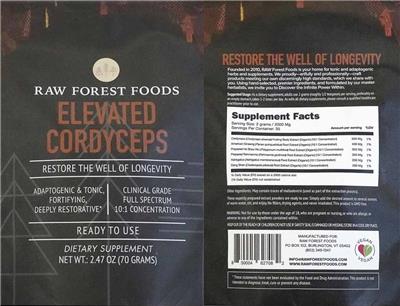
Restore the well of longevity Adaptogenic & tonic, fortifying, deeply restorative Clinical grade Full spectrum Ready to use
Founded in 2010, RAW Forest Foods is your home for tonic and adaptogenic herbs and supplements. We proudly - artfully and professionally - craft products meeting our own discerningly high standards, which we share with you. Using hand-selected, premier ingredients, and formulated by our master herbalist, we invite you to Discover the Infinite Power Within.
No fillers, drying agents, and never irradiated. This product is GMO free.
No fillers, drying agents, and never irradiated.
Vegan
Formula
Elevated Cordyceps 10:1 concentrate
FDA Disclaimer Statement
Dietary Supplement
These statements have not been evaluated by the Food and Drug Administration. This product is not intended to diagnose, treat, cure or prevent any disease.
Suggested/Recommended/Usage/Directions
Suggested Usage: As a dietary supplement, adults use 2 grams (roughly 1/2 teaspoon) per serving, preferably on an empty stomach, taken 1-2 times per day. As with all dietary supplements, please consult a qualified healthcare practitioner prior to use. These expertly prepared extract powders are ready to use: Simply add the desired amount to several ounces of warm water, stir, and enjoy.
Precautions
Warning: Not for use by those under the age of 18, who are pregnant or nursing, or who are allergic or adverse to any of the ingredients contained within. Keep out of the reach of children.
Warning: Not for use by those under the age of 18, who are pregnant or nursing, or who are allergic or adverse to any of the ingredients contained within.
Do not use if safety seal is damaged or missing.
Storage
Store in a cool, dry place.
Seals/Symbols
Vegan
Is this label outdated? Report a formula or label change and our pharmacy team will review it.
Elevated Cordyceps by Raw Forest Foods label
The label scan from the NIH Dietary Supplement Label Database. Tap to enlarge.
Label images are published by the NIH Dietary Supplement Label Database for the version of this product on file. Always read your actual product label.
View the full label (PDF)The Ingredients in Elevated Cordyceps by Raw Forest Foods
These are the 6 active ingredients this product is made of. Select any to open its full monograph.
Serving size2 Gram(s) Dosage formPowder Servings per container35 Amounts shown are per serving.
Most supplement products combine several ingredients, and a medication can interact with the product through any one of them. Each ingredient below shows whether it has known drug interactions.
Codonopsis pilosula Root Extract
Interacts with211 drugs
Codonopsis (often called 'dang shen') is a root long used in Traditional Chinese Medicine as a gentle energy and digestive tonic, frequently as a mild...
Codonopsis pilosula Root Extract monograph & interactionsAstragalus Root Extract
Interacts with208 drugs
Astragalus is a root used for centuries in traditional Chinese medicine, mainly to support the immune system and help the body cope with stress. While...
Astragalus Root Extract monograph & interactionsAmerican Ginseng Root Extract
Interacts with217 drugs
American ginseng is an herbal root used as an 'adaptogen' to support energy, stress, immune function, and blood sugar. Some uses—such as reducing the...
American Ginseng Root Extract monograph & interactionsCordyceps Fruiting Body Extract
Interacts with249 drugs
Cordyceps is a fungus used in traditional Chinese medicine for energy, exercise performance, and lung and immune support. Human research is limited an...
Cordyceps Fruiting Body Extract monograph & interactionsPolygonum multiflorum Root Extract, Prepared
Interacts with1,259 drugs
Fo-ti (He Shou Wu) is a root used in traditional Chinese medicine, often promoted for healthy aging and hair. High-quality human evidence for these be...
Polygonum multiflorum Root Extract, Prepared monograph & interactionsRehmannia Root Extract, Prepared
Interacts with258 drugs
Rehmannia is a root used for centuries in Traditional Chinese Medicine, often to 'tonify' the kidneys and support energy or blood health. Human eviden...
Rehmannia Root Extract, Prepared monograph & interactionsOther (inactive) ingredients: Maltodextrin. These complete the product’s ingredient list but are not active constituents.
Elevated Cordyceps by Raw Forest Foods Drug Interactions
HelloPharmacist Interaction Report
Elevated Cordyceps by Raw Forest Foods contains six herbal extracts, and several of them interact with medications.
The most serious interaction we've documented is with warfarin (Coumadin), a blood thinner (anticoagulant). American ginseng root extract in this product can decrease warfarin's effectiveness, lowering your INR and potentially reducing clotting protection—a Major severity concern that needs immediate pharmacist review if you take warfarin.
Read the full breakdown — every affected drug type, severity by severity
Beyond that, multiple ingredients interact with blood thinners and antiplatelet drugs (Codonopsis, Cordyceps, and Fo-ti), antidiabetes medications (Codonopsis, Astragalus, American ginseng, and Rehmannia), immunosuppressants like cyclosporine (Astragalus and Cordyceps), and blood pressure drugs (Rehmannia). Fo-ti specifically carries additional concerns: it's been linked to liver injury in rare cases and can dangerously increase warfarin levels if liver function is affected.
American ginseng may also interfere with MAOI antidepressants (phenelzine/Nardil). Other affected drug types include lithium, digoxin, sulindac, and several cytochrome P450-metabolized medications.
Altogether, these interactions span 1,367 individual medications. Before you take this product, use the interaction checker below with your complete medication list—especially if you're on blood thinners, diabetes drugs, blood pressure medications, or any psychiatric or heart medications.
Check your own medications below · Editorial policy · How we use AI
Want to check YOUR meds against Elevated Cordyceps?
Ask about interactions with your drugs in plain English — “Can I take it with lisinopril?” — and we find you the answer in seconds, ingredient by ingredient.
Go to the checkerIngredients driving the most interactions
Individual Drug Interactions
The ingredients in Elevated Cordyceps interact with 1,391 drugs. Click any drug to see the details.
6 of the 6 ingredients in Elevated Cordyceps interact with drugs. Each result below shows which ingredient is responsible. Polygonum multiflorum Root Extract, Prepared Rehmannia Root Extract, Prepared Cordyceps Fruiting Body Extract American Ginseng Root Extract Codonopsis pilosula Root Extract Astragalus Root Extract
WarfarinWarfarin
How Warfarin interacts with Elevated Cordyceps — through 4 ingredients. Tap an ingredient for the detail:
American Ginseng Root ExtractWarfarin (coumadin) Major
Interaction Summary
American ginseng seems to decrease the effectiveness of warfarin therapy.
Read the full American Ginseng Root Extract + Warfarin interactionPolygonum Multiflorum Root Extract, PreparedAnticoagulant/antiplatelet Drugs, Cytochrome P450 3a4 (cyp3a4) Substrates +5 Moderate
Interaction Summary
Fo-ti has been linked to cases of acute liver failure which can decrease clotting factor production and increase the effects of anticoagulants.
Read the full Polygonum Multiflorum Root Extract, Prepared + Warfarin interactionCodonopsis Pilosula Root ExtractAnticoagulant/antiplatelet Drugs Moderate
Interaction Summary
Theoretically, codonopsis liquor might increase the risk of bleeding when used with antiplatelet or anticoagulant drugs.
Read the full Codonopsis Pilosula Root Extract + Warfarin interactionCordyceps Fruiting Body ExtractAnticoagulant/antiplatelet Drugs Moderate
Interaction Summary
Theoretically, cordyceps may increase the risk of bleeding when used with antiplatelet or anticoagulant drugs.
Read the full Cordyceps Fruiting Body Extract + Warfarin interactionWarfarin SodiumCoumadin, Panwarfin, Sofarin
How Warfarin Sodium interacts with Elevated Cordyceps — through 4 ingredients. Tap an ingredient for the detail:
American Ginseng Root ExtractWarfarin (coumadin) Major
Interaction Summary
American ginseng seems to decrease the effectiveness of warfarin therapy.
Read the full American Ginseng Root Extract + Warfarin Sodium interactionPolygonum Multiflorum Root Extract, PreparedCytochrome P450 2c9 (cyp2c9) Substrates, Anticoagulant/antiplatelet Drugs +5 Moderate
Interaction Summary
Theoretically, fo-ti may increase the levels and clinical effects of drugs metabolized by CYP2C9.
Read the full Polygonum Multiflorum Root Extract, Prepared + Warfarin Sodium interactionCodonopsis Pilosula Root ExtractAnticoagulant/antiplatelet Drugs Moderate
Interaction Summary
Theoretically, codonopsis liquor might increase the risk of bleeding when used with antiplatelet or anticoagulant drugs.
Read the full Codonopsis Pilosula Root Extract + Warfarin Sodium interactionCordyceps Fruiting Body ExtractAnticoagulant/antiplatelet Drugs Moderate
Interaction Summary
Theoretically, cordyceps may increase the risk of bleeding when used with antiplatelet or anticoagulant drugs.
Read the full Cordyceps Fruiting Body Extract + Warfarin Sodium interaction6-mercaptopurinePurinethol
How 6-mercaptopurine interacts with Elevated Cordyceps — through 4 ingredients. Tap an ingredient for the detail:
American Ginseng Root ExtractImmunosuppressants Moderate
Interaction Summary
Theoretically, American ginseng use might interfere with immunosuppressive therapy.
Read the full American Ginseng Root Extract + 6-mercaptopurine interactionCordyceps Fruiting Body ExtractImmunosuppressants Moderate
Interaction Summary
Theoretically, concurrent use of cordyceps might interfere with immunosuppressive therapy.
Read the full Cordyceps Fruiting Body Extract + 6-mercaptopurine interactionAstragalus Root ExtractImmunosuppressants Moderate
Interaction Summary
Theoretically, astragalus might interfere with immunosuppressive therapy.
Read the full Astragalus Root Extract + 6-mercaptopurine interactionPolygonum Multiflorum Root Extract, PreparedHepatotoxic Drugs Moderate
Interaction Summary
Theoretically, fo-ti might increase the risk of liver damage when taken with hepatotoxic drugs.
Read the full Polygonum Multiflorum Root Extract, Prepared + 6-mercaptopurine interactionAdo-trastuzumab EmtansineKadcyla
How Ado-trastuzumab Emtansine interacts with Elevated Cordyceps — through 1 ingredient. Tap an ingredient for the detail:
Polygonum Multiflorum Root Extract, PreparedCytochrome P450 3a4 (cyp3a4) Substrates Moderate
Interaction Summary
Theoretically, fo-ti might increase the levels and clinical effects of drugs metabolized by CYP3A4.
Read the full Polygonum Multiflorum Root Extract, Prepared + Ado-trastuzumab Emtansine interactionAbacavir Sulfate, Dolutegravir, LamivudineTriumeq
How Abacavir Sulfate, Dolutegravir, Lamivudine interacts with Elevated Cordyceps — through 1 ingredient. Tap an ingredient for the detail:
Polygonum Multiflorum Root Extract, PreparedHepatotoxic Drugs Moderate
Interaction Summary
Theoretically, fo-ti might increase the risk of liver damage when taken with hepatotoxic drugs.
Read the full Polygonum Multiflorum Root Extract, Prepared + Abacavir Sulfate, Dolutegravir, Lamivudine interactionAbacavir, LamivudineEpzicom
How Abacavir, Lamivudine interacts with Elevated Cordyceps — through 1 ingredient. Tap an ingredient for the detail:
Polygonum Multiflorum Root Extract, PreparedHepatotoxic Drugs Moderate
Interaction Summary
Theoretically, fo-ti might increase the risk of liver damage when taken with hepatotoxic drugs.
Read the full Polygonum Multiflorum Root Extract, Prepared + Abacavir, Lamivudine interactionAbciximabReoPro
How Abciximab interacts with Elevated Cordyceps — through 3 ingredients. Tap an ingredient for the detail:
Cordyceps Fruiting Body ExtractAnticoagulant/antiplatelet Drugs Moderate
Interaction Summary
Theoretically, cordyceps may increase the risk of bleeding when used with antiplatelet or anticoagulant drugs.
Read the full Cordyceps Fruiting Body Extract + Abciximab interactionPolygonum Multiflorum Root Extract, PreparedAnticoagulant/antiplatelet Drugs Moderate
Interaction Summary
Fo-ti has been linked to cases of acute liver failure which can decrease clotting factor production and increase the effects of anticoagulants.
Read the full Polygonum Multiflorum Root Extract, Prepared + Abciximab interactionCodonopsis Pilosula Root ExtractAnticoagulant/antiplatelet Drugs Moderate
Interaction Summary
Theoretically, codonopsis liquor might increase the risk of bleeding when used with antiplatelet or anticoagulant drugs.
Read the full Codonopsis Pilosula Root Extract + Abciximab interactionAbemaciclibVerzenio
How Abemaciclib interacts with Elevated Cordyceps — through 1 ingredient. Tap an ingredient for the detail:
Polygonum Multiflorum Root Extract, PreparedCytochrome P450 3a4 (cyp3a4) Substrates Moderate
Interaction Summary
Theoretically, fo-ti might increase the levels and clinical effects of drugs metabolized by CYP3A4.
Read the full Polygonum Multiflorum Root Extract, Prepared + Abemaciclib interactionAbiraterone
How Abiraterone interacts with Elevated Cordyceps — through 2 ingredients. Tap an ingredient for the detail:
Codonopsis Pilosula Root ExtractAbiraterone (zytiga) Moderate
Interaction Summary
Theoretically, taking codonopsis root with abiraterone might reduce the levels and therapeutic effects of abiraterone.
Read the full Codonopsis Pilosula Root Extract + Abiraterone interactionPolygonum Multiflorum Root Extract, PreparedCytochrome P450 3a4 (cyp3a4) Substrates, Hepatotoxic Drugs Moderate
Interaction Summary
Theoretically, fo-ti might increase the levels and clinical effects of drugs metabolized by CYP3A4.
Read the full Polygonum Multiflorum Root Extract, Prepared + Abiraterone interactionAbiraterone AcetateYonsa, Zytiga
How Abiraterone Acetate interacts with Elevated Cordyceps — through 2 ingredients. Tap an ingredient for the detail:
Polygonum Multiflorum Root Extract, PreparedHepatotoxic Drugs, Cytochrome P450 3a4 (cyp3a4) Substrates Moderate
Interaction Summary
Theoretically, fo-ti might increase the risk of liver damage when taken with hepatotoxic drugs.
Read the full Polygonum Multiflorum Root Extract, Prepared + Abiraterone Acetate interactionCodonopsis Pilosula Root ExtractAbiraterone (zytiga) Moderate
Interaction Summary
Theoretically, taking codonopsis root with abiraterone might reduce the levels and therapeutic effects of abiraterone.
Read the full Codonopsis Pilosula Root Extract + Abiraterone Acetate interactionAbrocitinibCibinqo
How Abrocitinib interacts with Elevated Cordyceps — through 5 ingredients. Tap an ingredient for the detail:
Codonopsis Pilosula Root ExtractAnticoagulant/antiplatelet Drugs Moderate
Interaction Summary
Theoretically, codonopsis liquor might increase the risk of bleeding when used with antiplatelet or anticoagulant drugs.
Read the full Codonopsis Pilosula Root Extract + Abrocitinib interactionPolygonum Multiflorum Root Extract, PreparedAnticoagulant/antiplatelet Drugs, Cytochrome P450 2c19 (cyp2c19) Substrates +1 Moderate
Interaction Summary
Fo-ti has been linked to cases of acute liver failure which can decrease clotting factor production and increase the effects of anticoagulants.
Read the full Polygonum Multiflorum Root Extract, Prepared + Abrocitinib interactionCordyceps Fruiting Body ExtractAnticoagulant/antiplatelet Drugs, Immunosuppressants Moderate
Interaction Summary
Theoretically, cordyceps may increase the risk of bleeding when used with antiplatelet or anticoagulant drugs.
Read the full Cordyceps Fruiting Body Extract + Abrocitinib interactionAstragalus Root ExtractImmunosuppressants Moderate
Interaction Summary
Theoretically, astragalus might interfere with immunosuppressive therapy.
Read the full Astragalus Root Extract + Abrocitinib interactionAmerican Ginseng Root ExtractImmunosuppressants Moderate
Interaction Summary
Theoretically, American ginseng use might interfere with immunosuppressive therapy.
Read the full American Ginseng Root Extract + Abrocitinib interactionAcalabrutinibCalquence
How Acalabrutinib interacts with Elevated Cordyceps — through 1 ingredient. Tap an ingredient for the detail:
Polygonum Multiflorum Root Extract, PreparedCytochrome P450 3a4 (cyp3a4) Substrates Moderate
Interaction Summary
Theoretically, fo-ti might increase the levels and clinical effects of drugs metabolized by CYP3A4.
Read the full Polygonum Multiflorum Root Extract, Prepared + Acalabrutinib interactionAcarboseGlucobay, Prandase, Precose
How Acarbose interacts with Elevated Cordyceps — through 5 ingredients. Tap an ingredient for the detail:
Polygonum Multiflorum Root Extract, PreparedAntidiabetes Drugs, Hepatotoxic Drugs Moderate
Interaction Summary
Theoretically, fo-ti might increase the risk of hypoglycemia when taken with antidiabetes drugs.
Read the full Polygonum Multiflorum Root Extract, Prepared + Acarbose interactionCodonopsis Pilosula Root ExtractAntidiabetes Drugs Moderate
Interaction Summary
Theoretically, codonopsis might increase the risk of hypoglycemia when taken with antidiabetes drugs.
Read the full Codonopsis Pilosula Root Extract + Acarbose interactionAstragalus Root ExtractAntidiabetes Drugs Moderate
Interaction Summary
Theoretically, taking astragalus with antidiabetes drugs might increase the risk of hypoglycemia.
Read the full Astragalus Root Extract + Acarbose interactionAmerican Ginseng Root ExtractAntidiabetes Drugs Moderate
Interaction Summary
Theoretically, taking American ginseng with antidiabetes drugs might increase the risk of hypoglycemia.
Read the full American Ginseng Root Extract + Acarbose interactionRehmannia Root Extract, PreparedAntidiabetes Drugs Moderate
Interaction Summary
Theoretically, rehmannia might increase the risk of hypoglycemia when taken with antidiabetes drugs.
Read the full Rehmannia Root Extract, Prepared + Acarbose interactionAcebutololRhotral, Sectral
How Acebutolol interacts with Elevated Cordyceps — through 2 ingredients. Tap an ingredient for the detail:
Rehmannia Root Extract, PreparedAntihypertensive Drugs Moderate
Interaction Summary
Theoretically, rehmannia might increase the risk of hypotension when taken with antihypertensive drugs.
Read the full Rehmannia Root Extract, Prepared + Acebutolol interactionPolygonum Multiflorum Root Extract, PreparedHepatotoxic Drugs Moderate
Interaction Summary
Theoretically, fo-ti might increase the risk of liver damage when taken with hepatotoxic drugs.
Read the full Polygonum Multiflorum Root Extract, Prepared + Acebutolol interactionAcenocoumarolSintrom
How Acenocoumarol interacts with Elevated Cordyceps — through 3 ingredients. Tap an ingredient for the detail:
Polygonum Multiflorum Root Extract, PreparedAnticoagulant/antiplatelet Drugs Moderate
Interaction Summary
Fo-ti has been linked to cases of acute liver failure which can decrease clotting factor production and increase the effects of anticoagulants.
Read the full Polygonum Multiflorum Root Extract, Prepared + Acenocoumarol interactionCodonopsis Pilosula Root ExtractAnticoagulant/antiplatelet Drugs Moderate
Interaction Summary
Theoretically, codonopsis liquor might increase the risk of bleeding when used with antiplatelet or anticoagulant drugs.
Read the full Codonopsis Pilosula Root Extract + Acenocoumarol interactionCordyceps Fruiting Body ExtractAnticoagulant/antiplatelet Drugs Moderate
Interaction Summary
Theoretically, cordyceps may increase the risk of bleeding when used with antiplatelet or anticoagulant drugs.
Read the full Cordyceps Fruiting Body Extract + Acenocoumarol interactionAcetaminophenChildren's Tylenol, Children's Tylenol Meltaways, Tylenol, Tylenol Ex Strength
How Acetaminophen interacts with Elevated Cordyceps — through 1 ingredient. Tap an ingredient for the detail:
Polygonum Multiflorum Root Extract, PreparedHepatotoxic Drugs, Cytochrome P450 1a2 (cyp1a2) Substrates Moderate
Interaction Summary
Theoretically, fo-ti might increase the risk of liver damage when taken with hepatotoxic drugs.
Read the full Polygonum Multiflorum Root Extract, Prepared + Acetaminophen interactionAcetaminophen, AspirinGemnisyn
How Acetaminophen, Aspirin interacts with Elevated Cordyceps — through 3 ingredients. Tap an ingredient for the detail:
Polygonum Multiflorum Root Extract, PreparedCytochrome P450 1a2 (cyp1a2) Substrates, Hepatotoxic Drugs +1 Moderate
Interaction Summary
Theoretically, fo-ti might increase or decrease the levels and clinical effects of drugs metabolized by CYP1A2.
Read the full Polygonum Multiflorum Root Extract, Prepared + Acetaminophen, Aspirin interactionCordyceps Fruiting Body ExtractAnticoagulant/antiplatelet Drugs Moderate
Interaction Summary
Theoretically, cordyceps may increase the risk of bleeding when used with antiplatelet or anticoagulant drugs.
Read the full Cordyceps Fruiting Body Extract + Acetaminophen, Aspirin interactionCodonopsis Pilosula Root ExtractAnticoagulant/antiplatelet Drugs Moderate
Interaction Summary
Theoretically, codonopsis liquor might increase the risk of bleeding when used with antiplatelet or anticoagulant drugs.
Read the full Codonopsis Pilosula Root Extract + Acetaminophen, Aspirin interactionAcetaminophen, Aspirin, CaffeineExcedrin, Excedrin Extra Strength, Excedrin Migraine
How Acetaminophen, Aspirin, Caffeine interacts with Elevated Cordyceps — through 3 ingredients. Tap an ingredient for the detail:
Polygonum Multiflorum Root Extract, PreparedAnticoagulant/antiplatelet Drugs, Hepatotoxic Drugs +2 Moderate
Interaction Summary
Fo-ti has been linked to cases of acute liver failure which can decrease clotting factor production and increase the effects of anticoagulants.
Read the full Polygonum Multiflorum Root Extract, Prepared + Acetaminophen, Aspirin, Caffeine interactionCodonopsis Pilosula Root ExtractAnticoagulant/antiplatelet Drugs Moderate
Interaction Summary
Theoretically, codonopsis liquor might increase the risk of bleeding when used with antiplatelet or anticoagulant drugs.
Read the full Codonopsis Pilosula Root Extract + Acetaminophen, Aspirin, Caffeine interactionCordyceps Fruiting Body ExtractAnticoagulant/antiplatelet Drugs Moderate
Interaction Summary
Theoretically, cordyceps may increase the risk of bleeding when used with antiplatelet or anticoagulant drugs.
Read the full Cordyceps Fruiting Body Extract + Acetaminophen, Aspirin, Caffeine interactionAcetaminophen, Brompheniramine, PhenylpropanolamineDimetapp Cold and Flu
How Acetaminophen, Brompheniramine, Phenylpropanolamine interacts with Elevated Cordyceps — through 1 ingredient. Tap an ingredient for the detail:
Polygonum Multiflorum Root Extract, PreparedCytochrome P450 1a2 (cyp1a2) Substrates, Hepatotoxic Drugs Moderate
Interaction Summary
Theoretically, fo-ti might increase or decrease the levels and clinical effects of drugs metabolized by CYP1A2.
Read the full Polygonum Multiflorum Root Extract, Prepared + Acetaminophen, Brompheniramine, Phenylpropanolamine interactionAcetaminophen, ButalbitalAxocet, Bancap, Bucet, Butex Forte, Esgic CF, Orbivan CF +5 more
How Acetaminophen, Butalbital interacts with Elevated Cordyceps — through 1 ingredient. Tap an ingredient for the detail:
Polygonum Multiflorum Root Extract, PreparedHepatotoxic Drugs, Cytochrome P450 1a2 (cyp1a2) Substrates Moderate
Interaction Summary
Theoretically, fo-ti might increase the risk of liver damage when taken with hepatotoxic drugs.
Read the full Polygonum Multiflorum Root Extract, Prepared + Acetaminophen, Butalbital interactionAcetaminophen, Butalbital, CaffeineEsgic, Esgic Plus, Fiogesic, Fioricet, Repan, Tecnal +1 more
How Acetaminophen, Butalbital, Caffeine interacts with Elevated Cordyceps — through 1 ingredient. Tap an ingredient for the detail:
Polygonum Multiflorum Root Extract, PreparedCytochrome P450 1a2 (cyp1a2) Substrates, Hepatotoxic Drugs +1 Moderate
Interaction Summary
Theoretically, fo-ti might increase or decrease the levels and clinical effects of drugs metabolized by CYP1A2.
Read the full Polygonum Multiflorum Root Extract, Prepared + Acetaminophen, Butalbital, Caffeine interactionAcetaminophen, Butalbital, Caffeine, CodeineEsgic with Codeine, Fioricet w/ Codeine
How Acetaminophen, Butalbital, Caffeine, Codeine interacts with Elevated Cordyceps — through 1 ingredient. Tap an ingredient for the detail:
Polygonum Multiflorum Root Extract, PreparedCytochrome P450 3a4 (cyp3a4) Substrates, Cytochrome P450 1a2 (cyp1a2) Substrates +2 Moderate
Interaction Summary
Theoretically, fo-ti might increase the levels and clinical effects of drugs metabolized by CYP3A4.
Read the full Polygonum Multiflorum Root Extract, Prepared + Acetaminophen, Butalbital, Caffeine, Codeine interactionAcetaminophen, Butalbital, CodeineBancap w/ Codeine
How Acetaminophen, Butalbital, Codeine interacts with Elevated Cordyceps — through 1 ingredient. Tap an ingredient for the detail:
Polygonum Multiflorum Root Extract, PreparedCytochrome P450 2d6 (cyp2d6) Substrates, Hepatotoxic Drugs +1 Moderate
Interaction Summary
Theoretically, fo-ti may increase the levels and clinical effects of drugs metabolized by CYP2D6.
Read the full Polygonum Multiflorum Root Extract, Prepared + Acetaminophen, Butalbital, Codeine interactionAcetaminophen, Butalbital, Codeine PhosphatePhrenilin #3
How Acetaminophen, Butalbital, Codeine Phosphate interacts with Elevated Cordyceps — through 1 ingredient. Tap an ingredient for the detail:
Polygonum Multiflorum Root Extract, PreparedCytochrome P450 1a2 (cyp1a2) Substrates, Hepatotoxic Drugs +1 Moderate
Interaction Summary
Theoretically, fo-ti might increase or decrease the levels and clinical effects of drugs metabolized by CYP1A2.
Read the full Polygonum Multiflorum Root Extract, Prepared + Acetaminophen, Butalbital, Codeine Phosphate interactionAcetaminophen, Caffeine, Chlorpheniramine, Hydrocodone, PhenylephrineHycomine Compound
How Acetaminophen, Caffeine, Chlorpheniramine, Hydrocodone, Phenylephrine interacts with Elevated Cordyceps — through 1 ingredient. Tap an ingredient for the detail:
Polygonum Multiflorum Root Extract, PreparedCytochrome P450 2d6 (cyp2d6) Substrates, Cytochrome P450 3a4 (cyp3a4) Substrates +2 Moderate
Interaction Summary
Theoretically, fo-ti may increase the levels and clinical effects of drugs metabolized by CYP2D6.
Read the full Polygonum Multiflorum Root Extract, Prepared + Acetaminophen, Caffeine, Chlorpheniramine, Hydrocodone, Phenylephrine interactionAcetaminophen, Caffeine, CodeineGesic C15, Gesic C30, Gesic C8, Lenoltec 1, Lenoltec 2, Lenoltec 3 +1 more
How Acetaminophen, Caffeine, Codeine interacts with Elevated Cordyceps — through 1 ingredient. Tap an ingredient for the detail:
Polygonum Multiflorum Root Extract, PreparedCytochrome P450 1a2 (cyp1a2) Substrates, Cytochrome P450 2d6 (cyp2d6) Substrates +2 Moderate
Interaction Summary
Theoretically, fo-ti might increase or decrease the levels and clinical effects of drugs metabolized by CYP1A2.
Read the full Polygonum Multiflorum Root Extract, Prepared + Acetaminophen, Caffeine, Codeine interactionAcetaminophen, Caffeine, Codeine, SalicylamideCodalan No.1, Codalan No.2, Codalan No.3
How Acetaminophen, Caffeine, Codeine, Salicylamide interacts with Elevated Cordyceps — through 1 ingredient. Tap an ingredient for the detail:
Polygonum Multiflorum Root Extract, PreparedCytochrome P450 3a4 (cyp3a4) Substrates, Cytochrome P450 1a2 (cyp1a2) Substrates +2 Moderate
Interaction Summary
Theoretically, fo-ti might increase the levels and clinical effects of drugs metabolized by CYP3A4.
Read the full Polygonum Multiflorum Root Extract, Prepared + Acetaminophen, Caffeine, Codeine, Salicylamide interactionAcetaminophen, Caffeine, DihydrocodeineDHC Plus, Panlor DC, Panlor SS
How Acetaminophen, Caffeine, Dihydrocodeine interacts with Elevated Cordyceps — through 1 ingredient. Tap an ingredient for the detail:
Polygonum Multiflorum Root Extract, PreparedCytochrome P450 2d6 (cyp2d6) Substrates, Cytochrome P450 3a4 (cyp3a4) Substrates +2 Moderate
Interaction Summary
Theoretically, fo-ti may increase the levels and clinical effects of drugs metabolized by CYP2D6.
Read the full Polygonum Multiflorum Root Extract, Prepared + Acetaminophen, Caffeine, Dihydrocodeine interactionAcetaminophen, Caffeine, IsomethepteneMigralam
How Acetaminophen, Caffeine, Isometheptene interacts with Elevated Cordyceps — through 1 ingredient. Tap an ingredient for the detail:
Polygonum Multiflorum Root Extract, PreparedCytochrome P450 1a2 (cyp1a2) Substrates, Hepatotoxic Drugs +1 Moderate
Interaction Summary
Theoretically, fo-ti might increase or decrease the levels and clinical effects of drugs metabolized by CYP1A2.
Read the full Polygonum Multiflorum Root Extract, Prepared + Acetaminophen, Caffeine, Isometheptene interactionAcetaminophen, Caffeine, PyrilamineMidol Max Strength Menstrual
How Acetaminophen, Caffeine, Pyrilamine interacts with Elevated Cordyceps — through 1 ingredient. Tap an ingredient for the detail:
Polygonum Multiflorum Root Extract, PreparedCytochrome P450 3a4 (cyp3a4) Substrates, Diuretic Drugs +2 Moderate
Interaction Summary
Theoretically, fo-ti might increase the levels and clinical effects of drugs metabolized by CYP3A4.
Read the full Polygonum Multiflorum Root Extract, Prepared + Acetaminophen, Caffeine, Pyrilamine interactionEach ingredient & the kinds of drugs it affects
For each ingredient in Elevated Cordyceps with known interactions, here are the types of medications they can affect. Open any type for the detail — or search your exact drug in the checker above.
Polygonum multiflorum Root Extract, Prepared
Anticoagulant/Antiplatelet Drugs
Fo-ti has been linked to cases of acute liver failure which can decrease clotting factor production and increase the effects of anticoagulants. In one case, a patient who had been stable on warfarin presented with acute hepatitis and an INR elevated to 14.98. The patient had been taking fo-ti for 90 days prior to admission. Discontinuation of warfarin and fo-ti lead to a decrease in the INR and full recovery. Theoretically, concomitant use of fo-ti with anticoagulant or antiplatelet drugs may increase the risk of bleeding in some patients. Until more is known, monitor patients taking fo-ti and drugs that affect bleeding.
Some of these drugs include aspirin, clopidogrel (Plavix), dalteparin (Fragmin), dipyridamole (Persantine), enoxaparin (Lovenox), heparin, ticlopidine (Ticlid), warfarin (Coumadin), and others.
Antidiabetes Drugs
Theoretically, fo-ti might increase the risk of hypoglycemia when taken with antidiabetes drugs.
Fo-ti reportedly has hypoglycemic effects.
Contraceptive Drugs
Theoretically, taking large amounts of fo-ti might interfere with contraceptive drugs due to competition for estrogen receptors.
In vitro research suggests that fo-ti extract has estrogenic activity.
Cytochrome P450 1A2 (Cyp1A2) Substrates
Theoretically, fo-ti might increase or decrease the levels and clinical effects of drugs metabolized by CYP1A2.
In vitro research suggests that fo-ti might inhibit CYP1A2. Additionally, in vitro research suggests that the degree of CYP1A2 inhibition depends on the type of fo-ti extract (i.e., the raw plant leads to greater inhibition than extensively processed extracts). However, in an animal study, an aqueous extract of fo-ti inhibited CYP1A2 while an alcoholic extract of fo-ti induced CYP1A2. Induction or inhibition of CYP1A2 by fo-ti has not been reported in humans.
Cytochrome P450 2B6 (Cyp2B6) Substrates
Theoretically, fo-ti might increase the levels and clinical effects of drugs metabolized by CYP2B6.
Animal research suggests that fo-ti might inhibit CYP2B6. One in vitro study suggests that the degree of CYP2B6 inhibition may depend on the type of fo-ti extract (i.e., the raw plant leads to greater inhibition than extensively processed extracts). However, this interaction has not been reported in humans.
Cytochrome P450 2C19 (Cyp2C19) Substrates
Theoretically, fo-ti may increase the levels and clinical effects of drugs metabolized by CYP2C19.
Animal and in vitro research suggests that fo-ti may inhibit CYP2C19. An in vitro study suggests that the degree of CYP2C19 inhibition may depend on the type of fo-ti extract (i.e., the raw plant leads to greater inhibition than extensively processed extracts). However, this interaction has not been reported in humans.
Cytochrome P450 2C8 (Cyp2C8) Substrates
Theoretically, fo-ti might increase the levels and clinical effects of drugs metabolized by CYP2C8.
In vitro research suggests that fo-ti might inhibit CYP2C8. However, this interaction has not been reported in humans.
Cytochrome P450 2C9 (Cyp2C9) Substrates
Theoretically, fo-ti may increase the levels and clinical effects of drugs metabolized by CYP2C9.
Animal and in vitro research suggests that fo-ti may inhibit CYP2C9. However, this interaction has not been reported in humans.
Cytochrome P450 2D6 (Cyp2D6) Substrates
Theoretically, fo-ti may increase the levels and clinical effects of drugs metabolized by CYP2D6.
Animal research suggests that fo-ti might inhibit CYP2D6. Additionally, an in vitro study suggests that the degree of CYP2D6 inhibition may depend on the type of fo-ti extract (i.e., the raw plant leads to greater inhibition than extensively processed extracts). However, this interaction has not been reported in humans.
Cytochrome P450 3A4 (Cyp3A4) Substrates
Theoretically, fo-ti might increase the levels and clinical effects of drugs metabolized by CYP3A4.
In vitro research suggests that fo-ti might inhibit CYP3A4. One in vitro study suggests that the degree of CYP3A4 inhibition may depend on the type of fo-ti extract (i.e., the raw plant leads to greater inhibition than extensively processed extracts). However, this evidence conflicts with animal research suggesting that fo-ti does not inhibit CYP3A4. This interaction has not been reported in humans.
Digoxin (Lanoxin)
Theoretically, fo-ti, particularly raw fo-ti root, might increase the risk of hypokalemia and cardiotoxicity when taken with digoxin.
Raw fo-ti root contains anthraquinone derivatives, which might have stimulant laxative effects. In vitro research shows that fermented and processed fo-ti root have reduced laxative effects compared with raw fo-ti root.
Diuretic Drugs
Theoretically, fo-ti, particularly raw fo-ti root, might increase the risk of hypokalemia when taken with diuretic drugs.
Raw fo-ti root contains anthraquinone derivatives, which might have stimulant laxative effects and compound diuretic-induced potassium loss. In vitro research shows that fermented and processed fo-ti root have reduced laxative effects compared with raw fo-ti root.
Estrogens
Theoretically, taking large amounts of fo-ti might interfere with hormone replacement therapy through competition for estrogen receptors.
In vitro research suggests that fo-ti extract has estrogenic activity.
Hepatotoxic Drugs
Theoretically, fo-ti might increase the risk of liver damage when taken with hepatotoxic drugs.
Fo-ti has been linked to liver damage in many reports.
Stimulant Laxatives
Theoretically, fo-ti, particularly raw fo-ti root, might increase the risk of fluid and electrolyte depletion when taken with stimulant laxatives.
Raw fo-ti root contains anthraquinone derivatives, which might have stimulant laxative effects. However, in vitro research shows that fermented and processed fo-ti root have reduced laxative effects compared with raw fo-ti root.
Sulindac (Clinoril)
Theoretically, fo-ti might increase or decrease the levels and clinical effects of sulindac.
Animal research suggests that the type of fo-ti extract might affect the levels of sulindac differently; the raw plant may increase levels, but processed parts may decrease levels. Induction or inhibition of CYP1A2 by fo-ti has not been reported in humans.
Warfarin (Coumadin)
Theoretically, fo-ti might increase the effects and adverse effects of warfarin.
Fo-ti may have stimulant laxative effects and cause diarrhea, especially when the raw or unprocessed fo-ti root is used. Diarrhea can increase the effects of warfarin, increase international normalized ratio (INR), and increase the risk of bleeding. Also, fo-ti has been linked to cases of acute liver failure which can decrease clotting factor production and increase the effects of warfarin. In one case, a patient who had been stable on warfarin presented with acute hepatitis and an INR elevated to 14.98. The patient had been taking fo-ti for 90 days prior to admission. Discontinuation of warfarin and fo-ti lead to a decrease in the INR and full recovery.
Rehmannia Root Extract, Prepared
Antidiabetes Drugs
Theoretically, rehmannia might increase the risk of hypoglycemia when taken with antidiabetes drugs.
Animal research shows that rehmannia may have hypoglycemic effects.
Antihypertensive Drugs
Theoretically, rehmannia might increase the risk of hypotension when taken with antihypertensive drugs.
Animal research shows that rehmannia may have hypotensive effects. Laboratory research shows that formulations of dried and processed rehmannia root inhibit angiotensin-converting enzyme (ACE).
Cordyceps Fruiting Body Extract
Anticoagulant/Antiplatelet Drugs
Theoretically, cordyceps may increase the risk of bleeding when used with antiplatelet or anticoagulant drugs.
In vitro and animal research suggests that cordyceps extract inhibits platelet aggregation and function. However, this interaction has not been reported in humans.
Immunosuppressants
Theoretically, concurrent use of cordyceps might interfere with immunosuppressive therapy.
Animal and in vitro research suggests that cordyceps stimulates the immune system. However, limited clinical research suggests that taking cordyceps may lower the necessary therapeutic dose of the immunosuppressant cyclosporine, which suggests that cordyceps may have an immunosuppressive effect.
Testosterone
Theoretically, concurrent use of cordyceps and testosterone might have additive effects.
Animal research suggests that cordyceps can increase testosterone levels. The clinical significance of this finding is unclear.
American Ginseng Root Extract
Warfarin (Coumadin)
American ginseng seems to decrease the effectiveness of warfarin therapy.
Healthy patients receiving warfarin 5 mg daily, who also take American ginseng 1 gram twice daily, seem to have a significantly reduced international normalized ratio (INR).
Antidiabetes Drugs
Theoretically, taking American ginseng with antidiabetes drugs might increase the risk of hypoglycemia.
American ginseng seems to lower postprandial blood glucose. Theoretically, concomitant use with antidiabetes drugs might enhance blood glucose lowering effects and possibly cause hypoglycemia.
Immunosuppressants
Theoretically, American ginseng use might interfere with immunosuppressive therapy.
American ginseng seems to stimulate immune function. Theoretically, American ginseng might decrease the effectiveness of immunosuppressant drugs.
Monoamine Oxidase Inhibitors (Maois)
Theoretically, American ginseng can interfere with MAOI therapy.
There is one case report of insomnia, headache, and tremors when an unspecified ginseng product was used with phenelzine (Nardil), an MAOI. There is also one case report of hypomania when an unspecified ginseng product was used with phenelzine. Theoretically, American ginseng may interfere with MAOI therapy.
Codonopsis pilosula Root Extract
Abiraterone (Zytiga)
Theoretically, taking codonopsis root with abiraterone might reduce the levels and therapeutic effects of abiraterone.
Animal research in rats shows that intragastric administration of codonopsis root along with abiraterone every 2 days for 2 weeks seems to increase the clearance of abiraterone and reduce the overall exposure and time to maximum concentration. This interaction has not been reported in humans.
Anticoagulant/Antiplatelet Drugs
Theoretically, codonopsis liquor might increase the risk of bleeding when used with antiplatelet or anticoagulant drugs.
A small clinical study in adults with coronary heart disease shows that consuming Codonopsis pilosula liquor for 4 weeks inhibits platelet aggregation but does not affect tissue-type plasminogen activator (t-PA) or plasminogen activator inhibitor (PAI).
Antidiabetes Drugs
Theoretically, codonopsis might increase the risk of hypoglycemia when taken with antidiabetes drugs.
Laboratory and animal research suggest that codonopsis has antidiabetic effects.
Astragalus Root Extract
Antidiabetes Drugs
Theoretically, taking astragalus with antidiabetes drugs might increase the risk of hypoglycemia.
Clinical research in humans shows that astragalus might have hypoglycemic effects. Theoretically, taking astragalus, especially in combination with other hypoglycemic agents, might increase the risk of hypoglycemia.
Cyclophosphamide
Theoretically, astragalus might interfere with cyclophosphamide therapy.
Evidence regarding the effect of astragalus on immunosuppression caused by cyclophosphamide is conflicting. Some animal research suggests that astragalus reverses cyclophosphamide-induced immunosuppression. However, other animal research shows no effect.
Immunosuppressants
Theoretically, astragalus might interfere with immunosuppressive therapy.
Astragalus seems to stimulate immune function. Theoretically, taking astragalus might decrease the effects of immunosuppressive therapy.
Lithium
Theoretically, astragalus might increase levels and adverse effects of lithium.
Animal research suggests that astragalus has diuretic properties. Theoretically, due to this diuretic effect, astragalus might reduce excretion and increase levels of lithium.
Brand information
Manufacturer and brand details for Elevated Cordyceps, from the product label.
Raw Forest Foods
See all Raw Forest Foods products- Name
- RAW Forest Foods
- Street Address
- PO Box 102
- City
- Burlington
- State
- VT
- ZipCode
- 05402
- Phone Number
- 802-349-1347
- Web Address
- www.rawforestfoods.com
Elevated Cordyceps by Raw Forest Foods: Common Questions
Does Elevated Cordyceps by Raw Forest Foods interact with any medications?
How can one product interact with so many drugs?
Where does this information come from?
Does this supplement actually work for anything?
Is Cordyceps safe to take long-term?
What about the Fo-ti in this blend—is it safe?
Can I take this if I'm pregnant or breastfeeding?
What side effects might I expect?
Does this product have any 'fillers' or other ingredients I should know about?
Written and reviewed by the HelloPharmacist editorial staff. Our editorial policy
Not sure if Elevated Cordyceps is safe with your meds?
Our pharmacists answer your medication & supplement questions — free.
Label information is sourced from the NIH Dietary Supplement Label Database and reflects the product version on file; always read your actual product label. This page is for education only and is not a substitute for professional medical advice. Confirm with your pharmacist or doctor before combining supplements and medications.
The Full Monographs Behind Elevated Cordyceps’s Ingredients
Every ingredient we hold a full HelloPharmacist monograph for — uses, evidence, safety, and the complete interaction list.
Codonopsis
Interacts with 211 drugsCodonopsis (often called 'dang shen') is a root long used in Traditional Chinese Medicine as a gentle energy and digestive tonic, frequently as a milder substitute for ginseng. Human researc...
Read the full Codonopsis monograph → Herb & supplement monographAstragalus
Interacts with 208 drugsAstragalus is a root used for centuries in traditional Chinese medicine, mainly to support the immune system and help the body cope with stress. While early studies are interesting, strong h...
Read the full Astragalus monograph → Herb & supplement monographAmerican Ginseng
Interacts with 217 drugsAmerican ginseng is an herbal root used as an 'adaptogen' to support energy, stress, immune function, and blood sugar. Some uses—such as reducing the chance or length of colds and modestly l...
Read the full American Ginseng monograph → Herb & supplement monographCordyceps
Interacts with 249 drugsCordyceps is a fungus used in traditional Chinese medicine for energy, exercise performance, and lung and immune support. Human research is limited and mostly low quality, so its benefits ar...
Read the full Cordyceps monograph → Herb & supplement monographFo-ti
Interacts with 1,259 drugsFo-ti (He Shou Wu) is a root used in traditional Chinese medicine, often promoted for healthy aging and hair. High-quality human evidence for these benefits is limited, and processed Fo-ti h...
Read the full Fo-ti monograph → Herb & supplement monographRehmannia
Interacts with 258 drugsRehmannia is a root used for centuries in Traditional Chinese Medicine, often to 'tonify' the kidneys and support energy or blood health. Human evidence for most modern uses is limited, so i...
Read the full Rehmannia monograph →Sources & How We Checked
Elevated Cordyceps's label data comes from the NIH Dietary Supplement Label Database; the ingredient interaction data is from the Natural Medicines database, reviewed by our pharmacists.
- NIH Dietary Supplement Label Database (DSLD) — The official product label on file for this supplement.
- Natural Medicines (Therapeutic Research Center) — Evidence-graded clinical reference behind the ingredient interaction data.
Content is written and reviewed by licensed HelloPharmacist pharmacists. See our data sources and editorial standards for how this information is built and checked.
The 75 references behind this product’s interaction data
Every citation that drives the interaction findings for this product’s ingredients, from the evidence-graded Natural Medicines (TRC Healthcare) database. Open an ingredient to browse its citations — links open the study on PubMed or the publisher’s site.
Codonopsis 5 references
- McGuffin M, Hobbs C, Upton R, Goldberg A, eds. American Herbal Products Association's Botanical Safety Handbook. Boca Raton, FL: CRC Press, LLC 1997.
- Xu, X., Wang, S. R., and Lin, Q. [Clinical and experimental study on codonopsis pilosula oral liquor in treating coronary heart disease with blood stasis]. Zhongguo Zhong.Xi.Yi.Jie.He.Za Zhi. 1995;15(7):398-400.
- Hur GY, Choi GS, Park HJ, Ye YM, Park HS. Anaphylactic shock induced by Codonopsis lanceolata, traditional Chinese medicine in a patient with allergic rhinitis. Allergy. 2008;63(10):1406-7.
- Zhang ZB, Ip SP, Cho WCS, et al. Herb-drug interactions between androgenic Chinese herbal medicines and androgen receptor antagonist on tumor growth: Studies on two xenograft prostate cancer animal models. Phytother Res. 2021.
- Jia W, Bi Q, Jiang S, et al. Hypoglycemic activity of Codonopsis pilosula (Franch.) Nannf. in vitro and in vivo and its chemical composition identification by UPLC-Triple-TOF-MS/MS. Food Funct 2022;13(5):2456-2464.
Astragalus 13 references
- Upton R, ed. Astragalus Root: Analytical, quality control, and therapeutic monograph. Santa Cruz, CA: American Herbal Pharmacopoeia. 1999:1-25.
- Khoo KS, Ang PT. Extract of astragalus membranaceus and ligustrum lucidum does not prevent cyclophosphamide-induced myelosuppression. Singapore Med J 1995;36:387-90.
- Chu DT, Wong WL, Mavligit GM. Immunotherapy with Chinese medicinal herbs. II. Reversal of cyclophosphamide-induced immune suppression by administration of fractionated Astragalus membranaceus in vivo. J Clin Lab Immunol 1988;25:125-9.
- Sun Y, Hersh EM, Lee SL, et al. Preliminary observations on the effects of the Chinese medicinal herbs Astragalus membranaceus and Ligustrum lucidum on lymphocyte blastogenic responses. J Biol Response Mod 1983;2:227-37..
- Ma J, Peng A, Lin S. Mechanisms of the therapeutic effect of astragalus membranaceus on sodium and water retention in experimental heart failure. Chin Med J (Engl) 1998;111:17-23.
- Matkovic Z, Zivkovic V, Korica M, et al. Efficacy and safety of Astragalus membranaceus in the treatment of patients with seasonal allergic rhinitis. Phytother Res 2010;24:175-81.
- Zhang, J. G., Yang, N., He, H., Wei, G. H., Gao, D. S., Wang, X. L., Wang, X. Z., and Song, G. Y. [Effect of Astragalus injection on plasma levels of apoptosis-related factors in aged patients with chronic heart failure.]. Chin J Integr.Med 2005;11(3):18 PubMed
- Chen, H. W., Lin, I. H., Chen, Y. J., Chang, K. H., Wu, M. H., Su, W. H., Huang, G. C., and Lai, Y. L. A novel infusible botanically-derived drug, PG2, for cancer-related fatigue: a phase II double-blind, randomized placebo-controlled study. Clin Invest PubMed
- Tian H, Lu J, He H, et al.The effect of Astragalus as an adjuvant treatment in type 2 diabetes mellitus: A (preliminary) meta-analysis. J Ethnopharmacol. 2016;191:206-215. doi: 10.1016/j.jep.2016.05.062. PubMed
- Hong KF, Liu PY, Zhang W, Gui DK, Xu YH. The Efficacy and Safety of Astragalus as an Adjuvant Treatment for Type 2 Diabetes Mellitus: A Systematic Review and Meta-Analysis. J Integr Complement Med 2023. PubMed
- Chan KW, Kwong ASK, Tsui PN, et al. Add-on astragalus in type 2 diabetes and chronic kidney disease: A multi-center, assessor-blind, randomized controlled trial. Phytomedicine 2024;130:155457. PubMed
- Han X, Yu T, Chen X, Du Z, Yu M, Xiong J. Effect of Astragalus membranaceus on left ventricular remodeling in HFrEF: a systematic review and meta-analysis. Front Pharmacol 2024;15:1345797. PubMed
- Jing P, Hongzheng H, Zhenqi WU, Meijuan Z, Zuojing LI, Gang C. Long-term efficacy and safety of Huangqi ()-based Traditional Chinese Medicine in diabetic peripheral neuropathy: a Meta-analysis of randomized controlled trials. J Tradit Chin Med 2024;44(2):
American Ginseng 12 references
- Shader RI, Greenblatt DJ. Phenelzine and the dream machine-ramblings and reflections. J Clin Psychopharmacol 1985;5:65. PubMed
- Jones BD, Runikis AM. Interaction of ginseng with phenelzine. J Clin Psychopharmacol 1987;7:201-2. PubMed
- Janetzky K, Morreale AP. Probable interaction between warfarin and ginseng. Am J Health Syst Pharm 1997;54:692-3. PubMed
- Vuksan V, Sievenpiper JL, Koo VY, et al. American ginseng (Panax quinquefolius L) reduces postprandial glycemia in nondiabetic subjects and subjects with type 2 diabetes mellitus. Arch Intern Med 2000;160:1009-13. PubMed
- Vuksan V, Stavro MP, Sievenpiper JL, et al. Similar postprandial glycemic reductions with escalation of dose and administration time of American ginseng in type 2 diabetes. Diabetes Care 2000;23:1221-6. PubMed
- Chan LY, Chiu PY, Lau TK. An in-vitro study of ginsenoside Rb(1)-induced teratogenicity using a whole rat embryo culture model. Hum Reprod 2003;18:2166-8..
- McElhaney JE, Gravenstein S, Cole SK, et al. A Placebo-Controlled Trial of a Proprietary Extract of North American Ginseng (CVT-E002) to Prevent Acute Respiratory Illness in Institutionalized Older Adults. J Am Geriatr Soc 2004;52:13-9. PubMed
- Yuan CS, Wei G, Dey L, et al. American ginseng reduces warfarin's effect in healthy patients: a randomized, controlled trial. Ann Intern Med 2004;141:23-7.
- Predy GN, Goel V, Lovlin R, et al. Efficacy of an extract of North American ginseng containing poly-furanosyl-pyranosyl-saccharides for preventing upper respiratory tract infections: a randomized controlled trial. CMAJ 2005;173:1043-8.. PubMed
- McElhaney JE, Goel V, Toane B, et al. Efficacy of COLD-fX in the prevention of respiratory symptoms in community-dwelling adults: a randomized, double-blinded, placebo controlled trial. J Altern Complement Med 2006;12:153-7. PubMed
- Predy GN, Goel V, Lovlin RE, et al. Immune modulating effects of daily supplementation of COLD-fX (a proprietary extract of North American ginseng) in healthy adults. J Clin Biochem Nutr 2006;39:162-167. DOI
- Stavro PM, Woo M, Leiter LA, et al. Long-term intake of North American ginseng has no effect on 24-hour blood pressure and renal function. Hypertension 2006;47(4):791-6. PubMed
Cordyceps 14 references
- Zhu JS, Halpern GM, Jones K. The scientific rediscovery of an ancient Chinese herbal medicine: Cordyceps sinensis: part I. J Altern Complement Med 1998;4:289-303.
- Zhu JS, Halpern GM, Jones K. The scientific rediscovery of a precious ancient Chinese herbal regimen: Cordyceps sinensis: part II. J Altern Complement Med 1998;4:429-57.
- Chen YJ, Shiao MS, Lee SS, Wang SY. Effect of Cordyceps sinensis on the proliferation and differentiation of human leukemic U937 cells. Life Sci 1997;60:2349-59. PubMed
- Zhao Y. [Inhibitory effects of alcoholic extract of Cordyceps sinensis on abdominal aortic thrombus formation in rabbits]. Chung Hua I Hsueh Tsa Chih (Taipei) 1991;71:612-5, 42.
- Chen GZ, Chen GL, Sun T, et al. Effects of Cordyceps sinensis on murine T lymphocyte subsets. Chin Med J (English) 1991;104:4-8.
- Zhu XY, Yu HY. [Immunosuppressive effect of cultured Cordyceps sinensis on cellular immune response]. Chung Hsi I Chieh Ho Tsa Chih 1990;10:485-7, 454.
- Hsu, C. C., Huang, Y. L., Tsai, S. J., Sheu, C. C., and Huang, B. M. In vivo and in vitro stimulatory effects of Cordyceps sinensis on testosterone production in mouse Leydig cells. Life Sci 9-5-2003;73(16):2127-2136. PubMed
- Ikumoto, T., Sasaki, S., Namba, H., Toyama, R., Moritoki, H., and Mouri, T. [Physiologically active compounds in the extracts from tochukaso and cultured mycelia of Cordyceps and Isaria]. Yakugaku Zasshi 1991;111(9):504-509. PubMed
- Wu, T. N., Yang, K. C., Wang, C. M., Lai, J. S., Ko, K. N., Chang, P. Y., and Liou, S. H. Lead poisoning caused by contaminated Cordyceps, a Chinese herbal medicine: two case reports. Sci.Total Environ. 4-5-1996;182(1-3):193-195. PubMed
- Hong T, Zhang M, Fan J. Cordyceps sinensis (a traditional Chinese medicine) for kidney transplant recipients (Review). Cochrane Database Syst Rev. 2015;(10):CD009698. doi: 10.1002/14651858.CD009698.pub2.
- Zhang HW, Lin ZX, Tung YS, Kwan TH, Mok CK, Leung C, Chan LS. Cordyceps sinensis (a traditional Chinese medicine) for treating chronic kidney disease (Review). Cochrane Database Syst Rev. 2014;(12):CD008353. doi: 10.1002/14651858.CD008353.pub2. PubMed
- Bee Yean O, Zoriah A. Efficacy of Cordyceps sinensis as an adjunctive treatment in hemodialysis patients: a systematic review and Meta-analysis. J Tradit Chin Med. 2019;39(1):1-14.
- Thurian D, Montani M, Stickel F. Drug-induced, mixed-type hepatitis following ingestion of Cordyceps sinensis. Int J Clin Pharmacol Ther 2022;60(2):115-120. PubMed
- Yu X, Mao Y, Shergis JL, et al. Effectiveness and safety of oral Cordyceps sinensis on stable COPD of GOLD stages 2-3: Systematic review and meta-analysis. Evid Based Complement Alternat Med. 2019;2019:4903671.
Fo-ti 28 references
- Foster S, Tyler VE. Tyler's Honest Herbal: A Sensible Guide to the Use of Herbs and Related Remedies. 3rd ed., Binghamton, NY: Haworth Herbal Press, 1993.
- McGuffin M, Hobbs C, Upton R, Goldberg A, eds. American Herbal Products Association's Botanical Safety Handbook. Boca Raton, FL: CRC Press, LLC 1997.
- Brinker F. Herb Contraindications and Drug Interactions. 2nd ed. Sandy, OR: Eclectic Medical Publications, 1998.
- Covington TR, et al. Handbook of Nonprescription Drugs. 11th ed. Washington, DC: American Pharmaceutical Association, 1996.
- Park GJ, Mann SP, Ngu MC. Acute hepatitis induced by Shou-Wu-Pian, a herbal product derived from Polygonum multiflorum. J Gastroenterol Hepatol 2001;16:115-7.
- But PP, Tomlinson B, Lee KL. Hepatitis related to the Chinese medicine Shou-wu-pian manufactured from Polygonum multiflorum. Vet Hum Toxicol 1996;38:280-2.
- Oerter Klein KO, Janfaza M, Wong JA, Chang RJ. Estrogen bioactivity in Fo-Ti and other herbs used for their estrogen-like effects as determined by a recombinant cell bioassay. J Clin Endocrinol Metab 2003;88:4077-9.. PubMed
- Unger M, Frank A. Simultaneous determination of the inhibitory potency of herbal extracts on the activity of six major cytochrome P450 enzymes using liquid chromatography/mass spectrometry and automated online extraction. Rapid Commun Mass Spectrom 2004;1 PubMed
- UK Medicines and Healthcare Products Regulatory Agency. Polygonum multiflorum and liver reactions. April 2006. Available at: www.mhra.gov.uk/home/idcplg?IdcService= SS_GET_PAGE&useSecondary=true&ssDocName= CON2023590&ssTargetNodeId= 833 (Accessed 10 May 2
- Panis B, Wong DR, Hooymans PM, De Smet PA, Rosias PP. Recurrent toxic hepatitis in a Caucasian girl related to the use of Shou-Wu-Pian, a Chinese herbal preparation. J Pediatr Gastroenterol Nutr 2005;41:256-8. PubMed
- Mazzanti G, Battinelli L, Daniele C, et al. New case of acute hepatitis following the consumption of Shou Wu Pian, a Chinese herbal product derived from Polygonum multiflorum. Ann Intern Med 2004;140:E589-90.
- Cardenas A, Restrepo JC, Sierra F, Correa G. Acute hepatitis due to shen-min: a herbal product derived from Polygonum multiflorum. J Clin Gastroenterol 2006;40:629-32. PubMed
- Zhang CZ, Wang SX, Zhang Y, et al. In vitro estrogenic activities of Chinese medicinal plants traditionally used for the management of menopausal symptoms. J Ethnopharmacol 2005;98:295-300. PubMed
- Laird AR, Ramchandani N, deGoma EM, et al. Acute hepatitis associated with the use of an herbal supplement (Polygonum multiflorum) mimicking iron-overload syndrome. J Clin Gastroenterol 2008;42:861-2. PubMed
- Jung KA, Min HJ, Yoo SS, et al. Drug-Induced Liver Injury: Twenty Five Cases of Acute Hepatitis Following Ingestion of Polygonum multiflorum Thunb. Gut Liver 2011;5(4):493-9. PubMed
- Kang, S. C., Lee, C. M., Choi, H., Lee, J. H., Oh, J. S., Kwak, J. H., and Zee, O. P. Evaluation of oriental medicinal herbs for estrogenic and antiproliferative activities. Phytother Res 2006;20(11):1017-1019. PubMed
- Yuen, M. F., Tam, S., Fung, J., Wong, D. K., Wong, B. C., and Lai, C. L. Traditional Chinese medicine causing hepatotoxicity in patients with chronic hepatitis B infection: a 1-year prospective study. Aliment.Pharmacol.Ther 10-15-2006;24(8):1179-1186. PubMed
- Zhang, L., Yang, X., Sun, Z., and Qu, Y. [Retrospective study of adverse events of Polygonum multiflorum and risk control]. Zhongguo Zhong.Yao Za Zhi. 2009;34(13):1724-1729.
- Bae, S. H., Kim, D. H., Bae, Y. S., Lee, K. J., Kim, D. W., Yoon, J. B., Hong, J. H., and Kim, S. H. [Toxic hepatitis associated with Polygoni multiflori]. Korean J.Hepatol. 2010;16(2):182-186. PubMed
- Furukawa, M., Kasajima, S., Nakamura, Y., Shouzushima, M., Nagatani, N., Takinishi, A., Taguchi, A., Fujita, M., Niimi, A., Misaka, R., and Nagahara, H. Toxic hepatitis induced by show-wu-pian, a Chinese herbal preparation. Intern.Med. 2010;49(15):1537-1 PubMed
- McGuffin, M., Hobbs, C., Upton, R., and Goldberg, A. American Herbal Products Association's Botanical Safety Handbook. Boca Raton, FL: CRC Press, LLC;1997.
- Dong H, Slain D, Cheng J, Ma W, Liang W. Eighteen cases of liver injury following ingestion of Polygonum multiflorum. Complement Ther Med 2014;22(1):70-4. PubMed
- Lei X, Chen J, Ren J, et al. Liver damage associated with Polygonum multiflorum Thunb.: a systematic review of case reports and case series. Evid Based Complement Alternat Med 2015;2015:459749.
- Ma KF, Zhang XG, Jia HY. CYP1A2 polymorphism in Chinese patients with acute liver injury induced by Polygonum multiflorum. Genet Mol Res 2014;13(3):5637-43. PubMed
- Zhang Y, Ding T, Diao T, Deng M, Chen S. Effects of Polygonum multiflorum on the activity of cytochrome P450 isoforms in rats. Pharmazie 2015;70(1):47-54. DOI
- Yu J, Xie J, Mao XJ, et al. Comparison of laxative and antioxidant activities of raw, processed and fermented Polygoni multiflori radix. Chin J Nat Med 2012;10(1):63-7. DOI
- Shao YL, Ma CM, Wu JM, Guo FC, Zhang SC. Concurrent severe hepatotoxicity and agranulocytosis induced by Polygonum multiflorum: A case report. World J Clin Cases 2022;10(27):9921-9928.
- Xing Y, Yu Q, Zhou L, et al. Cytochrome P450-mediated herb-drug interaction (HDI) of Polygonum multiflorum Thunb. based on pharmacokinetic studies and in vitro inhibition assays. Phytomedicine 2023;112:154710. PubMed
Rehmannia 3 references
- Zhang R, Zhou J, Jia Z, et al. Hypoglycemic effect of Rehmannia glutinosa oligosaccharide in hyperglycemic and alloxan-induced diabetic rats and its mechanism. J Ethnopharmacol 2004;90:39-43. PubMed
- Zhang RX, Li MX, Jia ZP. Rehmannia glutinosa: review of botany, chemistry and pharmacology. J Ethnopharmacol 2008;117(2):199-214. PubMed
- Chao CH, Hsu JL, Chen MF, et al. Anti-hypertensive effects of Radix Rehmanniae and its active ingredients. Nat Prod Res. 2020;34(11):1547-1552.
Parts of this content are provided by the Therapeutic Research Center, LLC.
DISCLAIMER: Currently this does not check for drug-drug interactions. This is not an all-inclusive comprehensive list of potential interactions and is for informational purposes only. Not all interactions are known or well-reported in the scientific literature, and new interactions are continually being reported. Input is needed from a qualified healthcare provider including a pharmacist before starting any therapy. Application of clinical judgment is necessary.
© 2021 Therapeutic Research Center, LLC