
Full Spectrum Binder + Ingredients & Drug Interactions
by Codeage
What is this page for?
First and foremost: checking Full Spectrum Binder + against your medications. The heart of this page is the interaction checker and the full interaction report — how this product’s ingredients may interact with prescription and over-the-counter medicines you may be taking.
Around that, we add a pharmacist’s high-level view of the product as a whole — what’s inside, the evidence for its stated use, how transparent the label is, and what safety data exists — so you can see the full picture in one place. It’s educational information from our licensed clinical databases and the clinical staff at HelloPharmacist — not medical advice — and we don’t sell or endorse products. Our editorial policy
Full Spectrum Binder + is a dietary supplement by Codeage with 8 active ingredients. Its ingredients are commonly taken for general nutrition and antioxidant support, heart and digestive health, detoxification support.Based on those ingredients, 2,142 medications have a known interaction with it, the most serious rated major. The ingredients most likely to interact are Activated Charcoal, organic Chlorella extract, Fulvic Acid. Use the checker below to test your specific medication, or read the full HelloPharmacist Interaction Report.
Check Your Meds Against Full Spectrum Binder + by Codeage
Ask about any prescription or over-the-counter medication and we check it for interactions with Full Spectrum Binder + by Codeage — and tell you which ingredient is responsible.
AI summaries are generated from our interaction database for education only — always confirm with your pharmacist. How we use AI
Ask the Pharmacist
A licensed pharmacist will answer your question by email — free, usually within 24 hours.
Got it — thank you!
A licensed pharmacist will answer within 24 hours. Keep an eye on your email (worth checking spam, just in case).
HelloPharmacist Scorecard of Full Spectrum Binder + by Codeage
Our pharmacy team’s full take, with four database checks built into the cards below — a summary of what is known, not a grade of the product itself.
What’s inside
Low disclosure
Full Spectrum Binder + contains 8 ingredients total. The active components are organic broccoli, activated charcoal, molybdenum (a trace mineral), humic acid, fulvic acid, organic chlorella extract, and wild yucca root extract.
There's also a proprietary blend listed, whose exact components are detailed individually. The capsules contain two inactive ingredients: methylcellulose and microcrystalline cellulose, which are standard binders and fillers.
Does it work?
Strong evidence
The evidence for this product's ingredients is limited and mixed. Broccoli is possibly effective for colorectal cancer prevention, though evidence is insufficient for bladder, breast, and gastric cancers.
Activated charcoal is possibly effective for certain poisonings, but evidence is insufficient for cholesterol, indigestion, hangovers, and other uses. Chlorella is possibly effective for pregnancy-related iron deficiency.
For the other ingredients—molybdenum (except deficiency), humic acid, fulvic acid, and yucca—either no effectiveness evidence is established in our data, or evidence is too limited to rate. The product appears to be marketed primarily as a binder rather than for a specific health condition.
How safe is it?
Well-documented data
Activated charcoal is generally well tolerated short-term but can cause constipation, black stools, bloating, and abdominal pain; rarely, it may cause gastrointestinal blockage. Broccoli as a food is safe in normal amounts, but concentrated supplements are less studied — the facts advise caution with high doses.
Chlorella is generally well tolerated but may cause allergic reactions (rarely anaphylaxis), diarrhea, nausea, and abdominal cramping, especially in the first two weeks. Fulvic acid appears well tolerated short-term orally, though safety data is limited; reported effects include diarrhea, headache, and sore throat.
Molybdenum in normal dietary amounts is safe, but high-dose supplements are rarely necessary and should be avoided without medical advice. Humic acid and yucca have limited safety data.
For pregnancy and breastfeeding: broccoli is likely safe during pregnancy and lactation, but activated charcoal and chlorella are not well studied. Humic acid, fulvic acid, and yucca have insufficient safety data and should be avoided during pregnancy and breastfeeding unless your doctor approves.
Meds to double-check
Major interaction found
Before taking this product, check with your pharmacist if you use any oral medications (activated charcoal reduces absorption of many drugs), blood thinners like warfarin (chlorella and fulvic acid may interfere), oral contraceptives (activated charcoal may reduce effectiveness), drugs processed by CYP1A2 or CYP2A6 liver enzymes (broccoli may lower levels), immunosuppressants (fulvic acid may decrease effects), or thyroid hormone therapy (fulvic acid may interfere). Also mention if you take photosensitizing drugs or drink alcohol regularly.
The bottom line
Scorecard at a glanceFormula with limited ingredient disclosure with clinical evidence supporting its stated purpose. Major medication interactions have been identified, and safety information is well characterized.
This product is a multi-ingredient binder with significant interactions, particularly activated charcoal's broad effect on oral medications. If you take any prescription or over-the-counter drugs—especially blood thinners, contraceptives, thyroid medication, or drugs processed by your liver—talk to your pharmacist or doctor before starting.
The product is generally well tolerated for short-term use in people without medications, but the safety data for several ingredients in supplement form is limited.
Educational only — not medical advice; always confirm with your pharmacist. Our editorial policy · How we use AI
Assessment coverage: 7 of 8 active ingredients matched to our full ingredient reviews (monographs). Based on the product label dated Jun 25, 2025.
This Scorecard evaluates available label information, ingredient evidence, and known medication-safety considerations. It does not independently verify product identity, purity, potency, contamination, or manufacturing quality. How these ratings are computed
General information
Key facts about Full Spectrum Binder +, straight from the product label.
| Brand | Codeage |
|---|---|
| Barcode (UPC) | 853919008434 |
| Net contents | 90 Capsule(s) |
| Market status | On market |
| Date entered into DSLD | Jun 25, 2025 |
| DSLD ID | 333466 |
| Product type | Other Combinations |
| Supplement form | Capsule |
| Dietary claims / uses | All Other, Structure/Function |
| Intended target group(s) | Vegan, Vegetarian, Adult (18 - 50 Years), Gluten Free, Dairy Free |
Everything in this section is reproduced from the manufacturer’s own product label — it’s the label speaking, not HelloPharmacist. We show it so you can see exactly what the maker states; we don’t verify or endorse those statements.
Supplement Facts
The label details for Full Spectrum Binder + by Codeage, sourced from the NIH Dietary Supplement Label Database.
Supplement Facts
| Ingredient | Amount | % DV |
|---|---|---|
| organic Broccoli | 0 NP | -- |
| Proprietary Blend | 600 mg | -- |
| Bentonite Clay | 0 NP | -- |
| Activated Charcoal | 0 NP | -- |
| Molybdenum | 100 mcg | 222% |
| Humic Acid | 0 NP | -- |
| Fulvic Acid | 0 NP | -- |
| organic Chlorella extract | 0 NP | -- |
| wild Yucca root extract | 0 NP | -- |
Other ingredients: Methylcellulose, Microcrystalline Cellulose
Tap any ingredient to jump to its full detail below.
These statements are the manufacturer’s wording, reproduced from the product label — the label is saying it, not HelloPharmacist. We don’t verify or endorse them.
Formula
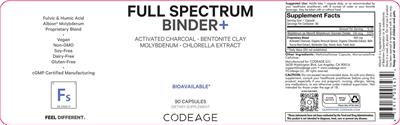
Fulvic & Humic Acid Albion Molybdenum Proprietary Blend
Activated charcoal - Bentonite clay - Molybdenum - Chlorella extract
Formulation
Vegan
Non GMO Soy-Free Dairy-Free Gluten-Free
cGMP Certified Manufacturing Feel Different. Bioavailable
FDA Statement of Identity
Dietary Supplement
Suggested/Recommended/Usage/Directions
Suggested use: Adults take 1 capsule daily, or as recommended by your healthcare practitioner, with 8 ounces of water or your favorite beverage. May be taken with or without food.
Brand IP Statement(s)
Copyright Codeage LLC. All rights reserved.
Albion is a registered trademark of Balchem Corporation or its subsidiaries.
Precautions
Caution: Do not exceed recommended dose.
As with any dietary supplement, consult your healthcare practitioner before using this product, especially if you are pregnant, nursing, allergic, taking any medications, or are otherwise under medical supervision.
As with any dietary supplement, consult your healthcare practitioner before using this product, especially if you are pregnant, nursing, allergic, taking any medications, or are otherwise under medical supervision.
Not intended for those under the age of 18.
Do not use if product has been opened or tampered with in any way.
Keep out of reach of children and pets.
General Statements
Scan for info Please recycle Bottle & cap Please take off the label Questions? CODEAGE.com
FDA Disclaimer Statement
These statements have not been evaluated by the Food and Drug Administration. This product is not intended to diagnose, treat, cure or prevent any disease.
Storage
Store in a cool, dry place.
Is this label outdated? Report a formula or label change and our pharmacy team will review it.
Full Spectrum Binder + by Codeage label
The label scan from the NIH Dietary Supplement Label Database. Tap to enlarge.
Label images are published by the NIH Dietary Supplement Label Database for the version of this product on file. Always read your actual product label.
View the full label (PDF)The Ingredients in Full Spectrum Binder + by Codeage
These are the 8 active ingredients this product is made of. Select any to open its full monograph.
Serving size1 Capsule(s) Dosage formCapsule Servings per container90 Amounts shown are per serving.
Most supplement products combine several ingredients, and a medication can interact with the product through any one of them. Each ingredient below shows whether it has known drug interactions.
Proprietary Blend
- › Organic Broccoli
- › Bentonite Clay
- › Activated Charcoal
- › Humic Acid
- › Fulvic Acid
- › Organic Chlorella extract
- › Wild Yucca root extract
Molybdenum
No knowninteractions
Molybdenum is an essential trace mineral your body needs in tiny amounts to help certain enzymes work. Most people get enough from a normal diet, so s...
Molybdenum monograph & interactionsOther (inactive) ingredients: Methylcellulose, Microcrystalline Cellulose. These complete the product’s ingredient list but are not active constituents.
Full Spectrum Binder + by Codeage Drug Interactions
HelloPharmacist Interaction Report
Codeage's Full Spectrum Binder + contains several ingredients with documented interactions with medications.
Activated charcoal is the most serious concern — it has a Major interaction with oral drugs generally, reducing how well many medications are absorbed and work in your body. This includes common drugs like acetaminophen and heart medications.
Read the full breakdown — every affected drug type, severity by severity
Broccoli may reduce the effects of drugs broken down by your liver's CYP1A2 and CYP2A6 enzymes (Moderate severity for each); research shows it can increase activity of these pathways by 10% to 550%. Fulvic acid carries Moderate interactions with blood thinners and antiplatelet drugs, immunosuppressants, and thyroid hormone therapy.
Chlorella also has Moderate interactions with certain photosensitizing drugs (those that make skin sun-sensitive) and may interfere with warfarin, a common blood thinner.
Activated charcoal can also reduce how well oral contraceptives work (Moderate), and its binding action may be weakened if you drink alcohol. We could not check bentonite clay — no safety data is on file for it.
Altogether, these interactions span 2,120 individual medications.
Please check your exact medications with the tool on this page before starting this product.
Check your own medications below · Editorial policy · How we use AI
Want to check YOUR meds against Full Spectrum Binder +?
Ask about interactions with your drugs in plain English — “Can I take it with lisinopril?” — and we find you the answer in seconds, ingredient by ingredient.
Go to the checkerIngredients driving the most interactions
Individual Drug Interactions
The ingredients in Full Spectrum Binder + interact with 2,142 drugs. Click any drug to see the details.
4 of the 8 ingredients in Full Spectrum Binder + interact with drugs. Each result below shows which ingredient is responsible. Activated Charcoal organic Chlorella extract Fulvic Acid organic Broccoli
EnasidenibIdhifa
How Enasidenib interacts with Full Spectrum Binder + — through 2 ingredients. Tap an ingredient for the detail:
Activated CharcoalOral Drugs Major
Interaction Summary
Activated charcoal reduces systemic exposure to many drugs, including those that undergo enterohepatic recirculation, regardless of the route of administration.
Read the full Activated Charcoal + Enasidenib interactionOrganic BroccoliCytochrome P450 1a2 (cyp1a2) Substrates Moderate
Interaction Summary
Theoretically, broccoli might reduce the levels and effects of drugs metabolized by CYP1A2.
Read the full Organic Broccoli + Enasidenib interactionEncainideEnkaid
How Encainide interacts with Full Spectrum Binder + — through 1 ingredient. Tap an ingredient for the detail:
Activated CharcoalOral Drugs Major
Interaction Summary
Activated charcoal reduces systemic exposure to many drugs, including those that undergo enterohepatic recirculation, regardless of the route of administration.
Read the full Activated Charcoal + Encainide interactionEncorafenibBraftovi
How Encorafenib interacts with Full Spectrum Binder + — through 1 ingredient. Tap an ingredient for the detail:
Activated CharcoalOral Drugs Major
Interaction Summary
Activated charcoal reduces systemic exposure to many drugs, including those that undergo enterohepatic recirculation, regardless of the route of administration.
Read the full Activated Charcoal + Encorafenib interactionEnfluraneEthrane
How Enflurane interacts with Full Spectrum Binder + — through 1 ingredient. Tap an ingredient for the detail:
Activated CharcoalOral Drugs Major
Interaction Summary
Activated charcoal reduces systemic exposure to many drugs, including those that undergo enterohepatic recirculation, regardless of the route of administration.
Read the full Activated Charcoal + Enflurane interactionEnoxacinPenetrex
How Enoxacin interacts with Full Spectrum Binder + — through 2 ingredients. Tap an ingredient for the detail:
Activated CharcoalOral Drugs Major
Interaction Summary
Activated charcoal reduces systemic exposure to many drugs, including those that undergo enterohepatic recirculation, regardless of the route of administration.
Read the full Activated Charcoal + Enoxacin interactionOrganic Chlorella ExtractPhotosensitizing Drugs Moderate
Interaction Summary
Theoretically, chlorella might have additive effects with photosensitizing drugs.
Read the full Organic Chlorella Extract + Enoxacin interactionEnsartinibEnsacove
How Ensartinib interacts with Full Spectrum Binder + — through 2 ingredients. Tap an ingredient for the detail:
Activated CharcoalOral Drugs Major
Interaction Summary
Activated charcoal reduces systemic exposure to many drugs, including those that undergo enterohepatic recirculation, regardless of the route of administration.
Read the full Activated Charcoal + Ensartinib interactionOrganic Chlorella ExtractPhotosensitizing Drugs Moderate
Interaction Summary
Theoretically, chlorella might have additive effects with photosensitizing drugs.
Read the full Organic Chlorella Extract + Ensartinib interactionEntacaponeComtan
How Entacapone interacts with Full Spectrum Binder + — through 1 ingredient. Tap an ingredient for the detail:
Activated CharcoalOral Drugs Major
Interaction Summary
Activated charcoal reduces systemic exposure to many drugs, including those that undergo enterohepatic recirculation, regardless of the route of administration.
Read the full Activated Charcoal + Entacapone interactionEntecavirBaraclude
How Entecavir interacts with Full Spectrum Binder + — through 1 ingredient. Tap an ingredient for the detail:
Activated CharcoalOral Drugs Major
Interaction Summary
Activated charcoal reduces systemic exposure to many drugs, including those that undergo enterohepatic recirculation, regardless of the route of administration.
Read the full Activated Charcoal + Entecavir interactionEntrectinibRozlytrek
How Entrectinib interacts with Full Spectrum Binder + — through 1 ingredient. Tap an ingredient for the detail:
Activated CharcoalOral Drugs Major
Interaction Summary
Activated charcoal reduces systemic exposure to many drugs, including those that undergo enterohepatic recirculation, regardless of the route of administration.
Read the full Activated Charcoal + Entrectinib interactionEnzalutamideXtandi
How Enzalutamide interacts with Full Spectrum Binder + — through 1 ingredient. Tap an ingredient for the detail:
Activated CharcoalOral Drugs Major
Interaction Summary
Activated charcoal reduces systemic exposure to many drugs, including those that undergo enterohepatic recirculation, regardless of the route of administration.
Read the full Activated Charcoal + Enzalutamide interactionEphedrine Sulfate, Hydroxyzine, TheophyllineHydroxy Compound
How Ephedrine Sulfate, Hydroxyzine, Theophylline interacts with Full Spectrum Binder + — through 3 ingredients. Tap an ingredient for the detail:
Activated CharcoalOral Drugs Major
Interaction Summary
Activated charcoal reduces systemic exposure to many drugs, including those that undergo enterohepatic recirculation, regardless of the route of administration.
Read the full Activated Charcoal + Ephedrine Sulfate, Hydroxyzine, Theophylline interactionOrganic BroccoliCytochrome P450 1a2 (cyp1a2) Substrates Moderate
Interaction Summary
Theoretically, broccoli might reduce the levels and effects of drugs metabolized by CYP1A2.
Read the full Organic Broccoli + Ephedrine Sulfate, Hydroxyzine, Theophylline interactionOrganic Chlorella ExtractPhotosensitizing Drugs Moderate
Interaction Summary
Theoretically, chlorella might have additive effects with photosensitizing drugs.
Read the full Organic Chlorella Extract + Ephedrine Sulfate, Hydroxyzine, Theophylline interactionEphedrine, Guaifenesin (otc Drug)Ephedrine Formula 400, Ephedrine Plus Tabs
How Ephedrine, Guaifenesin (otc Drug) interacts with Full Spectrum Binder + — through 1 ingredient. Tap an ingredient for the detail:
Activated CharcoalOral Drugs Major
Interaction Summary
Activated charcoal reduces systemic exposure to many drugs, including those that undergo enterohepatic recirculation, regardless of the route of administration.
Read the full Activated Charcoal + Ephedrine, Guaifenesin (otc Drug) interactionEphedrine, Guaifenesin, Phenobarbital, TheophyllineMudrane GG
How Ephedrine, Guaifenesin, Phenobarbital, Theophylline interacts with Full Spectrum Binder + — through 2 ingredients. Tap an ingredient for the detail:
Activated CharcoalOral Drugs Major
Interaction Summary
Activated charcoal reduces systemic exposure to many drugs, including those that undergo enterohepatic recirculation, regardless of the route of administration.
Read the full Activated Charcoal + Ephedrine, Guaifenesin, Phenobarbital, Theophylline interactionOrganic BroccoliCytochrome P450 1a2 (cyp1a2) Substrates Moderate
Interaction Summary
Theoretically, broccoli might reduce the levels and effects of drugs metabolized by CYP1A2.
Read the full Organic Broccoli + Ephedrine, Guaifenesin, Phenobarbital, Theophylline interactionEphedrine, Hydroxyzine, TheophyllineAmi Rax, Marax
How Ephedrine, Hydroxyzine, Theophylline interacts with Full Spectrum Binder + — through 3 ingredients. Tap an ingredient for the detail:
Activated CharcoalOral Drugs Major
Interaction Summary
Activated charcoal reduces systemic exposure to many drugs, including those that undergo enterohepatic recirculation, regardless of the route of administration.
Read the full Activated Charcoal + Ephedrine, Hydroxyzine, Theophylline interactionOrganic Chlorella ExtractPhotosensitizing Drugs Moderate
Interaction Summary
Theoretically, chlorella might have additive effects with photosensitizing drugs.
Read the full Organic Chlorella Extract + Ephedrine, Hydroxyzine, Theophylline interactionOrganic BroccoliCytochrome P450 1a2 (cyp1a2) Substrates Moderate
Interaction Summary
Theoretically, broccoli might reduce the levels and effects of drugs metabolized by CYP1A2.
Read the full Organic Broccoli + Ephedrine, Hydroxyzine, Theophylline interactionEphedrine, Phenobarbital, Potassium Iodide, TheophyllineMudrane, Quadrinal
How Ephedrine, Phenobarbital, Potassium Iodide, Theophylline interacts with Full Spectrum Binder + — through 1 ingredient. Tap an ingredient for the detail:
Activated CharcoalOral Drugs Major
Interaction Summary
Activated charcoal reduces systemic exposure to many drugs, including those that undergo enterohepatic recirculation, regardless of the route of administration.
Read the full Activated Charcoal + Ephedrine, Phenobarbital, Potassium Iodide, Theophylline interactionEphedrine, Phenobarbital, TheophyllineTedral
How Ephedrine, Phenobarbital, Theophylline interacts with Full Spectrum Binder + — through 1 ingredient. Tap an ingredient for the detail:
Activated CharcoalOral Drugs Major
Interaction Summary
Activated charcoal reduces systemic exposure to many drugs, including those that undergo enterohepatic recirculation, regardless of the route of administration.
Read the full Activated Charcoal + Ephedrine, Phenobarbital, Theophylline interactionEpinephrineAnapen, Anapen Junior, Auvi-Q, Epifrin, EpiPen, EpiPen Jr +2 more
How Epinephrine interacts with Full Spectrum Binder + — through 1 ingredient. Tap an ingredient for the detail:
Activated CharcoalOral Drugs Major
Interaction Summary
Activated charcoal reduces systemic exposure to many drugs, including those that undergo enterohepatic recirculation, regardless of the route of administration.
Read the full Activated Charcoal + Epinephrine interactionEpirubicinEllence
How Epirubicin interacts with Full Spectrum Binder + — through 1 ingredient. Tap an ingredient for the detail:
Activated CharcoalOral Drugs Major
Interaction Summary
Activated charcoal reduces systemic exposure to many drugs, including those that undergo enterohepatic recirculation, regardless of the route of administration.
Read the full Activated Charcoal + Epirubicin interactionEplerenoneInspra
How Eplerenone interacts with Full Spectrum Binder + — through 1 ingredient. Tap an ingredient for the detail:
Activated CharcoalOral Drugs Major
Interaction Summary
Activated charcoal reduces systemic exposure to many drugs, including those that undergo enterohepatic recirculation, regardless of the route of administration.
Read the full Activated Charcoal + Eplerenone interactionEpoetin BetaMircera, Recormon
How Epoetin Beta interacts with Full Spectrum Binder + — through 1 ingredient. Tap an ingredient for the detail:
Activated CharcoalOral Drugs Major
Interaction Summary
Activated charcoal reduces systemic exposure to many drugs, including those that undergo enterohepatic recirculation, regardless of the route of administration.
Read the full Activated Charcoal + Epoetin Beta interactionEpoprostenolFlolan
How Epoprostenol interacts with Full Spectrum Binder + — through 1 ingredient. Tap an ingredient for the detail:
Activated CharcoalOral Drugs Major
Interaction Summary
Activated charcoal reduces systemic exposure to many drugs, including those that undergo enterohepatic recirculation, regardless of the route of administration.
Read the full Activated Charcoal + Epoprostenol interactionEprosartanTeveten
How Eprosartan interacts with Full Spectrum Binder + — through 1 ingredient. Tap an ingredient for the detail:
Activated CharcoalOral Drugs Major
Interaction Summary
Activated charcoal reduces systemic exposure to many drugs, including those that undergo enterohepatic recirculation, regardless of the route of administration.
Read the full Activated Charcoal + Eprosartan interactionEptifibatideIntegrilin
How Eptifibatide interacts with Full Spectrum Binder + — through 2 ingredients. Tap an ingredient for the detail:
Activated CharcoalOral Drugs Major
Interaction Summary
Activated charcoal reduces systemic exposure to many drugs, including those that undergo enterohepatic recirculation, regardless of the route of administration.
Read the full Activated Charcoal + Eptifibatide interactionFulvic AcidAnticoagulant/antiplatelet Drugs Moderate
Interaction Summary
Theoretically, taking fulvic acid may decrease the effectiveness of anticoagulant and antiplatelet drugs.
Read the full Fulvic Acid + Eptifibatide interactionErdafitinibBalversa
How Erdafitinib interacts with Full Spectrum Binder + — through 1 ingredient. Tap an ingredient for the detail:
Activated CharcoalOral Drugs Major
Interaction Summary
Activated charcoal reduces systemic exposure to many drugs, including those that undergo enterohepatic recirculation, regardless of the route of administration.
Read the full Activated Charcoal + Erdafitinib interactionErgoloid MesylatesHydergine
How Ergoloid Mesylates interacts with Full Spectrum Binder + — through 1 ingredient. Tap an ingredient for the detail:
Activated CharcoalOral Drugs Major
Interaction Summary
Activated charcoal reduces systemic exposure to many drugs, including those that undergo enterohepatic recirculation, regardless of the route of administration.
Read the full Activated Charcoal + Ergoloid Mesylates interactionErgonovine Maleate (prescription Drug)Ergotrate Maleate
How Ergonovine Maleate (prescription Drug) interacts with Full Spectrum Binder + — through 1 ingredient. Tap an ingredient for the detail:
Activated CharcoalOral Drugs Major
Interaction Summary
Activated charcoal reduces systemic exposure to many drugs, including those that undergo enterohepatic recirculation, regardless of the route of administration.
Read the full Activated Charcoal + Ergonovine Maleate (prescription Drug) interactionErgotamine Tartrate (prescription Drug)Ergomar Sublingual, Ergostat SL
How Ergotamine Tartrate (prescription Drug) interacts with Full Spectrum Binder + — through 1 ingredient. Tap an ingredient for the detail:
Activated CharcoalOral Drugs Major
Interaction Summary
Activated charcoal reduces systemic exposure to many drugs, including those that undergo enterohepatic recirculation, regardless of the route of administration.
Read the full Activated Charcoal + Ergotamine Tartrate (prescription Drug) interactionErgotamine, Belladonna, PhenobarbitalBellamine, Bellaspas, Eperbel-S
How Ergotamine, Belladonna, Phenobarbital interacts with Full Spectrum Binder + — through 1 ingredient. Tap an ingredient for the detail:
Activated CharcoalOral Drugs Major
Interaction Summary
Activated charcoal reduces systemic exposure to many drugs, including those that undergo enterohepatic recirculation, regardless of the route of administration.
Read the full Activated Charcoal + Ergotamine, Belladonna, Phenobarbital interactionErlotinibTarceva
How Erlotinib interacts with Full Spectrum Binder + — through 1 ingredient. Tap an ingredient for the detail:
Activated CharcoalOral Drugs Major
Interaction Summary
Activated charcoal reduces systemic exposure to many drugs, including those that undergo enterohepatic recirculation, regardless of the route of administration.
Read the full Activated Charcoal + Erlotinib interactionErtapenemInvanz
How Ertapenem interacts with Full Spectrum Binder + — through 1 ingredient. Tap an ingredient for the detail:
Activated CharcoalOral Drugs Major
Interaction Summary
Activated charcoal reduces systemic exposure to many drugs, including those that undergo enterohepatic recirculation, regardless of the route of administration.
Read the full Activated Charcoal + Ertapenem interactionEach ingredient & the kinds of drugs it affects
For each ingredient in Full Spectrum Binder + with known interactions, here are the types of medications they can affect. Open any type for the detail — or search your exact drug in the checker above.
Activated Charcoal
Oral Drugs
Activated charcoal reduces systemic exposure to many drugs, including those that undergo enterohepatic recirculation, regardless of the route of administration.
Activated charcoal adsorbs various drugs and may reduce their absorption and/or half-life. Examples of affected drugs include acetaminophen, aminophylline, amiodarone, atenolol, carbamazepine, dapsone, digoxin, disopyramide, fluoxetine, indomethacin, moxifloxacin, nadolol, phenytoin, phenobarbital, piroxicam, quinine, sotalol, theophylline, tricyclic antidepressants, valproate, and verapamil. Avoid co-administration, except after drug overdose.
Alcohol (Ethanol)
The binding action of activated charcoal may be reduced by alcohol.
Alcohol may lower the adsorptive capacity of activated charcoal.
Contraceptive Drugs
Activated charcoal may reduce the clinical effects of oral contraceptives.
Activated charcoal, taken in a dose of 5 grams four times daily for 3 days, may bind to, and reduce the absorption of, oral contraceptives, thereby limiting their effectiveness and increasing the risk of contraceptive failure. However, some clinical research shows that the risk for this interaction is minimal when activated charcoal is taken either 3 hours after or at least 12 hours before oral contraceptives.
organic Chlorella extract
Photosensitizing Drugs
Theoretically, chlorella might have additive effects with photosensitizing drugs.
Chlorella has been reported to cause photosensitization. In five case reports, patients who had ingested chlorella exhibited swelling followed by erythematopurpuric lesions on sun-exposed areas of the body. Theoretically, concomitant use with photosensitizing drugs may exacerbate effects.
Warfarin (Coumadin)
Theoretically, chlorella might reduce the clinical effects of warfarin.
Chlorella contains significant amounts of vitamin K. There is at least one case report of warfarin therapy becoming sub-therapeutic after initiation of chlorella supplements.
Fulvic Acid
Anticoagulant/Antiplatelet Drugs
Theoretically, taking fulvic acid may decrease the effectiveness of anticoagulant and antiplatelet drugs.
In vitro evidence shows that fulvic acid, formed from the oxidation and polymerization of protocatechuic acid, can shorten prothrombin time in human plasma, increasing the risk of clot formation.
Immunosuppressants
Theoretically, taking fulvic acid might decrease the effects of immunosuppressive therapy.
Animal research shows that fulvic acid stimulates immune function.
Thyroid Hormone
Theoretically, taking fulvic acid with thyroid hormone therapy might interfere with the ability to normalize thyroid function.
Animal research shows that fulvic acid increases the plasma level of thyroid-stimulating hormone (TSH) and decreases the thyroxine (T4):triiodothyronine (T3) ratio.
organic Broccoli
Cytochrome P450 1A2 (Cyp1A2) Substrates
Theoretically, broccoli might reduce the levels and effects of drugs metabolized by CYP1A2.
Pharmacokinetic research in humans shows that eating 500 grams of fresh broccoli daily for 6-12 days can increase CYP1A2 activity by 10% to 200%. Induction of CYP1A2 activity by broccoli is attributed to its glucosinolate constituents.
Cytochrome P450 2A6 (Cyp2A6) Substrates
Theoretically, broccoli might reduce the levels and effects of drugs metabolized by CYP2A6.
Pharmacokinetic research in humans shows that eating 500 grams of broccoli daily for 6 days increases CYP2A6 activity by 135% to 550%. Induction of CYP2A6 activity is attributed to its glucosinolate constituents.
Brand information
Manufacturer and brand details for Full Spectrum Binder +, from the product label.
Codeage
See all Codeage products- Name
- Codeage LLC
- Street Address
- 5628 Washington Blvd
- City
- Los Angeles
- State
- CA
- ZipCode
- 90016
- Web Address
- www.codeage.com
Full Spectrum Binder + by Codeage: Common Questions
Does Full Spectrum Binder + by Codeage interact with any medications?
How can one product interact with so many drugs?
Where does this information come from?
Does this product work as a detox or cleanse?
What exactly is in the Proprietary Blend?
Can I take this while pregnant?
What side effects should I watch for?
Does the broccoli ingredient interact with my medications?
Is this safe to use long-term?
Written and reviewed by the HelloPharmacist editorial staff. Our editorial policy
Not sure if Full Spectrum Binder + is safe with your meds?
Our pharmacists answer your medication & supplement questions — free.
Label information is sourced from the NIH Dietary Supplement Label Database and reflects the product version on file; always read your actual product label. This page is for education only and is not a substitute for professional medical advice. Confirm with your pharmacist or doctor before combining supplements and medications.
The Full Monographs Behind Full Spectrum Binder +’s Ingredients
Every ingredient we hold a full HelloPharmacist monograph for — uses, evidence, safety, and the complete interaction list.
Broccoli
Interacts with 187 drugsBroccoli is a nutritious cruciferous vegetable rich in fiber, vitamins, and plant compounds like sulforaphane that have drawn scientific interest for health benefits. Eating broccoli as food...
Read the full Broccoli monograph → Herb & supplement monographActivated Charcoal
Interacts with 2,027 drugsActivated charcoal is a highly porous form of carbon that can bind certain substances in the gut, and it is used in hospitals to treat some poisonings and overdoses. For everyday uses like g...
Read the full Activated Charcoal monograph → Herb & supplement monographHumic Acid
Humic acid is a natural substance formed when plant and animal matter break down in soil, peat, and coal-like deposits, and it is sold as a supplement marketed for immune, gut, and 'detox' s...
Read the full Humic Acid monograph → Herb & supplement monographFulvic Acid
Interacts with 257 drugsFulvic acid is a natural compound formed when plants and microbes break down in soil, and it is sold as a supplement for energy, gut, and overall wellness. Human research is very limited, so...
Read the full Fulvic Acid monograph → Herb & supplement monographChlorella
Interacts with 337 drugsChlorella is a nutrient-rich freshwater green algae taken as a supplement for general wellness, immune support, and 'detox.' Some small studies suggest possible benefits for cholesterol, blo...
Read the full Chlorella monograph → Herb & supplement monographYucca
Yucca is a desert plant traditionally used for joint pain, arthritis, and digestion, and it contains compounds called saponins thought to have anti-inflammatory effects. Human evidence for t...
Read the full Yucca monograph → Herb & supplement monographMolybdenum
Molybdenum is an essential trace mineral your body needs in tiny amounts to help certain enzymes work. Most people get enough from a normal diet, so supplements are rarely needed unless a do...
Read the full Molybdenum monograph →Sources & How We Checked
Full Spectrum Binder +'s label data comes from the NIH Dietary Supplement Label Database; the ingredient interaction data is from the Natural Medicines database, reviewed by our pharmacists.
- NIH Dietary Supplement Label Database (DSLD) — The official product label on file for this supplement.
- Natural Medicines (Therapeutic Research Center) — Evidence-graded clinical reference behind the ingredient interaction data.
Content is written and reviewed by licensed HelloPharmacist pharmacists. See our data sources and editorial standards for how this information is built and checked.
The 49 references behind this product’s interaction data
Every citation that drives the interaction findings for this product’s ingredients, from the evidence-graded Natural Medicines (TRC Healthcare) database. Open an ingredient to browse its citations — links open the study on PubMed or the publisher’s site.
Broccoli 5 references
- Kristal AR, Lampe JW. Brassica vegetables and prostate cancer risk: a review of the epidemiological evidence. Nutr Cancer 2002;42:1-9. PubMed
- Chakrabarti A, Prais L, Foulds IS. Allergic contact dermatitis to broccoli. Br J Dermatol 2003;148:172-3. PubMed
- Hakooz, N. and Hamdan, I. Effects of dietary broccoli on human in vivo caffeine metabolism: a pilot study on a group of Jordanian volunteers. Curr Drug Metab 2007;8(1):9-15. PubMed
- Kall MA, Vang O, Clausen J. Effects of dietary broccoli on human drug metabolising activity. Cancer Lett. 1997;114(1-2):169-70. PubMed
- Bauman JE, Hsu CH, Centuori S, et al. Randomized Crossover Trial Evaluating Detoxification of Tobacco Carcinogens by Broccoli Seed and Sprout Extract in Current Smokers. Cancers (Basel). 2022;14(9):2129. Published 2022 Apr 24. PubMed
Activated Charcoal 14 references
- Kaaja RJ, Kontula KK, Raiha A, Laatikainen T. Treatment of cholestasis of pregnancy with peroral activated charcoal. A preliminary study. Scand J Gastroenterol 1994;29:178-81.
- Anon. Position statement and practice guidelines on the use of multi-dose activated charcoal in the treatment of acute poisoning. American Academy of Clinical Toxicology; European Association of Poisons Centres and Clinical Toxicologists. J Toxicol Clin T
- Park GD, Spector R, Kitt TM. Superactivated charcoal versus cholestyramine for cholesterol lowering: a randomized cross-over trial. J Clin Pharmacol 1988;28:416-9. PubMed
- Hoegberg LC, Angelo HR, Christophersen AB, Christensen HR. Effect of ethanol and pH on the adsorption of acetaminophen (paracetamol) to high surface activated charcoal, in vitro studies. J Toxicol Clin Toxicol 2002;40:59-67. PubMed
- Brahmi N, Kouraichi N, Thabet H, Amamou M. Influence of activated charcoal on the pharmacokinetics and the clinical features of carbamazepine poisoning. Am J Emerg Med 2006;24(4):440-3. PubMed
- Gude AB, Hoegberg LC, Angelo HR, Christensen HR. Dose-dependent adsorptive capacity of activated charcoal for gastrointestinal decontamination of a simulated paracetamol overdose in human volunteers. Basic Clin Pharmacol Toxicol 2010;106(5)406-10. PubMed
- Wananukul W, Klaikleun S, Sriapha C, Tongpoo A. Effect of activated charcoal in reducing paracetamol absorption at supra-therapeutic dose. J Med Assoc Thai 2010;93(10):1145-9.
- Wang Z, Cui M, Tang L, et al. Oral activated charcoal suppresses hyperphosphataemia in haemodialysis patients. Nephrology (Carlton) 2012;17(7):616-20. PubMed
- Wang X, Mondal S, Wang J, et al. Effect of activated charcoal on apixaban pharmacokinetics in healthy subjects. Am J Cardiovasc Drugs 2014;14(2):147-54. PubMed
- Chyka PA, Seger D, Krenzelok EP, et al. Position paper: single-dose activated charcoal. Clin Toxicol (Phila) 2005;43(2):61-87. PubMed
- Chiew AL, Gluud C, Brok J, Buckley NA. Interventions for paracetamol (acetaminophen) overdose. Cochrane Database Syst Rev 2018;2:CD003328. PubMed
- Elomaa K, Ranta S, Tuominen J, Lähteenmäki P. Charcoal treatment and risk of escape ovulation in oral contraceptive users. Hum Reprod. 2001;16(1):76-81. PubMed
- Gao Y, Wang G, Li Y, Lv C, Wang Z. Effects of oral activated charcoal on hyperphosphatemia and vascular calcification in Chinese patients with stage 3-4 chronic kidney disease. J Nephrol. 2019;32(2):265-72. PubMed
- Skov K, Graudal NA, Jürgens G. The effect of activated charcoal on drug exposure following intravenous administration: A meta-analysis. Basic Clin Pharmacol Toxicol 2021;128(4):568-578. PubMed
Molybdenum 8 references
- Chan S, Gerson B, Subramaniam S. The role of copper, molybdenum, selenium, and zinc in nutrition and health. Clin Lab Med 1998;18:673-85. DOI
- Food and Nutrition Board, Institute of Medicine. Dietary Reference Intakes for Vitamin A, Vitamin K, Arsenic, Boron, Chromium, Copper, Iodine, Iron, Manganese, Molybdenum, Nickel, Silicon, Vanadium, and Zinc. Washington, DC: National Academy Press, 2002.
- Rajagopalan KV. Molybdenum: an essential trace element in human nutrition. Annu Rev Nutr 1988;8:401-27. PubMed
- Selden AI, Berg NP, Soderbergh A, Bergstrom BE. Occupational molybdenum exposure and a gouty electrician. Occup Med (Lond) 2005;55:145-8. PubMed
- Al-Saleh E, Nandakumaran M, Al-Shammari M, Al-Harouny A. Maternal-fetal status of copper, iron, molybdenum, selenium and zinc in patients with gestational diabetes. J Matern Fetal Neonatal Med 2004;16:15-21. PubMed
- Koster R, Vieluf D, Kiehn M, et al. Nickel and molybdenum contact allergies in patients with coronary in-stent restenosis. Lancet 2000;356:1895-7. PubMed
- Vyskocil A, Viau C. Assessment of molybdenum toxicity in humans. J Appl Toxicol 1999;19:185-92. DOI
- Momcilovic, B. A case report of acute human molybdenum toxicity from a dietary molybdenum supplement--a new member of the "Lucor metallicum" family. Arh.Hig.Rada Toksikol. 1999;50(3):289-297. DOI
Humic Acid 3 references
Fulvic Acid 3 references
- Lu, FJ. Arsenic as a promoter in the effect of humic substances on plasma prothrombin time in vitro. Thromb Res 6-15-1990;58(6):537-541. PubMed
- Vucskits, AV, Hullar, I, Bersenyi, A, Andrasofszky, E, Kulcsar, M, Szabo, J. Effect of fulvic and humic acids on performance, immune response and thyroid function in rats. J Anim Physiol Anim Nutr (Berl) 2010;94(6):721-728. PubMed
- Gandy JJ, Meeding JP, Snyman JR, et al. Phase 1 clinical study of the acute and subacute safety and proof-of-concept efficacy of carbohydrate-derived fulvic acid. Clin Pharmacol. 2012;4:7-11. PubMed
Chlorella 13 references
- Peirce A. The American Pharmaceutical Association Practical Guide to Natural Medicines. New York, NY: William Morrow and Co., 1999.
- Ng TP, Tan WC, Lee YK. Occupational asthma in a pharmacist induced by chlorella, a unicellular algae preparation. Resp Med 1994;88:555-7. PubMed
- Jitsukawa K, Suizu R, Hidano A. Chlorella photosensitization. New phytophotodermatosis. Int J Dermatol 1984;23:263-8. PubMed
- Merchant RE, Carmack CA, Wise CM. Nutritional supplementation with Chlorella pyrenoidosa for patients with fibromyalgia syndrome: a pilot study. Phytother Res 2000;14:167-73.
- Merchant RE, Rice CD, Young HF. Dietary Chlorella pyrenoidosa for patients with malignant glioma: effects on immunocompetence, quality of life, and survival. Phytother Res 1990;4:220-31.
- Halperin SA, Smith B, Nolan C, et al. Safety and immunoenhancing effect of a Chlorella-derived dietary supplement in healthy adults undergoing influenza vaccination: randomized, double-blind, placebo-controlled trial. CMAJ 2003;169:111-7..
- Ohtake, T., Negishi, K., Okamoto, K., Oka, M., Maesato, K., Moriya, H., and Kobayashi, S. Manganese-induced Parkinsonism in a patient undergoing maintenance hemodialysis. Am J Kidney Dis 2005;46(4):749-753. PubMed
- Ng, T. P., Tan, W. C., and Lee, Y. K. Occupational asthma in a pharmacist induced by Chlorella, a unicellular algae preparation. Respir.Med. 1994;88(7):555-557. PubMed
- Ohkawa, S., Yoneda, Y., Ohsumi, Y., and Tabuchi, M. [Warfarin therapy and chlorella]. Rinsho Shinkeigaku 1995;35(7):806-807.
- Azocar J, Diaz A. Efficacy and safety of chlorella supplementation in adults with chronic hepatitis C virus infection. World J Gastroenterol 2013;19(7):1085-90. PubMed
- Panahi Y, Badeli R, Karami GR, Badeli Z, Sahebkar A. A randomized controlled trial of 6-week Chlorella vulgaris supplementation in patients with major depressive disorder. Complement Ther Med 2015;23(4):598-602. PubMed
- Nakano S, Takekoshi H, Nakano M. Chlorella pyrenoidosa supplementation reduces the risk of anemia, proteinuria and edema in pregnant women. Plant Foods Hum Nutr 2010;65(1):25-30. PubMed
- Yavasoglu I, Turgutkaya A, Bolaman Z. Chlorella-induced thrombocytopenia. Sao Paulo Med J 2018;136(6):602-3. PubMed
Yucca 3 references
- <p><span>Kanerva, L., Estlander, T., Petman, L., Makinen-Kiljunen, S. Occupational allergic contact urticaria to yucca (Yucca aloifolia), weeping fig (Ficus benjamina), and spathe flower (Spathiphyllum wallisii). Allergy. 2001;56(10): 1008-11.</span></p>
- Poljacki, M., Paravina, M., Jovanovic, M., Subotic, M., and Duran, V. [Contact allergic dermatitis caused by plants]. Med Pregl. 1993;46(9-10):371-375.
- Mahillon, V., Saussez, S., and Michel, O. High incidence of sensitization to ornamental plants in allergic rhinitis. Allergy 2006;61(9):1138-1140. PubMed
Parts of this content are provided by the Therapeutic Research Center, LLC.
DISCLAIMER: Currently this does not check for drug-drug interactions. This is not an all-inclusive comprehensive list of potential interactions and is for informational purposes only. Not all interactions are known or well-reported in the scientific literature, and new interactions are continually being reported. Input is needed from a qualified healthcare provider including a pharmacist before starting any therapy. Application of clinical judgment is necessary.
© 2021 Therapeutic Research Center, LLC