
Glucosamine & Chondroitin Soft Chews Ingredients & Drug Interactions
What is this page for?
First and foremost: checking Glucosamine & Chondroitin Soft Chews against your medications. The heart of this page is the interaction checker and the full interaction report — how this product’s ingredients may interact with prescription and over-the-counter medicines you may be taking.
Around that, we add a pharmacist’s high-level view of the product as a whole — what’s inside, the evidence for its stated use, how transparent the label is, and what safety data exists — so you can see the full picture in one place. It’s educational information from our licensed clinical databases and the clinical staff at HelloPharmacist — not medical advice — and we don’t sell or endorse products. Our editorial policy
Glucosamine & Chondroitin Soft Chews is a dietary supplement by Spring Valley with 3 active ingredients. Its ingredients are commonly taken for osteoarthritis joint pain, joint stiffness, cartilage support.Based on those ingredients, 170 medications have a known interaction with it, the most serious rated major. The ingredients most likely to interact are Glucosamine HCl, Chondroitin Sulfate. Use the checker below to test your specific medication, or read the full HelloPharmacist Interaction Report.
Check Your Meds Against Glucosamine & Chondroitin Soft Chews by Spring Valley
Ask about any prescription or over-the-counter medication and we check it for interactions with Glucosamine & Chondroitin Soft Chews by Spring Valley — and tell you which ingredient is responsible.
AI summaries are generated from our interaction database for education only — always confirm with your pharmacist. How we use AI
Ask the Pharmacist
A licensed pharmacist will answer your question by email — free, usually within 24 hours.
Got it — thank you!
A licensed pharmacist will answer within 24 hours. Keep an eye on your email (worth checking spam, just in case).
HelloPharmacist Scorecard of Glucosamine & Chondroitin Soft Chews by Spring Valley
Our pharmacy team’s full take, with four database checks built into the cards below — a summary of what is known, not a grade of the product itself.
What’s inside
Full disclosure
This product contains two active ingredients: glucosamine HCl and chondroitin sulfate, both compounds found naturally in joint cartilage. The soft chews also contain several inactive ingredients — sweeteners (corn syrup, high fructose corn syrup, sweetened condensed milk), fats (palm oil, monoglycerides, diglycerides), flavor enhancers (natural and artificial flavors, citric acid, soy lecithin), and a food coloring (FD&C Yellow #6).
Does it work?
Strong evidence
For osteoarthritis, glucosamine is rated Likely Effective — the evidence supports its use for joint pain and function. Chondroitin is rated Possibly Effective for osteoarthritis and cataracts.
For other conditions listed in the research — aging skin, back pain, colorectal issues, and liver disease — the evidence is insufficient to establish whether either ingredient truly works.
How safe is it?
Well-documented data
Both glucosamine and chondroitin are generally well tolerated by most adults, though quality and actual benefit vary between products. The most common side effects when taken by mouth are stomach issues: bloating, constipation, diarrhea, heartburn, nausea, and abdominal pain or cramps.
Rare serious side effects include liver damage (hepatotoxicity). Some people report skin reactions — rash, hives, swelling around the eyes, or hair loss — particularly with glucosamine-chondroitin combinations.
Very rare cases of asthma flare-ups and one reproducible case of sun sensitivity have been reported. Glucosamine also carries a small allergic-reaction risk; one review found that about 1.5% of reported adverse events were anaphylaxis.
During pregnancy, there is not enough safety information; the data advises against use. While breastfeeding, safety is unknown; avoid unless your doctor says otherwise.
Meds to double-check
Major interaction found
If you take warfarin (Coumadin) or other blood thinners, this product is a major concern — it could increase your bleeding risk. Also double-check if you're on topoisomerase II inhibitor chemotherapy drugs (like etoposide or doxorubicin), diabetes medications, or acetaminophen regularly before starting.
Discuss these with your doctor or pharmacist before taking this product.
The bottom line
Scorecard at a glanceFully disclosed formula with clinical evidence supporting its stated purpose. Major medication interactions have been identified, and safety information is well characterized.
This product is an option if you have osteoarthritis and want to try glucosamine and chondroitin together — the evidence supports glucosamine especially. Anyone taking warfarin (a blood thinner) needs to check with their doctor or pharmacist first, as this product could increase bleeding risk.
Same goes if you're on chemotherapy, diabetes medication, or regular acetaminophen. Talk it over with your own doctor or pharmacist to see if it's right for you and to confirm it won't clash with your medications.
Educational only — not medical advice; always confirm with your pharmacist. Our editorial policy · How we use AI
Assessment coverage: 2 of 2 active ingredients matched to our full ingredient reviews (monographs). Based on the product label dated Nov 25, 2013.
This Scorecard evaluates available label information, ingredient evidence, and known medication-safety considerations. It does not independently verify product identity, purity, potency, contamination, or manufacturing quality. How these ratings are computed
General information
Key facts about Glucosamine & Chondroitin Soft Chews, straight from the product label.
| Brand | Spring Valley |
|---|---|
| Net contents | 50 Soft Chew(s) |
| Market status | On market |
| Date entered into DSLD | Nov 25, 2013 |
| DSLD ID | 26372 |
| Product type | Non-nutrient/non-botanical |
| Supplement form | Other (e.g. Tea Bag) |
| Dietary claims / uses | All Other, Structure/Function |
| Intended target group(s) | Adult (18 - 50 Years), Gluten Free |
Everything in this section is reproduced from the manufacturer’s own product label — it’s the label speaking, not HelloPharmacist. We show it so you can see exactly what the maker states; we don’t verify or endorse those statements.
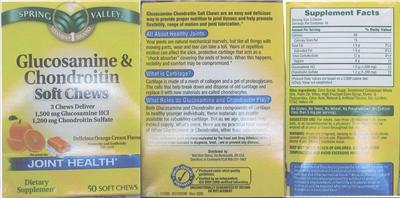
Supplement Facts
The label details for Glucosamine & Chondroitin Soft Chews by Spring Valley, sourced from the NIH Dietary Supplement Label Database.
Supplement Facts
| Ingredient | Amount | % DV |
|---|---|---|
| Calories | 60 {Calories} | -- |
| Total Carbohydrates | 12 Gram(s) | 4% |
| Sugar | 6 Gram(s) | -- |
| Calories from Fat | 15 {Calories} | -- |
| Saturated Fat | 1.5 Gram(s) | 8% |
| Total Fat | 1.5 Gram(s) | 2% |
| Chondroitin Sulfate | 1.2 Gram(s) | -- |
| Glucosamine HCl | 1.5 Gram(s) | -- |
Other ingredients: Corn Syrup, Sweetened Condensed Whole Milk, Palm Oil, Whey, High Fructose Corn Syrup, Monoglycerides, Diglycerides, Citric Acid, Natural & Artificial flavors, Soy Lecithin, FD&C Yellow #6
Tap any ingredient to jump to its full detail below.
These statements are the manufacturer’s wording, reproduced from the product label — the label is saying it, not HelloPharmacist. We don’t verify or endorse them.
Seals/Symbols
VITAMIN #1 BRAND
QUALITY ASSURANCE GUARANTEE
Formula
3 Chews Deliver 1,500 mg Glucosamine HCl 1,200 mg Chondroitin Sulfate
General Statements
Not actual size
JOINT HEALTH
Delicious Orange Cream Flavor Naturally and Artificially Flavored
- Produced under strict quality guidelines. - Verified by an independent ISO 9001:2000 certified laboratory. UNCONDITIONALLY GUARANTEED BY REFUND OR REPLACEMENT
Glucosamine Chondroitin Soft Chews are an easy and delicious way to provide proper nutrition to joint tissues and help promote flexibility, range of motion and joint lubrication. All About Health Joints Your joints are natural mechanical marvels, but like all things with moving parts, wear and tear can take a toll. Years of repetitive motion can affect the slick, protective cartilage that acts as a "shock absorber" covering the ends of bones. When this happens, mobility and comfort may be compromised. What is Cartilage? Cartilage is made of a mesh of collagen and a gel of proteoglycans. The cells that help break down and dispose of old cartilage and replace it with new materials are called chondrocytes. What Roles do Glucosamine and Chondroitin Play? Both Glucosamine and Chondroitin are components of cartilage, in healthy younger individuals, these materials are readily available for rebuilding cartilage. But as we age, demand may exceed supply. What's more, there are no practical food sources of either Glucosamine or Chondroitin, other than supplements.
Suggested/Recommended/Usage/Directions
SUGGESTED USE: For adults, take three (3) delicious soft chews daily, or as recommended by a physician. Three chews may be enjoyed all at once or taken throughout the day.
Precautions
WARNING: If you are pregnant, nursing or taking any medications, consult your doctor before use.
Discontinue use and consult your doctor if any adverse reactions occur.
KEEP OUT OF THE REACH OF CHILDREN.
Formulation
No Gluten, No Yeast, No Wheat, No Preservatives, No Sodium (less than 5 mg per serving).
Storage
STORE AT ROOM TEMPERATURE AND AVOID EXCESSIVE HEAT.
FDA Statement of Identity
Dietary Supplement
FDA Disclaimer Statement
These statements have not been evaluated by the Food and Drug Administration. This product is not intended to diagnose, treat, cure, or prevent any disease.
General
Prod. No. 51095 B51095W Rev. 02B
Is this label outdated? Report a formula or label change and our pharmacy team will review it.
Glucosamine & Chondroitin Soft Chews by Spring Valley label
The label scan from the NIH Dietary Supplement Label Database. Tap to enlarge.
Label images are published by the NIH Dietary Supplement Label Database for the version of this product on file. Always read your actual product label.
View the full label (PDF)The Ingredients in Glucosamine & Chondroitin Soft Chews by Spring Valley
These are the 3 active ingredients this product is made of. Select any to open its full monograph.
Serving size3 Chew(s) Dosage formOther (e.g. Tea Bag) Servings per container16 Amounts shown are per serving.
Most supplement products combine several ingredients, and a medication can interact with the product through any one of them. Each ingredient below shows whether it has known drug interactions.
Sugar
Chondroitin Sulfate
Interacts with2 drugs
Chondroitin sulfate is a naturally occurring building block of cartilage that is widely taken, often with glucosamine, for osteoarthritis joint pain....
Chondroitin Sulfate monograph & interactionsGlucosamine HCl
Interacts with170 drugs
Glucosamine is a natural compound found in cartilage and joint fluid, and it is one of the most popular supplements for osteoarthritis, especially of...
Glucosamine HCl monograph & interactionsOther (inactive) ingredients: Corn Syrup, Sweetened Condensed Whole Milk, Palm Oil, Whey, High Fructose Corn Syrup, Monoglycerides, Diglycerides, Citric Acid, Natural & Artificial flavors, Soy Lecithin, FD&C Yellow #6. These complete the product’s ingredient list but are not active constituents.
Glucosamine & Chondroitin Soft Chews by Spring Valley Drug Interactions
HelloPharmacist Interaction Report
Spring Valley's Glucosamine & Chondroitin Soft Chews contains two active ingredients — glucosamine HCl and chondroitin sulfate — both of which interact with medications.
The most serious concern is with warfarin (Coumadin), a blood thinner: glucosamine carries a Major severity rating and can increase warfarin's anticoagulant effects, raising your bleeding and bruising risk. Chondroitin also interacts with warfarin at Moderate severity, though the effect of chondroitin alone is less clear.
Case reports show increased INR (a measure of blood thickness) when patients on warfarin added glucosamine, with or without chondroitin.
Read the full breakdown — every affected drug type, severity by severity
Glucosamine also interacts with topoisomerase II inhibitors (chemotherapy drugs like etoposide and doxorubicin) at Moderate severity — laboratory work suggests it might reduce their effectiveness, though this hasn't been seen in patients. Minor interactions exist with diabetes medications and acetaminophen (Tylenol); for diabetes drugs, the concern is mostly theoretical, but acetaminophen may weaken pain relief when combined with this product.
Additionally, chondroitin sulfate has no additional interactions beyond warfarin. Altogether, these interactions span 170 individual medications.
If you take any of these drug types, run your exact medications through the interaction checker on this page before starting this product.
Check your own medications below · Editorial policy · How we use AI
Want to check YOUR meds against Glucosamine & Chondroitin Soft Chews?
Ask about interactions with your drugs in plain English — “Can I take it with lisinopril?” — and we find you the answer in seconds, ingredient by ingredient.
Go to the checkerIngredients driving the most interactions
Individual Drug Interactions
The ingredients in Glucosamine & Chondroitin Soft Chews interact with 170 drugs. Click any drug to see the details.
2 of the 3 ingredients in Glucosamine & Chondroitin Soft Chews interact with drugs. Each result below shows which ingredient is responsible. Glucosamine HCl Chondroitin Sulfate
WarfarinWarfarin
How Warfarin interacts with Glucosamine & Chondroitin Soft Chews — through 2 ingredients. Tap an ingredient for the detail:
Glucosamine HclWarfarin (coumadin) Major
Interaction Summary
Glucosamine might increase the anticoagulant effects of warfarin and increase the risk of bruising and bleeding.
Read the full Glucosamine Hcl + Warfarin interactionChondroitin SulfateWarfarin (coumadin) Moderate
Interaction Summary
Taking chondroitin in combination with glucosamine might increase the anticoagulant effects of warfarin.
Read the full Chondroitin Sulfate + Warfarin interactionWarfarin SodiumCoumadin, Panwarfin, Sofarin
How Warfarin Sodium interacts with Glucosamine & Chondroitin Soft Chews — through 2 ingredients. Tap an ingredient for the detail:
Glucosamine HclWarfarin (coumadin) Major
Interaction Summary
Glucosamine might increase the anticoagulant effects of warfarin and increase the risk of bruising and bleeding.
Read the full Glucosamine Hcl + Warfarin Sodium interactionChondroitin SulfateWarfarin (coumadin) Moderate
Interaction Summary
Taking chondroitin in combination with glucosamine might increase the anticoagulant effects of warfarin.
Read the full Chondroitin Sulfate + Warfarin Sodium interactionDaunorubicin CitrateDaunoXome
How Daunorubicin Citrate interacts with Glucosamine & Chondroitin Soft Chews — through 1 ingredient. Tap an ingredient for the detail:
Glucosamine HclTopoisomerase Ii Inhibitors Moderate
Interaction Summary
Theoretically glucosamine may induce resistance to topoisomerase II inhibitors.
Read the full Glucosamine Hcl + Daunorubicin Citrate interactionDaunorubicin HydrochlorideCerubidine
How Daunorubicin Hydrochloride interacts with Glucosamine & Chondroitin Soft Chews — through 1 ingredient. Tap an ingredient for the detail:
Glucosamine HclTopoisomerase Ii Inhibitors Moderate
Interaction Summary
Theoretically glucosamine may induce resistance to topoisomerase II inhibitors.
Read the full Glucosamine Hcl + Daunorubicin Hydrochloride interactionDaunorubicin, CytarabineVyxeos
How Daunorubicin, Cytarabine interacts with Glucosamine & Chondroitin Soft Chews — through 1 ingredient. Tap an ingredient for the detail:
Glucosamine HclTopoisomerase Ii Inhibitors Moderate
Interaction Summary
Theoretically glucosamine may induce resistance to topoisomerase II inhibitors.
Read the full Glucosamine Hcl + Daunorubicin, Cytarabine interactionDoxorubicinAdriamycin, Caelyx, Doxil, Myocet, Rubex
How Doxorubicin interacts with Glucosamine & Chondroitin Soft Chews — through 1 ingredient. Tap an ingredient for the detail:
Glucosamine HclTopoisomerase Ii Inhibitors Moderate
Interaction Summary
Theoretically glucosamine may induce resistance to topoisomerase II inhibitors.
Read the full Glucosamine Hcl + Doxorubicin interactionEpirubicinEllence
How Epirubicin interacts with Glucosamine & Chondroitin Soft Chews — through 1 ingredient. Tap an ingredient for the detail:
Glucosamine HclTopoisomerase Ii Inhibitors Moderate
Interaction Summary
Theoretically glucosamine may induce resistance to topoisomerase II inhibitors.
Read the full Glucosamine Hcl + Epirubicin interactionEtoposideEtopophos, VePesid, VP16
How Etoposide interacts with Glucosamine & Chondroitin Soft Chews — through 1 ingredient. Tap an ingredient for the detail:
Glucosamine HclTopoisomerase Ii Inhibitors Moderate
Interaction Summary
Theoretically glucosamine may induce resistance to topoisomerase II inhibitors.
Read the full Glucosamine Hcl + Etoposide interactionIdarubicinIdamycin
How Idarubicin interacts with Glucosamine & Chondroitin Soft Chews — through 1 ingredient. Tap an ingredient for the detail:
Glucosamine HclTopoisomerase Ii Inhibitors Moderate
Interaction Summary
Theoretically glucosamine may induce resistance to topoisomerase II inhibitors.
Read the full Glucosamine Hcl + Idarubicin interactionIrinotecanCamptosar, Onivyde
How Irinotecan interacts with Glucosamine & Chondroitin Soft Chews — through 1 ingredient. Tap an ingredient for the detail:
Glucosamine HclTopoisomerase Ii Inhibitors Moderate
Interaction Summary
Theoretically glucosamine may induce resistance to topoisomerase II inhibitors.
Read the full Glucosamine Hcl + Irinotecan interactionIrinotecan Hydrochloride
How Irinotecan Hydrochloride interacts with Glucosamine & Chondroitin Soft Chews — through 1 ingredient. Tap an ingredient for the detail:
Glucosamine HclTopoisomerase Ii Inhibitors Moderate
Interaction Summary
Theoretically glucosamine may induce resistance to topoisomerase II inhibitors.
Read the full Glucosamine Hcl + Irinotecan Hydrochloride interactionMitoxantroneNovantrone
How Mitoxantrone interacts with Glucosamine & Chondroitin Soft Chews — through 1 ingredient. Tap an ingredient for the detail:
Glucosamine HclTopoisomerase Ii Inhibitors Moderate
Interaction Summary
Theoretically glucosamine may induce resistance to topoisomerase II inhibitors.
Read the full Glucosamine Hcl + Mitoxantrone interactionTeniposideVumon
How Teniposide interacts with Glucosamine & Chondroitin Soft Chews — through 1 ingredient. Tap an ingredient for the detail:
Glucosamine HclTopoisomerase Ii Inhibitors Moderate
Interaction Summary
Theoretically glucosamine may induce resistance to topoisomerase II inhibitors.
Read the full Glucosamine Hcl + Teniposide interactionTopotecanHycamtin
How Topotecan interacts with Glucosamine & Chondroitin Soft Chews — through 1 ingredient. Tap an ingredient for the detail:
Glucosamine HclTopoisomerase Ii Inhibitors Moderate
Interaction Summary
Theoretically glucosamine may induce resistance to topoisomerase II inhibitors.
Read the full Glucosamine Hcl + Topotecan interactionValrubicinValstar
How Valrubicin interacts with Glucosamine & Chondroitin Soft Chews — through 1 ingredient. Tap an ingredient for the detail:
Glucosamine HclTopoisomerase Ii Inhibitors Moderate
Interaction Summary
Theoretically glucosamine may induce resistance to topoisomerase II inhibitors.
Read the full Glucosamine Hcl + Valrubicin interactionAcarboseGlucobay, Prandase, Precose
How Acarbose interacts with Glucosamine & Chondroitin Soft Chews — through 1 ingredient. Tap an ingredient for the detail:
Glucosamine HclAntidiabetes Drugs Minor
Interaction Summary
Despite initial concerns, it is unlikely that glucosamine will interfere with the effects of antidiabetes drugs.
Read the full Glucosamine Hcl + Acarbose interactionAcetaminophenChildren's Tylenol, Children's Tylenol Meltaways, Tylenol, Tylenol Ex Strength
How Acetaminophen interacts with Glucosamine & Chondroitin Soft Chews — through 1 ingredient. Tap an ingredient for the detail:
Glucosamine HclAcetaminophen (tylenol, Others) Minor
Interaction Summary
Acetaminophen might interfere with the activity of glucosamine sulfate by interacting with the sulfate portion.
Read the full Glucosamine Hcl + Acetaminophen interactionAcetaminophen, AspirinGemnisyn
How Acetaminophen, Aspirin interacts with Glucosamine & Chondroitin Soft Chews — through 1 ingredient. Tap an ingredient for the detail:
Glucosamine HclAcetaminophen (tylenol, Others) Minor
Interaction Summary
Acetaminophen might interfere with the activity of glucosamine sulfate by interacting with the sulfate portion.
Read the full Glucosamine Hcl + Acetaminophen, Aspirin interactionAcetaminophen, Aspirin, CaffeineExcedrin, Excedrin Extra Strength, Excedrin Migraine
How Acetaminophen, Aspirin, Caffeine interacts with Glucosamine & Chondroitin Soft Chews — through 1 ingredient. Tap an ingredient for the detail:
Glucosamine HclAcetaminophen (tylenol, Others) Minor
Interaction Summary
Acetaminophen might interfere with the activity of glucosamine sulfate by interacting with the sulfate portion.
Read the full Glucosamine Hcl + Acetaminophen, Aspirin, Caffeine interactionAcetaminophen, Brompheniramine, PhenylpropanolamineDimetapp Cold and Flu
How Acetaminophen, Brompheniramine, Phenylpropanolamine interacts with Glucosamine & Chondroitin Soft Chews — through 1 ingredient. Tap an ingredient for the detail:
Glucosamine HclAcetaminophen (tylenol, Others) Minor
Interaction Summary
Acetaminophen might interfere with the activity of glucosamine sulfate by interacting with the sulfate portion.
Read the full Glucosamine Hcl + Acetaminophen, Brompheniramine, Phenylpropanolamine interactionAcetaminophen, ButalbitalAxocet, Bancap, Bucet, Butex Forte, Esgic CF, Orbivan CF +5 more
How Acetaminophen, Butalbital interacts with Glucosamine & Chondroitin Soft Chews — through 1 ingredient. Tap an ingredient for the detail:
Glucosamine HclAcetaminophen (tylenol, Others) Minor
Interaction Summary
Acetaminophen might interfere with the activity of glucosamine sulfate by interacting with the sulfate portion.
Read the full Glucosamine Hcl + Acetaminophen, Butalbital interactionAcetaminophen, Butalbital, CaffeineEsgic, Esgic Plus, Fiogesic, Fioricet, Repan, Tecnal +1 more
How Acetaminophen, Butalbital, Caffeine interacts with Glucosamine & Chondroitin Soft Chews — through 1 ingredient. Tap an ingredient for the detail:
Glucosamine HclAcetaminophen (tylenol, Others) Minor
Interaction Summary
Acetaminophen might interfere with the activity of glucosamine sulfate by interacting with the sulfate portion.
Read the full Glucosamine Hcl + Acetaminophen, Butalbital, Caffeine interactionAcetaminophen, Butalbital, Caffeine, CodeineEsgic with Codeine, Fioricet w/ Codeine
How Acetaminophen, Butalbital, Caffeine, Codeine interacts with Glucosamine & Chondroitin Soft Chews — through 1 ingredient. Tap an ingredient for the detail:
Glucosamine HclAcetaminophen (tylenol, Others) Minor
Interaction Summary
Acetaminophen might interfere with the activity of glucosamine sulfate by interacting with the sulfate portion.
Read the full Glucosamine Hcl + Acetaminophen, Butalbital, Caffeine, Codeine interactionAcetaminophen, Butalbital, CodeineBancap w/ Codeine
How Acetaminophen, Butalbital, Codeine interacts with Glucosamine & Chondroitin Soft Chews — through 1 ingredient. Tap an ingredient for the detail:
Glucosamine HclAcetaminophen (tylenol, Others) Minor
Interaction Summary
Acetaminophen might interfere with the activity of glucosamine sulfate by interacting with the sulfate portion.
Read the full Glucosamine Hcl + Acetaminophen, Butalbital, Codeine interactionAcetaminophen, Butalbital, Codeine PhosphatePhrenilin #3
How Acetaminophen, Butalbital, Codeine Phosphate interacts with Glucosamine & Chondroitin Soft Chews — through 1 ingredient. Tap an ingredient for the detail:
Glucosamine HclAcetaminophen (tylenol, Others) Minor
Interaction Summary
Acetaminophen might interfere with the activity of glucosamine sulfate by interacting with the sulfate portion.
Read the full Glucosamine Hcl + Acetaminophen, Butalbital, Codeine Phosphate interactionAcetaminophen, Caffeine, Chlorpheniramine, Hydrocodone, PhenylephrineHycomine Compound
How Acetaminophen, Caffeine, Chlorpheniramine, Hydrocodone, Phenylephrine interacts with Glucosamine & Chondroitin Soft Chews — through 1 ingredient. Tap an ingredient for the detail:
Glucosamine HclAcetaminophen (tylenol, Others) Minor
Interaction Summary
Acetaminophen might interfere with the activity of glucosamine sulfate by interacting with the sulfate portion.
Read the full Glucosamine Hcl + Acetaminophen, Caffeine, Chlorpheniramine, Hydrocodone, Phenylephrine interactionAcetaminophen, Caffeine, CodeineGesic C15, Gesic C30, Gesic C8, Lenoltec 1, Lenoltec 2, Lenoltec 3 +1 more
How Acetaminophen, Caffeine, Codeine interacts with Glucosamine & Chondroitin Soft Chews — through 1 ingredient. Tap an ingredient for the detail:
Glucosamine HclAcetaminophen (tylenol, Others) Minor
Interaction Summary
Acetaminophen might interfere with the activity of glucosamine sulfate by interacting with the sulfate portion.
Read the full Glucosamine Hcl + Acetaminophen, Caffeine, Codeine interactionAcetaminophen, Caffeine, Codeine, SalicylamideCodalan No.1, Codalan No.2, Codalan No.3
How Acetaminophen, Caffeine, Codeine, Salicylamide interacts with Glucosamine & Chondroitin Soft Chews — through 1 ingredient. Tap an ingredient for the detail:
Glucosamine HclAcetaminophen (tylenol, Others) Minor
Interaction Summary
Acetaminophen might interfere with the activity of glucosamine sulfate by interacting with the sulfate portion.
Read the full Glucosamine Hcl + Acetaminophen, Caffeine, Codeine, Salicylamide interactionAcetaminophen, Caffeine, DihydrocodeineDHC Plus, Panlor DC, Panlor SS
How Acetaminophen, Caffeine, Dihydrocodeine interacts with Glucosamine & Chondroitin Soft Chews — through 1 ingredient. Tap an ingredient for the detail:
Glucosamine HclAcetaminophen (tylenol, Others) Minor
Interaction Summary
Acetaminophen might interfere with the activity of glucosamine sulfate by interacting with the sulfate portion.
Read the full Glucosamine Hcl + Acetaminophen, Caffeine, Dihydrocodeine interactionAcetaminophen, Caffeine, IsomethepteneMigralam
How Acetaminophen, Caffeine, Isometheptene interacts with Glucosamine & Chondroitin Soft Chews — through 1 ingredient. Tap an ingredient for the detail:
Glucosamine HclAcetaminophen (tylenol, Others) Minor
Interaction Summary
Acetaminophen might interfere with the activity of glucosamine sulfate by interacting with the sulfate portion.
Read the full Glucosamine Hcl + Acetaminophen, Caffeine, Isometheptene interactionEach ingredient & the kinds of drugs it affects
For each ingredient in Glucosamine & Chondroitin Soft Chews with known interactions, here are the types of medications they can affect. Open any type for the detail — or search your exact drug in the checker above.
Glucosamine HCl
Warfarin (Coumadin)
Glucosamine might increase the anticoagulant effects of warfarin and increase the risk of bruising and bleeding.
In two individual case reports, glucosamine/chondroitin combinations were associated with a significant increase in international normalized ratio (INR) in patients previously stabilized on warfarin. In one case, the increase in INR occurred only after tripling the dose of a glucosamine/chondroitin supplement from 500 mg/400 mg daily to 1500/1200 mg daily. Additionally, 20 voluntary case reports to the U.S. Food & Drug Administration (FDA) have linked glucosamine plus chondroitin with increased INR, bruising, and bleeding in patients who were also taking warfarin. There have also been 20 additional case reports to the World Health Organization (WHO) that link glucosamine alone to increased INR in patients taking warfarin. The mechanism of this interaction is unclear. Glucosamine is a small component of heparin, but is not thought to have anticoagulant activity; however, animal research suggests that it might have antiplatelet activity.
Topoisomerase Ii Inhibitors
Theoretically glucosamine may induce resistance to topoisomerase II inhibitors.
In vitro research suggests that glucosamine might induce resistance to etoposide (VP16, VePesid) and doxorubicin (Adriamycin) by reducing inhibition of topoisomerase II, an enzyme required for DNA replication in tumor cells. This effect has not been reported in humans.
Acetaminophen (Tylenol, Others)
Acetaminophen might interfere with the activity of glucosamine sulfate by interacting with the sulfate portion.
Anecdotal reports suggest that adding glucosamine to an acetaminophen regimen might decrease pain control in patients with osteoarthritis. Some research suggests that the sulfate portion of glucosamine sulfate might contribute to its effect in osteoarthritis. Since acetaminophen metabolism requires sulfur and reduces serum sulfate concentrations, acetaminophen could theoretically interfere with the action of glucosamine sulfate. Conversely, the administration of sulfate could theoretically decrease the effectiveness of acetaminophen in sulfate-deficient people by increasing its clearance.
Antidiabetes Drugs
Despite initial concerns, it is unlikely that glucosamine will interfere with the effects of antidiabetes drugs.
In vitro and animal research has suggested that glucosamine might increase insulin resistance or decrease insulin production. This has raised concerns that taking glucosamine might worsen diabetes and decrease the effectiveness of diabetes drugs. However, clinical research suggests that glucosamine does not have adverse effects on blood glucose or glycated hemoglobin (HbA1C) in healthy, obese, or type 2 diabetes patients.
Chondroitin Sulfate
Warfarin (Coumadin)
Taking chondroitin in combination with glucosamine might increase the anticoagulant effects of warfarin. However, the effect of chondroitin alone is unclear.
There have been multiple reports of increased international normalized ratio (INR) in patients taking warfarin with glucosamine, with or without chondroitin. The lack of reports with chondroitin alone seem to suggest that the interactions occurring in these reports may have been due to glucosamine. In two individual case reports, glucosamine/chondroitin combinations were associated with a significant increase in INR in patients previously stabilized on warfarin. Additionally, 20 voluntary case reports to the US Food & Drug Administration (FDA) have linked glucosamine plus chondroitin with increased INR, bruising, and bleeding in patients who were also taking warfarin. There have also been 20 additional case reports to the World Health Organization (WHO) that link glucosamine alone, without chondroitin, to increased INR in patients taking warfarin.
Brand information
Manufacturer and brand details for Glucosamine & Chondroitin Soft Chews, from the product label.
Glucosamine & Chondroitin Soft Chews by Spring Valley: Common Questions
Does Glucosamine & Chondroitin Soft Chews by Spring Valley interact with any medications?
How can one product interact with so many drugs?
Where does this information come from?
Can I take this if I'm pregnant or breastfeeding?
What are the most common side effects?
Will this actually help my osteoarthritis?
Is this product safe if I have diabetes and take medication?
What exactly is chondroitin?
Can I take this with acetaminophen (Tylenol)?
Written and reviewed by the HelloPharmacist editorial staff. Our editorial policy
Not sure if Glucosamine & Chondroitin Soft Chews is safe with your meds?
Our pharmacists answer your medication & supplement questions — free.
Label information is sourced from the NIH Dietary Supplement Label Database and reflects the product version on file; always read your actual product label. This page is for education only and is not a substitute for professional medical advice. Confirm with your pharmacist or doctor before combining supplements and medications.
The Full Monographs Behind Glucosamine & Chondroitin Soft Chews’s Ingredients
Every ingredient we hold a full HelloPharmacist monograph for — uses, evidence, safety, and the complete interaction list.
Chondroitin Sulfate
Interacts with 2 drugsChondroitin sulfate is a naturally occurring building block of cartilage that is widely taken, often with glucosamine, for osteoarthritis joint pain. The evidence is mixed—some people report...
Read the full Chondroitin Sulfate monograph → Herb & supplement monographGlucosamine
Interacts with 170 drugsGlucosamine is a natural compound found in cartilage and joint fluid, and it is one of the most popular supplements for osteoarthritis, especially of the knee. The evidence is mixed, with so...
Read the full Glucosamine monograph →Sources & How We Checked
Glucosamine & Chondroitin Soft Chews's label data comes from the NIH Dietary Supplement Label Database; the ingredient interaction data is from the Natural Medicines database, reviewed by our pharmacists.
- NIH Dietary Supplement Label Database (DSLD) — The official product label on file for this supplement.
- Natural Medicines (Therapeutic Research Center) — Evidence-graded clinical reference behind the ingredient interaction data.
Content is written and reviewed by licensed HelloPharmacist pharmacists. See our data sources and editorial standards for how this information is built and checked.
The 80 references behind this product’s interaction data
Every citation that drives the interaction findings for this product’s ingredients, from the evidence-graded Natural Medicines (TRC Healthcare) database. Open an ingredient to browse its citations — links open the study on PubMed or the publisher’s site.
Chondroitin Sulfate 22 references
- Food and Nutrition Board, Institute of Medicine. Dietary Reference Intakes for Vitamin A, Vitamin K, Arsenic, Boron, Chromium, Copper, Iodine, Iron, Manganese, Molybdenum, Nickel, Silicon, Vanadium, and Zinc. Washington, DC: National Academy Press, 2002.
- Tallia AF, Cardone DA. Asthma exacerbation associated with glucosamine-chondroitin supplement. J Am Board Fam Pract 2002;15:481-4..
- Danao-Camara T. Potential side effects of treatment with glucosamine and chondroitin. Arthritis Rheum 2000;43:2853. PubMed
- Rozenfeld V, Crain JL, Callahan AK. Possible augmentation of warfarin effect by glucosamine-chondroitin. Am J Health Syst Pharm 2004;61:306-307. PubMed
- Clegg DO, Reda DJ, Harris CL, et al. Glucosamine, chondroitin sulfate, and the two in combination for painful knee osteoarthritis. N Engl J Med 2006;354:795-808. DOI
- Knudsen J, Sokol GH. Potential glucosamine-warfarin interaction resulting in increased international normalized ratio: Case report and review of the literature and MedWatch database. Pharmacotherapy 2008;28:540-8. PubMed
- Yue QY, Strandell J, Myrberg O. Concomitant use of glucosamine potentiates the effect of warfarin. Jan 2006. Drug Safety 29(10):911-1010. DOI
- Nordling, J. and van, Ophoven A. Intravesical glycosaminoglycan replenishment with chondroitin sulphate in chronic forms of cystitis. A multi-national, multi-centre, prospective observational clinical trial. Arzneimittelforschung. 2008;58(7):328-335. PubMed
- Nickel, J. C., Egerdie, B., Downey, J., Singh, R., Skehan, A., Carr, L., and Irvine-Bird, K. A real-life multicentre clinical practice study to evaluate the efficacy and safety of intravesical chondroitin sulphate for the treatment of interstitial cystit
- Oliviero, U., Sorrentino, G. P., De Paola, P., Tranfaglia, E., D'Alessandro, A., Carifi, S., Porfido, F. A., Cerio, R., Grasso, A. M., Policicchio, D., and . Effects of the treatment with matrix on elderly people with chronic articular degeneration. Drug
- Crowley, D. C., Lau, F. C., Sharma, P., Evans, M., Guthrie, N., Bagchi, M., Bagchi, D., Dey, D. K., and Raychaudhuri, S. P. Safety and efficacy of undenatured type II collagen in the treatment of osteoarthritis of the knee: a clinical trial. Int.J.Med.Sc PubMed
- Nickel, J. C., Egerdie, R. B., Steinhoff, G., Palmer, B., and Hanno, P. A multicenter, randomized, double-blind, parallel group pilot evaluation of the efficacy and safety of intravesical sodium chondroitin sulfate versus vehicle control in patients with
- Sawitzke, A. D., Shi, H., Finco, M. F., Dunlop, D. D., Harris, C. L., Singer, N. G., Bradley, J. D., Silver, D., Jackson, C. G., Lane, N. E., Oddis, C. V., Wolfe, F., Lisse, J., Furst, D. E., Bingham, C. O., Reda, D. J., Moskowitz, R. W., Williams, H. J.
- Wildi, L. M., Raynauld, J. P., Martel-Pelletier, J., Beaulieu, A., Bessette, L., Morin, F., Abram, F., Dorais, M., and Pelletier, J. P. Chondroitin sulphate reduces both cartilage volume loss and bone marrow lesions in knee osteoarthritis patients starti
- Pavelka and et al. Double-blind, dose effect study of oral cs 4 & 6 1200mg, 800mg, 200mg against placebo in the treatment of femorotibial osteoarthritis. Wular Rheumatol Liter 1998;27(suppl 2):63.
- Cerda C, Bruguera M, Parés A. Hepatotoxicity associated with glucosamine and chondroitin sulfate in patients with chronic liver disease. World J Gastroenterol 2013;19(32):5381-4. PubMed
- von Felden J, Montani M, Kessebohm K, Stickel F. Drug-induced acute liver injury mimicking autoimmune hepatitis after intake of dietary supplements containing glucosamine and chondroitin sulfate. Int J Clin Pharmacol Ther 2013;51(3):219-23. PubMed
- Provenza JR, Shinjo SK, Silva JM, Peron CR, Rocha FA. Combined glucosamine and chondroitin sulfate, once or three times daily, provides clinically relevant analgesia in knee osteoarthritis. Clin Rheumatol 2015;34:1455-62. PubMed
- Ossendza RA, Grandval P, Chinoune F, Rocher F, Chapel F, Bernardini D. [Acute cholestatic hepatitis due to glucosamine forte]. Gastroenterol Clin Biol. 2007 Apr;31(4):449-50.
- Greenlee H, Crew KD, Shao T, Kranwinkel G, Kalinsky K, Maurer M, Brafman L, Insel B, Tsai WY, Hershman DL. Phase II study of glucosamine with chondroitin on aromatase inhibitor-associated joint symptoms in women with breast cancer. Support Care Cancer 201 PubMed
- Chu EC, Huang KHK, Cheung G, Ng G, Lin A. Delayed Skin Allergy to Glucosamine Chondroitin Supplement. Cureus 2023;15(3):e36310. PubMed
- Lila AM, Alekseeva LI, Baranov AA, et al. Chondroitin sulfate and glucosamine combination in patients with knee and hip osteoarthritis: A long-term observational study in Russia. World J Orthop 2023;14(6):443-457. PubMed
Glucosamine 58 references
- Adams ME. Hype about glucosamine. Lancet 1999;354:353-4. PubMed
- Balkan B, Dunning BE. Glucosamine inhibits glucokinase in vitro and produces a glucose-specific impairment of in vivo insulin secretion in rats. Diabetes 1994;43:1173-9. PubMed
- Giaccari A, Morviducci L, Zorretta D, et al. In vivo effects of glucosamine on insulin secretion and insulin sensitivity in the rat: possible relevance to the maladaptive responses to chronic hyperglycaemia. Diabetologia 1995;38:518-24. PubMed
- Holmang A, Nilsson C, Niklasson M, et al. Induction of insulin resistance by glucosamine reduces blood flow but not interstitial levels of either glucose or insulin. Diabetes 1999;48:106-11. PubMed
- Houpt JB, McMillan R, Wein C, Paget-Dellio SD. Effect of glucosamine hydrochloride in the treatment of pain of osteoarthritis of the knee. J Rheumatol 1999;26:2423-30.
- Barclay TS, Tsourounis C, McCart GM. Glucosamine. Ann Pharmacother 1998;32:574-9.
- Shankar RR, Zhu JS, Baron AD. Glucosamine infusion in rats mimics the beta-cell dysfunction of non-insulin-dependent diabetes mellitus. Metabolism 1998;47:573-7.
- Almada A, Harvey P, Platt K. Effects of chronic oral glucosamine sulfate on fasting insulin resistance index (FIRI) in non-diabetic individuals. FASEB J 2000;14:A750.
- Reginster JY, Deroisy R, Rovati LC, et al. Long-term effects of glucosamine sulfate on osteoarthritis progression: a randomised, placebo-controlled trial. Lancet 2001;357:251-6.
- Does glucosamine increase serum lipid levels and blood pressure? Pharmacist's Letter/Prescriber's Letter 2001;17(11):171115.
- Food and Nutrition Board, Institute of Medicine. Dietary Reference Intakes for Vitamin A, Vitamin K, Arsenic, Boron, Chromium, Copper, Iodine, Iron, Manganese, Molybdenum, Nickel, Silicon, Vanadium, and Zinc. Washington, DC: National Academy Press, 2002.
- Monauni T, Zenti MG, Cretti A, et al. Effects of glucosamine infusion on insulin secretion and insulin action in humans. Diabetes 2000;49:926-35. PubMed
- Pouwels MJ, Jacobs JR, Span PN, et al. Short-term glucosamine infusion does not affect insulin sensitivity in humans. J Clin Endocrinol Metab 2001;86:2099-103. DOI
- Yun J, Tomida A, Nagata K, Tsuruo T. Glucose-regulated stresses confer resistance to VP-16 in human cancer cells through a decreased expression of DNA topoisomerase II. Oncol Res 1995;7:583-90.
- Pavelka K, Gatterova J, Olejarova M, et al. Glucosamine sulfate use and delay of progression of knee osteoarthritis: A 3-year, randomized, placebo-controlled, double-blind study. Arch Intern Med 2002;162:2113-23. PubMed
- Tallia AF, Cardone DA. Asthma exacerbation associated with glucosamine-chondroitin supplement. J Am Board Fam Pract 2002;15:481-4..
- Scroggie DA, Albright A, Harris MD. The effect of glucosamine-chondroitin supplementation on glycosylated hemoglobin levels in patients with type 2 diabetes mellitus: a placebo-controlled, double-blinded, randomized clinical trial. Arch Intern Med 2003; PubMed
- Hoffer LJ, Kaplan LN, Hamadeh MJ, et al. Sulfate could mediate the therapeutic effect of glucosamine sulfate. Metabolism 2001;50:767-70.. PubMed
- Yu JG, Boies SM, Olefsky JM. The effect of oral glucosamine sulfate on insulin sensitivity in human subjects. Diabetes Care 2003;26:1941-2. PubMed
- Danao-Camara T. Potential side effects of treatment with glucosamine and chondroitin. Arthritis Rheum 2000;43:2853. PubMed
- Guillaume MP, Peretz A. Possible association between glucosamine treatment and renal toxicity: comment on the letter by Danao-Camara. Arthritis Rheum 2001;44:2943-4. PubMed
- Rozenfeld V, Crain JL, Callahan AK. Possible augmentation of warfarin effect by glucosamine-chondroitin. Am J Health Syst Pharm 2004;61:306-307. PubMed
- Tannis AJ, Barban J, Conquer JA. Effect of glucosamine supplementation on fasting and non-fasting plasma glucose and serum insulin concentrations in healthy individuals. Osteoarthritis Cartilage 2004;12:506-11. PubMed
- Bush TM, Rayburn KS, Holloway SW, et al. Adverse interactions between herbal and dietary substances and prescription medications: a clinical survey. Altern Ther Health Med 2007;13:30-5.
- Stumpf JL, Lin SW. Effect of glucosamine on glucose control. Ann Pharmacother 2006;40:694-8. PubMed
- Pham T, Cornea A, Blick KE, et al. Oral glucosamine in doses used to treat osteoarthritis worsens insulin resistance. Am J Med Sci 2007;333:333-9. PubMed
- Muniyappa R, Karne RJ, Hall G, et al. Oral glucosamine for 6 weeks at standard doses does not cause or worsen insulin resistance or endothelial dysfunction in lean or obese subjects. Diabetes 2006;55:3142-50. PubMed
- Knudsen J, Sokol GH. Potential glucosamine-warfarin interaction resulting in increased international normalized ratio: Case report and review of the literature and MedWatch database. Pharmacotherapy 2008;28:540-8. PubMed
- Yue QY, Strandell J, Myrberg O. Concomitant use of glucosamine potentiates the effect of warfarin. Jan 2006. Drug Safety 29(10):911-1010. DOI
- Rozendaal RM, Koes BW, van Osch GJVM, et al. Effect of glucosamine sulfate on hip osteoarthritis: A randomized trial. Ann Intern Med 2008;148:268-77. PubMed
- Baron AD, Zhu JS, Zhu JH, et al. Glucosamine induces insulin resistance in vivo by affecting GLUT 4 translocation in skeletal muscle. Implications for glucose toxicity. J Clin Invest 1995;96(6):2792-801. PubMed
- Nelson BA, Robinson KA, Buse MG. High glucose and glucosamine induce insulin resistance via different mechanisms in 3T3-L1 adipocytes. Diabetes 2000;49(6):981-91. PubMed
- Giordano N, Fioravanti A, Papakostas P, et al. The efficacy and tolerability of glucosamine sulfate in the treatment of knee osteoarthritis: a randomized, double-blind, placebo-controlled trial. Curr Ther Res Clin Exp 2009;70(3):185-196. PubMed
- Shaygannejad, V., Janghorbani, M., Savoj, M. R., and Ashtari, F. Effects of adjunct glucosamine sulfate on relapsing-remitting multiple sclerosis progression: preliminary findings of a randomized, placebo-controlled trial. Neurol Res 2010;32(9):981-985. PubMed
- Cahlin, B. J. and Dahlstrom, L. No effect of glucosamine sulfate on osteoarthritis in the temporomandibular joints--a randomized, controlled, short-term study. Oral Surg Oral Med Oral Pathol Oral Radiol Endod 2011;112(6):760-766. PubMed
- Cerda C, Bruguera M, Parés A. Hepatotoxicity associated with glucosamine and chondroitin sulfate in patients with chronic liver disease. World J Gastroenterol 2013;19(32):5381-4. PubMed
- Hochberg MC, Martel-Pelletier J, Monfort J, Möller I, Castillo JR, Arden N,Berenbaum F, Blanco FJ, Conaghan PG, Doménech G, Henrotin Y, Pap T, Richette P, Sawitzke A, du Souich P, Pelletier JP; on behalf of the MOVES Investigation Group. Combined chondroi
- von Felden J, Montani M, Kessebohm K, Stickel F. Drug-induced acute liver injury mimicking autoimmune hepatitis after intake of dietary supplements containing glucosamine and chondroitin sulfate. Int J Clin Pharmacol Ther 2013;51(3):219-23. PubMed
- Provenza JR, Shinjo SK, Silva JM, Peron CR, Rocha FA. Combined glucosamine and chondroitin sulfate, once or three times daily, provides clinically relevant analgesia in knee osteoarthritis. Clin Rheumatol 2015;34:1455-62. PubMed
- Ossendza RA, Grandval P, Chinoune F, Rocher F, Chapel F, Bernardini D. [Acute cholestatic hepatitis due to glucosamine forte]. Gastroenterol Clin Biol. 2007 Apr;31(4):449-50.
- Audimoolam VK, Bhandari S. Acute interstitial nephritis induced by glucosamine. Nephrol Dial Transplant 2006;21(7):2031. PubMed
- Greenlee H, Crew KD, Shao T, Kranwinkel G, Kalinsky K, Maurer M, Brafman L, Insel B, Tsai WY, Hershman DL. Phase II study of glucosamine with chondroitin on aromatase inhibitor-associated joint symptoms in women with breast cancer. Support Care Cancer 201 PubMed
- Wilkens, P., Scheel, I. B., Grundnes, O., Hellum, C., and Storheim, K. Effect of glucosamine on pain-related disability in patients with chronic low back pain and degenerative lumbar osteoarthritis: a randomized controlled trial. JAMA 2010;304(1):45-52. PubMed
- Simon RR, Marks V, Leeds AR, Anderson JW. A comprehensive review of oral glucosamine use and effects on glucose metabolism in normal and diabetic individuals. Diabetes Metab Res Rev 2011;27(1):14-27. PubMed
- Smidt D, Torpet LA, Nauntofte B, Heegaard KM, Pedersen AM. Associations between labial and whole salivary flow rates, systemic diseases and medications in a sample of older people. Community Dent Oral Epidemiol 2010;38(5):422-35. PubMed
- Wangroongsub Y, Tanavalee A, Wilairatana V, Ngarmukos S. Comparable clinical outcomes between glucosamine sulfate-potassium chloride and glucosamine sulfate sodium chloride in patients with mild and moderate knee osteoarthritis: a randomized, double-blind
- Chopra A, Saluja M, Tillu G, Venugopalan A, Sarmukaddam S, Raut AK, Bichile L, Narsimulu G, Handa R, Patwardhan B. A Randomized Controlled Exploratory Evaluation of Standardized Ayurvedic Formulations in Symptomatic Osteoarthritis Knees: A Government of I
- Swinburne LM. Glucosamine sulphate and osteoarthritis. Lancet 2001;357(9268):1617. PubMed
- Murphy RK, Ketzler L, Rice RD, Johnson SM, Doss MS, Jaccoma EH. Oral glucosamine supplements as a possible ocular hypertensive agent. JAMA Ophthalmol 2013;131(7):955-7. PubMed
- Kimball AB, Kaczvinsky JR, Li J, et al. Reduction in the appearance of facial hyperpigmentation after use of moisturizers with a combination of topical niacinamide and N-acetyl glucosamine: results of a randomized, double-blind, vehicle-controlled trial.
- Ma H, Li X, Sun D, et al. Association of habitual glucosamine use with risk of cardiovascular disease: prospective study in UK Biobank. BMJ. 2019 May 14;365:l1628. PubMed
- Hoban C, Byard R, Musgrave I. Hypersensitive adverse drug reactions to glucosamine and chondroitin preparations in Australia between 2000 and 2011. Postgrad Med J. 2019 Oct 9. pii: postgradmedj-2019-136957. PubMed
- Tenti S, Veronese N, Cheleschi S, et al. Prescription-grade crystalline glucosamine sulfate as an add-on therapy to conventional treatments in erosive osteoarthritis of the hand: results from a 6-month observational retrospective study. Aging Clin Exp Res PubMed
- Yu H, Wu J, Chen H, et al. Glucosamine use is associated with a higher risk of cardiovascular diseases in patients with osteoarthritis: results from a large study in 685,778 subjects. Nutrients 2022;14(18):3694. PubMed
- Chu EC, Huang KHK, Cheung G, Ng G, Lin A. Delayed Skin Allergy to Glucosamine Chondroitin Supplement. Cureus 2023;15(3):e36310. PubMed
- Lila AM, Alekseeva LI, Baranov AA, et al. Chondroitin sulfate and glucosamine combination in patients with knee and hip osteoarthritis: A long-term observational study in Russia. World J Orthop 2023;14(6):443-457. PubMed
- Lehrer S, Morello T, Karrasch C, Rheinstein PH, Danias J. Effect of Glucosamine on Intraocular Pressure and Risk of Developing Glaucoma. J Glaucoma 2023. PubMed
- Rabade A, Viswanatha GL, Nandakumar K, Kishore A. Evaluation of efficacy and safety of glucosamine sulfate, chondroitin sulfate, and their combination regimen in the management of knee osteoarthritis: a systematic review and meta-analysis. Inflammopharmac PubMed
Parts of this content are provided by the Therapeutic Research Center, LLC.
DISCLAIMER: Currently this does not check for drug-drug interactions. This is not an all-inclusive comprehensive list of potential interactions and is for informational purposes only. Not all interactions are known or well-reported in the scientific literature, and new interactions are continually being reported. Input is needed from a qualified healthcare provider including a pharmacist before starting any therapy. Application of clinical judgment is necessary.
© 2021 Therapeutic Research Center, LLC