
Liposomal NAD+ Ultra Ingredients & Drug Interactions
by Codeage
What is this page for?
First and foremost: checking Liposomal NAD+ Ultra against your medications. The heart of this page is the interaction checker and the full interaction report — how this product’s ingredients may interact with prescription and over-the-counter medicines you may be taking.
Around that, we add a pharmacist’s high-level view of the product as a whole — what’s inside, the evidence for its stated use, how transparent the label is, and what safety data exists — so you can see the full picture in one place. It’s educational information from our licensed clinical databases and the clinical staff at HelloPharmacist — not medical advice — and we don’t sell or endorse products. Our editorial policy
Liposomal NAD+ Ultra is a dietary supplement by Codeage with 6 active ingredients. Its ingredients are commonly taken for treating or preventing b12 deficiency, pernicious anemia, low energy and fatigue.Based on those ingredients, 1,268 medications have a known interaction with it, the most serious rated moderate. The ingredients most likely to interact are Quercetin, Trans-Resveratrol, Vitamin B12. Use the checker below to test your specific medication, or read the full HelloPharmacist Interaction Report.
Check Your Meds Against Liposomal NAD+ Ultra by Codeage
Ask about any prescription or over-the-counter medication and we check it for interactions with Liposomal NAD+ Ultra by Codeage — and tell you which ingredient is responsible.
AI summaries are generated from our interaction database for education only — always confirm with your pharmacist. How we use AI
Ask the Pharmacist
A licensed pharmacist will answer your question by email — free, usually within 24 hours.
Got it — thank you!
A licensed pharmacist will answer within 24 hours. Keep an eye on your email (worth checking spam, just in case).
HelloPharmacist Scorecard of Liposomal NAD+ Ultra by Codeage
Our pharmacy team’s full take, with four database checks built into the cards below — a summary of what is known, not a grade of the product itself.
What’s inside
Full disclosure
Liposomal NAD+ Ultra contains 6 active ingredients. Vitamin B12 supports energy metabolism and nervous system function.
Riboflavin (vitamin B2) helps convert food into energy. Nicotinamide Adenine Dinucleotide (NAD+) is a coenzyme involved in cellular energy production and metabolism.
Betaine anhydrous supports methylation reactions in the body. Quercetin is a plant compound (flavonoid) with antioxidant properties.
Trans-resveratrol is a polyphenol from plants, also valued for antioxidant activity. The capsule also contains inactive ingredients: methylcellulose, microcrystalline cellulose, and sunflower oil.
Does it work?
Not established
The evidence for these ingredients varies. Vitamin B12 is effective for B12 deficiency and Imerslund-Grasbeck disease, likely effective for cyanide poisoning, and possibly effective for canker sores and postherpetic neuralgia (nerve pain after shingles).
Betaine anhydrous is effective for homocystinuria and possibly effective for elevated homocysteine, but evidence is insufficient to rate it for nonalcoholic fatty liver disease, colorectal adenoma, depression, or GERD. Quercetin shows possibly ineffective evidence for cardiovascular disease and high cholesterol, and insufficient evidence for cognitive decline, hay fever, Alzheimer's disease, asthma, and atherosclerosis.
Resveratrol is possibly effective for obesity and hay fever, but possibly ineffective for cardiovascular disease and high cholesterol. Effectiveness evidence for riboflavin and NAD+ is not established in the data we hold.
How safe is it?
Well-documented data
Vitamin B12 is generally well tolerated with no established upper limit — excess is excreted in your urine. It's needed during pregnancy and breastfeeding at normal recommended amounts.
Rarely, B12 correction of a blood disorder can cause severe low potassium (a serious condition), and allergic reactions like rash or hives can occur; one case linked oral B12 to skin contact dermatitis in someone with a cobalt allergy. Riboflavin is very safe at recommended doses; excess is removed in urine.
It may cause dose-related nausea, bright yellow urine, and rarely diarrhea. Betaine anhydrous is generally well tolerated at studied doses but has limited safety data — avoid during pregnancy and use with caution while breastfeeding.
It may cause body odor, nausea, vomiting, diarrhea, GI upset, and rarely cerebral edema. Quercetin is well tolerated at food and typical supplement amounts, but high doses and long-term safety aren't well studied; avoid supplemental doses during pregnancy and breastfeeding.
It may cause headache and tingling of the extremities. Resveratrol is generally well tolerated at typical doses but long-term safety isn't fully known; avoid during pregnancy and breastfeeding.
It may cause diarrhea, GI discomfort, and rarely headache, fatigue, or skin rash. We hold no pregnancy or breastfeeding safety data for NAD+ — talk with your provider.
Meds to double-check
Moderate interaction found
Before taking this product, double-check with your pharmacist if you take warfarin or other blood thinners and antiplatelet drugs (risk of bleeding), losartan or other blood pressure medications, pravastatin or other statins, quinolone antibiotics, cyclosporine, sulfasalazine, mitoxantrone, tetracycline antibiotics, or any drugs metabolized by your liver's cytochrome P450 enzymes. If you take metformin for diabetes, be aware that B12 supplementation may help offset metformin's effect on B12 levels — discuss this with your provider.
The bottom line
Scorecard at a glanceFully disclosed formula with no established evidence rating for its marketed use. Moderate medication interactions have been identified, and safety information is well characterized.
This product combines NAD+ and B vitamins with plant antioxidants. It may be worth considering if you're interested in energy metabolism support, but it's not for everyone.
If you take warfarin, other blood thinners, heart or cholesterol medications, antibiotics, or an immunosuppressant, check your exact medications with our tool before starting — several documented interactions exist. Talk with your pharmacist or doctor about whether this is right for you.
Educational only — not medical advice; always confirm with your pharmacist. Our editorial policy · How we use AI
Assessment coverage: 5 of 6 active ingredients matched to our full ingredient reviews (monographs). Based on the product label dated Aug 22, 2025.
This Scorecard evaluates available label information, ingredient evidence, and known medication-safety considerations. It does not independently verify product identity, purity, potency, contamination, or manufacturing quality. How these ratings are computed
General information
Key facts about Liposomal NAD+ Ultra, straight from the product label.
| Brand | Codeage |
|---|---|
| Barcode (UPC) | 850049609036 |
| Net contents | 90 Capsule(s) |
| Market status | On market |
| Date entered into DSLD | Aug 22, 2025 |
| DSLD ID | 333428 |
| Product type | Other Combinations |
| Supplement form | Capsule |
| Dietary claims / uses | All Other, Structure/Function |
| Intended target group(s) | Vegan, Vegetarian, Adult (18 - 50 Years), Gluten Free, Dairy Free |
Everything in this section is reproduced from the manufacturer’s own product label — it’s the label speaking, not HelloPharmacist. We show it so you can see exactly what the maker states; we don’t verify or endorse those statements.
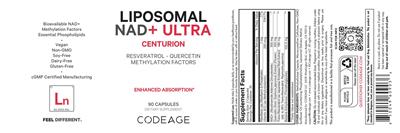
Supplement Facts
The label details for Liposomal NAD+ Ultra by Codeage, sourced from the NIH Dietary Supplement Label Database.
Supplement Facts
| Ingredient | Amount | % DV |
|---|---|---|
| Vitamin B12 | 250 mcg | 10417% |
| Riboflavin | 1 mg | 77% |
| Nicotinamide Adenine Dinucleotide | 500 mg | -- |
| Betaine Anhydrous | 102.5 mg | -- |
| Quercetin | 300 mg | -- |
| Trans-Resveratrol | 180 mg | -- |
Other ingredients: Methylcellulose, Microcrystalline Cellulose, Sunflower Oil
Tap any ingredient to jump to its full detail below.
These statements are the manufacturer’s wording, reproduced from the product label — the label is saying it, not HelloPharmacist. We don’t verify or endorse them.
Formula
Bioavailable NAD+ Methylation Factors Essential Phospholipids
Resveratrol -Quercetin Methylation factors
Formulation
Vegan
Non-GMO Soy-Free Dairy-Free Gluten-Free
cGMP Certified Manufacturing
Enhanced Absorption
General Statements
Centurion
Please recycle Bottle & Cap Please take off the label Questions? Codeage.com Scan for info
Feel Different.
FDA Statement of Identity
Dietary Supplement
Suggested/Recommended/Usage/Directions
Suggested use: Adults take 3 capsules daily, or as recommended by your healthcare practitioner, with 8 ounces of water or your favorite beverage. May be taken with or without food.
Brand IP Statement(s)
Copyright Codeage LLC. All rights reserved.
Precautions
Caution: Do not exceed recommended dose. Discontinue use two weeks prior to surgery.
Pregnant or nursing mothers, children under 18 and individuals with a known medical condition should consult a physician before using this or any dietary supplement.
Please use caution if you have allergies or sensitivities to any of the listed ingredients. This product is manufactured in a facility that processes fish and tree nuts.
Do not use if product has been opened or tampered with in any way.
Pregnant or nursing mothers, children under 18 and individuals with a known medical condition should consult a physician before using this or any dietary supplement. Keep out of reach of children and pets.
FDA Disclaimer Statement
These statements have not been evaluated by the Food and Drug Administration. This product is not intended to diagnose, treat, cure or prevent any disease.
Storage
Store in a cool, dry place.
Is this label outdated? Report a formula or label change and our pharmacy team will review it.
Liposomal NAD+ Ultra by Codeage label
The label scan from the NIH Dietary Supplement Label Database. Tap to enlarge.
Label images are published by the NIH Dietary Supplement Label Database for the version of this product on file. Always read your actual product label.
View the full label (PDF)The Ingredients in Liposomal NAD+ Ultra by Codeage
These are the 6 active ingredients this product is made of. Select any to open its full monograph.
Serving size3 Capsule(s) Dosage formCapsule Servings per container30 Amounts shown are per serving.
Most supplement products combine several ingredients, and a medication can interact with the product through any one of them. Each ingredient below shows whether it has known drug interactions.
Vitamin B12
Interacts with20 drugs
Vitamin B12 (cobalamin) is an essential nutrient your body needs to make red blood cells, keep nerves healthy, and support DNA. Supplements are very h...
Vitamin B12 monograph & interactionsRiboflavin
Interacts with20 drugs
Riboflavin (vitamin B2) is an essential nutrient your body needs to turn food into energy and to keep skin, eyes, and nerves healthy. It is generally...
Riboflavin monograph & interactionsNicotinamide Adenine Dinucleotide
Betaine Anhydrous
No knowninteractions
Betaine anhydrous (also called trimethylglycine) is a compound found in foods like beets, spinach, and whole grains, and is sold as a supplement and a...
Betaine Anhydrous monograph & interactionsQuercetin
Interacts with1,169 drugs
Quercetin is a plant flavonoid with antioxidant and anti-inflammatory properties found in many common foods and sold as a supplement. While early rese...
Quercetin monograph & interactionsTrans-Resveratrol
Interacts with822 drugs
Resveratrol is a plant compound found in red grapes, berries, and peanuts that is popular for heart health, anti-aging, and antioxidant support. While...
Trans-Resveratrol monograph & interactionsOther (inactive) ingredients: Methylcellulose, Microcrystalline Cellulose, Sunflower Oil. These complete the product’s ingredient list but are not active constituents.
Liposomal NAD+ Ultra by Codeage Drug Interactions
HelloPharmacist Interaction Report
Codeage's Liposomal NAD+ Ultra contains six ingredients, and several of them interact with medications.
The most serious documented interaction is with Quercetin and Warfarin (Coumadin), a blood thinner — quercetin may increase warfarin levels and raise your bleeding risk. This is rated Moderate severity.
Read the full breakdown — every affected drug type, severity by severity
Querycetin also has Moderate interactions with other blood thinners and antiplatelet drugs (like aspirin), losartan (a blood pressure medication), pravastatin and other statin cholesterol drugs, quinolone antibiotics, cyclosporine (an immunosuppressant), sulfasalazine (used for inflammatory bowel disease and rheumatoid arthritis), and mitoxantrone (a chemotherapy drug). Resveratrol similarly interacts with blood thinners and antiplatelet agents, and theoretically may raise levels of drugs broken down by your liver's cytochrome P450 enzymes — though a clinical trial showed 3000 mg daily didn't require dose adjustments.
Vitamin B12 has a Minor interaction with metformin (a diabetes medication), which can lower B12 levels with prolonged use. Riboflavin may theoretically reduce the potency of tetracycline antibiotics, though this hasn't been confirmed in humans.
Betaine anhydrous has no known interactions documented. We could not check Nicotinamide Adenine Dinucleotide for interactions — no data is on file for that ingredient.
Altogether, these interactions span 1,249 individual medications. Use the medication checker on this page to verify your exact drugs before starting.
Check your own medications below · Editorial policy · How we use AI
Want to check YOUR meds against Liposomal NAD+ Ultra?
Ask about interactions with your drugs in plain English — “Can I take it with lisinopril?” — and we find you the answer in seconds, ingredient by ingredient.
Go to the checkerIngredients driving the most interactions
Individual Drug Interactions
The ingredients in Liposomal NAD+ Ultra interact with 1,268 drugs. Click any drug to see the details.
4 of the 6 ingredients in Liposomal NAD+ Ultra interact with drugs. Each result below shows which ingredient is responsible. Quercetin Trans-Resveratrol Vitamin B12 Riboflavin
Ado-trastuzumab EmtansineKadcyla
How Ado-trastuzumab Emtansine interacts with Liposomal NAD+ Ultra — through 2 ingredients. Tap an ingredient for the detail:
Trans-resveratrolCytochrome P450 3a4 (cyp3a4) Substrates Moderate
Interaction Summary
Theoretically, resveratrol might increase levels of drugs metabolized by CYP3A4.
Read the full Trans-resveratrol + Ado-trastuzumab Emtansine interactionQuercetinCytochrome P450 3a4 (cyp3a4) Substrates Moderate
Interaction Summary
Theoretically, concomitant use might alter the effects and adverse effects of CYP3A4 substrates.
Read the full Quercetin + Ado-trastuzumab Emtansine interactionAbciximabReoPro
How Abciximab interacts with Liposomal NAD+ Ultra — through 1 ingredient. Tap an ingredient for the detail:
Trans-resveratrolAnticoagulant/antiplatelet Drugs Moderate
Interaction Summary
Resveratrol may have antiplatelet effects and may increase the risk of bleeding if used with anticoagulant or antiplatelet drugs.
Read the full Trans-resveratrol + Abciximab interactionAbemaciclibVerzenio
How Abemaciclib interacts with Liposomal NAD+ Ultra — through 2 ingredients. Tap an ingredient for the detail:
Trans-resveratrolCytochrome P450 3a4 (cyp3a4) Substrates Moderate
Interaction Summary
Theoretically, resveratrol might increase levels of drugs metabolized by CYP3A4.
Read the full Trans-resveratrol + Abemaciclib interactionQuercetinCytochrome P450 3a4 (cyp3a4) Substrates Moderate
Interaction Summary
Theoretically, concomitant use might alter the effects and adverse effects of CYP3A4 substrates.
Read the full Quercetin + Abemaciclib interactionAbiraterone
How Abiraterone interacts with Liposomal NAD+ Ultra — through 2 ingredients. Tap an ingredient for the detail:
QuercetinCytochrome P450 3a4 (cyp3a4) Substrates Moderate
Interaction Summary
Theoretically, concomitant use might alter the effects and adverse effects of CYP3A4 substrates.
Read the full Quercetin + Abiraterone interactionTrans-resveratrolCytochrome P450 3a4 (cyp3a4) Substrates Moderate
Interaction Summary
Theoretically, resveratrol might increase levels of drugs metabolized by CYP3A4.
Read the full Trans-resveratrol + Abiraterone interactionAbiraterone AcetateYonsa, Zytiga
How Abiraterone Acetate interacts with Liposomal NAD+ Ultra — through 2 ingredients. Tap an ingredient for the detail:
QuercetinCytochrome P450 3a4 (cyp3a4) Substrates Moderate
Interaction Summary
Theoretically, concomitant use might alter the effects and adverse effects of CYP3A4 substrates.
Read the full Quercetin + Abiraterone Acetate interactionTrans-resveratrolCytochrome P450 3a4 (cyp3a4) Substrates Moderate
Interaction Summary
Theoretically, resveratrol might increase levels of drugs metabolized by CYP3A4.
Read the full Trans-resveratrol + Abiraterone Acetate interactionAbrocitinibCibinqo
How Abrocitinib interacts with Liposomal NAD+ Ultra — through 2 ingredients. Tap an ingredient for the detail:
Trans-resveratrolAnticoagulant/antiplatelet Drugs, Cytochrome P450 2c19 (cyp2c19) Substrates Moderate
Interaction Summary
Resveratrol may have antiplatelet effects and may increase the risk of bleeding if used with anticoagulant or antiplatelet drugs.
Read the full Trans-resveratrol + Abrocitinib interactionQuercetinCytochrome P450 2c9 (cyp2c9) Substrates Moderate
Interaction Summary
Theoretically, concomitant use might increase the levels and adverse effects of CYP2C9 substrates.
Read the full Quercetin + Abrocitinib interactionAcalabrutinibCalquence
How Acalabrutinib interacts with Liposomal NAD+ Ultra — through 2 ingredients. Tap an ingredient for the detail:
Trans-resveratrolCytochrome P450 3a4 (cyp3a4) Substrates Moderate
Interaction Summary
Theoretically, resveratrol might increase levels of drugs metabolized by CYP3A4.
Read the full Trans-resveratrol + Acalabrutinib interactionQuercetinP-glycoprotein Substrates, Cytochrome P450 3a4 (cyp3a4) Substrates Moderate
Interaction Summary
Theoretically, concomitant use might alter the effects and adverse effects of P-glycoprotein substrates.
Read the full Quercetin + Acalabrutinib interactionAcarboseGlucobay, Prandase, Precose
How Acarbose interacts with Liposomal NAD+ Ultra — through 1 ingredient. Tap an ingredient for the detail:
QuercetinAntidiabetes Drugs Moderate
Interaction Summary
Theoretically, concomitant use of quercetin and antidiabetes drugs might increase the risk of hypoglycemia.
Read the full Quercetin + Acarbose interactionAcebutololRhotral, Sectral
How Acebutolol interacts with Liposomal NAD+ Ultra — through 1 ingredient. Tap an ingredient for the detail:
QuercetinAntihypertensive Drugs Moderate
Interaction Summary
Theoretically, taking quercetin with antihypertensive drugs might increase the risk of hypotension.
Read the full Quercetin + Acebutolol interactionAcenocoumarolSintrom
How Acenocoumarol interacts with Liposomal NAD+ Ultra — through 1 ingredient. Tap an ingredient for the detail:
Trans-resveratrolAnticoagulant/antiplatelet Drugs Moderate
Interaction Summary
Resveratrol may have antiplatelet effects and may increase the risk of bleeding if used with anticoagulant or antiplatelet drugs.
Read the full Trans-resveratrol + Acenocoumarol interactionAcetaminophenChildren's Tylenol, Children's Tylenol Meltaways, Tylenol, Tylenol Ex Strength
How Acetaminophen interacts with Liposomal NAD+ Ultra — through 1 ingredient. Tap an ingredient for the detail:
Trans-resveratrolCytochrome P450 2e1 (cyp2e1) Substrates, Cytochrome P450 1a2 (cyp1a2) Substrates Moderate
Interaction Summary
Resveratrol might increase levels of drugs metabolized by CYP2E1.
Read the full Trans-resveratrol + Acetaminophen interactionAcetaminophen, AspirinGemnisyn
How Acetaminophen, Aspirin interacts with Liposomal NAD+ Ultra — through 2 ingredients. Tap an ingredient for the detail:
Trans-resveratrolCytochrome P450 1a2 (cyp1a2) Substrates, Anticoagulant/antiplatelet Drugs +1 Moderate
Interaction Summary
Theoretically, resveratrol might increase levels of drugs metabolized by CYP1A2.
Read the full Trans-resveratrol + Acetaminophen, Aspirin interactionQuercetinOrganic Anion Transporter 3 (oat3) Substrates, Organic Anion Transporter 1 (oat1) Substrates Moderate
Interaction Summary
Theoretically, concomitant use might increase the effects and adverse effects of OAT3 substrates.
Read the full Quercetin + Acetaminophen, Aspirin interactionAcetaminophen, Aspirin, CaffeineExcedrin, Excedrin Extra Strength, Excedrin Migraine
How Acetaminophen, Aspirin, Caffeine interacts with Liposomal NAD+ Ultra — through 2 ingredients. Tap an ingredient for the detail:
QuercetinOrganic Anion Transporter 3 (oat3) Substrates, Cytochrome P450 3a4 (cyp3a4) Substrates +1 Moderate
Interaction Summary
Theoretically, concomitant use might increase the effects and adverse effects of OAT3 substrates.
Read the full Quercetin + Acetaminophen, Aspirin, Caffeine interactionTrans-resveratrolCytochrome P450 1a2 (cyp1a2) Substrates, Cytochrome P450 3a4 (cyp3a4) Substrates +2 Moderate
Interaction Summary
Theoretically, resveratrol might increase levels of drugs metabolized by CYP1A2.
Read the full Trans-resveratrol + Acetaminophen, Aspirin, Caffeine interactionAcetaminophen, Brompheniramine, PhenylpropanolamineDimetapp Cold and Flu
How Acetaminophen, Brompheniramine, Phenylpropanolamine interacts with Liposomal NAD+ Ultra — through 1 ingredient. Tap an ingredient for the detail:
Trans-resveratrolCytochrome P450 1a2 (cyp1a2) Substrates, Cytochrome P450 2e1 (cyp2e1) Substrates Moderate
Interaction Summary
Theoretically, resveratrol might increase levels of drugs metabolized by CYP1A2.
Read the full Trans-resveratrol + Acetaminophen, Brompheniramine, Phenylpropanolamine interactionAcetaminophen, ButalbitalAxocet, Bancap, Bucet, Butex Forte, Esgic CF, Orbivan CF +5 more
How Acetaminophen, Butalbital interacts with Liposomal NAD+ Ultra — through 1 ingredient. Tap an ingredient for the detail:
Trans-resveratrolCytochrome P450 1a2 (cyp1a2) Substrates, Cytochrome P450 2e1 (cyp2e1) Substrates Moderate
Interaction Summary
Theoretically, resveratrol might increase levels of drugs metabolized by CYP1A2.
Read the full Trans-resveratrol + Acetaminophen, Butalbital interactionAcetaminophen, Butalbital, CaffeineEsgic, Esgic Plus, Fiogesic, Fioricet, Repan, Tecnal +1 more
How Acetaminophen, Butalbital, Caffeine interacts with Liposomal NAD+ Ultra — through 2 ingredients. Tap an ingredient for the detail:
Trans-resveratrolCytochrome P450 2e1 (cyp2e1) Substrates, Cytochrome P450 1a2 (cyp1a2) Substrates +1 Moderate
Interaction Summary
Resveratrol might increase levels of drugs metabolized by CYP2E1.
Read the full Trans-resveratrol + Acetaminophen, Butalbital, Caffeine interactionQuercetinCytochrome P450 3a4 (cyp3a4) Substrates Moderate
Interaction Summary
Theoretically, concomitant use might alter the effects and adverse effects of CYP3A4 substrates.
Read the full Quercetin + Acetaminophen, Butalbital, Caffeine interactionAcetaminophen, Butalbital, Caffeine, CodeineEsgic with Codeine, Fioricet w/ Codeine
How Acetaminophen, Butalbital, Caffeine, Codeine interacts with Liposomal NAD+ Ultra — through 2 ingredients. Tap an ingredient for the detail:
QuercetinCytochrome P450 3a4 (cyp3a4) Substrates, Cytochrome P450 2d6 (cyp2d6) Substrates Moderate
Interaction Summary
Theoretically, concomitant use might alter the effects and adverse effects of CYP3A4 substrates.
Read the full Quercetin + Acetaminophen, Butalbital, Caffeine, Codeine interactionTrans-resveratrolCytochrome P450 3a4 (cyp3a4) Substrates, Cytochrome P450 2e1 (cyp2e1) Substrates +1 Moderate
Interaction Summary
Theoretically, resveratrol might increase levels of drugs metabolized by CYP3A4.
Read the full Trans-resveratrol + Acetaminophen, Butalbital, Caffeine, Codeine interactionAcetaminophen, Butalbital, CodeineBancap w/ Codeine
How Acetaminophen, Butalbital, Codeine interacts with Liposomal NAD+ Ultra — through 2 ingredients. Tap an ingredient for the detail:
QuercetinCytochrome P450 2d6 (cyp2d6) Substrates Moderate
Interaction Summary
Theoretically, concomitant use might increase the levels and adverse effects of CYP2D6 substrates.
Read the full Quercetin + Acetaminophen, Butalbital, Codeine interactionTrans-resveratrolCytochrome P450 2e1 (cyp2e1) Substrates, Cytochrome P450 1a2 (cyp1a2) Substrates Moderate
Interaction Summary
Resveratrol might increase levels of drugs metabolized by CYP2E1.
Read the full Trans-resveratrol + Acetaminophen, Butalbital, Codeine interactionAcetaminophen, Butalbital, Codeine PhosphatePhrenilin #3
How Acetaminophen, Butalbital, Codeine Phosphate interacts with Liposomal NAD+ Ultra — through 2 ingredients. Tap an ingredient for the detail:
Trans-resveratrolCytochrome P450 1a2 (cyp1a2) Substrates, Cytochrome P450 2e1 (cyp2e1) Substrates Moderate
Interaction Summary
Theoretically, resveratrol might increase levels of drugs metabolized by CYP1A2.
Read the full Trans-resveratrol + Acetaminophen, Butalbital, Codeine Phosphate interactionQuercetinCytochrome P450 2d6 (cyp2d6) Substrates Moderate
Interaction Summary
Theoretically, concomitant use might increase the levels and adverse effects of CYP2D6 substrates.
Read the full Quercetin + Acetaminophen, Butalbital, Codeine Phosphate interactionAcetaminophen, Caffeine, Chlorpheniramine, Hydrocodone, PhenylephrineHycomine Compound
How Acetaminophen, Caffeine, Chlorpheniramine, Hydrocodone, Phenylephrine interacts with Liposomal NAD+ Ultra — through 2 ingredients. Tap an ingredient for the detail:
Trans-resveratrolCytochrome P450 1a2 (cyp1a2) Substrates, Cytochrome P450 2e1 (cyp2e1) Substrates +1 Moderate
Interaction Summary
Theoretically, resveratrol might increase levels of drugs metabolized by CYP1A2.
Read the full Trans-resveratrol + Acetaminophen, Caffeine, Chlorpheniramine, Hydrocodone, Phenylephrine interactionQuercetinCytochrome P450 2d6 (cyp2d6) Substrates, Cytochrome P450 3a4 (cyp3a4) Substrates Moderate
Interaction Summary
Theoretically, concomitant use might increase the levels and adverse effects of CYP2D6 substrates.
Read the full Quercetin + Acetaminophen, Caffeine, Chlorpheniramine, Hydrocodone, Phenylephrine interactionAcetaminophen, Caffeine, CodeineGesic C15, Gesic C30, Gesic C8, Lenoltec 1, Lenoltec 2, Lenoltec 3 +1 more
How Acetaminophen, Caffeine, Codeine interacts with Liposomal NAD+ Ultra — through 2 ingredients. Tap an ingredient for the detail:
Trans-resveratrolCytochrome P450 3a4 (cyp3a4) Substrates, Cytochrome P450 2e1 (cyp2e1) Substrates +1 Moderate
Interaction Summary
Theoretically, resveratrol might increase levels of drugs metabolized by CYP3A4.
Read the full Trans-resveratrol + Acetaminophen, Caffeine, Codeine interactionQuercetinCytochrome P450 3a4 (cyp3a4) Substrates, Cytochrome P450 2d6 (cyp2d6) Substrates Moderate
Interaction Summary
Theoretically, concomitant use might alter the effects and adverse effects of CYP3A4 substrates.
Read the full Quercetin + Acetaminophen, Caffeine, Codeine interactionAcetaminophen, Caffeine, Codeine, SalicylamideCodalan No.1, Codalan No.2, Codalan No.3
How Acetaminophen, Caffeine, Codeine, Salicylamide interacts with Liposomal NAD+ Ultra — through 2 ingredients. Tap an ingredient for the detail:
QuercetinCytochrome P450 2d6 (cyp2d6) Substrates, Cytochrome P450 3a4 (cyp3a4) Substrates Moderate
Interaction Summary
Theoretically, concomitant use might increase the levels and adverse effects of CYP2D6 substrates.
Read the full Quercetin + Acetaminophen, Caffeine, Codeine, Salicylamide interactionTrans-resveratrolCytochrome P450 2e1 (cyp2e1) Substrates, Cytochrome P450 3a4 (cyp3a4) Substrates +1 Moderate
Interaction Summary
Resveratrol might increase levels of drugs metabolized by CYP2E1.
Read the full Trans-resveratrol + Acetaminophen, Caffeine, Codeine, Salicylamide interactionAcetaminophen, Caffeine, DihydrocodeineDHC Plus, Panlor DC, Panlor SS
How Acetaminophen, Caffeine, Dihydrocodeine interacts with Liposomal NAD+ Ultra — through 2 ingredients. Tap an ingredient for the detail:
Trans-resveratrolCytochrome P450 1a2 (cyp1a2) Substrates, Cytochrome P450 3a4 (cyp3a4) Substrates +1 Moderate
Interaction Summary
Theoretically, resveratrol might increase levels of drugs metabolized by CYP1A2.
Read the full Trans-resveratrol + Acetaminophen, Caffeine, Dihydrocodeine interactionQuercetinCytochrome P450 2d6 (cyp2d6) Substrates, Cytochrome P450 3a4 (cyp3a4) Substrates Moderate
Interaction Summary
Theoretically, concomitant use might increase the levels and adverse effects of CYP2D6 substrates.
Read the full Quercetin + Acetaminophen, Caffeine, Dihydrocodeine interactionAcetaminophen, Caffeine, IsomethepteneMigralam
How Acetaminophen, Caffeine, Isometheptene interacts with Liposomal NAD+ Ultra — through 2 ingredients. Tap an ingredient for the detail:
QuercetinCytochrome P450 3a4 (cyp3a4) Substrates Moderate
Interaction Summary
Theoretically, concomitant use might alter the effects and adverse effects of CYP3A4 substrates.
Read the full Quercetin + Acetaminophen, Caffeine, Isometheptene interactionTrans-resveratrolCytochrome P450 1a2 (cyp1a2) Substrates, Cytochrome P450 3a4 (cyp3a4) Substrates +1 Moderate
Interaction Summary
Theoretically, resveratrol might increase levels of drugs metabolized by CYP1A2.
Read the full Trans-resveratrol + Acetaminophen, Caffeine, Isometheptene interactionAcetaminophen, Caffeine, PyrilamineMidol Max Strength Menstrual
How Acetaminophen, Caffeine, Pyrilamine interacts with Liposomal NAD+ Ultra — through 2 ingredients. Tap an ingredient for the detail:
QuercetinCytochrome P450 3a4 (cyp3a4) Substrates Moderate
Interaction Summary
Theoretically, concomitant use might alter the effects and adverse effects of CYP3A4 substrates.
Read the full Quercetin + Acetaminophen, Caffeine, Pyrilamine interactionTrans-resveratrolCytochrome P450 3a4 (cyp3a4) Substrates, Cytochrome P450 1a2 (cyp1a2) Substrates +1 Moderate
Interaction Summary
Theoretically, resveratrol might increase levels of drugs metabolized by CYP3A4.
Read the full Trans-resveratrol + Acetaminophen, Caffeine, Pyrilamine interactionAcetaminophen, Chlorpheniramine Maleate, Dextromethorphan HbrVicks Formula 44M Cough, Cold & Flu Relief
How Acetaminophen, Chlorpheniramine Maleate, Dextromethorphan Hbr interacts with Liposomal NAD+ Ultra — through 2 ingredients. Tap an ingredient for the detail:
Trans-resveratrolCytochrome P450 2e1 (cyp2e1) Substrates, Cytochrome P450 3a4 (cyp3a4) Substrates +1 Moderate
Interaction Summary
Resveratrol might increase levels of drugs metabolized by CYP2E1.
Read the full Trans-resveratrol + Acetaminophen, Chlorpheniramine Maleate, Dextromethorphan Hbr interactionQuercetinCytochrome P450 2d6 (cyp2d6) Substrates, Cytochrome P450 3a4 (cyp3a4) Substrates Moderate
Interaction Summary
Theoretically, concomitant use might increase the levels and adverse effects of CYP2D6 substrates.
Read the full Quercetin + Acetaminophen, Chlorpheniramine Maleate, Dextromethorphan Hbr interactionAcetaminophen, Chlorpheniramine, Codeine, PhenylephrineColrex
How Acetaminophen, Chlorpheniramine, Codeine, Phenylephrine interacts with Liposomal NAD+ Ultra — through 2 ingredients. Tap an ingredient for the detail:
Trans-resveratrolCytochrome P450 3a4 (cyp3a4) Substrates, Cytochrome P450 2e1 (cyp2e1) Substrates +1 Moderate
Interaction Summary
Theoretically, resveratrol might increase levels of drugs metabolized by CYP3A4.
Read the full Trans-resveratrol + Acetaminophen, Chlorpheniramine, Codeine, Phenylephrine interactionQuercetinCytochrome P450 2d6 (cyp2d6) Substrates, Cytochrome P450 3a4 (cyp3a4) Substrates Moderate
Interaction Summary
Theoretically, concomitant use might increase the levels and adverse effects of CYP2D6 substrates.
Read the full Quercetin + Acetaminophen, Chlorpheniramine, Codeine, Phenylephrine interactionAcetaminophen, Chlorpheniramine, DextromethorphanCoricidin II Extra Strength Cold and Flu
How Acetaminophen, Chlorpheniramine, Dextromethorphan interacts with Liposomal NAD+ Ultra — through 2 ingredients. Tap an ingredient for the detail:
Trans-resveratrolCytochrome P450 1a2 (cyp1a2) Substrates, Cytochrome P450 2e1 (cyp2e1) Substrates +1 Moderate
Interaction Summary
Theoretically, resveratrol might increase levels of drugs metabolized by CYP1A2.
Read the full Trans-resveratrol + Acetaminophen, Chlorpheniramine, Dextromethorphan interactionQuercetinCytochrome P450 2d6 (cyp2d6) Substrates, Cytochrome P450 3a4 (cyp3a4) Substrates Moderate
Interaction Summary
Theoretically, concomitant use might increase the levels and adverse effects of CYP2D6 substrates.
Read the full Quercetin + Acetaminophen, Chlorpheniramine, Dextromethorphan interactionAcetaminophen, Chlorpheniramine, Dextromethorphan HydrobromideCoricidin HBP Maximum Strength Flu
How Acetaminophen, Chlorpheniramine, Dextromethorphan Hydrobromide interacts with Liposomal NAD+ Ultra — through 2 ingredients. Tap an ingredient for the detail:
Trans-resveratrolCytochrome P450 3a4 (cyp3a4) Substrates, Cytochrome P450 1a2 (cyp1a2) Substrates +1 Moderate
Interaction Summary
Theoretically, resveratrol might increase levels of drugs metabolized by CYP3A4.
Read the full Trans-resveratrol + Acetaminophen, Chlorpheniramine, Dextromethorphan Hydrobromide interactionQuercetinCytochrome P450 3a4 (cyp3a4) Substrates, Cytochrome P450 2d6 (cyp2d6) Substrates Moderate
Interaction Summary
Theoretically, concomitant use might alter the effects and adverse effects of CYP3A4 substrates.
Read the full Quercetin + Acetaminophen, Chlorpheniramine, Dextromethorphan Hydrobromide interactionAcetaminophen, Chlorpheniramine, Dextromethorphan, PhenylpropanolamineMulti Symptom Cold Relief
How Acetaminophen, Chlorpheniramine, Dextromethorphan, Phenylpropanolamine interacts with Liposomal NAD+ Ultra — through 2 ingredients. Tap an ingredient for the detail:
QuercetinCytochrome P450 3a4 (cyp3a4) Substrates, Cytochrome P450 2d6 (cyp2d6) Substrates Moderate
Interaction Summary
Theoretically, concomitant use might alter the effects and adverse effects of CYP3A4 substrates.
Read the full Quercetin + Acetaminophen, Chlorpheniramine, Dextromethorphan, Phenylpropanolamine interactionTrans-resveratrolCytochrome P450 3a4 (cyp3a4) Substrates, Cytochrome P450 1a2 (cyp1a2) Substrates +1 Moderate
Interaction Summary
Theoretically, resveratrol might increase levels of drugs metabolized by CYP3A4.
Read the full Trans-resveratrol + Acetaminophen, Chlorpheniramine, Dextromethorphan, Phenylpropanolamine interactionEach ingredient & the kinds of drugs it affects
For each ingredient in Liposomal NAD+ Ultra with known interactions, here are the types of medications they can affect. Open any type for the detail — or search your exact drug in the checker above.
Quercetin
Antidiabetes Drugs
Theoretically, concomitant use of quercetin and antidiabetes drugs might increase the risk of hypoglycemia.
Clinical research suggests that a combination of quercetin, myricetin, and chlorogenic acid reduce levels of fasting glucose in patients with type 2 diabetes, including those already taking antidiabetes agents. The effect of quercetin alone is unknown.
Antihypertensive Drugs
Theoretically, taking quercetin with antihypertensive drugs might increase the risk of hypotension.
Quercetin can modestly decrease blood pressure in people with mild hypertension. Theoretically, it might have additive blood pressure lowering effects when used with antihypertensive drugs.
Cyclosporine (Neoral, Sandimmune)
Theoretically, concomitant use might increase the levels and adverse effects of cyclosporine.
A small study in healthy volunteers shows that pretreatment with quercetin increases plasma levels and prolongs the half-life of a single dose of cyclosporine, possibly due to inhibition of p-glycoprotein or cytochrome P450 3A4 (CYP3A4), which metabolizes cyclosporin.
Cytochrome P450 2C8 (Cyp2C8) Substrates
Theoretically, concomitant use might increase the levels and adverse effects of CYP2C8 substrates.
In vitro research shows that quercetin inhibits CYP2C8. Inhibition of paclitaxel (Taxol) metabolism via CYP2C8 has been reported in vitro. However, a small study in humans found no effect of quercetin on rosiglitazone (Avandia), which is also a CYP2C8 substrate.
Cytochrome P450 2C9 (Cyp2C9) Substrates
Theoretically, concomitant use might increase the levels and adverse effects of CYP2C9 substrates.
A small clinical study in healthy volunteers shows that taking quercetin 500 mg twice daily for 10 days prior to taking diclofenac, a CYP2C9 substrate, increases diclofenac plasma levels by 75% and prolongs the half-life by 32.5%. Animal research also shows that pretreatment with quercetin increases plasma levels and prolongs the half-life of losartan (Cozaar), a substrate of CYP2C9. Furthermore, laboratory research shows that quercetin inhibits CYP2C9.
Cytochrome P450 2D6 (Cyp2D6) Substrates
Theoretically, concomitant use might increase the levels and adverse effects of CYP2D6 substrates.
In vitro research show that quercetin inhibits CYP2D6. This effect has not been reported in humans.
Cytochrome P450 3A4 (Cyp3A4) Substrates
Theoretically, concomitant use might alter the effects and adverse effects of CYP3A4 substrates.
A small clinical study in healthy volunteers shows that pretreatment with quercetin increases plasma levels and prolongs the half-life of a single dose of cyclosporine (Neoral, Sandimmune), a substrate of CYP3A4. Animal research also shows that pretreatment with quercetin increases plasma levels and prolongs the half-life of losartan (Cozaar) and quetiapine (Seroquel), substrates of CYP3A4. Other laboratory research also shows that quercetin inhibits CYP3A4. However, one clinical study shows that quercetin can increase the metabolism of midazolam, a substrate of CYP3A4, and decrease serum concentrations of midazolam by about 24% in some healthy individuals, suggesting possible induction of CYP3A4.
Diclofenac (Voltaren, Others)
Theoretically, concomitant use might increase the levels and adverse effects of diclofenac.
A small clinical study in healthy volunteers shows that taking quercetin 500 mg twice daily for 10 days prior to taking diclofenac increases diclofenac plasma levels by 75% and prolongs the half-life by 32.5%. This is thought to be due to inhibition of CYP2C9 by quercetin.
Losartan (Cozaar)
Theoretically, concomitant use might increase the effects and adverse effects of losartan and decrease the effects of its active metabolite.
Animal research shows that pretreatment with quercetin increases plasma levels and prolongs the half-life of losartan (Cozaar) while decreasing plasma levels of losartan's active metabolite. This metabolite, which is around 10-fold more potent than losartan, is the result of cytochrome P450 (CYP) 2C9- and CYP3A4-mediated transformation of losartan. Additionally, in vitro research shows that quercetin may inhibit P-glycoprotein-mediated efflux of losartan from the intestines, resulting in increased absorption of losartan. These results suggest that concomitant use of quercetin and losartan might increase systemic exposure to losartan while also decreasing plasma concentrations of losartan's active and more potent metabolite.
Midazolam (Versed)
Theoretically, concomitant use might decrease the levels and effects of midazolam.
A small clinical study in healthy volunteers shows that quercetin can increase the metabolism of midazolam, with a decrease in AUC of about 24%.
Mitoxantrone
Theoretically, quercetin might increase the effects and adverse effects of mitoxantrone.
In vitro research shows that quercetin increases the intracellular accumulation and cytotoxicity of mitoxantrone, possibly through inhibition of breast cancer resistance protein (BCRP), of which mitoxantrone is a substrate. So far, this interaction has not been reported in humans.
Organic Anion Transporter 1 (Oat1) Substrates
Theoretically, concomitant use might increase the effects and adverse effects of OAT1 substrates.
In vitro research shows that quercetin is a strong non-competitive inhibitor of OAT1, with half-maximal inhibitory concentration (IC50) values less than 10 mcM. So far, this interaction has not been reported in humans.
Organic Anion Transporter 3 (Oat3) Substrates
Theoretically, concomitant use might increase the effects and adverse effects of OAT3 substrates.
In vitro research shows that quercetin is a strong non-competitive inhibitor of OAT3, with half-maximal inhibitory concentration (IC50) values as low as 0.75 mcM. So far, this interaction has not been reported in humans.
Organic Anion-Transporting Polypeptide Substrates (Oatp)
Theoretically, concomitant use might increase the effects and adverse effects of OATP substrates.
In vitro evidence shows that quercetin can inhibit organic anion-transporting peptide (OATP) 1B1-mediated uptake of estrone-3-sulfate and pravastatin. Furthermore, clinical research in healthy males shows that intake of quercetin along with pravastatin increases the AUC of pravastatin by 24%, prolongs its half-life by 14%, and decreases its apparent clearance by 18%, suggesting that quercetin modestly inhibits the uptake of pravastatin in hepatic cells.
P-Glycoprotein Substrates
Theoretically, concomitant use might alter the effects and adverse effects of P-glycoprotein substrates.
There is preliminary evidence that quercetin inhibits the gastrointestinal P-glycoprotein efflux pump, which might increase the bioavailability and serum levels of drugs transported by the pump. A small study in healthy volunteers reported that pretreatment with quercetin increased bioavailability and plasma levels after a single dose of cyclosporine (Neoral, Sandimmune). Also, two small studies have shown that quercetin might decrease the absorption of talinolol, a substrate transported by the gastrointestinal P-glycoprotein efflux pump. However, in another small study, several days of quercetin treatment did not significantly affect the pharmacokinetics of saquinavir (Invirase). The reason for these discrepancies is not entirely clear. Until more is known, use quercetin cautiously in combination with P-glycoprotein substrates.
Pravastatin (Pravachol)
Theoretically, concomitant use might increase the effects and adverse effects of pravastatin.
In vitro evidence shows that quercetin can inhibit OATP 1B1-mediated uptake of pravastatin. Also, preliminary clinical research in healthy males shows that intake of quercetin along with pravastatin increases the maximum concentration of pravastatin by 24%, prolongs its half-life by 14%, and decreases its apparent clearance by 18%, suggesting that quercetin modestly inhibits the uptake of pravastatin in hepatic cells.
Prazosin (Minipress)
Theoretically, quercetin might increase the effects and adverse effects of prazosin.
In vitro research shows that quercetin inhibits the transcellular efflux of prazosin, possibly through inhibition of breast cancer resistance protein (BCRP), of which prazosin is a substrate. BCRP is an ATP-binding cassette efflux transporter in the intestines, kidneys, and liver. So far, this interaction has not been reported in humans.
Quetiapine (Seroquel)
Theoretically, concomitant use might increase the effects and adverse effects of quetiapine.
Animal research shows that pretreatment with quercetin can increase plasma levels of quetiapine and prolong its clearance, possibly due to inhibition of cytochrome P450 3A4 (CYP3A4) by quercetin. Additionally, the brain-to-plasma ratio of quetiapine concentrations increased, possibly due to inhibition of P-glycoprotein at the blood-brain barrier. This interaction has not been reported in humans.
Quinolone Antibiotics
Theoretically, concomitant use might inhibit the effects of quinolone antibiotics.
In vitro, quercetin binds to the DNA gyrase site on bacteria, which may interfere with the activity of quinolone antibiotics.
Sulfasalazine (Azulfidine)
Theoretically, quercetin might increase the effects and adverse effects of sulfasalazine.
Animal research shows that quercetin increases the maximum serum concentration (Cmax) and area under the curve (AUC) of sulfasalazine, possibly through inhibition of breast cancer resistance protein (BCRP), of which sulfasalazine is a substrate. So far, this interaction has not been reported in humans.
Warfarin (Coumadin)
Theoretically, quercetin may increase the risk of bleeding if used with warfarin.
Animal and in vitro studies show that quercetin might increase serum levels of warfarin. Quercetin and warfarin have the same human serum albumin (HSA) binding site, and in vitro research shows that quercetin has stronger affinity for the HSA binding site and can theoretically displace warfarin, causing higher serum levels of warfarin. Animal research shows that taking quercetin for 2 weeks before initiating warfarin increases the maximum serum level of warfarin by 30%, the half-life by 10%, and the overall exposure by 63% when compared with control. Concomitant administration of quercetin and warfarin, without quercetin pre-treatment, also increased these measures, but to a lesser degree. Researchers theorize that inhibition of CYP3A4 by quercetin may explain these effects. So far, this interaction has not been reported in humans.
Trans-Resveratrol
Anticoagulant/Antiplatelet Drugs
Resveratrol may have antiplatelet effects and may increase the risk of bleeding if used with anticoagulant or antiplatelet drugs.
Resveratrol seems to have antiplatelet effects.
Cytochrome P450 1A2 (Cyp1A2) Substrates
Theoretically, resveratrol might increase levels of drugs metabolized by CYP1A2.
In vitro research shows that resveratrol can inhibit CYP1A2 enzymes. However, this interaction has not been reported in humans.
Cytochrome P450 2C19 (Cyp2C19) Substrates
Theoretically, resveratrol might increase levels of drugs metabolized by CYP2C19.
In vitro research shows that resveratrol can inhibit CYP2C19 enzymes. However, this interaction has not been reported in humans.
Cytochrome P450 2E1 (Cyp2E1) Substrates
Resveratrol might increase levels of drugs metabolized by CYP2E1.
In vitro research suggests that resveratrol inhibits CYP2E1 isoenzyme. Also, a pharmacokinetic study shows that taking resveratrol 500 mg daily for 10 days prior to taking a single dose of chlorzoxazone 250 mg increases the maximum concentration of chlorzoxazone by about 54%, the area under the curve of chlorzoxazone by about 72%, and the half-life of chlorzoxazone by about 35%. Chlorzoxazone is used as a probe drug for CYP2E1.
Cytochrome P450 3A4 (Cyp3A4) Substrates
Theoretically, resveratrol might increase levels of drugs metabolized by CYP3A4.
In vitro research shows that resveratrol can inhibit the CYP3A4 enzyme. However, clinical research shows that taking resveratrol 3000 mg daily for 8 weeks does not necessitate dose adjustments to medications metabolized by CYP3A4.
Vitamin B12
Metformin (Glucophage)
Metformin, a common medication used to manage type 2 diabetes, has been associated with lower vitamin B12 levels in some individuals. Prolonged use of metformin can interfere with the absorption of B12 in the digestive system, potentially leading to a deficiency in this essential vitamin.
Riboflavin
Tetracycline Antibiotics
Theoretically, taking riboflavin with tetracycline antibiotics may decrease the potency of these antibiotics.
In vitro research suggests that riboflavin may inhibit the potency of tetracycline antibiotics. It is not clear if this effect is clinically significant, as this interaction has not been reported in humans.
Brand information
Manufacturer and brand details for Liposomal NAD+ Ultra, from the product label.
Codeage
See all Codeage products- Name
- Codeage LLC
- Street Address
- 5628 Washington Blvd
- City
- Los Angeles
- State
- CA
- ZipCode
- 90016
- Web Address
- www.codeage.com
Liposomal NAD+ Ultra by Codeage: Common Questions
Does Liposomal NAD+ Ultra by Codeage interact with any medications?
How can one product interact with so many drugs?
Where does this information come from?
Does this product have any fillers or other ingredients I should know about?
Is it safe to take this while I'm pregnant or breastfeeding?
What side effects might I experience?
Will this help with my energy levels?
Can I take this with my metformin for diabetes?
What's NAD+ and why is it in this product?
Written and reviewed by the HelloPharmacist editorial staff. Our editorial policy
Not sure if Liposomal NAD+ Ultra is safe with your meds?
Our pharmacists answer your medication & supplement questions — free.
Label information is sourced from the NIH Dietary Supplement Label Database and reflects the product version on file; always read your actual product label. This page is for education only and is not a substitute for professional medical advice. Confirm with your pharmacist or doctor before combining supplements and medications.
The Full Monographs Behind Liposomal NAD+ Ultra’s Ingredients
Every ingredient we hold a full HelloPharmacist monograph for — uses, evidence, safety, and the complete interaction list.
Vitamin B12
Interacts with 20 drugsVitamin B12 (cobalamin) is an essential nutrient your body needs to make red blood cells, keep nerves healthy, and support DNA. Supplements are very helpful for people who are deficient — su...
Read the full Vitamin B12 monograph → Herb & supplement monographRiboflavin
Interacts with 20 drugsRiboflavin (vitamin B2) is an essential nutrient your body needs to turn food into energy and to keep skin, eyes, and nerves healthy. It is generally very safe at typical doses, and the stro...
Read the full Riboflavin monograph → Herb & supplement monographBetaine Anhydrous
Betaine anhydrous (also called trimethylglycine) is a compound found in foods like beets, spinach, and whole grains, and is sold as a supplement and as a prescription medicine for a rare gen...
Read the full Betaine Anhydrous monograph → Herb & supplement monographQuercetin
Interacts with 1,169 drugsQuercetin is a plant flavonoid with antioxidant and anti-inflammatory properties found in many common foods and sold as a supplement. While early research is interesting for allergies, blood...
Read the full Quercetin monograph → Herb & supplement monographResveratrol
Interacts with 822 drugsResveratrol is a plant compound found in red grapes, berries, and peanuts that is popular for heart health, anti-aging, and antioxidant support. While lab and animal studies are promising, s...
Read the full Resveratrol monograph →Sources & How We Checked
Liposomal NAD+ Ultra's label data comes from the NIH Dietary Supplement Label Database; the ingredient interaction data is from the Natural Medicines database, reviewed by our pharmacists.
- NIH Dietary Supplement Label Database (DSLD) — The official product label on file for this supplement.
- Natural Medicines (Therapeutic Research Center) — Evidence-graded clinical reference behind the ingredient interaction data.
Content is written and reviewed by licensed HelloPharmacist pharmacists. See our data sources and editorial standards for how this information is built and checked.
The 96 references behind this product’s interaction data
Every citation that drives the interaction findings for this product’s ingredients, from the evidence-graded Natural Medicines (TRC Healthcare) database. Open an ingredient to browse its citations — links open the study on PubMed or the publisher’s site.
Vitamin B12 30 references
- Food and Nutrition Board, Institute of Medicine. Dietary Reference Intakes for Thiamin, Riboflavin, Niacin, Vitamin B6, Folate, Vitamin B12, Pantothenic Acid, Biotin, and Choline (2000). Washington, DC: National Academy Press, 2000. Available at: http://b
- Hartman TJ, Woodson K, Stolzenberg-Solomon R, et al. Association of the B-vitamins pyridoxal 5'-phosphate (B6), B12, and folate with lung cancer risk in older men. Am J Epidemiol 2001;153:688-94.. DOI
- Jansen T, Romiti R, Kreuter A, Altmeyer P. Rosacea fulminans triggered by high-dose vitamins B6 and B12. J Eur Acad Dermatol Venereol 2001;15:484-5..
- Lange H, Suryapranata H, De Luca G, et al. Folate therapy and in-stent restenosis after coronary stenting. N Engl J Med 2004;350:2673-81. PubMed
- Collin, S. M., Metcalfe, C., Refsum, H., Lewis, S. J., Zuccolo, L., Smith, G. D., Chen, L., Harris, R., Davis, M., Marsden, G., Johnston, C., Lane, J. A., Ebbing, M., Bonaa, K. H., Nygard, O., Ueland, P. M., Grau, M. V., Baron, J. A., Donovan, J. L., Nea
- Geissbuhler, P., Mermillod, B., and Rapin, C. H. Elevated serum vitamin B12 levels associated with CRP as a predictive factor of mortality in palliative care cancer patients: a prospective study over five years. J.Pain Symptom.Manage. 2000;20(2):93-103. PubMed
- Salles, N., Herrmann, F., Sakbani, K., Rapin, C. H., and Sieber, C. High vitamin B12 level: a strong predictor of mortality in elderly inpatients. J Am Geriatr.Soc 2005;53(5):917-918.
- Looker, H. C., Fagot-Campagna, A., Gunter, E. W., Pfeiffer, C. M., Sievers, M. L., Bennett, P. H., Nelson, R. G., Hanson, R. L., and Knowler, W. C. Homocysteine and vitamin B(12) concentrations and mortality rates in type 2 diabetes. Diabetes Metab Res R
- Uhl, W., Nolting, A., Golor, G., Rost, K. L., and Kovar, A. Safety of hydroxocobalamin in healthy volunteers in a randomized, placebo-controlled study. Clin Toxicol (Phila) 2006;44 Suppl 1:17-28. PubMed
- Borron, S. W., Baud, F. J., Barriot, P., Imbert, M., and Bismuth, C. Prospective study of hydroxocobalamin for acute cyanide poisoning in smoke inhalation. Ann Emerg.Med 2007;49(6):794-801, 801. PubMed
- Borron, S. W., Baud, F. J., Megarbane, B., and Bismuth, C. Hydroxocobalamin for severe acute cyanide poisoning by ingestion or inhalation. Am J Emerg.Med 2007;25(5):551-558. PubMed
- Lewis, J. G. Gout, Steatorrhoea, and Megaloblastic Anaemia. Ann Rheum.Dis 1962;21(3):284-286. PubMed
- Tal, S., Shavit, Y., Stern, F., and Malnick, S. Association between vitamin B12 levels and mortality in hospitalized older adults. J Am Geriatr.Soc 2010;58(3):523-526. PubMed
- Baztan, J. J., Gavidia, J. J., Gomez-Pavon, J., Esteve, A., and Ruiperez, I. High vitamin B12 levels and in-hospital mortality. J Am Geriatr.Soc 2010;58(11):2237-2238. PubMed
- Omboni, E., Checchini, M., and Longoni, F. [Hypopotassemia and megaloblastic anemia. Presentation of a case]. Minerva Med 8-31-1987;78(16):1255-1257.
- Aalfs As, Scholvinck LH, Horvath B. Acneiform eruption in a 5-year old due to vitamin B12 supplementation. Eur J Dermatol 2013;23(5):726-7. PubMed
- Balta I, Ozuguz P. Vitamin B12-induced acneiform eruption. Cutan Ocul Toxicol 2014;33(2):94-5. PubMed
- Carman KB, Belgemen T, Yis U. Involuntary movements misdiagnosed as seizure during vitamin B12 treatment. Pediatr Emerg Care 2013;29(11):1223-4. PubMed
- Djuric V, Bogic M, Popadic AP, et al. Anaphylactic reaction to hydroxycobalamin with tolerance to cyanocobalamin. Ann Allergy Asthma Immunol 2012;108(3):207-8. PubMed
- Kartel O, Gulec M, Demirel F, et al. Vitamin B12 allergy and successful desensitization with cyanocobalamin: A case report. Allergol Immunopath (Madr) 2012;40(5):324-5.
- Patiroglu T, Unal E, Yildirim S. Infantile tremor syndrome associated with cobalamin therapy: A case report. Clin Neurol Neurosurg 2013;115(9):1903-5. PubMed
- Schulte S, Barkema LW, Kardaun SH. Long-lasting atypical acneiform eruption with prominent comedones induced by hydroxocobalamin (vitamin B12). J Dtsch Dermatol Ges 2014;12(6):502-3.
- Zanus C, Alberini E, Costa P, et al. Involuntary movements after correction of vitamin B12 deficiency: A video-case report. Epileptic Disord 2012;14(2):174-80. PubMed
- Fanidi A, Carreras-Torres R, Larose TL, et al. Is high vitamin B12 status a cause of lung cancer? Int J Cancer. 2019 Sep 15;145(6):1499-1503. PubMed
- Fujita Y, Mizukami T, Maya Y, et al. Vitamin B12 allergy manifesting as lymphomatoid contact dermatitis. Eur J Dermatol. 2020;30(3):304-305. PubMed
- Dépret F, Hoffmann C, Daoud L, et al. Association between hydroxocobalamin administration and acute kidney injury after smoke inhalation: a multicenter retrospective study. Crit Care. 2019;23(1):421. PubMed
- Khairan P, Sobue T, Eshak ES, et al. Association of dietary intakes of vitamin B12, vitamin B6, folate, and methionine with the risk of esophageal cancer: the Japan Public Health Center-based (JPHC) prospective study. BMC Cancer 2021;21(1):982. PubMed
- Evans J, Pandya A, Ding Y, Qunibi WY. Hydroxocobalamin-Induced Oxalate Nephropathy in a Patient With Smoke Inhalation. Kidney Int Rep 2021;6(8):2228-2231. PubMed
- Lacombe V, Chabrun F, Lacout C, et al. Persistent elevation of plasma vitamin B12 is strongly associated with solid cancer. Sci Rep 2021;11(1):13361. PubMed
- Pegalajar-García MD, Cebolla-Verdugo M, Prados-Carmona Á, Llamas-Segura C, Navarro-Triviño FJ. Systemic allergic dermatitis to cobalt present in cyanocobalamin supplementation. Contact Dermatitis 2023;89(3):203-205. PubMed
Riboflavin 5 references
- Schoenen J, Jacquy J, Lenaerts M. Effectiveness of high-dose riboflavin in migraine prophylaxis. A randomized controlled trial. Neurology 1998;50:466-70. PubMed
- Yates AA, Schlicker SA, Suitor CW. Dietary reference intakes: The new basis for recommendations for calcium and related nutrients, B vitamins, and choline. J Am Diet Assoc 1998;98:699-706. PubMed
- Leeson LJ, Weidenheimer JF. Stability of tetracycline and riboflavin. J Pharm Sci. 1969;58(3):355-7. PubMed
- MacLennan, S. C., Wade, F. M., Forrest, K. M., Ratanayake, P. D., Fagan, E., and Antony, J. High-dose riboflavin for migraine prophylaxis in children: a double-blind, randomized, placebo-controlled trial. J Child Neurol. 2008;23(11):1300-1304.
- Dietary reference intakes (DRIs): estimated average requirements. Food and Nutrition Board, Institute of Medicine, National Academics. https://www.nal.usda.gov/sites/default/files/fnic_uploads//recommended_intakes_individuals.pdf Accessed July 24, 2017.
Betaine Anhydrous 11 references
- Cystadane (betaine anhydrous for oral solution) Package insert. Orphan Medical, Inc. Minnetonka, MN. November 2005.
- Abdelmalek MF, Angulo P, Jorgensen RA, et al. Betaine, a promising new agent for patients with nonalcoholic steatohepatitis: results of a pilot study. Am J Gastroenterol 2001;96:2711-7.. PubMed
- Schwab U, Torronen A, Toppinen L, et al. Betaine supplementation decreases plasma homocysteine concentrations but does not affect body weight, body composition, or resting energy expenditure in human subjects. Am J Clin Nutr 2002;76:961-7. PubMed
- McGregor DO, Dellow WJ, Robson RA, et al. Betaine supplementation decreases post-methionine hyperhomocysteinemia in chronic renal failure. Kidney Int 2002;61:1040-6. PubMed
- Olthof MR, van Vliet T, Verhoef P, et al. Effect of homocysteine-lowering nutrients on blood lipids: results from four randomised, placebo-controlled studies in healthy humans. PloS Med 2005;2:e135. PubMed
- Knopman, D. and Patterson, M. An open-label, 24-week pilot study of the methyl donor betaine in Alzheimer disease patients. Alzheimer Dis.Assoc.Disord. 2001;15(3):162-165. PubMed
- Moat, S. J., Madhavan, A., Taylor, S. Y., Payne, N., Allen, R. H., Stabler, S. P., Goodfellow, J., McDowell, I. F., Lewis, M. J., and Lang, D. High- but not low-dose folic acid improves endothelial function in coronary artery disease. Eur J Clin Invest 2 PubMed
- Abdelmalek, M. F., Sanderson, S. O., Angulo, P., Soldevila-Pico, C., Liu, C., Peter, J., Keach, J., Cave, M., Chen, T., McClain, C. J., and Lindor, K. D. Betaine for nonalcoholic fatty liver disease: results of a randomized placebo-controlled trial. Hepa PubMed
- Ashtary-Larky D, Bagheri R, Ghanavati M, et al. Effects of betaine supplementation on cardiovascular markers: a systematic review and meta-analysis. Crit Rev Food Sci Nutr. 2021 Mar 25:1-18. PubMed
- Zawieja EE, Zawieja B, Chmurzynska A. Betaine supplementation moderately increases total cholesterol levels: a systematic review and meta-analysis. J Diet Suppl. 2021;18(1):105-117. PubMed
- Imbard A, Toumazi A, Magréault S, et al. Efficacy and pharmacokinetics of betaine in CBS and cblC deficiencies: a cross-over randomized controlled trial. Orphanet J Rare Dis 2022;17(1):417. PubMed
Quercetin 26 references
- Shoskes DA, Zeitlin SI, Shahed A, Rajfer J. Quercetin in men with category III chronic prostatitis: A preliminary prospective, double-blind, placebo-controlled trial. Urol 1999;54:960-3. PubMed
- Starvic B. Quercetin in our diet: from potent mutagen to probable anticarcinogen. Clin Biochem 1994;27:245-8. PubMed
- Ferry DR, Smith A, Malkhandi J, et al. Phase I clinical trial of the flavonoid quercetin: Pharmacokinetics and evidence for in vivo tyrosine kinase inhibition. Clin Cancer Res 1996;2:659-67..
- Obach RS. Inhibition of human cytochrome P450 enzymes by constituents of St. John's wort, an herbal preparation used in the treatment of depression. J Pharmacol Exp Ther 2000;294:88-95. DOI
- Edwards RL, Lyon T, Litwin SE, et al. Quercetin reduces blood pressure in hypertensive subjects. J Nutr 2007;137:2405-11.
- Kim KA, Park PW, Kim HK, et al. Effect of quercetin on the pharmacokinetics of rosiglitazone, a CYP2C8 substrate, in healthy subjects. J Clin Pharmacol 2005;45:941-6. PubMed
- DiCenzo R, Frerichs V, Larppanichpoonphol P, et al. Effect of quercetin on the plasma and intracellular concentrations of saquinavir in healthy adults. Pharmacotherapy 2006;26:1255-61. PubMed
- Choi JS, Choi BC, Choi KE. Effect of quercetin on the pharmacokinetics of oral cyclosporine. Am J Health Syst Pharm 2004;61:2406-9. PubMed
- Choi JS, Jo BW, Kim YC. Enhanced paclitaxel bioavailability after oral administration of paclitaxel or prodrug to rats pretreated with quercetin. Eur J Pharm Biopharm 2004;57:313-8. PubMed
- Vaclavikova R, Horsky S, Simek P, Gut I. Paclitaxel metabolism in rat and human liver microsomes is inhibited by phenolic antioxidants. Naunyn Schmiedebergs Arch Pharmacol 2003;368:200-9. PubMed
- Di Bari L, Ripoli S, Pradhan S, Salvadori P. Interactions between quercetin and warfarin for albumin binding: A new eye on food/drug interference. Chirality 2010;22:593-6. PubMed
- Lamson, D. W. and Brignall, M. S. Antioxidants and cancer, part 3: quercetin. Altern.Med.Rev. 2000;5(3):196-208.
- Duan KM, Wang SY, Ouyang W, Mao YM, Yang LJ. Effect of quercetin on CYP3A activity in Chinese healthy participants. J Clin Pharmacol 2012;52(6):940-6. PubMed
- Wang SY, Duan KM, Li Y, et al. Effect of quercetin on P-glycoprotein transport ability in Chinese healthy subjects. Eur J Clin Nutr 2013;67(4):390-4. PubMed
- Nguyen MA, Staubach P, Wolffram S, Langguth P. Effect of single-dose and short-term administration of quercetin on the pharmacokinetics of talinolol in humans - Implications for the evaluation of transporter-mediated flavonoid-drug interactions. Eur J Pha PubMed
- Wu LX, Guo CX, Chen WQ, et al. Inhibition of the organic anion-transporting polypeptide 1B1 by quercetin: an in vitro and in vivo assessment. Br J Clin Pharmacol 2012;73(5):750-7.
- Ahrens MJ, Thompson DL. Effect of emulin on blood glucose in type 2 diabetics. J Med Food. 2013;16(3):211-5. PubMed
- Larson A, Witman MA, Guo Y, et al. Acute, quercetin-induced reductions in blood pressure in hypertensive individuals are not secondary to lower plasma angiotensin-converting enzyme activity or endothelin-1: nitric oxide. Nutr Res. 2012;32(8):557-64. PubMed
- Bedada SK, Neerati P. Evaluation of the effect of quercetin treatment on CYP2C9 enzyme activity of diclofenac in healthy human volunteers. Phytother Res. 2018 Feb;32(2):305-311. doi: 10.1002/ptr.5978. PubMed
- Zhao Q, Wei J, Zhang H. Effects of quercetin on the pharmacokinetics of losartan and its metabolite EXP3174 in rats. Xenobiotica 2019;49(5):563-8. PubMed
- Bhutani P, Rajanna PK, Paul AT. Impact of quercetin on pharmacokinetics of quetiapine: insights from in-vivo studies in wistar rats. Xenobiotica. 2020:1-7.
- Li C, Wang X, Bi Y, et al. Potent Inhibitors of Organic Anion Transporters 1 and 3 From Natural Compounds and Their Protective Effect on Aristolochic Acid Nephropathy. Toxicol Sci. 2020;175(2):279-291. PubMed
- Ni Y, Duan Z, Zhou D, et al. Identification of Structural Features for the Inhibition of OAT3-Mediated Uptake of Enalaprilat by Selected Drugs and Flavonoids. Front Pharmacol. 2020;11:802. PubMed
- Song YK, Yoon JH, Woo JK, et al. Quercetin is a flavonoid breast cancer resistance protein inhibitor with an impact on the oral pharmacokinetics of sulfasalazine in rats. Pharmaceutics 2020;12(5):397. PubMed
- Ahmad E, Jahangir M, Ismail MA, et al. Influence of quercetin pretreatment on pharmacokinetics of warfarin in rats. Curr Drug Saf 2022. PubMed
- Nambiar A, Kellogg D 3rd, Justice J, et al. Senolytics dasatinib and quercetin in idiopathic pulmonary fibrosis: results of a phase I, single-blind, single-center, randomized, placebo-controlled pilot trial on feasibility and tolerability. EBioMedicine 20 PubMed
Resveratrol 24 references
- Soleas GJ, Diamandis EP, Goldberg DM. Resveratrol: a molecule whose time has come? And gone? Clin Biochem 1997;30:91-113.
- Pace-Asciak CR, Rounova O, Hahn SE, et al. Wines and grape juices as modulators of platelet aggregation in healthy human subjects. Clin Chim Acta 1996;246:163-82. PubMed
- Bertelli AA, Giovannini L, Bernini W, et al. Antiplatelet activity of cis-resveratrol. Drugs Exp Clin Res 1996;22:61-3.
- Pace-Asciak CR, Hahn S, Diamandis EP, et al. The red wine phenolics trans-resveratrol and quercetin block human platelet aggregation and eicosanoid synthesis: implications for protection against coronary heart disease. Clin Chim Acta 1995;235:207-19.
- Bertelli A, Bertelli AA, Gozzini A, Giovannini L. Plasma and tissue resveratrol concentrations and pharmacological activity. Drugs Exp Clin Res 1998;24:133-8.
- Bertelli AA, Giovannini L, Giannessi D, et al. Antiplatelet activity of synthetic and natural resveratrol in red wine. Int J Tissue React 1995;17:1-3.
- Piver B, Berthou F, Dreano Y, Lucas D. Inhibition of CYP3A, CYP1A and CYP2E1 activities by resveratrol and other non volatile red wine components. Toxicol Lett 2001;125:83-91. PubMed
- Chang, T. K., Chen, J., and Lee, W. B. Differential inhibition and inactivation of human CYP1 enzymes by trans-resveratrol: evidence for mechanism-based inactivation of CYP1A2. J.Pharmacol.Exp.Ther. 2001;299(3):874-882.
- Dobrydneva, Y., Williams, R. L., and Blackmore, P. F. trans-Resveratrol inhibits calcium influx in thrombin-stimulated human platelets. Br.J.Pharmacol. 1999;128(1):149-157.
- Kirk, R. I., Deitch, J. A., Wu, J. M., and Lerea, K. M. Resveratrol decreases early signaling events in washed platelets but has little effect on platalet in whole food. Blood Cells Mol.Dis. 2000;26(2):144-150.
- Zbikowska, H. M. and Olas, B. Antioxidants with carcinostatic activity (resveratrol, vitamin E and selenium) in modulation of blood platelet adhesion. J Physiol Pharmacol. 2000;51(3):513-520.
- Olas, B., Wachowicz, B., Saluk-Juszczak, J., and Zielinski, T. Effect of resveratrol, a natural polyphenolic compound, on platelet activation induced by endotoxin or thrombin. Thromb.Res 8-15-2002;107(3-4):141-145. PubMed
- Yu, C., Shin, Y. G., Kosmeder, J. W., Pezzuto, J. M., and van Breemen, R. B. Liquid chromatography/tandem mass spectrometric determination of inhibition of human cytochrome P450 isozymes by resveratrol and resveratrol-3-sulfate. Rapid Commun.Mass Spectro PubMed
- Ma, Z. H. and Ma, Q. Y. Resveratrol: a medical drug for acute pancreatitis. World J Gastroenterol. 6-7-2005;11(21):3171-3174. PubMed
- la, Porte C., Voduc, N., Zhang, G., Seguin, I., Tardiff, D., Singhal, N., and Cameron, D. W. Steady-State pharmacokinetics and tolerability of trans-resveratrol 2000 mg twice daily with food, quercetin and alcohol (ethanol) in healthy human subjects. Cli PubMed
- Brown, V. A., Patel, K. R., Viskaduraki, M., Crowell, J. A., Perloff, M., Booth, T. D., Vasilinin, G., Sen, A., Schinas, A. M., Piccirilli, G., Brown, K., Steward, W. P., Gescher, A. J., and Brenner, D. E. Repeat dose study of the cancer chemopreventive
- Pendurthi, U. R., Williams, J. T., and Rao, L. V. Resveratrol, a polyphenolic compound found in wine, inhibits tissue factor expression in vascular cells : A possible mechanism for the cardiovascular benefits associated with moderate consumption of wine. PubMed
- Chachay VS, Macdonald GA, Martin JH, Whitehead JP, O'Moore-Sullivan TM, Lee P, Franklin M, Klein K, Taylor PJ, Ferguson M, Coombes JS, Thomas GP, Cowin GJ, Kirkpatrick CM, Prins JB, Hickman IJ. Resveratrol does not benefit patients with nonalcoholic fatty
- Bedada SK, Neerati P. Resveratrol Pretreatment Affects CYP2E1 Activity of Chlorzoxazone in Healthy Human Volunteers. Phytother Res. 2016;30(3):463-8. PubMed
- Lin CT, Sun XY, Lin AX. Supplementation with high-dose trans-resveratrol improves ultrafiltration in peritoneal dialysis patients: a prospective, randomized, double-blind study. Ren Fail. 2016;38(2):214-21. PubMed
- Li Q, Yang G, Xu H, Tang S, Lee WY. Effects of resveratrol supplementation on bone quality: a systematic review and meta-analysis of randomized controlled trials. BMC Complement Med Ther 2021;21(1):214. PubMed
- McCreary MR, Schnell PM, Rhoda DA. Randomized double-blind placebo-controlled proof-of-concept trial of resveratrol for outpatient treatment of mild coronavirus disease (COVID-19). Sci Rep 2022;12(1):10978. PubMed
- Abdelhaleem IA, Brakat AM, Adayel HM, Asla MM, Rizk MA, Aboalfetoh AY. The effects of resveratrol on glycemic control and cardiometabolic parameters in patients with T2DM: A systematic review and meta-analysis. Med Clin (Barc) 2022;158(12):576-585. PubMed
- Badaoui A. Allergic contact dermatitis to resveratrol and Scutellaria baicalensis root extract in a cosmetic product. Contact Dermatitis 2022.
Parts of this content are provided by the Therapeutic Research Center, LLC.
DISCLAIMER: Currently this does not check for drug-drug interactions. This is not an all-inclusive comprehensive list of potential interactions and is for informational purposes only. Not all interactions are known or well-reported in the scientific literature, and new interactions are continually being reported. Input is needed from a qualified healthcare provider including a pharmacist before starting any therapy. Application of clinical judgment is necessary.
© 2021 Therapeutic Research Center, LLC